Walk into any furniture mall in Shanghai, Guangzhou, or Chengdu and you will encounter a recurring scene: a sleek international brand showroom on the third floor — marble entrance, curated lighting, price tags in the five figures — and three floors below, a local Chinese manufacturer’s display offering pieces that look strikingly similar at a fraction of the cost. The question every buyer eventually asks is the same: what am I actually paying for?
This article examines that question through the lens of Mielle — a representative international furniture brand positioned in the premium-to-luxury segment — versus the broad ecosystem of local Chinese furniture brands that now serve everything from mass-market apartments to high-end villas. “Mielle” here functions as a composite profile of the international brands operating in China (think the tier occupied by names like Natuzzi, Poliform, and similar European-heritage labels), rather than any single company. The comparison is structured to be useful whether you are an end consumer furnishing a new home, an interior designer sourcing for a client project, or a B2B retailer deciding which brands to carry.
The China furniture market was valued at approximately USD 169.23 billion in 2026, growing at a CAGR of 5.42% toward an estimated USD 220.17 billion by 2031, according to Mordor Intelligence. Within that enormous market, the tension between international prestige and local value is not just a consumer dilemma — it is the defining competitive dynamic of the industry. Understanding where the real differences lie (and where they do not) is worth more than any brand’s marketing budget can tell you.
1) Brand Positioning and Market Context
Mielle’s Global Positioning and Target Customer
International furniture brands operating in the Chinese market typically position themselves on three pillars: heritage, design authorship, and a promise of consistent quality regardless of geography. A brand like Mielle might trace its design lineage to Italian or Scandinavian origins, employ named designers for signature collections, and operate flagship showrooms in Tier 1 cities where the retail experience itself — the architecture, the staff training, the scent in the air — is part of the product. The target customer is affluent, brand-conscious, and often purchasing furniture as a visible marker of lifestyle status. According to industry analysis, the luxury furniture segment is projected to reach USD 38.7 billion globally by 2027, growing at a CAGR of 5.8%, with China representing one of the fastest-growing demand centers.
The typical Mielle buyer in China is a homeowner in the 30–50 age range, purchasing for a newly built apartment or villa, often guided by an interior designer, and willing to pay a premium for what they perceive as guaranteed quality and social signaling. In a market where brand loyalty for furniture sits at just 12% — meaning 88% of consumers will consider alternatives at their next purchase — international brands rely heavily on first-impression prestige to justify their pricing.
Local Chinese Brands’ Positioning and Regional Strengths
The local Chinese furniture landscape is neither monolithic nor uniformly “budget.” It spans a vast spectrum from mass-market producers in Foshan and Dongguan manufacturing for price-sensitive domestic buyers, to increasingly sophisticated brands like Kuka, QuanU, and Qumei that operate hundreds of showrooms and invest heavily in R&D. The strongest Chinese brands excel at rapid trend adaptation — a new silhouette appearing at Salone del Mobile can show up in a Foshan factory’s sample room within weeks — and at value engineering, the discipline of delivering acceptable-to-excellent quality at systematically lower cost.
Regional manufacturing clusters each carry distinct strengths. Foshan dominates in upholstered furniture and case goods for the mid-to-premium market. Dongguan specializes in export-grade production with higher finish standards. Anji leads in seating and office furniture. These clusters create deep supply-chain ecosystems where a single factory can source solid wood, upholstery fabric, hardware, and packaging within a 30-kilometer radius — a logistical advantage that directly translates into lower prices.
How Positioning Influences Perceived Value
The critical insight is that brand positioning creates a perception gap that may or may not align with objective quality differences. A sofa carrying an international label and retailing at ¥80,000 in a Tier 1 showroom may share its frame construction method, foam density, and even fabric supplier with a local brand’s equivalent retailing at ¥18,000–25,000. The international brand’s premium covers design IP licensing, retail rent in premium locations, imported-label marketing costs, and margin structures that accommodate distributors, importers, and brand-operated showrooms. None of these cost layers inherently improve the sofa’s physical quality — but they may improve the buying experience, the design originality, and the after-sales reassurance that comes with the brand name.
2) Quality Standards and Materials
Material Sourcing and Durability Expectations
Material sourcing is where the most measurable differences exist between international and local brands, though those differences have narrowed significantly over the past decade. International brands like Mielle typically specify materials by name and origin: kiln-dried European oak for frames, Kvadrat or similar certified textiles for upholstery, Molteni-grade hardware for case goods. These specifications are part of the brand’s quality covenant and are documented in product passports that buyers can verify.
Local Chinese brands source from a broader spectrum. At the premium end, leading manufacturers — including partners like Jade Ant Furniture, which has over 15 years of experience producing luxury custom furniture using environmentally friendly raw materials — use solid hardwoods (American ash, North American walnut, New Zealand pine), Italian-origin leathers, and foams with densities exceeding 1.8 lb/ft³. At the mid-market level, engineered woods, PU leather, and standard-density foams are common. The quality floor in China has risen dramatically: even mid-range producers now routinely achieve tolerances and finish standards that would have been premium-tier a decade ago.
The practical difference comes down to specification transparency. International brands publish their material specs; many local brands do not unless asked. A buyer who knows to request a material specification sheet — and knows what to look for — can identify local products that match international material quality at 30%–50% of the retail price.
Certification and Quality Control Practices
Certifications serve as objective quality proxies. The most relevant standards for furniture sold in or exported from China include ISO 9001 (quality management systems), BIFMA (safety and durability for business/institutional furniture), FSC (sustainable wood sourcing), CARB Phase 2 (formaldehyde emission limits), and EN 12520/12521 (European structural safety standards). International brands typically hold multiple certifications as a baseline expectation of their market positioning.
Among Chinese manufacturers, certification is increasingly common but not universal. Export-oriented factories — particularly those serving European and North American buyers — maintain ISO, BIFMA, and CARB certifications because their clients demand them. Domestically focused producers may carry China’s national GB standards but not international equivalents. Jade Ant Furniture, for example, maintains certifications that meet international export requirements, enabling their showroom clients in the US, Middle East, and Europe to carry product lines that pass local regulatory scrutiny without additional compliance work.
Quality Standards Comparison at a Glance
| Quality Dimension | Mielle / International Brands | Premium Chinese Brands | Mid-Range Chinese Brands |
|---|---|---|---|
| Frame Material | Kiln-dried European hardwood | Kiln-dried imported hardwood | Engineered wood / pine |
| Foam Density (sofa seat) | ≥2.0 lb/ft³ | 1.8–2.0 lb/ft³ | 1.2–1.6 lb/ft³ |
| Upholstery Standard | ≥30,000 Martindale rubs | 15,000–30,000 Martindale rubs | 8,000–15,000 Martindale rubs |
| ISO 9001 Certified | Yes (standard) | Yes (common) | Sometimes |
| BIFMA / EN Compliance | Yes (standard) | Yes (export-oriented) | Rarely |
| Formaldehyde Standard | CARB Phase 2 / E0 | CARB Phase 2 / E1 | E1 / E2 |
| Material Transparency | Published product passports | Available on request | Often undisclosed |
3) Craftsmanship, Build Quality, and Finish
Joinery, Hardware, and Long-Term Feel
Craftsmanship differences become apparent not on day one but on day 1,000. The joinery methods used in frame construction — mortise-and-tenon versus dowel-and-glue versus staple-and-screw — directly predict how a piece of furniture will feel after years of daily use. International brands at Mielle’s tier typically use mortise-and-tenon or heavy-dowel joinery reinforced with corner blocks, producing frames that remain tight and creak-free over decades. In independent durability testing documented by Eurofins testing laboratories, premium-constructed solid-wood frames withstand 25,000+ simulated sitting cycles without measurable joint loosening.
Premium Chinese manufacturers have invested heavily in closing this gap. Factories operating in the export segment — particularly those supplying European and American retail brands — routinely employ CNC precision joinery, kiln-dried hardwood frames, and eight-way hand-tied spring systems identical to those found in Italian or American premium furniture. The distinction is less about capability and more about consistency: an international brand enforces uniform build standards across every unit, while quality variance in the Chinese domestic market can be wider, particularly among mid-range producers who optimize for price rather than longevity.
Hardware quality is another telling indicator. Drawer slides, hinge mechanisms, cabinet closers, and connecting bolts from brands like Blum, Hettich, or Grass signal engineering-grade precision. International brands specify these by name; local brands may use equivalent Chinese-manufactured hardware that performs identically in the short term but may show wear differences after 5–10 years of heavy use.
Consistency Across Product Lines
Perhaps the most underappreciated advantage of international brands is consistency. When a buyer purchases a Mielle dining table and matching chairs from two different production batches, the color, finish, grain selection, and dimensional accuracy are expected to match precisely. This consistency requires statistical quality control processes — incoming material inspection, in-process checks at defined stages, and final pre-shipment audits — that add cost but eliminate variance. Jade Ant Furniture has adopted similar quality-control rigor, with dedicated manufacturing engineers and quality inspection at every production stage, which is one reason their products maintain consistency even across custom orders shipped to different continents. For retailers sourcing bedroom furniture sets or living room collections, this consistency means fewer customer complaints and returns.
4) Design Philosophy and Aesthetics
Design Ownership vs Adaptation to Local Tastes
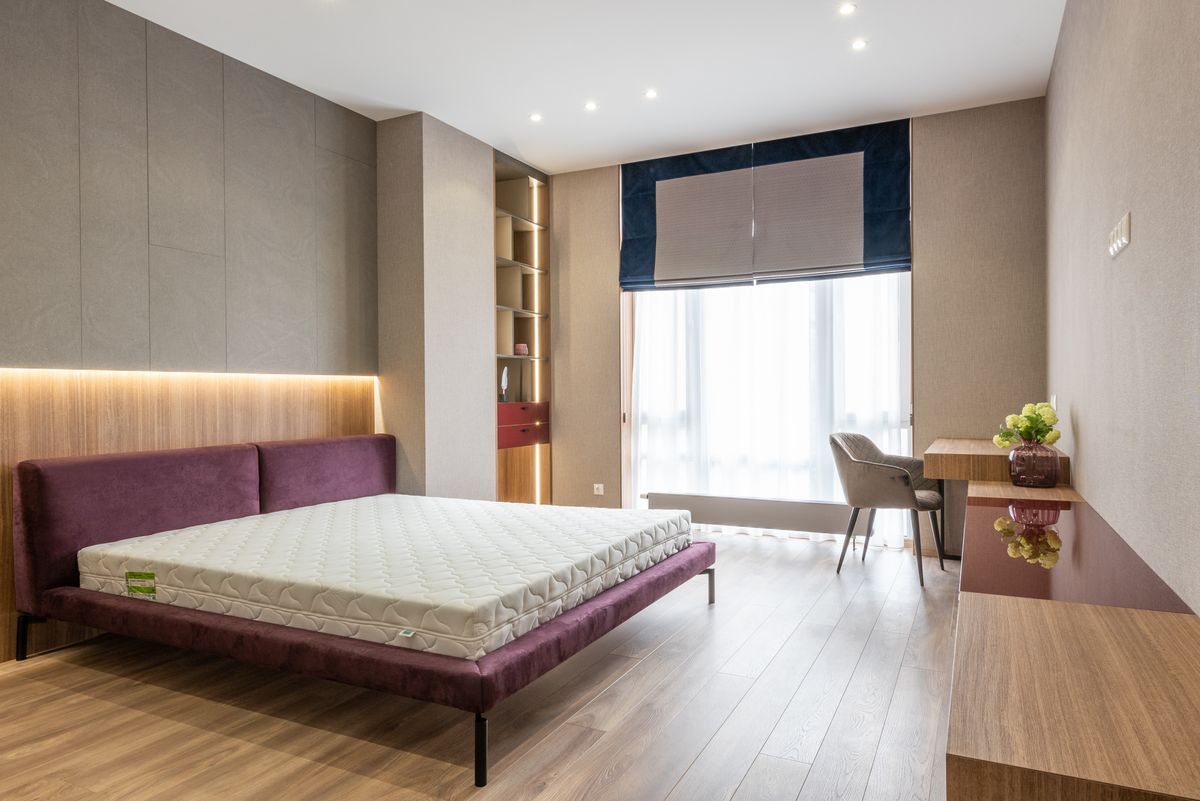
Design intellectual property is the invisible asset that most separates international from local brands. When Mielle releases a new sofa collection, that design has typically passed through a named studio — think Patricia Urquiola, GamFratesi, or an in-house team with a published portfolio — and is protected by industrial design registrations in major markets. The buyer is paying, in part, for the assurance that the silhouette, proportions, and material combination represent an original creative vision tested against years of design expertise.
The Chinese furniture industry’s relationship with design has evolved substantially. A decade ago, the domestic market was dominated by direct adaptations — sometimes euphemistically called “inspired by” — of Italian and Scandinavian designs. Today, a growing number of Chinese brands operate genuine design studios, participate in international design competitions, and produce collections with distinctive aesthetic identities. The 2026 CIFF Guangzhou exhibition (China International Furniture Fair) showcased Chinese-designed pieces that international commentators described as “impossible to copy” because they reflected specifically Chinese aesthetic sensibilities — layered lacquer techniques, proportions optimized for Chinese apartment layouts, and material combinations rooted in regional craft traditions.
That said, the long tail of the market still includes thousands of producers who reverse-engineer popular international designs. A buyer walking through the Louvre International Furniture Expo in Foshan will see recognizable silhouettes from B&B Italia, Minotti, and Poliform reproduced with varying degrees of fidelity. The ethical and legal dimensions aside, these adapted designs often deliver 80% of the visual impact at 20% of the cost — a trade-off many Chinese consumers consciously accept.
Customization Capabilities
This is where local Chinese manufacturing holds an unambiguous advantage. The customization infrastructure in Chinese furniture production is unmatched globally. A buyer can specify custom dimensions, fabric selections, wood finishes, hardware choices, and even structural modifications — and receive a finished product in 30–60 days at marginal additional cost. International brands offer customization within predefined parameters (choose from 40 fabrics, three leg finishes), but departing from the standard configuration often doubles lead times and adds 20%–40% to the price. For interior designers working on bespoke residential or hospitality projects, this flexibility makes Chinese manufacturing the de facto sourcing choice, regardless of the brand name that eventually appears on the product.
5) Manufacturing Scale, Supply Chain, and Reliability
Production Capacity and Lead Times
China accounts for approximately 35% of global furniture exports, and the country’s manufacturing infrastructure can absorb orders ranging from a single custom prototype to container-scale production runs. For standard products, a well-organized Chinese factory delivers in 30–45 days. Custom orders typically require 45–60 days. International brands serving the Chinese domestic market often source from the same factory clusters — sometimes literally the same factories — but add layers of quality inspection, brand packaging, and distribution that extend lead times to 60–120 days and increase cost accordingly.
One practical comparison: ordering a custom leather sofa directly from a Foshan manufacturer through a sourcing partner like Jade Ant Furniture (which manages the entire process from design drawings to customs clearance and international shipping) takes approximately 30–60 days and delivers at wholesale manufacturing pricing. The equivalent sofa ordered through a Mielle-tier brand’s Shanghai showroom may take 90–120 days and arrive at 3–5x the direct manufacturing cost.
Sourcing Transparency and Risk Management
International brands derive supply-chain trust from their reputation — the assumption is that a brand with global distribution and decades of market presence will not risk that equity by cutting corners on materials. This assumption is generally well-founded but occasionally tested, as even major brands have faced recalls and quality incidents.
For local Chinese sourcing, trust must be constructed rather than assumed. The most effective risk management tools include pre-production sample approval, third-party quality inspection (companies like SGS, Bureau Veritas, and TÜV operate extensive furniture testing labs in China), factory audits, and contractual warranty terms. Experienced sourcing partners serve as trust intermediaries — verifying factory capabilities, monitoring production, and providing recourse mechanisms that individual buyers cannot efficiently create on their own.
Impact of Global vs Local Supply Chains
Recent tariff developments have reshaped the economics of furniture supply chains. As of early 2026, US tariffs on Chinese furniture imports stand at significant levels (cumulative tariffs can reach 25%+ depending on the product category), which has accelerated diversification toward Vietnam, Malaysia, and domestic US production for the American market. For the Chinese domestic market, however, local supply chains remain the most efficient option, and the domestic consumer benefits from factory-direct pricing that international markets cannot access.
Where Your Furniture Dollar Goes: International Brand vs Local Brand
International Brand (Mielle)
Premium Local Brand
Materials
Manufacturing
Design/IP
Brand/Marketing
Retail/Dist.
Margin
Source: Industry analysis based on furniture retail margin studies, Medium / CBM Living
6) Price Structures and Value for Money
MSRP Versus Street Price in China
The gap between manufacturer suggested retail price (MSRP) and actual transaction price in China’s furniture market is substantial — and understanding it is essential to evaluating value. International brands like Mielle maintain relatively rigid pricing: discounts of 10%–15% during promotional periods, with rare exceptions. The MSRP is the price, and the consistency reinforces the brand’s positioning.
Local Chinese brands operate in a different pricing culture. The listed price in a furniture mall showroom is almost always a starting point for negotiation, not a final number. Discounts of 30%–50% off the displayed price are routine, and during major shopping festivals (Singles’ Day, 618, Chinese New Year), effective discounts can reach 60%–70%. This means a Chinese-brand sofa listed at ¥30,000 might transact at ¥12,000–15,000, while a Mielle-tier sofa listed at ¥80,000 transacts at ¥68,000–72,000. The actual price gap is smaller than the sticker prices suggest, but remains significant — typically a 3–5x multiple.
Factory-direct pricing eliminates the retail markup entirely. According to CBM Living’s 2026 guide to buying furniture from China, factory prices typically represent about 30% of the final retail store price, with retail adding a 50% markup and the remaining 20% covering logistics, duties, and distribution. This structure means a sofa retailing at ¥80,000 in a branded showroom may have a factory production cost of ¥12,000–18,000.
Total Cost of Ownership (Care, Replacements, Warranties)
Price comparisons that stop at the purchase receipt miss the full picture. Total cost of ownership (TCO) accounts for maintenance, repairs, replacement frequency, and warranty claims over the product’s useful life. A study by Unisource IT illustrates the principle: a $300 chair lasting five years costs $60 annually; a $600 chair lasting fifteen years costs $40 annually — a 33% savings despite the higher upfront price.
For Mielle-tier products, the expected useful life is 15–25 years for core pieces (sofas, dining tables, bed frames), supported by warranty coverage that typically spans 5–10 years on structural components. Replacement cushion covers, fabric refreshment, and hardware replacement are available through authorized service channels — at premium prices but with guaranteed availability.
For premium Chinese brands, expected useful life ranges from 10–20 years depending on construction quality, with warranty periods of 1–5 years being typical for domestic sales. Replacement parts can be more challenging to source 5+ years post-purchase, particularly if the specific product line has been discontinued. However, the lower initial cost means that even if a local brand sofa requires replacement after 10 years, the cumulative two-purchase cost may still be lower than a single Mielle-tier acquisition.
10-Year Total Cost of Ownership: Mielle vs Local Brands (Sofa Example)
10-Year Sofa Total Cost of Ownership (¥ CNY)
¥0
¥20K
¥40K
¥60K
¥80K
¥100K
¥72,000
+¥8K maint.
Mielle
¥80,000
¥22,000
+¥3K
Premium Local
¥25,000
¥12K × 2
+¥2K
Mid-Range (×2)
¥26,000
Purchase (Intl.)
Purchase (Local Premium)
Purchase (Mid-Range)
Maintenance
7) Warranty, After-Sales Service, and Support
Warranty Terms and Regional Service Coverage
Warranty structures reveal what a brand truly guarantees about its product. International brands operating in China typically offer tiered warranties: a 10–25 year structural warranty on frames, a 3–5 year warranty on foam and suspension systems, and a 1–2 year warranty on fabric and leather coverings. These warranties are administered through brand-owned service centers or authorized dealer networks in Tier 1 and Tier 2 cities. In practice, service coverage thins considerably outside major metros — a homeowner in a Tier 3 city may face weeks-long waits for warranty service.
Local Chinese brands generally offer shorter warranty periods — 1 to 5 years for structural components, 1 year for upholstery — but compensate with denser service networks. A brand like QuanU, with 5,000+ retail points across China, can dispatch a service technician faster than a boutique international brand with 20 showrooms. The trade-off is duration versus accessibility: international brands promise longer coverage; local brands deliver faster service.
Accessibility of Replacement Parts and Repairs
Long-term furniture ownership inevitably requires replacement parts — a drawer slide, a cushion zipper, a leg fitting, a fabric panel. International brands maintain standardized component inventories, and because their product designs change slowly (a bestselling sofa may stay in the catalog for 10–15 years), replacement parts remain available for extended periods. The cost, however, is premium: a replacement cushion cover from a Mielle-tier brand may cost 15%–20% of the original item price.
In the Chinese domestic market, replacement parts are abundant and inexpensive for current models but become progressively harder to source for discontinued designs. The Jade Ant Furniture approach — maintaining detailed production records and offering ongoing customer support — represents the best-practice model for Chinese manufacturers, ensuring that buyers who purchased three years ago can still source matching components today.
8) Longevity, Durability, and Real-World Performance
User Reviews and Independent Testing
The most honest assessment of furniture quality comes from users who have lived with their pieces for years, not from showroom impressions or day-one unboxing photos. Independent testing data — compiled by labs like IRTS, Eurofins, and TÜV — consistently shows that solid-wood furniture with proper joinery outlasts engineered-wood alternatives by a factor of 2–4x under equivalent use conditions. Specifically, solid-wood frames in premium construction serve 20–50+ years, while particleboard or MDF frames in budget furniture typically degrade visibly within 5–10 years.
User reviews across platforms like Xiaohongshu (RED), Zhihu, and Tmall paint a nuanced picture. International brand owners consistently praise longevity and finish retention but frequently cite service accessibility complaints and frustration with repair costs. Local brand owners praise value and customization flexibility but report higher rates of finish deterioration (particularly lacquer yellowing and leather cracking) in climate-stressed environments.
Impact of Climate and Usage Patterns in China
China’s diverse climate zones create real-world durability challenges that laboratory testing does not always capture. In southern China (Guangdong, Fujian, Hainan), humidity levels regularly exceed 80%, accelerating wood expansion, mold formation on organic materials, and adhesive degradation. In northern China (Beijing, Hebei, Heilongjiang), extreme dry-cold winters cause wood contraction, surface cracking, and veneer separation. A piece of furniture engineered for European climate stability may perform differently under these conditions.
Local Chinese manufacturers, particularly those based in the climate zones where their products are sold, often build in regional adaptations — additional moisture barriers in southern products, deeper kiln-drying cycles for northern markets — that international brands may not implement unless they manufacture locally. This is an underappreciated advantage of domestic production: the people building the furniture live in the same climate as the people using it.
9) Market Perception, Trust, and Brand Reputation
Local Sentiment Toward International Brands in Furniture
Consumer attitudes toward international furniture brands in China are undergoing a generational shift. Among buyers aged 45+, European and American brands retain powerful prestige associations — a Natuzzi or Poltrona Frau label still carries social currency in this demographic. Among younger buyers (25–40), the “guochao” (national tide) movement has created genuine pride in Chinese-made products, and the willingness to pay a premium solely for a foreign label is declining. This shift is accelerated by social media transparency: Douyin and Xiaohongshu influencers regularly produce factory-tour content showing that Chinese manufacturers produce at the same quality level as international brands, undermining the perception that foreign automatically equals superior.
How Brand Storytelling Affects Perceived Value
The brands that command premiums in any market are not necessarily the ones with the best products — they are the ones with the best stories. International brands invest heavily in narrative infrastructure: heritage documentaries, designer interviews, atelier tours, limited-edition collaborations with artists or fashion houses. These narratives create emotional attachment that transcends rational price-quality analysis.
Chinese brands have historically underinvested in storytelling, but the gap is closing. Brands that articulate a clear origin story — the founding craftsman’s philosophy, the specific forest where the wood is harvested, the apprenticeship system that trains their workers — command meaningfully higher prices than commodity producers. This is a lesson that applies equally to manufacturers building their international presence. Jade Ant Furniture’s approach of “Tell a story with your furniture” — their stated mission — reflects this evolving understanding that value perception in furniture is as much about narrative as it is about material specification.
Watch: Inside China’s Furniture Factories — Quality, Price, and the Brand Tax
For a visual deep dive into how Chinese factories produce furniture at quality levels comparable to European luxury brands — and at what cost difference — this factory tour provides revealing context:
10) Practical Buying Guidance for Consumers and Businesses
How to Assess Quality Beyond Price
Whether you are evaluating a Mielle-tier international brand or a local Chinese manufacturer, the same physical inspection checklist applies. Turn the piece over or look underneath — quality construction will be evident in corner-block reinforcement, consistent screw/dowel spacing, and clean routing edges. Sit on a sofa and shift your weight deliberately to test frame rigidity; any creaking or lateral flex indicates substandard joinery. Open and close drawers repeatedly — high-quality slides (check for Blum, Hettich, or equivalent branding) should operate silently with consistent resistance. Run your hand across finishes in strong light to check for sanding marks, uneven stain application, or overspray. These 60-second tests reveal more about actual quality than any brand name or price tag.
When to Choose Mielle Versus Local Brands
The decision framework is not one-size-fits-all. Choose an international brand like Mielle when: you value original design authorship and want to own the actual designer’s vision rather than an adaptation; you need guaranteed long-term warranty with structural coverage exceeding 10 years; you are furnishing a space where the brand label itself carries professional or social value (a corporate headquarters lobby, a luxury hospitality project); or your budget accommodates the premium without financial strain.
Choose a premium local brand when: you need customization beyond what international catalogs offer; your project requires value engineering without sacrificing visible quality; lead time is a priority and you cannot wait 90–120 days; you want climate-adapted construction for specific Chinese regions; or you are a B2B buyer (retailer, designer, hotelier) sourcing at wholesale pricing for resale or project installation. Jade Ant Furniture serves this exact segment — distributors, design firms, and hospitality operators who need premium-tier products at manufacturing pricing, delivered with the design support and quality documentation that professional projects require.
Tips for Negotiating and Warranties
For international brands in China: negotiate during end-of-season clearances or when floor models are being rotated; ask for complimentary fabric protection treatment or delivery/installation inclusion rather than straight price discounts; confirm warranty terms in writing including which service center handles your region.
For local brands: always negotiate — the first price is never the final price; request a material specification sheet and compare it against the price tier; ask for a sample swatch or material cutaway to evaluate construction; negotiate warranty extensions (many manufacturers will offer additional coverage at modest cost); and for B2B orders, establish a clear quality inspection and acceptance protocol before production begins.
Buyer Recommendation Framework
| Buyer Type | Priority | Best Fit | Rationale |
|---|---|---|---|
| Luxury homeowner (brand-conscious) | Design authorship, social signaling | International brand | Willing to pay for original design and brand prestige |
| Quality-focused homeowner (value-conscious) | Material quality, durability, fair price | Premium local brand | Achieves 85–95% of intl. quality at 30–50% of cost |
| Interior designer (client projects) | Customization, lead time, margin | Premium local / Jade Ant | Custom specs, 30–60 day delivery, wholesale pricing |
| Hospitality operator (hotel/restaurant) | Durability, volume, certification | Export-grade Chinese mfg. | BIFMA-certified, bulk pricing, replacement availability |
| Furniture retailer (inventory sourcing) | Margin, consistency, brand story | Mix of both | Intl. brand for anchor display, local for margin SKUs |
| Budget-conscious first-time buyer | Maximum value per ¥ spent | Mid-range local brand | Functional quality for 5–10 year lifecycle |
The comparison between Mielle-tier international furniture and local Chinese brands is not a story of good versus bad — it is a story of different value equations serving different buyer needs. International brands deliver design originality, brand narrative, long-term warranty infrastructure, and the social currency of a recognizable label. Local Chinese brands deliver material value, customization freedom, faster delivery, climate-adapted construction, and pricing that reflects manufacturing cost rather than brand overhead.
The most sophisticated buyers — whether they are homeowners, designers, or commercial operators — do not choose one category exclusively. They use international brands for statement pieces where design authorship matters, and source from premium Chinese manufacturers for the volume of furniture that fills the rest of the space. This hybrid approach maximizes both quality and budget efficiency.
For any furniture purchase, the evaluation should move beyond brand name and price tag to the specifics that determine long-term satisfaction: material specification, joinery method, foam density, finish quality, warranty terms, and service accessibility. A buyer equipped with these evaluation criteria can identify exceptional value in both international and local brands — and can recognize when a premium price is justified versus when it is simply a tax on a label.
Whether you are sourcing a single sofa for your living room or furnishing an entire hospitality project, the question is not “which brand is better” but “which brand is better for this specific use case, this specific budget, and this specific definition of value.” That answer, as this article demonstrates, varies — and the data to make the right choice is now in your hands.
Frequently Asked Questions
How do Mielle’s materials compare to typical local Chinese brands?
At the premium tier, the material gap is narrower than most consumers assume. Mielle-tier international brands specify kiln-dried European hardwoods, high-density foams (≥2.0 lb/ft³), and fabrics rated at ≥30,000 Martindale rubs. Premium Chinese manufacturers — particularly export-oriented factories — use comparable materials: imported hardwoods, foam densities of 1.8–2.0 lb/ft³, and fabrics in the 15,000–30,000 Martindale range. The difference lies in specification transparency (international brands publish material details; local brands require you to ask) and in sourcing consistency (international brands control supply chains more tightly). At the mid-range Chinese tier, material quality drops noticeably — engineered wood replaces solid hardwood, foam density falls to 1.2–1.6 lb/ft³, and fabric durability decreases proportionally.
Are local Chinese brands more affordable in the long run due to maintenance costs?
It depends on the quality tier. A premium Chinese brand sofa purchased at ¥22,000 with ¥3,000 in maintenance over 10 years yields a total cost of ¥25,000. A Mielle-tier sofa at ¥72,000 with ¥8,000 in maintenance yields ¥80,000 — a 3.2x multiple. Even if the local sofa requires full replacement at year 10, two purchase cycles (¥50,000 + ¥6,000 maintenance) still come in at ¥56,000, 30% below the international brand’s single-cycle TCO. However, the Mielle sofa may last 20+ years without replacement, making the per-year cost more competitive over a longer horizon. The break-even point typically falls around year 15–18.
What should a buyer prioritize: price, durability, or design flexibility?
The priority depends on the buyer’s context. For a first-time homeowner furnishing on a budget with plans to upgrade in 5–7 years, price efficiency is the rational priority — a quality mid-range Chinese brand delivers functional value without overcommitting capital. For a homeowner making a long-term investment in a permanent residence, durability and material quality should dominate the decision, which may point toward either an international brand or a premium Chinese manufacturer. For interior designers and hospitality operators, design flexibility and customization capability are typically the deciding factors, which strongly favor Chinese manufacturing’s bespoke production infrastructure.
Is furniture made in China reliable for export and international use?
China produces approximately 35% of all furniture exported globally, including pieces sold under European and American brand labels. Export-grade Chinese furniture routinely meets BIFMA, EN 12520, CARB Phase 2, and other international standards. The key is sourcing from factories with established export track records and relevant certifications. Jade Ant Furniture, for example, has served international clients for over 15 years, managing everything from design consultation to customs clearance, with products certified for markets in North America, Europe, and the Middle East. The reliability question is not about “Made in China” as a category — it is about which specific manufacturer and which quality tier.
How can I verify the quality of a Chinese furniture manufacturer before ordering?
The verification process should include: requesting material specification sheets for the specific products you are considering; ordering pre-production samples (budget 10–20% of unit cost for sample investment); engaging third-party inspection services such as SGS or Bureau Veritas to audit the factory and inspect finished goods; checking for ISO 9001, BIFMA, or EN certifications; reviewing the factory’s export history and client references; and if possible, visiting the factory in person or via video call to observe production processes. Sourcing partners who specialize in furniture procurement from China can perform these checks on your behalf.
What warranty should I expect when buying furniture from a Chinese brand?
Warranty terms vary widely. For domestic Chinese market sales, typical warranties are 1–3 years for structural components and 6–12 months for upholstery and fabric. Export-oriented manufacturers often offer longer warranties to match international market expectations: 5–10 years on frames and 2–3 years on soft components. Always confirm warranty terms in writing before placing an order, specify which components are covered, and clarify the claims process (including who bears shipping costs for warranty replacements). For B2B orders, negotiate warranty extensions as part of the purchase agreement — many manufacturers will accommodate this at minimal additional cost.
Do international furniture brands actually manufacture in China?
Many do, at least partially. The practice of international brands manufacturing in China — or sourcing components from Chinese suppliers for assembly elsewhere — is widespread. Some brands are transparent about this; others are not. The key implication is that “Made in Italy” or “Designed in Denmark” does not necessarily mean the physical construction occurred in those countries. For buyers, this means the quality differences between an international brand and a premium Chinese manufacturer may be smaller than the branding suggests, since both may be using the same factory clusters, the same material suppliers, and the same skilled labor pool.
How does China’s climate affect furniture durability compared to other markets?
China’s extreme climate diversity — from subtropical Guangzhou (80%+ humidity) to continental Beijing (severe dry winters) — creates durability challenges that temperate European climates do not. Humidity causes wood expansion, mold, and adhesive failure; aridity causes contraction, cracking, and veneer separation. Premium Chinese manufacturers often incorporate region-specific engineering — additional moisture barriers for southern markets, deeper kiln-drying for northern markets — that international brands may not implement. Buyers should explicitly ask whether the product is engineered for their specific climate zone and should consider protective measures like humidity control in the home.
Can a Chinese furniture manufacturer replicate an international brand’s design exactly?
Technically, many Chinese factories have the manufacturing capability to reproduce virtually any design. However, doing so raises significant intellectual property and legal concerns. Design registrations and patents protect original furniture designs in most markets, and reputable manufacturers — particularly those serving international clients — actively avoid IP infringement. The more productive approach is to use an international design as inspiration and work with a manufacturer’s in-house design team to create an original variation that captures the aesthetic intent while avoiding legal issues. This “design-inspired, custom-adapted” approach is the standard practice for professional interior design firms sourcing from China.
What is the best way to import furniture from China for a small business or personal project?
For small-scale imports, the most efficient approach is to work with a furniture sourcing partner or trading company that handles the full procurement chain: product selection, quality inspection, export documentation, customs clearance, and international shipping. Companies like Jade Ant Furniture specialize in this end-to-end service, accepting minimum orders as low as one piece per style. The key steps are: define your product requirements and budget; request samples; approve pre-production specifications; arrange third-party inspection; and confirm shipping terms (FOB vs. CIF). Budget 45–75 days for sea freight delivery, and factor in import duties, customs brokerage fees, and last-mile delivery costs when calculating your total landed cost.