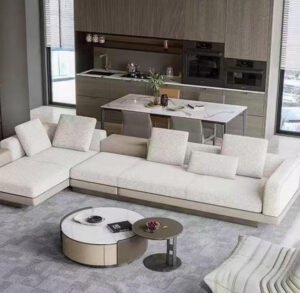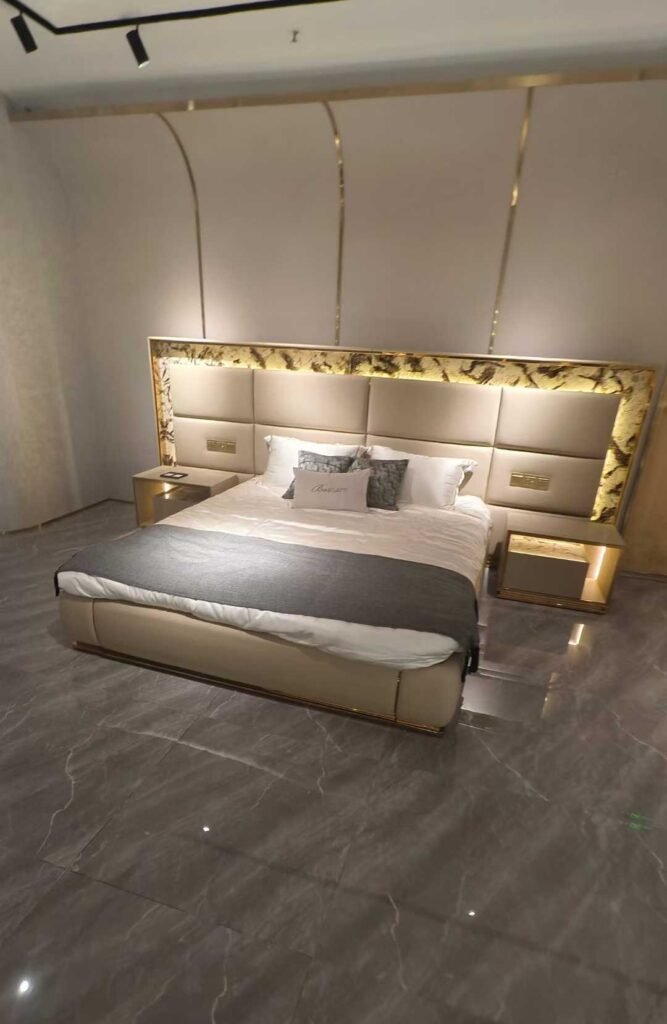
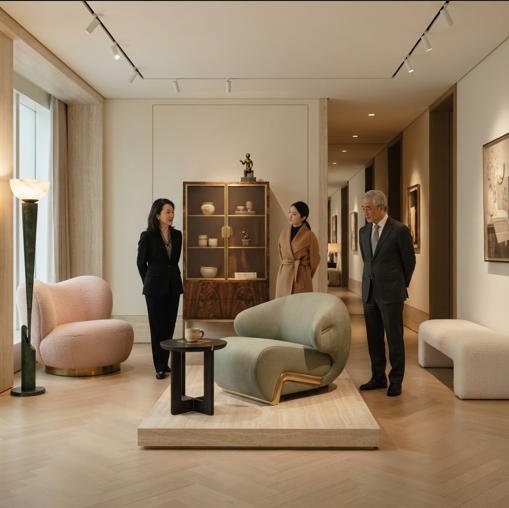
Discover how to strategically integrate Boca do Lobo’s luxury furniture pieces into cohesive, gallery-like residential spaces that reflect your clients’ sophistication and personal narratives while maximizing design impact and investment value.
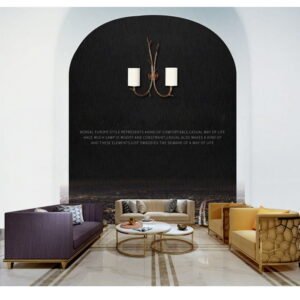
 A private residence conceived as a personal museum: every surface considered, every piece chosen with intention.
Understanding the Art of Luxury Curation
There is a meaningful difference between a home that is beautifully furnished and a home that tells a story. The first is achieved by selecting quality pieces. The second is achieved by curating them — by understanding how each object relates to the ones beside it, how a room unfolds as a sequence of visual experiences, and how a collection of furniture and art can communicate something irreducibly personal about the people who live within it.
The concept of the “personal museum at home” has evolved from an aspirational metaphor into a genuine design practice. For high-net-worth residential clients, curating a home now carries the same intellectual seriousness as assembling a collection of contemporary art or rare wine. The question is no longer simply “Does this look good?” — it is “What does this mean? How does it speak to what came before and after? What will it be worth in twenty years?”
For B2B professionals — interior designers, furniture showrooms, hotel fit-out specialists, and luxury distributors — understanding and communicating this philosophy is not merely a creative exercise. It is a commercial strategy. Clients who think about their homes as curated environments buy differently. They buy with more intention, more patience, and over longer timelines. They return. They refer. They become the kind of relationship that builds a practice rather than fills a transaction log.
This guide, developed for design professionals and luxury retail partners working with Jade Ant Furniture, walks through every dimension of the home curation process — from establishing an initial curatorial vision to maintaining a collection across decades. Boca do Lobo pieces serve as our primary case studies throughout, not because they are the only vehicles for this philosophy, but because they represent it more completely than almost any other furniture maker working today.
1. Foundational Principles of Luxury Space Curation
Defining Your Curatorial Vision
Establishing a Clear Aesthetic Direction
Every great collection begins with a statement of intent — not a style board, not a color palette, but a genuine articulation of what this space is meant to be and for whom. Museum curators call this the institutional mission. For residential designers, it is the curatorial vision: the single guiding idea that every subsequent decision is tested against.
For some clients, this vision is rooted in a specific cultural tradition — Portuguese azulejo tiles translated into contemporary surface pattern, or Japanese wabi-sabi materiality applied to Western spatial proportions. For others, it is purely experiential: a bedroom that feels like checking into the finest hotel suite you have ever stayed in, or a dining room that commands the same reverent quiet as a Baroque gallery.
The clearest curatorial visions can be stated in a single sentence. “This home honors the intersection of industrial craft and aristocratic ornament.” “This space is a study in textural opposites — raw and refined, heavy and weightless.” These sentences are not marketing copy. They are design filters: when you stand in front of a Boca do Lobo Pixel Cabinet and ask whether it belongs in this space, you have a sentence to test it against.
Identifying Your Design Philosophy and Client Preferences
The curatorial vision must be grounded in genuine client preference, not designer projection. This distinction is critical for B2B professionals, because clients who feel their own identity reflected in a space become advocates. Clients who feel they have been given a designer’s vision live in someone else’s house.
Effective client discovery for luxury curation goes beyond questionnaires about color preferences. It involves understanding what objects the client already loves and why. It involves asking about the most memorable spaces they have ever inhabited — a hotel room in Marrakech, a gallery in Venice, a grandparent’s study — and identifying what those spaces had in common. The answers to these questions reveal the emotional vocabulary of the client’s ideal home far more reliably than any style categorization.
The Psychology of Luxury Living Spaces
Creating Emotional Connections Through Design
Research in environmental psychology — the study of how physical spaces affect human emotion and behavior — consistently shows that people form the strongest attachments to spaces that feel both intentional and personal. Spaces that appear to have been designed “for someone” rather than “for the market” generate significantly higher satisfaction, longer-term emotional investment, and greater reported wellbeing.
This is the psychological underpinning of the personal museum concept. When a client walks into a room where a Boca do Lobo Versailles Sofa — with its hand-sculpted resin panels and velvet cushions inspired by the grandeur of French royalty — anchors a seating composition that also includes objects they brought back from travels and art that reflects their intellectual interests, the space stops feeling like an interior design project. It begins to feel like them.
This emotional resonance is not a soft benefit. It is the primary driver of client loyalty in luxury design practice. Clients who feel genuinely seen in their spaces return for the next project. Clients who feel handed a “luxury package” do not.
Understanding Investment Value in Furniture Selection
Investment value in furniture selection operates on two axes that are often treated as separate but are actually deeply intertwined: financial appreciation and lifestyle quality. A Boca do Lobo limited-edition cabinet purchased at $20,000–$35,000 is an asset that, with proper care and documentation, may be worth 20–30% more a decade from now. But it is also an asset that generates value every single day through the quality of the experience it creates in the space.
For B2B professionals advising clients, framing furniture selection through both lenses — financial and experiential — creates a more compelling and complete value proposition than either argument alone. “This piece is a beautiful investment” is a much richer conversation than either “this piece is beautiful” or “this piece is an investment.”
Building a Design Framework
Assessing Existing Architecture and Spatial Constraints
No curatorial vision exists independently of the physical container it inhabits. Ceiling height, natural light quality, floor material, window placement, and existing architectural features are not constraints to be overcome — they are the grammar of the space, the structural logic that every design decision must speak to.
A room with 4.5-meter ceilings and north-facing light calls for different furniture scale, finish tone, and compositional rhythm than a room with 2.8-meter ceilings and floor-to-ceiling south windows. The first space invites drama and verticality — a Pixel Cabinet’s geometric complexity and tonal variation will read beautifully against generous ceiling height, its 1,088 hand-finished triangles becoming an artwork the eye can explore. The second space benefits from pieces with horizontal emphasis and warm tonal character — a low-slung sofa with rich upholstery, a brass-finished coffee table that reflects the available light.
Developing a Long-Term Acquisition Strategy
Curating a home is not an event — it is a practice that unfolds over years. The most satisfying collections are assembled incrementally, each acquisition informed by what already exists and what the space is still reaching toward.
For B2B professionals, this perspective has significant commercial implications. A client who understands their home as a collection-in-progress is a client who returns for the next piece, then the next. The design relationship becomes an ongoing advisory engagement rather than a project with a completion date. Building this understanding into the initial framing of any luxury design engagement is one of the most commercially intelligent things a designer or showroom can do.
2. Assessing Your Client’s Collection Potential
Evaluating Current Interior Landscapes
Conducting Comprehensive Space Audits for B2B Clients
A space audit — a systematic assessment of an existing interior before any new acquisition is made — is the professional equivalent of a physician’s diagnostic examination before prescribing treatment. It establishes baseline conditions, identifies what is already working, names what is not, and creates an objective foundation for all subsequent recommendations.
For luxury residential clients, a rigorous space audit covers: the inventory and condition of all existing furniture and objects, the quality and character of natural and artificial lighting, the acoustic properties of the space (which directly affect how “weighty” a room feels), the architectural features that are fixed versus those that can be altered, and the provenance and sentimental significance of key existing pieces.
This last dimension — sentimental significance — is particularly important for curation work. Many clients have existing objects that carry profound personal meaning and must be integrated into any new design framework. The audit identifies these objects early, ensuring they inform rather than disrupt the curatorial vision.
Identifying Gaps and Opportunities in Existing Décor
Gaps in an existing interior are not failures — they are opportunities. A living room with strong seating and lighting but no vertical element to anchor the north wall is telling you exactly what it needs. A dining room with beautiful architectural moldings but a table that fights rather than complements them is asking for a specific kind of intervention.
Training B2B sales and design teams to read these gaps — and to match them to the Boca do Lobo catalog with precision — transforms the client conversation from “Would you like to see some new pieces?” into “I noticed your entrance hall lacks a focal point that speaks to the quality of what’s beyond it. I have something to show you.”
Understanding Client Lifestyle and Aspirations
Profiling End-User Needs and Design Preferences
Luxury clients are not a monolithic category. A 45-year-old private equity partner in New York who entertains thirty people four times a year has fundamentally different functional requirements than a 60-year-old art collector in London who uses their home as a private sanctuary. A luxury hotel’s lobby — which must impress thousands of guests per year while withstanding high-traffic use — requires different curation logic than a private penthouse bedroom.
Profiling these distinctions rigorously is not just good design practice — it is essential commercial intelligence. Understanding that your client’s primary use case is high-stakes entertaining means specifying pieces that photograph exceptionally well and create dramatic first impressions. Understanding that they prioritize quiet contemplation means selecting pieces whose beauty rewards slow looking rather than instant impact.
Translating Client Vision into Curated Collections
The translation from client vision to curated collection is where design intelligence becomes commercial value. This translation requires the ability to hear what a client says, identify what they actually mean, and know which pieces in the world most completely embody the synthesis.
When a client says they want their living room to feel “like a boutique hotel but personal,” they are describing a space with professional-grade curation and presentation standards (the boutique hotel dimension) combined with objects that carry individual narrative and meaning (the personal dimension). That brief points toward Boca do Lobo pieces — specifically, pieces that carry strong design narratives — combined with client-owned objects of personal significance, curated together with museum-quality spatial discipline.
Determining Budget and Investment Priorities
Allocating Resources Across Multiple Boca do Lobo Pieces
Budget allocation in luxury curation follows a principle borrowed directly from investment portfolio management: concentrate capital in the highest-impact positions and support them with lower-cost complementary elements that amplify rather than compete.
In practical terms, this means identifying the two or three spaces in a home where the greatest design impact is possible — typically the entrance hall, primary living room, and master suite — and concentrating the highest investment pieces in those locations. A Boca do Lobo Seduction Cabinet in a primary entrance hall delivers an impression that no other single design decision can match, at a price point that represents a fraction of the total project budget.
The table below illustrates a typical budget allocation framework for a luxury residential project incorporating five Boca do Lobo signature pieces:
| Space | Piece | Investment Priority | Typical Price Range |
|---|---|---|---|
| Entrance Hall | Metamorphosis Sideboard | Primary statement | $20,000–$40,000 |
| Living Room | Pixel Cabinet (bar function) | Primary statement | $25,000–$45,000 |
| Living Room | Versailles Sofa | Anchoring element | $18,000–$30,000 |
| Dining Room | Empire Dining Table | Primary statement | $22,000–$38,000 |
| Master Suite | Lilly Bed | Anchoring element | $15,000–$28,000 |
Balancing Statement Pieces with Foundational Elements
No collection of statement pieces can sustain itself without foundational elements — the quieter, supporting cast that gives the stars room to breathe. In furniture curation, foundational elements include seating with clean lines and neutral upholstery, storage pieces in natural materials, and lighting that serves the room without demanding attention for itself.
The ratio that most experienced luxury designers find effective is roughly 30/70: 30% statement pieces that carry design narrative and generate visual energy, 70% foundational elements that provide spatial structure and visual rest. When this ratio inverts — when a space becomes all statement pieces with no breathing room — the result is visual fatigue, the design equivalent of a sentence composed entirely of emphatic words.
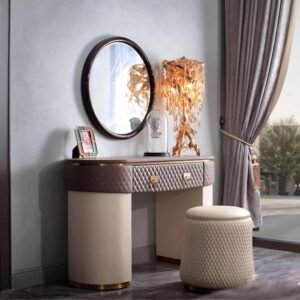
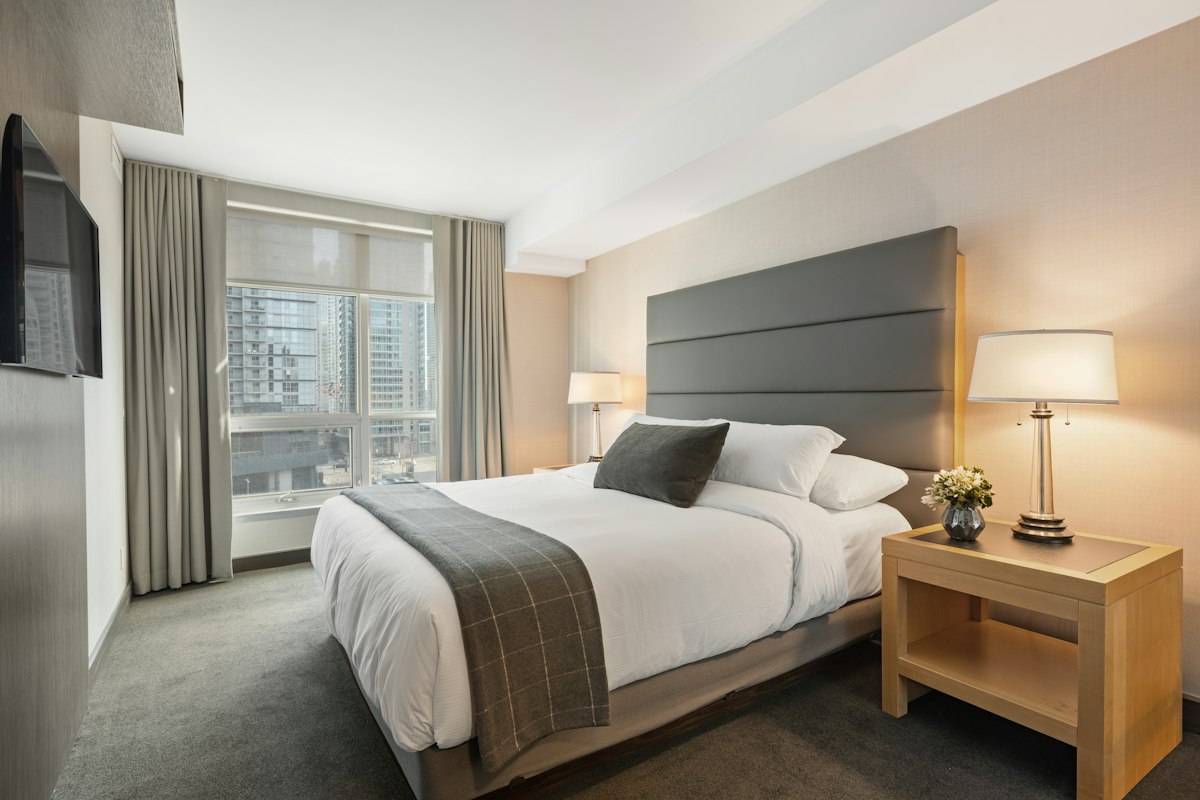 A master suite conceived as a sanctuary: the layering of textures, the balance of ornament and restraint, the sense that every element was chosen — not selected.
3. Boca do Lobo’s Signature Collections and Their Roles
Iconic Statement Pieces as Focal Points
Leveraging Bold Designs to Anchor Room Compositions
Every well-curated room has a focal point — the object that the eye finds first and returns to most frequently. In gallery curation, this is typically the largest or most visually commanding work on the primary wall. In furniture curation, the focal point is the piece that most completely expresses the room’s curatorial vision.
Boca do Lobo’s most iconic pieces are built precisely for this role. The Pixel Cabinet, with its 1,088 individually hand-finished wooden triangles in a combination of walnut root veneer, gold leaf, and black lacquer, is an object that rewards extended looking — the eye moves across its geometric surface discovering new tonal relationships, new material contrasts, new details that were not visible at first glance. Positioned on a primary wall with strategic accent lighting, it anchors a room in a way that no art print, mirror, or conventional sideboard can.
The Metamorphosis Sideboard achieves a different kind of visual dominance: its biomorphic form — two fragments that appear to be in the process of transformation — creates a narrative tension that makes the piece feel alive. In a dining room or entrance hall, this quality of apparent movement arrests visitors and creates the kind of memorable first impression that defines a space in the memory.
Creating Visual Hierarchy Through Signature Furniture
Visual hierarchy — the organized sequence in which the eye encounters elements in a composition — is as important in interior design as it is in graphic design. Without hierarchy, a space becomes visually democratic: all elements compete equally for attention and the result is exhaustion rather than engagement.
Statement Boca do Lobo pieces create natural hierarchy by their scale, material complexity, and design sophistication. But hierarchy is not only about the loudest piece — it is about the orchestrated sequence from the most emphatic element to the most subtle. A Pixel Cabinet on the primary wall, a low-profile brass coffee table in the center of the room, and textured linen upholstery on supporting seating creates a hierarchy in three clear registers: the cabinet is the solo voice, the table is the countermelody, and the upholstery is the harmonic background.
Complementary Pieces for Design Cohesion
Building Harmonious Collections with Supporting Elements
The test of curatorial skill in furniture design is not the selection of statement pieces — most designers with strong taste can identify a powerful focal object. The test is the selection of everything else: the pieces that support, ground, and complete the composition without undermining its focal energy.
Supporting elements in a Boca do Lobo-anchored room should share at least one material or finish characteristic with the statement piece. If the Pixel Cabinet includes gold leaf, brass-finished accessories or a side table with warm metallic elements create visual continuity. If the Versailles Sofa introduces sculptural resin panels in the upholstery frame, other surfaces in the room benefit from containing at least one sculptural or three-dimensional element — a textured wall finish, a ceramic object, a sculptured cushion form.
Understanding Material Palettes and Finish Compatibility
Boca do Lobo’s collection spans an extraordinary range of material treatments: hand-applied gold leaf, cold-cast brass, walnut and ebonized oak veneers, hand-lacquered surfaces in matte and gloss, velvet and boucle upholstery, hand-carved marble and resin. Understanding which of these treatments are mutually compatible — and which create visual conflict — is a core skill for any design professional curating within this portfolio.
As a general principle, warm metals (gold, brass, rose gold) are compatible with warm wood tones (walnut, cognac-stained oak) and warm neutrals (cream, caramel, deep burgundy). Cool metals (chrome, silver, gunmetal) work best with cool palettes (grey, white, navy, deep forest green) and cooler wood tones (ash, bleached oak, ebony). Mixing warm and cool metals in the same space is possible when one clearly dominates and the other serves as a deliberate accent.
Functional Art: Marrying Aesthetics with Practicality
Selecting Pieces That Serve Dual Purposes
The false binary between beauty and function is particularly persistent in luxury furniture — and particularly destructive to good design. The finest investment-grade furniture is always both: objects of genuine artistic quality that also function perfectly for their intended purpose.
The Pixel Cabinet, for example, is not only a sculptural installation — it is a fully functional bar cabinet, with interior fittings designed for wine and spirit storage. The Versailles Sofa is not only a tribute to French decorative tradition — it is a seating piece designed for actual use, with removable velvet cushions that accommodate real domestic life. This dual identity is not incidental to Boca do Lobo’s design philosophy; it is central to it.
For clients who sometimes resist investing at this level in furniture rather than art, the functional dimension is a crucial part of the value communication: “This piece does everything a great work of art does — it anchors the room, tells a story, rewards looking — and it also serves dinner guests, stores your wine collection, and provides seating for twenty years without losing its structural integrity.”
Ensuring Functionality Without Compromising Design Integrity
The preservation of functional integrity in a curated luxury interior requires designers to make decisions that prioritize actual use alongside visual impact. A statement dining table that seats eight beautifully but makes conversation difficult across its width is a failure of function that will erode the client’s affection for the piece over time. A sofa that photographs magnificently but feels uncomfortable after thirty minutes of use will become invisible in a client’s memory of the space — replaced by the memory of discomfort.
Specifying for function at the luxury level means understanding dimensional standards for seating depth and height, clearance requirements around dining tables, and the ergonomic realities of how pieces will actually be used. Jade Ant Furniture partners receive detailed functional specification guidance for every Boca do Lobo piece to ensure that installation translates seamlessly from the showroom to the client’s daily life.
4. Color Theory and Material Harmony in Luxury Spaces
Mastering Sophisticated Color Palettes
Creating Depth Through Strategic Color Blocking
Color blocking — the use of large, clearly defined areas of single colors in deliberate relationship to one another — is one of the most powerful and underutilized tools in luxury interior design. When applied with discipline, it creates the kind of spatial clarity that characterizes the world’s great gallery interiors: spaces where color is not decoration but architecture.
In a room anchored by a gold-finished Boca do Lobo piece, the surrounding palette should include a minimum of three clearly differentiated tonal registers: a dark, grounding element (deep navy or charcoal wall, dark wood floor), a mid-tone that bridges the gap (warm taupe, slate, deep olive), and the light-reflective gold of the furniture itself as the luminous accent. This three-register structure gives the eye a clear path through the composition and makes the statement piece’s finish qualities visible rather than lost in tonal noise.
Balancing Bold Boca do Lobo Pieces with Neutral Foundations
The most common mistake in luxury interiors that include strong statement furniture is the impulse to match the energy of the statement piece with equally energetic supporting elements. The result is visual competition rather than visual harmony — every element shouting simultaneously, none of them heard clearly.
Neutral foundations are not design timidity. They are spatial intelligence. A deep charcoal or warm white wall is not a passive backdrop for a Boca do Lobo cabinet — it is an active compositional choice that amplifies the piece’s visual presence by giving it maximum contrast and breathing room. The neutral says: look here, this is the thing that matters.
Material Selection and Textural Balance
Combining Wood, Metal, and Upholstery Elements
Textural contrast — the deliberate juxtaposition of different surface qualities — is what separates truly sophisticated interiors from those that feel merely expensive. A room where every surface has the same visual weight and tactile quality (all polished, all matte, all hard, all soft) lacks the sensory variety that makes spaces feel inhabitable and alive.
Boca do Lobo pieces typically combine multiple textural registers within a single object — the Pixel Walnut Cabinet, for example, combines rough-textured walnut root veneer, smooth lacquered surfaces, and matte gold leaf within its geometric grid. This internal complexity means that complementary elements need not replicate its textural drama — in fact, supporting elements should deliberately simplify, allowing each of the cabinet’s textural layers to read clearly.
In practice, this means: if the statement piece is texturally complex, keep upholstered elements smooth and substantial. If the statement piece is metallically reflective, introduce matte elements — unglazed ceramics, linen textiles, hand-plastered wall surfaces — to absorb rather than compound the reflective energy.
Ensuring Visual and Tactile Coherence Across Collections
A curated collection must hold together not only visually but tactilely — the experience of moving through the space and touching its surfaces should feel consistent in quality even when varied in character. This is one of the defining characteristics of a great hotel interior: every surface, every handle, every textile communicates the same level of investment and care, even when the materials are entirely different.
For B2B professionals specifying across multiple pieces and brands, this principle translates into a quality floor — a minimum standard of material excellence below which nothing in the space falls. Within a project that includes Boca do Lobo pieces, no supporting element should communicate a lower tier of quality. Upholstery fabrics should be performance-grade luxury textiles. Rugs should be hand-knotted or high-quality flat-weave. Hardware should be solid brass or chrome, never hollow or zinc-cast.
Finish Coordination and Metallic Accents
Unifying Brass, Gold, Chrome, and Mixed-Metal Aesthetics
The proliferation of metallic finishes in contemporary luxury interiors has created both opportunity and risk. The opportunity: an extraordinary range of warm and cool metallic tones that can create sophisticated, layered compositions. The risk: visual incoherence when metals of incompatible temperature and tone are mixed without clear intent.
The most effective approach to mixed-metal interiors is the dominant-accent rule: choose one metallic temperature as dominant (covering at least 70% of metallic surfaces in the space) and use the contrasting temperature as a deliberate accent. A room where satin brass dominates — in furniture hardware, decorative objects, and lighting — can accommodate chrome accents in technology elements (speaker grilles, screen bezels) without losing coherence, precisely because the contrast is so deliberate that it reads as intentional rather than accidental.
Creating Sophisticated Transitions Between Distinct Finishes
When a space moves between distinct finish characters — say, from a gold-dominant entrance hall to a chrome-accented study — the transition benefits from a bridging element: a piece or surface that contains both finishes in deliberate relationship. A custom door handle that combines satin brass and brushed chrome, or a textile whose pattern includes threads of both warm and cool metallic tone, creates a visual bridge that makes the tonal shift feel intentional rather than abrupt.
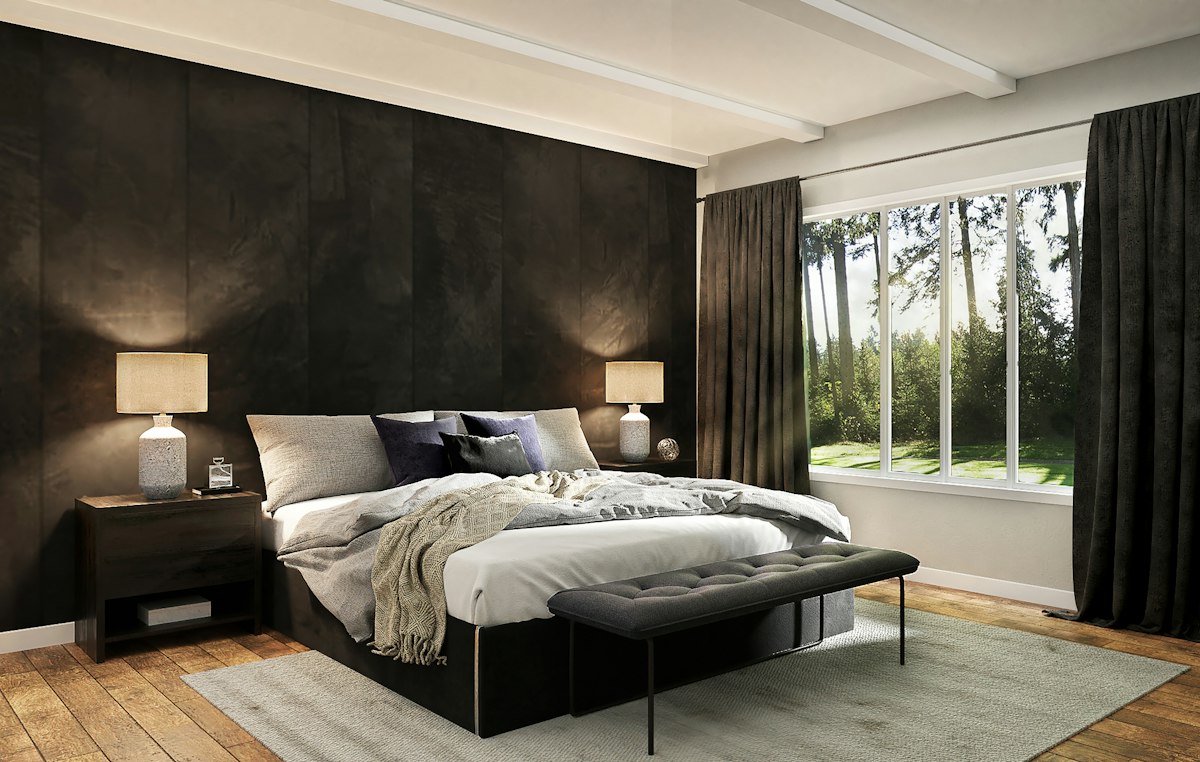 A curated dining room where every material decision — the brass, the velvet, the marble — reinforces a single, coherent narrative of refined drama.
5. Spatial Planning and Layout Strategies
Room-by-Room Curation Approaches
Designing Master Bedroom Collections for Luxury Residences
The master bedroom presents a specific curatorial challenge: it must achieve the highest level of design sophistication while maintaining the conditions for genuine rest. Visual complexity that energizes a living room can become anxiety-inducing in a bedroom; the emotional register of the curation must shift from impressive to restorative.
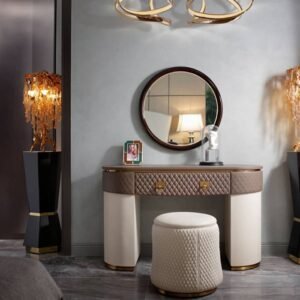
This does not mean the master bedroom should be less designed — it means it should be differently designed. Statement pieces here are chosen for qualities of depth and quiet drama rather than visual dynamism: a hand-crafted bed with sculptural headboard detailing, a dressing table in book-matched walnut veneer with warm brass hardware, bedside consoles with subtle surface treatments that reveal their quality on close examination. The pieces reward the extended looking that happens during the long hours spent in the room, rather than demanding immediate impact.
Creating Statement Living Rooms with Multiple Boca do Lobo Pieces
When a living room contains multiple Boca do Lobo statement pieces — as the most ambitious residential projects often do — the curatorial challenge is ensuring they function as a composition rather than a competition. Each piece must be positioned in spatial relationship to the others, with clear sightlines, appropriate breathing room, and a legible visual hierarchy.
The standard approach is to establish the primary focal point on the wall that receives the most visual attention upon entering the room (typically the wall facing the main entrance), place the secondary statement piece in deliberate relationship to it (on the perpendicular wall, creating a corner composition), and introduce any tertiary pieces as transitional elements that guide the eye between the two anchors.
Curating Sophisticated Dining Experiences Through Furniture Selection
The dining room is unique among residential spaces in that it serves a fundamentally social function — every design decision is experienced simultaneously by multiple people, from multiple angles, across variable durations. This social dimension changes the curation logic: pieces must perform as well from across the table as from beside it, lighting must be flattering to people as well as flattering to materials, and the overall composition must sustain aesthetic interest across a multi-hour dinner rather than delivering a single powerful first impression.
Designing Home Offices That Reflect Professional Excellence
The post-pandemic normalization of high-quality home office environments has created a new category of luxury curation. Clients who conduct video calls, receive professional visitors, and spend eight or more hours daily in their home offices now expect those spaces to communicate the same standard of design excellence as their living rooms. A Boca do Lobo desk — hand-crafted, materially exceptional, photographically distinctive — communicates professional credibility as effectively as any corporate interior.
Traffic Flow and Functional Spacing
Optimizing Layouts for Both Aesthetics and Usability
The minimum clearance standards for luxury interior layouts are: 90cm for primary circulation paths, 45cm for secondary paths (such as between a dining chair pushed out and a sideboard), and a 3-meter conversation diameter for seating groups. These are not arbitrary rules — they are derived from the ergonomic realities of comfortable human movement and comfortable social interaction.
Statement furniture pieces that violate these clearances — regardless of their individual design quality — ultimately fail in their role, because the discomfort of navigating around them becomes the dominant spatial experience. This is not a compromise of curatorial ambition; it is the condition that curatorial ambition must work within.
Preventing Overcuration While Maximizing Impact
Overcuration is the luxury designer’s equivalent of overwriting: the impulse to add more when the space has already said everything it needs to say. Negative space — the areas of a room deliberately left clear of objects — is not emptiness. It is the visual equivalent of silence: the condition that makes sound meaningful.
The most common overcuration pattern in luxury residential projects is the accumulation of secondary and tertiary decorative objects that crowd the base of major furniture pieces and prevent them from being read clearly. A Boca do Lobo Pixel Cabinet on a wall unencumbered by surrounding objects is a dramatically more powerful compositional statement than the same cabinet flanked by candelabras, decorative books, and ceramic sculptures. The objects are individually lovely; together, they dilute the piece.
Vertical and Horizontal Design Elements
Using Wall-Mounted and Elevated Pieces for Visual Interest
Vertical composition — the deliberate use of varying heights to create visual rhythm across a room — is as important in interior design as it is in landscape architecture. A room where all major furniture pieces share a consistent height plateau feels visually flat; introducing vertical elements (tall cabinetry, sculptural floor lamps, wall-mounted art or mirrors at varied heights) creates the sense of a composed environment rather than a furnished room.
Creating Layered Compositions Through Varied Heights and Depths
Depth layering — placing objects at different distances from the primary viewing position — creates the spatial richness that characterizes sophisticated interiors. A console table against a wall is one layer; a mirror above it is a second layer (both reflecting and deepening the space behind the viewer); a decorative object on the table surface is a third layer; a piece of art leaning against the mirror’s base is a fourth. Each layer adds dimension without requiring additional floor space.
Watch: How to Create a Curated Home
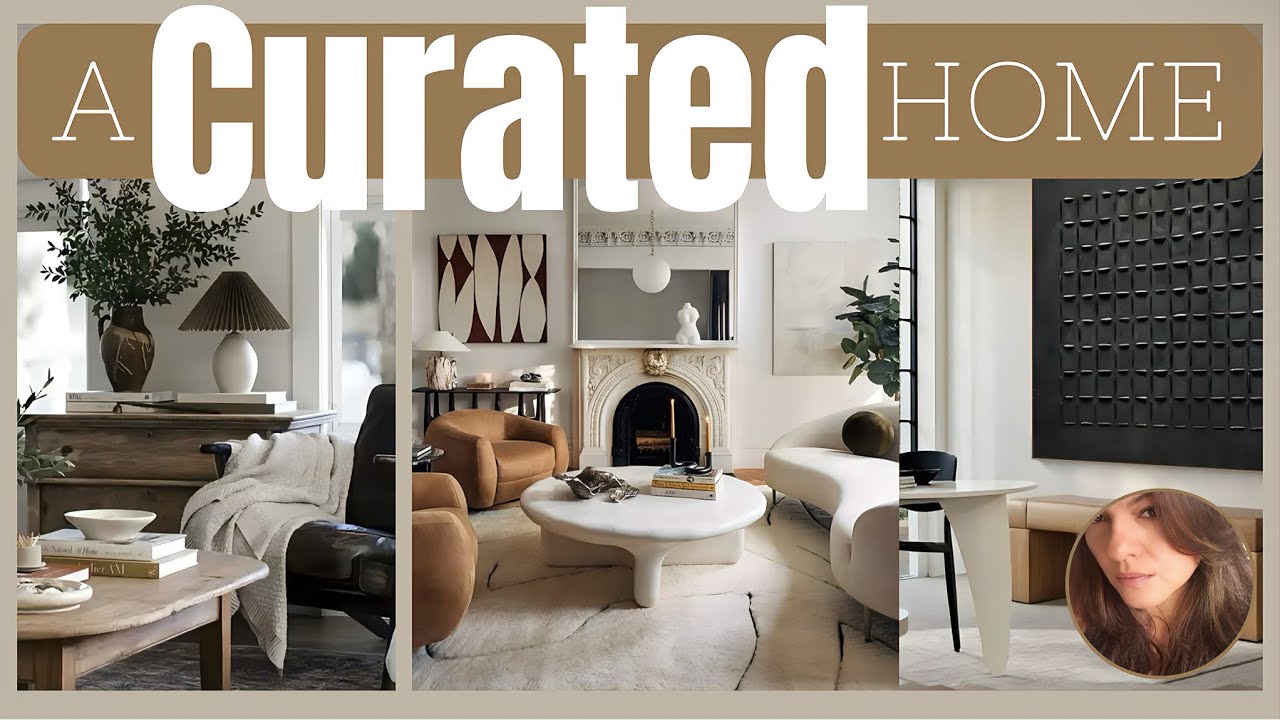
A masterclass in the principles behind curated living — how intentional selection and spatial discipline transform a house into a personal museum.
6. Lighting Design to Showcase Luxury Collections
Highlighting Boca do Lobo Craftsmanship Through Strategic Lighting
Selecting Complementary Lighting Fixtures and Installations
Lighting design for investment-grade furniture is not a secondary consideration — it is half the design. A Pixel Cabinet in a room with flat, even ambient lighting becomes a competent piece of furniture. The same cabinet under a well-positioned 15-watt warm LED accent at 45 degrees from above becomes a work of art: the triangular geometry casting micro-shadows that reveal the depth of each hand-finished surface, the gold leaf facets catching and releasing light as the viewer moves.
The fundamental rule of accent lighting for luxury furniture is that the fixture should be invisible and the light itself should be the visible element. Recessed adjustable spotlights (also called “eyeball” or “gimbal” fixtures) positioned at 30–45 degrees from vertical provide directional accent light without the fixture itself competing for visual attention. LED sources with a Color Rendering Index (CRI — a measure of how accurately a light source renders colors relative to natural daylight) above 95 are essential for revealing the true quality of high-end material finishes.
Using Accent Lighting to Enhance Material Qualities and Finishes
Different material qualities respond differently to light angle and color temperature. Gold leaf and brass finishes are best served by warm white light (2700K–3000K) at a low angle that skims across the surface, creating the shimmering quality that makes these finishes exceptional. Dark wood veneers like walnut benefit from a slightly cooler temperature (3000K–3500K) at a steeper angle that reads the grain pattern across the surface. Lacquered surfaces require careful angle management to prevent hot spots and glare — typically, a wide-beam source at a shallower angle produces the most even, flattering result.
Creating Ambiance While Preserving Design Details
Balancing Functional and Atmospheric Lighting
Luxury residential lighting requires a minimum of three distinct layers: ambient lighting (which provides the base level of general illumination necessary for daily activities), accent lighting (which highlights specific furniture and art), and decorative lighting (which contributes to the visual composition of the space itself — the chandelier, the table lamp, the floor lamp).
Each layer should be independently dimmable and controllable. A living room that moves from afternoon tea to dinner to late-evening conversation needs to transition across these uses through lighting adjustment, without any physical rearrangement of the space.
Preventing Light Glare on Luxury Surfaces
Glare — the uncomfortable or visually disruptive reflection of a light source from a polished surface — is one of the most common and most damaging technical failures in luxury interior lighting. On highly polished surfaces like lacquered furniture panels, marble tabletops, or gilded cabinet doors, glare can render the surface visually opaque, completely destroying the material quality that made the piece worth specifying in the first place.
Prevention requires positioning accent fixtures outside the specular reflection angle — the angle at which the light source would “mirror” into the viewer’s eye from the surface in question. For most eye-level viewing positions, this means positioning accents at 30 degrees or greater from the surface normal, and using diffusing lenses or frosted globes rather than clear sources on any fixture that has a direct sightline to a polished surface.
Temporal Lighting Design
Designing Flexible Lighting for Day and Evening Aesthetics
A curated luxury interior must perform across all temporal conditions: the flat, revealing light of a winter afternoon, the flattering golden warmth of a spring evening, the deep drama of a late-night social gathering. Designing specifically for one of these conditions at the expense of the others is a failure of completeness that clients notice — usually by feeling that their beautifully designed space somehow “doesn’t work” in certain conditions without being able to identify why.
Using Dimmers and Smart Controls for Optimal Presentation
Smart lighting control systems — Lutron’s Caséta and RadioRA systems are the industry standard for residential luxury applications — allow complex multi-scene presets that can be recalled by voice command, app, or programmed scheduling. For showrooms and model residences, this capability is particularly valuable: a programmed “evening” scene that activates every accent fixture at pre-set intensities, dims ambient lighting to atmospheric levels, and switches the decorative chandelier to its lowest warm setting creates a presentation environment in seconds that would otherwise require expert manual adjustment.
7. Integrating Boca do Lobo Pieces With Existing Décor
Bridging Design Eras and Styles
Combining Contemporary Luxury with Traditional Elements
The most sophisticated residential interiors are rarely pure stylistic expressions — they are informed dialogues between different design eras, where contemporary pieces gain depth from their historical context and traditional elements gain freshness from their contemporary companions. This principle is particularly well-suited to Boca do Lobo’s design language, which is itself a dialogue between Portuguese artisanal tradition and provocatively contemporary form.
A Versailles Sofa — with its hand-sculpted panels referencing Baroque decorative tradition and its velvet upholstery echoing the grand salons of 18th-century Europe — placed in a room with original plasterwork cornices, period wood floors, and genuine antique objects does not create a contradiction. It creates a conversation: the sofa’s contemporary materiality and scale re-energize the historical context, while the historical elements give the sofa’s references substance and resonance.
Creating Dialogue Between Modern and Classic Aesthetics
The design term for this productive tension between old and new is creative anachronism — the deliberate placement of temporally distant objects in visual relationship, creating meaning from the contrast. The meaning it creates in residential design is a story about the client: someone whose aesthetic sensibility spans time, who is not a prisoner of a single era’s taste, who curates rather than decorates.
Transitional Design Elements
Using Accessories and Textiles to Unify Collections
Accessories and textiles function as the connective tissue of a curated interior. A room where the furniture pieces are excellently chosen but the accessories are random or absent will feel unfinished; a room where accessories have been selected with the same curatorial rigor as the major pieces will feel complete and intentional.
The most effective unifying accessories share material or color characteristics with the dominant furniture pieces. If the room features significant gold leaf or brass elements, accessories in amber glass, bronze sculptures, or warm-toned ceramics create visual rhymes that the eye reads as coherence. If the dominant furniture palette is dark walnut and deep velvet, accessories in natural materials — aged leather, unglazed stone, linen — extend the tonal language into smaller scales.
Selecting Art and Décor That Complements Furniture Selections
Art selection in a Boca do Lobo-anchored interior should be approached with the same rigor as furniture selection: each work should have a clear relationship to the curatorial vision and a clear spatial role. Art that competes with statement furniture — either through similar scale, similar intensity, or conflicting aesthetic language — divides rather than amplifies the room’s design narrative.
The most effective approach is to position art in deliberate compositional relationship to major furniture pieces: hung above a console, placed in dialogue with a cabinet, or used to anchor a wall whose furniture occupies only the lower register of the visual field.
Respecting Architectural Features
Working With Existing Finishes and Built-In Elements
In renovated properties, heritage buildings, or spaces with strong existing architectural character, the curatorial challenge is integration rather than imposition — designing a Boca do Lobo collection that honors and amplifies the architectural context rather than fighting against it.
A building with hand-laid stone floors and exposed timber beams calls for Boca do Lobo pieces that reference natural materials and artisanal process — the Pixel Cabinet’s hand-finished wood surfaces, the Metamorphosis Sideboard’s organic form, or pieces from the Empire collection with their rich brass detailing and natural stone elements. The contemporary design language of these pieces creates productive tension with the heritage architecture, while their material affinity with natural stone and worked metal creates coherence.
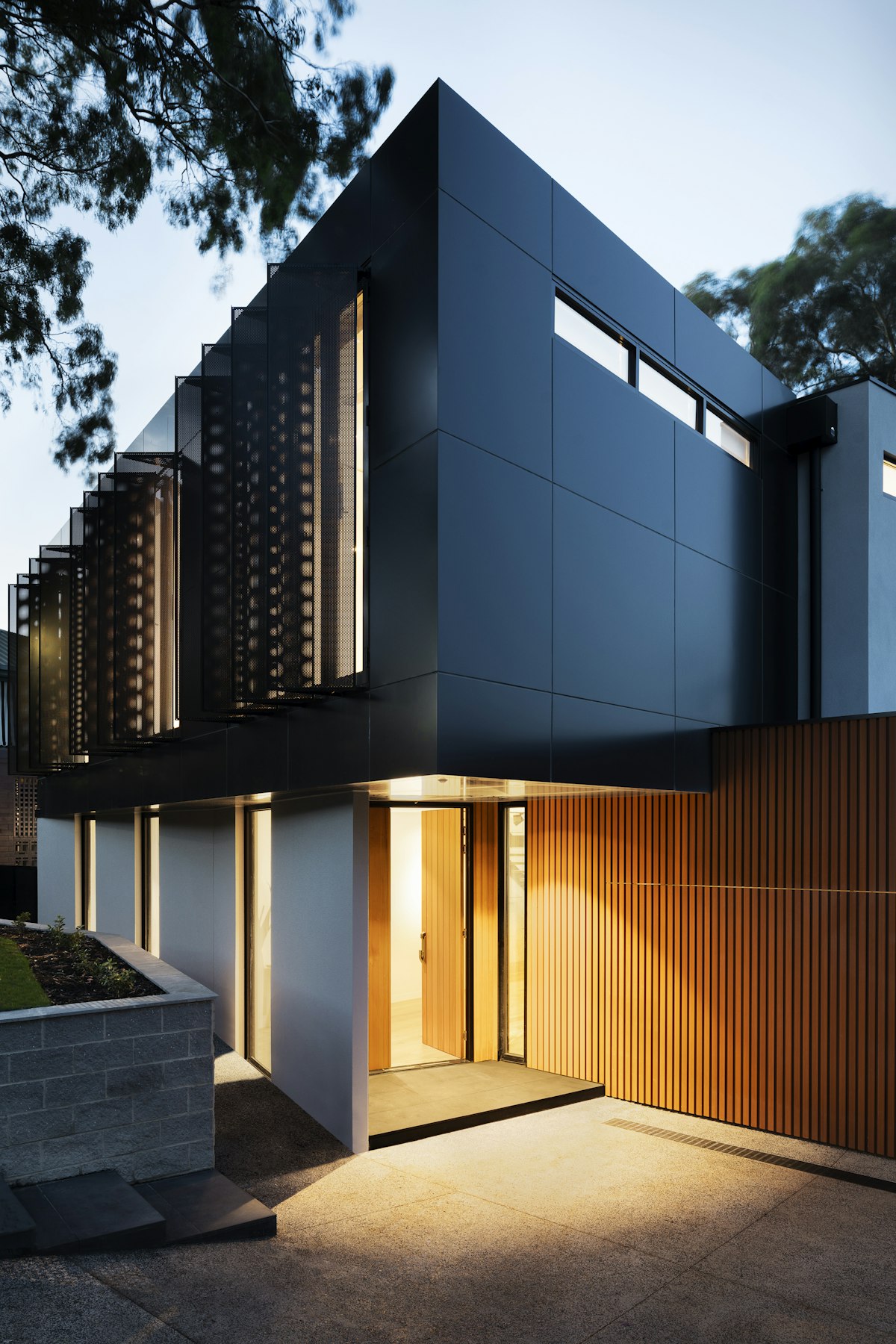 The collector’s private study: where heritage architecture and contemporary luxury design create a dialogue across centuries.
8. Storytelling Through Curated Collections
Developing Narrative Arcs in Residential Spaces
Using Furniture Placement to Guide Visual Journeys
Every great museum exhibition is designed as a journey — a sequence of experiences with a deliberate beginning, middle, and end. The visitor moves through the exhibition, encountering objects in an order that builds meaning progressively. The experience of the final work is richer for everything that preceded it.
Residential curation can operate on the same principle, particularly in larger homes where the journey from entrance to primary reception rooms to private spaces covers significant distance and multiple distinct environments. The entrance hall makes the first statement, establishing the vocabulary of the collection — the material qualities, the tonal register, the design era reference. Each subsequent room develops a dimension of that vocabulary while introducing something new, until the private spaces resolve the journey into intimacy and personal expression.
Creating Thematic Connections Across Multiple Rooms
Thematic connection is not stylistic uniformity. A home where every room is designed in the same palette and with the same furniture family is not curated — it is branded. Genuine thematic connection is subtler: a material thread (gold appears in every room, but always differently — as a statement finish in the living room, as a hardware detail in the study, as a textile thread in the bedroom), a scale reference (sculptural forms in multiple registers appear throughout the home), or a cultural narrative (Portuguese craft influences that begin with a Boca do Lobo piece in the living room and continue through azulejo-referenced accessories in the kitchen).
Personal Expression and Collector Identity
Reflecting Client Values and Lifestyle Through Selections
The most memorable luxury interiors are always, in some sense, portraits. They reveal something true about the people who inhabit them — not through thematic decoration (the travel photographs, the sports memorabilia) but through the quality of the selections themselves: the willingness to commit to complexity, the aesthetic courage to choose pieces that reward slow looking, the patience to acquire over time rather than furnish all at once.
For B2B design professionals, the ability to read a client’s values and translate them into curatorial decisions is among the highest-value skills in the practice. A client who believes in artisanal production and human skill as values (not just as taste preferences) will have a deep, intuitive resonance with Boca do Lobo’s story — the Portuguese atelier, the master craftspeople, the hundreds of hours embedded in each piece. Presenting the brand through that lens, rather than through a specifications sheet, creates a different kind of client commitment.
Building Collections That Evolve With Client Preferences
The finest collections are never complete. They continue to be refined as the collector’s eye develops, as new works enter the market, as the spaces themselves evolve. Building this expectation into the initial framing of a luxury design engagement — communicating to the client that the collection they are beginning today is not a destination but a practice — creates both a more intellectually honest design relationship and a more commercially productive long-term engagement.
Heritage and Legacy Considerations
Selecting Timeless Pieces With Long-Term Investment Value
Legacy considerations — the question of what this collection will mean in twenty or fifty years — are increasingly present in conversations with the most sophisticated luxury residential clients. These clients are not merely buying furniture; they are assembling what they believe will be heirlooms. They want to know that the pieces they choose will retain cultural significance, financial value, and aesthetic relevance across generational change.
Boca do Lobo’s limited-edition production strategy, its commitment to hand-craftsmanship, and its documented appreciation history (5–15% annually for iconic pieces, as explored in detailed analysis by Jade Ant Furniture) make it one of the most defensible choices for clients thinking in these terms.
Positioning Collections as Future Heirlooms
Heirloom positioning requires documentation. A Pixel Cabinet that will be passed to the next generation needs a provenance file: the certificate of authenticity, the original purchase documentation, photographs of the piece in its original installation context, and any correspondence that establishes its design significance. This documentation does not merely protect financial value — it creates narrative value, transforming an object from a possession into a story.
9. Practical Implementation and Project Management
Planning Acquisition Timelines
Phasing Purchases for Optimal Budget Management
A well-managed luxury furniture acquisition plan unfolds in four phases. Phase One (months 1–3) establishes the primary focal pieces in the highest-impact spaces: the entrance hall, the primary living room. Phase Two (months 4–6) develops the supporting composition in those spaces and introduces the first pieces into secondary rooms. Phase Three (months 7–12) completes the primary spaces and establishes the framework for private spaces — bedrooms, study, secondary reception rooms. Phase Four (month 12 onward) is the ongoing refinement phase, where the collection is developed and evolved based on lived experience of the spaces.
This phased approach has a practical benefit beyond budget management: it prevents the decision fatigue that results from specifying an entire home simultaneously. When decisions are made sequentially, each new piece can be chosen in full awareness of what precedes it, producing the accumulated coherence of genuine curation rather than the simultaneous selections of interior decoration.
Coordinating Delivery and Installation Schedules
Boca do Lobo’s production lead times for made-to-order pieces range from 8 to 16 weeks depending on complexity and current production schedule. Planning delivery and installation schedules must account for this production timeline, as well as for the sequencing of construction and finishing work in the spaces themselves. Major furniture should be installed only after all painting, plastering, and floor finishing is complete — not only to protect the pieces, but to ensure that the final specification of surrounding finishes is informed by the actual presence of the furniture.
Working With Installation and Design Teams
Communicating Vision to Fabricators and Installers
The translation of curatorial vision into physical installation requires detailed, unambiguous communication with every member of the installation team. Written specifications, dimensional drawings, annotated photographs of intended placement, and — for complex compositions — three-dimensional renderings ensure that the design intent is not lost in the practical execution.
Fabricators and installers working with investment-grade furniture must understand that they are handling objects of significant financial and design value. Briefing sessions, material handling protocols, and clear communication about the consequences of installation damage are not excessive — they are professional standards that protect both the client’s investment and the project’s design integrity.
Quality Assurance and Presentation Standards
The final quality assurance walk-through before client presentation is the last line of defense for the entire project’s design credibility. Every surface should be inspected at the viewing distances at which it will actually be experienced. Every accent light should be adjusted to its intended position and intensity. Every textile should be laid, every cushion placed, every accessory positioned. The client’s first experience of the completed space must be the experience the designer intended — not a work in progress.
Documentation and Collection Management
Creating Inventory Systems for Luxury Collections
A complete collection inventory for a luxury residential project should include, for each piece: the maker and model identification, edition number and certificate of authenticity reference, date of acquisition, purchase price, installation location, high-resolution photographs (full piece and detail), material and finish specifications, maintenance requirements, and professional contact details for restoration or repair.
This documentation serves multiple purposes simultaneously: insurance valuation, future resale or provenance tracking, estate planning, and the ongoing advisory relationship between the designer and client. Maintaining this record as a living document — updating it as new pieces are acquired and existing pieces are moved or sold — is one of the most valuable services a luxury design practice can offer.
Maintaining Records for Insurance and Provenance
Specialty insurance for high-value furniture collections requires professional appraisals, detailed condition reports, and documented provenance. The American Society of Appraisers and the International Society of Appraisers both maintain directories of qualified appraisers with furniture specialization. For international collections, insurers specializing in fine art and luxury objects — including Chubb, AXA Art, and Berkley One — offer agreed-value policies that pay replacement cost rather than depreciated value in the event of loss.
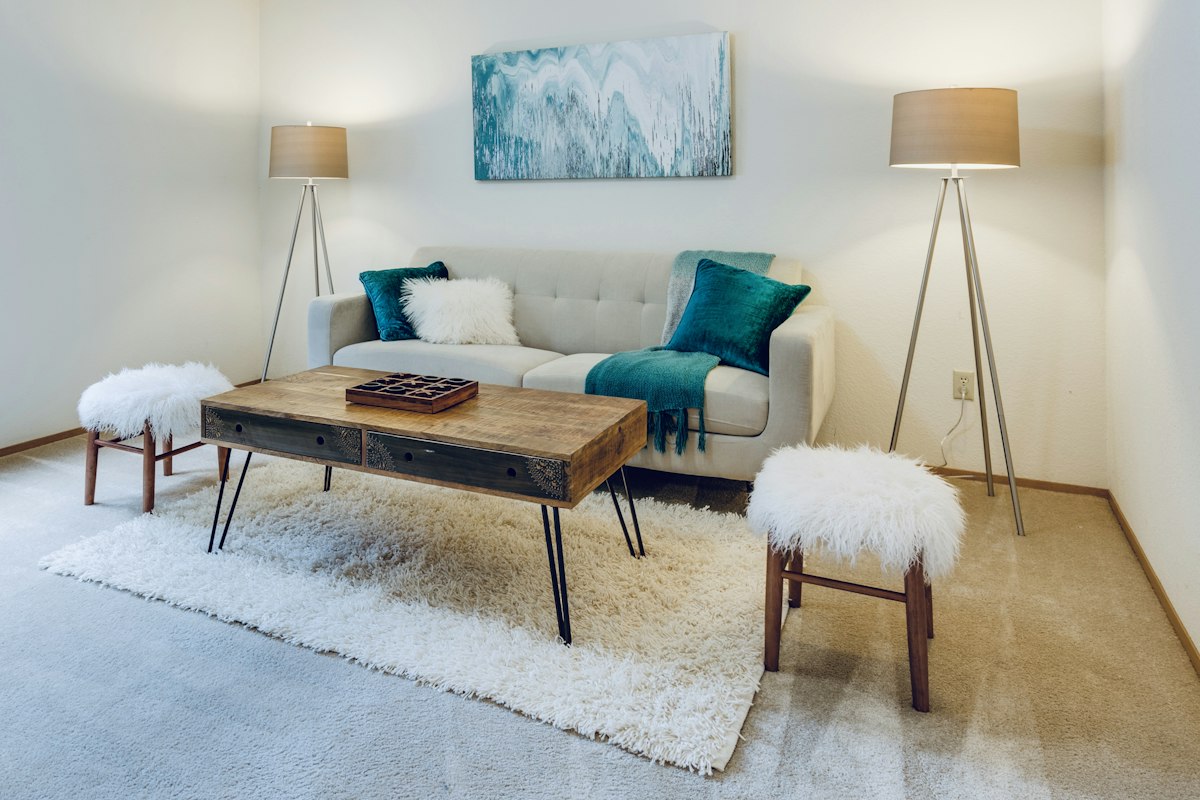 Documentation begins here: every object in a curated luxury interior deserves a provenance file as carefully maintained as its physical condition.
10. Maintaining and Evolving Your Luxury Collection
Preservation and Care Protocols
Developing Maintenance Schedules for Premium Materials
Different materials within a Boca do Lobo collection have different maintenance requirements, and a clearly documented care schedule prevents the cumulative damage that results from well-intentioned but uninformed cleaning or neglect.
Wood surfaces (veneers, solid wood, lacquered panels) should be dusted weekly with a clean, dry microfiber cloth. Polished wood benefits from application of a furniture-grade conditioning oil (not spray polish containing silicones, which build up a residue that eventually clouds the finish) every three to six months, depending on humidity levels in the space. Lacquered surfaces require only microfiber dusting and should never be cleaned with abrasive agents or silicone-based products.
Gold leaf and gilded surfaces are delicate — they can be damaged by direct contact with oils from human hands. Dusting should be done with an extremely soft brush (sable or squirrel hair) rather than cloth contact. Never apply cleaning agents of any kind to gold leaf surfaces.
Leather upholstery requires conditioning with a specialist leather cream every three to six months, and immediate attention to any liquid spills with a clean, absorbent cloth (do not rub — blot only). Keep leather away from direct sunlight and heat sources, both of which accelerate drying and cracking.
Brass and metal finishes in living lacquer (unlacquered brass that patinas naturally) require only occasional cleaning with a dedicated brass polish to maintain the finish quality. Lacquered brass or chrome-plated surfaces need only dry microfiber dusting.
Protecting Investments Through Proper Care Practices
Environmental conditions are the single most significant factor in the long-term value retention of luxury furniture. Relative humidity should be maintained between 45–55% year-round — extremes in either direction cause wood to expand, contract, and eventually crack or warp. Temperature should remain between 18–22°C. UV exposure is among the most damaging environmental factors for all organic materials: gold leaf fades, leather dries and discolors, and wood veneers bleach unevenly under direct or indirect UV radiation. UV-filtering window film or blinds on windows adjacent to statement pieces are a worthwhile investment that often costs less than a single repair.
Adapting Collections to Lifestyle Changes
Refreshing Spaces Without Compromising Curatorial Vision
Lifestyle changes — a growing family, a change in professional circumstances, a geographic relocation — create the need to adapt curated collections without abandoning them. The key principle is: adapt the context, not the vision. When a family expands and a formal dining room needs to become more child-friendly, the response is not to replace the Boca do Lobo dining table but to introduce protective measures (a custom-cut glass top, for example) and adjust the surrounding textile and accessory elements for durability. The curated vision remains; the practical accommodations respect it.
Adding New Pieces While Maintaining Cohesion
New acquisitions to an established collection require the same curatorial rigor as the initial selections, with an additional constraint: the new piece must work within the context that already exists. Before specifying a new Boca do Lobo piece into an established interior, the full context should be assessed: how does it relate to existing pieces in material language and tonal register? Does it create a new focal point or support an existing one? Does it introduce a new thematic thread or develop an existing one?
New pieces that answer these questions clearly will strengthen the collection. New pieces that do not may be individually excellent while being curatorially disruptive — a tension that can only be resolved by removing or repositioning existing elements or, ultimately, not adding the new piece.
Future-Proofing Your Design Investments
Selecting Versatile Pieces That Transcend Trends
The test of future-proofing is simple: would this piece have been considered beautiful twenty years ago? Would it be considered beautiful twenty years from now? Boca do Lobo pieces with strong craft traditions at their core — the Pixel Cabinet’s mathematical geometry, the Versailles Sofa’s reference to decorative traditions that have endured centuries — pass this test more reliably than pieces whose appeal depends on current stylistic conventions.
Building Flexibility Into Long-Term Collection Plans
Long-term collection plans should designate certain pieces as “core” (never to be sold or relocated — the anchors of the curatorial vision) and others as “evolving” (pieces that may be repositioned, traded, or added to as the collection develops). This distinction, made explicit at the point of initial acquisition, allows the collection to grow and evolve without losing its structural coherence.
The Art of Intentional Luxury Living
Curating a personal museum at home is one of the most demanding and most rewarding challenges in luxury design. It demands more than taste — it demands patience, rigor, the ability to listen deeply to clients and spaces, and the intellectual commitment to make every decision in service of a coherent vision rather than individual impulse.
The reward is a space that functions differently from any other: not as a backdrop to life but as an active participant in it. A home where the entrance hall tells you something true about the people inside. Where the living room rewards the kind of slow, attentive looking that daily life rarely permits. Where the bedroom is genuinely restorative because everything in it has been considered and nothing is accidental.
Boca do Lobo pieces, integrated with the strategic discipline that this guide describes, are among the most powerful tools available for achieving this standard. Their craftsmanship carries meaning. Their limited-edition production creates genuine scarcity and value. Their design narratives — rooted in Portuguese cultural heritage and articulated in the most contemporary visual language — give collectors something to think about, not just something to look at.
For B2B design professionals and luxury furniture specialists, this philosophy is not merely aesthetic. It is commercial. Clients who experience their homes as curated collections are clients who return, who refer, who trust the advisors who helped them see and achieve something they could not have reached alone. That is the business case for curation — and it is as compelling as the design case.
To explore how Jade Ant Furniture can support your clients’ curation journey — from initial collection strategy through acquisition, installation, and long-term management — visit us at www.JadeAnt.com to connect with our B2B partnership team.
Glossary of Key Terms
Curatorial Vision: The single governing idea that directs all design decisions in a curated interior — not a style preference but a statement of intent about what the space is meant to be and express.
Visual Hierarchy: The organized sequence in which the eye encounters elements in a composition — from the most emphatic (the statement piece) to the most subtle (background foundational elements).
CRI (Color Rendering Index): A measure of how accurately a light source renders colors relative to natural daylight. Scores above 90 are recommended for luxury interiors; above 95 for revealing the full quality of premium material finishes.
Negative Space: The areas of a room deliberately left clear of objects — not emptiness but visual breathing room that allows statement pieces to be experienced fully.
Patina: The surface quality that develops on metals (particularly brass and bronze) through natural oxidation over time — valued in luxury interiors as evidence of material authenticity and age.
Provenance: The documented ownership and exhibition history of an object, from creation to the present. Critical for both authentication and investment value in the luxury furniture market.
Specular Reflection Angle: The angle at which a light source reflects directly into a viewer’s eye from a polished surface — to be avoided in lighting design to prevent glare on luxury finishes.
Temporal Lighting Design: The design of lighting systems that can adapt to different times of day and different use scenarios through scene presets, dimmers, and smart controls.
Creative Anachronism: The deliberate placement of objects from different design eras in visual relationship, creating meaning from the productive tension between historical and contemporary references.
Frequently Asked Questions
1. How many Boca do Lobo pieces should a luxury home include?
There is no fixed number — quality and intentionality matter far more than quantity. Most thoughtfully curated luxury residences feature three to seven signature Boca do Lobo pieces distributed strategically across primary living areas: typically one anchor piece per major room, selected for its ability to define that space’s curatorial character. A single Pixel Cabinet in an entrance hall makes a stronger statement than four secondary pieces placed without clear compositional logic. The focus should always be on creating meaningful, memorable focal points rather than filling space.
2. Can Boca do Lobo furniture work in traditional or transitional interiors?
Absolutely — and some of the most compelling results occur precisely in this context. Boca do Lobo’s design language is itself a dialogue between tradition and modernity: pieces like the Versailles Sofa reference Baroque decorative heritage while being resolutely contemporary in material and form. This dual nature makes them particularly effective in heritage architectural contexts, where they create a productive creative anachronism that energizes both the historical setting and the contemporary piece. The key is identifying shared material or proportional logic between the existing context and the new piece.
3. How do we ensure color coordination across multiple Boca do Lobo collections?
Work from a unified material palette rather than a color palette. Identify two to three primary material characters that will recur throughout the project — for example, walnut veneer, satin brass, and deep velvet — and select pieces that share these elements across different design families. This creates visual continuity even when individual pieces have distinct design languages, because the eye reads the material consistency as coherence. Finish compatibility (warm versus cool metals, matte versus polished surfaces) should be assessed for every combination before finalizing specifications.
4. What is the best approach to lighting luxury furniture collections?
Use layered lighting with at least three independently controllable circuits: ambient (general illumination), accent (focused on specific pieces), and decorative (the visible fixtures that contribute to the room’s visual composition). Accent fixtures for Boca do Lobo pieces should be CRI 95+ warm white LED sources positioned at 30–45 degrees from vertical, outside the specular reflection angle for any polished surfaces in the piece. Gold leaf and brass elements benefit from warm tones (2700K); dark wood veneers from slightly cooler temperatures (3000K–3500K). All circuits should be independently dimmable.
5. How can interior designers present Boca do Lobo collections to end clients effectively?
Present collections as curated narratives rather than product specifications. Begin with the curatorial vision — the one-sentence statement of what the space is meant to be — and show how each piece contributes to that vision. Use mood boards that show pieces in spatial context rather than on white backgrounds. Discuss the craftsmanship story — the 1,088 hand-finished triangles of the Pixel Cabinet, the hand-carved resin panels of the Versailles Sofa — because clients who understand how a piece is made understand why it costs what it costs and why it will be worth more in ten years. Discuss investment potential alongside design potential.
6. What is the typical timeline for acquiring a complete luxury residential collection?
Plan for 12–18 months for a comprehensive multi-room collection, phased in four stages as described in Section 9 of this guide. Boca do Lobo’s made-to-order production lead times of 8–16 weeks must be factored into delivery scheduling. Phased acquisitions prevent decision fatigue, allow each new piece to be chosen in full awareness of what already exists in the space, and distribute budget investment across a period that clients find financially manageable. Rushing the process typically produces the one outcome that curation is designed to avoid: a space that feels assembled rather than composed.
7. How do we handle space constraints when curating multiple statement pieces?
Prioritize vertical composition — tall cabinetry, wall-mounted elements, varied-height compositions — over horizontal spread. Maintain minimum circulation clearances of 90cm for primary paths. Select pieces with complementary scale relationships: pair one large anchor piece with smaller sculptural elements rather than clustering pieces of similar scale. Most importantly, treat negative space as a design resource rather than a problem: the breathing room around a statement piece is part of what makes it a statement.
8. Can Boca do Lobo furniture be mixed with other luxury brands?
Yes, when done with clear curatorial intent. The critical condition is that Boca do Lobo pieces maintain visual dominance within the composition — other brands’ pieces should play supporting roles, sharing material or tonal characteristics with the Boca do Lobo anchor without competing for the primary focal position. Brands like Minotti, Liaigre, and Holly Hunt translate well in supporting roles; their design restraint and material quality complement rather than compete with Boca do Lobo’s more emphatic visual character.
9. How do we protect furniture investments through proper care?
Develop material-specific maintenance protocols (detailed in Section 10 of this guide) and communicate them clearly to clients at the time of delivery. The most important environmental controls are humidity (maintain 45–55%), temperature (18–22°C), and UV exposure (filter direct sunlight from windows adjacent to all wood and leather pieces). Establish an annual inspection schedule with a qualified furniture conservator for high-value collections. Document all maintenance actions — this record forms part of the provenance file that supports future appraisal and resale.
10. What is the difference between a curated collection and simply purchasing multiple pieces?
Curation is the difference between a sentence and a list. A list of beautiful furniture pieces occupies space. A curated collection tells a story: each piece is chosen in deliberate relationship to the others, placed within a compositional logic, and selected to contribute to a unified curatorial vision. The result is a space where the whole is experienced as more than the sum of its parts — where visitors sense something intentional and compelling without necessarily being able to articulate what it is. That quality of intentionality is what distinguishes a personal museum from an interior design project.
11. How do we approach lighting design for different room types?
Master bedrooms require softer, warmer lighting that creates a restorative atmosphere — think 2700K dimmable accent lighting that reveals surface qualities without creating visual energy. Living rooms benefit from layered compositions with higher-intensity accent fixtures on statement pieces, combined with atmospheric decorative lighting. Dining areas need warm, focused overhead lighting (pendants or recessed accents directly above the table) at an intensity that flatters both the furniture and the people seated around it — approximately 200–300 lux on the tabletop, with surrounding ambient lighting dimmed to 50–70 lux. Each room type requires its own lighting scene designed to the specific use case.
12. What role do accessories play in completing a Boca do Lobo collection?
Accessories function as the connective tissue of a curated interior. They create visual rhymes between major pieces — an amber glass object that echoes the gold leaf of a nearby cabinet, a ceramic form that references the sculptural quality of an upholstered frame. They should be selected with the same curatorial rigor as major pieces: every accessory should have a clear relationship to the curatorial vision and a clear spatial role. The most common mistake is overcrowding — too many small objects that individually attract the eye but collectively create visual noise that undermines the statement pieces they are meant to support.
13. How do we handle style evolution when clients want to refresh established collections?
Begin by distinguishing between core pieces (the anchors of the curatorial vision, which should not change) and evolving elements (accessories, textiles, secondary furniture, art). Refreshes should target evolving elements first — new textiles, repositioned art, updated accessories — before considering replacement of major furniture pieces. When a new Boca do Lobo piece is being considered for an established interior, test it against the existing curatorial vision sentence before specifying: does it develop the vision, or does it contradict it? New acquisitions that strengthen the vision enhance the collection; those that contradict it, however individually beautiful, should be reserved for a different project.
14. What is the investment perspective on luxury furniture curation?
Boca do Lobo limited-edition pieces have demonstrated appreciation rates of 5–15% annually for iconic works, with secondary market premiums of 20–60% above original retail for well-documented pieces in excellent condition (as analyzed in depth at Jade Ant Furniture). The investment case for luxury furniture curation rests on three pillars: financial appreciation of individual pieces, enhancement of property value through interior quality (luxury residential properties with professionally curated interiors consistently achieve higher sale prices and shorter market times), and lifestyle quality returns — the daily experiential value of inhabiting a beautifully curated space.
15. How do we communicate collection concepts to B2B clients like hotel designers?
Present curated collections as complete hospitality design solutions with quantifiable ROI potential, not as furniture catalogs. The business case for specifying Boca do Lobo in a luxury hotel rests on three demonstrable outcomes: guest experience enhancement (studies consistently show that design quality is among the top three factors in luxury hotel satisfaction scores), brand differentiation (a hotel whose public spaces feature investment-grade furniture creates an instantly recognizable design identity), and long-term asset value (pieces that appreciate rather than depreciate represent a different category of capital expenditure from conventional hospitality furniture). Provide case studies, reference properties, and durability data alongside design presentations.
For B2B partnership inquiries, collection strategy consultations, and exclusive Boca do Lobo access, visit www.JadeAnt.com. For Boca do Lobo’s complete product catalog and current limited-edition availability, visit bocadolobo.com. For professional appraisal resources, consult the American Society of Appraisers and International Society of Appraisers.