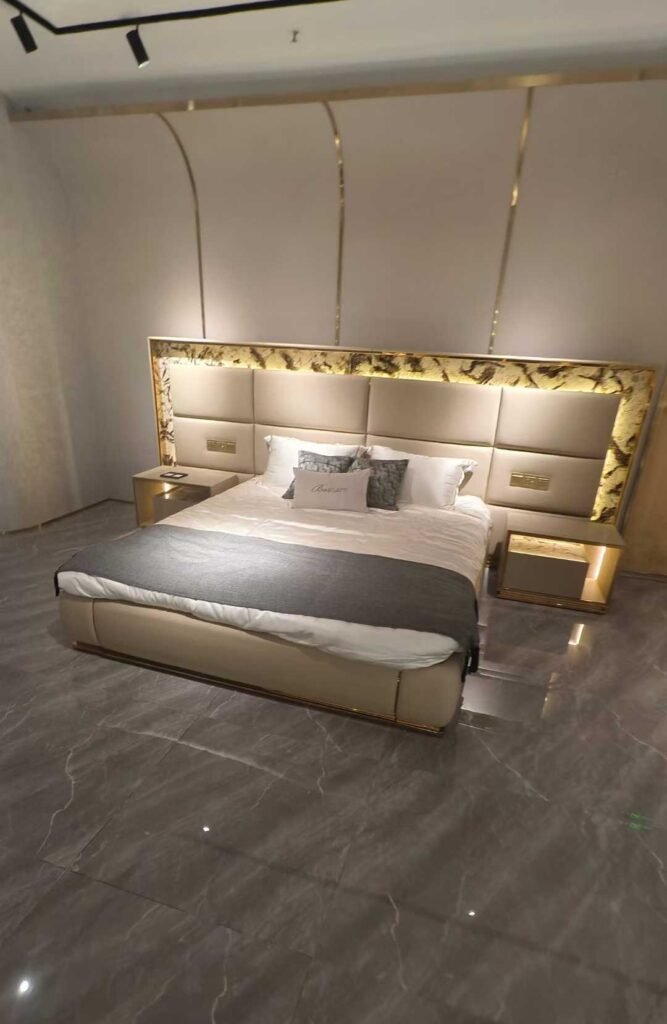
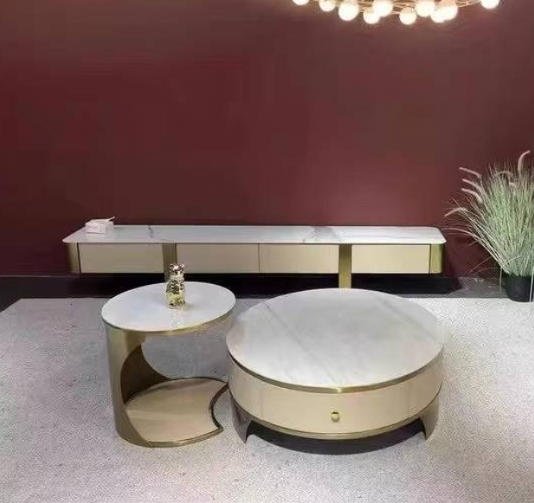
Master the art of positioning bespoke coffee tables as premium solutions that elevate your clients’ spaces — and your profit margins.

The difference between a $400 coffee table and a $4,000 one is rarely the wood. It’s the story you tell about what each one is worth — and who is telling it. Image: Unsplash
Introduction
The global coffee table market was valued at $14.05 billion in 2025 and is projected to reach $24.85 billion by 2034, according to The Insight Partners. That growth is not coming from commodity flat-pack. It is being driven by specification-conscious buyers — interior designers, hospitality fit-out teams, and showroom curators — who are shifting their sourcing decisions away from interchangeable mass-produced product and toward pieces that genuinely serve their clients’ design vision.
For furniture distributors, showroom agents, and interior designers, this shift represents one of the most concrete margin opportunities of the next decade. Custom-made coffee tables carry gross margins of 40–60% on well-managed programs, compared to the 25–35% typical on commodity catalog pieces. They generate the kind of repeat-client relationships that 76–78% of interior designers cite as their primary revenue driver. And they create a competitive position that is nearly impossible for a lower-price competitor to replicate — because exclusivity, by definition, cannot be copied.
But the margin is only realized by agents who know how to sell it. The typical custom coffee table conversation breaks down not at the product stage, but at the pitch stage — when a distributor can’t answer the margin question clearly, when a showroom agent flinches at a lead-time objection, or when a designer frames customization as a cost rather than a solution.
This guide solves that. Every section is written for a specific challenge you face as a B2B agent: the objection you hear most, the pitch you’re not sure how to build, the close you keep almost reaching. What follows is the playbook for moving from order-taker to trusted advisor — in the room where custom coffee tables are sold.
1. Understanding Your B2B Client’s True Buying Motivations
The Real Reasons Distributors, Showrooms, and Designers Buy Custom Coffee Tables
Beyond Aesthetics — The Business Case Your Clients Actually Care About
When a showroom buyer or hospitality designer says yes to a custom coffee table, they are not buying design. They are buying a commercial outcome — and understanding which outcome matters most to which buyer is what separates a pitch that closes from one that gets politely deferred.
Profit margins and markup potential for showroom inventory. Custom pieces protect your distributor client’s margins in a way that commodity product cannot. Wholesale furniture profit margins on custom programs consistently run 10–20 percentage points higher than stock product in the same category. More importantly, custom pieces resist the discounting pressure that commodity furniture faces constantly — because your client cannot find the identical piece at a lower price from another supplier. The margin protection story is not a selling point for the furniture; it is a business argument for the program.
Differentiation from mass-produced competitors. A showroom carrying the same catalog as its three nearest competitors is a price competition waiting to happen. Custom coffee tables — particularly exclusive designs, regional exclusivity programs, or proprietary finishes — create a product range that physically cannot be comparison-shopped. Buyers who understand this dynamic are not evaluating custom on price per unit; they are evaluating it on competitive moat.
The Interior Designer’s Perspective: Why Custom Tables Solve Their Client Retention Problems
Interior designers face a specific operational pain that custom pieces directly address: the endless revision cycle that happens when no single in-stock piece exactly fits the brief. Every modification request — “can we make it 15 inches shorter?”, “can we get it in a different finish?” — against a catalog piece that doesn’t accommodate it adds time, strains the designer-client relationship, and risks the project’s timeline.
Creating signature design solutions that justify premium fees. A designer who specifies a custom coffee table with bespoke dimensions, a proprietary finish, and material details their client cannot see elsewhere is delivering design authorship — something a stock catalog piece can never provide. That authorship is what justifies a premium design fee. When you sell a designer on custom capability, you are not selling them furniture; you are selling them a tool for their own premium positioning.
Reducing design revisions and client indecision through customization options. Custom specification — precisely because it requires explicit decisions about dimensions, finish, and material — actually reduces indecision, not increases it. When a client is forced to choose from 6 specific finish samples and 3 specific dimension options rather than browse an unlimited online catalog, decisions happen faster and hold. Designers who have moved to custom-forward specification models consistently report fewer mid-project scope changes and fewer post-delivery complaints.
Hotel and Commercial Fit-Out Designers: Durability, Consistency, and Project Timelines
Ensuring tables meet specific space dimensions and design standards. A hotel lobby coffee table must work within millimeter-specific footprint constraints, coordinate with the floor finish, accommodate the seating height of the specified lounge chairs, and withstand the commercial use cycle of a public hospitality environment without surface degradation within a two-year maintenance window. No catalog piece meets all four requirements simultaneously. Custom specification does.
Managing bulk orders with guaranteed quality control. Hotel fit-out contracts for 10, 25, or 100+ identical coffee tables across multiple room types or properties depend entirely on manufacturing consistency. A well-run custom manufacturer delivers unit 100 to the same specification as unit 1. Mass-produced stock does not guarantee batch-to-batch finish consistency, and for hospitality projects where brand standards require visual uniformity across properties, that inconsistency is a disqualifying risk.
2. Mastering the Key Selling Points That Resonate With B2B Buyers
What Actually Moves Decision-Makers to Say “Yes”
The Margin Story — How Custom Tables Protect Your Distributor Clients’ Bottom Line
Before you talk materials or design, talk numbers. Distributors who carry custom coffee tables in their program typically achieve retail markups of 100–200% over wholesale cost — versus 50–100% on ready-made stock. That difference, on a product that sells at comparable frequency, compounds significantly over an annual sales cycle.
Positioning custom-made tables as profit-protected products versus commoditized pieces. The core commercial argument for custom is not “it looks better” — it is “it can’t be comparison-shopped.” A distributor client who understands that their custom program generates margin that their stock range cannot protect will prioritize it accordingly. Position custom coffee tables as the section of their inventory that never ends up in a price war.
Explaining the wholesale markup structure and competitive advantages. Be explicit with the numbers. A custom coffee table at $1,200 FOB (Free On Board — the price at which the manufacturer transfers ownership at the port of origin) can be positioned to the end buyer at $3,500–$4,800 depending on the market and the distribution tier. That is a 190–300% markup. The same table at a 30% premium over mass-produced cost achieves more than double the gross margin per unit.
Quality and Craftsmanship as Risk Mitigation
Material sourcing transparency and durability guarantees. Solid hardwood — the foundation of genuine custom furniture — carries a material premium of 3–7x over the MDF (Medium-Density Fiberboard — an engineered wood product made from compressed wood fibers and resin, widely used in volume production for its cost efficiency) used in mass-production. But the premium corresponds directly to lifespan: solid hardwood coffee tables in commercial hospitality settings routinely remain serviceable for 15–25 years with maintenance. MDF-core alternatives degrade visibly in commercial settings within 5–8 years under the same use conditions.
How superior construction reduces client complaints and warranty issues. A distributor client who has had to manage a warranty claim on a delivered order knows exactly what that process costs — not just financially, but in relationship capital with the end designer or hotel buyer. Custom pieces from quality manufacturers, built to explicit specifications with inspection documentation, generate dramatically fewer post-delivery disputes than stock product, where finish inconsistency and dimensional variation are structural risks of the production model.
Customization as a Client Retention Tool
Helping showrooms create exclusive collections their competitors can’t replicate. Design exclusivity — a custom finish, a proprietary leg profile, a signature material combination — is the only genuinely durable competitive advantage in a market where pricing, delivery, and service can all be matched. A showroom that works with Jade Ant furniture to develop a signature collection of custom coffee tables in a proprietary dark bronze finish and white oak combination is the only source for those specific pieces in their market. No competitor can access them without starting from scratch.
Building client loyalty through bespoke design services. Research on furniture retail client retention found that repeat customers in the furniture segment spend 23% more per subsequent visit than first-time buyers. Custom programs build this repeat relationship at the specification stage — every project that involves your custom sourcing capability creates a client who returns to you for the next project because finding a comparable capability elsewhere requires significant effort.
Lead Times and Production Reliability
| Order Type | Production Lead Time | Total Timeline with Shipping |
|---|---|---|
| Standard custom, stock finish | 6–8 weeks | 10–12 weeks |
| Modified dimensions (up to 20%) | 7–9 weeks | 11–14 weeks |
| Proprietary finish / COM material | 6–8 weeks post-approval | 12–15 weeks total |
| Complex inlay or specialty material | 10–14 weeks | 14–18 weeks |
| Hotel bulk order (25+ units identical) | 8–12 weeks | 12–16 weeks |
Transparent timelines that help agents manage client expectations. An agent who says “8–12 weeks” without clarifying what that timeline includes is not being transparent — they are setting up a future dispute. Specify clearly: 8–12 weeks covers production. Add 3–5 weeks for ocean freight to US/European ports, plus 1–2 weeks for customs clearance. Total realistic window: 12–18 weeks for most custom orders. Clients who understand this upfront do not complain about it at week 14. Clients who were told “about 8 weeks” do.
How reliable delivery protects your agent’s reputation with their end clients. Your reputation in a B2B market is not built from your first successful delivery — it is built from your 10th, 20th, and 30th. Every delivery that matches the specification and arrives within the committed window adds to a professional trust account that pays compound interest in referrals and repeat specifications. Every delivery that surprises the client — even positively — signals that your process is unpredictable.
3. Building Your Pitch Around Your Client’s Pain Points
Positioning Custom Coffee Tables as Solutions, Not Products
The Showroom Agent’s Challenge: “How Do I Differentiate in a Crowded Market?”
A showroom in any established furniture market competes against dozens of suppliers who can all point to quality, service, and competitive pricing. The agents who break out of that undifferentiated group are the ones who give buyers something no competitor is offering — which, in a custom program, means exclusive design access.
Demonstrating exclusivity and the premium positioning strategy. Lead with the competitive protection argument: “Every other supplier in your market is selling from the same catalog. We can build you a collection that is yours alone — and no buyer who visits your showroom can find those pieces anywhere else at any price.” That argument lands with showroom buyers because it solves a problem they deal with daily.
Creating a signature collection that becomes your showroom’s calling card. The most effective custom programs are not sold piece by piece — they are sold as a collection identity. A showroom that has three signature coffee table designs in its own proprietary finishes becomes the destination for designers looking for those specific pieces. The collection becomes marketing collateral, social media content, and a professional reputation in one.
The Interior Designer’s Challenge: “My Clients Keep Changing Their Minds”
Designer-client indecision is almost always a symptom of too many undifferentiated options — not too few. When a client can browse 200 similar coffee tables online and nothing feels definitively right, they keep looking. When the custom conversation narrows their decision to three finish options, two dimension variants, and a shortlist of material pairings, they can commit — and tend to stay committed because they feel ownership of the decision.
Using customization options to reduce design revisions and project delays. Frame this to the designer precisely: “Custom specification forces the design decision earlier in the project, which means you’re not managing change orders at the 70% completion stage. It moves client commitment earlier, and earlier commitment means tighter timelines and cleaner project delivery.” That argument speaks directly to the designer’s operational reality.
Offering design consultation services as a value-add that justifies your margins. The most effective B2B furniture agents do not just take orders — they contribute to design decisions. Arriving at a design meeting with material samples, dimensional CAD drawings, and a shortlist of specifications tailored to the project brief transforms you from supplier to collaborator. Collaborators are never comparison-shopped.
The Distributor’s Challenge: “How Do I Compete Without Dropping Prices?”
The price-competitive distributor’s trap is built by product selection: when you sell what everyone else sells, price is the only differentiator left. Custom programs exit the trap because the product itself is no longer available from a competing source.
Shifting the conversation from price to value and exclusivity. “I’m not trying to beat your current supplier’s price — I’m trying to build you a product range they can’t match at any price.” That reframe takes the conversation from a competitive bidding scenario to a strategic business development discussion. Distributors who understand their own margin challenge will follow that conversation wherever it leads.
Building a portfolio of custom projects that showcase ROI. A distributor who can show a prospective client three completed projects — with the design brief, the custom specification, the delivered outcome, and the margin achieved — is presenting data, not opinion. Build your case study library with every custom project you complete. Photograph the delivered pieces, document the specification journey, and quantify the outcomes. This portfolio is your most valuable sales asset.
The Hotel Fit-Out Designer’s Challenge: “I Need Consistency Across Multiple Locations”
Consistency across locations is the most technically demanding requirement in hospitality fit-out, and it is also the clearest argument for custom specification over catalog selection. When a hotel brand requires matching coffee tables across 12 properties with the same finish, same dimensions, and the same structural specification, the catalog option fails by definition — finish batches vary, production runs discontinue, and dimensional tolerances differ by manufacturer. A custom program with locked specifications solves the consistency problem at the design stage.
Standardized customization options that ensure brand consistency. Position your custom capability as a “locked specification” program: “Once we develop your standard coffee table specification, every subsequent order — whether it’s for 5 tables or 50 — is produced to the same exact drawing. Your brand consistency is managed at the factory, not assembled from matching approximations at the installation site.”
Bulk ordering advantages and project management support. Large-scale hospitality orders carry operational complexity beyond their commercial value — production scheduling, phased delivery coordination, quality inspection documentation, and warranty management across multiple properties. Agents who take this complexity away from the fit-out designer — rather than just supplying product — create a dependency that is worth more than any catalog discount.
4. Pre-Sale Research: Knowing Your Client Before You Pitch
The Preparation That Separates Closers From Order-Takers
Researching Your B2B Prospect’s Current Inventory and Market Position
Before you approach a showroom agent, distributor, or design firm with a custom coffee table pitch, spend 45 minutes on research. Walk their showroom physically or review their digital catalog. Identify the gaps: Are they carrying a strong contemporary dining range but nothing with the organic, live-edge aesthetic that is driving premium residential sales? Do they have commercial-grade seating but no coffee table solution at the same durability specification?
Identifying gaps in their product offerings that custom tables can fill. The most effective opening statement in a custom sales pitch is not about your product — it is about their gap: “I noticed your showroom has a strong Japandi aesthetic in the occasional seating range, but the coffee table selection skews traditional. That’s a gap your designer clients are probably filling elsewhere.” That observation, offered from a position of genuine research, establishes immediate credibility.
Understanding their typical client profile and design preferences. A showroom that serves primarily high-net-worth residential designers has different specification requirements from one that services boutique hotel developers. The custom solutions that solve one client’s problem are the wrong pitch for the other. Know who your prospect serves before you decide what to pitch them.
Assessing Their Current Supplier Relationships
Finding the friction points in their existing supply chain. Every supplier relationship has friction — a lead time that runs longer than quoted, a finish that doesn’t photograph consistently, a quality control process that generates too many on-site surprises. Distributors and designers live with this friction as a background cost of doing business until someone directly names and solves it. Be the person who asks: “What frustrates you most about your current coffee table sourcing?”
Positioning yourself as a more flexible, responsive alternative. You are not asking them to abandon their existing supplier — you are asking for one project that lets you demonstrate operational reliability. “Give me one hotel fit-out or one showroom collection. Let me show you what the process looks like with us. If you don’t see a measurable difference in specification clarity, lead time accuracy, and delivery quality, I’ll accept that we’re not the right fit.” That offer demonstrates confidence and eliminates the “risk of switching” objection.
Analyzing Their Pricing Strategy and Margin Expectations
Tailoring your pitch to their specific business model. A high-volume distributor running on 25–30% margins needs a different pitch structure from a boutique showroom targeting 50–60% margins on a curated collection. Know which model your prospect operates before you propose pricing. A margin story that works brilliantly for the boutique showroom will be dismissed immediately by the high-volume distributor who has been told it doesn’t scale.
Preparing ROI projections that speak their language. Arrive with numbers specific to their scenario: “Based on your current coffee table category volume, adding a custom program at a 50% average margin improvement over your current stock range would generate approximately $X in additional annual gross profit. Here’s how I got to that number.” Projections built on their actual business data are not easy to dismiss.
5. Crafting Your Opening: The First 60 Seconds That Matter
How to Grab Attention Without Sounding Like Every Other Vendor
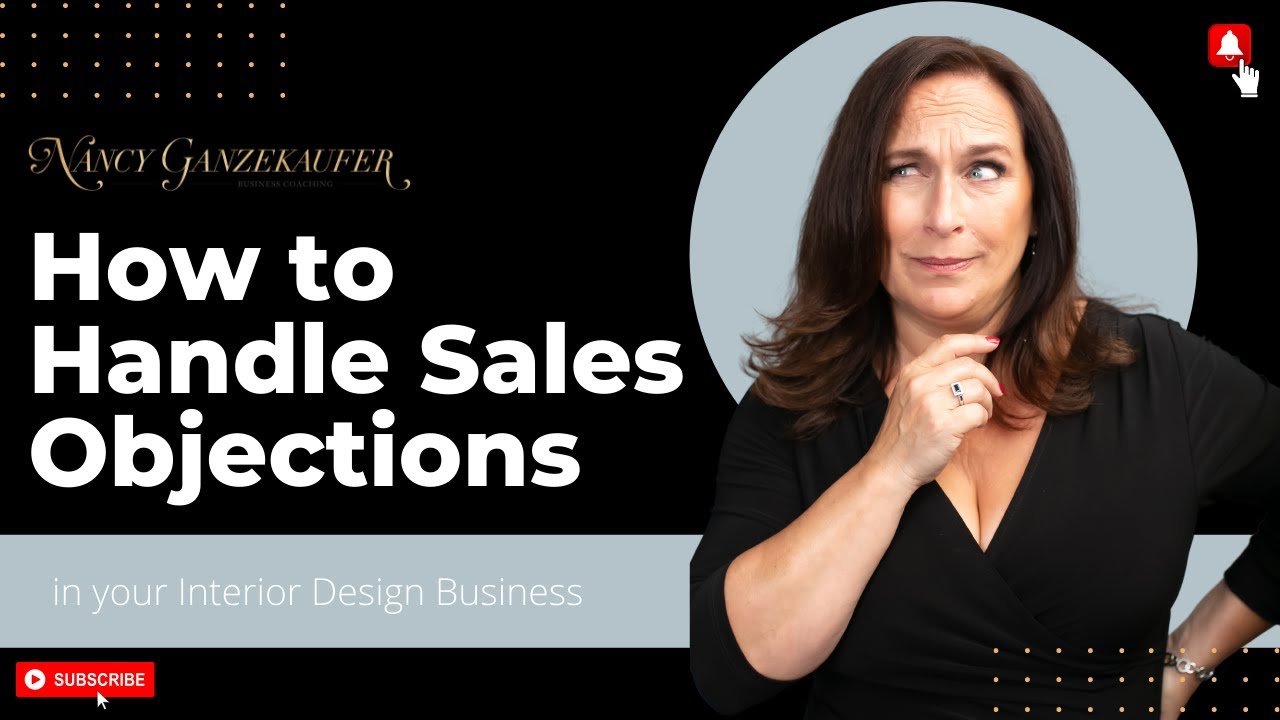
“How to Handle Sales Objections in Your Interior Design Business” — practical techniques directly applicable to custom furniture B2B sales conversations.
Lead With Their Problem, Not Your Product
The fastest way to get dismissed in a B2B sales call is to begin with your product’s features. The fastest way to earn a real conversation is to begin with a problem they recognize as their own. Every effective opening for a custom coffee table pitch starts from their commercial reality, not yours.
“Your showroom has beautiful pieces, but I noticed you’re missing a specific gap.” Be specific. “I walked your showroom on Tuesday and noticed you have nothing that works for the hospitality lounge brief at contract grade — your occasional tables top out at residential spec, and any hotel buyer who walks through would need to source that piece elsewhere. I’d like to talk about fixing that.” That opening signals that you did the work before the meeting, you understand their market, and you have a solution to a real problem they are already experiencing.
Showing you’ve done your homework builds credibility instantly. B2B buyers — particularly design professionals who are pitched constantly — can recognize a generic vendor pitch in the first two sentences. The single most effective credibility signal available to a custom furniture agent is demonstrating that you know more about their business and their market than a first-time caller should. That only comes from research.
The Exclusivity Hook for Showroom Agents and Designers
Positioning custom tables as inventory that competitors can’t touch. “What I’m offering you isn’t a product — it’s an inventory position. If you work with us to develop a custom collection, the pieces in that collection are yours in your market. No competitor in your region can stock them. No buyer who wants them can get them without coming through you.” For showroom agents competing in dense furniture markets, that positioning is worth more than any discount.
Creating urgency around limited design options and production slots. Custom production at quality manufacturers runs on production schedules with finite capacity — and the best factories are not available indefinitely. “We currently have production capacity for two exclusive collection developments in your region before the next booking period. I’d rather confirm you’re one of them than have you decide later and find the slot is gone.” This urgency is legitimate when it reflects real capacity constraints, and real constraints are far more common than most agents realize.
The ROI Hook for Distributors and Bulk Buyers
Opening with margin potential and volume discounts. Lead with the margin comparison in numbers: “Your current coffee table range runs at approximately 30% gross margin. Our custom program produces 45–55% on comparable price points. On $200,000 in annual category sales, that gap represents $30,000–$50,000 in additional gross profit annually — without changing your traffic or your conversion rate.” That is not a product pitch. That is a financial argument.
Sharing case studies of similar agents who increased profits through customization. Nothing closes a skeptical distributor faster than a peer who has already made the move. “I can connect you with a showroom in a comparable market to yours who added our custom coffee table program 18 months ago. They can tell you exactly what their margin improvement has been.” Real references from comparable business profiles convert the ROI argument from theoretical to proven.
6. Handling Objections Like a Pro: The Responses That Close Deals
Every Objection Your B2B Clients Will Raise — And How to Turn It Into a Sale

When a client asks “why does it cost that much?”, this is the answer — but you need to be able to articulate it before they’re holding the piece. Image: Unsplash
“Custom Tables Are Too Expensive”
This is the objection that stops most agents — because they hear “price” and respond with a discount instead of a reframe. The price objection in custom furniture almost always means one of three things: the client hasn’t yet seen the total cost of ownership argument, they don’t understand the margin protection story, or they’re comparing FOB prices without accounting for the commercial value difference.
Reframing price as investment in margin protection and client satisfaction. “At $2,400 wholesale, this table doesn’t compete with the $800 stock piece on unit price. It competes on what it generates over 12 months of being in your inventory — a $5,500–$7,000 retail price point with no comparable product in your market, at a margin that no stock piece in your range can match. We’re not buying a table; we’re buying a margin-protected position.”
Showing total cost of ownership versus replacement costs of cheaper alternatives. A hotel procurement director who installs 80 stock coffee tables at $350 each ($28,000) and replaces them at year 7 is spending $56,000 over 14 years, with the operational disruption of a hotel-wide replacement. The same operator who invests $1,100 per table in custom solid wood pieces ($88,000) and reaches year 20 without replacement has spent $88,000 — but on a per-year-of-service basis, the custom investment costs less. Present this calculation in a table, in their specific numbers.
Offering tiered customization options to meet different budget levels. Custom doesn’t require full bespoke at every price point. A semi-custom approach — custom dimensions and finish on a proven base frame — delivers 70% of the differentiation value at 55–65% of the fully bespoke price. When the full-custom price creates genuine budget friction, the semi-custom tier is not a concession; it is a product solution.
“Lead Times Are Too Long — My Clients Need Tables Now”
Explaining your production timeline and how it compares to competitors. First, verify that the comparison is accurate. Many clients believe custom takes “forever” because of a bad experience with a poorly managed project, not because of the actual production timeline. “Our standard lead time for custom coffee tables is 8–10 weeks production, plus transit. For comparison, what’s your current wait time when you order a semi-custom piece from your existing supplier?” Often, the difference is smaller than the client assumes.
Offering semi-custom or in-stock options for urgent projects. Maintain a small inventory of the most popular base styles in quick-ship finishes — 2–3 week delivery for clients with urgent needs. Position this as a bridge solution: “For your immediate project, we can ship from existing stock in your preferred finish within three weeks. For your next project, I’d like to talk about building a custom specification so you’re never in this position again.”
Positioning advance planning as a professional advantage. “The designers who never feel the lead-time pressure are the ones who are specifying custom pieces in the design phase, not the installation phase. When custom is part of your process from the start, 10 weeks isn’t a problem — it’s the schedule.” This reframe turns the lead time from an obstacle into a professional planning argument.
“I’m Already Working With Another Supplier”
Acknowledging the relationship while highlighting unique advantages. “I’m not asking you to replace a supplier you’re satisfied with. I’m asking if there’s a category — specifically the custom coffee table space — where your current supplier isn’t giving you the specification depth you need. If there’s a project where you’ve had to compromise the design because the right piece didn’t exist in stock, that’s where I can help.”
Proposing a small trial order to demonstrate quality and service. The trial order is one of the most effective sales tools in custom furniture because it eliminates perceived risk at minimal commercial commitment. “Give us one project — three tables, a specific finish, a specific dimension. Let the quality speak. If it doesn’t match what I’ve described, I’ll personally manage the resolution and I won’t ask for the next order. That’s how confident I am in what I’m bringing you.”
Showing how dual sourcing reduces risk and improves negotiating power. “Having two strong custom suppliers actually gives you more leverage with your primary supplier — because they know you have a qualified alternative. The distributors with the strongest supplier relationships are the ones who don’t rely on any single source for a critical category. I’m not asking to be your primary — I’m asking to be your qualified alternative.”
“How Do I Know the Quality Will Meet My Standards?”
Offering material samples and construction detail sheets. “I won’t ask you to take my word for it. Let me send you a material sample pack — actual finish samples on solid wood, upholstery swatches with wear-cycle specifications, and a construction detail sheet showing joint method and frame specification. You evaluate the quality in your hands before we have any commercial conversation.”
Providing references from similar B2B clients. References from comparable business types — a showroom of similar scale and market positioning, a designer who works in the same segment — are worth more than any marketing material. “I can connect you with two showroom agents in comparable markets who’ve worked with us for 18 months. They can tell you exactly what quality consistency looks like in practice, including the one time we had a finish variation and how we resolved it.”
Explaining your quality control process and warranty backing. Detail the pre-shipment inspection protocol: dimensional verification against specification (tolerance: ±3mm), finish inspection under directional lighting, structural integrity check at all joinery points, photography documentation before crating, and a five-year structural warranty covering manufacturing defects. “Every piece we ship leaves the factory with a documented inspection report. You can request to see it before approval.”
“Custom Tables Don’t Fit My Current Sales Model”
Demonstrating how customization actually simplifies their sales process. “Custom doesn’t mean complicated. It means your clients choose from a controlled shortlist of options — three finishes, two dimension variants, two leg styles — and you confirm a production order. It’s the same conversation you’re already having, but with a defined decision framework that moves clients to commitment faster.” The sales model argument against custom is almost always about the fear of complexity, not actual complexity.
Showing examples of how other agents successfully integrated custom pieces. “A showroom similar to yours integrated a custom coffee table program as 15% of their overall coffee table range and it’s now generating 35% of their coffee table category margin. They didn’t change how they sell — they added a premium tier to an existing process.” Peer examples are more persuasive than abstract capability claims.
Offering marketing support and sales training for their team. Custom furniture programs succeed at the showroom floor level — with the sales staff member who fields a designer’s question about lead times and specifications. “We provide a sales training session for your team, a sample presentation deck they can use with clients, and a specification guide in your brand voice. You’re not building a new sales process from scratch; we’re equipping your existing team with new tools.”
“I’m Concerned About Inventory Risk”
Explaining made-to-order versus inventory models. The custom model’s most significant financial advantage is structural: custom furniture is sold before it is made. There is no inventory carrying risk because there is no inventory. “A $50,000 custom order generates $25,000+ in gross margin without requiring you to hold a single piece. The only capital risk is your sample investment. That’s fundamentally different from carrying $200,000 in stock and absorbing $40,000–$60,000 in annual carrying cost.”
Offering flexible minimum order quantities. Not every custom program requires significant volume commitments. For distributors and showrooms testing a custom offering, MOQs (Minimum Order Quantities — the smallest production run a manufacturer will accept) of 3–5 units on initial orders are often sufficient to demonstrate the process without significant financial exposure.
Sharing data on custom table sales velocity and customer demand. The custom coffee table market is growing, driven by demand from the clients your B2B buyers serve. The luxury furniture market, valued at $31.1 billion in 2024 and projected to $39.8 billion by 2030, is dominated by bespoke and custom specification segments. Your buyer’s end clients are already demanding custom. The question is whether your buyer is positioned to serve that demand.
7. The Consultative Selling Approach: Becoming Their Strategic Partner
Why Agents Who Listen Outsell Agents Who Pitch
Diagnostic Questions That Uncover Hidden Opportunities
Consultative selling (a sales methodology focused on diagnosing client needs through questions before proposing solutions) consistently outperforms product-led pitching in high-value B2B transactions. The custom furniture sale is inherently consultative — the product doesn’t exist until the client’s requirements are understood. Your selling process should reflect that.
Diagnostic question 1: “What percentage of your clients ask for custom dimensions or finishes that you can’t currently source?” The answer tells you exactly how large the custom opportunity is within their existing client base — before you’ve proposed anything.
Diagnostic question 2: “How often do design changes delay your project timelines, and what does a one-week delay typically cost you in a project context?” This quantifies the pain you’re solving and anchors the value argument in their own financial data.
Diagnostic question 3: “What’s your biggest challenge when sourcing specialty pieces — is it the quality, the lead time, the consistency, or the supplier relationship?” Their answer tells you which objection to address first and which benefits to lead with.
Positioning Yourself as a Problem-Solver, Not a Vendor
Offering design consultation services at no charge. “Before we talk product, let me understand your next two projects. Share the design briefs with me, and I’ll come back with specification options — dimensions, finish combinations, material pairings — that serve each brief exactly. No charge, no obligation. If what I bring you doesn’t improve on what you’d find in a catalog, I’ll accept that we’re not the right fit.” That offer is almost never declined, and it almost always leads to a specification that converts.
Providing market insights and trend data relevant to their business. Agents who bring market intelligence to client relationships — trend data, competitive positioning analysis, emerging material categories — create a value that extends beyond any individual order. A designer who receives a quarterly “specification trends in hospitality” briefing from their furniture agent does not switch suppliers casually. The cost of losing that intelligence outweighs any competing supplier’s price advantage.
Building relationships with their design teams and end clients. The strongest B2B furniture agent relationships are multi-level — you know the principal designer and the junior associate, you know the hotel procurement manager and the brand standards director. Each relationship is a separate protection against the principal relationship changing.
Creating a Customized Proposal That Speaks to Their Business Goals
Tailoring product recommendations to their specific client base. A proposal that begins with “your client profile tends toward warm-toned contemporary with commercial-grade specification requirements, so here are the three custom coffee table configurations I’d recommend” demonstrates research and expertise simultaneously. Generic proposals compete on price. Research-based proposals compete on insight.
Including margin projections and sales forecasts. Include a specific margin table in every custom proposal:
| Scenario | Custom Program | Current Stock | Margin Improvement |
|---|---|---|---|
| Annual coffee table sales $150K | Avg. margin 50% = $75K gross | Avg. margin 32% = $48K gross | +$27K annually |
| Annual coffee table sales $300K | Avg. margin 50% = $150K gross | Avg. margin 32% = $96K gross | +$54K annually |
| Annual coffee table sales $500K | Avg. margin 50% = $250K gross | Avg. margin 32% = $160K gross | +$90K annually |
Addressing their stated objections within the proposal itself. Every objection raised during the discovery conversation should appear in the written proposal with a specific response: “You mentioned concern about lead times. Here is our standard production timeline, the rush option that reduces it by 30%, and the advance planning process we recommend to ensure your projects are never constrained by production scheduling.”
8. The Presentation: Showing, Not Just Telling
How to Present Custom Coffee Tables So Clients Can Visualize Success

The most effective custom furniture presentation is physical — samples in hands, finishes under actual light conditions, dimensions confirmed against actual space measurements. Image: Unsplash
Physical Samples and Material Libraries
Bringing actual wood samples, fabric swatches, and finish options. The material sample kit is your single most persuasive sales tool. A client who holds a solid walnut finish sample under their office lighting and holds the mass-produced alternative alongside it will almost always identify the quality difference without being told which is which. That sensory comparison does selling work that no catalog image or specification sheet can replicate.
Build a portable sample library that covers your core custom program range: 6–8 finish options on actual wood substrates (not printed cards), 12–15 upholstery options at the commercial-grade specification your hospitality clients require, hardware samples for the most common specification options, and a structural detail model or photograph that shows joinery quality at the corner block and drawer construction level.
Showing construction details that justify premium pricing. For buyers who push back on price, the construction detail is the most effective response. “This is a mortise-and-tenon joint — a woodworking joint where a projecting tenon fits precisely into a mortise cavity, creating a mechanical lock that does not rely on adhesive alone. This joint has been the structural foundation of quality furniture for 3,000 years because it works. The table you’re currently stocking uses a staple-and-glue assembly. This is why the price is what it is.”
Creating a tactile experience that differentiates from digital competitors. Physical material presentation is your most powerful competitive advantage over online furniture platforms. No website delivers the weight of a solid wood sample, the texture of a premium upholstery fabric, or the satisfaction of a precisely fitted drawer pull. Own this advantage in every client meeting by bringing materials and making the presentation physical.
Portfolio and Case Study Presentations
Showcasing completed projects in similar markets and client segments. Your project portfolio is your most credible sales tool. Organize it specifically — hotel fit-outs in one section, high-end residential in another, commercial specification in a third. When a hotel procurement manager sees six completed hospitality projects with the same finish consistency and quality standards they require, the credibility work is done before you say a word.
Providing metrics: sales increase, margin improvement, client satisfaction. The most compelling portfolio entry is not the one with the best photography — it is the one with the most specific outcome data. “This showroom added our custom coffee table program in Q2 2024. Within 12 months, their coffee table category margin improved from 31% to 48%, and they attributed two new design firm relationships directly to the exclusivity of the custom range.” Data outperforms photography in B2B sales every time.
Digital Visualization Tools
3D renderings showing how custom tables fit into their space. For clients who struggle to visualize finished dimensions in their actual space, a 3D rendering (a digitally generated image showing a furniture piece in a rendered room environment) provides the spatial context that a flat photograph cannot. Most quality custom manufacturers, including Jade Ant furniture, provide CAD drawings and 3D visualizations for every custom order — use them in your presentation, not just in the approval process.
Mood boards and design concepts for their specific client demographic. Before a client meeting, build a mood board specific to their market: if they serve luxury residential designers in a coastal market, create a board showing the custom coffee table styles and finishes that align with that aesthetic. The board signals that you understand their clients’ design language and have already done the curation work on their behalf.
The Live Demo: Customization in Real-Time
Walking through customization options and showing how flexible the process is. In a live client meeting, walk through the configuration process in real time: open your configuration tool or specification sheet, choose a base frame, select a finish from the physical sample, select a dimension modification, and show the resulting specification. “This is what your client experiences when they come to you with a brief. Five decisions, 15 minutes, and we have a complete specification ready to order. There is no ambiguity, no ‘we’ll figure that out later’ — it’s all decided and documented in one meeting.”
Demonstrating how easy it is for their team to present options to end clients. Your buyer’s sales team needs to be able to run this conversation with their clients independently. If the custom specification process requires you to be present, it doesn’t scale. Build a simplified client-facing guide that their team can use without specialist knowledge — and bring it to the presentation as evidence that the program is operationally deployable, not just conceptually appealing.
9. Closing Techniques That Work for B2B Sales
Moving From Interest to Commitment
The Trial Close — Low-Risk Entry Point
The trial close is designed for buyers who are genuinely interested but are managing perceived risk around a first custom order. It reduces the decision barrier to its minimum viable level — one order, manageable volume, sufficient to demonstrate the process without significant exposure.
“Let’s start with a small pilot order to test the market.” “I’d like to propose we start with three tables — two in your most requested contemporary finish and one in the new bronze treatment I showed you. Your investment is $X, your retail margin is $Y, and you’ll have the tables in your showroom in 12 weeks. If they perform the way I expect them to, we talk about building a collection. If they don’t move the way I’ve described, you have three tables at a strong margin regardless.” Remove the risk, reduce the decision.
Offering favorable terms on first orders to reduce perceived risk. On initial orders with new clients, the relationship value justifies a margin concession on the first order that would not apply to a standing program. “For your first custom order, I can offer 30-day payment terms rather than our standard 50% upfront. I want you to see the product before the payment structure feels like a risk.” This offer signals confidence in the product and reduces the financial barrier to commitment.
The Assumptive Close — Moving Past Hesitation
The assumptive close is a technique where you advance the conversation as though the decision has been made, using “which” instead of “whether” to move the client past the decision point and into the specification details. Use it after objections have been addressed and interest is confirmed — not as a shortcut around unconvinced resistance.
“Which finish would work best for your showroom — walnut or oak?” This question only works when the client is genuinely considering moving forward. When they answer “walnut,” the decision is made — and the rest of the conversation is about execution, not whether. The power of this technique is in recognizing the right moment to deploy it. Too early, and it feels presumptuous. At the right moment, it simply confirms what the client has already decided.
Shifting the conversation from “if” to “which” to accelerate decision-making. Every “which” question in your closing sequence moves the client from evaluation to commitment without requiring an explicit “yes” to the overall purchase. “Which delivery window works better for your showroom install schedule — the first two weeks of next month or the last two?” “Which leg finish coordinates better with your current floor sample — brushed brass or matte black?” Each answer is a micro-commitment that accumulates into a completed order.
The Urgency Close — Creating Legitimate Reasons to Decide Now
Urgency in B2B sales only works when it is real. A fabricated scarcity claim damages credibility faster than anything else a sales agent can do in a professional relationship. Legitimate urgency — production slot availability, pricing structure changes, seasonal demand peaks — converts hesitation into action when the client can verify the constraint independently.
Limited-time pricing or design exclusivity windows. “This finish combination — the dark iron oxide on American white oak — is currently exclusive in your region. We’re reviewing that exclusivity status at the end of Q3. If you want to lock it in before then, this is the window.” That urgency is real, verifiable, and commercially relevant to a showroom buyer whose competitive position depends on exclusive access.
Production slot availability and lead time transparency. “We have production capacity through the end of October at the current lead time. After that, our schedule shows a 3–4 week extension based on current order flow. If your project needs delivery before year-end, the decision window to hit that timeline closes in about two weeks.” Specific, documentable, and based on actual production data — this urgency is professional rather than manufactured.
The Partnership Close — Positioning the Relationship Beyond One Sale
“Let’s build this together as an exclusive offering for your clients.” The partnership close reframes the first order as the beginning of a commercial relationship rather than a standalone transaction. “What I’m really proposing is a 12-month exclusive custom collection — developed together, owned by you, marketed with your brand alongside ours. The first order is where we build the foundation. From there, every new piece in the collection adds to an asset your clients can only access through you.” This is not a close about one coffee table; it is a close about a strategic business position.
Discussing long-term collaboration, volume discounts, and co-marketing. The partnership close requires you to come with a specific collaboration proposal — not vague promises of future benefit. Bring a concrete outline: a defined exclusivity region, a volume threshold for year-one pricing, a co-marketing commitment (featured in your lookbook, shared social content, presence at trade events). When the first order is clearly positioned within a larger commercial framework, the decision to proceed carries forward momentum, not just isolated interest.
The Written Close — Getting Commitment in Writing
Moving quickly from verbal agreement to signed order. The time between verbal agreement and signed order is where B2B deals die. Every day without a paper trail is a day for second-guessing, for a competing supplier to step in, and for the buyer’s internal organizational dynamics to reopen a decision that seemed settled. Move from verbal commitment to written order within 24–48 hours.
Providing clear terms, timelines, and next steps. Your order confirmation document should include: precise specification (finish, dimensions, material, quantity), production and delivery timeline, payment terms, cancellation policy, and a named project manager contact on your side. Clarity in the document removes the uncertainty that generates post-signature anxiety — and post-signature anxiety is the primary driver of buyer’s remorse in high-value B2B furniture purchases.
10. Post-Sale: Turning One Deal Into a Lifetime Relationship
Why the Sale Doesn’t End at Signature — It Begins There
Delivery and Installation Excellence
Ensuring flawless execution that reinforces their decision. The buyer who signed the order was taking a professional risk on you. The delivery is when you either confirm or undermine their confidence in that decision. Communicate proactively throughout the production period — a brief production milestone update at week 4 and week 8, not because they asked, but because you volunteered the information. When a client hears about progress before they ask, they feel managed rather than chased.
Managing client handoff and satisfaction. Upon delivery, conduct a joint inspection with the buyer’s receiving team before the delivery crew leaves. Document the condition of every piece. If there are any issues — a minor finish blemish, a packaging dent — identify and document them in the moment, with a committed resolution timeline. Discovering an issue after the delivery crew has departed and raising it three days later creates conflict; discovering it together, acknowledging it immediately, and committing to a resolution the same day creates trust.
Documenting the success for future case studies. Photograph every delivered installation at its best. Get written permission to use the images in your portfolio, on your website, and in client presentations. Most buyers who are proud of the result — and they will be proud, if the execution was good — are happy to be featured. That photograph, that project description, and that client reference become your most powerful future sales tools.
Building Repeat Order Momentum
Following up with sales data and customer feedback. Six to eight weeks after delivery, contact the buyer with a specific question: “How are the pieces performing in your showroom? What feedback are you hearing from your designer clients?” This follow-up is not administrative — it is commercial intelligence gathering that tells you what to propose next, and it signals to the buyer that your interest in their success didn’t end at invoice payment.
Introducing new designs and seasonal collections. Position new custom introductions as a first-access offer for existing clients: “I want to show you our new spring specification before we take it to any other showrooms in your market. As a current client, you get first look and first production slot allocation.” This approach makes repeat buyers feel valued rather than solicited — a distinction that matters enormously in professional B2B relationships.
Creating Co-Marketing Opportunities
Featuring their showroom or projects in your marketing. “We’d like to feature your showroom in our quarterly lookbook — highlighting the custom collection as a case study. We’ll create the photography and content; you’ll have the finished asset to use in your own marketing as well.” This offer costs you content creation time and generates free professional-quality marketing collateral for your buyer, while also building the mutual visibility that positions your commercial relationship as a partnership.
Providing content and social media assets they can use. High-quality photography of the custom pieces in their showroom environment, specification sheets in their brand voice, and social media content packs that they can deploy on their own channels all make your buyer look better to their clients. Making your buyers look good to their clients is the most effective long-term retention strategy available.
Establishing You as Their Go-To Resource
Regular market insights and trend reports. A brief quarterly email — “Three material trends in commercial coffee table specification that your designer clients are asking about this quarter” — costs 30 minutes of preparation and delivers consistent value between commercial transactions. Buyers who receive regular, useful information from a supplier do not actively seek alternatives because the information access is itself valuable.
Proactive outreach about new customization options. “I know you’ve been specifying a standard walnut finish across your current custom range. We’ve just introduced a smoked walnut with a light gray undertone that I think would complement your contemporary collection well — here’s a sample on its way to you.” Proactive outreach that is specifically relevant to their current program signals attention and expertise simultaneously.
Being available for urgent orders and problem-solving. The buyer who calls you at 4:30 PM on a Thursday with a client deadline crisis that you help solve becomes a client for life. Availability and responsiveness in moments of pressure are the most memorable service experiences in B2B furniture relationships — because they are rare.
The Custom Coffee Table Agent’s Competitive Advantage

The agents closing the most deals aren’t the ones with the lowest prices — they’re the ones solving problems, building confidence, and making their clients look good to their end customers. Image: Unsplash
In a furniture market where commodity coffee tables are increasingly sold online, compared by algorithm, and purchased on price alone, the custom-made coffee table represents a genuine business opportunity — for agents who know how to sell the value behind the piece.
Every section of this guide has addressed a specific commercial challenge: understanding which buying motivation drives each client segment, building a pitch that is specific rather than generic, handling the objections that arise in every serious B2B conversation, and closing in a way that opens the next order rather than closing the current one.
The agents who consistently win in this market have one thing in common: they understand their client’s business as well as they understand the product. They arrive prepared, ask better questions than they answer, position themselves as strategic partners rather than vendor options, and treat the post-sale relationship as the beginning of the commercial relationship rather than the end.
Custom coffee tables, sourced from manufacturers with genuine customization capability, specification integrity, and production reliability — like Jade Ant furniture’s custom living room program — give you the product foundation to execute this sales approach. The technique, the preparation, and the relationship investment are yours to bring.
The agents taking the most margin in your market are not the ones with the lowest FOB prices. They are the ones who have mastered the conversation.
Ready to Start Closing More Custom Coffee Table Sales?
Take the next step with concrete resources designed specifically for B2B furniture agents, showroom managers, and design professionals:
👉 Download Your Free B2B Sales Playbook: 25 Customization Options That Sell
👉 Schedule a Consultation with Our Sales Strategy Team
👉 Explore Jade Ant’s Custom Coffee Table Range for Wholesale Agents
👉 Browse the Full Luxury Living Room Furniture Collection
Glossary of Key Terms
| Term | Definition |
|---|---|
| FOB (Free On Board) | The price at which a manufacturer transfers ownership of goods to the buyer at the port of origin; buyer assumes cost and risk from that point |
| MDF (Medium-Density Fiberboard) | Engineered wood made from compressed wood fibers and resin — cost-efficient for mass production, but with significantly shorter lifespan than solid hardwood in commercial use |
| COM (Customer’s Own Material) | A specification arrangement where the buyer provides their own fabric for application by the manufacturer, allowing precise match to project or brand fabric standards |
| MOQ (Minimum Order Quantity) | The smallest production run a manufacturer will accept for a custom order; typically 3–5 units for most custom furniture programs |
| FF&E | Furniture, Fixtures & Equipment — the movable assets of a hospitality or commercial property, excluding structural elements |
| Contract-Grade | Furniture specified for commercial durability standards, engineered to withstand multi-shift daily use in hospitality, office, or restaurant environments |
| Consultative Selling | A sales methodology focused on diagnosing client needs through targeted questions before proposing product solutions |
| Trial Close | A low-risk first order structured to demonstrate product quality and process reliability before a larger program commitment |
| Assumptive Close | A closing technique that advances the conversation as though the decision has been made, using “which” rather than “whether” |
| Mortise-and-Tenon | A traditional woodworking joint where a projecting tenon fits precisely into a mortise cavity, creating a mechanical bond that does not rely solely on adhesive — the hallmark of quality furniture construction |
| 3D Rendering | A digitally generated image showing a furniture piece in a rendered room environment, used to help clients visualize custom dimensions and finishes in context |
Frequently Asked Questions (FAQs)
Q1: How much margin can I realistically expect on custom coffee table sales compared to mass-produced alternatives?
Custom-made coffee tables typically offer 40–60% wholesale margins for well-run programs, compared to 25–35% on commodity catalog pieces. The higher margin reflects reduced price-comparison exposure — buyers cannot find the identical custom piece elsewhere — combined with the premium pricing that genuine exclusivity supports. On a $200,000 annual coffee table category, the margin improvement from a 32% average to a 48% average generates $32,000 in additional gross profit annually without changing sales volume.
Q2: Do you offer volume discounts for distributors and showrooms placing larger orders?
Yes. Tiered pricing structures apply at 5-unit, 10-unit, and 25+ unit order thresholds. Showrooms that commit to featuring custom tables as a signature offering — with defined floor display and sales training — are eligible for exclusive pricing arrangements that improve margins further while protecting the product’s premium positioning in their market. Contact Jade Ant furniture’s B2B team for a customized volume pricing proposal.
Q3: What is included in the quoted price — delivery, installation, warranty?
Standard quotes include manufacturing and standard shipping to port of destination. Inland delivery, installation, and assembly services are available as additional line items. All custom coffee tables from quality custom programs carry a minimum 1-year structural warranty covering manufacturing defects, with premium manufacturers offering 5-year structural coverage. Always confirm warranty scope in writing before presenting warranty terms to your end client.
Q4: What is the typical production timeline for a custom coffee table order?
Standard lead time is 8–12 weeks from order confirmation to factory completion, depending on customization complexity. Add 3–5 weeks for ocean freight to US or European ports plus 1–2 weeks for customs clearance. Total realistic timeline: 12–18 weeks. Rush orders (reduced to 5–7 weeks production) are available at a 15–20% price premium, subject to production slot availability. Always confirm rush availability before communicating it to a client.
Q5: What happens if my client changes their mind mid-production?
Design changes are accommodatable during the first 7–10 business days of production — before material cutting begins. After that point, change fees apply based on work already completed. This is why front-loading the specification process — confirmed, signed, visually documented — is the single most important production risk management step in custom furniture programs. A properly executed specification approval document virtually eliminates mid-production change requests.
Q6: Do you hold inventory of semi-custom coffee tables available for quick shipping?
Most quality custom programs maintain a limited inventory of popular base frames in quick-ship finish options with 2–3 week delivery lead times. This bridges the gap for clients with urgent project deadlines without sacrificing all customization capability. Semi-custom quick-ship options are best positioned as project rescue tools, not the primary program — clients who experience the lead time pressure of current projects should be moved to advance-planning custom workflows for future projects.
Q7: What customization options do you offer for commercial and hospitality specifications?
Commercial custom programs typically offer: dimensional modification within ±20–30% of standard configurations, full wood species and finish selection (including proprietary finishes with exclusivity options), COM (Customer’s Own Material) fabric capability for hospitality brand-standard specifications, hardware selection from an approved catalog, and structural modifications for commercial-grade weight rating and surface durability. Complex inlays, specialty material combinations, and fully bespoke structural designs are available on extended lead times with minimum order requirements.
Q8: Can my design team work directly with the production team during the customization process?
Yes. Quality custom programs assign a dedicated project manager to each substantial order who serves as the single communication point between your design team and the production facility. This ensures specification clarity is maintained through the production process — and that any interpretation questions are resolved before they become manufacturing decisions. Direct design-team communication with production, without a managed interface, typically increases specification errors rather than reducing them.
Q9: Do you provide 3D renderings or CAD drawings before production begins?
Yes, included with every custom order. CAD drawings (dimensioned technical drawings showing all specification details) and 3D renderings (photorealistic digital images of the finished piece in a room environment) are provided before production authorization. These tools serve two purposes: they confirm specification accuracy before material commitment, and they give you a client-facing visualization tool that reduces buyer’s remorse and post-delivery disagreements. Requesting a signed specification approval on the CAD drawing is industry best practice.
Q10: What is your policy on design exclusivity — can I protect a custom design for my showroom market?
Exclusivity programs protect your custom designs within defined geographic or channel parameters for a specified period — typically 12 months from first delivery within a specific market area. After the exclusivity period, designs may be offered in other markets. Exclusivity is negotiated as part of the custom program agreement, typically in exchange for a defined volume commitment and display investment. Exclusivity protects your competitive position more effectively than any discount structure — because a competitor who cannot source your design cannot compete with it at any price.
Q11: How do you ensure quality consistency across large bulk orders for hotel chains or multi-location projects?
All bulk orders from quality custom manufacturers are produced within a single production batch using the same material lot, finish formulation, and specification documentation. Pre-shipment inspection of a statistical sample (typically 10–20% of the production batch) verifies dimensional accuracy, finish consistency, and structural integrity before crating. For hotel groups requiring documented quality assurance, inspection reports with photographic evidence are provided for every shipment. The best-run hospitality custom programs have delivered 50+ identical tables to multi-property hotel groups with zero batch-to-batch variation complaints.
Q12: What happens if a table arrives damaged or doesn’t meet the specification?
Damage in transit is covered by carrier insurance — document it with photographs within 24 hours of delivery and file the carrier claim promptly. Manufacturing defects covered under the warranty are resolved through replacement or repair, typically completed within 2–4 weeks of claim confirmation. The critical step is documentation: photograph the issue on the delivery day, submit the manufacturer claim within 48 hours (most warranty claims have a filing window), and communicate the resolution timeline to your client within the same business day you identify the issue. Clients who hear about a problem and its solution simultaneously experience it as competent service rather than a product failure.
Q13: What is the minimum order quantity for a custom coffee table program?
MOQs vary by manufacturer and customization complexity. For standard custom programs — modified dimensions and finish selection on a proven base frame — MOQs of 3–5 units are typical for initial orders. For fully bespoke designs with non-standard structural modifications or proprietary finish development, 6–10 unit minimums are common. For hotel bulk programs, volume commitments of 25+ units unlock the most favorable pricing structures and dedicated production scheduling. Contact Jade Ant furniture’s wholesale team for specific MOQ guidance based on your target program.
Q14: Can I offer payment plans or trade credit terms to my distributor clients?
Payment structures for B2B custom furniture programs are typically: 50% deposit at order confirmation, 50% at production completion or delivery. Extended payment terms — net 30 or net 60 after delivery — are available for established clients with a defined track record, subject to credit approval. For new client relationships, the 50/50 deposit structure protects both parties: the manufacturer covers material costs before production begins, and the buyer retains 50% as leverage against quality or delivery failure.
Q15: Can you provide references from other distributors, showrooms, or designers who have worked with you?
Yes. A reference network of verified B2B clients across furniture distribution, interior design, and hospitality segments is available for qualified prospective buyers. References are matched to your specific business type and market context — a hotel procurement professional will be connected with hospitality references, a luxury showroom with comparable showroom clients — rather than providing a generic testimonial list. Connecting you with a peer who has experienced the product and process firsthand is more useful to your decision than any marketing material we can provide. Start the conversation at jadeant.com