Luxury Furniture Care: The Preservation Blueprint for Wood, Leather, Fabric, Stone and Metal

Written for high-end importers and distributors, villa owners, interior designers, private label brand owners, FF&E and hotel buyers, architecture and engineering teams, and developers and hotel operators.
Quick answer: Luxury furniture lasts longest when you do three things in order. First, control the room: light, humidity and air. Second, care for each material with its own method. Third, put the work on a calendar so it happens before damage shows. Most “mystery” damage comes from sunlight, dry air, harsh cleaners and slow spill response. You can control all four.
I. Introduction
A statement piece is a piece of art you sit on, and it is also an asset on your balance sheet. A hand-finished rosewood cabinet or an aniline leather lounge chair can cost as much as a car. Unlike a car, nobody hands you a service schedule with it.
Damage rarely arrives in one dramatic moment. It builds slowly:
- A walnut side table fades on the side facing the window.
- A bouclé armchair grows a gray, shiny patch where hands rest.
- A brass pull loses its glow after one round of well-meant polishing.
- A marble top picks up a dull ring from a glass of wine.
None of these is a manufacturing fault. They are care failures, and nearly all of them can be prevented.
High-end materials are harder to look after. They are chosen because they are rare, natural and finely finished. That is also why they are sensitive:
- Exotic woods move with humidity and fade in light.
- Aniline leather (leather dyed all the way through, with no protective top coat) shows every drop of water and oil.
- Precious metals and gold leaf react to skin oils, moisture and strong cleaners.
What you will get from this guide. It is a step-by-step plan to extend the life of statement pieces in busy homes, villas, hotel lobbies and showrooms. It follows the order that conservators use: environment first, then material, then routine, then emergency response. If you are still choosing pieces, our guide to importing and distributing high-end furniture covers what to look for before they ship.
At Jade Ant furniture, we build care information into project handover, with material specs, finish codes and spare-parts lists. That is the information a proper care plan depends on, so keep it handy as you read.
II. Strategic Environmental Control (The First Line of Defense)
Long-term care starts with the room, not the cloth. Conservators call light, humidity, heat and pollutants the main “agents of deterioration.” They harm furniture even when no one touches it. If you fix the room, every cleaning routine afterwards works better.
UV Mitigation
UV (ultraviolet) light is the invisible part of sunlight that breaks down dyes, wood fibers and finishes. The damage adds up over time and cannot be undone. Light can darken pale woods, bleach dark ones, and leave finishes cloudy or brittle.
Use these steps, from most to least effective:
- Fit UV-filtering window film on glass near furniture. Good films block most UV rays, but visible light still fades colors, so films reduce fading and do not stop it.
- Add sheer curtains or blinds that close during the strongest hours of sun.
- Move the piece. Even 1.5 meters (5 feet) from a window cuts exposure sharply.
- Rotate accessories and rugs every few months so fading happens evenly rather than in stripes.
Industry insight: A floor-to-ceiling window in a villa lounge can act like a spotlight for 6 hours a day. We often see a clear “fade line” on sofas and cabinets within the first two summers. Designers who specify window film at the same time as the furniture avoid it entirely.
Humidity and Temperature Calibration
Wood is hygroscopic, which means it takes in moisture from the air and gives it back. When air is damp, wood swells. When air is dry, it shrinks. That movement is what splits tabletops, lifts veneer and makes drawers stick. Leather in dry air loses oils and shrinks too.
Many conservators aim for about 40% to 60% relative humidity (RH). Steady conditions matter more than the exact number, because quick swings do the most harm. The Canadian Conservation Institute also advises keeping furniture away from fireplaces, heaters and heating vents.
| Climate type | Typical room risk | What to do |
|---|---|---|
| Tropical or coastal | High humidity, swelling, mold | Run dehumidifiers, never close up an unventilated room for weeks |
| Desert or very dry | Cracks, lifted veneer, brittle leather | Add humidifiers, keep furniture out of vent airflow |
| Temperate with cold winters | Heating dries indoor air | Use a seasonal humidifier plan |
| Mountain or second-home villas | Big swings when unoccupied | Keep the climate system on a low, steady setting all year |
Seasonal note: If you read this in autumn, heating season is starting. That is the time to place a hygrometer (a small humidity gauge) beside your most valuable wooden piece. Many gauges also log highs and lows, which helps you spot swings you cannot feel.
Air Quality Management
Dust is not just a surface issue. Fine particles settle into velvet, bouclé and open-grain wood. Cooking oil, candle soot and smoke then glue them in place. Over time they turn pale fabric gray.
- Place entry mats at outside doors to catch grit.
- Use HEPA vacuums (HEPA means a filter that traps very small particles) so dust is captured instead of blown back into the room.
- Keep candles and open fireplaces away from pale fabrics and gilded surfaces.
- Ventilate after painting, flooring work or heavy cleaning.
III. Advanced Wood Surface Preservation
Rare veneers and solid hardwoods need conservation methods, not supermarket polish. The goal is to keep the original finish healthy for as long as possible. Once a finish is stripped, you cannot put it back.
Finish-Specific Care
Check the finish before you touch the piece. A drop of water on a hidden spot tells you a lot: if it beads, there is a sealed film; if it darkens the wood, the finish is open or worn.
| Finish type | What it is | Routine care | Avoid |
|---|---|---|---|
| Lacquer or polyurethane | A hard film on the surface, common on high-gloss pieces | Dry microfiber dusting; barely damp cloth if needed | Wax build-up, abrasive pastes, ammonia |
| Oil finish | Oil soaks into the wood | Dust; re-oil only when the surface looks dry, using the maker’s oil | Putting wax over fresh oil |
| Wax finish | A soft wax layer over wood | Dust and buff; add paste wax about once a year | Water, heavy polishing |
| Open-grain finish | Pores stay visible and slightly rough | Soft brush to lift dust from the grain | Thick polish that clogs the pores |
| French polish or shellac | A thin hand-built shellac layer | Dry dusting only | Alcohol, water rings, harsh cleaners |
| Veneer (any finish) | A thin wood skin over a core | Keep dry; wipe spills at once | Soaking, steam |
Avoidance of Commercial Solvents
Silicone polishes and ammonia sprays are the two worst choices for fine wood. Silicone gives an instant shine, then builds up in a film. When a restorer later tries to refinish the piece, new lacquer will not stick properly. The defect is called “fish-eye,” and removing it can add hours of labor. Ammonia dulls and softens many finishes.
A good rule: if the label promises “instant shine,” do not use it on a piece worth restoring.
Professional Buffing and Re-waxing Cycles
Many owners are told to “feed” wood. The Canadian Conservation Institute says the opposite: wood does not need to be fed, and no oil will stop it drying out if the room is too dry. Its advice is to use micro-crystalline wax only about once a year, only on surfaces that get handled, and to avoid build-up around metal fittings.
So here is a realistic seasonal rhythm:
- Spring: Inspect for dry spots, loose joints and sticky drawers after winter.
- Summer: Check for fading on window-facing sides and rotate pieces if needed.
- Autumn: Add humidity control and apply the yearly wax coat if the finish calls for it.
- Winter: Check for cracks and keep pieces away from radiators.
Insight: Stable air does more for wood than any product. If your budget is tight, spend it on a humidity control system before you spend it on polish.

Watch: the Smithsonian’s video on furniture care and handling (it carries Chinese subtitles).
IV. High-Performance Textile and Upholstery Management
Premium fabrics keep their feel when you stop dirt before it sets and clean with the right method. Most fabric damage comes from rubbing a stain in, using water on the wrong cloth, or ignoring slow wear.
Fabric-Specific Protocols
First, find the cleaning code on the tag or spec sheet. It is the single most useful piece of information for fabric care.
| Code | Meaning | What it tells you |
|---|---|---|
| W | Water-based cleaner is safe | Use a mild, water-based cleaner and a clean white cloth |
| S | Solvent cleaner only | Water may leave rings; use a dry-cleaning solvent or a pro |
| WS | Either water or solvent | The most forgiving option |
| X | Vacuum or brush only | No liquid cleaning at all |
Now match care to the cloth:
| Fabric | Main risk | Care method |
|---|---|---|
| Silk | Water marks, light fading, weak fibers | Gentle vacuum on low suction; call a specialist for stains |
| Velvet | Crushed pile, shine marks, heat damage | Brush along the pile direction; avoid pressing hard or steaming |
| Bouclé | Snagged loops, trapped dirt | Soft-brush vacuum; trim loose loops, never pull them |
| High-GSM linen | Stains set deep; wrinkles | Blot at once; vacuum weekly |
GSM means grams per square meter, a measure of fabric weight. High-GSM linen is thick and has a rich hand-feel, but its heavy weave holds on to stains.
For public spaces, pick fabric by wear rating. The Martindale test counts how many rubbing cycles a fabric survives before it shows wear. Our short note on fabric rub counts explains Martindale and the US Wyzenbeek test. As a guide, hospitality seating is usually specified well above residential levels.
The Role of Preventative Barriers
Two habits give the biggest return:
- Rotate and flip cushions every month. Seats that are always used in the same spot compress unevenly and begin to look like they have a dip.
- Apply an invisible protector (a thin coating that makes liquids bead up) after installation, but with care.
Many older protector sprays use PFAS (“forever chemicals”), and rules on them are tightening in several markets. Ask for a PFAS-free product, test it on a hidden area, and let it dry for 24 hours. Some silks and velvets change in sheen.
Professional Extraction vs. DIY Cleaning
Extraction is a professional cleaning method that sprays a small amount of cleaner into the fabric and then pulls it out with suction. Done right, it is gentle. Done at home with a rented machine, it often over-wets the foam under the fabric and leaves water rings.
Call a pro when:
- The fabric is silk, mohair or antique velvet.
- The cleaning code is S or X.
- The stain is oil, ink, wine or from a pet.
- The piece is worth more than the cost of a service call (almost always).
Look for an IICRC-certified technician, and ask them to test a hidden corner first.
V. Luxury Leather and Suede Conservation
Leather is skin, so it dries out, stains and ages like skin. It needs gentle moisture, protection from sun and heat, and a quick response to spills.
First, know what you own:
| Leather type | What it is | Care level |
|---|---|---|
| Aniline | Dyed through, no protective coat; feels soft and natural | Highest: marks easily |
| Semi-aniline | Light protective coat | Medium |
| Pigmented | Colored and sealed on top | Lowest: the most durable |
| Suede and nubuck | Brushed surface, no smooth finish | High: water and oils mark it |
pH-Balanced Conditioning
pH measures how acidic or alkaline something is. Leather is happiest with products close to neutral, because strong acids and alkalis damage the fibers. Look for a leather-specific cleaner and conditioner that says “pH-balanced.”
Conditioning helps leather stay supple and avoids crazing, the web of tiny cracks that forms when leather dries out. How often depends on the leather and your climate. Aniline leather often needs very little. One maker says that for aniline, light dusting is enough, and oils and harsh cleaners should be avoided. Another says a recommended cream should be used as needed. So follow your supplier’s care card first. In a dry climate, conditioning tends to happen more often, and always on a hidden spot first.
Immediate Stain Mitigation
Speed matters more than product. Use this order:
- Blot with a clean, dry, white cloth. Never rub.
- For an oil spot on aniline or nubuck, many professionals suggest covering it with an absorbent powder such as cornstarch and leaving it overnight, then brushing it away.
- For a water spot on aniline, it often helps to wipe the whole panel evenly from seam to seam with a barely damp cloth, so no ring forms.
- Stop there and call a leather specialist if the mark is still visible.
For suede and nubuck, use a soft suede brush and a suede eraser. Keep water away.
This video shows how a leather-care company approaches cleaning aniline and semi-aniline leather:
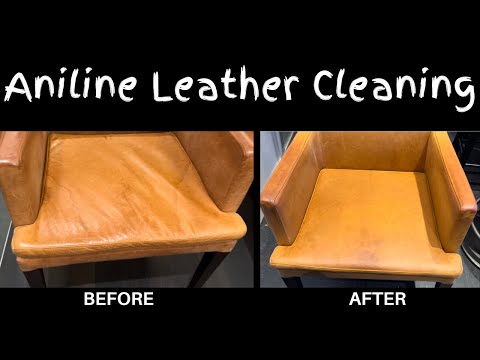
Watch: cleaning aniline and semi-aniline leather. It comes from a leather-repair brand, so check any product it uses against your maker’s care card.
Rotation and Aeration
In busy seating, body heat and sweat soften leather, and creases set. Fix this with a simple routine:
- Swap loose cushions between seats.
- Let the leather “rest” by not covering it with heavy throws for long periods.
- Keep it at least a short distance from radiators and sunny glass.
- Smooth and fluff cushions after heavy use.
VI. Metal, Stone, and Inlay Maintenance
Non-porous materials look easy to clean, which tempts people to scrub them. Rough pads, acids and metal polish cause more damage than dirt does.
Patina Preservation
A patina is the change that time and use leave on a surface. On brass and bronze it can be a warm, deep tone. Many collectors value it. Removing it can lower a piece’s value.
- Unlacquered brass and bronze will darken. Buff gently with a dry, clean cotton cloth. The Canadian Conservation Institute notes that museums no longer polish hardware, because buffing gives a soft gleam with less wear.
- Lacquered brass has a clear coating. Never use brass polish on it, because the polish strips the coating and the metal then tarnishes unevenly.
- Gold leaf is thin enough to lift with moisture. Dust with a very soft dry brush. Do not use wet cloths or spray.
- Hardware on wood: Remove it before polishing, because metal polish can stain the wood around it.
For fingerprints on polished brass, use a clean microfiber cloth first. If that fails, ask the maker which cleaner is safe for that finish.
Natural Stone Sealing
Marble and onyx are made mostly of calcium carbonate, which reacts with acids. That is why lemon juice, wine and vinegar leave dull marks called etching. Etching is a chemical change in the surface, not a stain you can wipe off.
The Natural Stone Institute gives these simple rules:
- Use coasters under glasses, especially those with alcohol or citrus.
- Clean with a neutral stone cleaner or mild dish soap and warm water.
- Blot spills. Do not wipe, because wiping spreads them.
- Avoid products with lemon, vinegar or other acids on marble.
- Know what sealing really does: a sealer (called an impregnator) does not make stone stain-proof; it makes it more stain-resistant. Ask your supplier how often to reapply.
Etched areas usually need a stone restorer to re-polish them.
Precision Cleaning of Inlays
Marquetry is a pattern made by fitting thin pieces of veneer, shell, metal or stone into a surface. Mother-of-pearl and fine veneer pieces are held by thin glue lines, and some traditional adhesives soften with moisture.
For inlay, use this method:
- Dust with a very soft, dry brush, moving away from the edges.
- Wipe with a dry microfiber cloth, never one that snags.
- Skip all liquids and sprays near the joints.
- Look for lifted edges or hairline gaps every quarter and note them with photos.
If any piece lifts, stop and call a conservator.
VII. High-Traffic Wear Prevention in Residential Spaces
Behavior causes more depreciation than age does. A few habits in a busy home can add years to a collection.
Zoning and Traffic Flow
Walk through your own floor plan and note where people naturally pass, sit, drop bags and set down drinks. Then move the most fragile pieces out of those paths.
- Place delicate pieces (silk chairs, inlaid cabinets) in low-traffic corners.
- Keep leaving space around console tables so bags and doors cannot hit them.
- Put hard-wearing pieces (pigmented leather, performance fabric) in the busiest spots.
The “Protective Layer” Strategy
Think of a protective layer as inexpensive armor. The most common ones are listed below.
| Risk | Protective layer | Why it works |
|---|---|---|
| Wet glasses on wood or marble | Bespoke coasters | Stops rings and etching |
| Hot dishes | Heat-safe trays and trivets | Prevents white heat marks |
| Sliding objects on polished tops | Felt-backed trays or runners | Prevents micro-scratches |
| Shoes and bags on seating | Throws or bench runners (removable) | Keeps soil off fabric |
| Pet claws | Tightly woven fabrics, designated pet zones | Avoids snagged loops |
| Chair feet on floors and rugs | Felt pads on legs | Protects both furniture and flooring |
User Education
A care plan only works if the people who touch the furniture know it. Create a one-page Care Guide and give it to household staff, property managers and long-stay guests. Keep it short, with photos.
A good one covers:
- The three things never to use (for example: silicone polish, ammonia, wet wipes on leather).
- How to lift, not drag, furniture.
- What to do in the first minute after a spill.
- Who to call, and their number.
Industry insight: In multi-property portfolios, the single biggest cause of avoidable damage is a well-meant cleaner using the wrong product. A laminated card in the staff cupboard solves most of it.
VIII. The Professional Maintenance Calendar
Care works best when it moves from “when I notice” to “when it’s due.” A calendar turns advice into action and makes it simple to hand over to staff.
| Frequency | Task | Who does it |
|---|---|---|
| Weekly | Dust all surfaces with a dry microfiber cloth; vacuum fabric with a soft brush and a HEPA vacuum | Household staff |
| Monthly | Rotate and fluff cushions; check humidity gauge; wipe stone with neutral cleaner | Household staff |
| Quarterly | Audit joints, hardware, fabric pilling, finish wear and inlay edges; take photos | Property manager |
| Twice a year | Check UV film, curtains and fade lines; adjust furniture position | Property manager |
| Annually | Professional deep clean, finish touch-ups, stone resealing if needed, structural tightening | Specialists |
Weekly Rituals
Dusting sounds basic, but method matters. Use a clean, dry microfiber cloth and wipe in one direction, so you lift dust rather than spread it. On carved or open-grain wood, use a soft brush. Vacuum fabric with a soft brush attachment on low suction, and use a HEPA machine so fine dust stays out of the air.
Quarterly Audits
Use this checklist and take dated photos each time:
- Press each chair and table gently from the side to check for wobble.
- Look for hairline gaps at joints and corners.
- Check upholstery for pilling (small balls of fiber), flattened pile and loose seams.
- Look at finishes for dull patches, white haze and fading.
- Test drawers and hinges for smooth movement.
- Check inlay and veneer edges for lifting.
Our bedroom furniture care framework includes a similar quarterly routine for beds and casegoods, if you manage hospitality rooms.
Annual Professional Restoration
Book a specialist once a year. They can deep-clean fabric, touch up finish, re-seal stone, tighten joints and fix small damage before it spreads. Keep a service log for each piece. A full record also helps with insurance and resale, as it does for fine art.
IX. Risk Mitigation and Emergency Response
Accidents will happen, but a plan keeps a spill from becoming a loss. The first five minutes decide whether a stain fades or sets.
The “Emergency Kit” Essentials
Keep a small box in a known spot, so nobody has to search for supplies at 11 p.m.
| Item | Purpose |
|---|---|
| White microfiber cloths | Blotting without color transfer |
| Plain white paper towels | Quick absorption |
| Distilled water in a spray bottle | Light dampening without mineral spots |
| Neutral stone cleaner or mild dish soap | Safe cleaning for marble and stone |
| Soft brush and suede eraser | Dry cleaning for velvet, suede and nubuck |
| pH-balanced leather cleaner | Leather spot care |
| Cornstarch or talc | First aid for oil on leather |
| Color-matched touch-up pens | Hide tiny chips in wood |
| Contact card for your restorer | Fast access to help |
Avoid keeping bleach, ammonia or all-purpose sprays in the kit. They cause more harm than the spills do.
The Golden Rule of Blotting
Blot, don’t rub. Rubbing pushes liquid deeper into fibers and wears the surface. In luxury seating, liquid also moves into the foam below through capillary action, which is the same effect that makes a paper towel pull water upward. Once a spill reaches foam, it can come back to the surface as a ring days later.
Follow these steps:
- Stop the spill. Lift off any solids with a spoon or card.
- Blot from the outside edge toward the center with a dry white cloth. Use fresh cloth sections as they pick up color.
- Press, don’t scrub. Use light pressure and let the cloth do the work.
- Apply a small amount of the right cleaner, based on the fabric code. If unsure, use distilled water only.
- Dry the area with a fan on low or a dry cloth. Do not use a hair dryer on hot.
- Call a pro if a mark remains, and do not try a second or third product first.
Vendor Coordination
Create a directory before you need it. Having names and numbers ready cuts the time a piece sits damaged.
| Specialist | When to call |
|---|---|
| Wood finisher or furniture conservator | Water rings, scratches, finish damage, loose joints |
| Upholstery cleaner (IICRC certified) | Stains on silk, velvet, bouclé |
| Leather technician | Cracking, color loss, oil stains |
| Stone restorer | Etching, deep stains, chips |
| Metal and gilding artisan | Tarnish, lifted gold leaf, loose fittings |
| Original manufacturer | Replacement parts, finish codes, warranty questions |
For heritage or antique-style pieces, the American Institute for Conservation can help you find a qualified conservator. If you buy through an importer, ask for the maker’s finish code and a spare-parts list at handover. If you want to understand what can go wrong earlier, read our notes on common procurement mistakes.
X. Conclusion
Preservation works as a system. Environmental control slows damage. Material-specific care stops the avoidable kind. A calendar makes sure it all gets done. If any one of the three is missing, the other two work harder and still fall short.
The ROI of Proactive Maintenance
Here is an example model for a villa living room collection worth USD 60,000, which includes a sofa, two armchairs, a marble coffee table, a sideboard and a console. These figures are illustrative, so your own costs will differ by region and specification.
| 10-year cost item | Reactive approach | Preventive plan |
|---|---|---|
| Emergency stain and spill repairs | USD 3,000 | USD 1,500 (minor repairs) |
| Reupholstery of sofa and armchairs (year 6) | USD 9,500 | USD 0 |
| Full refinish of sideboard (year 7) | USD 3,500 | USD 0 |
| Marble re-polish after etching | USD 2,200 | USD 0 |
| Early sofa frame and foam rebuild | USD 4,800 | USD 0 |
| Annual professional visit (10 years) | USD 0 | USD 8,000 |
| UV film, coasters, runners, pads (one time) | USD 0 | USD 2,400 |
| Stone resealing (5 times) | USD 0 | USD 900 |
| Fabric protector reapplication (3 times) | USD 0 | USD 1,350 |
| Total | USD 23,000 | USD 14,150 |
In this example, annual care costs about 1.3% of the set’s value, and it avoids almost 9,000 in repairs. The model does not count what the better condition adds to resale value or to a hotel’s room rate.
The preventive plan itself breaks down like this:
For more on how build quality affects long-term cost, see our comparison of custom furniture cost versus quality. To understand why hand-finished surfaces need this sort of attention, read about the craftsmanship behind luxury furniture.
Where to Start
- This week: Put a hygrometer by your most valuable wooden piece and check UV exposure on window-facing furniture.
- This month: Build the emergency kit and write a one-page Care Guide.
- This quarter: Run your first audit with photos and book an annual specialist visit.
Treat care as part of the luxury itself. A piece that is well kept looks better, feels better and holds its value, and that is what you paid for. If you are planning a project and want pieces that arrive with clear finish codes, material specs and care documentation, the team at Jade Ant furniture can help. You can also browse the Jade Ant blog for guides on villa furniture strategies and private label luxury furniture.
Glossary of Key Terms
Quick-reference definitions for terms used in this guide.
| Term | Plain-English meaning | Example |
|---|---|---|
| UV | Invisible light in sunlight that fades color and weakens finishes | A fade line on a sofa arm near a window |
| Relative humidity (RH) | The share of moisture the air is holding | 40% to 60% is a common target |
| Hygroscopic | Takes in and gives off moisture | Wood swelling in summer |
| Aniline leather | Dyed-through leather with no protective coat | Soft lounge chairs that mark easily |
| Crazing | A web of fine cracks in dry leather or lacquer | Cracks on an old leather armchair |
| GSM | Fabric weight in grams per square meter | A heavy linen at 400 GSM |
| Martindale | A test counting how many rubs a fabric survives | Hotel seating needs high numbers |
| Patina | The surface change that comes with age and use | Deep tone on old brass |
| Etching | A dull mark caused by acid on marble | A ring from lemon juice |
| Impregnator | A stone sealer that makes it stain-resistant, not stain-proof | Sealing a marble top |
| Marquetry | Decorative patterns made from fitted veneer pieces | An inlaid sideboard front |
| Capillary action | Liquid being pulled into fibers or foam | A spill soaking down into a seat cushion |
| PFAS | “Forever chemicals” used in some stain protectors | Look for PFAS-free labels |
Frequently Asked Questions
1. How do I remove a wine stain from a white bouclé sofa without damaging the texture?
Blot at once with a dry white cloth, pressing from the outside edge toward the center. Do not rub, because rubbing flattens the loops and drives wine deeper. Check the cleaning code before you add any liquid, and use only a little distilled water on a W or WS fabric. If a pink shadow remains, call an IICRC-certified cleaner rather than repeating home treatments.
2. Which UV-protection methods are most effective for furniture placed near floor-to-ceiling windows?
Layer your protection. Install UV-filtering film on the glass first, because it blocks most UV rays all day. Add sheer curtains or blinds for the strongest sun hours, and move the piece back from the glass if you can. Rotate rugs and accessories so fading is even. Film cuts UV fading but cannot stop fading from visible light, so combine all of these.
3. Can I use a steam cleaner on high-end velvet, or will it flatten the pile?
In most cases, no. Heat and moisture can crush the pile, leave water marks and loosen backing glue. Check the cleaning code first: X means vacuum only, and S means solvent only. For a W code, a professional low-moisture method is safer than a household steamer. Brush the pile in one direction after cleaning to restore its look.
4. How often should aniline leather be conditioned to prevent cracking in dry climates?
Follow the maker’s care card first, because aniline leathers vary. As a general guide, conditioning is needed more often in dry air or near heating, and often once or twice a year is a starting point. Use a pH-balanced conditioner made for aniline, test a hidden spot, and avoid oils or saddle soap. Keeping room humidity steady helps more than extra conditioner.
5. What is the safest way to remove fingerprints from polished brass or gold-leaf accents?
For polished brass, use a clean microfiber or dry cotton cloth first, since this removes most oils without wearing the finish. Never use brass polish on lacquered brass. For gold leaf, use a very soft dry brush only. Wet cloths and sprays can lift the leaf. If marks stay, ask a metal or gilding specialist.
6. How do I treat a water ring on a high-gloss lacquer table without scratching the surface?
First let the area dry completely, because some white rings fade as trapped moisture escapes. Then buff gently with a clean, soft cloth. Avoid toothpaste, abrasive pastes and wax on high-gloss lacquer, because they can leave scratches that show under light. If the ring remains, a finisher can polish the film safely.
7. Is it advisable to use fabric protectors (like Scotchgard) on luxury designer textiles?
Sometimes, but test first. Protectors can change the sheen or hand-feel of silk and velvet, and many older formulas contain PFAS. Choose a PFAS-free product, test a hidden corner, and wait 24 hours. For expensive designer fabric, ask the maker or a professional applicator, since factory or professional treatment is usually more even.
8. How can I prevent “pooling” or sagging in oversized luxury modular sofas?
Rotate and swap cushions monthly, and fluff them after heavy use. Rotate module positions where the design allows it. Prevention starts at purchase: ask for the foam density and support rating for seat cores, and choose a frame with strong support. Avoid sitting on arms or edges, which strains joints.
9. What is the best way to clean a marble-topped table that has developed acidic etching?
Etching is a surface change, not dirt, so cleaning will not remove it. Wash the surface with a neutral stone cleaner and dry it. Then contact a stone restorer to re-polish. Do not use vinegar or lemon-based cleaners, which cause more etching. Use coasters and wipe up spills quickly in future.
10. How do I distinguish between a natural patina and actual damage on antique-style luxury wood?
Patina is even, deep and soft: a gentle darkening and a smooth gleam where hands touch. Damage is uneven or active: white haze from moisture, flaking finish, lifted veneer, deep cracks, sticky residue or fine sawdust that suggests insects. If you see sawdust-like material under a piece, isolate it and call a conservator.
11. What should I do if a piece of furniture begins to warp due to humidity changes?
Do not force, clamp or soak it. Move the piece away from heat, vents and sunlight, and bring room humidity back to a steady 40% to 60% slowly over days or weeks. Quick changes can crack wood. If the warp is still there after the room is stable, ask a furniture conservator to assess and correct it.
12. How do I safely clean intricate marquetry or wood inlay without loosening the pieces?
Use dry methods only. Brush dust away from the edges with a very soft brush and wipe with dry microfiber. Avoid liquids, sprays and wax near joints, since moisture can soften traditional adhesives and lift small pieces. Check the edges every quarter, and call a conservator if any piece looks raised or loose.
Planning a villa, hotel or private label collection and want furniture documented for easy long-term care? Contact Jade Ant furniture to discuss materials, finishes and handover documents.