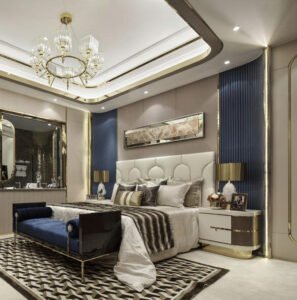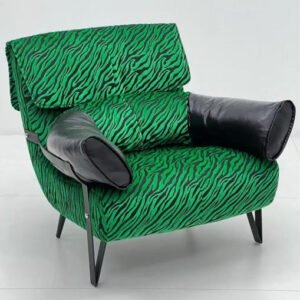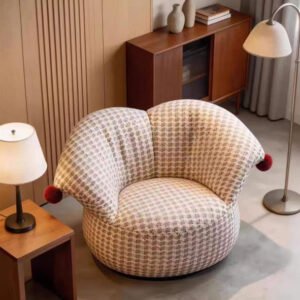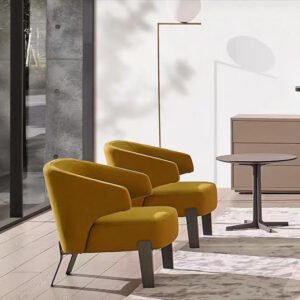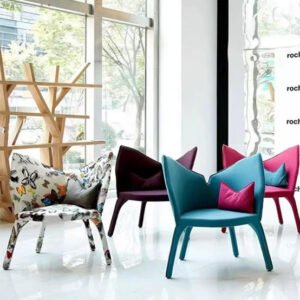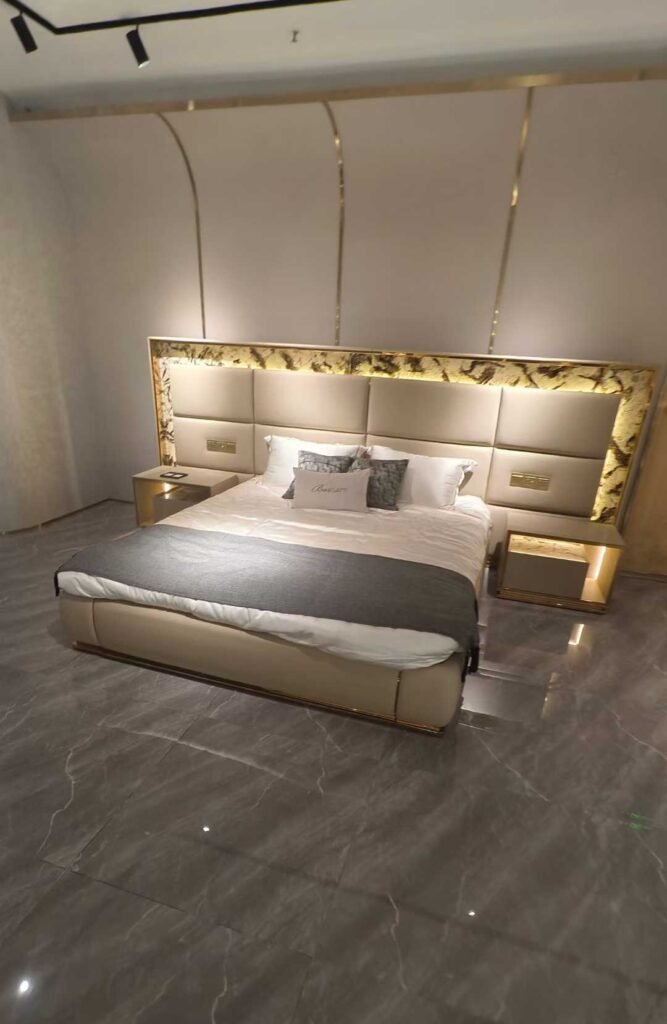
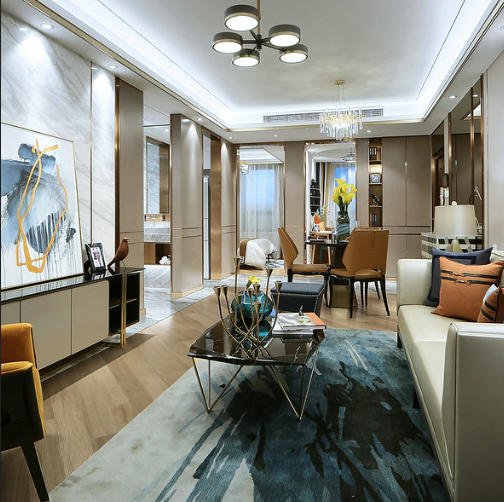
A developer has two ways to furnish a 120-key hotel. Buy from a designer brand and wait for the container. Or send drawings to a factory and build the pieces to fit the room.
Both paths end with a finished lobby. They do not carry the same risk.
One path protects the opening date. The other protects the layout. Most projects need a mix of both, and the mix is a decision you can plan.
This guide is for the people who sign that plan: FF&E buyers, developers, hotel operators, importers, private label owners, interior designers, architects and design-and-build teams. It sets out where designer pieces earn their price, where custom pieces save the project, and how to choose under a real deadline.
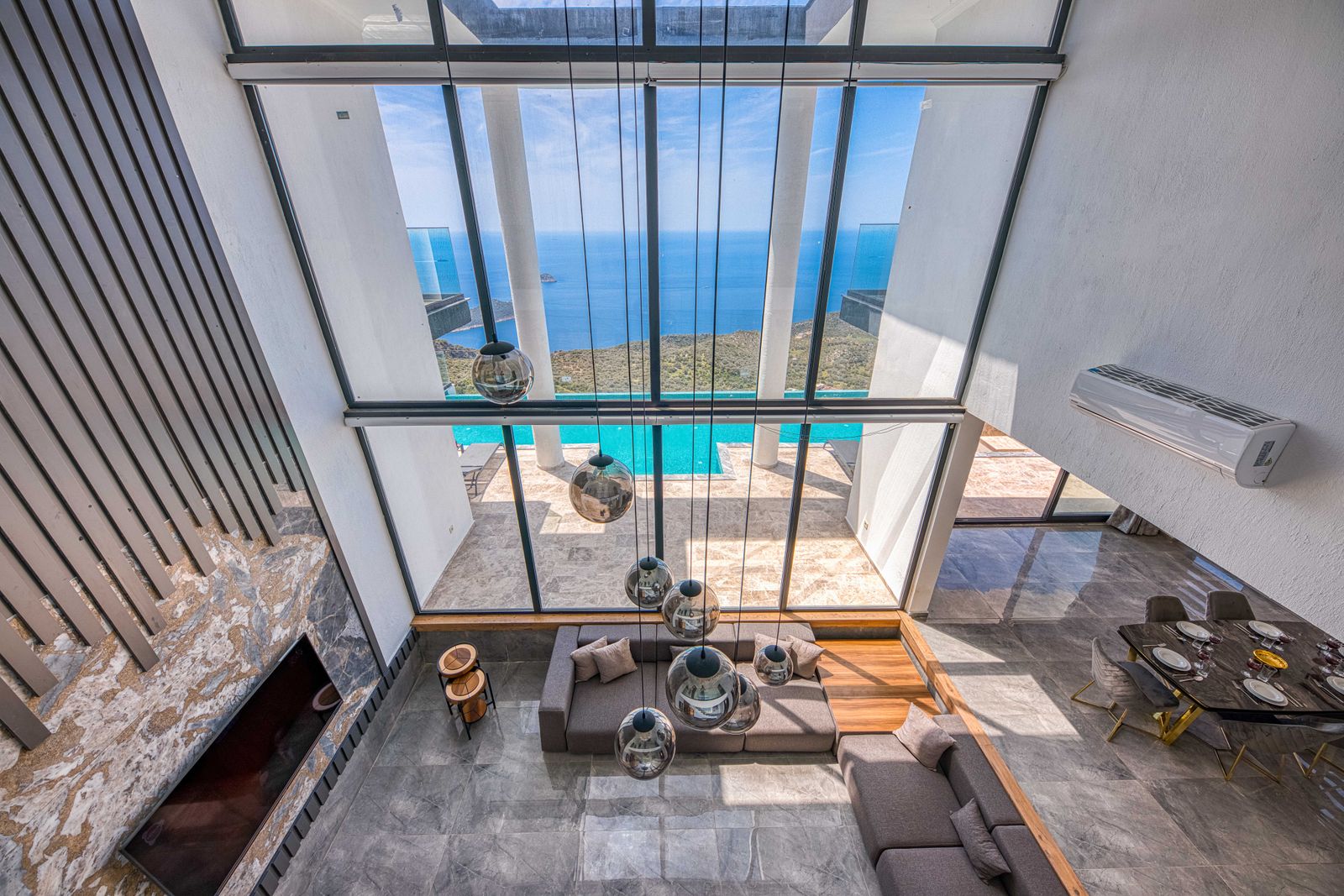
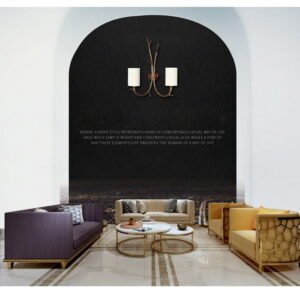
A double-height room shows the problem first. Furniture that fits a normal flat looks like toy furniture here.
The short answer: designer furniture buys speed and a known name. Custom furniture buys fit and cost control. The best projects use each one where it wins.
I. Two Paths, One Decision
Designer furniture is a piece made to a named designer’s original drawing, produced under licence, and sold in fixed sizes.
Custom furniture is a piece made to your project’s drawing, in your sizes, with your materials.
The words sound similar in a sales meeting. The obligations are not.
A designer piece comes with a story, a licence and a fixed specification. You accept the seat height, the depth and the finish list. A custom piece comes with a shop drawing, a sample and a schedule. You accept the risk of the first prototype.
| Designer furniture | Custom furniture | |
|---|---|---|
| Starting point | A designer’s original drawing | Your room and your drawing |
| Sizes | Fixed, from a price list | Set by the project |
| Lead time | 4–6 weeks for stock, 14–18 for made to order | 12–24 weeks, depending on the piece |
| Price logic | Retail price includes brand and dealer margin | Factory price plus tooling, sampling and freight |
| Paperwork | Certificate of authenticity, care guide | Shop drawings, sample sign-off, QC report |
| Resale | Strong for iconic pieces | Weak. The piece fits one room |
| Best use | A hero piece with a name buyers recognise | Anything that must fit, repeat or scale |
Why the choice is strategic, not aesthetic
A name on a chair is not proof of quality. This breakdown of what defines luxury furniture separates a famous label from a well-built piece.
A designer piece answers a question about taste. A custom piece answers a question about geometry.
Most projects need both answers. A villa with a 3.4-metre wall and a 2,900 mm sofa leaves a gap that nobody planned. A hotel with 120 rooms needs 120 nightstands that match, and no brand will hold that stock.
The decision also touches money. Retail prices carry a brand premium you cannot negotiate at volume. Factory prices carry sampling and tooling costs you cannot avoid.
Resale is the other half of the argument. Iconic pieces keep a second-hand market, and 1stDibs lists enough asking prices to test a claim in an afternoon.
II. Lead Time: Speed vs Precision
Lead time is the number of weeks from a signed purchase order to goods ready to ship. It is the first risk in any project schedule, and the easiest one to get wrong.
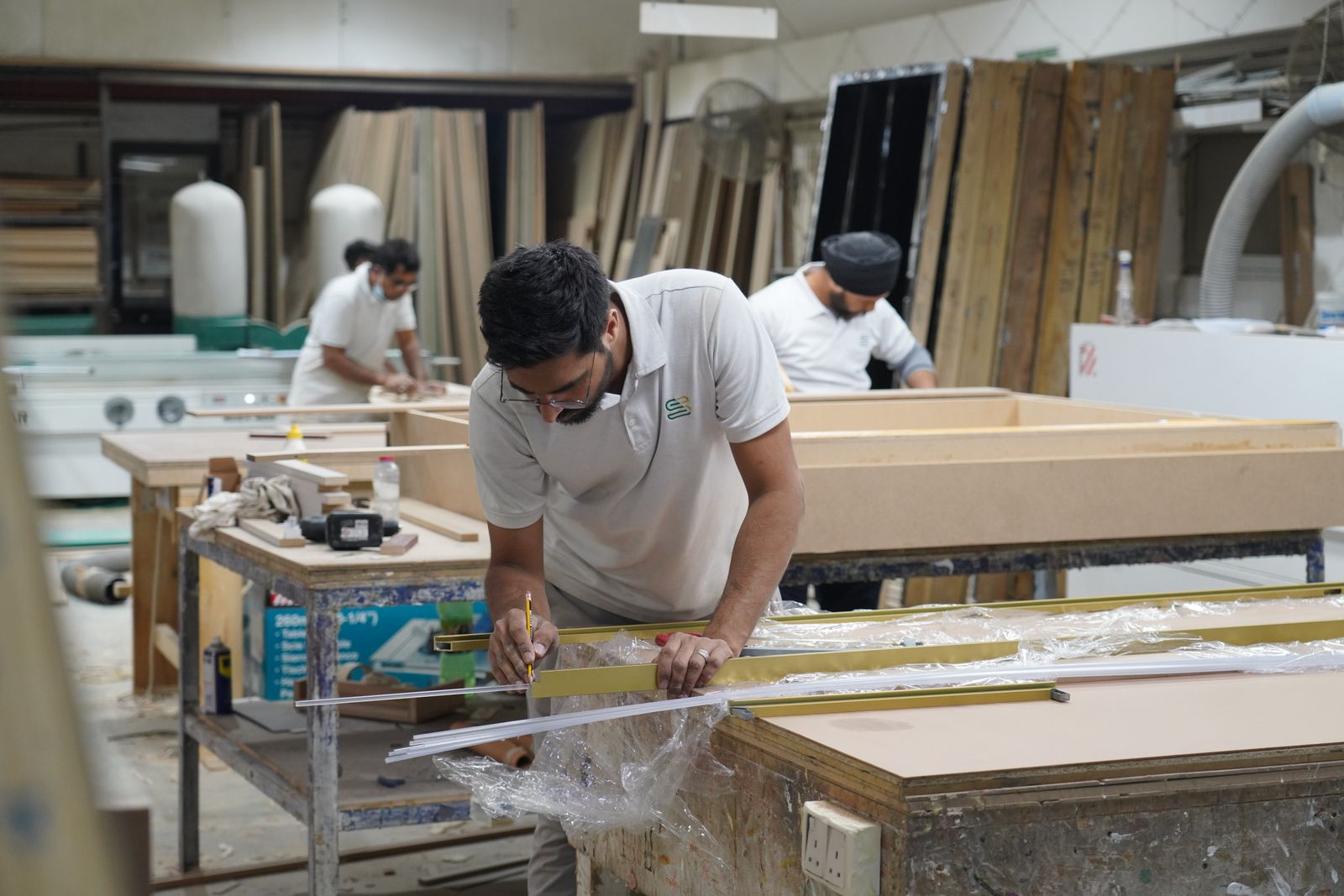
A custom order starts as timber, not as stock. Every week of that build has to sit inside your programme.
How each route spends its weeks
A designer piece from stock ships in 4–6 weeks. The same piece made to order runs 14–18 weeks, because the brand schedules your unit into a factory slot.
A custom piece from an existing factory range runs 12–16 weeks. A new design, with a sample and a client sign-off, runs 20–24 weeks.

Illustrative ranges from recent project quotes, door to door. Add 2–4 weeks for customs clearance and site delivery.
The chart carries one industry insight that surprises most first-time buyers. Custom is not always slower than designer. A brand’s made-to-order line can take longer than a factory’s standard custom range, because the brand queues behind its own retail orders.
The video below follows a custom sofa workshop from plywood frame to stitched cover. Watch the frame stage. The team builds to a room measurement, not to a catalogue size.
https://www.youtube.com/watch?v=emYjGflDCcQ
Four stages you can compress
- Drawing approval. Send a dimensioned drawing, not a mood board. One round of comments, not five.
- Sample. Approve a full-scale sample or a 1:1 corner section. Photos hide seam quality.
- Production. Book the slot before the deposit clears. Slots fill in Q3.
- Freight. Consolidate pieces into one container. Split shipments double the handling cost.
The hybrid answer
Most schedules are saved by splitting the order, not by choosing a side.
- Order designer stock for the pieces that must be on site first: dining chairs, side tables, lamps.
- Order custom for the pieces that must fit: banquettes, reception desks, wardrobes, oversized sofas.
- Keep 8–10% of the budget for air freight on the one item that slips.
A project calendar that maps these three lines against the opening date is worth more than a discount. Our ordering calendar for FF&E projects shows how the lines sit against a fixed handover.
III. Design Flexibility and Spatial Integration
Custom furniture solves the last mile of a project. The last mile is the gap between a drawing that works on paper and a room that works in real life.
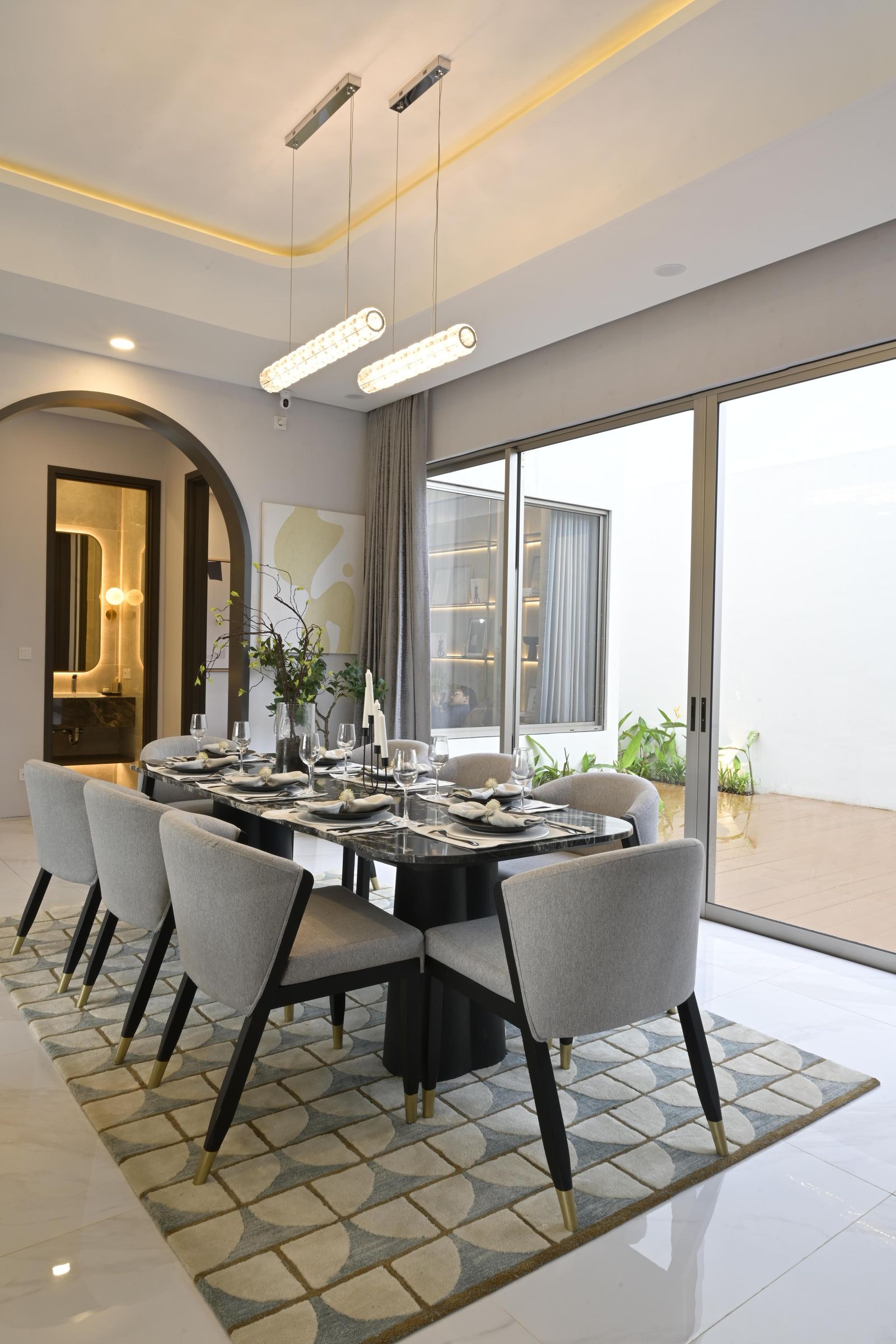
A table built to the room, not to a catalogue. The chairs clear the apron and the pendants sit on the table centre line.
Where fixed sizes fail
A designer sofa is usually 2,200–2,400 mm long. Put it against a 3,400 mm wall in a new-build villa and you get a 1,000 mm gap that reads as a mistake.
Worse is the furniture-led layout error. That happens when the room is designed around the pieces a supplier had in stock, so the circulation, the sight lines and the light all land in the wrong place.
Three common failures:
- A sofa that blocks a full-height window because the only available size was 200 mm too long.
- A dining table that seats eight but leaves 500 mm to walk behind, when the standard is 900–1,000 mm.
- A bed that fits the wall but leaves no room for a 600 mm bedside table on either side.
What custom actually changes
Custom work lets you set the three numbers that decide whether a room feels right: length, depth and height.
It also lets you match the architecture. If the ceiling is 4.5 metres, a 750 mm sofa back disappears. If the joinery is fluted oak, a plain plinth looks rented.
| Room problem | Designer fix | Custom fix |
|---|---|---|
| Wall 400 mm longer than the sofa | Add a console to fill the gap | Build the sofa to 3,200 mm |
| Column in the lounge | Push seating away from it | Wrap a bench around the column |
| Window starting at 400 mm | Choose a lower back, if one exists | Set the back height to 720 mm |
| Double-height volume | Add a rug and hope | Scale the piece up 15–20% and raise the back |
| Odd corner in a suite | Leave it empty | Fit a corner banquette with storage |
At Jade Ant furniture, every custom order starts with a site survey and a shop drawing. A factory cannot build to a guess.
Designers who brief a factory on these problems need shop drawings, not inspiration images. This guide to what interior designers need from an FF&E supplier lists the decisions a drawing must close before production starts.
IV. Budget: Retail Luxury vs Project Value
Value engineering means cutting cost from the parts a guest never sees, without changing the parts a guest does see.
That definition matters, because value engineering is often used as a polite word for downgrading everything.
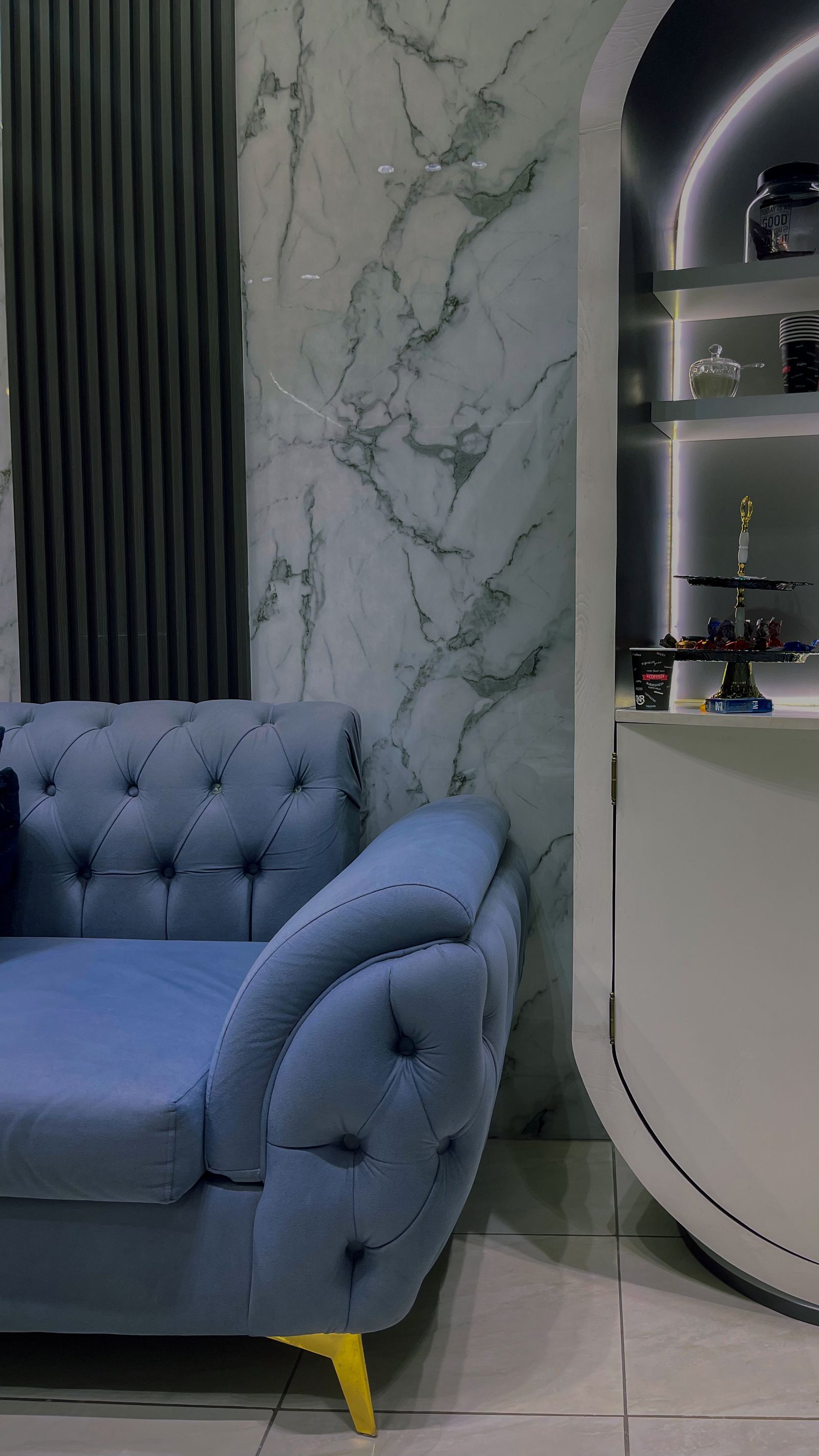
The tufting, the leather and the marble are the visible budget. The frame and foam behind them are where the money can move.
Where a designer price actually goes
A designer lounge chair at 2,400 USD does not spend most of that money on materials. It spends it on the name, the showroom and the dealer margin.
Illustrative split for a licensed designer chair sold through a dealer. Percentages move with channel and country.
The same chair built to the same drawing, in the same leather, from a factory that holds the pattern, usually lands at 45–60% of that retail figure. The gap is not a quality gap. It is a channel gap.
What you can and cannot value engineer
| Line item | Safe to change | Never change |
|---|---|---|
| Frame | Species of hardwood, if density holds | Joint type and kiln drying |
| Foam | Density in back cushions | Density and compression set in seat cushions |
| Leather | Match grade on side panels | Grade and thickness on seat and arm faces |
| Veneer | Core material behind the veneer | Veneer species and matching on show faces |
| Hardware | Brand of hinge or runner | Load rating and cycle life |
| Finish | Number of coats on hidden faces | Finish system on touch surfaces |
The number that decides it
One hundred custom dining chairs at 380 USD each cost 38,000 USD. One hundred designer chairs at 850 USD each cost 85,000 USD. The saving is 47,000 USD on one line.
That money does not have to leave the project. It can pay for the pieces guests actually touch: the entrance door handle, the bar front, the lighting over the table.
For a full worked comparison, this analysis of custom versus off-the-shelf furniture ROI runs the numbers across a whole floor, including freight and replacement cycles.
V. Luxury Villas: The Personalisation Case
In a private house, the brief changes. Scale and cost still matter, but the owner wants a home that does not look like the neighbour’s.

Carving like this is a custom order. The skill is in the tooling and the gilding, not in the brand name on the invoice.
One hero, many quiet pieces
Designer pieces work best as anchors. A recognised lounge chair in a study, a signed dining table, a lamp from a design house: each one gives the room a reference point that guests can read.
Custom work handles everything the anchor cannot. Built-in wardrobes that follow a sloped ceiling. A 3.6-metre dining table for a family that hosts every Sunday. A bed sized for a 2,000 mm mattress, which almost no brand stocks.
A split that works
On villa projects we see a workable ratio:
- 15–25% of the furniture budget on designer hero pieces. One or two per main room.
- 50–60% on custom loose furniture. Sofas, beds, tables, chairs built to the room.
- 20–30% on fixed joinery. Wardrobes, media walls, banquettes, vanities.
The ratio is not a rule. It is a starting point for a budget meeting, because it keeps a name in the room without paying brand margin on forty items.
For a room-by-room sequence in a private house, this villa furnishing plan covers twelve rooms and the order to furnish them.
Villa owners also carry a maintenance burden that hotels do not. A custom piece needs a care plan from day one, and the supplier should hand one over with the delivery. Our care routines for high-end furniture cover leather, veneer and stone in humid climates.
VI. Hospitality and FF&E: Durability at Volume
A hotel asks a harder question. Can you deliver the same chair 240 times, to the same standard, and replace it in year four without a new tooling cost?
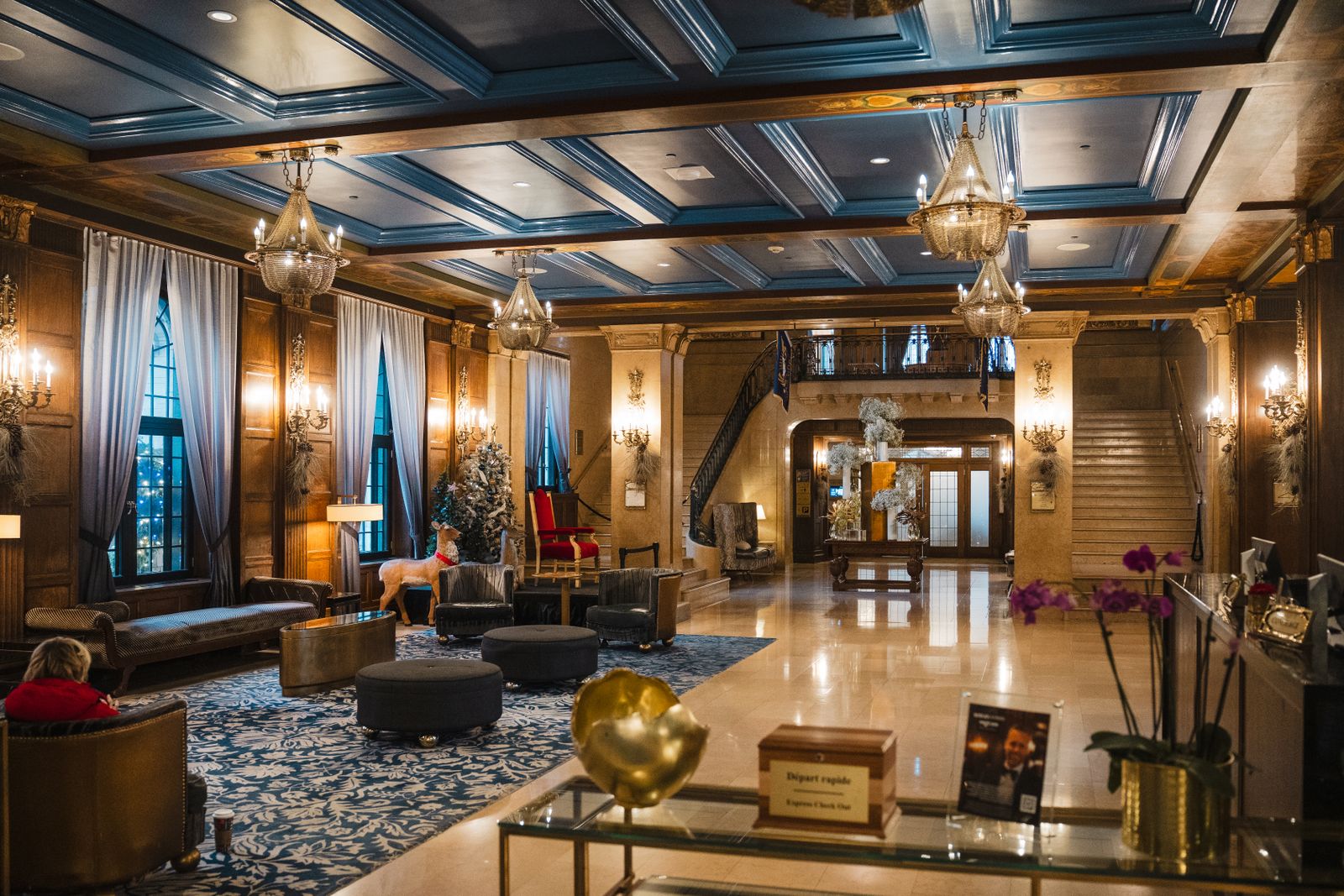
A lobby lounge is a working room. Grouped seating, clear paths and a repeatable specification keep it working.
Standardisation is the whole game
Custom manufacturing is not only about one-off pieces. It is about holding one specification across 120 rooms.
| Item | Quantity for 120 keys | Why custom wins |
|---|---|---|
| Nightstand | 240 | Must meet the wall, the bed height and the socket position |
| Desk | 120 | Depth set by the TV and the chair clearance |
| Luggage bench | 120 | Height set by the bed and the case size |
| Headboard | 120 | Wall width varies by room type |
| Lobby banquette | 6 | Built around columns and sight lines |
One frame drawing, one foam spec, one fabric, one QC checklist. A brand cannot offer that consistency across a mixed room mix, and it will not hold spare parts for a decade.
Compliance is not optional
Contract furniture has to pass tests that retail furniture never sees.
- Structural: ANSI/BIFMA X5.1 for seating, with static and cyclic load tests. BIFMA publishes the standards and the test methods.
- Fire: CAL TB 117-2013 in the US, BS 5852 in the UK and much of the Gulf. Foam and fabric both need to pass.
- Wear: 40,000 Martindale rubs for a lobby, 25,000 for a guest room. Martindale is a rub test that counts how many cycles a fabric survives.
- Emissions: GREENGUARD Gold for low VOC, which matters in sealed guest rooms.
- Timber: FSC chain of custody if the project reports on sourcing. The certificate belongs to the factory and the product line, not to the brand.
A custom factory builds to these standards because you write them into the spec. A retail designer piece may meet them. It may also be built for a home, where nobody tests it 100,000 times. Most contract specifications are agreed at trade shows such as NeoCon, where buyers compare frames and foam in person.
Logistics favour the project order
Custom pieces can ship flat or in sections. A 3.2-metre table that splits into two crates fits a service lift. A one-piece designer sofa does not.
Flat packing also cuts freight volume. On a 40-foot container, that difference can pay for the sampling. Jade Ant furniture crates large pieces in sections and labels each crate to the room on the drawing, which cuts site time on a 120-key fit-out.
For operators furnishing several properties, bundling loose furniture, fixed joinery and lighting into one package keeps the specification consistent across sites. Our one-stop furnishing model for hotels and villas sets out how that package is assembled.
VII. Developer Strategy: Marketability vs Margin
A developer sells a picture before selling a building. Furniture is part of that picture, and it has two jobs.
Staging sells the first unit
A model unit needs recognition. Buyers walk in and look for clues that the building is high-end. A designer sofa gives them one in three seconds.
The maths is simple. Stage one unit per 30 apartments with designer pieces. Fit the rest with custom furniture built to the same drawings. The buyer sees the same room, at a cost the project can carry.
Built-ins add sellable area
Custom joinery does something a sofa cannot. It turns dead space into usable space.
A 600 mm deep alcove becomes a wardrobe. The space under a stair becomes a study. A bay window becomes a window seat with storage. Appraisers count that as floor area and function, not as decoration.
On a 180-square-metre apartment, 6 square metres of recovered storage is 3.3% more usable space. At 6,000 USD per square metre, that is 36,000 USD of value from joinery that cost a fraction of it.
Where to spend and where to save
| Location | Choice | Reason |
|---|---|---|
| Entrance and lift lobby | Designer hero piece | First impression, photographed daily |
| Show unit living room | Designer sofa and lighting | Buyer recognition |
| Standard unit kitchens | Custom joinery | Fit, storage, repeatable cost |
| Corridors and back of house | Custom, contract grade | Nobody photographs it. It must last |
Developers who treat furniture as a line item in the construction budget usually overspend on the wrong rooms. The import cost breakdown is a useful check on what a landed piece really costs before the margin is set.
VIII. Importers and Private Label Owners
An importer faces a different question again. Do you sell someone else’s name, or do you build your own?
The designer route
Selling licensed brands brings instant credibility. It also brings limits. The brand controls the price, the territory and the terms. Exclusivity contracts are usually short, and renewal is not guaranteed.
Margin sits at 25–35% for a dealer who does not hold stock. It shrinks when a second dealer opens in the same city.
The private label route
Private label means you own the design, the drawings and the range. You buy from a factory, brand it yourself and set the price.
Three things change:
- Margin. Buying direct removes the brand layer. A piece that cost 1,200 USD wholesale can retail at 2,600 USD and still undercut a brand at 3,400 USD.
- Control. You decide the foam density, the leather grade and the lead time. You can fix a problem without asking permission.
- Risk. You pay for tooling and samples. A range that does not sell leaves you with moulds and no orders.
The way out of that risk is a small first run. Twelve pieces, one material story, one proportion language. Sell it, then extend it. Our sourcing plan for importers shows how to split a range between stocked models and made-to-order pieces. The private label collection was built this way, from a single material palette rather than a list of bestsellers.
The market saturation problem
Every importer in every market can buy the same catalogue from the same factory. When the catalogue is identical, price is the only difference left.
When importers ask Jade Ant furniture to quote a private label range, the first meeting covers the material story and the spare parts list, not the discount.
Custom design breaks that loop. A range built around your drawings cannot be price-matched by a competitor who does not have the drawings. It can be copied later, but by then you have the story, the stock and the clients.
Importers who make this shift usually need to change how they sell, not just what they buy. If you are still deciding between the two business models, this comparison of manufacturer and distributor roles sets out where margin, control and risk sit. This guide to brand positioning for furniture importers covers the shift from product list to point of view.
IX. The Decision Matrix
Use this table in the first project meeting. Score each row for your project, then read the pattern.
| Factor | Choose designer when | Choose custom when |
|---|---|---|
| Opening date | Under 6 months, or the piece is in stock | 9 months or more, with a frozen drawing |
| Room dimensions | Standard, or the piece is freestanding | Odd walls, columns, low windows, double height |
| Quantity | 1–4 pieces | 20+ pieces of one type |
| Brand value to the buyer | The name is part of the sale | The fit is part of the sale |
| Budget pressure | Low. The premium is affordable | High. The premium would cut another line |
| After-sales | You want the brand’s warranty | You want spares and re-covers from one source |
| Design risk | You want a proven piece | You can approve a sample before production |
Three checks before you commit
- Critical path. Count the weeks backwards from the opening date. If custom production does not fit, split the order.
- Aesthetic alignment. Lay the catalogue pieces into the plan. If two or more rooms need a size that does not exist, go custom for those rooms.
- Client appetite. Some clients want a name they can repeat at dinner. Others want a room nobody else has. Ask which one, in those words.
A written specification makes all three checks faster. Our FF&E specification guide shows the schedule format that keeps sizes, finishes and lead times on one page.
X. Conclusion
Designer furniture buys speed, recognition and a story. Custom furniture buys fit, volume pricing and control.
Neither one wins on every project. A hotel that opens in five months needs stock on the floor. A villa with a 4.5-metre ceiling needs pieces built for that volume. A developer needs both in the same building.
The pattern that holds across projects is a split order. Buy the few pieces that carry the name. Build the many pieces that carry the room. Write the sizes down before you send a deposit.
That is the difference between furnishing a space and finishing it.
If you are weighing the two routes on a live project, send the room schedule and the opening date. Jade Ant furniture works from first drawing to final crate with developers, hotel teams, designers and importers, and will tell you which pieces should be bought and which should be built. Start with a specification review, then look through the current range to see how the frames are made.
Glossary
| Term | What it means |
|---|---|
| Designer furniture | A piece made to a named designer’s original drawing, under licence, in fixed sizes. |
| Custom furniture | A piece made to your project’s drawing, in your sizes and materials. |
| Bespoke | Custom work that starts from a new design, not an existing factory range. |
| FF&E | Furniture, Fixtures and Equipment. The loose and fixed items a project buys, excluding the building. |
| Shop drawing | A technical drawing a factory produces for approval, with every dimension and joint. |
| Value engineering | Cutting cost from hidden parts without changing what the user sees or feels. |
| Prototype | The first full-size build of a custom piece, used to test shape, comfort and finish. |
| Lead time | Weeks from a signed purchase order to goods ready to ship. |
| Martindale | A rub test. It counts how many cycles a fabric survives before it shows wear. |
| Standardisation | Using one specification across many rooms so every unit matches and spares fit. |
| Landed cost | The full cost of goods once freight, duty, insurance and delivery are added. |
Frequently Asked Questions
How do I keep the luxury feel when I move from a designer brand to a custom maker?
Keep the three things guests actually notice: proportion, material and finish. Set the seat height, depth and back angle to the original drawing. Use the same leather grade and thickness on the faces people touch. Then spend the saved margin on better lighting and a hand-finished edge. Luxury reads through detail, not through a label.
What is the lead time difference between a European designer brand and a custom factory order?
A designer piece from European stock ships in 4–6 weeks. The same brand made to order runs 14–18 weeks. A custom factory order runs 12–16 weeks from an existing range, and 20–24 weeks for a new design with a sample. Custom is often faster than a brand’s made-to-order line, because the factory does not queue behind retail orders.
How do I make sure custom quality matches a high-end designer label?
Approve a full-scale sample, not a photo. Test four things on it: joint tightness under a twist, foam recovery after ten seconds of compression, seam alignment across a curve, and colour match under daylight. Then write those four tests into the QC checklist and require dated photos before the container is sealed.
Which option is more sustainable for a large hotel project over its full lifecycle?
Custom usually wins on lifecycle, because the factory can supply replacement covers, foam and legs for a decade. A discontinued designer piece cannot be repaired to spec. Custom also avoids shipping a whole new chair when only the cover has failed. Ask both suppliers for a ten-year spares commitment in writing before you compare prices.
Can custom furniture look like a specific designer style without the brand premium?
It can reproduce a style, not a protected design. Copying a patented or registered design exposes you to customs seizure and legal claims. The safe route is to take the proportion language (low back, thin arm, tapered leg) and build an original piece around it. You get the look, and you own the drawing.
How do I reduce the risk of prototype failure on a villa order?
Build the riskiest piece first. That is usually the largest sofa or the table with the odd shape. Approve it in the factory, not on site. Then freeze the drawing, photograph the approved sample from six angles, and attach those photos to the production order. Every later piece is checked against that set.
Is it cheaper to buy designer pieces for the model unit and custom pieces for the rest?
For most developments, yes. Stage one unit per 30 apartments with designer pieces, then fit the rest with custom furniture built to the same drawings. The buyer sees the same room, and the project avoids paying brand margin on hundreds of items. Keep the material palette identical across both so the switch does not show.
What documentation do I need to guarantee a custom piece fits?
You need a dimensioned shop drawing, a finish schedule with material codes, a sample sign-off sheet and a site survey with the actual wall, floor and ceiling measurements. Add the lift and door widths, and the route from the loading bay. Most fit failures come from a 20 mm site measurement that nobody wrote down.
How do warranty and after-sales differ between designer brands and custom manufacturers?
A designer brand usually offers a standard warranty through a dealer, with replacement rather than repair. A custom factory can offer repair, re-cover and spare parts, but only if you write those terms into the contract. Ask for the response time, the spares list and who pays freight on a claim. Put all three in the purchase order.
Which choice gives better long-term resale value for a luxury property?
A designer piece can be resold on its own, often at 30–60% of its price if it is iconic and documented. A custom piece is worth little outside the room it was built for. But a property with fitted joinery and correctly scaled furniture sells faster, and that speed has value too. Use designer pieces where resale matters, and custom where fit matters.