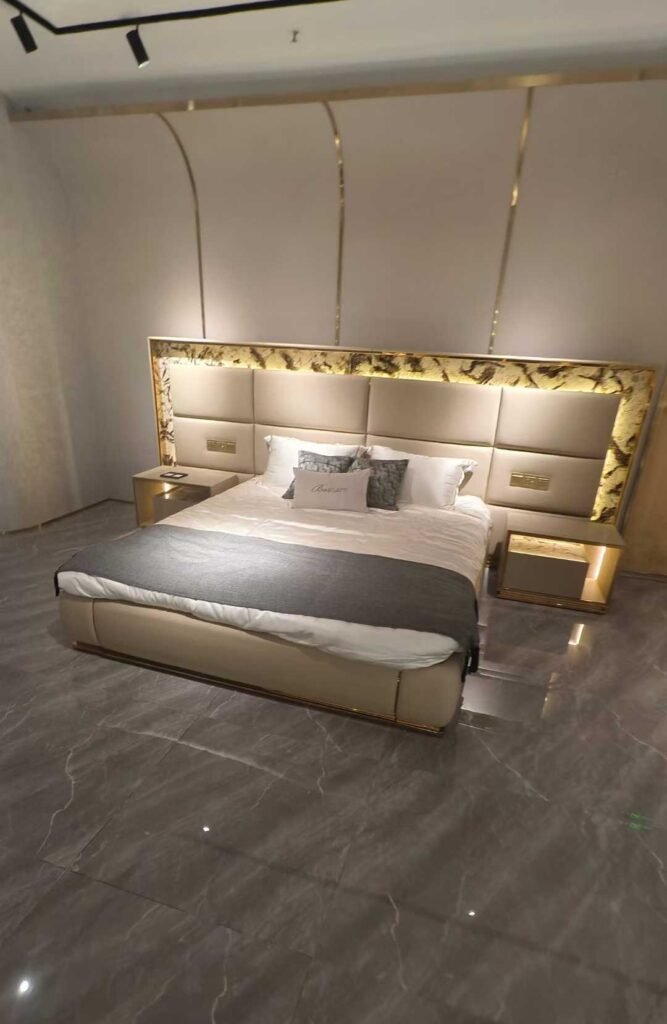
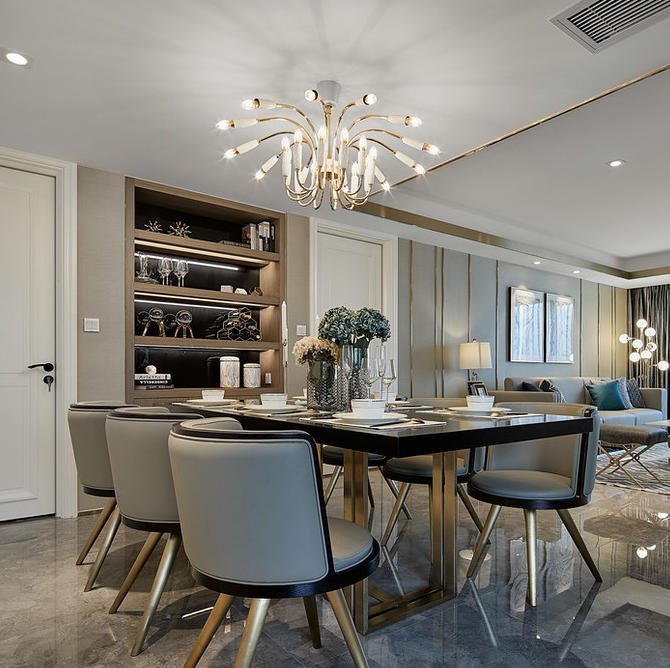
Strategic furniture sourcing is critical for interior design professionals and furniture distributors who need to deliver quality solutions within budget constraints. This guide addresses the real challenges you face — from securing reliable suppliers to negotiating bulk orders — so you can confidently source furniture that meets your clients’ expectations and protects your bottom line.
Why Furniture Sourcing Is a Business-Critical Function — Not Just a Purchasing Task
Most furniture sourcing problems are not discovered during the sourcing process. They show up six weeks after delivery — in a damaged upholstered panel on a $180,000 hotel project, in a client callback about drawers that won’t align, in an invoice for customs clearance fees that weren’t in your original quote.
By then, the margin is gone. Sometimes the relationship is too.
The furniture distribution and design procurement sector is operating in a more complex environment than at any point in the last decade. The contract furniture market is projected to grow from $70.2 billion in 2025 to $123.2 billion by 2035 (Alibaba B2B Research), yet supply chain disruptions, tariff volatility, and inconsistent supplier quality continue to create operational risk for distributors, showroom owners, and interior designers who haven’t built structured sourcing processes.
This guide gives you five practical, sequenced tips that address the most common and most costly sourcing mistakes — not as generic procurement advice, but as working frameworks built specifically for the B2B furniture professional managing real projects, real clients, and real margins.

The difference between what a client sees on delivery day and what you thought you ordered is determined entirely by how carefully you sourced it. A structured process is your only protection.
Tip 1: Establish a Clear Budget Framework Before You Source
Understanding your financial constraints upfront prevents costly mistakes and enables better supplier negotiations.
Define Total Project Costs vs. Furniture Allocation
The single most expensive sourcing mistake distributors and designers make is starting the supplier search before the budget architecture is documented. When you don’t know exactly how much is available for furniture — not furniture plus delivery, not furniture plus contingency, but the actual furniture procurement ceiling — you will either over-specify and lose margin, or under-specify and damage the project outcome.
The industry benchmark for furniture as a percentage of total interior design project budget is 25–40%, with furnishings, lighting, and case goods representing the substantial majority of that allocation (Willetts Design). On a $400,000 residential renovation, that means $100,000–$160,000 in furniture procurement. On a hotel suite refurbishment at $80,000 per key, the FF&E (Furniture, Fixtures and Equipment — the budget category covering all moveable furnishings and non-structural elements) component typically runs 35–45% of total project cost.
Before you approach a single supplier, document:
- The total project budget signed off by the client
- The FF&E percentage allocation agreed at brief stage
- The per-category furniture budget (seating, tables, bedroom, case goods, lighting)
- The margin percentage you need to maintain across the procurement
That last point is the one most often left undocumented — which is exactly why margins get squeezed during project execution when unexpected costs appear and there is no financial buffer to absorb them.
Account for Hidden Costs in Bulk Orders
The quoted furniture price is rarely the delivered furniture cost. The gap between those two numbers determines whether your project is profitable or marginal — and it is entirely within your control to close that gap before orders are placed.
The hidden cost categories that most commonly surprise furniture distributors and designers on international bulk orders:
| Cost Category | Typical Range | Notes |
|---|---|---|
| Ocean freight (FCL, 20ft container) | $1,800–$4,500 | Highly volatile; get quotes within 2 weeks of ordering |
| Customs clearance (brokerage + filing) | $300–$800 per shipment | Fixed costs; amortise across order value |
| Import duty (furniture from China to US) | 0–25%+ of FOB value | Varies by HS code and current tariff schedule |
| Customs MPF (Merchandise Processing Fee) | 0.3464% of declared value | Capped at $538.40 per entry (formal entries) |
| Last-mile delivery (white glove) | $150–$400 per piece | Varies significantly by location and piece size |
| Installation labour | $50–$200/hour per installer | Often excluded from supplier quotes |
| Insurance (marine cargo) | 0.5–1.5% of shipment value | Non-negotiable on high-value orders |
Note: US furniture import duty rates are subject to change based on active tariff schedules. Always verify current rates through the USITC Harmonized Tariff Schedule before committing to a project budget.
The total delivered cost formula for international furniture orders:
On a $50,000 FOB furniture order from Asia, total delivered cost in the US can reach $62,000–$72,000 before your margin is applied. Building your pricing model on the FOB figure and discovering the freight and duty costs at shipment stage is how projects become unprofitable.
Build Contingency Buffers for Supply Chain Disruptions
Post-2020, supply chain volatility is a permanent operating condition, not a temporary disruption. Companies that shifted from just-in-time inventory models to buffer-stock strategies found significantly better project completion rates through the disruption cycles of 2021–2025 (Bay Source Global, 2025).
For furniture distributors and interior designers, the practical application is straightforward: add a 10–15% contingency to every project furniture budget and communicate this to clients at brief stage, not when you need to access it.
What the contingency protects against:
- Ocean freight surcharges applied between order placement and shipment (common during peak season)
- Lead time extensions requiring expedited shipping for time-critical pieces
- Inspection failures requiring remanufacture or substitution of specific items
- Currency fluctuation on international orders not hedged at time of purchase
- Damage in transit requiring replacement before project completion date
The contingency is not waste — it is insurance. And the distributor or designer who presents a budget including a transparent contingency line item communicates more professional competence than one who presents a “fixed” number that subsequently changes.
Tip 2: Research and Vet Reputable Suppliers at Scale
Building a trusted supplier network is essential for consistent quality and reliable delivery.
Evaluate Supplier Credentials and Certifications
Certifications are the fastest way to filter the supplier landscape before you invest time in sample reviews and factory visits. A supplier without any third-party quality or sustainability certification is a supplier whose quality claims you cannot verify independently — which is an unacceptable risk when your client relationships and project reputation are on the line.
The certifications that matter most for furniture distributors and designers, by application:
| Certification | What It Validates | Most Relevant For |
|---|---|---|
| ISO 9001 | Quality management system — consistent production processes and documentation | All furniture procurement; minimum expectation for commercial suppliers |
| FSC (Forest Stewardship Council) | Responsibly sourced timber through chain-of-custody tracking | All wood furniture; required for many hotel and commercial specifications |
| GREENGUARD Gold | Low VOC (Volatile Organic Compound) emissions; indoor air quality protection | Hospitality, healthcare, and commercial projects with IAQ requirements |
| ANSI/BIFMA | Structural and safety standards for commercial/office furniture | Commercial contract furniture; essential for institutional specifications |
| CARB Phase 2 | California Air Resources Board formaldehyde emission standards | Composite wood products; now a baseline expectation for US-market furniture |
| ISO 14001 | Environmental management system — supplier-level sustainability commitment | Clients with sustainability procurement policies |
Note: Always verify certification validity directly with the issuing body, not just from supplier documentation. FSC certificates can be verified at info.fsc.org. ISO certifications can be verified through the issuing registrar.
A supplier who claims FSC certification but cannot provide a valid certificate number for verification is a supplier making a potentially fraudulent claim. This is not rare — it is common enough that it needs to be on your supplier evaluation checklist as a mandatory verification step, not an optional one.
Assess Production Capacity and Lead Times
The supplier who quotes an 8-week lead time in their email and delivers in 16 weeks has not just damaged your project timeline. They have damaged your client relationship, potentially forced expensive expediting costs, and created a downstream pressure on every other contractor on the project.
Lead time validation is not about taking the supplier’s word for it. It is about understanding their current order book, their production capacity in your specific product category, and their track record with similar order volumes.
Top-performing distributors maintain average lead times of 18.7 days on in-stock standard items, while struggling distributors average 63.1 days (Anchor Group, 2025). For custom manufacturing, industry benchmarks from Jade Ant Furniture’s B2B analysis show standard custom lead times of 8–12 weeks for most upholstered and case good programmes — with a 14-week lead time typically resulting in a 17–18 week project window when buffer time is appropriately added.
Questions to ask every supplier before placing your first significant order:
- What is your current production queue, and how does it affect my requested lead time?
- What percentage of your orders ship within the quoted lead time window?
- What is your process when production falls behind schedule — how and when do you notify buyers?
- Can you provide three references from distributors or designers who have placed orders of comparable volume in the last 12 months?
Review Quality Control Processes and Warranty Terms
A supplier’s quality control (QC) process determines what arrives in your client’s project. It is the single most important operational factor in evaluating a new supplier, and it is consistently under-interrogated in B2B furniture procurement.
The QC questions that expose supplier quality infrastructure:
- Incoming material inspection: Do they inspect raw materials on arrival, or do they only check finished products?
- In-process inspection: Are there checkpoint inspections during production, or only at final assembly?
- Final inspection protocol: What are the dimensional tolerances, finish consistency standards, and structural integrity tests that every piece passes before shipping?
- Pre-shipment inspection: Do they provide photographic documentation of finished pieces before packing — and can you require this as a condition of every order?
- Third-party inspection: Will they accept a third-party inspection (SGS, Bureau Veritas, Intertek) commissioned by you at your cost — and is their facility accessible to independent inspectors?
On warranty terms, the commercially relevant questions are: what is the warranty period by component (frame, upholstery, hardware, finish), what constitutes a warranty claim versus normal wear, and who bears the cost of replacement — manufacturer, freight, and installation? A supplier offering a 12-month warranty on a piece you are positioning as a 10-year investment is not the right partner for that positioning.
Check References From Other Distributors and Designers
References are the most underused supplier evaluation tool in furniture procurement. Most buyers skip them because calling three references feels slow. The distributors who skip this step are the ones who discover the supplier’s reliability problems after placing a $40,000 order.
Ask for references specifically from buyers whose business model resembles yours — other distributors, showrooms, or design firms with comparable order volumes and quality requirements. Then ask the reference these specific questions:
- Did orders consistently arrive within the quoted lead time?
- How did the supplier handle the last quality problem that arose?
- Have you seen any degradation in quality consistency as the supplier’s order volume has grown?
- Would you place a new $50,000 order with this supplier today without hesitation?
That last question is the only one that truly matters. The answer tells you everything the previous three were building toward.

A single piece that fails quality expectations on a project like this costs more in client relationship damage than the piece itself is worth. Supplier vetting is the investment that prevents that conversation.
Tip 3: Negotiate Volume Discounts and Flexible Terms
Your purchasing power as a distributor or showroom operator deserves strategic leverage.
Structure Multi-Tiered Pricing Agreements
The most common negotiating mistake furniture distributors make is approaching suppliers with a single order value and asking for their best price. This positions you as a one-time buyer, not a strategic partner — and one-time buyers get one-time pricing.
The negotiation that generates sustained margin advantage is a tiered pricing agreement that locks in price schedules across volume ranges and provides the supplier with revenue predictability in exchange for price protection for you. This works because suppliers manage their production capacity as a fixed cost; a buyer who commits to predictable volume helps them fill that capacity without the uncertainty cost — and they will price that certainty into your agreement.
A practical tiered pricing framework to propose:
| Annual Purchase Volume (FOB) | Target Discount vs. Standard Price | Additional Terms to Negotiate |
|---|---|---|
| $50,000–$100,000 | 8–12% | Net-30 payment terms |
| $100,000–$200,000 | 12–18% | Net-45; priority production scheduling |
| $200,000–$400,000 | 18–25% | Net-60; first access to new collections |
| $400,000+ | 25%+; exclusive territory discussion | Consignment arrangements; co-marketing investment |
Present your proposed framework at the start of the supplier relationship, not after you’ve placed five orders and are trying to negotiate retroactively. The supplier who understands your growth trajectory and sees a pathway to volume will offer better initial terms than the one who sees only the first order.
Secure Payment Terms That Improve Cash Flow
Cash flow is the primary operational constraint for most furniture distributors and design firms. A business with strong margins but poor payment terms — paying suppliers 30 days before clients pay you — is chronically capital-constrained regardless of how profitable the individual transactions appear on paper.
The payment terms that most significantly improve working capital in furniture distribution:
Net-30 and Net-60 are achievable from established suppliers after a track record of on-time payments on initial orders. Start with a history of timely payment on shorter terms and use that track record explicitly in the net-60 negotiation: “We’ve paid every invoice within terms for 18 months. We’d like to move to net-60 as we increase our volume commitment.”
50/50 deposit structure (50% at order, 50% before shipment) is standard on custom orders and beneficial if it replaces a 100% prepayment requirement. On a $30,000 custom order, moving from full prepayment to 50/50 saves you $15,000 in working capital for 8–12 weeks.
Consignment arrangements — where the supplier retains ownership of floor sample inventory until it sells — are available from some premium manufacturers for showroom partners. This eliminates the capital cost of floor samples entirely, though it typically requires a formal showroom partnership agreement and minimum display commitments.
Request Customisation Options Without Minimum Order Penalties
Your designer and hotel clients will ask for modifications: a sofa in a specific fabric not in the standard range, a table in a custom dimension to fit a particular room, a finish colour matched to an existing installation. The supplier who charges a $2,000 setup fee for every finish variation is a supplier who will cost you project relationships.
Before finalising a supplier partnership, document their customisation policy explicitly:
- What is the minimum order quantity for custom finishes, fabrics, and dimensions?
- Is there a setup fee for first-run custom specifications, and is it waived above a certain order value?
- How do they handle fabric sourcing — do they accept COM (Customer’s Own Material, meaning fabric supplied by the buyer) or only their approved material library?
- What is the lead time premium for custom versus standard specifications?
Jade Ant Furniture’s manufacturing model is built around exactly this flexibility — allowing distribution partners and design firms to specify custom dimensions, finishes, and material combinations without prohibitive setup costs, because the factory infrastructure is designed for custom production rather than mass-market standardisation.
Establish Clear Return and Defect Policies
A return and defect policy that seems reasonable in a supplier conversation often reveals its limitations when a 40-piece hotel order arrives with six pieces showing finish inconsistencies. The time to negotiate the defect policy is before the first order, not after the first problem.
The policy terms that protect your margin in practice:
- Defect threshold: What percentage of a shipment can be defective before the supplier provides full replacement or credit? The industry standard for premium contract furniture is below 2%; anything above 5% in a supplier’s stated policy signals quality confidence issues.
- Damage documentation window: How many days after delivery do you have to report shipping damage? Most quality suppliers accept 5–7 business days; anything shorter than 48 hours creates claim risk if installation is delayed.
- Remedy options: Does the policy offer choice between replacement, repair, or credit note — or does the supplier unilaterally decide? You need the flexibility to choose the remedy that best fits your project timeline.
- Freight responsibility on returns: Who pays to ship defective items back and replacement items forward? This is often left ambiguous in standard supplier terms and should be explicitly documented.
Tip 4: Prioritise Quality and Durability Over Price Alone
Cheapest isn’t best — especially when your reputation depends on client satisfaction.
Inspect Samples and Request Third-Party Testing
The sample is your contract. Whatever quality level is represented in the sample is the quality level you are committing to purchasing at scale. This means the sample review process needs to be rigorous enough to catch the variations that will appear in production — not a casual visual inspection, but a structured evaluation against documented standards.
Your sample evaluation protocol should include:
Structural integrity: Apply load pressure to seating surfaces, open and close drawers at speed, test leg stability on an uneven surface. A piece that shows movement or flex in a sample will show worse performance in production, not better.
Finish consistency: Examine under raking light (light directed at a low angle across the surface) to reveal brush marks, roller lines, drips, or thickness variations in paint and stain applications that appear invisible under normal showroom lighting.
Material verification: Request material certificates for key components — solid wood species confirmation (not veneer marketed as solid), upholstery fabric composition and weight (gsm — grams per square metre — is the relevant measure for durability), foam density and ILD (Indentation Load Deflection, which measures foam firmness and durability).
For commercial and hospitality specifications, request third-party testing results for: rub count (Wyzenbeek or Martindale test — measures fabric abrasion resistance; contract-grade minimum is 15,000 double rubs), fire retardancy (relevant for all commercial upholstery), and structural load testing to ANSI/BIFMA standards where applicable.
Understand Construction Methods and Material Sourcing
The furniture industry uses material terminology inconsistently, and the gap between what a supplier says and what is actually in the piece you receive can represent a significant difference in durability and end-value.
The key construction distinctions your sourcing process must verify:
Solid wood vs. veneer vs. engineered wood: Solid wood is milled from a single piece of timber and can be refinished multiple times over its life — relevant for residential pieces positioned as heirlooms. Veneer (a thin layer of real wood over an engineered substrate) provides the appearance of solid wood at lower cost and better dimensional stability — appropriate for most commercial applications when the core substrate is quality-grade plywood. Particle board (compressed wood chips and resin) is the lowest-cost substrate and is appropriate only for budget-tier products; it swells with moisture exposure and cannot be refinished.
Frame joinery in upholstered pieces: Dowel joints are the entry-level connection method — functional in residential light-use applications but not adequate for commercial or high-traffic residential. Corner blocks (triangular wood reinforcements at frame corners) are standard in mid-range commercial pieces. Mortise-and-tenon joinery is the premium standard for pieces positioned to last 10–15 years in regular use.
Foam specification: Foam density (measured in kg/m³ or lb/ft³) determines how long a seating surface maintains its shape. Contract-grade seating requires minimum 1.8 lb/ft³ density (approximately 28 kg/m³); premium residential seating typically uses 2.0–2.2 lb/ft³. Budget-tier products often use 1.2–1.5 lb/ft³ foam that shows compression and sagging within 2–3 years of regular use.
Evaluate Finish Quality and Longevity
Finish failures are the most common post-delivery quality complaint in furniture distribution — not because finishes are inherently fragile, but because the wrong finish specification is chosen for the use environment.
The practical finish selection framework for your client specifications:
| Finish Type | Durability Rating | Best For | Avoid For |
|---|---|---|---|
| Catalysed lacquer (2K) | Excellent | Commercial tables, high-traffic surfaces | Pieces requiring frequent touch-up |
| Hard wax oil | Good; spot-repairable | Residential solid wood; luxury hospitality | High-moisture environments without sealing |
| Water-based polyurethane | Good | Residential cabinetry and case goods | Commercial contract (insufficient hardness) |
| Powder coat (metal) | Excellent | Metal frames, bases, accents | Cannot be touch-repaired on-site |
| Standard lacquer (1K) | Moderate | Residential decorative pieces | Any commercial application |
| Natural oil/wax | Moderate; requires maintenance | Premium residential solid wood | Hotel rooms and high-contact surfaces |
When specifying for hotel rooms or high-contact commercial surfaces, always confirm that the finish specification is catalysed (2K) — meaning a two-component chemical reaction creates the hardened film. Single-component (1K) finishes are softer and more vulnerable to water rings, scuffs, and surface damage in commercial environments.
Compare Warranty Coverage Across Suppliers
Warranty comparison is most useful when done on a per-component basis rather than as a single headline number. A “5-year warranty” that excludes fabric, hardware, and foam — covering only the frame — is substantively different from a 5-year warranty that covers all components.
Build a warranty comparison matrix for your active supplier set:
| Supplier | Frame Warranty | Upholstery Warranty | Hardware Warranty | Foam Density/Warranty | Defect Definition |
|---|---|---|---|---|---|
| Supplier A | 10 years | 2 years | 1 year | 1.8 lb/ft³; no warranty | Written policy |
| Supplier B | 5 years | 3 years | 3 years | 2.0 lb/ft³; 5 years against >25% compression | Written policy |
| Supplier C | 3 years | 1 year | 1 year | Not specified | Verbal |
This matrix, populated from actual supplier documentation, gives you an objective basis for supplier selection and a defensible record if a warranty claim is disputed.

▶ Watch on YouTube: Profitable Furniture Sourcing Tips for Interior Designers — a practical walkthrough of sourcing strategy, vendor management, and how to protect your margins throughout the procurement process.

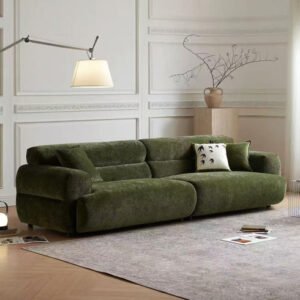
Pieces like this hold up in hotel environments because the construction decisions were made correctly at the sourcing stage — foam density, fabric specification, frame joinery — not because they look expensive.
Tip 5: Build Long-Term Supplier Relationships for Competitive Advantage
Strategic partnerships create stability, better pricing, and priority access to new collections.
Establish Regular Communication Schedules
The distributors and designers who get priority production scheduling, first access to new collections, and the benefit of the doubt when production problems arise are not the ones who placed the largest single order. They are the ones whose suppliers know them — their business model, their client base, their typical project requirements, and their communication style.
This relationship depth is built through structured, consistent contact — not just when you need something.
A practical supplier communication rhythm for your key manufacturing partners:
- Monthly check-in call (30 minutes): Current order status; any production capacity changes anticipated in the next 60 days; upcoming material or finish changes
- Quarterly business review (90 minutes): Order volume versus forecast; quality feedback from client deliveries; pricing review and volume commitment for the next quarter; new product preview
- Annual strategic review: Relationship performance against agreed KPIs; exclusivity or preferred partner tier discussion; joint planning for the following 12 months
The supplier who receives this level of structured engagement from your organisation treats you as a strategic account. The supplier who hears from you only when you place an order or when there is a problem treats you as a transaction.
Provide Consistent Order Volume and Forecasting
Predictable purchasing is the most valuable thing you can offer a manufacturing supplier. Their production cost structure is largely fixed — factory space, equipment, permanent staff — and unpredictable order flow creates costly inefficiency that they cannot eliminate without buyer certainty.
When you provide quarterly purchase forecasts — even conservative ones that you commit to as a floor rather than a ceiling — you give suppliers the ability to plan material procurement, staff scheduling, and production sequencing around your orders. That planning value is worth real commercial benefit to you: better pricing, priority scheduling, and the kind of flexibility on urgent orders that is only available to buyers whose business a supplier has built capacity around.
Provide forecasts in writing, by product category and approximate volume, with a commitment to notify the supplier at least 30 days in advance of any material deviation from forecast. This is a straightforward operational discipline that most distributors and designers do not practice — which means the ones who do are immediately differentiated in their supplier relationships.
Negotiate Exclusive Lines or Territory Rights
An exclusive distribution agreement for a specific manufacturer or product line in your territory is the most durable competitive advantage available to a furniture distributor or showroom operator. It cannot be replicated by a competitor without a fundamental restructuring of their supplier relationships — and that takes years, not weeks.
Jade Ant Furniture’s B2B partnership model includes the ability to develop exclusive distribution arrangements for committed partners who demonstrate sustained volume, professional brand representation, and alignment with the premium positioning that the brand’s products are designed to occupy.
The pathway to exclusivity is consistent, not immediate:
- Establish the relationship as a standard wholesale buyer; demonstrate payment reliability and product knowledge
- After 6–12 months, document your sales performance data and present it to the manufacturer with a proposal for preferred partner status
- After 12–18 months of demonstrated volume and professional brand representation, propose a territory exclusivity agreement with specific volume commitments and marketing obligations
- Maintain the exclusivity by delivering on your commitments — volume, display standards, and brand-appropriate sales practices
Exclusivity earned on this pathway is commercially durable because both parties have invested in making it work. Exclusivity granted opportunistically, without the relationship foundation, rarely survives the first supply problem.
Create Feedback Loops for Continuous Improvement
Your clients are testing your supplier’s products in ways the supplier’s own QC team cannot replicate: real use environments, real traffic levels, real maintenance regimes, and — most importantly — the honest assessment of a person who paid full price and has no reason to be generous in their evaluation.
That feedback is commercially valuable to your manufacturing partners, and making it available to them systematically — rather than only when there’s a problem — positions you as a strategic business partner, not just a buyer.
Build a quarterly feedback report for your key suppliers covering: the top three quality commendations from project deliveries, the top three quality concerns (even minor ones), any client requests for features or specifications that the current range doesn’t meet, and any finish or material performance observations from pieces in high-use environments.
Suppliers who receive this kind of structured intelligence from distribution partners use it to improve their products and their production processes — and they prioritise the relationships that generate it, because structured buyer feedback is operationally rare and genuinely valuable.
 Long-term supplier partnerships don’t just mean better pricing. They mean the production slot when your project timeline is tight, the flexibility when a client changes their specification, and the exclusivity that keeps competitors from offering the same collection.
Supplier Evaluation Checklist: A Quick Reference
Use this framework when assessing any new supplier before placing a first order.
| Evaluation Area | Criteria | Status |
|---|---|---|
| Credentials | ISO 9001 certified | ☐ Verified |
| FSC / GREENGUARD / relevant sector certifications | ☐ Verified | |
| CARB Phase 2 compliance for composite wood | ☐ Verified | |
| Capacity | Production capacity matches your projected volume | ☐ Confirmed |
| Lead time quoted with on-time delivery rate documented | ☐ Confirmed | |
| Current order book and capacity constraints disclosed | ☐ Confirmed | |
| Quality | Pre-shipment inspection protocol documented | ☐ Confirmed |
| Third-party inspection access confirmed | ☐ Confirmed | |
| Defect rate data from current buyers obtained | ☐ Confirmed | |
| Commercial | Tiered pricing agreement proposed | ☐ Negotiated |
| Payment terms (net-30 minimum) agreed | ☐ Negotiated | |
| Customisation policy and MOQ documented | ☐ Documented | |
| Return and defect policy in writing | ☐ Documented | |
| Warranty | Per-component warranty terms documented | ☐ Documented |
| Remedy options (replacement/repair/credit) specified | ☐ Documented | |
| References | Three references from comparable buyers contacted | ☐ Completed |
| On-time delivery performance confirmed | ☐ Confirmed | |
| Quality issue handling confirmed | ☐ Confirmed |
Make Sourcing a Strategic Competitive Advantage
Successful furniture sourcing is not a procurement task you complete once and move on from. It is a capability you build over time — through better supplier relationships, more disciplined budget frameworks, and the kind of quality evaluation rigour that protects your client relationships and your margin on every project.
The distributors, showrooms, and interior design firms that consistently win the best projects and generate the strongest margins are not the ones with access to the lowest prices. They are the ones whose supplier ecosystem is reliable enough that they can promise delivery dates with confidence, flexible enough to accommodate the customisation requests that premium clients expect, and exclusive enough that their competitors cannot easily replicate what they offer.
Building that ecosystem takes time and discipline. The five tips in this guide give you the framework to start doing it systematically — which is the only way to do it durably.
Whether you’re a furniture distributor building a new supplier network, a showroom operator renegotiating terms with established partners, or an interior designer trying to reduce the procurement risk on complex projects, the same principles apply: know your budget architecture before you source, vet your suppliers before you trust them, negotiate from a position of volume commitment, prioritise quality over headline price, and invest in supplier relationships as a strategic asset.
The sourcing decisions you make today determine the project outcomes and the client relationships you’ll be managing for the next three to five years. Start the conversation with Jade Ant Furniture to explore how a structured manufacturing partnership supports your B2B sourcing strategy with consistent quality, protected trade pricing, and the custom capability your clients expect.
Glossary of Key Terms
FOB (Free On Board): A shipping term indicating that the seller delivers goods to the named port and loads them onto the vessel; the buyer assumes risk and cost from that point. The FOB price is the most commonly quoted furniture price in international B2B transactions — it excludes freight, insurance, import duty, and all costs incurred after loading.
FCL (Full Container Load): A shipping arrangement where the buyer fills an entire shipping container (typically 20ft or 40ft). More cost-efficient per unit than LCL (Less than Container Load) for large orders; typically $1,800–$4,500 per 20ft container for furniture from Asia to North America.
FF&E (Furniture, Fixtures and Equipment): The budget category in hospitality and commercial interior design projects covering all moveable furnishings and non-structural elements. Hotel developers and commercial clients manage FF&E budgets separately from construction costs; it typically represents 35–45% of a hotel room’s total fit-out cost.
MOQ (Minimum Order Quantity): The smallest number of units a supplier will produce or ship in a single order. For custom furniture, MOQs range from 1 unit (flexible B2B-focused manufacturers) to 50+ units (mass-production factories). MOQ negotiation is a critical element of the supplier relationship setup for distributors managing project-based demand.
COM (Customer’s Own Material): A customisation term indicating that the buyer supplies the fabric or material to the manufacturer for application to the furniture piece. COM acceptance varies by manufacturer; some accept COM with no premium, others charge a handling fee or refuse it entirely.
VOC (Volatile Organic Compound): Chemical compounds that evaporate at room temperature, contributing to indoor air pollution. Furniture finishes, adhesives, and foam treatments can all be sources of VOC emissions. GREENGUARD Gold certification verifies that products have been tested for over 15,000 VOCs against strict indoor air quality standards.
Wyzenbeek Double Rub Test: A fabric durability test that measures resistance to abrasion by rubbing a standard cotton duck cloth across the fabric surface under a weighted arm. Contract-grade fabric minimum is 15,000 double rubs; heavy contract (hotel and hospitality) typically requires 30,000+. The Martindale test is the European equivalent.
ILD (Indentation Load Deflection): A measurement of foam firmness, expressed as the weight (in pounds) required to compress a 4-inch foam sample by 25% of its thickness. Higher ILD indicates firmer foam. Residential seating typically uses 25–35 ILD; contract and commercial seating uses 35–45 ILD for longer-lasting support.
ANSI/BIFMA: The American National Standards Institute / Business and Institutional Furniture Manufacturers Association standards for commercial furniture. ANSI/BIFMA standards establish testing protocols for structural strength, stability, and durability under commercial use conditions. Essential specification requirement for corporate, institutional, and hospitality contract furniture.
HS Code (Harmonized System Code): An internationally standardised numerical classification system for traded goods. Each furniture category has a specific HS code that determines the applicable import duty rate. Misclassification of HS codes is a common source of unexpected customs costs in furniture importing.
Frequently Asked Questions About Furniture Sourcing for Distributors and Designers
1. How do I identify suppliers who can reliably handle rush orders without compromising quality?
Rush order capability is a production infrastructure question, not a sales assurance question. Before you need it, ask your suppliers these specific questions: What is your expedited production premium, and at what volume does it apply? Do you maintain buffer inventory of your most common components (frames, foam, standard fabrics)? Can you realistically compress a standard 10-week lead time to 6 weeks for a 15% expediting fee — and have you done it in the last 12 months? Get the answers in writing. A supplier who answers confidently with specifics has the production infrastructure to support it; one who hedges with “we’d do our best” does not. Also build your regular order pipeline around accurate lead times so that you rarely need rush production — the distributor who rushes orders regularly has a planning problem that no supplier can permanently solve.
2. What’s the minimum order quantity I should expect from wholesale furniture suppliers, and how do I negotiate if my volumes are smaller?
MOQ standards vary significantly by supplier type and product category. Large Asian factories supplying mass-market distributors often require 50–100 units per SKU for custom specifications. Mid-sized manufacturers with B2B distribution focus — the category where Jade Ant Furniture operates — typically work with MOQs of 5–20 units for custom pieces and 1–3 units for standard configurations. For smaller operators, the most effective negotiation strategies are: offer a higher price per unit in exchange for lower MOQ (the supplier’s cost concern is the setup cost amortisation, not the per-unit cost); propose a rolling blanket order where you commit to a total annual volume across multiple shipments; or consolidate multiple product categories with one supplier to achieve MOQ across the combined order even if individual SKUs are below threshold.
3. How can I verify that a supplier’s sustainability claims are legitimate, and avoid greenwashing?
The foundation of verification is documentation, not statements. Ask for the certificate number and certifying body for every sustainability claim, then verify independently: FSC certificates at info.fsc.org, GREENGUARD certifications at ul.com/resources/greenguard-certified-products. The red flags for greenwashing in furniture procurement are: vague language without measurable claims (“eco-friendly”, “natural”, “sustainable” without certification); certificates that cannot be verified through the issuing body’s database; certifications that apply to part of the product (e.g., the fabric) marketed as if they apply to the whole piece; and supplier resistance to third-party inspection. A supplier who genuinely has the certifications they claim will welcome your verification process. One who deflects or provides vague documentation is telling you something important about their transparency in other areas too.
4. What payment protection should I have when ordering from international suppliers?
The risk level of your payment protection should scale with order value and relationship maturity. For first orders with a new international supplier: use a Letter of Credit (LC) — a bank instrument (explained at trade.gov) where your bank guarantees payment to the supplier upon presentation of shipping documents, but only after the goods are shipped as specified. This protects you from suppliers who take payment and don’t ship, and protects suppliers from buyers who refuse to pay on delivery. For established relationships with a track record of reliable delivery: a 30/70 or 50/50 split (percentage at order, percentage before shipment) is standard and reduces bank fees. Additionally, purchase marine cargo insurance for every international shipment — typically 0.5–1.5% of shipment value — as supplier warranties rarely cover goods lost or damaged in transit.
5. How do I calculate the true cost of furniture including all logistics and duties?
The true landed cost formula is:
For US imports: the Merchandise Processing Fee (MPF) is 0.3464% of declared value (capped at $538.40 for formal entries); the Harbor Maintenance Fee (HMF) is 0.125% of cargo value for ocean shipments. Import duty rates for furniture vary by HS code and currently applicable tariff schedules — always verify current rates through the USITC Harmonized Tariff Schedule. For a practical example: a $60,000 FOB furniture order from China to the US might add $3,000 freight, $600 insurance, $6,000–$15,000 in import duty (depending on HS code and current tariff), $500 customs fees, $2,000 inland freight, and $3,000–$6,000 white glove and installation — arriving at a true landed and installed cost of $75,000–$87,000. Build your client pricing on the landed-and-installed number, not the FOB price.
6. Should I source from multiple suppliers or consolidate with one primary vendor?
The answer depends on your business model and your risk tolerance, and most professional distributors use a hybrid approach. Consolidation with a primary vendor gives you volume leverage for better pricing, priority production access, and simpler quality management — but creates dependency risk if that supplier has a production problem or quality regression. Multi-sourcing across several suppliers provides redundancy and competitive pricing tension, but dilutes your volume below the threshold for meaningful leverage with any individual supplier. The hybrid approach that works in practice: one primary supplier for your highest-volume categories (60–70% of purchases), with one or two qualified secondary suppliers for the same categories as operational backup. This gives you meaningful leverage with the primary supplier while maintaining the ability to redirect orders if production problems arise.
7. What red flags should I watch for when evaluating a new furniture supplier?
The red flags that most consistently predict supply problems are: inability or unwillingness to provide verifiable certification documentation; no documented QC process and no history of third-party inspections; references who cannot confirm on-time delivery performance without qualification; pricing significantly below market rate for the category (sustainable quality has a cost floor; pricing below it means something is being cut); communication delays exceeding 48 hours on straightforward enquiries; and resistance to pre-shipment photographic documentation. The Jade Ant Furniture sourcing guide details additional red flags specific to Asian furniture sourcing platforms, including the distinction between factories and trading companies that misrepresent their production capability.
8. How far in advance should I place orders to ensure inventory availability?
The advance ordering timeline should be calculated backward from your client’s project installation date, not forward from when you decide to order. For custom furniture from Asian manufacturers, work with these minimum advance timelines: standard production — 10–14 weeks plus 4–6 weeks shipping and customs, meaning 16–20 weeks minimum; custom specification — 12–16 weeks production plus 4–6 weeks logistics, meaning 18–22 weeks minimum; peak season (Q3, pre-Chinese New Year) — add 3–4 weeks to all timelines. The top-performing distributors in the furniture industry maintain an 18–20 day average lead time on in-stock standard pieces precisely because they plan 5–6 months ahead for their custom inventory needs, not because their suppliers are faster than the market average.
9. What’s the best way to negotiate payment terms that genuinely improve my cash flow?
The negotiation sequence that consistently produces better terms: establish a track record of on-time payment on initial orders using the supplier’s standard terms; after 6–12 months, quantify your payment reliability and present it in writing — “We have paid 14 consecutive invoices within terms, totalling $180,000 in the past 12 months”; use that track record to propose a net-30 or net-45 extension; combine the payment terms request with a volume commitment increase or an order frequency commitment that makes the terms commercially attractive to the supplier. Separately, explore whether the supplier will accept a split payment structure (50% at order, 50% at shipment) instead of 100% prepayment on custom orders — this is often achievable without the credit history negotiation and can free significant working capital on large custom projects.
10. How do I protect my showroom or design reputation if a supplier delivers defective furniture?
Your protection starts before delivery, not after. The pre-delivery inspection process is your primary defence: require photographic documentation of every order before packing, review the photos against the approved specification, and flag discrepancies before the container ships. Once goods are in transit, your options are significantly more limited. If defects are discovered on delivery: document comprehensively with photographs and written description within the warranty claim window; notify the supplier in writing immediately; invoke your documented defect policy; and, if the supplier disputes the claim, engage your marine cargo insurance as secondary coverage for transit damage. For the client relationship: be transparent about the issue and your resolution timeline; never let the client discover a defect before you do; and offer a proactive remedy timeline rather than waiting for the supplier process to complete. The clients who remain loyal through a quality problem are the ones who experienced how you handled it, not that it happened.
11. What certifications and standards matter most for commercial vs. residential furniture?
The certification hierarchy differs meaningfully by application. For commercial contract furniture (offices, corporate interiors, hospitality): ANSI/BIFMA structural and safety standards are the baseline; GREENGUARD Gold for indoor air quality (particularly relevant in hospitality and healthcare); FSC certification for any wood component in projects targeting LEED credits; and CARB Phase 2 compliance for all composite wood. For residential furniture: FSC is increasingly expected at the premium tier; GREENGUARD (standard, not necessarily Gold) for clients with allergy or IAQ concerns; ASTM F963 for any piece in a home with children. For hospitality contract specifically: add BS 7176 or NFPA 260/261 for upholstery flame retardancy depending on territory; CAL 117 for California projects; and the brand’s own sustainability certification requirements if the hotel operates under a chain with published procurement standards.
12. How can I stay competitive against larger retailers who have better supplier pricing through higher volume?
The volume pricing advantage of large retailers is real and cannot be negotiated away. The competitive strategy for independent distributors, showrooms, and design firms is to compete on dimensions where volume is not the determinant: curation — the ability to source pieces that don’t appear in a mass-market catalogue; customisation — the flexibility to specify finishes, dimensions, and materials to a client’s specific brief; expertise — product knowledge depth that a volume retailer’s staff typically does not have; and relationship quality — the designer or hotel procurement manager who works with you across multiple projects is not choosing you because you’re cheaper, they’re choosing you because you understand their brief and never let them down. Exclusive manufacturer partnerships, developed over time with committed volume commitments, are the most structurally durable competitive advantage — a design firm or showroom with territory exclusivity on a sought-after collection does not compete on price at all.
For more practical B2B sourcing resources — including guides on sourcing agents versus online marketplaces, custom furniture cost analysis, and supply chain workflow design — visit the Jade Ant Furniture B2B resource library, written specifically for furniture distributors, showroom operators, interior designers, and hospitality fit-out professionals.