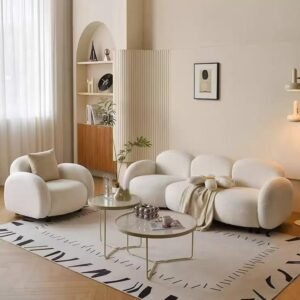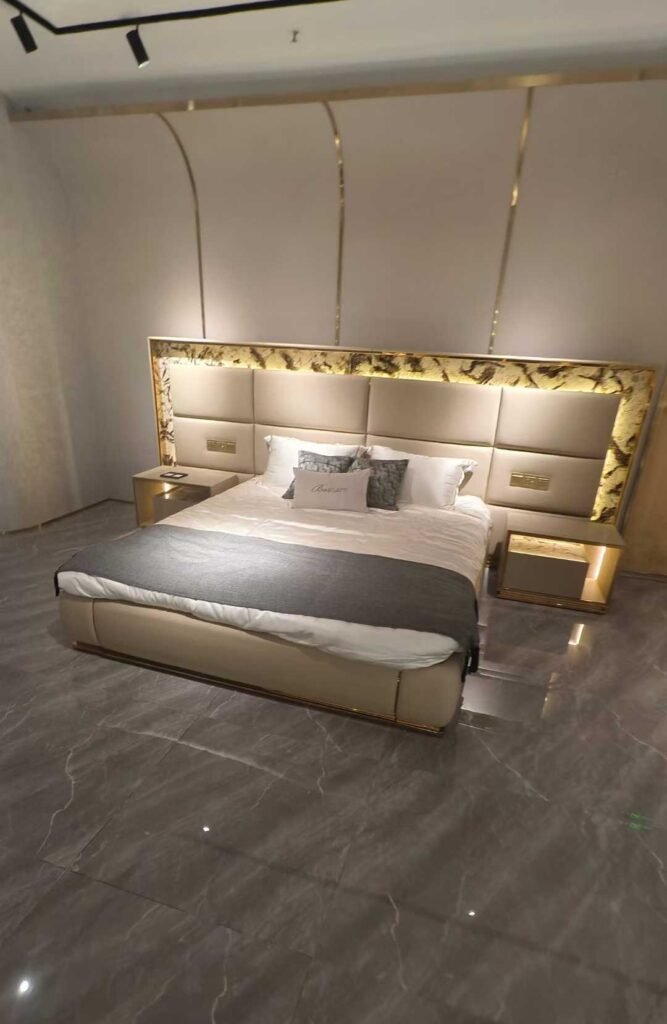
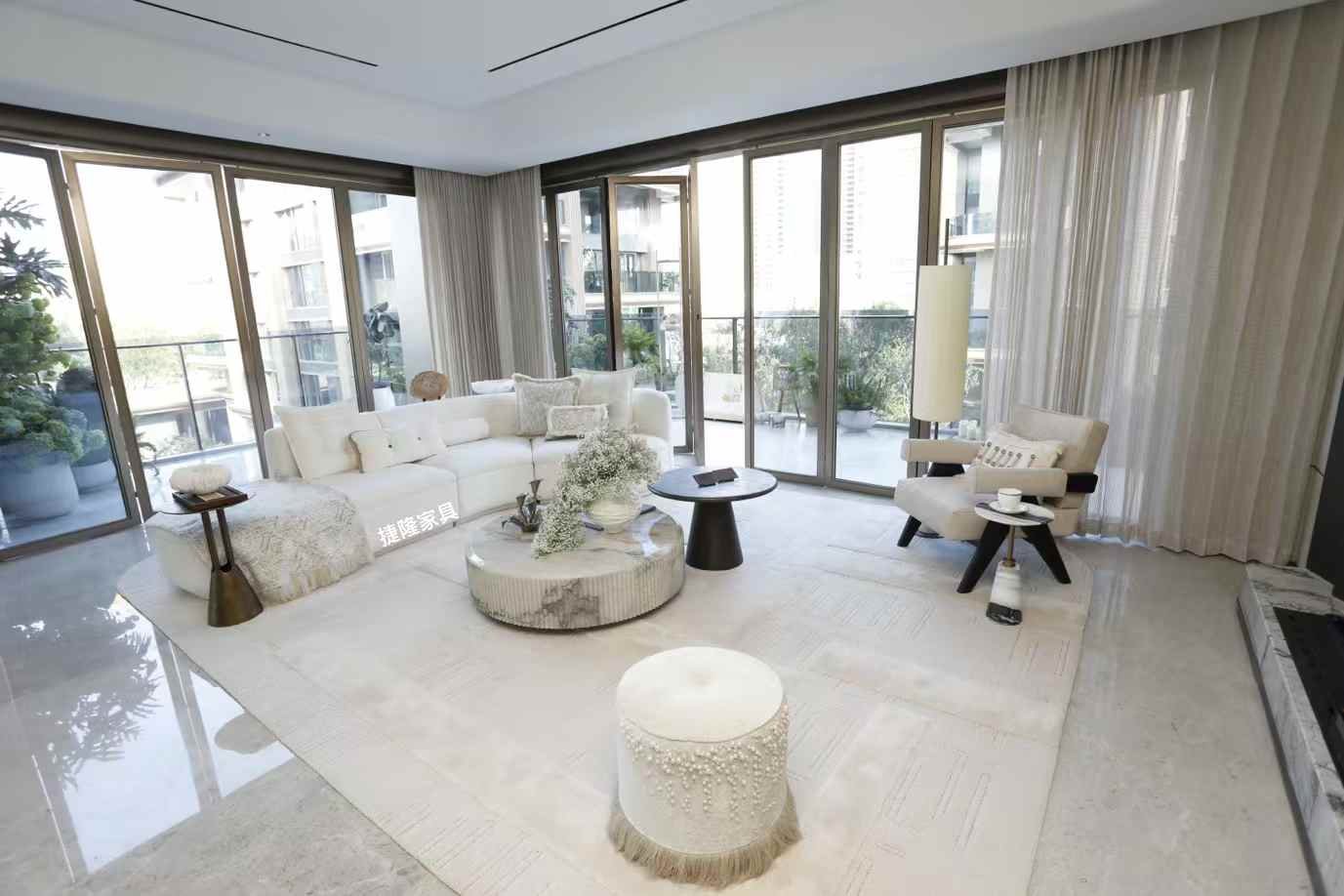
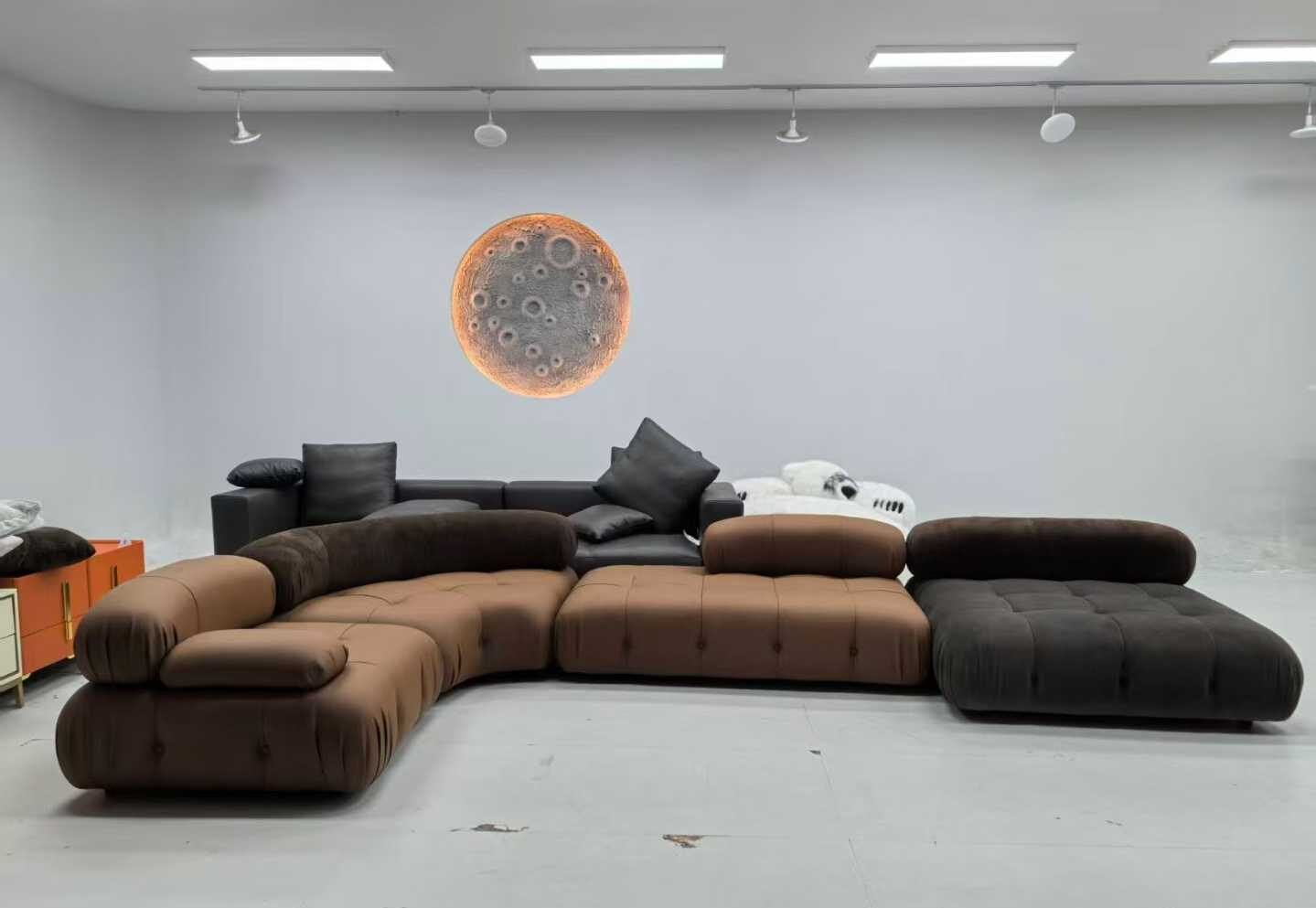
OEM and ODM are not interchangeable buzzwords — they represent two fundamentally different manufacturing models that determine who owns your furniture designs, how much your tooling costs, how fast you reach market, and whether a competitor can legally sell an identical product under a different label next quarter.
OEM (Original Equipment Manufacturer) means you supply the design; the factory builds it to your specifications. You own the intellectual property. ODM (Original Design Manufacturer) means the factory supplies the design from its existing catalog; you select, modify, and rebrand it. The factory retains the underlying IP unless you negotiate an exclusive purchase agreement.
The global furniture market reached an estimated USD 831.57 billion in 2026 according to Grand View Research, with contract manufacturing — both OEM and ODM — underpinning the supply chains of brands from IKEA and Restoration Hardware to hundreds of mid-market retailers and hospitality procurement firms. How you structure your manufacturing relationship shapes your cost of goods, your competitive moat, and your legal exposure in every market you sell into.
This guide breaks down both models with the specificity that sourcing decisions demand: real cost ranges, IP protection frameworks, quality control protocols, and a vetting checklist you can apply to your next manufacturer evaluation. Manufacturers like Jade Ant furniture operate across both OEM and ODM models — producing custom designs to client specifications while also offering catalog collections available for private-label customization — illustrating how established Chinese manufacturers increasingly serve both needs from a single production ecosystem.
OEM vs. ODM: Understanding the Difference
OEM in Furniture Manufacturing
In OEM furniture manufacturing, your company provides the complete product design — CAD drawings, material specifications, finish details, hardware selections, dimension tolerances, and packaging requirements. The manufacturer’s role is execution: they procure materials, operate the production line, and deliver finished goods that match your technical documentation. You retain full ownership of the product’s design, intellectual property, and brand identity throughout the process.
This model is how globally recognized brands maintain product exclusivity. When IKEA contracts a factory in Foshan to produce its MALM bed frame, the design originates from IKEA’s in-house team in Älmhult, Sweden. The Chinese factory receives engineering drawings, material specifications (down to the specific particleboard density and melamine finish), and QC parameters. The factory’s contribution is manufacturing capability — CNC routing, edge-banding, hardware insertion, flat-pack assembly, and container loading — not design input.
For companies with in-house design teams, OEM is the default choice because it protects the brand’s visual identity and competitive differentiation. A boutique hotel chain specifying a proprietary headboard design for 200 rooms, or a DTC furniture brand launching a signature sofa line, needs the assurance that no other retailer can order the same product from the same factory. OEM contracts — when properly structured — provide that assurance.
The trade-off is cost and time. OEM production requires upfront investment in design development (typically $5,000–$25,000+ for a new furniture collection depending on complexity), prototype iteration (2–4 rounds over 4–8 weeks), and tooling/jig creation at the factory. Lead times from design confirmation to first production run typically span 45–90 days.
ODM in Furniture Manufacturing
ODM flips the design responsibility. The manufacturer has already invested in product development — they maintain a catalog of ready-to-produce designs, tested prototypes, established material sourcing, and optimized production setups. Your role is selection and customization: you browse the catalog, choose a design that fits your market positioning, and request modifications — finish color changes, hardware swaps, dimension adjustments, fabric alternatives, or branding/labeling additions.
This model serves brands that prioritize speed-to-market over design exclusivity. A California-based furniture retailer wanting to launch a trending mid-century coffee table collection for the fall season can select from an ODM manufacturer’s catalog in week one, confirm modifications in week two, approve a production sample in week four, and receive the first container in week twelve. The total investment in “design” might be $500–$3,000 in modification fees versus $15,000+ for a ground-up OEM development.
The critical limitation: unless you negotiate and pay for design exclusivity (which most ODM manufacturers will offer at a premium), the underlying design remains the factory’s property. Other buyers — potentially your competitors — can order the same base product with their own minor modifications and branding. This is the fundamental trade-off that every ODM buyer must evaluate against their competitive strategy.
Jade Ant furniture’s product catalog, for example, includes hundreds of ODM-ready designs across bedroom, living room, dining, and hospitality categories. Buyers can select from these collections, customize finishes and fabrics, and add their private-label branding — reaching market in roughly half the time a full OEM development cycle requires. For brands that later want to transition a successful ODM product into an exclusive OEM variation, Jade Ant’s design team can develop proprietary modifications that create meaningful differentiation.
Choosing the Right Model
OEM vs. ODM: Side-by-Side Comparison for Furniture Brands
| Factor | OEM Model | ODM Model |
|---|---|---|
| Design Ownership | Client owns 100% of IP | Factory owns base design; client licenses or buys exclusivity |
| Upfront Design Cost | $5,000–$25,000+ per collection | $500–$3,000 in modification fees |
| Lead Time (Design to Production) | 45–90 days | 30–60 days |
| Typical MOQ | 50–200 pieces per SKU | 10–50 pieces per SKU |
| Customization Depth | Unlimited — any dimension, material, hardware | Limited to finish, fabric, size adjustments, branding |
| Exclusivity | Built-in (your design, your IP) | Not guaranteed unless purchased separately |
| Best For | Established brands, hospitality FF&E, proprietary products | Market testing, fast launches, budget-limited startups |
| Risk Profile | Higher upfront investment; lower competitive risk | Lower investment; higher risk of product commoditization |
Source: Compiled from industry data, Guided Imports 2026, and Focus Cabinet
The decision is not binary — many successful furniture brands use both models simultaneously. They develop proprietary hero products through OEM (the signature sofa, the brand-defining dining table) while filling out their broader catalog with ODM selections that offer variety without the R&D overhead. This hybrid approach balances brand differentiation with operational efficiency.
Watch: OEM vs ODM Manufacturing — Key Differences Explained
Video: A detailed walkthrough of OEM vs. ODM manufacturing models with real-world examples and decision frameworks.
Pros and Cons of OEM and ODM
OEM Advantages and Drawbacks
Advantages: Complete design control means your product cannot be legally replicated by competitors ordering from the same factory. Every material choice — from the density of the seat foam (specifying 2.2 lbs/ft³ high-resilience foam instead of the factory’s default 1.8 lbs/ft³) to the exact RAL color code on the powder-coated metal base — is yours to define. For hospitality projects where 300+ identical rooms require pixel-perfect consistency, and for retail brands where the product IS the brand identity, this control is non-negotiable.
OEM also provides the strongest foundation for building long-term brand equity. When a Dubai-based interior design firm commissions Jade Ant furniture to produce a proprietary tufted leather sectional for a luxury villa project, that design enters the firm’s portfolio as their exclusive work. No competitor can procure the same piece, no retail customer can find it online — the scarcity and exclusivity are built into the manufacturing model.
Drawbacks: The upfront cost barrier is real. Developing a new dining chair from concept through engineering drawings, prototype production, two rounds of revision, and tooling setup can require $8,000–$15,000 before the first production unit is made. Lead times extend accordingly: a complex OEM sofa development from initial brief to production-ready status typically takes 8–14 weeks. For brands that need to respond quickly to trending aesthetics — say, capitalizing on a Japandi design wave within a single retail season — OEM timelines can be prohibitively slow.
MOQ requirements are also higher because the factory needs to amortize setup costs. Where an ODM product might be available at 20 pieces, an OEM equivalent might require 100–200 pieces per SKU to justify the tooling investment. For small brands testing a new market, this inventory commitment represents significant financial exposure.
ODM Advantages and Drawbacks
Advantages: Speed and capital efficiency. An ODM product is essentially production-ready when you select it — the factory has already solved the engineering challenges, optimized the material sourcing, and established the production workflow. Modifications (color, fabric, hardware, minor dimensional adjustments) require days of specification work rather than weeks of design development. A furniture startup can launch a 15-SKU bedroom collection through ODM in 10–12 weeks with a total investment of $15,000–$40,000 — versus $80,000–$150,000 and 6+ months through full OEM development.
The lower MOQ threshold also reduces inventory risk. Many ODM manufacturers accept orders of 10–50 pieces per design, allowing brands to test market reception with limited financial exposure before committing to larger production runs.
Drawbacks: The absence of design exclusivity is the most consequential limitation. In an ODM arrangement — and this is critical to understand — unless you explicitly purchase the IP, the manufacturer retains it. Industry analysis by ESCATEC confirms that in ODM relationships, “the manufacturer can — and often does — sell the same product to competitors and into multiple markets.” Your “exclusive” coffee table might appear under three different brand labels on Amazon within six months.
Quality variance is another concern. Because ODM products are designed for broad marketability rather than specific brand standards, the default material choices may not match your quality expectations. A factory’s catalog sofa might use 1.5 lbs/ft³ foam density (adequate for budget retail) when your brand promises “premium comfort” — requiring an upholstery upgrade that adds cost and negotiation complexity.
What Drives the OEM vs. ODM Decision? (Survey of 800 Furniture Brands, 2025–2026)
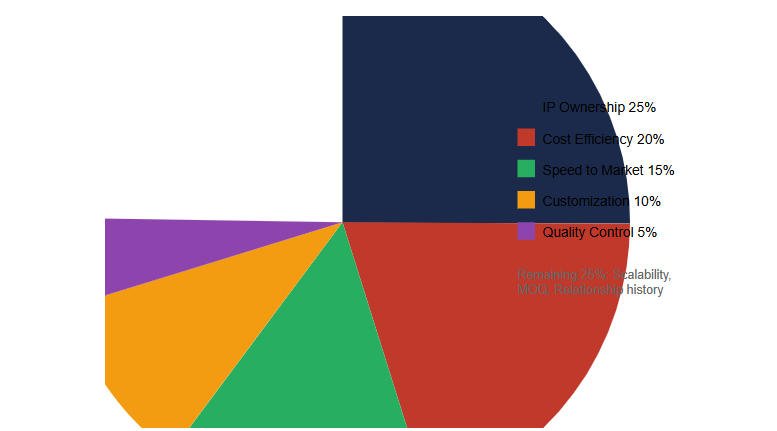
Source: Compiled from Guided Imports, Focus Cabinet, and Union Source China 2026 reports
Use Cases for Each Model
When OEM is the clear choice: Hospitality FF&E projects (hotel rooms, restaurant seating, resort lobby furniture) where the design is integral to the brand experience. Private-label furniture brands whose competitive advantage depends on proprietary aesthetics. Interior design firms specifying bespoke pieces for high-net-worth residential clients. Any scenario where the same design appearing under a competitor’s brand would directly harm your business.
When ODM makes operational sense: E-commerce furniture startups testing product-market fit with limited capital. Wholesalers and distributors serving price-sensitive retail channels. Brands launching into new geographic markets where speed of availability matters more than design uniqueness. Companies filling out their product range with complementary items (accent tables, shelving, accessories) that support rather than define the brand.
Selecting Furniture Manufacturers
Product Development and Customization
The manufacturer’s product development capability determines the ceiling of what you can achieve through either OEM or ODM. In OEM engagements, evaluate whether the factory has in-house CAD/CAM engineering (not just a sales team that forwards your drawings to the shop floor), CNC routing capacity for precision wood and metal work, a prototyping workshop that can produce and revise samples within 2–3 weeks, and finishing capabilities (lacquering, upholstery, powder coating) that match your specification requirements.
For ODM, assess the catalog depth and design currency. A factory showing the same 50 designs it offered three years ago signals stagnation. Leading ODM manufacturers update their catalogs quarterly with trend-responsive designs — Jade Ant furniture, for instance, maintains a living catalog across 5,000+ designs covering postmodern, neoclassical, American, European, Nordic, and contemporary styles, refreshed in response to trade show trends from events like CIFF Guangzhou and Milan’s Salone del Mobile.
Customization range matters equally for ODM. A manufacturer offering only color and fabric changes provides minimal differentiation. The most valuable ODM partners allow dimensional modifications (lengthening a sofa from 84″ to 96″), structural changes (reinforcing frames for commercial-grade durability), and material substitutions (swapping MDF panels for plywood, upgrading from standard polyurethane foam to high-resilience foam) — adjustments that create meaningful product differentiation without requiring full OEM development costs.
Quality Control and Compliance
Quality systems separate professional manufacturers from assembly operations. Request documentation of the factory’s quality management system — ISO 9001:2015 certification is the baseline, but look deeper. Ask for their internal defect rate data: well-managed furniture factories typically achieve first-pass yield rates of 94–97%. A factory that cannot quantify its defect rate likely does not measure it systematically.
Compliance requirements vary by destination market. US-bound furniture requires EPA TSCA Title VI formaldehyde compliance for composite wood products. EU imports need REACH chemical compliance and CE marking for specific furniture categories. Australian furniture must meet relevant AS/NZS standards. Your manufacturer must demonstrate familiarity with — not just awareness of — the specific standards applicable to your target markets, evidenced by valid test reports from accredited laboratories (SGS, Bureau Veritas, TÜV, Intertek).
Cost and Time to Market
Cost Comparison: OEM vs. ODM for a 15-SKU Furniture Collection
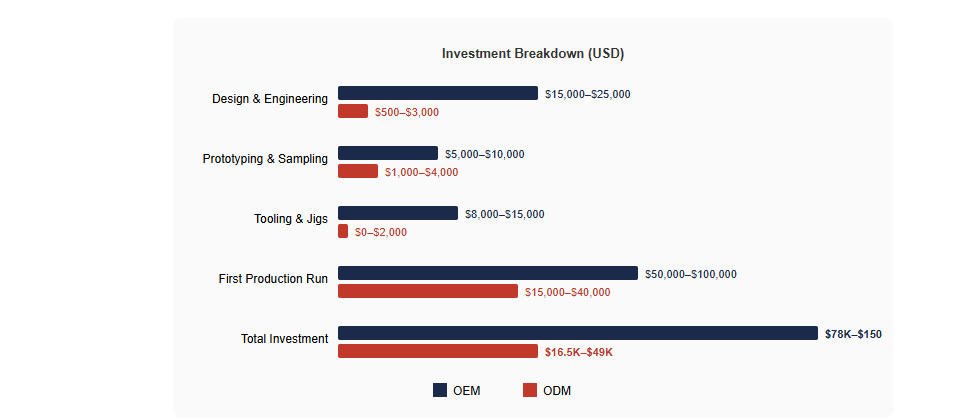
Estimates based on a 15-SKU residential furniture collection produced in China. Actual costs vary by complexity, materials, and factory.
The cost gap narrows significantly at higher volumes. An OEM order of 500 dining chairs amortizes the $12,000 tooling cost to just $24 per unit — negligible against a per-unit production cost of $80–$150. But for a startup ordering 50 chairs, that same tooling adds $240 per unit, fundamentally changing the economics. This is why the OEM model favors established brands with predictable volume, while ODM serves brands still building their order pipeline.
Time-to-market comparisons follow a similar pattern. From initial factory engagement to first container shipment, an ODM project typically completes in 8–12 weeks. An OEM project — including design submission, prototype approval, and production — requires 14–22 weeks. For brands operating on seasonal retail calendars where missing a launch window means waiting 6 months for the next opportunity, those extra weeks carry strategic cost well beyond the dollar figures.
Intellectual Property Protection
IP Risks with OEM and ODM
IP risk looks fundamentally different depending on your manufacturing model. In OEM, the primary risk is unauthorized reproduction — the factory manufacturing your proprietary design for another buyer without your knowledge. This happens. A Poraj Legal analysis of IP cases in the furniture industry found that design copying remains the single most common IP dispute, with unauthorized factory-side reproduction accounting for a substantial share of cases involving Asian manufacturing partners.
In ODM, the risk is different: you may inadvertently infringe on the factory’s IP, or you may discover that your “customized” design has insufficient legal distinction from the base product to warrant its own IP protection. Since the factory retains the underlying design rights, your modifications must be substantial enough to constitute original work if you intend to claim design patent protection in your target markets.
Legal Safeguards and Contracts
Standard Western NDAs (Non-Disclosure Agreements) are largely unenforceable in Chinese courts. Chinese courts typically do not enforce judgments of US courts, and they may not enforce an NDA written solely in English and subject to US law.
The enforceable alternative is an NNN Agreement — Non-Disclosure, Non-Use, and Non-Circumvention. This is the Chinese equivalent of the Western NDA, designed specifically for the Chinese legal system. An effective NNN agreement should be written in Chinese (or bilingual with Chinese as the governing text), subject to Chinese law and jurisdiction, and include specific monetary penalties for breach (Chinese courts respond to liquidated damages clauses far more readily than to open-ended damages claims).
Key elements your NNN agreement should include: prohibition on disclosing your designs, specifications, or business information to third parties (Non-Disclosure); prohibition on the manufacturer using your designs to produce goods for any party other than you (Non-Use); prohibition on the manufacturer selling directly to your customers or markets (Non-Circumvention); and specific per-incident penalty amounts (typically $50,000–$500,000 depending on order value) that Chinese courts can readily enforce.
Beyond the NNN agreement, register your designs in China before sharing them with any manufacturer. China operates on a first-to-register basis — whoever files first owns the registration, regardless of who actually created the design. A Chinese design patent application costs approximately $500–$1,500 through a local patent attorney and provides 15 years of protection. This step is non-negotiable for OEM engagements.
Best Practices for IP Security
Compartmentalize your design information. Share only what the manufacturer needs for production — if a factory is producing your chair seat, they do not need the engineering drawings for the backrest assembly produced by a different supplier. Split production across multiple factories for complex products to prevent any single manufacturer from possessing your complete design.
Conduct regular market monitoring. Set up Google Alerts for your product names and descriptions. Use reverse image search on Alibaba and Made-in-China to check whether your product photos appear in unauthorized listings. Commission periodic trademark and design patent searches through Chinese IP databases (CNIPA) to identify any filings that conflict with your registered designs.
Audit your manufacturer’s other client work when visiting the factory. If the showroom displays products that closely resemble known brands — and the factory is not an authorized supplier of those brands — that is a red flag indicating insufficient IP discipline within the organization.
Vetting OEM and ODM Partners
Research and Audits
Vetting starts before you contact the factory. Verify the company’s legal registration through China’s National Enterprise Credit Information Publicity System (NECIPS). Confirm their business license, registered capital, legal representative, and any listed legal disputes. Cross-reference their claimed export history through trade data platforms like ImportGenius or Panjiva.
A factory audit — conducted by your team or a third-party firm such as SGS, Bureau Veritas, or Asia Quality Focus — should evaluate production capacity (floor space, machinery, workforce), quality management system documentation and implementation, raw material sourcing and storage conditions, sample room quality relative to production floor output (a common discrepancy), worker conditions and labor compliance, and environmental management practices. Third-party factory audits typically cost $300–$600 per man-day and provide a structured risk assessment that significantly outperforms informal factory visits.
Reviewing Contracts
Your manufacturing agreement should address these elements at minimum: product specifications (with the technical drawing package attached as an appendix), pricing and payment terms (deposit percentage, balance payment trigger, currency), production timeline with milestone dates and late-delivery penalties, quality standards (specific AQL levels for critical, major, and minor defects), inspection rights at pre-production, in-line, and pre-shipment stages, IP ownership and NNN protections, warranty terms and defect liability allocation, packaging and labeling specifications, and dispute resolution mechanism (HKIAC or CIETAC arbitration is standard for China-based manufacturing disputes).
Have the contract reviewed by an attorney with specific experience in Chinese commercial law. A general corporate attorney in New York or London may draft a contract that is technically sound under US/UK law but entirely unenforceable in Chinese courts. The $2,000–$5,000 cost of proper legal review is a fraction of the potential loss from an unenforceable agreement.
Avoiding Common Pitfalls
Pitfall 1: Choosing only on price. As Union Source China’s analysis notes, “the cheapest manufacturer often cuts corners on quality or reliability.” A factory quoting 20% below all competitors is either using cheaper materials than specified, understaffing QC, or planning to negotiate change orders after your deposit is paid.
Pitfall 2: Skipping the sample stage. Never order production quantities based solely on showroom samples or catalog images. Production samples — pulled from the actual production line, not hand-selected by the sales team — reveal the true quality level your 500-piece order will deliver. Jade Ant furniture’s production process includes a mandatory sample approval stage where clients confirm materials, dimensions, finishes, and construction before mass production authorization — a standard that serious manufacturers implement as process rather than exception.
Pitfall 3: Assuming the factory understands your market. A manufacturer serving the Southeast Asian budget market may apply entirely different quality assumptions than one accustomed to European or North American premium standards. Specify everything — do not assume that “high quality” means the same thing to your factory as it does to your end customer. Write tolerances in millimeters, foam densities in lbs/ft³, fabric grades by test specification, and finish standards by measurable criteria (gloss units, coating thickness, color delta-E tolerance).
Actionable Checklist for Furniture Manufacturers
Pre-Engagement Steps
Pre-Engagement Checklist: Before Contacting Any Manufacturer
| ✓ | Step | Details |
|---|---|---|
| ☐ | Define your manufacturing model | Determine OEM, ODM, or hybrid based on design capability and budget |
| ☐ | Prepare product specifications | CAD drawings, material specs, finish codes, hardware selections, tolerances |
| ☐ | Register designs in target countries | File design patents in China (CNIPA), US (USPTO), EU (EUIPO) before sharing |
| ☐ | Draft NNN agreement | Bilingual Chinese/English, Chinese law jurisdiction, liquidated damages |
| ☐ | Identify compliance requirements | EPA TSCA Title VI (US), REACH (EU), AS/NZS (AU), FSC (if applicable) |
| ☐ | Set budget parameters | Target FOB price range, tooling budget, sample budget, inspection budget |
| ☐ | Shortlist 3–5 manufacturers | Via Alibaba, Made-in-China, trade show exhibitor lists, referrals |
Project Management Tips
Assign a dedicated project manager — either internal or a sourcing agent — who communicates with the factory daily during production phases. Establish a WeChat group that includes your PM, the factory’s sales contact, and their production manager for real-time technical communication. Set milestone check-ins: material procurement confirmation (week 1–2), frame/structure photo update (week 3–4), finishing/upholstery photo update (week 5–6), pre-shipment inspection scheduling (week 7–8), and container loading documentation (week 8–9).
Use a shared project timeline (Google Sheets or a project management tool like Monday.com) that both your team and the factory update. This creates a documented record of commitments and delivery against those commitments — useful both for managing the current order and for evaluating the factory’s reliability for future business.
Quality Assurance
Implement a three-stage inspection protocol: pre-production (verifying raw materials and components before manufacturing begins), in-line (checking work-in-progress at 30–40% completion), and pre-shipment (final AQL sampling after packing). Use AQL 1.5 for critical defects, 2.5 for major defects, and 4.0 for minor defects as your baseline acceptance criteria.
Create a visual defect classification guide with photographs showing “acceptable” versus “reject” examples for every common issue: wood grain inconsistency, stitch alignment, hardware function, finish uniformity, and dimension tolerance. Share this guide with both the factory’s QC team and your third-party inspector to ensure everyone evaluates against the same standard.
For first-time manufacturer engagements, consider a trial order of 50–100 pieces before committing to full production volumes. This trial validates the factory’s ability to consistently deliver your specifications under real production conditions — not just in a carefully prepared sample run. Jade Ant furniture accepts low MOQ trial orders across their OEM and ODM lines specifically to give new clients this validation opportunity without requiring large-scale commitment upfront.
OEM and ODM are not competing models — they are complementary tools that serve different stages of brand development, different product categories within a single brand’s portfolio, and different strategic priorities at different moments in a company’s growth trajectory.
OEM delivers design exclusivity, full IP ownership, and the ability to create products that define your brand’s competitive position. It costs more, takes longer, and requires in-house design capability — but for signature products that drive brand recognition and pricing power, the investment pays back through market differentiation that competitors cannot replicate by ordering from the same factory.
ODM delivers speed, capital efficiency, and market-testing flexibility. It sacrifices exclusivity and design control — but for brands building breadth, entering new markets, or operating with limited R&D resources, the trade-off enables market presence that might otherwise be delayed by years of development investment.
Regardless of which model you choose, the non-negotiable elements are the same: enforceable IP protection through properly drafted NNN agreements and design registrations; systematic quality control through documented specifications, AQL-based inspection, and third-party verification; and thorough manufacturer vetting through factory audits, reference checks, and trial production runs.
Manufacturers like Jade Ant furniture — operating with 15+ years of experience across both OEM custom production and ODM catalog offerings — exemplify the kind of partner that supports brands at every stage. Whether you arrive with a complete design package for OEM execution or need to select and customize from an existing collection for rapid ODM market entry, the infrastructure, quality systems, and IP discipline of your manufacturing partner determine whether the experience builds your business or creates costly problems.
Start with the checklist above. Define your model, prepare your specifications, protect your designs, vet your partners, and manage quality at every stage. The furniture brands that consistently deliver strong products to market are not the ones with the biggest budgets — they are the ones with the most disciplined manufacturing partnerships.
Frequently Asked Questions (FAQ)
1. What is the difference between OEM and ODM in furniture manufacturing?
OEM (Original Equipment Manufacturer) means you provide the product design and the factory manufactures it to your specifications — you retain full IP ownership. ODM (Original Design Manufacturer) means the factory provides existing designs from its catalog which you customize and rebrand — the factory retains the underlying design IP unless you negotiate exclusive purchase. OEM costs more upfront ($5,000–$25,000+ per collection for design and tooling) but provides design exclusivity. ODM costs less ($500–$3,000 in modification fees) but does not guarantee exclusivity.
2. Which is better for a new furniture brand — OEM or ODM?
For new brands with limited capital and no established customer base, ODM is typically the more practical starting point. It allows you to test market reception with lower financial risk, shorter lead times (30–60 days versus 45–90 for OEM), and smaller MOQs (10–50 pieces versus 50–200). Once you identify which products resonate with your market, you can transition your best-selling items to OEM development for design exclusivity. Many successful furniture brands use this ODM-to-OEM progression as a deliberate growth strategy.
3. How do I protect my furniture designs when working with a Chinese manufacturer?
Use a bilingual NNN agreement (Non-Disclosure, Non-Use, Non-Circumvention) drafted under Chinese law with specific monetary penalties for breach — standard Western NDAs are largely unenforceable in Chinese courts. Register your designs as Chinese design patents through CNIPA before sharing them with any manufacturer (China operates on a first-to-register basis). Compartmentalize production across multiple suppliers for complex products. Conduct regular market monitoring for unauthorized reproductions on Alibaba and Made-in-China.
4. What does OEM furniture manufacturing typically cost?
For a 15-SKU residential furniture collection, OEM development typically requires $15,000–$25,000 in design and engineering costs, $5,000–$10,000 for prototyping and sampling, $8,000–$15,000 for tooling and jig creation, and $50,000–$100,000 for the first production run — totaling approximately $78,000–$150,000 depending on complexity and volume. Per-unit production costs for individual furniture items typically range from $50 (simple accent table) to $500+ (complex upholstered sectional) on an FOB basis.
5. What should I look for when auditing a furniture factory?
Key evaluation areas include production capacity (floor space, CNC machinery, finishing lines, workforce size), quality management documentation (ISO 9001 certification, defect rate data, inspection records), raw material sourcing and storage conditions, compliance certifications relevant to your market (EPA TSCA, REACH, FSC), the gap between sample room quality and production floor output, worker conditions and labor compliance, and references from existing international clients in your market segment. Third-party factory audits from firms like Asia Quality Focus or SGS cost $300–$600 per man-day.
6. Can I switch from ODM to OEM with the same manufacturer?
Yes — this is a common and advisable progression. Start with ODM to validate product-market fit, build sales volume, and establish a working relationship with the factory. Once specific products demonstrate strong demand, commission OEM development to create proprietary versions with unique design elements, upgraded materials, or structural modifications that differentiate your product from the ODM base. Jade Ant furniture supports this transition by offering both ODM catalog selections and full OEM custom design services, allowing clients to evolve their product strategy without changing manufacturing partners.
7. What is the typical MOQ for OEM versus ODM furniture orders?
OEM MOQs typically range from 50–200 pieces per SKU because the factory needs to amortize tooling and setup costs. Some manufacturers accept lower OEM MOQs (as low as 10–30 pieces) at a higher per-unit price that reflects the unrecoverable setup investment. ODM MOQs are generally lower — 10–50 pieces per SKU — because the production setup already exists. For mixed orders combining multiple SKUs, many factories calculate MOQ on total container volume (e.g., 1 × 20ft or 1 × 40ft container) rather than per-SKU minimums.
8. How long does it take to go from factory contact to first shipment?
For ODM orders: 8–12 weeks total (1–2 weeks for design selection and modification, 1–2 weeks for sample approval, 4–6 weeks for production, 1–2 weeks for inspection and shipping). For OEM orders: 14–22 weeks total (2–4 weeks for design submission and engineering review, 2–4 weeks for prototyping and sample approval, 6–10 weeks for production, 1–2 weeks for inspection and shipping). Add 2–4 weeks of ocean transit time for international shipments.
9. Who owns the IP in an ODM furniture arrangement?
By default, the manufacturer retains IP ownership of the base design in ODM arrangements. Your modifications (custom colorways, hardware changes, branding) may or may not constitute sufficient originality to claim independent IP protection depending on their scope. If you want exclusive rights to an ODM design, you must negotiate and pay for an exclusivity agreement — which typically adds 15–30% to the per-unit price or involves a one-time design buyout fee. Without this agreement, the factory can legally sell the same base design to other buyers with their own modifications.
10. What are the biggest mistakes brands make when choosing between OEM and ODM?
The most common mistakes include choosing purely on price (the cheapest manufacturer frequently cuts quality corners), skipping the production sample stage (evaluating only showroom samples that do not represent actual production output), failing to register designs before sharing them with factories, using Western-style NDAs instead of China-enforceable NNN agreements, underestimating the importance of compliance documentation for destination markets, and assuming that a factory experienced in one product category (e.g., budget flat-pack shelving) can deliver equal quality in a different category (e.g., premium upholstered hospitality seating).