The Benefits of Buying High-End Furniture from China: A Complete Guide for Importers
For high-end furniture importers and distributors, interior designers, villa owners, FF&E and hotel buyers, private-label brand owners, design and architecture firms, and hotel developers and operators.
1. Why China Is the Strategic Choice for High-End Furniture Sourcing
Let’s address the room: for years, “Made in China” carried a stigma in luxury procurement. Buyers in Milan showrooms, Dubai development boardrooms, and New York design studios associated it with speed, volume, and compromise — not craftsmanship, exclusivity, or longevity.
That reputation no longer reflects reality. And the professionals who have recognized this shift earliest are quietly building the most competitive sourcing operations in their markets.
In 2024, China exported $36.44 billion in furniture — more than four times the value of second-place Germany ($8.52 billion). The country commands approximately 34% of total global furniture production. But raw volume is not the story. The story is what has changed inside those factories.
Over the past decade, the upper tier of Chinese furniture manufacturing has undergone a transformation in material quality, craftsmanship standards, and design sophistication. The Foshan and Dongguan clusters in Guangdong Province — which together produce the majority of China’s high-end export furniture — are now home to workshops where Italian-trained finishers apply hand-lacquered patinas to solid hardwood frames, where master carpenters execute traditional mortise-and-tenon joinery on custom-spec dining tables, and where ISO 9001-certified production lines achieve defect rates that rival European contract manufacturers. Yet they do this at a fraction of the landed cost.
For importers, distributors, interior designers, FF&E buyers, and hotel developers, this means one thing: the market is offering a genuine competitive advantage to those who know how to access it. This guide shows you exactly how.
2. Unmatched Cost Efficiency Without Sacrificing Quality
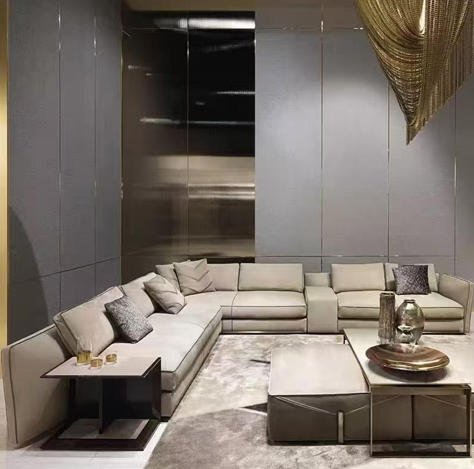
The cost advantage of sourcing high-end furniture from China is real, documented, and significant. But it is also more nuanced than a simple price comparison suggests.
The structural reasons China can deliver lower landed cost:
China’s furniture manufacturing clusters benefit from a degree of vertical integration that no other country in the world has replicated at scale. A factory in Foshan can source solid hardwood from domestic plantations, engineered panels from mills 30 kilometers away, premium hardware from Zhongshan, high-grade leather from Dongguan tanneries, and technical foam from Shunde — all within a two-hour driving radius. This supply chain density eliminates the fragmentation premiums that add 15–25% to manufacturing costs in countries like Vietnam, India, or Poland, where component suppliers are geographically dispersed.
Labor costs, while rising, remain substantially lower than in Western Europe or North America. A skilled furniture finisher in Foshan earns a fraction of what an equivalent craftsperson costs in Italy or Germany — and Chinese furniture manufacturing has invested heavily in upskilling those workers over the past 15 years.
The result: buyers consistently report landed-cost savings of 30–50% compared to equivalent products from European manufacturers, even after accounting for current US tariff rates and ocean freight. In practical terms, a five-star hotel guestroom package — bed frame, headboard, nightstands, desk, chair, TV console, and minibar cabinet — can be sourced FOB China for $1,200–$1,800 per room, versus $3,500–$5,000 from European contract manufacturers for equivalent material and finish specifications.
What those savings allow you to do:
For a 150-room boutique hotel, specifying furniture from a high-end Chinese manufacturer rather than a European equivalent can free $250,000–$490,000 in budget. That capital does not disappear — it can be redirected into bespoke fabric and finish upgrades, locally commissioned artwork, landscaping, or F&B concept investment that generates guest satisfaction returns far exceeding the furniture specification premium. The discipline of cost efficiency at the manufacturing level creates creative freedom at the design level.
The critical distinction: landed cost vs. factory price:
Before diving into the numbers, one clarification is essential. Factory price is the starting point. Landed cost — what you actually pay per unit at your warehouse or project site — includes ocean freight, import duties, customs clearance, third-party inspection fees, inland logistics, and compliance testing. Comparing a factory FOB quote to a domestic supplier’s delivered price is not an apples-to-apples analysis. For a complete breakdown of what the hidden costs of direct China importing actually look like in practice, Jade Ant furniture’s guide to hidden import costs provides a category-by-category breakdown that every importer should read before making a sourcing decision.
| Cost Comparison | Chinese High-End Manufacturer | European Contract Manufacturer |
|---|---|---|
| 150-room hotel guestroom package (per room, FOB/EXW) | $1,200–$1,800 | $3,500–$5,000 |
| Custom dining chair (per unit, equivalent spec) | $280–$380 FOB | $900–$1,400 EXW |
| Typical landed-cost saving (after duties and freight) | Baseline | +30–50% above China |
| Lead time (custom order) | 60–90 days production | 90–180 days production |
| MOQ flexibility (high-end segment) | 10–50 units for custom | 25–100+ units |
Sources: Jade Ant furniture 2026 industry guide; China Briefing; HSY Sourcing hotel procurement data.
3. Access to Unique, Customizable Designs and Craftsmanship
China’s advantage in the luxury furniture market is not only economic — it is craft-based. The country’s furniture manufacturing culture carries centuries of accumulated woodworking tradition, and the workshops that serve the high-end export market have fused that heritage with contemporary design sensibility in ways that are genuinely difficult to replicate elsewhere.
Traditional techniques in modern luxury production:
In Guangdong’s high-end factories, hand-carving is still performed by master craftspeople who trained for years under senior artisans. Traditional Chinese lacquering — a technique with documented history spanning 4,000 years — involves applying and curing multiple layers of natural lacquer in a process that can span 30–60 days for a single piece. The result is a finish of depth and luminosity that machine-applied polyurethane coatings cannot replicate. Mortise-and-tenon joinery, the structural technique that makes joints stronger than the surrounding wood, is standard in high-end production — not a premium upgrade.
These techniques exist at scale in China because the manufacturing clusters that serve the luxury export market have invested in preserving and industrializing them, not abandoning them for speed. A luxury sofa frame built in Dongguan by an experienced joinery team and finished by hand in Foshan is not a commodity product — it is artisan work executed within a commercial supply chain.
OEM and ODM capabilities for private-label and bespoke projects:
Two production models define how international buyers access Chinese manufacturing capabilities.
OEM (Original Equipment Manufacturer): The buyer provides complete design specifications — CAD drawings, material callouts, finish samples, hardware specs — and the factory manufactures to those exact parameters. This model is ideal for designers with proprietary collections, hotel developers specifying custom FF&E, and importers building exclusive branded lines. Every piece produced is yours by design.
ODM (Original Design Manufacturing): The factory contributes or fully develops the design, which the buyer then markets under their own brand. ODM typically costs 15–20% less than full OEM because tooling and design investment is pre-absorbed by the manufacturer. For a mid-sized importer launching a new category quickly, ODM for volume SKUs combined with OEM for hero pieces is a proven cost-optimization strategy.
Jade Ant furniture operates within this full-spectrum customization model, serving designers who need a single bespoke dining table for a client’s villa as readily as hotel procurement teams ordering 200 matching guestroom packages.
Why designers choose Chinese customization over European alternatives:
An interior design firm in London specifying furniture for a private villa project in Marrakech needs pieces that respond to the architecture — unusual dimensions, specific timber species, custom hardware finishes. A European manufacturer operating a standard product catalog either cannot accommodate these requirements or charges premiums that price them out of the project budget. A Foshan factory with an in-house design team and the supply chain depth to source the exact timber, leather, and hardware specified can turn around a fully custom prototype in four weeks and a production run in ten — at a fraction of the European quoted price.
4. How to Identify and Vet Reputable High-End Suppliers
Finding the right manufacturer is the single most consequential decision in a China sourcing program. A bad supplier relationship costs more in quality failures, delays, and management time than any price savings could offset. Here is the structured framework that experienced professionals use.
Step 1: Digital pre-screening
Start on Alibaba.com, Made-in-China.com, and GlobalSources. Filter by “Verified Supplier” and “Trade Assurance” on Alibaba, and “Audited Supplier” on Made-in-China. These designations do not guarantee quality — but factories that have not bothered with basic platform verification are unlikely to have invested in the quality management systems you require. For a detailed platform comparison, Jade Ant furniture’s Alibaba vs. Made-in-China vs. 1688 sourcing guide breaks down which platform is most useful at each stage of supplier development.
From your initial search, request the following from 10–15 shortlisted factories: company profile, product portfolio with specification sheets, certification copies (FSC, ISO 9001, CARB2 where relevant), and client reference contacts. A factory that cannot produce this documentation within 48 hours is not operationally organized enough to manage your project.
Step 2: Trade fair attendance and in-person verification
There is no substitute for seeing a factory’s actual production. The CIFF Guangzhou — the world’s largest home furnishing fair at 850,000 sqm with 4,900+ brands — runs in March each year and is the single highest-value sourcing event for international furniture buyers. The Canton Fair (April–May) covers all product categories. Both fairs allow you to see finished product in person, meet factory leadership, and collect catalog and certification documentation across dozens of suppliers in one trip.
During factory visits, follow this sequence: raw material storage first (check timber moisture content, verify fabric bolt labels, inspect foam block density markings), then production floor (watch joinery technique, inspect finishing lines), then quality control station (ask to see actual defect rate logs and corrective action documentation), and finally the finished goods warehouse (examine finished pieces for consistency). Any factory that restricts access to any of these areas without explanation warrants removal from your shortlist.
Step 3: Certification verification
Fake certificates are a documented problem in China’s furniture export sector. Never accept a PDF of a certification as verification. Every major certification body provides a public online database where certificate numbers can be cross-checked:
| Certification | Verification Method |
|---|---|
| ISO 9001 | Certificate issuing body public database (SGS, Bureau Veritas, TÜV Rheinland) |
| FSC | Enter license code at info.fsc.org |
| GREENGUARD Gold | Search product at UL SPOT database |
| CARB Phase 2 / TSCA Title VI | Request Third-Party Certifier (TPC) lab reports; verify TPC accreditation with EPA |
Step 4: Sample orders and independent testing
Order 2–3 samples per finalist factory. Pay for independent lab testing from QIMA, SGS, or Bureau Veritas — specifically formaldehyde emissions (CARB compliance), structural load testing (BIFMA standards where applicable), and fabric abrasion resistance (Martindale test, minimum 100,000 cycles for high-traffic commercial use). The cost is $300–$800 per test. The cost of discovering failures after a 200-unit production run is considerably higher.
Red flags to eliminate suppliers immediately:
- Reluctance to provide verifiable certification documents
- No documented factory audit history
- Inability to provide third-party inspection reports from past orders
- No physical sample capability for custom requests
- Response times consistently exceeding 48 hours
- Pressure to pay a full deposit before samples are approved
5. Mastering Quality Control: Ensuring Premium Standards
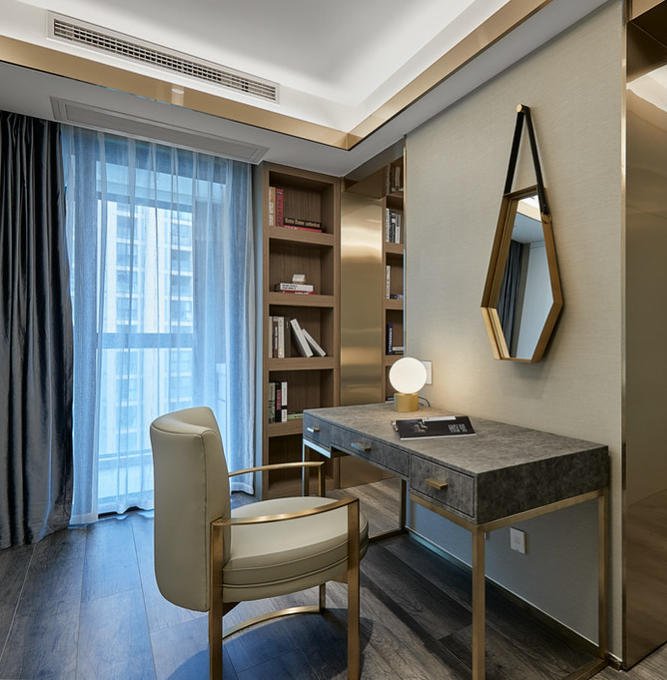
Quality control in China furniture sourcing is not a single event — it is a continuous process spanning three distinct phases of every order. Each phase catches different categories of problems.
Phase 1: Pre-production inspection
Before any cutting or construction begins, verify that the factory holds the correct materials to your specification. This means physically confirming timber species and moisture content (specify kiln-dried timber at ≤8% moisture content — anything above leads to warping and joint failure in climate-controlled interior environments), fabric bolt colorway consistency across the full order quantity, foam density (specify minimum 32 kg/m³ for seat cushions and 24 kg/m³ for back cushions in commercial applications), and hardware model numbers matching your approved samples. Pre-production inspections can be performed remotely through video walkthrough with a factory point of contact, though an on-site agent delivers significantly higher reliability.
Phase 2: In-line (mid-production) inspection
When production is approximately 30–50% complete, conduct a mid-production check. This phase catches joinery method substitutions (factories occasionally revert to staple joints when under time pressure), finish inconsistencies that are easier to correct at the start of a production run than at the end, and dimensional deviations from approved samples. In-line inspections are less common among first-time importers and most costly when skipped — catching a systematic problem at 40% completion means reworking 80 units, not 200.
Phase 3: Pre-shipment inspection (PSI)
When production is 80–100% complete and goods are staged for container loading, conduct a formal PSI through an independent agency. Standard fees from QIMA or Bureau Veritas run $280–$500 per inspector per day. Complex furniture orders with detailed quality criteria typically require two inspector-days. The PSI report documents defect rates against your AQL (Acceptable Quality Limit — the maximum defect percentage you will accept), surface finish quality, dimensional accuracy, packaging integrity, and quantity count.
Common defects in Chinese furniture production and how to prevent them:
| Defect Category | Root Cause | Prevention Method |
|---|---|---|
| Inconsistent lacquer finish | Variable spray pressure, humidity fluctuation in finishing room | Specify climate-controlled finishing environment; review finish samples across 5+ pieces |
| Frame joinery failure under load | Staple joints substituted for mortise-and-tenon | Specify joinery method in purchase contract; verify at pre-production and in-line inspection |
| Fabric color batch variance | Multiple fabric roll batches from different dye lots | Specify single dye lot for orders >50 units; request batch consistency confirmation |
| Dimensional inaccuracy | Mold wear or operator error on CNC cutting | Specify ±2mm dimensional tolerance in contract; measure 10% of production during PSI |
| Drawer slide/hardware underperformance | Domestic-grade hardware substituted for specified commercial grade | State hardware model number and source in technical spec sheet; verify during PSI |
Third-party QC partners worth knowing:
QIMA specializes in Chinese manufacturing and offers furniture-specific inspection protocols. SGS and Bureau Veritas provide the broadest global recognition for their reports — useful when supplying institutional hotel clients who require third-party documentation. For ongoing programs with multiple inspections per year, retainer agreements typically reduce per-inspection cost by 20–30%.
6. Navigating Logistics, Import Regulations, and Customs Clearance
Logistics is where the most preventable costs in China furniture importing accumulate — and where the gap between experienced and first-time importers is most visible. Understanding the core framework eliminates the surprises that erode sourcing margins.
Shipping terms: FOB, CIF, and DDP explained
FOB (Free on Board): The factory is responsible for goods until they are loaded onto the vessel at the origin port. From that moment, all freight, insurance, import duties, customs clearance, and inland delivery costs fall to the buyer. FOB gives you maximum control over your freight forwarder selection and cost — but it requires you to manage every subsequent step yourself. It is the standard quote format for Chinese furniture factories.
CIF (Cost, Insurance, Freight): The seller pays ocean freight and basic cargo insurance to the destination port. You still pay import duties, customs clearance fees, and inland delivery. CIF reduces your logistics management burden but limits your control over carrier selection and freight cost negotiation.
DDP (Delivered Duty Paid): The seller covers every cost — factory to your warehouse door, including import duties and last-mile delivery. You receive one all-inclusive price with complete cost certainty. DDP is the highest-priced option on the invoice but often the lowest total-cost option when all hidden variables are accounted for, particularly for buyers without dedicated import compliance infrastructure.
Current US tariff landscape (as of 2026):
Upholstered furniture imported from China carries a 25% ad valorem duty under Section 301. Planned increases were delayed by the White House in January 2026 and deferred until at least 2027. On a $800 FOB sofa, this duty adds approximately $200 to your landed cost. Work with a licensed customs broker to ensure correct HS code classification — misclassification can result in retroactive duty assessments. The authoritative reference is the US International Trade Commission Harmonized Tariff Schedule.
Documentation checklist for a furniture import shipment:
Every shipment requires a complete documentation package to avoid CBP examination delays. Missing or inconsistent documents are the single most common trigger for port holds that generate demurrage charges of $75–$350 per container per day.
| Document | Purpose | Common Error to Avoid |
|---|---|---|
| Commercial invoice | Declares value, product description, parties | Description must match HS code classification |
| Packing list | Details units, dimensions, weights per carton | Unit count must match invoice exactly |
| Bill of lading | Title of goods document from carrier | Named consignee must match importer of record |
| Certificate of origin | Determines applicable tariff rate | Must be issued by authorized chamber of commerce |
| CARB/TSCA test reports | Required for composite wood products entering the US | Must be from an EPA-accredited Third-Party Certifier |
| Lacey Act declaration | Required for all wood and plant products | Must specify wood species and country of harvest |
Key markets and their specific requirements:
The United States requires CARB Phase 2 / TSCA Title VI compliance for all composite wood panels — non-compliance results in mandatory goods destruction. The EU requires EUTR (EU Timber Regulation) documentation for all timber products and is moving toward mandatory EPD (Environmental Product Declaration) requirements under the ESPR. The UAE requires a Certificate of Conformity for furniture entering Dubai’s commercial market and applies a 5% import duty as a GCC common external tariff.
7. Customization and MOQ Flexibility for Luxury Buyers
One of the persistent misconceptions about sourcing from China is that customization requires enormous minimum order quantities. This was true of the mass-market segment 15 years ago. It is not the operating reality of the high-end manufacturer tier serving international luxury buyers today.
How premium Chinese manufacturers approach low-to-mid MOQs:
High-end factories serving the luxury export market understand that their clients — boutique hotel developers, villa owners, private-label brand owners, and design firms — do not order 500 identical dining chairs. They order 40 custom dining chairs in a bespoke fabric, with a solid walnut frame finished in a specific tone, coordinated with 8 matching carver chairs for host positions. These factories have structured their production capabilities to accommodate exactly this scale. Among top-tier manufacturers, MOQs for fully custom pieces typically start at 10–20 units — with some operating on a per-project basis with no minimum for sufficiently specified briefs.
Case study — boutique hotel procurement:
A 52-key boutique hotel in the Algarve, Portugal, engaged a FF&E procurement specialist to source a complete guestroom furniture package through a Chinese manufacturer. The brief: solid European oak casegoods (nightstands, desk, wardrobe surround), custom upholstered headboards in a bespoke linen-blend fabric, and lounge chairs with powder-coated steel frames. All pieces were fully customized to the architect’s drawings. Total unit count: 364 pieces across 8 SKUs. The factory produced a confirmed prototype set in 4 weeks and completed the full production run in 11 weeks. Total procurement cost: 38% below equivalent quotes received from Portuguese and Spanish contract manufacturers for the same specification. The saving was reinvested into the property’s pool terrace and restaurant concept.
Case study — designer launching a private-label collection:
A London-based interior designer with an established residential client base used an OEM program with a Foshan factory to launch a 12-piece signature furniture collection under her own brand name. The collection featured hand-carved solid walnut frames, Italian-sourced velvet upholstery, and custom brass hardware. First production run: 30 sets of each piece (360 total units). Gross margin achieved at suggested retail: 68%. The collection launched at London’s Design Centre Chelsea Harbour and sold through within 6 months. The second production run doubled the volume. According to data compiled by Jade Ant furniture’s private-label guide, designers operating at this model consistently achieve gross margins of 60–75% at scale.
Material sourcing options through Chinese manufacturing partners:
Premium Chinese factories source internationally — and this is a significant but underappreciated advantage. Through established trading relationships, they can incorporate Italian top-grain leather (processed in Dongguan tanneries), French Lacroix or Kvadrat upholstery fabrics, North American white oak or black walnut, sintered stone tabletops from Foshan’s ceramic district, and Swarovski crystal hardware into custom pieces. The buyer specifies the material; the factory sources, tests, and integrates it. This capability eliminates the need for the buyer to manage multiple international material suppliers independently.
8. Sustainability and Ethical Sourcing: Meeting Global Standards
Sustainable sourcing is no longer a differentiator for premium brands — it is a procurement baseline. Hotel groups, villa developers, and design firms supplying institutional clients are increasingly required to document the environmental credentials of their FF&E. The good news: China’s top-tier furniture manufacturers have invested significantly in sustainability infrastructure over the past five years.
What certified sustainable sourcing looks like in Chinese manufacturing:
FSC (Forest Stewardship Council) certification verifies that timber used in furniture production comes from responsibly managed forests. Among China’s top 100 furniture exporters, approximately 55% now hold FSC chain-of-custody certification — a figure that has more than doubled since 2019. To verify a supplier’s FSC certificate, enter the license code directly at info.fsc.org and confirm it matches the factory’s legal entity name.
CARB Phase 2 (California Air Resources Board) and its federal equivalent, TSCA Title VI, set maximum formaldehyde emission limits for composite wood panels — the panels used in drawers, cabinet backs, and shelving in most furniture. These are not optional for furniture entering the US market — they are legal requirements. Approximately 72% of China’s top-tier furniture exporters hold current CARB/TSCA compliance documentation.
GREENGUARD Gold certification verifies that a finished product’s chemical emissions into occupied spaces meet standards appropriate for sensitive environments including hotels, schools, and medical facilities. For hotel FF&E buyers whose properties are pursuing LEED or WELL certification, GREENGUARD Gold documentation from furniture suppliers contributes directly to indoor air quality performance credits.
What to request from suppliers:
Do not accept sustainability claims in marketing materials as verification. Require the following documentation before approving a sustainable-specified supplier: FSC chain-of-custody certificate with a verifiable certificate number; CARB/TSCA compliance test reports from an EPA-accredited Third-Party Certifier; ISO 14001 environmental management system certificate for the manufacturing facility; GREENGUARD Gold certification from UL Solutions with the product listed in the UL SPOT public database; and low-VOC finish confirmation with independent test results.
The CIFFFURNITUREFAIR.com quality certifications guide provides a comprehensive reference for all certifications commonly offered by Chinese furniture manufacturers — useful as a checklist when evaluating supplier documentation packages.
Labor and ethical sourcing standards:
Leading Chinese furniture manufacturers serving the international luxury market increasingly hold SMETA (Sedex Members Ethical Trade Audit) or SA8000 labor practice certifications. These audits cover working hours, wages, safety conditions, and management practices. Request the most recent audit report including any corrective action plans, not just the final certificate. Factories that invest in SMETA auditing do so specifically to meet the procurement requirements of international brands and hospitality groups — it is a signal of organizational maturity.
9. Building Long-Term Supplier Relationships for Consistent Excellence
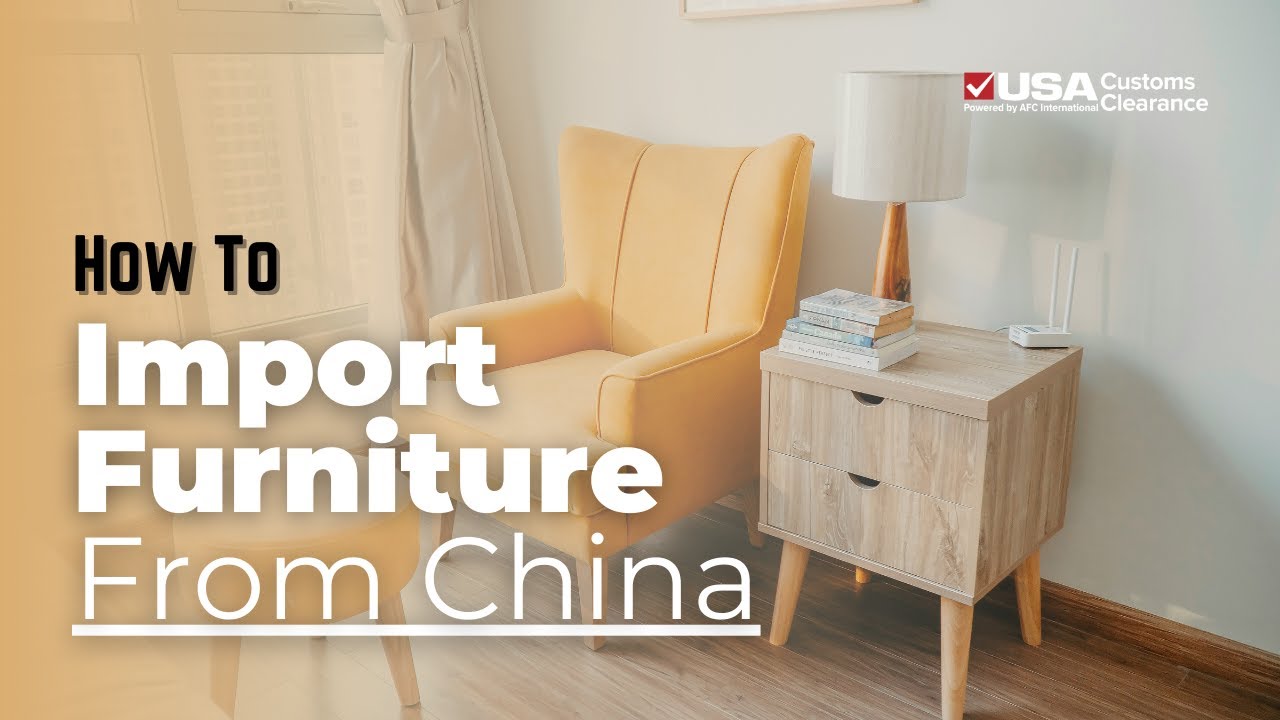
▶ Watch: “How to Import Furniture from China — Full Cost Breakdown & Procurement Strategy” — a practical guide covering supplier vetting, quality control, and landed cost calculation for serious importers.
The best Chinese furniture suppliers are not commodities to be swapped at will for marginal price differences. They are manufacturing partners whose value compounds over time as they accumulate knowledge of your specifications, preferences, and quality standards. Building a sustainable long-term relationship requires deliberate investment — but the return is significant.
Why the best manufacturers prioritize long-term clients:
Top-tier Chinese factories operate at near capacity during peak seasons. When allocation decisions are made for production slots, the factories consistently prioritize clients with established track records, predictable order volumes, and professional communication. A buyer who has placed three successful orders, paid on time, and maintained clear technical communication will receive better prioritization, faster sample turnaround, and more flexibility on MOQ than a new buyer placing their first order — even at a higher quoted price.
Contract terms that protect your interests:
Every purchase relationship should be governed by a formal manufacturing contract drafted in Chinese and subject to Chinese law — not an English-only document that is technically unenforceable in Chinese courts. Key clauses to include are: precise material and construction specifications with no substitution permitted without written buyer approval; AQL (Acceptable Quality Limit) defect thresholds and remediation obligations; IP ownership and non-disclosure provisions (more on this below); exclusivity terms if you are developing proprietary designs; production milestone and delivery date obligations; and payment terms tied to inspection approval rather than calendar dates alone.
IP protection: NNN agreements, not NDAs
Standard NDAs (Non-Disclosure Agreements) governed by the buyer’s home-country law are largely unenforceable in Chinese courts. The legally effective alternative is an NNN Agreement — which covers Non-Disclosure, Non-Use, and Non-Circumvention simultaneously. As Harris Bricken China Law Blog explains, NNN agreements must be drafted in Chinese, governed by Chinese law, and specify damages in RMB to be actionable in Chinese courts. For proprietary designs, also register the design in China through the China National Intellectual Property Administration (CNIPA) before sharing specifications with any factory — registration provides the strongest legal protection and is faster than most buyers expect.
Managing cultural and time zone differences:
The practical realities of managing a supplier relationship across a 12–13 hour time zone gap are manageable with the right structure. Establish a single point of contact at the factory who is accountable for all project communication and has the authority to make production decisions. Use a shared project management platform where specification documents, sample approvals, and production milestone updates are visible to both sides. Schedule regular video calls during the overlap window (typically early morning for European buyers, late evening for North American buyers). And invest in at least one annual factory visit — nothing builds trust and communication quality faster than a face-to-face meeting.
For importers new to managing Chinese manufacturer relationships, Jade Ant furniture’s guide to working with Chinese suppliers provides a structured framework covering communication protocols, contract management, and escalation paths for quality and delivery issues.
10. Success Stories: How Top Designers and Developers Leverage Chinese Manufacturing
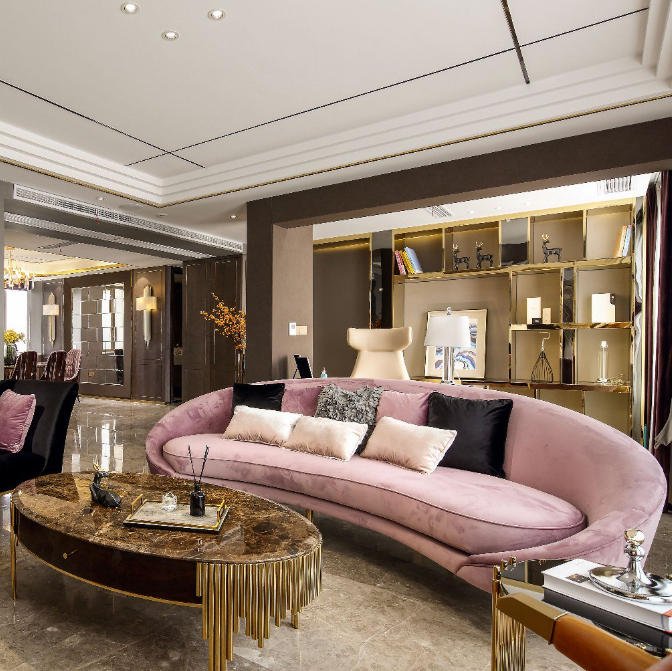
Case Study 1 — Luxury Villa in Dubai: Custom Dining and Living Room Collection
A Dubai-based interior design firm was appointed to furnish a private villa project on Palm Jumeirah — a 1,200 sqm property with six bedrooms and formal entertaining spaces. The client’s brief specified handcrafted solid wood furniture with Islamic-influenced geometric inlay work on sideboard panels and dining table aprons, combined with contemporary upholstered seating in Loro Piana cashmere fabric. No European or UK manufacturer could execute the inlay work at the required quality level within the project budget.
The design firm engaged a Dongguan manufacturer with demonstrated hand-carving capability and an established relationship with Italian fabric import agents. A full prototype suite was produced in 5 weeks. The production run of 47 bespoke pieces was completed in 14 weeks and delivered DDP to the Palm Jumeirah site. Total project procurement cost was 44% below the closest comparable European quote — a saving the design firm used to source a limited-edition chandelier installation from a Venetian glass artist, which became the visual centerpiece of the project.
Case Study 2 — Hotel Chain Reducing Procurement Costs by 35% While Upgrading Quality
A regional hotel group operating 12 mid-to-upscale properties across Southeast Asia had been sourcing FF&E from a combination of local manufacturers and European distributors. The procurement director commissioned a competitive analysis across all guestroom furniture categories. The analysis revealed that equivalent specifications — identical timber species, foam density, fabric grade, and finish quality — could be sourced from a Foshan contract furniture manufacturer at a 35% reduction in per-room cost.
The hotel group transitioned the next two property openings (340 rooms combined) to the Chinese manufacturer. Both projects delivered on time and within the new budget parameters. Guest satisfaction scores for room quality increased by 0.4 points on the group’s internal rating scale in the first quarter after opening — an outcome attributed to the manufacturer’s superior foam density specification compared to the previous supplier’s commercial-grade standard. The procurement saving across both properties totaled $1.2 million, which was invested in upgrading the properties’ F&B concepts.
Case Study 3 — Interior Design Firm Launching a Successful Private-Label Brand
A Sydney-based interior design firm with a strong residential portfolio had for years resold European furniture brands at standard margin. The principal made the decision to develop a proprietary 18-piece collection under the firm’s own brand — allowing her to capture the full retail margin, control quality to her exact standard, and offer clients exclusivity unavailable through any other designer.
The collection was developed in partnership with a Foshan OEM manufacturer over eight months: initial design briefs, CAD refinement, material specification (solid American walnut, Italian full-grain leather, custom satin-brass hardware), prototype production, and two rounds of refinement before final approval. First production run: 25 sets of each piece. At recommended retail, the gross margin exceeded 65%. The collection was featured in two Australian design publications within its first year, generating an inbound inquiry pipeline that tripled the firm’s revenue from furniture sales. According to Jade Ant furniture’s private-label brand development framework, this outcome is representative of what designers achieve when they transition from reselling to owning.
Case Study 4 — FF&E Buyer Launching a Sustainable Boutique Collection for a Resort Chain
A US-based FF&E procurement firm was retained by a luxury resort chain to develop a sustainable furniture collection for their new properties across Costa Rica, Belize, and Mexico. Requirements included FSC-certified solid timber, GREENGUARD Gold-certified finishes, and a biophilic design aesthetic that referenced local plant geometry. The collection needed to perform in humid tropical environments without warping or corrosion.
The procurement firm worked with a Guangdong manufacturer holding both FSC chain-of-custody and ISO 14001 certifications. All timber was kiln-dried to ≤8% moisture content with a teak-oil post-treatment for enhanced humidity resistance. The manufacturer provided complete EPD documentation for the collection — a first for the resort chain’s FF&E procurement and a credential that contributed to the first property’s LEED Silver certification. Landed cost per room for the 90-key property: $3,200 — versus $5,800 from the only alternative bidder capable of meeting the sustainability requirements.
At-a-Glance Summary: Key Numbers for Importers and Buyers
| Metric | Data Point |
|---|---|
| China’s furniture export value (2024) | $36.44 billion |
| China’s global furniture export market share | ~34% |
| China domestic furniture market (2026) | $169.23 billion |
| Typical landed-cost saving vs. European manufacturing | 30–50% |
| Hotel guestroom package (FOB China, per room) | $1,200–$1,800 |
| Private-label gross margins at scale | 60–75% |
| FSC certification adoption (top 100 Chinese exporters) | ~55% |
| CARB/TSCA compliance adoption (top-tier exporters) | ~72% |
| CIFF Guangzhou 2026 exhibition scale | 850,000 sqm, 4,900+ brands |
| Standard custom production lead time | 60–90 days |
| Pre-shipment inspection cost (per order) | $280–$500/inspector-day |
| US Section 301 tariff on upholstered furniture (2026) | 25% |
Frequently Asked Questions (FAQs)
Is high-end furniture from China truly comparable in quality to European-made pieces?
For the upper tier of Chinese contract furniture manufacturing — specifically factories in Foshan and Dongguan supplying to international luxury markets — the answer is yes, with documentation to support it. These facilities use the same raw material inputs as European manufacturers (Italian leather, North American hardwoods, Belgian linen), employ identical structural techniques (mortise-and-tenon joinery, eight-way hand-tied springs), and hold the same quality management certifications (ISO 9001, FSC, GREENGUARD Gold). The key differentiator is knowing how to identify and access this tier — which is why supplier vetting is covered in detail in Section 4 of this guide.
How can I verify a Chinese supplier’s claims about craftsmanship and materials?
Verification requires three actions, not one. First, request physical samples and have them independently tested for structural performance, formaldehyde emissions, and fabric abrasion resistance. Second, commission a third-party factory audit from QIMA, SGS, or Bureau Veritas to inspect production facilities and review quality management documentation. Third, cross-reference all certification numbers with the issuing bodies’ public databases — FSC at info.fsc.org, GREENGUARD at the UL SPOT database, and ISO 9001 with the certifying registrar. Any supplier who resists any of these three steps should be disqualified.
What are the typical MOQs for luxury furniture from Chinese suppliers?
Among high-end Chinese manufacturers serving the international luxury market, MOQs for fully custom pieces typically start at 10–20 units. For standard catalog items with custom finish modifications, MOQs are often as low as 5–10 pieces. For large hospitality projects where multiple SKUs are ordered simultaneously, factories frequently waive individual SKU MOQs in exchange for a minimum total order value. The key is framing your request professionally: a supplier who receives a detailed brief with CAD drawings, material specifications, and a clear project timeline is more likely to accommodate low-volume custom orders than a buyer making vague inquiries without documentation.
Can I customize finishes, fabrics, dimensions, and designs?
Fully and comprehensively — this is one of the structural advantages of Chinese high-end manufacturing over European catalog suppliers. Solid wood species, dimensions (to within ±5mm of any specified measurement), finish color and sheen level, fabric material and color, hardware model and finish, foam density, packaging design, and branding all can be specified individually. The technical brief required for this level of customization should include CAD or DWG drawings, physical finish samples or Pantone/RAL references, approved fabric swatches or material callouts, and hardware specifications with model numbers. The more precise your brief, the more precisely the factory can execute it.
How do I protect my design IP when working with Chinese manufacturers?
Use an NNN Agreement — not a standard NDA. As explained in Section 9, NNN agreements covering Non-Disclosure, Non-Use, and Non-Circumvention must be drafted in Chinese, governed by Chinese law, and specify financial penalties in RMB to be actionable. Additionally, register your designs with China’s National Intellectual Property Administration (CNIPA) before sharing technical drawings with any manufacturer. A registered design gives you formal legal standing in Chinese courts and functions as a deterrent to unauthorized use. Work with a China-specialized IP attorney to structure both the registration and the NNN agreement correctly — this is a specialized area where generalist legal advice is insufficient.
What are the lead times for custom high-end furniture from China?
Standard custom production runs take 60–90 days from approved prototype to completed production, depending on complexity and order volume. Add 14–18 days for ocean freight to the US West Coast, 25–32 days to the US East Coast, and 18–22 days to Northern Europe. Factor in 5–10 additional days for customs clearance at the destination port. A practical planning rule: place your order at least 16–20 weeks before your on-site need date, with a 3-week buffer built in for customs and inspection variability. For hotel openings with fixed operational start dates, engage your manufacturer 6 months in advance.
Are there sustainable and eco-friendly options available?
Yes — and the documentation infrastructure to prove it is available from the top tier of Chinese manufacturers. FSC-certified timber, CARB Phase 2 compliant panels, GREENGUARD Gold-certified finishes, ISO 14001-certified facilities, water-based lacquers, and recycled packaging are all available and documentable. Approximately 55% of China’s top furniture exporters hold FSC chain-of-custody certification. Factories producing for hotel groups targeting LEED or WELL certification can provide Environmental Product Declarations (EPDs) for finished pieces — a requirement that is becoming standard in luxury hospitality procurement.
How do I handle quality issues upon delivery?
The most effective approach is preventing them before delivery through the three-phase QC process described in Section 5. When issues arise post-delivery despite those precautions, your contract should specify: a clear defect classification system (cosmetic vs. structural vs. dimensional); a remediation timeline (typically 30–45 days for replacement production); and financial accountability terms (factory bears return freight and replacement production cost for defects exceeding the contracted AQL threshold). For ongoing supplier relationships, documenting and sharing quality feedback constructively — rather than simply demanding remediation — builds the factory’s understanding of your standards and reduces defect rates on subsequent orders.
What shipping terms should I choose: FOB, CIF, or DDP?
The right term depends on your logistics infrastructure and risk tolerance. FOB gives you maximum control over freight cost and carrier selection, but requires you to manage all subsequent logistics independently — appropriate for buyers with dedicated import operations. CIF reduces your logistics management burden but limits negotiating leverage on freight rates. DDP provides complete cost certainty from factory to door — no hidden costs, no surprise invoices — and is typically the most appropriate choice for buyers without dedicated customs and logistics staff. The hidden costs of direct China importing are extensive enough that many experienced buyers find DDP, even at a higher quoted price, delivers lower total cost once all variables are included.
Do Chinese manufacturers provide assembly instructions and packaging for high-end clients?
Premium Chinese manufacturers operating in the export luxury segment treat packaging as part of the product specification, not an afterthought. White-glove packaging — custom foam inserts, corner protection, branded outer cartons with the client’s logo — is standard for private-label programs. Assembly instructions with professional illustrations in the buyer’s required language(s) are produced as a standard deliverable. For hotel projects, manufacturers can produce installation guides in format coordinated with the project’s construction documentation. Discuss packaging specifications and assembly instruction requirements during the briefing phase, not after production.
Can I visit the factory before placing an order?
Yes — and for any order above $50,000, a factory visit is strongly recommended. The majority of high-end manufacturers in Foshan and Dongguan welcome buyer visits and can arrange coordinated itineraries including showroom tours, production floor walkthroughs, sample reviews, and meetings with their design team and factory management. Combine your factory visits with attendance at CIFF Guangzhou (March) to maximize the value of a single sourcing trip to Guangdong. Fly into Guangzhou Baiyun International Airport — the Foshan furniture district is a 45-minute drive. Budget two days per cluster for meaningful factory visits.
How do I manage communication and time zone differences?
Establish a single named contact at the factory who is accountable for all communication on your account — not a general sales email. Use a shared project management platform (Asana, Monday.com, or even a shared Google Drive with a clearly organized folder structure) where specification documents, sample approvals, and production milestone updates are visible to both parties. Schedule recurring video calls at a consistent time that falls within the overlap window between your time zone and GMT+8 — typically early morning for Europe, late evening for the US East Coast. For urgent issues, WhatsApp is universally used in Chinese business communication and gets faster responses than email.
Are there import duties or taxes I should be aware of?
Yes — and they are material to your cost model. In the US market, Chinese furniture currently carries a 25% Section 301 tariff on top of standard MFN base rates (0–6% depending on category), bringing the effective duty on most upholstered furniture to approximately 25–31%. EU markets apply a standard 2.7–5.6% customs duty on furniture from China under MFN rates. The UAE applies a 5% GCC common external tariff. Duties are calculated on the CIF (Cost, Insurance, Freight) value — not the FOB factory price. Work with a licensed customs broker to ensure correct HS code classification before any shipment departs, as misclassification can result in retroactive duty assessments. The US ITC Harmonized Tariff Schedule is the authoritative reference for US-bound shipments.
Can I order samples before committing to a large purchase?
Always — and this should be a non-negotiable step in your supplier evaluation process. Reputable manufacturers provide samples either at a nominal production cost (typically $50–$300 for standard items, $500–$2,000 for complex custom prototypes) or at no charge for established buyers placing significant repeat volumes. Do not approve a manufacturer for a production order without physically holding, sitting on, opening, and stress-testing the sample. Have the sample independently tested for the specific technical parameters most important to your application — fabric abrasion, structural load, formaldehyde emissions — before making a production commitment.
How do I build a reliable, long-term partnership with a Chinese manufacturer?
Start with a well-structured first order — clear specifications, professional brief documentation, prompt payment, and constructive quality feedback. Pay your deposit on time and your balance promptly after inspection approval — factories prioritize clients with reliable payment behavior. Communicate problems directly and constructively, not through escalation to senior management as a first response. Invest in at least one annual factory visit. And share forward visibility on your order pipeline — a factory that knows you plan to order three container loads over the next 12 months will allocate production capacity and design attention accordingly. The clients who receive the best service from Chinese manufacturers are those who treat the relationship as a genuine business partnership, not a transactional exchange.
What are the most common red flags when vetting Chinese furniture manufacturers?
The highest-risk indicators to watch for include: inability to provide verifiable certification documents within 48 hours; pressure to pay more than 30% deposit before sample approval; refusal to permit factory visits or production floor access; inconsistent business registration details between the factory website, Alibaba profile, and certificate documentation; a portfolio of product images that appears entirely stock-photo rather than actual factory photography; and pricing that is significantly below the market rate for the specification — which almost always signals a material or quality substitution at some point in the production process. Trust your due diligence data, not your enthusiasm for the lowest price.
For additional resources on China furniture sourcing strategy, visit Jade Ant furniture’s complete guide to working with Chinese suppliers. For authoritative market data, consult the Mordor Intelligence China furniture market report and the OEC World China furniture trade profile. For trade fair sourcing planning, visit the official CIFF Guangzhou website and the Canton Fair website.