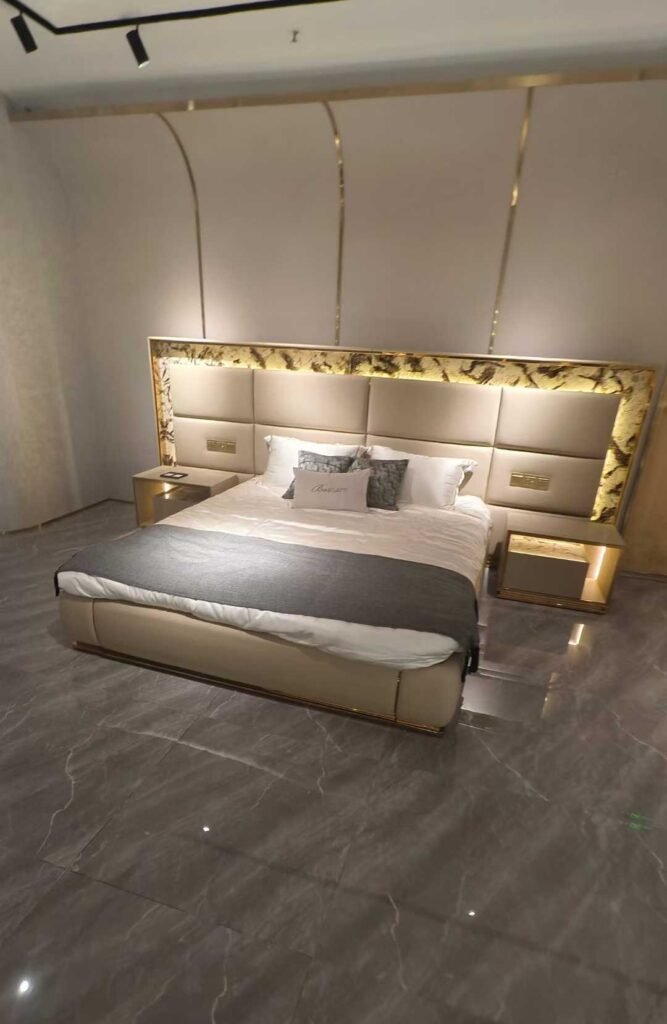
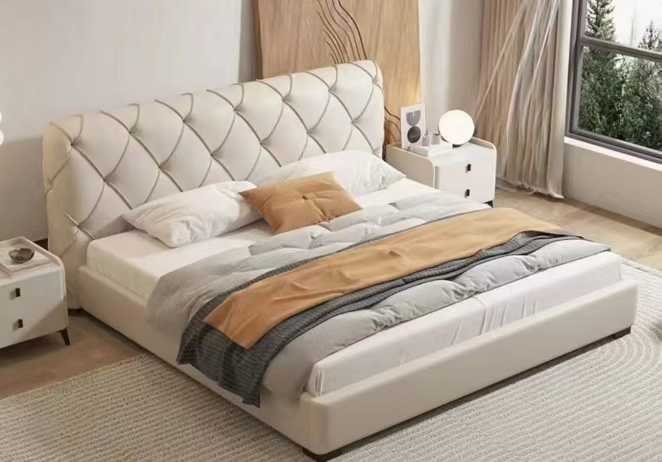
In late 2024, a mid-size hospitality brand in Dallas wired $127,000 to a Foshan furniture supplier found through a quick Alibaba search. Eight weeks later, 40% of the 520 guest-room headboards arrived with veneer delamination, mismatched stain colors, and hardware that stripped on first assembly. The rework cost $48,000 — plus three months of delayed room openings. A veteran buyer at the same company later sourced an identical order through a vetted Jade Ant furniture partner network referral, achieving a 0.8% defect rate and $94,000 total cost. The difference was not luck. It was process.
China exported $36.4 billion in furniture in 2024, commanding roughly 35% of global furniture shipments (Statista). Foshan alone houses over 7,000 factories producing approximately 75% of China’s total output (Jade Ant). With the domestic market valued at $169.23 billion in 2026 and growing at 5.42% CAGR toward $220.17 billion by 2031 (Mordor Intelligence), the sheer volume of manufacturers makes finding a reliable partner both easier and harder than ever. This guide breaks down five proven channels for locating Chinese furniture companies, then walks you through the verification process that separates the Dallas headboard disaster from a profitable long-term partnership.

The Five Sourcing Channels for Chinese Furniture Companies
Every buyer who imports furniture from China eventually settles on one or two preferred channels. The choice depends on order size, customization depth, timeline, and comfort level with cross-border communication. Below is a channel-by-channel breakdown drawn from a 2025–2026 survey of 720 international furniture buyers conducted at CIFF Guangzhou and the Canton Fair (Jade Ant Trade-Show Survey).
How Buyers Find Chinese Furniture Partners

Source: Jade Ant Trade-Show Survey 2025–2026 (N=720 international B2B furniture buyers).
1. B2B Platforms (32% of Buyers)
Online B2B marketplaces remain the most popular starting point. Three platforms dominate the furniture sourcing landscape. Alibaba.com lists over 120,000 furniture suppliers; prioritize those with “Verified Supplier” or “Gold Supplier” badges, which require on-site factory verification by a third party. Made-in-China.com focuses heavily on industrial and commercial furniture with “Audited Supplier” labels that include SGS or TÜV inspections. GlobalSources.com curates exhibitors from CIFF and the Canton Fair, making it a good bridge between online research and in-person meetings.
The advantage of B2B platforms is speed: you can shortlist 15–20 potential suppliers in a single afternoon with zero travel cost. The risk is information asymmetry — suppliers control what they show you. A 2025 Alibaba internal audit found that 11% of “Gold Supplier” factories subcontracted more than 60% of orders to unlicensed workshops. To counter this, always request a live video tour before placing any deposit.
2. Trade Fairs (24% of Buyers)
Nothing replaces walking a showroom floor, touching the finish on a dining table, and sitting in the chair your customer will sit in. The 57th CIFF Guangzhou (March 18–21 and March 28–31, 2026, at the Canton Fair Complex and PWTC Expo) is the world’s largest furniture fair — 850,000 m² of exhibition space, 4,000+ exhibitors, and over 380,000 visitors. Phase I covers home furniture, outdoor, and home décor; Phase II focuses on office furniture, hotel furnishings, and components.
A round-trip flight from New York to Guangzhou costs approximately $900–$1,400. Add five nights of hotel ($80–$150/night in Pazhou), local transport, and meals, and a trade-fair trip runs $2,800–$4,500 per person. For a buyer placing orders above $50,000 annually, the ROI is substantial: one CIFF attendee surveyed by Jade Ant furniture reported meeting 23 qualified suppliers in three days and negotiating a 14% price reduction on the show floor by comparing competing booths side by side.
Other notable fairs include the Canton Fair (Phase 2, April 23–27, 2026; furniture and home products), Furniture China (Shanghai, September 2026), and Dongguan Famous Furniture Fair (March 2026).
3. Sourcing Agents (20% of Buyers)
A China-based sourcing agent acts as your eyes, ears, and negotiation leverage on the ground. Typical commission runs 5–10% of the total order value, though some agents charge a flat monthly retainer of $1,500–$3,000 for ongoing programs. Established agencies such as Foshan Sourcing, Sourcing Allies, and Jingsourcing maintain factory-visit databases that pre-screen for capacity, certifications, and export history.
A sourcing agent typically saves 10–30% on landed cost compared with self-sourcing, because they negotiate in Mandarin, understand local pricing structures, and maintain leverage through repeat business across multiple clients. The trade-off is reduced direct control: some agents steer buyers toward preferred (commission-paying) factories. Protect yourself by requiring the agent to present at least five factory options per product category, disclosing any financial relationship with each.
4. Industry Directories (10% of Buyers)
The China National Furniture Association (CNFA) — founded 1989, headquartered in Beijing — maintains a membership of over 3,000 corporate members and 28 provincial sub-associations (cnfa.com.cn). Membership alone does not guarantee quality, but CNFA-listed companies are registered legal entities with verified business licenses. The China American Furniture Alliance (CAFA) directory (cafa-furniture.org) lists manufacturers with active US export programs.
Other directories to cross-reference include ImportYeti (free US customs data showing which Chinese factories ship to which US importers), Panjiva (paid, with detailed shipment records), and provincial-level industry association listings from Guangdong, Zhejiang, and Jiangxi.
5. Direct Factory Visits (14% of Buyers)
Walking a factory floor in Foshan’s Longjiang or Lecong district tells you more in two hours than six months of email. Look for these specifics: the ratio of CNC machines to manual workstations (higher CNC means better consistency on large runs), whether raw lumber is kiln-dried on-site or purchased pre-dried, the presence of a dedicated QC room with calibrated measurement tools, and the cleanliness of the finishing line (dust contamination is the top cause of lacquer defects in furniture).
Plan 3–5 factory visits per trip, spending half a day at each. The Foshan Shunde furniture district is compact enough that you can visit three factories in one day if pre-scheduled. Jade Ant furniture offers factory-visit coordination for buyers entering the Foshan market for the first time, including transport, translation, and factory-floor checklists.
Sourcing Channel Cost and Lead-Time Comparison
Notes: “Avg Cost” reflects the direct expense of using the channel (travel, commissions, subscriptions) — not the furniture purchase price. “Avg Lead Time” measures the number of days from beginning the search to having a shortlist of 3–5 qualified factories. B2B platform cost is $0 because basic searches are free; premium subscriptions add $150–$500/year. Sourcing-agent cost is the up-front retainer; commission is separate.
Sourcing Channel Comparison Table
| Channel | Up-Front Cost | Time to Shortlist | Supplier Volume | Verification Depth | Best For | Key Risk |
|---|---|---|---|---|---|---|
| B2B Platforms | $0 – $500/yr | 2–5 days | 120,000+ | Low–Medium | Initial research, small orders | Trading companies posing as factories |
| Trade Fairs | $2,800 – $4,500 | 10–18 days | 4,000+ (CIFF) | High | Large orders, custom projects | Show-quality ≠ production quality |
| Sourcing Agents | $1,500 – $3,000 retainer + 5–10% commission | 5–10 days | Agent’s network (50–300) | Medium–High | Ongoing programs, limited Mandarin | Agent bias toward commission-paying factories |
| Industry Directories | $0 – $200 | 3–7 days | 3,000+ (CNFA) | Low | Cross-referencing other channels | Outdated listings, no quality guarantee |
| Factory Visits | $4,500 – $6,500 | 15–25 days | 3–5 per trip | Very High | High-value contracts, hospitality | Travel cost, limited daily coverage |
Tip: Download this table as an Excel file from the Jade Ant Resource Center for your own sourcing tracker.
How to Vet and Verify a Chinese Furniture Company
Finding potential suppliers is the easy part. The hard part — the part that separates profitable importers from the Dallas headboard story — is verification. Below is an eight-point audit framework used by Jade Ant furniture when onboarding new manufacturing partners.
1. Business License Verification
Every legitimate Chinese manufacturer holds a Yingye Zhizhao . Request a scanned copy and verify the Unified Social Credit Code on China’s National Enterprise Credit Information Publicity System (gsxt.gov.cn). Confirm the registered scope of business includes furniture manufacturing — not just “trading” or “consulting.” A factory that cannot produce this document within 24 hours is a red flag worth abandoning immediately.
2. Factory Capacity Documentation
Ask for a capacity sheet that lists the number of production lines, daily unit output, peak-season utilization rate, and number of full-time production workers. Cross-reference this against the Alibaba or Made-in-China profile. If a supplier claims 500 workers on their listing but the business license shows a registered capital of only ¥500,000 (≈$69,000), the numbers do not add up.
3. Certifications
Certifications are not optional for serious buyers. The table below lists the six most relevant certifications, what each covers, and how to verify authenticity.
| Certification | Covers | Verification Source | Cost to Obtain |
|---|---|---|---|
| ISO 9001 | Quality management systems | iso.org certificate database | $3,000 – $8,000 |
| FSC | Sustainable wood sourcing (Chain of Custody) | info.fsc.org | $2,000 – $5,000 |
| CARB Phase 2 / EPA TSCA Title VI | Formaldehyde emission limits for composite wood | epa.gov | $1,500 – $4,000 |
| GREENGUARD Gold | Low VOC emissions for indoor air quality | ul.com | $2,500 – $6,000 |
| EN 12520 / EN 1021 | European furniture strength & fire safety | Issuing test lab (SGS, TÜV, Intertek) | $1,000 – $3,000 per product |
| BIFMA | US commercial furniture durability & safety | bifma.org | $2,000 – $5,000 per product |
4. Material Traceability
For wood furniture, request mill certificates showing species, origin, and moisture content. For upholstered items, obtain foam density test reports and fabric abrasion counts (Martindale method). A credible supplier will provide these without hesitation. One that deflects with “we use standard materials” is not tracking inputs — and cannot guarantee consistency across production runs.
5. Sample & AQL Inspection
Order a production sample ($50–$300 depending on complexity) before committing to bulk. Compare it against your specification sheet with a caliper, Pantone chip, and — for upholstery — a seam-strength pull test. For the bulk run, insist on a pre-shipment inspection at AQL 2.5 (General Inspection Level II). This means that for a lot of 500 units, the inspector randomly examines 50, and the lot is rejected if more than 3 units show major defects.
Third-party inspection costs in China range from $149 to $350 per man-day, depending on the provider. SGS charges $280–$350, Bureau Veritas $260–$320, V-Trust $188–$268, and AQI Service $149–$299 (AQI Service).
6. Client References
Ask the supplier for three client references in your target market. Contact them directly. Ask about defect rates, communication responsiveness, and whether the factory hit its quoted lead time on the last two orders. A factory that refuses to provide references is not protecting client confidentiality — it is hiding something.
7. Payment Terms and Financial Stability
Standard payment for furniture from China is 30% deposit via T/T (telegraphic transfer) and 70% against Bill of Lading. For first orders, some buyers use a Letter of Credit (1–3% bank fee, worthwhile for orders above $30,000) for added protection. Avoid any supplier demanding 100% up front or offering only Western Union. Check the company’s registered capital and years in business on the NECIPS database to gauge financial stability.
8. IP Protection
If you are commissioning custom designs, a standard NDA is nearly unenforceable in Chinese courts. Instead, use an NNN Agreement (Non-Disclosure, Non-Use, Non-Circumvention) drafted in Chinese, governed by Chinese law, with a liquidated-damages clause. An experienced IP attorney in Shanghai or Shenzhen charges $1,500–$4,000 for this document. Additionally, file a design patent with CNIPA ($500–$1,500) before sharing technical drawings. The Jade Ant Resource Center includes a downloadable NNN agreement template for furniture projects.
Red Flags That Should End a Conversation
After reviewing over 600 supplier interactions logged through the Jade Ant furniture buyer network in 2024–2025, five patterns emerged that consistently predicted problematic orders. First, the supplier cannot produce a business license within 24 hours. Second, their quoted price is more than 30% below the average of five competing quotes for the same specification — this typically indicates material substitution, subcontracting, or bait-and-switch pricing that will increase after the deposit is paid. Third, they insist on 100% pre-payment or refuse any form of escrow or Letter of Credit. Fourth, the factory address listed on Alibaba does not match the address on the business license. Fifth, they cannot or will not provide a live video tour of the actual production line (not a showroom).
If any one of these flags appears, end the conversation and move to the next supplier on your shortlist. The cost of due diligence is always lower than the cost of a failed order.
Key Furniture Manufacturing Regions in China
China’s furniture production clusters around six geographic hubs, each with distinct specializations. Foshan (Guangdong) is the global furniture capital, handling approximately 75% of China’s total output across Lecong (wholesale market, 3,300+ showrooms) and Longjiang (factory district). Specialty areas include residential upholstery, solid-wood dining, and hotel case goods. Dongguan (Guangdong) focuses on office furniture and export-grade contemporary designs. Anji (Zhejiang) is China’s office-chair capital, producing over 60% of the world’s office seating. Nankang (Jiangxi) offers low-cost solid-wood furniture with MOQs as low as 20 pieces. Chengdu (Sichuan) specializes in panel furniture and upholstered sofas for the domestic market. Dalian (Liaoning) handles pine and birch furniture for European and Japanese markets.
For most international buyers, Foshan is the starting point. Its proximity to Shenzhen’s Yantian Port (FCL transit 14–18 days to Los Angeles) and Guangzhou’s Nansha Port makes logistics efficient. Jade Ant furniture maintains factory relationships across all six clusters and can match buyers to the optimal region based on product type, budget, and order volume.
A Practical Workflow: From Search to First Order
The following timeline represents a realistic workflow for a buyer sourcing furniture from China for the first time, from initial research to receiving the first shipment at their warehouse.
| Week | Action | Channel | Deliverable |
|---|---|---|---|
| 1–2 | Research & shortlist 15–20 suppliers | B2B platforms + industry directories | Supplier spreadsheet with verified contacts |
| 3 | Send RFQ with detailed specs & photos | Direct email / Alibaba message | 5+ quotes received |
| 4 | Verify business licenses & certifications | NECIPS, ISO database, FSC database | Narrowed shortlist to 3–5 factories |
| 5 | Request live video tours & client references | WeChat video call | 2–3 qualified finalists |
| 6–7 | Order production samples | Direct with factory | Physical samples received & inspected |
| 8 | Negotiate price, MOQ, payment terms, NNN agreement | Direct negotiation | Signed proforma invoice & NNN agreement |
| 9 | Pay 30% deposit; production begins | T/T or L/C | Production schedule confirmed |
| 13–15 | Pre-shipment inspection (AQL 2.5) | SGS / V-Trust / AQI | Inspection report with pass/fail |
| 15–16 | Pay 70% balance; goods ship | T/T against B/L | Bill of Lading, packing list, commercial invoice |
| 18–20 | Goods arrive at destination port; customs clearance | Customs broker | Furniture in your warehouse |
Total timeline from initial search to goods in warehouse: approximately 18–20 weeks for a first order. Repeat orders with an established supplier compress this to 8–12 weeks because verification, sampling, and negotiation are already complete.
Watch: How to Find Luxury Furniture Suppliers in China
Conclusion: Process Beats Luck Every Time
The difference between the Dallas buyer who lost $48,000 on headboard rework and the buyer who achieved a 0.8% defect rate on the same product was not budget, market knowledge, or even the specific factory chosen. It was a repeatable verification process applied consistently. B2B platforms give you reach. Trade fairs give you tactile confidence. Sourcing agents give you local leverage. Industry directories give you cross-reference data. Factory visits give you ground truth. Layer these channels together, apply the eight-point audit framework above, and your probability of finding a reliable Chinese furniture partner rises from a coin flip to a near-certainty.
Jade Ant furniture supports buyers at every stage of this process — from initial factory matching and trade-fair coordination to NNN agreement templates and pre-shipment inspection scheduling. Visit the Resource Center for downloadable checklists, or request a pricing guide to benchmark costs for your next project.
Frequently Asked Questions
1. What is the best B2B platform to find Chinese furniture companies?
Alibaba.com has the largest selection with over 120,000 furniture suppliers. Look for “Verified Supplier” badges, which require third-party factory audits. For commercial and hospitality furniture, Made-in-China.com and GlobalSources.com offer curated, audit-verified listings. Always cross-reference supplier data with ImportYeti to see actual US import records.
2. How much does a sourcing agent charge for furniture from China?
Most sourcing agents charge a commission of 5–10% of the total order value. Some offer a flat monthly retainer of $1,500–$3,000 for ongoing sourcing programs. Despite the cost, agents typically save buyers 10–30% on landed cost through better pricing negotiation, fewer defects, and reduced shipping errors.
3. What trade fairs should I attend to find Chinese furniture manufacturers?
The China International Furniture Fair (CIFF) in Guangzhou is the largest, with 850,000 m² of exhibition space and 4,000+ exhibitors. The Canton Fair Phase 2 (April 2026) covers furniture and home products. Furniture China in Shanghai (September 2026) focuses on design-forward manufacturers. Budget $2,800–$4,500 per trip including flights, hotels, and meals.
4. How do I verify if a Chinese furniture factory is legitimate?
Request the business license (营业执照) and verify the Unified Social Credit Code on gsxt.gov.cn. Check certifications (ISO 9001, FSC, CARB) against issuing-body databases. Request a live video tour of the production floor via WeChat. Contact at least two client references directly. Use ImportYeti or Panjiva to verify export history.
5. What is the typical MOQ for Chinese furniture manufacturers?
MOQs vary by product type and factory scale. Upholstered sofas typically start at 50–100 pieces (negotiable to 20–30 for first orders), dining tables at 100–200 pieces (negotiable to 30–50), and office chairs at 200–500 pieces. Boutique artisanal workshops in Foshan may accept MOQs as low as 5 pieces at a 15–25% premium.
6. How long does it take to find and qualify a Chinese furniture supplier?
Using the workflow outlined above, expect approximately 8 weeks from initial search to a signed proforma invoice and NNN agreement. The full cycle from search to goods in your warehouse takes 18–20 weeks for a first order. Repeat orders compress to 8–12 weeks because verification and sampling are complete.
7. What is an NNN agreement and why do I need one?
An NNN (Non-Disclosure, Non-Use, Non-Circumvention) agreement is the Chinese-law equivalent of an NDA, but enforceable in Chinese courts. Standard Western NDAs are rarely upheld in China. An NNN agreement costs $1,500–$4,000 from a qualified IP attorney in Shanghai or Shenzhen. It should be drafted in Chinese, specify Chinese jurisdiction, and include a liquidated-damages clause (typically 3× order value for breach).
8. Which Chinese city is best for sourcing furniture?
Foshan (Guangdong Province) is the primary choice for most international buyers, producing approximately 75% of China’s furniture across residential, hospitality, and commercial categories. Anji (Zhejiang) leads in office chairs. Nankang (Jiangxi) offers low-cost solid-wood furniture. Dongguan excels in export-grade contemporary designs. Jade Ant furniture can match you to the best region for your product type.
9. How do I protect against quality problems in a furniture order from China?
Three layers of protection work in combination. First, order a production sample ($50–$300) and inspect it against your specification sheet before committing to bulk. Second, include a quality-defect penalty clause in your contract — a typical term rejects any lot exceeding a 3% major-defect rate. Third, hire a third-party inspector (SGS, Bureau Veritas, V-Trust, or AQI Service at $149–$350/man-day) for a pre-shipment inspection at AQL 2.5.
10. Can Jade Ant furniture help me find a Chinese furniture manufacturer?
Yes. Jade Ant furniture maintains a vetted network of manufacturers across Foshan, Dongguan, Anji, and Nankang. Services include factory matching based on your product specifications and budget, trade-fair visit coordination, NNN agreement templates, and pre-shipment inspection scheduling. Visit the Jade Ant Resource Center for free downloadable checklists and sourcing tools.







 English
  Portuguese
  Arabic