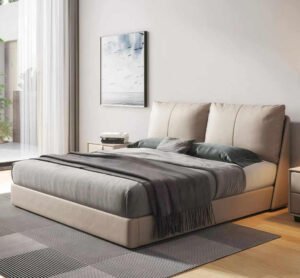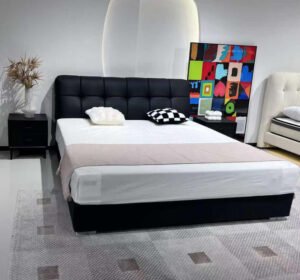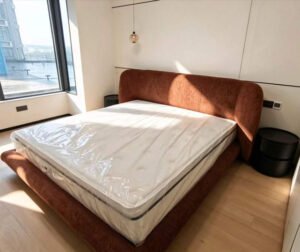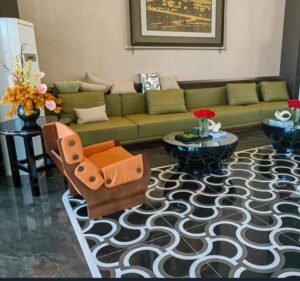
The Ultimate Guide to Private Labeling Modern Luxury Furniture: How to Stand Out in a Competitive Market
A strategic playbook written exclusively for high-end furniture importers, distributors, interior designers, private-label brand owners, FF&E and hotel buyers, architecture and design firms, developers, and hotel operators and owners.
1. The Rising Demand for Differentiated Luxury Furniture in the Private Label Space
There is a moment in every competitive market when the easy positions run out. In luxury furniture, that moment has arrived.
The global luxury furniture market is valued at $38.2 billion in 2026 and is projected to reach $60.79 billion by 2035. But raw market growth does not tell the real story. The more revealing trend is what is happening inside that growth — a fundamental shift in what high-end buyers, hotel developers, and interior designers actually want.
They do not want another catalog line. They are not impressed by a European brand name attached to a piece manufactured in the same factory as a dozen competitors’ products. What they want is something they cannot find anywhere else. That is the structural opportunity that private label luxury furniture exists to address.
The problem with competing as a reseller:
When you resell an established luxury brand, you control nothing that matters. The design is theirs. The pricing is theirs. The exclusivity is theirs. You are, at best, a delivery mechanism — one that can be replaced the moment another distributor offers a marginally better trade discount.
The private label advantage:
Private label furniture — a production model where a manufacturer produces furniture to your exact specification and branding, with your name on every label, every crate, and every client proposal — puts you in control of the design narrative, the pricing architecture, and the brand equity that accumulates in your business, not someone else’s.
Importers, designers, and brand owners who have made this transition consistently report gross margins of 60–75% at scale, compared to 35–50% on branded reseller lines. More importantly, they report something harder to quantify but more valuable: clients who come back because they want your furniture, not a furniture category.
This guide is the complete operational roadmap for building a private label luxury furniture brand that earns that kind of loyalty.
2. Understanding the Modern Luxury Consumer: What Truly Drives Purchasing Decisions

Before designing a single piece, you need to understand who is buying it — and more precisely, what they are actually buying when they choose luxury furniture.
HNWI (High Net Worth Individual): An individual with investable assets exceeding $1 million USD. The primary residential buyer persona for luxury private label furniture. This group does not shop on price. According to Fly Business Aviation’s analysis of HNWI psychology, high-net-worth clients are not buying luxury — they are buying control, identity, and the clarity that comes with making a decision that requires no justification. A chair in their villa is not furniture. It is a statement about how they choose to live.
The four real purchase drivers for luxury furniture buyers:
Exclusivity is the dominant motivator at the top of the market. Research consistently confirms that rarity and exclusivity directly amplify perceived value for luxury consumers — and that this effect strengthens as price increases. A piece the buyer knows exists in 12 other identical hotel rooms is not exclusive by any meaningful definition. A piece produced in a limited run under a brand with a documented design story is.
Provenance matters to luxury buyers in ways that can be difficult to articulate but are very easy to lose. Where was the timber milled? Who cut the leather? How long has the workshop been producing this technique? Poltrona Frau’s market position is built on exactly this — over a century of documented Italian leather craftsmanship, where every design iteration is contextualized within a lineage. Private label brands that create this kind of provenance story from inception have a positioning foundation that catalog resellers can never build.
Sustainability and ethical transparency are increasingly material to purchasing decisions, particularly among HNWI buyers under 55. This is not about environmental virtue signaling — it is about trusting that the object in their home reflects the values they project in other areas of their life. Certified materials, transparent supply chains, and documented ethical manufacturing practices are becoming specification prerequisites, not optional extras.
Emotional resonance is the factor that closes the decision. A hotel guest who photographs the chair in their room and shares it is communicating an emotional response — not a specification review. Villa owners who describe their furniture in terms of how it makes them feel (“this dining table makes every dinner feel considered”) are articulating the outcome that luxury furniture, when it works, consistently delivers.
Translating this into product development:
Your collection should answer three questions before it reaches the market. First, what is the one story we tell about every piece — not its features, but its provenance and design intention? Second, who else has this, and how do our clients feel about that answer? Third, what happens to the piece in 15 years — does it age into beauty, or does it date?
The brands that answer all three confidently are the ones that interior designers specify again, hotel developers commission twice, and villa owners recommend to their circle.
3. Crafting a Distinctive Brand Identity: Beyond Logos and Labels
A logo is the minimum viable signal that you have taken branding seriously. It is not a brand. A brand is the expectation that forms in a client’s mind before they open your lookbook — the answer they give when someone asks “what’s that furniture brand you always specify?” The gap between having a logo and being a brand is the work of this section.
Brand identity in luxury private labeling — what it actually means:
Brand identity in this context is not your typeface or your Instagram grid. It is the set of decisions and principles that make your collection immediately recognizable and consistently defensible against the question “why does this cost what it costs?”
The most functional tool for building brand identity is what Jade Ant furniture’s private label framework calls a brand DNA document — a single reference that governs every design, material, and finish decision the brand makes. Not a mood board. A decision filter.
| Brand DNA Element | Example: Modern Luxury Brand | Example: Artisanal Resort Brand |
|---|---|---|
| Core Design Language | Architectural precision, geometric restraint | Warm craft, natural texture, handmade detail |
| Material Palette | Sintered stone, brushed bronze, performance leather | FSC solid oak, hand-woven linen, natural brass |
| Finish Philosophy | Matte, controlled, no ornamentation for its own sake | Visible craft marks, natural variation celebrated |
| Proportion Principle | Low-profile, horizontal emphasis, clean silhouette | Generous scale, curved forms, ergonomic warmth |
| What We Never Make | Heavily ornamental, mixed-period pastiche | Ultra-minimalist, industrial cold palettes |
| Target Context | Urban penthouse, contemporary hotel suite | Villa living room, boutique resort lounge |
This document prevents the brand drift that kills luxury brand coherence. When a commercially tempting piece arrives that doesn’t pass the decision filter, the filter wins.
Building a brand narrative that designers and FF&E buyers trust:
The luxury furniture brand narratives that win designer specifications share one characteristic — they are specific enough to be verifiable. “Handcrafted with artisanal care” is unverifiable marketing language. “Each frame is assembled by a team of six joiners in Foshan who have worked exclusively on our OEM brief for three years, using mortise-and-tenon joinery that is load-tested to BIFMA standards before finishing” is verifiable — and that verifiability is the trust signal that designers relay to their clients.
How Poltrona Frau built its position through narrative:
Poltrona Frau has spent over a century documenting what they call “Made of Stories” — the history of specific pieces, the clients who used them, and the craftspeople who built them. This is not nostalgia. It is a systematic investment in provenance documentation that makes every piece the brand produces more valuable by association. You do not need 100 years. You need to start now and be consistent.
Aligning narrative with each client type:
Different audiences require different framings of the same truth.
For hotel developers and FF&E buyers, position around operational reliability — consistent finishes across 200 rooms, documented certifications, lead-time discipline, and a post-delivery accountability structure that makes their purchasing decision defensible to their asset owners.
For interior designers, position around design collaboration — your willingness to execute their vision rather than constrain it. CAD drawings delivered within 72 hours, sample lending with no drama, COM (Customer’s Own Material — a fabric the designer supplies for the manufacturer to upholster) acceptance as standard, and project-specific customization without a premium attitude.
For villa owners and residential clients, position around provenance and longevity — where the piece was made, what decisions were made in its materials, and what it will look like in 20 years. The client who can tell that story to their dinner guests has received the full value of their purchase.
4. Strategic Customization: Offering Bespoke Solutions Without Sacrificing Scalability
The tension at the center of luxury private label furniture is real: clients want pieces that feel unique to them, and you need a production program that can be reliably manufactured, consistently priced, and logistically manageable at scale. These are not mutually exclusive goals. The brands that resolve this tension most effectively use modular design frameworks.
Modular design framework — the architecture of personalization:
A modular design framework is a production system where a piece’s core structural form remains consistent, but a defined set of parameters — dimensions, fabric, finish, hardware, detailing — can be varied by client specification without redesigning the piece from scratch. Think of it as the brand’s design DNA expressed in flexible production parameters rather than rigid catalog specifications.
In practice, a modular lounge chair in your collection might offer three frame widths, five base finish options, twelve fabric or leather grades, and two cushion construction profiles — yielding combinations that number in the hundreds, all producible on the same production line with the same tooling, at predictable cost and lead time.
For hotel developers, this is precisely what the specification process requires: the ability to adapt the standard piece to a 5-star resort’s design brief in Dubai without commissioning an entirely new prototype, paying bespoke development costs, or waiting 20 additional weeks for a custom mold.
Case study — modular customization for a Maldives resort:
A resort developer specifying 80 overwater villas required bedroom furniture that expressed the property’s coastal design language — bleached timber tones, natural linen upholstery, aged brass hardware — while meeting the structural and fire compliance standards required for international hospitality. Through a modular OEM program, the private label brand delivered a collection adapted from three core frame designs across 11 SKUs, each customized in finish and upholstery, produced in 14 weeks, and delivered with full GREENGUARD Gold documentation. No bespoke tooling was required. No design fees were charged. The developer specified the same brand’s collection for their second property 18 months later.
Case study — designer launching a made-to-order residential line:
A Sydney-based designer used a catalogue-modification approach to launch a private label collection of 8 signature pieces — adapting base forms from a Foshan OEM manufacturer’s existing production capability while specifying proprietary solid American walnut frames, a bespoke mineral-effect lacquer developed exclusively for the collection, and Italian full-grain leather in two colorways. First run: 25 sets. Gross margin at retail: 67%. The collection sold through in 8 months. The second run doubled in volume.
The three routes to custom design production:
Understanding which route fits your current stage prevents the most common and costly mistake in private label furniture — over-investing in design development before you have confirmed client demand.
Route 1 — Full bespoke design development: You commission original designs from an independent industrial designer or design studio, then engage a manufacturer to produce from your drawings. Maximum IP ownership, maximum design exclusivity, highest lead time (add 8–12 weeks for design development before production begins), and highest upfront cost.
Route 2 — Catalogue modification: You select existing forms from a manufacturer’s portfolio and specify proprietary variations in dimension, material, finish, or proportion. Fastest route to a launchable collection. The limitation: other buyers can see the base form. Your exclusivity depends on how significantly your specification diverges.
Route 3 — Co-development: You brief the manufacturer’s in-house design team with a creative direction, reference aesthetics, proportion targets, and material preferences. The manufacturer develops the technical drawings. You retain IP ownership through the agreement in place. This delivers original design at lower cost than a fully commissioned external designer — provided the manufacturer has genuine in-house design capability.
5. Sourcing Premium Materials: The Foundation of Perceived Value

Material choice is not a design decision — it is a brand positioning decision. The moment a client runs their hand across a seat cushion and feels it give correctly under pressure, or opens a drawer and experiences the weight and smoothness of a full-extension soft-close runner, the value perception of every other piece in your collection shifts.
The material specification approach that prevents quality drift:
The difference between receiving what you specified and receiving something that “looks similar in the factory photographs” is a written specification detailed enough that no subjective interpretation is possible. For luxury private label furniture, every piece should be specified with the following parameters confirmed in writing before production begins.
Timber: Species (solid versus veneered — structurally and visually different), grain orientation on visible surfaces, moisture content at assembly (specify ≤8% for indoor furniture to prevent post-delivery movement), and finish application method (brushed, hand-oiled, UV-lacquered, or catalyzed 2K lacquer for durability in high-traffic hotel environments).
Foam: Density in kg/m³ (specify minimum 40 kg/m³ for contract seating in hotel public areas; 32–38 kg/m³ for luxury residential specification), and ILD rating (Indentation Load Deflection — the force required to compress foam 25% of its height; 25–35 ILD for residential comfort; 35–45 ILD for durable commercial seating). Without this specification, a manufacturer will install whatever foam meets their cost target.
Fabric and leather: Martindale abrasion rating (minimum 30,000 double rubs for residential; 100,000+ for hotel public areas), colorfast rating (ISO 105-B02, minimum rating 6 for light-colored fabrics), and pilling resistance (ISO 12945-2, minimum rating 4). For leather, specify full-grain or top-grain explicitly — “genuine leather” covers a range of quality grades that should not appear in a luxury specification.
Hardware and metal components: Hardware finish specified by manufacturer code, not description (“brushed brass” is not a specification; the hardware supplier’s SKU number for that finish is). Specify salt-spray resistance for any outdoor application and hardness testing for high-contact components like drawer pulls and chair stretchers.
The material stack that signals luxury to specifiers:
The combination that consistently triggers specification by interior designers and positive recognition from villa owners and hotel guests involves solid natural wood (walnut, oak, or ash in the premium domestic market; teak for coastal and outdoor specifications), top-grain leather in a full-grain or aniline finish, architectural metal accents in aged brass or blackened steel, and certified natural fiber textiles where upholstery is visible and touched. This is not a trend observation — it is a material language that communicates craft investment in ways clients recognize without being told to.
Material transparency as a brand asset:
Leading luxury furniture brands are now publishing their material sourcing documentation as a positive brand attribute rather than a compliance burden. FSC certification for timber, OEKO-TEX STANDARD 100 for textiles, and GREENGUARD Gold for chemical emissions in finished products are not just compliance markers — they are permission slips that designers use to specify your brand into LEED and WELL certified projects, and that hotel developers use to satisfy their ESG procurement mandates.
Request these certifications from your manufacturing partner at the sourcing stage, verify them directly with the issuing body, and publish the verification details in your specification documentation. Designers who need this documentation for a project will choose the supplier who has it ready.
6. Design Excellence: Collaborating with Talent to Create Iconic Pieces
Private label furniture brands are defined by their most distinctive pieces. Not their full collection — their signature pieces. The chair that appears in every lifestyle photograph. The dining table that gets specified into every project the brand is associated with. The occasional table that designers photograph and tag before they even present it to a client.
These pieces do not emerge from manufacturer catalogs. They are developed through intentional design collaboration.
Building your design team — three models that work:
The independent designer commission: For your first collection or a hero signature piece, commission an industrial designer with a verifiable track record in the luxury or hospitality furniture segment. Expect to pay $3,000–$12,000 per piece for design development including technical drawings production-ready, or negotiate a royalty arrangement (1.5–3.5% of net sales) in lieu of upfront fees. Before signing, confirm that the designer has not produced similar forms for competing brands in your target market — the exclusivity of the design is the point.
The in-house creative director model: Brands that have committed to a private label business at scale — more than one collection per year, a defined market position, and a forward-looking product roadmap — benefit from a dedicated creative director whose full responsibility is the brand’s design coherence. This role is not a designer who draws pieces — it is a person who manages the design decision filter, briefs external collaborators, approves manufacturer proposals, and ensures every piece added to the collection strengthens rather than dilutes the brand’s visual language.
The manufacturer co-development model: For brands at an early stage, or for category extensions outside your existing design language, the manufacturer’s in-house team can develop designs under your creative brief. This requires more rigorous creative direction — reference aesthetics, proportion targets, specific material constraints — than commission-based design collaboration, because you are guiding a team that works with many clients simultaneously. IP ownership must be established through the NDA before any drawings are shared.
Functional innovation as a differentiator:
The luxury furniture pieces that generate the most sustained designer specification are not just beautiful — they solve a specific spatial or functional problem in a way nothing else in the market does at the same level of craft investment. A dining chair that stacks without damage to upholstered surfaces, enabling storage efficiency in project management scenarios. A modular sectional that reconfigures in under 60 seconds without visible connection hardware. A bedside table designed specifically for overwater bungalow environments with integrated humidity management in the drawer construction.
These innovations emerge from listening to designers and developers describe what they cannot find — and building it. The intelligence is available in every client conversation you have. Most importers and brand owners do not harvest it deliberately.
7. Quality Control and Craftsmanship: Ensuring Consistency at the Highest Level
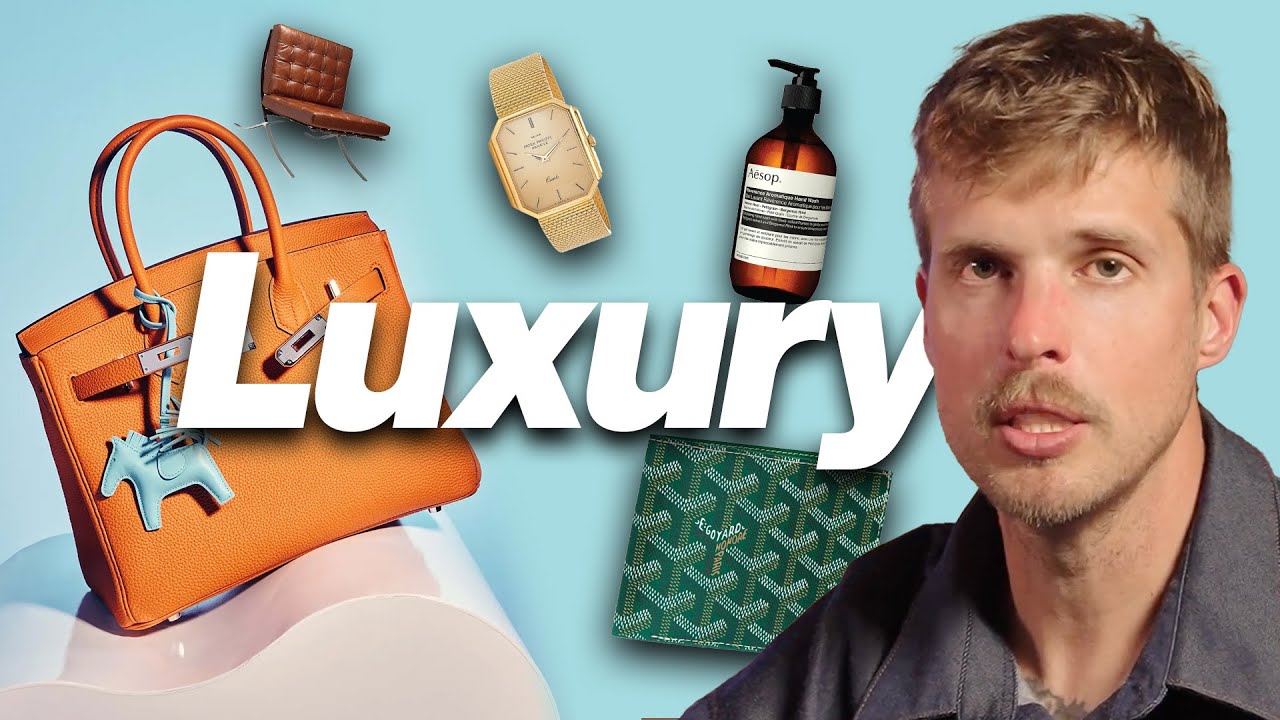
▶ Watch: “The 7 Pillars of Building a Luxury Brand” — a strategic breakdown of the principles behind brand consistency, quality perception, and craftsmanship positioning that top luxury brands use. Essential context for private label furniture brand owners building at the high end.
The most common reason private label luxury furniture brands lose clients after the first order is not pricing. It is quality inconsistency — the second delivery that doesn’t match the approved sample, the fabric tension that has slipped on 8 of 60 chairs, the lacquer sheen that reads differently under the installation lighting than it did in the factory photographs.
Quality in luxury private label furniture is not an event. It is a system built across four stages of every production run.
The four-stage QC protocol:
Stage 1 — Pre-production materials inspection: Before a single piece of timber is cut, verify that the materials arriving at the factory match your signed specification. Foam density is testable with a compression scale in the factory. Fabric colorway is checked against the approved swatch under D65 standardized lighting. Timber species and moisture content are confirmed with a moisture meter and grain inspection. Materials substituted without notification — a documented and recurring problem in overseas furniture production — are caught here, not after 200 units have been assembled.
Stage 2 — In-process frame inspection: At the frame assembly stage, inspect joinery tightness (mortise-and-tenon joints should require deliberate force to detect any movement when the frame is complete — a frame that rocks at this stage will not improve), dimensional accuracy against the approved drawing (specify ±3mm tolerance in your purchase contract), and structural rigidity under manual load. A completed frame that flexes under body weight at the assembly stage is a warranty claim in 18 months.
Stage 3 — Pre-finishing upholstery check: Inspect fabric tension and alignment across all panels, seam consistency (particularly at the most complex construction points — corners, base returns, and piping channels), cushion fitting within the frame, and the quality of any tufting, decorative stitching, or button placement. Corrections made at this stage cost a fraction of what they cost after finishing and packaging.
Stage 4 — Pre-shipment inspection: Commission an independent pre-shipment inspection through SGS or Bureau Veritas at 80–100% production completion. Use the AQL 2.5 protocol (Acceptable Quality Limit — a statistical sampling standard that defines how many pieces in a batch must be inspected to validate the full batch quality) for major and minor defects. Apply zero tolerance for critical defects. The cost — $300–$600 per inspector day — is the most reliable single investment in a new manufacturing relationship.
QC audit checklist for manufacturing partners:
When evaluating a new manufacturer or conducting an annual partner review, inspect the following systematically:
| Audit Area | What to Look For |
|---|---|
| Raw material storage | Timber stored flat, off the ground, moisture-controlled; foam stored in sealed wrapping; fabric on rolls in dust-free storage |
| Production floor organization | Work in progress clearly labeled by order; no mixed-specification pieces on the same work station |
| Joinery QC station | Evidence of a dedicated structural inspection point between frame assembly and upholstery |
| Finishing environment | Enclosed spray booths with ventilation measurement; temperature and humidity logs for curing chambers |
| Finished goods staging | Pieces wrapped individually before staging; no stacking without protective separation |
| QC documentation | Written inspection logs by piece, not batch; corrective action records for previous orders |
How craftsmanship impacts client retention:
The operational math is clear. A private label brand whose delivered pieces consistently match the approved sample retains designers across projects. A brand whose first delivery is perfect and second delivery introduces unexplained variations loses those designers — and loses them permanently, because a designer who has had to apologize to a client about furniture quality does not give the supplier a third opportunity.
Quality is not a differentiator at the luxury level. It is the prerequisite. Differentiation is what you build on top of it.
8. Packaging, Delivery, and Unboxing Experience: Elevating the Perception of Luxury
A $4,000 upholstered armchair delivered in a compressed cardboard carton with a printed generic label is not a luxury delivery. It is a contradiction — one that a villa owner or hotel developer notices before they have touched the piece. The packaging and delivery experience is not a logistics afterthought. It is the first physical expression of your brand that the client experiences.
What luxury furniture packaging actually requires:
Premium export packaging for high-value furniture operates in three protective layers that serve two simultaneous purposes — protecting the piece in transit and communicating brand investment at the point of delivery.
The inner layer is direct material protection: PE foam or wool felt wrapping against all finished surfaces (never standard bubble wrap on lacquered wood — it leaves marks), corner protection blocks at every structural vulnerability, and velcro or clip-together wrapping so the installer can remove packaging cleanly without blades or scissors near finished surfaces.
The middle layer is structural containment: rigid cardboard or thin plywood panels reinforcing the piece’s perimeter, with custom-cut foam inserts for irregular forms. For ocean freight, this layer should be contained within a plywood crate for pieces above $1,500 in retail value.
The outer layer is brand presentation: your branded packaging tape, your brand’s printed carton design with the piece name and project reference clearly printed, a QR code linking to care and warranty documentation, and — for direct-to-client deliveries — a handwritten card or branded insert acknowledging the project.
The unboxing moment as a brand asset:
Research on luxury brand unboxing consistently confirms that packaging quality directly affects perceived product value and brand loyalty before the product is even fully visible. When a villa owner unwraps a piece from your collection and the experience is considered, careful, and branded — the anticipation of quality is confirmed before the visual assessment begins. When the delivery crew carries a generic brown box into their home, the anticipation of value is already slightly deflated.
For hotel projects specifically, the packaging must serve a secondary function beyond client impression — it must protect the piece through the staging and installation period, which can extend 4–6 weeks from initial delivery to final installation in a new-build project. Pieces that cannot remain in their packaging on-site without damage are a site management problem for the FF&E coordinator, a problem that they will attribute to the furniture supplier.
White-glove delivery as a brand standard:
White-glove delivery — a specialized final-delivery service that includes room placement, unpacking, installation, and packaging removal — is the delivery standard expected by villa owners and hotel operators at the price points associated with private label luxury furniture.
In operational terms, this means: the delivery crew enters in clean footwear or shoe covers, places floor and surface protection before moving anything, assembles and positions each piece to the designer’s or developer’s placement plan, removes all packaging and debris from the site, and provides a delivery inspection report signed by the client or their representative. For hotel projects, it means coordinating delivery windows with the site contractor, staging pieces by floor and room number for sequential installation, and providing a punch-list process for any items that require adjustment.
This service level is not a premium add-on. It is the expectation. Private label brands that treat it as such convert deliveries into brand demonstrations.
9. Go-to-Market Strategies: Positioning Your Brand in High-End Channels
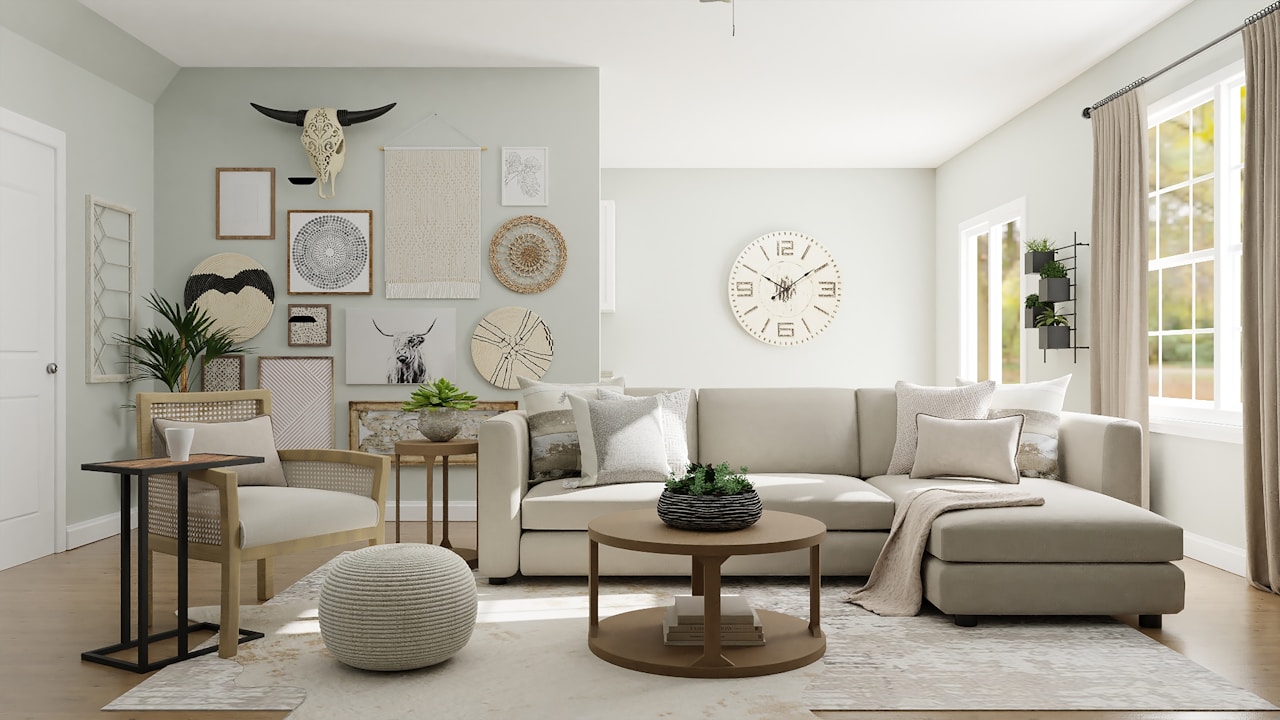
The most expensive furniture brand in the world cannot generate revenue from a warehouse. The gap between a beautifully produced collection and a revenue-generating business is go-to-market strategy — specifically, how you get the right people to specify your brand into the right projects.
Channel strategy by client type:
For interior designers and architects — the trade program model:
A formal trade program — offering registered design professionals a trade discount of 30–50% below suggested retail in exchange for professional credentials — is the most efficient acquisition channel for design-professional clients. Designers who specify your brand regularly are not just buyers. They are specification advocates who recommend your brand into every applicable project they handle, without additional sales effort on your part.
The trade program must include more than a discount to be compelling. Designers choose specification partners based on operational ease: samples available within five working days, CAD drawings delivered on request within 72 hours, COM fabric acceptance without added lead time, and project-specific customization without a premium attitude. Procurist’s 2026 trade program guide documents that the primary reason designers leave a trade partner is not price — it is friction in the specification and ordering process.
For hotel developers and operators — the project proposal approach:
Hotel developers do not discover furniture brands through retail channels. They are introduced through architects and designers, through hospitality design publications, through trade events, and through peer recommendations in the developer community.
The correct approach for entering this channel is arriving at the conversation already specification-ready: physical samples of your key pieces, full material and certification documentation, a project reference from a comparable-scale installation, production lead time documentation, and a written warranty and defect resolution commitment. The hotel procurement team’s real question is not “does this furniture look good?” It is “if I specify this for a 200-room property and something goes wrong, what happens?” Answer that question in your first meeting.
For villa owners and developers — the showroom and referral network:
Direct access to villa owners typically comes through the interior designers and architects they have commissioned to manage their project — which means your design professional relationship strategy is also your residential client acquisition strategy. Physical showrooms, when the brand has reached sufficient recognition to justify the investment, serve the villa owner and high-end residential developer segment by providing the tactile experience that specification at this scale requires.
The sequence for brand-building: begin with a digital showroom (a professionally produced online catalog with detailed photography, dimension specifications, and material callouts) and access to partner showrooms through designer trade relationships. Invest in a physical flagship showroom only once the brand has established sufficient designer specification volume to generate showroom traffic without paid advertising.
Trade show presence that generates specification, not just awareness:
The events worth your investment budget are those attended by the professionals who specify furniture into projects — not consumer audiences:
- Salone del Mobile, Milan (April): The global reference point for high-end furniture design. Being present in any format — exhibiting, attending as a brand representative, or ensuring your brand appears in designer conversations during the event week — is the highest-value brand positioning investment in the industry.
- High Point Market, North Carolina (April and October): The primary sourcing event for North American interior designers and hospitality buyers. Where US distribution relationships are built.
- Decorex, London (September): UK and European luxury interior design focus with strong hospitality design attendance.
- HD Expo + Conference, Las Vegas (May): Specifically focused on hospitality design — the most direct channel for hotel FF&E specification exposure.
For online B2B presence, Architonic and Archiexpo are the platforms where design professionals actively search for specification-ready furniture brands. 1stDibs serves the ultra-luxury and collectible end of the residential market. These platforms generate leads from buyers already in procurement mode — the highest-quality traffic available for a private label brand without established brand recognition.
Pricing and positioning tactics that justify premium:
In luxury markets, your price communicates your positioning as much as your photography does. A chair priced below the client’s expectation for the quality visible triggers doubt, not delight. Set your suggested retail price at the level that is credible for the specification — and hold it. A private label brand that discounts on request is communicating that its list price is aspirational, not actual. Luxury brands do not go on sale.
The pricing structure that balances margin protection and large-project accessibility combines a firm list price for single-property or residential orders, project pricing (10–15% below list) for multi-room hotel packages above a confirmed unit threshold, and a strategic partner rate for repeat-client developers placing multiple project orders in a calendar year. This structure allows you to win large contracts on volume economics while protecting the positioning that justifies your retail price.
10. Building Long-Term Partnerships: From One-Off Sales to Recurring Revenue
The economics of acquiring a new high-end client are significant. A new hotel developer relationship may take 9–18 months to convert from first contact to confirmed purchase order. An interior designer who specifies your brand for the first time requires sample lending, technical documentation, and project management support that represents a real cost before a single piece ships.
The business model that makes this client acquisition cost sustainable is one where first orders become second orders, and second orders become program relationships that generate recurring revenue without recurring acquisition cost.
The loyalty structures that convert one-off buyers into committed partners:
Exclusive collection previews: Before launching new designs to the broader market, invite your top 10–15 designer and developer clients to a preview — physical or digital — where they see the new collection first and have the option to place founding-client orders at a guaranteed price before the collection’s general availability. This is not a discount mechanism. It is a status mechanism — and status is what drives loyalty in the luxury professional community.
Co-branded project collaborations: When a hotel developer or interior design firm has a strong enough brand identity of their own, a co-branded collaboration — where a collection is developed specifically for their project and credited jointly — serves both parties. The developer gets design exclusivity they can market to their clients. You get a project reference, press exposure, and a product line that demonstrates your custom development capability to every future client who sees the installation.
Specification programs for architecture firms: Architecture firms that design multiple hotel or residential projects per year are the most valuable long-term specification partners a private label luxury furniture brand can cultivate. A formal specification program — providing BIM objects, CAD drawings, material sample kits, and a dedicated account contact — removes the friction from the architect’s workflow and makes your brand the default specification option for applicable project categories.
After-sales accountability as a retention mechanism:
The difference between a client who returns for a second order and one who does not is almost always how the brand handled the first time something went wrong. A lacquer imperfection on a delivered piece handled within 24 hours with a clear resolution timeline and a replacement piece on site within two weeks builds more loyalty than a perfect first delivery with a generic post-sale experience.
Build your after-sales infrastructure — warranty documentation, defect classification protocol, replacement logistics process — with the same design investment you put into the collection itself. Clients who experience a problem resolved with professionalism and speed consistently report higher satisfaction than clients who experienced no problem at all.
The compounding referral effect:
Interior designers, hotel developers, and architecture firms are deeply networked communities. A designer who specifies your brand into a successful hotel project tells three other designers. A developer who has a positive experience tells their hospitality investor network. A design firm that features your collection in a published project generates specification inquiries from other firms who see the publication.
This network effect does not operate at the level of individual transactions. It operates at the level of brand reputation — which is built or damaged slowly and is very difficult to reverse once established in either direction. The operational investment in quality, delivery reliability, and client service is not overhead. It is your primary marketing budget, compounding over every project and every professional relationship your brand earns.
Key Data Summary: Private Label Luxury Furniture at a Glance
| Metric | Data Point |
|---|---|
| Global luxury furniture market (2026) | $38.2 billion |
| Projected market size (2035) | $60.79 billion |
| Private label gross margin at scale (typical) | 60–75% vs. 35–50% for branded resellers |
| Minimum order quantity — luxury tier (China) | 1–5 units (artisanal); 10–50 units (production) |
| Custom production lead time (Asia, total) | 16–24 weeks order to delivery |
| Pre-shipment inspection cost | $300–$600 per inspector day |
| Minimum foam density (commercial contract seating) | 40 kg/m³ seat; 24–32 kg/m³ back |
| Martindale rating (hotel public area fabric) | 100,000+ double rubs |
| Designer trade discount (standard) | 30–50% below suggested retail |
| LEED v5 sustainable FF&E credit categories | Materials, Indoor Air Quality, Social Equity |
| Design patent registration lead time (EU) | 4–6 months (Community Registered Design) |
Glossary of Key Terms
Private Label / White Label: Furniture produced by a manufacturer to your specification and branding. Your name appears on the product. The manufacturer is not disclosed to end clients.
OEM (Original Equipment Manufacturer): Produces to your complete design specification. You retain full IP ownership.
ODM (Original Design Manufacturer): Develops the design which you then brand and market. Faster and cheaper than OEM; exclusivity is limited without formal territorial or production agreements.
MOQ (Minimum Order Quantity): The smallest order a manufacturer accepts per design or per order.
FOB (Free on Board): Price at the factory’s loading dock at the origin port. The buyer pays all costs from that point forward.
Landed Cost: Total cost of a piece from factory to client address — FOB plus freight, insurance, duty, customs clearance, and last-mile delivery. Always price from landed cost, not FOB.
HNWI: High Net Worth Individual. Investable assets above $1 million USD. The primary residential buyer persona for private label luxury furniture.
Martindale Test: European abrasion durability standard for fabric. Higher cycle count = longer service life. Minimum 30,000 for residential; 100,000+ for commercial hospitality.
ILD (Indentation Load Deflection): Foam firmness measurement — force required to compress foam 25% of its height. Higher number = firmer foam. Commercial seating: 35–45 ILD; luxury residential: 25–35 ILD.
COM (Customer’s Own Material): Fabric or leather supplied by the buyer for the manufacturer to upholster — allowing designers to specify exclusive textiles unavailable in the manufacturer’s standard range.
AQL 2.5 (Acceptable Quality Limit): Statistical sampling protocol for pre-shipment inspection. Defines the maximum allowable defect rate before the batch triggers remediation.
GREENGUARD Gold: UL certification for low VOC (volatile organic compound) chemical emissions in occupied spaces. Required for LEED and WELL certified project specifications.
FSC (Forest Stewardship Council): Timber sourcing certification verifying that wood comes from responsibly managed forests. Verify at info.fsc.org.
CARB Phase 2 / TSCA Title VI: US mandatory standard for formaldehyde emissions from composite wood panels. Required for all furniture entering the US market containing engineered wood.
NNN Agreement: Non-Disclosure, Non-Use, Non-Circumvention agreement — the legally effective IP protection tool for manufacturing relationships in China, governed by Chinese law.
Prestige Pricing: Setting prices at or above the client’s expected ceiling to signal exclusivity and quality. Reducing price on a luxury item frequently reduces its perceived desirability.
Frequently Asked Questions (FAQs)
What is private labeling in the context of modern luxury furniture?
Private labeling in luxury furniture means manufacturing high-end pieces to your exact design specification and branding, with your company name on every label, package, and client proposal — and the manufacturer’s identity not disclosed to your end clients. This is fundamentally different from distributing another brand’s catalog: you own the design IP, you control the pricing, and you accumulate the brand equity in your own business. The manufacturer is a production partner, not a brand you are lending your name to.
How can I differentiate my private label furniture in a saturated market?
The most durable differentiation comes from three combined sources: a documented design language coherent enough that your pieces are recognizable as belonging to your brand without a logo visible; materials specified with enough precision that the tactile quality communicates investment before any verbal description is given; and a service infrastructure — samples, technical documentation, installation support — that makes choosing your brand operationally easier than choosing a competitor. Brands that compete on product alone can be disrupted by a competitor with a marginally better product. Brands that compete on product plus service plus narrative build relationships that withstand competitive pressure.
What types of customization are most valued by high-end clients?
For hotel developers and FF&E buyers: custom dimensions to fit specific room configurations, custom finishes matched to the property’s design palette, and COM fabric acceptance are the most operationally significant customizations. For interior designers: the ability to specify proprietary fabric from their own material library (COM), custom hardware finishes not available in the manufacturer’s standard range, and bespoke proportions for unusual spatial contexts. For villa owners: anything that means the piece exists nowhere else — a custom colorway, a unique material combination, an engraved detail referencing the property.
How do I ensure consistent quality across large orders for hotel or villa projects?
Implement the four-stage QC protocol described in Section 7 — pre-production materials inspection, in-process frame inspection, pre-finishing upholstery check, and a third-party pre-shipment inspection. For orders above 50 units, commission the pre-shipment inspection at 100% coverage rather than the standard statistical sample — the additional cost per piece is marginal, and the baseline quality data from a first full-coverage inspection is invaluable for calibrating subsequent orders. Specify every material parameter in writing before production begins; a specification document that leaves room for interpretation will be interpreted in the manufacturer’s favor, not yours.
What materials should I prioritize for a luxury perception?
The material combination that consistently signals luxury across both residential and hospitality specifications includes solid natural hardwood in the frame construction (walnut and oak carry the strongest recognition signals in Western markets; teak for coastal and tropical environments), full-grain or top-grain leather for upholstered seating (the differentiation from corrected-grain leather is immediately detectable by touch), architectural metal in aged brass or blackened steel for hardware and accent elements, and certified natural fiber textiles — wool, linen, or performance-grade solution-dyed fabrics — where upholstered surfaces are visible and touched. Sintered stone or bookmatched natural stone for tabletop applications communicates material investment visually and structurally.
Can private label furniture be both customizable and scalable?
Yes — through a modular design framework where the core structural form remains consistent but a defined parameter set (dimensions, finish, fabric, hardware, construction details) can be varied by client specification without redesigning from scratch. This approach delivers genuine customization — clients receive pieces adapted to their brief — while maintaining the production predictability that scalable manufacturing requires. The key design discipline is defining your customization envelope at the product development stage: what can change, what cannot, and what the cost and lead-time implications of each variable are. This becomes part of your specification documentation for designers and developers.
How important is branding for private label success in luxury interiors?
It is the determining factor in whether your collection generates a business or just revenue. A well-specified, beautifully produced collection without strong branding competes on price. The same collection with a coherent brand narrative, documented provenance, and a service infrastructure that reinforces the narrative competes on identity — and identity competition is where luxury margin lives. Designers and developers who specify your brand for the first time do so for the product. Designers and developers who specify your brand for the fifth time do so because the brand has become part of how they present their own design judgment to their clients. That transition from product to brand is where the recurring revenue model becomes sustainable.
What role do interior designers play in the success of a private label brand?
Interior designers are your most efficient sales channel and your most critical brand validators simultaneously. When a designer specifies your brand into a project, their client’s trust transfers — partly — to your brand. When a designer features your collection in a published project, every other designer who reads that publication sees a peer endorsement. The trade program, technical documentation, and specification support you invest in for designer relationships is not a cost of sale. It is the infrastructure that converts your best designers from occasional buyers into specification advocates who recommend your brand in every relevant conversation they have, without additional sales effort on your part.
How can I position my brand to win FF&E contracts for luxury hotels?
Arrive at the conversation already documented. Hotel procurement teams evaluating a new private label brand need to answer one question before they can specify at scale: “What happens if something goes wrong with 200 rooms of this furniture?” Your documentation — certification portfolio (GREENGUARD Gold, FSC, CARB compliance), written warranty terms, defect classification and resolution protocol, production lead-time guarantee, and project reference from a comparable installation — needs to answer that question before they ask it. Brands that can hand over a complete specification package in the first meeting, rather than promising to follow up with documentation, materially reduce the perceived procurement risk that keeps new brands off approved vendor lists.
What are the biggest risks in private labeling luxury furniture?
The five most common failure points are: under-specifying materials (leading to quality that doesn’t match the positioning), under-investing in QC infrastructure (leading to inconsistency that destroys designer relationships after the first order), over-investing in collection breadth before depth (40 mediocre pieces in place of 8 excellent ones), pricing from FOB rather than landed cost (discovering mid-year that actual margins are 15–25 points below projection), and under-documenting IP protection (losing control of designs to a manufacturer who produces them for other clients). Each of these is preventable through the operational discipline described in this guide — but all of them require deliberate attention, not just good intentions.
How do sustainability and ethical sourcing impact luxury buyer decisions?
Increasingly, they are specification prerequisites rather than differentiators, particularly for hotel groups with ESG reporting obligations and developers building LEED or WELL certified properties. FSC timber certification, GREENGUARD Gold compliance, and OEKO-TEX fabric certification allow your pieces to be specified into these project categories — pieces without documentation are simply disqualified before the design comparison begins. For HNWI residential clients, the sustainability story is a provenance story: knowing that the walnut in their dining table came from an FSC-certified managed forest, traceable to a specific origin, is the kind of detail that makes a piece feel considered rather than merely expensive.
Should I invest in my own showroom or rely on design partners?
The sequencing matters. Begin with a professionally produced digital showroom — high-quality photography, detailed specification sheets, 3D models available for download, and clear material sample ordering. Simultaneously, build access to partner showrooms through designer trade relationships, where your pieces are displayed within a curated multi-brand context that your target designers are already visiting. Invest in a physical flagship showroom once the brand has established sufficient designer specification volume to generate showroom traffic organically — typically after 18–30 months of active trade program operation. A flagship showroom opened too early becomes an expensive overhead with insufficient foot traffic; opened at the right stage, it becomes a brand demonstration environment that accelerates the client relationships already generating revenue.
How can I protect my designs from being copied?
Layered protection is more effective than any single measure. Register your designs formally through the EU Community Registered Design, UK Registered Design, or US Design Patent before sharing specifications with any manufacturer — registration creates the legal enforcement position that NDA agreements alone do not provide in international manufacturing contexts. Execute a manufacturer NDA that specifically prohibits production of your designs for any third party, names the exact designs covered, and specifies the jurisdiction for dispute resolution. Limit technical drawing release to production-stage necessity — share only what is needed for the current production step. And build brand recognition actively: a design that is associated with a known brand name is commercially less attractive to copy than an anonymous specification from an unknown buyer.
How do I build trust with developers and hotel operators as a private label brand?
Trust in a business relationship is built through consistent delivery of what was promised — not through extraordinary performance once, but through reliable performance repeatedly. Start with a project that allows you to demonstrate your quality, timeline, and service standards at a smaller scale than a full hotel rollout — a signature suite, a F&B space, or a limited phase of a villa project. Document the outcome with professional photography and a client testimonial. Use that reference to enter conversations with the next developer client at a credibility level that cold outreach cannot achieve. Provide detailed project portfolios, written warranties with specific coverage terms, and an account management structure where the developer always has a named person to contact for any question about their order. These are the operational behaviors that convert a developer’s first positive experience into a long-term procurement relationship.
For further resources on building a private label luxury furniture brand, visit Jade Ant Furniture’s custom furniture programs and their complete private-label development guide. For certification verification, use FSC’s certificate database, the UL SPOT GREENGUARD database, and SGS’s factory audit services. For trade show planning, visit the official Salone del Mobile website and High Point Market. For IP protection guidance, consult Harness IP’s furniture design protection guide.