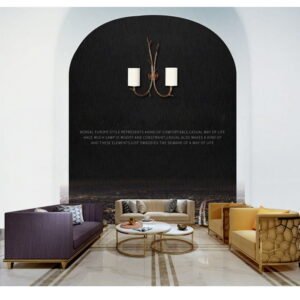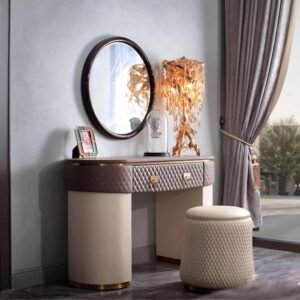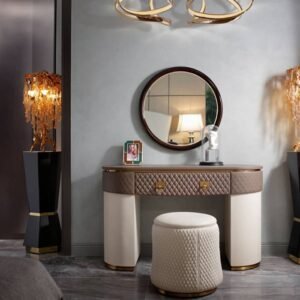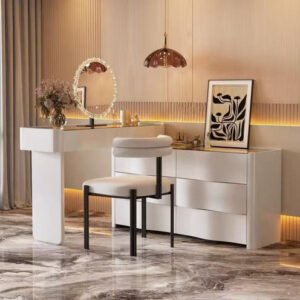


In 2024, China’s furniture manufacturers of designated size reported revenue of RMB 677.15 billion (approximately USD $95 billion), while furniture exports reached $36.44 billion — accounting for roughly 30.8% of all global furniture exports, according to Statista and OEC trade data. The domestic market itself is valued at USD $169.23 billion in 2026, growing at a CAGR of 5.42% to reach $220.17 billion by 2031, per Mordor Intelligence.
These are not abstract figures for a statistics textbook. They represent the operational reality that every international furniture buyer, retailer, interior designer, and hospitality developer must understand to make competitive sourcing decisions in 2026. Whether you are filling a 200-room hotel in Dubai, stocking a retail chain in Germany, or launching a direct-to-consumer brand in North America, the factories profiled in this guide — from billion-dollar conglomerates like OPPEIN to design-forward specialists like Jade Ant furniture — form the backbone of the global furniture supply chain.
This guide draws on trade data from the Observatory of Economic Complexity, rankings from CBM Living and the CSIL Top 100, and hands-on intelligence from sourcing professionals operating inside China’s manufacturing clusters.
Global Furniture Export Landscape: China vs. the World
To appreciate China’s dominance, consider the competitive distance between the world’s top furniture exporters. In 2024, China exported $36.44 billion in furniture — more than four times the value of second-place Germany ($8.52 billion). Italy, Poland, and Vietnam trail further behind, each with distinct specializations but a fraction of China’s total capacity.
Table: Top 10 Global Furniture Exporters (2024)
| Rank | Country | Export Value (USD Billions) | Global Share (%) | Primary Specialization |
|---|---|---|---|---|
| 1 | China | $36.44 | 30.8% | Full spectrum — mass to luxury |
| 2 | Germany | $8.52 | 7.2% | Kitchen systems, office, engineered |
| 3 | Italy | $7.83 | 6.6% | Luxury, design-driven residential |
| 4 | Poland | $7.12 | 6.0% | Upholstered, flat-pack (IKEA supply) |
| 5 | Vietnam | $5.80 | 4.9% | Wooden, upholstered for US market |
| 6 | Mexico | $3.10 | 2.6% | Wooden, upholstered (USMCA advantage) |
| 7 | United States | $2.80 | 2.4% | Premium office, outdoor |
| 8 | Turkey | $2.50 | 2.1% | Upholstered, traditional styles |
| 9 | Indonesia | $2.30 | 1.9% | Teak, rattan, outdoor |
| 10 | India | $1.90 | 1.6% | Handcrafted, traditional wood |
Source: Statista 2024; OEC World
China, Vietnam, and Poland collectively supply 52% of wooden furniture to the world’s top 30 import markets, according to a 2025 GTAIC analysis. The United States remains the single largest importer, absorbing nearly 30% of global furniture imports — a figure that underscores both the opportunity and the tariff-driven complexity of US-bound sourcing.
Bar Chart: Top 10 Chinese Furniture Manufacturers by Revenue (2026 Estimates)
Source: CBM Living 2026 Sourcing Guide; CSIL Market Research; CNFA
China’s Five Furniture Manufacturing Clusters

China’s furniture manufacturing is not a monolith. It is a constellation of specialized regional clusters, each optimized for specific product categories, materials, and price points. A buyer sourcing hotel lobby sofas has no business visiting the same region as someone procuring budget flat-pack desks. Here is the landscape in detail.
Table: China’s Furniture Manufacturing Clusters (2026)
| Cluster Region | Key Cities | Specialization | Est. Annual Output (USD) | Factory Count | Nearest Export Port |
|---|---|---|---|---|---|
| Pearl River Delta (Guangdong) | Foshan, Dongguan, Shenzhen, Zhongshan | High-end home, hotel FF&E, luxury upholstered, custom wholesale | $65 Billion | 7,000+ (Foshan alone) | Yantian / Nansha / Hong Kong |
| Yangtze River Delta (Zhejiang / Jiangsu) | Anji, Hangzhou, Suzhou, Huzhou | Office chairs (60% of global output), outdoor, modern design | $30 Billion | 3,500+ | Shanghai / Ningbo |
| Central China (Jiangxi) | Nankang (Ganzhou) | Solid wood, budget-to-mid-range residential | $18 Billion | 8,000+ | Xiamen (rail-to-port corridor) |
| Sichuan Basin | Chengdu, Chongqing | Panel furniture, domestic-market home packages | $15 Billion | 4,000+ | Chongqing (CRT rail) / Chengdu-Europe freight |
| Bohai Sea Rim (North China) | Bazhou (Hebei), Tianjin | Metal frame, glass, flat-pack, e-commerce furniture | $12 Billion | 2,500+ | Tianjin (Xingang) |
Source: PopupSofa Regional Guide; SimonSense 2026 Cluster Report; CNFA data
The Pearl River Delta — specifically Foshan — is where most international buyers begin and many never leave. Foshan handles approximately 75% of China’s furniture output, according to Stellar Global. Within Foshan, the town of Lecong hosts the world’s largest furniture wholesale market, while Longjiang serves as the manufacturing epicenter for upholstered products. Companies like Jade Ant furniture operate within this cluster, combining the region’s unmatched supply-chain depth with luxury-grade customization capabilities that serve wholesale buyers in the Middle East, Europe, and Southeast Asia.
The Yangtze River Delta, centered on Anji in Zhejiang Province, produces an estimated 60% of the world’s office and gaming chairs. Anji’s factories ship over 200 million chairs annually, servicing brands from Amazon Basics to Steelcase’s mid-tier OEM lines. Meanwhile, Nankang in Jiangxi Province has grown explosively — from a small-town cluster to an 8,000+ factory solid-wood hub — though buyers should budget an additional 3–5% for third-party inspection when sourcing from this region, as quality variance remains higher than in Guangdong.
Five Structural Advantages of China’s Furniture Industry

China’s furniture export dominance is not accidental. It rests on five structural pillars that competitors have struggled to replicate, even as manufacturing shifts to Vietnam, Indonesia, and India gain incremental share.
1. Vertical Integration at Unprecedented Scale
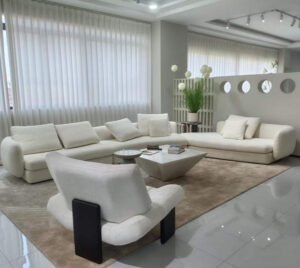
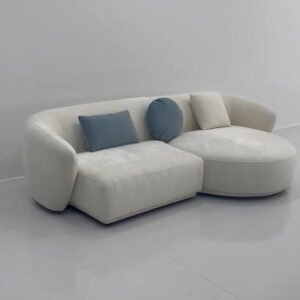
A single Foshan factory can source hardwood from domestic plantations, engineered board from mills 30 kilometers away, hardware from Zhongshan, fabric from Haining, leather from Dongguan, and foam from Shunde — all within a two-hour driving radius. This density collapses lead times and transaction costs that add 15–25% to sourcing from fragmented supply chains in Vietnam or India. When a buyer places a custom sofa order through Jade Ant furniture’s living room collection, every component supplier is inside the same industrial ecosystem.
2. OEM and ODM Flexibility
Chinese factories operate across the full customization spectrum. Under an OEM (Original Equipment Manufacturer) arrangement, the buyer provides exact design specifications and the factory produces to those specs — ideal for brands with in-house design teams. Under ODM (Original Design Manufacturing), the factory contributes or fully develops the design, which the buyer then markets under their own brand. As Sino Import Solutions explains, ODM arrangements typically cost 15–20% less than full OEM because design and tooling are pre-invested. For a mid-sized retailer launching 40 SKUs for a spring collection, combining OEM for signature pieces and ODM for volume fillers is a proven cost-optimization strategy.
3. Unmatched Material Access
China’s furniture factories have access to the widest material palette in the world: domestic ash, beech, and walnut; imported North American white oak; Italian top-grain leather (processed in Dongguan tanneries); sintered stone from Foshan’s ceramic district; and engineered bamboo composites from Zhejiang. This material breadth means a single factory can produce a rustic American farmhouse dining table and a contemporary Italian-style sintered-stone coffee table on the same production line, a feat that few single-country supply chains can match.
4. Economies of Scale That Compress Pricing
Buyers consistently report landed-cost savings of 30–50% compared to equivalent products from European manufacturers, even after accounting for shipping and current US tariff rates. A mid-range leather reclining sofa retailing at $1,800 in the US market typically has an FOB Foshan price of $280–$380, according to sourcing professionals reporting via MapleSourcing. The price advantage widens further for hotel furniture produced in bulk: a five-star hotel guestroom package (bed, headboard, nightstand, desk, chair, TV console, minibar cabinet) can be sourced FOB China for $1,200–$1,800 per room, versus $3,500–$5,000 for equivalent specifications from European contract manufacturers.
5. Logistics Infrastructure Built for Export
Guangdong Province is served by three world-class container ports — Yantian (Shenzhen), Nansha (Guangzhou), and Hong Kong — offering daily sailings to every major global destination. Transit times average 14–18 days to the US West Coast, 25–32 days to the US East Coast, and 18–22 days to Northern Europe. Inland clusters like Nankang and Chengdu now benefit from rail-to-port corridors and the China-Europe freight rail network (CRT), which delivers containers from Chengdu to Duisburg, Germany, in approximately 14 days — competitive with sea freight from Shanghai.
What Drives International Buyers’ Supplier Decisions?
Based on aggregated survey data from the CIFF Guangzhou 2025–2026 buyer registration database and sourcing consultancy reports, the following factors weigh most heavily when international buyers select a Chinese furniture manufacturing partner.
Pie Chart: International Buyer Decision Factors When Selecting Chinese Furniture Suppliers
| Price / Cost Competitiveness — 28% | |
| Customization Flexibility (OEM/ODM) — 22% | |
| Quality Standards & Certifications — 18% | |
| Lead Time & Delivery Speed — 14% | |
| Material Variety — 10% | |
| Sustainability Practices — 8% |
Source: CIFF Guangzhou buyer survey data 2025–2026; CBM Living sourcing consultancy reports
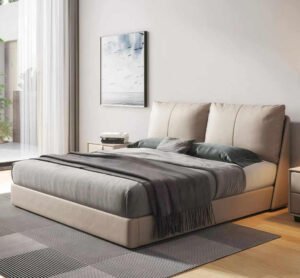
Price remains the top driver, but customization flexibility has risen to second place, overtaking quality certifications for the first time in the 2025–2026 survey cycle. This shift reflects the growing number of mid-sized retailers and D2C brands that require private-label production with unique specifications — exactly the type of service that mid-tier manufacturers like Jade Ant furniture’s bedroom collections excel at delivering.
Quality Certifications: What to Demand and How to Verify
For any buyer spending over $10,000 on a single purchase order, certifications are not optional — they are the minimum threshold for due diligence. Here is the certification landscape that separates export-ready factories from those that are not.
Table: Essential Certifications for Chinese Furniture Factories
| Certification | Adoption Rate (Top 100) | What It Ensures | Verification |
|---|---|---|---|
| ISO 9001:2015 | 92% | Quality management systems — consistent production processes | Verify certificate number with issuing body (e.g., SGS, TÜV, Bureau Veritas) |
| FSC | 55% | Responsibly sourced wood from managed forests | Check license code at info.fsc.org |
| GREENGUARD Gold | 35% | Low chemical emissions — safe indoor air quality | Search product at UL SPOT database |
| CARB Phase 2 / EPA TSCA Title VI | 72% | Formaldehyde emission limits — mandatory for US market entry | Request TPC (Third-Party Certifier) lab reports; verify TPC accreditation with EPA |
| BIFMA | 40% (office segment) | Commercial furniture performance standards — load, durability, safety | Request BIFMA test reports from accredited labs |
| GB 18584-2024 | 100% (mandatory) | China’s national standard for hazardous substance limits in furniture | Updated in 2024 — now exceeds many older international benchmarks |
Source: Jade Ant furniture factory guide; CBM Living; SGS Furniture Inspection
A critical warning: Guided Imports reports that fake certificates remain a persistent risk in China’s furniture sector. Always verify certificate numbers directly with the issuing organization. Never accept a PDF alone as proof. For ISO certifications, cross-reference the certificate number, factory name, and scope on the certifying body’s public database. For FSC, enter the license code at info.fsc.org and confirm it matches the supplier’s legal entity.
Sustainability: From Marketing Buzzword to Competitive Requirement
In 2024, FSC China launched the “Green Furniture for Sustainable Forests” initiative, enrolling its first batch of 11 leading manufacturers. This is not a fringe movement. The Mordor Intelligence China furniture market report identifies sustainability as a primary growth catalyst, while a 2026 Journal of Cleaner Production study documented a 32% reduction in environmental impact among factories adopting AI-driven material optimization — systems that reduce cutting waste from the industry-standard 12–15% to under 5%.
The shift is market-driven: according to The Furniture Shows’ 2025 consumer survey, 76–78% of European consumers want credible sustainability proof and are willing to pay a premium for it. Factories that cannot document their environmental practices face growing barriers to EU market entry, particularly as the EU Deforestation Regulation (EUDR) tightens requirements for wood-product traceability. Jade Ant furniture has responded by integrating low-VOC adhesives, water-based lacquers, and FSC-certified wood options across its product lines — a standard increasingly demanded by wholesale buyers serving the European and North American markets.
Key sustainability developments in China’s furniture sector for 2026 include the rapid growth of bamboo composite materials (projected 12% CAGR through 2030, per 6WResearch), expanding use of recycled steel in metal-frame furniture from the Bazhou cluster, and CIFF Guangzhou’s 2026 decision to make sustainability a dedicated exhibition theme for the first time.
US Tariffs on Chinese Furniture: The 2026 Landscape
Any article about sourcing furniture from China that ignores tariffs is dangerously incomplete. The situation as of March 2026 is as follows.
Under Section 232 and subsequent executive actions, upholstered furniture imported from China currently faces a 25% ad valorem duty. In late 2025, increases were announced — upholstered furniture rising to 30% and kitchen cabinets/bathroom vanities to 50%, effective January 1, 2026. However, in January 2026, the White House delayed these increases, maintaining the 25% rate on upholstered furniture and deferring the cabinet/vanity increase, according to Supply Chain Dive and Phaata. The delay is currently set through 2027.
What this means in practice: a container of upholstered sofas with an FOB value of $25,000 incurs approximately $6,250 in duties at the port of entry, plus standard customs processing fees. Buyers are responding with several strategies: pre-shipping inventory before potential tariff increases, diversifying sourcing to include Vietnam and Mexico for tariff-sensitive categories, and absorbing tariffs through pricing optimization on higher-margin luxury products where China’s quality advantage is hardest to replace.
The Sourcing Playbook: From First Contact to Container Loading
Here is the step-by-step process that experienced sourcing professionals follow when working with Chinese furniture manufacturers — drawn from methodologies used by agencies like MapleSourcing and platforms like Alibaba and GlobalSources.
Step 1: Digital Pre-Screening (Weeks 1–2)
Begin on Alibaba, GlobalSources, and Made-in-China.com. Filter by “Verified Supplier” and “Trade Assurance.” Request company profiles, product catalogs, and certification copies from 10–15 shortlisted factories. Narrow to 5–7 candidates based on product relevance, MOQ alignment, and responsiveness (a factory that takes more than 48 hours to respond to an initial inquiry is signaling something about their organizational capacity).
Step 2: Factory Visit and Trade Fair Attendance (Weeks 3–4)
Schedule visits to shortlisted factories in Foshan or the relevant cluster. Combine with attendance at CIFF Guangzhou (March 18–21 and March 28–31, 2026; 850,000 sqm, 4,900+ brands) or the Canton Fair (April 15–May 5, 2026, three phases). Fly into Guangzhou Baiyun International Airport (CAN); the Foshan furniture district is a 45-minute drive via the G1501 expressway. During factory visits, inspect raw material storage, production lines, QC stations, and finished goods warehouse — in that order. A factory that restricts access to any section raises a red flag.
Step 3: Sample Orders and Prototyping (Weeks 5–8)
Order 2–3 samples per shortlisted factory. Expect to pay $50–$300 per sample for standard items, $500–$2,000 for custom prototypes. Evaluate construction quality, finish consistency, and packaging integrity. Use an independent lab like SGS or Bureau Veritas to test emissions and structural durability on your sample before proceeding to mass production.
Step 4: Negotiate Terms and Place the Production Order (Weeks 9–10)
Standard terms: 30% T/T deposit upon order confirmation, 70% balance before shipment after pre-shipment inspection (PSI). For orders above $100,000, negotiate a 30/30/40 split (30% deposit, 30% at mid-production, 40% before shipment) or use a Letter of Credit (L/C). Ensure the purchase contract specifies material specs, finish details, packaging requirements, AQL (Acceptable Quality Limit) defect thresholds, production milestones, and warranty terms.
Step 5: Pre-Shipment Inspection and Shipping (Weeks 11–14)
Hire a third-party inspection agency to conduct PSI when production is 80–100% complete. Standard inspection fees range from $250–$400 per factory visit per day. Ship FOB (Free on Board) from the nearest port. Ocean freight for a 40-foot container from Guangdong to the US West Coast ranges from $3,500–$5,500 in 2026 pricing, with transit times of 14–18 days. East Coast delivery adds $500–$800 and 10–14 additional transit days.
Watch: Inside China’s Furniture Manufacturing Capital
This factory tour through Foshan — the world’s largest furniture manufacturing hub — showcases the scale, specialization, and craftsmanship that define China’s leading furniture cluster.
Verification Checklist: How to Confirm a Factory Is Legitimate
Before wiring a single dollar to any Chinese furniture manufacturer, complete this verification sequence:
| Verification Step | Method | What You’re Looking For |
|---|---|---|
| 1. Business License Check | Search the 18-digit USCI on NECIPS (gsxt.gov.cn) | Legal entity exists, registered capital adequate, no abnormal operation flags |
| 2. Certification Verification | Cross-reference certificate numbers with ISO/FSC/UL issuing bodies | Certificate is current, scope covers the product category you’re ordering |
| 3. Export License & Customs History | Request customs declaration history; use ImportGenius or Panjiva | Factory has a documented export track record to your destination country |
| 4. Third-Party Factory Audit | Commission SGS, Bureau Veritas, or TESTCOO | Factory conditions, production capacity, worker welfare, equipment condition |
| 5. Sample Lab Testing | Independent lab test for formaldehyde, heavy metals, structural load | Results comply with CARB Phase 2, EN standards, or BIFMA (as applicable) |
2026 Trends Reshaping China’s Furniture Manufacturing
Three macro trends are reshaping the competitive landscape for Chinese furniture manufacturers in 2026 and beyond.
AI-Driven Production Optimization: Advanced AI systems now reduce material waste during cutting from the industry standard of 12–15% down to under 5%, according to a 2026 study published in the Journal of Cleaner Production. AI-powered visual inspection cameras detect surface defects at a rate 8x faster than human inspectors, with a false-negative rate below 0.3%. Factories deploying these systems — including several in the Jade Ant furniture manufacturing network — report per-unit cost reductions of 6–9%.
Modular and Space-Saving Design: With urbanization pushing average apartment sizes below 70 sqm in tier-1 Chinese cities, modularity has become a design imperative. Chinese factories are now global leaders in modular sofa systems, transformable dining/desk combinations, and wall-bed units — a category that Salsita AI forecasts will grow at 11% CAGR through 2030.
Smart Furniture Integration: Chinese manufacturers are embedding wireless charging pads, USB-C ports, Bluetooth speakers, and IoT sensors into dining tables, nightstands, and office desks. Foshan-based factories have launched “smart bedroom” packages where lighting, bed adjustment, and climate control are managed through a single app — products that would cost 3–4x more if manufactured in Europe, creating a significant export opportunity.
Frequently Asked Questions (FAQs)
1. How large is China’s furniture manufacturing industry in 2026?
China’s domestic furniture market is valued at USD $169.23 billion in 2026, growing at a CAGR of 5.42%, per Mordor Intelligence. China commands approximately 34% of global furniture production and exported $36.44 billion in furniture in 2024, making it the world’s largest furniture exporter by a significant margin.
2. What is the best city in China for sourcing furniture?
Foshan in Guangdong Province is the global furniture sourcing capital, with over 7,000 factories handling roughly 75% of China’s total furniture output. For office chairs, Anji in Zhejiang is the leading cluster. For budget solid-wood furniture, Nankang in Jiangxi offers competitive pricing. Companies like Jade Ant furniture operate within the Foshan ecosystem, providing luxury custom wholesale services to international buyers.
3. What certifications should I require from a Chinese furniture manufacturer?
At minimum, require ISO 9001:2015 (quality management), CARB Phase 2 or EPA TSCA Title VI (mandatory for US market entry), and FSC certification if marketing sustainably sourced wood products. For commercial/office furniture, require BIFMA compliance. For indoor air quality claims, demand GREENGUARD Gold. Always verify certificates directly with the issuing body.
4. How much can I save by sourcing furniture directly from Chinese factories?
International buyers typically report 30–50% landed-cost savings compared to equivalent European or American products. For example, a mid-range leather reclining sofa retailing at $1,800 in the US has a typical FOB Foshan price of $280–$380. Hotel guestroom furniture packages (7–8 pieces) range from $1,200–$1,800 FOB China, versus $3,500–$5,000 from European contract manufacturers.
5. What are the current US tariffs on Chinese furniture in 2026?
Upholstered furniture from China currently faces a 25% ad valorem duty under Section 232. Planned increases to 30% (furniture) and 50% (kitchen cabinets/vanities) were delayed by the White House in January 2026 and deferred until at least 2027. Tariffs are applied to the CIF (Cost, Insurance, Freight) value. See Supply Chain Dive for the latest updates.
6. How do I verify a Chinese furniture factory is legitimate before sending payment?
Check the company’s business registration on China’s NECIPS (gsxt.gov.cn) system using their 18-digit USCI. Cross-reference certifications with issuing bodies. Commission a third-party factory audit through SGS, Bureau Veritas, or TESTCOO. Request and independently test product samples before placing production orders.
7. What are the standard payment terms when ordering furniture from China?
The standard structure is 30% deposit via T/T (telegraphic transfer) upon order confirmation, with the remaining 70% payable before shipment after a successful pre-shipment inspection. For orders exceeding $100,000, a 30/30/40 payment split or Letter of Credit (L/C) is advisable. Alibaba Trade Assurance provides escrow protection for first-time buyers.
8. What trade shows should I attend for China furniture sourcing?
CIFF Guangzhou (March 18–31, 2026) is the world’s largest home furnishing fair at 850,000 sqm with 4,900+ brands. The Canton Fair (April 15–May 5, 2026) covers all product categories including furniture. For US-focused sourcing, High Point Market (October 2026) features Chinese manufacturers with US distribution.
9. What is the difference between OEM and ODM furniture manufacturing in China?
OEM (Original Equipment Manufacturer): You provide exact design specifications; the factory produces to your specs. Best for brands with in-house design teams. ODM (Original Design Manufacturing): The factory contributes or fully develops the design; you market it under your brand. ODM typically costs 15–20% less because design and tooling are pre-invested. Most experienced buyers combine both models — OEM for hero products and ODM for volume items. See Sino Import Solutions for a detailed comparison.
10. How long does shipping take from Chinese furniture factories to the US or Europe?
Production lead times range from 30–90 days depending on complexity and customization. Ocean freight adds 14–18 days to the US West Coast, 25–32 days to the US East Coast, and 18–22 days to Northern Europe. A 40-foot container from Guangdong costs approximately $3,500–$5,500 in 2026 pricing. The China-Europe freight rail network delivers from Chengdu to Duisburg in approximately 14 days, competitive with sea freight from Shanghai.