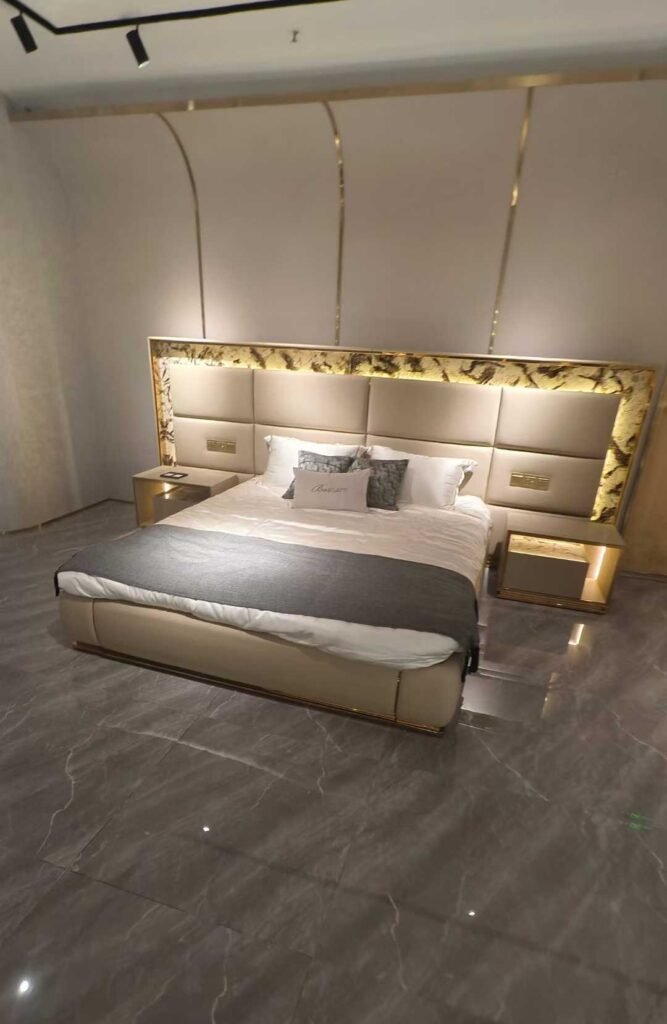
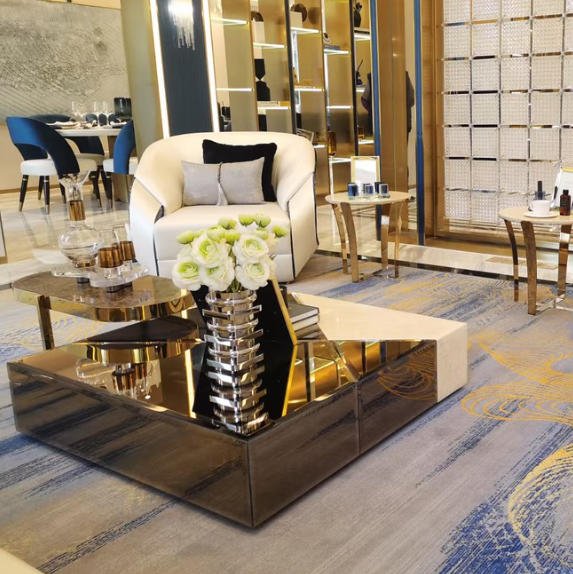
Why Custom Made Coffee Tables Are a Must-Have for Furniture Distributors
How personalized coffee table solutions help you differentiate your business, increase margins, and build lasting client relationships in the competitive furniture distribution market.

When a distributor moves from catalog coffee tables to custom specification, the conversation with designers shifts from “what do you have in stock?” to “what do you need for this project?” That shift changes everything about your margin, your client relationships, and your competitive position. Image: Unsplash
Walk into any mid-tier furniture trade show and you’ll see the same coffee tables at a dozen booths. The dimensions vary by 20mm. The finishes are named differently. The prices are within 15% of each other. And every distributor selling them is making the same pitch.
The global coffee table market reached $14.05 billion in 2025 and is projected to grow to $24.85 billion by 2034, ، وفقًا ل The Insight Partners. That growth isn’t coming from more mass-produced catalog pieces. It’s being driven by design professionals, hotel fit-out teams, and showroom curators who are no longer willing to compromise their project vision for whatever happens to be in a supplier’s warehouse.
For furniture distributors, agents, and showroom owners, that shift creates a concrete decision: remain in the commodity tier — where margin pressure is structural and client loyalty is thin — or build a custom capability that moves you out of the comparison-shopping bracket entirely.
This guide makes the case for custom in the language that matters most to B2B furniture businesses: margins, client retention, operational structure, and competitive positioning. Every section addresses a specific challenge you face in your market. The opportunity is clear. The question is whether you move on it before your competitors do.
The Margin Problem Most Distributors Face (And How Custom Tables Solve It)
Why Standard Inventory Limits Your Profitability
The economics of commodity furniture distribution are straightforward — and increasingly difficult. A distributor carrying the same catalog pieces as five competitors in the same metropolitan market has one lever available when a buyer compares quotes: price. Every price reduction to win a bid compresses margin. Every margin compression reduces reinvestment capacity. The result, for distributors who don’t break out of the cycle, is a business that generates revenue but not the kind of profit that funds growth.
CSIMarket data through Q1 2026 shows the furniture and fixtures industry averaging a gross margin of 35.16% overall. That number includes a wide distribution: commodity distributors clustered at 25–32%, while custom and premium-positioning distributors consistently achieve 48–60% gross margins on their custom segment. The gap is not a matter of luck or market conditions — it is a direct consequence of product differentiation and pricing power.
The core mechanism is simple: you cannot comparison-shop a product that doesn’t exist elsewhere. A custom coffee table specified to precise dimensions, finished in a proprietary treatment, and sourced exclusively through your showroom or distribution channel has no competing price on the internet. The buyer who wants that specific piece has one source: you.
The race-to-the-bottom pricing dynamic on mass-produced tables has been accelerating with the growth of direct-to-consumer online furniture platforms. When a hotel procurement manager can verify your catalog price against three online wholesalers in under two minutes, your negotiating position is limited to the margin you’re prepared to give up. Custom specification removes that comparison mechanism entirely.
Real Margin Comparison: Standard vs. Custom Coffee Table Programs
| متري | Standard Catalog Program | Custom Program |
|---|---|---|
| Average wholesale cost | $280–$420 | $480–$850 |
| Average retail price point | $700–$950 | $1,600–$3,200 |
| Gross margin | 25–35% | 45–60% |
| Price comparison exposure | High (identical pieces online) | None (exclusive specification) |
| Client switching friction | منخفض | عالية |
| Average order value | $2,800–$5,600 | $6,400–$18,000 |
| Repeat order rate | 32–45% | 68–78% |
Based on industry benchmarking data from custom furniture B2B programs. Individual results vary by market and product mix.
Setting Price Points Your High-End Clients Expect
Interior designers, hospitality procurement managers, and premium showroom owners are not looking for the lowest-priced coffee table. They are looking for the piece that solves their specific brief — and they understand that a piece built to their exact specification carries a premium that reflects the design resolution it provides.
Positioning custom tables as premium solutions — not budget alternatives — requires a fundamental reframe in how you present the offering. The conversation is not “we can do custom if you need it” but “our custom program is the primary reason design professionals work with us, and here’s the specific outcome it provides for your project type.”
إن Deloitte study on personalization and purchasing behavior found that 40% of consumers are willing to pay more for a personalized or exclusive product or service. In B2B furniture markets — where the “consumer” is a professional who is staking their reputation on the pieces they specify — that willingness to pay a premium is typically higher, because the cost of the wrong piece extends beyond the purchase price to include redesign costs, client disappointment, and professional credibility.
Justifying 40–60% higher margins through personalization and exclusivity is not a negotiation — it’s an education. Buyers who understand that a custom piece eliminates returns risk, reduces revision cycles, and provides specification documentation they can defend to their own clients do not compare it to a catalog alternative. They evaluate it against the total cost of getting the project wrong.
Creating Tiered Custom Options to Capture Different Market Segments
Not every B2B client requires full bespoke. A tiered custom structure — three levels of customization complexity at corresponding price points — allows you to serve the full range of your client base without the operational complexity of unlimited variation.
| Tier | Customization Scope | Typical Price Range | Primary Client Type |
|---|---|---|---|
| Entry (Semi-Custom) | Size adjustment ±20%, finish selection from 8 options | $900–$1,600 retail | Volume showrooms, budget-conscious designers |
| الفئة المتوسطة | Full dimension spec, 20+ finishes, leg style choice, COM option | $1,600–$3,200 retail | Interior designers, boutique hotels |
| Luxury (Full Bespoke) | Unlimited spec: materials, inlays, structural design, exclusive finishes | $3,200–$8,000+ retail | High-end residential designers, luxury hotel groups |
Tiering increases average order value across your client base because it allows each buyer to self-select into the level of customization that fits their project — and it creates a natural upsell pathway. A showroom agent who introduces a client to the entry tier on a residential project frequently upgrades them to the mid-range tier when the next hotel fit-out comes in, because the quality differential is visible and the ROI is documented.
How Custom Coffee Tables Help You Win Interior Design and Hotel Fit-Out Projects
The Designer’s Dilemma: Finding Tables That Match Their Vision
Interior designers who work at the premium end of their market have a consistent sourcing frustration: the piece they need for a project does not exist in any standard catalog. The dimensions are wrong, the finish is almost right, or the material combination doesn’t exist in the spec required. The result is a series of compromises that the designer knows their client will notice — and that erode the designer’s confidence in the final result.
Why designers struggle with limited standard options is structural rather than personal: most furniture catalogs are designed for the widest possible addressable market, which means the dimensions, finishes, and specifications represent the median of buyer preferences. A designer working on a specific project in a specific space with a specific client vision is not the median. Their requirements diverge from the catalog in ways that matter.
Custom specification eliminates that divergence. When a designer can specify the exact dimensions that fit a particular alcove, the exact finish that coordinates with an existing floor material, and the exact material weight that meets a commercial durability requirement — the coffee table becomes a solution rather than a compromise.
Case Scenario: Winning a 50-Room Hotel Project Through Customization Flexibility
A hospitality design firm in Southeast Asia had been working with a major hotel group on a 50-room boutique property. The brief required coffee tables in the guest suites at a non-standard dimension (55cm × 95cm), in a smoked oak finish that matched the headboard casegoods, with a commercial-grade surface treatment that could survive daily housekeeping cycles. No standard catalog supplier could meet all three requirements simultaneously.
The distributor who won the contract — a $340,000 commission including tables, side tables, and accent pieces — was the one who arrived at the specification meeting with a custom capability presentation rather than a catalog. They confirmed the custom dimension, matched the finish against the headboard sample provided, and specified a surface treatment with a documented wear-cycle rating. The other bidders brought catalogs. The winning distributor brought a solution.
This is the practical commercial value of custom capability in hotel fit-out: it is not a differentiator at the product level. It is a dealbreaker at the specification stage.
Building Long-Term Relationships with Design Professionals
Becoming the go-to supplier for designers who need reliable customization doesn’t happen in a single project — it is built through a pattern of reliable execution. A designer who specifies a custom coffee table from you, receives it at specification, on time, and without surprises, and hears their client express satisfaction with the result, now has one primary association when the next project brief lands: “I know who to call for this.”
Research on interior design business models consistently shows that custom programs deliver the kind of repeat client relationships that 76–78% of interior designers cite as their primary revenue driver. The designers who build the most profitable practices are not the ones who constantly acquire new clients — they are the ones whose existing clients return for every project and refer colleagues.
Creating recurring business through repeat designer partnerships requires a specific operational commitment: you must be as reliable on the tenth custom order as you were on the first. The distributor who executes consistently across multiple projects builds a relationship where the designer stops evaluating alternatives for that category — because switching costs (re-establishing specifications, rebuilding trust in quality, managing the risk of a first-order surprise) are higher than staying. That is the most durable competitive position available in B2B furniture distribution.
Offering design consultation as a value-add service transforms your commercial relationship from supplier-client to collaborator-partner. A distributor who will sit in a design review meeting, review the FF&E (Furniture, Fixtures & Equipment — all moveable items in a commercial or hospitality property) specification, and provide feedback on what can be custom-sourced within the project timeline and budget is not competing with catalog suppliers. They are in a different commercial category.
Reducing Designer Frustration and Callbacks
Custom tables eliminate the “almost right” problem — the most common source of post-delivery designer dissatisfaction. “Almost right” means the table arrived in a finish that photographed differently from the sample, or at dimensions that work but aren’t optimal, or with a surface treatment that shows wear faster than specified. Each “almost right” is a negotiation, a callback, and a relationship repair exercise that costs time and professional credibility.
When specifications are confirmed in writing, verified against physical samples, and manufactured to documented quality standards, the “almost right” problem is structural rather than incidental. Properly managed custom programs at quality manufacturers consistently achieve on-time, on-specification delivery rates above 95% — a metric that directly correlates with distributor reputation in the design professional community.
Building trust that increases referral business is the ultimate commercial outcome of custom execution done well. An interior designer who received exactly what they specified, on time, for three consecutive projects, and whose clients have expressed satisfaction with the results, is not just a repeat buyer — they are an active referral source whose recommendation to peer designers carries more credibility than any marketing material you can produce.
Solving the Showroom Display Challenge with Custom Options
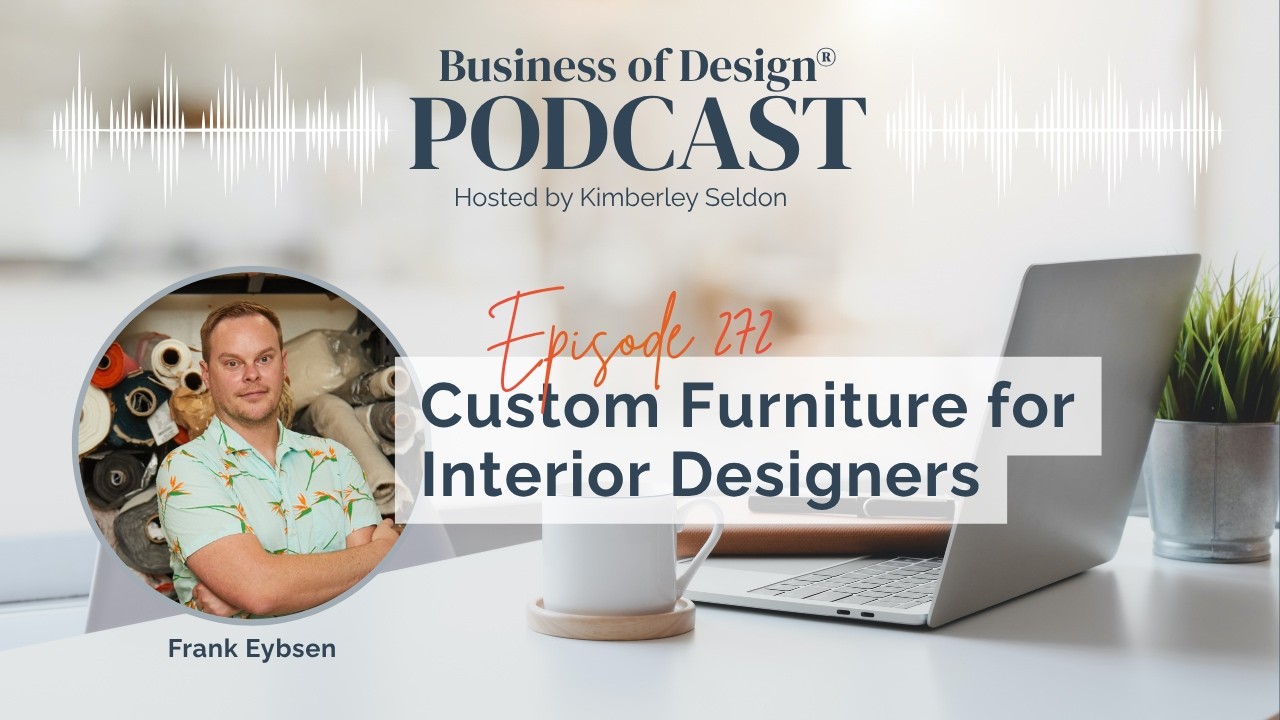
“Custom Furniture for Interior Designers with Buildlane” — an in-depth discussion on how custom furniture specification changes the client relationship and business model for design professionals. Directly relevant for distributors building their custom coffee table positioning.
The Inventory Problem: Holding Stock vs. Meeting Demand
Standard showroom management is built on a fundamental tension: you need enough inventory to demonstrate capability and enable immediate purchases, but every piece you hold carries a financing cost. For a showroom running 40–80 SKUs (Stock Keeping Units — unique inventory identifiers for each specific product variant) of coffee tables across different styles, sizes, and finishes, the carrying cost of that inventory is a significant drag on operational cash flow.
Custom capability resolves the tension by changing what a showroom display needs to accomplish. Why standard showroom displays don’t showcase your full capability is structural: each floor piece demonstrates exactly one specification. A walnut-finish table with tapered brass legs demonstrates one combination — and implicitly suggests that the range’s variety is limited to whatever else is on the floor.
A custom display, by contrast, demonstrates a platform rather than a product. Three strategically chosen custom display pieces — each representing a different style direction — communicate that the full range of available specifications extends far beyond the floor. A material library and a customization guide alongside each display piece tells the buyer exactly how far that range extends. The showroom floor communicates exponentially more variety without requiring exponential inventory investment.
Space efficiency: fewer SKUs, more perceived variety through customization. A showroom that reduces its coffee table floor inventory from 25 standard pieces to 8 custom-platform display pieces, each with an associated material library, typically increases perceived selection range while reducing carrying costs by 40–55%. The buyer who comes in looking for something specific finds a starting point and a specification process — not a hunt through an inventory that may or may not contain what they need.
Using Custom Samples to Drive Foot Traffic and Inquiries
Strategic display pieces that demonstrate craftsmanship and flexibility are among the most effective lead generation tools available to a showroom. A coffee table displayed with an adjacent material board — showing the 15 available finish options, the 4 leg styles, and the 3 available surface treatments — turns a single floor piece into a conversation that typically lasts 20–30 minutes. That conversation has a qualification depth that no browse-and-buy transaction can match, and it produces buyer profiles that your sales team can follow up on with specific proposals.
Creating “conversation starters” that lead to custom orders requires deliberate display strategy. The most effective custom showroom displays are not the most elaborate pieces — they are the pieces that most clearly demonstrate what is possible. A display piece that explicitly showcases a complex feature (a book-matched walnut veneer top, a hand-welded base with precision joinery, an integrated storage element with seamless hinge hardware) gives a design professional the visual evidence they need to specify confidently. The piece is not for sale — it is evidence of capability.
Photography and social proof from custom installations compounds the initial display effect. High-quality photography of completed custom projects — displayed as a physical portfolio in the showroom and posted across digital channels — provides the reference evidence that buyers who haven’t worked with you yet need to feel confident about specifying. A showroom that visibly documents its custom execution history communicates reliability more effectively than any specification sheet.
Managing Production Timelines Without Overextending
Balancing made-to-order with strategic stock items is the operational discipline that determines whether a custom program is profitable or chaotic. The optimal structure for most distributors is a hybrid: 3–5 stock items that cover the most common immediate-delivery requests (popular finishes, standard dimensions), with a full custom program for everything that requires specification. This structure handles the 20–30% of buyers who need delivery in under three weeks without requiring you to carry inventory across the full range.
Setting realistic lead times that clients respect and plan around requires specific, defensible numbers rather than hedged approximations. “We need approximately 8 to 12 weeks” becomes a source of client frustration if delivery arrives at week 14. “Our standard lead time is 10 weeks from specification confirmation to factory completion, plus 4–5 weeks for ocean freight to your port — so your planning timeline is 14–15 weeks total” is a number that clients build their project schedules around. The specificity creates professional confidence rather than anxiety.
Differentiating Your Distribution Business in a Crowded Market

Custom specification capability is not a product feature — it is a business positioning statement. Every distributor can say “we have quality.” Only the ones with genuine custom capability can say “we can build exactly what your project requires.” Image: Unsplash
Why Generic Tables Commoditize Your Business
The pressure to compete on price alone with mass-produced options is not a temporary market condition — it is the structural endpoint of commodity distribution. When buyers can verify your price online in real time, when your product exists in the catalogs of five competing suppliers, and when your delivery timeline is comparable to everyone else’s, you are competing in a price-comparison environment where any advantage you build is temporary and any competitor can match it within one pricing cycle.
Commoditization erodes margins and client loyalty simultaneously. A buyer who chose you on price will leave on price. A buyer who chose you because you solved a specification problem that no one else could solve will not leave casually — because leaving requires finding another supplier who can solve specification problems with the same reliability. The switching cost is not just financial; it is relational and operational.
The distributor trap: getting stuck as a volume player describes the situation many mid-sized furniture distributors find themselves in after 5–10 years. Revenue is substantial. But margin is thin, client relationships are transactional, and the business is heavily dependent on a few large-volume clients whose loyalty extends exactly as far as the next competitive pricing offer. Custom capability is the structural exit from this trap.
Creating a Unique Selling Proposition Through Customization
Positioning yourself as a solutions provider, not just a product supplier is a shift in business identity that changes every commercial conversation. A product supplier answers “what do you have?” A solutions provider answers “what does your project need?” The second question opens a longer, more valuable conversation — and a more profitable order.
Building brand identity around craftsmanship and personalization creates a professional reputation that accumulates over time. A distributor known in their market as the one who can source the custom piece — who has the relationships, the quality control systems, and the specification knowledge to deliver complex custom orders reliably — occupies a market position that cannot be matched by a competitor who simply buys the same catalog and undercuts on price.
Attracting clients who value partnership over transactional relationships is a specific market segment strategy. Interior designers at the premium end of their market, hospitality fit-out specialists managing multi-property projects, and showroom owners building exclusive curated collections are all clients whose business model requires a supplier relationship deeper than catalog and price. These clients generate disproportionate long-term revenue — not because any single order is larger, but because repeat order rates from deeply embedded B2B relationships run 68–78%, compared to 32–45% for transactional catalog relationships.
Leveraging Custom Tables as Your Market Differentiation Story
Telling your story: quality, flexibility, and client-focused design requires specific evidence rather than generic positioning. “We do custom” is a claim. “We delivered 40 identical coffee tables across three properties for a hotel group in Q4, hitting every specification within ±2mm and delivering within the contracted timeline” is a proof point. Build your market story from documented outcomes, not aspirational language.
Marketing messaging that resonates with design professionals speaks to operational outcomes — fewer callbacks, tighter specifications, on-time delivery, and specification documentation for their project files — rather than aesthetic superlatives. Design professionals have seen every version of “quality craftsmanship.” What differentiates you is the ability to prove it with specific project data.
Meeting the Specific Needs of Your B2B Client Base
What Hospitality Designers Really Need (That Standard Tables Don’t Deliver)
Hospitality design operates under constraints that residential and retail environments don’t face. A guest room coffee table in a 4-star hotel will be used by 200–300 guests annually. It will be cleaned with commercial-grade products. It will be moved for room servicing multiple times per week. And it needs to look as good in year 7 as it does in year 1, because a hotel’s renovation cycle rarely allows for individual piece replacement before the full scheduled FF&E refresh.
Durability requirements for high-traffic environments translate into specific specification requirements that standard catalog tables rarely meet: surface coating with a documented abrasion rating, solid wood or commercial-grade engineered wood substrates (not MDF-core), joint construction that does not depend solely on adhesive, and finish adhesion tested for compatibility with commercial cleaning agents. A hospitality designer who has managed a premature finish failure on a 120-room property — replacing tables at year 4 on a budget allocated for year 10 — will pay a meaningful premium for documented commercial-grade specification. They have the cost data to justify it.
Branding integration and design cohesion across properties is a specific challenge in multi-property hotel group procurement. A hotel brand that operates 12 properties needs its standard guest room coffee table to read as visually consistent across all properties — even if individual properties have distinct aesthetic directions. Custom specification solves this by locking the finish, dimension, and material specification to a documented standard that can be reproduced across production runs separated by 18–24 months.
Customization for Different Hospitality Segments
| Hospitality Segment | Primary Requirement | Custom Solution | حجم الطلب النموذجي |
|---|---|---|---|
| Boutique & Lifestyle Hotels | Unique, Instagram-worthy pieces | Full bespoke design per property | 20–80 units per property |
| Business & Corporate Hotels | Consistent durability, functional design | Standardized custom spec across brand | 50–200 units per property group |
| Luxury Resorts | Premium materials, artisanal finishes | Luxury bespoke with material certification | 30–120 units per property |
| Extended Stay Properties | Commercial-grade durability, easy maintenance | Mid-range custom with commercial surface spec | 40–150 units per property |
| Multi-Property Groups | Brand-consistent scalable specification | Locked custom spec, multi-batch reproduction | 100–500+ units annually |
Boutique hotels requiring unique, Instagram-worthy pieces are among the most commercially rewarding custom clients in the hospitality sector. A boutique property’s marketing depends substantially on social media visibility — guests photograph distinctive design elements and share them, generating organic marketing reach that the hotel’s brand team monitors and amplifies. A coffee table that appears in thousands of guest photographs over three years is a marketing asset that the hotel’s procurement manager values beyond its functional specification.
Supporting Your Interior Designer Clients’ Project Deadlines
Flexible production schedules that align with project timelines require a specific operational capability: the ability to hold a production slot for a project whose specification is still being finalized, and to confirm or adjust that slot as the project timeline evolves. Most commodity suppliers cannot accommodate this flexibility — their production runs on a first-confirmed, first-scheduled basis. A custom program with a dedicated project management function can hold preliminary production slots against a deposit, allowing designers to plan their installation schedule before the specification is fully locked.
Clear communication protocols that prevent costly delays are the operational backbone of a reliable custom program. Every project should have a documented communication sequence: specification confirmation, production start notification, production milestone at 50% completion, pre-shipment inspection report, and delivery scheduling confirmation. Designers who receive these communications on schedule, without having to chase, rate their supplier relationships dramatically higher than those who are in the position of requesting status updates — regardless of the underlying delivery performance.
Building Stronger Relationships with Your Retail Showroom Partners
Empowering Showroom Owners with Custom Solutions
A showroom owner who can tell a visiting designer “yes, we can build that to your exact specification” is in a fundamentally different commercial position from one who can only say “here’s what we have in stock.” The ability to meet any specification request — within the parameters of a well-defined custom program — transforms the showroom from a product gallery into a design resource.
How custom options increase showroom perceived value and traffic is demonstrable in showroom performance data. Showrooms that display custom capability prominently — through material libraries, portfolio displays, and active promotion of their custom program — consistently report 25–40% higher average transaction values than comparable showrooms operating purely on catalog inventory. The custom capability does not only affect custom orders; it elevates the perception of the entire product range.
Giving showroom partners a competitive edge in their local markets requires providing them with not just the custom product capability but the sales tools and confidence to offer it to their clients. A showroom staff member who understands the customization options available, can walk a client through the specification process, and can communicate lead times and pricing clearly is an effective custom sales resource. A showroom staff member who is uncertain about how the custom process works will default to selling catalog product, even when custom is the better solution.
Providing Training and Support for Your Showroom Network
Equipping showroom staff to sell custom options confidently is the single highest-ROI investment available to a distributor with a custom program. A two-hour training session on the specification process, the customization parameters, the pricing structure, and the lead time communication protocol transforms a hesitant catalog seller into an active custom capability promoter. The cost is negligible. The impact on custom order conversion is significant.
Creating sales tools and presentation materials gives showroom staff the physical and digital assets they need to have effective custom conversations without specialist knowledge. A specification guide that walks through the customization options, a price calculator that generates indicative pricing from a few inputs, and a material sample kit that clients can touch and hold are the three tools that make the most difference in showroom custom conversion.
Ongoing support that makes showroom partners successful means being available to answer specification questions in real time — not after a 48-hour email response window. When a designer is in a showroom reviewing a custom option and has a technical question, the ability to get an immediate answer (by phone, by chat, or through a knowledgeable showroom staff member) determines whether the conversation converts to an order or stalls.
Incentivizing Custom Orders Through Your Distribution Network
Margin structures that motivate showroom owners to push customization are the operational mechanism that converts a custom capability into a custom sales program. If the margin on a custom order is the same as the margin on a standard catalog piece, showroom owners have no financial incentive to invest the additional conversation time that custom sales require. Structural margin advantages on custom orders — a 5–8 percentage point premium over standard catalog margins — create the financial logic for showroom partners to prioritize custom.
| Program Level | Custom Order Volume | Showroom Margin | Co-op Advertising Support |
|---|---|---|---|
| Standard Partner | Up to 4 custom orders/month | 38% | None |
| Preferred Partner | 5–12 custom orders/month | 43% | $500/quarter |
| Elite Partner | 13+ custom orders/month | 48% | $1,200/quarter + dedicated display budget |
The Operational Systems You Need to Scale Custom Production
Setting Up Production Without Chaos
The most common failure mode for custom furniture programs is not quality — it is organization. A distributor who wins a 40-unit hotel custom order and has never managed more than 5 custom pieces simultaneously will find that the operational complexity of production scheduling, specification management, quality control documentation, and client communication scales faster than expected.
Designing processes that handle both standard and custom orders requires segregating the two workflows from the point of order confirmation. Custom orders require: a specification sheet signed by the client before production, a dedicated production slot confirmed with the manufacturer before the client is given a delivery date, a quality checkpoint at 50% completion, a pre-shipment inspection protocol, and a delivery confirmation sequence. Standard orders require none of this — and attempting to manage custom orders through a standard order workflow is the operational mistake that generates the most costly problems.
Quality control systems that ensure consistency across custom pieces at scale requires documented reference standards for each specification element: a physical finish sample approved and archived at order confirmation, a dimensional drawing confirmed against the specification sheet, and a final inspection against both documents before crating. Without these reference standards, “consistent” is a subjective judgment made by whoever happens to be inspecting the production — and subjective judgments vary.
Technology and Tools That Support Custom Manufacturing
| Function | Tool Category | Example Platforms | الغرض |
|---|---|---|---|
| Client specification | 3D visualization / CAD | SketchUp, AutoCAD, Morningstar | Translate spec to production drawing |
| Project management | Workflow tracking | Monday.com, Asana, Trello | Manage multi-order timelines |
| Client communication | CRM + messaging | HubSpot, Salesforce, Slack | Reduce back-and-forth, maintain records |
| Inventory management | ERP / materials tracking | Fishbowl, Cin7, NetSuite | Track materials and components by order |
| Quality documentation | Digital checklists | Google Forms, Notion, custom QC apps | Standardize inspection and approval |
Design software that translates client specifications into production serves two functions simultaneously: it provides the client with a visual confirmation of what they approved (reducing post-delivery disputes), and it provides the production team with an unambiguous specification that eliminates interpretive errors. A 3D rendering (a digitally generated image showing the finished piece in a room environment) sent to the client for approval before production starts, followed by a dimensioned CAD drawing sent to the production facility, is the specification management process that the most reliable custom programs use.
Training Your Team to Execute Custom Orders Reliably
Cross-training staff for flexibility in production scheduling is the operational resilience mechanism that prevents a custom program from stalling when a key team member is unavailable. If only one person in your organization understands the custom specification process, you have a single point of failure that will eventually cause a missed deadline or a quality problem. Document the process. Train multiple team members. Build redundancy into your operational capability.
Problem-solving protocols for custom challenges — the situation where a material isn’t available in the specified finish, a dimension creates a structural engineering issue, or a production batch shows a variation from the approved reference — require a defined escalation pathway. Who gets notified? What is the decision authority at each level? What is the client communication timeline? The distributors who manage custom program challenges most effectively are the ones who have pre-thought the scenarios rather than improvising under pressure.
Pricing Strategy: How to Profit from Customization Without Overcomplicating
Understanding Your Cost Structure for Custom Work
Material costs and material waste in custom production differ structurally from standard production. Custom dimensions generate material offcuts that have limited value. Proprietary finishes require minimum batch sizes that may exceed the order volume. COM (Customer’s Own Material — a specification arrangement where the buyer provides their own fabric or material for the manufacturer to apply) orders require material receiving, inspection, and inventory management. Each of these cost elements must be captured in your pricing model or they accumulate as margin erosion.
The standard cost structure for a custom coffee table should account for:
| عنصر التكلفة | Typical % of FOB Price | ملاحظات |
|---|---|---|
| Direct materials (timber, finish, hardware) | 35–45% | Higher for premium materials, proprietary finishes |
| Direct labor (fabrication, finishing, assembly) | 25–35% | Skill premium for custom work vs. production line |
| Material waste and offcuts | 3–6% | Higher for irregular dimensions |
| Quality control and documentation | 2–4% | Inspection, photography, specification verification |
| Project management overhead | 4–7% | Client communication, revision management |
| Manufacturer margin | 12–18% | Factory profit on custom work |
Overhead allocation for custom order management must cover the time investment in specification development, client communication during production, and quality management that standard orders don’t require. A custom order that takes 3–4 hours of project management time per piece, across a 10-piece order, requires 30–40 hours of operational overhead that must be recovered in the pricing structure.
Creating a Pricing Model That Scales
Base price + customization add-ons approach is the most operationally manageable pricing structure for custom programs. It allows clients to understand exactly what each specification choice costs, makes pricing transparent and defensible, and enables quick quote generation for standard customization requests.
A scalable pricing model for a mid-tier custom coffee table program might look like this:
| Component | Base Price | Add-On |
|---|---|---|
| Standard frame (standard dimensions) | $480 FOB | — |
| Dimension adjustment (±10cm) | — | +$45 per 10cm |
| Finish upgrade (from 6 standard to 20+ extended) | — | +$60–$120 |
| COM material (customer-supplied material) | — | +$35 processing |
| Proprietary/exclusive finish development | — | +$200 setup + $80/unit |
| Rush production (2-week reduction) | — | +15% of total |
Transparency in pricing that builds client trust is a specific commercial advantage in B2B relationships where the alternative is a “quote on request” process that feels opaque. When a designer can generate a reasonably accurate price estimate from your published base-plus-add-on structure before they contact you, they arrive at the specification conversation already partially sold — and they trust the final quote because the structure is visible and logical.
Communicating Value So Clients Accept Premium Pricing
Educating clients on craftsmanship, materials, and durability means bringing comparative data to the conversation, not just qualitative claims. “Our custom coffee tables are higher quality” is an assertion. “Our surface treatment is rated for 15,000 cleaning cycles with commercial-grade products — equivalent to 25 years of hotel housekeeping use — while the alternative surface treatment carries no commercial durability rating” is a specification that a hospitality procurement manager can document and defend to their facilities team.
Showing total cost of ownership versus cheaper alternatives is the pricing argument that closes the most budget-conscious B2B buyers. A $1,400 custom table that lasts 20 years in a commercial environment costs $70/year of service. A $420 catalog table that requires replacement at year 6 in the same environment costs $70/year of service. The custom table is not more expensive over its life — it is more capital-intensive at purchase, with identical or lower lifecycle cost. That calculation, presented specifically with numbers relevant to the client’s project, reframes the premium pricing from “expensive” to “financially equivalent with quality advantages.”
Marketing Your Custom Coffee Table Capabilities to the Right Audiences

A showroom that displays custom capability through material libraries and portfolio documentation communicates a fundamentally different commercial offer than one that presents catalog inventory alone. Image: Unsplash
Reaching Interior Designers and Design Firms
LinkedIn and industry publication strategies for design professionals require content that addresses operational pain points rather than product features. A LinkedIn article titled “How to Specify Commercial-Grade Coffee Tables That Survive Hotel Housekeeping” reaches hospitality designers with a problem they recognize. An article titled “Our New Custom Coffee Table Collection” reaches nobody who wasn’t already aware of you.
Showcasing portfolio work and completed projects should be your primary content strategy, because portfolio evidence addresses the most significant barrier to first-time specification decisions: the question of whether your custom execution is reliable enough to stake a client project on. A documented case study — project brief, specification decisions, production timeline, delivery outcome, client result — answers that question in the most credible format available.
Networking at design conferences and industry events remains among the highest-ROI client acquisition activities for premium B2B furniture distributors, specifically because the relationships formed at industry events develop faster than digital relationships. A designer who meets you at HD Expo and holds your material samples in their hands for 20 minutes has a product experience and a personal relationship that no digital marketing channel can replicate.
Targeting Hotel and Hospitality Fit-Out Designers
Building relationships with hospitality design specialists requires demonstrating knowledge of their specific operational context — not just product capability. A distributor who can discuss ASTM (American Society for Testing and Materials — an international standards organization that publishes technical standards for materials, products, and systems) testing requirements for commercial furniture surfaces, who understands the difference between a soft contract specification and a hard contract specification, and who can produce documentation suitable for a brand standard approval process is communicating at the professional level that hospitality designers expect.
Creating specification sheets and technical documentation for your custom program should include: dimensional tolerances, material certifications (FSC, PEFC, or equivalent where applicable), surface treatment testing data, structural testing results (load rating, joinery strength), and finish durability specifications. A hospitality designer who can attach your specification sheet to their design documentation package, rather than having to request data repeatedly, will consistently choose your program over competitors who don’t provide it.
Attracting Showroom Owners and Retail Partners
Trade show presence that showcases customization capabilities should prioritize interactive demonstration over static display. A trade show booth that includes an active customization station — where visitors can select finishes, view dimensions, and generate a quick indicative price — generates conversations of a depth and specificity that a passive product display cannot. The engagement is longer, the lead quality is higher, and the follow-up conversation has a specific starting point.
Overcoming Common Objections and Concerns from Your B2B Clients
“Custom Orders Take Too Long”
This objection almost always contains a false premise: the client is comparing your custom lead time against a catalog delivery time without accounting for the fact that the catalog piece is never exactly what they need. When the comparison is made honestly — custom 14 weeks versus the actual timeline for a catalog piece that requires modification to meet the brief — the gap narrows or disappears.
Setting realistic timelines upfront is the preventive response. “Our standard custom lead time is 10 weeks production plus 4–5 weeks shipping — total 14–15 weeks. Tell me when your installation date is and we’ll work back from there to confirm whether standard lead time works, or whether we need to discuss the rush production option.” This response demonstrates operational transparency and moves the conversation from objection to project planning.
Showing how your lead times compare favorably to competitors requires data. Most mid-tier custom furniture programs run 14–20 weeks total. If your program consistently delivers in 14–15 weeks, you are at the competitive frontier of the category. Document your average delivery timeline and your on-time delivery rate, and present them as performance data rather than promises.
“Customization Will Be Too Expensive”
Transparent pricing that shows value justification means arriving with a cost breakdown rather than defending a total price. “Here is what the $1,600 covers: $420 in premium material cost at this specification, $380 in skilled labor for this construction standard, $220 in quality control and documentation, and $580 in manufacturer margin and our program margin. If you want to reduce cost, here is the specification change that would save $180 without affecting the commercial durability rating.” That level of cost transparency builds trust and makes the price defensible.
ROI discussion: premium pricing justified by exclusivity and quality. For a hospitality client, the ROI argument is lifecycle cost. For a designer client, it is the fee premium they can command on a project that uses custom specification. For a showroom, it is the margin per square foot that a custom-capable display generates compared to a catalog display. Each client type has a specific financial logic for the premium — know it and use it.
“We Can’t Guarantee Consistency Across Multiple Custom Orders”
Quality assurance processes that ensure consistency require physical documentation standards. For every custom order: one approved physical sample (archived with the order file), one dimensioned drawing (signed by both parties), and one pre-shipment inspection report (with photographs). If a second production batch is ordered 18 months later, the original sample, drawing, and inspection standard are the consistency reference — not the production team’s memory of the original.
Client testimonials proving reliability should be specific rather than generic. “Jade Ant furniture delivered 40 tables across our 50-room project and they were identical” is a testimonial that a hospitality designer will find credible. “Great quality and service” is one that tells them nothing they needed to hear. Collect and use specific, outcome-referenced testimonials from clients in comparable market segments to the buyer you are addressing.
Measuring Success: KPIs That Matter for Custom Coffee Table Programs
Tracking Financial Performance
KPI Dashboard for a Custom Coffee Table Program
| KPI | التعريف | Baseline (Standard) | Custom Program Target | Industry Best Practice |
|---|---|---|---|---|
| Average Order Value | Total revenue ÷ total orders | $3,200 | $8,500+ | $12,000+ |
| Gross Margin % | (Revenue – COGS) ÷ Revenue | 32% | 48%+ | 55%+ |
| Custom Revenue % of Total | Custom sales ÷ total sales | 0% | 25%+ | 40%+ |
| Client Repeat Order Rate | Clients placing 2+ orders ÷ total clients | 38% | 65%+ | 75%+ |
| On-Time Delivery Rate | Orders delivered on committed date ÷ total orders | — | 92%+ | 96%+ |
| Specification Accuracy Rate | Orders delivered at exact specification ÷ total orders | — | 95%+ | 98%+ |
| Lead Time Accuracy | Orders delivered within quoted window ÷ total orders | — | 90%+ | 95%+ |
| Return/Revision Rate | Orders requiring revision or return ÷ total orders | 8–12% | <4% | <2% |
Monitoring Client Satisfaction and Loyalty
Repeat order rates from design professionals are the leading indicator of custom program health. A custom program where first-time designer clients convert to repeat buyers at 65%+ is building a compounding revenue base. The same program at 35% repeat rates is generating project revenue without building a sustainable client portfolio — meaning the business must constantly acquire new clients rather than growing through existing relationships.
Referral rates from satisfied custom clients are the lagging indicator of program excellence. Referral rate (the percentage of new clients who were referred by an existing client) is a direct measurement of whether your client base believes in your custom program enough to stake their professional reputation on recommending it. Industry-leading custom furniture programs report referral rates of 30–45% of new B2B client acquisition.
Real-World Examples: How Successful Distributors Use Custom Tables to Win Business
Case Study 1 – Interior Design Firm Partnership
The challenge: A mid-sized interior design firm was awarded a 5-property boutique hotel group project — 12 guest suites per property — requiring coffee tables at a non-standard dimension (52cm × 88cm) in a custom smoked oak finish that matched proprietary casegoods specified by the architect. No standard catalog piece existed at this dimension in this finish. Previous supplier relationships had delivered “close but not exact” results that the architect had rejected at specification review, delaying the project twice.
The solution: The distributor who won the contract arrived at the specification meeting with a materials presentation — actual smoked oak finish samples on solid timber substrates, CAD drawings of the specified dimension, a surface treatment specification card confirming compatibility with the commercial cleaning products used by the hotel group’s maintenance contractor, and a production timeline that allowed for the architect’s scheduled specification review before production commitment.
The result: 60 custom coffee tables delivered across 5 properties within the contracted 16-week timeline, all at specification with zero architect rejection at installation review. The design firm placed the same specification for a subsequent 3-property project 8 months later. Over 24 months, the relationship generated $490,000 in total custom coffee table and occasional furniture commissions from a single design firm. The distributor estimates that the custom capability was the qualifying condition for both projects — neither would have been awarded without it.
Case Study 2 – Showroom Differentiation Strategy
The challenge: A furniture showroom in a regional market was operating in a floor space adjacent to two large-format national furniture retailers. Foot traffic was consistent but conversion on coffee tables was running at 14% — customers browsing, comparing with the national retail price point next door, and frequently choosing the lower-priced catalog option. Average transaction value on coffee tables was $880.
The solution: The showroom restructured its coffee table floor from 22 standard catalog pieces to 6 custom-platform display pieces, each supported by a physical material library showing the available finish and dimension range. Staff were trained on the custom specification process and given a simple pricing calculator that could generate indicative custom quotes in three minutes. A digital portfolio of 12 completed custom coffee table projects was displayed on a showroom screen alongside the display pieces.
The result: Within 90 days, coffee table conversion rate improved from 14% to 26%. Average transaction value increased from $880 to $2,240 — driven by the shift from catalog sales to custom specification conversations. Critically, the showroom stopped losing clients to the national retail competition on price, because custom orders cannot be price-compared at national retail. The showroom’s custom program is now 34% of its total furniture revenue.
Case Study 3 – Scaling Production for Volume Custom Orders
The challenge: A distributor whose custom program had grown organically to 8–10 orders monthly was awarded a contract to supply 47 custom coffee tables for a corporate hospitality project — all identical specification, phased delivery across 3 shipments. The distributor had never managed a custom project above 12 units and had no documented QC (Quality Control) process or specification management system.
The solution: Rather than accepting the order and improvising, the distributor invested 3 weeks in process development before confirming the order: a specification sheet signed by the client before production authorization, a QC checklist built from the specification sheet with 24 measurable checkpoints, a pre-shipment inspection protocol for each of the 3 shipping batches, and a project management timeline confirmed with the manufacturer before the client delivery date was communicated.
The result: All 47 tables delivered at specification across 3 phased shipments, all within the contracted timeline. Post-project client assessment gave the delivery a quality consistency score of 9.2/10. More significantly, the process infrastructure built for this project enabled the distributor to scale to 35–40 custom orders monthly within 12 months, with a QC system that maintained a specification accuracy rate above 96%.
Getting Started: Your Action Plan for Launching Custom Coffee Table Offerings
Phase 1 – Assessment and Planning (Weeks 1–2)
The most common mistake in launching a custom program is skipping the assessment phase and moving directly to marketing. A custom program built on capabilities you don’t yet have, at margins you haven’t modeled, for a client segment you haven’t qualified, will generate more problems than revenue in the first 90 days.
Evaluate current production capabilities and constraints with specific questions: What is your current manufacturer relationship — do they accept custom specifications? What is their minimum order quantity for custom work? What is their documented lead time for custom orders? Have you received and evaluated physical custom samples from them? The answers to these questions determine whether you have a custom capability to market or a capability gap to close first.
Determine pricing and margin targets using the cost structure model above. Before you quote your first custom order, you need to know your landed cost, your target gross margin, and your competitive price range in your specific market. Pricing a custom program without this structure generates margin surprises that erode confidence in the program.
Phase 2 – Process Development (Weeks 3–6)
Design production workflows for custom orders that are distinct from your standard order process. Document the workflow step by step: client inquiry → specification consultation → physical sample delivery → specification sheet confirmation → production authorization → production milestone check → pre-shipment inspection → delivery scheduling → client installation support.
Create documentation and specification templates for each step. The specification sheet template should include: dimensional drawing fields, finish specification with physical sample reference code, material specification, quantity, delivery date, and client sign-off. The QC checklist should derive its checkpoints directly from the specification sheet. The templates are the operational infrastructure that determines whether your custom program is scalable.
Train your team on new processes before you take the first custom order. A team that learns the custom process on a live client order is learning at the client’s expense — in terms of timeline risk, communication quality, and the likelihood of specification errors.
Phase 3 – Market Launch (Weeks 7–8)
Develop marketing materials and sales tools specific to your custom program: a capability one-pager for design firms, a specification guide for showroom partners, a material library for physical display, and a digital portfolio of 3–5 projects (even if early projects are internal samples or industry contacts’ fit-outs). You do not need a full portfolio before you launch — you need enough evidence to credibly represent your capability.
Launch outreach to design professionals and showroom partners with a specific value proposition rather than a general announcement. “We’ve launched a custom coffee table program that we’d like to show you — here are the three specifications that are most relevant to the project types you typically work on, and here’s a client reference who has completed a project using the program.” That outreach converts faster than “we do custom now.”
Ready to take the first step? Contact Jade Ant furniture’s wholesale team to discuss how a custom coffee table program can be structured around your specific distribution model and client base.
Future-Proofing Your Business: Why Custom Manufacturing Is the Future

The distributors who build custom capability now are creating client relationships and market positions that competitors who wait will find increasingly difficult to break into. Image: Unsplash
Market Trends Favoring Customization
The structural drivers of customization demand in commercial furniture are not cyclical — they are directional. Hospitality design trend analysis for 2025–2026 identifies tailored customization as one of the primary differentiation strategies for hotel brands competing for guest loyalty. “Brand identity through interior design” — and specifically through furniture specification — is a strategic priority for hotel groups in a market where room hardware has been commoditized.
The shift toward personalization and unique design in commercial spaces mirrors consumer behavior trends where mass production is no longer the aspirational standard. In residential design markets, 40% of consumers are willing to pay more for personalized or exclusive products. In commercial design markets — where the “consumer” is a brand investing in a physical expression of its identity — that premium willingness is structurally higher.
Technology enabling faster, more affordable customization is removing the production barriers that previously made custom manufacturing economically challenging at lower volumes. CNC (Computer Numerical Control — automated machining that uses programmed computer instructions to control tools) machinery, digital finishing equipment, and AI-assisted design tools are reducing the skilled labor premium on custom work, making it economically viable at order sizes and price points that were not profitable five years ago. The cost advantage of mass production over custom is narrowing.
Building Competitive Advantage Before Competitors Catch Up
First-mover advantage in your market segment is a concrete commercial asset in B2B furniture distribution, where client relationships are sticky and switching costs are high. A distributor who establishes a custom program reputation in their market — through 18–24 months of consistent execution and documented client outcomes — creates a barrier to competitive entry that is not about price or product. It is about the accumulated evidence of reliability that no competitor without the same track record can replicate in a short timeframe.
Building client relationships that competitors can’t easily disrupt is the ultimate outcome of a well-executed custom program. A designer who has worked with you on three custom projects, who trusts your specification process, who has received consistent delivery, and whose clients are satisfied with the results, is not going to switch to a new supplier who is offering a 5% price advantage on the next project. The cost of that experiment — in project risk, in client trust, in professional reputation — is higher than the price saving justifies.
Custom Coffee Tables as Your Competitive Advantage
Custom-made coffee tables are not a product offering you add to a catalog. They are a business model position that determines which clients you attract, what margin structure you operate at, and how durable your client relationships are over time.
The coffee table market is $14 billion and growing. The commodity tier of that market is crowded, margin-compressed, and increasingly disintermediated by online platforms. The custom tier is growing faster, carries higher margins, and builds the kind of client relationships that generate compounding revenue through repeat orders and referrals.
The distributors, agents, and showroom owners who build genuine custom capability — real production relationships, documented quality systems, specification management processes, and a client-facing presentation that communicates reliability rather than aspiration — will occupy market positions in three years that their competitors without this infrastructure will find difficult to enter.
The opportunity is clear. The action plan is defined. The competitive window is open — but not indefinitely.
Take the next step with Jade Ant furniture’s B2B custom program — built specifically for distributors, agents, and design professionals who want to move from catalog selling to custom specification leadership.
Ready to Transform Your Distribution Business with Custom Coffee Table Solutions?
Schedule a consultation with our team to assess your current capabilities, identify customization opportunities aligned with your market, and develop a phased launch plan that works with your existing operations.
👉 Schedule a Custom Program Consultation
👉 Explore the Custom Coffee Table Range
👉 Browse All Custom Livingroom Furniture Options
مسرد المصطلحات الأساسية
| المصطلح | التعريف |
|---|---|
| FOB (تسليم على متن السفينة) | The price at which a manufacturer transfers product ownership at the port of origin; the buyer assumes cost and risk from that point |
| المفروشات والمعدات والأثاث | Furniture, Fixtures & Equipment — all moveable items in a commercial or hospitality property, excluding structural elements |
| MDF (Medium-Density Fiberboard) | Engineered wood made from compressed fibers and resin; cost-efficient for mass production, with significantly shorter commercial lifespan than solid hardwood |
| SKU (Stock Keeping Unit) | A unique identifier assigned to each specific product variant (e.g., walnut coffee table, 120cm × 60cm, tapered brass legs = one SKU) |
| COM (Customer’s Own Material) | A specification arrangement where the buyer provides their own fabric or material for the manufacturer to apply |
| MOQ (الحد الأدنى لكمية الطلب) | The smallest production run a manufacturer will accept for a custom order |
| CNC (Computer Numerical Control) | Automated machining that uses programmed computer instructions to control tools — a technology that enables precision custom manufacturing at reduced labor cost |
| QC (Quality Control) | The systematic process of verifying that manufactured products meet specified standards before delivery |
| ASTM | American Society for Testing and Materials — an international standards organization that publishes technical standards for materials, products, and systems |
| Bespoke | Fully custom-designed and built to a specific client’s requirements, with no standard catalog equivalent |
| 3D Rendering | A digitally generated photorealistic image showing a furniture piece in a room environment — used to confirm specification before production |
الأسئلة الشائعة (FAQs)
Q1: How much should I charge for custom coffee tables compared to standard options?
Custom-made coffee tables typically command 40–60% premium pricing over mass-produced equivalents at comparable retail positioning. The specific premium your market supports depends on customization complexity, material grade, and your distribution tier. A three-tier pricing structure (entry semi-custom, mid-range, and full bespoke) allows you to serve different client budgets while protecting margins at each level. The critical operational principle: never price custom at the same margin as standard catalog pieces — the additional project management and quality control overhead requires margin compensation to protect program profitability.
Q2: What customization options should I offer to keep production manageable?
Start with three to four variables per category: wood species/finishes (8–12 options), dimension adjustments (±20% of standard dimensions), leg styles (4–6 options), and surface treatments (3–4 options). Resist the temptation to offer unlimited options in the early stages of a custom program — the operational complexity of managing unlimited variables on low production volumes creates delays and quality inconsistencies that erode the client experience. Expand the option range as your process infrastructure matures.
Q3: What are realistic lead times for custom coffee table orders?
For a well-run custom program, realistic total lead times are: entry semi-custom (6–8 weeks production + 4–5 weeks shipping = 10–13 weeks total), mid-range custom (8–10 weeks production + 4–5 weeks shipping = 12–15 weeks total), and full bespoke (10–14 weeks production + 4–5 weeks shipping = 14–19 weeks total). Rush production options that reduce the production window by 2–3 weeks are available at a 15–20% premium. Always communicate the total timeline — production plus shipping plus customs clearance — rather than production alone.
Q4: What is the minimum order quantity for custom tables to make financial sense?
For distributors, 2–3 pieces is the practical minimum for standard semi-custom orders. For fully bespoke designs with proprietary finish development or non-standard structural engineering, 6–10 unit minimums are typical. For hotel bulk programs where the design is already specified and the production setup cost has been amortized, single-unit reorder of existing specifications is commercially viable at a modest per-unit premium. The minimum that “makes financial sense” is driven by setup cost amortization — and setup costs decline as production programs mature.
Q5: How do I handle design consultations with interior designers?
Offer a tiered consultation structure: a 45-minute complimentary initial consultation for new design firm relationships (focused on understanding their typical project type and specifications), included full specification consultation for orders above a defined value threshold (typically $8,000–$12,000), and a paid consultation service for complex bespoke design development. This structure positions you as a design partner for high-value relationships while protecting your time on speculative inquiries that don’t convert.
Q6: What should I do if a custom order doesn’t meet the client’s expectations?
The most important step is preventing the situation rather than managing it. A documented specification sheet signed by both parties before production, with physical sample references and dimensional drawings, eliminates 80–90% of post-delivery disputes by establishing an unambiguous standard. When a genuine quality issue arises — a finish variation, a dimensional tolerance exceeded — communicate immediately, acknowledge the issue specifically, and commit to a resolution timeline within 48 hours. Clients who are told about a problem and its solution simultaneously experience it as professional service management. Clients who discover a problem themselves experience it as a supplier failure.
Q7: How can I market custom capabilities to design professionals without overwhelming them?
Focus your marketing on specific, documented outcomes rather than capability claims. A case study showing a completed 5-property hotel project — with the brief, the specification decisions, the timeline, and the client outcome — communicates custom capability more effectively than any product brochure. On LinkedIn, content that addresses specific operational pain points (lead time management, specification documentation, commercial durability standards) reaches design professionals who are actively managing those problems. At industry events, material samples and project portfolios generate more engaged conversations than digital presentations.
Q8: Should I keep standard inventory or shift entirely to made-to-order?
The most profitable structure for most distributors is hybrid: 3–5 standard pieces in stock that cover the most frequent immediate-delivery requirements, with a full custom program for everything that benefits from specification. This balances cash flow (standard stock generates immediate revenue), operational simplicity (stock pieces require no specification management), and margin optimization (custom orders generate 40–60% higher margins than standard). Pure made-to-order eliminates inventory risk but creates lead-time vulnerabilities for urgent client needs. Pure inventory holding maximizes immediate availability but carries significant carrying cost and price-comparison exposure.
Q9: How do I ensure quality consistency across multiple custom orders?
Quality consistency at scale requires three documents per order: a physical finish sample approved by the client and archived with the order file, a dimensioned specification drawing confirmed and signed by both parties, and a pre-shipment QC checklist that derives its checkpoints from the specification drawing. When a subsequent batch is ordered 12–18 months later, these three documents are the consistency reference — not the production team’s memory of the original. Manufacturers who cannot provide pre-shipment inspection documentation against a signed specification should not be trusted with repeat custom orders where consistency is contractually required.
Q10: What technology do I need to manage custom orders effectively?
At minimum, three tools: a CAD or 3D visualization tool (SketchUp is accessible and widely used for furniture specification work), a project management platform (Monday.com or Asana for multi-order timeline management), and a CRM (Customer Relationship Management) system for tracking specification histories, client communication, and follow-up scheduling. These three tools, implemented and used consistently, eliminate the organizational failures that cause most custom program problems: missed milestones, miscommunicated specifications, and lost follow-up opportunities.
Q11: How do I justify custom pricing to cost-conscious showroom partners?
Present the margin math specifically: “A custom order at our program pricing generates 48% gross margin. Your standard catalog pieces generate 32% margin. On $100,000 of annual coffee table revenue, that difference is $16,000 in additional gross profit — without increasing sales volume.” Then address the sales effort question: “Custom orders require longer conversations but generate 2.5× the transaction value of standard orders. The revenue-per-sales-hour on custom is higher than on catalog, even accounting for the additional presentation time.”
Q12: What is the realistic ROI timeline for launching a custom coffee table program?
Most distributors with adequate production infrastructure see positive ROI within 3–5 months of program launch. The initial investment covers process development (documentation templates, QC checklists, team training), material sample library development, and marketing material creation — typically $4,000–$12,000 total depending on scale. Revenue gains begin from the first custom order and compound through higher margins and improved client retention. Distributors who track their custom program performance monthly typically achieve full ROI recovery by month 4–6 and sustained margin improvement above 40% on the custom segment by month 12.