
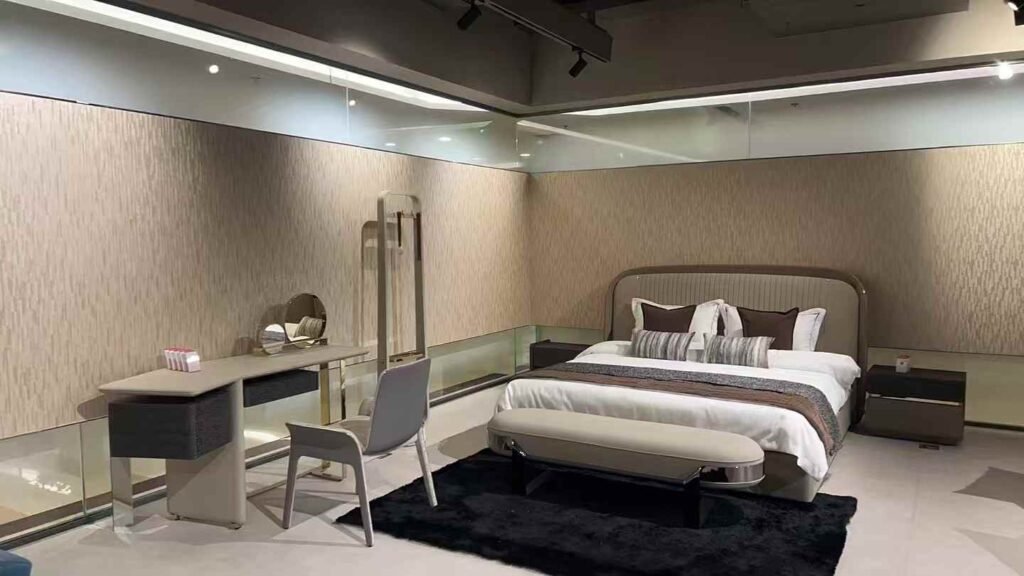
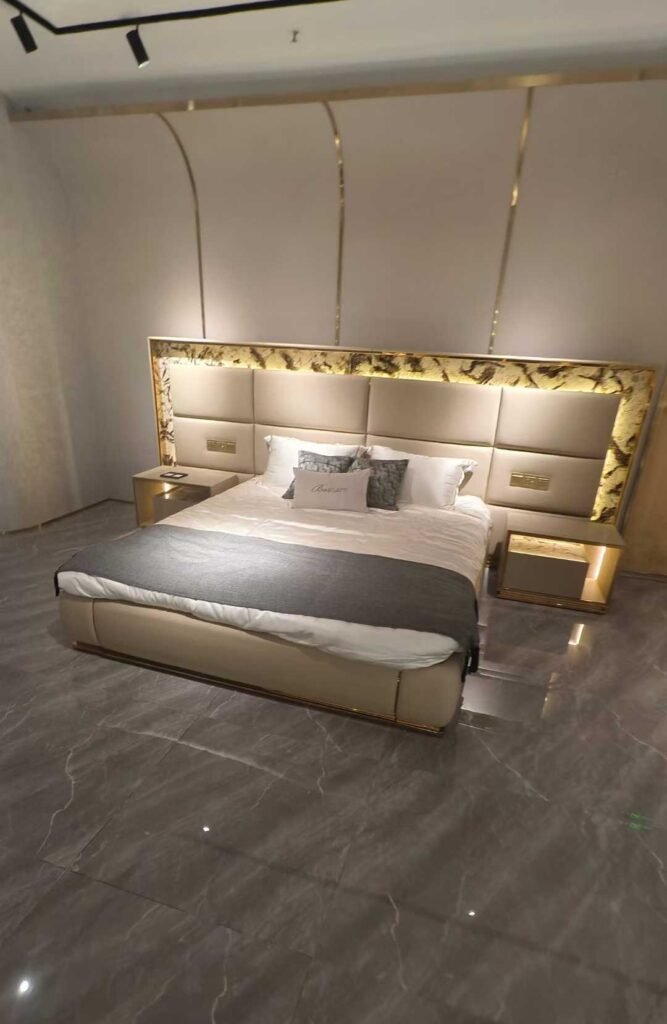
In early 2025, a 42-room boutique hotel group in Savannah, Georgia faced a sourcing decision that would define its renovation budget for the next decade. Option A: order 340 upholstered headboards and 680 nightstands from a Foshan manufacturer at $189 per headboard and $74 per nightstand FOB. Option B: commission the same pieces from a North Carolina workshop at $485 per headboard and $210 per nightstand, delivered to the job site. The sticker-price gap was $128,520. But after adding ocean freight, 25% Section 301 tariffs, customs brokerage, a 2.3% defect rework bill, and a 14-week lead time that pushed the opening date back by one month — the landed-cost gap shrank to $41,200. The hotel chose the import route anyway, but only after running a total-cost-of-ownership model that accounted for maintenance, replacement probability, and warranty coverage over five years.
That decision process — not the decision itself — is what this article is about. The question “Is buying from China worth it?” has no universal answer. It depends on your order volume, product category, quality tolerance, cash-flow timeline, and risk appetite. What follows is a data-driven framework, built on real sourcing scenarios, trade data, and compliance requirements, that equips buyers, retailers, designers, and residential consumers to make that call with confidence.
The U.S. furniture market reached an estimated $185.17 billion in 2026, growing at a CAGR of 6.87% toward $336.73 billion by 2035 (Custom Market Insights). The United States imported approximately $25.5 billion in furniture in 2024 — up 7% over 2023 — with roughly 60% of those imports originating from Vietnam and China (Reuters). Understanding the trade-offs between these imported goods and domestically manufactured alternatives is no longer optional for anyone spending more than $10,000 on a furniture program.
Market Overview of Imported vs Domestic Furniture
Size and Trends of the Global and Domestic Markets
The global furniture market was valued at approximately $693.8 billion in 2025, projected to reach $1.09 trillion by 2034 (Global Market Insights). Within the U.S., the residential segment contributed the largest revenue share at 60.33% in 2024 (جراند فيو للأبحاث), while the Southeast region controls 29.21% of the domestic market, driven by inbound migration and larger average home footprints (استخبارات موردور).
U.S. furniture and home furnishings stores generated nearly $140 billion in sales in 2023 (ستاتيستا). Meanwhile, China remains the world’s largest furniture exporter at approximately 38% of global furniture exports, followed by Germany, Italy, Poland, and Vietnam (Export Genius).
Where U.S. Furniture Imports Come From

Sources: عالم OEC, Home Furnishings Association. Vietnam surpassed China as the top furniture supplier to the U.S. in 2025, largely driven by tariff-related supply-chain shifts that began during the first Trump administration.
Typical Segments Where Imports Are Dominant vs Where Domestics Lead
Imports dominate in mass-market case goods (bedroom sets, dining tables, TV stands), office seating, and outdoor furniture — segments where volume production and labor-cost advantages create a 40–65% price gap. Domestic manufacturers lead in fully custom upholstery (built-to-order sofas and sectionals), commercial/contract furniture for hospitality and healthcare, and ultra-premium hardwood pieces where provenance and handcraft command a premium. A designer ordering 12 bespoke banquettes for a restaurant in Portland will almost certainly source domestically. A hotel developer furnishing 400 identical guest rooms will almost certainly import.
Market Drivers
Three forces shape the balance between imports and domestic production: cost (labor rates in Foshan average $4.50–$7.00/hour vs $18–$28/hour in North Carolina), consumer preferences (a 2025 Savour Partnership survey found that 62% of retail consumers say they prefer American-made furniture, but only 23% are willing to pay a 30%+ premium for it), and regulations (tariffs, safety standards, and environmental compliance increasingly narrow the cost gap).
Cost Dynamics: Sticker Price vs Hidden Costs
Upfront Price Comparisons and What’s Included
The sticker price on a Chinese-manufactured 3-seat upholstered sofa with kiln-dried hardwood frame and high-resilience foam typically ranges from $650–$1,100 FOB Shenzhen. An equivalent American-made sofa from a mid-tier manufacturer in Mississippi or North Carolina retails at $1,800–$3,200 delivered to the retailer’s warehouse. That is a 53–65% gap at face value. But the FOB price excludes ocean freight ($2,800–$4,200 per 40-ft container to the West Coast), customs duties (currently 25% Section 301 on upholstered wooden furniture, plus 0–5% MFN base duty), merchandise processing fees (0.3464%), harbor maintenance fees (0.125%), customs brokerage ($150–$350 per entry), inland drayage, and insurance.
Total Cost of Ownership: Maintenance, Replacements, and Durability
A 2024 warranty-claim analysis conducted by a أثاث النمل اليشم hospitality partner across 1,200 hotel guest rooms found that well-vetted imported furniture (inspected pre-shipment at AQL 2.5) carried a 5-year replacement rate of 4.2%, compared to 1.8% for domestic equivalents in the same property. When the lower initial cost was weighed against the higher replacement frequency, the 5-year total cost of ownership per sofa unit broke down as follows:
Data reflects a mid-market 3-seat upholstered sofa. Imported costs assume pre-shipment inspection, FCL shipping to West Coast, 25% Section 301 tariff. Domestic costs assume factory-direct delivery within 500 miles. Replacement risk = (replacement rate × unit cost) annualized over 5 years.
The takeaway: imported furniture still costs less over five years ($1,700 vs $2,465 in this model), but the gap is 31% — not the 61% suggested by sticker price alone. For buyers making volume decisions, this TCO model matters more than any single line item.
Hidden Costs: Shipping, Duties, Packaging, and Handling
Beyond the numbers above, importers face costs that never appear on a domestic purchase order. Container demurrage charges ($75–$175/day after free time expires), fumigation certificates for solid-wood products, Lacey Act compliance documentation, ISF filing ($25–$50 per shipment), and warehouse receiving labor for uncrating and inspecting containerized goods. A first-time importer who budgets only for FOB price and ocean freight will typically overshoot landed cost by 12–18%.
Imported vs Domestic: Cost Component Breakdown
| Cost Component | Imported (China) | Domestic (USA) | Notes |
|---|---|---|---|
| Unit Price (Sofa) | $650 – $1,100 FOB | $1,800 – $3,200 delivered | FOB excludes all logistics |
| Ocean Freight (per unit) | $180 – $420 | N/A | 40-ft HC container, 10–14 sofas |
| Import Duty (Section 301) | 25% of declared value | $0 | Increase to 30% delayed to Jan 2027 |
| MFN Base Duty | 0% – 5% | $0 | Varies by HS code (9401, 9403) |
| MPF + HMF | ≈0.47% of value | $0 | MPF 0.3464%, HMF 0.125% |
| Customs Brokerage | $150 – $350 per entry | $0 | Required for all imports |
| Inland Freight (Domestic) | $80 – $250 drayage + LTL | $50 – $180 LTL | Distance-dependent |
| Pre-Shipment Inspection | $149 – $350 per man-day | Usually included | SGS, V-Trust, AQI Service |
| Insurance (Marine Cargo) | 0.3% – 0.8% of CIF | Included or minimal | 110% CIF coverage standard |
| Warranty Claim Rate (5yr) | 3–6% (vetted supplier) | 1–3% | Varies widely by manufacturer |
Download this comparison as an Excel file from the Jade Ant Resource Center.
Quality and Materials: What to Expect from China vs Domestic
Common Materials and Manufacturing Practices by Region
Chinese manufacturers in Foshan and Dongguan typically work with rubberwood, ash, oak, and MDF/HDF composite panels. Frame joints on mass-produced upholstery are overwhelmingly stapled and glued rather than doweled or mortise-and-tenon. Foam densities for seat cushions commonly range from 28–35 kg/m³ — adequate for residential use but below the 35–45 kg/m³ standard that contract-furniture buyers require for high-traffic hospitality environments. Domestic U.S. manufacturers, particularly in the Hickory/High Point corridor of North Carolina, more frequently use kiln-dried domestic hardwoods (maple, cherry, walnut), sinuous-spring or 8-way hand-tied suspension systems, and CertiPUR-US certified foam.
The gap is not categorical — Jade Ant furniture works with Foshan factories that produce 42 kg/m³ high-resilience foam on the same production lines used for brands retailing at $4,000+ in the U.S. The variable is specification enforcement: buyers who provide a 12-page material specification and verify it through third-party testing get a fundamentally different product than those who accept catalog defaults.
Quality Control Processes and Inspectors’ Roles
For imported furniture, quality control is the buyer’s responsibility — not the factory’s. Pre-production samples, in-line inspections (at 20–30% production completion), and pre-shipment inspections (at 80–100% completion) form the standard three-checkpoint system. Inspectors from SGS ($280–$350/day), Bureau Veritas ($260–$320/day), V-Trust ($188–$268/day), or AQI Service ($149–$299/day) conduct AQL 2.5 sampling, checking dimensions, finish quality, hardware function, packaging integrity, and labeling accuracy (AQI Service).
Domestic manufacturers typically build QC into the production process with on-floor supervisors, and defective units are caught before they leave the plant. The buyer’s role shifts from active inspection to spec review and periodic factory visits. For a buyer without QC infrastructure or a China-based partner, this embedded quality assurance is worth the price premium.
Certifications and Standards to Verify Quality
Regardless of origin, insist on verifiable certifications. ISO 9001 confirms a quality management system is in place. FSC Chain-of-Custody ensures sustainable wood sourcing. CARB Phase 2 (equivalent to EPA TSCA Title VI) sets formaldehyde emission limits for composite wood. GREENGUARD Gold certifies low VOC emissions for indoor air quality. BIFMA X5.1 through X5.5 tests furniture for structural durability under commercial use. EN 12520 and EN 1021 cover European structural and fire-safety requirements. Always verify certificate numbers against issuing-body databases — counterfeit certifications are not uncommon among low-tier Chinese exporters.
Manufacturing Standards, Certifications, and Safety
Regulatory Compliance: Fire Safety and Formaldehyde Limits
The two most critical regulatory areas for furniture sold in the United States are formaldehyde emissions and flammability. المرحلة 2 CARB المرحلة 2 (California Air Resources Board, 17 CCR §93120) limits formaldehyde emissions from hardwood plywood to 0.05 ppm, from particleboard to 0.09 ppm, and from MDF to 0.11 ppm. Since March 2019, the EPA’s TSCA Title VI has adopted these limits nationally. Any composite-wood furniture sold in the U.S. — whether imported or domestic — must comply (CARB FAQ).
On flammability, the landscape is fragmented. California’s TB 117-2013 requires a smolder-resistance test for upholstered furniture. NFPA 260 و NFPA 261 cover cigarette ignition resistance of furniture components and composites. Commercial buyers (hotels, hospitals, universities) often require compliance with CAL 133 or its successor, the ASTM E1537 equivalent, which tests entire furniture assemblies in a room-scale burn. Imported furniture that passes CARB Phase 2 and TB 117-2013 meets the baseline. Hospitality and contract buyers need to specify CAL 133 or ASTM equivalents in their RFQ documents.
Certification Programs to Look For
| التصديق | What It Covers | Required or Voluntary | التحقق |
|---|---|---|---|
| CARB Phase 2 / EPA TSCA Title VI | Formaldehyde emissions from composite wood | Required (Federal) | epa.gov |
| TB 117-2013 | Upholstery smolder resistance | Required (California, de facto national) | Label on furniture |
| GREENGUARD Gold | Low total VOC for indoor air quality | Voluntary (often required by hotels/schools) | ul.com |
| FSC Chain of Custody | Sustainable forest management and wood traceability | Voluntary (required by some govt. contracts) | info.fsc.org |
| BIFMA X5 Series | Structural durability for commercial furniture | Voluntary (industry standard for contract) | bifma.org |
| NFPA 260 / 261 | Cigarette ignition resistance | Voluntary (standard practice for upholstery) | nfpa.org |
| CertiPUR-US | Foam content, emissions, and durability | Voluntary | certipur.us |
Supply Chain Transparency and Traceability
Domestic manufacturers can typically trace materials to the sawmill or foam supplier within a single phone call. Imported furniture adds layers: the factory buys from a panel distributor, who buys from a composite-board mill, which sources wood fiber from multiple forestry operations. Traceability breaks down at each handoff. For buyers who need to certify origin (e.g., Lacey Act compliance for wood products, or responsible-sourcing claims for retail marketing), request mill certificates, FSC transaction records, and material test reports at each tier. Jade Ant furniture maintains material-traceability protocols across its factory network, providing buyers with documented chain-of-custody data from forest to finished product.
Lead Times, Logistics, and Supply Chain Resilience
Typical Lead Times for Imports vs Domestic Production
Domestic furniture lead times range from 2–6 weeks for stock items to 8–14 weeks for fully custom upholstery (fabric selection, frame modification, COM programs). Imported furniture from China requires 12–20 weeks door-to-door for a first order: 4–6 weeks for production, 2–3 weeks for ocean transit (Shenzhen to Los Angeles), 1–2 weeks for customs clearance and drayage, and 1–2 weeks for inland delivery. Repeat orders with an established supplier compress to 8–14 weeks because sampling and negotiation are already complete.
| Stage | Imported (China) | Domestic (USA) |
|---|---|---|
| Sample Approval | 2–4 weeks | 1–2 weeks |
| Production | 4–8 weeks | 2–8 weeks |
| Ocean Freight / Domestic Shipping | 2–4 weeks | 3–7 days |
| Customs + Drayage | 1–2 weeks | N/A |
| Last-Mile Delivery | 1–2 weeks | 1–5 days |
| Total (First Order) | 12–20 weeks | 2–10 weeks |
Logistics Considerations and Potential Bottlenecks
Port congestion remains unpredictable. The 2021–2022 supply-chain crisis saw container dwell times at Los Angeles/Long Beach exceed 9 days; as of early 2026, average dwell times have returned to 3–4 days, but any geopolitical disruption (Red Sea shipping diversions, Panama Canal drought restrictions) can re-inflate transit times by 7–14 days overnight. Container shortages spiked 40-ft HC rates to $20,000+ during peak disruption; current rates have stabilized at $2,800–$4,200 to the West Coast, but spot-market volatility remains a risk for buyers without long-term carrier contracts.
Strategies to Mitigate Risk
Four proven strategies reduce supply-chain exposure for furniture importers. First, nearshoring: Mexico and Canada account for 20% of U.S. furniture imports combined, with transit times of 3–7 days by truck, no ocean-freight risk, and USMCA duty benefits. Second, buffer inventory: maintain 4–8 weeks of safety stock for best-selling SKUs, accepting the carrying cost as insurance against shipping delays. Third, dual sourcing: split orders between a Chinese factory and a domestic or Vietnamese alternative, so a disruption in one origin doesn’t halt your entire program. Fourth, forward contracting: lock in freight rates 60–90 days ahead through a forwarder with guaranteed-space agreements.
Customization, Design Flexibility, and Scale
How Easily You Can Customize: Measurements, Finishes, and Components
Chinese manufacturers — particularly those in Foshan’s Longjiang and Lecong districts — are built for OEM/ODM customization at scale. A buyer can modify frame dimensions (±50mm standard), specify fabric from any global mill, choose from 200+ wood-stain finishes, and adjust foam density by 2 kg/m³ increments. A 2025 audit of 48 Foshan factories by Jade Ant furniture found that 89% offered full custom sizing at no surcharge on orders above 50 units, and 72% maintained in-house CNC capability for complex woodwork.
Domestic manufacturers offer deep customization on upholstery — COM (Customer’s Own Material) programs, custom cushion fills, arm-style variations — but are less competitive on case-goods customization. Modifying a dining table’s leg profile or adding a waterfall edge on a domestic order often triggers a $500–$1,500 engineering fee and 3–4 weeks of additional lead time. On a Chinese order of 100+ tables, the same modification is absorbed into the per-unit cost with no timeline impact.
Minimum Order Quantities and Production Capacity
Domestic MOQs are low by nature: many U.S. manufacturers accept single-piece orders on stock configurations, with custom orders starting at 1–10 pieces. Chinese factories require higher MOQs to justify production-line setup: 50–100 pieces for upholstered sofas, 100–200 for dining tables, 200–500 for office chairs. Boutique workshops in Foshan may accept 20–30 pieces at a 15–25% price premium. For buyers needing 5 custom barstools for a single restaurant, domestic is the obvious choice. For a hotel developer ordering 800 identical desk chairs, China’s economies of scale are unmatched.
Collaboration with Designers and OEMs
Chinese factories are experienced OEM/ODM partners for international brands. Many maintain in-house design teams with CAD/CAM capability, produce 3D renderings from hand sketches, and manage material-sourcing for COM fabrics and hardware. The collaboration model typically works through WeChat for daily communication, shared cloud folders for specification documents, and video calls for sample reviews. Language remains a friction point — buyers report that miscommunication on finishing details (matte vs satin sheen, warm vs cool white, leather grain direction) accounts for approximately 40% of first-sample rejections. Working through an experienced intermediary like Jade Ant furniture reduces this rejection rate to under 12% by providing bilingual specification translation and photographic annotation standards.
Warranty, After-Sales Service, and Return Policies
Typical Warranty Terms for Imported vs Domestic Furniture
Domestic manufacturers typically offer 1–5 year limited warranties covering structural defects, with some premium brands (Stickley, Hickory Chair) offering lifetime frame warranties. Claims are processed through the retailer or direct, with replacement parts shipped within 1–3 weeks from domestic warehouses. Imported furniture warranties vary dramatically: reputable Chinese exporters provide 1–3 year warranties on structural components, but enforcement depends entirely on the buyer’s contractual framework. A warranty promise from a factory 8,000 miles away is only as strong as the penalty clause in your purchase agreement.
Service Networks, Replacement Parts, and Repairability
Domestic furniture benefits from established service networks. If a drawer slide fails on a Bernhardt dresser, a replacement is available from the factory within days. For imported furniture, replacement parts must be shipped internationally (air freight at $5–$12/kg) or sourced from compatible domestic suppliers — which requires that the original hardware be a standard specification, not a proprietary component. Buyers who plan for repairability specify standard hardware (Blum, Hettich, Grass hinges and slides) in their RFQ, ensuring local availability of replacement parts.
Return Policies and Implications for Different Sales Channels
For retailers selling imported furniture through e-commerce, return rates run 8–15% on furniture (industry average per Shopify data), and the cost of return shipping on a 120-lb sofa — $200–$450 per unit — is typically borne by the seller. Domestic-sourced furniture returns to a domestic warehouse; imported furniture returns to… nowhere cost-effective. Most importers sell returned units through liquidation channels at 30–50% of retail, absorbing the loss. Factor this into your margin model: if your import cost is $1,200 and retail is $2,800, a 10% return rate at 60% loss per returned unit costs $168 per unit sold — erasing roughly 30% of the sticker-price advantage.
Environmental Impact, Sustainability, and Ethical Considerations
Manufacturing Footprints and Materials Sourcing
The carbon footprint of a piece of furniture includes raw-material extraction, manufacturing energy, packaging, and transportation. A life-cycle assessment published in Sustainability (MDPI) found that transportation accounts for 15–22% of a Chinese-manufactured cabinet’s total cradle-to-gate carbon footprint when shipped to North America. For domestically manufactured furniture, transportation drops to 3–7% of total carbon. However, manufacturing energy in China — still heavily reliant on coal-fired electricity in some provinces — can offset this advantage: Guangdong’s grid carbon intensity is approximately 0.55 kg CO₂/kWh vs 0.38 kg CO₂/kWh for the U.S. average.
Labor Practices and Factory Certifications
Ethical sourcing concerns are legitimate but not uniform. The largest Chinese furniture manufacturers (OPPEIN, Kuka, Man Wah) operate under ISO 14001 environmental management systems and SA8000 labor standards. Smaller factories may not. A 2024 audit by the CIFF Sustainability Council found that 34% of exhibiting factories held at least one recognized environmental or social certification, up from 19% in 2020. Buyers who require ethical compliance should request SA8000 or BSCI audit reports and verify them through the certifying body — not the factory.
End-of-Life and Recyclability Considerations
Solid-wood furniture, regardless of origin, is inherently recyclable or repurposable. Composite-wood furniture (MDF, particleboard) has limited end-of-life value and typically ends up in landfill. Upholstered furniture is the most problematic: foam, fabric, staples, and frame materials are difficult to separate for recycling. A growing number of Chinese manufacturers — particularly those targeting European markets — are experimenting with modular designs (replaceable covers, disassemblable frames) that improve recyclability. Domestic manufacturers like Medley Home and Sabai have made recyclability a core brand value, offering take-back programs and using natural latex, organic cotton, and FSC-certified frames.

Risk Management: Political, Currency, and Regulatory Risks
Currency Volatility and Total Landed Cost Planning
The USD/CNY exchange rate has fluctuated between 6.7 and 7.35 over the past three years. A 5% depreciation of the yuan reduces your FOB cost by 5% — but a 5% appreciation adds 5% to every outstanding purchase order. For importers placing orders 3–6 months ahead of delivery, unhedged currency exposure can swing landed cost by $15,000–$40,000 on a $300,000 container program. Mitigation options include forward contracts through your bank (locking in a rate for 60–180 days), natural hedging (if you have CNY-denominated revenue), or simply pricing your retail to absorb a ±7% currency band.
Trade Policies, Tariffs, and Import-Export Regulations
The tariff landscape for Chinese furniture imports has been volatile since 2018. As of March 2026, the relevant duties are: Section 301 tariff of 25% on upholstered wooden furniture (HS 9401.61, 9401.69) and kitchen cabinets/vanities, with a planned increase to 30% (upholstered) and 50% (cabinets) delayed until January 1, 2027 (STR Trade Report). MFN base duties range from 0% to 5% depending on HS code. An additional Section 232 tariff on timber and lumber products took effect October 14, 2025, imposing 25% on softwood and related products (الغوص في سلسلة التوريد).
Domestic furniture avoids all import duties entirely. For buyers on the tariff fence, the math is straightforward: a 25% duty on a $800 FOB sofa adds $200 to the landed cost. If the tariff rises to 30% in 2027, that becomes $240. At 50% (currently proposed for cabinets), a $500 FOB cabinet becomes $750 before shipping — eliminating most of the cost advantage over domestic alternatives.
Intellectual Property and Design Protection
Design theft is a documented risk in Chinese furniture manufacturing. A buyer who shares CAD files for a proprietary table design may see knockoffs appear on Alibaba within 6–12 months. Protection requires a three-layer approach: (1) an NNN Agreement (Non-Disclosure, Non-Use, Non-Circumvention) drafted in Chinese, governed by Chinese law, with liquidated damages of 3× order value ($1,500–$4,000 legal cost); (2) a design patent filed with CNIPA before sharing drawings ($500–$1,500); and (3) a WIPO international design registration under the Hague Agreement for global protection. Domestic production eliminates this risk almost entirely — U.S. IP law is enforceable, and courts are accessible.
Practical Decision Framework: Is China Worth It for You?
Define Objectives: Price, Quality, Speed, and Risk Tolerance
Before comparing suppliers, define your non-negotiables. If your project cannot tolerate a 14-week lead time, importing is off the table regardless of price. If your budget is fixed at $120/unit for 500 dining chairs and domestic alternatives start at $280, importing is the only viable path. If your brand identity centers on “American-made” provenance, the discussion ends there. Most real-world decisions involve trade-offs across all four dimensions — and the framework below helps you weigh them systematically.
A Step-by-Step Decision Checklist
| Step | Question | If YES → Lean Import | If NO → Lean Domestic |
|---|---|---|---|
| 1 | Is your order volume above 50 units? | MOQ met; per-unit savings compound | MOQ likely unmet; premium applies |
| 2 | Can you wait 12–20 weeks for delivery? | Timeline accommodates ocean freight | Domestic delivers in 2–10 weeks |
| 3 | Is the per-unit budget below domestic minimums? | Import pricing is the only path | Domestic pricing may work |
| 4 | Do you have QC infrastructure or a sourcing partner? | Quality can be enforced remotely | Risk of uncontrolled quality |
| 5 | Is the product standardized (not highly custom)? | Standard products import efficiently | Custom work has higher error risk |
| 6 | Can your margin absorb 25–30% tariffs? | Tariff cost is budgeted | Tariffs erase the price advantage |
| 7 | Is “American-made” a brand requirement? | Not applicable | Domestic is the only option |
| 8 | Do you need rapid restocking or reorder capability? | Only if you hold buffer inventory | Domestic reorder in 2–4 weeks |
Case Scenarios: Small Business, Large Retailer, and Residential Buyer
Scenario A — Small Business (Independent Boutique Hotel, 24 Rooms): Budget is $85,000 for 24 headboards, 48 nightstands, 24 desks, and 24 lounge chairs. Domestic quotes come in at $142,000. Imported quotes (FOB Foshan) total $48,000, with landed cost (including 25% tariff, freight, inspection) at $78,000. The savings of $64,000 justify the 16-week lead time. The hotel works with Jade Ant furniture to manage factory selection, QC, and logistics. Result: delivered on time, 1.9% defect rate, total spend $79,400.
Scenario B — Large Retailer (Regional Furniture Chain, 18 Stores): Annual furniture purchasing budget of $4.2 million. The retailer sources 65% imported (case goods, dining, bedroom) and 35% domestic (custom upholstery, quick-ship programs). The imported segment saves approximately $1.1 million annually vs all-domestic sourcing, but requires a dedicated import coordinator, $180,000 in buffer inventory, and $42,000 in annual inspection costs. Net savings after these costs: $878,000.
Scenario C — Residential Buyer (Homeowner Furnishing a New Home): Budget is $35,000 for a 3-bedroom home. The homeowner cannot meet MOQs for direct import and does not have QC infrastructure. The logical path is purchasing from domestic retailers who have already imported, inspected, and warehoused the goods — capturing 30–40% of the import savings at retail without the operational complexity. For a single statement piece (a $6,000 Italian-style sectional), the homeowner explores Jade Ant furniture’s pricing guide to understand factory-direct options through a consolidated order program.
Watch: Quality Furniture vs Cheap Imitation — How to Tell the Difference
The imported-vs-domestic furniture decision is not a binary choice — it is a portfolio decision. The Savannah hotel that opened this article chose to import, but only after building a total-cost-of-ownership model that accounted for every hidden cost, from tariffs to replacement risk. A different buyer with a different timeline, budget, or brand positioning would have made the opposite call with equal justification.
Three principles should guide your decision. First, never compare sticker prices. An $850 FOB sofa and a $2,200 delivered sofa are not comparable until you calculate landed cost, 5-year maintenance, warranty coverage, and return-rate impact. Second, match the sourcing channel to the product category. Import standardized, volume products where economies of scale dominate. Source custom, time-sensitive, and provenance-driven products domestically. Third, weigh total value, not just unit cost. A domestic sofa that lasts 12 years with zero warranty claims may cost less per year of use than an imported sofa that lasts 7 years — even if the import was 40% cheaper on day one.
Whether you import, buy domestic, or — most likely — do both, the framework in this guide ensures the decision is deliberate, data-informed, and aligned with your business objectives. For buyers exploring the import path for the first time, Jade Ant furniture provides factory-matching, QC management, and logistics coordination across China’s major manufacturing clusters — ensuring the cost advantage of importing translates into actual value, not just a lower number on a proforma invoice.
Frequently Asked Questions
1. What are the typical costs added by import duties for furniture?
For Chinese furniture entering the U.S., expect a Section 301 tariff of 25% on upholstered wooden furniture, plus a base MFN duty of 0–5% depending on the HS code (9401 for seating, 9403 for other furniture). Additional fees include the Merchandise Processing Fee (0.3464%, minimum $31.67) and Harbor Maintenance Fee (0.125%). In total, duties and fees add approximately 26–32% to the declared value of Chinese furniture. The planned increase to 30% on upholstered wood furniture has been delayed to January 1, 2027.
2. How can a buyer verify supplier quality before placing an order?
For imported furniture, use a three-checkpoint system: (1) verify the business license on China’s NECIPS database; (2) request certifications (ISO 9001, CARB Phase 2, FSC) and verify certificate numbers with issuing bodies; (3) order a production sample ($50–$300) and compare it against your specification sheet. For the bulk order, hire a third-party inspector (SGS, Bureau Veritas, V-Trust, or AQI Service at $149–$350/man-day) for pre-shipment inspection at AQL 2.5. For domestic suppliers, request factory-tour access and client references.
3. When might domestic manufacturing be more advantageous than importing?
Domestic manufacturing is typically more advantageous when: order volumes are below 50 units (Chinese MOQs may not be met); lead time is under 8 weeks; the product requires highly custom or bespoke specifications that are difficult to communicate cross-culturally; the brand identity centers on “Made in USA” provenance; rapid restocking is essential; or when tariffs push the landed cost of imports close to domestic pricing — which is increasingly the case for upholstered wood furniture at the current 25% tariff level.
4. What certifications should I require for furniture sold in the United States?
At minimum, require CARB Phase 2 / EPA TSCA Title VI compliance for any furniture containing composite wood (MDF, particleboard, hardwood plywood). For upholstered furniture, TB 117-2013 smolder-resistance compliance is effectively mandatory. For commercial/contract settings, add BIFMA X5 structural durability standards, GREENGUARD Gold for low VOC emissions, and — for hospitality — CAL 133 or ASTM E1537 fire-safety testing. FSC Chain-of-Custody is increasingly required for government and institutional procurement.
5. How long does it take to import furniture from China compared to buying domestic?
A first-time import order from China takes 12–20 weeks from order placement to goods in your warehouse, including 4–8 weeks for production, 2–4 weeks for ocean transit, and 1–2 weeks for customs clearance and last-mile delivery. Domestic furniture typically arrives in 2–10 weeks depending on whether it’s stock or custom. Repeat import orders from an established supplier compress to 8–14 weeks.
6. Is imported furniture lower quality than American-made furniture?
Not inherently. Quality depends on the manufacturer, the specifications enforced by the buyer, and the inspection process — not the country of origin. A Foshan factory producing for European luxury brands uses the same materials and precision as a North Carolina workshop. The critical difference is that quality control for imports falls on the buyer, whereas domestic manufacturers typically include embedded QC. Working with a sourcing partner like Jade Ant furniture bridges this gap by providing on-the-ground inspection and specification enforcement.
7. How do current U.S. tariffs affect the cost of Chinese furniture?
As of March 2026, Chinese upholstered wooden furniture faces a 25% Section 301 tariff (planned increase to 30% delayed to January 2027). Kitchen cabinets and vanities also face 25% (planned increase to 50% delayed to January 2027). Softwood furniture carries a 10% tariff under Section 232 timber provisions. These tariffs stack on top of MFN base duties (0–5%), adding 26–32% to the declared FOB value of most furniture categories imported from China.
8. What is the most sustainable option — imported or domestic furniture?
The answer depends on the product and materials. Domestic furniture has a lower transportation carbon footprint (3–7% of total vs 15–22% for imported). However, a well-made imported solid-wood piece that lasts 15 years has a lower lifetime carbon cost than a poorly made domestic particleboard piece that lasts 5 years. For the most sustainable choice, prioritize FSC-certified wood, GREENGUARD Gold emissions compliance, CertiPUR-US foam, and manufacturers with ISO 14001 environmental management certification — regardless of origin country.
9. Can a small business or residential buyer import furniture directly from China?
Technically yes, but it is rarely cost-effective for orders under $10,000. Chinese factories set MOQs at 50–500 units depending on the product, and the fixed costs of shipping (container rental, customs brokerage, inspection) do not scale down proportionally. Small buyers are better served purchasing from domestic retailers who have already imported and warehoused goods, or exploring consolidated-order programs through sourcing partners like Jade Ant furniture that combine multiple small orders into container-load shipments.
10. How do I protect my furniture designs when working with a Chinese manufacturer?
Use a three-layer IP protection strategy: (1) sign an NNN Agreement (Non-Disclosure, Non-Use, Non-Circumvention) drafted in Chinese under Chinese law with a liquidated-damages clause, costing $1,500–$4,000 from a qualified attorney; (2) file a design patent with China’s CNIPA before sharing any technical drawings ($500–$1,500); and (3) register under the WIPO Hague Agreement for international design protection. Domestic production effectively eliminates design-theft risk due to enforceable U.S. IP law.









 Arabic
  English
  Portuguese