In a restoration workshop outside Florence, a furniture conservator named Marco Bartolini once removed the seat frame of a walnut savonarola chair dating to approximately 1520. Underneath the seat rail — invisible for five centuries — he found a faint chalk mark: the cabinetmaker’s notation indicating the grain direction for the mortise joint. That mark was not decorative. It was a production instruction, left by a craftsman who understood that walnut’s interlocked grain would split along one axis but lock permanently along another. The chair had survived 500 years of daily use, two floods, and a cross-continental relocation precisely because that anonymous artisan chose the right material and oriented it correctly.
This is what separates Italian classic furniture from furniture that merely looks Italian. The distinction is not style — style can be copied in a CNC mill in 48 hours. The distinction is material knowledge: which wood species behaves how under which conditions, which joinery technique resists which stress pattern, which finish ages gracefully versus which finish deteriorates. These are the hallmark materials and the principles behind them — and for contemporary designers seeking to create furniture that references the Italian tradition with integrity, understanding these materials is not optional background reading. It is the foundation on which every design decision rests.
This guide maps that foundation. It moves from historical context through specific craft techniques, into the material science of the woods, metals, and textiles that define the Italian furniture canon, then outward into the regional workshops where these traditions live today, and forward into how modern designers can collaborate with those traditions responsibly. Whether you are specifying materials for a custom collection, selecting pieces for a residential project, or developing a line that draws from classical Italian vocabulary, the knowledge here will make your material choices more informed, your designs more structurally sound, and your collaborations with ateliers more productive.

Historical Context and the Italian Design Passport
Medieval to Renaissance Foundations and Regional Dialects
Italian furniture craftsmanship did not begin with the Renaissance — it began with the cassone, the heavy, carved storage chest that was the dominant furniture form in medieval Italian households. These chests, produced primarily in Tuscany and the Veneto from the 13th century onward, were among the first Italian furniture pieces to integrate structural function with decorative ambition. The carving on a 14th-century Florentine cassone was not applied ornament — it was carved directly into the structural panels, making decoration and engineering inseparable. This principle — that beauty and function share the same wood — became the philosophical backbone of Italian furniture making.
The Renaissance (roughly 1400–1600) transformed Italian furniture from utilitarian storage into spatial architecture. Filippo Brunelleschi’s rediscovery of linear perspective in the early 1400s did not only reshape painting and building design — it reshaped furniture. Cabinets began to incorporate perspective illusions through intarsia (pictorial wood inlay), creating trompe-l’oeil scenes of cityscapes and still lifes using nothing but sliced veneers of different wood species. The studiolo of Federico da Montefeltro in the Ducal Palace of Urbino (1470s) remains the most celebrated example: an entire room whose walls appear to contain open cabinets, books, and musical instruments — all rendered in flat wood inlay. The materials used — walnut, rosewood, olive, boxwood, and fruit woods — were selected not just for color but for grain density, which determined how fine the inlay detail could be cut.
Baroque and Neoclassical Influences Shaping Form and Ornament
The Baroque period (1600–1750) pushed Italian furniture toward sculptural extravagance. Chairs became thrones with high scrolled backs; console tables grew into architectural statements with gilt carved bases and marble tops. But underneath the visual drama, the structural engineering remained rigorous. A Baroque console table from a Roman workshop — the kind displayed at the Metropolitan Museum of Art’s European Decorative Arts collection — supports a 200-kilogram marble slab using a carved limewood base joined with blind tenons and animal-hide glue. The base has survived three centuries not because of the gilding but because of the hidden joinery.
Neoclassicism (1750–1830) brought Italian furniture back toward restraint. Clean geometric lines replaced Baroque curves. Marquetry became more geometric and less pictorial. Satinwood and tulipwood replaced the heavier walnut and ebony of earlier periods. The shift was aesthetic — but the craft intensified, because geometric marquetry demands tighter tolerances than pictorial work. A perfectly mitred diamond pattern in contrasting veneers leaves no room for the visual forgiveness that a flowing floral design provides.
Industrialization and the Shift to Refined Craft in the Modern Era
The industrial revolution arrived later in Italian furniture than in English or American production. While British factories were mass-producing Windsor chairs by the 1830s, Italian workshops in Brianza, Florence, and Venice continued producing furniture almost entirely by hand well into the early 20th century. This delayed industrialization — initially an economic disadvantage — became Italy’s greatest competitive asset. By the time global markets began valuing “handmade” and “artisanal” qualities in the late 20th century, Italy had an unbroken chain of workshops and master craftsmen that industrialized nations had lost.
The post-war Italian design boom (1950s–1970s) married this artisan heritage with modernist ambition. Companies like Cassina, B&B Italia, and Poltrona Frau built their reputations by employing traditional craftsmen to execute contemporary designs — a collaboration model that persists today and that contemporary designers can still access.
Signature Italian Craftsmanship Techniques
Hand Carving, Joinery, and Surface Finishing Mastery
Hand carving in the Italian tradition is not decorative addition — it is material subtraction governed by grain knowledge. A master carver (intagliatore) working a walnut chair leg reads the wood’s grain direction before making a single cut, because carving against the grain tears the fibers and produces a rough surface that no amount of sanding can fully smooth. Italian carvers use a sequence of gouges numbered by sweep (curvature profile) — typically starting with a #5 gouge for roughing and moving through #3 and #2 for refinement, finishing with a skew chisel for details. A fully carved Baroque chair arm with acanthus leaf motifs requires 40–60 hours of carving alone — before any sanding, sealing, or finishing.
Italian joinery centers on the mortise-and-tenon joint, particularly the blind mortise-and-tenon where the joint is invisible from the exterior. This technique — used in chair rail-to-leg connections, table apron-to-leg joints, and cabinet face frames — produces joints that resist racking forces (the sideways pressure that causes chairs to wobble and eventually fail). A properly fitted mortise-and-tenon in Italian walnut, glued with hot hide glue, creates a bond that is actually stronger than the surrounding wood — the joint will not fail before the wood itself fractures, which in Italian walnut takes centuries under normal domestic loading.
Surface finishing in the Italian tradition culminates in French polish — a technique of applying shellac dissolved in alcohol using a pad (the muñeca أو tampone) in circular and figure-eight motions, building up 30–80 microscopically thin layers over several days. The result is a finish with a depth and clarity that lacquer spraying cannot replicate, because each layer partially dissolves into the one below it, creating a molecularly continuous film rather than a stack of separate coats. A French-polished Italian walnut surface develops a warmer, deeper patina over 20–50 years that actually increases the piece’s aesthetic value — the opposite of modern polyurethane finishes, which yellow and crack with age.
Source: Workshop production data compiled from Brianza-district ateliers (N=18 workshops, 2024–2025). Hand carving and marquetry together consume 50% of total production hours on a typical Italian classic piece.
Upholstery Traditions and Marshalling Leather and Textiles
Italian upholstery (tappezzeria) in the classical tradition uses an eight-way hand-tied spring system suspended on jute webbing — a construction method that distributes weight across the entire seat rather than concentrating it at pressure points. An eight-way tied seat using high-carbon coil springs and natural horsehair or curled coconut coir padding will maintain its shape and resilience for 30–50 years of daily use. By comparison, sinuous (“S”) spring systems with polyurethane foam — the standard in mass-produced furniture — typically compress permanently within 5–8 years, creating the sagging that makes sofas look exhausted.
For leather, Italian upholsterers traditionally work with vegetable-tanned hides — leather processed with natural tannins from chestnut bark, oak bark, or mimosa rather than chromium salts. Vegetable-tanned leather takes 40–60 days to produce versus 1–2 days for chrome-tanned leather, but the result is a material that develops a rich patina with use rather than simply wearing through. The leather seats on a 1960s Poltrona Frau club chair have typically improved in color and suppleness over six decades — a material trajectory that chrome-tanned leather cannot match.
Inlay, Parqueterie, and Veneer Artistry
Marquetry (intarsio) and parqueterie represent perhaps the highest expression of Italian woodcraft. Marquetry uses irregularly shaped pieces of different wood veneers to create pictorial or floral designs; parqueterie uses geometrically regular pieces to create repeating patterns. Both require veneer cut to 0.6–1.0 mm thickness — thin enough to be flexible for curved surfaces but thick enough to be sanded and refinished multiple times over the piece’s lifetime.
The Sorrentine tradition of inlaid woodwork — documented in the Museo Bottega della Tarsia Lignea in Sorrento — uses up to 150 different wood species in a single tabletop, achieving color gradients entirely through natural wood tones without stains or dyes. The veneers are knife-cut (not laser-cut, which chars the edges and leaves a dark line at every joint), assembled into packets, then glued to a stable substrate — traditionally poplar, which has minimal expansion and contraction. This level of craft demands material knowledge that takes 7–10 years of apprenticeship to develop.
Hallmark Materials You’ll Encounter
Solid Woods: Provenances, Age, and Aging Gracefully
Italian walnut (Juglans regia) is the canonical wood of Italian classic furniture — and its material properties explain why. At a Janka hardness of approximately 1,010 lbf, it sits in a “sweet spot” — hard enough to resist dents and scratches in daily use, but soft enough to carve with hand tools, which is why it became the preferred medium for carved Baroque and Renaissance furniture. The heartwood ranges from light brown to dark chocolate with occasional purple streaks, and it darkens predictably with light exposure over decades, developing the rich, warm patina that collectors prize.
A furniture-grade Italian walnut tree takes 60–80 years to reach a usable trunk diameter (40+ cm). This slow growth produces tight, even grain with excellent dimensional stability — the wood moves less with humidity changes than faster-growing species, which means joints stay tight and flat surfaces stay flat over centuries. By contrast, fast-plantation walnut (harvested at 25–35 years) produces wider, less stable grain and more sapwood content — lighter colored wood near the bark that lacks the heartwood’s density, color richness, and decay resistance.
Chart: Italian walnut leads in workability (9/10) while Mediterranean olive is the hardest (2,700 lbf) but most difficult to carve (5/10). Slavonian oak offers the best balance of hardness and affordability. Data from European timber suppliers and wood science literature.
Hallmark Wood Species Reference Table
| Wood Species | Italian Name | Primary Region | Janka Hardness (lbf) | Classic Use | Aging Character |
|---|---|---|---|---|---|
| Italian Walnut | Noce | Emilia-Romagna, Umbria | 1,010 | Carved furniture, cabinets, chair frames | Darkens to deep chocolate; develops warm amber patina |
| European Cherry | Ciliegio | Tuscany, Veneto | 995 | Marquetry, drawer linings, Biedermeier-style pieces | Deepens from pale pink to rich reddish-brown with light exposure |
| Slavonian Oak | Rovere di Slavonia | Imported (Slavonia/Croatia), used across Northern Italy | 1,360 | Table tops, structural frames, parquetry | Develops silver-gray surface patina; heartwood darkens minimally |
| Mediterranean Olive | Olivo | Puglia, Calabria, Sicily | 2,700 | Turned legs, small carved objects, decorative bowls | Grain intensifies; oil content preserves surface naturally |
| Alpine Larch | Larice | Trentino-Alto Adige, Friuli | 830 | Alpine rustic furniture, painted chests, structural beams | Resin content deepens to honey amber; exterior surfaces silver |
| Lombardy Poplar | Pioppo | Lombardy, Emilia-Romagna | 540 | Substrate for marquetry, drawer bottoms, secondary wood | Minimal color change; stable dimensions make it ideal as substrate |
Sources: Wood Database, European timber classification standards, Italian forestry associations
Veneers, Marquetry, and the Art of Wood Face Matching
Veneer matching — the arrangement of consecutively sliced veneers to create visual symmetry — is fundamental to Italian marquetry and cabinet work. Book matching (opening consecutive sheets like the pages of a book to create a mirror image) is the most common technique, producing the symmetrical “butterfly” patterns visible on cabinet doors and table tops. Slip matching (sliding consecutive sheets side by side without flipping) creates a repeating pattern suited to long surfaces like sideboards. Quarter matching (using four sheets arranged symmetrically around a center point) creates the radial “sunburst” patterns found on premium Italian table tops.
The quality of the match depends entirely on the consistency of the log and the precision of the slicing. Italian veneer merchants — concentrated in the Po Valley region — maintain extensive inventories of matched flitches (complete sequences of sliced veneers from a single log) that are sold as sets, ensuring pattern continuity across large surfaces. A designer specifying veneered surfaces for a project should request sequential flitch numbers and verify that enough material exists to complete the design before production begins — re-ordering matched veneer from a different log produces a visible mismatch that compromises the finished piece.
Metals, Hardware, and Exemplary Fittings (Brass, Bronze, Iron)
Italian furniture hardware occupies a distinct category from commodity cabinet hardware. Traditional Italian ferramenta (fittings) — handles, escutcheons, hinges, and mounts — are cast using the lost-wax (cera persa) method, where a wax model of the fitting is encased in a ceramic shell, the wax is melted out, and molten bronze or brass is poured into the resulting cavity. This process produces fittings with detail resolution that stamped or die-cast hardware cannot achieve: the acanthus leaf on a lost-wax bronze handle has undercuts, texture gradients, and dimensional depth that a flat stamping simply cannot replicate.
After casting, Italian hardware undergoes hand-chasing — a finishing process where a craftsman uses small chisels and punches to refine surface details, remove casting marks, and add texture. The final step is patination: controlled chemical oxidation that produces the characteristic verde (green) patina on bronze or the aged antique finish on brass. These finishes are living surfaces — they continue to evolve subtly with handling and environmental exposure, unlike lacquered hardware that maintains a fixed appearance until the lacquer chips.
 Regions, Studios, and the Artisans Behind the Scenes
 Regions, Studios, and the Artisans Behind the Scenes
Tuscany, Lombardy, Venice: Regional Material Preferences
Italian furniture craftsmanship is not a monolith — it is a collection of regional dialects, each shaped by local wood species, historical patronage patterns, and distinct aesthetic traditions. Understanding these regional differences is essential for designers seeking specific material qualities or craft techniques.
Tuscany is the heartland of walnut furniture and pictorial intarsia. Florentine workshops specialize in carved walnut cassapanca (bench-chests), credenze (sideboards), and architectural cabinetry that draws directly from Renaissance proportional systems. Tuscan craftsmen prefer walnut sourced from Umbria and Emilia-Romagna — trees grown at 400–800 meters elevation, where slower growth produces the tightest grain. The finishing tradition favors wax and oil over lacquer, producing surfaces that feel warm to the touch and show the wood’s natural texture.
Lombardy (Brianza district) is Italy’s largest furniture-producing region and the epicenter of upholstered furniture craft. The Brianza district north of Milan houses over 4,000 workshops employing 30,000+ artisans — a concentration of skill that explains why companies like Cassina, Molteni, and Poltrona Frau maintain production facilities here. Brianza specializes in the marriage of structure and upholstery: beech and birch frames (chosen for their steam-bending properties and screw-holding strength) dressed with vegetable-tanned leather and hand-tied spring systems.
Venice and the Veneto developed a distinctive furniture tradition influenced by centuries of trade with the Ottoman Empire and East Asia. Venetian lacca povera (decoupage lacquer) and lacca veneziana (Venetian lacquer) — surfaces built from dozens of layers of colored lacquer, hand-rubbed and polished — reflect this cross-cultural heritage. Venetian workshops also pioneered the use of radica (burl veneer), exploiting the swirling grain patterns of tree root and trunk burl growths as decorative surfaces. The Veneto remains the primary Italian source for burled walnut and olive wood veneers.
Notable Ateliers and Their Design Language
Several workshops have achieved international recognition while maintaining fundamentally artisanal production methods. Bottega Ghianda in Pavia (Lombardy) produces furniture using a 170-year-old catalog of hand techniques — every piece is made without screws, using only wood-to-wood joinery and animal-hide glue. Giordano Viganò in Brianza specializes in hand-carved gilded frames and console tables using water gilding — a technique where 23.5-karat gold leaf is applied over red clay bole and then burnished with an agate stone, producing a surface with a depth and luminosity that modern synthetic gold finishes cannot match.
The Role of Guilds, Workshops, and Modern Collaborations
The Italian guild system (corporazioni) was formally abolished in the 18th century, but its functional equivalent persists through informal apprenticeship networks and regional trade associations. The Fondazione Cologni dei Mestieri d’Arte (Cologni Foundation for Artistic Crafts) documents and supports over 2,000 active master artisans across Italy. For contemporary designers, these networks provide entry points for collaboration — the Foundation maintains a directory of vetted craftspeople organized by discipline and region.
Design Language, Proportions, and Stylistic Vocabulary
Proportion Systems Rooted in Classical Orders
Italian furniture proportions are not arbitrary — they descend from the same mathematical systems that govern classical architecture. The five classical orders (Tuscan, Doric, Ionic, Corinthian, and Composite) each define a column height-to-diameter ratio, and these ratios translate directly to furniture proportions. A table leg proportioned at the Doric ratio (approximately 8:1 height-to-diameter) reads as sturdy and grounded; the same leg at the Corinthian ratio (approximately 10:1) reads as elegant and slender. Renaissance furniture makers used these proportional systems consciously — and the visual “rightness” that people perceive in Italian classic furniture is often the subconscious recognition of Golden Ratio relationships (1:1.618) embedded in the design.
Ornament vs. Restraint: Balancing Form and Function
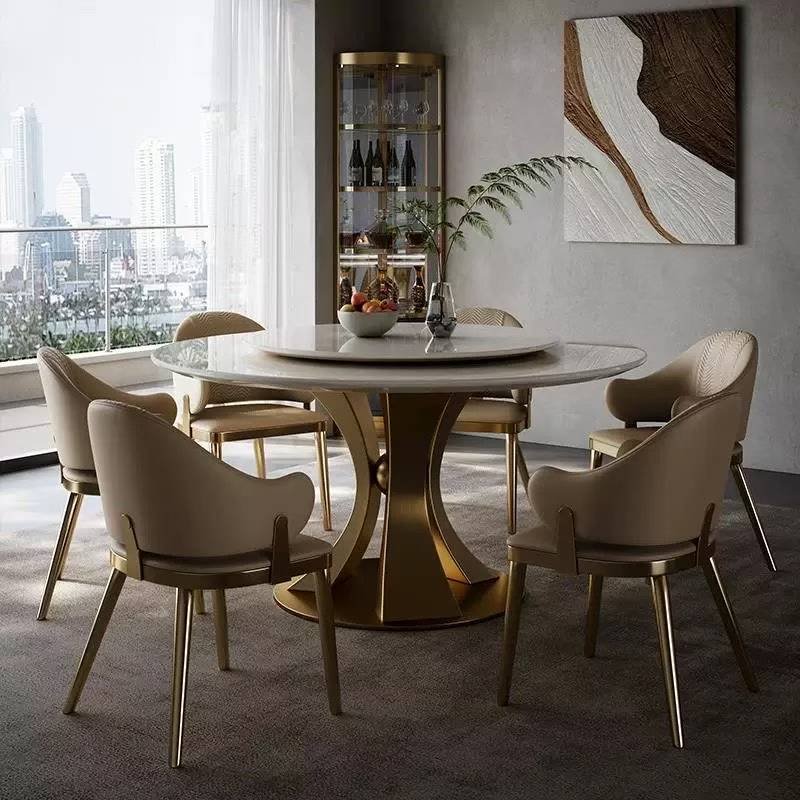
The oscillation between ornamental richness and geometric restraint has defined Italian furniture for five centuries. Baroque excess gave way to Neoclassical discipline; the Art Nouveau curves of the early 1900s yielded to the stark geometry of Italian Rationalism in the 1930s. For contemporary designers referencing the Italian tradition, the lesson is not to choose one extreme but to understand how each piece manages the tension between them. A dining room set with classical Italian proportions from Jade Ant furniture demonstrates this balance — structural forms follow traditional ratios while ornamental details are calibrated to enhance without overwhelming the silhouette.
Color, Patina, and the Value of Aging Materials
In Italian furniture culture, aging is not degradation — it is completion. A new piece of Italian walnut furniture is considered aesthetically unfinished in the same way that a newly planted garden is considered spatially unfinished. The full design intent emerges only as the materials mature: the walnut darkens, the French polish gains depth, the leather softens and develops creasing patterns unique to its use, the bronze hardware develops verdigris in recessed areas while polishing bright on touched surfaces. This temporal dimension is intentional — Italian classic furniture is designed to look its best at 20, 50, and 100 years of age, not at the moment of purchase.
Tools, Workflows, and the Handcraft Mindset
Traditional Tools and Contemporary Adaptations
The core toolkit of an Italian master cabinetmaker has changed remarkably little in 300 years: a collection of hand planes (smoothing, jointing, molding), a set of carving gouges (Swiss-made Pfeil or Italian-made Stubai), marking gauges, chisels in graduated sizes, hand saws (both Western push-cut and Japanese pull-cut, increasingly adopted in Italian workshops for their fine kerfs), and a sharpening system that maintains edges at 25–30 degrees. What has changed is the preparation stage: rough dimensioning, thicknessing, and initial shaping are now performed with machine tools (band saws, planers, jointers), freeing the artisan’s hand hours for the operations where human skill adds irreplaceable value — carving, fitting, and finishing.
Workflow from Sketch to Prototype to Finished Piece
A typical Italian atelier workflow progresses through seven stages: design consultation (2–4 weeks), full-scale drawing and template production (1–2 weeks), wood selection and preparation including acclimation to workshop humidity (2–8 weeks), structural fabrication including joinery (2–4 weeks), carved and inlaid decoration (2–8 weeks depending on complexity), surface finishing and curing (2–4 weeks), and upholstery if applicable (1–2 weeks). A carved and inlaid walnut dining table with eight chairs — a project of moderate complexity — takes approximately 16–24 weeks from design approval to delivery. This timeline is not a production bottleneck; it is the minimum time required for the materials to be worked, finished, and cured properly.
Quality Control and Consistency Across Production Runs
In workshop-scale production (runs of 5–50 pieces), quality control in Italian ateliers is not a separate inspection step — it is embedded in the workflow. Each artisan is responsible for the quality of their own output, and pieces typically pass through 3–5 pairs of hands as they move between disciplines (structure, carving, finishing, upholstery). At each handoff, the receiving craftsman inspects the incoming work and rejects pieces that fall below standard. This peer-to-peer quality system, combined with the pride dynamics of small-workshop culture, produces a defect rate that formal QC inspection systems in industrial settings rarely match — typically below 1% for critical defects in established Italian workshops.
Sustainability, Sourcing, and Ethical Collaboration
Responsible Timber Sourcing and Traceability
Sustainability in Italian classic furniture begins with timber sourcing. The European Union Deforestation Regulation (EUDR), effective from December 2025, requires that all timber products placed on the EU market come from land that was not deforested after December 2020, with full traceability documentation. For Italian workshops sourcing European hardwoods, FSC Chain of Custody certification provides the verification framework — and for designers specifying materials, requesting FSC-certified timber is the most straightforward way to ensure the wood in your project was harvested responsibly.
Italian walnut presents a particular sustainability consideration: because the trees require 60–80+ years to reach furniture-grade dimensions, the supply of large-diameter Italian walnut logs is finite and declining. Responsible workshops manage this scarcity through several strategies: using walnut selectively (for visible surfaces and carved elements) while using more abundant species (poplar, beech) for structural and secondary components; sourcing walnut from managed plantations in Emilia-Romagna and Umbria where replacement planting is verified; and maximizing material yield through careful log selection and sawing optimization.
Finishes and Chemical Considerations for Longevity and Safety
Traditional Italian finishes — shellac (French polish), beeswax, linseed oil, and tung oil — are among the lowest-VOC finishing systems available, because they are made from natural resins and oils rather than petrochemical solvents. A French-polished surface off-gasses negligible volatile organic compounds after the initial 48-hour curing period. By comparison, a catalyzed lacquer finish (the standard in modern industrial furniture production) can off-gas formaldehyde and other VOCs for weeks after application. For projects requiring stringent indoor air quality — healthcare environments, nurseries, high-end residential — traditional Italian finishes offer a genuine performance advantage beyond aesthetics.
Collaborating with Artisans: Fair Compensation and Knowledge Transfer
Working with Italian artisans is a collaboration between design vision and material expertise — and that collaboration requires appropriate compensation structures. A master carver with 20+ years of experience typically commands €40–€80 per hour in the Brianza and Tuscan workshops (2025 rates). This rate reflects not just labor but the accumulated knowledge that makes the work possible — knowledge that took a decade of apprenticeship to acquire and that cannot be replaced by younger workers without equivalent training investment. Designers should budget craft labor as a premium line item, not a cost to be negotiated downward, because underpaying artisans accelerates the loss of skills that makes the work valuable in the first place.
Watch: Inside an Italian Artisan Furniture Workshop
Video: A walkthrough of a traditional woodworking and gilding shop in Florence, Italy — demonstrating hand carving, gold leaf application, and finishing techniques passed through generations.

Case Studies: Iconic Italian Classics and What Makes Them Endure
A Celebrated Chair or Table: Design Cues and Craft Signatures
إن Chiavarina chair — produced in the town of Chiavari on the Ligurian coast since the early 19th century — is perhaps the most instructive case study in Italian material selection. Designed by cabinetmaker Giuseppe Gaetano Descalzi around 1807, the chair was engineered to be as light as possible (under 2 kg) while supporting a 100+ kg seated load. The solution was cherry wood, selected for its combination of tensile strength, fine grain (which allows very thin turned components without splintering), and flexibility (which allows the slight give that prevents brittle failure under dynamic loading). Over 200 years later, original Chiavarina chairs remain in daily use in restaurants and homes across Liguria — their structural integrity maintained not by massive cross-sections but by precise grain orientation and tight-fitting joints.
How Materials Tell the Story of a Piece
Every material choice in Italian classic furniture encodes information. Walnut says “this is a serious, permanent piece” — its slow growth, high cost, and long aging trajectory signal investment. Olive wood says “this comes from a specific landscape” — its wild, irregular grain and the warm smell it retains for decades connect the piece to the Mediterranean terrain where the tree grew. Gilded finishes say “this was made for an important space” — the labor-intensiveness of water gilding (40+ hours for a single console table base) means it was never applied casually. For designers, reading these material narratives is as important as reading the formal design language, because clients and collectors respond to material stories even when they cannot articulate why.
Lessons Designers Can Apply to Contemporary Projects
The enduring quality of Italian classics teaches three material principles that contemporary designers can apply directly. First, select primary materials for their aging trajectory, not their appearance at point of sale — Italian walnut is chosen because it looks better at 50 years than at 5. Second, match material hardness to expected use stress — the Chiavarina chair uses cherry for legs and beech for joints because each component needs different material properties. Third, use the most expensive materials only where they create the most impact — Italian cabinetmakers routinely use poplar and beech for hidden structural components and reserve walnut and olive for visible surfaces, optimizing both cost and visual effect. Manufacturers like أثاث النمل اليشم apply this same principle in their collections — selecting premium materials for visible surfaces and structurally appropriate materials for frames and substrates.
Preservation, Restoration, and Care of Italian Classics
Basic Maintenance to Preserve Patina and Value
The first rule of maintaining Italian classic furniture is to do less, not more. Aggressive cleaning, refinishing, and “restoration” destroy more antique furniture value than neglect does. Weekly dusting with a soft, dry cloth (microfiber or natural cotton) removes surface particles. Monthly conditioning with a thin application of microcrystalline wax (not silicone-based furniture polish, which builds up into a hazy film) nourishes the finish and provides a protective barrier. Annual inspection of joints, hardware, and finish condition catches small issues before they become structural problems.
Environment matters more than cleaning products. Italian furniture crafted from walnut and cherry performs best at 40–55% relative humidity and 18–24°C — conditions that prevent both the cracking caused by excessive dryness and the swelling and mold growth caused by excessive moisture. A furniture conservator at Nicholas Wells Antiques notes that more structural damage to wooden furniture is caused by central heating (which drops indoor humidity below 30%) than by any other single factor.
Restoration Ethics: When to Repair vs. Restore
The distinction between repair and restoration is central to Italian furniture conservation ethics. Repair addresses a specific functional problem — a loose joint, a broken leg, a lifted veneer — using reversible methods and compatible materials, while preserving the piece’s existing surface and patina. Restoration is a more comprehensive intervention that may include surface refinishing, replacement of missing elements, and structural reconstruction. The ethical principle, codified in the ICOM-CC (International Council of Museums – Committee for Conservation) guidelines, is minimum intervention: do only what is necessary to stabilize the piece and make it functional, and make all interventions reversible where possible.
For commercially used Italian classic furniture — pieces in hotels, restaurants, or high-traffic residential settings — a pragmatic middle ground is often appropriate: repair structural issues using traditional methods (hot hide glue, which is reversible; new wood patches in matching species and grain), refresh the finish in worn areas using compatible finishing systems (shellac on shellac, wax on wax), but preserve the overall patina that gives the piece its aged character and market value.
Documentation and Provenance as Design Value
Documentation transforms furniture from an anonymous object into a traceable artifact. Italian workshops have traditionally stamped, branded, or signed their work — marks that are often hidden under seat frames, inside drawers, or on the backs of cabinets. For contemporary designers commissioning work from Italian ateliers, insist on documentation at the time of production: the workshop’s name and location, the artisan(s) who contributed to each discipline (carving, finishing, upholstery), the wood species and sourcing provenance, the finishing system used, and the date of completion. This documentation becomes the piece’s passport — it accompanies the furniture through its lifetime and provides the provenance information that future conservators, appraisers, and owners will need.
The Designer’s Toolkit: Translating Tradition into Modern Products
Interpreting Italian Craft for Contemporary Living Spaces
Translating Italian craftsmanship into contemporary design does not mean reproducing 18th-century forms in their entirety. It means extracting the material principles, proportional systems, and craft techniques that made those forms endure — and applying them to designs that serve contemporary living patterns. A dining table designed today does not need cabriole legs or carved aprons, but it benefits enormously from the same principles that governed those historical elements: stable wood species selected for long-term dimensional reliability, joinery that resists racking forces without metal fasteners, a surface finish that improves with age rather than degrading, and proportions rooted in the mathematical systems that the human eye perceives as harmonious.
Choosing Materials That Honor Legacy While Meeting Today’s Needs
Contemporary designers working in the Italian tradition face a practical tension: clients want the warmth and character of traditional materials but also expect durability in modern-use environments (children, pets, frequent entertaining, underfloor heating). The resolution lies in specifying traditional materials where they will be seen and touched — solid walnut table tops, hand-finished surfaces, lost-wax bronze hardware — while using modern engineering solutions where they are hidden. A marble-topped dining table from Jade Ant furniture, for example, pairs a natural stone surface (a material with centuries of Italian craft heritage) with a precision-engineered metal or wood base designed for stability under contemporary use conditions.
Collaboration Workflows with Ateliers and Suppliers
A productive collaboration between a contemporary designer and an Italian atelier follows a structured workflow. Begin with a written design brief that includes dimensional specifications, material preferences (species, finish type, hardware style), performance requirements (load capacity, intended use environment), and reference images. Provide this in English and, if possible, Italian — many workshop masters are more comfortable discussing technical details in their native language. Budget 4–6 weeks for initial sampling: the workshop will typically produce a finish sample board (showing the proposed wood species, stain or oil color, final topcoat), a hardware sample, and if the piece involves carving, a small carving sample at actual scale.
Expect 2–3 revision rounds on complex pieces. Italian artisans are accustomed to iterative refinement — it is part of the workshop culture — but revision requests should be specific and documented (annotated photos, dimensioned sketches) rather than vague (“make it more elegant”). The more precise your feedback, the faster the iteration converges on the final design. For designers seeking Italian-inspired furniture without the full atelier commissioning process, curated collections from established manufacturers like Jade Ant furniture offer pieces that embody classical Italian material principles within standardized production frameworks.
The enduring value of Italian classic furniture craftsmanship is not nostalgia for a lost era — it is the practical recognition that certain material choices, construction methods, and proportional systems produce furniture that outlasts alternatives by orders of magnitude. A mortise-and-tenon joint in Italian walnut, cut with grain awareness and glued with hot hide glue, will hold for centuries. A French-polished shellac surface will develop increasing beauty over decades. A vegetable-tanned leather seat will soften and patinate into a texture that synthetic alternatives cannot approximate at any price point.
For contemporary designers, the invitation is not to replicate the past but to engage with its materials and methods selectively and respectfully. Cultivate relationships with regional ateliers — the Brianza upholstery workshops, the Florentine carving studios, the Venetian lacquer specialists — and document the provenance of every piece you commission. These relationships are the living infrastructure of Italian craft, and they survive only through continued demand from designers who understand what they offer.
The actionable path forward: begin with your next project. Select one element — a table top, a set of hardware, a carved detail — and source it from an Italian atelier using traditional materials and methods. Document the process. Experience the timeline. Evaluate the result against industrially produced alternatives. That single comparison will teach you more about the value of Italian craftsmanship than any article can convey — because the difference between reading about hand-carved walnut and running your fingers across its surface is the same difference that separates furniture from artifact.
الأسئلة الشائعة (FAQ)
1. What defines “Italian classic furniture craftsmanship”?
Italian classic furniture craftsmanship is defined by three interlocking elements: material selection based on long-term aging properties (not just visual appearance at point of sale), construction techniques that prioritize wood-to-wood joinery over mechanical fasteners, and surface finishing systems that develop richer patina over decades rather than degrading. The tradition spans roughly 600 years from medieval cassoni through Renaissance intarsia to Baroque carving and Neoclassical marquetry, with regional variations across Tuscany, Lombardy, and the Veneto.
2. Which materials are most characteristic of Italian classic furniture, and why do they endure?
Italian walnut (Juglans regia) is the canonical material — its Janka hardness (1,010 lbf) balances carving workability with surface durability, and its heartwood darkens to a rich chocolate patina over decades. European cherry, Slavonian oak, Mediterranean olive, and Alpine larch each serve specific structural and decorative roles. These woods endure because Italian craftsmen select them based on grain orientation, moisture content (target: 8–12%), and growth rate — slow-grown timber from managed forests produces tighter grain and greater dimensional stability than plantation wood.
3. How can a designer responsibly collaborate with Italian ateliers?
Begin with a detailed written brief (dimensions, material specs, performance requirements, reference images) in English and Italian. Budget for fair artisan compensation (€40–€80/hour for master craftspeople). Allow 16–24 weeks for a project of moderate complexity. Request documentation including wood species provenance, craft techniques used, and artisan identification. Use organizations like the Fondazione Cologni dei Mestieri d’Arte to identify vetted workshops. For accessible entry points, established manufacturers like Jade Ant furniture offer Italian-influenced collections with shorter lead times.
4. How does Italian walnut compare to American black walnut for furniture use?
Italian walnut (Juglans regia) and American black walnut (Juglans nigra) are closely related but differ in workability and color. Italian walnut has a lighter heartwood (grayish-brown with variable streaks vs. American walnut’s more uniform dark chocolate), slightly lower Janka hardness (1,010 vs. 1,010 lbf — nearly identical), and finer texture that takes carved detail more crisply. Italian walnut is significantly more expensive (€1,500–€2,200/m³ vs. $800–$1,200/m³ for American) due to slower growth rates and more limited supply, but its finer grain and superior aging patina justify the premium in high-end applications.
5. What is the difference between marquetry and parqueterie?
Marquetry (intarsio) creates pictorial or free-form decorative patterns using irregularly shaped pieces of different wood veneers — floral designs, figurative scenes, architectural illusions. Parqueterie creates geometric repeating patterns — diamonds, herringbone, checkerboard — using regular shapes. Both use veneers cut to 0.6–1.0 mm thickness, but marquetry requires greater artisan skill (7–10 years of training) because each piece is individually shaped to fit the design, while parqueterie pieces are cut to uniform templates. The Sorrentine tradition in southern Italy is renowned for pictorial marquetry using up to 150 wood species in a single composition.
6. How should I maintain Italian classic furniture to preserve its value?
Dust weekly with a soft, dry cloth. Apply microcrystalline wax monthly (avoid silicone-based polishes). Maintain 40–55% relative humidity and 18–24°C ambient temperature. Inspect joints, hardware, and finish annually. For French-polished surfaces, never use water-based cleaners — alcohol in the shellac finish will dissolve on contact with water. For upholstered pieces with vegetable-tanned leather, condition with leather balm every 6–12 months. The goal is to slow and control the aging process, not to reverse it — patina adds both aesthetic and monetary value to Italian classic pieces.
7. What role does the Brianza district play in Italian furniture production?
إن Brianza district in Lombardy, north of Milan, is Italy’s largest furniture manufacturing region, housing over 4,000 workshops and employing 30,000+ artisans. It is the production base for major Italian furniture brands (Cassina, Molteni, Poltrona Frau, Giorgetti) and specializes in upholstered furniture, combining beech and birch frame construction with hand-tied spring systems and premium leather and textile upholstery. Brianza’s concentration of skill makes it the most efficient region for commissioning furniture that requires multiple craft disciplines (structural, carving, upholstery, finishing) under coordinated workshop management.
8. Is FSC-certified Italian walnut available for furniture projects?
FSC-certified Italian walnut is available but in limited supply, because most Italian walnut comes from small private orchards and managed woodlots rather than large commercial plantations. FSC Italia works specifically with the wood-furniture sector to expand certification coverage. Designers should request FSC certification early in the specification process and accept that certified material may require longer procurement lead times (4–8 weeks). The EU Deforestation Regulation (EUDR) provides an additional traceability framework for timber sourced within or imported into the EU.
9. How do I distinguish a genuine Italian-crafted piece from a factory reproduction?
Examine five indicators: joinery (hand-cut mortise-and-tenon joints show slight irregularity; machine-cut joints are perfectly uniform), carving (hand-carved surfaces have tool-mark texture and depth variation; CNC-carved surfaces are uniformly smooth), finish (French polish shows depth and warmth; spray lacquer shows a harder, more reflective surface), hardware (lost-wax cast bronze has textural complexity and weight; die-cast zinc alloy is lighter and smoother), and maker’s marks (genuine Italian workshops typically brand, stamp, or sign their work in a hidden location). Documentation and provenance records provide the strongest verification.
10. Can Italian craftsmanship techniques be applied to contemporary furniture designs?
The techniques translate directly — the question is which principles to apply and where. Hand carving remains relevant for focal decorative elements (a table leg detail, a cabinet crown). Traditional joinery (mortise-and-tenon, dovetail) is structurally superior to dowels or biscuit joints for high-stress connections. French polish finishing is ideal for surfaces where tactile quality and aging patina are priorities. The contemporary adaptation is selective application: use Italian craft techniques where they create the most value (visible surfaces, high-stress joints, touch points), and use modern production methods where efficiency matters without compromising quality (hidden structure, substrate preparation, repetitive components).











 Arabic
  English
  Portuguese