5 Must-Have Light Luxury Furniture Pieces for Elegant Villas
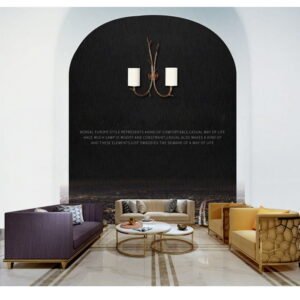
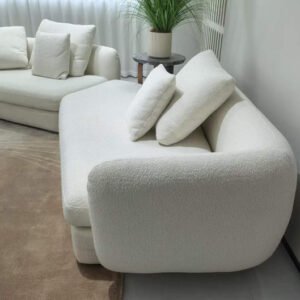
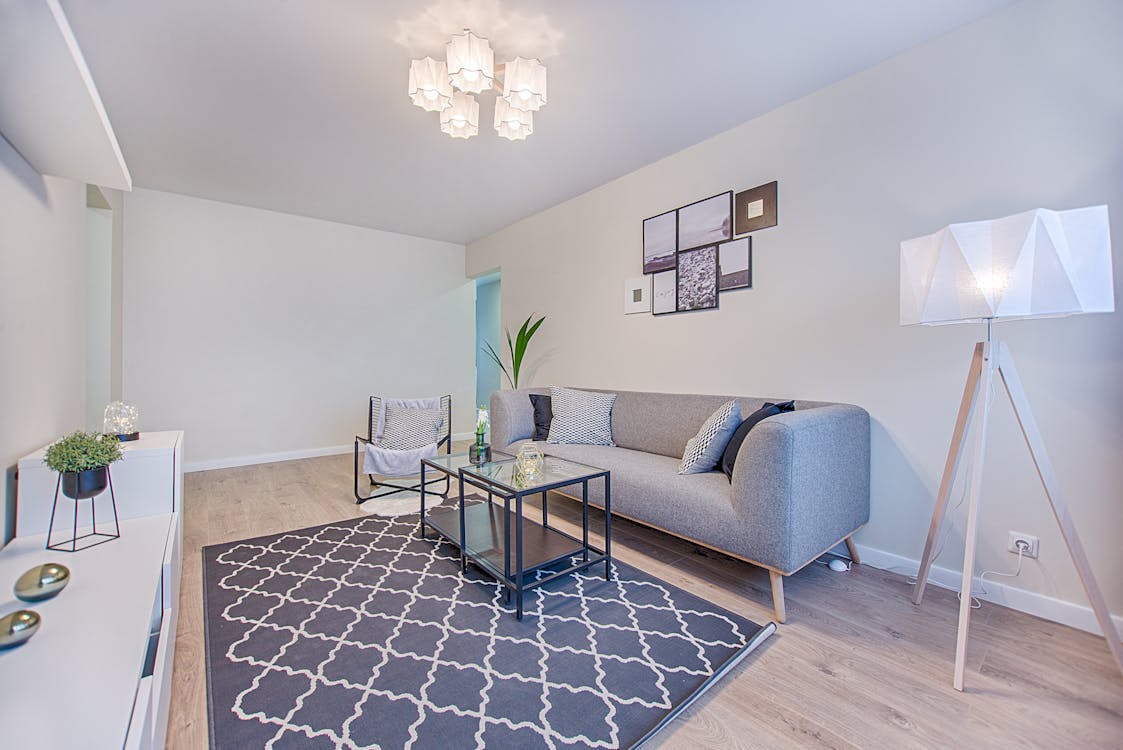 A villa living room where every piece carries its weight — visually, structurally, and commercially. This is what light luxury looks like in practice. | Photo: Pexels
There is a specific quality that separates an extraordinary villa from one that simply cost a great deal of money to build. It is not the ceiling height, the view, or the price per square metre. It is the sense that every piece of furniture was chosen because it belongs — not because it was available, not because it photographed well in isolation, but because it was selected with full awareness of the space it would inhabit and the story that space was trying to tell.
That quality has a name in contemporary design circles: light luxury. And it is reshaping how the most sophisticated villa owners, developers, and design professionals think about FF&E — moving away from opulence for its own sake toward something more disciplined, more durable, and in many cases, more valuable.
This guide is built for professionals who make these decisions at scale. Whether you are specifying furniture for a 12-villa development on the Costa Smeralda, advising a high-net-worth client on their primary residence in Singapore, building a private-label collection for boutique branded residences, or importing premium furniture for a regional distribution network — every section below addresses a real decision you face, with the specificity your work demands.
Redefining Elegance in Villa Interiors: What Light Luxury Actually Means
Before selecting a single piece of furniture, it is worth being precise about the design philosophy that underpins this guide — because “light luxury” is a term that gets used loosely, and the difference between genuine light luxury and imitation luxury is the difference between a villa that commands a premium and one that merely looks expensive in the brochure.
Light luxury, in the context of high-end villa design, describes an approach to interior curation built on three simultaneous commitments: material integrity — using genuine premium materials that earn their presence through quality rather than price tag; visual restraint — achieving depth and richness through precision and proportion rather than accumulation and ornamentation; and lived-in elegance — selecting pieces that are not merely beautiful at first glance but become more satisfying to inhabit over time.
It is explicitly not minimalism. Minimalism removes. Light luxury curates. A minimalist room might have two pieces of furniture. A light luxury room has exactly the right pieces, in exactly the right proportions, in exactly the right materials — and nothing else. The discipline is in the editing, not in the reduction.
It is also explicitly not traditional luxury maximalism — the heavy drapery, the gilded detailing, the accumulation of expensive objects. Maximalism signals wealth through density. Light luxury signals taste through restraint. These are different commercial propositions, and in today’s market — where the buyers and guests who matter most to premium villa developers have seen more hotel rooms, more showrooms, and more high-end residences than any previous generation — restraint consistently outperforms accumulation.
The Evolution of Light Luxury: Why It Matters Now
The shift from maximalist to restrained luxury in high-end residential design did not happen because tastes changed randomly. It happened because the buyers and guests at the top end of the market changed.
The demand shift is documented in the numbers. The global luxury furniture market reached USD 25.28 billion in 2025 and is projected to grow to USD 42.02 billion by 2034, ، وفقًا ل Fortune Business Insights. Within that growth, the fastest-expanding segment is not ornamental luxury — it is artisanal, wellness-aligned, low-impact luxury furniture for residential and boutique hospitality applications. The buyers driving this growth are experienced international travellers, design-literate property investors, and developers who understand that differentiation in saturated luxury markets requires genuine design authenticity, not decorative volume.
Wellness-centricity is part of this equation. The integration of biophilic materials — solid timber, natural stone, organic textiles, clay-based finishes — into villa interiors reflects a documented shift in what high-net-worth residents and guests find restorative. A bedroom with a linen-upholstered headboard, a solid walnut side table, and a hand-knotted wool rug does not just look calm. It functions as a sensory environment that actively supports rest and recovery — and guests are paying premium rates to experience that.
Sustainability is the third driver. For villa developers operating in ESG-conscious investment environments, and for private-label brands building collections for distribution in markets with mandatory sustainability disclosure requirements, light luxury’s emphasis on FSC-certified timber, low-VOC finishes, and OEKO-TEX certified textiles is not incidental. It is a procurement requirement. And because genuine light luxury furniture is designed for longevity — typically a 12–15 year useful life rather than the 3–5 year cycle of trend-driven specification — it satisfies sustainability criteria on the basis of durability alone.
For designers, developers, importers, and FF&E buyers, the practical implication is straightforward: light luxury is not a style trend to be chased or abandoned with the next design cycle. It is a philosophy rooted in timeless principles — honest materials, precise proportions, considered craftsmanship — that will remain commercially relevant long after its current cultural moment has passed.
Criteria for Selecting Light Luxury Furniture: A Professional’s Checklist
Not every expensive piece of furniture qualifies as light luxury. And not every piece that qualifies needs to be European or six-figure. The criteria are about quality of decision-making, not price tier alone.
Before specifying any piece for a villa project, evaluate it against these six professional standards:
Material authenticity is the first and most important test. The piece must be made from genuine materials — solid hardwood rather than MDF with a wood-look veneer, full-grain or top-grain leather rather than bonded or PU synthetic, natural stone rather than resin composite presented as stone. Ask for material composition documentation, not just finish descriptions. A credible luxury furniture supplier provides this as standard; one who cannot is telling you something important about their product.
Craftsmanship evidence goes beyond brand name recognition. Look for: hand-finished surfaces where tool marks are deliberate rather than industrial (a hand-stitched leather seam, a hand-applied oil finish on a solid oak table); structural joinery that is designed to last — mortise-and-tenon, dovetail, or through-tenon construction rather than pocket screws and corner brackets; and foam and spring systems rated for commercial or high-residential use (minimum 2.0 lb/ft³ foam density for seat cushions in villa environments).
Made-to-order flexibility is a defining characteristic of genuine light luxury at the design level. A piece that cannot be produced in a custom dimension, in a proprietary finish, or in a fabric from your own material specification is a catalogue product presented as a luxury product. True light luxury pieces are designed with customisation as a core capability, not an exception.
Design coherence with architectural context requires that the piece not just be beautiful in isolation but appropriate for the specific architectural vocabulary of your project. A sculptural piece with organic curves belongs in a villa with organic architectural forms. A precisely rectilinear piece belongs in a modernist villa with flush stone and minimal ornament. The discipline is matching the furniture’s design language to the architecture’s, not selecting the most impressive piece from a supplier’s catalogue regardless of fit.
Durability documentation — structural warranty periods (five years minimum for frame and joinery; ten years for premium manufacturers), upholstery abrasion ratings (Martindale cycle counts appropriate for the intended use level), and material performance certifications specific to the climate of installation — must be requested in writing before any purchase order is placed.
Certification compliance for the destination market is non-negotiable for FF&E buyers and developers. Fire safety compliance (California TB 117, BS 5852, EN 1021 depending on market), FSC timber certification, and GREENGUARD Gold finish certification are the minimum documentation requirements for any piece entering a commercial or high-end residential project in a regulated market.
Must-Have #1: The Sculptural Lounge Chair — The Statement Anchor
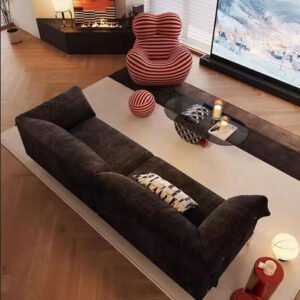
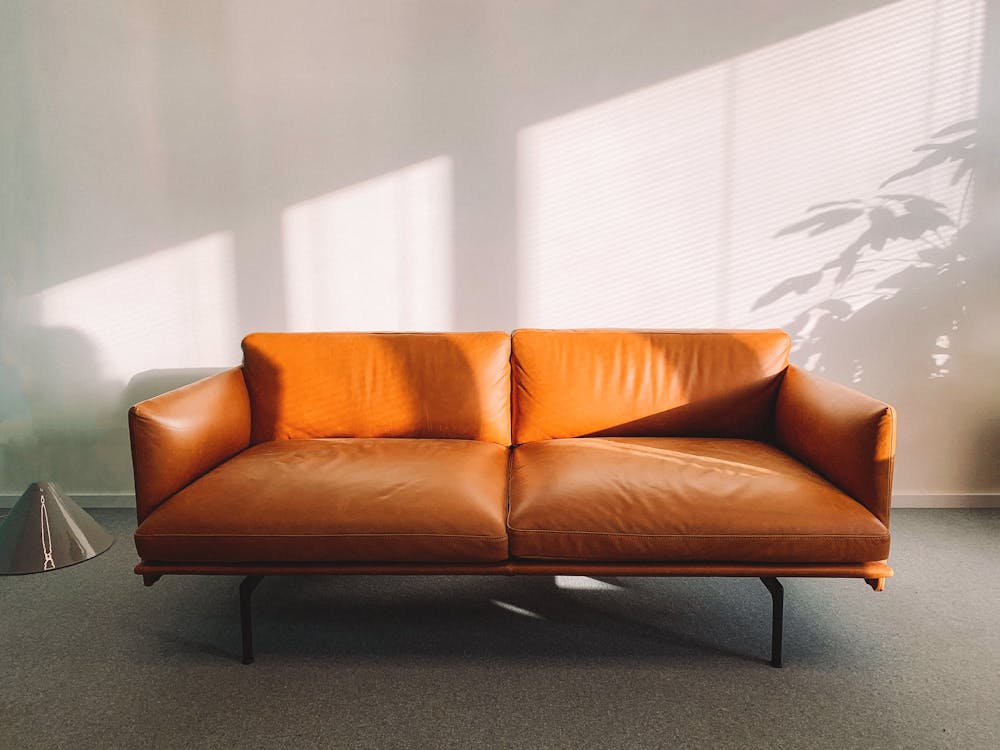 A single, precisely chosen lounge chair transforms a corner into a destination — and gives marketing photographers their hero shot. | Photo: Pexels
A sculptural lounge chair occupies a unique position in the light luxury furniture hierarchy. It is simultaneously the most singular piece in a room — one chair, one silhouette, one moment of visual commitment — and the most commercially leveraged. In villa marketing photography, it is almost always the piece that appears closest to the camera, in the foreground, as the visual entry point to the space. It is the first furniture decision that prospective buyers form an opinion about. And because it functions as an artistic object as much as seating, it carries the ability to anchor the design narrative of an entire room from a single position in the corner.
What defines a genuinely sculptural lounge chair at the light luxury level:
The silhouette must be deliberate — a form that could not have been arrived at accidentally. This does not mean complexity for its own sake. Some of the most powerful lounge chair silhouettes are exceptionally simple: a continuous curve from backrest to seat that suggests the body’s resting position before the body arrives; a geometric shell form that frames the occupant within a defined sculptural space; a low, wide proportioned seat with a dramatically inclined backrest that communicates repose before anyone sits in it.
The reference points that define this category at the highest level include B&B Italia’s Charles (Antonio Citterio, 1997 — still in production because the proportions have proven timeless across three decades), with its slim aluminium base, disciplined arm geometry, and the ability to feel resolved in both contemporary and transitional architectural contexts. Minotti’s Freeman represents a different register: a generous, deep seat with a wrap-around low-back profile that communicates comfort as clearly as the Charles communicates precision. Both are available from approximately USD 3,500–9,000 at European list prices for the armchair configuration, with custom fabric or leather adding 15–30% above standard pricing.
For villa projects where design exclusivity is a commercial requirement — and for private-label brands building their own collections — custom-designed lounge chairs with proprietary silhouettes and signature material combinations represent the highest tier of this category. A custom chair designed for your collection and produced by an established OEM manufacturer carries design IP ownership, exclusivity documentation, and the ability to build brand equity across every project that specifies it.
Placement strategy for maximum commercial impact:
The primary placement — and the one that generates the marketing photography value — is a reading nook adjacent to a window with strong natural light, positioned at a slight angle to the window to create both shadow depth on the chair’s form and a visual invitation toward the view. This placement requires nothing more than the chair, a floor lamp, and a small side table to function as a complete composition.
Secondary placements — at the foot of a master suite bed, at an open-plan transition between living and dining zones, as a pair flanking a fireplace — extend the chair’s design narrative through the property. In a development project with multiple villa units, the lounge chair is the ideal piece for differentiation across units: same silhouette, varied upholstery specification, creating collection coherence while allowing individual unit character.
The ROI case for developers is direct and well-documented: professionally staged luxury properties with statement furniture pieces sell for 5–10% more than unstaged equivalents, with staged luxury homes consistently generating more first-page online listing engagement. On a USD 4 million villa, a 5% premium represents USD 200,000 — against a lounge chair investment that rarely exceeds USD 8,000–15,000 even at the highest specification tier.
Must-Have #2: The Modular Sofa System — Flexible Elegance
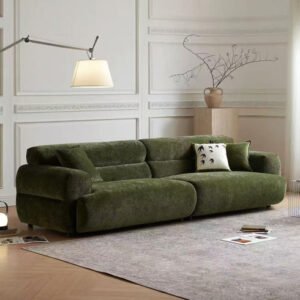
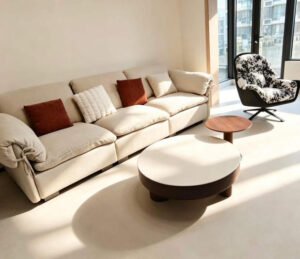
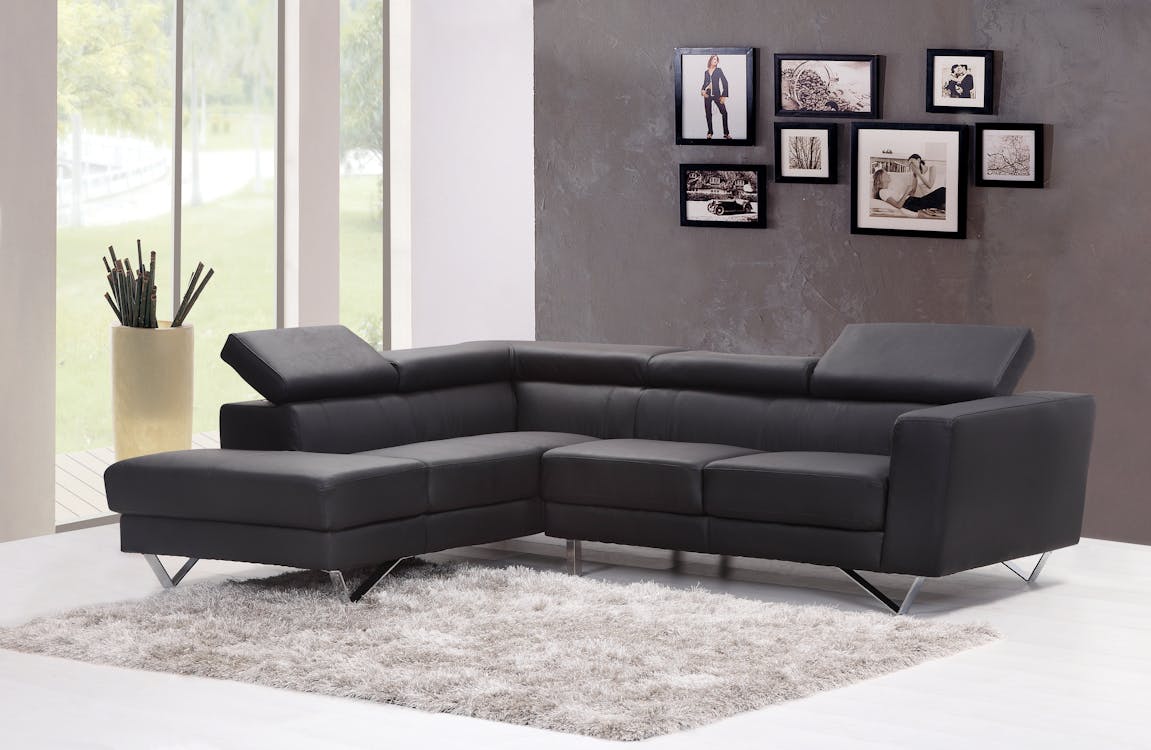 A modular sofa system configured for a double-aspect villa living room — the proportions work because the configuration was designed for the space, not adapted from a showroom floor plan. | Photo: Pexels
The modular sofa is the most spatially complex furniture decision in a villa project — and the most consequential. A sofa that is 15% too small for a double-height living room makes the entire room look underfurnished regardless of what else is in it. A sofa configuration that does not relate to the room’s geometry creates the spatial equivalent of a conversation happening in the wrong language. Getting this piece right requires both design intelligence and procurement discipline.
What modular actually means — and why it matters for your clients:
Modular, in the context of light luxury sofa systems, does not mean flexible or casual. It means that the sofa is constructed from a defined vocabulary of individual seating modules — standard seat units, corner modules, chaise elements, back cushion options — that can be combined in different configurations to respond precisely to the geometry and scale requirements of a specific space. The discipline of a well-designed modular system is that every configuration maintains the visual coherence of the whole: the arm heights, seat depths, back cushion proportions, and frame profiles are consistent across all modules.
For a villa project, this has three practical advantages. Spatial customisation without bespoke pricing — you can configure a sofa that fits a specific room dimension (say, a 5.2-metre-long arrangement with a chaise extension turning toward the garden view) without commissioning a custom piece. Adaptability for multi-generational or rental use — a configuration that works for a family can be reconfigured for corporate retreat bookings or seasonal rental use without purchasing new furniture. Phased delivery and installation — modules can be delivered in stages, which matters on villa projects where the living room installation window may be tight relative to other finishing trades.
The systems that define this category at the light luxury tier:
Poliform’s Tribeca sofa system represents the current benchmark for architectural modularity — a system designed with the precision of cabinetry, in which every module responds to a dimensional grid that allows configurations from two-seat intimate arrangements to eight-module open-plan compositions. The frame system is concealed within the upholstery profile, creating a silhouette that reads as a single resolved form rather than a visible assembly of parts. Price range: from approximately USD 12,000 for a three-seat standard configuration; full villa-scale arrangements typically USD 25,000–60,000 depending on module count and specification.
Molteni&C’s D.154.2 sofa system (available through مولتيني آند سي) offers a slightly warmer material register — deeper seat cushions, more visible upholstery quilting, a broader fabric and leather palette — suited to villas with a softer design vocabulary. The system is particularly effective in Mediterranean-style villas where the architecture already carries warmth through timber, terracotta, and natural plaster surfaces, and the sofa needs to continue that material conversation rather than contrast it.
For buyers and distributors working with Asian or OEM manufacturers on private-label collections, the modular sofa is one of the highest-value pieces to develop under your own specification — because the intellectual property of the system (the specific module dimensions, connection mechanisms, and cushion geometry) is protectable, and because a well-designed proprietary modular system creates the client relationships that no competitor can replicate simply by matching your fabric options.
Pain points this piece solves for your clients:
The most common sourcing error in villa sofa specification is selecting a beautiful sofa without confirming its performance in the actual space dimensions. A sofa that works in a European showroom may be 30cm too short for a specific villa room’s proportional requirements — not enough to notice in isolation, but enough to create the faint visual incompleteness that makes a room feel like something is missing. Requiring a space planning consultation — either with the designer or with your own specification service — before confirming any modular sofa order eliminates this error and protects the client relationship.
Fabric specification for villa environments:
For villas in warm or coastal climates, the standard linen and wool upholstery options from European manufacturers require performance specification upgrades. Request the manufacturer’s stain-resistance treatment options (Teflon-coated or nano-treated upholstery does not change the aesthetic but significantly reduces maintenance complexity for clients). For outdoor terraces or semi-open villa living areas, Sunbrella-compatible versions of light luxury sofa systems are now available through multiple manufacturers — ask specifically about COM (Customer’s Own Material) options that allow you to substitute performance outdoor fabric for the standard interior upholstery.
Must-Have #3: The Organic Dining Table — The Heart of Connection
The dining table is the one piece of furniture in a villa that every guest, resident, and prospective buyer interacts with at close range, for extended periods, in a social context that amplifies their impression of the space. It is not background furniture. It is the centrepiece of the most significant shared moments in the property — and it must perform as one.
Why “organic” is the defining design direction:
The shift toward organic dining tables in luxury villa design reflects the same material intelligence that defines the broader light luxury movement. Straight-edged, glass-topped, or highly processed dining tables signal the design sensibility of a decade ago. Today’s most impactful villa dining tables feature materials that carry visible geological or biological character: the cloud-like veining of travertine, the organic grain variation of bleached white oak, the surface depth of smoked glass, the honest imperfection of hand-cast stone. These materials communicate a design conviction that no amount of precise machining can replicate — the table looks like it was found rather than manufactured, even when it required significant craft to produce.
Material selection for the organic dining table:
| المواد | Aesthetic Quality | Performance in Villa Use | Maintenance Level | Best Villa Context |
|---|---|---|---|---|
| Travertine (natural) | Geological richness, warm ivory tones, no two pieces identical | Must be sealed annually; porous to acid (wine, citrus) | Medium — sealing required | Mediterranean, classical, resort-style villas |
| Sintered Stone (travertine look) | Visually identical to travertine; zero porosity | Impervious to staining, heat, scratching | Very low | Any climate; ideal for rental or high-use villas |
| Bleached/Whitened Oak | Warm grain, light-toned, organic texture | Excellent structural durability; requires UV-stable finish in sunny environments | Low to medium | Scandinavian-influenced, coastal, and light-filled interiors |
| Smoked/Grey Oak | Rich tonal depth; sophisticated, non-trendy | Same structural quality as bleached oak with different palette | Low to medium | Transitional, modernist, and darker-palette villa interiors |
| Hand-Cast Concrete | Monolithic weight, artisan character, range of tone | Durable but requires sealing; slight surface porosity | متوسط | Contemporary architectural and industrial-influenced villas |
| Marble (Calacatta or Statuario) | Unmatched visual authority and luxury positioning | Most prestigious but highest maintenance — requires professional sealing and careful use | عالية | Formal dining rooms in classical or palatial villa settings |
Sculptural bases are non-negotiable at the light luxury tier:
A premium stone or timber tabletop resting on a conventional four-leg base is a missed opportunity. The base of a dining table is the architectural element that makes the piece feel sculptural rather than functional. A single pedestal base in hand-cast concrete or solid brass, a trestle system in welded blackened steel with organic hand-forged details, or a faceted geometric timber base that continues the grain character of the top — these are the decisions that elevate a dining table from furniture to centerpiece. Request base design options from any manufacturer you are evaluating: a supplier who offers only standard legs is telling you something about their design capability.
Indoor-outdoor flow and the dining table’s role in it:
For villa architects and developers working on properties with strong indoor-outdoor connectivity — the defining design aspiration of contemporary luxury villa design — the dining table occupies a critical threshold position. An outdoor dining table that continues the material vocabulary of the indoor table (teak grain mirroring the indoor oak tone, powder-coated metal base in the same finish direction as the indoor brass) creates a seamless design narrative across the threshold. A complete break in material register at the glass sliding door signals that the outdoor space was designed separately — and guests feel this disjunction even if they cannot articulate it.
Sourcing outdoor dining tables to match indoor specifications requires working with manufacturers who offer both indoor and outdoor collections with design continuity — or custom specifying outdoor pieces through an OEM partner who can produce to your indoor material reference.
Must-Have #4: The Floating Console and Media Unit — Discreet Technology Integration
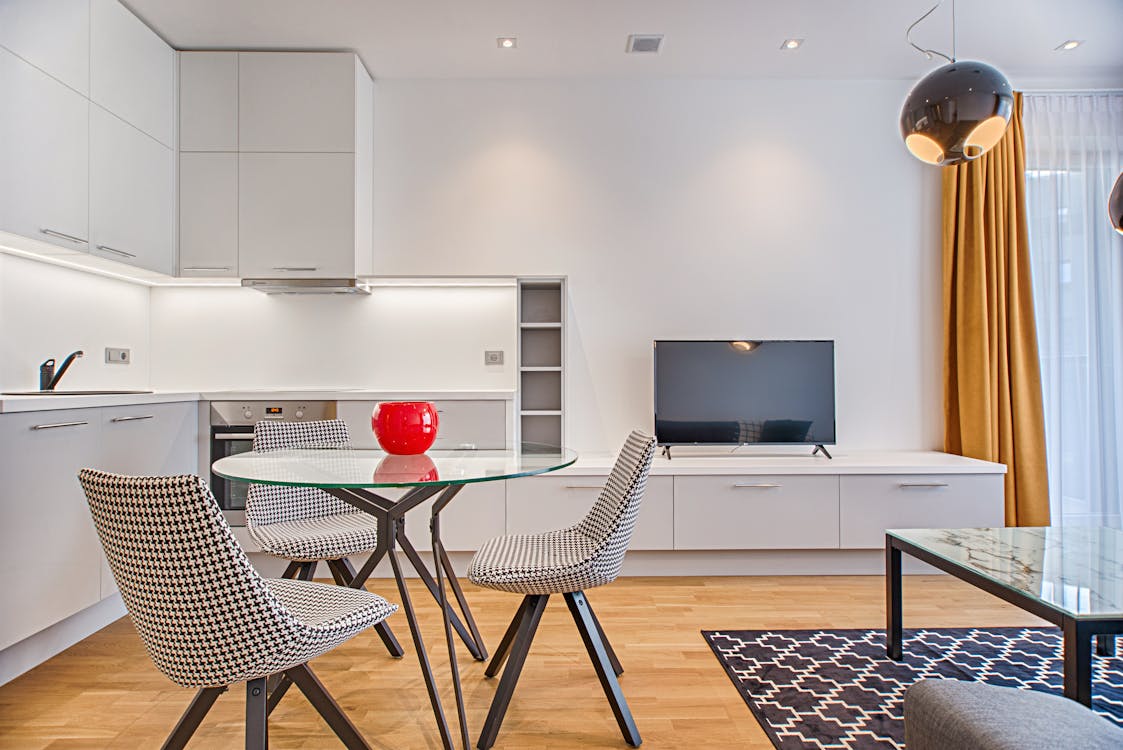 The best media unit in a luxury villa is the one you notice least — technology that disappears into the architectural language of the space. | Photo: Pexels
There is a persistent tension in high-end villa design between the visual demands of the space and the functional reality of how people actually live in it. Residents and guests want 85-inch screens, built-in sound systems, home automation interfaces, and multiple device charging points. They also want the visual calm of a space that does not look like it was designed around a television. The floating console and media unit is the piece that resolves this tension — when specified correctly.
What “floating” actually means — and why it matters:
Wall-mounted or floating media units eliminate the visual weight that floor-standing units introduce. By creating a visible gap between the unit and the floor — typically 35–50cm in light luxury applications — they allow the floor material (stone, hardwood, large-format tile) to continue visually beneath the unit, maintaining the spatial openness that defines the light luxury aesthetic. The technology is contained; the visual field remains uninterrupted.
The light luxury floating console operates on a principle of discreet concealment: every technology element — the screen, the cables, the streaming devices, the sound bar, the automation control panels — is concealed within the unit’s architecture, surfacing only when in use. Closed doors with integrated push-catch mechanisms (no visible handles) maintain the clean facade. Internal cable management routed to a single wall penetration eliminates the cable clusters that undermine the most expensive interior specification within seconds of installation.
Specification priorities for villa and hotel residence applications:
Acoustic finishes on door panels — perforated timber or fabric-faced panels allow sound to pass through from concealed speakers without visual indication of speaker presence. This is the specification that separates a professionally integrated media unit from a cabinet with a television mounted above it.
Depth management — the unit must be deep enough to house AV equipment (standard AV rack depth is 45cm; specify minimum 50cm internal depth for residential AV integration) while projecting no more than 30cm from the wall to maintain the visual lightness that defines this piece in a light luxury context.
Finish continuity with architectural casework — the media unit should read as an architectural element rather than a piece of furniture. This means specifying it in the same timber species and finish as adjacent joinery (kitchen cabinetry, built-in bookshelves, wardrobe doors) so that it appears to grow from the building rather than having been placed against it.
Integrated ambient lighting — a warm LED strip light positioned at the rear of the unit, between the unit and the wall, creates a floating effect that activates the piece visually in the evening without requiring additional light sources in the room. This is the single lowest-cost, highest-impact specification decision in this category.
The smart villa integration requirement:
Villas operating smart home ecosystems — Control4, Crestron, Lutron, Savant — require the media unit’s internal architecture to accommodate the appropriate control panels, rack-mount processors, and network distribution hardware. This is a coordination point between the furniture specification and the technology integration consultant that must happen before production, not after delivery. A media unit built without reference to the actual AV equipment it will house creates the installation problems that result in panels mounted on wall surfaces, cables running externally, and the exact visual outcome the entire specification was designed to prevent.
أثاث النمل اليشم manufactures custom floating consoles and media units to project-specific dimensions and architectural finish references, with internal layout coordination based on client-provided AV equipment schedules. The design process includes internal dimensioning drawings reviewed and approved by the AV integration team before production commitment.
Must-Have #5: The Bespoke Bedroom Set — Sanctuary-Level Serenity
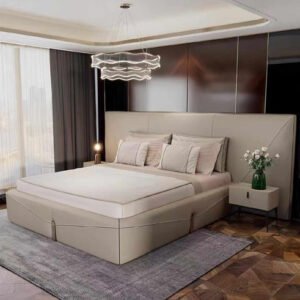
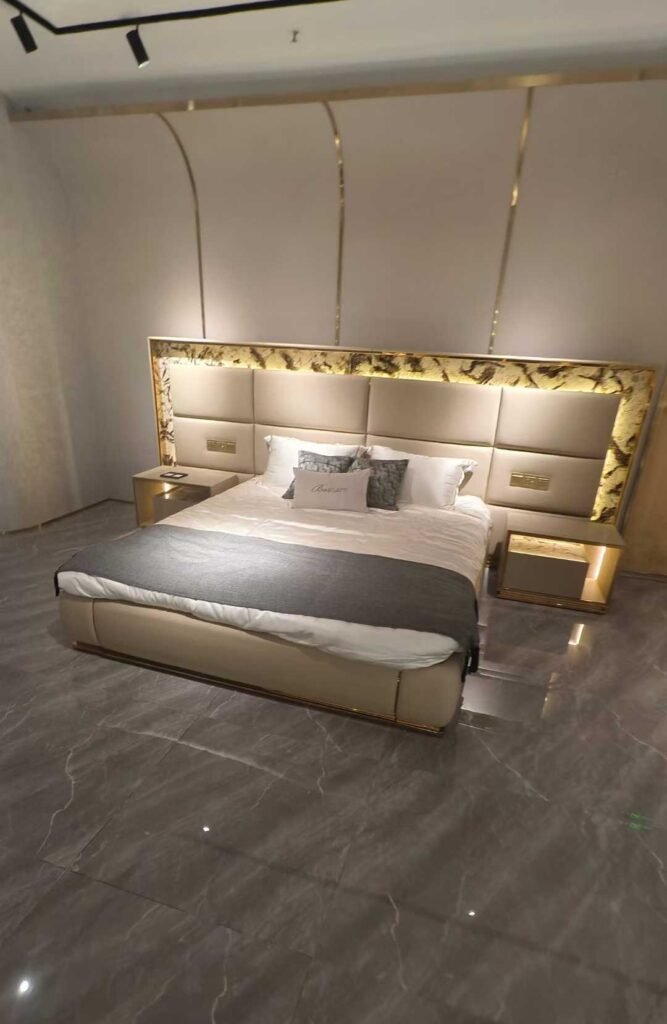
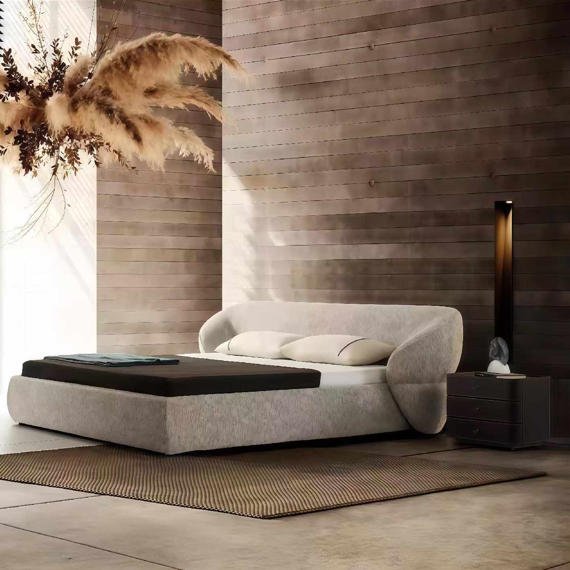
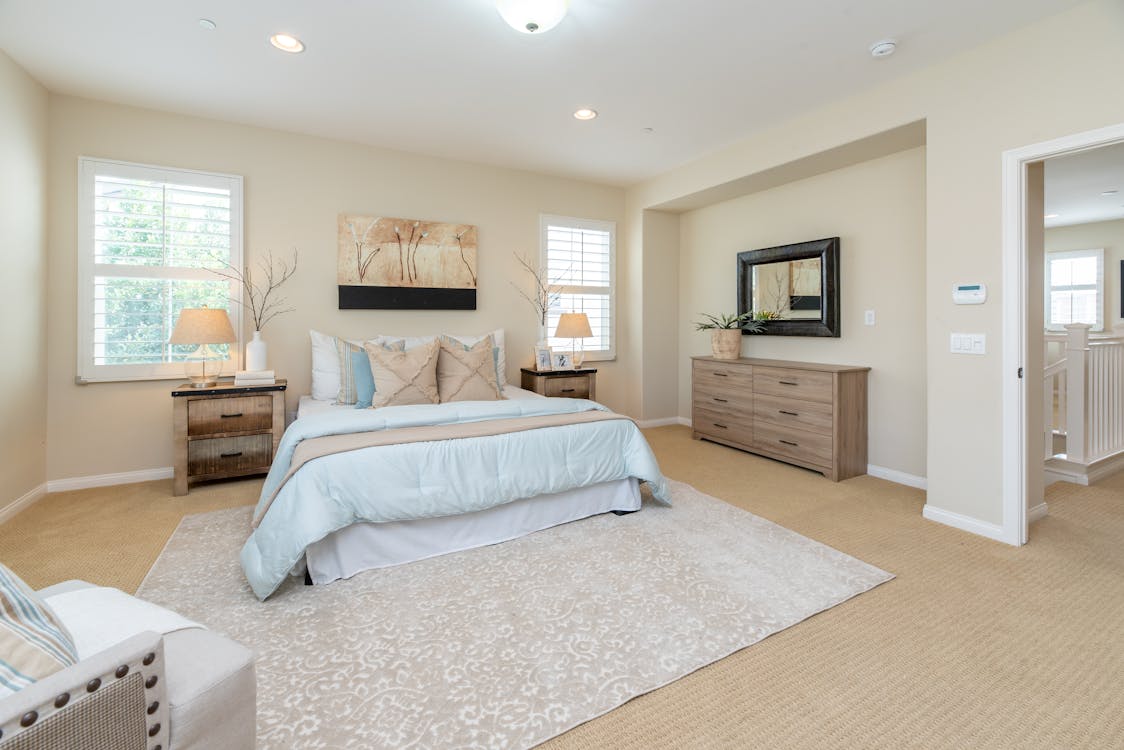 The master suite is where the villa earns its nightly rate — or loses it. Bouclé headboard, integrated nightstands, and calibrated ambient lighting create the sanctuary that guests pay premium prices to return to. | Photo: Pexels
Everything else in the villa creates an impression. The bedroom delivers an experience.
It is the one space where the guest or resident is most physically vulnerable — at rest, in contact with the materials for eight or more hours, without the social performance that governs their behaviour in the living room or dining area. And it is the space that generates the language in review scores that moves revenue: “the most comfortable bed I’ve ever slept in,” “the room felt like a sanctuary,” “I didn’t want to leave.” That language is not produced by accident. It is the direct result of precise furniture decisions.
The low-profile bed: the anchor of the sanctuary aesthetic
The contemporary light luxury bed sits low — typically 35–45cm seat height — with a proportionally generous headboard that occupies most or all of the wall width behind it. This low-profile geometry communicates repose before anyone lies in it: the eye reads the horizontal emphasis as rest, as ground, as stillness. It is the opposite of the high-posted beds that dominated luxury hotel design in the 1990s, which communicated grandeur at the cost of human scale.
The headboard is the bed’s design statement. At the light luxury tier, the defining upholstery options are:
Bouclé — the tightly looped, textured wool-blend fabric that has become the signature textile of contemporary luxury interiors. Its visual softness, tactile warmth, and the way it catches light differently at different times of day make it uniquely suited to the headboard’s role as the bedroom’s dominant visual element. Specify performance bouclé rated at minimum 40,000 Martindale cycles for headboard applications where direct contact is limited; ensure the backing is foam-padded to a depth of 80–100mm for functional comfort when sitting upright in bed.
Natural linen in deep neutral tones — warm oatmeal, aged putty, dusty sage — brings organic material richness without the visual busyness of pattern. Linen upholstery has a refined irregularity in its weave that reads as genuinely luxurious at close range in a way that many polished synthetic alternatives do not.
Full-grain leather panels — particularly in muted earth tones rather than saturated colours — create a headboard that matures with use, developing the patina that communicates genuine quality over time. Full-grain leather headboards from quality Italian tanneries carry a 15–20 year useful life in residential applications with standard conditioning maintenance.
Integrated nightstands: the functional sophistication marker
The bedside table in a light luxury bedroom is not a separate piece placed beside the bed. It is a designed element that integrates with the bed’s architecture — cantilevered from the headboard structure, floating from the wall at the same height as the bed frame, or built into a headboard system with defined surface zones for objects, concealed zones for technology charging, and lighting integration that allows the nightstand to function as its own ambient light source.
Wireless charging surfaces integrated into the nightstand top (Qi-certified, rated for all current smartphone standards) eliminate the charger cable that is, in most hotel rooms, the first thing a guest has to manage upon arrival. This is a specification that costs approximately USD 80–120 per unit and removes a friction point that guests disproportionately notice and remember.
Soft-touch surface specifications throughout the bedroom set:
Every surface the guest contacts in the master suite — the wardrobe door panel, the drawer pull, the bench at the foot of the bed, the dressing table surface — should be specified in a material with intentional tactile character. Finger-jointed solid timber in the case goods. Brass or gunmetal hardware with a brushed rather than polished finish. Bench upholstery that echoes the headboard fabric in a complementary rather than identical weight. The coherence of these tactile decisions, experienced cumulatively over the guest’s stay, is what produces the “sanctuary” language in reviews — not any single element in isolation.
Private label and brand differentiation in the bedroom:
For private-label furniture brands, the bedroom set is the category with the highest exclusivity potential and the most significant IP protection value. A proprietary headboard silhouette, a signature nightstand integration system, a branded mattress specification — these are the elements that create the “signature bed” associations that the most commercially successful hospitality brands have built into their guest experience architecture. Develop these elements through an OEM partner under NDA and exclusivity agreement, and they become assets that no competitor can replicate without a direct IP violation.
Strategic Sourcing: How Professionals Can Access and Specify These Pieces
Having identified the five pieces that define a light luxury villa interior, the practical challenge is sourcing them at the quality level, within the timeline, and at the price point that makes projects viable and profitable.
The European vs. Asian sourcing decision:
The conventional assumption — European equals quality, Asian equals volume — has not reflected the actual manufacturing landscape for at least a decade. The relevant distinctions today are more precise:
| العامل | European Atelier | Asian Luxury Manufacturer |
|---|---|---|
| Design heritage | Decades of branded design vocabulary | Growing capability for OEM/proprietary design |
| Material specification | Deep access to European material suppliers | Access to global materials + regional natural resources |
| MOQ (الحد الأدنى لكمية الطلب) | Often 1–3 units for standard pieces | Variable: 1–5 units for custom; 10+ for production runs |
| Lead time (standard) | 10–16 أسبوعًا | 8–14 weeks with established partner |
| Unit cost | High baseline; limited negotiability | Competitive at equivalent quality with right partner |
| Customisation capability | Strong for proprietary lines; limited outside them | Full OEM/ODM flexibility with IP protection |
| Certification availability | FSC, GREENGUARD, EN certifications standard | Available through certified partners; requires specific vetting |
| Design exclusivity | Shared with all specifiers of the same collection | Proprietary design IP available with manufacturing agreement |
For importers and distributors building private-label collections, the Asian luxury manufacturing route — specifically through established China-based manufacturers with hospitality and high-end villa project experience — offers the combination of customisation capability, competitive landed cost, and IP exclusivity that European atelier sourcing structurally cannot match. The key variable is the quality of the manufacturing partner, which requires rigorous due diligence rather than price-driven selection.
The vetting process for any light luxury manufacturer — European or Asian:
The evaluation sequence that protects your project investment and your client relationships follows five stages. First, portfolio verification: documented completion photographs from comparable quality-tier villa or hospitality projects, with verifiable client references — not just a digital portfolio of attractive images without project context. Second, sample evaluation: a physical production sample (not a showroom floor model) evaluated against a defined specification checklist covering foam density, frame construction, finish quality, and material authenticity. Third, certification documentation review: FSC certificate number verified at info.fsc.org; GREENGUARD certificate verified at ul.com; fire compliance test reports with verifiable laboratory reference numbers. Fourth, factory capacity assessment: confirmed production capacity for your volume within your required timeline, in writing. Fifth, communication quality assessment: this is the criterion that experienced FF&E buyers consistently cite as the most important and most underweighted in initial vendor selection. A manufacturer who responds within 24 hours, assigns a named project coordinator, and provides structured production milestone reports is worth more than a cheaper manufacturer who becomes unreachable when a problem arises.
For specifications, provide these documents to any manufacturer you are evaluating:
- Room-by-room furniture schedule with quantities and category priorities
- Technical drawings or detailed sketches for any custom pieces
- Material and finish preferences with physical reference samples
- Target installation date and required production completion date
- Destination market fire and compliance standards
- Budget range per category
MOQ considerations for villa-scale projects:
The minimum order quantity question is critical for villa developers and designers working on projects with multiple units or phased delivery requirements. European manufacturers typically have no formal MOQ for standard catalogue pieces — you can order a single sofa — but custom pieces require minimum quantities that vary from house to house. Asian luxury manufacturers generally have more flexible MOQ structures for custom production, with some capable of producing single bespoke pieces per type for villa projects with low-volume high-specification requirements.
أثاث النمل اليشم works with villa developers, interior designers, and FF&E buyers on projects from single-villa bespoke specifications to multi-unit branded residence developments, offering OEM and ODM capabilities with no minimum order constraint on custom specifications. The team supports full project coordination from technical drawing review through pre-shipment inspection and logistics, with experience across projects in Southeast Asia, the Middle East, and Europe. Explore Jade Ant’s villa furniture capabilities for a detailed view of their project process and material specifications.
Watch: Light Luxury Villa Interior Design in Practice
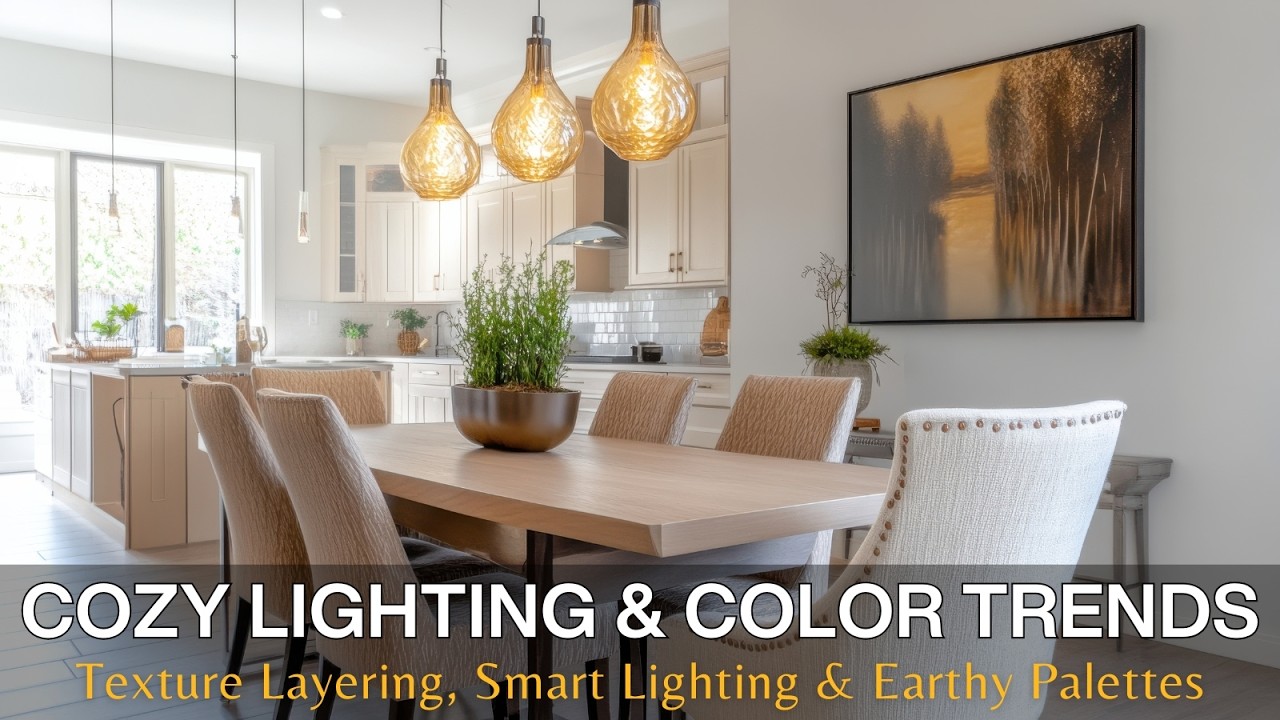
This video walks through the key design principles behind high-end minimalist villa interiors: organic material warmth, furniture scale and proportion, sculptural lighting as anchor, and the shift toward coherent indoor-outdoor living. Directly useful for interior designers briefing FF&E buyers, and for villa developers building a design narrative before furniture specification begins.
Building Value Through Curated Light Luxury
The five pieces covered in this guide are not a shopping list. They are a strategic framework for creating villa interiors that perform commercially at the highest level — generating the ADR premiums, the guest satisfaction scores, the pre-sale marketing advantages, and the long-term asset value that distinguish investment-grade villa design from decoration at a high price point.
Each piece solves a specific problem. The sculptural lounge chair anchors the design narrative and creates the marketing moment. The modular sofa system solves the spatial customisation challenge without bespoke timelines. The organic dining table becomes the social centrepiece that guests photograph and describe in reviews. The floating console and media unit resolves the technology-elegance tension that disrupts so many otherwise successful interiors. And the bespoke bedroom set delivers the sanctuary experience that justifies everything else.
The common thread is intentionality — selecting each piece with full awareness of what it needs to do in that space, for that guest or resident, in that market, across that ownership horizon. Light luxury is not a budget level. It is a discipline of decision-making that produces spaces that feel genuinely extraordinary because they are.
The next step is a conversation. Whether you need a single statement piece for a client presentation, a full FF&E specification for a 20-villa development, or a manufacturing partner for a private-label collection you are building for your brand, the quality of that outcome depends on the quality of the partner you work with at the production stage.
Contact Jade Ant furniture with your project brief — furniture schedule, dimensions, design references, timeline, and destination market — and receive a structured response covering production capability, materials, certifications, timelines, and pricing. Alternatively, browse the full villa and residential product range for reference pieces across all five categories covered in this guide.
مسرد المصطلحات الأساسية
Light Luxury — A design philosophy for high-end interiors characterised by material authenticity, visual restraint, and curated precision. Not minimalism (which removes) and not maximalism (which accumulates) — light luxury selects exactly the right pieces, in exactly the right materials, in exactly the right proportions.
Mortise-and-Tenon Joinery — A woodworking joint considered the gold standard for furniture frame construction. A projecting “tenon” fits precisely into a corresponding “mortise” cavity and is secured with adhesive and mechanical pins. Creates far greater structural integrity under sustained load than screwed or stapled alternatives. Inspect frame corners for this joint when evaluating furniture quality.
اختبار مارتينديل — The European standard (ISO 12947) for measuring upholstery fabric abrasion resistance, expressed in cycles. Each cycle simulates one pass of a standardised friction instrument across the fabric surface. Light residential minimum: 25,000 cycles. Villa standard seating: 40,000–60,000. Commercial contract: 100,000+.
Solution-Dyed Acrylic — A textile manufacturing process where colour pigment is integrated into the synthetic fibre during production rather than applied as a surface treatment. Results in UV fade resistance exceeding five years in direct Mediterranean-condition sunlight. The required standard for outdoor upholstery in any high-UV villa environment.
جلد كامل الحبيبة — The highest leather grade, produced from the outermost hide layer with no surface correction. Retains the natural grain character, develops a distinctive patina with use, and has a residential service life exceeding 20 years. Distinguished from corrected-grain (sanded and embossed surface) and bonded leather (a composite of leather scraps and polyurethane binder that peels with age).
OEM (Original Equipment Manufacturing) — A manufacturing arrangement where a factory produces furniture to your exact design specifications and branding requirements, which you market under your own label. Enables private-label exclusivity without owning a manufacturing facility. IP ownership is contractually held by the specifying brand, not the manufacturer.
COM (Customer’s Own Material) — A purchasing arrangement offered by furniture manufacturers allowing clients to substitute their own specified fabric or leather for the manufacturer’s standard upholstery options. Enables proprietary textile specifications while using established furniture production infrastructure.
مجلس رعاية الغابات (FSC) — The internationally recognised certification for responsible timber sourcing and chain-of-custody tracking from forest to finished product. Verifiable by certificate number at info.fsc.org/certificate.php. Required for timber compliance under the EU Timber Regulation and US Lacey Act.
GREENGUARD Gold — A certification by UL confirming that a product’s VOC (Volatile Organic Compound) emissions meet strict thresholds for indoor air quality. Required for projects seeking LEED v4 Indoor Environmental Quality credits and increasingly specified as standard in wellness-positioned villa and hospitality projects.
معيار OEKO-TEX 100 — An independent textile certification confirming that every component of a fabric — including threads, dyes, and backing materials — is free from harmful substances at the levels specified by the standard. Verifiable at oeko-tex.com by certification number.
ADR (Average Daily Rate) — Total room revenue divided by total occupied rooms. A primary financial metric for hospitality assets. High-quality villa and hotel interiors are documented to have a positive correlation with ADR through improved guest satisfaction and review scores.
BIM (Building Information Modelling) — A standardised digital modelling system used by architects and engineers. BIM-compatible furniture files allow pieces to be integrated into architectural models for dimensional verification and clash detection before production commitment.
الأسئلة الشائعة
1. What exactly defines “light luxury” furniture in high-end villa design?
Light luxury furniture is characterised by three simultaneous commitments: material authenticity (genuine solid timber, natural stone, full-grain leather, or natural textiles — not composite alternatives presented as premium materials), visual restraint (richness achieved through depth of quality and precision of proportion rather than ornamental accumulation), and livability (pieces that are more satisfying to inhabit over time than they are impressive at first glance). It is not a price tier — it is a philosophy of selection that distinguishes design intelligence from spending power. A light luxury interior may include a custom piece produced by a China-based OEM manufacturer alongside a Minotti sofa alongside a local artisan stone table, because the selection criterion is the quality and coherence of the result, not the provenance label.
2. How does light luxury differ from traditional luxury or minimalist design?
Traditional luxury maximalism prioritises visual abundance: heavy drapery, gilded ornament, rich saturated colour, and accumulated objects that signal wealth through density. Minimalism prioritises reduction: the removal of all but the most structurally essential elements, often at the cost of warmth and inhabitation. Light luxury occupies a third position — it maintains the material richness and sensory warmth of luxury while applying the editorial discipline of minimalism. The result is spaces that feel calm without feeling empty, rich without feeling heavy, and designed without feeling contrived. The practical difference for buyers and guests: traditional luxury makes you feel like you are in a palace; minimalism makes you feel like you are in a gallery; light luxury makes you feel like you are somewhere you would actually want to live.
3. Which materials are most durable and luxurious for villa furniture in humid or coastal climates?
For structural outdoor and semi-outdoor applications: Grade-A teak (25+ year service life with annual oiling), marine powder-coated aluminium (1,000+ hours salt-spray resistance per ASTM B117 standard), and 316-grade stainless steel hardware. For indoor upholstered furniture in humid tropical environments: full-grain leather with a documented conditioning protocol (leather breathes and performs well in humidity when maintained; bonded leather and PU alternatives degrade rapidly), kiln-dried solid hardwoods with marine-grade lacquer sealing, and sintered stone tabletop surfaces (zero porosity, impervious to moisture). For outdoor upholstery: solution-dyed acrylic fabrics rated for 1,500+ hours UV resistance with Martindale counts above 50,000. Avoid MDF cores, uncorrected veneer surfaces, and chrome hardware in any coastal application — all will show visible degradation within 24–36 months of installation.
4. Can light luxury furniture be customised for private label or branded residences?
Yes — and this is one of the most commercially significant applications of the light luxury category. Through OEM manufacturing arrangements, you can develop furniture collections with proprietary silhouettes, exclusive finish specifications, signature material combinations, and branded packaging under your own label. The IP ownership resides with your brand, protected through manufacturing agreements that include NDA provisions and exclusivity clauses prohibiting the manufacturer from producing identical specifications for third parties. For private-label brands and branded residence developers, this model creates design assets that compound in commercial value across every project that specifies them — because no competitor can access the same pieces from any supplier.
5. What are the lead times for importing premium light luxury furniture?
Lead times vary by source and specification complexity. Italian and German atelier production: 10–16 weeks standard; 16–20 weeks for complex custom commissions. China-based luxury OEM manufacturers with established trade relationships: 8–14 weeks for most villa-scale specifications. Add 4–6 weeks for ocean freight to European destinations, or 5–7 weeks to North American or Middle Eastern ports. Local customs clearance: 5–10 working days with a pre-filed entry. White-glove delivery and installation: 3–7 days after customs release depending on destination. The practical project planning rule: issue purchase orders a minimum of 26 weeks before required on-site installation for internationally sourced custom furniture on villa projects. Projects that compress this timeline accept either substitution risk or expediting costs.
6. How do I specify furniture that aligns with architectural themes in luxury villas?
Begin with an architectural audit before opening a catalogue or visiting a showroom. Identify the three defining visual characteristics of the architecture: its silhouette language (curved and organic versus rectilinear and geometric), its material weight (heavy stone and dark timber versus light metal and glass), and its ornamental register (applied craft detail versus pure form). Every furniture piece you consider should be tested against all three filters. A flush-stone minimalist villa requires furniture with equally precise geometry and no applied ornament. A Mediterranean villa with exposed timber and terracotta requires furniture with visible material texture and hand-forged or natural hardware. The specification error that produces the fragmented interiors common in ambitious villa projects is selecting furniture for its individual beauty without testing it against the architectural language that surrounds it.
7. Are there sustainable light luxury furniture manufacturers you recommend?
Sustainability at the light luxury tier is primarily a documentation requirement rather than a manufacturer category — the question is not whether a manufacturer is “sustainable” in a general sense but whether they can provide verifiable certification for the specific claims relevant to your project. FSC certification for timber content, GREENGUARD Gold for finish VOC compliance, and OEKO-TEX Standard 100 for textile components are the three certifications to require from any supplier. Brands with documented sustainability credentials across multiple of these dimensions include Ethnicraft (FSC-certified solid timber, European production), Mater Design (B Corp certified, natural and recycled materials), and established manufacturers who have built certification infrastructure into their standard supply chain. Verify all certificate numbers against the issuing body’s public database — self-reported sustainability claims without certificate numbers are marketing language, not compliance documentation.
8. What’s the average ROI on investing in light luxury pieces for villa developments?
The documented ROI operates through two mechanisms: sale price premium and time-on-market reduction. According to National Association of Realtors research, professionally staged luxury properties sell for 5–10% more than equivalent unstaged properties, with staged luxury homes selling up to 88% faster. On a villa priced at USD 5 million, a 5% premium represents USD 250,000 — against a comprehensive light luxury furniture programme that typically runs 3–5% of property value (USD 150,000–250,000). For rental and boutique hospitality assets, the ROI runs through ADR and RevPAR improvement. Cornell University hospitality research documents a 0.89% ADR increase for every one-point improvement in guest review score — and interior quality, particularly furniture, is among the most-cited factors in luxury accommodation reviews. A two-point review score improvement in a 20-villa resort at USD 500 ADR and 75% annual occupancy represents approximately USD 100,000 in additional annual revenue per unit.
9. How can FF&E buyers ensure consistency across multiple villa units or boutique projects?
Three mechanisms produce specification consistency across multi-unit projects. First, a master specification document — a binding record of every material decision (timber species and finish code, fabric name and colourway, hardware finish reference, foam density specification) that all manufacturers are required to match across every production run. Second, production samples from each batch — not just from the first production run, but from every subsequent delivery. Colour and finish variation across batches is a documented quality issue in both European and Asian manufacturing; catching it at sample stage eliminates the cost of rejection after delivery. Third, a single-source or coordinated-source strategy — specifying all pieces within a category from one manufacturer eliminates the material variation that accumulates when five suppliers each interpret the same brief through their own production standards. The most consistent multi-unit villa specifications are those managed by a single FF&E coordinator with approval authority across all purchasing decisions.
10. Which brands lead in innovative modular and space-adaptive light luxury designs?
The leading systems in this category combine genuine modularity with design coherence that holds across all configuration options. Poliform (Italy) is the benchmark for modular precision — their Tribeca and Bellport sofa systems are designed with the dimensional discipline of architectural joinery. Molteni&C (Italy) leads in modular storage and case good integration, with wall-system programmes that coordinate bedrooms, living rooms, and studies within a single dimensional and finish vocabulary. Flexform (Italy) offers the most comfort-oriented modular sofa systems in this tier — pieces that prioritise the experience of being in them as much as looking at them. For buyers seeking OEM alternatives with full proprietary design capability, the China furniture manufacturing landscape has developed significantly in the modular and space-adaptive category, with manufacturers capable of producing custom modular systems to your dimensional and material specification with turnaround times competitive with European lead times.
11. How do I balance aesthetics with functionality in high-traffic villa areas?
The principle is that functional requirements should be resolved at the specification stage — not addressed by placing restrictions on use after installation. A dining table specified in sintered stone rather than natural marble is equally beautiful in the space but requires no protective behaviour from guests. An upholstery specified at 80,000+ Martindale cycles in a performance velvet handles the traffic of a villa common area without maintenance complexity. Hardware specified in brushed brass (which hides fingerprints) rather than polished brass (which reveals every touch) maintains its visual quality without daily polishing. The discipline is designing for actual use conditions from the beginning — which requires honest assessment of who will use the space, how frequently, with what cleaning protocols, and with what level of supervision. High-traffic villa areas (pool terraces, dining rooms, children’s play spaces) require commercial-grade specification even when the aesthetic is residential.
12. Can light luxury furniture be integrated into smart home ecosystems seamlessly?
Yes — with the caveat that smart integration must be planned during the furniture specification stage, not retrofitted after installation. The pieces most relevant to smart integration are the media unit (which must be dimensioned and internally laid out to accommodate the specific AV and automation equipment in the system), the bed frame (which increasingly incorporates integrated circadian lighting, powered headboard adjustment, and wireless charging), and upholstered seating (which can incorporate invisible Qi charging surfaces in arm surfaces and side tables). The specification requirement is providing your furniture manufacturer with the complete list of technology components that will be integrated — dimensions, power requirements, connection points — before production drawings are finalised. Manufacturers who have not worked on smart villa projects will require detailed guidance on this coordination; those with hospitality and luxury residential project experience will typically have standard integration protocols established.
13. What are the key quality markers to look for when sourcing light luxury pieces?
Seven physical inspection points separate genuine light luxury furniture from its imitations. Frame corner construction (mortise-and-tenon or dovetail joinery, not stapled or screwed corners). Foam density (2.0 lb/ft³ minimum for seat cushions; compress the seat manually — it should return fully within 3 seconds). Drawer joint construction in case goods (dovetail hand-cut or machine-cut joint, not simple rabbet or butt joint). Finish depth and consistency (run your hand across the surface in raking light — brush marks or orange-peel texture indicate low-quality finishing). Hardware weight (solid brass or solid steel hardware has perceptible weight when held; plated zinc or hollow stamped hardware does not). Upholstery tightness (fabric should be drum-tight across the front face of the cushion with no wrinkling, bagging, or visible seam misalignment). Material documentation (a credible supplier provides material composition sheets as standard; one who cannot is typically hiding something about what the material actually is).
14. How do developers use furniture to enhance pre-sale appeal and staging effectiveness?
The strategic principle is that furniture serves a dual purpose in development projects: it creates the environment that justifies the sale price, and it creates the marketing content that reaches buyers before they visit the property in person. Both functions require the same specification discipline — furniture that photographs beautifully, communicates premium quality in visual media, and delivers a physical experience that confirms rather than disappoints the digital first impression. The sequence that produces the best staging outcomes: establish the design narrative (light luxury with a specific location identity reference) before any furniture is selected; select the five statement pieces first (the pieces in this guide) and build the supporting specification around them; commission professional photography before the property is listed; and maintain the staged presentation through the full marketing period rather than using a show-flat specification that differs from the delivered product.
15. Are there cost-effective alternatives without compromising the light luxury aesthetic?
Yes — and the most effective approach is what experienced designers call investment prioritisation. Allocate the highest per-unit budget to the pieces that are most visible, most photographed, and most physically experienced by guests and buyers: the sculptural lounge chair, the dining table, and the bed frame with headboard. These are the pieces that carry the aesthetic statement and create the lasting impression. Support them with competent but less expensive pieces in secondary positions: side tables, storage pieces, secondary seating. The visual result is a room anchored by statement-quality pieces, supported by coherent secondaries — which reads as a deliberately curated light luxury interior rather than a uniformly expensive one. For private-label buyers and distributors, the OEM manufacturing route — particularly through established luxury villa and hospitality manufacturers in China — provides access to light luxury quality specifications at landed costs that allow the full aesthetic programme to be delivered within development budgets that European atelier sourcing alone could not accommodate.
Published by أثاث النمل اليشم — a China-based custom and luxury furniture manufacturer with over 15 years of experience serving villa developers, interior designers, FF&E buyers, private-label brands, and furniture importers and distributors across Asia, the Middle East, and Europe. For custom villa furniture enquiries, project briefs, and OEM/ODM consultations, visit jadeant.com or contact the team directly.