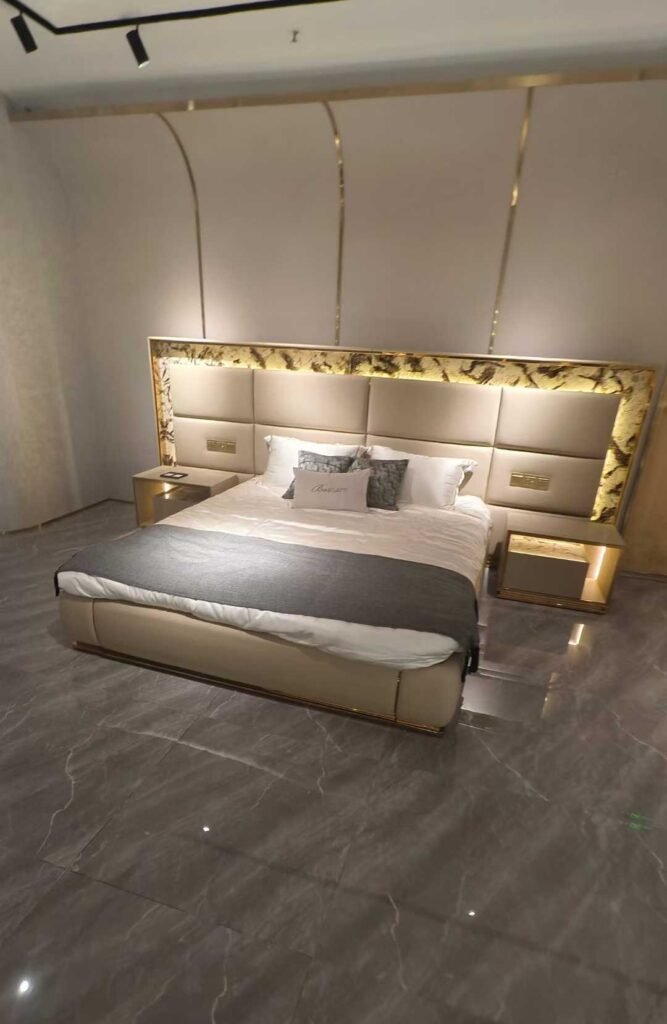
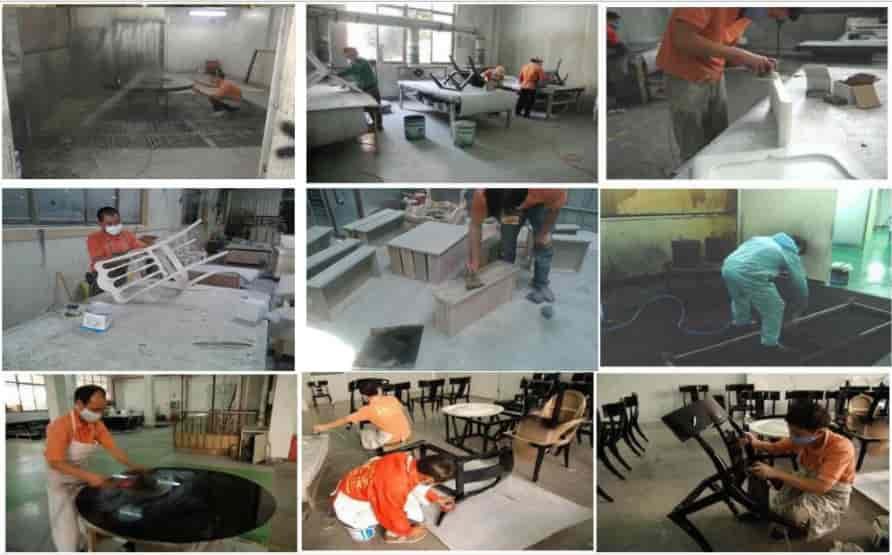

Foshan, China — long recognized as the world’s furniture manufacturing capital — is entering 2026 with a wave of innovation that is reshaping how the global industry thinks about design, sustainability, and technology. With over 7,000 factories, 30+ wholesale markets, and an annual output value exceeding ¥60 billion (approximately $8.5 billion), Foshan is no longer just a production hub. It is a design epicenter where Japandi aesthetics meet artificial intelligence, where modular living solutions are engineered for the world’s shrinking urban apartments, and where eco-friendly manufacturing is becoming the standard rather than the exception.
The rise of Japandi style, modular living, smart furniture, and minimalist design is dominating showrooms across the Lecong and Shunde districts. At the same time, the shift toward sustainable materials and eco-friendly production has attracted global buyers who demand both beauty and responsibility. The growing trend of direct purchasing from Foshan manufacturers — fueled by cross-border e-commerce platforms — has opened unprecedented access for international buyers, from boutique hotel developers to Amazon FBA sellers. Leading manufacturers like Jade Ant Furniture exemplify this new era, combining innovative design with sustainable practices to serve a global clientele.
What sets Foshan apart is its unique combination of a deeply skilled workforce, a culture of relentless innovation, and advanced logistics infrastructure that can move a container from factory floor to a port in Nansha within hours. In the sections ahead, we will explore the specific trends, technologies, and market dynamics that are defining Foshan furniture factories in 2026 — and what buyers, designers, and industry professionals can expect in the near future.
Foshan Furniture Factory Trends 2026
Japandi and Minimalist Design
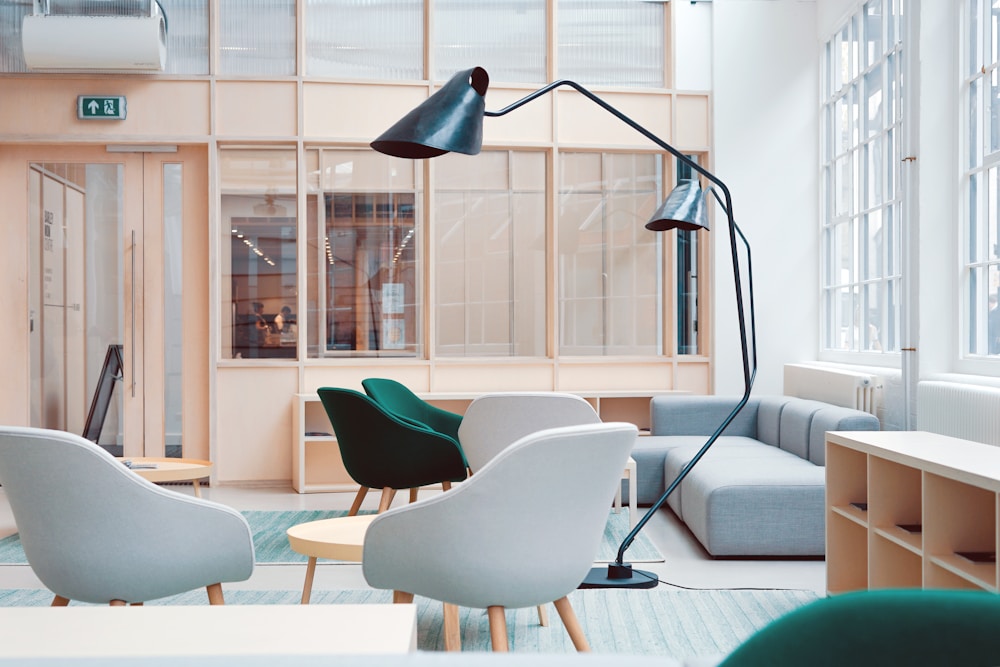
The Japandi aesthetic — a fusion of Japanese minimalism and Scandinavian functionality — has become the single most influential design trend in Foshan’s furniture factories in 2026. This style emphasizes clean lines, low-profile silhouettes, natural textures like wood, linen, and stone, and an earthy, muted color palette of beige, charcoal, sage, and taupe. According to Vogue, Japandi “celebrates everyday beauty and a connection with nature,” and Foshan’s manufacturers have embraced this philosophy wholeheartedly.
Foshan factories are uniquely positioned to lead the Japandi movement. The region has abundant access to bamboo, oak veneer, walnut finishes, and rattan — all essential materials for this aesthetic. Manufacturers have developed entire Japandi-inspired collections with mix-and-match pieces including sofas, coffee tables, media units, and sideboards, often available for white-label private branding. Companies like Jade Ant Furniture have been at the forefront of offering ODM (Original Design Manufacturer) Japandi collections that international buyers can customize with their own branding, hardware choices, and fabric selections.
Minimalist design, closely related to Japandi, continues to dominate as well. The demand for calming, clutter-free interiors has exploded as remote work becomes permanent for millions worldwide. Foshan’s minimalist furniture typically features simple silhouettes, slim legs, low-profile backs, open frames, and matte or satin finishes. This aesthetic is timeless and versatile, making it a perfect fit for both residential and commercial interiors.

Modular Living Solutions
With urbanization accelerating globally and average home sizes shrinking — particularly in megacities across Asia, Europe, and North America — the demand for modular and multi-functional furniture has soared. Foshan manufacturers have responded with a sophisticated range of space-saving solutions that maximize utility without sacrificing style.
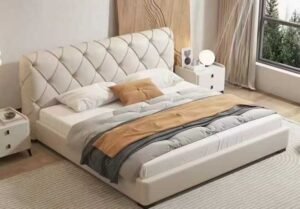
The most popular modular products coming out of Foshan factories in 2026 include fold-out wall beds (Murphy style), extendable dining tables, storage ottomans, lift-top coffee tables, modular sofa systems with hidden compartments, and bed frames with integrated drawers and shelving. These pieces are engineered for specific use cases including college dorms, micro-apartments, tiny homes, co-living spaces, and Airbnb units.
What makes Foshan’s modular furniture particularly competitive is its eCommerce readiness. Factories produce flat-pack, pre-labeled, and barcoded units that are optimized for Amazon FBA, Wayfair, and Shopify fulfillment. The assembly instructions are designed for end consumers, and the packaging is engineered to minimize shipping damage. Jade Ant Furniture has invested significantly in this modular segment, offering customizable modular systems that can be configured to fit various room sizes and layouts.
Smart Furniture Integration
Technology is no longer just in your pocket — it is embedded in your nightstand, sofa, and desk. Foshan factories are pioneering the wave of tech-integrated furniture that combines style with smart functionality. Common smart features now integrated into Foshan-made furniture include USB and USB-C charging ports in nightstands and sofa armrests, wireless Qi charging pads embedded in coffee tables and desks, built-in LED lighting in dressers, mirrors, and workstations, Bluetooth speakers integrated into beds and lounge chairs, and touch-sensor drawers with dimmable light fixtures.
According to research published in the National Institutes of Health (PMC), “With the advent of Industry 4.0, advanced digital technologies such as the IoT are being integrated into manufacturing, creating environments” where furniture becomes an active participant in the smart home ecosystem. Foshan factories are producing these smart components with UL, CE, and FCC certifications, making them ready for global markets.
Watch: Inside a 2026 Foshan Furniture Factory
Video: A tour of the latest and most innovative furniture designs from Foshan City, China — the world’s largest furniture manufacturing hub.
Sustainable Furniture Manufacturing
Eco-Friendly Materials
Sustainability has moved from a niche differentiator to a baseline expectation in the global furniture market. Today’s buyers — whether they are hotel chains, retail brands, or individual consumers — increasingly demand products that are made with eco-friendly materials and responsible manufacturing processes. Foshan’s manufacturers have responded decisively to this shift.
China is home to vast bamboo forests and centuries-old expertise in natural weaving techniques, making Foshan a natural leader in sustainable material usage. The most popular eco-friendly materials now being used in Foshan factories include FSC-certified solid wood (Forest Stewardship Council approved), bamboo for tables, shelving, and flooring, rattan and wicker for dining chairs, headboards, and storage solutions, recycled steel and aluminum for frames and hardware, low-VOC (Volatile Organic Compound) finishes and water-based paints, and recycled polyester and organic cotton for upholstery.
Jade Ant Furniture has been a notable pioneer in this space, sourcing FSC-certified wood exclusively and using water-based, non-toxic finishes across its product lines. This commitment to sustainability has made the company a preferred partner for eco-conscious buyers across North America, Europe, and the Middle East.
Waste Reduction Strategies
Beyond material selection, Foshan factories are implementing comprehensive waste reduction strategies across their production processes. CNC (Computer Numerical Control) cutting machines now optimize material usage by nesting patterns to minimize offcuts. Sawdust and wood shavings are collected and repurposed as composite board materials or biomass fuel. Water recycling systems in finishing departments reclaim and reuse up to 85% of water used in staining and coating processes. Packaging has been redesigned to use recycled cardboard and biodegradable foam alternatives.
Several Foshan factories have achieved zero-waste-to-landfill status, with all production byproducts either recycled, repurposed, or converted to energy. This level of commitment is not just environmentally responsible — it is a competitive advantage that resonates with international buyers who face increasing regulatory pressure to demonstrate sustainable supply chains.
Green Certifications
To compete effectively in global markets, Foshan manufacturers are pursuing a growing number of green certifications and compliance standards. The table below outlines the most important certifications that international buyers should look for when sourcing from Foshan.
| Certification | Issuing Body | Focus Area | Target Market | Adoption Rate in Foshan (Est.) |
|---|---|---|---|---|
| FSC (Forest Stewardship Council) | FSC International | Responsible wood sourcing | Global | 35% |
| BIFMA LEVEL® | BIFMA / SCS Global | Furniture sustainability | USA / Global | 12% |
| CARB Phase 2 | California Air Resources Board | Formaldehyde emissions | USA | 60% |
| REACH | European Chemicals Agency | Chemical safety | EU | 45% |
| ISO 14001 | ISO | Environmental management | Global | 28% |
| TSCA Title VI | U.S. EPA | Formaldehyde standards | USA | 55% |
| GREENGUARD Gold | UL Environment | Low chemical emissions | USA / Global | 8% |
| China Environmental Labeling (Type II) | MEE China | Eco-product labeling | China / Asia | 40% |
Table: Key green certifications pursued by Foshan furniture manufacturers in 2026. Adoption rates are estimated based on industry reports and trade fair data.
Technology in Foshan Furniture Factories
Automation and Robotics
Foshan’s transformation into the world’s largest industrial robotics production base has had a profound impact on its furniture manufacturing sector. In August 2025, the Foshan municipal government launched two industrial funds totaling at least $488 million specifically to support the robotics industry, as reported by Tech in Asia. The formation of a city-wide “AI and intelligent robot industrial alliance” — which includes German robot maker KUKA (acquired by Foshan-based Midea Group) — signals the depth of commitment to automation in the region.
In furniture factories specifically, robotics is now used across the entire production chain. Automated CNC routers handle precision cutting of wood, MDF, and composite materials with tolerances of less than 0.1mm. Robotic arms manage sanding, polishing, and spray-coating operations, delivering consistent finish quality that manual labor cannot match. Automated assembly lines handle everything from dowel insertion to screw fastening, while robotic packaging systems ensure flat-pack products are sealed, labeled, and palletized with minimal human intervention.
The result is a dramatic improvement in both efficiency and quality. Factories that have fully adopted robotic production lines report a 40–60% increase in output per worker and a significant reduction in defect rates. For buyers sourcing from Foshan, this translates to more consistent product quality, faster lead times, and lower per-unit costs.
Smart Factories and IoT
The concept of the “smart factory” — where every machine, workstation, and logistics point is connected through the Internet of Things (IoT) — has moved from theory to reality in Foshan. Leading furniture manufacturers have deployed IoT sensors throughout their production lines to collect real-time data on machine performance, environmental conditions (temperature, humidity, particulate levels), material flow, and energy consumption.
This data feeds into centralized dashboards that production managers use to identify bottlenecks, predict equipment failures before they occur, optimize energy usage, and adjust production schedules dynamically based on order volumes. Some factories have implemented digital twin technology, creating virtual replicas of their entire production floor that can be used for simulation and planning.
For international buyers, the practical benefit of smart factory technology is improved transparency and traceability. When you place an order with a Foshan factory that has implemented IoT-based production tracking, you can often receive real-time updates on production progress, quality inspection results, and estimated shipping dates — all through a web portal or mobile app.
AI in Production
Artificial intelligence is being integrated into Foshan furniture factories in three primary areas: design optimization, quality inspection, and demand forecasting. AI-powered design tools can analyze global trend data from platforms like Pinterest, Instagram, and Alibaba to identify emerging styles and generate design concepts that align with market demand. This reduces the traditional design cycle from months to weeks.
In quality control, computer vision systems powered by machine learning algorithms inspect every piece of furniture as it moves through the production line. These systems can detect surface defects, color inconsistencies, dimensional errors, and assembly problems with an accuracy that exceeds human inspectors. Some factories report that AI-powered quality systems have reduced customer returns by up to 30%.
In demand forecasting, AI algorithms analyze historical sales data, seasonal patterns, global economic indicators, and even social media sentiment to predict which products will be in demand 3–6 months in the future. This allows factories to pre-position materials and plan production capacity proactively, reducing lead times for buyers.
Technology Adoption Rates in Foshan Furniture Factories (2026)
Chart: Estimated technology adoption rates across Foshan’s 7,000+ furniture factories. CNC automation leads at 78%, while emerging technologies like digital twins are still at early adoption stages. Source: Industry estimates based on CIFF 2025 data and manufacturer surveys.
Market Shifts and Direct Purchasing
E-Commerce Growth
The global furniture e-commerce market has experienced explosive growth, and Foshan manufacturers are at the center of this transformation. According to Horegener, “Geographic obstacles are eliminated in online mediums, so furniture manufacturers in China can easily access global markets.” Cross-border e-commerce platforms such as Alibaba, 1688.com, DHgate, and Made-in-China.com have created direct pipelines between Foshan factories and global buyers.
The numbers tell a compelling story. The global furniture market was valued at approximately $786 billion in 2025 and is projected to reach $831 billion in 2026, according to Grand View Research. E-commerce’s share of total furniture sales continues to grow, with online channels expected to account for over 30% of all furniture purchases in major markets by the end of 2026.
For Foshan manufacturers, this shift means that direct-to-consumer and direct-to-business channels are increasingly viable. Companies like Jade Ant Furniture have developed sophisticated e-commerce capabilities that allow international buyers to browse digital catalogs, request 3D renders, order samples, and place bulk orders — all through streamlined online processes.
Direct from Manufacturer
The “direct from manufacturer” (DFM) model has gained enormous traction in the furniture industry. By eliminating intermediaries — trading companies, agents, and distributors — buyers can access Foshan’s factory-direct pricing, which is often 30–60% lower than comparable products from Western brands. This model also gives buyers greater control over customization, quality specifications, and production timelines.
The DFM model works particularly well for several buyer categories: hotel and hospitality groups furnishing properties at scale, Amazon FBA and Shopify sellers building private-label furniture brands, interior designers and architects sourcing for specific projects, real estate developers furnishing model units and rental properties, and co-working space operators outfitting new locations.
The key to successful direct purchasing is working with manufacturers who have established export experience, English-speaking teams, quality management systems (ISO 9001), and transparent pricing structures. Foshan’s top factories have invested heavily in these capabilities specifically to serve the international DFM market.
Global Expansion
Foshan furniture is now exported to over 180 countries. While the United States remains the single largest destination market, growth rates are accelerating in the European Union, the Middle East, Southeast Asia, Africa, and Latin America. Each region has distinct style preferences, compliance requirements, and purchasing patterns, as outlined in the table below.
| Market Region | Key Style Preferences | Required Certifications | Growth Rate (2025–2026 Est.) | Primary Buyer Type |
|---|---|---|---|---|
| United States | Mid-century, minimalist, modular | CARB, TSCA, Prop 65 | 5.2% | E-commerce, retail chains |
| European Union | Japandi, Scandinavian, contemporary | REACH, CE, FSC | 4.8% | Hospitality, design firms |
| Middle East | Luxury, gold accents, bold silhouettes | SASO, GSO | 7.1% | Hotels, developers |
| Southeast Asia | Affordable modern, compact designs | Various national standards | 8.3% | Retail, e-commerce |
| Australia / NZ | Coastal modern, rattan, light wood | AFRDI, AS/NZS standards | 4.5% | E-commerce, boutique retail |
| Africa | Durable, affordable, functional | SONCAP (Nigeria), KEBS (Kenya) | 9.6% | Wholesale, institutional |
| Latin America | Contemporary, colorful accents | INMETRO (Brazil), NOM (Mexico) | 6.4% | Retail, hospitality |
Table: Foshan furniture export market breakdown by region in 2026. Growth rates are estimated based on industry trade data.
Foshan Furniture Export Destinations – Market Share Distribution (2026)
Chart: Estimated export market share distribution for Foshan furniture manufacturers in 2026. The United States leads at 28%, followed by the EU at 22%. Source: Industry estimates based on China Customs and CIFF data.
Foshan’s Competitive Edge
Skilled Workforce
Foshan’s furniture industry benefits from a workforce with deep generational expertise. As noted in a LinkedIn analysis, “Foshan’s edge isn’t just systems and factories — it’s the depth of skill density built over decades. Generations trained, scaled, and refined.” The city’s vocational schools and technical institutes produce thousands of furniture-specialized graduates each year, trained in CNC operation, upholstery techniques, finishing processes, and quality control protocols.
This skill density creates a self-reinforcing ecosystem. Workers move between factories, cross-pollinating techniques and best practices. Furniture hardware suppliers, foam manufacturers, fabric mills, and packaging companies are all located within a short radius, creating an integrated supply chain where knowledge and innovation flow freely. The result is a level of manufacturing sophistication that is extraordinarily difficult for competing regions to replicate.
Innovation Culture
Foshan’s furniture manufacturers attend and exhibit at every major global trade show, including CIFF (China International Furniture Fair), Salone del Mobile in Milan, Maison&Objet in Paris, and High Point Market in the United States. They monitor Pinterest, TikTok, Instagram, and Xiaohongshu (China’s visual discovery platform) for emerging design trends. Many larger factories employ in-house design teams that use CAD, Rhino, and SketchUp to develop original collections aligned with global tastes.
This trend responsiveness means that a hot design spotted at Milan Design Week in April can be in factory production by June and ready for export by August. The speed from concept to container is unmatched anywhere in the world, and it is a core reason why brands like Jade Ant Furniture can consistently deliver cutting-edge designs to their global customer base ahead of competitors.
Advanced Logistics
Foshan’s geographic location in the Pearl River Delta gives it access to some of the world’s busiest ports, including Nansha Port (Guangzhou), Shekou (Shenzhen), and Hong Kong. Major factories maintain direct relationships with shipping lines and freight forwarders who specialize in furniture logistics — a niche that requires expertise in handling oversized, fragile, and heavy cargo.
The logistics infrastructure extends beyond maritime shipping. Foshan is connected to China’s high-speed rail network, multiple expressways, and Guangzhou Baiyun International Airport, enabling rapid movement of samples and urgent shipments. Many factories offer FOB, CIF, and DDP shipping terms, and some have established overseas warehouses in key markets such as the United States and Europe to offer even faster delivery to end customers.

Watch: 2026 Luxury Furniture Showroom Tour in Foshan
Video: A walkthrough of one of Foshan’s top high-end furniture showrooms, showcasing 2026 luxury furniture trends.
Conclusion
Foshan’s furniture factories in 2026 represent the convergence of artistry and technology, tradition and innovation, local craftsmanship and global ambition. The city’s focus on Japandi and minimalist design, sustainable materials, modular living solutions, and smart furniture integration positions it as the undisputed global leader in furniture manufacturing — not just in volume, but in design relevance and environmental responsibility.
For buyers, the practical benefits are substantial. Direct access to Foshan manufacturers means lower costs, greater customization options, faster lead times, and access to the latest global design trends before they reach mainstream retail. Companies like Jade Ant Furniture are making this access even more seamless through digital catalogs, virtual showroom tours, and streamlined export processes that simplify cross-border purchasing.
Looking ahead, several trends deserve close attention. The integration of AI-driven design tools will further compress the concept-to-production timeline. Sustainability certifications will become mandatory rather than optional for export markets. Smart furniture will evolve from simple charging ports to fully IoT-connected pieces that integrate with whole-home automation systems. And the direct-from-manufacturer purchasing model will continue to disrupt traditional distribution channels, putting more power — and more savings — in the hands of buyers.
Foshan’s role in the global furniture market is evolving rapidly, and the factories that are investing in innovation, sustainability, and customer-centric processes today will be the industry leaders of tomorrow. Whether you are a hospitality group furnishing a new property, a DTC brand launching a furniture line, or an interior designer sourcing for a high-profile project, Foshan should be at the top of your sourcing shortlist in 2026 and beyond.
Frequently Asked Questions (FAQ)
1. What is Foshan known for in the furniture industry?
Foshan, located in Guangdong Province, China, is widely recognized as the furniture capital of the world. The city is home to over 7,000 furniture factories and 30+ wholesale markets, producing approximately 75% of China’s total furniture output. Foshan specializes in a wide range of furniture categories including residential, commercial, hospitality, and office furniture. The city’s Shunde and Lecong districts house some of the world’s largest furniture showrooms, spanning over 40 million square feet combined. Manufacturers in Foshan offer everything from budget-friendly mass-market pieces to high-end luxury collections, with extensive customization capabilities for international buyers.
2. How are Foshan furniture factories adopting sustainable manufacturing practices?
Foshan furniture factories are implementing sustainability across multiple dimensions. On the materials side, many factories now use FSC-certified wood, bamboo, recycled metals, and low-VOC finishes. In production, CNC cutting machines optimize material usage to reduce waste, while water recycling systems reclaim up to 85% of water used in finishing processes. A growing number of factories have achieved ISO 14001 environmental management certification and comply with international standards including CARB Phase 2, REACH, and TSCA Title VI. Companies like Jade Ant Furniture have made sustainability a core part of their value proposition, offering fully traceable supply chains and eco-certified product lines.
3. What is Japandi design and why is it trending in Foshan?
Japandi is a design style that fuses Japanese minimalism with Scandinavian functionality. It is characterized by clean lines, low-profile furniture, natural materials (wood, linen, stone, bamboo), earthy and muted color palettes, and an emphasis on intentional negative space. Japandi is trending in Foshan because the region has abundant access to the natural materials this style requires, and manufacturers have developed extensive ODM collections that allow international buyers to white-label Japandi-inspired pieces under their own brands. The style’s broad global appeal — resonating with consumers from Tokyo to Toronto — makes it a commercially attractive category for Foshan factories.
4. Can I buy directly from Foshan furniture factories?
Yes. Direct-from-manufacturer purchasing has become one of the fastest-growing channels in the Foshan furniture industry. Many factories now have dedicated export departments with English-speaking sales teams, digital product catalogs, virtual showroom capabilities, and experience with international shipping terms (FOB, CIF, DDP). Platforms like Alibaba and Made-in-China.com provide initial access, but many buyers develop direct relationships with factories after initial contact. Minimum order quantities (MOQs) vary by factory and product, but many now offer MOQs as low as 30–100 pieces per SKU, making direct purchasing accessible even for smaller brands and e-commerce sellers.
5. What technologies are Foshan furniture factories using in 2026?
The technology landscape in Foshan furniture factories spans CNC automation (adopted by approximately 78% of factories), robotic arms for sanding, coating, and assembly (45%), IoT sensors for production monitoring (38%), AI-powered quality inspection systems (25%), ERP (Enterprise Resource Planning) systems for order and inventory management (65%), and 3D printing for rapid prototyping (30%). The Foshan government’s $488 million investment in robotics funds in 2025, in partnership with KUKA and other robotics companies, has accelerated technology adoption across the furniture sector.
6. How does Foshan furniture compare in price to Western manufacturers?
Foshan furniture typically costs 30–60% less than comparable products from Western manufacturers, depending on the product category, materials, and design complexity. This price advantage stems from lower labor costs, integrated local supply chains that reduce material procurement costs, economies of scale across thousands of specialized factories, and efficient logistics infrastructure. Importantly, the price advantage does not necessarily mean a quality compromise. Many Foshan factories produce furniture for well-known international brands under OEM and ODM arrangements, using the same materials and quality standards as premium Western labels.
7. What are the most important furniture trade shows in China?
The most important furniture trade shows in China include CIFF (China International Furniture Fair), held biannually in Guangzhou and Shanghai, which is one of the world’s largest furniture exhibitions. The Canton Fair (Phase 2 — Home Furnishings) in Guangzhou is another major event for furniture exporters. The International Furniture Exhibition in Longjiang (Foshan’s Shunde district) specifically showcases local manufacturers. Additionally, the Furniture China exhibition in Shanghai focuses on international trade. These events provide opportunities to meet manufacturers, view new collections, negotiate pricing, and establish direct supply relationships.
8. What role does AI play in furniture design at Foshan factories?
AI is transforming furniture design in Foshan in several ways. AI-powered trend analysis tools scan global platforms including Pinterest, Instagram, TikTok, and e-commerce marketplaces to identify emerging style preferences and color trends. Generative design algorithms can create furniture concepts based on specified parameters such as dimensions, materials, style family, and price point. AI also accelerates the prototyping process by optimizing material selection and structural engineering. In some advanced factories, AI-driven customization engines allow buyers to configure furniture online — selecting dimensions, fabrics, finishes, and hardware — and receive an instant quote and 3D rendering.
9. How long does it take to get furniture manufactured and shipped from Foshan?
Production timelines vary based on order complexity and factory capacity. Standard catalog items with existing molds and materials typically take 2–4 weeks to produce. Custom-designed pieces with specific materials, finishes, or branding may take 4–8 weeks. Shipping times depend on the destination: sea freight to the U.S. West Coast takes approximately 14–18 days, to Europe approximately 25–35 days, and to the Middle East approximately 15–20 days. Some manufacturers, including Jade Ant Furniture, maintain overseas warehouse inventory for their most popular products, enabling delivery within 5–7 business days to select markets.
10. What should I look for when choosing a Foshan furniture supplier?
When evaluating Foshan furniture suppliers, prioritize the following criteria: verified factory status (visit in person or via video tour), relevant certifications (ISO 9001 for quality management, ISO 14001 for environmental management, FSC for wood sourcing), export experience to your target market, English-speaking sales and design teams, willingness to produce and ship samples before bulk orders, transparent pricing with itemized quotes, positive references from existing international clients, and the ability to offer customization at reasonable MOQs. Attending trade shows like CIFF or working with a reputable sourcing agent can help identify and vet high-quality suppliers efficiently.
Disclaimer: Market data, statistics, and adoption rates cited in this article are based on industry estimates, trade fair surveys, and publicly available reports. Actual figures may vary. Always conduct independent due diligence when selecting manufacturers and making purchasing decisions.







 English
  Portuguese
  Arabic