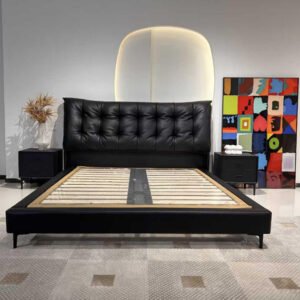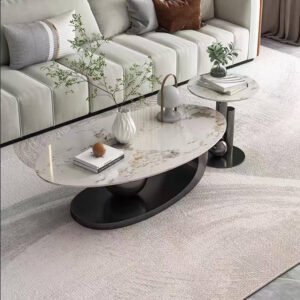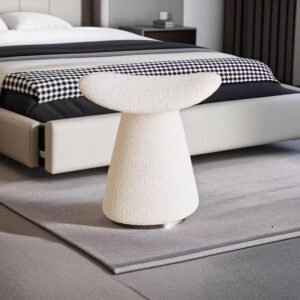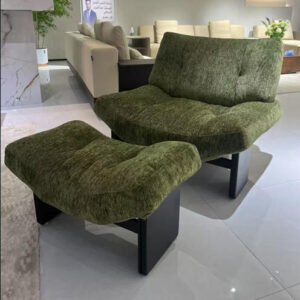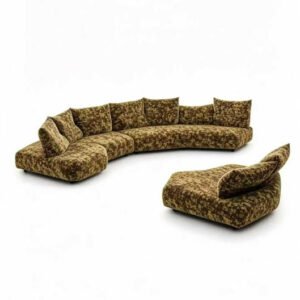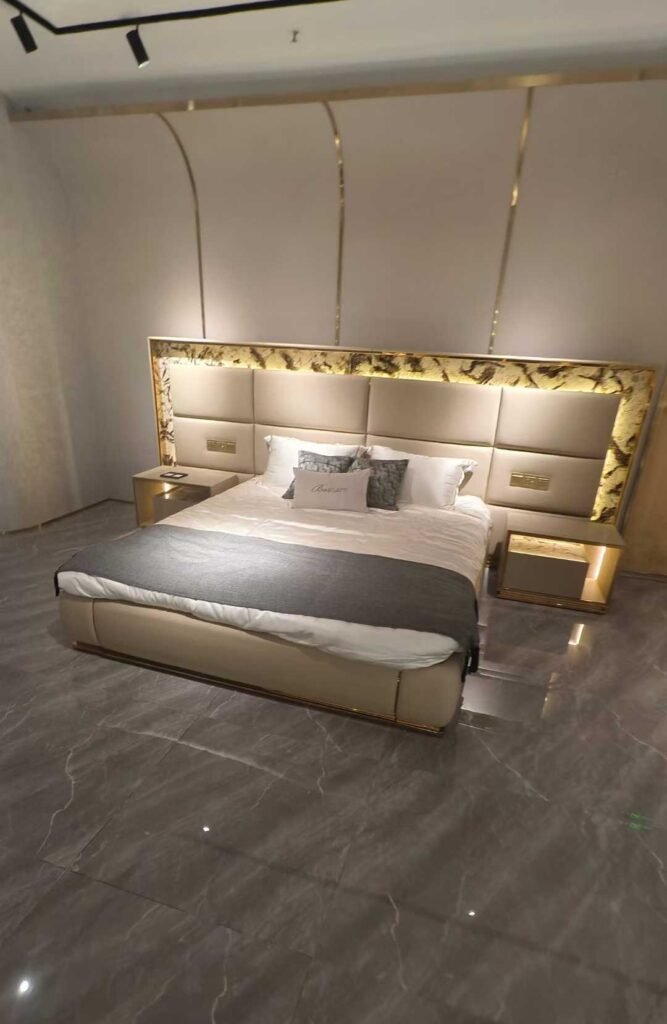
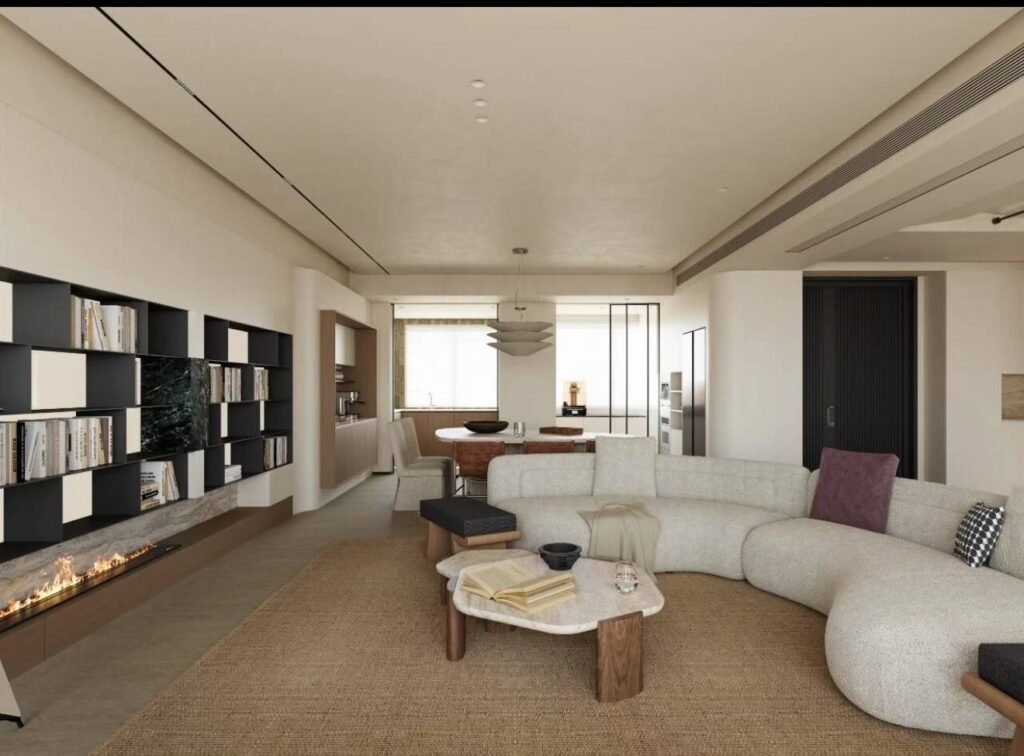
In October 2025, a Dubai-based hospitality developer needed 4,200 guest-room furniture sets for a new resort — headboards, nightstands, desks, minibars, and luggage racks across 14 SKUs. They received quotes from seven Foshan manufacturers. The price spread was staggering: from $127 to $389 per set for nearly identical specifications. The cheapest option used 9mm particle board where the spec called for 18mm plywood. The most expensive included hand-applied lacquer finishing that the project didn’t require. The developer ultimately selected a mid-range factory at $218 per set that met every specification, passed a third-party SGS inspection with a 1.2% defect rate, and delivered all 4,200 sets three days ahead of schedule.
That story captures the central challenge of sourcing from Foshan: the city’s sheer scale creates extraordinary options, but also extraordinary confusion. With over 7,000 furniture factories clustered across the Lecong, Longjiang, and Shunde districts, Foshan handles roughly 75% of China’s total furniture manufacturing output and contributes to the country’s $169.23 billion domestic furniture market in 2026 (Mordor Intelligence). The question isn’t whether to source from Foshan — it’s which type of manufacturer matches your specific project requirements, quality expectations, and budget.
This guide, informed by Jade Ant furniture‘s experience managing sourcing projects across every manufacturer category in Foshan, breaks down the leading producers into four distinct tiers — reliability-focused generalists, affordability-driven homeware producers, high-end artisanal brands, and large-scale volume manufacturers — and compares them on the dimensions that actually affect your project outcome: product features, pricing structures, customization depth, quality control, sustainability credentials, and lead times.
Whether you’re a retail buyer testing a new product line, a hotel developer furnishing thousands of rooms, or a designer seeking artisanal craftsmanship for a flagship project, this comparison gives you the data to choose with confidence.
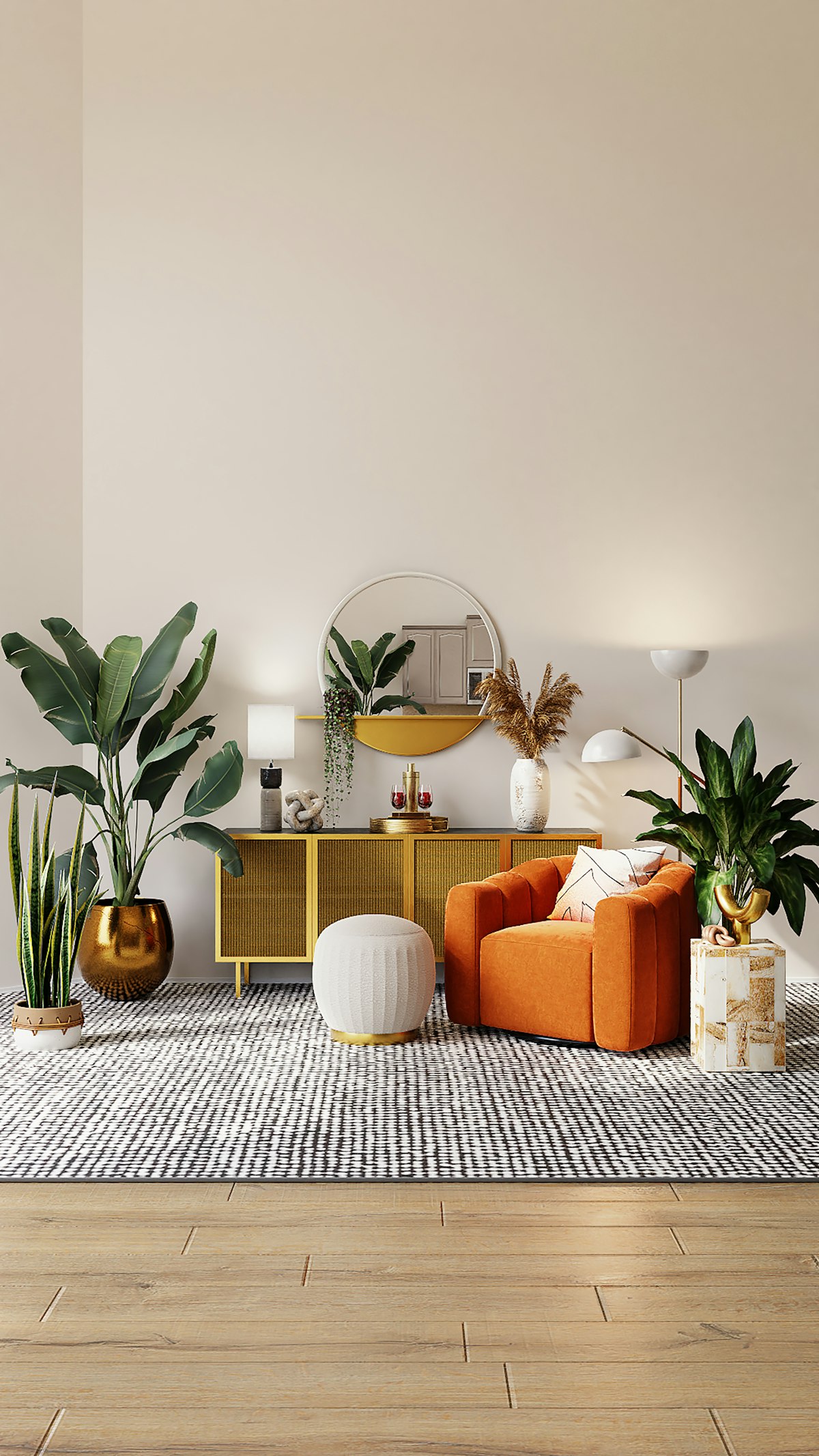
Foshan Furniture Manufacturers Overview
Market Reputation and Cost Advantage
Foshan’s dominance in global furniture manufacturing isn’t accidental — it’s the product of four decades of industrial concentration that created a self-reinforcing ecosystem. The city’s furniture district spans three core zones: Lecong (the world’s largest furniture wholesale market, with over 3,300 showrooms across 5 million square meters), Longjiang (the factory production belt, where most manufacturing actually happens), and Shunde District at large (which accounts for 50% of Guangdong province’s furniture export value, per Reuters).
The cost advantage stems from vertical integration at city-wide scale. Within a 30-kilometer radius, you’ll find timber drying yards, foam suppliers, fabric mills, hardware manufacturers, CNC machining centers, finishing lines, and export packaging operations. A sofa factory in Longjiang can source its frame lumber, high-resilience foam, Italian-style microfiber fabric, stainless steel legs, and corrugated export cartons from suppliers all within a 20-minute drive — eliminating the logistics markups that inflate costs in less concentrated manufacturing regions.
This ecosystem produces a concrete pricing advantage. A three-seat upholstered sofa with a solid kiln-dried hardwood frame, 35-density high-resilience foam, and performance fabric that would retail for $2,800–$3,500 in the United States can be manufactured in Foshan at $280–$450 FOB — representing 85–90% savings at the factory level, before freight and duties.
Product Diversity and Responsiveness
Foshan manufacturers don’t just make furniture — they make virtually every category of furniture, in virtually every style, at virtually every price point. In Jade Ant furniture‘s supplier database, Foshan factories cover residential furniture (living room, bedroom, dining), commercial furniture (hotel, restaurant, office), outdoor furniture (aluminum, rattan, teak), children’s furniture, and specialized categories like healthcare and education seating.
Style versatility is equally broad. In a single day walking the Lecong showrooms, you’ll encounter Scandinavian minimalism, Italian luxury reproductions, Japandi fusion, mid-century modern, Art Deco revival, industrial loft, American farmhouse, and Chinese contemporary — often produced by the same factory operating different production lines. This diversity reflects Foshan’s fundamental business model: factories invest in flexible production systems that can switch between styles and specifications rapidly, serving buyers from 100+ countries with dramatically different aesthetic preferences.
Responsiveness is the third differentiator. A well-organized Foshan factory can turn around a production sample in 7–15 days and begin bulk production within 3–5 days of approval. For comparison, custom furniture production in Italy typically quotes 8–12 weeks for sampling alone. This speed-to-market advantage is particularly valuable for hospitality projects with tight opening deadlines and retail operations responding to trend shifts.
Leading Foshan Furniture Manufacturers Compared
Foshan’s furniture manufacturers fall into four distinct categories, each with different strengths, limitations, and ideal buyer profiles. The comparison below is based on aggregate data from Jade Ant furniture‘s factory audit program, covering 180+ factory evaluations conducted between 2024 and 2026.
George’s Furniture — Reliability and Quality
Founded in 2006, George’s Furniture operates seven proprietary factories and a 20,000-square-meter showroom in Foshan. Their positioning is the “full-service project partner” — they handle everything from initial concept through design, manufacturing, quality control, and international delivery. Their advertised proposition: saving buyers over 40% versus retail pricing through factory-direct access.
George’s strongest use case is the mid-to-large residential or hospitality project where the buyer needs a single point of contact managing multiple furniture categories. A 200-room hotel project, for example, requiring coordinated case goods, upholstery, and decorative pieces across 8–12 SKUs — that’s where their multi-factory capability and dedicated project-manager model delivers measurable value. Their weakness surfaces on small orders: the overhead of their full-service model makes them less competitive for buyers sourcing a single product category at high volume.
Typical MOQ: 50–100 pieces per SKU. Lead time: 4–8 weeks. Price positioning: Mid-to-upper range for Foshan (15–25% above large-scale volume producers).
Foshan Homeware — Affordability and Range
The “Foshan Homeware” tier encompasses hundreds of mid-size factories in the Longjiang and Lecong zones that focus on volume production of standardized residential furniture. These aren’t branded entities in the Western sense — they’re the backbone factories producing the sofas, dining sets, bed frames, and TV stands that fill showrooms across Southeast Asia, the Middle East, and Africa.
Their competitive advantage is brutal cost efficiency. A fabric sofa that George’s Furniture might quote at $420 FOB, a Longjiang homeware factory produces at $195–$260 — because they run longer production batches, use standardized (rather than custom) frames, and source materials at higher volume discounts. The trade-off is customization depth: you can change fabric colors and leg finishes, but structural modifications (frame dimensions, cushion density, arm shape) require MOQs of 300–500 pieces to justify retooling.
For a retailer or e-commerce seller sourcing catalog-ready products with minor branding modifications, this tier delivers the best unit economics in Foshan. For a designer seeking unique, project-specific pieces, it’s the wrong fit.
Typical MOQ: 100–500 pieces. Lead time: 2–4 weeks (stock items), 4–6 weeks (modified). Price positioning: Lowest in Foshan — 30–50% below full-service manufacturers.
High-End Brands — Artisanal Quality and Customization
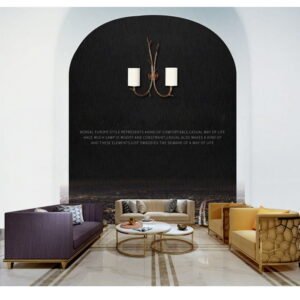
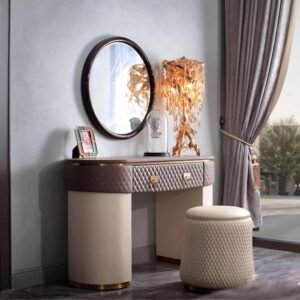
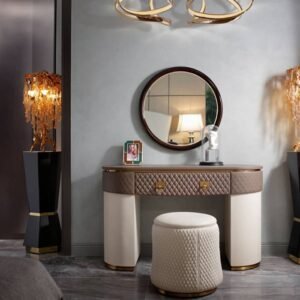
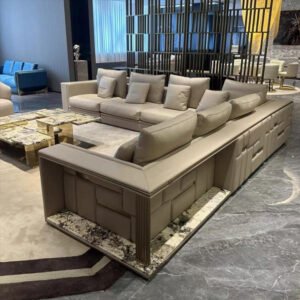
At the opposite end of the spectrum, Foshan hosts a growing cluster of high-end manufacturers producing luxury furniture that competes directly with Italian and Scandinavian design houses — at 40–60% lower cost. Factories like M&Z Furnishing (est. 2003, Shunde), Artsome, Neveitalia (est. 2013), and Harman Furnishings (est. 1994, specializing in five-star hotel furniture) anchor this segment.
What distinguishes these producers is finishing quality and material selection. Where a volume factory applies two coats of PU lacquer using automated spray equipment, a high-end Shunde workshop applies six to eight coats of nitrocellulose lacquer by hand, wet-sanding between layers — a process that takes 5–7 days per piece versus 4 hours. The resulting finish depth, smoothness, and durability is visually and tactilely indistinguishable from a $12,000 Italian sideboard — at $1,800–$3,200 FOB.
These factories typically employ master craftsmen with 15–25 years of experience, many trained in traditional Cantonese woodworking techniques that have been adapted for contemporary design execution. Their client base skews toward luxury residential projects, boutique hospitality, and design-driven retail brands that need products capable of withstanding close scrutiny.
Typical MOQ: 5–30 pieces (some accept single-piece commissions for high-value items). Lead time: 6–10 weeks. Price positioning: Highest in Foshan — 2–4× volume producers, but 40–60% below European equivalents.
Large-Scale Producers — Competitive Pricing
China’s publicly listed furniture conglomerates — OPPEIN ($3.25B revenue), Kuka Home ($2.80B), Man Wah Holdings ($2.50B), and QuanU ($2.20B) — maintain major production facilities in or near Foshan and represent the industrial-scale end of the spectrum.
These producers operate automated production lines capable of turning out 60–120 containers per month per factory. Their advantages are consistency, certification depth (ISO 9001, ISO 14001, FSC, GREENGUARD Gold), and the ability to absorb large orders without capacity strain. Man Wah, for example, ships to 120+ countries and operates 12 manufacturing bases globally.
The limitation is flexibility. Large-scale producers are optimized for their own product lines, not bespoke design. If you want Kuka’s recliner sofa in their fabric portfolio with their standard mechanisms, you’ll get exceptional quality at competitive pricing. If you want them to manufacture your proprietary design with custom specifications — their minimum production run, retooling costs, and lead times make it impractical for orders below $200,000.
Typical MOQ: 200–1,000 pieces (or $50,000+ per order). Lead time: 4–8 weeks (standard), 10–16 weeks (custom). Price positioning: Lowest per-unit cost at scale — but inaccessible for small buyers.
Features and Pricing Comparison
Product Offerings and Customization
| Feature | Reliability-Focused (e.g., George’s) | Homeware Volume (Longjiang factories) | High-End Artisanal (e.g., M&Z, Harman) | Large-Scale (e.g., OPPEIN, Kuka) |
|---|---|---|---|---|
| Product Categories | Full-house (8–12 categories) | 3–5 core categories | 2–4 specialty categories | 1–3 categories (deep range) |
| Customization Depth | High (materials, dims, finish) | Low-Medium (color, fabric) | Unlimited (fully bespoke) | Low (within catalog range) |
| MOQ | 50–100 pcs | 100–500 pcs | 5–30 pcs | 200–1,000 pcs |
| Lead Time | 4–8 weeks | 2–6 weeks | 6–10 weeks | 4–16 weeks |
| Design Support | In-house design team | Minimal | Master craftsmen + designers | R&D department (own lines only) |
| QC Infrastructure | In-house + project manager | Basic in-house | Artisan-level hand inspection | Automated QC + lab testing |
| Certifications | ISO 9001, SGS | Varies (request verification) | FSC, GREENGUARD possible | ISO 9001, ISO 14001, FSC, BIFMA |
| Export Experience | Strong (50+ countries) | Moderate (10–30 countries) | Targeted (luxury markets) | Extensive (100+ countries) |
Source: Jade Ant furniture factory audit program, 180+ evaluations (2024–2026)
Pricing Strategies and Value
Pricing in Foshan isn’t simply a function of quality — it reflects the manufacturer’s cost structure, target market, and overhead model. Understanding these drivers prevents the common mistake of comparing a full-service project partner’s quote against a bare-bones factory-direct price.
The price differentials above reflect real structural differences — not just margin padding. The homeware sofa at $195 uses a pine frame (rather than kiln-dried beech), standard-density foam (28 kg/m³ vs 35+ kg/m³), and polyester fabric (rather than performance-grade upholstery rated to 50,000+ Martindale rubs). The artisanal version at $850 uses hand-tied eight-way springs, multi-layer foam with Dacron wrap, and imported Italian leather or high-end performance fabric. Both are “Foshan sofas” — but they serve fundamentally different markets and durability expectations.
At Jade Ant furniture, we help buyers understand that “cheapest” and “best value” are not synonyms. A hotel sofa that needs to survive 50,000+ guest-sittings over 7–10 years requires an investment level that a residential piece used by a family of four doesn’t. Matching the manufacturer tier to the use-case is where most sourcing decisions succeed or fail.
Sourcing Tips for Foshan Furniture
Exploring Markets and Showrooms
Foshan’s furniture district operates on a geographic logic that first-time visitors often miss. Lecong is the showroom and trading zone — this is where you browse, compare, and negotiate. Longjiang is the production zone — this is where factories actually make the furniture. Many buyers spend days in Lecong showrooms without realizing that the factory producing their selected items is a 15-minute drive away in Longjiang, and visiting the factory reveals crucial information about production capacity, material storage, and quality control that showrooms don’t show.
Key showroom complexes in Lecong include Louvre Furniture Mall (the largest, focused on luxury and mid-to-high-end brands), Sunlink Furniture Wholesale Market (broader range, more competitive pricing), and Tuanyi International Furniture City (strong in outdoor and commercial furniture). Plan a minimum of 3 full days to cover these venues meaningfully — rushing through produces superficial impressions and poor decisions.
Attending trade fairs amplifies your efficiency dramatically. CIFF Guangzhou (China International Furniture Fair) hosts 4,000+ exhibitors twice yearly (March and September), concentrating manufacturers who have invested in international-facing capabilities. The annual Foshan Furniture Fair offers a more local selection with direct factory access.
Quality Assurance and Verification
Quality verification in Foshan requires effort proportional to order size. For a $5,000 sample order, a detailed photo inspection protocol may suffice. For a $150,000 hospitality project, an on-site third-party audit is non-negotiable.
The practical verification sequence that Jade Ant furniture recommends for any order above $10,000:
Step 1 — Business license check. Verify the factory’s Unified Social Credit Code on China’s NECIPS. Confirm the registered scope includes furniture manufacturing (not just “trading”) and registered capital exceeds ¥5 million.
Step 2 — Factory visit or live video audit. Walk the production floor. Look for dedicated QC stations, material testing equipment (moisture meters, colorimeters, tensile strength testers), and organized material storage. A factory that stores lumber in an open yard exposed to rain doesn’t understand moisture control — and moisture is the single largest cause of furniture defects post-delivery.
Step 3 — Production sample evaluation. Order a production sample ($50–$300), not a showroom sample. Evaluate against your specification sheet using measurable criteria: dimensional accuracy (±3mm for case goods), finish uniformity, hardware operation, and structural integrity under load.
Step 4 — Pre-shipment inspection. Engage a third-party inspector (SGS, Bureau Veritas, V-Trust) at $149–$350 per man-day when 80% of production is complete. Standard AQL 2.5 sampling for major defects.
Sustainability and Material Choices
Sustainability credentials vary enormously across Foshan’s manufacturer tiers. Large-scale producers like OPPEIN and Kuka have invested heavily in certifications — FSC chain of custody for wood, ISO 14001 for environmental management, and GREENGUARD Gold for low-emission indoor products. This investment is driven by export requirements: North American and European retailers increasingly mandate these credentials.
Mid-range and homeware-tier factories often lack these certifications — not necessarily because their practices are unsustainable, but because certification costs ($5,000–$15,000 per certificate plus annual audit fees) aren’t justified by their primarily Asian and Middle Eastern client base. If sustainability documentation matters for your market, specify it in your RFQ and be prepared to pay a 5–10% premium that covers the factory’s certification overhead.
Material choices that affect both sustainability and product quality include solid wood sourcing (FSC-certified European beech vs. uncertified plantation rubber wood), foam types (CertiPUR-US certified high-resilience foam vs. standard polyurethane), and finishes (water-based polyurethane vs. solvent-based nitrocellulose — the former is more environmentally responsible, the latter produces a deeper luster on fine wood).
Source: Jade Ant furniture buyer survey, CIFF Guangzhou and Canton Fair 2025–2026 (N=640 international buyers)
Logistics and Lead Times
Foshan’s proximity to major ports is a structural advantage that directly reduces your landed cost and timeline. Shenzhen’s Yantian port (the world’s fourth-busiest container terminal) is 120 km southeast — reachable by truck in 2–3 hours. Guangzhou’s Nansha port is even closer at 60 km. This proximity means factory-to-port trucking adds just $200–$500 to your total logistics cost — compared to $800–$1,500 for inland manufacturing bases like Nankang (Jiangxi province), which must truck furniture 600+ km to the nearest deep-water port.
Realistic total timelines from order confirmation to destination-port arrival:
| Manufacturer Type | Production | + QC/Loading | + Ocean to LA | Total to LA Port |
|---|---|---|---|---|
| Homeware Volume (stock items) | 2–3 weeks | 3–5 days | 14–18 days | 5–7 weeks |
| Reliability-Focused (custom) | 4–8 weeks | 5–7 days | 14–18 days | 7–12 weeks |
| High-End Artisanal | 6–10 weeks | 5–7 days | 14–18 days | 9–14 weeks |
| Large-Scale (standard catalog) | 4–6 weeks | 3–5 days | 14–18 days | 7–10 weeks |
Ocean transit based on Shenzhen/Yantian → Los Angeles route. Add 10–14 days for East Coast ports. Source: Freightos, March 2026
Choosing the Right Foshan Furniture Manufacturer
Matching Features to Buyer Needs
The right manufacturer depends entirely on your project profile — not on which factory has the most impressive showroom or the lowest headline price. Here’s how to match:
If you’re a hotel developer furnishing 100+ rooms: Start with reliability-focused full-service manufacturers (like George’s Furniture) or contact Jade Ant furniture to coordinate multiple specialized factories under one project management umbrella. You need consistency across 8–15 SKUs, coordinated delivery timing, and a single point of accountability. The 15–25% price premium over bare-factory pricing is repaid many times over in reduced coordination headaches and defect-rate control.
If you’re a retailer or e-commerce brand sourcing catalog products: Homeware volume factories in Longjiang deliver the best unit economics. Focus on factories with demonstrated export experience to your market (verify on ImportYeti), negotiate packaging upgrades into the FOB price, and invest the savings into third-party inspection at the pre-shipment stage.
If you’re a designer or luxury brand needing signature pieces: High-end artisanal manufacturers in Shunde are your partners. Accept higher pricing, longer lead times, and smaller MOQs as the cost of getting pieces that can anchor a $5,000-per-night hotel suite or a flagship retail collection. Visit the factory in person — the craftsman who will build your piece should understand your design intent firsthand, not through three layers of translation.
If you’re scaling a proven product at maximum volume: Large-scale producers like OPPEIN and Kuka deliver unmatched consistency at unmatched pricing — provided your product fits within their catalog architecture. Approach them only when your order volume justifies their MOQ and when customization requirements are minimal.
Balancing Price and Quality
The Foshan pricing paradox: the cheapest factory and the most expensive factory can both be wrong for your project. A $195 sofa placed in a hotel lobby that sees 200 daily visitors will collapse within 18 months — the frame wasn’t designed for commercial traffic, and the foam density was specified for residential use. Replacing 50 lobby sofas at $195 each plus $4,000 in international shipping costs $13,750 — more than buying the right $420 commercial-grade sofa in the first place.
Conversely, specifying artisanal-grade ($850) sofas for a budget Airbnb property where guests won’t notice or appreciate hand-applied finishing wastes capital that could be deployed elsewhere in the project.
The formula: match the manufacturer’s production tier to the furniture’s end-use environment, expected lifespan, and the sensitivity of your end customer to quality details. Jade Ant furniture‘s sourcing consultants help clients navigate this matching process by analyzing project specifications against our manufacturer database — ensuring every dollar spent contributes to the project outcome.
Recommendations for Different Buyers
| Buyer Profile | Recommended Manufacturer Type | Budget Range (per project) | Key Selection Criteria |
|---|---|---|---|
| Hotel developer (100+ rooms) | Reliability-focused / Jade Ant managed | $80,000–$500,000+ | Multi-SKU coordination, QC, delivery timing |
| Retail furniture chain | Homeware volume + QC investment | $20,000–$150,000 | Unit economics, packaging, certification |
| Interior design studio | High-end artisanal | $10,000–$80,000 | Finishing quality, design collaboration, low MOQ |
| Amazon/e-commerce seller | Homeware volume (ODM catalog) | $5,000–$50,000 | Price, shipping dimensions, fast restocking |
| National furniture distributor | Large-scale producer | $200,000–$2,000,000+ | Consistency, volume capacity, certification depth |
| First-time importer (testing) | Reliability-focused (low-risk entry) | $5,000–$20,000 | Communication quality, flexible MOQ, export docs |
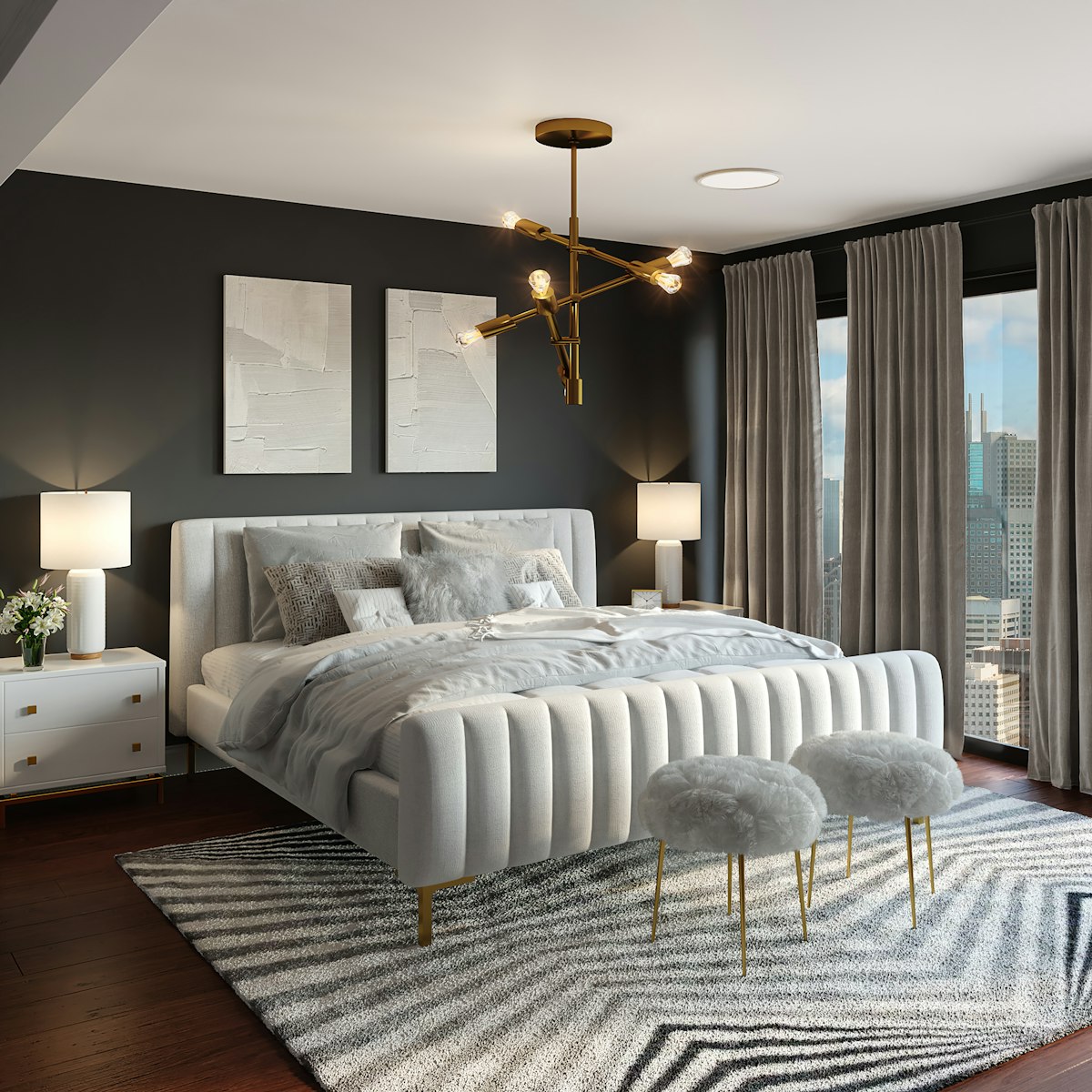
Watch: Inside Foshan’s Luxury Furniture Showrooms — 2026 Tour
This video takes you inside one of Foshan’s top high-end furniture showrooms, showcasing the latest 2026 luxury furniture designs, material innovations, and manufacturing capabilities available to international buyers.
Foshan’s furniture manufacturers aren’t a monolithic group — they span four distinct tiers with fundamentally different capabilities, price structures, and ideal use cases. Reliability-focused full-service partners like George’s Furniture excel at multi-category projects requiring coordinated delivery and dedicated management. Homeware volume factories in Longjiang deliver the lowest per-unit cost for standardized residential products. High-end artisanal workshops in Shunde produce finishing quality that competes with Italian luxury houses at 40–60% lower cost. Large-scale producers like OPPEIN and Kuka offer industrial consistency and certification depth for high-volume distribution.
The sourcing mistake that costs importers the most money isn’t selecting a “bad” factory — it’s selecting the wrong tier for their project requirements. A designer commissioning 20 bespoke dining tables doesn’t need OPPEIN’s 1,000-unit production lines. A national retailer sourcing 5,000 sofas doesn’t need an artisanal workshop’s hand-applied lacquer finishing. Matching manufacturer capability to project need is where value is created.
Due diligence remains indispensable regardless of tier: verify business licenses, order production (not showroom) samples, invest in third-party pre-shipment inspection, and visit both showrooms and factories. The showroom tells you what the factory can present. The factory floor tells you what they can consistently deliver.
Jade Ant furniture works across all four manufacturer tiers in Foshan and helps international buyers identify the right match for their specific project profile, quality requirements, and budget. Whether you’re planning your first test order or scaling a proven collection to 10,000 units annually, our sourcing resources and factory network are built to help you source with confidence.
Frequently Asked Questions
1. Why is Foshan considered the furniture capital of China?
Foshan hosts over 7,000 furniture factories across the Lecong, Longjiang, and Shunde districts, handling approximately 75% of China’s total furniture manufacturing output. The city’s strength lies in its vertically integrated ecosystem — timber suppliers, foam manufacturers, fabric mills, hardware producers, finishing specialists, and export packaging operations are all concentrated within a 30-kilometer radius. This density drives cost efficiency, rapid production turnaround (samples in 7–15 days), and a product diversity unmatched anywhere globally. Lecong alone features 3,300+ showrooms spanning 5 million square meters, making it the world’s largest furniture wholesale market.
2. What types of furniture are manufactured in Foshan?
Foshan produces virtually every category of furniture: residential (living room sofas, bedroom sets, dining tables, wardrobes), commercial (hotel, restaurant, and office furniture), outdoor (aluminum, rattan, teak, and synthetic wicker), children’s furniture, healthcare seating, and specialized categories like educational and public-space furniture. Styles range from Scandinavian minimalism and Italian luxury reproductions to Japandi, mid-century modern, Art Deco revival, and Chinese contemporary — often produced by the same factory on different production lines.
3. How much cheaper is Foshan furniture compared to European or American manufacturers?
At the FOB (factory gate) level, Foshan furniture typically costs 60–90% less than equivalent products from U.S. or European manufacturers, depending on the manufacturer tier. A three-seat upholstered sofa retailing at $2,800–$3,500 in the United States can be manufactured in Foshan at $195–$850 FOB, depending on whether you source from a homeware-volume factory or a high-end artisanal producer. After adding shipping ($23–$35 per unit via FCL), duties (25% Section 301 tariff for the U.S.), and customs fees, the total landed cost still represents 46–63% savings compared to domestic procurement.
4. What is the minimum order quantity (MOQ) for Foshan furniture factories?
MOQs vary significantly by manufacturer type. High-end artisanal workshops accept orders as small as 5–30 pieces (some even single-piece commissions for high-value items). Full-service manufacturers like George’s Furniture typically require 50–100 pieces per SKU. Homeware volume factories in Longjiang usually need 100–500 pieces. Large-scale producers like OPPEIN and Kuka often require 200–1,000 pieces or minimum order values of $50,000+. Most factories will negotiate lower MOQs at a 10–15% price premium for first-time orders or market testing.
5. How do I verify the quality of a Foshan furniture manufacturer?
Follow a four-step verification process: (1) Check the factory’s business license on China’s NECIPS system — confirm it says “furniture manufacturing,” not just “trading.” (2) Conduct a factory visit or live video audit, inspecting the production floor, QC equipment, and material storage. (3) Order a production sample ($50–$300) and evaluate it against measurable criteria: dimensional accuracy ±3mm, finish consistency, hardware operation. (4) Engage a third-party inspector (SGS, Bureau Veritas, or V-Trust at $149–$350/man-day) for pre-shipment AQL 2.5 sampling when 80% of production is complete. Jade Ant furniture also offers a 12-point factory audit service.
6. Can Foshan manufacturers produce custom furniture designs?
Yes, but customization depth varies by manufacturer tier. High-end artisanal factories offer unlimited customization — fully bespoke designs with any material, dimension, and finish. Reliability-focused full-service manufacturers support high customization (materials, dimensions, finishes) with in-house design teams. Homeware volume factories offer limited customization (fabric color, leg finish, branding) but require 300–500 piece MOQs for structural changes. Large-scale producers customize primarily within their existing catalog range. Provide CAD drawings, material specifications, and Pantone color references to get accurate quotes across all tiers.
7. What certifications should I look for from Foshan furniture factories?
Essential certifications depend on your destination market. For the U.S.: ISO 9001 (quality management), CARB Phase 2/EPA TSCA Title VI (formaldehyde emissions from composite wood — mandatory), and BIFMA (commercial furniture durability). For the EU: EN 12520 (seating strength), EN 1021 (flammability), and REACH compliance. For sustainability-sensitive markets: FSC Chain of Custody (responsible wood sourcing) and GREENGUARD Gold (low VOC emissions). Always verify certificate numbers directly with the issuing body — don’t rely on factory-provided documentation alone.
8. How long does production and shipping take from Foshan?
Total timelines from order placement to destination-port arrival: stock items from homeware factories take 5–7 weeks (including 14–18 day ocean transit to Los Angeles). Custom orders from full-service manufacturers take 7–12 weeks. High-end artisanal pieces take 9–14 weeks. Add 5–10 days for U.S. customs clearance and inland delivery. Build a 2-week buffer for unexpected delays — especially around Chinese New Year (late January–February) and peak shipping season (September–November). Foshan’s proximity to Shenzhen’s Yantian port (120 km) keeps factory-to-port trucking costs at $200–$500.
9. How do Foshan furniture prices compare to Vietnamese or Indonesian manufacturers?
Foshan remains 10–25% cheaper than Vietnam for most furniture categories at equivalent quality levels, according to comparative pricing data from Jade Ant furniture. Vietnam’s cost advantage has narrowed significantly since 2020 as wages increased, but Vietnam benefits from lower U.S. tariff rates (no Section 301 tariff). Indonesian manufacturers offer competitive pricing on solid-wood and rattan furniture specifically, but lack Foshan’s breadth across categories. The key differentiator is Foshan’s unmatched supply-chain density — sourcing 10+ furniture categories from a single region is possible in Foshan but impractical in Vietnam or Indonesia.
10. What are the best markets and showrooms to visit in Foshan for furniture sourcing?
The three essential venues are: Louvre Furniture Mall (the largest, focused on luxury and mid-to-high-end brands — plan 1–2 full days), Sunlink Furniture Wholesale Market (broader range with more competitive pricing — 1 day), and Tuanyi International Furniture City (strong in outdoor and commercial furniture — half day). After the showrooms, visit factory production floors in nearby Longjiang to see actual manufacturing capability. Attend CIFF Guangzhou (March and September) for maximum exposure to 4,000+ exhibitors in a concentrated timeframe. Fly into Guangzhou Baiyun Airport, then take the 45-minute high-speed train to Foshan.