
A Step-by-Step Guide to Ordering Bulk Furniture from Chinese Factories
Industry Snapshot: China’s furniture manufacturing sector crossed $169 billion USD in output value in 2026, representing over 37% of total global furniture exports. Behind that number are tens of thousands of factories spread across Guangdong, Zhejiang, and Shandong provinces — and knowing how to navigate them is the difference between a profitable supply chain and a warehouse full of off-spec disappointment.
This guide walks you through every stage of the bulk furniture procurement process — from your first supplier search to after-sales support — with real data, decision frameworks, and the same best practices used by hospitality buyers, retail chains, and interior designers who source from China year after year.

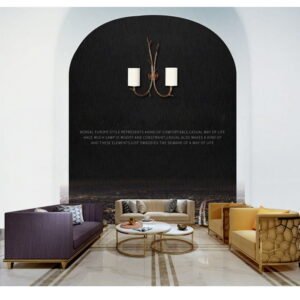
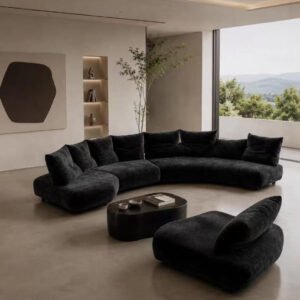
High-end custom living room furniture — the quality level achievable when your sourcing process is properly structured.
Understanding the Bulk Furniture Market
Key Market Segments
Bulk furniture sourcing from China isn’t a single category. It spans four distinct commercial segments, each with its own pricing logic, quality expectations, and compliance requirements.
| Segment | Typical Buyers | Price Range (FOB) | Typical Lead Time |
|---|---|---|---|
| Contract | Hotels, offices, airports | $80–$800/piece | 45–90 days |
| Hospitality | Resorts, restaurants, clubs | $120–$1,200/piece | 60–120 days |
| Retail | Furniture chains, e-commerce | $30–$400/piece | 30–75 days |
| Residential / Project | Interior designers, developers | $150–$3,000/piece | 45–90 days |
Contract furniture is engineered for high-traffic commercial environments — airport lounges, corporate offices, hotel lobbies. Durability ratings measured by BIFMA cycle tests matter far more than aesthetics alone. A contract chair that fails at 80,000 cycles in a hotel lobby will cost you far more in replacement and guest experience damage than the $40 you saved per unit at the factory.
Hospitality furniture combines visual refinement with structural endurance. A 5-star resort in Dubai might specify upholstered headboards in FR (flame-retardant) fabric with triple-sewn seams — a finish level that costs 3× what you’d pay for residential-grade equivalents. The visible ROI: guests in a well-furnished room rate their stay 18–22% higher on comfort scores, according to hospitality interior studies.
Retail furniture moves fast, making lead time and MOQ (Minimum Order Quantity — the fewest units a factory will produce per style) flexibility critical drivers. Factories in Guangdong’s Lecong market often carry ready-made stock to accommodate fast retail replenishment.
Residential / project furniture for property developers and interior designers leans heavily on customization: bespoke finishes, proprietary hardware, and design exclusivity agreements that prevent the same look from appearing in a competitor’s showroom.
Typical Price Ranges and Lead Times
A critical mistake first-time buyers make is comparing factory quotes without factoring in total landed cost — what you actually pay by the time product arrives at your warehouse.
Here’s a realistic landed-cost breakdown for a $200 FOB sofa delivered to Los Angeles:
| Cost Component | Amount |
|---|---|
| FOB Price (factory gate, Shenzhen) | $200.00 |
| Ocean Freight (LCL, per unit estimate) | $35.00 |
| Marine Insurance (0.5%) | $1.00 |
| US Import Duty (5.3% for sofas) | $10.60 |
| Customs Brokerage & ISF Filing | $8.00 |
| Port Fees & Drayage (estimate) | $12.00 |
| Total Landed Cost | $266.60 |
That’s a 33% uplift from the quoted price — and this example excludes warehousing and last-mile delivery. Always build your margin calculations on landed cost, not FOB.
Common Risks and Mitigations
Three risks derail more bulk furniture orders than all others combined:
- Quality drift between sample and mass production: The approved sample looks perfect; the container doesn’t match. Mitigation: a binding Pre-Production Sample (PPS) agreement before manufacturing begins.
- Supplier fraud — trading companies posing as factories: You pay a middleman’s 15–30% markup without gaining factory-level control over production. Mitigation: factory verification visits or third-party audits through firms like SGS or QIMA.
- Peak-season shipment delays: Chinese New Year (late Jan–Feb), Golden Week (Oct), and the pre-holiday rush (Aug–Sep) can add 3–6 weeks to any timeline. Mitigation: for Q4 delivery, orders must be placed by June at the latest.
Defining Requirements and Specs
Before you contact a single factory, your internal documentation needs to be watertight. Factories quote what they understand — vague specs produce vague quotes, inconsistent samples, and expensive rework.
Creating a Clear Bill of Materials and Drawings
A Bill of Materials (BOM) — a complete list of every component and material in a product — covers: frame material and grade, upholstery fabric composition (e.g., “60% polyester / 40% linen, 280 GSM, Martindale rub count ≥ 25,000 cycles”), foam density (e.g., “HR45 seat foam, 8 cm thick”), hardware finishes, and packaging requirements.
For furniture with complex geometry — case goods, custom cabinetry — provide technical drawings with critical dimensions in millimeters. Chinese factories work in metric. Sending imperial drawings without conversion is a leading cause of dimensional errors on first orders.
💡 Pro Tip: If you don’t have your own technical drawings, Jade Ant Furniture offers complimentary CAD drafting as part of their quoting process for custom projects — saving you $500–$2,000 in design fees before you’ve placed a single unit.
Setting Tolerances, Finishes, and Packaging Needs
Tolerances define acceptable deviation from spec. A drawer gap of ±1mm is typical for mid-range furniture; premium hospitality spec often requires ±0.5mm. State this explicitly in your tech pack, or the factory will apply its own internal defaults.
For finishes, provide a physical color chip or RAL/NCS code, not a verbal description. “Warm walnut” means different things in Foshan than in Milan — a lesson learned by many buyers after receiving 500 chairs in the wrong shade.
For packaging, specify carton compression strength (BCT test), foam corner protection thickness, and whether products require assembly instructions. Retail buyers should confirm UPC/EAN barcode placement requirements before production begins.
Estimating Quantity, Forecast, and Safety Stock
Most Chinese furniture factories work with MOQs between 50–200 units per SKU for custom items, and as low as 10–20 units for catalog styles.
Industry Insight: Buyers who commit to rolling 6-month forecasts — even non-binding — consistently negotiate 8–15% better pricing and receive priority production scheduling, because it allows factories to plan raw material procurement in advance rather than sourcing at spot prices.
The formula for calculating safety stock is:
Where is the desired service level Z-score (1.65 for 95%), is the standard deviation of daily demand, and is lead time in days. For a retail buyer with a 60-day lead time and moderate demand variability, a practical starting point is 6–8 weeks of average sales as safety stock.
Finding Reliable Chinese Factories

What a well-run factory floor looks like: organized material zones, labeled components, and dedicated QC stations — not just a showroom.
Sourcing Channels: OEM/ODM, Trade Platforms, and Referrals
There are three primary sourcing channels, each with distinct tradeoffs:
OEM (Original Equipment Manufacturer) means you provide the design and the factory builds it. Best for buyers with proprietary product designs who want to retain IP ownership. Requires complete technical documentation.
ODM (Original Design Manufacturer) means the factory provides the design and you brand it. Faster to market, lower engineering cost, but less design exclusivity. Ideal for buyers entering a new category without in-house design capability.
Trade Platforms such as Alibaba, Global Sources, and Made-in-China are efficient for supplier discovery but require careful filtering. Up to 40% of listings on major platforms are trading companies, not actual factories. Look for Verified Supplier badges, third-party audit scores, and factory video tours before shortlisting.
Referrals remain the highest-quality sourcing channel. Sourcing partners with established factory relationships — such as the team at Jade Ant Furniture — can connect buyers to pre-vetted manufacturers that don’t actively advertise online, often at 10–20% better pricing than platform listings.
Key furniture manufacturing clusters to know:
- Foshan / Lecong, Guangdong — World’s largest furniture wholesale hub; living room and dining furniture specialization
- Dongguan, Guangdong — Office furniture and contract-grade seating
- Shenzhen — Design-forward, mid-to-premium residential furniture
- Anji, Zhejiang — Outdoor furniture and chairs (over 70% of global bamboo chair production)
- Linyi, Shandong — Flat-pack, RTA (ready-to-assemble), and budget residential furniture
Factory Due Diligence: Capabilities, Certifications, Capacity
Never skip due diligence. A factory that looks polished in marketing materials may subcontract your order to a third party the moment their own production line fills up.
Legal & Operational verification:
- Business License (营业执照) — check registration date, registered capital, and scope of business
- Export license (self-declaration or through a licensed customs broker)
- ISO 9001 quality management certification (baseline for serious manufacturers)
Production capability checks:
- List of major machinery (CNC routers, edge banders, lacquer spray lines, upholstery departments)
- Annual production capacity versus current utilization rate
- In-house vs. outsourced production (outsourcing is not automatically disqualifying, but must be declared)
Compliance certifications to verify:
- FSC Chain of Custody — wood sourced from responsibly managed forests
- CARB Phase 2 — California Air Resources Board formaldehyde emission limits for composite wood
- BIFMA — Business and Institutional Furniture Manufacturers Association durability standards
- EN 16139 — European contract seating durability standard
Requesting Factory Credentials and Visit Preparation
Before any visit or order, request: Business License copy, export records from previous international orders, ISO and FSC certificates (verify expiry dates and issuing body on the certifying body’s own website), and a reference list of international buyers.
For on-site visits, your audit checklist should cover: production floor organization (5S methodology), material storage conditions (especially moisture control for solid wood), visible QC stations, worker welfare compliance, and fire safety provisions.
For buyers who can’t travel to China, third-party audit firms including SGS, Bureau Veritas, and QIMA conduct factory audits for $350–$800 per factory — one of the best risk management investments available in early-stage supplier qualification.
Requesting Quotes and Negotiation
Structuring RFQs and Needed Documents
An RFQ (Request for Quotation) is only as useful as the information you put into it. A weak RFQ generates a rough ballpark; a strong RFQ generates real, comparable quotes that reveal which factories understand your spec.
Your RFQ should include: product specification summary, target quantity and potential annual volume, required Incoterm (defined below), target delivery port, packaging requirements, requested sample quantity, and your target landed cost range (optional but useful for pre-filtering).
Send your RFQ to 5–8 factories simultaneously. This creates competitive tension without becoming unmanageable. Factories that decline to quote for your volume — which will happen — are providing useful self-selection data.
Analyzing Quotes: Price, Lead Time, MOQs, and Payment Terms
When comparing quotes, a structured comparison table prevents the common mistake of selecting solely on unit price:
| Factory | Unit Price (FOB) | MOQ | Lead Time | Sample Cost | Payment Terms | ISO Cert |
|---|---|---|---|---|---|---|
| Factory A | $148 | 100 | 45 days | $280 | 30/70 T/T | ✅ Yes |
| Factory B | $132 | 200 | 60 days | $350 | 50/50 T/T | ❌ No |
| Factory C | $161 | 50 | 40 days | $180 | 30/70 T/T | ✅ Yes |
| Factory D | $119 | 500 | 75 days | $0 | 40/60 T/T | ❌ No |
Factory D has the cheapest unit price — but the highest MOQ, longest lead time, and no ISO certification. Total cost of ownership across quality risk, delay risk, and volume commitment almost always favors a higher-priced but better-validated supplier.
Negotiation Tactics Without Compromising Quality
Effective negotiation with Chinese furniture factories is about relationship value, not price pressure alone. Factories squeezed to unrealistic margins cut corners on materials. The buyers who get the best outcomes consistently apply these principles:
Lead with volume potential, not just the immediate order. “We’re testing with 150 units but our annual target is 1,200” changes how a factory prices and prioritizes you from day one.
Negotiate sample costs aggressively, but treat production pricing as fair exchange. Sample credits applied to the first order are a common middle ground that factories often accept.
Ask for alternative material substitutions. Engineers at good factories often have cost-saving ideas buyers wouldn’t think to request — for example, using E0-grade MDF on non-visible back panels instead of solid wood, at 30–40% lower material cost with no visible quality difference.
Trade lead time for price: agreeing to a 75-day slot (vs. a rush 45-day slot) can reduce unit price by 5–10%.
Sampling, Prototyping, and Quality Control
Approving Samples vs. Mass Production Readiness
There are three types of samples in a standard furniture procurement workflow, each serving a distinct purpose:
Counter Sample (CS): The factory produces a sample matching your reference or technical package. You review and mark up corrections.
Pre-Production Sample (PPS): After all corrections are incorporated, the factory produces a final sample using actual production materials and processes. This becomes the legal quality reference — both parties sign off, and mass production must match it exactly.
Production Pilot Run: For orders over 500 units, request a pilot run of 20–30 units before full production begins. This surfaces process-level issues that never appear in single-piece sampling.
Industry Insight: Approximately 62% of quality disputes in bulk furniture orders originate from factories using a different material grade or process in mass production than in the approved sample. A signed Approved Sample Agreement is the single most impactful document in your procurement package.
Quality Control Plans: AQL, Inspections, Rework
AQL (Acceptable Quality Level) is the statistical framework used to determine how many defective units in a batch are acceptable before the shipment is rejected. It is expressed as a percentage — AQL 2.5 means up to 2.5% of sampled units may be defective before triggering rejection.
| AQL Level | Typical Application | Defect Rate Tolerated |
|---|---|---|
| AQL 4.0 | Budget retail | Up to 4% |
| AQL 2.5 | Standard commercial | Up to 2.5% |
| AQL 1.5 | Premium hospitality | Up to 1.5% |
| AQL 1.0 | Luxury / bespoke | Up to 1% |
A three-stage inspection framework is industry standard for bulk furniture:
Stage 1 — Pre-Production Inspection (PPI): Before manufacturing begins. Verify raw materials and components match spec — catching a wrong fabric or wrong foam density at this stage costs nothing to fix.
Stage 2 — During Production Inspection (DUPRO): At 20–30% completion. Systemic issues at this stage are correctable at 20–30% of the cost it would take at shipment stage.
Stage 3 — Pre-Shipment Inspection (PSI): When 80%+ of production is complete. Your inspector physically measures, tests, and photographs units per the AQL plan before any container is loaded.
Jade Ant Furniture conducts multi-layer supplier verification including on-site inspections as part of its factory-matching and sourcing service — a practical advantage for buyers who can’t station their own QC team in China.
Testing Requirements and Acceptance Criteria
Beyond visual inspection, physical laboratory testing is required for most commercial and export markets:
- BIFMA X5.1 (office seating durability) — 250,000 seat cycle minimum
- EN 12520 / EN 12521 (domestic seating static and fatigue load requirements)
- CARB Phase 2 / TSCA Title VI — US federal formaldehyde emission limits for composite wood panels; non-compliance results in detained and destroyed shipments
- California TB 117-2013 — smolder resistance for upholstered furniture sold in the US
- Lacquer adhesion tests — cross-hatch adhesion per ASTM D3359
Testing labs commonly used by importers include Intertek, SGS, and Bureau Veritas — all with accredited labs in Guangdong Province. Budget $300–$800 per test per product type.
Production Timeline and Milestones
Establishing a Realistic Production Schedule
Below is a typical production timeline for a first-time bulk order of 200 upholstered dining chairs:
| Phase | Activity | Duration |
|---|---|---|
| Phase 1 | RFQ distribution, quote comparison, factory selection | Weeks 1–3 |
| Phase 2 | NDA / PO issued, counter sample produced and reviewed | Weeks 4–6 |
| Phase 3 | PPS approval, pre-production materials ordered | Weeks 7–8 |
| Phase 4 | Pilot production (20 units), DUPRO | Weeks 9–11 |
| Phase 5 | Full bulk manufacturing (200 units) | Weeks 12–16 |
| Phase 6 | Pre-shipment inspection (PSI) + container loading | Weeks 17–18 |
| Phase 7 | Ocean transit (China → US West Coast ~14–18 days) | Weeks 19–21 |
| Phase 8 | Customs clearance and final delivery | Weeks 22–23 |
Total: approximately 23 weeks (5.5 months) from RFQ to warehouse delivery. First-time buyers routinely underestimate this by 6–10 weeks — which is why building buffer time into every customer commitment is non-negotiable.
Milestones: Pre-Production, Bulk Manufacturing, and Final Inspection
Three production gate reviews protect your order most effectively:
Gate 1 — Pre-Production Approval: No factory begins cutting, bending, or spraying until the PPS is formally approved in writing. This prevents the “we thought you wanted” scenario that generates the most expensive disputes.
Gate 2 — DUPRO at 30% Completion: At this production stage, systemic issues (wrong foam density, incorrect stain color, hardware misalignment) are still correctable at a fraction of the cost they would incur at shipment stage.
Gate 3 — Pre-Shipment Sign-Off: Your inspector or third-party agent physically measures, tests, and photographs 10–15% of production units per the AQL plan before any container is sealed.
Contingency Planning for Delays
Build buffer time into every project plan — not as pessimism, but as professional risk management:
- Chinese New Year shutdown: 2–4 weeks (late January / early February)
- Factory equipment breakdown: rare, but allow +7–14 days on any large order
- Customs examination or “exam” delay: 5–10 business days, especially during tariff change periods
- Extreme weather or port congestion: 7–14 days of buffer on ocean transit
A practical operating rule: never promise your customer a delivery date without at least a 3-week buffer beyond your internal target.
Shipping, Logistics, and Incoterms

Container shipping from Guangzhou, Shenzhen, or Ningbo — the three most common departure ports for China furniture exports.
Choosing Terms (EXW, FOB, CIF, DDP) Based on Risk
Incoterms — International Commercial Terms — define exactly where responsibility and cost transfer from seller to buyer. For furniture buyers, four terms dominate all transactions:
| Incoterm | Who Controls Freight | Buyer’s Risk Level | Best For |
|---|---|---|---|
| EXW (Ex Works) | Buyer (from factory gate) | Highest | Experienced importers with own freight network |
| FOB (Free on Board) | Buyer (from port) | Medium | Most commercial buyers — best balance of control |
| CIF (Cost, Insurance, Freight) | Seller | Lower | First-time buyers, smaller orders |
| DDP (Delivered Duty Paid) | Seller (incl. duties) | Lowest | Premium service; factory absorbs customs risk |
FOB is the recommended starting point for most bulk furniture buyers. You choose your own freight forwarder, negotiate direct rates, and receive shipment communication directly — while responsibility clearly transfers at vessel loading. Jade Ant Furniture’s detailed guide comparing EXW, FOB, and CIF is an excellent reference when deciding between terms for your specific order profile.
Packaging, Labeling, and Palletization Standards
Furniture packaging for ocean freight must withstand compression loads of 400–800 kg during transit, moisture ingress (especially for solid wood — use desiccant bags inside cartons), and corner and edge impact during loading and unloading.
For US retail compliance, each carton typically requires: country of origin label (“Made in China”), UPC barcode, carton number, gross/net weight, dimensions in imperial, and California Prop 65 warning where applicable.
On palletization: a standard 40-foot high-cube container fits approximately 28 standard pallets (1.2m × 1.0m). Maximizing cube utilization can reduce per-unit freight cost by 15–25% — a figure worth reviewing with your freight forwarder before every container booking.
Freight Forwarders, Insurance, and Lead Times
Choose a freight forwarder with dedicated China-origin expertise and carrier relationships at the Ports of Shenzhen, Guangzhou, or Ningbo. For shipment size comparison:
- LCL (Less than Container Load): Best for orders under ~12 CBM; typical transit to US West Coast: 25–35 days
- FCL 20-foot container: ~25–28 CBM usable volume; 18–25 days transit
- FCL 40-foot high-cube: ~66–68 CBM usable volume; 18–25 days transit; lowest cost-per-unit
Marine insurance for furniture typically runs 0.3%–0.8% of cargo value on a CIF basis. A container of $80,000 in furniture costs $240–$640 to insure. The asymmetry of not insuring — where one incident can wipe out an entire order — makes this a non-negotiable line item. Use Freightos for live freight rate benchmarking and iContainers for China-specific import guidance.
Compliance, Certifications, and Safety
Product Safety Standards Relevant to Target Markets
Compliance requirements vary significantly by destination market — getting this wrong means product stopped at the border, recalled from retail, or triggering civil liability.
United States: CPSC enforcement (especially for children’s furniture), ASTM F833 (infant furniture), ASTM F404 (high chairs), California Prop 65 chemical warning requirements.
European Union: CE Marking for specific furniture categories, EN standards for structural integrity and durability, REACH regulation restricting 224+ chemical substances.
UK (post-Brexit): UKCA marking (replaced CE in Great Britain), BS 7177 (mattresses and upholstered furniture flammability).
Middle East / GCC: GSO standards for Gulf countries, specific fire retardancy requirements for hospitality furniture in Dubai and Abu Dhabi.
Required Certifications
| Certification | What It Covers | Required By |
|---|---|---|
| FSC CoC | Responsible wood sourcing from managed forests | EU retailers, US hospitality groups, ESG buyers |
| CARB Phase 2 / TSCA VI | Formaldehyde emissions from composite wood | US federal law (mandatory since 2019) |
| ISO 14001 | Environmental management system | ESG-conscious corporate and hospitality buyers |
| BSCI / SMETA | Social compliance / fair labor conditions | European and Australian retailers |
| BIFMA | Structural durability for commercial furniture | US contract and hospitality procurement |
Always verify certifications directly on the issuing body’s website — fraudulent certificates exist and are easily caught by searching the certificate number on the certifying body’s database. FSC certificate verification is free and takes under 60 seconds.
Documentation and Serial Traceability
For large contracts — especially hospitality and healthcare furniture — buyers increasingly require serial number labeling on each piece (for warranty and recall traceability), material traceability documentation (wood species certificates, foam fire test certificates, fabric composition certificates), and a timestamped, geotagged factory inspection photo archive.
Build these requirements into your purchase order terms before production begins. Asking for traceability documentation after shipment is both expensive and often logistically impossible.
Payment Terms and Risk Management
Common Payment Structures: T/T, L/C, Deposits vs. Progress Payments
T/T (Telegraphic Transfer / Wire Transfer) is the dominant method in Chinese furniture sourcing:
- 30% deposit at Purchase Order confirmation
- 70% balance before shipment (against copy of Bill of Lading and inspection report)
This is the industry standard for established relationships. For first orders with new factories, buyers often negotiate a 40/60 split (factory needs more upfront on custom work) or a 30/40/30 structure (deposit / mid-production / pre-shipment) for orders over $100,000 USD.
L/C (Letter of Credit): A bank-issued payment guarantee — it releases funds only when the seller presents compliant shipping documents. The most secure option for large orders with new suppliers, but adds $500–$2,000 in bank fees and 7–14 days of processing time.
How to Mitigate Payment Risks with Letters of Credit and Escrow
For first orders over $30,000 with an unproven factory:
An Irrevocable L/C at Sight has your bank guarantee payment to the factory’s bank — releasing only upon presentation of a compliant commercial invoice, packing list, bill of lading, certificate of origin, and inspection report. Factories accept this because the bank guarantee is as reliable as cash, while you’re protected against non-delivery.
Alibaba Trade Assurance provides escrow-style protection for orders under $50,000 where L/C bank fees would be disproportionate. Funds are held in a third-party account and released only after you confirm receipt and acceptance.
Freight Forwarder B/L Control: Structure your T/T terms so the freight forwarder only releases the original Bill of Lading — required to collect the container at the destination port — after you’ve wired the balance payment. This is the most practical risk control mechanism for mid-size orders without the complexity of a full L/C.
Currency Considerations and FX Exposure
Chinese factories quote in USD. For buyers purchasing in EUR, GBP, AUD, or other currencies, FX fluctuation is a real and quantifiable cost. On a $200,000 order, a 3% currency move equals $6,000 — enough to eliminate an entire hard-won price negotiation.
Tools to manage FX exposure include forward contracts via currency specialists (Wise for Business, OFX, Convera) which allow you to lock in today’s rate for payment in 30–90 days, multi-currency business accounts to hold USD reserves for supplier payments, and natural hedging by invoicing your customers in the same currency you pay suppliers.
Managing Relationships and After-Sales Support
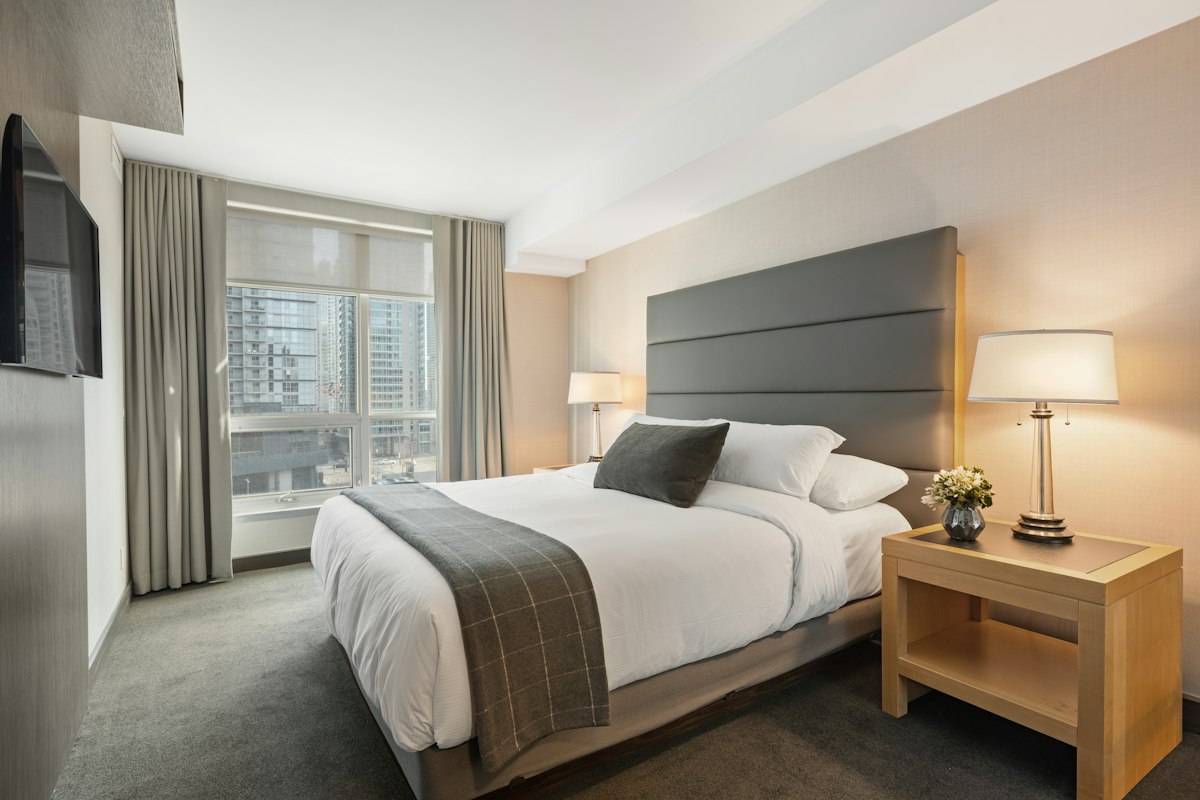
A luxury hotel suite fitted with custom contract furniture — relationships with factories that understand hospitality spec requirements are built over multiple orders, not a single transaction.
Communication Best Practices with Suppliers
Most factory sales and project management teams communicate effectively in written English, but technical discussions benefit from bilingual support. When conveying complex specifications, use numbered lists and labeled diagrams rather than dense paragraphs — this translates more reliably across language barriers.
China Standard Time (CST) is UTC+8. For buyers in the US, this creates an overnight response cycle. Structure your communications so that one unanswered question doesn’t block the next day’s progress — batch your questions into a single message rather than sending them sequentially throughout the day.
Follow up every phone or WeChat conversation with an email summary of what was agreed. In Chinese business culture, written confirmation carries binding weight that verbal agreement alone does not always convey.
WeChat is the dominant day-to-day communication tool in the Chinese furniture industry; email remains the formal record-of-agreement channel. Use both, but treat email as your system of record for anything commercially significant.
Warranty Terms, Returns, and Defect Handling
A standard warranty clause for bulk furniture from China should read:
“Supplier warrants that goods will be free from defects in material and workmanship for a period of 12 months from date of receipt at buyer’s designated warehouse. Defective units reported within the warranty period will be remedied at supplier’s cost by replacement, credit, or repair at buyer’s election.”
Negotiate this into your purchase order. Do not accept the factory’s default of 3 months from shipment date — which is structurally disadvantageous and doesn’t account for transit time, warehousing, or seasonal sales cycles.
For defects found post-shipment: document immediately with timestamped photos and video, provide an itemized defect count by SKU, reference the approved sample as the quality baseline, and submit a formal written claim within 14 days of delivery. Most purchase order terms have a claim window, and late notification significantly weakens your negotiating position.
Long-Term Partnerships and Continuous Improvement
Buyers who treat suppliers as transactional vendors cycle through factories every 2–3 years, repeating the same costly onboarding process each time. Buyers who build genuine partnerships — annual factory visits, rolling forecast sharing, collaborative design development — consistently report 8–15% better pricing, faster production priority, and first-pass quality acceptance rates above 97%.
A Supplier Scorecard reviewed quarterly creates a structured improvement loop without turning every interaction into a formal review. Track five metrics:
| KPI | Target | Review Frequency |
|---|---|---|
| On-time delivery rate | ≥ 95% | Monthly |
| First-pass quality acceptance rate | ≥ 97% | Per shipment |
| RFQ response time | ≤ 48 hours | Per inquiry |
| Claim resolution time | ≤ 14 days | Per incident |
| Documentation compliance rate | 100% | Per shipment |
Jade Ant Furniture operates as both a direct manufacturer and sourcing partner — handling factory matching, QC inspection coordination, logistics support, and after-sales management. For buyers scaling from a 200-unit trial order to recurring annual programs, this kind of end-to-end relationship eliminates the most common friction points in China furniture procurement.
📺 Video: Buying Furniture from China — Mistakes, Hidden Costs & How to Do It Right
https://www.youtube.com/watch?v=WN-gCInar-w
Experienced China sourcing professionals break down the most costly mistakes buyers make — directly applicable to every stage covered in this guide.
China Furniture Export by Segment (2025)
The chart below reflects China customs export statistics and industry analysis for 2025, with total export value estimated at $69.2 billion USD:
China Furniture Export Value by Segment — 2025 Estimate
Living Room & Sofas
Bedroom Furniture
Office & Contract
Dining & Kitchen
Outdoor Furniture
Other
Source: Lesprom, Mordor Intelligence, GACC China 2025 estimates | Total: ~$69.2B USD
OEM vs ODM vs Ready-Made: Decision Matrix
| Criteria | OEM | ODM | Ready-Made |
|---|---|---|---|
| Design Control | Full | Limited | None |
| IP Ownership | Buyer | Shared / Factory | Factory |
| Time to Market | Slowest (16–24 wks) | Medium (10–16 wks) | Fastest (4–8 wks) |
| MOQ | High (100–500+) | Medium (50–200) | Low (10–50) |
| Unit Cost | Highest | Medium | Lowest |
| Customization | Unlimited | Moderate | Minimal |
| Best For | Brand differentiation | Market testing | Fast replenishment |
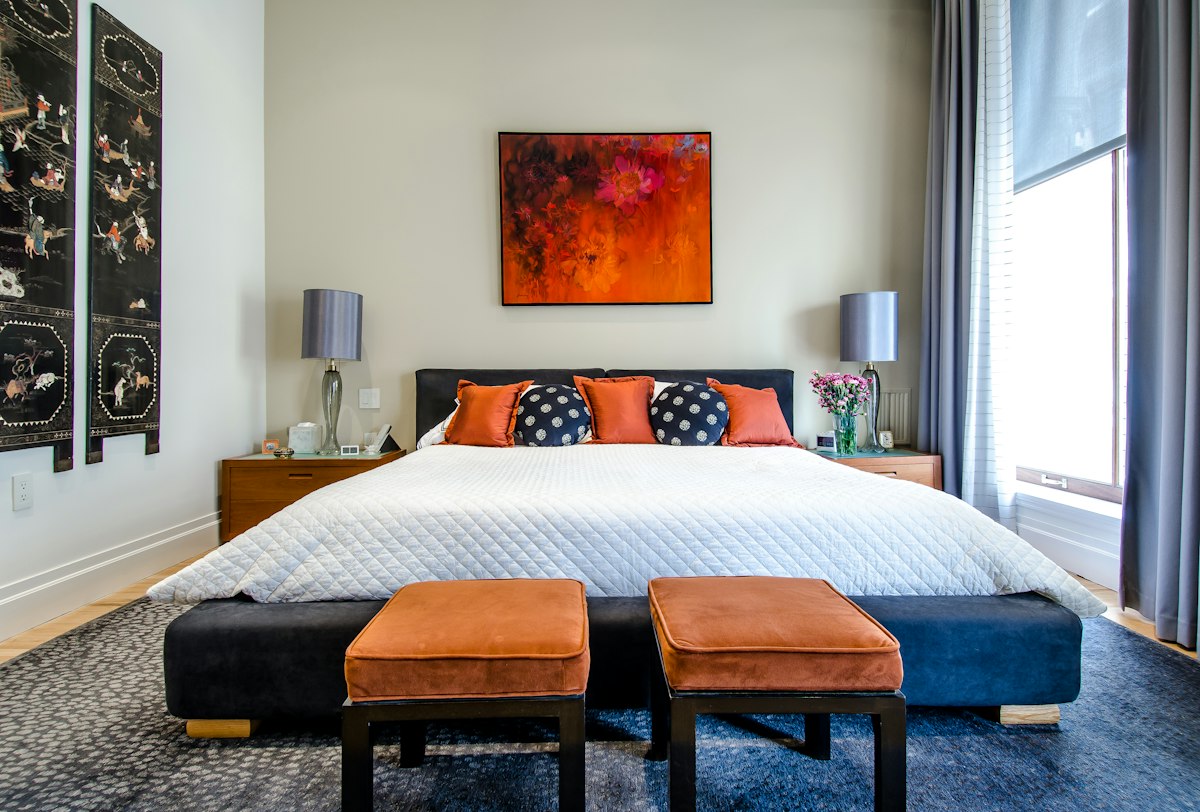
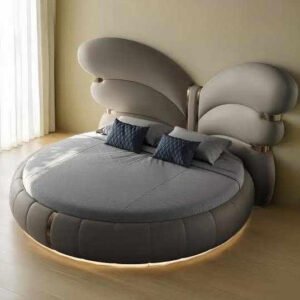
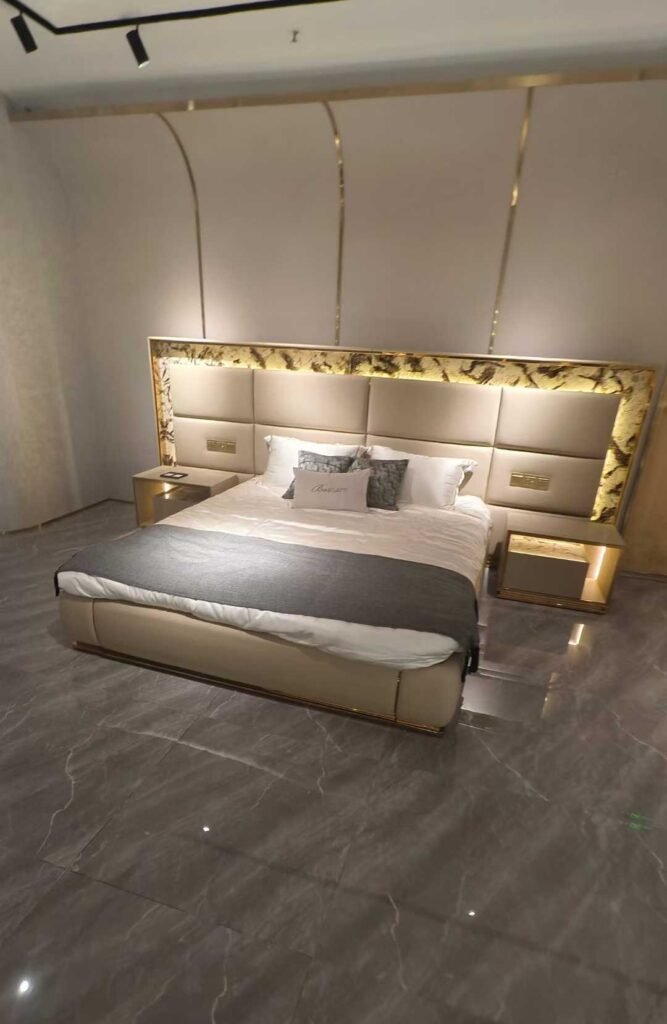
Custom luxury bedroom furniture — the finish and build quality achievable when your specification, sampling, and QC process is correctly structured.
Conclusion
Bulk furniture sourcing from China is not a shortcut — it’s a discipline. The buyers who consistently receive on-spec products, on time, at target cost follow a structured process: they define requirements precisely, verify suppliers beyond surface presentation, use samples as legal contracts, inspect before shipment, protect payments with appropriate instruments, and treat supplier relationships as long-term investments.
Brands and hospitality groups that operate this process well — whether working directly with manufacturers or partnering with specialists like Jade Ant Furniture — report cost savings of 35–55% versus domestic purchasing, at quality levels that rival European manufacturing when the spec and QC process is properly managed.
Before finalizing any bulk order, confirm these key checks are complete:
- ✅ Pre-Production Sample signed off by both parties in writing
- ✅ Factory ISO / FSC / CARB certifications verified on the issuing body’s official database
- ✅ Pre-Shipment Inspection completed with a written report on file
- ✅ Bill of Lading released only after balance payment is confirmed
- ✅ Marine insurance certificate in hand before vessel departure
- ✅ Import duties and compliance certs arranged for your destination market
- ✅ Supplier scorecard template ready for post-delivery performance review
Implement your supplier scorecard from the very first order — even if you’re starting with a single factory and 100 units. The habit of structured evaluation compounds into better pricing, faster lead times, and fewer quality disputes as your program grows. For questions about custom furniture manufacturing, factory qualification, or China logistics, the team at Jade Ant Furniture is a practical first call.
Glossary of Key Terms
| Term | Definition |
|---|---|
| MOQ | Minimum Order Quantity — the fewest units a factory will produce per style or SKU |
| FOB | Free on Board — seller’s responsibility ends when goods are loaded at the origin port vessel |
| AQL | Acceptable Quality Level — the maximum % of defective units statistically permissible before shipment rejection |
| BOM | Bill of Materials — a complete list of every component and material specification in a product |
| T/T | Telegraphic Transfer — international wire payment between buyer and seller’s bank accounts |
| L/C | Letter of Credit — bank-issued payment guarantee released only against compliant shipping documents |
| OEM | Original Equipment Manufacturer — buyer provides the design, factory builds it |
| ODM | Original Design Manufacturer — factory provides the design, buyer brands it |
| CARB Phase 2 | California Air Resources Board formaldehyde emission standard for composite wood panels |
| BIFMA | Business and Institutional Furniture Manufacturers Association — sets US commercial furniture durability standards |
| PSI | Pre-Shipment Inspection — quality check conducted when 80%+ of production is complete |
| DUPRO | During Production Inspection — mid-production quality checkpoint at 20–30% completion |
| CBM | Cubic Meter — standard unit of volume used for calculating ocean freight costs and container utilization |
FAQ — Frequently Asked Questions
Q1: What is the most important step to avoid defects in bulk furniture orders?
The single most impactful step is locking down a Pre-Production Sample (PPS) with a signed Approved Sample Agreement before mass production begins. This PPS becomes the legal quality reference — every unit produced in mass must match it. Skipping this step, or accepting a PPS without formal written sign-off from both parties, is the root cause of the majority of post-shipment quality disputes in bulk furniture procurement. Additionally, scheduling a During Production Inspection (DUPRO) at 20–30% completion allows you to catch and correct systemic issues while rework is still economically viable.
Q2: How do I evaluate a factory’s capacity for peak season demand?
Ask for production capacity documentation — specifically, monthly unit output for the past 12 months — and compare it against the factory’s current order book. A reputable factory will share this without hesitation. Ask directly: “What is your current production utilization rate?” A factory running at 90–95%+ utilization has little buffer for your order during peak periods (October–December pre-holiday rush, and August–September pre-holiday ordering season). Secure a dedicated production slot in writing, and build a 3–4 week contingency buffer into your timeline for any order placed between August and November.
Q3: Which Incoterm provides the best balance of risk and control for first-time buyers?
FOB (Free on Board) is the most widely recommended starting point for first-time bulk furniture buyers. It gives you control over the freight forwarder — you choose the carrier, negotiate rates directly, and receive shipping updates directly — while keeping risk exposure manageable. CIF is acceptable for very small initial orders where simplicity outweighs cost, but reduces your visibility into freight pricing and insurance coverage quality. DDP is the most hands-off option but is typically 12–20% more expensive because the factory marks up logistics significantly, often using low-service freight partners.
Q4: How do I protect my payment when ordering from a new Chinese factory for the first time?
For first orders over $30,000 with an unproven factory, use an Irrevocable Letter of Credit (L/C) at Sight issued by your bank. This guarantees payment to the factory only when they present compliant shipping documents — including commercial invoice, packing list, bill of lading, certificate of origin, and inspection report — protecting you from receiving no goods or non-conforming goods. For smaller first orders ($5,000–$30,000), Alibaba Trade Assurance or a freight forwarder B/L control structure provides meaningful protection at lower bank fee cost. Avoid paying 100% upfront under any circumstances with a new, unverified supplier.
Q5: What certifications should I require from a Chinese furniture factory before placing an order?
At minimum, verify: the factory’s Business License (legal entity confirmation), ISO 9001 (quality management system), FSC Chain of Custody if ordering any wood-based products for markets requiring responsible sourcing, and CARB Phase 2 / TSCA Title VI compliance documentation if shipping composite wood products to the US market. For hospitality furniture, also request fire retardancy test reports. For EU markets, confirm REACH compliance. Always cross-check certificates on the issuing body’s official verification database — fraudulent certificates exist and are identifiable in under 60 seconds of online verification.
Q6: What is a realistic MOQ for custom furniture from Chinese factories?
For fully custom OEM furniture with your designs and specifications, most reputable Guangdong factories require 100–200 units per SKU at minimum. For ODM customization — factory design with your branding or minor modifications — MOQs can be as low as 50 units. For catalog-standard styles with standard finishes, MOQs of 20–30 units are achievable from some factories. Luxury and hospitality-focused manufacturers may negotiate lower MOQs against higher unit prices or long-term volume commitments. If your target quantities are below these thresholds, consider a curated sourcing service like Jade Ant Furniture which can consolidate smaller runs across their production network.
Q7: How do Chinese New Year and factory holidays affect production lead times?
Chinese New Year (typically late January to mid-February) is the most significant annual disruption in Chinese furniture supply chains. Factories close for 2–4 weeks, and workers return gradually over the following 2–3 weeks. Orders placed in December must account for delayed raw material procurement and a slow production restart. March and April orders carry post-CNY backlog risk — 16–20+ week lead times are common in Q1. May through September is generally the most predictable period (30–75 days for standard orders). October through November is peak rush season; factories prioritize established buyers and existing long-term partners. For Christmas or Q4 delivery, bulk orders must be placed by June at the latest.
Q8: What is the difference between a trading company and a factory when sourcing furniture from China?
A factory (manufacturer) directly produces the goods you order, giving you production-level control, factory-level pricing, and direct QC access. A trading company acts as an intermediary — aggregating orders from multiple buyers, placing them with factories, and marking up the price by 10–30%. Trading companies are valuable when you need a wide range of products from multiple factories consolidated under one service umbrella. For large volume or custom orders, going direct to the factory delivers meaningful cost and quality control advantages. You can verify factory status by checking their business license scope of operations (it should list manufacturing, not trading) and requesting a factory facility audit before committing.
Q9: How should I handle a quality dispute with a Chinese furniture supplier after delivery?
Document everything immediately upon receipt: timestamped unboxing photos and video, serial numbers of defective units, and an itemized defect description by SKU and defect category. Reference your signed approved sample and AQL inspection report as the quality baseline. Submit a formal written claim via email within 14 days of delivery — most purchase order terms include a claim window, and delayed notification significantly weakens your negotiating position. Propose a specific remedy: credit note against next order, replacement shipment, or partial refund, depending on defect severity and your relationship status with the factory. If the factory is unresponsive after 30 days, escalate through your sourcing agent or the relevant trade association.
Q10: Is it worth hiring a sourcing agent for bulk furniture procurement from China?
For buyers placing their first 1–3 orders, or ordering less than $500,000 annually from China, yes — a qualified sourcing agent typically pays for itself within the first order. The core value is: pre-vetted factory access (avoiding fraudulent or low-capability suppliers), bilingual QC communication, inspection coordination, and end-to-end logistics support. Reputable agents charge 5–10% of FOB value or operate on a flat-fee structure. For established buyers with a trusted factory network and in-house QC capability, the cost-benefit calculation shifts — but even experienced buyers benefit from agent support when entering a new product category or manufacturing region. Jade Ant Furniture offers sourcing consultation alongside direct manufacturing services — a practical starting point for buyers evaluating whether a dedicated sourcing relationship makes sense for their volume and growth trajectory.