Choosing a China Furniture Sourcing Partner: A Luxury Importer’s Blueprint for Quality, Design Integrity, and Transparency

For high-end furniture importers, a luxury product and a costly liability can look identical on the factory floor. What separates them is the China partner you choose. The right partner does more than find a factory. They protect your quality standards, keep your design intact, and show you what happens in your supply chain.
This guide is for importers, distributors, interior designers, villa owners, private label brands, FF&E buyers, and hotel developers who source premium furniture from China and can’t afford surprises.
مسرد المصطلحات الأساسية
| المصطلح | Plain-English Meaning | Example |
|---|---|---|
| Gold sample | The approved, signed-off reference piece that every production unit must match | A walnut credenza signed by the designer and kept sealed at the factory |
| Quality drift | The slow gap that opens between the gold sample and mass production | Lacquer sheen moves from 30% to 45% gloss by the third batch |
| المفروشات والمعدات والأثاث | Furniture, Fixtures & Equipment: the movable items in a hotel or development | Beds, lounge chairs, desks, lamps |
| AQL | Acceptable Quality Limit: a statistical rule for how many defects are allowed in a random sample | AQL 1.0 means very few minor defects are tolerated |
| PPI | Pre-Production Inspection: checking materials before cutting starts | Measuring veneer thickness before pressing |
| DUPRO | During-Production Inspection: an audit when about 30–50% of units are made | Checking joinery on the first 200 chairs |
| PSI | Pre-Shipment Inspection: final check before goods are loaded | Opening 32 random cartons from a 500-unit order |
| Shop drawing | The factory’s technical drawing, built from the designer’s concept | Exact radius, joint type, and tolerances of a curved headboard |
| Tolerance | The allowed variation from a stated dimension | ±1 mm on a marble tabletop edge |
| CITES | A global treaty controlling trade in endangered species, including some woods | Certain rosewoods need CITES permits |
| FSC | Forest Stewardship Council: certification proving wood comes from responsibly managed forests | FSC-certified white oak |
I. Introduction
The Complexity of High-End Sourcing
China makes furniture at every price point. The factories that produce $199 flat-pack dressers and the workshops that hand-finish $18,000 lacquered cabinets can be in the same industrial district in Foshan or Dongguan.
When you source luxury furniture, you’re buying craftsmanship. That means hand-stitched leather, book-matched veneers (two consecutive slices of wood opened like a book so the grain mirrors), and finishes built up over many coats. Mass-production habits destroy these details quickly.
The High Stakes of Luxury Imports
A single failure costs far more than the piece itself.
Imagine 40 dining chairs delivered to a private villa in Dubai where the leather on 12 chairs shows visible grain mismatch. The client doesn’t blame the factory, which they’ve never heard of. They blame the designer who specified the chairs and the importer who supplied them. Replacing those chairs takes 10–14 weeks. The relationship may not recover at all.
نظرة ثاقبة على القطاع: In luxury trade, many importers estimate that one serious quality incident on a flagship project can cost them future work worth 5–10 times the value of the original order. Designers talk to each other, and so do hotel procurement teams.
The Strategic Solution
The answer is to stop treating your China supplier as a transaction and start treating them as a sourcing partner. A transactional supplier asks what you want to pay. A partner asks what would go wrong for you if this piece arrived wrong, and then builds checks to stop it.
Purpose of This Guide
This guide is a blueprint you can use to judge any China partner, Jade Ant furniture included. It focuses on reducing risk and protecting craftsmanship. For background, you can also read our overview of the benefits of buying high-end furniture from China.
II. Defining the Role of a Strategic Sourcing Partner (The “Guardian” Model)
Beyond the Middleman
A traditional agent finds a factory, passes on a quote, and collects a commission. Once the order is placed, their job is basically done.
A “guardian” partner works differently. They stay involved from the first drawing to the moment the container is unloaded. Quality control, material checks, packing, and logistics are all part of their role.
| Function | Simple Agent | Guardian Partner |
|---|---|---|
| Factory introduction | نعم | Yes, pre-vetted and audited |
| Shop drawing review | نادرًا | Every drawing, before sampling |
| Material verification | No | Raw material checks with photos and test reports |
| In-process inspection | No | Yes, at agreed milestones |
| Packing engineering | Factory default | Custom crating spec per item |
| Post-delivery support | الحد الأدنى | Defect resolution and replacement plan |
| Who carries the risk | You | Shared, written into the agreement |
The Bridge Function
Designers think in mood, proportion, and feel. Factory engineers think in millimeters, board thickness, and machine settings. A good partner translates between the two.
Here’s a typical example. A designer asks for a “soft, waterfall edge” on a marble console. The partner turns that into a shop drawing with an exact radius (say, R15 mm), the stone thickness, the joint method, and a sample of the edge profile for sign-off.
Risk Ownership
Your partner should be your eyes and ears on the factory floor. They should be there physically, every week, during production. If a problem appears, they should report it to you with photos within 24 hours, not hide it until the container ships.
Ask any potential partner this question: “Tell me about the last time you stopped a production run. What happened?” A real guardian will have a specific story to tell you.
III. Addressing the “Luxury Gap”: Common Importer Pain Points
The “luxury gap” is the distance between what you approved and what actually arrives. Three problems cause most of it.

Illustrative breakdown based on common patterns reported by high-end importers. Your own mix will depend on product category and route.
Quality Drift
The gold sample is often made by the factory’s best craftsman with extra time. Then mass production begins, and the work moves to a line of workers on deadline.
Drift shows up in small ways. Stitching gets two stitches per inch looser. Stain color shifts as a new drum of stain is opened. Foam gets slightly softer from a different batch.
How to stop it: Keep the gold sample sealed and signed at the factory. Compare production units against it side by side, not against photos.
Material Misrepresentation
This is the most expensive risk because it’s often invisible. Common substitutions include the following:
- Solid walnut replaced with walnut veneer over MDF (medium-density fiberboard, an engineered board made from wood fibers)
- Full-grain leather replaced with corrected-grain or bonded leather
- High-resilience foam (35–45 kg/m³) replaced with lower-density foam that flattens within a year
- Solid brass hardware replaced with brass-plated zinc alloy
نظرة ثاقبة على القطاع: Substitution rarely starts as fraud. It usually begins when a factory’s material supplier runs out, and a “close enough” alternative is used to hit the deadline without telling the buyer. Your partner’s job is to make sure nothing gets swapped without your written approval.
Communication Breakdown
“High quality” means different things in different markets. To some factory teams, a tiny gap in a miter joint is acceptable. To a luxury buyer in London or Los Angeles, it’s a reason to reject the piece.
Language adds another layer. A message like “make it a bit darker” can get lost in translation. Precise color references, physical finish panels, and bilingual specification sheets close that gap.
IV. Managing Design Integrity and Technical Precision

Technical Drawing Validation
Before any wood is cut, every piece needs a shop drawing that you have approved. A good partner checks each drawing for the following:
- Exact dimensions and tolerances (e.g., ±1 mm for casegoods, ±2 mm for upholstery)
- Joinery method (how parts connect, such as mortise-and-tenon or dowel)
- Material specifications with thickness and grade
- Finish code, sheen level, and color reference
- Hardware make, model, and finish
- Load-bearing points for heavy items like stone tabletops
Complex geometries such as curved backs, cantilevered tables, and fluted panels need extra care. Ask for a 1:1 profile template or a mock-up section before the full sample is made.
Material Sourcing Rigor
Ask where every key material comes from, and ask for proof.
| المواد | What to Request | Red Flag |
|---|---|---|
| Hardwood | Species name, origin, FSC certificate if specified | Vague answers like “imported oak” |
| جلد | Tannery name, grade, thickness (e.g., 1.2–1.4 mm) | No tannery documentation |
| Foam | Density and resilience test report | Density “about” a number |
| معدن | Alloy type, plating thickness, salt spray test hours | No test data |
| Stone | Quarry origin, block number, slab photos | Slabs chosen without your approval |
For certified wood, FSC’s chain-of-custody system lets you check that a certificate is valid. Your partner should check this for you before production begins.
Prototype Iteration
Plan for at least two sample rounds on custom pieces. The first round tests construction and proportion. The second confirms finish, comfort, and details.
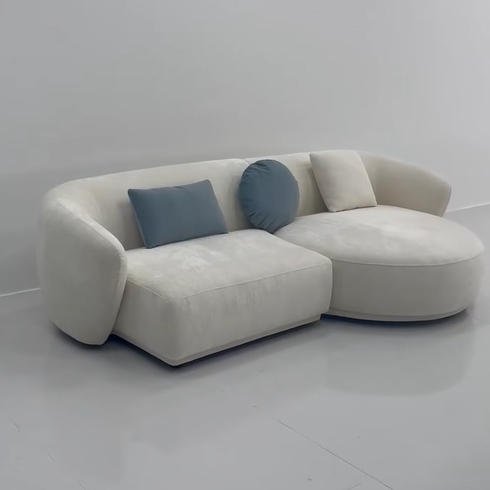
Real-world scenario: A designer ordering a curved bouclé sofa for a Mediterranean villa found in the first sample that the seat depth felt 3 cm too deep for the client’s height. The fix took one week at sample stage. After production, it would have meant remaking 6 sofas.
Paying for an extra sample round almost always costs less than rejecting a production run.
V. The Architecture of Quality Control (QC) for High-End Goods
Multi-Stage Inspection
Luxury goods need checks at more than one point. One final inspection catches problems too late to fix them cheaply.
| المرحلة | عندما | What Gets Checked | Why It Matters |
|---|---|---|---|
| Raw material check (PPI) | Before cutting | Wood moisture (ideally 8–12%), leather grade, foam density, stone slabs | Stops substitution at the source |
| First article inspection | First finished unit | Full comparison with gold sample | Catches drift before it multiplies |
| In-process audit (DUPRO) | 30–50% complete | Joinery, frame strength, finish layers | Problems can still be fixed |
| Pre-shipment inspection (PSI) | 100% packed, 80%+ finished | Appearance, function, dimensions, packing | Final gate before money and goods move |
| Container loading check | Loading day | Crate condition, stacking, securing | Prevents transit damage |
Most professional inspections use sampling tables from ISO 2859-1, the international standard for sampling by attributes. For luxury items, many buyers set stricter limits, such as AQL 0 for critical defects, 1.0 for major, and 2.5 for minor.
This short video explains the main types of furniture inspection importers use:
https://www.youtube.com/watch?v=IqcDTaTi8qY
Luxury-Specific Criteria
Standard QC checklists cover size and function. Luxury QC also covers how the piece looks and feels.
- Seam alignment: Welt cords run straight. Stitch lines line up across cushions and panels.
- Finish consistency: Color and sheen match across every unit, checked under the same light source.
- Grain matching: Veneer patterns flow across drawer fronts.
- Touch: No rough edges inside drawers. Leather edges are smooth.
- Structural stability: No wobble on a flat surface. Drawers glide without catching.
- Smell: No strong solvent odor, which can mean the finish hasn’t cured properly.
The Rejection Protocol
Write your rejection rules down before production starts. Every party should sign them.
- Define what counts as critical, major, and minor defects, with photo examples.
- Agree who pays for rework, re-inspection, and delays.
- Set a rule that rejected units are tagged and kept apart, never mixed back into good stock.
- Agree that nothing ships until failed units pass re-inspection.
نظرة ثاقبة على القطاع: The best factories actually welcome strict rejection rules. Clear standards protect them from vague complaints after delivery. If a factory pushes back on written defect definitions, that tells you something.
VI. Navigating the Logistics of Fragile and Oversized Luxury Assets

Specialized Packaging
A standard carton works for a dining chair. It doesn’t work for a 2.4-meter marble table or a lacquered cabinet with glass doors.
| Item Type | Recommended Packing |
|---|---|
| Marble / sintered stone tops | Vertical A-frame wooden crate, foam edge guards, separate from base |
| High-gloss lacquer | Soft film, then foam, then 5-ply carton, corners protected |
| Glass doors / shelves | Separate crate with fixed slots |
| Upholstery | Breathable cover plus carton, never tight plastic in humid routes |
| Brass / metal details | Anti-scratch film, silica gel packs to prevent tarnish |
Packaging can also be tested before shipping. Programs from the International Safe Transit Association simulate drops, vibration, and compression.
Freight Optimization
Full container loads (FCL) cost less per item and reduce handling. Less-than-container loads (LCL) are cheaper for small orders, but the goods are handled more often, so the damage risk goes up.
For high-value pieces, saving a little on freight while risking damage is a poor trade. Also make sure everyone understands who is responsible at each step. The ICC’s Incoterms rules define exactly where risk passes from seller to buyer.
White-glove delivery (unpacking, placing, assembling, and removing debris) should be planned before shipping, not arranged after the container lands.
Documentation Accuracy
Customs delays are often caused by paperwork, not the goods themselves. For luxury materials, check the following:
- CITES permits for regulated wood species, exotic leathers, or other controlled materials. The CITES official site lists protected species.
- Lacey Act declarations for plant and wood products entering the US. The USDA APHIS Lacey Act page explains what’s required.
- EU deforestation rules for wood entering the EU market, which are being phased in. Check the latest timeline on the European Commission’s deforestation regulation page.
- Fumigation certificates for solid wood packing materials (ISPM 15 stamps).
Your partner should prepare and check these documents before the goods leave port. Our guide to importing and distributing high-end furniture covers the full import process step by step.
VII. Supply Chain Transparency and Ethical Sourcing
Factory Auditing
Luxury buyers increasingly need proof of ethical production. Hotel brands, listed companies, and European importers often require it.
Look for factories that hold recognized audits, such as those based on the amfori BSCI code of conduct أو الـ Sedex SMETA audit. These cover working hours, wages, health and safety, and environmental practices.
A guardian partner visits factories in person. They check that the address on the audit report matches the place where your goods are actually made. Some factories pass audits at a showcase site and then quietly subcontract the work elsewhere.
Capacity Planning
A workshop that makes 30 beautiful sofas a month can’t suddenly deliver 600 for a hotel opening.
Ask these questions:
- What is your real monthly output for this product type?
- What percentage of capacity will our order take?
- Do you subcontract any process (e.g., upholstery, metal plating, stone cutting)?
- How do you handle peak season, which typically runs from September to January before Chinese New Year?
نظرة ثاقبة على القطاع: Chinese New Year shuts most factories for 2–4 weeks, and many workers don’t return afterward. Experienced buyers plan for production to slow from mid-December, and they avoid scheduling final QC in late January or February.
Long-Term Stability
Your partner needs to still be in business when you reorder in three years. Check the following:
- Years in operation and years working with export clients
- Business license and registered capital
- Long-term client references in your market
- Whether the factory owns its building and equipment or rents short-term
VIII. The Value of Curated Sourcing vs. Open-Market Searching

The “Curated” Advantage
Searching B2B platforms turns up thousands of suppliers. Many of them are trading companies with factory photos copied from elsewhere.
A curated partner gives you access to a pre-vetted network. Each workshop is matched to its real specialty: one for solid wood casegoods, another for hand-stitched leather, another for stone and metal. At Jade Ant furniture, we match projects to workshops by craft rather than by price list, because a factory that excels at upholstery is rarely the best choice for a fluted walnut sideboard.
Efficiency Gains
Illustrative comparison. Production time itself barely changes. The big savings come in vetting and rework.
Most of the time you lose in open-market sourcing goes to finding and testing suppliers, then fixing their mistakes. A curated partner skips most of that.
Cost Optimization
A curated partner adds a service fee, so it can look more expensive at first. Compare the total cost instead:
| Cost Item | Open-Market Direct | Curated Partner |
|---|---|---|
| سعر الوحدة | Lower on paper | Similar or slightly higher |
| Travel for vetting | عالية | منخفض |
| Failed samples | Common | نادر |
| Rework and rejections | Frequent | Controlled |
| Transit damage claims | أعلى | أدنى |
| Delayed project penalties | Real risk | Reduced |
| Total landed risk | عالية | منخفض |
Strong partner relationships also give you access to pricing on materials and capacity that individual buyers rarely get. For more on this, read our breakdown of critical factors when buying high-end furniture from China.
IX. Strategic Integration for Different Client Personas
For FF&E/Hotel Buyers
Hotels need durability, safety compliance, and consistency across hundreds of identical units.
- Durability: Commercial-grade frames, reinforced joints, and performance fabrics rated for 50,000+ double rubs (a standard abrasion test).
- Fire ratings: Requirements depend on the market. In the UK, for example, the Furniture and Furnishings (Fire) (Safety) Regulations set rules for upholstered items. Contract projects often add brand-specific standards on top.
- Scale consistency: Room 101 and Room 801 must match exactly. That requires batch-controlled finishes and one sealed reference sample per finish.
To plan schedules, see our FF&E project timeline from concept to installation. We also cover how to choose the right hospitality contract furniture manufacturer.
For Private Label Owners
Your designs are your business. Protecting them comes first.
- Sign an NNN agreement (Non-disclosure, Non-use, Non-circumvention) under Chinese law. It’s stronger in China than a standard Western NDA.
- Register your designs and trademarks in China. The China National Intellectual Property Administration handles patents and design registrations.
- Keep your brand’s signature details, such as a special edge profile or custom hardware, consistent through locked specification sheets.
Our guide to private labeling high-end furniture covers branding, packaging, and IP steps in more detail.
For Interior Designers/Villa Owners
Villa projects are often made up of one-off pieces where precision matters more than volume.
- Custom sizes made to fit exact wall openings and ceiling heights
- Fabric and leather selected by swatch, with your approval of the actual hide or bolt
- Mixed materials in one piece, such as travertine with brass inlay
- Room-by-room delivery sequencing to match the site schedule
A dedicated project manager matters most here. For style planning, see how to transform a villa with luxury furniture.

X. Conclusion: The Path to a Scalable Luxury Import Business
Summary of the Partnership Ideal
The right China partner is built on three things:
- Trust: They tell you about problems early, with photos and solutions.
- Transparency: You know which factory makes your goods, what materials go in, and where every order stands.
- Technical excellence: They can turn design intent into precise production and check it at every stage.
The Long-Term ROI
A reliable partner pays for itself in ways that don’t show up on a quote. You get fewer rejected containers and fewer anxious calls from clients. You can quote lead times with confidence. You can take on bigger projects because you trust your supply chain.
Over time, that reliability becomes part of your reputation. Designers specify your products again, and hotel groups keep you on their approved supplier lists.
Final Call to Action
Stop asking “Who has the lowest price?” and start asking “Who carries the lowest total risk?”
If you’re planning your next luxury collection, hotel package, or villa project, contact the Jade Ant team to discuss specifications, sampling, and QC planning. You can also learn more about how we work with importers and designers worldwide.
To see how luxury pieces are actually produced in China, this factory footage is worth watching:
https://www.youtube.com/watch?v=0MCUfMV6o_0
Frequently Asked Questions (FAQs) for High-End Importers
1. How do you ensure the final production matches the approved gold sample exactly? Seal and sign the gold sample, and keep it at the factory. Check the first production unit side by side against it, then compare units again at the in-process and pre-shipment inspections under the same lighting. Lock finish batches so color and sheen don’t drift.
2. What specific quality control protocols are in place for luxury upholstery and finishes? For upholstery, inspections cover foam density, frame strength, seam alignment, stitch count per inch, and pattern matching. For finishes, they cover color against a master panel, sheen level, coat thickness, and cure time. Each check has a written pass or fail standard with photo examples.
3. How do you handle intellectual property (IP) protection for our custom furniture designs? Sign an NNN agreement enforceable in China before sharing drawings. Register designs and trademarks in China, limit drawing access to the factories that need it, and avoid sharing full designs across multiple workshops.
4. Can you source specific sustainable or certified materials (e.g., FSC-certified wood)? Yes. FSC-certified wood, low-VOC finishes, and certified leathers can be specified. The key is checking chain-of-custody certificates before production, so certified material isn’t swapped for uncertified stock partway through.
5. How do you manage quality control for massive FF&E projects with thousands of units? Use a mock-up room for approval, then batch production with an inspection at each batch. Keep one sealed reference sample per finish, and use AQL sampling with stricter limits for critical defects. A detailed tracking sheet ties every unit to its room number.
6. What is the process for handling defective items discovered after the shipment arrives? Document the damage with photos and video within an agreed window, usually 7–14 days. The partner reviews whether the cause was production or transit, then arranges repair, replacement in the next shipment, or credit. Agree these terms in writing before you order.
7. How do you vet factories to ensure they are actually manufacturers and not trading companies? Visit the site in person, check that the business license matches the factory address, and see the machinery and workers making your product type. Ask for audit reports and export records. Trading companies often can’t show real production of the exact item.
8. What packaging standards do you use to prevent damage to high-end marble or glass pieces? Stone and glass travel in custom wooden crates, usually standing vertically in A-frames with foam edge guards. Glass and stone ship separately from metal or wood bases. ISTA-style drop and vibration testing can confirm the packing works.
9. How do you handle the communication gap between our designers and the factory engineers? A bilingual project manager turns design intent into shop drawings, finish panels, and bilingual specification sheets. Every change is confirmed in writing with drawings or photos, not verbally.
10. Can you provide a dedicated project manager for high-complexity, bespoke villa projects? Yes. Bespoke villa projects should have one dedicated project manager who handles drawings, sampling, QC, and delivery sequencing, with weekly photo updates throughout production.
11. How do you verify that the materials used (e.g., genuine leather) are of the grade specified? Ask for the tannery name and grade, cut test samples at the raw material stage, and compare them with the approved swatch. Third-party lab tests can confirm leather type, foam density, and metal alloy when the order value justifies it.
12. What are the typical lead times for luxury bespoke furniture compared to standard production? Standard luxury production typically takes 6–10 weeks after sample approval. Bespoke pieces usually need 10–16 weeks, including 3–6 weeks of sampling. Ocean freight adds roughly 4–6 weeks depending on the destination. Leave extra time around Chinese New Year.
13. How do you manage the logistics and customs clearance for specialized luxury materials? Prepare documents before shipping, including CITES permits where needed, Lacey Act declarations for the US, EU deforestation compliance where it applies, and ISPM 15 fumigation stamps. Agree Incoterms clearly, and work with a freight forwarder experienced with high-value furniture.