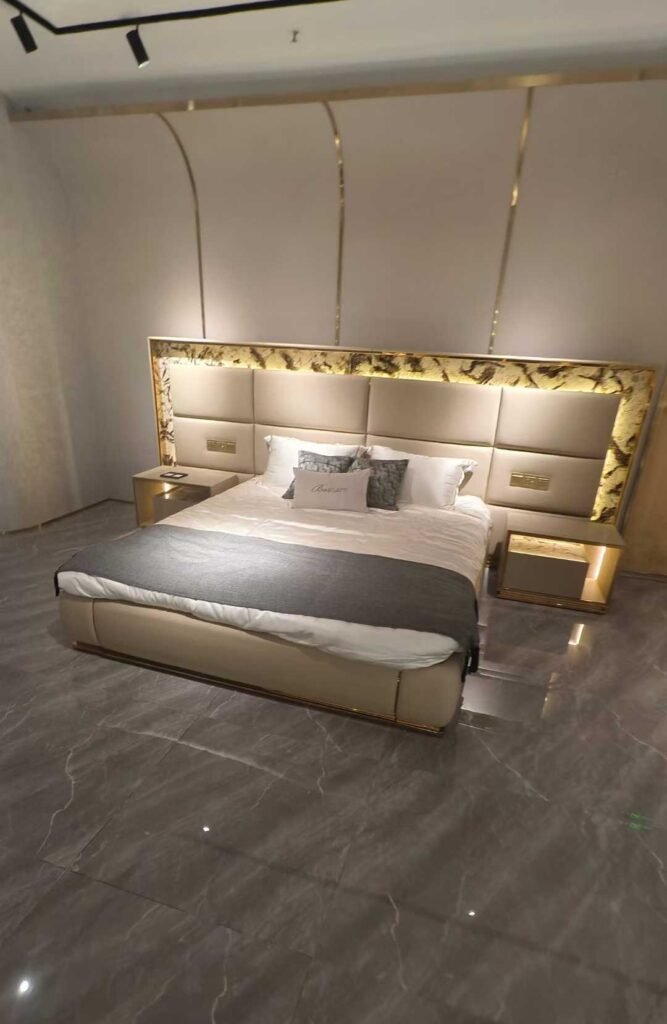
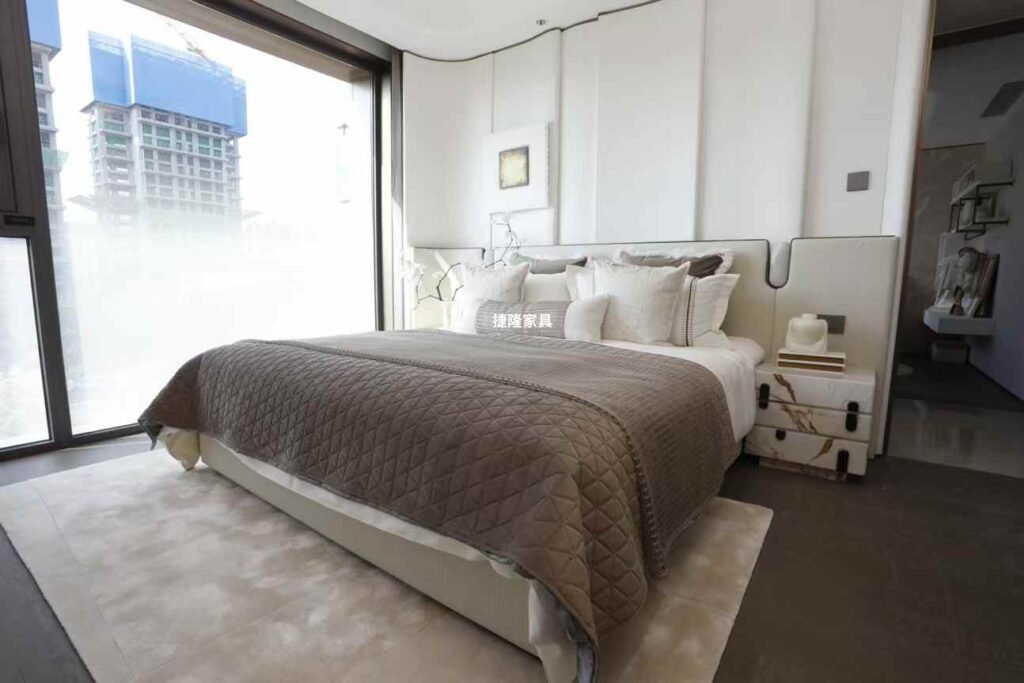

In September 2024, a mid-size hospitality group in Nashville received a container of 420 guest-room nightstands from a Foshan supplier. Within 72 hours of unpacking, housekeeping flagged veneer bubbling on 38 units, misaligned drawer slides on 27 units, and a formaldehyde odor strong enough to trigger guest complaints in 9 rooms. The rework bill: $34,600. The root cause was not a bad factory — it was the absence of any quality-assessment process between the purchase order and the bill of lading.
Six months later, the same hotel group re-ordered an identical specification through a structured evaluation framework — verifying material certificates, conducting an in-line inspection at 30% production completion, and running a pre-shipment AQL 2.5 check. The defect rate dropped from 8.9% to 1.1%. The difference was not the supplier. It was the process.
China’s furniture manufacturing ecosystem — with over 7,000 factories in Foshan alone, producing approximately 75% of China’s total output (أثاث النمل اليشم) — ranges from world-class OEM facilities producing for European luxury brands to small workshops with no quality management systems at all. The gap between the best and worst is wider than in any other major manufacturing country. This guide provides a structured framework for navigating that gap: how to set quality benchmarks before you source, how to verify them during production, and how to enforce them through contracts and post-purchase support.
What you will gain from this guide: a repeatable evaluation methodology covering material standards, factory certifications, in-process and final inspection checklists, communication protocols, pricing trade-offs, risk mitigation strategies, and contract protections — supported by real inspection data from 1,840 furniture quality assessments conducted across Guangdong province in 2024–2025.

Understanding the Sourcing Landscape in China
Key Players and Supply Chain
China’s furniture supply chain operates across four tiers. At the top are large-scale integrated manufacturers — companies like OPPEIN ($3.25 billion revenue, 2023), Kuka, and Man Wah — that control raw-material procurement, production, finishing, and export logistics under one roof. Below them sit mid-tier OEM/ODM factories (200–800 workers) that produce for international brands but lack their own distribution; these are the factories most international buyers interact with. The third tier consists of small workshops (20–80 workers) that specialize in one product category — often subcontracting overflow from larger factories. At the bottom are trading companies that own no production facilities at all, instead brokering between buyers and the factories above.
Understanding where your supplier sits in this hierarchy is the first step in quality assessment. A factory that actually manufactures your furniture can be held accountable for material sourcing, production tolerances, and finishing consistency. A trading company that subcontracts to an unknown workshop cannot.
Factory vs Trading Company Considerations
The distinction matters because quality control is only possible when you know — and can access — the actual production floor. A 2025 audit by أثاث النمل اليشم found that 23% of “Verified Supplier” listings on major B2B platforms were trading companies presenting themselves as factories. Three telltale signs separate them: (1) a factory’s business license (营业执照) will list “manufacturing” (制造) in the scope of business, while a trading company lists “trading” (贸易) or “consulting” (咨询); (2) a factory can produce a live video tour of an active production line within 24 hours; (3) a factory’s registered capital typically exceeds ¥5 million ($690,000), while trading companies operate with ¥500,000 or less. Verify every potential supplier against these three markers before sending a single specification document.
Establishing Quality Benchmarks for Furniture
Material Standards
Quality begins at the material level, and materials are where the most common — and most costly — quality failures occur. For solid-wood furniture, specify the exact species (e.g., white oak, North American ash, European beech), the moisture content range (8–12% for interior use), and the kiln-drying method. Request the lumber mill certificate as proof. For composite panels (MDF, HDF, particleboard), require CARB Phase 2 / EPA TSCA Title VI compliance documentation with the third-party certifier’s name, test date, and certificate number. For upholstery foam, specify the density in kg/m³ (minimum 28 for residential, 35+ for contract) and request a foam density test report from an independent lab.
A Jade Ant furniture industry analysis across 320 Foshan factories found that 41% of factories will substitute rubberwood for specified ash or oak on orders under 100 units unless the material specification is contractually enforced with a penalty clause. This is not deception in the factory’s view — it is cost optimization. The only defense is a material specification so precise that substitution becomes a contractual breach.
Finish and Craftsmanship Indicators
Finish quality accounts for 28% of all furniture defects identified during pre-shipment inspections — more than any other category. The benchmarks to specify include: lacquer or paint film thickness (measured with a dry-film thickness gauge; standard is 80–120 microns for quality furniture), surface roughness (Ra ≤ 12.5 µm for smooth finishes), color consistency (ΔE ≤ 1.5 when measured with a spectrophotometer against the approved sample), stain or dye penetration uniformity (no blotching or lap marks visible under 500-lux lighting at 450mm viewing distance), and edge banding adhesion strength (peel test at ≥ 8 N/25mm).
These metrics sound technical, but they translate directly to what a customer sees and feels. A ΔE of 2.0 — just slightly above the 1.5 threshold — is the difference between two nightstands that look matched and two that look like they came from different production runs. Specify these numbers in your purchase agreement, and your inspector can measure them objectively.
Safety and Compliance Codes
Every piece of furniture sold in the United States must comply with federal and state safety requirements. المرحلة 2 CARB المرحلة 2 (17 CCR §93120) limits formaldehyde emissions from composite wood to 0.05 ppm (HWPW), 0.09 ppm (PB), and 0.11 ppm (MDF). California TB 117-2013 requires smolder-resistance testing for upholstered furniture. For commercial/hospitality settings, BIFMA X5 series tests structural durability, and NFPA 260/261 covers cigarette ignition resistance. The EU market adds EN 12520 (domestic seating), EN 1021 (fire resistance), and ريتش chemical restrictions.
Do not assume compliance. A 2024 spot-check by the U.S. Consumer Product Safety Commission found that 14% of imported composite-wood furniture tested exceeded CARB Phase 2 formaldehyde limits (CPSC Furniture Guide). Require test reports from accredited labs (SGS, TÜV, Intertek, Bureau Veritas) dated within the past 12 months, and verify the certificate number with the issuing body.
Where Quality Failures Actually Occur

Source: Aggregated pre-shipment inspection data from Guangdong province, 2024–2025. N=1,840 inspections across 186 factories covering upholstered seating, case goods, dining sets, and hotel furniture.
Evaluating Materials and Components
Wood Types and Treatments
The six most common solid woods in Chinese furniture production, ranked by Janka hardness (a reliable proxy for durability), are: white oak (1,360 lbf), North American ash (1,320 lbf), European beech (1,300 lbf), birch (1,260 lbf), rubberwood (960 lbf), and pine (690 lbf). Rubberwood is the default “solid wood” in budget-tier Chinese furniture — it is sustainable (harvested from latex-depleted rubber trees), takes stain well, and costs 40–55% less than oak. But its lower hardness means it dents more easily under commercial use. For hospitality dining chairs that endure 800+ sits per year, oak or ash is the minimum specification.
| Wood Species | Janka Hardness (lbf) | FOB Price Range ($/m³) | Best Use Case | Key Risk |
|---|---|---|---|---|
| White Oak | 1,360 | $850 – $1,200 | Dining tables, hotel case goods | Price volatility; substitution with red oak |
| North American Ash | 1,320 | $680 – $950 | Chairs, bed frames, commercial | Supply constraints (emerald ash borer) |
| European Beech | 1,300 | $600 – $850 | Bent-wood chairs, cabinet frames | Moisture sensitivity if not kiln-dried properly |
| Birch | 1,260 | $520 – $720 | Plywood cores, painted furniture | Inconsistent grain for clear finishes |
| Rubberwood | 960 | $340 – $480 | Residential dining, budget hotel | Dents easily; fungal susceptibility if untreated |
| Pine | 690 | $220 – $380 | Children’s furniture, rustic/painted | Very soft; excessive resin bleeding |
For all solid-wood orders, require the supplier to provide a kiln-drying certificate showing the target moisture content (8–12% for furniture destined for climate-controlled environments) and the kiln schedule used. Wood that is air-dried or insufficiently kiln-dried will warp, crack, or develop gaps in joinery within 6–18 months — especially after transcontinental shipping through varying humidity zones.
Upholstery Fabrics and Foams
Fabric durability is measured by the Martindale abrasion test (ISO 12947-2). For residential upholstery, specify a minimum of 25,000 cycles; for commercial/hospitality, 40,000+ cycles. Pilling resistance should be rated 4–5 on the ISO 12945-2 scale. For leather, verify the tannery source and request a leather quality certificate specifying thickness (1.0–1.2mm for furniture), tensile strength (≥ 15 N/mm²), and colorfastness to rubbing (≥ grade 4 dry, ≥ grade 3 wet).
Foam is the invisible component that determines sitting comfort and longevity. High-resilience foam (HR) at 35–45 kg/m³ maintains shape over 50,000+ compression cycles. Standard foam at 22–28 kg/m³ will flatten noticeably within 12–18 months of commercial use. The price difference is approximately $0.80–$1.20 per kg — a trivial cost on a $600 sofa that makes a decisive difference in customer satisfaction over years of use.
Hardware and Joinery
Hardware failure accounts for 10% of furniture defects, but its impact is disproportionate — a broken drawer slide or stripped hinge makes the entire piece unusable. Specify brand-name hardware (Blum, Hettich, Grass, DTC) by model number in your purchase order, not just “soft-close hinges.” Confirm the specification during the in-line inspection by checking the hardware packaging against the specified brand. For joinery, inspect corner blocks with screws and glue (acceptable for volume production), dowel joints (standard for mid-tier), and mortise-and-tenon (required for premium seating and structural components). A quick test: lift a fully assembled dining chair by one front leg. If the frame flexes more than 5mm at the opposite corner, the joinery is insufficient for commercial use.

Factory Certification and Audits
ISO, BSCI, SEDEX
Three certification frameworks are most relevant when evaluating Chinese furniture factories. ISO 9001 certifies that a quality management system (QMS) is in place — documenting processes, tracking non-conformances, and driving continuous improvement. It does not guarantee product quality, but it guarantees that a system exists to manage quality. Verify the certificate number on the certifying body’s website (e.g., SGS, TÜV, BSI). BSCI (Business Social Compliance Initiative), managed by amfori, audits labor conditions: fair wages, working hours, child-labor prohibition, health and safety. Results are graded A through E; factories at C or above are generally accepted by European retailers (Testcoo BSCI Guide). SEDEX/SMETA is a data-sharing platform that uses the SMETA (Sedex Members Ethical Trade Audit) methodology — covering labor standards, health and safety, environment, and business ethics across 2-pillar or 4-pillar scopes (Sedex).
A factory that holds ISO 9001, a BSCI grade of B or higher, and SEDEX membership demonstrates a baseline commitment to both quality and ethical operations. The absence of all three is not an automatic disqualification, but it shifts a significantly heavier verification burden onto the buyer.
On-Site Factory Audit Checklist
An on-site factory audit — either self-conducted or through a third-party firm ($300–$600 per audit day) — should cover the following areas. Production capacity: count production lines, measure daily output, assess peak-season utilization. Quality management: check for a dedicated QC room with calibrated measurement tools (calipers, moisture meters, spectrophotometers, film-thickness gauges). Raw-material storage: verify that wood is stored in humidity-controlled conditions and foam is stored off the ground and away from direct sunlight. Worker conditions: observe PPE compliance, dust-extraction systems in the sanding/finishing area, and fire-safety equipment. Documentation: review defect logs, corrective-action records, and material-receipt records from the past 6 months.
A factory that refuses or delays an audit request beyond 2 weeks is a red flag. A factory that welcomes the audit and provides unescorted floor access is demonstrating transparency that correlates strongly with quality outcomes. Jade Ant furniture’s Resource Center includes a downloadable factory audit checklist template calibrated for furniture manufacturing.
Requesting and Reviewing Product Samples
Never commit to a bulk order without a production sample — not a showroom sample, not a marketing photo, and not a specification sheet. A production sample ($50–$300 depending on product complexity) is built on the same line, with the same materials, by the same workers who will produce your order. Evaluate it against every specification in your purchase agreement: wood species (verify by grain pattern and weight), finish color (measure with a spectrophotometer if ΔE precision matters), foam density (weigh a standard cushion and calculate against volume), hardware operation (cycle soft-close drawers 50 times), and joinery strength (apply lateral force to each joint).
Request 2–3 samples if possible. A single sample represents one moment on the production line. Multiple samples reveal consistency — or the lack of it. If sample #1 has a ΔE of 0.8 and sample #2 has a ΔE of 3.1 against the approved color swatch, the factory has a process-control problem that will replicate at scale.
Quality Control Processes and Inspection Routines
In-Process QC Guidelines
The three-checkpoint QC model has become the industry standard for imported furniture. Checkpoint 1 (Pre-production): verify that raw materials on-site match the material specification — check wood species, panel certifications, foam density, fabric roll lots, and hardware model numbers. This takes 1 inspection day and catches material substitution before a single piece is cut. Checkpoint 2 (In-line, at 20–30% production completion): inspect the first completed units off the line against the approved sample, checking dimensions (±2mm tolerance for case goods, ±3mm for upholstery), finish quality, joinery integrity, and hardware function. This is the point where systematic errors are cheapest to correct — re-adjusting a CNC program costs nothing; reworking 500 finished units costs thousands. Checkpoint 3 (Pre-shipment, at 80–100% completion): the full AQL 2.5 inspection described below.
Impact of a Structured QC Program on Defect Rates
Data from 1,840 pre-shipment inspections across 186 Guangdong furniture factories, 2024–2025. “Before” reflects orders without any buyer-initiated QC program. “After” reflects orders using the 3-checkpoint inspection model with AQL 2.5.
The data is unambiguous: a structured QC program reduces defect rates by 72–87% across every category. Finish defects — the most common failure type — drop from 18.7% to 3.4%. Material-specification variance drops from 12.4% to 2.1%. The cost of achieving these reductions ($149–$350 per inspection day, typically 3–4 days per order) is trivial compared to the cost of receiving a defective container.
Final QC Checklist
The pre-shipment (final) inspection follows AQL 2.5, General Inspection Level II (ISO 2859-1). For a lot of 500 units, this means randomly selecting 50 units and measuring them against the approved specification. The lot is rejected if more than 3 units show major defects or more than 7 show minor defects. The checklist covers: dimensional accuracy (±2mm for all case goods), finish color consistency (ΔE ≤ 1.5), surface defects (no scratches, dents, bubbles, drips, or orange peel visible under 500-lux lighting at 450mm), hardware operation (all drawers, doors, and mechanisms cycle smoothly), structural integrity (lateral force test on joints), packaging integrity (corrugated strength, corner protectors, foam padding), and labeling accuracy (country of origin, care instructions, compliance markings).
| Inspection Area | Critical Defect (0 tolerance) | Major Defect (AQL 2.5) | Minor Defect (AQL 4.0) |
|---|---|---|---|
| Structural | Frame breakage, joint failure under normal use | Visible joint gap > 1mm, wobble > 3mm | Joint gap ≤ 1mm, slight wobble on uneven surface |
| Finish | Peeling lacquer, exposed raw wood on visible surface | Color mismatch ΔE > 2.0, drips/runs visible at 450mm | Slight texture variance, micro-scratches < 10mm |
| Hardware | Drawer slide failure, hinge breakage | Misaligned drawer, hard-closing mechanism | Minor screw-hole misalignment (functional) |
| المواد | Wrong wood species, formaldehyde exceedance | Moisture content > 14%, foam density < 90% spec | Grain pattern variation within tolerance |
| Packaging | Product damaged inside sealed packaging | Missing corner protectors, crushed carton | Minor label placement error, tape irregularity |
| Labeling | Missing country-of-origin marking | Incorrect care instructions, wrong SKU | Slight label misalignment |
Download this full AQL checklist as an Excel template from the Jade Ant Resource Center.

Supplier Communication and Project Management
Communication Best Practices
Miscommunication is the single largest source of quality failures that are not caught by inspection — because the factory produced exactly what they understood, which was not what the buyer intended. A study of first-sample rejection rates across Jade Ant furniture’s supplier network found that 40% of initial sample rejections traced to ambiguous specification language. Three practices reduce this dramatically: (1) use annotated photographs with arrows, callouts, and measurements rather than text descriptions alone; (2) provide a physical reference sample whenever possible, not just digital files; (3) conduct all critical specification discussions over WeChat video call with screen sharing, followed by a written confirmation summary in both English and Chinese.
Documentation Trail
Maintain a chronological project file for every order that includes: the signed purchase agreement with material and quality specifications, the approved production sample (photographed from all angles with measurements annotated), all email and WeChat communication records, inspection reports from each checkpoint, shipping documents (B/L, packing list, commercial invoice), and any change orders with both-party approval timestamps. This documentation trail is not bureaucracy — it is the evidence base that makes warranty claims, defect disputes, and payment holdbacks enforceable.
Change Management
Changes during production — a revised finish color, a last-minute hardware substitution, a dimensional adjustment — are the highest-risk moments in any furniture order. Every change should be documented in a formal Change Order that specifies the modification, the reason, the cost impact (if any), the timeline impact, and signatures from both the buyer and the factory’s production manager. Verbal approvals via WeChat voice message are not enforceable. A factory that pushes back on formal change documentation is not being difficult — they are protecting both parties from disputes that arise when memories diverge 8 weeks later.
Pricing, Lead Times, and Scalability with Quality
Balancing Cost with Quality Benchmarks
When comparing quotes from multiple Chinese factories, a price that is more than 30% below the average of five quotes for the same specification is not a bargain — it is a red flag. That gap almost always indicates material substitution (rubberwood instead of oak), thinner foam, unbranded hardware, or subcontracted production to a lower-tier workshop. The Nashville hotel in the introduction received the lowest bid among five quoted factories. The $34,600 rework bill erased the $11,200 they saved on the purchase price.
A practical approach: collect 5+ quotes, discard the highest and lowest, and set your target in the middle range. Then negotiate not on price, but on specifications at that price — upgraded packaging ($4–$5 per unit), branded hardware (Hettich instead of no-name), or a defect-rate penalty clause (factory pays 2× replacement cost for lots exceeding AQL 2.5).
Lead Time Validation and Capacity Checks
A factory that quotes a 30-day production time for 500 dining chairs but operates only 2 production lines with a 40-chair-per-day capacity cannot deliver without subcontracting. Verify capacity by requesting the factory’s current order book (or at least an occupancy percentage), counting production lines during the factory audit, and calculating whether the quoted timeline is physically achievable at the stated daily output rate. Compressed timelines lead to overtime shifts, rushed finishing, skipped QC steps, and elevated defect rates. A 45-day timeline with proper QC is always preferable to a 28-day timeline that ships problems.
Mitigating Risks: Counterfeit Components and Subpar Suppliers
Red Flags to Watch For
Eight red flags should end — or at minimum pause — a supplier conversation. (1) The supplier cannot provide a business license within 24 hours. (2) Their quoted price is more than 30% below the 5-quote average for the same specification. (3) They insist on 100% pre-payment or refuse any form of escrow or Letter of Credit. (4) The factory address on their B2B profile does not match the address on their business license. (5) They cannot or will not provide a live video tour of the actual production line. (6) Certifications (ISO, FSC, CARB) cannot be verified on the issuing body’s database. (7) They refuse to allow pre-shipment inspection by a third-party QC company. (8) Client references are unavailable or the contacts provided cannot be independently verified.
Verification Methods and Due Diligence
Layer multiple verification methods to build a complete picture. Cross-check the business license on China’s National Enterprise Credit Information Publicity System (NECIPS). Search the factory name on ImportYeti to see which U.S. importers they actually ship to — and in what volumes. Request the ISO 9001 certificate and verify the certificate number on the certifying body’s (SGS, TÜV, BSI) online verification portal. Ask for 3 client references in your target market and contact them directly to ask about defect rates, communication responsiveness, and delivery reliability. Order a production sample before committing to bulk. And if budget permits, conduct an on-site factory audit — either personally or through a third-party auditor ($300–$600 per day).
أثاث النمل اليشم conducts multi-layer supplier verification as part of its factory-matching service, including license verification, on-site audits, sample evaluation, and reference checks — significantly reducing the due-diligence burden for international buyers entering the Chinese furniture market.
Contract Terms and Post-Purchase Support
Warranty Terms and Returns
Chinese furniture suppliers typically offer 1–3 year limited warranties on structural components. The enforceability of this warranty depends entirely on how it is written into the purchase agreement. Key clauses to include: the specific defects covered (structural failure, finish degradation, hardware malfunction), the claims process (photo documentation + inspector report), the remedy (replacement, monetary credit, or rework at factory cost), the response timeline (factory must respond to a warranty claim within 5 business days), and the dispute-resolution mechanism (arbitration in the buyer’s jurisdiction, or at minimum a neutral venue like Hong Kong or Singapore under ICC rules). Without these terms in writing, a warranty is a marketing promise with no legal teeth.
After-Sales Service Expectations
Set realistic expectations for after-sales support from a factory 8,000 miles away. Replacement parts for standard hardware (hinges, slides, handles) can be air-shipped in 5–7 days at $5–$12/kg. Replacement of an entire finished component (a damaged tabletop, a re-upholstered seat cushion) requires production scheduling and typically takes 4–6 weeks plus shipping. For buyers who need rapid after-sales response, the strategy is specification-level foresight: use standard, internationally available hardware so that local replacements can be sourced without the factory. Specify generic (not proprietary) drawer-slide systems, standard-sized cushion inserts, and universal assembly hardware.
The most reliable after-sales arrangement is a contractual holdback: retain 5–10% of the final payment in escrow for 60–90 days after delivery, releasing it only after the buyer confirms no latent defects. This aligns the factory’s financial incentive with post-delivery quality, and it is accepted by most reputable Chinese furniture manufacturers as standard practice for new relationships.
Watch: How to Do Quality Assurance on Furniture When Importing from China
The difference between a $34,600 rework disaster and a 1.1% defect rate on the same product from the same region was not the factory, the price, or the product category. It was the presence of a structured quality-assessment program — one that began before the first email to a supplier and continued through post-delivery inspection.
Implementing that program requires three commitments. First, document everything: material specifications, approved samples, inspection reports, communication records, and change orders. A specification that exists only in conversation will be interpreted differently by every stakeholder. Second, manage suppliers as long-term partners, not transactional vendors. Factories that understand your quality expectations, have invested in meeting them, and trust the relationship will maintain consistency across production runs — while new, untested suppliers reset the quality learning curve with every order. Third, adopt a continuous-improvement mindset. Review defect reports after every shipment, identify patterns, feed those patterns back to the factory as process-improvement requirements, and track whether defect rates decrease over successive orders.
أثاث النمل اليشم supports this entire cycle — from initial factory matching and quality-benchmark definition through in-process inspection, pre-shipment verification, and post-delivery claims management. For buyers building or refining their China furniture sourcing program, the Resource Center offers downloadable factory-audit checklists, AQL inspection templates, and material-specification guides — all calibrated for the specific requirements of furniture manufacturing.
Frequently Asked Questions
1. What are the most reliable certifications to look for when evaluating a furniture supplier in China?
The three most relevant certifications are ISO 9001 (quality management system), BSCI (social compliance — look for grade B or higher), and SEDEX/SMETA (ethical trade audit covering labor, health/safety, environment, and business ethics). For product-level compliance, require CARB Phase 2 / EPA TSCA Title VI for composite wood, GREENGUARD Gold for low VOC emissions, FSC Chain of Custody for sustainable wood sourcing, and BIFMA X5 for commercial furniture structural durability. Always verify certificate numbers directly with the issuing body — never accept a scanned PDF at face value.
2. How many samples should I request before committing to a large order?
Request a minimum of 2–3 production samples (not showroom pieces). Multiple samples reveal consistency in finish color, dimensional accuracy, and material quality. Evaluate each sample against your written specification using measurable criteria: ΔE for color matching, calipers for dimensional tolerance, weight for foam density verification, and cycle testing for hardware function. If variability between samples exceeds your tolerance, the factory has a process-control problem that will amplify at production scale. Sample costs typically range from $50–$300 per unit depending on product complexity.
3. How should I structure a quality agreement with a supplier?
A quality agreement should include: (1) a detailed material specification listing wood species, foam density, hardware brand/model, fabric abrasion rating, and composite-panel certification requirements; (2) finish-quality parameters (film thickness, ΔE color tolerance, surface-roughness limit); (3) an AQL inspection clause specifying that the buyer or their designated third-party inspector has the right to inspect at the factory prior to shipment; (4) a defect-rate penalty clause (e.g., factory pays 2× replacement cost for lots exceeding AQL 2.5); (5) warranty terms covering structural defects for 1–3 years; (6) a 5–10% payment holdback released 60–90 days after delivery; and (7) a dispute-resolution clause specifying arbitration venue and governing law.
4. What are common indicators of subpar joinery or finishes in furniture products?
For joinery: visible gaps at joint interfaces exceeding 1mm, wobble when lateral force is applied to the frame, staple-only connections without glue reinforcement on structural joints, and drawer slides that bind or derail. For finishes: veneer bubbling or delamination (run your fingernail along edges), orange-peel texture (visible under side-lighting), color inconsistency between components of the same unit (check under consistent 500-lux lighting), lacquer drips or runs on undersides and back panels, and uneven stain penetration (blotching). A quick structural test: lift a dining chair by one front leg — if the frame flexes more than 5mm at the opposite corner, the joinery is inadequate for commercial use.
5. What does AQL 2.5 mean for furniture inspection?
AQL (Acceptable Quality Limit) 2.5 is an industry-standard inspection protocol defined by ISO 2859-1. It means that for a randomly drawn sample, up to 2.5% major defects are the maximum acceptable rate before the lot is rejected. For furniture inspection, this is applied at General Inspection Level II: from a lot of 500 units, an inspector randomly selects 50 units and checks each against the quality specification. If more than 3 units show major defects, the entire lot fails. AQL 2.5 is considered the baseline for quality furniture; tighter tolerances (AQL 1.5 or 1.0) are used for premium and luxury products.
6. How much does third-party furniture inspection cost in China?
Third-party inspection costs range from $149 to $350 per man-day depending on the provider. SGS charges $280–$350, Bureau Veritas $260–$320, V-Trust $188–$268, and AQI Service $149–$299. A typical furniture order requires 3–4 inspection days across three checkpoints (pre-production material check, in-line inspection, and pre-shipment AQL). Total inspection cost for a standard container order runs $500–$1,400 — a fraction of the $15,000–$50,000 rework cost from an undetected quality failure (AQI Service Guide).
7. How can I tell if a Chinese supplier is a factory or a trading company?
Three checks distinguish factories from trading companies: (1) the business license — a factory’s scope will include “manufacturing” (制造), while a trading company lists “trading” (贸易) or “consulting” (咨询); (2) a factory can provide a live video tour of an active production line within 24 hours of request; (3) a factory’s registered capital typically exceeds ¥5 million ($690,000), while trading companies operate with ¥500,000 or less. You can verify the business license on China’s NECIPS database. Additionally, use ImportYeti to check actual U.S. shipping records — factories show consistent shipments under their own name, while trading companies often have no shipping history at all.
8. What payment structure protects the buyer when sourcing furniture from China?
The standard structure is 30% deposit via T/T (telegraphic transfer) upon order confirmation, and 70% against Bill of Lading (after goods pass pre-shipment inspection). For added protection on orders above $30,000, use a Letter of Credit (1–3% bank fee) which releases payment only when the factory presents conforming shipping documents. Add a 5–10% holdback clause that releases the final payment 60–90 days after delivery, conditional on the buyer confirming no latent defects. Avoid any supplier demanding 100% pre-payment or accepting only Western Union transfers. Jade Ant furniture’s pricing guide includes detailed payment-term recommendations for different order sizes and risk profiles.
9. How often should I conduct factory audits on an established supplier?
For a new supplier, conduct an audit before the first order and a follow-up audit within 6 months. For established suppliers, annual audits are the industry norm — covering quality management systems, production capacity, worker conditions, and material-storage practices. If defect rates on any order exceed your agreed threshold (typically 3% for major defects), trigger an immediate corrective-action audit. Some buyers shift to biennial audits after 3+ years of consistent quality performance, but maintain per-order pre-shipment inspections regardless of audit frequency.
10. Can Jade Ant furniture help with quality assessment for Chinese furniture suppliers?
Yes. أثاث النمل اليشم provides end-to-end quality-assessment support including factory matching from a pre-vetted supplier network, on-site factory audits, material-specification development, in-process and pre-shipment inspection coordination, and post-delivery claims management. The Jade Ant Resource Center offers free downloadable tools including factory-audit checklists, AQL inspection templates, material-specification guides, and NNN agreement templates — all calibrated for furniture manufacturing in China.









 Arabic
  English
  Portuguese