Top 5 Mistakes to Avoid When Procuring Hospitality Furniture for Luxury Villas
The High Stakes of Luxury Villa Furniture Procurement
Imagine this: a developer spends 24 months bringing a luxury villa project to completion in Phuket. The architecture is stunning. The landscaping is finished. But three months before the opening, the furniture procurement manager realizes the custom dining chairs have a seat height that does not match the table, the outdoor loungers are already showing UV-fade damage in the showroom sample, and the lead-time estimate from the second supplier just stretched from ten to eighteen weeks. The project delays. Revenue is lost. The designer’s reputation takes a hit that no marketing budget can fix.
This scenario is not rare. According to a LinkedIn study of hotel FF&E procurement teams, 67% of hotel and villa projects experience delays, with FF&E and furniture procurement being the leading cause. These are not random failures. They are predictable, repeatable mistakes that professionals make — often because they are under budget pressure, timeline stress, or are simply working with manufacturers who do not specialise in luxury-grade contract furniture.
المفروشات والمعدات والأثاث (Furniture, Fixtures & Equipment): The movable items in a property that are not permanently attached to the building structure — beds, chairs, lounge seating, case goods (wardrobes, consoles, nightstands), and lighting fixtures. These are budgeted and procured separately from construction and represent 15–25% of a luxury villa’s total development cost.
This guide is written for the professionals who cannot afford those mistakes — high-end furniture importers and distributors, villa owners, interior designers, private-label brand owners, FF&E and hotel buyers, architecture and engineering firms, developers, and hotel operators. Every section addresses a real pain point with a concrete scenario, verifiable data, and a practical solution.
Mistake #1: Prioritizing Aesthetics Over Functionality and Durability
Why Beautiful Furniture Can Become a Liability
A dining chair photographed beautifully in a moodboard is not the same object that survives 200 guests per week over five years in a villa restaurant. The chair in the moodboard was selected for its visual language — the curve of the back, the warmth of the fabric, the proportional elegance. Almost none of those qualities directly predict how the chair performs in daily commercial use.
This is the most common and most expensive mistake in luxury villa furniture procurement. Buyers fall in love with the aesthetic, approve the purchase, and discover too late that the frame was assembled with staples and MDF, the foam has a density of 1.2 lb/ft³ (below the 1.8 lb/ft³ minimum for contract use), and the fabric was rated for residential use at 15,000 Martindale cycles — not the 50,000–100,000 cycles required for commercial hospitality environments.
اختبار مارتينديل: A European standard that measures fabric durability by rubbing a circular piece of fabric under controlled pressure. The higher the rub count, the longer the fabric survives without pilling, thinning, or fading. Residential fabrics: 15,000–25,000 cycles. Light commercial: 40,000+. Luxury contract / hospitality: 80,000–100,000+.
Foam Density (lb/ft³): A measurement of how much foam material is compressed into a cubic foot of volume. Higher density = greater durability and shape retention. Contract-grade minimum: 1.8 lb/ft³. Premium luxury specification: 2.0–2.2 lb/ft³.
The Real Consequences
A boutique villa in Seminyak discovered this the hard way. They specified lounge seating based on visual approval alone, without requesting a material specification sheet or a physical sample. By month 18, the seat cushions had sagged visibly, the lacquer on the frame had chipped at high-contact points, and the fabric had begun to pill in areas of frequent use. The reupholstery and refinishing bill came to $34,000 — more than half the original purchase cost of the furniture, incurred 18 months into a piece that was expected to serve for eight years.
What the Specification Should Cover
Before approving any furniture piece for a luxury villa project, require written confirmation of:
- Frame construction: Solid hardwood (oak, beech, ash, or teak) with mortise-and-tenon joinery. Refuse MDF or particleboard in any load-bearing structural component.
- Foam specification: Density ≥ 1.8 lb/ft³ for all contract seating; ILD (Indentation Load Deflection — the force required to indent the foam by 25%) ≥ 25 lb for lounge chairs and 18–22 lb for dining seating.
- Fabric abrasion rating: ≥ 50,000 Martindale cycles for guestroom and dining chairs; ≥ 80,000–100,000 for high-traffic lobby and reception seating.
- Structural compliance tests: Request test reports confirming EN 1728 (European seating strength standard) or BIFMA X5.1 (US commercial seating standard). These are independent test reports from accredited labs — not manufacturer self-declarations.
EN 1728: European standard defining the mechanical safety and strength requirements for domestic seating. For commercial contract-grade specification, EN 16139 (contract seating) applies a more rigorous load and durability test protocol.
BIFMA X5.1: The Business and Institutional Furniture Manufacturers Association’s standard for general-purpose office and commercial seating — the US benchmark for contract-grade structural performance. Learn more at BIFMA Standards Overview.
The Performance-First Specification Matrix
| Component | Minimum Acceptable | Luxury Contract Standard | What to Reject |
|---|---|---|---|
| Frame material | Hardwood + engineered core | Solid hardwood (kiln-dried) | MDF or particleboard in load-bearing joints |
| طريقة التجميع | Double-dowel | Mortise-and-tenon + corner-blocked | Staple or bracket-only construction |
| Seat foam density | 1.6 lb/ft³ | 2.0–2.2 lb/ft³ | Below 1.5 lb/ft³ |
| Fabric abrasion (indoor) | 30,000 Martindale | 80,000–100,000 Martindale | Below 15,000 (residential only) |
| Structural test standard | Self-declaration | EN 16139 / BIFMA X5.1 lab report | No documentation |
| Finish durability | Water-based lacquer | PVD hardware, UV-cured lacquer | Electro-plated only, no UV protection |
Source: Contract furniture performance benchmarks, Bureau Veritas Furniture Testing and BIFMA Standards, 2025.
الحل
Build a performance specification sheet before you brief any supplier. Separate the aesthetic approval process (done from renders, moodboards, and samples) from the technical approval process (done from material specifications and test reports). No purchase order should be issued without both approvals signed off.
For manufacturers that consistently produce to commercial-grade performance standards, the specification conversation is routine — they will have test documentation ready. For manufacturers who struggle to answer these questions, that itself is the answer.

Mistake #2: Overlooking Supply Chain Transparency and Lead Times
The Invisible Risk in Every Purchase Order
Lead time is the number most buyers look at last and regret most. A supplier quotes 12 weeks for production. The buyer adds a 4-week buffer. The furniture arrives in week 22. Three floors of a villa sit empty. The opening is postponed. The loss is not just financial — it is reputational.
According to industry procurement data from Volant Fit-Out’s Hotel FF&E Procurement Guide, a late FF&E delivery on a hospitality project can cost an operator between $37,500 and $250,000 per week in lost room revenue, depending on the property’s ADR (Average Daily Rate) and room count.
For a 20-villa resort at $1,200 nightly rate, 75% projected occupancy, and a two-week delay:
That is before accounting for postponed bookings, penalty clauses in management agreements, and the compound effect on the opening season.
The Four Supply Chain Risks Most Buyers Underestimate
The first risk is production capacity ambiguity. A manufacturer running at 90–95% utilization when they accept your order has no buffer for your urgent revision, a material shortage, or a QC failure that requires a second production run. Ask directly: “What is your current factory utilization rate, and do you have confirmed buffer capacity for this order?”
The second risk is raw material traceability gaps. If a supplier cannot tell you where their timber was sourced, what dye lot their fabric came from, or which hardware manufacturer supplies their fittings, then any mid-production substitution will result in visible inconsistencies across your finished order. This is particularly damaging in large villa projects where 20+ identical pieces must look identical.
The third risk is customs and export documentation errors. Missing phytosanitary certificates for timber, incorrect HS codes on the commercial invoice, or absent country-of-origin documentation can hold a container at customs for two to four additional weeks. These are not force-majeure events — they are administrative failures that a competent manufacturer should prevent.
The fourth risk is single-supplier dependency. If your entire FF&E order is with one manufacturer and they face a production disruption — a factory shutdown, a key material delay, or a logistics strike — your project has no fallback. For large-scale villa developments, distributing your FF&E across two verified manufacturers by category (bedroom furniture with one, lounge and dining with another) creates meaningful supply chain resilience.
The Lead Time Reality Check
Use this table to build a realistic procurement timeline for any luxury villa project. Every column represents an elapsed time from a different phase decision.
| المرحلة | المدة المعتادة | ملاحظات |
|---|---|---|
| Design finalization & technical drawing approval | 2–3 أسابيع | Requires full architectural drawings from client |
| Pre-production sample production | 2–4 أسابيع | For bespoke pieces; standard items may be skipped |
| Sample approval & revisions | 1–2 weeks | Allow 1 revision round minimum |
| Full production (100-villa scale) | 10–16 أسبوعًا | Depends on customization complexity |
| Pre-shipment quality inspection | 1 week | Third-party SGS or Bureau Veritas recommended |
| Ocean freight (Asia to Middle East / Europe) | 4–6 weeks | Seasonal variation of ±1 week |
| Customs clearance | 1–2 weeks | Varies by destination country |
| Last-mile delivery and installation | 1–2 weeks | Depends on site access and sequencing |
| Total Minimum (standard specification) | 22–28 weeks | Start procurement no later than 7 months before delivery date |
| Total (bespoke / complex specification) | 28–36 weeks | Start procurement 9 months before delivery date |
Source: Industry FF&E procurement benchmarks, 2025. Based on China-origin manufacturing to international villa/hospitality project sites.
الحل
Start procurement no later than six to nine months before your target delivery date. Build contingency of four to six weeks into your timeline beyond the manufacturer’s quoted lead time. Require written production schedules with milestone dates at order confirmation, weekly photographic updates at each production stage, and a third-party pre-shipment inspection before loading. These are not premium services — they are the minimum transparency standard for a professional manufacturing partner.
Mistake #3: Ignoring Climate and Environmental Compatibility
Why the Same Furniture Fails Differently in Different Climates
A sofa that performs perfectly in a climate-controlled Milan showroom can show visible surface checking (hairline cracks in timber caused by humidity cycling) within six months in a Bali villa. An outdoor lounge set specified without UV-resistant fabrics will fade visibly in a Dubai rooftop terrace by the second season. A dining table with a standard lacquer finish will blister and delaminate in a coastal property where salt air and humidity are constants.
Climate is not a detail in luxury villa furniture procurement. It is a fundamental design parameter — and ignoring it is one of the most reliably expensive mistakes in the hospitality furniture sector.
Humidity Cycling: The repeated expansion and contraction of timber and other materials as ambient humidity rises and falls. In tropical environments where daily humidity can swing from 65% to 95%, furniture made from insufficiently dried or sealed timber will crack, warp, and joint-fail within 12–18 months. Kiln-dried timber with moisture content stabilized to the destination climate (8–12% for tropical environments, 6–8% for temperate) is the correct specification.
Material Selection by Climate and Environment
| Environment | Key Risk Factors | Correct Specification | What to Avoid |
|---|---|---|---|
| Tropical (Bali, Phuket, Caribbean) | High humidity, UV, mold, insects | Kiln-dried teak or mahogany; moisture-cured finishes; 316-grade stainless hardware | Standard lacquer on MDF; electro-plated hardware; non-treated timber |
| Coastal / Marine (Mediterranean, Middle East) | Salt air, UV, sand abrasion | Grade-A teak; powder-coated or PVD marine-grade steel; solution-dyed acrylic outdoor fabric | Chrome-plated hardware; standard outdoor fabric; untreated aluminum |
| Desert / Arid (Dubai, Riyadh, Scottsdale) | Extreme UV, low humidity, temperature swings | UV-cured finishes; stable engineered wood cores (for casegoods); leather with conditioning maintenance plan | Water-based finishes without UV stabilizer; natural fabrics without UV protection |
| Cold / Alpine (Swiss Alps, Canadian Rockies) | Freeze-thaw cycles (outdoor), dry indoor heat | Solid hardwood with flexible joints; humidifier-compatible indoor specification | Thin veneers; rigid adhesive-only joinery |
| Urban Controlled (city hotels, condos) | HVAC-driven humidity control; cleaning chemical exposure | GREENGUARD Gold finishes; commercial-grade fabric with antimicrobial treatment | Untreated natural fiber in high-contact surfaces |
Source: Material performance benchmarks from contract furniture industry standards and regional hospitality FF&E experience, 2025.
Outdoor Furniture: The Specification Standard That Protects Investment
For outdoor villa and resort furniture, the fabric specification is as critical as the frame material. Solution-dyed acrylic fabrics — where the color is embedded into the fiber during manufacture rather than applied to the surface — provide the highest resistance to UV degradation, salt air, mold, and cleaning chemical exposure.
Leading performance fabric brands for luxury hospitality outdoor use include Sunbrella, which is rated for fade resistance, UV protection, mold resistance, and is standard in high-end resort specifications worldwide. Equivalent performance fabrics such as Outdura and Revolution Fabrics also meet commercial hospitality standards for marine and tropical environments.
For timber outdoor furniture, Grade-A teak remains the benchmark. Grade-A teak contains the highest concentration of natural oils, which provide inherent resistance to moisture, UV, and insects without requiring chemical treatment. 316-grade stainless steel hardware (as opposed to the more common 304-grade) is the correct specification for true marine environments where chloride exposure is constant.
الحل
Conduct an environmental impact assessment for each outdoor and semi-outdoor furniture specification before finalizing materials. Define the ambient humidity range, UV exposure level, salt air proximity, and expected cleaning protocol for each installation zone. Provide this environmental brief to your manufacturer as part of the specification document — not as a footnote, but as a primary design parameter.
Manufacturers who ask about installation environment before quoting are the ones worth working with. Those who quote without asking are assuming you will accept warranty exclusions for climate-related failures.
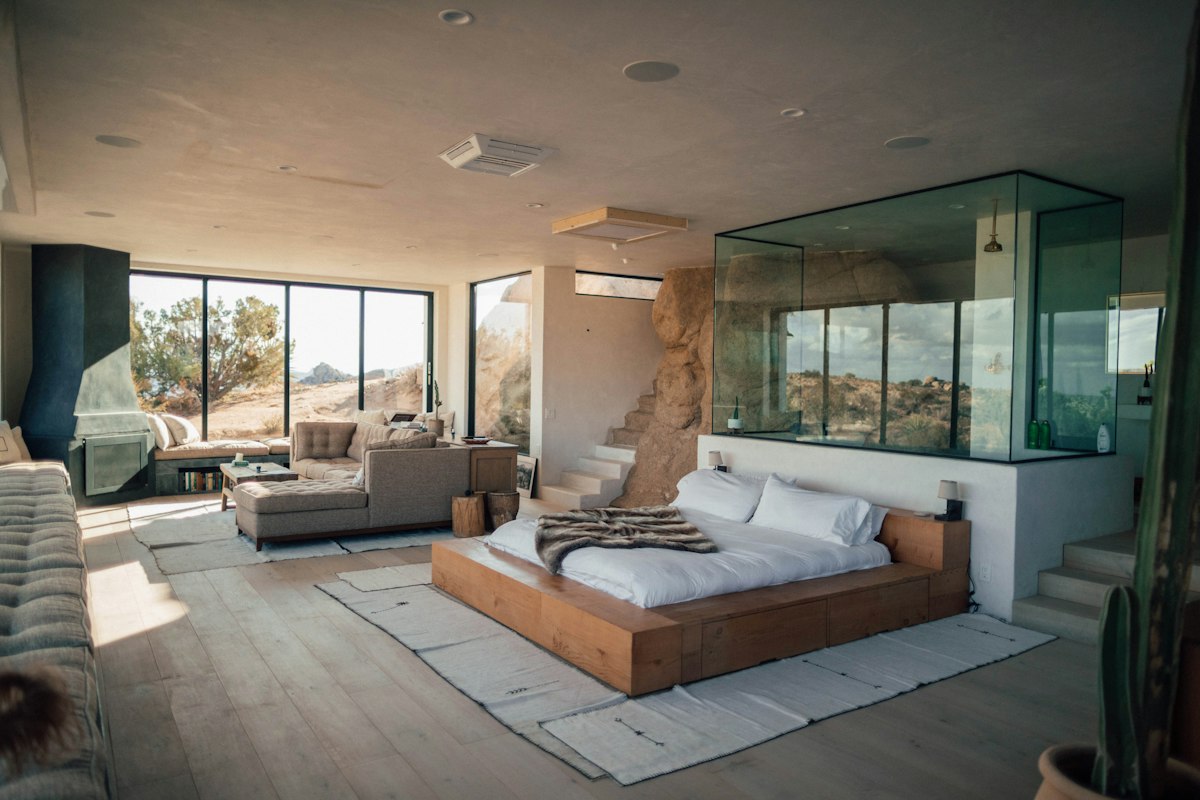
Mistake #4: Failing to Align with Brand Identity and Client Vision
The Hidden Cost of Generic Furniture in a Bespoke Environment
A luxury villa is not a hotel chain. It is not a catalogue. It is a singular experience that a high-net-worth client has invested millions to create. The moment a guest walks into the living room and recognises a sofa they have seen in twelve other properties — same profile, same finish, same dimensions — the illusion of exclusivity collapses.
This is not a theoretical concern. It is a documented commercial reality. In a competitive luxury villa rental and hospitality market, brand differentiation is a direct revenue driver. A villa that commands $6,000 per night does so because every element of the guest experience — including the tactile weight of a lounge chair, the grain pattern of a dining table, the way the bedroom lighting interacts with a custom headboard — communicates a singular identity.
Generic, catalogue-sourced furniture cannot do that. It communicates the opposite.
Private Labeling / OEM Manufacturing (Original Equipment Manufacturer): A manufacturing model where the factory produces furniture to your exact design specifications, materials, and dimensions — branded and documented under your identity. This gives importers, villa developers, and hotel brands proprietary product lines that cannot be purchased by competitors from the same catalogue. Learn more about this model in the Ultimate Guide to Private Labeling High-End Furniture.
The Brand Alignment Failure in Practice
Interior designers and FF&E buyers working to a detailed brand brief face a specific risk: the beautiful custom rendering gets approved, but procurement pressure pushes the team toward “close enough” catalogue alternatives to save time or cost. The approved dining chair has a 44 cm seat height, a specific ash veneer finish, and a custom tapered leg profile. The catalogue substitute has a 46 cm seat height, a standard walnut stain, and a turned leg. In a render, the difference is invisible. In the finished villa, it is glaring — and it violates the client’s vision.
For hotel operators, the brand alignment problem is compounded across hundreds of rooms. A mid-scale substitution in one furniture category creates a visible inconsistency when that furniture sits alongside custom joinery, bespoke lighting, and architect-specified flooring.
Custom Development as a Brand Strategy
The solution is to treat furniture customization not as a luxury add-on but as a brand strategy. Working with a manufacturer that has the technical infrastructure to execute custom specifications — dimensional adjustments, COM (Customer’s Own Material) acceptance for upholstery, custom hardware profiles, finish matching to a specific Pantone or RAL code — protects the integrity of the design brief from specification through delivery.
COM (Customer’s Own Material): A procurement arrangement where the designer or client supplies their specified fabric directly to the manufacturer, who then upholsters the furniture to order using that material. This allows absolute design control over the upholstery while leveraging the manufacturer’s frame and construction expertise.
For private-label furniture brands and importers building proprietary collections, the investment in custom development pays back in margin and exclusivity. According to industry sourcing benchmarks, private-label furniture programs typically generate margins 35–47% higher than catalogue purchasing — because the product cannot be price-compared by the end client.
مفروشات النمل اليشم is built specifically for this model — custom and private-label manufacturing for interior designers, FF&E buyers, villa developers, and hospitality brands who need a production partner capable of executing design-led briefs with the consistency and documentation that high-end projects demand.
الحل
At the project specification stage, prepare a Design Alignment Brief that documents: approved 2D technical drawings for each custom piece, a material and finish reference library (Pantone/RAL codes, timber species, hardware profiles), a defined process for supplier deviation approval, and a sign-off requirement that any “equivalent” substitution must be approved by the lead designer before procurement. This single document can prevent the vast majority of brand alignment failures in luxury villa furniture procurement.
Mistake #5: Underestimating Total Cost of Ownership (TCO)
Why the Cheapest Furniture Is Rarely the Most Affordable
The procurement decision that looks like a saving on day one often reveals itself as an expense over year three. This is the Total Cost of Ownership problem — and it is the most financially consequential mistake in luxury villa furniture procurement, because it is the one that most directly affects the long-term economics of the property.
Total Cost of Ownership (TCO): The complete financial cost of a furniture asset over its useful life, including the initial purchase price, installation, maintenance, reupholstery, repairs, replacement cycles, and the indirect cost of operational disruption during replacement. Formula: TCO = Initial Cost + Maintenance Cost + Replacement Cost + Disruption Cost − Residual Value.
The TCO Model: Two Dining Chairs Over Ten Years
The table below models the real ten-year cost of two dining chairs purchased for a luxury villa dining room — one specified at the “value” contract price point, one at the premium contract-grade level.
| مكون التكلفة | Value Contract Chair ($95/unit) | Premium Contract Chair ($220/unit) |
|---|---|---|
| Initial purchase cost (40 chairs) | $3,800 | $8,800 |
| Expected commercial lifespan | 3–4 years | 8–10 years |
| Replacement cycles (10 years) | 2–3 | 0–1 (reupholstery only) |
| Total replacement cost (10 yr) | $7,600–$11,400 | $0–$8,800 |
| Maintenance / reupholstery (10 yr) | $2,400 | $1,200 |
| Logistics & installation (each replacement) | $1,200 per cycle | $800 one-time |
| Guest disruption / operational downtime | متوسط-عالي | Near-zero |
| Total 10-Year TCO (40 chairs) | $15,000–$18,800 | $10,800–$11,800 |
| TCO per chair per year | $37.50–$47.00 | $27.00–$29.50 |
Source: Contract furniture lifecycle cost model based on commercial use benchmarks, Atlanta.bg Hotel Furniture Lifecycle Analysis, and Total Cost of Ownership in Commercial Furniture, 2025.
The premium chair costs 2.3× more at purchase. But it costs 37% less per year of service. Over a ten-year period with 40 chairs, the total saving is between $4,200 and $7,000 — before accounting for the indirect cost of replacement-related disruption to villa operations and guest experience.
The Hidden Costs That Never Appear on the Quote
Most buyers compare furniture suppliers on FOB (Free on Board) unit price — the cost up to the origin port. But the real landed cost of imported furniture includes several additional layers that can add 35–55% to the quoted price:
فوب (فري أون بورد): The manufacturer’s price including loading at the origin port. All costs from that point — ocean freight, marine insurance, import duty, customs clearance, last-mile delivery, and installation — are the buyer’s responsibility.
| Hidden Cost Component | Typical Range | Often Overlooked? |
|---|---|---|
| Ocean freight (20-ft container) | $1,800–$4,500 | أحيانًا |
| Marine cargo insurance | 0.5%–1.5% of cargo value | Often |
| Import duty (EU / US) | 0%–25% of FOB value | Frequently |
| Customs clearance fees | $300–$800 per shipment | Frequently |
| Last-mile delivery | $150–$400 per piece | أحيانًا |
| Installation labour | $50–$200/hr (region-dependent) | Often |
| Phytosanitary certificates (timber) | $150–$400 per shipment | Almost always |
| Replacement/rework on defects | 2%–8% of order value (industry average) | Almost always |
| Contingency (10–15%) | Based on all above | Almost always |
Source: Hotel FF&E procurement cost benchmarks, Volant Fit-Out and industry logistics data, 2025.
Solution: The Pre-Procurement TCO Framework
Before issuing any purchase order for luxury villa furniture, apply this five-question TCO screen to every specification:
- What is the expected commercial lifespan of this piece under the actual use conditions of this property?
- How many replacement or reupholstery cycles are anticipated over the property’s investment horizon?
- What is the full landed cost, including all logistics, duty, and installation components?
- What maintenance protocol does this material require, and what is the annual cost of that protocol?
- What is the residual value of the furniture at the end of its useful life — can it be refurbished, repurposed, or sold?
Answering these five questions before procurement — not after delivery — is the difference between a furniture strategy and a furniture expense.
▶ Watch: What Nobody Tells You About Hotel FF&E Procurement Until It’s Too Late — a concise breakdown of the procurement mistakes that surface right before opening day and how to avoid them.
Proven Strategies to Avoid These Mistakes
The five mistakes above share a common root cause: procurement decisions made on incomplete information, under time pressure, or without a structured process. The solution is equally consistent — a defined, repeatable procurement protocol that removes the guesswork from every stage of the process.
The 5-Step Procurement Protocol for Luxury Villa Furniture
The first step is to define specifications before briefing suppliers. This means completing a full specification document that covers: dimensions (with architectural drawings), timber species and moisture content requirements for the destination climate, foam density and ILD ratings, fabric abrasion specifications, finish type and compliance requirements, and structural test standards. A manufacturer who receives this document knows exactly what they are being asked to quote. A manufacturer who cannot respond to it in technical terms is not the right partner.
The second step is to vet suppliers against a documented qualification standard. Request ISO 9001 certification (quality management system), FSC chain-of-custody certificates for timber, GREENGUARD Gold for finishes, CAL 117 or BS 5852 for upholstery fire safety, and CARB Phase 2 compliance for any casegoods with composite wood components. Verify all certificates directly through the issuing body — FSC certificates are publicly searchable at info.fsc.org, and GREENGUARD certificates are verifiable through the UL product database.
The third step is to test physical samples before approving mass production. Request a pre-production sample of every key piece — not a showroom display item, but a sample produced using the same materials, foam, and finishes specified for the full order. Inspect the sample under raking light (angled light that reveals surface imperfections), sit in seating for load testing, open and close drawer mechanisms, and check fabric grain alignment across panels.
The fourth step is to audit production with milestone documentation. Require the manufacturer to provide photographic updates at each defined production stage: frame completion, foam and spring installation, upholstery, finishing, and packing. For orders above $50,000 FOB value, engage an independent third-party pre-shipment inspection through بيرو فيريتاس or SGS before loading approval.
The fifth step is to plan logistics before production begins. Confirm the customs and shipping documentation requirements for your destination country. For timber furniture entering the EU or US, confirm phytosanitary certificate requirements, HS code classification, and REACH or EPA compliance documentation. Build your full landed cost model using the hidden cost table above, and ensure your project budget reflects that number — not the FOB price alone.
Case Study: How a Leading Villa Developer Avoided Costly Delays
The Project
A luxury resort developer was completing a 12-villa private estate in Bali, with a combined FF&E budget of $680,000. The project had a fixed opening date tied to a pre-sold season of bookings worth approximately $1.2 million in advance revenue. Any delay to the opening would trigger rebooking obligations and reputational damage with the travel agents who had sold the season.
The developer had worked with a furniture supplier on a previous project who had delivered late. This time, they engaged a new manufacturing partner — مفروشات النمل اليشم — based on a structured supplier qualification process that applied the criteria outlined in this guide.
What Was Done Differently
Eight months before the opening date, the developer’s FF&E buyer issued a full specification document — including architectural drawings, climate brief (high humidity, coastal proximity, afternoon UV exposure on terraces), foam density requirements, and fabric specifications that included outdoor-rated solution-dyed acrylic for all terrace seating.
The manufacturer provided technical drawings for all custom pieces within two weeks of receiving the brief. A pre-production sample of the primary lounge seating was shipped to the developer’s design office in Singapore for physical approval. Two minor revisions were made to the seat height and back-cushion fill. Full production was confirmed at week six.
Weekly photographic milestone updates were provided throughout the 14-week production period. A third-party pre-shipment inspection was completed before loading, with a defect rate of 0.8% — all addressed before the container was sealed. The shipment arrived at Bali port 11 days before the installation deadline.
The Results
The opening date was held. The villas received guest reviews that specifically cited the quality and comfort of the furnishings as highlights. Maintenance costs in the first 18 months post-opening ran approximately 28% below the developer’s benchmark from the previous project — a direct result of correctly specified materials for the tropical environment. The developer has since placed two additional orders with the same manufacturer for a second phase of the estate.
The Takeaway
The key difference in this project was not the manufacturer’s price. It was the structured procurement process: a complete specification brief, early supplier engagement, physical sample approval, milestone documentation, and third-party inspection. These steps added approximately three weeks of pre-production time. They saved a potential delay of six or more weeks — and protected $1.2 million in pre-sold revenue.

Checklist: Pre-Procurement Due Diligence for Luxury Projects
Use this 15-point checklist on every luxury villa or hospitality furniture procurement project. It is designed for FF&E buyers, interior designers, importers, and developers who need a consistent, repeatable quality and risk framework.
| # | Due Diligence Item | Status |
|---|---|---|
| 1 | Architectural drawings confirmed with room dimensions, ceiling heights, and clearance measurements | ☐ |
| 2 | Specification document completed: materials, foam, fabric, finish, structural test standards | ☐ |
| 3 | Climate and environmental brief issued to manufacturer (humidity, UV, salt air, cleaning protocol) | ☐ |
| 4 | Manufacturer qualification: ISO 9001 certificate verified with issuing body | ☐ |
| 5 | FSC chain-of-custody certificate verified at info.fsc.org for all timber components | ☐ |
| 6 | GREENGUARD Gold certificate verified for finishes and adhesives | ☐ |
| 7 | Fire safety compliance confirmed: CAL 117 (US), BS 5852 (UK), or EN 1021 (EU) | ☐ |
| 8 | CARB Phase 2 compliance confirmed for any casegoods with composite wood | ☐ |
| 9 | Physical pre-production sample reviewed and approved (not showroom piece) | ☐ |
| 10 | Structural test report requested: EN 16139 or BIFMA X5.1 for all seating | ☐ |
| 11 | Full landed cost model completed (FOB + freight + duty + delivery + contingency) | ☐ |
| 12 | MOQ and volume pricing confirmed in writing; tooling fees itemized | ☐ |
| 13 | Production milestone schedule agreed in writing with weekly update protocol | ☐ |
| 14 | Third-party pre-shipment inspection commissioned (SGS or Bureau Veritas) | ☐ |
| 15 | Warranty terms, defect replacement policy, and after-sales contacts documented in contract | ☐ |
Download and share this checklist with your procurement team, design partners, and FF&E coordinators at the project kick-off meeting — before any supplier brief is issued.
مسرد المصطلحات الأساسية
| المصطلح | التعريف |
|---|---|
| المفروشات والمعدات والأثاث | الأثاث والتجهيزات والمعدات — بنود المشروع المنقولة التي تم تخصيص ميزانية لها بشكل منفصل عن أعمال البناء |
| التكلفة الإجمالية للملكية (TCO) | Total Cost of Ownership — complete financial cost of an asset over its useful life |
| فوب | Free on Board — manufacturer’s price to the origin port; all onward costs are the buyer’s responsibility |
| CIF | Cost, Insurance & Freight — seller covers ocean freight and insurance to destination port |
| البرنامج الإنمائي | Delivered Duty Paid — seller manages everything including import duty to the buyer’s address |
| OEM | Original Equipment Manufacturer — produces to your design specification and brand |
| ODM | Original Design Manufacturer — provides existing designs that you brand and sell |
| COM | Customer’s Own Material — buyer supplies fabric; manufacturer upholsters to order |
| اختبار مارتينديل | European fabric abrasion standard measured in rub cycles; higher = more durable |
| EN 1728 / EN 16139 | European standards for domestic and contract seating structural safety |
| BIFMA X5.1 | US commercial seating performance standard issued by the Business and Institutional Furniture Manufacturers Association |
| FSC | Forest Stewardship Council — international certification for sustainable timber sourcing |
| GREENGUARD Gold | UL certification for low VOC emissions in furniture finishes and adhesives |
| CAL 117 (TB 117-2013) | California smolder-resistance standard for upholstered furniture foam |
| BS 5852 | UK fire-resistance standard for upholstered furniture |
| المرحلة 2 CARB المرحلة 2 | California Air Resources Board formaldehyde emission standard for composite wood |
| ريتش | EU chemical safety regulation governing substances used in furniture production |
| VOC | Volatile Organic Compound — chemical emissions from paints, lacquers, and adhesives |
| ADR | Average Daily Rate — average revenue per occupied hotel room per night |
| موك | الحد الأدنى لكمية الطلب — أصغر كمية يقبلها المصنع لكل صنف |
| Grade-A Teak | The highest quality teak timber, cut from the heart of mature trees; contains the greatest concentration of natural oils for durability |
| Solution-Dyed Acrylic | Outdoor fabric where colour is locked into the fibre at production, not applied to the surface — provides superior UV, mold, and fade resistance |
| Kiln-Drying | A controlled process of drying timber in a chamber to remove moisture, preventing warping and cracking in the finished piece |
| Mortise-and-Tenon Joint | High-durability woodworking joint where a projecting tenon fits into a corresponding mortise cavity; gold standard for contract-grade frame construction |
| PVD | Physical Vapour Deposition — a hardware coating process producing a finish more durable and uniform than standard electroplating |
| ILD | Indentation Load Deflection — measurement of foam firmness; higher ILD = firmer foam |
Elevate Your Procurement Standards for Lasting Luxury
The five mistakes in this guide are not caused by bad intentions or low budgets. They are caused by a procurement process that is too informal for the level of project it is trying to execute. A $5 million luxury villa deserves a procurement process as rigorous as its architecture. A 200-room boutique hotel deserves an FF&E strategy as detailed as its brand standards.
The professionals who consistently deliver luxury villa and hospitality projects on brief, on time, and without costly surprises share a common approach. They start procurement earlier than feels necessary. They specify in detail before briefing a single supplier. They test physical samples and read test reports. They model total cost of ownership before approving any purchase order. And they build relationships with manufacturing partners who understand that precision, documentation, and communication are not premium services — they are the baseline standard for professional luxury furniture production.
Every element of this guide — the specification matrix, the TCO model, the lead-time table, the due diligence checklist — is designed to help you operate at that standard, on every project, regardless of scale.
For manufacturing partners that consistently meet this standard, explore Jade Ant Furniture’s full product range أو contact the team directly with your project brief, specifications, and timeline. The team handles custom dimensions, COM upholstery, private-label programs, and international shipping across all major villa and hospitality markets — from a single bespoke piece to a full FF&E package for a multi-villa resort development.
الأسئلة الشائعة (FAQs)
1. How do I verify the authenticity and quality of exotic wood used in luxury villa furniture?
Request an FSC chain-of-custody certificate and verify it directly at info.fsc.org — do not accept a PDF copy without independent verification, as certificate fraud is documented in the timber trade. Ask the manufacturer for batch-level traceability: the specific timber species, country of origin, and drying specification (kiln-dried to what moisture content, and to what target range for the destination climate). For high-value timber components in projects above $100,000, commission an independent third-party lab test for species identification, moisture content, and density. Bureau Veritas and SGS both offer furniture material testing services that include timber authenticity verification.
2. What are the most durable outdoor fabrics for tropical luxury villas?
Solution-dyed acrylic fabrics are the benchmark for tropical and marine outdoor furniture. Brands such as Sunbrella, Outdura, and Revolution Fabrics are engineered for UV resistance, mold resistance, salt-air exposure, and fade protection — with solution-dyeing locking colour into the fibre rather than onto the surface, which prevents surface-coating fade within 1–2 seasons. For tropical environments with frequent rainfall and high UV, specify a fabric weight of at least 300 g/m² and confirm the manufacturer has tested to an AATCC fade standard of ≥ 40 hours at full colour retention. Avoid solution-dyed polyester for coastal environments — it retains moisture and is susceptible to mold in high-humidity conditions.
3. How can I reduce lead times when importing custom furniture from Asia?
Four strategies reliably compress lead times without sacrificing quality. First, finalize all technical drawings and material selections before issuing the purchase order — mid-production specification changes are the single most common cause of production delays. Second, work with manufacturers who maintain pre-approved material inventories for standard timber species, foam grades, and hardware components, reducing procurement delays at the factory. Third, confirm the manufacturer’s current production utilization rate before committing — a factory at 90%+ capacity cannot accelerate your order without displacing another client’s. Fourth, for recurring villa or hotel projects, establish a standing relationship with a single manufacturing partner that reserves buffer capacity for your orders. Jade Ant Furniture’s manufacturing model is structured around exactly this approach for repeat FF&E clients.
4. What should I include in a furniture specification sheet for a luxury villa project?
A complete furniture specification sheet for a luxury villa project should document: the item name and reference code, confirmed dimensions (height, width, depth, seat height), timber species and moisture content target, frame joinery method, foam density and ILD rating for each layer, fabric or leather specification (including abrasion rating, fire standard, and colorway reference), finish type (lacquer, oil, paint — with RAL or Pantone reference), hardware specification (finish type, coating method, brand if specified), applicable compliance standards (FSC, GREENGUARD, CAL 117 / BS 5852, CARB Phase 2 as relevant), structural test standard required (EN 16139 or BIFMA X5.1), and any COM or custom hardware requirements. This document should be attached to the purchase order and referenced in the warranty and after-sales agreement.
5. How do I ensure furniture aligns with a villa’s architectural style and interior design theme?
The most effective method is to involve the manufacturer in the design development process, not just the procurement process. Share the full interior design mood board, material palette, architectural drawings, and spatial dimensions with the manufacturer at the briefing stage. Require 2D technical drawings (plan, elevation, and section) for every custom piece before production begins, and make written design approval by the lead designer or architect a mandatory step in the purchase order process. For complex or architecturally significant pieces, request a 3D render from the manufacturer before sample production. Physical samples should be reviewed in the actual installation environment — or at minimum in the same lighting conditions — before full production approval is granted.
6. What are the key import regulations I need to know when bringing furniture into Europe or North America?
For the European Union, the primary compliance requirements include REACH chemical safety (Regulation EC 1907/2006) — which governs substances of very high concern in materials — and, for timber components, the EU Timber Regulation requiring legal origin documentation. CARB Phase 2 compliance is mandatory for composite wood components entering California and is increasingly applied as the US national standard. For North America, EPA wood furniture guidelines and import documentation including a Commercial Invoice, Packing List, Bill of Lading, and Certificate of Origin are standard requirements. Timber furniture entering the US or EU requires a phytosanitary certificate confirming heat treatment or fumigation to prevent pest introduction. For detailed EU requirements, the Eurofins Furniture Compliance Guide covers REACH, fire standards, and chemical safety in full.
7. How can private label furniture brands maintain exclusivity in competitive markets?
Exclusivity in private-label furniture is built through three interconnected strategies. First, invest in genuinely unique design development — proprietary silhouettes, custom hardware profiles, and finish combinations that cannot be sourced from any public catalogue. Second, register your designs in the key markets where you operate; in the EU, registered Community Designs provide three to 25 years of legal protection against copying. Third, structure your manufacturing agreement to include an exclusivity clause that prevents your production partner from manufacturing the same design for any other client. A well-drafted NDA (Non-Disclosure Agreement) and exclusivity addendum — standard practice in OEM manufacturing relationships — protects your design investment. Read a detailed breakdown of this model in the Private Labeling Guide for High-End Furniture.
8. What is the ideal timeline for procuring custom furniture for a luxury villa development?
Start the procurement process no later than eight to nine months before your target on-site delivery date for a complex custom specification. Allow two to three weeks for specification finalization and technical drawing approval, two to four weeks for pre-production sample production and approval, 12–16 weeks for full production (with a revision buffer), one week for third-party pre-shipment inspection, four to six weeks for ocean freight, one to two weeks for customs clearance, and one to two weeks for last-mile delivery and installation sequencing. For standard catalogue furniture with no customization, the minimum reliable timeline is 14–18 weeks from purchase order to installation. Any timeline shorter than this should be treated as high-risk without exceptional justification from the supplier.
9. How do I assess whether a manufacturer is suitable for high-end hospitality projects?
Request project portfolios that include specifically comparable work — villa or hotel projects of similar scale, design complexity, and destination market. Ask for direct client references (not testimonials on their website) and contact those references with structured questions: Did the delivered pieces match the approved sample? Was the production schedule adhered to? How were defects handled? Would you work with this manufacturer again? Additionally, review their certification portfolio (ISO 9001, FSC, GREENGUARD, CAL 117 or BS 5852), assess the technical quality of their drawings and sample documentation, and evaluate their communication responsiveness during the inquiry process. A manufacturer who is slow, vague, or evasive during the qualification process will not improve once your production order begins.
10. What are the most common quality issues found in imported luxury furniture?
The five most frequently documented quality issues in imported luxury furniture are: inconsistent finishes across a batch (caused by batch-to-batch lacquer variation or insufficient colour calibration), substandard joinery that reveals itself under commercial load (staple or bracket construction presented as mortise-and-tenon), foam compression failure within 12–18 months of use (caused by below-specification density), dimensional inaccuracy versus approved technical drawings (a consistent problem with manufacturers who lack CNC equipment), and fabric shading variation across pieces in the same order (caused by multi-dye-lot fabric sourcing during production). All five issues are preventable through a structured pre-production sample approval, mid-production photographic milestones, and a third-party pre-shipment inspection — the three most valuable steps in professional FF&E quality control.
11. How can FF&E buyers ensure sustainability without compromising luxury?
Sustainability and luxury are not in tension at the specification level — they are reinforcing. FSC-certified solid timber is structurally superior to non-certified alternatives and carries a provenance story that enhances the product’s perceived value. GREENGUARD Gold-certified finishes indicate low-VOC chemistry that is more sophisticated — not cheaper — than high-VOC industrial alternatives. Solution-dyed acrylic fabrics outlast standard outdoor textiles precisely because of the manufacturing investment in colour-fast chemistry. The practical approach: specify sustainable materials as performance requirements, not as ESG checkbox items. Timber species from FSC-verified supply chains, zero-VOC water-based finishes, and recycled-content upholstery textiles all meet luxury performance standards while satisfying ESG documentation requirements for LEED, BREEAM, and WELL Building certification submissions.
12. What role does prototyping play in luxury furniture procurement?
Prototyping — the production of a physical pre-production sample before full manufacturing begins — is the single most cost-effective quality control investment in any custom furniture procurement. A prototype allows you to validate: dimensional accuracy against architectural drawings, foam comfort and density, fabric or leather grain alignment, finish colour and sheen against the approved reference, hardware weight and operation, and structural integrity under physical load. The cost of a prototype — typically $200–$800 per piece depending on complexity — is negligible compared to the cost of discovering a specification error across 40, 100, or 400 units after full production. Never approve mass production of a custom piece without a physical prototype review, regardless of timeline pressure.
13. How do I handle warranty claims and post-delivery issues with overseas suppliers?
Establish warranty terms, defect replacement protocols, and response time commitments in writing — in the purchase order or a supplementary warranty agreement — before production begins. Document what percentage defect rate triggers a full or partial replacement shipment, what the response timeline is (best practice: within 48 hours acknowledgement, resolution plan within five business days), and whether replacement pieces are shipped at the manufacturer’s cost or shared. Retain 10–15% of the payment (the final balance) until after satisfactory delivery and inspection. For significant orders, use an escrow payment arrangement through a reputable trade finance service. Marine cargo insurance covers transit damage; in-factory defects should be caught at the pre-shipment inspection stage before they travel.
14. Can I mix and match furniture from multiple suppliers in one luxury villa?
Yes — but maintain a rigorous design cohesion framework. Define a master material palette (limited timber species, a defined set of hardware finishes, a colour temperature range for fabrics and leathers) before briefing any supplier. Share this master palette with all manufacturers, require physical samples from each to be reviewed side-by-side under consistent lighting, and include a material harmony approval step before finalizing any individual purchase order. The risk of mixing suppliers is not aesthetic incompatibility — it is quality level inconsistency. If Supplier A is producing to EN 16139 contract-grade standard and Supplier B is producing to a residential standard, the quality differential will be apparent in use within 18 months, even if the pieces look similar on delivery day.
15. What are the benefits of working with a furniture procurement consultant for luxury projects?
A specialist furniture procurement consultant brings three primary advantages to a luxury villa or hospitality FF&E project. First, access to a vetted manufacturer network — relationships that have been tested over multiple projects and qualification reviews, with documented performance on quality, timelines, and communication. Second, total cost optimization — the expertise to build accurate landed cost models, negotiate volume pricing, identify hidden cost components before they appear on an invoice, and structure payment terms that protect the buyer’s cash flow. Third, risk mitigation — a procurement consultant manages the supplier qualification, sample approval, production milestone tracking, and pre-shipment inspection process as a professional discipline, not as a side task for a design team already managing a full project schedule. For developments above $500,000 in FF&E value, the consultant’s fee is typically recovered several times over through cost savings, avoided delays, and quality outcomes that protect the property’s long-term value and reputation.
Published by the editorial team at Jade Ant Furniture. Jade Ant is a China-based custom and luxury furniture manufacturer serving hotel operators, villa developers, interior designers, FF&E buyers, and private-label brands across Asia-Pacific, the Middle East, Europe, and North America. All market data and cost benchmarks referenced are sourced from publicly available industry research current as of 2025–2026.
For project enquiries, sample requests, or custom specification briefs, visit jadeant.com or contact the team directly.