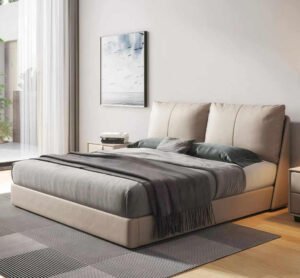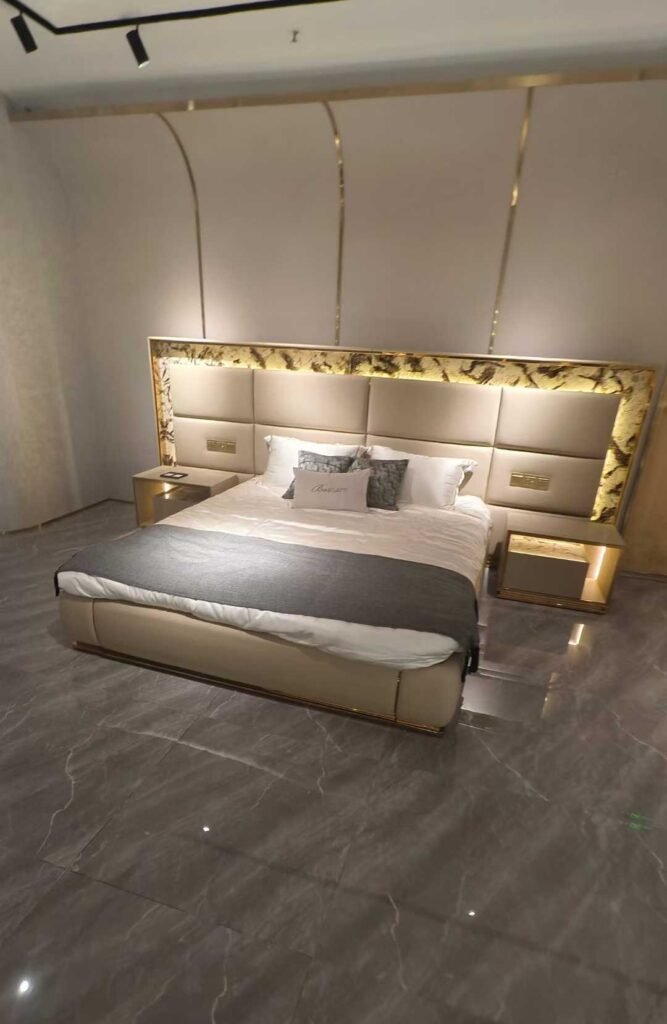
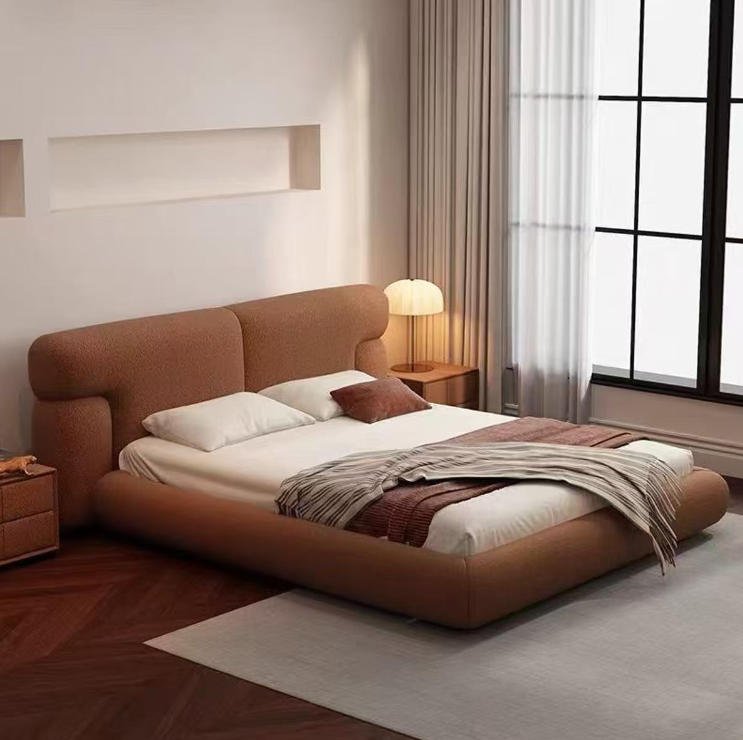
Most private label furniture ventures fail quietly — not with a dramatic collapse, but with a slow bleed of margin, delayed containers, inconsistent finishes, and clients who don’t come back.
The ones that succeed share a pattern: they treat private labeling as a business system, not just a product decision. They choose manufacturing partners the way they’d choose a business partner. They price for landed cost, not FOB. They protect their designs before they share a drawing. And they build the marketing infrastructure before the first container arrives.
The global luxury furniture market is valued at $32.34 billion in 2025 and projected to reach $51.8 billion by 2031 (GM Insights). The private label segment within that — importers, designers, and brand owners producing furniture under their own identity — is growing faster than the branded segment, driven by demand for design exclusivity, tighter margin control, and the growing number of hotel groups, villa developers, and design firms who want furniture that no competitor can catalogue-match.
This guide gives you the complete roadmap.
Private Label Furniture: A production model where a manufacturer produces furniture to your specification and branding. You own the design identity; your name appears on the label, the packaging, and the client proposal. The manufacturer is not disclosed to your end clients. This is distinct from reselling another brand’s furniture, where you have no pricing control, no exclusivity, and no brand equity accumulation.
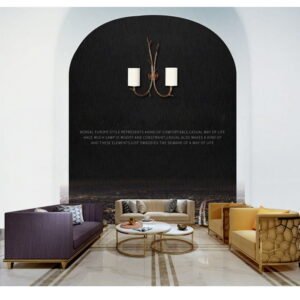
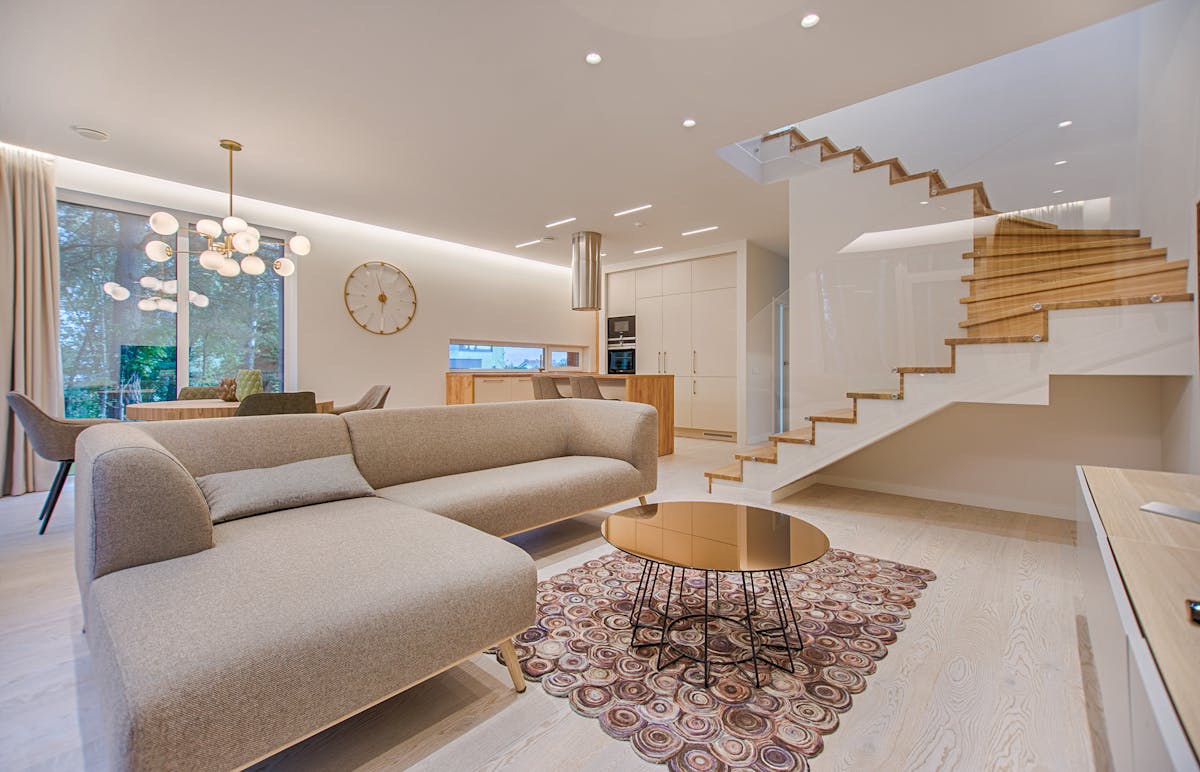 A private label furniture collection gives you full control over design, pricing, and client positioning — three things you give up the moment you resell someone else’s brand. Source: Pexels
Understanding the High-End Private Label Furniture Market
Why Now Is the Right Time to Build Your Own Brand
Three forces are converging to make private label luxury furniture one of the strongest business opportunities in the interior design and hospitality supply chain right now.
Design differentiation demand is rising. Hotel developers and villa owners increasingly require furniture that no competitor property can match. They are willing to pay a premium for that exclusivity — and they are moving away from catalogue brands precisely because catalogue brands are, by definition, available to everyone.
Manufacturer access is more open than it has ever been. The best factories in Foshan, Brianza, and Ho Chi Minh City — which once required minimum relationships of years and orders of hundreds of thousands of dollars — now accept private label briefs from established design studios, importers, and hospitality procurement teams at significantly lower entry thresholds than a decade ago.
Margin compression on branded reselling is real. Distributors reselling established Italian or French luxury brands typically operate on trade discounts of 40–55% off retail — but retail price is fixed, discount terms can be revised, and brand exclusivity can be revoked. Private label brands operate with gross margins of 60–75% at scale, and the brand equity accumulates in your business, not in the manufacturer’s.
Who Actually Succeeds in Luxury Private Label Furniture
The buyers and professionals who build successful private label luxury furniture brands typically share a specific profile:
They have existing client relationships — hotel developers, interior design firms, villa owners — who trust their specification judgment and are willing to trial a new branded collection with a first order. They are not trying to build a brand in a vacuum and then find clients. The client relationships come first.
They have a clear design point of view. Not a vague aesthetic preference — a documented design language that guides every material and finish decision, so that pieces from Collection 1 and Collection 3 look like they belong to the same world.
And they have operational patience. A luxury private label furniture brand rarely reaches full profitability before month 18. The businesses that give up at month 9 because the first collection didn’t land a hotel contract do not make it. The ones that treat the first collection as a proof of capability — and use it to secure the second, larger project — do.
Defining Your Brand Identity & Aesthetic Positioning
Brand DNA Is Not a Mood Board — It Is a Decision Filter
Every private label furniture brand has a mood board. Most stop there. The brands that build real market position go one step further: they translate the mood board into a decision filter — a set of rules that governs every material selection, finish approval, proportion decision, and pricing call the brand makes.
Here is what a functional brand DNA document looks like for a luxury furniture brand:
| Brand DNA Element | Example: Brand A (Modern Luxury) | Example: Brand B (Artisanal Residential) |
|---|---|---|
| Core Design Language | Architectural minimalism, geometric precision | Warm craft, natural texture, handmade detail |
| Material Palette | Sintered stone, brushed metal, performance leather | Solid oak, hand-woven linen, artisan brass |
| Finish Philosophy | Matte, controlled, no decoration for its own sake | Visible craft marks, natural variation celebrated |
| Proportion Principle | Low-profile, horizontal emphasis, clean line | Generous scale, curved forms, human warmth |
| Colour Discipline | Monochromatic — warm greys, off-whites, deep charcoal | Earth tones — terracotta, aged wood, ochre, soft sage |
| Target Interior Context | Urban penthouse, contemporary hotel suite | Villa living room, boutique hotel lounge |
| What We Never Make | Heavily ornamental, mixed-period pastiche | Ultra-minimalist, industrial cold palettes |
This document does not constrain creativity. It prevents the brand from drifting — from saying yes to a piece that is commercially tempting but aesthetically inconsistent, which is how collections lose the coherence that makes them specifiable.
Aligning Brand Positioning with Client Type
Different client types respond to different brand narratives. The language that convinces a hospitality developer is not the same language that wins an interior designer, and neither works on a HNWI villa owner.
HNWI (High Net Worth Individual): An individual with investable assets exceeding $1 million USD. The primary buyer persona for ultra-luxury private label furniture in the residential segment. HNWI buyers prioritize provenance, exclusivity, and the ability to say something unique about the pieces in their home — not price competitiveness.
For hotel developers and FF&E buyers: Position the brand around specification reliability — consistent finishes across 200 rooms, documented certifications, lead time discipline, and after-sales accountability.
For interior designers: Position around design collaboration — the manufacturer’s willingness to execute the designer’s vision, not impose a catalogue constraint. Access to CAD drawings, sample lending, and project-specific customization are the decision drivers.
For villa owners and residential clients: Position around provenance and story — where the piece was made, what materials were chosen and why, how long it will last, and what makes it irreplaceable.
Two Private Label Positioning Case Studies Worth Studying
Case A — The Showroom-to-Brand Pivot: An established interior design showroom in Singapore decided to private label a range of upholstered seating and occasional tables after noticing that clients were increasingly asking them to source “something we won’t see in every other penthouse.” They worked with a Foshan-based manufacturer under an OEM arrangement, developed 8 signature pieces, and positioned the collection under a new brand name at 30% above their previously resold Italian line pricing. Within 14 months, the private label collection represented 34% of their furniture revenue — with a gross margin of 68% versus the 42% they were earning on the resold line. The brand still exists. The Italian line has been significantly reduced.
Case B — The Design Firm Collection Launch: A London-based interior design firm with a strong hotel project portfolio used their first private label collection — 12 pieces developed with a manufacturer in Vietnam — to enter the FF&E specification market as a supplier rather than just a buyer. The collection’s first placement was a 45-room boutique hotel where the firm also designed the interiors. The furniture brand was featured in the hotel’s marketing materials. Three hotel RFPs arrived within six months, each requesting the brand be specified. The design firm’s revenue model shifted structurably — from project fees alone to project fees plus furniture margin plus specification royalties.
Sourcing the Right Manufacturing Partners Globally
The Manufacturing Region Decision — Where Your Brand Is Made Matters
Where your furniture is manufactured affects your cost structure, your lead times, your customization depth, your certification portfolio, and — critically — your brand story. These are not abstract considerations. Each matters directly to the clients you are presenting to.
Here is the current manufacturing landscape for high-end private label furniture, with the practical intelligence you need to make the decision:
| Manufacturing Region | Primary Strength | MOQ típico | Plazo de entrega | FOB Cost vs. Italian Equivalent | Lo mejor para |
|---|---|---|---|---|---|
| Italy (Brianza, Tuscany, Veneto) | Design heritage, premium leather, artisan workshops | 10–50 units for bespoke | 60–120 days | Baseline (premium) | Brands where Italian provenance is core to positioning |
| China (Foshan/Guangdong) | Full-spectrum — luxury to volume, OEM/ODM depth, vertical integration | 1–50 units (luxury segment) | 45-90 días | 40–65% lower | Brands needing cost efficiency + deep customization capability |
| Vietnam (Binh Duong, Dong Nai) | Solid wood craftsmanship, FSC-certified timber, strong US market access | 20–100 units | 60-90 días | 35–55% lower | Natural wood collections, US market-focused brands |
| Turkey (Istanbul, Ankara) | Upholstered furniture, textile integration, European aesthetic | 30-80 unidades | 45-75 días | 30–50% lower | Fabric-heavy collections targeting European and GCC markets |
| Germany (Baden-Württemberg) | Precision engineering, modular systems, sustainability certifications | Más de 50 unidades | 60-90 días | Comparable to Italian | Office and institutional furniture with premium sustainability story |
| Eastern Europe (Poland, Romania) | Contract-grade upholstered, FSC timber, EU market proximity | 30–100 units | 45-75 días | 25–45% lower | European market brands needing EU quality standards at lower cost |
| Indonesia (Jepara, Cirebon) | Handcrafted wood, teak, rattan, artisanal detail | 20–60 units | 60-90 días | 35–55% lower | Natural material collections, boutique and resort hospitality |
Fuente: Top Countries for Furniture Manufacturing and Sourcing, Cosmo Sourcing 2026; China’s Furniture Manufacturing Industry 2026 Guide, Jade Ant
For most private label brands entering the luxury market, the practical choice is between Italy for provenance-driven positioning y China for specification-depth combined with margin efficiency. The brands succeeding in the mid-to-upper luxury tier are increasingly using China-based manufacturers — not because Italian production isn’t superior in brand narrative, but because a Foshan factory with the right certifications, the right QC process, and the right OEM capability delivers a product that a specifier cannot distinguish from its European equivalent in situ, at a landed cost that leaves room for the marketing, after-sales, and client service investment that builds a real brand.
Muebles Jade Ant operates within the Foshan manufacturing ecosystem — accepting OEM briefs from private label brands, interior design studios, and importers who need custom production capability with full certification support and a design-to-delivery workflow that doesn’t require the buyer to manage every production decision independently.
How to Vet a Manufacturer Before Committing
Manufacturer vetting is the step most private label brands compress too aggressively. The cost of choosing the wrong manufacturer is not visible in the first order — it shows up in the second, when you need to reorder a specific finish and it doesn’t match, or when your hotel client asks for the GREENGUARD documentation you assumed the factory held but doesn’t.
The vetting sequence that protects you:
Step 1 — Document verification. Request the following and verify each through the issuing body: ISO 9001:2015 (search by certificate number through SGS, Bureau Veritas, or TÜV databases), FSC Chain of Custody (verify at info.fsc.org), CARB Phase 2 TPC letter (required for US-market composite wood products — verify the Third-Party Certifier is EPA-accredited), and GREENGUARD Gold (search the product at UL’s SPOT database).
Step 2 — Physical sample evaluation. Order production samples — not showroom display pieces. Ask specifically: “Can you produce a sample from your actual production line using the same materials and machinery used for the full order?” Evaluate under raking light (to reveal surface imperfections invisible in normal lighting), test foam density by compression, inspect joinery at stress points (the corners of seat frames, the attachment point of legs), and check fabric seam alignment and tension at the most complex construction points.
Step 3 — Factory audit. For orders above $30,000 FOB, commission a third-party factory audit through SGS or Bureau Veritas. The audit should cover: production floor organization, machinery condition, QC checkpoint documentation, raw material storage, finishing environment (spray booth ventilation, curing protocols), and workforce stability (high turnover is a consistent-quality risk). Virtual audits — conducted by video walkthrough with a structured agenda — are an accepted alternative for remote buyers making a first evaluation.
Step 4 — Reference verification. Ask for direct contact information for three buyers who placed comparable orders (similar product type, similar specification complexity, similar destination market) within the past 24 months. Contact them without the manufacturer present. Ask: Did the delivered pieces match the approved sample? Was the timeline honoured? How did the factory respond when something went wrong?
Step 5 — NDA and IP agreement. Before sharing any design drawings, finish specifications, or proprietary material details, have a mutual NDA signed by the factory’s legal representative — not just a project manager. The NDA should specify that your designs cannot be produced for any other buyer without your written consent. Understand that NDA enforcement in international contexts is complex — see the IP protection guide from Harness IP for a detailed legal framework — but the NDA still matters: it establishes the legal baseline and materially affects how seriously a manufacturer takes your design exclusivity.
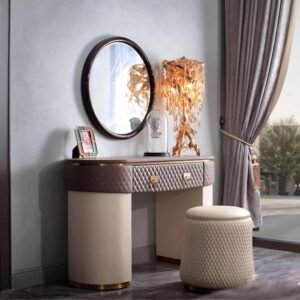
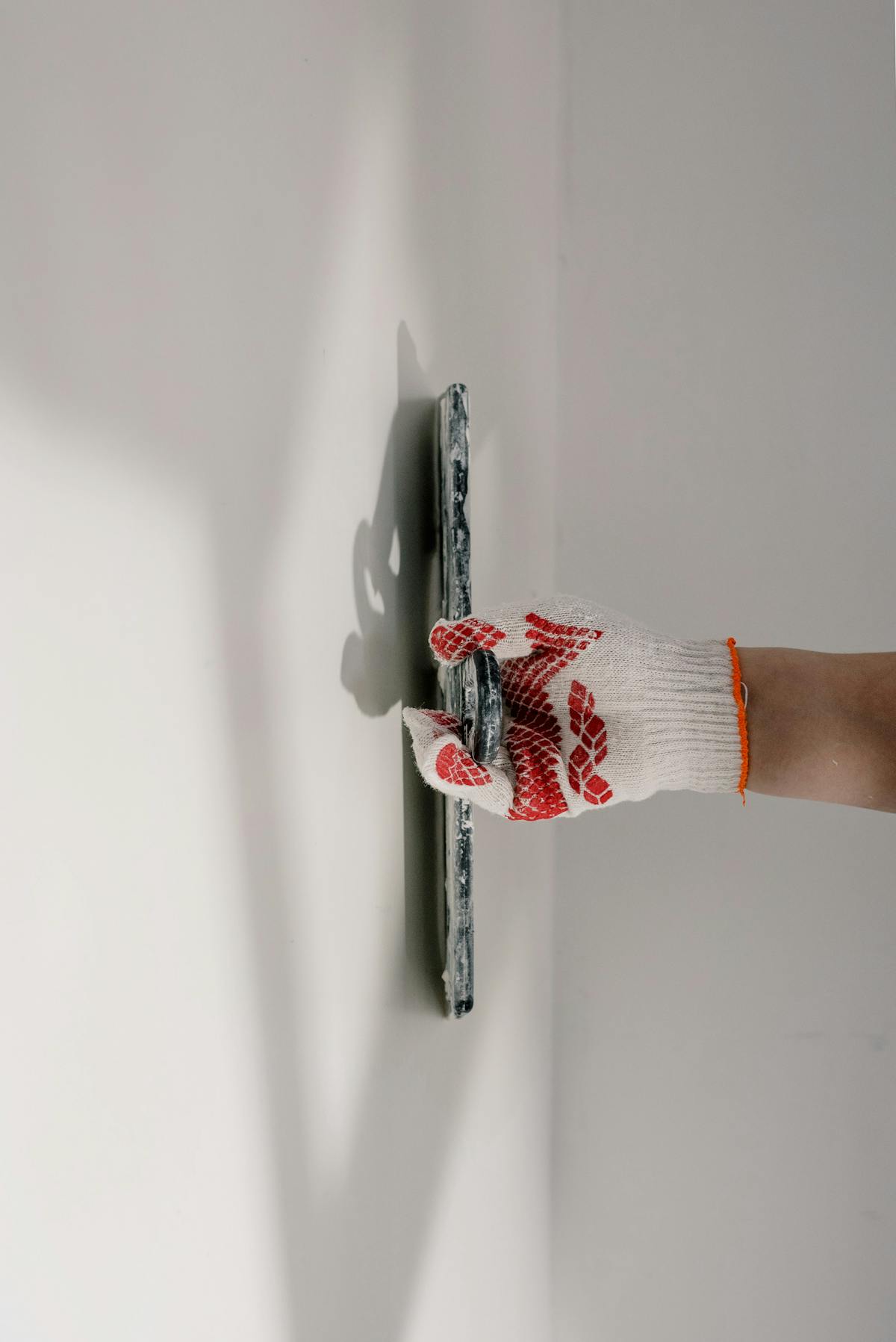 A factory that can execute this level of finish at the sample stage can sustain it at production scale — if the QC process is documented and enforced across every piece, not just the ones sent for approval. Source: Pexels
Quality Assurance & Material Excellence
Specify Materials the Way a Hotel Procurement Team Specifies Them
The difference between a material specification and a material reference photograph is the difference between receiving what you ordered and receiving something that looks similar in the manufacturer’s lighting but is visibly different in your client’s showroom.
For every piece in your collection, specify the following in writing before production begins:
Timber: Species (solid oak vs. oak veneer on engineered core — structurally different, aesthetically nearly identical), grain orientation (where visible), moisture content at time of assembly (≤12% for indoor furniture, to prevent post-delivery movement), and finish application method (brushed, hand-oiled, UV-lacquered, catalysed 2K lacquer for durability).
Foam: Density in kg/m³ (minimum 40 kg/m³ for contract upholstered seating, 28–35 kg/m³ for residential luxury); ILD (Indentation Load Deflection) rating specifying firmness (25–40 ILD for a standard seat cushion); and core construction (solid foam, or wrapped foam for a softer surface feel over a firmer core).
ILD (Indentation Load Deflection): The force in pounds required to compress a piece of foam by 25% of its height. A higher ILD number means firmer foam. Hotel lobby seating typically specifies 35–45 ILD for durability; luxury residential seating ranges from 25–35 ILD for comfort priority. Specifying ILD prevents the manufacturer from substituting a lower-density foam that passes visual inspection but compresses after six months.
Fabric and leather: Martindale abrasion rating (minimum 30,000 double rubs for residential; 100,000+ for hotel public areas); colour fastness to light (ISO 105-B02, rating ≥6 for light-coloured fabrics); pilling resistance (ISO 12945-2, rating ≥4); and colourway reference by code (not description — “warm ivory” is not a specification; the supplier’s stock code for that colorway is).
Finish: RAL or Pantone colour code for painted finishes; finish type (matt, satin, gloss, soft-touch, textured); sheen level (60° gloss reading); and required durability test (pencil hardness ≥2H for lacquered surfaces; chemical resistance to standard cleaning agents used in hotel housekeeping).
The Four-Stage Quality Control Protocol
For a private label collection to deliver consistent quality across every batch, QC cannot be a single pre-shipment inspection. It needs to be structured across the production process.
Stage 1 — Pre-production materials inspection: Verify that timber, foam, fabric, and hardware arriving at the factory match the signed-off specifications. Foam density is testable in the factory with a compression scale; fabric colour is checked against the approved swatch under D65 lighting (the international standard for colour comparison). Do not skip this step — material substitution without notification is the single most common source of quality failures in overseas production.
Stage 2 — In-process frame inspection: At the frame assembly stage, check joinery tightness, dimensional accuracy (measure against your approved drawing with ±3mm tolerance), and structural rigidity. A completed frame that wobbles under manual pressure at the assembly stage will not resolve itself at the finishing or upholstery stage.
Stage 3 — Pre-finishing upholstery check: Inspect fabric tension and alignment, seam consistency, cushion fitting, and the quality of any tufting, piping, or decorative stitching. These elements are significantly harder and more expensive to correct after finishing than before.
Stage 4 — Pre-shipment inspection: Conduct at 80–100% production completion, covering 100% of pieces for dimensional check, and a statistically sampled subset (per AQL 2.5 protocol) for detailed finish, upholstery, and structural assessment. Commission this stage through an independent third party — not the factory’s own QC team.
Design Customization & Exclusivity Development
Three Routes to Original Design — Matched to Your Starting Point
Route 1 — Full bespoke design development. You commission original designs from an industrial designer or design studio, then engage a manufacturer to produce from your drawings. This delivers maximum design exclusivity and IP ownership clarity, but requires the longest lead time (add 8–12 weeks for design development and technical drawing before production can begin) and the highest upfront investment.
Route 2 — Catalogue modification. You select existing designs from the manufacturer’s catalogue and modify dimensions, materials, finishes, or proportions to create variants that are distinctly yours. This is the fastest route to a launchable collection and the most common approach for a first private label range. The limitation: other buyers can see the base design in the catalogue and commission similar modifications. Your exclusivity depends on how significantly your modification diverges from the original.
Route 3 — Co-development. You work with the manufacturer’s in-house design team under your creative direction, providing a design brief, reference images, proportion targets, and material preferences — and the manufacturer develops the technical design while you retain IP ownership through the NDA agreement. This delivers original design at lower cost than a fully commissioned external designer, but requires a manufacturer with genuine in-house design capability (not just a CAD drafter who copies what they’re shown).
Protecting Your Designs in Practice
The practical IP protection toolkit for private label furniture, ranked from highest to lowest protection value:
1. Formal IP registration. In markets where your brand operates, register your designs under the relevant legal framework — EU Community Registered Design, UK Registered Design, US Design Patent. Registration creates a legal enforcement position that an NDA alone does not. Harness IP’s guide on furniture intellectual property outlines the registration process and what it protects.
2. NDA with specific production limitations. The NDA should name the specific designs covered, prohibit production of those designs for any third party without written consent, and specify the jurisdiction for dispute resolution. Have this reviewed by a legal advisor familiar with manufacturing contracts in the relevant country.
3. Technical drawing discipline. Release only the technical drawings necessary for each production stage. Do not provide the full design package upfront — share material specs once materials are being sourced, and dimensional drawings once production is confirmed. Limit who within the factory receives technical drawings.
4. Limited production runs. Pieces produced in limited quantities (which is natural in the luxury segment anyway) create scarcity that makes commercial copying economically less attractive.
Pricing Strategy & Profit Margin Optimization
The Landed Cost Formula — What Your Margin Is Actually Based On
One of the most common errors in private label furniture pricing is calculating markup against FOB cost. FOB is the price at the factory’s loading dock. The number your margin is actually based on is the coste en destino — the total cost of getting the piece from the factory to your client’s address.
$$\text{Landed Cost} = \text{FOB Price} + \text{Freight} + \text{Insurance} + \text{Import Duty} + \text{Customs Clearance} + \text{Last-Mile Delivery} + \text{Installation}$$
A concrete example for a luxury upholstered armchair, FOB Foshan:
| Cost Component | Amount (USD) |
|---|---|
| FOB Unit Price | $420 |
| Ocean Freight (share of 40ft container) | $65 |
| Marine Insurance (0.8% of cargo value) | $5 |
| US Import Duty (25% on upholstered furniture) | $105 |
| Customs Clearance (per shipment, allocated) | $12 |
| Last-Mile Delivery to client | $85 |
| Installation Labour (per piece, allocated) | $40 |
| Total Landed Cost | $732 |
| Target Gross Margin (65%) | — |
| Required Sell Price | $2,091 |
At a 3× markup over FOB, a buyer would set the sell price at $1,260 — implying a 67% gross margin. In reality, the margin after landed cost is 40%. This is precisely the error documented by Passport Global — buyers calculating markup over FOB and discovering mid-year that actual margins are 15–25 percentage points lower than projected.
Always build your pricing model from landed cost, not FOB.
Pricing Psychology in the Luxury Segment
In luxury markets, pricing communicates quality. A chair priced at $1,900 does not sell better than one priced at $2,100 to a luxury buyer — it raises questions. Why is it priced below expectation? Is the material inferior? Is the brand uncertain about its own positioning?
The relevant concept is prestige pricing: the deliberate positioning of price at or above the buyer’s expected ceiling for the category. This is not about overcharging — it is about communicating that the product belongs at the level the design and materials suggest.
Prestige Pricing: A strategy where products are priced at a premium to signal exclusivity and quality. Counterintuitively, lowering the price of a luxury item often reduces its perceived desirability. Studies in luxury consumer behaviour consistently show that the optimal price for a luxury item is the highest price the target buyer finds credible, not the lowest price that still delivers margin.
For private label hotel furniture, the pricing structure that works best combines a base project price (per room or per unit) with volume tiering for multi-property orders, and premium pricing for exclusivity add-ons — custom dimensions, designer-specified finishes, exclusive production runs. This structure allows you to win large project contracts on volume economics while protecting margin on the elements that genuinely warrant premium pricing.
Logistics, Import Compliance & Supply Chain Management
Navigating International Shipping for High-Value Furniture
High-end furniture is not a standard freight category. Pieces that represent $2,000–$20,000 in retail value must arrive in the condition they left the factory — which requires packaging, handling, and logistics decisions that standard freight processes do not automatically provide.
Packaging for luxury furniture should include: individual piece wrapping in PE foam or wool felt (not bubble wrap alone — it leaves marks on lacquered surfaces), rigid cardboard reinforcement at vulnerable points (corners, legs, protruding hardware), and custom-cut foam inserts for pieces with non-standard dimensions. Specify packaging requirements in your purchase order — do not leave them to the factory’s standard export protocol.
Freight options for luxury private label furniture:
| Shipping Mode | Lo mejor para | Transit Time (China–US) | Approximate Cost (40ft container) | Risk Level |
|---|---|---|---|---|
| FCL (Full Container Load) | Orders filling a 20ft or 40ft container (typically 150–200 sofa-scale pieces) | 14–32 days | $3,500–$5,500 | Low — your goods alone |
| LCL (Less than Container Load) | Smaller orders sharing container space | 21–42 days | Higher per CBM | Medium — shared handling |
| Transporte aéreo | Urgent samples or single replacement pieces | 5–8 days | 5–8× ocean freight cost | Low — faster resolution |
CBM (Cubic Metre): The unit of measurement for shipping volume. Furniture is rated by cubic metre for LCL shipping. A standard 3-seater sofa typically occupies approximately 0.8–1.2 CBM when packed.
Import compliance for US-market furniture from China: The primary compliance requirements are CARB Phase 2 (formaldehyde emissions from composite wood — enforced by the EPA under TSCA Title VI), CPSC (Consumer Product Safety Commission) voluntary safety standards for furniture tip-over and structural stability, and the Lacey Act (documentation that wood species used are legally harvested). Work with a licensed customs broker experienced in furniture imports — not a general freight forwarder — for your first US import.
For EU-market furniture, the EU Deforestation Regulation (EUDR) effective from 2025 requires documentation that all wood components derive from legally harvested sources, traceable to the country of harvest. FSC Chain of Custody certification is the practical solution — it provides the traceability documentation EUDR requires.
For supply chain resilience, maintain safety stock of 60–90 days’ worth of your fastest-moving private label pieces, particularly if your target clients include hotel operators who may request urgent replacements mid-operation. High-value, low-turnover items (one-of-a-kind bespoke pieces) are not suitable for safety stock — but the 80% of your line that represents 20% of your design effort should be pre-stocked at a regional warehouse or fulfilment partner.
 High-value hotel suite furniture must arrive in condition to install directly — which requires packaging, handling, and logistics specifications that most standard freight operations don’t automatically provide. Source: Pexels
Building a Compelling Sales & Marketing Ecosystem
Photography Is Your Most Important Marketing Investment
In luxury furniture, the photograph is the product. Your hotel developer client, your interior design specifier, and your villa owner buyer all make their initial decision — “is this worth a conversation?” — based on the visual quality and staging of your collection photography.
Professional collection photography for a luxury private label furniture brand has two formats, both essential:
White-room product photography: Clean background, precise lighting, single-piece focus. Used in specification documents, technical brochures, and online product catalogues. Every piece needs front, side, and 45-degree views, plus a detail shot showing material and finish quality at close range.
Lifestyle photography: Pieces staged in realistic interior contexts — hotel lobbies, villa living rooms, penthouse dining rooms. Used in marketing materials, trade show displays, and the social content that builds brand recognition over time. For the lifestyle shoot, styling matters as much as furniture quality — commission an interior stylist alongside your photographer, not instead of them.
Trade Shows, Designer Networks, and B2B Platforms
The trade shows that move luxury furniture orders are not the consumer-facing home design shows. They are the industry events where interior designers, FF&E procurement teams, hotel developers, and architecture firms go to find new specification-worthy brands.
Key events for luxury private label furniture:
- Salone del Mobile, Milan (April): The global reference point for high-end furniture design. Presence here — whether as an exhibitor or as a brand that appears in designer conversations during the week — is the highest-value brand positioning investment in the industry.
- CIFF Guangzhou (March): For brands sourcing from China, attendance positions you as a knowledgeable professional to both manufacturers and international buyers.
- High Point Market, North Carolina (April/October): The primary market for US distribution relationships. Where North American interior designers and hospitality buyers discover new furniture lines.
- Decorex, London (September): UK and European luxury interior design and architecture market. Strong hospitality design presence.
Designer trade programmes — offering registered interior designers and architects a trade discount of 20–40% from list price, plus access to CAD drawings, samples, and specification support — are the most efficient acquisition channel for design-professional clients. A well-structured trade programme turns designers into unpaid sales representatives who specify your brand into every applicable project their practice handles.
For B2B online presence, prioritize platforms where hospitality and design professionals search: Architonic, Archiexpo, y 1stDibs (for ultra-luxury). These platforms generate specification-ready leads — buyers who are already in procurement mode — rather than awareness-level traffic.
Client Acquisition & Relationship Management
How to Win Your First Hotel or Developer Contract
The fastest path to your first hotel furniture contract is not a cold sales call. It is a project-ready conversation — arriving with everything a hotel procurement team needs to evaluate your brand without committing a budget.
That package includes: physical samples (not photographs) of your key pieces; full material specifications including certifications; a project reference from at least one comparable-scale installation; production lead time documentation from your manufacturer; and a clear defect resolution protocol with warranty terms in writing.
The question a hotel FF&E buyer is actually asking when they evaluate a new private label brand is: “If I specify this for a 150-room property and it goes wrong, who do I call, and what happens?” Your answer to that question — in clear, practical terms — determines whether you get on the approved vendor list.
White-glove services — CAD drawings for client presentations, sample lending with a security deposit, project management from specification to delivery, and on-site installation support — are not costs. They are the services that justify the price premium over standard distributors and make your brand the specification preference for design-professional clients who value their own time.
For developer relationships, the most effective acquisition sequence is: identify a development project in the specification stage (before furniture is budgeted), get your pieces into the architect or interior designer’s consideration set early, provide technical drawings and samples before the budget is finalized, and price your collection as a project-specific proposal (not a catalogue price list). Developers who specify your brand on one project and have a positive experience become repeat clients — and their referrals within the developer community are worth more than any advertising investment.
Scaling Your Private Label Brand Sustainably
Expanding Product Lines Without Diluting Brand Equity
The most common mistake in luxury brand scaling is adding too many pieces too fast. A collection of 8 perfectly executed, consistently branded pieces is more powerful than a collection of 40 pieces where the design logic has started to drift.
The expansion framework that works for luxury private label furniture:
- Add depth before breadth. Before adding a new product category (e.g., outdoor furniture to a residential indoor collection), deepen the existing categories with complementary pieces — a dining chair variant, a corner module option, a different upholstery grade at the same profile.
- Introduce new categories through project-specific commissions. When a hotel client asks for outdoor seating that matches your lobby collection, commission those pieces for that project first — at full margin — and add them to the general collection once the production quality is proven and client-tested.
- Protect the collection’s design coherence through the decision filter established in Part 2. Every piece considered for addition should pass the same question: does this belong in the same room as our existing signature pieces, without explanation?
Strategic Partnerships That Build Brand Equity
The brand partnerships that accelerate a luxury furniture brand’s market position:
Architecture and interior design firms — A relationship with a mid-size design firm (5–15 active projects per year) that specifies your brand consistently is worth more than 50 individual sales calls. Invest in these relationships through exclusive previews, specification support, and commission structures that reward their project volume.
Luxury property developers — A single developer who includes your brand in their standard specification for new projects can generate 3–5 hotel or residential project orders per year without additional sales effort on your part. Win these relationships through design alignment, technical reliability, and visible presence at the property shows and developer events where procurement decisions are discussed.
Press and awards — Features in architecture and interior design publications (Architectural Digest, Dezeen, Wallpaper*, Hospitality Design) and submissions to recognized industry awards (AHEAD Awards for hospitality, SBID Awards for interior design) build credibility with the professional audience who reads these publications for specification intelligence — not for interior decoration inspiration.
Sustainability credentials — For brands targeting European and North American luxury markets, documented sustainability practice is no longer a brand differentiator. It is a specification prerequisite. Invest in Certificación FSC, LEED-compliant material documentation for relevant products, and a publicly available supply chain transparency statement. These credentials unlock specification on LEED and WELL-certified development projects — a segment that currently represents a significant and growing share of luxury commercial construction.
📺 Watch: How to Build a Private Label Furniture Brand — Key Concepts Explained

▶ Watch on YouTube: Private Label Products Guide — Key Things You Should Know — a clear breakdown of how private label manufacturing works, what to look for in a manufacturing partner, and how to build brand equity through OEM production.
Build the Business Behind the Brand
Private labeling high-end furniture is not a sourcing shortcut. It is a business model — one that requires the same strategic discipline, operational rigour, and client relationship investment as any other serious business in the luxury segment.
The professionals who succeed in this market are not the ones who find the cheapest factory or the most impressive catalogue. They are the ones who build a clear brand identity that clients find credible and distinctive, vet and commit to manufacturing partners who execute with the consistency that luxury positioning demands, price from landed cost rather than FOB optimism, and treat every client relationship as the foundation of their next project pipeline.
The luxury furniture market is growing. The demand for design exclusivity and manufacturer accountability is growing faster. The opportunity for private label brands who can deliver both — at the specification quality that hospitality developers, interior designers, and villa owners require — is substantial and still under-served.
Use this guide as your operational framework. Return to it at each stage of your brand development. The most expensive mistakes in private label furniture are made not because the market is difficult, but because the process was compressed — manufacturer selection skipped, IP protection deferred, landed cost underestimated, client service under-resourced.
Execute each stage with precision and patience, and the brand you build will belong in the spaces your clients are creating.
→ Start Your Private Label Collection with Jade Ant Furniture
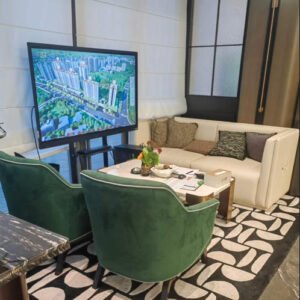
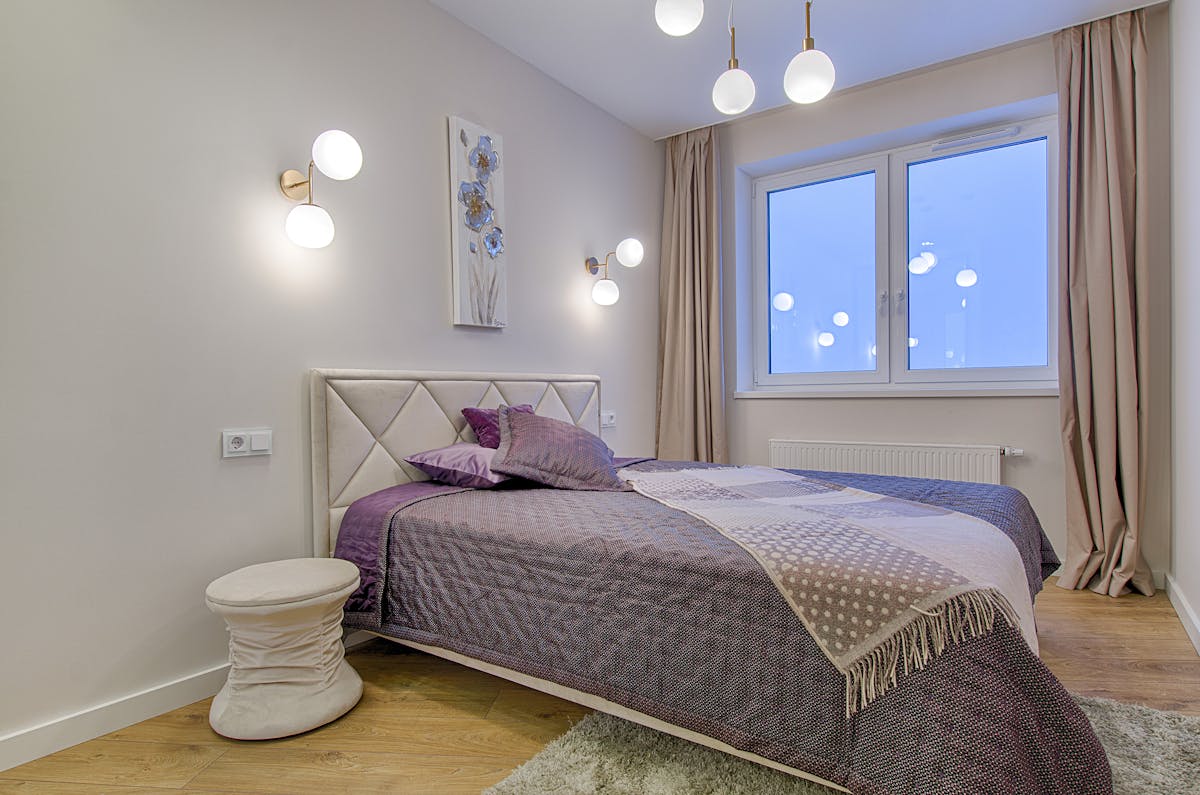
 The private label brand that belongs in this room was built through a process — not a purchase order. Source: Pexels
Glossary of Key Terms
| Término | Definition |
|---|---|
| Private Label / White Label | Furniture produced by a manufacturer to your specification and branding; the manufacturer is not disclosed to end clients |
| OEM | Original Equipment Manufacturer — produces to your design specification |
| ODM | Original Design Manufacturer — designs the product which you brand and sell |
| Cantidad mínima de pedido | Minimum Order Quantity — smallest order a manufacturer accepts per item |
| FOB | Free on Board — price to the origin port; buyer pays all costs from there |
| CIF | Cost, Insurance & Freight — seller covers freight and insurance to destination port |
| DDP | Delivered Duty Paid — seller covers all costs including import duty to your address |
| Landed Cost | Total cost of a product from factory to your client’s address, including FOB + freight + duty + customs + delivery |
| HNWI | High Net Worth Individual — individual with investable assets over $1M USD |
| Martindale Test | European fabric abrasion durability test — higher count = longer lifespan |
| ILD | Indentation Load Deflection — foam firmness measurement; higher number = firmer foam |
| AQL 2.5 | Acceptable Quality Level 2.5 — statistical sampling protocol for pre-shipment inspection |
| Fase 2 del CARB | California Air Resources Board formaldehyde standard for composite wood — mandatory for US market |
| FSC | Forest Stewardship Council — sustainable timber sourcing certification |
| GREENGUARD Gold | UL certification for low VOC emissions — required for LEED and many hospitality projects |
| Norma OEKO-TEX 100 | Certification verifying textiles are free from harmful substances — relevant for fabric upholstery |
| BIFMA | Business and Institutional Furniture Manufacturers Association — commercial furniture structural performance standards |
| EUDR | EU Deforestation Regulation — requires traceable timber documentation for EU-market furniture |
| FCL / LCL | Full Container Load / Less than Container Load — freight shipping modes |
| CBM | Cubic Metre — volume measurement unit for shipping |
| Prestige Pricing | Pricing strategy where premium pricing signals exclusivity and increases perceived desirability |
| NDA | Non-Disclosure Agreement — legal contract preventing the manufacturer from sharing or replicating your designs |
| LEED | Leadership in Energy and Environmental Design — green building certification system affecting furniture specification |
| COM | Customer’s Own Material — designer supplies the fabric; manufacturer upholsters to order |
Preguntas frecuentes
1. How do I start a private label furniture brand without design experience?
Partner with an industrial designer or interior design studio to develop the initial collection concept and technical drawings. Many manufacturers — including those in the Foshan luxury segment — offer in-house design support under a co-development model, where you provide the design brief, reference images, and material preferences, and their technical team develops the production-ready drawings under your brand ownership through an NDA. The key is retaining IP ownership of what is created, not whether you drew it yourself. Budget $2,000–$8,000 for external designer fees per piece for full bespoke development, or $0–$1,500 per piece for manufacturer co-development, depending on complexity. Start with 6–8 pieces rather than a full 20-piece collection — enough to demonstrate a coherent design language without spreading your development budget too thin.
2. What are the minimum order quantities for high-end private label furniture?
MOQs in the luxury segment are significantly lower than most buyers expect. For artisanal bespoke pieces from Italian or Indonesian workshops, MOQs can be as low as 1–10 units at premium pricing. For China-based luxury manufacturers operating at the private label level — including Muebles Jade Ant — MOQs for fully custom pieces typically start at 1–5 units per design, rising to 10–50 units for production-optimized runs. For modular or standardized components within a custom collection, MOQs of 20–50 units allow cost-efficient production without inventory excess. Always negotiate MOQs as part of the relationship structure — a manufacturer who wants your long-term private label business will work with realistic volumes, particularly on a first collection.
3. How can I ensure the quality matches luxury standards when manufacturing overseas?
Specify in writing, inspect at every stage, and never rely on trust alone. The practical framework: document every material specification (timber species, foam density with ILD rating, fabric Martindale rating, finish sheen level by 60° gloss measurement) before production begins; commission an independent pre-production material inspection before cutting starts; conduct an in-process frame inspection at the assembly stage; and use a third-party pre-shipment inspection (per AQL 2.5 protocol) before loading. For the first order from any new manufacturer, commission the pre-shipment inspection at 100% coverage — not the statistical sample — to establish baseline quality data. Use SGS or Bureau Veritas for independent inspections. The cost is $300–$600 per inspection day and is the single best investment in a new manufacturing relationship.
4. Is it possible to private label furniture from Italian or German manufacturers as a small brand?
Yes — but your entry strategy needs to match the manufacturer’s business model. Italian workshops in Brianza, Tuscany, and the Veneto typically accept private label briefs from buyers with a clear design concept, a realistic project pipeline, and a willingness to pay a premium for the provenance story. MOQs can be as low as 10–20 pieces for bespoke workshop production, though per-unit costs are multiples of equivalent Asian production. The business case is strongest when Italian provenance is a core brand positioning element — “handcrafted in Brianza” commands a price premium in certain market segments that is worth more than the additional production cost. For brands where the design story matters more than the country-of-origin story, equivalent quality at significantly lower cost is available through luxury-segment Chinese manufacturers.
5. How do I protect my designs from being copied by manufacturers?
A layered protection approach is the most effective. First, register your designs formally in your primary markets before sharing specifications with any manufacturer — EU Community Registered Design, UK Registered Design, or US Design Patent depending on your market. Second, execute a manufacturer NDA that names the specific designs, prohibits third-party production, and specifies the dispute resolution jurisdiction. Third, limit technical drawing release to production-stage necessity — don’t share the full specification package upfront. Fourth, build in contractual auditing rights: the right to inspect the manufacturer’s production records to verify that your designs are not being produced for other clients. No single measure provides complete protection, but the combination materially raises the cost and risk of design theft for a manufacturer, which is the practical deterrent. More detail on furniture IP protection is available through Harness IP’s published guide.
6. What is the typical lead time for custom high-end furniture production and shipping?
From design-approved status (final drawings signed off, materials confirmed, NDA executed) to delivery at your client’s address: 16–24 weeks is the realistic planning figure for fully custom pieces from Asian manufacturers, including ocean freight and customs clearance. The breakdown: design finalization and technical drawing 2–4 weeks; pre-production sample 3–5 weeks; mass production 8–12 weeks; pre-shipment inspection 1 week; ocean freight to US West Coast 2–3 weeks; customs clearance and last-mile 1–2 weeks. For Italian production, add 4–6 weeks to the production phase. For urgent projects, air freight reduces the shipping phase to 5–8 days at 5–8× the cost. Always build a 3-week contingency beyond the manufacturer’s quoted timeline — freight delays, customs holds, and re-inspection requirements happen on real projects.
7. How should I price my private label furniture for hotels and developers?
Price from landed cost, not FOB. Build your pricing model using the full landed cost formula — FOB + freight + insurance + duty + customs clearance + last-mile + installation. Apply your target gross margin (60–70% for luxury private label at scale) against landed cost, not against FOB. For hotel and developer projects, offer a tiered structure: list price for single-property orders; project pricing (10–15% below list) for multi-room hotel packages above a defined unit threshold; and strategic partnership pricing (15–25% below list) for multi-property developers committing to annual volume. Include the value-added services — CAD drawings, sample lending, project management, installation support — as part of the project pricing package rather than unbundling them as additional costs. Hospitality procurement teams have seen too many proposals where the attractive unit price was surrounded by add-on fees that eroded the apparent advantage.
8. Can I customize packaging and branding for client deliveries?
Yes — and for the luxury segment, you should. Custom packaging is not a cosmetic extra. It communicates that the furniture inside was designed to be treated differently. The elements that matter: branded outer carton with your logo and product name (not the manufacturer’s); individual piece wrapping in material appropriate to the finish (wool felt or PE foam for lacquered pieces; cotton muslin for fabric upholstery); a certificate of authenticity or provenance card for bespoke pieces; and care and maintenance instructions specific to the materials used. For ultra-luxury villa deliveries, custom timber crates with branded stenciling and satin-lined interior packaging create an unboxing experience that clients photograph and share. Budget $15–$80 per piece for custom packaging depending on complexity, and build this cost into your landed cost model.
9. What certifications should I look for in a luxury furniture manufacturer?
The minimum certification set for an international luxury furniture manufacturer: ISO 9001:2015 (quality management — verify the certificate number through the issuing body); Cadena de custodia del FSC (sustainable timber — verify at info.fsc.org); Fase 2 del CARB (formaldehyde emissions from composite wood — mandatory for US market, verify the Third-Party Certifier letter); and Norma OEKO-TEX 100 (harmful substance testing for fabrics and leathers — verify at oeko-tex.com). For US hospitality projects, also require CAL 117-2013 for upholstery fire safety. For LEED-targeted developments, require GREENGUARD Gold documentation. Verify all certifications through the issuing body — not through PDF copies provided by the manufacturer. Fake certificates exist; verification takes two minutes and protects your project approval and your brand reputation.
10. How do I compete with established luxury furniture brands?
The established luxury brands compete on heritage, brand recognition, and distribution network. Your private label brand competes on three things they structurally cannot offer: exclusivity (your clients cannot see your furniture in a competitor’s hotel across the street), customization responsiveness (you can accommodate a specific dimension, a specific COM fabric, a specific finish that the established brand’s catalogue structure does not allow), and specification speed (a private label brand run by professionals who know their clients and their manufacturer can take a brief from client conversation to production drawing in days, not weeks). Target the segments where exclusivity, customization depth, and speed-of-specification matter most — boutique hotels, villa projects, branded residences — and where the established luxury brand’s minimum order, catalogue constraints, and 12–20 week lead times create friction that your operation can eliminate.
11. Do I need my own warehouse for inventory, or can I use drop-shipping?
For high-end private label furniture, drop-shipping from manufacturer to client is rarely appropriate. Luxury clients expect the furniture to be inspected, staged, and delivered in perfect condition — which requires a receiving and staging step between manufacturer and client. The practical options: use a regional 3PL (third-party logistics) provider with white-glove furniture handling capability in your primary market, specifying their receiving, inspection, staging, and delivery protocol in your service agreement; partner with a furniture installation company that offers receiving warehouse services; or, for clients with large ongoing project volume, operate your own receiving and staging facility. Build regional warehousing into your pricing model as a cost component — and present it to clients as a service component (“white-glove delivery and installation included”) rather than a fee item.
12. How can interior designers and architects be leveraged to sell my brand?
Structure a designer trade programme with clear, competitive terms and genuine specification support — not just a discount. The elements that make a trade programme worth specifying into: a 30–40% trade discount from list price; dedicated trade account management with direct phone access; a sample lending programme (security deposit held, samples returned or purchased after 30 days); full specification documentation (CAD drawings, BIM objects, material specifications with certification documentation, care guides); access to new collection previews before public launch; and an optional project commission structure (3–5% of net project value for projects where your brand is exclusively specified). The trade discount benchmark for interior designers in the luxury segment is 30–50% off retail — ensure your programme is in this range to be considered competitive. The designers who find your programme useful will specify your brand in every applicable project — creating a sales channel that operates without a sales team.
13. What are the biggest risks in private labeling luxury furniture?
Quality inconsistency across batches: The most common failure mode — the second order doesn’t match the first. Mitigate with documented material specifications and retained reference samples from each approved batch. IP theft: A manufacturer who produces your designs for another client. Mitigate with formal IP registration, NDA, and technical drawing discipline. Supply chain delay on high-visibility projects: A furniture delivery that arrives after a hotel opening or villa handover. Mitigate with realistic lead time planning, production milestone tracking, and contractual delay penalties. Brand mispositioning: Pricing inconsistency, quality inconsistency, or design drift that confuses your target clients about what your brand stands for. Mitigate with the brand DNA decision filter, maintained rigorously across every collection and every commercial decision. Cash flow strain: Custom production requires 30–50% deposit before production starts and 50–70% balance before delivery — before the client has paid you. Mitigate with project deposit terms that align your incoming and outgoing cash flows, and with a credit facility that covers the production-to-payment gap for large projects.
14. Can I private label outdoor or contract-grade furniture for villas and hotels?
Yes — and this is a strong growth segment. Outdoor furniture for luxury hospitality — pool decking, terrace seating, garden and courtyard pieces — requires specific material and construction standards: weather-resistant frames (powder-coated aluminium, marine-grade stainless steel, or teak), UV-stable solution-dyed acrylic fabrics (Sunbrella is the industry reference), and drainage holes in seat cushion construction. For commercial hospitality use, outdoor furniture should meet BIFMA structural standards and, for US hotel projects, fire code requirements for outdoor furniture materials. BIFMA publishes the relevant standards for commercial outdoor furniture. Indonesia (Jepara teak), China (aluminium frame, Foshan), and Turkey (design-integrated outdoor collections) are the primary manufacturing sources for luxury outdoor furniture at scale. The certification and QC framework is the same as for indoor contract furniture — specify by material, test by certification, inspect by stage.
15. How do I handle after-sales service and warranty claims internationally?
Establish your after-sales protocol before the first product ships, not after the first claim arrives. The structure: define warranty terms explicitly in your client contract (frame structure: 3–5 years; upholstery: 1–3 years; finish: 1–2 years with documented maintenance compliance); specify the defect reporting process (written claim with photographs, within 30 days of delivery); document your response timeline commitment (acknowledgement within 3 business days, resolution timeline confirmed within 10); establish with your manufacturer how warranty replacement pieces will be produced and shipped, and who bears the cost for manufacturing defects versus client-caused damage; for international clients in markets where you do not have a local presence, identify and retain a furniture restoration and installation partner who can attend to in-country warranty claims on your behalf. A well-documented after-sales process, presented proactively to hotel and developer clients before they ask, is a competitive advantage — most private label brands have not thought this through, and clients who have been burned by poor after-sales service from previous suppliers will make it a decision factor.