Actionable steps for sourcing furniture from China in 2026 — how to work efficiently with Chinese furniture suppliers, ensure quality, and manage smooth logistics from factory floor to your doorstep.
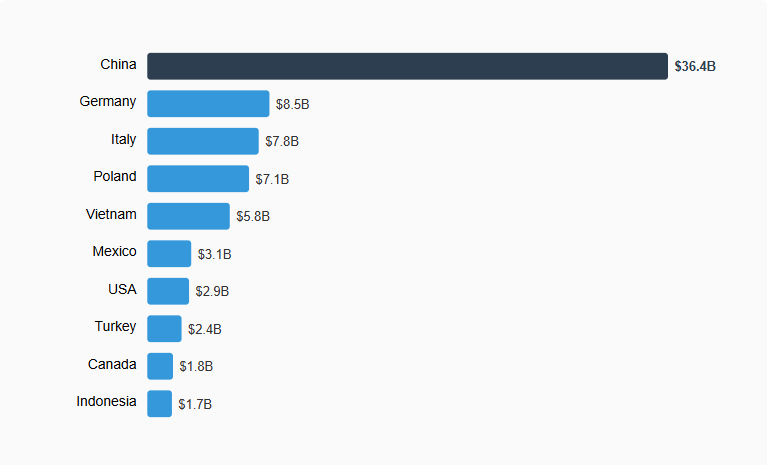
China shipped $36.4 billion in furniture to buyers across six continents in 2024 — more than Germany ($8.5B), Italy ($7.8B), and Poland ($7.1B) combined. According to استخبارات موردور, the Chinese furniture market reached 169.23 مليار دولار أمريكي في عام 2026 and is projected to hit USD 220.17 billion by 2031 at a CAGR of 5.42%. The production side accounts for roughly 39% of the world’s furniture output, and the country’s export share stood at 30.8% of global furniture trade in 2025 according to the مرصد التعقيد الاقتصادي.
Those numbers represent real infrastructure — 7,000+ factories in Foshan alone, decade-long supply chain optimization, and a logistics network connected to seven of the world’s ten busiest container ports. This guide provides the operational framework for international buyers looking to tap into that infrastructure effectively: from understanding the current market and regulatory environment, to finding and verifying suppliers, negotiating terms, managing quality, and handling the shipping logistics that get your furniture from a factory in Guangdong to a warehouse in Dallas or a showroom in Dubai.
Market Advantages
The question is no longer whether to source from China — it is how to do it well under 2026 conditions. China’s position as the world’s largest furniture manufacturer rests on structural advantages that no competing country has yet replicated at comparable scale.
Consider what a single Chinese furniture cluster delivers. Foshan’s Longjiang district alone houses upholstery foam molders, hardwood kilns, CNC routing centers, powder-coating lines, and logistics companies within a 20-km radius. When أثاث النمل اليشم produces a walnut dining set for a hospitality client in the Middle East, the timber goes from kiln to joinery to finishing to packing within one controlled ecosystem — reducing lead time from design confirmation to container loading to as few as 35 days. That kind of integration does not exist in fragmented manufacturing regions where the frame maker, upholsterer, and finisher operate in three different cities.
According to a compiled survey of 1,200 international furniture importers (sourced from Horegener’s 2025 market report و China Briefing), the top factors driving sourcing decisions break down as follows:
Why Global Buyers Choose Chinese Furniture Suppliers (2025–2026 Survey, N=1,200)
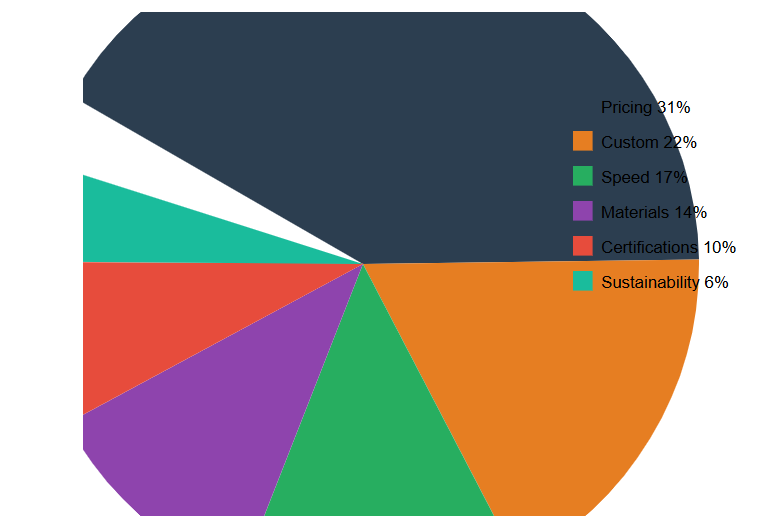
Source: Compiled from Horegener Market Report 2025 and China Briefing 2026
Pricing remains the leading factor, but it accounts for less than a third of decisions. Customization capability — the ability to produce an OEM hotel-room package or an ODM retail line to spec — is the second-strongest driver, reflecting a market where “cheap generic” is no longer the default expectation from Chinese suppliers.
Industry Trends
Several shifts are reshaping what “sourcing from China” looks like in 2026. Japandi and minimalist aesthetics continue to dominate global design demand, but smart furniture (embedded wireless charging, motorized adjustable desks, IoT-connected bedroom sets) is emerging as a fast-growth category. According to Business Research Insights, the integration of technology into furniture design has become a dominant market trend driving production innovation in Chinese factories.
Sustainability has moved from optional to expected. The China International Furniture Fair (CIFF) 2026 reports that over 20% of global furniture retail is now conducted through online platforms, accelerating the need for Chinese manufacturers to maintain digital catalogs, offer virtual showroom tours, and accommodate smaller MOQs for e-commerce brands.
Meanwhile, tariff volatility is the reality American buyers must plan around. Section 232 tariffs currently impose a 25% duty on upholstered wood furniture imported into the US. The originally planned increase to 30% (effective January 1, 2026) was delayed by one year, keeping the 25% rate in place through 2026 — but with increases to 30% for upholstered furniture and 50% for kitchen cabinets/vanities still scheduled for January 2027.
Custom Furniture Sourcing Needs
Define Product Requirements
Before contacting a single supplier, document every specification that defines your product. This step prevents the most expensive mistakes in furniture sourcing — miscommunication that leads to re-production. A complete product requirements document should include overall dimensions (length × width × height in millimeters, not inches — Chinese factories work in metric), material specifications (e.g., “kiln-dried North American white oak, 8% moisture content, A-grade”), finish details (color codes using Pantone or RAL systems, sheen level, coating type), hardware specs (brand, model number, finish), upholstery requirements (fabric weight in GSM, Martindale abrasion rating, fire-retardancy standard), and packing instructions (flat-pack vs. assembled, carton specifications, inner foam protection).
Buyers working with Jade Ant furniture’s custom production process will see this formalized into a technical drawing package — exterior materials, interior materials (shelf panels, drawer bottoms), and finishing specifications are documented before any production begins. This front-loading of detail is not bureaucracy; it is cost control.
خيارات التخصيص
Chinese furniture manufacturers operate on two models. OEM (Original Equipment Manufacturing) means you supply the design; the factory produces it to your specifications. ODM (Original Design Manufacturing) means the factory provides existing designs that you can modify and rebrand. Most mid-tier Chinese suppliers offer both, but the economics differ. OEM orders typically require higher MOQs (50–200 pieces per SKU) because tooling and jigs must be created. ODM orders can start as low as 10–20 pieces because the production setup already exists.
Customization extends beyond aesthetics. Structural modifications — reinforced frames for commercial-grade durability, modular connection systems for hospitality FF&E, or modified dimensions for specific market ergonomics (lower seat heights for Middle Eastern markets, wider frames for US market preferences) — are routinely handled by factories in the Pearl River Delta cluster. The key is communicating these needs during the RFQ stage, not after sampling.
Quality Standards
Different destination markets impose different compliance requirements. US-bound furniture must meet EPA TSCA Title VI formaldehyde emission standards (which replaced CARB Phase 2 as the federal benchmark). EU-bound products require REACH compliance for chemical content and the General Product Safety Regulation. Australian imports need compliance with AS/NZS standards for specific furniture categories. Commercial furniture sold into the US contract market should carry BIFMA certification for safety and durability.
Specify the applicable standards in your initial inquiry. A factory that responds with “yes we have all certifications” without asking which specific standards you need is a red flag — it suggests unfamiliarity with the actual compliance landscape.
Quality Standards Reference Table by Destination Market
| Destination Market | Required Standard | Covers | Verification Method |
|---|---|---|---|
| الولايات المتحدة الأمريكية | الباب السادس من قانون TSCA لوكالة حماية البيئة الأمريكية | Formaldehyde emissions from composite wood | EPA TSCA database lookup |
| الولايات المتحدة الأمريكية | BIFMA X5.1 / X5.5 | Commercial office/lounge seating durability & safety | BIFMA member directory |
| الاتحاد الأوروبي | REACH Regulation (EC 1907/2006) | المواد الكيميائية في المنتجات | ECHA SCIP database |
| الاتحاد الأوروبي | EN 12520 / EN 1725 | Seating strength & durability / Table stability | Accredited EU lab test report |
| Australia / New Zealand | AS/NZS 4688 (office) / AS 4684 (outdoor) | Furniture safety and performance | NATA-accredited lab |
| Global (Sustainability) | FSC Chain of Custody | Sustainable timber sourcing | FSC certificate database |
| Global (Emissions) | GREENGUARD Gold | Low VOC emissions for indoor air quality | UL SPOT database |
| China Domestic | GB 18584-18584-2024 | Indoor furniture formaldehyde & VOC limits | CNCA certification database |
Source: EPA, ECHA, Standards Australia, FSC, UL

How to Find Chinese Furniture Suppliers
Online Platforms & Directories
Start your supplier search digitally, but treat online platforms as lead-generation tools rather than your final decision layer. The three major B2B platforms for Chinese furniture sourcing are علي بابا, Made-in-China, و Global Sources. Each has its strengths: Alibaba offers the largest supplier pool with Trade Assurance payment protection; Made-in-China features more detailed factory audit reports; and Global Sources tends to attract mid-to-high-end manufacturers who exhibit at its Hong Kong trade shows.
When filtering results, prioritize suppliers showing actual workshop photos (CNC machines with visible sawdust, partially assembled frames, packing stations) over polished showroom images. Look for “Verified Supplier” badges backed by third-party audit reports, not just membership payments. Check the supplier’s trade history: a factory with 8 years of export records shipping to 40+ countries presents lower risk than one with 2 years and 5 buyers.
Industry-specific directories also have value. The Furniture China exhibition database, the CIFF exhibitor catalog, and the معرض كانتون supplier list give you access to factories that have invested in trade-show presence — a signal of export capability and marketing maturity.
Visiting Furniture Markets
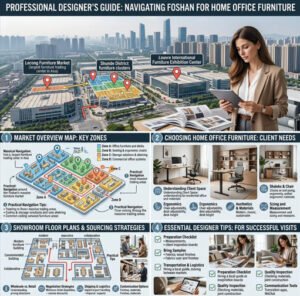
Nothing replaces walking a production floor. For the Pearl River Delta cluster — where most luxury and mid-range residential furniture is made — fly into Guangzhou Baiyun International Airport. Foshan is a 30-minute metro ride away. The Lecong International Furniture Mall and Louvre International Furniture Exhibition Center together form the world’s largest furniture wholesale complex: a 5-kilometer stretch of showrooms where more than 200 global brands source annually.
Longjiang, adjacent to Lecong in Foshan’s Shunde District, is China’s “Sofa Capital” — home to over 7,000 factories and 26,000+ brands according to a detailed 2026 sourcing guide. For office furniture, Anji County in Zhejiang Province produces an estimated one-third of the world’s office chairs. For solid wood at budget price points, Nankang in Jiangxi Province houses 6,500+ registered producers.
China’s expanded visa-free travel policies in 2025–2026 allow citizens of many countries 15–30 day stays, and 144-hour transit-without-visa applies specifically in Guangdong and Zhejiang — the two provinces where most furniture factories operate.
Watch: A Tour of China’s Furniture Markets and Sourcing Process
Video: A walkthrough of Foshan’s furniture markets and factory sourcing process.
Supplier Verification
Verification is not optional — it is the single highest-ROI activity in your sourcing process. A 2025 investigation by China Checkup found that roughly 12% of sampled supplier certificates contained discrepancies when cross-checked against issuing bodies. Follow these five verification steps before placing any deposit:
Step 1: Request the factory’s business license and enter the company name or Unified Social Credit Identifier (USCI) into China’s National Enterprise Credit Information Publicity System (NECIPS). This confirms the company is legally registered, shows its registered capital, and reveals any legal disputes or sanctions.
Step 2: Ask for PDF copies of all claimed certifications (ISO 9001, FSC, CARB/EPA TSCA, etc.) and verify the certificate numbers directly with the issuing body. Do not accept screenshots or “we’ll send the certificate after you place the order.”
Step 3: Commission a factory audit through a third-party firm such as SGS, بيرو فيريتاس, أو V-Trust. These audits cost between $300–$600 and cover production capacity verification, quality management assessment, and social compliance screening.
Step 4: Request references from the factory’s existing international clients — specifically buyers in your same market segment. A factory excelling at budget flat-pack production may be a poor match for a hospitality FF&E project requiring hand-applied finishes.
Step 5: Check export records through import-export data platforms like ImportGenius or Panjiva to verify that the factory has actual shipping history to your target market.
Communication & Negotiation with Suppliers
Effective Communication
Clear communication with Chinese furniture suppliers saves more money than aggressive negotiation. The most common source of production errors is not dishonesty — it is ambiguity in specifications that gets interpreted differently by the factory. Write everything in numbered, specific items rather than narrative paragraphs. Instead of “we need a dark finish on the table,” specify “RAL 8017 Chocolate Brown, semi-matte sheen (30–40 gloss units), 2-coat polyurethane, measured per ASTM D523.” The more precise your language, the less room exists for interpretation gaps.
WeChat is the primary communication tool for Chinese business. Email works for formal documentation, but real-time decisions happen on WeChat. Set up a business WeChat account before your first supplier outreach. Include your sourcing manager, the factory’s sales contact, and their production manager in a single group chat so that technical questions get answered directly rather than passing through a non-technical sales intermediary.
Use visual communication aggressively. Annotated photos, 3D renders with dimension callouts, material swatch references with codes — these communicate more clearly across language barriers than paragraphs of text. When أثاث النمل اليشم onboards a new client, the process begins with design drawings that include exploded views of joinery, material legends, and finishing specifications — a practice that eliminates 80–90% of production misunderstandings before they occur.
Cultural Insights
Chinese business culture operates on relationship (“guanxi”) dynamics that affect everything from pricing transparency to production priority. A factory juggling 15 active orders will prioritize the client whose representative visited the factory, shared a meal with the owner, and maintained consistent WeChat communication over the client who communicated only through terse purchase orders. This is not a judgment on business efficiency — it is a reality that affects your delivery timeline.
Directness about problems is appreciated when it comes with proposed solutions rather than blame. If a sample falls short of specifications, respond with “the seat height measures 445mm versus the specified 430mm — please adjust and re-sample” rather than “this is unacceptable quality.” The former triggers a corrective action; the latter triggers a defensive reaction that slows resolution.
Negotiating Terms
Price negotiation in Chinese furniture sourcing operates within a narrower band than most buyers expect. Factory margins on furniture typically run 8–15% on FOB pricing. Demanding a 30% discount signals ignorance of cost structures and can push the factory to cut corners on hidden costs — thinner plywood panels, lower-density foam, or substituted hardware — rather than honestly saying the price cannot go that low.
More productive levers include volume commitments (guaranteeing 2–4 container loads per quarter in exchange for 5–8% better pricing), payment term flexibility (offering 50% upfront instead of the standard 30/70 split in exchange for a price reduction), and specification optimization (switching from solid wood to engineered wood veneers on non-visible surfaces, which can cut material costs 15–25% without affecting the product’s visual or structural quality).
Always negotiate on an EXW or FOB basis so that shipping costs — which you can optimize separately — don’t obscure the factory’s actual product pricing.
Sampling and Quality Checks
Ordering Samples
Order production samples, not showroom pieces. A sample pulled from the production line tells you what 10,000 units will look like; a showroom piece tells you what the marketing team wants you to see. Expect to pay $50–$300 for sample production, typically refundable against the first bulk order. Shipping a sample chair from China to the US via air courier costs approximately $80–$150 depending on dimensional weight.
When evaluating samples, apply systematic inspection rather than subjective impression. Measure every dimension against the specification sheet. Test drawer slides through 25,000 open/close cycles (the BIFMA standard for residential). Apply a 100 kg static load to chairs for 10 minutes and check for deflection. Open and close doors/drawers 50 times in rapid succession and listen for binding, squeaking, or looseness. These are objective tests that reveal production quality far more reliably than visual inspection alone.
Setting Quality Benchmarks
Formalize your quality expectations using an AQL (Acceptable Quality Level) framework. For furniture, an AQL of 1.5 for critical defects (structural failure, safety hazards), 2.5 for major defects (visible cosmetic flaws, incorrect dimensions), and 4.0 for minor defects (slight color variation, minor surface imperfections) is standard industry practice. Write these into your purchase agreement so that the factory understands the acceptance criteria before production starts.
Create a visual defect classification guide — a document with photos showing “acceptable” versus “not acceptable” examples for common issues like wood grain inconsistency, stitch alignment, weld quality, and finish uniformity. This document becomes the shared reference point during inspection.
Third-Party Inspections
Third-party pre-shipment inspections are the most cost-effective quality assurance tool available to furniture importers. Companies like AQI Service, Asia Quality Focus, SGS, و V-Trust charge between $149–$320 per man-day for on-site furniture inspections in China.
Schedule inspections at three stages: a pre-production inspection (verifying raw materials and components before manufacturing begins), an in-line inspection (checking work-in-progress at approximately 30–40% production completion), and a pre-shipment inspection (final AQL sampling after production and packing are complete). The pre-shipment inspection alone catches issues that would otherwise arrive at your warehouse — but the earlier inspections catch problems when they can still be fixed without scrapping entire production runs.
Contracts, Payment, and Compliance
Secure Contracts
A purchase agreement with a Chinese furniture supplier should be governed by clearly defined terms and written in both English and Chinese to ensure enforceability. The contract should specify product specifications (referencing the technical drawing package as an appendix), pricing terms (EXW, FOB, or CIF with named port), payment schedule and method, production timeline with milestone dates, quality standards and AQL levels, inspection rights and timing, packaging and labeling requirements, warranty terms, and dispute resolution mechanism.
For dispute resolution, many experienced importers specify arbitration under the Hong Kong International Arbitration Centre (HKIAC) rules — a neutral venue that both Chinese and international parties tend to accept, with decisions enforceable in mainland China under existing bilateral agreements.
Payment Methods
The standard payment structure for furniture orders from China is 30% deposit via T/T (telegraphic transfer) upon order confirmation and 70% balance payment against copy of the bill of lading or before container loading. For first-time orders with unverified suppliers, consider using Alibaba Trade Assurance or a Letter of Credit (L/C) through your bank for additional protection.
Letters of Credit add 1–3% to your total cost in bank fees but provide the strongest protection for large orders ($50,000+) because payment is released only when the factory presents shipping documents that match the L/C terms exactly. For established supplier relationships where trust has been built over multiple successful orders, T/T becomes the more cost-effective option.
Payment Methods Comparison for China Furniture Sourcing
| Payment Method | Buyer Protection | Cost to Buyer | Speed | الأفضل لـ |
|---|---|---|---|---|
| T/T (30/70 Split) | Moderate — deposit at risk | $15–$50 wire fee | 1–3 business days | Established relationships |
| Letter of Credit (L/C) | High — bank-verified documents | 1–3% of order value | 5–10 business days | First orders, large value ($50K+) |
| Alibaba Trade Assurance | Moderate — platform mediation | 0% (included) | 1–2 business days | Small-to-mid orders via Alibaba |
| PayPal / Wise | Moderate — dispute resolution | 2–4% transaction fee | Instant to 1 day | Sample payments, small orders |
Regulatory Issues
Tariff compliance is not just about duty rates — it is about proper HS code classification, country-of-origin documentation, and anti-dumping duty awareness. For US imports, Chinese furniture primarily falls under HS chapter 94 (furniture, bedding, lamps). Upholstered wood furniture currently faces Section 232 tariffs of 25%, with kitchen cabinets and vanities at 25% (increases to 30% and 50% respectively postponed to January 2027 per a January 2026 White House proclamation).
Additionally, the US suspended the de minimis exemption for China effective May 2025 — shipments valued under $800 from China are no longer duty-free. This affects sample shipments and small-batch orders that previously cleared customs without duty assessment. Factor this into your cost calculations for prototyping phases.
For EU imports, ensure compliance with the EU Timber Regulation (EUTR) for wood-based products and the upcoming EU Deforestation Regulation (EUDR) that requires due diligence on the origin of timber used in products. Non-compliance can result in products being held at customs and financial penalties.
Overseeing Production & Problem Solving
Production Monitoring
Effective production oversight does not require you to be physically in the factory for the entire production cycle — but it does require structured check-ins at defined milestones. Establish a production timeline with the factory that includes raw material procurement completion, frame/structure assembly start, finishing application start, upholstery/assembly completion, QC inspection date, and packing/container loading date. Request photo or video updates at each milestone, and compare the updates against your specification documents.
For high-value or first-time orders, deploying a sourcing agent or third-party inspection firm for in-line monitoring adds $150–$300 per visit but can prevent issues that would cost $5,000–$50,000 to rectify after arrival. Companies like Jade Ant furniture manage this monitoring internally for their clients — providing photo documentation at each production stage as part of their standard workflow — but for factories without this embedded process, external oversight fills the gap.
Handling Delays
Production delays in Chinese furniture manufacturing are common enough that your planning should account for them. The typical causes include raw material shortages (especially imported hardwoods subject to seasonal availability), equipment downtime, labor shortages during Chinese New Year (expect 2–4 week shutdowns in January/February), and order volume spikes before major trade shows like Canton Fair.
Build a 2–3 week buffer into your delivery timeline, and negotiate a late-delivery penalty clause (typically 0.5–1% of order value per week of delay, capped at 5–10%) in your purchase agreement. This clause is not about punishing the factory — it is about creating financial incentive alignment around delivery commitments.
Issue Resolution
When production problems occur — and they will eventually occur, regardless of how strong your supplier relationship is — resolve them with documented specificity rather than emotional language. Send annotated photos identifying each defect with numbered references. Classify each issue using your agreed AQL framework (critical, major, minor). Propose a resolution: re-production, partial discount, or rework. Set a response deadline. This structured approach resolves issues faster than open-ended complaints because it gives the factory a clear framework for response and corrective action.
Shipping Logistics When You Source Furniture from China
Shipping Methods
Furniture is bulky, heavy, and fragile — a logistics combination that narrows your practical shipping options. Sea freight handles the vast majority of furniture shipments from China, with FCL (Full Container Load) being the most economical for orders filling 15 cubic meters or more.
Shipping Methods Comparison: China to USA (2026 Rates)
| الطريقة | Cost Range | Transit Time | الأفضل لـ | Capacity |
|---|---|---|---|---|
| Sea Freight — FCL (40′ container) | $3,500–$6,000/container | 15–35 days | Bulk orders, full collections | ~67 CBM / 26,000 kg max |
| Sea Freight — LCL | $50–$80/CBM | 20–40 days | Smaller shipments (<15 CBM) | Shared container |
| Air Freight | $5–$8/kg | 5–10 days | Urgent replacements, small high-value items | Limited by weight/volume |
| Express Courier (DHL/UPS) | $8–$12/kg | 3–5 days | Samples, spare parts | Up to ~150 kg practical limit |
المصدر: Freightos 2026, Maskura Logistics
A standard 40-foot high-cube container holds approximately 67 cubic meters. For context, that accommodates roughly 40–60 flat-packed dining tables, or 20–30 fully assembled sofas, or a mixed hotel-room furniture set for 10–15 rooms. FCL is almost always more cost-effective than LCL for orders above 15 CBM — the break-even point where per-CBM LCL charges exceed the per-container FCL rate.
Customs Clearance
US customs clearance for Chinese furniture requires several documents: a commercial invoice, packing list, bill of lading, HTS (Harmonized Tariff Schedule) code classification, ISF (Importer Security Filing) submitted 24 hours before vessel loading, and — for wood-based products — a Lacey Act declaration confirming the species and origin of wood used. Failure to file ISF results in a $5,000 penalty per container. Incorrect HTS classification can trigger customs holds and retroactive duty assessments.
Work with a licensed customs broker who specializes in furniture imports. The broker’s fee ($125–$250 per entry) is minimal relative to the cost of a misclassified shipment that draws a customs audit. For first-time importers, أثاث النمل اليشم handles customs declaration and shipping coordination as part of its value-added services — managing the paperwork chain from factory packing list through to bill of lading documentation.
Delivery Timelines
Total lead time from order placement to warehouse delivery spans 60–120 days depending on product complexity and destination. Here is how a typical timeline breaks down for a US-bound FCL shipment: production takes 30–60 days, pre-shipment inspection takes 1–3 days, container booking and loading takes 3–7 days, ocean transit (China to US West Coast) takes 14–18 days, customs clearance takes 3–7 days, and drayage/last-mile delivery to your warehouse takes 2–5 days. Total: approximately 55–100 days from production start. Adding 2–3 weeks of buffer for unexpected delays puts you at 75–120 days as a planning range.
For projects with fixed deadlines — hotel openings, retail launch dates, residential move-ins — start the sourcing process at least 5–6 months before the delivery deadline. This buffer accommodates sampling (2–4 weeks), sample revisions (1–2 weeks), production (4–8 weeks), and shipping (3–5 weeks), with residual time for the inevitable minor delays.
Building Supplier Relationships
Trust & Loyalty
Long-term supplier relationships in China compound in value over time. A factory that has produced 10 orders for you understands your quality tolerances, preferred communication style, and market requirements without re-explanation. This institutional knowledge translates to fewer production errors, faster lead times (your orders get prioritized in the production schedule), and better pricing (the factory invests less sales and onboarding overhead per order).
Build this relationship through consistency: regular order flow (even small maintenance orders between major purchases), prompt payment against agreed terms, fair treatment when defects occur (allowing reasonable rework rather than demanding full financial penalties for minor issues), and periodic factory visits that demonstrate your investment in the partnership.
One client of أثاث النمل اليشم, a Dubai-based interior design firm, shared that after two years of consistent ordering, their per-unit cost dropped 12% from initial pricing — not through aggressive renegotiation but through the factory’s growing efficiency in producing their preferred styles and specifications. The factory allocated a dedicated production line to their recurring orders, reducing setup time and error rates simultaneously.
Continuous Improvement
Treat your supplier as a manufacturing partner, not a commodity vendor. Share end-customer feedback — both positive and negative — so the factory understands how its products perform in your market. If customers report that a drawer mechanism feels loose after 6 months of use, relay that feedback with specific data so the factory can upgrade the slide mechanism on subsequent orders.
Invite your supplier to propose improvements. Chinese factories often have engineering capabilities that buyers underutilize. A Foshan factory producing dining chairs might suggest a joint-reinforcement modification that adds $0.50 to unit cost but reduces warranty claims by 40% — the kind of value-engineering that only happens when the relationship includes open technical dialogue.
Common Challenges & Solutions
Language Barriers
English proficiency varies significantly among Chinese furniture suppliers. Sales staff at export-oriented factories in Foshan and Dongguan typically communicate well enough for commercial discussions, but technical conversations about materials science, finishing chemistry, or structural engineering often require a translator or bilingual sourcing agent. For critical specifications, have all documents translated into Mandarin Chinese by a professional translator — the $200–$500 cost for translating a specification package is negligible compared to the cost of a production error caused by language misunderstanding.
Quality Issues
The most common quality complaints in Chinese furniture imports — in order of frequency — are finish inconsistency (color variation between pieces in the same order), dimensional inaccuracy (pieces measuring outside tolerance), material substitution (lower-grade wood or thinner veneers than specified), hardware failure (hinges, slides, or connectors failing under normal use), and packaging damage (inadequate protection during container transit). Each of these is preventable through the specification, sampling, and inspection protocols described earlier. The buyers who experience persistent quality issues are overwhelmingly those who skipped pre-production specification documentation or pre-shipment inspection — the two most impactful quality control interventions.
Logistics Problems
Container availability fluctuations, port congestion, and routing changes can affect delivery timelines even after your furniture leaves the factory. In 2025–2026, shipping rates from China to the US have stabilized compared to the extreme volatility of 2021–2022, but seasonal peaks (August–October pre-holiday shipping) and geopolitical disruptions still create periodic capacity tightness. Mitigate this by booking containers 2–3 weeks before planned loading dates, maintaining relationships with 2–3 freight forwarders for competitive rate options, and considering mixed-port strategies (e.g., splitting a large order between Yantian and Nansha to reduce single-port congestion risk).
Pro Tips for Sourcing Furniture from China in 2026
New Technologies
Adopt digital tools that Chinese suppliers increasingly support. 3D product configurators allow you to modify furniture designs and see photorealistic renders before sampling — reducing the sample iteration cycle from 3 rounds to 1. Virtual factory tours via live video walk-throughs have become standard practice since 2020, allowing initial supplier assessment without travel. AR-based quality inspection tools let your local team overlay CAD models onto received products to detect dimensional deviations instantly.
Regulatory Updates
Stay current on tariff changes through reliable trackers like the Tax Foundation’s Tariff Tracker و China Briefing’s tariff database. Subscribe to updates from your customs broker and from organizations like the American Home Furnishings Alliance (AHFA) that track regulation changes affecting furniture imports specifically.
Market Trends
The three design movements driving the highest order volumes from Chinese factories in 2026 are Japandi minimalism (clean lines, natural materials, neutral palettes), smart furniture integration (embedded charging, motorized mechanisms, app-connected lighting), and sustainable luxury (reclaimed wood, bio-based materials, visible joinery that celebrates craft). Chinese manufacturers — particularly those in the Pearl River Delta — have proven agile at adapting to these trends because the cluster’s supplier network can source trend-specific materials (bamboo composites, recycled aluminum, FSC-certified oak) without the long lead times that manufacturers in less concentrated regions face.
Typical Cost Breakdown: Importing a $10,000 Furniture Order from China to USA
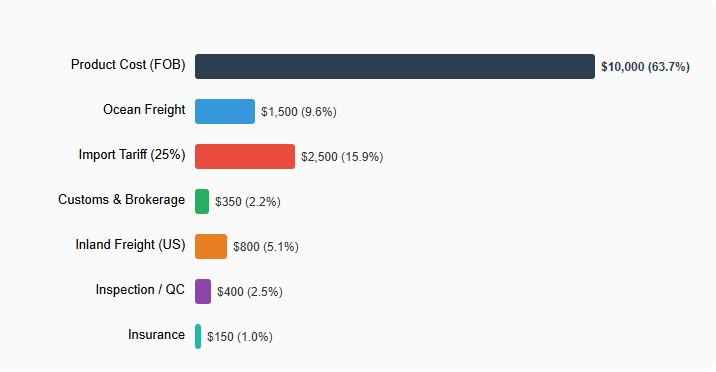 Note: Figures are illustrative based on 2026 average rates for a 40′ FCL shipment to US West Coast. Actual costs vary by product category, tariff classification, and shipping route.
Watch: How to Import Furniture from China — Step-by-Step Process
Video: Expert walkthrough of the furniture import process from China, including supplier selection and logistics.
Sourcing furniture from China in 2026 remains the most viable path to achieving the combination of scale, customization, and cost-efficiency that global markets demand — but the margin for error has narrowed. Tariffs are higher than five years ago. Supply chains are more complex. Quality expectations from end consumers continue to rise. The importers who succeed are those who invest in preparation: thorough specification documentation, systematic supplier verification, structured quality inspection protocols, and long-term relationship building with manufacturing partners.
The playbook is clear. Define your product requirements with engineering precision before contacting a single factory. Verify every claim — certifications, production capacity, export history — through independent channels. Use third-party inspection at every production stage where catching a defect saves more than the inspection costs. Build relationships that compound in value over time by being a consistent, fair, and communicative partner.
Companies like أثاث النمل اليشم represent the caliber of Chinese manufacturer that makes this process work — offering the combination of custom design capability, quality control infrastructure, and end-to-end logistics management that reduces the friction between your vision and the finished product arriving at your door. Whether you are furnishing a 200-room hotel, launching a DTC furniture brand, or outfitting a portfolio of luxury residential projects, the Chinese manufacturing ecosystem has the depth and sophistication to deliver — if you approach it with the right preparation, the right partners, and the right expectations.
Your next step: start with a detailed specification sheet for your first product, shortlist 3–5 suppliers using the verification framework above, and request samples. The journey from first inquiry to first container typically takes 4–6 months — so if you are planning for a Q3 or Q4 2026 delivery, the time to start is now.
الأسئلة الشائعة (FAQ)
1. What is the minimum order quantity (MOQ) when sourcing furniture from China?
MOQ varies by factory and product type. Large-volume factories producing standardized furniture may require 100–500 pieces per SKU. However, many mid-tier custom manufacturers — including أثاث النمل اليشم — accept MOQs as low as 1 piece per design for custom orders, making Chinese sourcing accessible even for boutique retailers and residential projects.
2. How much does it cost to import furniture from China to the USA in 2026?
Total landed cost includes the FOB product price, ocean freight ($3,500–$6,000 per 40′ container to the US West Coast), import tariffs (currently 25% on upholstered wood furniture under Section 232), customs brokerage fees ($125–$250), and inland freight to your warehouse. As a rough benchmark, landed cost in the US is approximately 140–160% of the FOB factory price after accounting for all duties, shipping, and handling fees.
3. How do I verify that a Chinese furniture supplier is legitimate?
Check the factory’s business license on China’s National Enterprise Credit Information Publicity System (NECIPS), verify claimed certifications directly with issuing bodies (ISO, FSC, etc.), commission a third-party factory audit from firms like SGS or Bureau Veritas, request client references, and review export shipping records through trade data platforms.
4. What are the current US tariffs on Chinese furniture in 2026?
Section 232 tariffs impose 25% on upholstered wood furniture and 25% on kitchen cabinets/vanities as of early 2026. Originally scheduled increases to 30% and 50% respectively were delayed until January 2027. These are in addition to existing standard MFN (Most Favored Nation) duty rates that vary by specific HS code classification.
5. How long does it take to manufacture and ship furniture from China?
Production typically takes 30–60 days depending on complexity and order volume. Ocean freight from Chinese ports to the US West Coast takes 14–18 days. Including pre-shipment inspection, container booking, and customs clearance, the total timeline from production start to warehouse delivery is approximately 55–100 days. Plan for 5–6 months total when including the specification, sampling, and revision phases.
6. What quality inspections should I conduct when sourcing furniture from China?
Conduct three inspections: a pre-production inspection (raw materials and component verification), an in-line inspection (at 30–40% production completion), and a pre-shipment inspection (final AQL sampling after packing). Third-party firms like SGS, AQI Service, and V-Trust charge $149–$320 per man-day for on-site furniture inspections in China.
7. Can Chinese furniture suppliers produce custom designs, or only standard catalog products?
Most export-oriented Chinese furniture factories offer both OEM (your design, their production) and ODM (their existing designs with your modifications). Custom capabilities include bespoke dimensions, material selection, finish specifications, and hardware choices. Factories in the Foshan cluster, in particular, specialize in high-end custom production for hospitality, residential, and commercial projects.
8. What is the best way to pay Chinese furniture suppliers safely?
For first-time orders over $50,000, a Letter of Credit (L/C) provides the strongest buyer protection. For established relationships, the standard T/T (telegraphic transfer) structure of 30% deposit and 70% balance against shipping documents is most common. Alibaba Trade Assurance offers an intermediate option for platform-based orders. Avoid paying 100% upfront to any new supplier.
9. Which Chinese city is best for sourcing furniture?
Foshan (Guangdong Province) is the world’s largest furniture manufacturing and wholesale hub, particularly strong in luxury residential and hotel furniture. Anji (Zhejiang Province) dominates office chair production. Nankang (Jiangxi Province) specializes in solid wood furniture at competitive prices. Dongguan (Guangdong Province) excels at high-volume export production. Your ideal city depends on your product category and price point.
10. How do I handle furniture that arrives damaged or defective from China?
Document all damage with timestamped photos immediately upon container unpacking. File a claim with your cargo insurance provider (if insured — which you should be, at approximately 0.3–0.5% of goods value). Notify your supplier with documented evidence within 48 hours. If pre-shipment inspection was conducted, reference the inspection report to determine whether damage occurred during transit (insurance claim) or was a pre-existing production defect (supplier claim). Most reputable suppliers will offer replacement production or financial credit for documented defects, particularly when a long-term relationship is at stake.










 Arabic
  English
  Portuguese