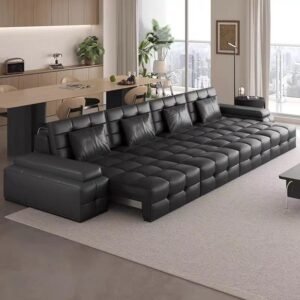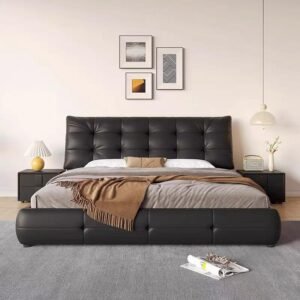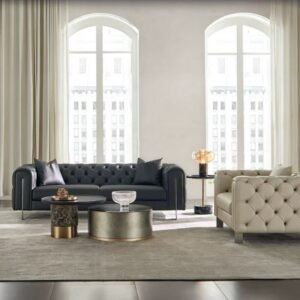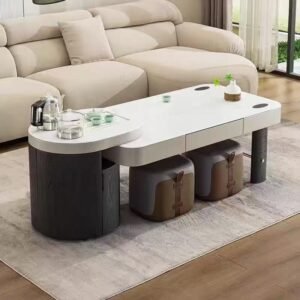
A curved walnut credenza handcrafted in Brianza, Italy, and a flat-pack birch bookshelf assembled in a Stockholm apartment share the same product category — furniture — but they exist in entirely different market universes. The European furniture market generated an estimated $265 billion in 2026, ، وفقًا ل Market Data Forecast, growing at a CAGR of 4.95% toward a projected $390.58 billion by 2033. What makes Europe unique is not the size of the market, but the way it fragments — by geography, culture, price point, material tradition, and consumer values — into a mosaic of sub-markets that operate on fundamentally different principles.
The segmentation runs deep. Living room furniture accounts for the largest share, followed by kitchen cabinetry (where Germany dominates global engineering standards), luxury furniture (a $12.54 billion European segment growing at 4.2% CAGR per استخبارات موردور), mass-market flat-pack, and an emerging second-hand and circular economy segment that is reshaping how Northern Europeans think about ownership altogether. Europe is simultaneously the world’s second-largest furniture manufacturing region and its most design-diverse consumer market. Understanding where these markets converge and where they diverge is essential for any manufacturer, retailer, or designer operating across borders — including international suppliers like أثاث النمل اليشم who serve European buyers alongside domestic and Asian clientele.
This guide maps the present-day diversity across Europe’s furniture markets. It examines the segments, the regional differences, the forces driving those differences, consumer preferences, and where the market is heading. No historical overview — the focus is what is happening now and what is coming next.
Europe Furniture Markets Overview
Market Segments
The European furniture market divides into six primary segments, each with distinct competitive dynamics, consumer profiles, and growth trajectories. The relative scale of these segments tells you immediately where the money concentrates — and where the growth opportunities lie.
European Furniture Market Segmentation by Product Category (2026)
| الجزء | الحصة السوقية (%) | Estimated Value (2026) |
|---|---|---|
| 🟦 Living Room Furniture | 28% | ~$74.2 B |
| 🟩 Kitchen Cabinets & Systems | 22% | ~$58.3 B |
| 🟨 أثاث غرف النوم | 18% | ~$47.7 B |
| 🟧 Office & Contract Furniture | 15% | ~$39.8 B |
| 🟪 Outdoor & Garden Furniture | 9% | ~$23.9 B |
| 🟥 Other (Storage, Bathroom, Kids) | 8% | ~$21.2 B |
Sources: Market Data Forecast, ستاتيستا, استخبارات موردور
أثاث غرفة المعيشة
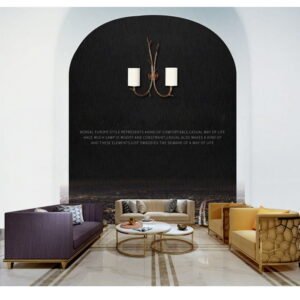
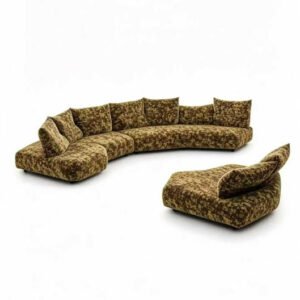
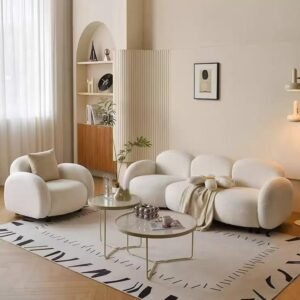
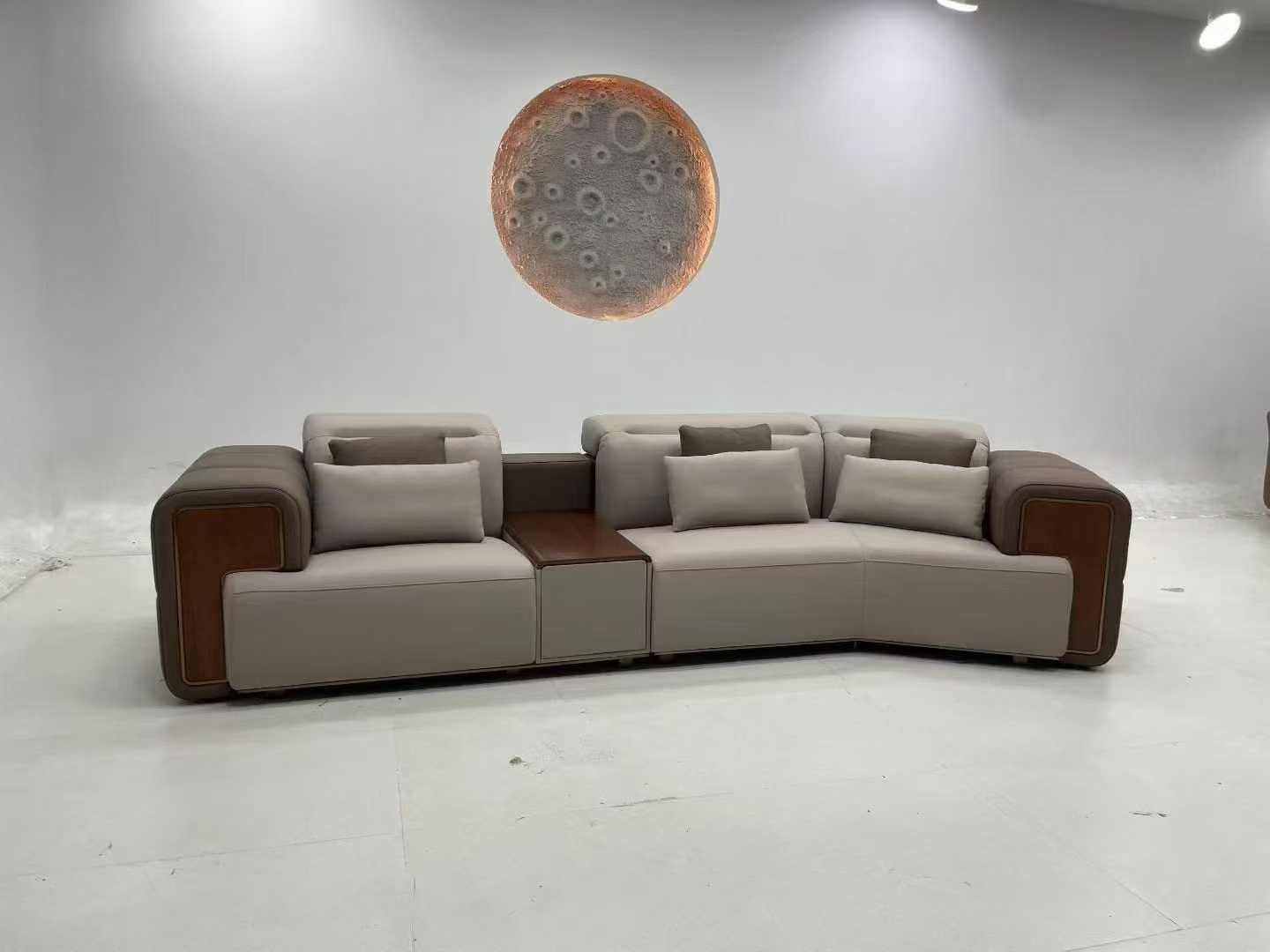
Living room furniture — sofas, sectionals, coffee tables, media consoles, accent chairs — commands the largest share of the European market. The segment is driven by urbanization (60% of Europeans now live in urban areas, per Eurostat) and by the trend toward “living room as multi-functional space” accelerated by hybrid work. A Berlin renter’s demand for a compact modular sofa that functions as both seating and guest bed reflects different pressures than a Milanese homeowner investing in a custom leather sectional for a 120-sqm living room — but both purchases register in the same segment. Manufacturers serving this segment range from IKEA (which dominates the mass-market end with $60+ billion in global revenue) to Italian houses like B&B Italia and Poliform that sell individual sofas at $8,000–$25,000.
Kitchen Cabinet Manufacturers
The European kitchen cabinet market reached $60.02 billion in 2026 per Market Data Forecast, growing at 6.48% CAGR. Germany dominates this segment through brands like Bulthaup, SieMatic, Leicht, Poggenpohl, and Nolte — manufacturers whose engineering precision sets the global standard for soft-close mechanisms, drawer load capacity (80 kg per drawer is standard for German systems), and material durability. German kitchen manufacturers are emphasizing warmth, natural materials, and rounded shapes in 2026, according to الداخلية اليومية, moving away from the high-gloss minimalism that defined the previous decade.
Luxury Furniture
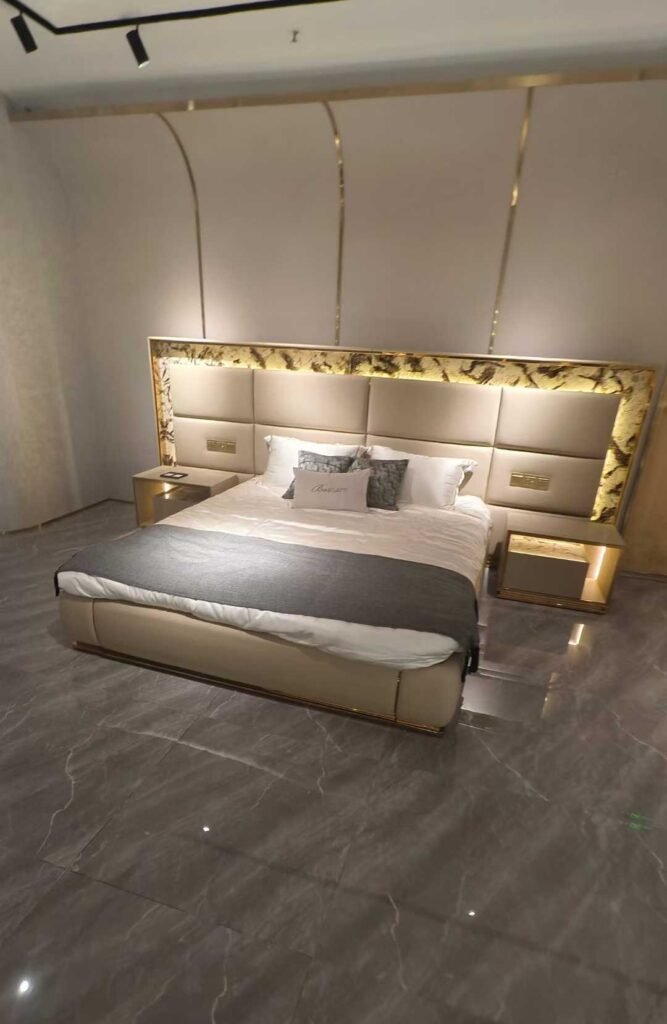
Europe holds 37.31% of the global luxury furniture market, with the segment valued at $12.54 billion in 2026 and projected to reach $15.39 billion by 2031 at a 4.2% CAGR. Italy, France, and Germany dominate, with Italy’s furniture exports reaching €19.3 billion (including a luxury segment growing faster than the overall market). Italian luxury furniture exports are accelerating as international buyers “increasingly prioritise quality, durability and distinctive craftsmanship,” per Interior Daily’s December 2025 analysis. The Salone del Mobile in Milan (April 21–26, 2026, Rho Fiera) remains the global nerve center for luxury furniture positioning.
Mass-Market Furniture
IKEA — headquartered in Sweden, with 20% of its global production in Poland — defines the mass-market segment. But IKEA is not alone: UK-based Made.com (pre-restructuring model), German discounters like Roller and Poco, and online platforms like Wayfair Europe and Beliani operate in a price-sensitive space where a sofa under €500 and delivery within 7 days are baseline expectations. The mass market is volume-driven, logistics-intensive, and margin-thin — exactly the environment where مجموعات أثاث غرفة المعيشة من جايد آنت للأثاث compete on the combination of competitive pricing and build quality that allows retailers to offer genuine value rather than disposable furniture.
Second-Hand and Online Markets
The fastest-growing structural shift in European furniture is the circular economy. Platforms like Greenified (launched across Denmark, Finland, and Norway), Selency (France), and eBay Kleinanzeigen (Germany) are normalizing pre-owned furniture purchases. In Northern Europe, circular furniture is not a budget compromise — it is a values-driven choice. The European Sustainable Furniture Market reached $14.05 billion in 2026, growing at 5.12% CAGR per استخبارات موردور. This segment directly challenges the traditional manufacturing-to-landfill model and is influencing how new furniture is designed (modular, repairable, material-separable).

Regional Differences in Furniture Markets
Overview: Four Europes, Four Furniture Philosophies
| المنطقة | Design Philosophy | Key Markets | Price Position | Manufacturing Role | Sustainability Focus |
|---|---|---|---|---|---|
| Northern Europe | Minimalism, function, nature | Sweden, Denmark, Norway, Finland | Mid to Premium | Design & IP-driven | Highest in Europe |
| Western Europe | Precision engineering, heritage | Germany, France, UK, Netherlands | Mid to Luxury | Germany: kitchen/office leader; UK: consumption leader | High (EU regulation-driven) |
| Southern Europe | Artisan craft, luxury expression | Italy, Spain, Portugal, Greece | Premium to Ultra-luxury | Italy: #3 global exporter ($7.83B) | Growing (material focus) |
| Eastern Europe | Affordability, emerging design | Poland, Romania, Czech Republic | Budget to Mid | Poland: #1 EU exporter ($7.12B) | Moderate (rapidly improving) |
Northern Europe — Design & Sustainability
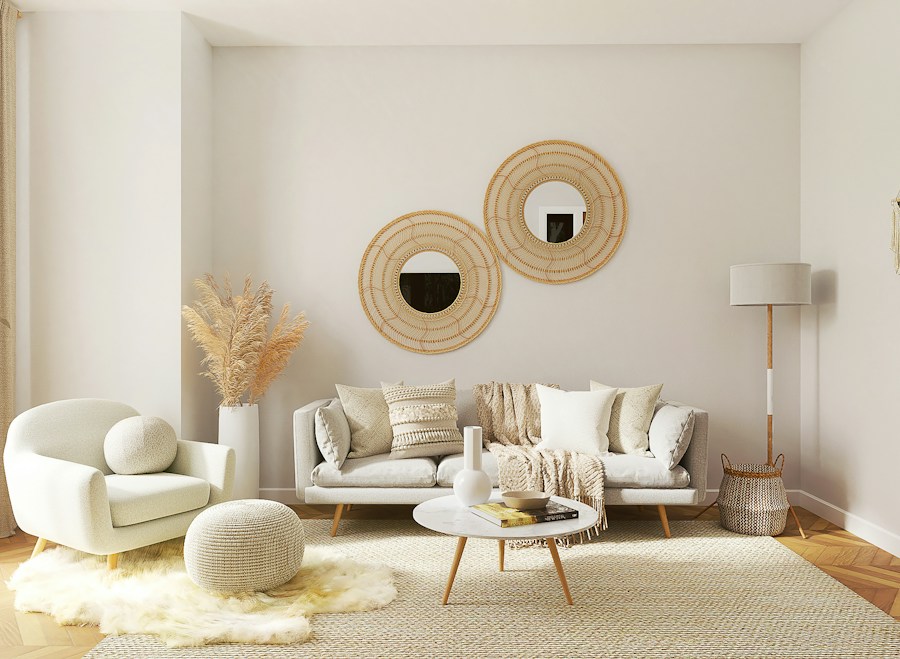
Scandinavian furniture design is not a trend — it is a philosophy rooted in climate, culture, and resource constraints. When daylight drops to 6 hours in a Copenhagen winter, the objects in a room take on outsized importance: a chair needs to be beautiful because you will be looking at it for months in lamplight. That pressure produced the Danish Modern movement of the 1950s — Hans Wegner, Arne Jacobsen, Finn Juhl — and its principles (function before form, honest materials, democratic access) still govern what gets designed, manufactured, and purchased in the Nordics today.
In 2026, the Northern European market has moved decisively toward sustainability as a purchase requirement, not a preference. The circular furniture marketplace Greenified, which launched in Denmark, Finland, and Norway, represents a consumer base that sees buying second-hand as a positive identity statement. New furniture from Nordic brands like Muuto, HAY, and Fritz Hansen uses FSC-certified wood as standard, and brands like Vestre (Norway) have built what they describe as the world’s most environmentally friendly furniture factory, powered entirely by renewable energy. The materials palette — beech, oak, pine, wool, linen — reflects both aesthetic preference and environmental principle: locally sourced, naturally renewable, low-processing-energy.
Western Europe — Heritage & Innovation
Germany and the UK together account for 35.74% of Europe’s home furniture market per استخبارات موردور. Germany’s contribution is manufacturing-led: the country exported $8.52 billion in furniture in 2024, making it the world’s second-largest furniture exporter after China. German strength concentrates in kitchen systems (Bulthaup, SieMatic, Poggenpohl) and office furniture (Vitra, Sedus, Wilkhahn) — categories where engineering precision and long-term durability justify premium pricing. A Bulthaup kitchen installation in London might cost £50,000–£120,000, but the drawer mechanisms are rated for 100,000+ open-close cycles — roughly 50 years of daily use.
France contributes heritage luxury (Roche Bobois, Ligne Roset) and artisan ateliers that serve the interior design trade. The UK is primarily a consumption market — the largest furniture import market in Europe — with a retail landscape split between mass-market chains (DFS, ScS, IKEA) and a growing premium segment driven by London’s interior design economy. The Netherlands adds Moooi and Pastoe to the design conversation with conceptual, statement-driven furniture that commands attention at Salone del Mobile.
Southern Europe — Craftsmanship & Style
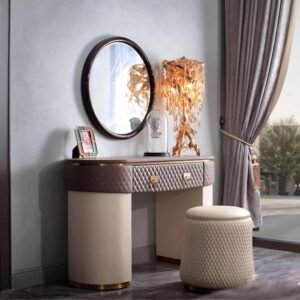
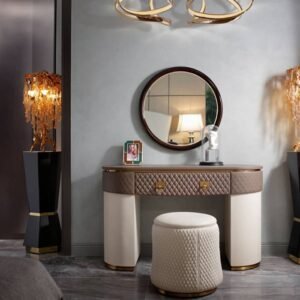
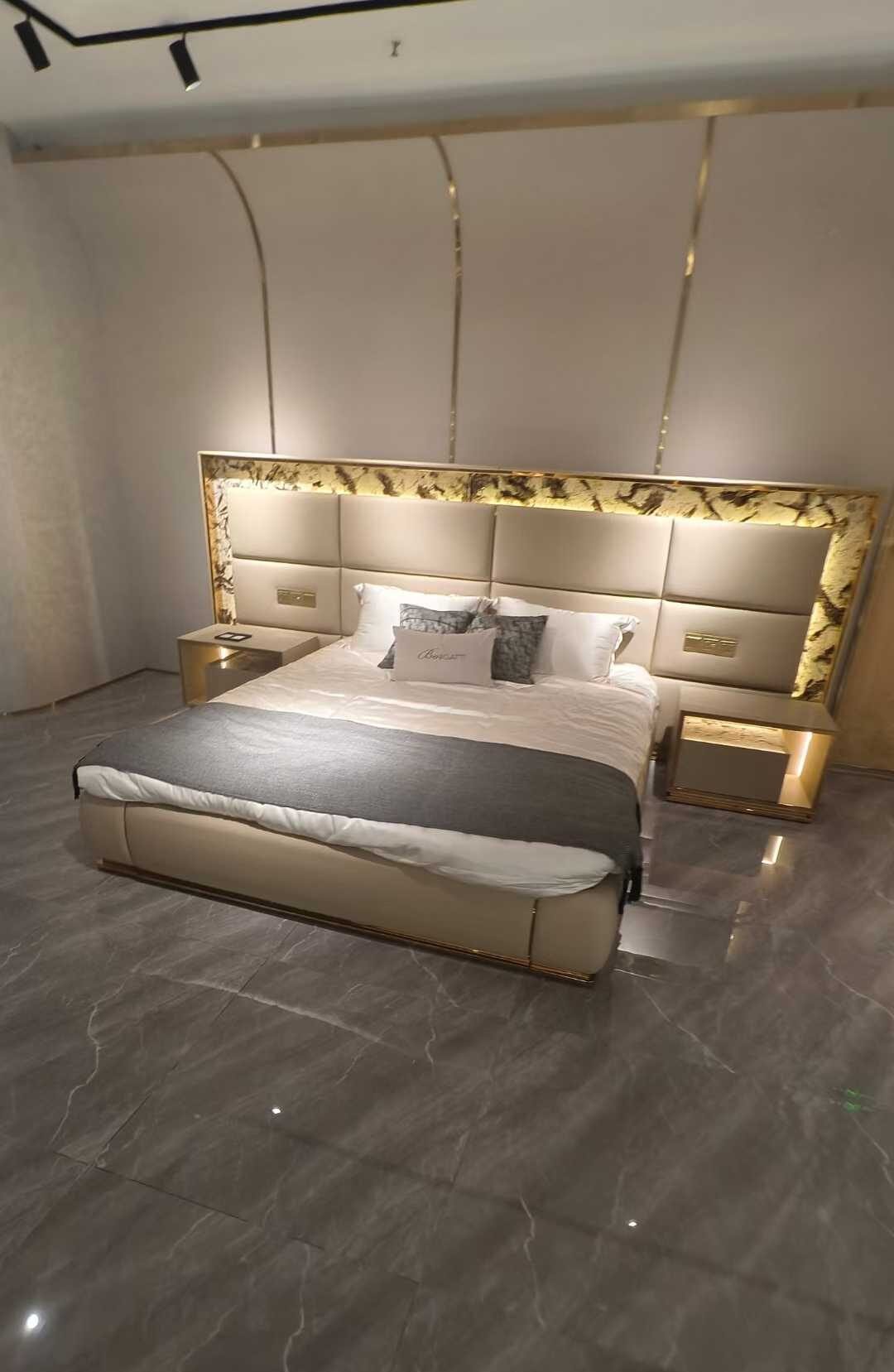
Italy is the beating heart of European furniture culture. The country’s furniture industry recorded €32.9 billion in total production in 2025 (a 1.8% increase year-over-year), with exports of €19.3 billion per Il Sole 24 Ore. What sets Italian furniture apart is not automation or price — it is the density of skilled artisans concentrated in manufacturing districts. The Brianza district north of Milan contains hundreds of small workshops where upholsterers, wood finishers, and metalworkers perform operations that cannot be replicated by machines: hand-stitching leather at 8 stitches per centimeter, applying 12-layer lacquer finishes with hand-rubbed polishing between coats, bending solid walnut into curves using steam presses operated by third-generation craftsmen.
The Salone del Mobile (April 21–26, 2026, 1,900 exhibitors from 32 countries) is not just a trade show — it is the annual calibration point for the global luxury furniture market. What debuts at Salone sets the design direction that trickles through the industry over the following 18 months. Spanish manufacturers (Kettal for outdoor, Gandia Blasco for contemporary) and Portuguese producers (increasingly recognized for textile upholstery and cork-based materials) round out the Southern European landscape.
Eastern Europe — Affordability & Trends
Poland is Europe’s furniture manufacturing powerhouse — and its story is one of the most remarkable industrial transformations on the continent. Poland is the #1 furniture exporter in Europe and #2 globally (behind China), shipping $7.12 billion in furniture in 2024 per ستاتيستا. The country produces 50% of IKEA’s wooden furniture worldwide and 20% of IKEA’s total global production. The Polish furniture market is valued at $15 billion, with استخبارات موردور projecting growth to $15.78 billion by 2031 at 5.2% CAGR.
What makes Poland’s position distinctive is the combination of EU-standard manufacturing quality with labor costs that remain significantly below Western European levels. Polish manufacturers compete not just on price but increasingly on design — the country’s furniture industry is moving upmarket, investing in R&D, and competing at fairs like High Point Market and CIFF. Romania and Czech Republic are following a similar trajectory, providing contract manufacturing for Western European brands while building domestic design capabilities. For international manufacturers like أثاث النمل اليشم, understanding Eastern Europe’s competitive pricing and rising quality standards is essential context for positioning products in the European market.
Factors Shaping Market Diversity
Economic Influences
GDP per capita explains a significant portion of furniture market variation across Europe. In 2025, Denmark’s GDP per capita exceeded $68,000, Germany’s was $52,000, Italy’s $36,000, and Poland’s $22,000 (World Bank data). These income differences directly determine average spend per household on furniture: a Danish household allocates approximately €2,500–€3,000 annually to home furnishings (including the premium for sustainable materials), while a Polish household allocates approximately €600–€900. The furniture industry follows the money — which is why IKEA locates its design studios in Sweden but its largest manufacturing base in Poland.
The eurozone economic outlook adds context: ING’s 2026 forecast projects approximately 1% growth for the eurozone, ending three years of near-stagnation. Germany’s recovery is expected to lift Eastern European exporters who supply German retail chains. The UK’s post-Brexit trade friction continues to add 3–7% cost overhead for EU furniture entering the British market — a structural disadvantage for continental manufacturers that benefits domestic UK production and non-EU suppliers.
Cultural & Historical Factors
Culture determines not just what furniture Europeans buy, but how they think about furniture’s role. In Scandinavia, the concept of “hygge” (Danish) and “lagom” (Swedish) — roughly, cozy contentment and balanced sufficiency — drives preference for warm, tactile materials in restrained forms. The furniture should enhance the home atmosphere without demanding attention. In Italy, “bella figura” — the cultural emphasis on making a beautiful impression — extends to the home interior. Furniture is a statement of taste, and Italians are proportionally the highest spenders on design-forward furniture relative to income in Western Europe.
In Germany, the engineering culture translates into furniture purchasing: German consumers read technical specifications (drawer load ratings, hinge cycle counts, board density) in a way that would seem eccentric in France, where the aesthetic narrative and brand heritage weigh more heavily. In Eastern Europe, a generation that grew up with limited furniture choices is now the primary home-furnishing market — and their combination of price sensitivity and appetite for contemporary design is reshaping what Polish and Romanian manufacturers produce.
Technology & Innovation
Three technologies are actively reshaping the European furniture market in 2026. First, AI-assisted design and configuration: manufacturers and retailers are deploying 3D product configurators that let customers visualize fabric-frame-color combinations in their own rooms using AR. This reduces return rates by up to 35% per VividWorks. Second, robotic manufacturing: CNC routing, automated edge-banding, and robotic upholstery are standard in German and Polish factories, enabling consistency at volume that manual operations cannot match. Third, e-commerce penetration: 26% of European consumers purchased furniture online in 2025 per the European E-commerce Report cited by Cylindo, and the share is growing fastest in the UK, Germany, and Scandinavia.
Sustainability & Environment
Sustainability is the single most important force differentiating European furniture markets from all others globally. Between 76% and 78% of European consumers say they want credible proof of sustainability credentials and are willing to pay more for eco-conscious products, per The Furniture Shows. In the UK specifically, 89% of consumers factor sustainability into purchase decisions. The EU’s regulatory framework — including the Ecodesign for Sustainable Products Regulation (ESPR) and expanded EPR (Extended Producer Responsibility) schemes — is creating compliance requirements that effectively set a sustainability floor for the entire market. Manufacturers who cannot document material origins, chemical emissions (under REACH), and end-of-life recyclability face increasing barriers to market access.
Top European Furniture Exporters by Country (2024)
| ألمانيا | $8,522.7M |
| ايطاليا | $7,830.2M |
| بولندا | $7,124.6M |
| France | ~$2,950M |
| Sweden | ~$2,100M |
| Denmark | ~$1,500M |
| Spain | ~$1,250M |
المصدر: ستاتيستا 2024
Consumer Preferences in Europe Furniture Markets
Shopping Habits by Region
How Europeans buy furniture varies as much as what they buy. In Scandinavia, the default path starts online: product research, 3D room visualization, price comparison — and frequently, online purchase with home delivery. Swedish furniture e-commerce penetration exceeds 30%, the highest in Europe. In Germany, the traditional furniture store (Möbelhaus) remains central: Höffner, XXXLutz, and IKEA dominate retail square footage, and German consumers typically visit 2–3 stores before purchasing, treating furniture buying as a deliberate, research-heavy process. The average German consumer spends 4.2 hours researching a sofa purchase before visiting a showroom, per industry surveys cited by Cylindo.
In Southern Europe, furniture purchasing retains a stronger social and relationship dimension. An Italian buyer might visit a local arredamento (furniture shop) where the owner knows the family, recommends combinations, and facilitates custom upholstery selections over multiple visits. The purchase is not transactional — it is consultative. In Eastern Europe, the pattern is shifting rapidly: younger buyers in Warsaw and Prague shop online and follow Instagram accounts of international design brands, while older consumers still prefer the in-store experience at chains like Black Red White (Poland’s largest furniture retailer).
Values in Furniture Selection
The values hierarchy differs strikingly across regions. Northern European buyers rank sustainability as their #1 or #2 purchase criterion — FSC certification, recyclability, and carbon footprint are actively evaluated. Western European buyers prioritize durability and brand reputation — a German buying a Vitra office chair is purchasing engineering confidence, not just a seat. Southern European buyers lead with aesthetics and craftsmanship — the visual and tactile quality of a piece carries more weight than its environmental certifications (though this is changing). Eastern European buyers remain most price-sensitive, but with a clear generational split: buyers under 35 are willing to pay 15–20% more for design-forward products than their parents would.
| Priority Rank | Northern Europe | Western Europe | Southern Europe | Eastern Europe |
|---|---|---|---|---|
| 1st | Sustainability | Durability/Quality | Aesthetics/Design | Price/Value |
| 2nd | Functionality | Brand Reputation | Material Quality | Design (under-35s) |
| 3rd | Minimalist Aesthetics | Functionality | Craftsmanship Origin | المتانة |
| الرابع | Price/Value | Sustainability | Brand Heritage | Sustainability |
Impact of Demographics
Europe’s aging population creates divergent furniture demand. In Italy and Germany, where median ages exceed 47, accessible design (adjustable-height surfaces, power-lift recliners, ergonomic seating) is a growth segment driven by necessity, not preference. In Poland and Romania, where younger populations are forming households at accelerating rates, entry-level and mid-market furniture for first apartments drives volume. Across all regions, single-person households — now exceeding 35% of total households in Scandinavia and Germany — are driving demand for compact, multi-functional furniture: sofa beds, extendable dining tables, storage-integrated pieces. International manufacturers like أثاث النمل اليشم who offer both compact and full-scale collections can serve this demographic range without fragmenting their product line.
Market Trends & Future Outlook
Current Trends
Five trends are actively reshaping the European furniture landscape in 2026. First, the “West Cold, North Warm” pattern identified by VakaDesk: Western European markets (Germany, France) are experiencing flat or declining production, while Northern European markets maintain resilience through premium positioning and export strength. Second, modularity: modular furniture systems that allow reconfiguration are growing across all price segments, driven by smaller living spaces and the flexibility expectations of hybrid workers. Third, natural material resurgence: solid wood, stone, natural leather, and wool are displacing engineered surfaces, especially in the mid-to-premium range. Fourth, artisan-industrial hybrid production: manufacturers combining CNC precision with hand-finishing operations, which bridges the efficiency of automation with the tactile quality that European consumers increasingly demand. Fifth, e-commerce acceleration: online furniture sales in Europe growing at 12–15% annually, outpacing brick-and-mortar by a factor of 4x.
Luxury Segment Growth
The European luxury furniture market’s growth trajectory ($12.54B in 2026, projected $15.39B by 2031) reflects a broader consumer shift toward “buying less but buying better.” This is not marketing rhetoric — it is observable in purchasing patterns. The average unit price for sofas in the premium segment has increased 8% year-over-year in Western Europe, while volume in the mass-market segment has declined 3%, per Fortune Business Insights. Consumers are replacing two cheap sofas every 5 years with one quality sofa intended to last 15. This “investment furniture” mindset benefits manufacturers who can demonstrate material quality through verifiable specifications rather than brand messaging alone.
Consumer Information Needs
European furniture consumers in 2026 are the most information-demanding in the world. Before purchasing a dining table above €1,000, a typical Western European buyer will research: wood species and sourcing origin, finish chemistry (VOC levels, child safety), dimensional specifications (they measure their space with laser tools), weight (for apartment delivery), assembly requirements, warranty terms, return policy, and sustainability certifications. This information density requirement means that manufacturers who provide comprehensive product data sheets, material certifications, and high-resolution imagery perform significantly better in European markets than those who rely on generic marketing copy.
Future Predictions
Three structural forces will define European furniture markets through 2030. First, the EU Ecodesign for Sustainable Products Regulation (ESPR) will progressively require Digital Product Passports for furniture, including material composition, recyclability scores, and carbon footprint data — creating a regulatory moat around manufacturers with established compliance infrastructure. Second, near-shoring will continue to shift European furniture production from Asia back toward Eastern Europe, particularly Poland, Romania, and Turkey, as supply chain resilience becomes a priority alongside cost. Third, the convergence of digital and physical retail will accelerate: the European furniture store of 2028 will be a hybrid experience — smaller physical footprint, AR-enhanced product exploration, same-day delivery from regional fulfillment centers.
Embedded Video: European Design Trends Coming to Global Interiors
Video: A look at how European furniture design trends are crossing borders and influencing global interiors in 2026.
Europe’s furniture market is not one market — it is a constellation of markets shaped by income, culture, manufacturing heritage, climate, and regulation. Northern Europe leads in sustainability and democratic design. Western Europe provides the engineering backbone (German kitchens, British retail scale, Dutch design concepts). Southern Europe guards the artisan tradition that global luxury depends on. Eastern Europe — especially Poland — is the manufacturing engine that makes European furniture competitive on the global stage, exporting more than Italy while simultaneously building its own design identity.
These markets share two threads. First, a collective shift toward sustainability that is regulatory, cultural, and commercial simultaneously — Europe’s furniture industry is further along the environmental compliance curve than any other region. Second, an insistence on quality documentation: European buyers at every price point demand more information, more certification, and more material transparency than any comparable consumer group. Manufacturers who serve this market — whether European houses or international producers like أثاث النمل اليشم — succeed by meeting that information standard, not by avoiding it.
The forward picture is one of evolving diversity, not convergence. Eastern Europe is not becoming Scandinavia, and Italy is not becoming Germany. Each region’s furniture market is deepening its distinctive character while the shared regulatory and sustainability framework creates a common floor of quality and compliance. For buyers, designers, and retailers, the opportunity lies in understanding which of Europe’s many furniture philosophies fits the specific project, the specific customer, and the specific room — and then sourcing with precision. The diversity is the asset.
الأسئلة الشائعة (FAQs)
1. How large is the European furniture market in 2026?
The European furniture market is estimated at approximately $265 billion in 2026, growing at a CAGR of 4.95% toward a projected $390.58 billion by 2033 according to Market Data Forecast. Germany and the UK together hold 35.74% of the home furniture market, with Italy at 18.5%. The luxury segment alone is valued at $12.54 billion, while the sustainable furniture segment reached $14.05 billion. Europe accounts for over 25% of the global furniture market and remains the world’s second-largest manufacturing region after Asia.
2. Which European country exports the most furniture?
Germany is the largest European furniture exporter by value at $8.52 billion (2024), followed closely by Italy at $7.83 billion and Poland at $7.12 billion. Poland is particularly notable because it is the #1 furniture exporter in Europe by volume and the second-largest globally after China. Poland produces 50% of IKEA’s wooden furniture worldwide and 20% of IKEA’s total global production. These three countries together export more furniture than any other region outside China.
3. What makes Scandinavian furniture different from Italian furniture?
The differences are philosophical, material, and price-based. Scandinavian furniture prioritizes function, sustainability, and minimalist form — using FSC-certified local woods (beech, oak, pine), wool, and linen in clean-lined designs intended for democratic access. Italian furniture prioritizes aesthetic expression, artisan craftsmanship, and material luxury — using imported hardwoods (walnut, marble), Italian leather, and multi-layer lacquer finishes in designs that serve as visual statements. A Danish dining chair might cost €300–€800; a comparable Italian chair from a Brianza workshop might cost €1,500–€5,000. Both are excellent — they serve different consumer values.
4. Why is Poland such a dominant furniture manufacturer in Europe?
Poland’s furniture dominance results from four factors: competitive labor costs (significantly below Western Europe while maintaining EU-standard training), strategic geographic location (central Europe enables fast overland shipping to Germany, France, UK), deep forestry resources (Poland has some of Europe’s largest managed forests), and scale investment (major IKEA and contract manufacturing relationships created infrastructure that now serves the broader export market). The Polish furniture industry is valued at $15 billion domestically and continues to invest in design capabilities alongside manufacturing capacity.
5. How are sustainability regulations changing the European furniture market?
The EU’s Ecodesign for Sustainable Products Regulation (ESPR) is progressively requiring Digital Product Passports that document material composition, recyclability, and carbon footprint. Extended Producer Responsibility (EPR) schemes make manufacturers financially responsible for end-of-life furniture disposal. The REACH regulation restricts chemical substances in furniture production. Between 76–89% of European consumers (varying by country) now actively factor sustainability into purchase decisions. Collectively, these regulatory and consumer pressures are creating a market environment where sustainability compliance is a baseline requirement for market access, not a marketing differentiator.
6. What is the European luxury furniture market outlook?
The European luxury furniture market is valued at $12.54 billion in 2026, growing at 4.2% CAGR to reach $15.39 billion by 2031 per Mordor Intelligence. Europe holds 37.31% of the global luxury furniture market. Italian luxury furniture exports are accelerating specifically as global buyers shift upmarket, prioritizing quality and durability. The Salone del Mobile in Milan (April 2026, 1,900 exhibitors from 32 countries) remains the anchor event for the luxury segment. Consumer behavior is shifting from frequent mid-price purchases toward fewer, higher-quality investments — “buying less but buying better.”
7. How important is e-commerce for European furniture sales?
Online furniture purchasing reached 26% of European consumers in 2025, with growth rates of 12–15% annually — approximately 4x faster than brick-and-mortar. The UK, Germany, and Scandinavia lead in e-commerce furniture penetration. Swedish furniture e-commerce exceeds 30% penetration. However, furniture remains a high-touch purchase category where consumers want to see, sit on, and feel products before committing to significant spend. The emerging model is hybrid retail: online research and configuration paired with showroom visits and seamless delivery from regional fulfillment centers.
8. What kitchen cabinet brands dominate the European market?
German manufacturers dominate the European kitchen cabinet market, which reached $60.02 billion in 2026. The leading brands include Bulthaup (ultra-premium), SieMatic, Leicht, Poggenpohl, Nobilia (#1 by volume in Germany), Nolte, and Häcker. German kitchen engineering sets global standards for hardware quality: soft-close mechanisms rated for 100,000+ cycles, drawer systems supporting 80 kg loads, and material specifications that prioritize longevity. In 2026, German kitchen manufacturers are trending toward warmth, natural materials, and rounded shapes rather than the high-gloss minimalism that previously defined the category.
9. How does the second-hand furniture market differ across European regions?
Northern Europe leads the second-hand and circular furniture economy, driven by sustainability values rather than price necessity. Platforms like Greenified (Denmark, Finland, Norway) and Blocket (Sweden) have normalized pre-owned furniture purchasing among middle- and upper-income consumers. In Western Europe, the second-hand market operates primarily through platforms like Selency (France) and eBay Kleinanzeigen (Germany). In Southern and Eastern Europe, second-hand furniture carries less cultural cachet and is more price-driven. The overall European sustainable furniture market reached $14.05 billion in 2026, with the circular economy segment growing fastest in the Nordics.
10. How can international furniture brands succeed in the European market?
Three requirements are non-negotiable for international brands entering Europe: comprehensive sustainability documentation (FSC certification, REACH compliance, low-VOC verification), detailed product data sheets (dimensions, materials, load ratings, assembly instructions in multiple languages), and willingness to adapt products to regional preferences. A sofa that sells well in the US Midwest will not automatically succeed in Stockholm (too bulky), Milan (insufficient material luxury), or Warsaw (too expensive). Brands like أثاث النمل اليشم navigate this by offering customization capability that allows regional adaptation from a common manufacturing platform — the same factory produces different dimensions, materials, and finishes for different European markets.