مقارنة: الأثاث الصيني الحديث البسيط في مقابل الأثاث الصيني الحديث في منتصف القرن العشرين - أيهما يناسب مساحتك؟
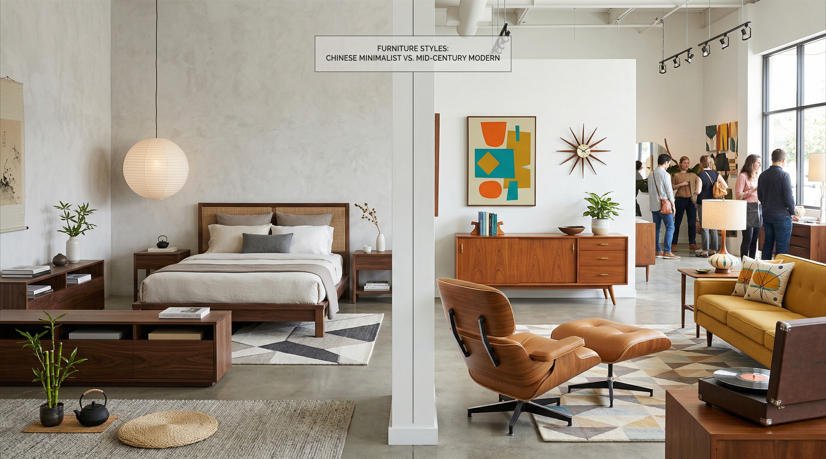
Two furniture styles dominate conversations among homeowners, interior designers, and hospitality operators in 2026 — and on the surface, they could not look more different. Minimalist Chinese modern furniture draws from centuries of Feng Shui philosophy, lacquerwork tradition, and the principle that emptiness itself is a design element. Mid-century modern (MCM) furniture emerges from post-World War II optimism, the Bauhaus-to-Scandinavia design pipeline, and a conviction that organic forms and warm woods can make industrial production feel deeply human. Yet both styles share a root commitment to clean lines, functionality, and the idea that a room should contain only what it needs.
The choice between these styles — or the decision to blend them — has real consequences for how a space functions, feels, and ages. The global minimalist furniture market was valued at approximately USD 52.6 billion in 2024 and is projected to reach USD 81.1 billion by 2030, according to جراند فيو للأبحاث. Meanwhile, demand for mid-century modern furniture increased by 70% over the five years ending in 2022, and iconic MCM pieces retain strong resale value — with vintage sectional sofas averaging $11,000 at auction according to مجلة «أركيتكتشرال ديجست».
This article provides the decision criteria that matter: space size and function, color and material compatibility, lighting and acoustic impact, maintenance realities, budget ranges, and long-term value. By the end, you will have a practical framework for choosing the right style — or the right blend — for your specific room, lifestyle, and aesthetic goals.
What Defines Minimalist Chinese Modern Furniture
Core Characteristics and Typical Silhouettes
Minimalist Chinese modern furniture is not simply “Chinese furniture made simpler.” It is a design language that treats empty space (留白, liúbái) as an active compositional element — the furniture exists in dialogue with the void around it. Silhouettes are typically low-profile and horizontal, emphasizing groundedness. Legs are either concealed entirely (platform-style bases) or expressed as slim, rectilinear supports that disappear visually. Surfaces are flat, unornamented, and precisely proportioned, with an emphasis on bilateral symmetry that reflects classical Chinese spatial philosophy.
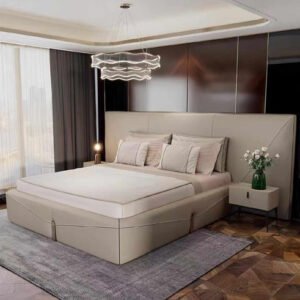
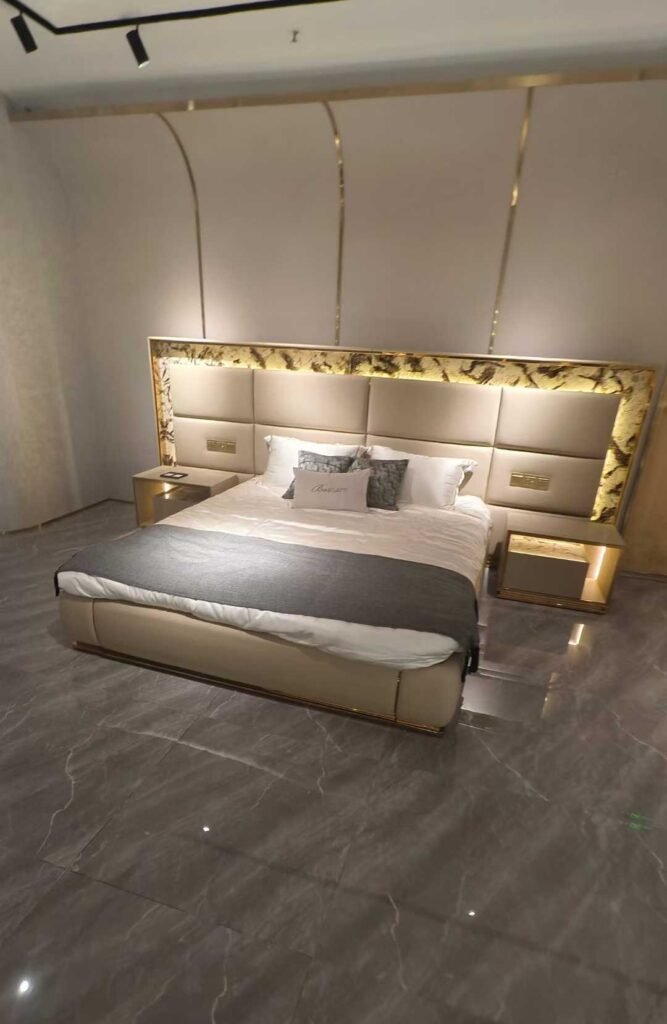
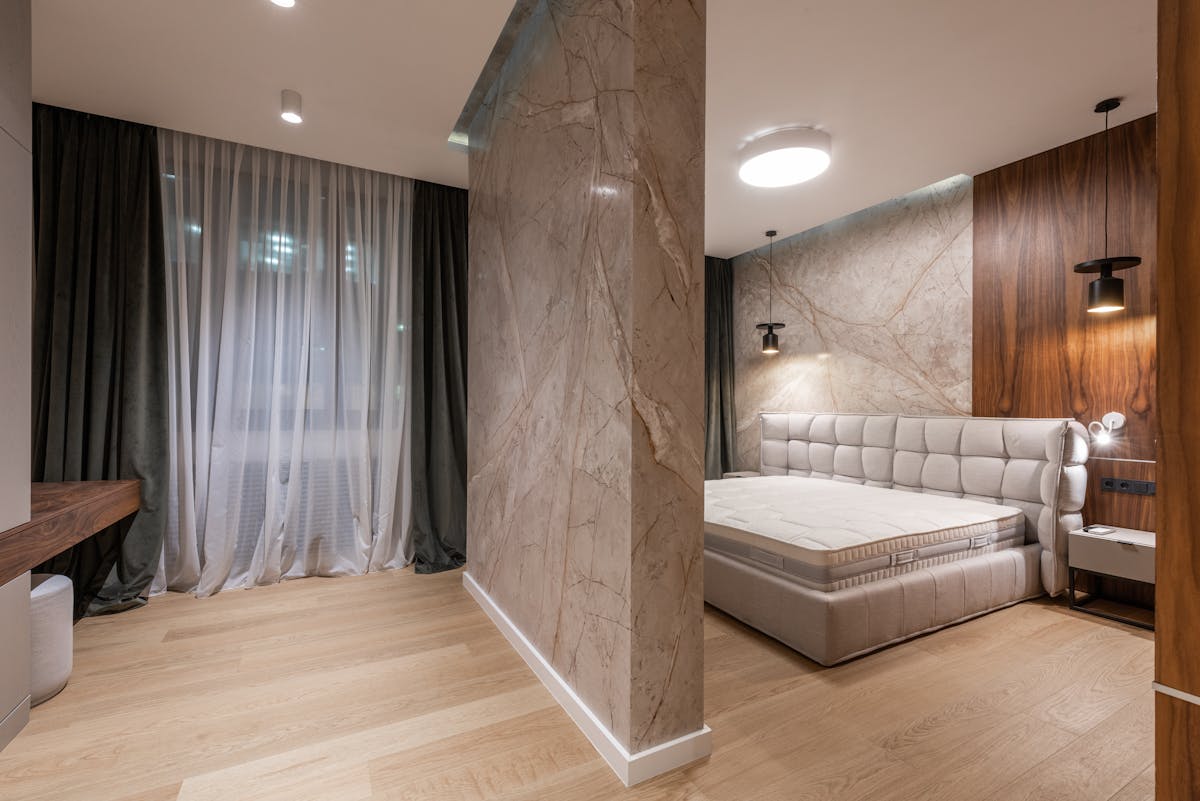
Typical pieces include platform beds with integrated headboard walls, low media consoles with sliding panel doors, open-frame shelving systems that function as room dividers, and dining tables with subtle taper and flush edges. The overall visual impression is one of restraint and intentionality — every line exists for a reason, and the absence of decoration is itself a statement of confidence in proportion and material quality.
Common Materials and Finishes
The material palette of minimalist Chinese modern furniture draws from both traditional craft and contemporary manufacturing. Primary wood species include elm (榆木), black walnut (sourced both domestically and from North America), and ash, valued for their visible grain patterns that introduce warmth without applied decoration. Lacquer — traditionally a natural urushi-derived finish — appears in contemporary interpretations as high-gloss or matte polyurethane that achieves the visual depth of traditional lacquerwork with modern durability. Bamboo, both natural and carbonized, serves as both a structural material and a surface finish, particularly in shelving and storage pieces.
Metal accents are restrained: brushed brass hardware, matte black steel frames, or antiqued bronze pulls that reference classical Chinese furniture fittings without replicating them. Upholstery fabrics trend toward natural fibers — linen, cotton, wool blends in muted tones — with leather reserved primarily for accent chairs and bench seating. The finish quality benchmark is the ability to run a hand across any surface and detect no transition between materials — a standard that manufacturers like مفروشات النمل اليشم achieve through multi-stage finishing processes refined over 15+ years of luxury custom production.
Where This Style Shows Up in Living, Dining, and Workspace
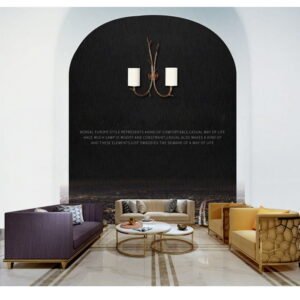
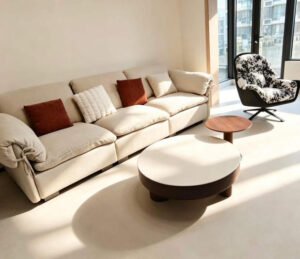
In living rooms, the style manifests as low-slung sofas on wood platforms, minimal coffee tables (often stone-topped on wood bases), and media walls where electronics disappear behind flush panels. Living room collections in this style emphasize horizontal lines and integrated storage that keeps surfaces clear. In dining spaces, rectangular tables with clean edges seat six to eight without visual bulk, paired with chairs featuring subtle curves in the backrest — a nod to the yoke-back silhouette (圈椅) of classical Chinese seating. In home offices, the style favors wall-mounted desk systems, floating shelves, and concealed cable management that maintains visual calm even in high-function workspaces.
What Defines Mid-Century Modern Styles
Signature Elements and Iconic Forms
Mid-century modern design (roughly 1945–1975) is defined by its signature tension between organic forms and industrial materials. The style’s DNA includes tapered legs that lift furniture off the ground for visual lightness, molded plywood and fiberglass shells that explore what industrial production can do with curves, and a consistent emphasis on exposing structure — showing the user how a piece is made. Iconic forms include the Eames lounge chair (1956), the Noguchi coffee table (1947), the Saarinen Tulip table (1956), and the Wegner Wishbone chair (1949). These pieces remain in continuous production decades later, a testament to the enduring appeal of their proportions.
The MCM silhouette vocabulary includes splayed legs at 10–15 degree angles, gently curved seat shells, cantilevered forms, and asymmetric compositions that create visual movement. Where Chinese minimalism seeks stillness, mid-century modern seeks dynamism — furniture that appears ready to move even while standing perfectly still.
Material Palettes and Upholstery Tendencies
Warm-toned woods dominate mid-century modern material palettes: teak, walnut, rosewood (now restricted under CITES for new production), and oak. These species are prized for their rich grain variation, warm amber-to-chocolate color ranges, and the way they develop patina over decades of use. According to Herman Miller’s MCM furniture guide, the warmth of natural wood “takes center stage” in the style’s most defining pieces.
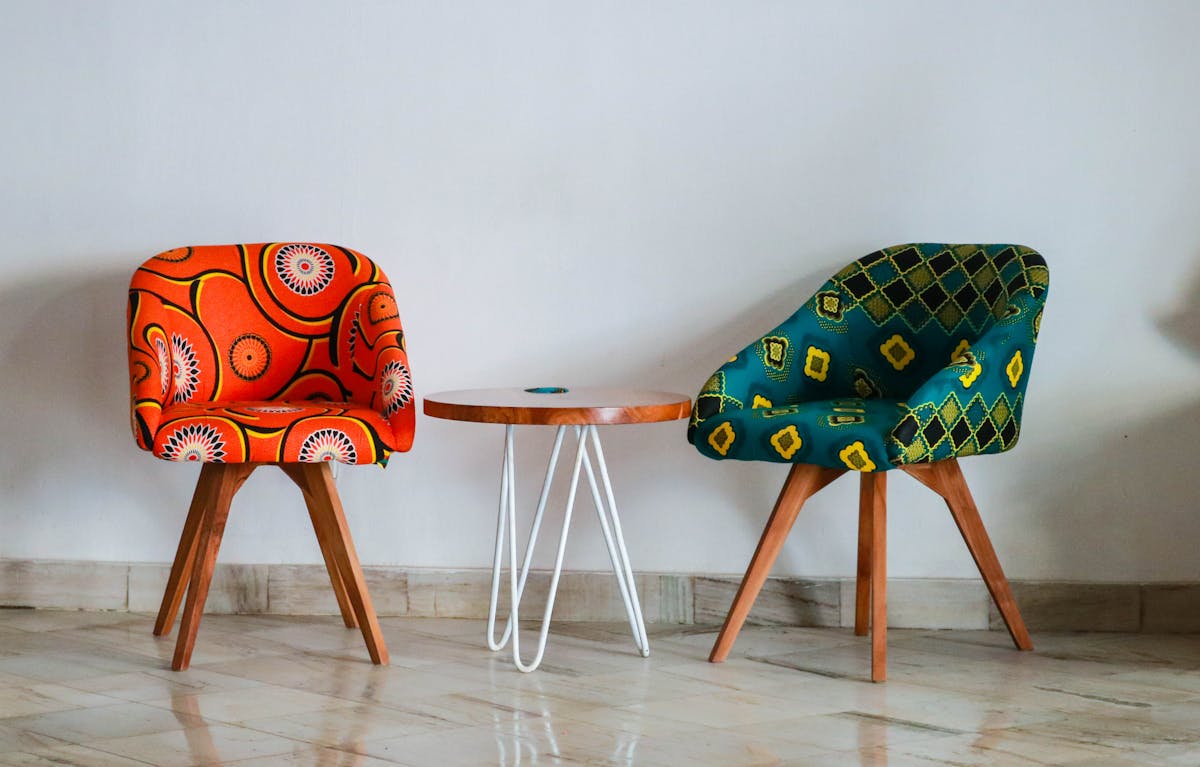
Upholstery in MCM interiors is bolder than in Chinese minimalism. Think mustard yellow, burnt orange, olive green, and teal — colors that pop against warm wood tones. Leather (both top-grain and aniline) is a staple for lounge chairs and sofas. Textiles include boucle, tweed, and woven wool in textured weaves that add tactile dimension. Metal accents favor warm finishes — polished brass, satin bronze — and occasionally chrome in more architecturally influenced pieces.
Typical Room Configurations and Atmospheres
A mid-century modern living room typically centers on a statement sofa (often a Chesterfield-influenced design or a low-back sectional) anchored by a statement coffee table, flanked by accent chairs with exposed wood frames, and illuminated by an arc floor lamp or a Sputnik-style pendant. The atmosphere is warm, inviting, and deliberately eclectic — mixing vintage finds with contemporary reproductions in a way that feels collected rather than catalog-ordered. Decorilla’s 2026 MCM guide notes that the style focuses on “functionality in an open, uncluttered space” while maintaining visual warmth through material choices.
Core Design Philosophies Compared
Philosophy of Simplicity vs. Optimism and Organic Forms
The philosophical divergence between these two styles is deeper than aesthetics — it reflects fundamentally different cultural relationships with space. Chinese minimalism emerges from Daoist and Buddhist principles where emptiness (虚, xū) is not absence but potential. The empty space around a piece of furniture is as designed as the furniture itself. The goal is a room that feels complete because of what it does not contain.
Mid-century modern philosophy, by contrast, is rooted in post-war democratic optimism. The pioneers — Charles and Ray Eames, Arne Jacobsen, Hans Wegner — believed that excellent design should be accessible to everyone, not reserved for aristocratic interiors. The forms are organic because nature was the antidote to wartime mechanization. The colors are bold because the cultural mood was hopeful. The materials are warm because the spaces were meant to feel welcoming to a generation building new lives.
Relationship to Craftsmanship and Production Methods
Chinese minimalist modern furniture honors a craft tradition stretching back millennia — mortise-and-tenon joinery without nails, lacquer finishing requiring dozens of hand-applied coats, and wood selection based on grain character as much as structural properties. Contemporary production scales these methods: CNC machining achieves mortise-and-tenon precision at volume, spray lacquer achieves the depth of hand lacquering in a fraction of the time, and modern kiln-drying processes stabilize wood for international shipping and diverse climate conditions. Manufacturers like Jade Ant Furniture bridge this traditional-to-modern gap, producing أثاث غرفة الطعام and case goods that maintain handcraft aesthetics at manufacturing efficiency.
Mid-century modern furniture pioneered the marriage of craft and industrial production. The Eames molded plywood chair (LCW) demonstrated that factory processes could create forms previously possible only through hand-carving. Bent lamination, fiberglass molding, and die-cast aluminum became tools of artistic expression. The philosophical stance was that industrial production is not craft’s enemy — it is craft’s amplifier, enabling beautiful objects at democratic price points.
How Cultural Influences Shape Perception of Space
A room furnished in minimalist Chinese modern style invites the occupant to slow down, notice proportion, and find calm in order. The cultural framework of Feng Shui positions furniture not merely as objects but as energy directors — where a sofa sits, how a table aligns with a doorway, and what occupies the center of a room all affect the perceived flow (qi) of the space. Whether or not one subscribes to Feng Shui as a literal practice, the spatial outcomes it produces — clear pathways, symmetrical balance, unobstructed sightlines — are objectively effective principles for comfortable, functional rooms.
A room furnished in mid-century modern style invites the occupant to engage, explore, and feel at home. The cultural framework is democratic domesticity — the idea that a well-designed living room is the venue for conversation, creativity, and relaxation in equal measure. Furniture is positioned for social interaction (chairs angled toward each other, sofas facing communal focal points) rather than ceremonial balance.
Side-by-Side Philosophy and Style Comparison
| البعد | Minimalist Chinese Modern | Mid-Century Modern |
|---|---|---|
| Core philosophy | Emptiness as design; Feng Shui balance | Democratic optimism; organic joy |
| Primary silhouette | Low, horizontal, rectilinear | Tapered legs, organic curves, lifted forms |
| Dominant materials | Elm, walnut, lacquer, bamboo, stone | Teak, walnut, rosewood, molded plywood |
| Color palette | Muted neutrals, black, white, natural wood | Warm woods + bold accents (mustard, teal, orange) |
| Ornamentation | Near zero; proportion IS the ornament | Minimal but expressive (grain, form, upholstery color) |
| Spatial relationship | Furniture defers to space | Furniture defines space |
| Emotional tone | Serene, contemplative, orderly | Warm, inviting, optimistic |
| Ideal user | Values calm, order, cultural depth | Values warmth, personality, collected feel |
Space Suitability: When Each Style Shines
Small Apartments and Open-Plan Spaces
In apartments under 800 square feet, minimalist Chinese modern furniture holds a structural advantage. Its low-profile silhouettes do not visually compete for vertical space, its integrated storage systems eliminate the need for separate organizers, and its neutral palette prevents small rooms from feeling cluttered even when fully furnished. The principle of liúbái (留白) — leaving strategic emptiness — naturally limits the quantity of furniture to what the room genuinely needs, which is precisely the discipline small spaces demand.
Mid-century modern furniture works in small spaces too, but requires more curatorial precision. MCM pieces with tapered legs and lifted forms create visual lightness by exposing floor area beneath — a trick that makes rooms appear larger. However, the style’s tendency toward bold accent colors and statement pieces can overwhelm a compact space if not carefully edited. The solution: limit the MCM palette to two to three accent colors, choose slimmer-profile MCM pieces (a Wegner CH07 shell chair instead of a full Eames lounge, for example), and let one iconic piece serve as the room’s focal point rather than competing with multiple visual statements.
Larger Rooms and Focal Point Considerations
In rooms exceeding 400 square feet, both styles face a different challenge: preventing the space from feeling empty or impersonal. Chinese minimalism handles large rooms through intentional zoning — a low partition shelf divides the living area from the dining zone without blocking sightlines, a platform defines the seating area without walls. The danger is sterility; a large room with too few carefully placed Chinese minimalist pieces can feel like an art gallery rather than a home. Counteract this with textural warmth (a wool rug, a linen throw) while maintaining the visual discipline.
Mid-century modern naturally fills larger rooms because the style embraces multiple focal points — a statement sofa, an accent credenza, a sculptural light fixture, a bold artwork. In fact, MCM arguably achieves its highest expression in rooms with enough breathing room for each piece to be appreciated individually. Larger rooms allow the full MCM vocabulary: a conversation pit arrangement, a floating credenza against a feature wall, and a dining zone with a Saarinen table large enough for the dinner parties the style was designed to host.
Multidisciplinary Rooms (Home Office, Dining, Lounge)
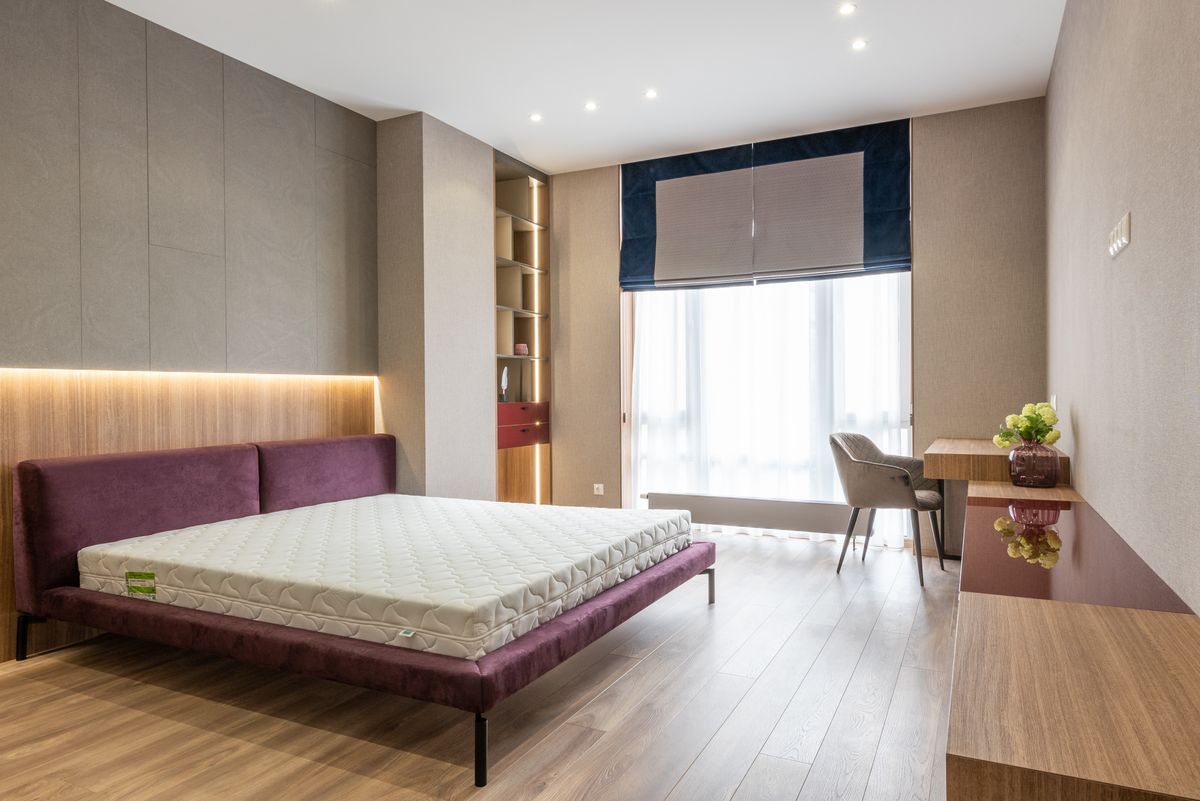
The modern reality is that most rooms serve multiple functions — a dining room that doubles as a workspace, a living room that accommodates exercise, a bedroom with a reading corner. Minimalist Chinese modern furniture excels here because its design language treats flexibility as a given. Pieces are proportioned for multi-use: a dining table at standard height serves as a desk; a platform daybed functions as both seating and guest bed; modular shelving reconfigures from home office to media wall. Jade Ant Furniture’s bedroom furniture collections, for instance, include pieces designed for dual-function spaces — beds with integrated nightstands and storage that eliminate the need for separate case goods in compact bedrooms.
Mid-century modern furniture handles multidisciplinary spaces through character rather than chameleon-like adaptability. An MCM writing desk in the living room reads as a design statement, not a compromise — the exposed wood grain and tapered legs integrate it into the living space rather than making it feel like office furniture out of place. The key is selecting MCM pieces with enough visual personality to justify their presence in a room where their primary function may not be the room’s primary function.
Color Palettes and Material Choices
Neutral Bases and Accent Strategies in Each Style
Minimalist Chinese modern interiors build on a base of white, off-white, warm grey, and natural wood tones (honey to deep walnut). Black serves as an anchoring accent — a lacquer table, a brushed steel hardware detail, a charcoal cushion. The accent strategy is monochromatic: depth comes from value shifts (light grey wall, medium grey upholstery, dark grey rug) and texture variation (smooth lacquer against rough linen against honed stone) rather than from introducing additional hues. When color appears, it arrives sparingly and with cultural specificity — a red lacquer tray, a celadon vase, an indigo textile — as curated punctuation, not as a palette component.
Mid-century modern interiors use a warmer base — typically warm wood tones (teak, walnut, oak) against white or cream walls — and then introduce color through upholstery, art, and accessories. The signature MCM color accents include mustard yellow, burnt orange, olive green, teal blue, and terracotta. These colors reference the post-war palette of optimism and are most effective when deployed in pairs against the warm-wood-and-white background. A mustard sofa and teal throw pillows against a walnut media unit and white walls: this is the MCM color equation distilled to its essence.
Material Contrasts: Wood, Lacquer, Metal, Fabrics
Material contrast is how both styles create visual interest without ornamentation. In Chinese minimalist settings, the primary contrast pair is matte wood against glossy lacquer — the warmth of grain against the depth of reflective finish. Secondary contrasts include stone against fabric (a marble-top table with linen-upholstered chairs), metal against wood (brass pulls on walnut drawers), and bamboo against ceramic (a bamboo shelf with ceramic vessels).
In mid-century modern settings, the primary contrast pair is warm wood against cool upholstery — walnut frame against teal fabric, teak legs against mustard leather. Secondary contrasts include polished brass against matte wood, glass against chrome (a Noguchi table principle), and woven textiles against smooth leather. The materials in MCM interiors are meant to be felt as well as seen — the grain of a teak sideboard under the hand, the soft nap of boucle upholstery, the cold smoothness of a marble tabletop.
Silhouettes and Forms: Lines That Define the Look
Minimalist Chinese Modern: Clean Lines, Balance, Negative Space
The lines of Chinese minimalist furniture are predominantly straight and horizontal. Verticality appears only in storage pieces (wardrobes, bookcases) and is always resolved with flat tops and flush edges rather than decorative crowns or moldings. Corners meet at precise 90-degree angles or, in more contemporary interpretations, at soft radii that suggest hand-finishing. The concept of balance is literal: a Chinese minimalist sideboard will almost always feature symmetrical drawer arrangements, and a bed frame will present identical profiles from either side. This visual symmetry creates an unconscious sense of stability that supports the contemplative atmosphere the style pursues.
Negative space — the open air around and between furniture pieces — is treated as a compositional element with the same importance as the solid objects. A Chinese minimalist room will often feel “underfurnished” to eyes trained on Western density, but this perceived emptiness is the point. The breathing room between a sofa and a coffee table, the clear wall above a low console, the unobstructed pathway from entry to window — these spaces are not omissions but intentional design decisions.
Mid-Century Modern: Tapered Legs, Curves, Planes
Mid-century modern furniture achieves its signature look through three structural elements. Tapered legs — typically solid wood, angled outward at 10–15 degrees, tapering from thick at the attachment point to slim at the floor — lift pieces off the ground and create the style’s characteristic visual lightness. Organic curves — in seat shells, arm profiles, and tabletop edges — introduce the biological rhythms that distinguish MCM from stricter modernist movements. And intersecting planes — a flat seat meeting a curved back, a horizontal surface supported by angled legs — create the dynamic visual tension that makes MCM furniture appear both restful and energetic simultaneously.
These forms are inseparable from their production methods. The Eames DCW chair’s compound curves exist because of innovations in plywood molding. The Saarinen Tulip chair’s pedestal base exists because of advances in fiberglass casting. MCM furniture is, in this sense, a record of manufacturing capability — each iconic form represents the moment when a new production technique became expressive enough for design-worthy application.
Storage, Function, and Layout Considerations
Built-In vs. Freestanding Storage Tendencies
Chinese minimalist furniture strongly favors built-in and integrated storage — wall-mounted cabinets, platform beds with under-bed drawers, dining benches with concealed compartments. The philosophical driver is the elimination of visual clutter: if storage is invisible, the room maintains its meditative clarity. Custom built-in solutions from manufacturers who specialize in bespoke production — such as Jade Ant Furniture’s custom manufacturing service — enable homeowners and designers to create storage walls that integrate seamlessly with the room’s architecture, matching wood species, finish tones, and hardware profiles exactly.
Mid-century modern furniture treats storage as display opportunity. The credenza — a low, horizontal cabinet on tapered legs — is the MCM storage icon, and it is designed to be seen. Books on open shelving, ceramics on a sideboard surface, records in a media console with glass doors: MCM storage invites the occupant to curate their possessions rather than hide them. Freestanding storage dominates because MCM design philosophy values the individual piece over the total system — each credenza, each bookshelf, each wall unit has its own visual identity.
Flow, Sightlines, and Clutter Management
Both styles prioritize clear circulation paths and unobstructed sightlines, but for different reasons. In Chinese minimalism, flow relates to qi — the movement of energy through a space. Furniture is positioned to avoid blocking doorways, to allow clear diagonals across rooms, and to create a sense of continuity between zones. In mid-century modern rooms, clear sightlines serve social function — you should be able to see and converse with someone across the room without a wall of furniture between you. The MCM open-plan living room, with its sofa as spatial divider rather than wall-hugger, is a masterclass in maintaining both openness and functional zoning.
Watch: Inside a Chinese Minimalist Furniture Showroom
For a visual immersion into how Chinese minimalist modern furniture looks and feels in a professionally designed showroom environment, this video tour provides an excellent reference point:
Lighting, Acoustics, and Environmental Fit
How Lighting Interacts with Finishes and Color
Lighting can make or break either style. Chinese minimalist furniture with its lacquer finishes and light-toned woods responds dramatically to light color temperature. Under warm lighting (2700K–3000K), natural wood tones glow and lacquer surfaces develop rich depth. Under cool or neutral lighting (4000K+), the same pieces can appear flat or clinical. The recommendation for Chinese minimalist interiors is consistent warm-white ambient lighting supplemented by focused task lighting (concealed LED strips under shelves, recessed downlights over work surfaces) that adds function without adding visual noise.
Mid-century modern furniture is more forgiving of mixed lighting temperatures because its material palette is inherently warm. Teak and walnut absorb light gracefully, and the style’s bold upholstery colors maintain their character across a wider range of conditions. The signature MCM lighting fixtures — Nelson Bubble Lamps, Arco floor lamps, Sputnik chandeliers — are themselves design objects that contribute to the room’s visual vocabulary. The practical implication: MCM rooms can accommodate statement lighting without competing with the furniture, while Chinese minimalist rooms require lighting that serves the space without calling attention to itself.
Acoustic Considerations for Open-Plan Spaces
Furniture choices directly affect room acoustics, a factor often overlooked in style discussions. Hard, reflective surfaces (lacquer, stone, glass) amplify sound and create echo in open-plan spaces. Soft, absorptive materials (upholstered furniture, wool rugs, heavy curtains) dampen sound and improve speech intelligibility. This creates a natural acoustic trade-off between the two styles.
Chinese minimalist interiors, with their emphasis on hard surfaces and spare furnishing, tend toward acoustic brightness — more echo, more ambient noise, less speech privacy. Mitigation strategies include wool or cotton area rugs under seating groups, upholstered acoustic panels mounted behind furniture (finished in the same neutral palette to maintain visual continuity), and heavy linen curtains that serve double duty as light filters and sound absorbers. According to Seasons in Colour’s acoustic design guide, “mass matters, density matters — a solid walnut credenza absorbs more sound than a glass coffee table.”
Mid-century modern interiors are acoustically warmer by default because the style incorporates more upholstered pieces, textile accessories, and warm wood (which absorbs mid-frequency sound better than hard lacquer). The organic forms of MCM furniture — curved backs, angled surfaces — also diffuse sound more effectively than flat, rectangular surfaces, reducing harsh echo. For spaces where acoustic comfort is a priority (home offices, open-plan apartments, hospitality environments), MCM furniture’s inherent material mix offers an advantage that Chinese minimalism must compensate for through accessories.
Minimalist Chinese modern and mid-century modern furniture both offer distinct paths to a cohesive, well-designed space — but they achieve cohesion through fundamentally different mechanisms. Chinese minimalism creates atmosphere through restraint, cultural depth, and the deliberate use of negative space. The room feels complete because of what has been consciously omitted. Mid-century modern creates atmosphere through warmth, personality, and the expressive interplay of organic forms with natural materials. The room feels complete because of how each piece contributes character and comfort.
The right choice depends on your space (size, light, architecture), your lifestyle (maintenance tolerance, social versus contemplative use), and how you want the room to feel when you walk through the door. If you prioritize simplicity, cultural resonance, and a sense of meditative calm, lean toward Chinese minimalist modern. If you prioritize iconic forms, material warmth, and an atmosphere that invites lingering conversation, lean toward mid-century modern.
And a final consideration: the two styles blend more gracefully than their surface differences might suggest. A Chinese minimalist platform bed paired with a vintage MCM walnut nightstand. A teak credenza against a clean white wall with a single lacquer tray as an accent. The shared commitment to quality materials, functional honesty, and clean-line discipline means that carefully selected pieces from both traditions can coexist in a single room — not as a compromise, but as an intentional synthesis that honors the best of each philosophy.
الأسئلة الشائعة
Which style is more timeless for resale value?
Authentic mid-century modern furniture has a proven track record of holding and appreciating in value. Iconic MCM pieces from designers like Eames, Wegner, and Saarinen have seen demand increase by 70% over a five-year period, and vintage MCM sectional sofas average $11,000 at auction. Chinese minimalist modern furniture is newer to the secondary market and does not yet have a comparable resale history. However, the global minimalist furniture market is growing at 7.4% CAGR — faster than the furniture market overall — which suggests that demand for high-quality minimalist pieces will strengthen resale markets over the coming decade. For investment-grade resale, authentic vintage MCM currently holds the edge. For daily-use furniture where depreciation matters less than enjoyment, both styles deliver excellent long-term value.
Can elements from both styles be integrated in a single space?
Yes, and it is increasingly common in professional interior design. The key to successful integration is identifying the shared values — clean lines, natural materials, functional honesty — and using those as the bridge between the two styles. A practical approach: choose one style as the dominant framework (70–80% of the room’s furniture volume) and introduce the other as accent pieces (20–30%). For example, a Chinese minimalist living room with a single mid-century walnut lounge chair as a sculptural accent, or an MCM dining room with a Chinese-inspired lacquer serving cabinet. The blend fails when it becomes a 50/50 split with no dominant visual language — that reads as indecision rather than intentional curation.
How to start a small-space transformation using these styles?
Begin with the largest piece in the room — typically the sofa or the bed — because it sets the stylistic tone for everything else. For Chinese minimalist, choose a low-profile, neutral-toned piece that sits close to the ground and maximizes visual open space above it. For mid-century modern, choose a piece with warm wood accents, tapered legs, and a bold but not overwhelming upholstery color. Once the anchor piece establishes the direction, add supporting pieces gradually, evaluating each addition for both functional necessity and stylistic coherence. Resist the temptation to furnish the entire room at once; both styles benefit from living with pieces for a few weeks before adding the next one.
What are the best wood species for each furniture style?
For Chinese minimalist modern: elm (traditional, visually warm), black walnut (rich color, excellent for lacquer contrast), and ash (light-toned, contemporary feel). Bamboo serves both structural and decorative roles. For mid-century modern: teak (the quintessential MCM wood, warm amber tone, naturally weather-resistant), walnut (darker, richer, more American MCM), oak (lighter, more Scandinavian MCM), and rosewood (historically significant but now restricted under CITES for new production). Both styles benefit from solid hardwood construction over veneer for long-term durability and authentic aging character.
Is Chinese minimalist furniture suitable for Western-style homes?
Absolutely. Contemporary Chinese minimalist design shares more DNA with Scandinavian minimalism than with traditional Chinese furniture, making it visually compatible with Western architectural contexts. The key adaptation: pay attention to ceiling height and wall color. Western homes with warm beige or cream walls pair naturally with the neutral wood tones of Chinese minimalist pieces. Homes with stark white walls benefit from adding textile warmth (a textured rug, linen curtains) to prevent the space from feeling clinical. The fundamental principles of the style — proportion, balance, intentional space — are universally effective regardless of the architectural context.
How do these styles compare for commercial and hospitality spaces?
Both styles are well-established in hospitality design, but they serve different brand narratives. Chinese minimalist furniture is widely used in boutique hotels, wellness retreats, and contemporary Asian restaurants where the atmosphere should feel contemplative and refined. Mid-century modern furniture is the default choice for trendy cafés, creative offices, co-working spaces, and hospitality brands targeting a younger demographic that associates MCM with authenticity and design awareness. For commercial buyers sourcing either style at volume, importing furniture from Chinese manufacturers offers the best balance of quality, customization, and cost — especially when working with a partner that handles design support, quality control, and logistics end-to-end.
What role does Feng Shui play in Chinese minimalist furniture placement?
Feng Shui principles inform the spatial logic of Chinese minimalist interiors even when not explicitly practiced. The core relevant principles include: positioning the bed and sofa so occupants can see the door without being directly in line with it (the “command position”); avoiding placing furniture with sharp corners pointing toward seating areas; maintaining clear pathways that allow unobstructed movement through the space; and balancing the five elements (wood, fire, earth, metal, water) through material choices rather than decorative objects. Whether or not you subscribe to Feng Shui metaphysics, the spatial outcomes — clear circulation, visual balance, uncluttered surfaces — produce objectively comfortable rooms.
How do I maintain lacquer furniture properly to prevent damage?
Lacquer furniture maintenance is straightforward but requires discipline in a few specific areas. Dust weekly with a soft, dry microfiber cloth — never use abrasive cleaners or rough textiles that can microscatch the surface. Avoid placing hot items (coffee cups, laptops) directly on lacquer surfaces; use coasters and trivets consistently. Keep lacquer furniture out of direct sunlight, which causes UV yellowing on light-colored lacquer and fading on dark lacquer over time. For spills, blot immediately with a dry cloth — lacquer is moisture-resistant but not moisture-proof under prolonged contact. If scratches do occur, professional refinishing is more effective and less visible than at-home touch-up methods.
Which style works better in a rental apartment where modifications are limited?
Mid-century modern has a structural advantage in rental apartments because the style relies on freestanding furniture that can be moved without leaving holes, marks, or architectural modifications. An MCM credenza, a pair of accent chairs, and a statement light fixture transform a generic rental into a curated space without touching the walls. Chinese minimalist furniture — particularly the built-in and wall-mounted storage systems that define the style at its best — often requires installation that landlords may not permit. However, freestanding Chinese minimalist pieces (platform beds, console tables, open shelving on legs) work perfectly in rentals. The rule: in rental spaces, choose freestanding examples of either style and save the built-in installations for owned properties.
Where can I source high-quality furniture in either style directly from manufacturers?
For Chinese minimalist modern furniture, the most efficient sourcing path is working directly with Chinese manufacturers based in major furniture production clusters like Foshan and Dongguan. Manufacturers such as مفروشات النمل اليشم specialize in luxury custom production and accept orders from individual consumers, interior designers, and commercial buyers alike — with custom sizing, material selection, and finish options available at wholesale pricing. For mid-century modern reproductions, major furniture hubs in China also produce quality MCM-inspired pieces, while authentic vintage MCM is sourced through specialist dealers, auction houses, and platforms like 1stDibs and Chairish. The key regardless of style: request material specification sheets, order samples before committing to full orders, and verify quality through third-party inspection when sourcing internationally.