A practical cost-and-risk comparison for furniture retailers, boutique hotel buyers, and interior designers placing orders between 20 and 500 units.
A boutique hotel group in Florida recently contacted three suppliers for a 60-unit dining chair order. One was a Chinese factory found through a direct referral. One was an Alibaba “Gold Supplier.” The third was a local importer reselling Chinese-made product at US warehouse prices. The landed cost difference between the most and least expensive route was 41% — on identical product specifications. The quality outcome difference was even more instructive.
For small furniture businesses, the sourcing route you choose shapes everything that follows: your margin, your lead time, your quality risk, and your ability to customize. This guide doesn’t declare one route universally superior. Instead, it gives you the actual framework that experienced small-business furniture buyers use — so you can make the call based on your specific order volume, timeline, and risk tolerance.

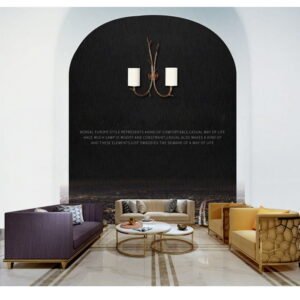
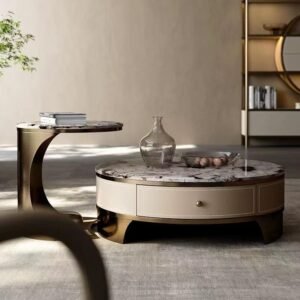
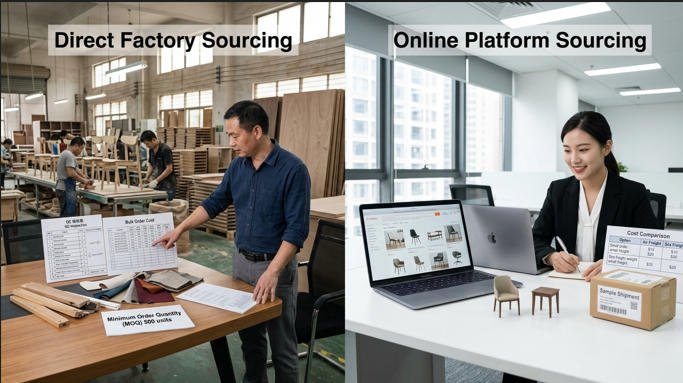
The sourcing decision that defines your margins — direct factory vs. platform. The right answer depends on your order volume, timeline, and customization needs.
Overview of Sourcing Routes
What Direct-from-China Sourcing Means for Small Businesses
Direct-from-China sourcing means establishing a purchasing relationship directly with a manufacturing facility — without an intermediary platform sitting between you and the factory. You communicate with the factory’s export team, negotiate price on raw material specifications, approve samples in direct dialogue, and wire payments to the factory’s account.
This route requires more upfront work: identifying and verifying factories, negotiating terms without the platform’s pre-vetted structure, and managing your own logistics and customs process. The payoff is cost, control, and customization depth that platforms structurally cannot match. A direct factory relationship allows you to specify exact foam density, fabric weight, joinery grade, and finish — and have those specs honored without a trading layer interpreting (and simplifying) your requirements.
For buyers sourcing through an established manufacturer like مفروشات النمل اليشم, the direct route also includes factory matching, bilingual QC coordination, and compliance documentation support — removing the most friction-heavy parts of the process without adding a marketplace markup.
What Platforms Like Alibaba Offer to Buyers
علي بابا is a B2B marketplace — a digital layer that sits between buyers and thousands of Chinese suppliers (both factories and trading companies). Its primary value proposition is discovery speed and transactional protection. You can find 200 upholstered chair suppliers in 20 minutes, filter by Trade Assurance status, compare sample prices, and initiate orders without ever verifying a business license or scheduling a factory call.
The tradeoff is systematic: every listing on Alibaba involves at least one intermediary layer. Even suppliers listed as “factories” on the platform often subcontract components or operate showrooms that curate samples from multiple manufacturers. The platform’s Trade Assurance payment protection provides a legitimate safety layer for transactional risk — but it does not protect against the most common small-business sourcing failure: receiving product that doesn’t match the approved sample.
🔷 Alibaba / Platform Route
- Fast supplier discovery (minutes, not weeks)
- Trade Assurance payment escrow protection
- Lower upfront commitment — no relationship required
- Mix of factories and trading companies (not always clear)
- 10–30% platform markup over factory-direct cost
- Standardized products; limited deep customization
- Dispute resolution via platform mediation (15–30 days)
- Easier for very small MOQ (under 20 units)
🟩 Direct Factory Route
- Factory-level pricing — no intermediary markup
- Full specification control (material, dimension, finish)
- Direct QC access — visit floor, inspect in-process
- Requires upfront verification and relationship effort
- Longer initial setup (4–8 weeks before first order)
- Deep customization possible — OEM / ODM capability
- Dispute resolution through direct relationship or contract
- Better for MOQ 50+ units with ongoing programs
Cost Considerations
Understanding Unit Prices, MOQs, and Broker Fees
The price you see on an Alibaba listing and the price a factory quotes you directly for identical product are rarely the same number — and the gap widens as order volume increases. Platform suppliers build margin into their listed price to cover the Alibaba membership fee (Gold Supplier memberships run $2,000–$8,000 per year), Trade Assurance commission (typically 3–4% of transaction value), and their own handling margin. For a $180 FOB dining chair, that embedded cost adds $25–$40 to the effective per-unit price before you pay a cent in freight.
MOQ (الحد الأدنى لكمية الطلب) — the minimum number of units a supplier will produce per style — is also structurally different between routes. Platform suppliers often advertise low MOQs (1–10 units) but achieve this by sourcing from stock rather than manufacturing to your specification. A direct factory’s MOQ for custom production (specific fabric, dimensions, finish) typically starts at 50–150 units — but the per-unit price savings at that volume can be 20–35% versus the platform equivalent.
Broker fees are often invisible to first-time importers. Some Alibaba listings are operated by trading companies that have broker relationships with the actual factory — adding 15–25% to the factory price before the platform commission. Spotting the difference between a factory-operated listing and a trading company listing requires checking the business scope on the company’s registration documents — a step most platform buyers skip.
Total Landed Cost and Hidden Charges
Landed cost is the total cost of a unit delivered to your warehouse: factory price + freight + duties + customs brokerage + insurance + port fees. It’s the only number that matters for margin calculation — and it’s the number that most platform-focused buyers dramatically underestimate on their first order.
| عنصر التكلفة | Platform Route (100 units) | Direct Factory (100 units) | Difference |
|---|---|---|---|
| Unit FOB price | $195 | $160 | −$35 direct |
| Platform commission (3–4%) | $7.50 | $0 | −$7.50 direct |
| Sample cost (credit back) | $80–$150 | $50–$120 | Similar |
| Ocean freight / unit (FCL 40′) | $28 | $28 | — |
| Import duty (31% combined) | $60.45 | $49.60 | −$10.85 direct |
| Customs brokerage / unit | $4–$6 | $4–$6 | — |
| Marine insurance / unit | $1.50 | $1.50 | — |
| Total landed cost / unit | ~$296 | ~$243 | −$53 direct (−18%) |
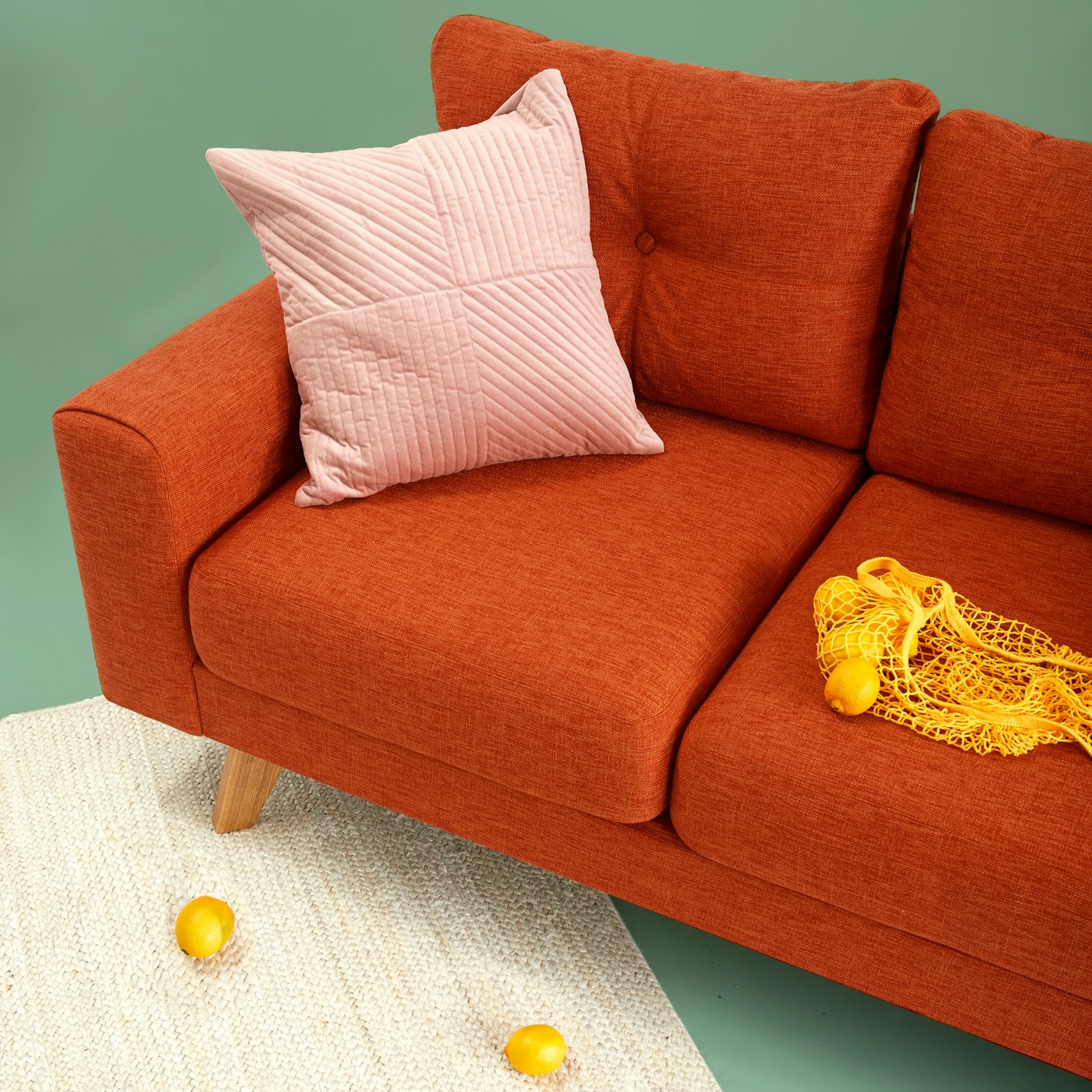
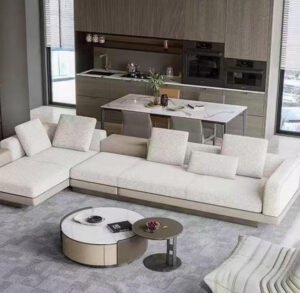
The quality level that’s possible with direct factory specification — foam density, fabric grade, and joinery all controlled to your exact brief, not a platform catalogue listing.
Lead Times and Reliability
Production Lead Times with Direct Factories
Direct factory lead times have two phases that buyers often conflate: sample lead time (getting approved samples before mass production) and production lead time (manufacturing the full order quantity). Understanding both — and planning for both — is where most first-time buyers’ timelines collapse.
For a custom ODM order (your fabric choice on a factory’s existing frame design), the realistic timeline from first contact to shipped container is 16–22 weeks. That breaks down as: 2–3 weeks for factory qualification and quotation, 3–4 weeks for counter sample development, 1–2 weeks for revision and Pre-Production Sample (PPS) sign-off, 5–8 weeks for bulk production, and 2–4 weeks for ocean transit. For US East Coast delivery, add another 1–2 weeks for customs clearance and drayage.
Platform orders for in-stock or near-stock items can ship significantly faster — sometimes in 15–25 days — because the product already exists in a warehouse or is minimally customized from a standard catalog. That speed advantage is real, and for buyers with an urgent replenishment need or a small fill-in order, it’s meaningful. The tradeoff: you’re buying what exists, not what you specified.
Shipping Schedules, Transit Times, and Potential Delays
| Route Type | Production Time | Ocean Transit | Total Est. Timeline | Customization |
|---|---|---|---|---|
| Platform — in-stock item | 0–5 days | 18–28 days (FCL) / 30–38 days (LCL) | 3–7 weeks | None / cosmetic only |
| Platform — ODM modification | 15–30 days | 18–28 days | 7–12 weeks | Color / fabric only |
| Direct factory — catalog ODM | 25–40 days + sampling | 18–28 days | 12–18 weeks | Material + dimension |
| Direct factory — full OEM custom | 45–70 days + sampling | 18–28 days | 18–26 weeks | Full proprietary design |
| Direct factory — repeat order | 25–35 days (no sampling) | 18–28 days | 8–12 weeks | Full spec maintained |
Experienced buyers structure their sourcing calendar around one counterintuitive insight: the direct factory route is slower on the first order and faster on every subsequent order. Once the factory has your approved PPS on file, repeat orders skip the entire sampling cycle. A boutique hotel group that placed its initial custom chair order in January and received delivery in June then reordered the same chairs for a second property — and received them in 10 weeks. The platform equivalent had no repeat-order speed advantage because the “factory” was a trading intermediary re-sourcing each order.
Quality Control and Standards
QC Processes: Factories vs. Marketplace Vendors
Quality control in furniture sourcing is not a post-shipment activity — it’s a production-stage discipline. The fundamental difference between direct factory and platform sourcing is where in the production process your quality influence begins.
With a direct factory, a structured buyer can implement a three-stage inspection protocol: a فحص ما قبل الإنتاج (PPI) that verifies raw materials match the spec before a single joint is assembled; a During Production Inspection (DUPRO) at 20–30% completion that catches systemic issues when they’re still correctable; and a فحص ما قبل الشحن (PSI) when 80%+ of production is complete. An independent QC agency like QIMA أو SGS can execute any of these for $280–$480 per inspection day — a cost that’s negligible against the total order value and eliminates the most common failure mode: discovering quality problems after the container is sealed and on the water.
With a platform order, your quality influence begins and ends at the sample review stage. Once you approve the sample and pay, the production process is entirely inside the supplier’s black box. Trade Assurance’s quality dispute mechanism kicks in only after shipment — and the burden of proof (photographic evidence, measurement data, third-party test reports) sits with the buyer. In practice, platform quality disputes take 15–30 days to resolve and frequently result in partial refunds rather than full replacements — a worse outcome than catching the issue during production.
Ensuring Product Specifications and Certifications Meet Market Requirements
US and EU furniture import regulations are not optional depending on your sales channel — they’re legal requirements that customs enforcement has become increasingly rigorous about since 2020.
For any furniture containing MDF, particleboard, or plywood — which includes the majority of case goods, dining tables, and cabinet-based furniture — TSCA Title VI (the federal standard matching California’s CARB Phase 2) requires third-party certified compliance with formaldehyde emission limits. Non-compliant shipments can be detained and destroyed at the port of entry, with no compensation to the importer. A direct factory with established US export relationships will have this certification in their documentation library. A platform trading company may or may not, and their customer service team may not understand the distinction between supplier self-declaration and actual third-party certification.
For upholstered furniture sold in California (and increasingly required by major national retailers), TB 117-2013 smoldering resistance testing is mandatory. For solid wood packaging, ISPM-15 fumigation is required on all solid wood packing materials. Both are straightforward to obtain from compliant factories — and difficult to retroactively prove if the documentation wasn’t prepared before shipment.
Supplier Vetting and Risk Management
Due Diligence for Direct Factories
Direct factory vetting requires active effort — but the process is more straightforward than most buyers assume. It follows a logical sequence: verify the factory exists and is legally registered as a manufacturer, confirm their production capability matches your requirements, and validate their quality outcomes through references and third-party inspection.
Business Registration Check
Request the factory’s Business License. Verify the registered business scope says “manufacturing” on China’s النظام الوطني لنشر المعلومات الائتمانية الخاصة بالمؤسسات. If the scope says “trading,” you’re talking to an intermediary, not a factory — regardless of what their website claims.
Certificate Verification
Check ISO 9001 and FSC certificates on the issuing body’s database using the certificate number. Fraudulent certificates exist — they take under 60 seconds to detect if you check them. Any certificate that can’t be located on the issuing body’s public database is invalid.
Buyer Reference Check
Request 2 current international buyers from your target market. Contact them directly with 3 specific questions: Did mass production match the approved sample? Was delivery on schedule? How did the factory handle a defect claim? The answers to question 3 are the most informative.
Third-Party Audit (for orders $25,000+)
A factory audit through QIMA or SGS costs $350–$800 and covers production floor assessment, QC system documentation, labor compliance, and capacity verification. For a first order over $25,000, this is the most cost-effective risk control in the entire process.
Evaluating Platform-Seller Reliability and Reviews
Alibaba’s supplier badge system deserves a clear-eyed explanation. “Gold Supplier” status is a paid membership tier — it indicates the company paid Alibaba’s annual fee ($2,000–$8,000), not that their quality has been independently verified. “Verified Supplier” status involves a third-party audit of the supplier’s facilities and business documentation — a meaningful upgrade that covers legal standing, production capacity, and quality management system basics. However, even Verified Supplier audits don’t cover product-specific quality testing or review production outcomes for your specific product category.
Platform reviews are useful as a directional signal, not a quality guarantee. A supplier with 4.8 stars and 200 reviews for resin garden chairs may have never produced a hardwood dining chair — the review pool doesn’t segment by product type. Before ordering any product category from a platform supplier, request references specifically from buyers who ordered your product type, not their most-reviewed category.
🚩 Platform Red Flags That Signal Trading Company, Not Factory
- Product range is extremely broad — 40+ unrelated furniture categories in one listing (a real factory has focused production capability)
- “Factory” address is in a commercial district, not an industrial zone — check the map satellite view of their address
- Response time is 24/7 including Chinese public holidays — factories have holiday shutdowns; trading companies route inquiries to staff in different time zones
- Sample delivery is faster than quoted production time — indicates they pulled from existing stock, not custom production
- They cannot answer specific questions about machine specifications, material sourcing lead times, or production floor layout
- Business License scope (visible under “Company Information” on Alibaba) shows “wholesale” or “trading” not “manufacturing”
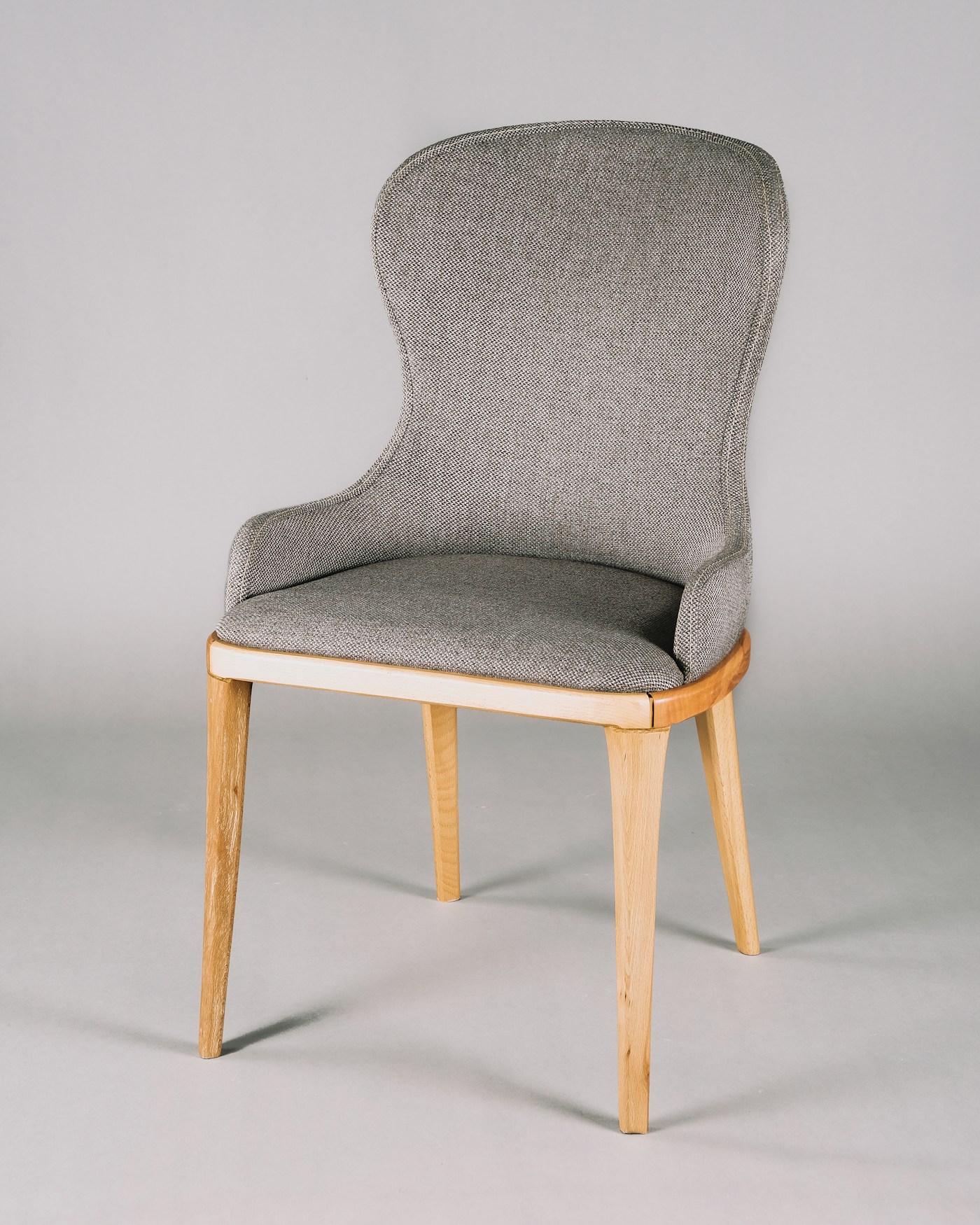
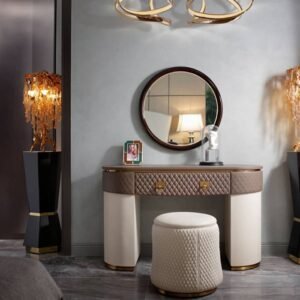
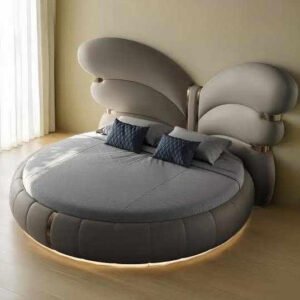
Achieving this level of material precision — exact wood grain, finish tone, metal detail — requires a direct factory relationship with signed sample documentation, not a platform catalogue selection.
Platform Implications
Features of Platforms Like Alibaba: Trade Assurance, Escrow, and Buyer Protection
ضمان التجارة — Alibaba’s escrow-style payment protection — works as follows: you pay through Alibaba’s payment system, the funds are held, and released to the supplier only after defined delivery conditions are met. If the supplier fails to ship on time or ships product that demonstrably doesn’t match the order description, you can file a dispute and Alibaba mediates.
What Trade Assurance covers well: non-delivery, significant shipping delays, and products that are categorically different from the listing (wrong item shipped entirely). What it covers poorly: subtle material substitutions (cheaper foam grade than specified), finish variations that are within photographic ambiguity, and dimensional deviations that require physical measurement to quantify. These nuanced quality failures — which represent the majority of real-world small business quality disputes — are difficult to win through platform mediation without very specific pre-order documentation of exactly what “compliant” means.
The practical lesson: Trade Assurance is a meaningful protection for transactional risk (not being scammed entirely), but it is not a substitute for pre-production quality management. Use it as a baseline protection on your first platform order — while simultaneously building the documentation discipline that protects you on any route.
Negotiation Power and Relationship Building on Direct Channels
Negotiation on a platform is structurally constrained — you’re selecting from a listed price, and the leverage tools available are limited to volume commitment and review reputation. On a direct factory channel, the negotiation surface is much larger: you can negotiate unit price against volume commitment, sample cost credit, payment terms, lead time against rush surcharges, and packaging specifications. Experienced direct buyers routinely save 8–15% through negotiation elements that don’t exist on platform orders.
More importantly, direct factory relationships compound over time. A factory that knows your quality expectations, has your approved PPS on file, and trusts your payment reliability gives you priority production scheduling during peak periods — a real operational advantage when platform buyers are waiting 10–12 weeks for the same supplier’s next available slot. A hotel procurement manager who had built a 3-year direct relationship with a Foshan dining chair factory received production slot priority during a post-COVID peak, delivering on a new-property opening timeline while competitors sourcing through platforms faced 18-week lead times on identical product.
Logistics and Import Regulations
Incoterms, Duties, and Import Taxes
المصطلحات التجارية الدولية are the internationally standardized commercial terms that define where responsibility for cost, insurance, and risk transfers between buyer and seller. For small business furniture importers, three terms dominate.
EXW (أعمال سابقة) means risk passes at the factory gate — you organize all export logistics from that point. This is rarely appropriate for small business first orders due to the complexity it requires in China. فوب (مجاناً على ظهر السفينة) is the recommended starting point: the factory loads your goods onto the vessel at the named export port, and you take responsibility for ocean freight and insurance from there. This gives you control over freight costs while letting the factory handle domestic export procedures. CIF (التكلفة والتأمين والشحن) means the factory arranges and pre-pays ocean freight and insurance to your destination port — simpler, but less cost-transparent because the factory marks up logistics. For direct factory orders, FOB is the professional standard and delivers the clearest cost accounting. Alibaba listings are often quoted CIF, embedding freight margin the buyer cannot see or renegotiate.
Packaging, Labeling, and Regulatory Compliance
Furniture ocean freight packaging must withstand compression loads of 400–800 kg during container stacking. For upholstered furniture, each piece requires individual poly-foam corner protection, a PE stretch wrap layer, and carton outer packaging rated for your product’s weight — typically 5-ply corrugated minimum for items over 15 kg. Insufficient packaging is the leading cause of transit damage claims on small business furniture orders, and the cost of improving it at the factory level is $2–$5 per unit — negligible against the cost of a damage claim.
For US market compliance, every carton must have: country of origin label (“Made in China”), UPC/EAN barcode in specified placement, gross/net weight in both metric and imperial, and California Prop 65 warning where applicable. For TSCA-regulated composite wood products, a compliance certification label must be affixed to the finished product — not just the packaging. Platform suppliers may apply these labels inconsistently or incorrectly; direct factory orders should specify exact labeling requirements in the purchase order and verify them during PSI.
| Compliance Requirement | ينطبق على | Platform Risk Level | Direct Factory Risk Level | Verification Method |
|---|---|---|---|---|
| TSCA Title VI / CARB Phase 2 | All composite wood furniture | عالية | منخفض | Third-party lab certificate number check |
| ISPM-15 Fumigation | Solid wood packaging | متوسط | منخفض | Fumigation certificate review pre-shipment |
| California TB 117-2013 | Upholstered furniture (CA) | عالية | متوسط | Test report from accredited lab |
| Prop 65 Labeling | CA-sold product | متوسط | متوسط | PSI inspection label check |
| Country of Origin Marking | All imports | متوسط | منخفض | Verify in PSI photographic report |
Payment Terms and Currency Risk
Common Payment Methods and Protections
Payment method choice is one of the highest-leverage risk decisions in furniture sourcing — the wrong choice on a first order with an unverified supplier can result in total capital loss with no recovery mechanism. The right choice adds minimal cost while providing structured protection. Here is an honest assessment of the four methods small businesses actually use.
Managing Currency Fluctuation and Fraud Risk
Currency risk is the change in the USD/CNY exchange rate between the time you quote your customer a price and the time you actually pay your Chinese factory. The CNY fluctuated between 6.7 and 7.3 against the USD between 2022 and 2024 — an 8–9% range. On a $50,000 order, that currency swing represents $4,000–$4,500 in cost variation. Most Chinese factories quote in USD for export orders, which transfers the exchange rate risk to their end — but some quote in CNY, particularly on direct factory deals where the factory doesn’t have a US dollar bank account. If quoted in CNY, use a currency transfer service like Wise أو WorldFirst rather than your domestic bank — the exchange rate differential alone can save 1.5–3% versus a bank SWIFT transfer.
Fraud risk in direct sourcing is real but concentrated in specific patterns. The most common: a supplier with a legitimate Alibaba presence switches payment account details via email mid-transaction (“we changed banks — please update your payment details”). This Business Email Compromise (BEC) fraud has cost furniture importers hundreds of thousands of dollars per incident. Mitigation: always verbally confirm bank detail changes by phone to a number you’ve independently verified, never via a WhatsApp or WeChat message that could be from a compromised account. This single practice eliminates the vast majority of wire fraud risk in furniture sourcing.

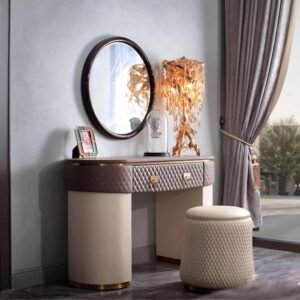
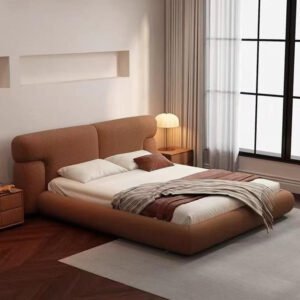
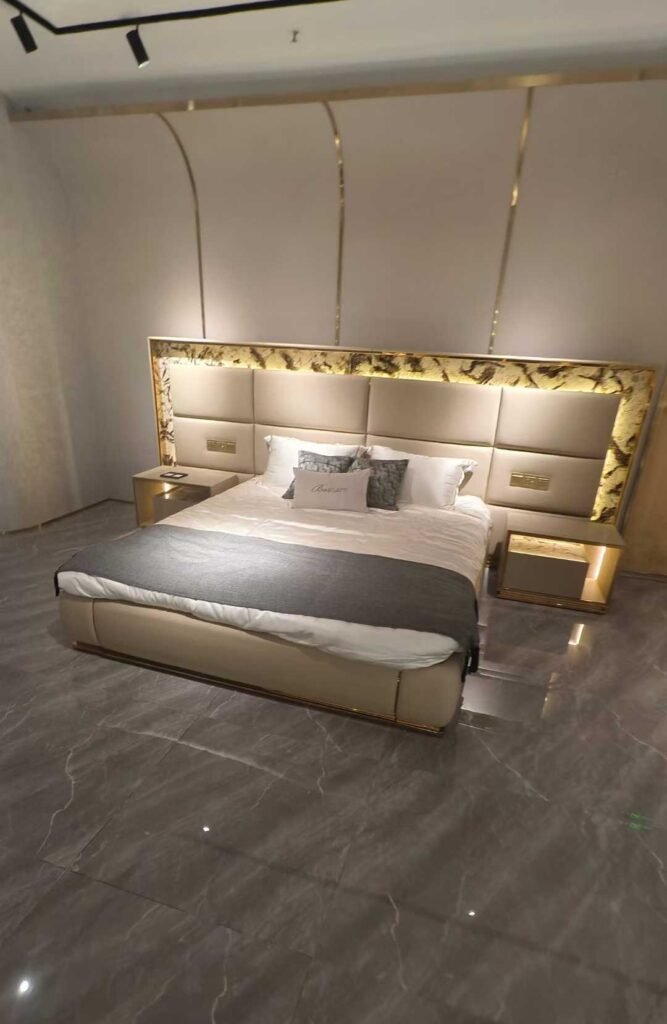
Premium upholstered furniture like this requires exact foam density, fabric weight, and seam specification — only enforceable through direct factory documentation, not platform ordering.
Case Scenarios
When Direct-from-China Is Advantageous for Small Runs
Despite the perception that direct sourcing requires large volumes, there are specific small-run scenarios where it outperforms platforms decisively.
✅ Go Direct When…
Custom specification is non-negotiable. A boutique hotel ordering 60 dining chairs needs a specific fabric (their brand color), a specific frame finish (brushed bronze), and a specific seat foam density (38 kg/m³ for commercial durability). None of these can be specified with confidence on a platform — they require a direct PPS process. The specification is too precise for a catalogue selection.
✅ Go Direct When…
You’re building a repeatable program. A furniture retailer ordering 80 sofas per quarter in the same specification benefits enormously from a direct factory relationship: no re-sampling each time, priority production scheduling, and pricing that improves with volume history. Platform reorders have none of these compounding advantages.
✅ Go Direct When…
Compliance documentation is required. If your buyer is a major US retailer, a hotel group with procurement standards, or an EU commercial entity requiring REACH documentation, the compliance paper trail from a verified direct factory is clean and auditable. Platform documentation is often incomplete or unavailable on demand.
✅ Go Direct When…
Your unit economics require factory pricing. If your retail margin requires a landed cost below $180 on a dining chair, and your calculation shows that platform pricing lands at $210+, you have no choice but to go direct. The math eliminates the platform option regardless of convenience preference.
When to Leverage Alibaba-Like Platforms for Speed or Scale
🔷 Use Platform When…
You need urgent replenishment of a standard item. A retailer who sold out of a catalogue bar stool and needs 15 units to fill customer orders within 3 weeks has no choice but a platform. The speed advantage of in-stock platform inventory is real and sometimes the only viable option for fill-in orders.
🔷 Use Platform When…
You’re testing a product category for the first time. Before committing to a direct factory relationship for a product type you’ve never sold, a platform order of 10–20 units lets you test the market without the time investment of full factory vetting. Treat it as market research, not your permanent sourcing channel.
🔷 Use Platform When…
Your MOQ is genuinely too small for factories. If you need 5–15 units of a product for a one-off project or a pop-up display, direct factories won’t engage at that volume. Platform in-stock suppliers serve this micro-MOQ market, and for genuinely small, non-repeating orders, the convenience-to-risk ratio makes sense.
🔷 Use Platform When…
You’re sourcing accessories, not primary furniture. For cushions, throws, decorative items, and small accessories to complement a furniture program — product categories where specification precision matters less — platform sourcing is a reasonable time-saver that doesn’t compromise your brand’s core product quality.
Actionable Decision Framework
Step-by-Step Evaluation Checklist
Use this framework before committing to any furniture sourcing route. Each question with a “direct factory” answer pushes your decision toward the direct route; each “platform” answer suggests platform sourcing is more appropriate for this specific order.
🧭 Route Decision Checklist
- Order volume: 50+ units of the same specification → Direct factory. Under 30 units, non-repeating → Platform.
- Customization requirement: Specific fabric, foam density, or dimensions outside standard range → Direct factory. Standard catalogue spec → Either route.
- Timeline: Flexible (16+ weeks available) → Direct factory preferred. Urgent need (under 6 weeks) → Platform or local importer.
- Compliance requirement: Major retailer compliance checklist, hotel procurement standards, EU REACH documentation required → Direct factory (cleaner audit trail).
- Repeat program: Same spec, recurring orders → Direct factory (compounding speed advantage). One-time purchase → Platform acceptable.
- Margin sensitivity: If landed cost calculation shows >$30/unit savings via direct at your target volume → Go direct. If margin difference is under $15/unit → Platform convenience may be justified.
- Risk tolerance: First-ever China import, no QC experience → Platform with Trade Assurance first. Experienced importer with QC capability → Direct factory.
- Product category: Core branded product (your SKU, your spec) → Direct factory. Commodity accessory or fill-in → Platform acceptable.
Pilot Order and Scale-Up Plan with Risk Controls
The most effective way to start a direct factory relationship — regardless of your eventual order volume target — is a structured pilot order. A pilot is not a test in the sense of “trying a random order and seeing what happens.” It’s a deliberately designed quality evaluation that uses a real commercial order to generate verified data about the factory’s production conformance.
| Pilot Order Stage | الإجراء | Risk Control | Decision Gate |
|---|---|---|---|
| Pre-Pilot | Factory verification: Business License, ISO cert, 2 references | Verify all certificates on issuing body databases | Go / No-Go on factory selection |
| Sample Phase | Counter sample review, PPS sign-off | Document all spec in writing; both parties sign PPS | PPS must match spec 100% before PO issued |
| Pilot PO | Order 50–100 units (your viable minimum) | 30% T/T deposit; 70% against B/L + PSI report | PO issued only after signed PPS |
| DUPRO | Third-party inspection at 25–30% production | Third-party QC agency; AQL 2.5 sampling | Pass → Continue. Fail → Halt and correct before proceeding |
| PSI | Pre-shipment inspection at 80%+ completion | Full AQL sampling, dimensional check, photo archive | PSI pass required before 70% balance payment |
| Post-Receipt | Full unpack, quality check, defect catalog | Document all findings within 14 days of receipt | AQL ≤2.5% defect rate → Scale up. Above threshold → Claim process before next order |
| Scale Decision | Second order at 2–3× pilot volume | Negotiate improved pricing based on demonstrated relationship | Skip sampling phase; DUPRO + PSI maintained |
For small businesses working with established manufacturers like Jade Ant Furniture that operate as both production facilities and sourcing partners, the pilot process is supported end-to-end — from factory matching and PPS coordination through PSI and customs documentation preparation — removing the most friction-intensive steps for first-time direct buyers without adding a platform markup layer.
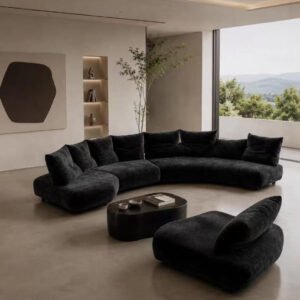
Showroom-quality results start with the right sourcing route — and the right sourcing route starts with an honest assessment of your volume, timeline, and quality requirements.
📖 Key Terms Glossary
- ضمان التجارة
- Alibaba’s escrow-style payment protection that holds buyer funds until delivery conditions are met. Covers non-delivery and major description mismatch; does not reliably cover subtle quality deviations.
- MOQ (الحد الأدنى لكمية الطلب)
- The minimum number of units a supplier will produce per style or SKU. Platform in-stock MOQs can be 1–10 units; direct factory custom production MOQs typically start at 50–150 units.
- PPS (Pre-Production Sample)
- A sample produced using exact mass-production materials and processes, signed off by both buyer and factory. This becomes the legally binding quality reference for the entire production run. The most important document in furniture quality management.
- AQL (Acceptable Quality Level)
- Statistical framework defining the maximum allowable percentage of defective units before a shipment is rejected. AQL 2.5 means a 2.5% defect rate triggers shipment rejection. Standard for commercial furniture imports.
- Landed Cost
- The total cost of a unit delivered to your warehouse: factory price + ocean freight + import duties + customs brokerage + insurance + port fees. The only number that matters for margin calculation. Always higher than the FOB price by 40–75% for China–US furniture imports.
- فوب (مجاناً على ظهر السفينة)
- Incoterm where the seller loads goods onto the vessel at the named export port. The buyer controls and pays for ocean freight and insurance from that point. The recommended starting Incoterm for small business furniture importers.
- TSCA Title VI / CARB Phase 2
- US federal (TSCA) and California state (CARB) formaldehyde emission standards for composite wood products (MDF, particleboard, plywood). Mandatory for all furniture sold in the US. Non-compliant shipments can be detained and destroyed at port.
- DUPRO (الفحص أثناء الإنتاج)
- Third-party quality inspection conducted at 20–30% of production completion. The highest-leverage inspection type — catches material substitutions and process deviations when correction is still feasible and inexpensive.
- ODM (Original Design Manufacturer)
- Sourcing arrangement where the factory provides an existing design that the buyer brands or minimally modifies (color, fabric, dimension). Faster to market than OEM; less design exclusivity. The standard approach for small businesses entering a new category.
- خطاب الاعتماد (L/C)
- Bank instrument that guarantees payment to the supplier only when compliant shipping documents are presented. The strongest payment protection available for direct factory orders — bank-backed, not platform-backed. Recommended for first direct orders over $30,000.
Choose by Spec, Not by Convenience
The sourcing route decision for small furniture businesses comes down to three variables: specification depth (how precisely does the product need to match your brief?), volume and repeatability (is this a one-time fill-in or the beginning of a program?), and timeline flexibility (do you have 16 weeks or 4?).
Platform sourcing wins on speed and accessibility for non-repeating, low-volume, standard-spec orders. Direct factory sourcing wins on cost, quality control, customization, and compounding relationship value for any recurring program over 50 units. The mistake most small businesses make is using the platform route for orders that would qualify — and benefit significantly — from the direct route, simply because the platform is more immediately accessible.
A pilot order is the bridge between those two realities. It lets you build a verified direct factory relationship at manageable risk, generate the quality data you need to scale confidently, and lock in the pricing and specification control that defines your margin for the next 5 years. For buyers who want both manufacturing capability and sourcing-route guidance in a single partner, the team at مفروشات النمل اليشم offers exactly that structure — without the platform markup.
Not Sure Which Route Is Right for Your Order?
Tell us your product category, volume, and timeline — and get an honest recommendation plus a sample quote, no commitment required.
Get a Direct Factory Quote →الأسئلة الشائعة (FAQ)
Published by مفروشات النمل اليشم — Custom & luxury furniture manufacturer and wholesale supplier, China. Further reading: Sourcing furniture from manufacturers — a retailer’s guide · FOB vs CIF vs EXW explained · QIMA third-party inspection services · Alibaba Trade Assurance official page · Importing furniture from China — Wise complete guide