
China produces over 37% of the world’s furniture exports — but knowing that statistic helps no one. What helps is knowing how to read a factory’s credibility from a business license, how to calculate landed cost before you accept a quote, and how to turn a prototype into a legally binding quality reference. This guide covers all of it, in the language of professionals who source for a living.
(Mordor Intelligence)
(CSIL / industry data)
(Jade Ant Furniture data)
(CBM Living, 2025)
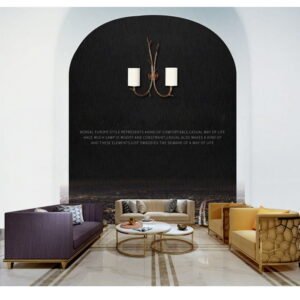
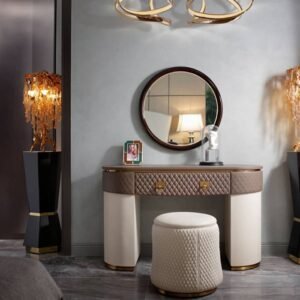
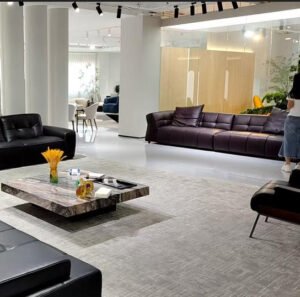
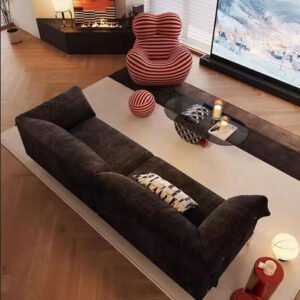
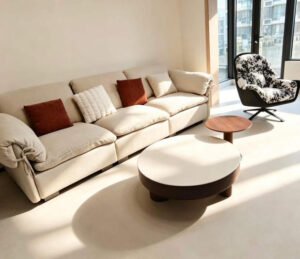
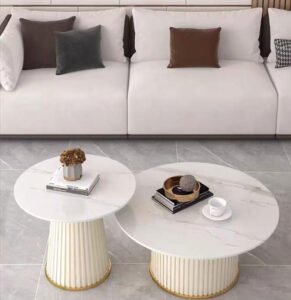
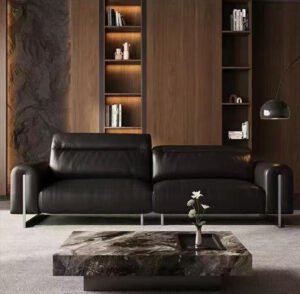
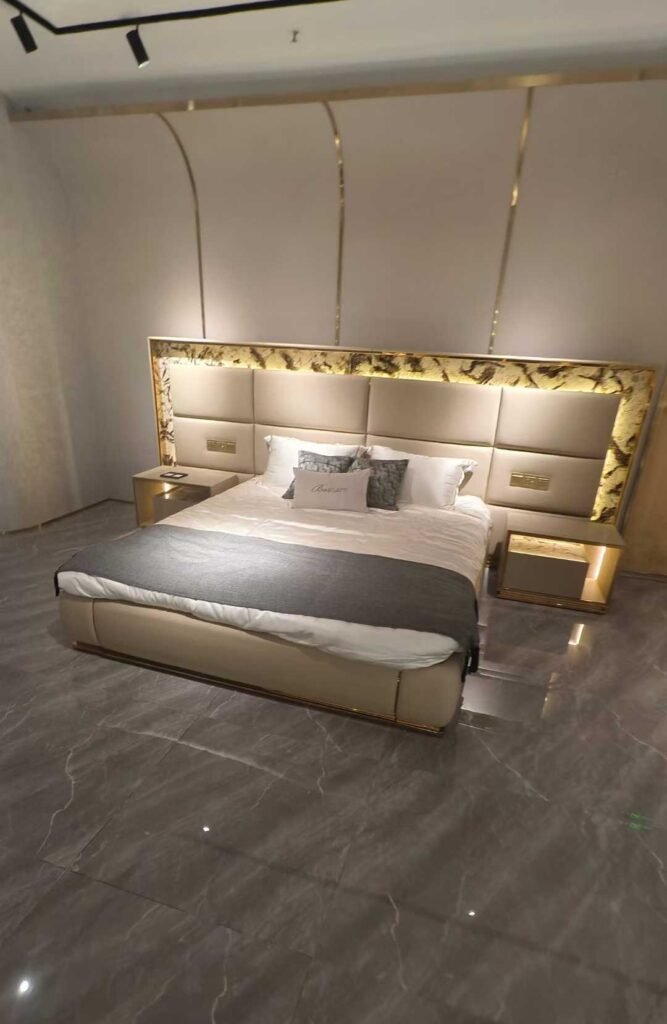
Walk through a showroom in London, Dubai, or Sydney and the furniture that catches your eye — the velvet sectional sofa, the solid walnut dining table, the custom upholstered headboard — was almost certainly made in China. Not as a compromise, but as a deliberate sourcing decision by the brand or retailer who put it there. The gap between what “Made in China” meant a decade ago and what it means today is vast, and understanding that gap is the first productive step for any dealer, designer, or hospitality specifier building a sourcing strategy.
This guide is not a shortcut. It is a structured framework for making informed decisions — about which suppliers to trust, which price structures to evaluate, which quality benchmarks to enforce, and which shipping terms protect your business rather than the factory’s. From the manufacturing hubs of Foshan to the container ports of Shenzhen, from foam density specifications to Letter of Credit mechanics, every section of this guide covers something that causes real procurement losses when buyers do not know it.
Whether you are a furniture dealer building a new product range, an interior designer specifying a hospitality project, or a showroom buyer evaluating Chinese manufacturers for the first time, you will find the precision tools here to source with confidence — and without the costly surprises that catch unprepared buyers off-guard.
📖 Essential Terms — Defined at First Use
- OEM (الشركة المصنعة للمعدات الأصلية)
- The factory produces furniture to your design specifications. You own the design; the factory owns the process. Requires technical documentation; best for proprietary products.
- ODM (Original Design Manufacturer)
- The factory designs and produces the furniture; you purchase and brand it. Faster to market, lower upfront cost, but reduced design exclusivity unless contractual exclusivity is negotiated.
- فوب (مجاناً على ظهر السفينة)
- Seller delivers goods to the named port and clears Chinese export customs. Buyer is responsible from the moment goods are loaded on the vessel. The B2B industry standard for Chinese furniture exports.
- Landed Cost
- The complete cost of goods from factory to your warehouse: FOB price + inland freight + ocean freight + insurance + import duties + port fees + last-mile delivery. The only valid number for business decision-making.
- MOQ (الحد الأدنى لكمية الطلب)
- The minimum number of units a factory will accept per order. Driven by material procurement lot sizes and production setup economics — not arbitrary policy.
- AQL (Acceptable Quality Level)
- A statistical framework defining the maximum percentage of defective units acceptable before a batch is rejected. AQL 2.5 means up to 2.5% defects are permissible at the standard commercial threshold.
- فحص ما قبل الشحن (PSI)
- An independent quality check by a third party (SGS, Bureau Veritas, Intertek) conducted when 80%+ of production is complete — before any container is loaded.
Understanding the Landscape: Furniture Made in China

Market Overview and Major Manufacturing Hubs
China’s furniture production is geographically concentrated in five major industrial clusters, each specialized by product category, material, and price tier. Understanding where to source — before deciding who to source from — saves weeks of misdirected inquiry and positions buyers to access the right capability for their specification.
| Cluster / Region | المدن الرئيسية | التخصص | Price Tier | الأفضل لـ |
|---|---|---|---|---|
| Pearl River Delta, Guangdong | Foshan, Dongguan, Shenzhen | High-end home, hotel FF&E, luxury, upholstered, custom | Mid–Premium | Dealers, designers, hospitality buyers, custom OEM |
| Yangtze River Delta, Zhejiang | Anji, Hangzhou, Suzhou | Office seating, outdoor furniture, modern design | Budget–Mid | Office contracts, outdoor collections, fast-moving retail |
| Jiangxi Province | نانكانغ (قانتشو) | Solid wood, value residential furniture | Budget–Mid | Volume solid-wood buyers; requires careful QC |
| حوض سيشوان | Chengdu | Panel furniture, domestic-market oriented | الميزانية | Local Chinese market; limited export focus |
| Bohai Sea Rim, North China | Bazhou, Tianjin | Metal furniture, glass, flat-pack / RTA | الميزانية | RTA retail collections, metal accent furniture |
Foshan, Guangdong handles approximately 75% of China’s total furniture manufacturing output. Within Foshan, ليكونغ hosts the world’s largest furniture wholesale market — over 30 km of showrooms spanning every category and price tier — while لونغجيانغ is the production epicenter for upholstered furniture. For B2B buyers sourcing high-end residential, boutique hospitality, or custom design work, Foshan is not just a starting point — it is the destination.
Different Tiers of Suppliers: OEM vs. ODM and What They Mean for Your Business
The Chinese furniture market operates across three supplier archetypes — factories, trading companies, and sourcing agents — and two production models: OEM and ODM. Confusing these categories is one of the most common and expensive mistakes first-time buyers make.
A شركة تجارية has the same showroom presentation as a factory but lacks production capability. On major platforms like Alibaba, an estimated 40% of listings marked “manufacturer” are trading companies. The test: ask for a real-time video walk of the production floor. A legitimate factory will walk you there in under two minutes. A trading company will ask to schedule it — or decline.
OEM (you provide the design, factory builds it) is the model for proprietary product development — hotel FF&E with brand-specific specifications, dealer exclusive collections, or branded residential lines. ODM (factory provides the design, you brand it) is the faster path for dealers testing a new product category or designers who need speed-to-market without engineering overhead. Most experienced buyers use ODM for market testing and transition successful SKUs to OEM once demand is confirmed at scale.
Interpreting Price: What Influences Cost
Material, Finish, and Labor Costs
Price variation across Chinese furniture factories is not random. It is a direct reflection of three quantifiable cost drivers: material specification, finish complexity, and labor intensity. Understanding these drivers allows buyers to evaluate whether a low quote represents competitive efficiency or hidden specification compromise.
Landed Cost Breakdown — $200 FOB Upholstered Chair to Los Angeles (2025 Estimate)
Illustrates the 33%+ uplift from FOB price to true landed cost that buyers must calculate before setting retail margins.
⚠ Note: US Section 301 tariffs (up to 25% for furniture from China) are not included above — verify current rates for your specific HS code with your freight forwarder before finalizing sourcing decisions. EU rates typically 0–5.6% for upholstered furniture.
Material costs in Chinese furniture are determined at the specification level, not the category level. Two sofas with identical external dimensions can carry a factory price difference of 150–200% based solely on foam density (28 kg/m³ vs. 50 kg/m³), fabric quality (18,000 Martindale vs. 60,000 Martindale), and frame construction (finger-jointed pine vs. kiln-dried beech). The visible finish — lacquer, veneer, or upholstery — accounts for 25–35% of the total material cost in most furniture categories. Labor accounts for 20–30% in Guangdong Province, with skilled hand-finishing operations (hand-stitched upholstery, manual lacquer rubbing, marquetry inlay) commanding a further 15–20% premium.
Packaging, MOQ, and Production Efficiency
Packaging is a cost variable that most first-time buyers underestimate and then discover painfully. Export-standard packaging for ocean freight — double-wall corrugated cartons with a minimum Box Compression Test (BCT) rating of 750 kg, EPE foam corner protectors, and desiccant bags inside all solid-wood cartons — adds USD 8–25 per piece depending on product dimensions and fragility. Factories operating on thin margins may use single-wall cartons without corner protection: the result is a damage rate of 5–15% in LCL shipments, compared to 1–3% for properly packaged goods. Specify packaging standards in writing; it is not automatic.
إن MOQ impact on unit pricing is mathematical, not negotiable in the traditional sense. What is negotiable is the structure of the order: mix-and-match across colorways of the same model, blanket orders with phased delivery, or consolidated orders across multiple product categories that collectively meet the factory’s production economics threshold.
Quality Benchmarks: How to Assess Material and Craftsmanship

Wood, Metal, and Upholstery Standards to Look For
Quality assessment in Chinese furniture procurement requires specific, numerical benchmarks — not general impressions from a showroom visit. The following reference values are the ones that experienced procurement professionals build into their purchase order specifications.
| المادة / المكون | Standard (Residential) | Standard (Commercial / Hospitality) | What Poor Spec Looks Like | Test Method |
|---|---|---|---|---|
| Solid Wood Moisture Content | 8–12% MC (kiln-dried) | 8–10% MC (kiln-dried, climate-controlled) | Cracking, warping within 6–12 months in destination climate | Digital moisture meter at delivery |
| Foam Density — Seat Cushion | ≥35 kg/m³ HR foam | ≥45 kg/m³ HR foam (50+ for heavy use) | Visible sag and loss of shape within 12–18 months | Request spec sheet; ISO 845 density test |
| Fabric Abrasion (Martindale) | ≥20,000 rubs | ≥40,000 rubs (50,000+ for high-traffic) | Pilling and surface breakdown within 1–2 years of normal use | ISO 12947 Martindale test certificate |
| Leather Grade | Top-grain or full-grain for longevity | Top-grain (contract grade) or PU for budget hospitality | Bonded leather cracks and peels at flex points within 2–4 years | Supplier declaration + peel-layer cross-section check |
| Metal Frame / Steel Gauge | ≥1.2mm wall thickness | ≥1.5mm wall thickness; load-tested to BIFMA or EN 16139 | Lateral flex and weld cracking under dynamic load | Measure with calipers; request load cycle test report |
| Panel Board (MDF / Plywood) | E1 formaldehyde grade or better | E0 / CARB Phase 2 / EPA TSCA Title VI compliant | US border seizure; EU REACH violation; off-gassing health risk | Factory CARB certificate; SGS formaldehyde test |
| Lacquer / Paint Adhesion | Cross-hatch adhesion 4B–5B (ASTM D3359) | 5B with UV resistance (ASTM D4329) | Chipping at corners and hinges within 6 months of normal use | Cross-hatch test at factory during sample review |
Build Integrity Checks and Common Red Flags
Beyond material specifications, structural build quality reveals itself in details that require physical inspection — either in person during a factory visit or through a pre-shipment inspection report. The following tests are accessible to any buyer during a showroom or factory visit:
🚩 Red Flags — Physical Quality Indicators to Check Before Committing
- Drawer alignment and gap uniformity: Pull each drawer fully open, then close. Gaps should be uniform on all sides (≤1mm for mid-range, ≤0.5mm for premium). Inconsistent gaps signal frame tolerances that will worsen as the piece settles over months of use.
- Upholstery seam tension: Run your finger along every seam. Puckering, visible thread tension, or irregular stitch spacing indicates that the sewn components were cut to inconsistent dimensions — a batch-quality signal that will appear again in mass production.
- Chair and table lateral stability: Apply a firm lateral force to the backrest of a chair or tabletop corner. Any flex or audible creak at the joint indicates insufficient corner block reinforcement or inadequate mortise-and-tenon depth.
- Veneer edge sealing: On veneered panels, inspect edge banding at corners. Lifting, gaps, or visible adhesive overflow indicate either low-quality edge banding material or inadequate application pressure — both lead to moisture ingress and delamination in humid environments.
- Finish surface under raking light: Hold a flashlight at a 30° angle to lacquered surfaces. Orange-peel texture, dust inclusions, or uneven sheen are not visible under showroom lighting but are immediately apparent under raking illumination — and are exactly what your end client will see under natural light.
- Foam recovery time: Press firmly on seat cushion, hold for 5 seconds, release. HR (High Resilience) foam returns to shape within 3 seconds. Foam that takes 8+ seconds or leaves a visible indent is below the minimum residential specification.
Factory Audits and Certifications: Verifying Credibility
Important Certifications and What They Actually Cover
Certifications are among the most misread documents in furniture procurement. A factory holding an ISO 9001 certificate has a documented quality management process — that certificate says nothing about whether any specific product meets your specification. Product-specific test reports from accredited laboratories referencing the exact model number being purchased are the only documents that provide product-level quality assurance.
Certification Adoption Among Top 100 Chinese Export Furniture Factories
Approximate adoption rates based on industry data, 2024–2025. Higher adoption = stronger baseline expectation when qualifying suppliers.
Source: Industry analysis, CSIL data synthesis, 2024–2025 estimates. Always verify individual factory certifications directly on the issuing body’s database — certificate fraud exists and takes under 60 seconds to detect.
How to Conduct Remote vs. On-Site Assessments
For buyers who cannot visit China before their first order, remote factory assessment is a practical alternative — not an ideal one, but a defensible one when structured correctly. The following sequence is used by experienced sourcing professionals to qualify a factory remotely before committing to a production order:
Jade Ant Furniture’s factory due diligence checklist provides a structured 30-point evaluation framework covering legal standing, production capacity, quality management, material sourcing practices, and export compliance — the same framework applied by procurement teams managing multi-factory hospitality and retail sourcing programs.
Sampling and Prototyping: Reducing Risk
Requesting Samples Strategically
The sampling phase is where procurement risk is either eliminated or deferred. Buyers who skip formal sample approval — or approve samples casually without a signed quality reference document — are setting up the conditions for the most common and expensive dispute in furniture sourcing: the gap between the approved sample and the mass production shipment.
A professional sampling sequence involves three distinct types:
A Counter Sample (CS) is the factory’s interpretation of your reference brief or technical package. It establishes that the factory understands your specification but has not yet committed to producing it with production-grade materials. Review and mark up corrections in detail.
A Pre-Production Sample (PPS) is produced after all counter sample corrections are approved, using the actual materials and processes to be used in mass production. This becomes the legally binding quality reference — both parties sign off, and the contract states that mass production must match it. The PPS is the single most important document in a bulk furniture procurement. Approximately 62% of quality disputes in bulk furniture orders originate from factories using different material grades in mass production than in the approved sample; a signed PPS agreement eliminates the ambiguity that allows this to happen.
A Production Pilot Run — a batch of 20–30 units produced before full-scale manufacturing — is the standard practice for orders above 300 units. It surfaces process-level issues that never appear in single-piece sampling, such as color variation between fabric roll dye lots, joint alignment under production-speed assembly, and foam cut tolerances across a cutting batch.
Using Proto-Builds to Test Fit and Finish
Proto-builds — also called engineering samples or fit checks — are used by hospitality procurement teams to verify dimensional accuracy in context before committing to full production. A hotel guestroom with 47 rooms of identical specification requires every bed frame, chair, and desk to fit within millimeter tolerances of the architectural drawing. Proto-builds catch the 3 cm discrepancy in desk depth that would have prevented the cable management channel from aligning with the wall outlet on 47 rooms — a discovery that costs USD 40 per room in proto-build expense and saves USD 1,200+ per room in site modification if caught post-delivery.
Lead Times and Shipping Terms: From Factory to Doorstep

Typical Production Timelines by Product Category
Typical Production Lead Times by Furniture Category (Working Days, FOB-Ready)
Excludes sample development and ocean transit. Add 15–25 days for first-time OEM orders (new design approval). Source: Jade Ant Furniture / industry data, 2024–2025.
🔴 Add Chinese New Year closure (+15–25 days for orders placed Nov–Dec). Add ocean transit: 18–28 days to EU, 25–35 days to US West Coast, 35–45 days to US East Coast.
Factors That Impact Schedules and How to Plan Accordingly
The total planning horizon from RFQ to installed product for a first-time bulk order in a European or North American market runs 12–20 weeks for standard specifications and 20–30 weeks for new OEM designs. The phases that most consistently cause timeline failures are sample approval delays (caused by slow buyer feedback, not factory speed) and material sourcing for non-stock specifications (custom fabric, imported hardware, non-standard finishes).
Shipping and Logistics: Incoterms, Freight, and Customs
Choosing Incoterms — FOB, CIF, DAP — and Why It Matters
المصطلحات التجارية الدولية are not bureaucratic formality — they are risk allocation contracts. Accepting the wrong Incoterm on a large furniture order can leave you financially responsible for freight costs you did not expect, or unable to claim insurance on a shipment that was damaged under the seller’s transport arrangement.
FOB — Free on Board ✓ Recommended
Seller delivers goods to the named Chinese port and clears export customs. Buyer takes responsibility at vessel loading. You choose your own freight forwarder, negotiate rates directly, and receive all shipping documentation directly. Best for: most B2B buyers — optimal balance of control and simplicity.
CIF — Cost, Insurance & Freight
Seller arranges and pays for ocean freight and insurance to destination port. Buyer takes responsibility at destination port. Simpler for small first orders but reduces your control over carrier quality and insurance coverage adequacy. Best for: small first orders where simplicity outweighs cost optimization.
DAP — Delivered at Place
Seller delivers to a named destination (e.g., your warehouse address) excluding import duties. Buyer handles customs clearance and import duties. Maximum delivery convenience from the seller. Best for: buyers with strong customs clearance capability who want simplified door delivery logistics.
EXW — Ex Works ✗ Avoid for Most
Seller makes goods available at their premises. Buyer arranges everything from factory gate onward including Chinese export customs. Maximum responsibility on buyer. Best for: experienced importers with their own freight forwarding network in China — not for most international buyers.
Freight Forwarders, Container Sizing, and Duty Considerations
Container selection directly affects per-unit freight cost. A standard 40-foot high-cube container holds approximately 66–68 CBM (cubic meters) of usable volume. Furniture is typically bulky relative to its weight, so most furniture shipments are volume-constrained rather than weight-constrained — meaning you pay for space, not weight.
| Shipment Type | Volume Threshold | Typical Transit (China → EU) | Typical Transit (China → US West Coast) | Relative Cost per CBM | الأفضل لـ |
|---|---|---|---|---|---|
| LCL (Less Than Container Load) | <12 CBM | 28–38 days | 28–38 days | Highest (~$80–150/CBM) | First orders, samples, small supplementary shipments |
| FCL 20-foot | 12–25 CBM | 20–30 days | 20–30 days | Medium (~$3,200–4,500 flat) | Mid-volume orders, single supplier, one category |
| FCL 40-foot High-Cube | 25–68 CBM | 18–28 days | 18–28 days | Lowest per CBM (~$4,500–7,000 flat) | Volume orders, multiple categories, best economics |
Import duties vary significantly by destination market and HS (Harmonized System) code. For the EU, upholstered furniture typically attracts 0–5.6% duty under standard MFN rates. For the US market, base rates are similar, but Section 301 tariffs on Chinese goods — currently applicable to many furniture categories — can add 7.5–25% depending on the specific HS code. Always verify current applicable tariff rates with your licensed customs broker before finalizing sourcing decisions; rates have changed multiple times since 2018 and continue to be subject to policy revision. For comprehensive freight rate benchmarking, Freightos provides live freight rate comparisons across major carriers and trade lanes.
▶ Incoterms explained simply — EXW, FOB, CIF, DAP, DDP: every trade term that appears in Chinese furniture supplier quotes, decoded in plain language. Essential viewing before accepting any international supplier quotation. (Source: YouTube)
Packaging, Returns, and Warranties: After-Sale Protection
Packaging Standards to Prevent Damage in Transit
Furniture damage during ocean freight — particularly in LCL (shared container) shipments where cargo is loaded and unloaded multiple times — is the most common cause of post-delivery disputes in furniture import. The damage rate for properly packaged furniture in LCL shipments is 1–3%; for inadequately packaged goods, it climbs to 8–15%. The cost difference in packaging per piece is typically USD 8–25 — a fraction of the cost of a single replacement shipment.
The minimum packaging standard for export furniture shipped by ocean freight should include: double-wall corrugated cartons with a BCT rating ≥ 750 kg; EPE (expanded polyethylene) foam corner and edge protectors with a minimum 10 mm thickness; stretch-film wrapping over finished wood surfaces; desiccant bags (silica gel packets, minimum 50g per carton) inside all solid-wood furniture cartons; and assembly hardware packed in sealed inner bags with clearly labeled quantities. Specify these requirements in writing in your purchase order — they are not assumed defaults.
For premium and high-value items, wooden crate packaging adds USD 20–60 per piece but provides near-complete protection against the compression and impact loads typical of LCL handling. Hospitality projects with high per-unit values, custom-finished statement pieces, and items with delicate veneer or lacquer surfaces should always specify wooden crate packaging as the contractual standard.
Return Policies, Warranties, and Claim Processes
Return policies in cross-border B2B furniture procurement operate on entirely different logic from domestic retail. Returning furniture to China from overseas — once it has cleared customs at destination — is economically impractical in almost every scenario: return freight, re-import duties, factory inspection, and rework costs typically exceed the value of the goods being returned.
The practical warranty framework for B2B furniture from Chinese manufacturers works as follows: photographic or video documentation of the defect, submitted within a contractually defined claim window (typically 14–30 days of delivery) → factory review (3–10 business days) → agreed remedy: replacement components shipped, credit note against next order, or a negotiated partial refund for minor quality deviations. Structural defect replacement parts — frames, mechanisms, upholstery panels — can typically be shipped within 15–25 working days from China.
The warranty clause to negotiate into your purchase order before any order is confirmed: “Supplier warrants goods free from defects in material and workmanship for 12 months from date of delivery to buyer’s nominated warehouse. Defective units reported within warranty period will be remedied by replacement component, credit, or repair at supplier’s cost, at buyer’s election.” The key variations to secure: 12 months from delivery (not from shipment), and “buyer’s election” for remedy type.
Negotiating with Suppliers: Tips and Tactics

Price vs. Value, Payment Terms, and Risk Sharing
The most common and counterproductive approach to negotiating with Chinese furniture factories is leading with aggressive price reduction demands. Factories squeezed to margins below their cost floor do not absorb the difference — they redirect it: lower foam density, thinner steel gauge, cheaper fabric, or subcontracted production to a lower-capability workshop. The buyers who consistently receive the best pricing from Chinese factories are not the most aggressive negotiators; they are the ones who create the clearest picture of long-term value.
Effective negotiation levers — in order of consistent impact:
Volume commitment visibility: “We are testing with 80 units, but our annual program is 600 units across 3 models” changes your pricing tier from a one-time buyer to a programmatic partner. Even non-binding, a communicated annual forecast allows the factory to plan material procurement and production scheduling — and they price accordingly.
Lead time flexibility: Agreeing to a 75-day production slot instead of a 45-day slot (where available) can reduce unit pricing by 5–10% because it allows the factory to schedule your order in a lower-utilization window without disrupting existing commitments.
Material substitution suggestions: Ask the factory’s engineer: “Where can we achieve the same visual result at lower material cost?” Experienced factories often have cost-saving material alternatives — E0-grade MDF on non-visible back panels instead of solid wood, recycled polyester fabric with identical Martindale rating at 20% lower cost, or locally sourced hardware equivalent to the specified import alternative — that buyers would not think to request.
Standard payment terms are 30% deposit at purchase order confirmation / 70% balance before shipment against bill of lading. For first orders with unverified factories, payment protection structures (Letter of Credit, Alibaba Trade Assurance) are worth the additional cost. For established relationships with 3+ successfully completed orders, 20/80 or 30/70 T/T with progressive payment on milestone completion is achievable.
Communication Best Practices to Build Trust
China Standard Time (CST) is UTC+8, creating an overnight communication cycle for buyers in Europe and North America. Structure your communications so that a single unanswered question does not block the next working day: batch all open questions into a single message, delivered at the end of your working day, so the factory can address everything in one response during their working hours.
Follow every verbal agreement — phone call, WeChat voice message, video call — with a written email summary of what was decided. In Chinese business culture, written confirmation carries binding weight that verbal agreement alone does not reliably convey. WeChat is the dominant day-to-day communication tool in the Chinese furniture industry; email remains the formal system of record for anything commercially significant. Use both: WeChat for speed, email for accountability.
Ethical Considerations and Sustainability: Responsible Sourcing
Labor Practices and Supply Chain Transparency
Supply chain transparency has moved from a differentiating ESG commitment to a commercial baseline requirement for furniture sold through major European retail chains, hotel groups, and institutional procurement programs. The BSCI audit and its equivalent SMETA audit are now required by the procurement policies of many leading European hotel chains and retail brands — not as optional features but as conditions of supplier qualification.
For buyers whose clients or distribution partners require labor compliance documentation, specifying BSCI or SMETA audit results as a condition of supplier qualification is both commercially enforceable and practically achievable. The top-tier export furniture factories in Foshan and Dongguan — those that supply recognizable international brands — maintain current BSCI audits as standard. Factories that resist or claim unfamiliarity with social compliance auditing are signaling that they are not operating at the quality tier that your client base requires.
Environmental Considerations and Responsible Materials
Environmental certifications in Chinese furniture sourcing operate on two levels: material sourcing (where the wood comes from) and production process (what chemicals are used and how they are managed). Both matter to different buyer constituencies and in different market contexts.
| Certification / Standard | What It Covers | Why It Matters for Your Business | التحقق |
|---|---|---|---|
| FSC Chain of Custody | Wood sourced from forests meeting FSC responsible management standards | Required by EU retailers; increasingly specified by LEED/BREEAM projects; protects against EUTR violation | FSC certificate lookup — free, instant |
| PEFC Certification | Alternative to FSC; covers sustainable forest management and chain of custody | Accepted by many EU retailers as FSC equivalent; broader geographic coverage | PEFC official register |
| المرحلة 2 CARB المرحلة 2/وكالة حماية البيئة الأمريكية TSCA الباب السادس | Formaldehyde emission limits for composite wood products (MDF, plywood, particleboard) | Legally mandatory for composite wood products entering the US market; non-compliance = shipment seizure | CARB database; product-specific test report |
| OEKO-TEX® Standard 100 | Upholstery fabrics free from 100+ harmful substances | EU market expectation; health-conscious residential buyers; WELL building projects | OEKO-TEX certificate lookup |
| ISO 14001 | Environmental management system — production waste, water, energy management | Required by ESG-focused institutional buyers; prerequisite for some EU government tenders | ISO certification register |
| GREENGUARD Gold | Low VOC emissions from finished furniture — foams, adhesives, lacquers | Required for LEED v4 indoor air quality credits; specified by school and healthcare furniture buyers | UL GREENGUARD certification database |
Shop Smart, Start Structured

Shopping for furniture made in China is a structured discipline, not a leap of faith. Every stage of the procurement journey — from identifying the right manufacturing hub and supplier tier, to calculating true landed cost, negotiating with long-term thinking, locking down sample-to-production quality with a signed PPS, and choosing the Incoterm that aligns risk allocation with your logistics capability — has a correct approach that experienced buyers apply consistently and new buyers learn the hard way.
The Chinese furniture industry in 2025–2026 delivers world-class quality when buyers supply world-class specification discipline. The factories supplying luxury hotel groups, design-led residential brands, and award-winning showrooms are the same factories accessible to well-prepared dealers, distributors, and interior design firms — at cost structures that fundamentally reshape project economics and product margins.
For furniture dealers, interior designers, and hospitality specifiers ready to source from China with the structure and partner support that generates consistent results, مفروشات النمل اليشم combines direct manufacturing capability with the sourcing expertise to match buyers to the right factory for their specification, budget, and timeline — with production oversight and logistics coordination from brief to delivery. Their bulk ordering guide و platform sourcing comparison provide further practical tools for buyers building their China sourcing program.
✅ Final Pre-Order Checklist — Furniture Made in China
- Factory business license verified on China’s NECIPS (gsxt.gov.cn)
- ISO 9001, FSC, CARB Phase 2 certificates verified on issuing body databases
- Product-specific test reports (foam density, Martindale, structural load) received and reviewed
- Unscheduled factory video walk-through completed
- Counter Sample reviewed and corrections documented in writing
- Pre-Production Sample (PPS) approved and signed by both parties
- Bill of Materials (BOM) with numerical specifications — foam kg/m³, fabric Martindale, wood MC% — confirmed in writing
- Incoterm selected and confirmed in purchase order (FOB recommended)
- Landed cost calculated (not just FOB price) — including duties at current rate
- Packaging specification (carton BCT, corner protection, desiccants) stated in PO
- Warranty clause (12 months from delivery, buyer’s election of remedy) in signed PO
- Pre-Shipment Inspection (PSI) booked with SGS / Bureau Veritas / Intertek
- Marine insurance arranged (minimum 0.5% of cargo value CIF basis)
- Payment structure confirmed: T/T 30/70 or L/C for first large orders
Ready to Source Furniture Made in China — the Right Way?
Jade Ant Furniture works with furniture dealers, interior designers, showroom buyers, and hospitality specifiers to source luxury and custom furniture with transparent documentation, pre-shipment quality review, and logistics coordination from factory to your destination.
Start Your Sourcing Consultation →