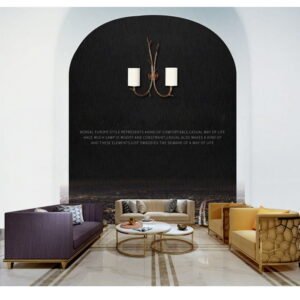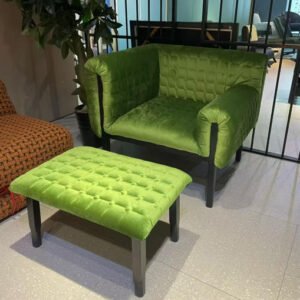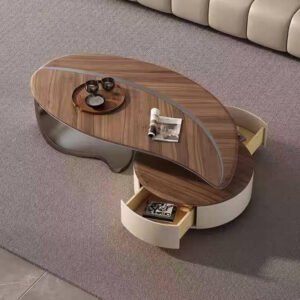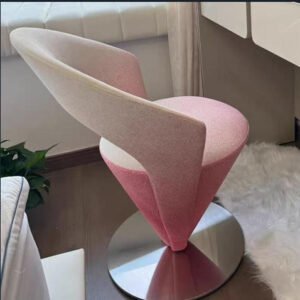

Choosing a Chinese furniture supplier is not just a purchasing decision. It affects project delivery, hotel opening dates, retail margins, warranty claims, and the way your end customers experience the furniture after months of real use.
Reliable sourcing starts before the first quotation. Buyers need clear product requirements, realistic expectations, and a structured vetting process that tests whether a supplier can repeatedly deliver the right materials, finishes, packaging, documentation, and lead times.
This guide explains the main sourcing pitfalls and gives buyers a practical supplier evaluation framework, from goal clarity to document review, sample checking, factory verification, payment control, logistics planning, and relationship management.

Understand Your Sourcing Goals and Requirements
Define Product Specs, Materials, and Finishes
Before contacting suppliers, define the exact furniture category, application, design style, construction method, and finishing standard. A hotel lobby sofa, a luxury villa dining chair, and a retail showroom cabinet may all be “custom furniture,” but they require different frames, foam density, upholstery performance, joinery, packaging, and installation planning.
A strong specification should include dimensions, drawings, reference images, material grades, hardware brands, veneer type, upholstery composition, metal finish, stone thickness, glass safety requirements, and acceptable tolerance ranges. If the furniture must match an interior design package, include finish boards, Pantone references, fabric codes, and approved samples.
For custom luxury projects, working with an experienced manufacturer such as أثاث النمل اليشم can help buyers convert design intent into production-ready requirements, especially when multiple furniture categories need coordinated finishes.
Set Quantity, Lead Times, and Budget Expectations
Many sourcing problems begin when the budget, quantity, and timeline are discussed too late. Suppliers need to know whether the order is for a prototype, a small custom batch, a hotel project, or recurring wholesale supply. MOQ, tooling cost, sample cost, production scheduling, and packaging method can change significantly depending on order structure.
Buyers should also separate target unit price from landed cost. A cheaper quote can become more expensive if the supplier uses weak packaging, misses the vessel cut-off date, or requires rework after arrival. For commercial projects, the cost of delay often exceeds the original unit-price savings.
Align on Compliance, Safety, and Sustainability Needs
Furniture buyers should confirm the destination market’s compliance requirements early. Depending on the product and market, this may include flammability rules, formaldehyde limits, labeling, packaging marks, anti-tipping standards, electrical component compliance, or children’s furniture safety rules.
For reference, buyers can review guidance from the U.S. Consumer Product Safety Commission furniture guidance, the European Commission CE marking information, and sustainability standards such as FSC labels when wood sourcing claims are important.
Research Supplier Profiles and Factory Credibility
Verify Business Licenses, Registrations, and Country-Specific Records
A professional Chinese furniture supplier should be able to provide its business license, export registration details, company address, factory address, tax registration information, and legal representative information. Buyers should check whether the registered business scope matches furniture production or export activities.
If you are sourcing at scale, verify whether the supplier is a manufacturer, trading company, or a hybrid operation. None of these models is automatically bad, but the risk profile is different. A trading company may coordinate multiple workshops efficiently, while a manufacturer may offer stronger process control. The key is transparency.
Distinguish Between Manufacturers and Trading Companies
A true manufacturer usually controls production planning, material purchasing, assembly, finishing, packaging, and internal QC. A trading company may rely on partner factories and subcontractors. Buyers should ask who owns the production equipment, who signs off samples, who controls final inspection, and who takes responsibility if defects appear after shipment.
Useful questions include:
- Which production steps are completed in-house?
- Which processes are outsourced, such as metal plating, marble cutting, upholstery, or glass work?
- Who manages defect correction and replacement parts?
- Can the supplier provide workshop videos, production photos, or third-party audit reports?
Compile a Shortlist Using Credible References and Online Footprints
Create a shortlist based on verified product capability, project experience, export history, responsiveness, and documentation quality. A supplier with fewer but highly relevant project references may be safer than a supplier with a large catalog but limited experience in your category.
Review websites, product pages, case photos, social media presence, company profiles, and customer references. For example, buyers looking for luxury residential or hospitality categories can review custom furniture product categories, living room furniture manufacturing options, و bedroom furniture supplier capabilities before requesting a project-specific quote.

Evaluate Product Quality Controls and Standards
Review Material Sourcing, Workmanship, and Finish Quality
Furniture quality is often decided before assembly. Wood moisture content, veneer matching, frame structure, foam resilience, seam tension, metal surface preparation, and adhesive quality all affect the final product. A polished showroom sample is not enough; buyers should understand how the supplier controls repeat production.
Ask for details on:
- Wood species, engineered board grade, and moisture control
- Foam density and compression recovery for seating products
- Upholstery cutting, stitching, seam alignment, and fabric direction
- Metal welding, polishing, electroplating, and powder coating
- Stone, glass, and hardware supplier sources
- Finish adhesion, scratch resistance, and color consistency checks
Assess Quality Control Processes and Defect Handling
A reliable supplier should have checkpoints before, during, and after production. For furniture, the most useful QC points often include incoming material inspection, frame inspection, pre-finishing inspection, upholstery inspection, assembly inspection, packaging drop checks, and pre-shipment inspection.
Do not only ask, “Do you have QC?” Ask for inspection forms, defect classification standards, sample approval records, and photos from previous mass-production checks. A supplier that can explain its top recurring defects and correction methods is usually more mature than one that simply says defects never happen.
Check Compliance with Relevant Standards
Not every furniture item requires CE marking, but some products with electrical parts, lighting, motors, or mechanical functions may need additional compliance review. If selling into regulated markets, buyers should confirm applicable standards before production starts.
For management systems, ISO 9001 quality management is a useful reference point, but certification alone should not replace factory-level verification. Buyers should still inspect actual process control, staff training, inspection frequency, and corrective action records.
Industry Insight: Where Furniture Quality Usually Breaks Down
In furniture sourcing, the most expensive defects are rarely obvious at quotation stage. They usually appear in four areas: finish inconsistency across batches, weak packaging for mixed-material items, dimensional drift in custom pieces, and slow replacement-part response after delivery. This is why professional buyers treat sample approval, production photos, packaging tests, and spare-part planning as cost-control tools, not administrative steps.
Furniture Supplier Risk Weighting Chart
The bar chart below shows a practical weighting model buyers can use when comparing suppliers. The numbers are sample scores and can be adjusted for your project type.
Supplier Evaluation Weighting
0
10
20
30
40
50
30%
25%
20%
15%
10%
5%
Quality
Capacity
Compliance
Lead Time
الدفع
Service
Request and Assess Documentation and Samples
Obtain Catalogs, Product Drawings, and BOMs
A quotation without technical documentation is not enough for serious sourcing. Request catalogs, detailed product drawings, bills of materials, finish references, packaging drawings, carton marks, and assembly instructions where applicable.
The bill of materials should identify key components such as wood substrate, veneer, upholstery fabric, foam, springs, metal frame, hardware, glue, lacquer, glass, stone, and packaging material. When a supplier refuses to provide even a simplified BOM, buyers should consider that a risk signal.
Review Certificates of Origin, Material Safety Data, and Test Reports
For export orders, documents may include certificates of origin, fumigation certificates, MSDS for finishes or adhesives, product test reports, wood sourcing declarations, and packaging compliance records. Buyers importing to the United States can also review general import guidance from U.S. Customs and Border Protection.
Evaluate Sample Quality, Color Matching, and Consistency
Samples should be assessed against the approved specification, not against a vague expectation. Measure dimensions, inspect seams, test drawers and hinges, check color under consistent lighting, sit on upholstered items for comfort, and review packaging. For large projects, approve a “golden sample” that becomes the production benchmark.
Buyers should also request a second sample or production trial when the product is complex. A supplier that can make one beautiful sample may still struggle to maintain consistency across 200 rooms of hotel furniture.

Excel-Style Supplier Scorecard Table
Use the table below as a copy-ready supplier scorecard. You can paste it into Excel or Google Sheets and adjust the scoring weight for your project.
| Evaluation Area | ما يجب التحقق منه | Weight | Supplier A Score | Supplier B Score | Evidence Required |
|---|---|---|---|---|---|
| Product Quality | Materials, finishing, construction, defect history | 30% | 8/10 | 7/10 | Samples, QC reports, production photos |
| Manufacturing Capacity | Monthly output, equipment, labor, bottlenecks | 20% | 7/10 | 8/10 | Factory audit, production schedule |
| Compliance | Market standards, labels, certificates, test reports | 15% | 8/10 | 6/10 | Certificates, test reports, declarations |
| Commercial Terms | MOQ, payment schedule, tooling, landed cost | 15% | 7/10 | 8/10 | Formal quotation, payment terms |
| Logistics Readiness | Packaging, labeling, export documents, Incoterms | 10% | 8/10 | 7/10 | Packing list, carton marks, loading plan |
| Communication | Response speed, English clarity, issue escalation | 10% | 9/10 | 6/10 | Email records, project updates |
Analyze Manufacturing Capabilities and Capacity
Confirm Monthly Output, Shift Patterns, and Bottlenecks
Capacity claims should be tested against real production conditions. A supplier may claim high monthly output, but the bottleneck may be finishing, upholstery, drying time, packaging, or outsourced metalwork. Ask how many production lines are available, how many workers are assigned to your order, and what happens during peak season.
For project furniture, the key question is not only “How many pieces can you produce?” It is “How many approved pieces can you produce without finish drift, missing parts, or shipping delays?”
Assess Equipment, Automation, and Tooling Stability
Modern cutting machines, CNC equipment, edge banding machines, sanding systems, spray booths, drying rooms, and upholstery tools can improve consistency. However, skilled workers and clear process documentation still matter. Luxury furniture often requires hand finishing, pattern alignment, and final touch-up work that automation cannot fully replace.
Understand Lead Times and Contingency Plans
Ask the supplier to break down lead time into drawing confirmation, material purchasing, sample production, mass production, finishing, inspection, packaging, and shipping. A responsible supplier should also explain contingency plans for delayed fabrics, unavailable hardware, quality rework, or port congestion.
Supplier Risk Distribution Pie Chart
The pie chart below summarizes common risk categories in furniture sourcing. It is useful for internal sourcing reviews before placing a deposit.
Typical Supplier Risk Distribution
Quality control: 35%
Capacity and lead time: 25%
Compliance documents: 15%
Logistics and packaging: 15%
Communication risk: 10%
Inspect Quality Management Systems and Third-Party Audits
Look for ISO or Equivalent Certifications and Internal QC Checkpoints
Certifications can support your assessment, but they should be treated as one piece of evidence. Ask whether certificates are current, issued by accredited bodies, and relevant to the production site handling your order. Also check whether internal QC documents are actually used on the factory floor.
Review Past Quality Incidents and Corrective Action Responses
Every factory has had quality issues. The difference is how quickly and transparently it responds. Ask for examples of corrective action reports, especially for finish defects, packaging damage, hardware shortages, dimensional errors, or shipment delays.
A mature supplier can usually explain the root cause, corrective action, preventive action, responsible department, and verification method. A weak supplier may only offer discounts after problems occur.
Consider Third-Party Audits or Factory Visits for Deeper Assurance
For large orders, a third-party audit or in-person factory visit is worth the cost. The audit should review production capacity, quality systems, worker safety, export documentation, subcontracting, environmental controls, and packaging procedures.
When travel is not possible, request a live video walkthrough, timestamped production photos, document scans, and video calls with production managers. Remote verification is not perfect, but it is better than relying only on a sales brochure.

Pricing, Payment Terms, and Financial Stability
Compare Unit Prices, MOQs, and Total Landed Cost
A professional comparison should include unit price, MOQ, tooling cost, sample cost, packaging cost, inland freight, export handling, ocean or air freight, insurance, duties, warehouse handling, and expected defect allowance. This is the only way to compare suppliers fairly.
Industry insight: in custom furniture projects, a 5% lower unit price can disappear quickly if packaging damage creates replacement shipments, if the finish must be repaired locally, or if a missing component delays site installation. Buyers should negotiate cost and risk together.
Understand Payment Milestones
Common payment structures include deposit before production, balance before shipment, or staged payments linked to sample approval, material purchase, production completion, and inspection. For higher-risk projects, consider tying the final payment to pre-shipment inspection results.
Use internationally recognized trade terms when possible. The ICC Incoterms rules can help buyers and suppliers clarify responsibility for freight, insurance, customs, and risk transfer.
Assess Supplier Financial Health and Risk Factors
Warning signs include unusually low pricing, frequent bank account changes, pressure for full payment, refusal to provide company documents, inconsistent business addresses, and poor communication after deposit. Buyers should also check whether the supplier depends heavily on one subcontractor or one material source.
Logistics, Shipping, and Compliance
Clarify Incoterms, Packaging Standards, and Labeling
Furniture packaging should match the product type and transport route. Fragile luxury pieces may need reinforced cartons, foam corner protection, wooden crates, palletization, moisture protection, anti-rust treatment, and clear handling marks. Packaging should be tested before shipment, especially for marble, glass, lacquer, and metal finishes.
Verify Export Documentation and Insurance Options
Before shipment, confirm commercial invoice, packing list, bill of lading, certificate of origin, fumigation certificate if wood packaging is used, insurance documents, and product-specific certificates. Document errors can delay customs clearance even when the goods are physically ready.
Plan for Customs Clearance and Potential Duty Considerations
Buyers should confirm HS codes, duties, anti-dumping considerations, local labeling rules, and importer responsibilities before ordering. If the shipment includes mixed furniture categories, verify that each product type is correctly classified. This reduces customs delays and unexpected tax exposure.
Communication, Responsiveness, and Relationship Building
Test Language Clarity, Response Speed, and Escalation Paths
Supplier communication should be tested before deposit. Send a structured inquiry with drawings, material requirements, quantity, destination, target date, and questions. Good suppliers reply with clarifying questions, not just a quick price.
Ask who will handle sales communication, technical confirmation, production updates, QC reports, logistics coordination, and after-sales support. If one person controls all information with no backup, project risk increases.
Assess Project Management Capabilities and Product Updates
For custom furniture, weekly production updates are valuable. Updates should include material arrival, frame completion, finishing progress, upholstery progress, packaging progress, inspection findings, and shipment status. Photos and short videos help buyers detect issues before they become expensive.
Set Expectations for Ongoing Post-Sale Support and Warranty Handling
After-sales support should be agreed before shipment. Clarify spare parts, touch-up kits, replacement policy, warranty period, claim evidence requirements, and response time. For hospitality and residential projects, small missing parts can delay installation, so spare hardware and labeled components should be planned in advance.
Due Diligence and On-Site Verification Options
Prepare a Factory Visit Checklist
A factory visit should be structured. Do not only walk through the showroom. Visit material storage, cutting area, assembly area, sanding area, finishing room, upholstery area, hardware storage, QC station, packaging area, and finished goods warehouse.
Checklist items should include:
- Business license and factory address match
- Production equipment and worker count
- Material storage conditions
- Moisture control and finishing environment
- Internal inspection records
- Packaging method and drop-test evidence
- Export document samples
- Subcontractor disclosure
- Safety and environmental controls
- Current production orders and delivery schedule
Consider Virtual or Remote Audits and Documentation Reviews
If travel is not practical, organize a live video audit. Ask the supplier to show the factory gate, business sign, production lines, current order status, material inventory, QC records, and packaging area. Request timestamped photos after the call to confirm the details discussed.
Create a Plan for Outbound Risk Mitigation and Supplier Diversification
Supplier diversification does not always mean splitting one project across many factories. It can mean having backup sources for fabric, hardware, marble, metal parts, or packaging. Buyers should identify the materials most likely to cause delay and create backup options before production starts.

Related Video: Furniture Manufacturing Process
The video below gives buyers a visual reference for furniture production flow, from materials and frame work to upholstery and finishing. Use it as a reminder to ask suppliers about each production stage, not only the final product photo.
Vetting a Chinese furniture supplier should be a structured process, not a quick price comparison. The strongest buyers define requirements early, verify supplier identity, test product quality, review documentation, inspect production capacity, control payment milestones, and plan logistics before placing a major order.
Documentation, verification, and ongoing relationship management reduce costly surprises. When findings are recorded in a supplier scorecard, buyers can compare options more objectively and make sourcing decisions based on evidence rather than promises.
For custom luxury furniture, hospitality furniture, and residential project sourcing, contact Jade Ant furniture to discuss drawings, materials, finishes, production planning, and export requirements for your project.
الأسئلة الشائعة
1. What are the first red flags when vetting a Chinese furniture supplier?
Major red flags include refusal to provide business documents, unclear factory location, prices far below market level, no sample process, weak packaging details, inconsistent communication, and pressure for full payment before production evidence is available.
2. How many samples should I request before committing?
For simple products, one approved sample may be enough. For custom luxury furniture, hospitality projects, or complex finishes, request a prototype and then a pre-production sample. Keep one approved “golden sample” as the benchmark for mass production.
3. What should be included in a factory visit checklist?
A factory visit checklist should include license verification, production equipment, material storage, QC checkpoints, finishing conditions, packaging method, export documents, subcontractor disclosure, safety practices, and current production capacity.
4. How can I tell if a supplier is a factory or a trading company?
Ask who owns the production equipment, where each production step is completed, whether subcontractors are used, and whether you can see production videos or visit the factory. A trading company is not always a problem, but it must be transparent about its role.
5. What documents should a furniture supplier provide before production?
Useful documents include quotation, product drawings, BOM, material specifications, finish references, sample approval records, production schedule, packaging plan, business license, export documents, and relevant compliance certificates or test reports.
6. Why is packaging so important in furniture sourcing?
Furniture often combines wood, metal, glass, marble, lacquer, and upholstery. Poor packaging can cause corner damage, scratches, moisture problems, deformation, or missing parts. Packaging should be reviewed before shipment, not after claims appear.
7. Should I use third-party inspection for furniture orders from China?
For medium or large orders, third-party inspection is strongly recommended. It helps verify quantity, workmanship, dimensions, finish, packaging, labels, and document readiness before the final payment and shipment.
8. How do I compare quotes from different Chinese furniture suppliers?
Compare total landed cost, not only unit price. Include MOQ, sample cost, packaging, inland freight, export handling, international freight, insurance, duties, expected defect risk, and the cost of possible project delays.
9. What makes a furniture supplier suitable for luxury projects?
A suitable luxury furniture supplier should manage finish consistency, custom drawings, material sourcing, sample approval, skilled handwork, careful packaging, project communication, and after-sales support. Experience with multi-room or multi-category projects is especially valuable.