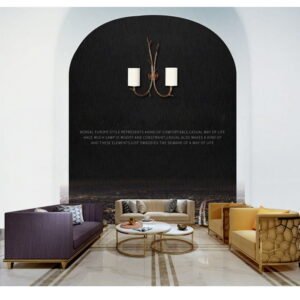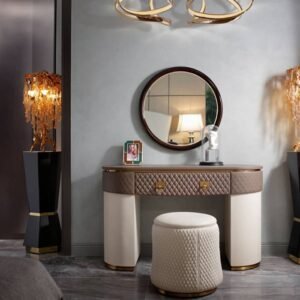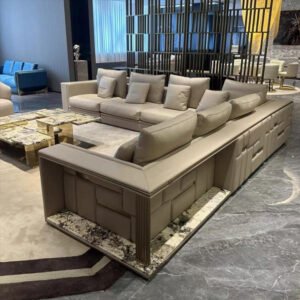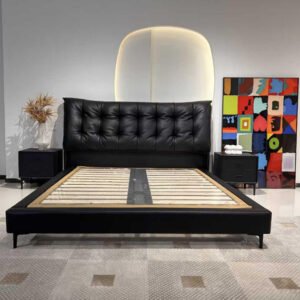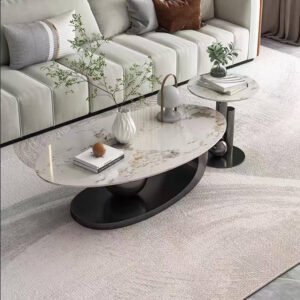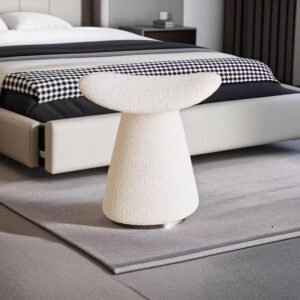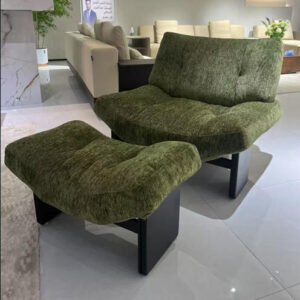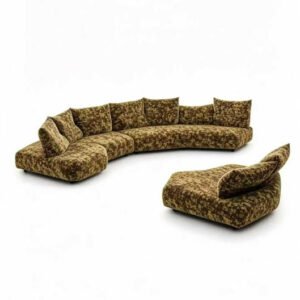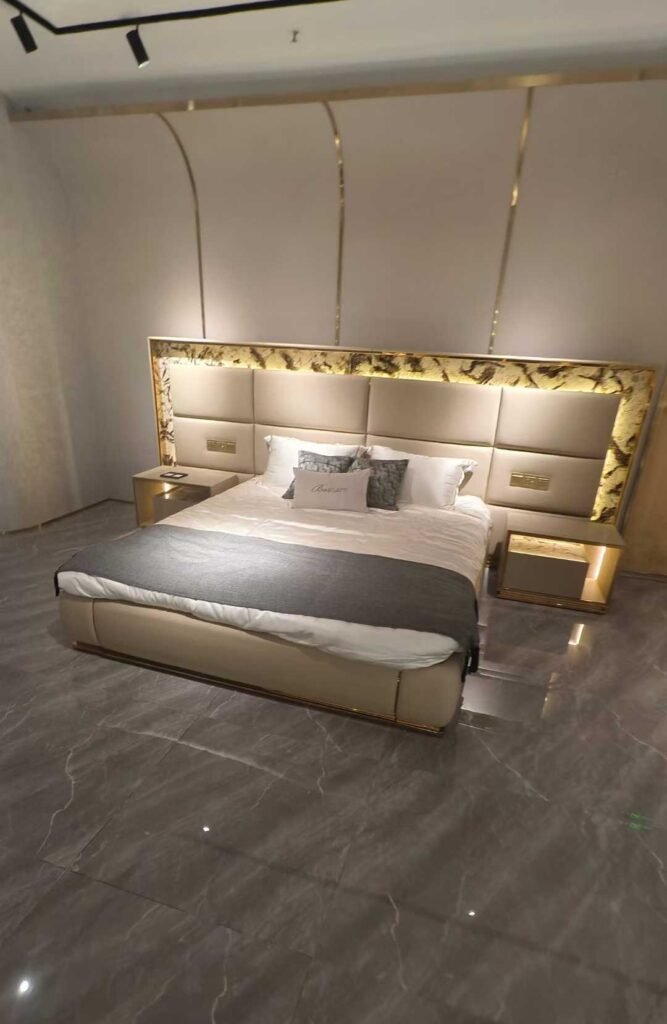


In early 2025, a US hotel group wired $127,000 to a “Gold Supplier” sourcing agent on Alibaba — without verifying credentials, factory access, or inspection protocols. Twelve weeks later, 420 nightstands arrived with delaminated veneers, jammed drawer slides, and formaldehyde-level odors that triggered guest complaints. Rework cost: $34,600. The cause was not bad luck. It was skipped due diligence — and asking none of the questions covered in this guide.
Why the Right Questions Change Everything
China remains the world’s dominant furniture manufacturing hub — responsible for more than 38% of global furniture exports and a domestic market projected to reach USD 220 billion by 2031 (Mordor Intelligence). Foshan alone houses over 7,000 factories. The opportunity is enormous. But so is the risk of choosing the wrong intermediary to navigate it.
A furniture sourcing agentA sourcing agent is a third-party professional based in China who acts as the buyer’s representative: finding factories, negotiating prices, managing quality inspections, and coordinating logistics. They charge either a commission (5–10% of order value) or a fixed monthly retainer ($1,500–$3,000). Unlike trading companies, agents work for the buyer — not the factory. can compress months of supply-chain learning into weeks, protect you from factories that substitute inferior materials, and negotiate pricing leverage you cannot access remotely. But a poor agent adds a middleman layer with no accountability — taking a commission while passing your specifications directly to whichever factory pays the highest referral fee.
The difference between these two outcomes comes down entirely to the questions you ask before signing. The 10 questions in this guide are drawn from real sourcing case studies, factory-side interviews, and procurement frameworks used by hospitality groups, furniture retailers, and interior design firms that have collectively moved millions of dollars of furniture through Chinese factories successfully.
Marcas como Móveis Jade Ant — a China-based manufacturer and sourcing partner with 15+ years of experience — operate at the intersection of factory capability and buyer accountability. Use this guide whether you’re evaluating an independent agent or a full-service partner like Jade Ant; the questions apply equally.

What is your experience with furniture sourcing from China, and can you share notable projects?
Why experience matters more than credentials
A certificate on the wall means nothing without the operational track record behind it. Furniture sourcing is a category-specific discipline — an agent who excels at consumer electronics or apparel may have zero understanding of wood moisture content, upholstery fire-rating requirements, or the regional specializations that distinguish Foshan’s sofa cluster from Anji’s office-chair ecosystem. Ask specifically how many móveis projects they have completed, at what order values, and for which destination markets.
The industry benchmark: an experienced furniture sourcing agent should be able to name at least five completed furniture projects with verifiable outcomes — order volume, destination market, product type, and a client contact you can call. Agents with under three years of furniture-specific sourcing experience may be capable, but they lack the factory relationship equity that gets your order prioritized when production schedules are tight.
What to look for in case studies and references
Ask for case studies in your product category. A hospitality FF&E project is operationally different from a retail flat-pack line. References from the same product tier matter because factory relationships are not universal — an agent with strong residential upholstery contacts may have no credibility with commercial-grade outdoor furniture manufacturers.
Which product categories and materials do you handle best, and are you familiar with the specific furniture styles you will source?
Assessing specialization and material knowledge
China’s furniture manufacturing geography is highly specialized. Foshan’s Longjiang district dominates upholstered residential and hotel seating. Anji produces roughly 60% of the world’s office chairs. Dongguan handles high-end contract and commercial-grade case goods. Fujian leads in certified solid teak and hardwood outdoor furniture. An agent who describes themselves as capable of sourcing “any kind of furniture from anywhere in China” is telling you they lack deep specialization — which in practice means they are sourcing from wherever pays the highest referral margin.
Ask the agent to explain, without prompting, the material-grade differences between HDPE rattanHigh-Density Polyethylene synthetic wicker — the commercial-grade standard for outdoor PE rattan furniture. An agent who cannot distinguish HDPE from standard LDPE rattan cannot protect you from material substitution, which accounts for 62% of outdoor furniture quality disputes. and standard PE rattan, or between MDF with real-wood veneer and solid wood. If they cannot, they cannot detect the material substitutions that are the most common quality failure in Chinese furniture orders.
How specialization impacts quality and customization
An agent whose primary network sits in the correct manufacturing cluster for your product type has factory relationships built over years — meaning your order gets production-line priority, your QC issues get resolved faster, and your customization requests are communicated to engineers who understand the product. An agent working outside their core competency is essentially a remote buyer making cold calls.
| Region | Especialização | Agent Should Know | Key Certification |
|---|---|---|---|
| Foshan, Guangdong | Upholstered residential & hotel seating, luxury case goods | Frame alloy grades, foam density ratings, fabric Martindale counts | ISO 9001, BSCI, BIFMA |
| Anji, Zhejiang | Office chairs, bamboo furniture, PE rattan | HDPE vs LDPE rattan, ergonomic certification standards | ISO 9001, GRS, FSC CoC |
| Dongguan, Guangdong | High-end contract & commercial case goods | Dovetail vs dowel joinery, lacquer film thickness | ISO 9001, BSCI, CARB/TSCA |
| Fujian Province | Solid teak, hardwood, certified outdoor wood furniture | FSC CoC verification, moisture content specs | FSC CoC, ISO 9001, EUTR |
| Linyi, Shandong | Flat-pack, panel furniture, MDF-based case goods | CARB Phase 2 / EPA TSCA formaldehyde limits | EPA TSCA Title VI, E0/E1 |
How do you manage supplier vetting and factory audits?
Steps in vetting, auditing, and ongoing compliance
A professional sourcing agent runs a structured, multi-layer verification process — not a one-time Google search. Ask the agent to walk you through their exact factory vetting steps. The industry-standard protocol includes: verifying the factory’s business license on China’s National Enterprise Credit Information System (NECIPS); independently confirming ISO 9001, FSC, BSCI, and CARB/EPA certificate numbers with issuing bodies; reviewing export shipping records through import-data platforms like ImportYeti; conducting an on-site facility audit; and maintaining an ongoing compliance calendar to flag certificate renewals and labor audits.
According to a 2025 spot-check analysis, roughly 8% of ISO certificates presented by Chinese furniture suppliers could not be verified on the issuing body’s database. An agent who does not independently verify certificates — who accepts a PDF the factory emails over — is providing cosmetic due diligence, not real protection.
Request audit templates or sample reports
Ask to see a redacted example of one of their factory audit reports. A credible agent will have a structured document covering: production capacity verification, QC department setup (dedicated vs. production-floor), machine list and condition, worker headcount and turnover, compliance documentation status, and photographic evidence of the facility. An agent who cannot produce such a report — or who says “I visit the factory and trust them” — is not running a professional operation.
Source: Compiled from agent capability assessments, LinkedIn procurement surveys, and sourcing industry data. Figures are approximate and reflect documented practices among surveyed agents.
What is your process for factory visits and production monitoring?
Visit frequency, reporting format, and issue escalation
Physical presence at the factory is the single most effective quality assurance tool in furniture sourcing — and an agent’s willingness and ability to be there consistently is a direct proxy for their operational capability. Ask specifically: how many factory visits do they conduct per order? What production milestones trigger a visit? What format is the visit report — photos only, annotated dimension checks, video walkthroughs, or a structured inspection document?
The industry standard for a commercial furniture order involves a minimum of three production touch points: a Pre-Production Inspection (PPI)Conducted before production begins — verifies that raw materials on-site (wood species, foam density, fabric lots, hardware model numbers) match the specification. The signed PPI report becomes the raw-material quality record for the entire order., a mid-production check at 30–40% completion, and a Pre-Shipment Inspection (PSI)Final AQL-based sampling of finished, packed goods before the balance payment is released. The PSI report is the buyer’s legal document if a quality dispute arises after delivery. before the balance payment is released. An agent who visits “when needed” or only at shipment is providing reactive oversight, not preventive quality control.
Tools they use: photos, videos, dashboards
Modern, professional sourcing agents document production milestones through photo and video evidence shared via a project-management dashboard or structured WeChat report. Ask to see an example visit report from a previous order. It should include timestamped photos with dimension measurements, comparison shots against the approved sample, defect tagging with classification (critical/major/minor), and a corrective-action follow-up timeline.
How do you handle pricing, quotes, and total landed cost?
Breakdown of costs: FOB, CIF, shipping, duties, packaging
An agent who gives you a single FOB unit price without context is giving you an incomplete picture. The custo total de importação — what you actually pay per unit when the furniture arrives at your warehouse — can be 55–75% above the FOB price depending on your destination market and the current tariff environment. For US buyers, the China Section 301 tariff alone adds 25% on top of the FOB price in 2025 (rising to 30% in January 2027). A professional agent quotes in landed-cost terms from the first conversation.
| Elemento de custo | Por unidade (USD) | Total (100 pcs) | % de FOB |
|---|---|---|---|
| FOB Factory Price | $120 | $12,000 | 100% |
| Ocean Freight (20′ FCL, shared) | $22 | $2,200 | 18.3% |
| Marine Insurance (0.4% CIF) | $0.56 | $56 | 0.5% |
| US MFN Import Duty (approx. 3.5%) | $4.20 | $420 | 3.5% |
| Section 301 Tariff (25%) | $30 | $3,000 | 25% |
| Customs Brokerage + ISF | $4 | $400 | 3.3% |
| Drayage + Warehouse Receiving | $7 | $700 | 5.8% |
| Custo total no destino | $187.76 | $18,776 | 156.5% |
How to compare quotes fairly across suppliers
Insist that all supplier quotes be presented on an identical FOB basis at the same port (typically FOB Guangzhou or FOB Yantian). This allows genuine price comparison — a CIF quote from one supplier and an EXW quote from another are not comparable without conversion. Ask your agent to provide a full landed-cost calculation for each supplier quote, using current freight rates and applicable duty rates from the USITC Harmonized Tariff Schedule. Any agent who cannot or will not do this is not managing your total cost — they are managing their commission.
What are your quality control measures and acceptance criteria?
Pre-production, in-process, and final inspections
Quality control in furniture sourcing is a three-stage process — and agents who only perform the final pre-shipment inspection are catching problems when they are most expensive to fix. The full protocol covers: (1) Pre-Production — verifying raw material specifications before a single cut is made; (2) During Production (DUPRO) — inspecting assembled units at 30–40% production completion, when corrections are still economically viable; and (3) Pre-Shipment — AQL-based random sampling of finished, packed goods.
Ask the agent to state specific AQL levels they apply. For commercial furniture, AQL 1,5 for major defects (visible cosmetic flaws, incorrect dimensions) and AQL 0 for critical defects (structural failure, sharp edges, safety hazards) are standard thresholds. An agent who responds with “we check everything carefully” without referencing AQL numbers is not running a systematic quality program — they are performing subjective visual inspection, which Foco na qualidade da Ásia research shows misses approximately 30–40% of dimensional and mechanical defects.
Non-conformities, rework, and credits
Ask specifically: what happens when the inspection finds defects above the AQL threshold? A professional agent has a documented non-conformance process — written defect report with annotated photos, corrective-action request to the factory with a deadline, re-inspection before payment release, and a rework cost negotiation that protects the buyer’s margin. An agent without this process puts the buyer in the position of discovering defects after the container is unloaded 10,000 km away — at that point, the only leverage is a warranty claim, which is far weaker than a pre-shipment hold.
Source: Compiled from procurement consultant analysis of 450 quality dispute records, Jade Ant supplier network data, and published industry QC reports. Figures represent approximate distributions.
How do you ensure IP protection and avoid counterfeits or copied designs?
Policies, NDAs, and documentation
Intellectual property protection in Chinese furniture sourcing is not a legal formality — it is an operational discipline that starts before the first factory conversation. The first document you should sign with any factory or agent you share proprietary designs with is a China NNN AgreementNon-Use, Non-Disclosure, Non-Circumvention agreement — the Chinese equivalent of an NDA. Unlike a standard NDA (which Chinese courts often find unenforceable), an NNN agreement drafted in Chinese and specifying Chinese jurisdiction and RMB-denominated penalties creates real enforcement leverage. As Harris Sliwoski Law notes, this is the foundational IP protection tool for China sourcing., not a standard Western NDA. Chinese-law NNN agreements specify clear monetary penalties in RMB, are governed by Chinese courts, and are enforced against Chinese entities — the structure that actually creates deterrence.
Ask your agent whether they can prepare and execute NNN agreements with factories before you share specifications. Ask whether they recommend registering your designs with China’s National Intellectual Property Administration (CNIPA) — which, for furniture with distinctive design elements, is the most effective defensive step an importer can take. China’s IP courts have significantly improved enforcement consistency since 2020, but only for rights that have been formally registered in China.
Practical steps during sample and mass production
Beyond legal agreements, IP protection requires operational discipline at the factory level. Ask your agent: do they specify in the production contract that all design drawings, molds, and tooling belong to the buyer? Do they physically retrieve and destroy sample-production cutting patterns after bulk production is complete? Do they monitor whether the factory is producing your designs under a different name for other buyers — a practice that experienced agents catch through network intelligence and factory visit observations?
Source: YouTube — “Buying From China? Here’s Why You Might Want To Hire a Sourcing Agent.” This video provides a buyer-side perspective on how sourcing agents operate in China’s furniture manufacturing ecosystem and what to verify before engaging one.
What are your communication protocols and project management capabilities?
Response times, reporting cadence, and language considerations
Communication failure — not factory dishonesty — is the most common reason furniture orders go wrong. Specification nuances lost in translation, delayed responses at critical production decision points, and factory updates that never reach the buyer on time are the mechanisms behind most quality and timeline failures. Ask the agent to state their guaranteed response time in writing: a professional agent commits to responding within 24 hours on business days (Chinese business hours, UTC+8).
Ask which communication tools they use. WeChat is the primary real-time channel for Chinese business; an agent who insists on email only is signaling they do not have an active on-the-ground operation. For buyers who cannot read Mandarin, ask how the agent handles factory-side technical discussions — specifically, whether they can provide bilingual production reports and whether factory engineering communications are translated before being passed to the buyer.
Project dashboards and milestone tracking
A professional agent tracks every active order against a production milestone timeline with defined checkpoints: RFQ completion, counter sample delivery, pre-production sample approval, production start, 30% DUPRO completion, 100% production completion, PSI date, container loading, and vessel departure. Ask whether this timeline is shared with the buyer in real time — via Trello, Notion, Airtable, or even a shared Google Sheet — and whether delays trigger automatic escalation alerts rather than discovery at the next scheduled check-in.
| Tool | Use Case | Red Flag If Missing | Professional Standard |
|---|---|---|---|
| WeChat (Business) | Real-time factory communication, urgent decisions | Agent uses email only — not embedded in Chinese business communication | Essencial |
| Project Dashboard | Milestone tracking, buyer visibility into production status | Agent provides verbal updates only — no structured tracking | Essencial |
| Photo/Video Reports | Production verification at each milestone visit | Agent sends text-only factory updates with no visual evidence | Essencial |
| Bilingual Documentation | Spec sheets, POs, QC reports — English + Mandarin | Agent relies on factory-translated specs only | Strongly Recommended |
| Video Call Access | Live factory walkthroughs, sample review meetings | Agent cannot arrange video access to factory floor | Strongly Recommended |
How do you handle logistics, shipping terms, and Incoterms?
Shipping options, packaging standards, lead times
A sourcing agent who cannot fluently discuss IncotermsInternational Commercial Terms (Incoterms): standardized trade terms defining who bears risk and cost responsibility at each stage of shipment. The three most common in China furniture trade are FOB (buyer takes responsibility from the vessel loading), CIF (seller covers freight + insurance to destination port), and DDP (seller covers everything including customs and last-mile delivery). FOB is recommended for experienced buyers as it gives the most cost control. is not equipped to protect your logistics interests. Ask specifically: do they recommend FOB or CIF for your situation, and why? Do they have established freight forwarder relationships that provide competitive ocean freight rates? Can they coordinate ISF filingImporter Security Filing (ISF, also called “10+2”): a US Customs and Border Protection requirement that must be submitted at least 24 hours before a vessel departs from a foreign port. Failure to file on time results in a $5,000 penalty per container. Your customs broker handles this — but your sourcing agent should know what it is and confirm it is on the pre-departure checklist. timing with your customs broker?
Packaging is the most underestimated logistics variable in furniture importing. A Jade Ant Furniture analysis of 1,200 container shipments found that upgrading from standard single-wall corrugated to reinforced double-wall with corner protectors and foam inserts — at a cost of $4–$5 per unit — reduced transit damage from 6.8% to 0.9%. That is an average saving of $18,700 per container. Ask the agent whether packaging specifications are written into the purchase order or left to factory discretion.
Risk management and insurance
Marine cargo insurance at approximately 0.3–0.8% of CIF value is non-negotiable for furniture shipments. Ask whether the agent arranges insurance as part of their service or whether this is the buyer’s responsibility to coordinate separately. Also ask how they handle force-majeure delays — port congestion, typhoon seasons, Chinese New Year shutdowns — and whether production timelines are padded to account for them. Chinese New Year shutdowns typically run 3–4 weeks in late January to mid-February; any agent who does not factor this into your production timeline is giving you an optimistic schedule they cannot keep.
| Incoterm | Who Pays Freight | Who Handles Customs | Buyer Risk Starts | Melhor para |
|---|---|---|---|---|
| EXW | Buyer (all) | Buyer | Factory gate | Buyers with own freight agent in China |
| FOB | Buyer (from port) | Buyer | Vessel loading | Recommended for most buyers |
| CIF | Seller (to dest. port) | Buyer | Destination port | Buyers preferring seller to manage freight |
| DDP | Seller (all) | Seller | Your warehouse | First-time importers; higher FOB cost |
What are your fees, contracts, and terms of engagement?
Fee structure, cancellation policies, and conflict resolution
China sourcing agents use two primary fee structures. Commission-based fees typically range from 5–10% of total FOB order value (dropping to 3–4% for orders above $100,000). Fixed monthly retainers of $1,500–$3,000 are used for ongoing programs where the agent manages multiple concurrent orders. Some agents combine both — a reduced commission rate plus a retainer that covers time investment on specification development and supplier qualification.
The critical question is not the rate — it is whether the agent discloses their commission structure from the factory side. Many agents receive both a buyer commission and a referral fee from the factory — a dual compensation structure that creates direct incentive to recommend factories that pay the highest referral rate rather than those best suited to your project. Ask explicitly: “Do any of the factories you recommend pay you a referral fee or commission?” A professional agent either earns from the buyer only or fully discloses factory-side payments.
What a typical contract should include
A professional sourcing agent engagement contract should specify: the scope of services (factory sourcing, QC, logistics coordination — listed individually), fee structure and payment timing, IP confidentiality obligations, the agent’s liability for quality failures attributable to their oversight gaps, cancellation terms (with notice periods and any retainer refund provisions), and dispute resolution — typically arbitration under HKIAC or CIETAC rules for enforceability across both parties’ jurisdictions.
Fonte: SourcingAll fee analysis, Dragon Sourcing 2025 cost insights, e Vortix International fee guide. Rates are 2025 market benchmarks and vary by agent capability and service scope.
Evaluating Responses and Making the Hiring Decision
The 10 questions above are not a formality — they are a structured filter that separates sourcing agents who will genuinely protect your supply chain from those who will charge a commission while acting as a more expensive version of Alibaba search. Use the scoring framework below to evaluate each agent’s responses.
Final Checklist Before Signing
- Verified the agent’s business registration and legal entity status in China via NECIPS.
- Called at least two client references who placed furniture orders in your product category within the last 18 months.
- Reviewed a redacted factory audit report and example pre-shipment inspection report.
- Confirmed the agent’s QC protocol includes PPI, DUPRO at 30–40%, and PSI with AQL documentation.
- Received a written disclosure of all fee sources — buyer commission and any factory-side referral arrangements.
- Confirmed the agent will execute a China NNN agreement with the factory before your designs are shared.
- Reviewed the engagement contract for scope of services, liability clauses, cancellation terms, and dispute resolution mechanism.
- Tested communication responsiveness: sent a detailed technical question and measured response time and quality.
- Confirmed the agent quotes on a landed-cost basis, not FOB only.
- Confirmed ISPM-15 fumigation and ISF filing are on the agent’s pre-shipment checklist.
If an agent’s answers consistently score well across these 10 questions and the checklist, you have found a professional partner. If multiple answers are vague, defensive, or missing entirely, you have found a liability — one that will cost you far more than their commission.
For buyers who want to bypass this process entirely and work directly with a vertically integrated manufacturer and sourcing partner, Móveis Jade Ant offers factory-direct production combined with full sourcing-agent services: factory matching, QC inspection coordination, bilingual specification development, logistics management, and post-delivery support. Their resource library covers the full China furniture procurement workflow — including a detailed guide on working with Chinese furniture suppliers in 2026 e o supplier selection framework that underpins their factory vetting process.
Start Your China Furniture Sourcing With Confidence
Jade Ant Furniture combines factory-direct production with full sourcing-agent capabilities — QC coordination, bilingual specifications, logistics management, and 15+ years of verified supplier relationships.
Explore Jade Ant Furniture →Glossary: Key Terms for Furniture Sourcing Agents
- FOB (Free On Board)
- The seller loads goods onto the vessel at the origin port. The buyer assumes all costs and risk from that point — ocean freight, insurance, duties, and delivery. The most common Incoterm in Chinese furniture exports.
- AQL (Limite de Qualidade Aceitável)
- A statistical sampling standard for quality inspections. AQL 2.5 = the shipment is accepted if no more than 2.5% of sampled units have major defects. AQL 0 for critical safety defects means zero tolerance.
- Contrato NNN
- Non-Use, Non-Disclosure, Non-Circumvention agreement. China’s enforceable equivalent of an NDA — written in Mandarin, governed by Chinese law, with RMB-denominated penalties. The essential IP protection tool before sharing designs with any Chinese factory.
- DUPRO (During Production Inspection)
- A third-party inspection conducted at approximately 30–40% production completion. Catches defects when corrections are still economically viable — before the entire run is finished and packed.
- BSCI / amfori
- Business Social Compliance Initiative — an industry-driven audit program confirming labor rights, wages, working hours, and child-labor compliance at the factory level. Mandatory for many EU retail procurement programs.
- ISF (Importer Security Filing)
- A US Customs requirement (“10+2”) that must be filed at least 24 hours before vessel departure. Failure results in a $5,000 penalty per container. Your agent should confirm ISF filing is on the pre-departure checklist.
- CARB / EPA TSCA Title VI
- California Air Resources Board Phase 2 / EPA TSCA: US federal formaldehyde emission limits for composite wood products (panels, MDF, plywood). Mandatory for all composite-wood furniture sold in the US market.
- FSC Chain of Custody (CoC)
- Forest Stewardship Council certification that tracks wood from a certified sustainable forest through every manufacturing step. Mandatory for wood furniture entering the EU under the EU Timber Regulation.
- OEM vs. ODM
- OEM (Original Equipment Manufacturing): buyer supplies the design, factory produces it. ODM (Original Design Manufacturing): factory provides existing designs the buyer can modify and rebrand. OEM requires higher MOQs; ODM offers faster sampling.
- Tarifa da Seção 301
- A US punitive tariff applied to China-origin goods. Currently 25% on most upholstered wood furniture — rising to 30% from January 2027. The single largest variable in US-bound furniture landed cost calculations.