
Ordering Chinese furniture directly from manufacturers can reduce unnecessary trading layers, improve customization control, and make large projects easier to coordinate. But the saving only becomes real when the buyer manages the full workflow: design brief, factory verification, prototypes, quality checks, shipping, customs, delivery, and after-sales support.
This guide is written for interior designers, retailers, procurement managers, developers, and individual buyers ordering bespoke pieces. It explains how to move from customization to delivery with fewer surprises, clearer documents, and better decision-making.

Understanding the Direct-from-China Advantage
China’s furniture industry is built around manufacturing clusters. Upholstery workshops, wood frame factories, metal hardware suppliers, stone fabricators, packaging companies, and logistics agents often operate close to each other. This makes China practical for full-home, villa, apartment, hotel, and retail furniture projects.
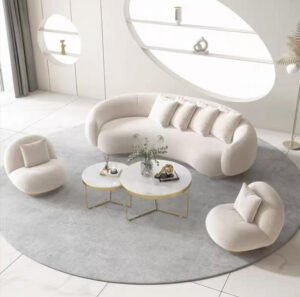
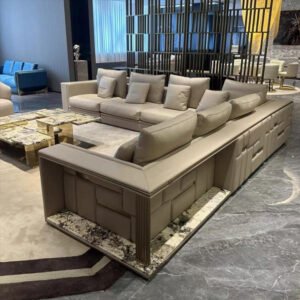
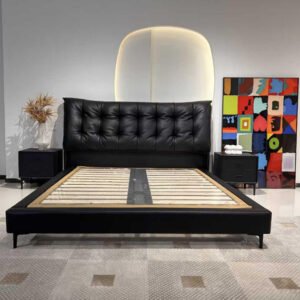
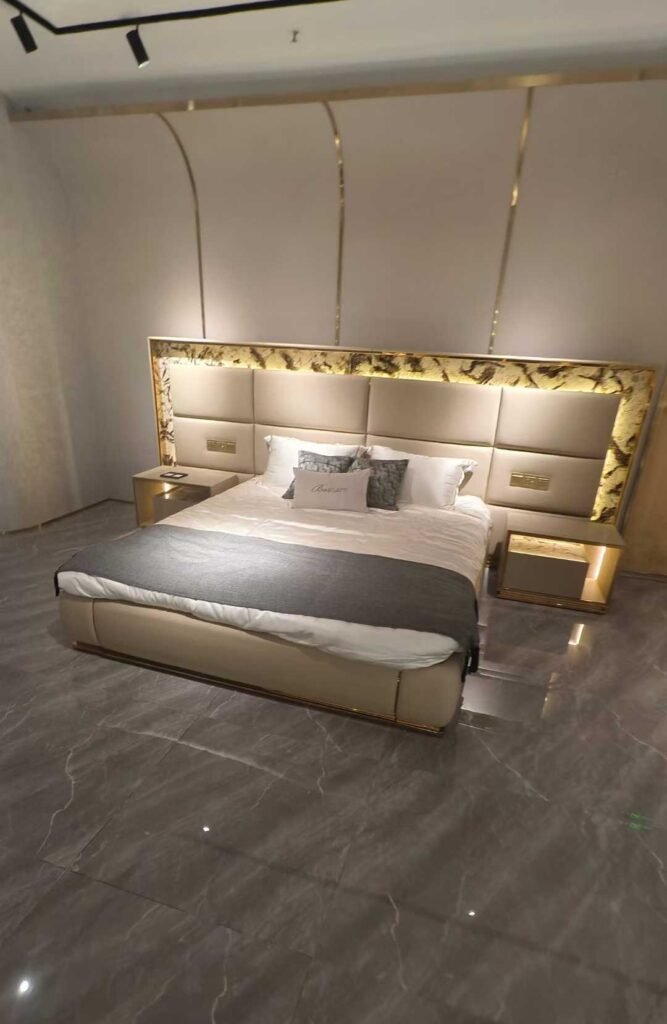
The advantage is not only price. It is also speed of coordination. A buyer can request a sofa, coffee table, bed, nightstand, wardrobe, dining table, and sideboard in a connected style instead of buying disconnected pieces from different retail channels.
Why direct-from-manufacturer matters
Direct-from-manufacturer ordering means the buyer communicates with the company responsible for producing or coordinating the furniture, not only with a retail intermediary. This matters because custom furniture depends on small details: frame structure, foam density, veneer direction, lacquer color, handle position, packaging method, and installation clearance.
You can define dimensions, wood species, finish color, upholstery, hardware, packaging, and inspection checkpoints before production.
Room-by-room furniture can be planned as one package, which helps designers keep proportions, colors, and delivery timing consistent.
When a drawing is difficult to manufacture, the factory can suggest structural changes before money is spent on the wrong prototype.
For buyers who want tailored sizes or coordinated residential and hospitality pieces, a factory partner such as Jade Ant furniture manufacturer from China can help connect design requirements with actual production planning.
Cost and lead-time considerations
Factory-direct pricing is usually more transparent, but it is not automatically “cheap.” The final cost depends on material grade, order quantity, finish complexity, labor hours, packaging, freight, duties, taxes, and installation.
Lead time also needs realistic planning. A simple repeat order may move quickly. A bespoke full-home order needs more time for drawings, samples, revisions, production, quality checks, packing, sea freight, customs clearance, and final delivery.
Illustrative only. Actual cost split changes by product type, finish, quantity, shipping method, and destination country.
Defining Your Furniture Needs and Style
A strong order starts with a clear brief. A brief is a short document that explains what you need, where the furniture will be used, what style you prefer, and what budget range you want to protect.
Identifying your aesthetic and functional needs
Aesthetic needs describe how the furniture should look. Functional needs describe how it must work in daily life. Both are important.
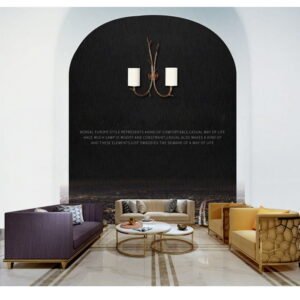
For example, a formal living room may need symmetrical sofas, brass details, and a refined stone coffee table. A serviced apartment may need stain-resistant fabric, replaceable parts, compact storage, and strong packaging for repeat installation.

Budget range and constraints
A budget range helps the manufacturer propose realistic solutions. Without a range, the factory may quote premium materials that exceed your target or lower-grade options that do not match your project.
Constraints are limits that affect the design. Common examples include ceiling height, elevator size, staircase width, wall sockets, humidity, sunlight, child safety, pet use, and installation schedule.
Glossary: Useful terms before you request a quote
- RFQ
- Request for Quotation. A document sent to factories with product details, quantities, drawings, materials, and delivery expectations.
- MOQ
- Minimum Order Quantity. The smallest quantity a factory will accept for a product, material, color, or production run.
- Prototype
- A first sample or trial piece made to test dimensions, comfort, finish, structure, or assembly before bulk production.
- Prazo de entrega
- The time required to complete production after all approvals are confirmed. Shipping time is usually counted separately.
Sourcing Reputable Manufacturers and Factories
The best manufacturer is not always the one with the most beautiful catalog. It is the one whose production experience matches your project. A villa furniture order, boutique hotel order, retail wholesale order, and single custom cabinet order all require different capabilities.
How to verify factory credibility
Factory verification means checking whether the supplier can produce what it promises. Start with business information, product specialization, export experience, factory photos, workshop videos, customer references, and recent project examples.
- Ask which products are made in-house and which are outsourced.
- Request photos or video of current production, not only showroom displays.
- Check whether the factory has handled your destination market before.
- Ask how the factory controls samples, revisions, QC reports, and packaging photos.
- Confirm who communicates with you during production: salesperson, project manager, or engineer.
When comparing partners, review the Jade Ant furniture company profile to understand service scope, project experience, and the type of buyers the company supports.
Key certifications to look for
Certifications are not a replacement for inspection, but they help reduce risk. Depending on the product and destination market, you may need to ask about material safety, wood sourcing, fire standards, formaldehyde limits, or business compliance.
For wood-based products, responsible sourcing may involve systems such as Informações sobre madeira controlada pelo FSC. For U.S. importers, some wood and plant-based products may require attention to USDA APHIS Lacey Act declaration guidance.
Communication and Language: Bridging the Gap
Good communication is a risk-control tool. A factory may understand “walnut color,” but that phrase can mean solid walnut, walnut veneer, walnut-stained ash, or a printed surface. The safest approach is to combine simple language with images, drawings, samples, and written approvals.
Language and project management tips
Use short sentences. Avoid vague instructions such as “make it luxury” or “same as picture.” Instead, specify the visible result and the technical requirement.
- Use one product name or code for each item.
- Keep all final specifications in one shared document.
- Mark every drawing with a version number and approval date.
- Use annotated images to show changes clearly.
- Confirm changes in writing before production continues.
- Request weekly updates for larger orders.
For visual categories, reference pages such as custom living room furniture options can help you describe the type of sofa, coffee table, console, or TV cabinet you want without relying on vague style words.
Customization Options: Wood, Finish, Dimensions
Customization can include size, material, color, texture, storage layout, upholstery, stone tops, metal details, and packaging. The key is understanding which changes are easy and which changes affect cost, structure, or lead time.
Wood options and core construction
Wood options should be discussed in two layers: the visible surface and the internal structure. The visible surface may be solid wood, natural veneer, engineered veneer, or lacquer. The internal structure may use solid wood, plywood, MDF, or metal reinforcement.
Compensado is often chosen for stability. MDF can be useful for smooth lacquered finishes. Solid wood gives natural character, but it requires moisture control and correct joinery.
Finishes and aging effects
Finish selection affects appearance, maintenance, and long-term aging. Matte finishes hide fingerprints better than high-gloss finishes. Dark lacquer can look dramatic, but it may show dust faster. Natural veneer can age warmly, but sunlight exposure should be managed.

Customization limits and practical trade-offs
Almost anything can be customized, but not every change is practical. A very long dining table may need a stronger base. A one-piece wardrobe may not fit through the stairwell. A deeply carved chair may require more labor and a longer production schedule.
| Customization Area | What You Can Specify | Cost / Time Impact | Practical Buyer Tip |
|---|---|---|---|
| Dimensões | Width, depth, height, seat height, storage layout | Low to medium unless structure changes | Check door, elevator, stair, and room clearance before approval. |
| Wood surface | Solid wood, veneer, grain direction, stain tone | Médio a alto | Approve a physical finish sample, not only a screen image. |
| Upholstery | Fabric, leather, color, stitch style, cushion firmness | Médio | Ask for swatches and cleaning instructions before production. |
| Hardware | Hinges, slides, handles, soft-close function | Low to medium | Do not reduce quality on moving parts used daily. |
| Stone or metal details | Marble, quartz, sintered stone, brass, stainless steel | Médio a alto | Confirm weight, crate protection, and replacement policy for breakage. |
Ordering Process: Prototypes, MOQ, Lead Times
Once the design direction is clear, the order should move through a controlled process. The aim is to catch mistakes before they become production costs.
Process steps: from inquiry to prototype
- Send an RFQ with dimensions, drawings, reference photos, materials, quantity, and destination country.
- Receive the first quote and clarify assumptions.
- Review drawings, material options, finishes, and estimated lead time.
- Approve samples or a prototype when needed.
- Confirm final price, payment terms, packaging method, and shipping term.
- Pay deposit and start production only after written sign-off.
If your project includes dining furniture, bedroom furniture, and loose living room furniture, group products by room. Category pages like dining room furniture references can help you organize the inquiry in a way factories can quote more accurately.
Common MOQs and samples
MOQ depends on the material, product type, and factory workflow. A single bespoke piece may be possible, but the unit price can be higher because drawing, sample preparation, production setup, packing, and export handling are spread across fewer items.
Samples are especially important for fabric, leather, veneer, lacquer, metal finish, and stone. For large furniture, a full prototype may be costly, so buyers often approve partial samples, detailed drawings, and production photos instead.
- 28% Specification mismatch
- 20% Production delay
- 18% Finish or color variation
- 16% Packaging or transit damage
- 18% Customs, duties, or delivery issues
Quality Assurance and Factory Audits
Quality assurance is not the same as a final inspection. Final inspection finds problems at the end. Quality assurance reduces the chance of those problems happening in the first place.
Quality checks during production
Ask for quality checks at key production stages. For a sofa, this may include frame completion, foam installation, upholstery before closing, final appearance, and packing. For a cabinet, it may include board cutting, veneer matching, sanding, finishing, hardware installation, and door alignment.
- Pre-production check: drawings, materials, finish samples, and hardware.
- In-process check: dimensions, structure, joinery, and visible surface preparation.
- Pre-packing check: color, sheen, seams, drawers, doors, legs, and labels.
- Packing check: foam, corner guards, cartons, crates, moisture protection, and shipping marks.
Factory audit checklist
A factory audit is a structured review of a supplier’s capability. It can be done in person, by a third party, or through a live video visit if travel is not possible.
| Audit Area | O que verificar | Por que é importante |
|---|---|---|
| Production capability | Workshop size, equipment, workers, current orders | Shows whether the factory can handle your volume and deadline. |
| Material control | Wood storage, board quality, fabric rolls, leather, hardware | Reduces risk of substitution or inconsistent batches. |
| Sample management | Approved samples, color boards, signed swatches | Gives the production team a physical reference. |
| QC process | Inspection records, defect handling, photo reports | Shows whether issues are tracked or handled casually. |
| Export packaging | Carton strength, crate design, corner protection, labels | Furniture damage often happens after production, during transport. |
Shipping and Logistics: FOB, CIF, and Freight Forwarders
Shipping is where many first-time buyers underestimate complexity. Furniture is bulky, sometimes fragile, and often sensitive to moisture or rough handling. The right shipping plan should be discussed before production starts.
Incoterms basics
Incoterms explain who pays for each part of the transport journey and where risk transfers from seller to buyer. Common terms in furniture orders include EXW, FOB, CIF, and DDP.
For official guidance, review the International Trade Administration Incoterms overview e o Regras do ICC Incoterms 2020.
Packaging and risk of loss
Packaging should match the risk. A fabric chair does not need the same protection as a high-gloss cabinet or marble table. For sea freight, ask about moisture control, corner protection, carton thickness, palletization, crates, and shipping marks.

Choosing a freight forwarder
A freight forwarder is a logistics company that helps arrange transport, documents, customs coordination, and delivery. Choose one that has handled furniture, not only small parcels.
- Ask whether the forwarder can handle oversized cartons and wooden crates.
- Confirm whether the quote includes origin fees, destination fees, customs clearance, and final delivery.
- Check whether residential delivery, lift-gate service, or appointment delivery is available.
- Ask how damage claims are documented and processed.
Customs, Duties, and Compliance
Customs and duties are part of the landed cost. Landed cost means the full cost to bring goods to your door, including product price, freight, insurance, duties, taxes, customs fees, and local delivery.
HS codes, duties, and VAT
HS codes classify products for customs. Furniture often falls under different HS codes depending on whether it is wood, metal, upholstered, bedroom furniture, office furniture, or parts.
U.S. importers can use the official USITC Harmonized Tariff Schedule search to research tariff classifications. Buyers in VAT countries should also confirm whether VAT is payable at import and whether it can be reclaimed under local rules.
Import documentation and regulatory checks
Import documents usually include a commercial invoice, packing list, bill of lading or air waybill, certificate of origin when needed, and customs declaration details. Wood-based products may require additional declarations depending on the destination country.
For U.S. personal imports, U.S. Customs and Border Protection guidance on furniture purchased abroad is a useful starting point. Commercial importers should work with a customs broker to confirm codes, duties, and compliance before shipping.
Finalizing the Delivery: Inspections, Packaging, and After-sales Support
Delivery is the final stage, but it should not be treated as an afterthought. A successful delivery depends on inspection, packaging, documents, local access, installation planning, and clear after-sales support.
Inspection on delivery
Inspect the shipment before signing final acceptance when possible. Check the outer packaging first. If there is visible damage, photograph the carton or crate before opening. Then inspect the furniture for scratches, color issues, loose parts, missing hardware, cracked stone, bent metal, or alignment problems.
- Take photos of every carton or crate before unpacking.
- Match item labels with the packing list.
- Check visible surfaces under good lighting.
- Open drawers and doors to test alignment and movement.
- Keep packaging until the inspection is complete.
Warranty and after-sales service
Warranty terms should be agreed before the order is placed. A useful warranty explains what is covered, what is excluded, how long coverage lasts, and what evidence is required for claims.
A clear after-sales process matters more than a vague promise. If a handle is missing, a hinge is damaged, or a panel needs adjustment guidance, the supplier should be able to identify the item, provide a solution, and communicate next steps. This is why organized order codes, packing labels, and photo records are valuable.
Buyers planning a broader project can also browse the Coleção de produtos de móveis Jade Ant to prepare a room-by-room list before requesting a coordinated quote.

Ordering Chinese furniture direct is a practical route when the workflow is managed carefully. The process starts with a clear design brief, realistic budget, and verified manufacturer. It continues through prototypes, MOQ planning, production checks, freight coordination, customs preparation, delivery inspection, and after-sales support.
The key takeaway is simple: verify, document, and communicate. Verify the factory. Document every approved detail. Communicate changes in writing. This reduces disputes and helps the manufacturer produce what you actually expect.
Direct sourcing can save time and money, but only when the buyer controls the hidden details: materials, finish samples, drawings, packaging, Incoterms, HS codes, and final inspection. When these details are handled properly, a factory-direct order can move from customization to delivery with far less uncertainty.
Perguntas frequentes
What should I include in a factory RFQ?
Include product names, quantities, dimensions, reference photos, drawings, materials, finishes, upholstery details, hardware requirements, destination country, expected delivery timeline, packaging needs, and any compliance requirements. The clearer the RFQ, the more accurate the quote.
How long does a typical direct-from-China order take from inquiry to delivery?
A simple order may take several weeks for quotation, sampling, and production, while a complex custom project often takes 30 to 60 days for production after approval. Sea freight, customs clearance, and final delivery can add several more weeks depending on the destination.
What are common risks and how can I mitigate them during shipping?
Common risks include moisture damage, crushed corners, cracked stone, scratched high-gloss surfaces, missing cartons, and delivery access problems. Reduce risk by confirming export packaging, taking packing photos, buying transit insurance, using clear shipping marks, and inspecting goods before final acceptance.
Is FOB or CIF better for ordering Chinese furniture?
FOB gives the buyer more control over the main freight and destination costs, while CIF includes freight and insurance to the destination port. The better option depends on your logistics experience, destination country, and whether you have a reliable freight forwarder.
Do I need a prototype before placing a bulk furniture order?
A prototype is recommended for new designs, complex upholstery, new finishes, or large commercial orders. For simpler items, material samples, finish panels, approved drawings, and production-stage photos may be enough.
How can I check whether a Chinese furniture factory is reliable?
Review business background, project references, workshop photos, live video tours, sample quality, export experience, QC process, packaging standards, communication speed, and willingness to document specifications. For larger orders, consider a third-party factory audit.
What hidden costs should I expect when importing furniture?
Hidden costs may include sample fees, drawing revisions, stronger packaging, inland trucking, port charges, customs duties, VAT or sales tax, broker fees, delivery appointments, storage, installation labor, and replacement parts.
Can individual homeowners order bespoke Chinese furniture direct?
Yes, but homeowners should confirm MOQ, design support, shipping method, customs responsibility, residential delivery, and installation needs before paying a deposit. A single custom order can be practical when the specification and logistics are clearly planned.