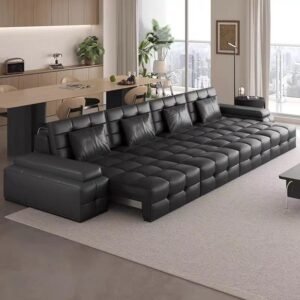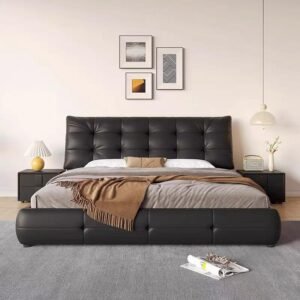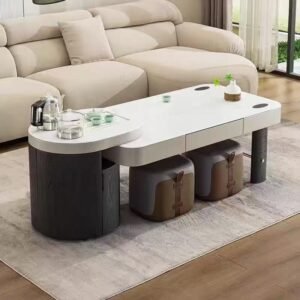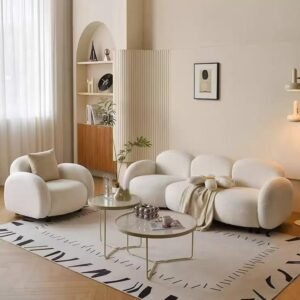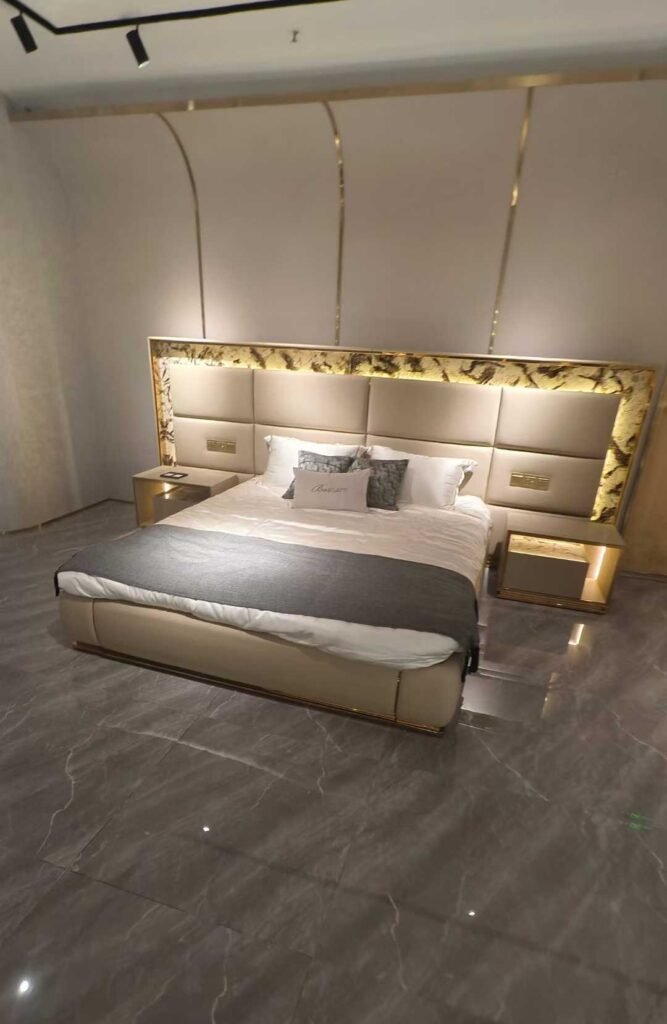
Store-offered design services rely on templated solutions and limited creative boundaries. This comprehensive guide explains why cookie-cutter interiors plague retail spaces and how partnering with independent designers unlocks authentic, differentiated environments that strengthen your brand identity and client satisfaction.
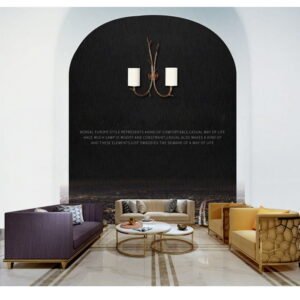
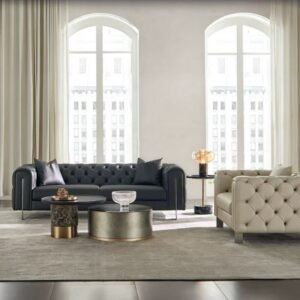
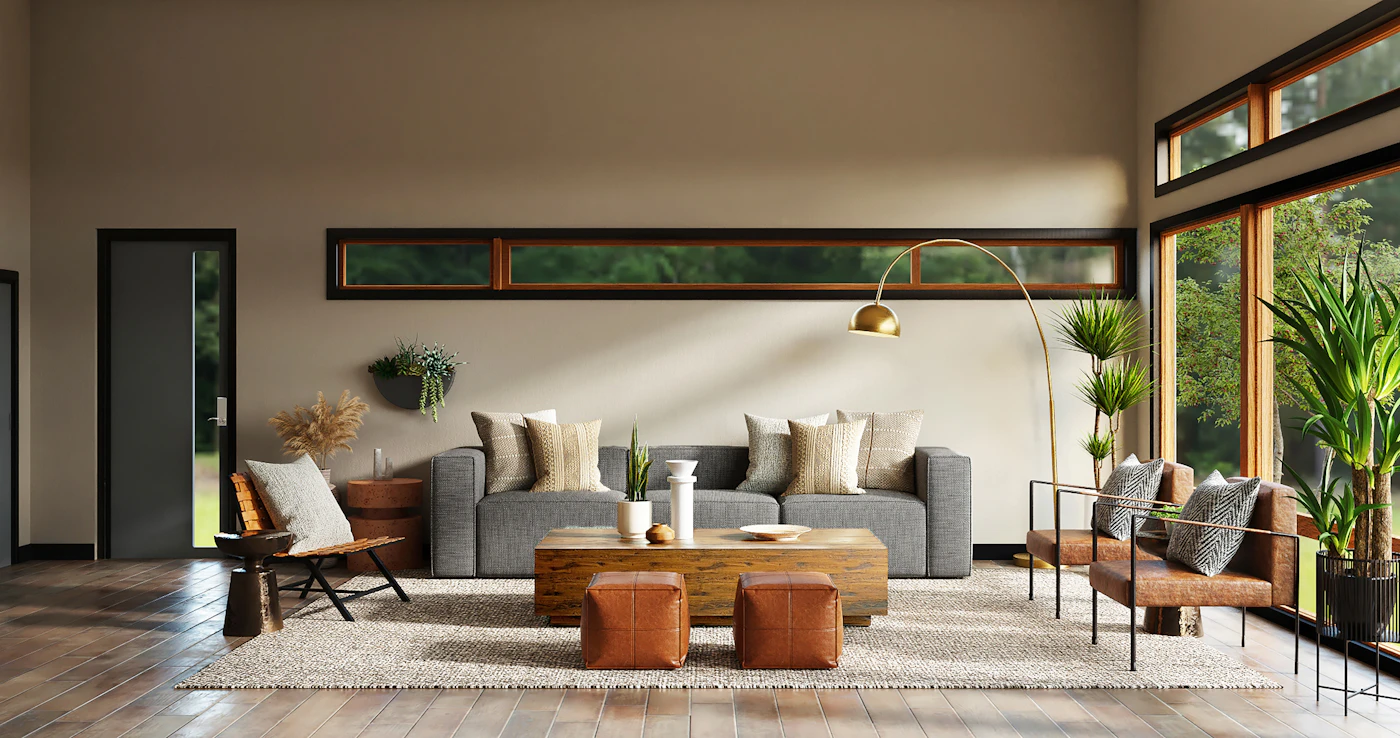
 A showroom built around a distinctive design concept rather than a corporate template.
Walk into ten furniture showrooms in the same metro area and count how many actually feel different from one another. In most cities, the answer is fewer than you’d expect. The lighting rigs look identical, the product groupings follow the same “living room here, bedroom there” logic, and the walk-through path feels like it was copied from a manual — because it usually was. This is not an accident of bad taste. It is the predictable result of a design system built for speed and repeatability, not for differentiation.
Key Terms to Know Before going further, a few terms that come up repeatedly in this article are worth defining plainly. A template-based design system refers to a pre-built layout, fixture package, and material palette that a design provider reuses across many client locations with only minor adjustments. Fit-out is the industry term for the complete interior build-out of a commercial space, covering everything from flooring and lighting to millwork and furniture placement. Zonation describes how a floor plan is divided into distinct areas, each dedicated to a product category or customer journey stage. ROI, or return on investment, measures the financial return generated relative to the money spent — in this context, whether a design investment pays for itself through higher sales or better client retention.
The Cookie-Cutter Problem in Commercial Interiors
Understanding why standardized design templates dominate the industry starts with understanding who benefits from standardization and who doesn’t. Furniture manufacturers, franchise networks, and large retail chains that offer “free” in-store design services are, in most cases, running a design department that has been optimized for throughput. Their designers might handle 30, 50, or even 100 store layouts a year. At that volume, creative exploration becomes a luxury the business model cannot afford, and the fastest path to an acceptable outcome is a proven template.
The problem is that “acceptable” and “differentiated” are not the same thing. A template can produce a clean, functional, code-compliant space. It cannot produce a space that tells your specific brand story, showcases your specific product mix, or speaks to your specific target client — because it was never designed with those variables in mind. For furniture distributors, agents, showrooms, and interior designers competing in crowded regional markets, that gap between “acceptable” and “differentiated” is often exactly where market share is won or lost.
1. How Store Design Services Operate Within Rigid Constraints
The Template-Based System
Most manufacturer-provided or franchise-style design services operate from a shared library of floor plans, fixture kits, and finish packages. A regional sales rep or junior designer selects from this library and adapts it to the square footage available, rather than starting from your business objectives. The system exists because it lets one design team service dozens of accounts simultaneously without needing deep customization skills at every touchpoint.
Why Templates Exist
Cost reduction is the primary driver. A templated system lets companies amortize design and engineering costs across hundreds of installations rather than paying for bespoke design work on every project. Scalability matters too — a manufacturer expanding into new markets needs a repeatable playbook, not a boutique design process that varies wildly from client to client. Risk mitigation plays a role as well, since a tested template is less likely to fail structurally, aesthetically, or on a compliance basis than an unproven custom concept. None of these motivations are dishonest; they simply prioritize the design provider’s operational efficiency over your differentiation.
The Hidden Costs of Standardization
The trouble is that every efficiency gained on the provider’s side is often a differentiation loss on your side. When your layout, fixtures, and even your lighting temperature match your closest competitor’s showroom because you both used the same manufacturer’s design service, customers lose one more reason to choose you specifically. Trust erodes subtly too: sophisticated B2B buyers, hotel procurement teams, and design-savvy consumers can often sense when a space feels manufactured rather than considered, even if they can’t articulate exactly why.
The Limitations of In-House Design Teams
Bandwidth Constraints. In-house design teams working across a large dealer or franchise network are typically measured on projects completed per quarter, not on creative distinctiveness per project. When a designer is expected to turn around a full showroom concept in a week or two because forty other locations are waiting in the queue, the safe, previously-approved solution wins by default over the untested, potentially superior one.
Approval Hierarchies. Corporate design services also tend to route every concept through multiple layers of internal sign-off — regional management, brand compliance, sometimes legal review for signage and safety. Each layer tends to sand down anything unconventional, because the incentive at each stage is to avoid risk rather than to maximize creative impact. By the time a concept reaches installation, it often bears little resemblance to whatever spark of originality existed at the start.
2. The Financial Model Behind Generic Design Solutions
Volume Over Creativity
The commercial logic behind free or heavily discounted store design services is straightforward: it functions as a customer acquisition and retention tool for the manufacturer offering it, not as a profit center in its own right. That means the design team’s real incentive is to close and complete projects quickly, not to produce award-winning interiors. Profit margins on the design service itself are typically thin or negative, subsidized by furniture and fixture sales — which quietly rewards standardized, low-effort layouts over ambitious ones.
The Math of Mass Production
Economies of scale reward repetition. If a design team can reuse 80 percent of a floor plan across ten locations, their per-project cost drops dramatically compared to designing each space from scratch. This is good arithmetic for the provider and often mediocre outcomes for the client, because the 20 percent that does get customized rarely addresses the deeper strategic questions — your target buyer, your competitive position, your product storytelling — that actually drive sales.
Reduced Design Hours Per Project
Industry benchmarks suggest that a genuinely custom commercial interior project typically requires 80 to 150+ design hours depending on scope, while a templated store rollout might receive a fraction of that — sometimes under 20 hours of actual design attention once you subtract administrative coordination. Fewer hours almost always show up in the finished space as fewer decisions made, fewer alternatives explored, and less attention paid to how a customer will actually move through and experience the room.
Hidden Costs for Your Business
Client Dissatisfaction and Rework Expenses. When a generic layout underperforms — poor sightlines to premium products, awkward traffic flow, lighting that makes upholstery colors look wrong — the fix usually falls on you, not the original design provider. Reworking fixtures, relocating lighting, or repositioning walls after the fact costs meaningfully more than getting the layout right the first time.
Competitive Disadvantage in Your Market. Perhaps the most consequential hidden cost is strategic. If your regional competitor used the same manufacturer’s design team and ended up with a near-identical layout, neither of you gains ground through the environment itself. You’re left competing purely on price and inventory — a much harder position than competing on experience, curation, and brand distinctiveness as well.
Comparison at a glance
| Fator | Template-Based Store Design | Independent Design Partnership |
|---|---|---|
| Starting point | Pre-built library of layouts | Blank canvas based on your brand and market |
| Typical design hours invested | Under 20 hours per project | 80–150+ hours depending on scope |
| Customization depth | Cosmetic (finishes, signage) | Structural (zonation, flow, storytelling) |
| Approval process | Multi-layer corporate sign-off | Direct collaboration with decision-makers |
| Differentiation from competitors | Low — shared template pool | High — brand-specific concept |
| Typical timeline | 4-6 semanas | 8 a 12 semanas |
| Cost structure | “Free” or bundled with furniture purchase | Project-based or retainer investment |
| Long-term brand equity built | Mínimo | Compounding over multiple projects |
3. Why Independent Designers Deliver Differentiated Results
Creative Freedom and Flexibility
Independent designers are not bound by a corporate library of pre-approved layouts, which changes the entire creative process. Every project genuinely starts from a blank canvas, informed by your specific goals rather than by what worked at forty other unrelated locations. This freedom shows up most clearly in adaptive problem-solving — when an independent designer encounters an awkward column placement or an unusual ceiling height, they treat it as a design opportunity rather than reaching for a template patch.
Specialized Expertise for Your Niche
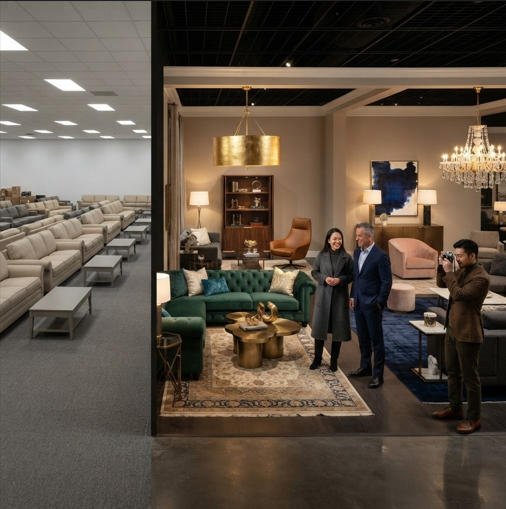
Designers who focus specifically on furniture distributors, showrooms, and hospitality fit-outs develop a depth of category knowledge that generalist corporate teams rarely match. For furniture distributors, this means understanding how to sequence product categories so that higher-margin pieces get premium positioning, how lighting temperature affects perceived wood tone and upholstery color, and how to design “vignettes” that let customers imagine the furniture in their own homes rather than viewing it as isolated inventory. For hotel fit-out work, it means balancing durability standards, guest-flow choreography, and brand storytelling simultaneously — a genuinely different skill set from residential or general retail design.
 Vignette-based merchandising, a technique independent designers use to help buyers visualize furniture in real-life settings.
Fabricantes como Móveis Jade Ant work closely with independent designers on exactly this kind of category-specific presentation, supplying custom dimensions, finishes, and low minimum order quantities that let a showroom concept be executed exactly as designed rather than compromised around whatever stock inventory happens to be available.
4. The Real Cost of Cookie-Cutter Design on Your Bottom Line
Lost Sales Opportunities
A showroom’s core job is conversion — turning a browsing visitor into a buyer. Generic layouts frequently fail at this because they don’t account for how your specific product range needs to be told as a story. A study on retail conversion rates consistently finds that layout, flow, and merchandising quality are among the strongest predictable levers on in-store conversion, right alongside staffing and inventory. When every showroom on the block uses the same layout logic, none of them is using layout as a competitive advantage — which means whichever business does invest in a differentiated environment captures a disproportionate share of undecided buyers.
Damaged Brand Perception
Perception of Low Quality. Buyers, especially B2B buyers like hotel procurement teams and interior designers sourcing for clients, unconsciously use the sophistication of a showroom as a proxy for the sophistication of the product line. A generic, poorly lit, awkwardly arranged space can undercut confidence in furniture that is, on its own merits, genuinely well made.
Reduced Client Confidence. This trust factor compounds for higher-consideration purchases. A hotel developer committing to a multi-property furniture contract, or an interior designer bringing a client to view options, is evaluating your business as much as your product. A showroom that looks interchangeable with three other suppliers they’ve already visited gives them little reason to believe your service, support, or reliability will be any different.
Talent Retention and Team Morale
There’s an internal cost too, one that’s easy to overlook. Sales staff working in a space they find uninspiring tend to describe it to customers with less enthusiasm, consciously or not. Design and merchandising teams asked to repeatedly execute the same template report lower job satisfaction than those given room to solve real design problems — a factor worth weighing if your business relies on retaining skilled showroom staff in a competitive labor market.
5. Case Studies: Transformation From Generic to Distinctive
Before and After: Furniture Distributor Showroom
The Initial Problem. A mid-sized furniture distributor operating a manufacturer-provided showroom template reported foot traffic that converted at roughly half the regional benchmark for comparable stores. Customer feedback, gathered informally at checkout, repeatedly used words like “cluttered” and “same as everywhere else.”
The Independent Design Solution. An independent designer restructured the floor plan around three distinct “living scenarios” rather than category-based aisles, used directional lighting to draw attention toward premium product lines, and introduced a materials wall that let customers physically compare finish options rather than relying on swatches. The redesign incorporated existing fixtures where they still served the new concept, keeping capital costs controlled.
Measurable Outcomes. Within the first two full quarters after reopening, the distributor reported a meaningful uptick in average time spent in-store, an improvement in conversion rate consistent with industry findings that redesigned, well-lit product zones can lift purchase intent, and notably more unprompted positive comments in customer feedback forms referencing the “custom home” feel of the space.
Hotel Fit-Out Project: From Forgettable to Memorable
Design Challenges Overcome. A boutique hotel operator needed a lobby and lounge that could function for high-turnover daytime guest traffic while also serving as an evening social space for the surrounding neighborhood — two very different functional demands in one footprint. Off-the-shelf hospitality furniture packages had previously produced a lobby that guests described in reviews as “generic hotel lobby.”
Brand Integration Success. Working with an independent designer, the property developed custom seating arrangements sourced through a contract furniture strategy that balanced hospitality-grade durability with a residential, less institutional aesthetic — upholstery selected for an 18-hour daily use cycle without looking like it was built purely for wear-resistance.
Guest Experience Metrics. Post-renovation guest satisfaction scores for “lobby ambiance” improved noticeably in subsequent review cycles, and hotel management reported increased local foot traffic to the lounge bar during non-check-in hours — evidence that the space had begun functioning as a genuine brand touchpoint rather than a transitional area.
Interior Design Showroom: Positioning as a Design Authority
Portfolio Presentation Enhancement. An independent interior designer running a client-facing showroom used the space redesign to physically demonstrate range — distinct zones representing different design philosophies rather than a single static style, letting prospective clients experience the designer’s versatility rather than just hearing about it.
Client Acquisition Impact. The designer reported that new client consultations increasingly referenced the showroom experience directly as a reason for choosing the firm, effectively turning the physical space into an active sales tool rather than a passive backdrop.
6. The Collaboration Process: Independent Designers vs. Store Services
Discovery and Strategy Phase
Independent designers typically begin with structured discovery work — market analysis to understand your competitive positioning, and a brand alignment assessment to ensure design decisions reinforce (rather than dilute) your existing brand values. Template-based store services generally skip this step almost entirely, since the layout decisions are largely predetermined before your specific business is even considered.
Concept Development and Iteration
Multiple Concept Options. A meaningful hallmark of independent design work is the presentation of two or three genuinely distinct directional concepts rather than a single “take it or leave it” proposal. This gives stakeholders a real choice grounded in different strategic emphases — one might prioritize product storytelling, another might prioritize guest flow, for instance — rather than a single predetermined answer.
Stakeholder Feedback Integration. Genuine collaboration means feedback from sales staff, showroom managers, or hotel operations teams actually reshapes the concept in subsequent rounds, rather than being filtered through corporate approval layers that primarily protect brand consistency at the expense of local nuance.
Implementation and Customization
On-Site Problem-Solving. Independent designers who remain engaged through installation can make responsive adjustments — shifting a fixture six inches to solve an unexpected sightline issue, or reworking a lighting plan once the actual finishes are installed and photographed under real conditions. Store design services, structured around a fixed template and remote oversight, are rarely equipped to make these kinds of real-time judgment calls.
7. Industry-Specific Design Solutions That Store Services Miss
Furniture Distributor Showrooms
Product Category Zonation. Rather than arranging furniture strictly by category, effective zonation groups pieces by lifestyle narrative, guiding a customer from an entryway vignette through living, dining, and bedroom scenarios in a sequence that mirrors how they’d actually furnish a home. Traffic Flow Optimization then reinforces this narrative, using sightlines and lighting cues to extend dwell time rather than letting customers rush toward the checkout counter.
Interior Designer Showrooms
Independent design here focuses on portfolio integration, weaving a designer’s varied past projects into a cohesive showroom story, and on dedicated client consultation spaces that support the kind of trust-building, collaborative conversation that a retail-style open floor simply doesn’t accommodate.
Hotel Fit-Out Design Environments
Guest Journey Mapping treats the physical layout as a sequence of emotional beats — arrival, waiting, transition, departure — each supported by specific design choices. Brand Experience Translation converts a hotel’s brand positioning (boutique, business, resort, and so on) into tangible material and spatial choices, while maintaining the functional efficiency operations teams require.
 Category-specific merchandising, such as this custom dining vignette, is a technique standardized templates rarely execute well.
For a closer look at how showroom planning decisions get made in practice, this walkthrough of a professional showroom design process is a useful reference point:
https://www.youtube.com/watch?v=rkdkNTpdeyg
8. Breaking Free From Design Mediocrity: Strategic Considerations
Defining Your Unique Value Proposition
Design choices are, in effect, a visual argument for why a customer should choose you. Before any redesign work begins, it’s worth clearly articulating your unique value proposition and your target client profile, since every subsequent design decision should reinforce that positioning rather than working against it.
Long-Term Design Investment Strategy
Scalability Without Standardization. A recurring concern among multi-location furniture businesses is whether custom design can scale. Independent designers typically solve this by building modular design systems — a consistent brand language expressed through flexible components — rather than a single rigid template, allowing each location to feel both authentically local and recognizably on-brand.
Building Design Partnerships That Last. Ongoing relationships with an independent designer, supported by clear communication frameworks, allow a showroom to evolve incrementally as trends, product lines, and market conditions shift, rather than requiring a full disruptive overhaul every few years.
9. Budget Allocation: Making the Case for Independent Design Investment
Understanding True Cost of Ownership
Comparing independent design to store services purely on upfront quote misses the larger financial picture. Comparisons of in-house versus outsourced design costs consistently show that hidden expenses — rework, lost conversions, brand dilution — tend to outweigh the initial savings of a “free” templated service once measured over a multi-year horizon.
ROI Calculation for Bespoke Design
Simplified ROI framework
If a showroom generating $2,000,000 in annual revenue improves conversion rate by even 3 percentage points following a redesign — a conservative outcome relative to the retail benchmarks referenced earlier — the incremental revenue frequently exceeds a bespoke design investment within the first 12 to 18 months.
Flexible Engagement Models
Project-Based Engagements work well for a single showroom or hotel fit-out with clearly defined scope. Retainer Relationships suit multi-location distributors who need ongoing design evolution across several sites. Phased Implementation Strategies allow budget-conscious businesses to prioritize the highest-impact zones first — typically the entry sequence and hero product areas — before extending the redesign across the full footprint.
10. Implementation Roadmap: From Generic to Distinctive
Phase 1: Audit and Assessment
The process begins with current-state documentation — photography, measurements, and available performance data — combined with stakeholder interviews and a competitive analysis benchmarking your space against comparable showrooms or properties in your market.
Phase 2: Strategy and Concept Development
A vision-definition workshop aligns internal stakeholders on business objectives before the designer develops two to three distinct directional concepts, ultimately narrowing to the direction that best serves those objectives.
Phase 3: Detailed Design and Planning
This phase translates the chosen concept into finalized floor plans, curated material and finish selections that reflect your brand, and integrated lighting and technology systems that support both atmosphere and operational function.
Phase 4: Production and Installation
Vendor and contractor coordination, ongoing quality-assurance checkpoints, and a final walkthrough with fine-tuning adjustments close out the process, ensuring the finished space matches the original design intent rather than drifting during execution.
 Detailed material and finish planning during the design development phase.
Your Competitive Advantage Starts With Design
The Strategic Imperative for Differentiation
In a B2B furniture and hospitality market where buyers increasingly compare suppliers online before ever visiting a showroom, a generic in-person experience is no longer a neutral outcome — it’s a competitive liability. Standardized store design might reduce upfront cost and risk for the provider offering it, but it consistently transfers the real cost of that standardization onto the business trying to differentiate in a crowded market.
Taking the First Step
Transitioning away from store-offered design services doesn’t require abandoning every existing fixture or starting from zero. It starts with an honest audit of your current space, an independent design partner who understands your specific category — whether that’s furniture distribution, interior design, or hotel fit-out — and a phased plan that fits your budget and timeline.
Long-Term Vision
Businesses that treat their physical environment as a strategic asset rather than a compliance requirement tend to build a reputation as a design authority in their segment over time, which compounds into referrals, repeat business, and premium positioning that generic templates simply cannot generate.
Ready to break free from cookie-cutter interiors and create a showroom that truly represents your brand? Connect with independent design specialists who understand the unique needs of furniture distributors, agents, showrooms, and interior designers. For sourcing custom, low-MOQ furniture pieces that let your design vision be executed exactly as intended, explore Jade Ant furniture’s product range or reach out directly through the contact page to schedule a complimentary design assessment.
Perguntas frequentes
1. What specific problems do generic store designs create for furniture distributors? Generic store designs fail to showcase your unique product range, create undifferentiated customer experiences, and ultimately reduce your competitive positioning. They don’t account for your specific product categories, target market, or brand story — resulting in lost sales opportunities and client dissatisfaction.
2. How much more expensive is independent design compared to store design services? While independent design may carry a higher upfront cost, the return typically exceeds store services within 12 to 18 months through increased conversion rates, higher customer satisfaction, and reduced rework expenses. True cost of ownership favors independent design when measured over time rather than at the initial quote stage.
3. Can independent designers work within strict budget constraints? Yes. Experienced independent designers develop phased implementation strategies, prioritize high-impact design elements first, and work flexibly within budget parameters — often more creatively with limited budgets than templated service providers.
4. How do I know if my current showroom suffers from cookie-cutter design? Key indicators include a lack of visible differentiation from competitors, customer feedback describing the space as uninspired, underperforming conversion rates relative to industry benchmarks, and an inability to showcase your product’s unique qualities. A professional design audit provides an objective assessment.
5. What’s the typical timeline for implementing independent design versus store services? Independent design typically requires 8 to 12 weeks from discovery to implementation, while store services often move in 4 to 6 weeks. The longer timeline reflects deeper customization and collaborative refinement, which tends to produce better long-term outcomes.
6. How do independent designers understand the specific needs of furniture showrooms? Specialized independent designers build deep expertise through portfolio work, industry relationships, and continuous market research. They understand product presentation, traffic flow optimization, and the sales psychology specific to furniture environments in a way generalist teams rarely develop.
7. Can independent designers scale solutions across multiple showroom locations? Yes. Independent designers create modular design systems that maintain brand consistency while adapting to each location’s unique characteristics, customer base, and operational requirements — something templated services struggle to do effectively.
8. What’s the difference between independent designers and in-house design teams? Independent designers bring fresh perspectives, specialized expertise, and creative freedom unconstrained by corporate hierarchies. In-house teams often lack bandwidth and creative diversity, leading to standardized solutions, and independent designers are frequently more cost-effective than maintaining full-time in-house staff.
9. How does better design actually impact my bottom line? Improved design can increase conversion rates, enhance customer satisfaction and repeat business, strengthen brand perception, reduce costly rework, and position you as a market leader — all of which contribute directly to revenue growth over time.
10. What should I look for when selecting an independent designer for my showroom? Evaluate portfolio work specific to your industry, ask for client references, assess their understanding of your market segment, review their process and communication approach, and confirm experience with your product category and target customer profile.
11. How do I transition from store design services to independent design without major disruption? Begin with a phased approach: conduct a design audit, develop a strategic vision with an independent designer, implement changes in priority order, and coordinate timing to minimize operational disruption. Many businesses phase changes by department or location.
12. Can independent designers incorporate existing furniture and fixtures into new designs? Absolutely. Experienced independent designers excel at working with existing elements, repurposing what still serves the concept, and strategically upgrading key pieces — maximizing the design investment while managing budget constraints.
13. What role does independent design play in attracting new clients as a furniture distributor or designer? Your showroom functions as your primary sales tool and marketing asset. A distinctively designed, well-curated environment demonstrates expertise, builds client confidence, and creates memorable experiences that lead to referrals — particularly valuable for interior designers and agents.
14. How often should I refresh my showroom design, and does independent design help with this? Most showrooms benefit from a significant refresh every three to five years, with smaller updates annually. Independent designers develop long-term partnerships that let your space evolve strategically alongside market trends, new products, and business objectives.
15. What’s the difference between independent showroom design and interior design services I might hire for clients? Independent showroom designers specialize in creating functional, sales-oriented environments that showcase your products and brand — distinct from client-focused interior design. They understand retail psychology, traffic flow, product presentation, and business metrics alongside aesthetic excellence.