How to leverage console tables with integrated storage to help your clients maximize compact spaces while delivering the sophisticated, curated aesthetic they demand—and differentiate your portfolio with functional luxury solutions.
When a boutique hotel in downtown Singapore needed to refurbish 180 guest rooms without touching the structural footprint, their interior design firm had a single brief: make each room feel larger and more organized, without adding a single extra piece of furniture. The solution wasn’t a custom wardrobe system or a built-in wall unit. It was a bespoke console table with concealed drawer storage, integrated into the room’s entryway-desk zone. Guest satisfaction scores improved measurably in the following quarter — not because guests noticed the storage, but precisely because they didn’t.
That’s the logic behind this guide.
The challenge your clients face is real: residential and hospitality projects with limited square footage require furniture that performs double duty without compromising design integrity. Console tables with hidden storage solve this problem elegantly, allowing you to position yourself as a solution-oriented partner who understands spatial constraints and client expectations — not just a product vendor moving inventory. This guide equips furniture distributors, showroom managers, agents, interior designers, and hospitality fit-out specialists with the knowledge to confidently recommend, specify, and sell these pieces at the margins they deserve.

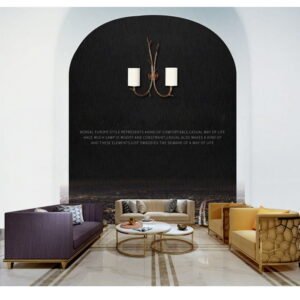
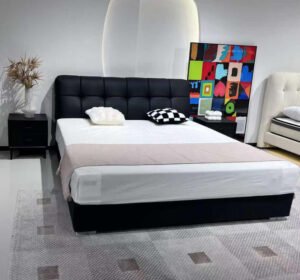
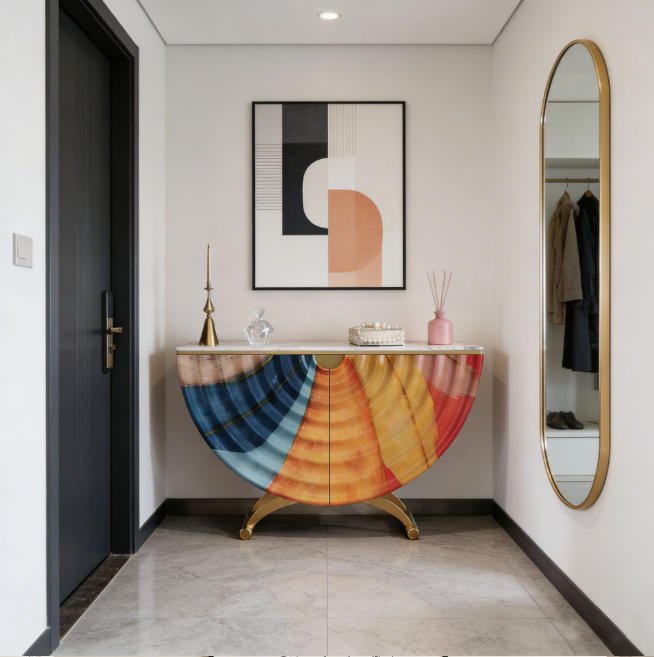
A refined console table anchors the entryway of a luxury hotel suite — functional storage concealed within a design-forward silhouette.
Why Console Tables with Storage Are Essential for Your Project Specifications:
The Space Constraint Reality Your Clients Are Facing
Console tables bridge the gap between decorative and functional — they’re the pieces your clients didn’t know they needed until you showed them the solution. In micro-apartments, studio hotels, boutique hospitality projects, and compact residential renovations, every square inch carries a cost. In major urban markets, residential space now commands a premium that makes every furniture decision a spatial-efficiency decision. Hidden storage in console tables addresses your clients’ most persistent unstated pain point: where do things actually go?
The console table market reflects this reality at scale. The global market was valued at approximately $6.2 billion in 2024 and is projected to grow steadily through 2034, driven primarily by the intersection of urbanization, rising property prices, and demand for furniture that solves problems without creating new ones. This isn’t niche category growth — it’s a structural market shift driven by how people actually live and work in modern spaces.
Understanding the Market Demand
Your distributor and showroom partners are fielding increasing requests for multifunctional furniture — a category whose global market reached $15.9 billion in 2024 and is growing at a 4.9% CAGR through 2034, according to GMI Insights. The trend isn’t temporary cyclical demand. It’s driven by three converging forces: rising property costs compressing unit sizes, the hospitality sector’s need for guest rooms that feel spacious despite modest footprints, and a design culture that increasingly treats storage as a design failure if it’s visible.
For B2B professionals, this means the specification conversation has evolved. Your designer and showroom clients aren’t asking “what looks good?” in isolation — they’re asking “what solves the problem and looks good simultaneously?” Console tables with integrated storage are an exact answer to that dual question.
Positioning Console Tables as a Premium Solution
Unlike obvious storage solutions — shelving units, cabinets, ottomans with lids — console tables maintain the curated, high-end appearance your interior designer clients demand. They’re conversation pieces that happen to solve problems, which is exactly how luxury design should function. When a client walks into a showroom and sees a beautifully proportioned console table, they respond to the aesthetic first. The revelation that it also provides practical storage for their entryway, living room, or guest room is a selling point that closes at a different level entirely.
This positioning gap is where B2B margin opportunity lives. Products that solve visible, immediate problems command premium pricing and generate referrals. Console tables with hidden storage do both.
The Anatomy of High-Performance Console Tables: What to Specify
Storage Mechanisms That Actually Work
Not all hidden storage is created equal. Your clients — and their end-users — need to understand the difference between poorly executed designs and engineered solutions that will stand up to daily use in hospitality or demanding residential settings. A drawer that sticks after six months in a guest room doesn’t just reflect poorly on the manufacturer; it reflects poorly on your recommendation. Specifying correctly protects your reputation and theirs.
The core components of a well-engineered storage console table are the drawer system, the hardware, the structural frame, and the finishing quality of interior compartments. Each element has a professional-grade standard and a consumer-grade shortcut, and the difference between them is often invisible until the furniture is under daily use stress.
Drawer Systems and Soft-Close Hardware
Specify console tables with full-extension, ball-bearing drawer systems combined with soft-close mechanisms. These are non-negotiable for hospitality projects where durability directly impacts your professional reputation. Ball-bearing slides (definition: drawer slides that use steel balls in a race track to reduce friction and support weight evenly) provide smooth operation under load and resist the warping and binding that plague lower-grade alternatives.
Soft-close mechanisms use hydraulic dampers to slow drawer travel in the final 2–3 centimeters of closure, preventing slamming and reducing wear on both the drawer box and the cabinet body. In hotel rooms, where guests may not treat furniture with the same care as homeowners, this feature extends functional lifespan significantly. Quality ball-bearing soft-close systems from manufacturers like Blum or Hettich are rated for 100,000+ open/close cycles — compare that to basic friction slides, which typically fail within 10,000–20,000 cycles under similar use conditions.
For your clients specifying hospitality projects: this isn’t an optional upgrade. It’s baseline specification for any piece that will see regular commercial use.
Hidden Compartments and Lift-Top Designs
Lift-top console tables offer discrete storage without visible drawer fronts — ideal for hotel lobbies, residential living rooms, or corporate spaces where visual clutter is a design failure. These designs maintain completely clean external lines while providing practical storage for linens, guest amenities, or personal items. The lift mechanism (typically a gas-assisted piston, similar to what you’d find in premium cabinetry) should be specified with a soft-open assist and a locking position at full extension to prevent accidental closure.
Hidden compartments — interior spaces accessed through touch-release panels, inset doors, or disguised sections of the table surface — are particularly effective in boutique hotel applications where operators want to provide amenity storage without the visual disruption of visible hardware.

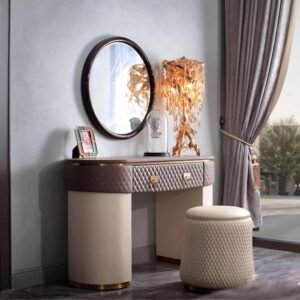
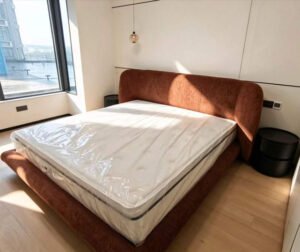
A marble-top console table with flush-integrated storage maintains visual serenity while delivering practical functionality — the hallmark of B2B-grade specification.
Design Integration: Making Storage Invisible to the Eye
Material Selection That Hides Storage Seamlessly
The best hidden storage is the kind that guests and residents never consciously register. Achieving this requires thoughtful material selection and finishing choices that make storage compartments visually indistinguishable from the surrounding piece. This is a craft and specification challenge — and it’s one area where the difference between a quality manufacturer and a mass-market producer becomes immediately apparent.
When specifying console tables with integrated storage, the external finish must be consistent across all panels — including drawer fronts, fixed panels, and base elements. Inconsistency in grain direction, color variation, or finish texture signals low-quality production to a trained eye. For your designer clients, this detail is not negotiable.
Veneer Matching and Grain Continuity
Specify console tables where veneer matching (the process of selecting and orienting veneer sheets so that grain direction and figure are continuous across adjacent panels) is applied to all visible surfaces including drawer fronts. Bookmatched veneers — where sequential veneer sheets are mirrored to create a symmetrical grain pattern — create visual coherence across larger surfaces. Slip-matched veneers maintain a repeating pattern suitable for more subtle applications.
This level of material attention separates showroom-quality pieces from mass-produced alternatives. Your interior designer clients will notice grain continuity immediately. For hospitality designers specifying multiple pieces for a property, visual consistency across all units is a specification requirement, not an aesthetic preference.
Integrated Hardware and Minimalist Aesthetics
Recessed handles, touch-release mechanisms, and flush-mount hardware keep the visual profile clean. For high-end residential and boutique hospitality applications, the goal is hardware that disappears into the design — not hardware that announces itself. Push-to-open systems (also called “touch-latch” mechanisms: spring-loaded catches that release drawers or doors with gentle pressure, requiring no visible handle) are the premium specification choice for ultra-clean modern aesthetics.
When hardware is visible, it should be specified in finishes that complement the overall design scheme: brushed brass for warm-toned pieces, matte black for contemporary interiors, satin nickel for transitional schemes. Hardware finish consistency across all pieces in a project is a quality benchmark your hospitality clients should understand and demand.
Space-Saving Strategies: How to Recommend Console Tables for Specific Scenarios
Studio and Micro-Apartment Solutions
Your residential designer clients working on small-footprint projects need practical guidance on console table placement and storage capacity. The framework for confident recommendations starts with understanding the hierarchy of needs in compact living spaces: what does the resident need immediate access to, what needs to be stored but not visible, and what needs to be stored and occasionally retrieved?
Entryway Organization Without Visual Bulk
A console table in the entry zone becomes the functional hub for keys, mail, daily essentials, and the transitional items that accumulate at every home’s threshold — but only if it has hidden storage. Without it, these items create visual clutter on the table surface that makes small entryways feel chaotic and cramped. With concealed drawers, the surface remains curated while the practical items are organized below.
For a 500-square-foot apartment, an entryway console table with two to three drawers and a lower shelf provides approximately 8–12 linear inches of drawer storage depth (sufficient for small electronics, documents, and personal accessories) while occupying a footprint as narrow as 12–14 inches from the wall. The result: functional organization in a zone that previously had none, without consuming meaningful floor area.
Living Room Functionality in Compact Footprints
Console tables positioned behind sofas or against living room walls provide display surfaces for lamps, artwork, and decorative objects while storing throws, magazines, remote controls, and seasonal items below. This placement solves the living room’s perennial organizational challenge without requiring a separate storage piece. For your designer clients, this represents genuine value-add specification: you’re not selling a console table — you’re solving a spatial workflow problem that would otherwise require multiple furniture pieces or permanent built-ins.
The design principle here is visual subtraction: by consolidating storage into a single refined piece, you remove the visual noise that multiple storage solutions create, and the space reads as larger and more deliberate.
Hospitality Applications: Console Tables as Guest Room Essentials
Boutique Hotel and Resort Specifications
Hospitality designers face unique challenges that residential designers don’t: guest rooms must feel luxurious and spacious while accommodating the practical storage needs of travelers who arrive with variable amounts of luggage, equipment, and personal items. The furniture must perform reliably under commercial use conditions, meet fire safety and durability standards, and maintain its visual integrity through thousands of guest stays and routine housekeeping cycles.
Console tables solve this multi-variable problem by providing surfaces for luggage staging, work areas, and ambient lighting without consuming floor space — and by offering concealed storage that keeps rooms appearing uncluttered regardless of what guests bring. For a standard boutique hotel room of 250–350 square feet, a well-specified console table with integrated storage typically replaces two to three separate pieces that would otherwise be required to perform the same functions.
Minibar Integration and Beverage Storage
Specifying console tables with concealed refrigeration or beverage storage compartments is a premium amenity specification that differentiates boutique properties meaningfully. A standard under-counter refrigeration unit (typically 1.7–2.4 cubic feet) can be integrated into a custom console table base, concealed behind a door matched in finish to the rest of the piece. This eliminates the visual disruption of a freestanding minibar appliance while providing guests with all the functional access they need.
For properties targeting the design-conscious traveler segment — the audience that reads Architectural Digest and books stays based on photography they’ve seen on Instagram — this level of integration is a competitive differentiator. The hotel reported improved guest satisfaction specifically because the room felt curated and considered, not assembled. That perception of intentionality is what custom furniture specifications deliver, and it’s what generic FF&E procurement cannot replicate.
Luggage and Personal Item Storage
Hotel guests need places to stage suitcases and bags when unpacking or packing, and surfaces at appropriate heights for that task, without those items dominating the visual space of the room. A console table at standard height (30–36 inches) with a lower open shelf provides a natural staging zone for bags while keeping the room’s primary floor area clear. Combined with hidden storage for guest amenities, charging cables, personal accessories, and operational supplies, the console table becomes the guest room’s most functional piece — and its most invisible one.

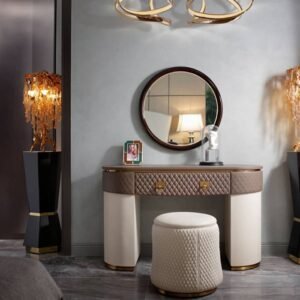
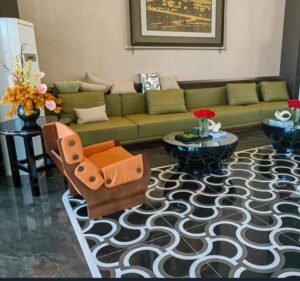
Custom dark walnut console with touch-latch storage — the kind of specification that boutique hotel operators and their guests recognize as genuinely considered design.
Customization Options That Justify Premium Pricing
Tailoring Solutions to Specific Project Needs
Your clients — interior designers, hospitality specifiers, showroom managers — are not looking for off-the-shelf solutions. They are looking for pieces that solve their specific problems within specific spatial, aesthetic, and budgetary constraints. Customization is not a premium add-on in this market; it’s the baseline expectation. The question is whether your sourcing partnerships and specification capabilities can deliver it reliably.
This is where working with a manufacturer like Móveis Jade Ant — which specializes in B2B solid wood furniture with customization-first production capabilities — becomes strategically important for your portfolio. Specifying a piece to exact dimensions, in a specific wood species and finish, with configured interior storage, is a different conversation than selecting from a catalog. It requires a manufacturer who treats custom production as standard practice.
Adjustable Interior Configurations
Offer console tables with modular interior storage — configurations using removable dividers, adjustable shelf heights, and tiered compartments that can be set based on client end-use requirements. A hospitality operator storing guest amenity kits has different interior dimension needs than a residential client storing seasonal textiles. Modular interiors allow your designer clients to specify exactly what their end-users need without requiring entirely different production runs.
Practically, this means working with manufacturers who offer standard “module options” — a selection of interior configurations (open shelf, divided tray, wire management channel, removable bin) that can be combined within the same external casing. This approach keeps custom lead times reasonable while delivering meaningful functional differentiation.
Finish and Material Customization
Provide options for wood species, stain colors, hardware finishes, and surface materials — and know what combinations are production-ready versus genuinely custom. Your showroom and distributor clients need the ability to match existing design schemes or create signature pieces that become part of a project’s visual identity. Common production-ready customizations include stain color (from a manufacturer’s established palette), hardware finish (typically brass/nickel/black/bronze), and dimensional adjustments within ±15–20% of standard sizes. Genuinely custom work — unique wood species, non-standard hardware, bespoke dimensions beyond manufacturer tolerances — requires longer lead times and typically minimum order quantities.
Understanding these boundaries makes you a more credible specification partner: you can tell a client what’s achievable at standard lead time versus what requires a custom production window.
Console Table Specification Reference: At a Glance
The table below consolidates the key specification benchmarks your team needs when evaluating console tables with hidden storage for B2B procurement:
| Specification Parameter | Standard Range | Premium/Custom Range | Hospitality Minimum |
|---|---|---|---|
| Height | 28–32 in (71–81 cm) | 30–36 in custom | 30–34 in |
| Depth | 12–16 in (30–41 cm) | 12–20 in custom | 14–18 in |
| Width | 36–60 in (91–152 cm) | 24–84 in custom | 40–60 in |
| Drawer Slide Rating | 40–75 lbs standard | 75–150 lbs commercial | 75 lbs minimum |
| Cycle Rating (soft-close) | 30,000–50,000 | 100,000+ (Blum/Hettich) | 80,000+ |
| Interior Compartment Depth | 10–14 in | 14–20 in custom | 12 in minimum |
| Surface Load Capacity | 50–100 lbs | 100–200 lbs | 100 lbs minimum |
| Lead Time (stock) | 2–4 weeks | — | — |
| Lead Time (modified standard) | 6–9 weeks | — | 8 weeks max plan |
| Lead Time (fully bespoke) | 12–20 weeks | 12–24 weeks | 14 weeks + 20% buffer |
| Recommended Wholesale Markup | 100–150% | 150–200%+ | 120% minimum |
| Retail Price Point (mid-range) | $800-$2.500 | $2,500–$8,000+ | $1,800–$4,000 |
Add a 20–25% schedule buffer when quoting lead times to end-clients for any custom or modified configuration.
Installation, Maintenance, and Durability Considerations
Specifying for Longevity in High-Use Environments
Hospitality and multi-unit residential projects demand furniture that performs consistently over years of continuous use — not furniture that looks good at handover and deteriorates within two seasons. Your role as a specification professional is to ensure your clients understand the durability factors that directly impact their long-term costs and their reputation.
The hidden-storage components of a console table face different durability pressures than the external surfaces: drawer slides operate under friction and load, interior compartment surfaces absorb contact marks from stored items, and hardware mechanisms experience repeated mechanical stress. Each of these components has a quality tier with meaningful performance differences.
Construction Standards and Quality Benchmarks
Specify console tables with solid wood frames — not particle board or MDF carcasses — for structural integrity and repairability. Mortise-and-tenon joinery (a traditional woodworking joint where a tenon, or projection, fits into a mortise, or cavity, to create a mechanical bond without depending solely on adhesive) provides structural strength that outlasts mechanical fasteners and adhesive-only assemblies under racking stress. In hospitality environments where furniture is regularly moved, cleaned around, and subjected to minor impacts, solid construction is the difference between a piece that lasts seven to ten years and one that requires replacement in three to five years.
For interior drawer boxes, specify solid wood or Baltic birch plywood rather than MDF. MDF drawer boxes are susceptible to swelling and delamination in humidity-variable environments — a significant liability in hotel rooms that experience temperature and humidity fluctuations across seasons.
Maintenance Requirements and Care Protocols
Provide your clients with clear written guidance on maintenance requirements before pieces are specified and ordered. Console tables with hidden storage mechanisms require specific care to keep hardware functioning at specification: drawer slides should be cleaned of debris periodically and lubricated with manufacturer-recommended products; touch-latch mechanisms should be checked annually for spring tension; wood surfaces should be cleaned with products appropriate to the finish type (oil finishes require different care protocols than lacquer finishes).
For hospitality clients, this means providing maintenance documentation that housekeeping staff can follow without specialist knowledge. Pieces that are poorly maintained fail prematurely, generate warranty claims, and create friction in the client relationship. Transparent maintenance guidance prevents this cycle.
Pricing Strategy and Margin Optimization for Your Business
Positioning Console Tables as Investment Pieces
Console tables with hidden storage command premium pricing because they solve multiple problems simultaneously: space constraints, organizational needs, aesthetic integrity, and durability requirements. Your role — and the role of your showroom and distributor partners — is helping clients understand the value proposition so they confidently commit to quality rather than defaulting to price-comparison behavior.
The conversation shift is simple but significant: you’re not selling a table at a price. You’re selling a spatial problem solved at a value. A client who buys a $3,000 custom console table that eliminates the need for a $600 entryway cabinet, a $400 blanket chest, and three years of visual disorder in a client-entertaining space has made a sound financial and aesthetic decision. Frame it that way.
Value Communication for Your End-Clients
Equip your designer and showroom partners with clear value language. The framing that consistently closes at premium price points is not features-based — it’s outcome-based. “This console table’s three concealed drawers and lower lift-top compartment give your client organized storage for everything that currently lives on their entry table, the top of their wardrobe, and the shelf in their hallway closet — in a piece that reads as design, not storage.” That specificity is what converts specification conversations into purchase decisions.
For hospitality clients, the ROI framing is similarly concrete: a console table with integrated storage that replaces a separate luggage rack, a freestanding minibar, and a desk caddy saves floor area, simplifies housekeeping workflows, and creates a more intentional room aesthetic. The premium specification cost is amortized across years of use and the property’s competitive positioning.
Margin Opportunities Through Specification
Console tables with integrated storage, custom finishes, and premium hardware generate healthy B2B margins precisely because they are not commodity products. You cannot price-shop a custom piece with specific veneer matching, modular interior configuration, and project-specific dimensions against a mass-market catalog item — the comparison doesn’t hold. This is where your sourcing partnerships and specification knowledge create a genuine competitive moat.
Partners working with manufacturers like Móveis Jade Ant on custom console table programs report wholesale markup ranges of 100–200% on bespoke pieces — significantly higher than the 20–50% typical of stock furniture categories. The margin premium reflects the specification effort, customization value, and supply chain expertise you bring to the transaction.

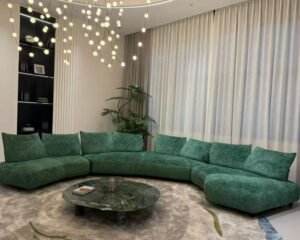
A solid ash lift-top console in an open-plan residence — one piece performing the work of three, with zero visual compromise.
Sourcing and Supply Chain Considerations
Finding Reliable Manufacturers and Partners
Your distributor and showroom clients need confidence that they can consistently source quality console tables with integrated storage — not just for a single project, but across a portfolio of ongoing work. Sourcing reliability is as important as product quality: a beautiful piece that can’t be reordered at consistent quality, or that ships with a 24-week lead time on a 12-week project schedule, creates downstream problems that damage client relationships.
Establish relationships with manufacturers who demonstrably understand the hospitality and high-end residential markets — who know what CAL TB 117-2013 fire safety compliance means for upholstered components, who understand commercial-grade hardware specifications, and who can produce technical drawings and material certifications as part of their standard delivery. These capabilities signal a manufacturer who operates at a professional level.
Vetting Manufacturers for Quality and Reliability
When evaluating a new manufacturer for console table sourcing, assess five dimensions: material quality, construction methods, customization capabilities, lead time reliability, and communication responsiveness. Request physical samples of drawer slides, hardware, and finish samples before committing to a production run. Ask for references from existing B2B clients — specifically from hospitality or commercial projects where durability under use has been tested.
For Chinese manufacturers — who represent a significant portion of the global solid wood furniture supply chain — verify factory certifications (FSC for sustainable timber sourcing, ISO 9001 for quality management systems) and request production photos and QC documentation as part of standard order protocol. Jade Ant Furniture’s sourcing guide provides a practical framework for this evaluation process.
You can also reference the Mercado de High Point as a live benchmark for quality and category standards — it’s where North America’s most significant furniture manufacturers showcase their commercial-grade offerings annually.
Managing Lead Times and Inventory
Console tables with custom storage configurations have production lead times that differ significantly from stock pieces. A modified standard piece (dimensional adjustment within ±20%, finish from manufacturer palette) typically requires 7–10 weeks production plus shipping transit. A fully bespoke piece — custom dimensions, non-standard wood species, unique interior configuration — may require 14–20 weeks.
Build these timelines into your project management protocols, and communicate them clearly to your clients at the specification stage rather than after order confirmation. The single most preventable source of client friction in custom furniture is timeline surprise. A client who knows upfront that their custom console table will arrive in week 14 of a 20-week project schedule has no complaint. A client who expected week 8 and receives week 14 has a significant one.
Real-World Applications and Case Studies
How Designers Are Using Console Tables to Solve Spatial Challenges
Concrete examples help your clients visualize how console tables with hidden storage function in actual projects under real spatial constraints. The scenarios below reflect the specific pain points of your target customers — not theoretical design exercises.
Boutique Hotel Lobby Transformation
A 200-room boutique hotel needed to create a sophisticated check-in area within an existing lobby footprint that couldn’t accommodate traditional reception desk infrastructure. The design team specified four custom console tables — in matched walnut veneer with touch-latch drawer storage — as a distributed check-in and concierge zone. Each unit concealed storage for guest amenity kits, printed materials, and operational supplies, maintaining a completely clean visual profile from the guest’s perspective.
The result: the hotel’s check-in area photographed as a gallery-like lobby feature, earned significant press attention in hospitality design media, and improved guest satisfaction scores related to arrival experience. The hotel reported that guests consistently commented on how “relaxed and uncluttered” the lobby felt — a perception created entirely by eliminating visible operational storage.
Urban Residential Project Success
An interior designer working on a 500-square-foot apartment in a high-density urban building specified a custom console table with lift-top storage in the apartment’s combined entry and living area. The client had been using a freestanding coat rack, a decorative basket for mail, a small cabinet for shoes, and a bowl on the windowsill for keys — four separate elements creating visual noise in the apartment’s most visible zone.
The custom console table, at 48 inches wide and 14 inches deep, incorporated a full-width lift-top compartment (for seasonal items and spare linens), two narrow drawers (for keys, mail, and daily essentials), and an open lower shelf (for frequently used bags). The four previous storage elements were removed. The client described the space as feeling “20% larger” despite no structural changes — a perception effect created by replacing visual noise with a single considered piece. The designer has since specified variations of the same solution for four additional residential clients.
A Practical Video Reference for Console Table Specification and Styling
For your team and your showroom clients, the following video provides practical guidance on console table selection, placement, and functional specification:

“Console Table Ideas | How To Choose A Console Table” — covers functions, placement, spacing, styles, and material selection. Useful reference for training showroom staff and briefing designer clients.
Glossário de termos-chave
This section defines the technical and trade terms used throughout this guide. Share with your showroom staff or designer clients as a reference document.
- Ball-bearing drawer slide: A drawer mechanism that uses steel ball bearings in a track to reduce friction and support drawer weight evenly. Provides smooth, reliable operation over high cycle counts.
- Soft-close mechanism: A hydraulic damper built into a drawer slide or hinge that slows the final movement of a drawer or door to prevent slamming. Standard specification for commercial furniture.
- Mortise-and-tenon joinery: A traditional woodworking joint where a protruding tenon (tongue) on one component fits into a mortise (cavity) on another, creating a strong mechanical connection. Significantly more durable than dowels or screws alone.
- Veneer matching: The process of selecting and orienting thin wood veneers so that grain direction and figure create visual continuity across adjacent panels. Bookmatching creates mirrored grain patterns; slip matching creates repeating patterns.
- Touch-latch / push-to-open: A spring-loaded mechanism that releases a drawer or door with gentle pressure, requiring no external handle. Used in minimalist designs where hardware-free surfaces are specified.
- FF&E: Furniture, Fixtures, and Equipment — the category term used in hospitality and commercial design for all physical elements that furnish a space. Includes all furniture, lighting fixtures, and non-structural equipment.
- CAL TB 117-2013: California’s standard for flammability resistance in upholstered furniture. Required for hospitality specification in California; widely adopted as a national benchmark.
- FSC Certification: Forest Stewardship Council certification confirming that wood products come from responsibly managed forests. Verify status at info.fsc.org.
- SKU: Stock Keeping Unit — a unique identifier for a specific product configuration. In furniture, a single console table model may have many SKUs across different finish, size, and hardware options.
- MOQ: Minimum Order Quantity — the smallest production run a manufacturer will accept. Relevant when specifying custom configurations; lower MOQs allow smaller project specifications.
Custom console in a residential foyer — every storage element concealed, every surface curated.
Making Console Tables Your Competitive Advantage
The furniture professionals who thrive in competitive markets aren’t the ones offering the cheapest pieces — they’re the ones solving problems their clients didn’t know they had. Console tables with hidden storage are problem-solving tools disguised as design elements. By mastering their specification, customization, and positioning, you shift from product vendor to solution-oriented partner — a distinction that your clients feel and remember.
Your clients — interior designers, hotel fit-out specialists, showroom managers, and distributors — need partners who understand their constraints and can recommend furniture that works harder than expected. A console table with integrated storage does exactly that. It’s the furniture equivalent of a well-designed closet organizer: invisible until you need it, invaluable once you do.
The market signals are clear. Multifunctional furniture demand is growing at nearly 5% annually. Boutique hospitality is expanding. Urban residential units are getting smaller, not larger. The specification conversation around console tables is shifting from aesthetic choice to functional necessity — and the professionals who can lead that conversation with data, case studies, and sourcing confidence are the ones who will win the specification.
For deeper sourcing partnerships, custom specification support, and access to a curated range of solid wood console tables with integrated storage configurations, explore what Móveis Jade Ant offers B2B clients — from standard catalog pieces to fully bespoke production programs.
Ready to differentiate your portfolio and increase margins with high-performance console table solutions?
Schedule a consultation with our product specialists to explore customization options, sourcing partnerships, and specification frameworks tailored to your project needs. Whether you’re a designer looking to confidently recommend these pieces to clients or a showroom manager seeking inventory that solves real spatial problems, we have solutions designed for your business.
- Explore Our B2B Console Table Collection — browse the full range of solid wood console tables with integrated storage options
- Request a Custom Specification Consultation — work directly with our B2B team on project-specific configurations
- Download Our Product Specification Guide — technical specifications, lead times, MOQs, and customization options
Perguntas frequentes (FAQ)
1. What’s the difference between a console table with storage and a standard console table, and does the price premium make sense for my clients?
A console table with integrated storage performs double duty — it provides display and work surfaces while solving the practical problem of where things go. In compact spaces, this dual functionality justifies premium pricing because it eliminates the need for additional storage furniture. The real ROI question for your clients is not “why is this more expensive than a basic console table?” but “what does this replace, and what is the combined cost of those separate pieces?” In most cases, a well-specified storage console table is cost-competitive with the alternatives — and aesthetically superior to all of them.
2. How much weight can hidden storage compartments safely support, and what specifications should we require from manufacturers?
Quality console tables with integrated storage typically support 50–150 pounds per compartment, depending on construction method, materials, and hardware specifications. Always require written load-bearing specifications from manufacturers and ensure your clients understand operating limits — particularly in hospitality environments where guests may overload storage without considering structural limits. Commercial-grade drawer slides (rated for 75+ lbs) with full-extension capability are the minimum specification for hospitality procurement.
3. Are soft-close drawer mechanisms genuinely necessary, or are they a luxury feature we can value-engineer out?
Soft-close mechanisms are essential in hospitality and multi-unit residential projects where furniture faces daily use by people who have no ownership interest in treating it carefully. Cheap drawer mechanisms fail within months under commercial use conditions; quality soft-close hardware from manufacturers like Blum or Hettich is rated for 100,000+ cycles. For projects where your professional reputation is on the line, this is not optional. For residential clients who will use a console table three to five times per day, soft-close hardware adds years of functional life and eliminates the daily frustration of a noisy, sticky drawer.
4. How do we ensure console tables with hidden storage don’t interfere with existing plumbing or electrical infrastructure in hotel rooms?
Specify console table placement during the design phase and coordinate with MEP (Mechanical, Electrical, Plumbing) consultants before finalizing furniture layout. Custom console tables can be designed around existing infrastructure — wall-mounted electrical outlets, in-room technology panels, or plumbing supply lines — but this requires accurate as-built drawings and early coordination with manufacturers. Retrofit installations in completed rooms are more constrained; confirm clearances before specification. The ASID provides guidance resources for coordinating interior specifications with MEP requirements in commercial environments.
5. What materials should we specify for console tables going into high-humidity environments like coastal properties or hotel spaces with variable climate control?
Specify solid wood or marine-grade plywood with moisture-resistant finishes (catalyzed lacquer or conversion varnish rather than oil-wax finishes) for humidity-variable environments. Avoid particle board and standard veneers in coastal or high-humidity applications — particle board swells and delaminates under moisture exposure, creating both functional failure and structural risk. For drawer boxes specifically, solid wood or Baltic birch plywood is the correct specification; MDF drawer boxes are explicitly not suitable for humidity-variable spaces.
6. Can console tables with hidden storage be reconfigured after installation if a client’s storage needs change?
Console tables with modular interior storage — removable dividers, adjustable shelf heights, configurable tray systems — can be reconfigured post-installation within their original internal dimensions. Structural modifications (adding new drawers, changing external dimensions, relocating hardware) are not practical after installation. The solution is designing flexibility into the specification upfront: modular interiors that can accommodate different uses over time are a selling point worth communicating during the specification process.
7. What’s the most effective way to communicate storage capacity to clients so their expectations are realistic?
Provide detailed interior dimension specifications — width, height, depth of each compartment in both inches and centimeters — alongside visual mockups showing typical stored items at scale. A specification sheet that shows “drawer interior: 18W x 14D x 3.5H inches, suitable for A4 documents in landscape orientation, standard laptop power bricks, and folded scarves” is more useful than “generous drawer storage.” This level of specificity prevents post-delivery disappointment and reduces returns for functional dissatisfaction.
8. Are custom console tables with integrated storage cost-competitive with sourcing stock pieces and adding separate storage solutions?
In most configurations, a well-designed custom console table is cost-competitive with the combined cost of a standard console table plus separate storage pieces — and the integrated solution is aesthetically superior and spatially more efficient. The key variable is working with manufacturers who can optimize production cost for your order volume. For B2B sourcing partners with consistent project volume, manufacturers like Móveis Jade Ant offer custom production programs that bring bespoke pricing within range of premium stock alternatives.
9. What lead times should we build into our project schedules for custom console tables with integrated storage?
Stock pieces: 2–4 weeks. Modified standard configurations (dimensional adjustments, finish changes): 7–10 weeks production plus shipping transit. Fully bespoke pieces (custom dimensions, unique interior configuration, non-standard wood species): 14–20 weeks. Add a 20–25% buffer to any custom timeline when quoting clients — this absorbs production variability, quality control hold points, and logistics delays without creating schedule surprises. Projects with hard-deadline handovers (hotel openings, residential completions) should have furniture specifications locked and orders placed at least 20 weeks before delivery date for complex custom pieces.
10. How do we specify console tables that work across different design styles — modern, transitional, and traditional — without over-committing our inventory?
Focus on timeless proportions and quality construction as the foundation, with customization options (hardware finish, wood species, stain color) providing stylistic flexibility. A well-proportioned solid wood console table in a neutral stain, with hardware available in three finishes and interior configurations adaptable to project needs, can serve modern, transitional, and warm-contemporary design schemes without requiring different structural products. For showroom inventory, carrying two or three base configurations with customization depth is more efficient than stocking many distinct SKUs. Consult the American Society of Interior Designers resources for guidance on specification frameworks that balance inventory flexibility with design coverage.
11. What maintenance protocols should we provide to hospitality clients to keep storage mechanisms functional long-term?
Provide written maintenance documentation as part of delivery: avoid excess moisture on wood surfaces, use finish-appropriate cleaning products (check manufacturer recommendations), inspect drawer slides annually and lubricate with manufacturer-specified products (typically dry PTFE spray for ball-bearing slides, not oil-based lubricants which attract dust), check touch-latch spring tension annually, and avoid consistently overloading drawers beyond specified load ratings. For hospitality clients, provide this documentation in a format suitable for housekeeping staff training — simple, illustrated, and actionable.
12. Can console tables with hidden storage accommodate integrated technology — USB charging, wireless pads, power outlets?
Yes. Custom console tables can integrate in-table power and technology solutions — recessed power outlets, USB charging modules, Qi wireless charging pads integrated into the surface — during production. This requires coordination with electrical contractors for wiring during the installation phase, and the specification must be confirmed before production begins (post-production integration is possible but significantly more complex). Technology-integrated console tables are a premium specification tier that differentiates boutique properties and justifies higher pricing. The Electriq brand and similar in-furniture technology suppliers provide modular integration components compatible with custom furniture production.
13. What are the key proportion guidelines for specifying console tables in small spaces so they enhance rather than crowd the room?
Standard specification range: 30–36 inches height, 12–18 inches depth, sized in width to occupy 60–75% of the wall span behind them. Specify tables with legs (not solid base panels) to maintain visual lightness — legs allow sightlines to pass under the piece, reducing its perceived mass. In spaces under 500 square feet, avoid console tables exceeding 18 inches in depth regardless of storage capacity. For hospitality rooms, coordinate console table dimensions with the room’s circulation clearances: maintain a minimum 36 inches of clear floor between the console table front and any facing furniture.
14. How do we position console tables with storage as room dividers in open-concept spaces without creating visual clutter?
In open-concept spaces, console tables used as room dividers should be positioned with their back face visible and finished identically to the front — specify tables with matching finish on all external surfaces, not just the front. The storage should be oriented toward the functional use zone (living area, work area) rather than the circulation zone. Keep the table surface lightly styled — a maximum of three to five objects — to avoid the visual noise that defeats the spatial clarity these pieces create. In hospitality lobby applications, console tables used as zone dividers benefit from consistent styling across units to reinforce the sense of deliberate, curated organization.
15. How do we handle client dissatisfaction with storage functionality after delivery?
Prevention is the only reliable solution. Provide complete interior dimension specifications, load-bearing ratings, and visual capacity mockups before order confirmation. Conduct a pre-delivery specification review with the specifying designer to confirm all dimensions, configurations, and functional expectations align with the ordered piece. For hospitality clients, a factory QC inspection (arranged through your sourcing partner) before shipment confirms the piece matches specifications before it reaches the job site. Clear, documented specifications and transparent pre-order communication eliminate the conditions that create post-delivery dissatisfaction. For cases where genuine manufacturing defects occur, work only with manufacturers who provide written warranty documentation and a clear claims process — and make this part of your supplier qualification criteria.