Modern vs Contemporary Furniture: Luxury Buyer Guide

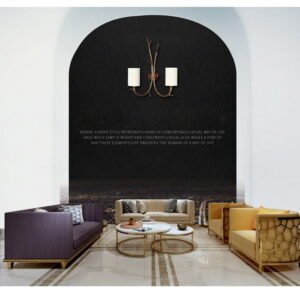
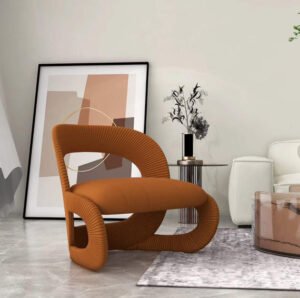
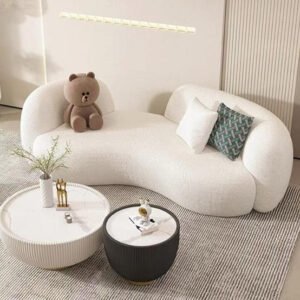
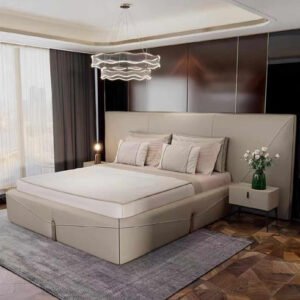
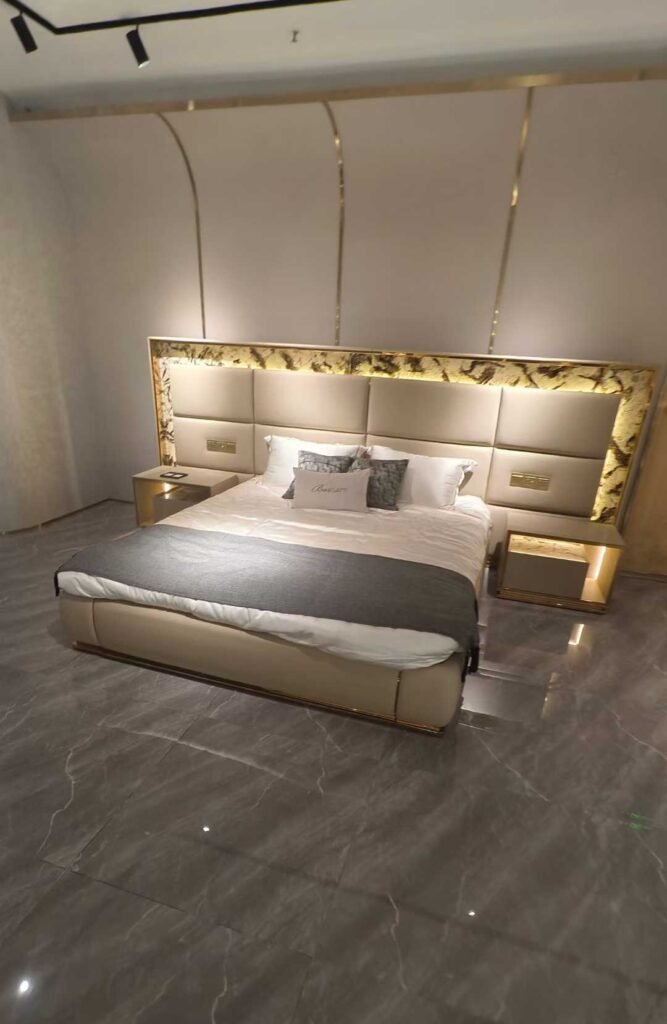
Design reference: restrained materials and sculptural forms can work together. A room does not need to belong entirely to one style.
I.The Strategic Role of Furniture in Luxury Asset Valuation
A luxury villa can have exceptional architecture and still feel unresolved. The sofa blocks a sightline. The dining table competes with the stone floor. A fashionable finish looks impressive in photographs but shows every fingerprint during viewings.
Furniture is where architectural intent becomes a daily experience.
For developers, designers, and hotel owners, the distinction between modern and contemporary furniture is therefore more than aesthetic. It can influence perceived value, maintenance costs, and whether the space meets the expectations of its intended clientele.
It does não, by itself, guarantee a higher sale price or hotel rate.
A. Connecting Architecture With Interior Curation
Interior curation means selecting furnishings as a coordinated collection rather than buying attractive pieces separately.
Start with the building. Its proportions, daylight, materials, and circulation should guide the furniture—not the other way around.
A low, horizontal sofa might preserve a villa’s landscape view. A sculptural lounge chair might give a restrained hotel reception its focal point.
B. Furniture as Brand Positioning
Furniture tells buyers and guests what kind of property they have entered.
Recognizable modernist pieces can suggest design heritage. Original contemporary furniture can signal a more experimental identity. Both can support luxury positioning when comfort, scale, and execution match the promise.
The commercial question is not “Which style looks more expensive?” It is “Which package makes this property feel credible at its intended price point?”
C. Timelessness vs. Trend Exposure
For projects with substantial capital investment, separate long-term purchases from items that can be refreshed easily.
Keep the costly foundation adaptable. Place stronger trend references where replacement will not require rebuilding the room.
Jade Ant’s client-focused luxury furniture guide provides further context for connecting furniture decisions with project use.
II. Decoding the Taxonomy: Modern vs. Contemporary in the Luxury Sector
Modern furniture refers to designs associated with the modernist movement and its legacy. Contemporary furniture describes design being developed and used now. Modern is a historical design category; contemporary is an evolving one.
Retail catalogs often use the words interchangeably. Your procurement documents should not.
A. Modernism: A 20th-Century Legacy
Modernism challenged heavy ornament and emphasized function, materials, and new production methods.
Bauhaus was a German art and design school founded in 1919. Its influence included a focus on materials and function, as explained in MoMA’s Bauhaus definition.
Mid-century modern generally refers to the modern design associated with the middle decades of the 20th century. It includes timber furniture, molded forms, and designs that balance industrial production with human comfort.
Modern furniture is not always angular. Many important modernist designs use curves.
B. Contemporary: The Evolving Present
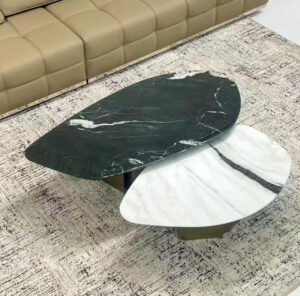
Contemporary furniture can include curving sofas, asymmetric tables, mixed materials, and experimental construction.
It can also be simple, geometric, and restrained. A piece is not contemporary merely because it has rounded corners.
Likewise, a modernist design made today remains a modern design. Production date and design category are different facts.
C. Why the Distinction Matters for FF&E
FF&E means Furniture, Fixtures & Equipment: the movable furnishings and equipment used in a property.
“Contemporary luxury chair” is not a sufficient specification. Two suppliers may interpret it very differently.
Translate the style brief into measurable requirements:
| Specification factor | Modern-led direction | Contemporary-led direction |
|---|---|---|
| Design reference | Modernist heritage and functional clarity | Current design language or original development |
| Typical visual approach | Controlled proportions and limited ornament | Sculptural forms, material contrast, or expressive scale |
| Material direction | Timber, steel, leather, glass | Broader combinations, including new composites and finishes |
| Main design risk | A room that feels overly thematic or generic | A room tied too closely to a short-lived trend |
| Procurement evidence | Provenance, drawings, construction, service support | Engineering, samples, material tests, service support |
These are useful tendencies, not rigid rules. Both categories can use the same materials and construction methods.
III. The Modernist Blueprint: Timelessness and Structural Integrity
Modern furniture can provide a stable, investment-minded foundation for luxury spaces. However, style alone does not make a piece durable or financially collectible.
A. Key Silhouettes
Look for clean lines, clear geometry, balanced proportions, and little applied decoration.
For a villa, that might mean a timber dining table whose base leaves comfortable legroom. For a hotel, it might mean lounge seating with a readable shape and replaceable cushions.
The goal is visual clarity—not a room stripped of warmth.
B. Materiality: Hardwood, Steel, and Leather
Materiality simply means the choice of materials and how they look, feel, and perform.
Hardwood, tubular steel, and leather are closely associated with modern furniture, but their names do not establish quality.
Check the details:
- Timber species, construction, and suitability for the destination climate.
- Steel wall thickness, weld execution, and finish protection.
- Leather grade, protective treatment, and cleaning restrictions.
- Cushion construction and access for future replacement.
Real wood veneer over a well-engineered core can be appropriate for luxury furniture. It is not automatically inferior to solid wood. The correct choice depends on the application and execution.
C. Solving the “Dated” Look
No design is guaranteed to remain fashionable forever. A better strategy is to choose pieces that can accommodate changing surroundings.
A well-proportioned sofa in a restrained fabric can work with new artwork or lighting. A piece combining an unusual silhouette, strong color, and highly specific finish is harder to reposition.
Informações sobre o setor: Familiar modernist forms offer continuity, but a room filled only with famous designs can feel like a showroom. Use architectural fit and comfort to guide selection rather than recognition alone.
Relevant Video: Modern Design in Context
Vitra Session “Eames” explores Charles and Ray Eames and their relationship with Vitra. It is useful context for understanding modern furniture as a design discipline rather than a generic minimalist look.
https://www.youtube.com/watch?v=r-2ICRCHHOs
Independent design reference; not a Jade Ant production video.
IV. The Contemporary Edge: Innovation, Fluidity, and Prestige
Contemporary furniture allows a luxury project to express current relevance and a distinctive design point of view.
The strongest pieces create interest without making the room difficult to use.
A. Key Silhouettes
Curving forms, asymmetry, and generous proportions can soften large architectural spaces.
But oversized does not mean comfortable.
Before approving a deep sofa or low lounge chair, test how guests sit, stand, converse, and reach a side table. In hotels, include users with different mobility needs in the review.
B. Materiality: Mixed Media and New Surfaces
Contemporary collections may combine resin, brushed brass, velvet, stone, and composites.
A composite is a material made by combining two or more components. Some offer useful design or weight advantages, but “composite” does not automatically mean sustainable.
Ask:
- Can resin tolerate the expected heat and cleaning products?
- Is the brass solid, plated, or a metal-effect finish?
- Does velvet show pressure marks or directional shading?
- Can damaged components be repaired separately?
- What evidence supports recycled-content claims?
C. Creating the Wow Factor
For high-net-worth villa buyers and luxury hotel guests, a memorable piece can establish the room’s identity.
Choose a focal point: a sculptural sofa, a distinctive dining table, or an original reception arrangement. Give it space.
Photographic impact should not come at the expense of circulation, conversation, or housekeeping access.
Current market insight: In the 1stDibs guide to 2026 designer trends, 43% of surveyed designers expected curvy and irregular furniture to remain popular, down from 48% for 2025. The same report describes continuing interest in modernist and vintage designs.
That supports a mixed strategy—not a claim that every luxury buyer wants the newest silhouette.
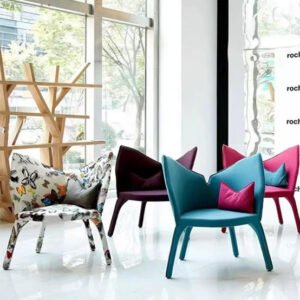
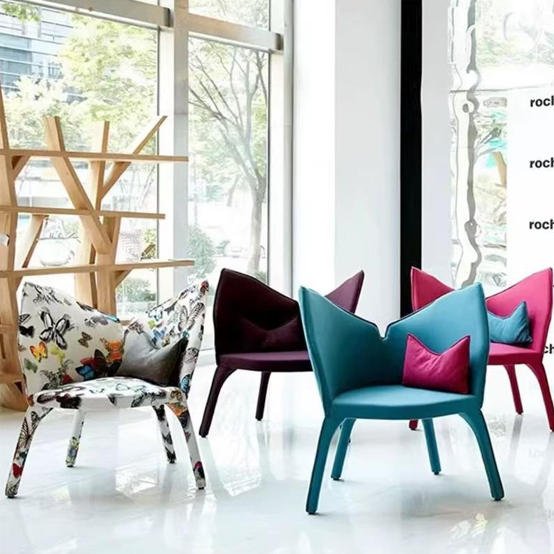
Design reference: expressive seating works best when the surrounding materials and layout remain controlled.
V. Materiality and Craftsmanship: The Benchmark of Luxury Quality
For importers and distributors, the difference between luxury and mass-market execution is found in construction, finish control, and documented performance—not in the style label.
A. Joinery and Structural Execution
Marcenaria means the methods used to connect furniture components.
A mortise-and-tenon joint fits a projecting section of wood into a matching opening. A dovetail joint uses interlocking shapes, commonly in drawers.
Both can be well or poorly made. Handwork is not automatically better than precision machinery.
Evaluate whether the joint suits the load, closes accurately, and remains stable during appropriate testing. Avoid improvised load tests; use the applicable test method and qualified personnel.
B. Finish Quality and Textile Grade
Inspect samples under the lighting expected at the property.
A finish that looks consistent under factory lighting may shift beside warm lamps or daylight. Check corners, undersides, upholstery seams, and moving parts—not only the main viewing angle.
Martindale is a laboratory abrasion test that measures fabric resistance to repeated surface rubbing. Its result is expressed in cycles.
For woven indoor upholstery in high-traffic public spaces, the Association for Contract Textiles provides a voluntary guideline of 40,000 Martindale cycles ou 30,000 Wyzenbeek double rubs. These are different test methods; their results are not directly interchangeable.
O ACT high-traffic woven upholstery guideline also warns that abrasion results are not a reliable predictor of fabric lifespan.
Excel-Ready Luxury Quality Checklist
| Componente | Evidence to request | Practical acceptance check |
|---|---|---|
| Moldura | Material specification and applicable strength tests | No unexplained movement or dimensional mismatch |
| Timber surfaces | Species, core construction, finish reference | Controlled grain selection and agreed natural variation |
| Metalwork | Material, coating system, relevant test evidence | Clean welds, consistent finish, protected contact points |
| Upholstery | Composition, abrasion, pilling, seam, and colorfastness results | Correct tension, aligned seams, approved color |
| Cushions | Foam density, firmness, and construction | Comfortable support and replaceable components |
| Hardware | Manufacturer reference and appropriate cycle tests | Smooth, repeatable operation |
| Embalagem | Approved protection and handling plan | Vulnerable edges and surfaces protected |
C. Craftsmanship and Private Label Resale Value
For a private label brand, craftsmanship can support confidence, repeat business, and pricing credibility. It does not guarantee secondary-market resale value.
Resale also depends on recognition, provenance, condition, scarcity, and demand.
Keep production records, maker identification, care instructions, and repair information. These make quality easier to verify when ownership changes.
Jade Ant’s luxury brand comparison framework can help organize supplier questions; use primary test reports to validate technical claims.
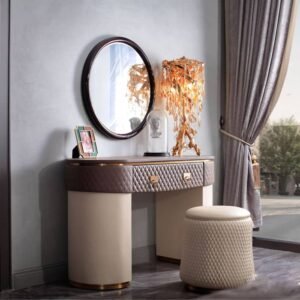
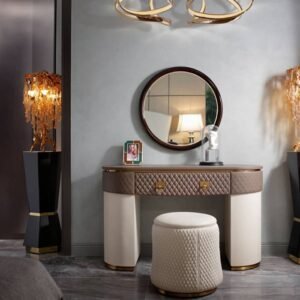
Design reference: inspect the details that photographs often hide, including drawer construction, hardware, edges, and interior surfaces.
VI. Psychological Drivers: Why Luxury Buyers Choose Specific Styles
Understanding the buyer profile helps developers select interiors that support absorption—the pace at which available units sell or lease.
Treat style preferences as hypotheses to test, not personality facts.
A. The Modern Buyer
A modern-led brief may appeal to clients who value heritage, restraint, and an informed design story.
Quiet luxury means an understated expression of quality through materials, proportions, and detail rather than obvious decoration.
In a villa, this may involve fewer pieces, comfortable seating, natural textures, and documented design provenance.
Do not assume that a restrained interior requires only beige upholstery or famous brands.
B. The Contemporary Buyer
A contemporary-led brief may suit clients who want originality, expressive forms, or a home that feels different from comparable properties.
Exclusivity can come from an original design, a site-specific dimension, or a thoughtful material combination—not simply an unusual color.
C. Tailoring the Package
Ask the client or development sales team:
- Is the property a primary residence, second home, or investment?
- Should the interior feel calm, expressive, or adaptable?
- Which spaces matter most during viewings?
- How much maintenance will the owner accept?
- Will the furniture transfer with the property?
For hotels, also test the brief against guest use and the operator’s maintenance resources.
Validate commercial assumptions through comparable properties, client interviews, and mock-up feedback. Furniture style alone cannot explain sales speed.
VII. Integration Strategies for Interior Designers and Architects
A curated hybrid often gives luxury projects both continuity and distinction.
A. Balance the Modern Anchor With the Contemporary Accent
An anchor piece establishes the room’s scale and function. An accent piece adds contrast or emphasis.
For example:
- Anchor: a clean-lined timber dining table.
- Accent: contemporary upholstered dining chairs.
- Shared elements: related wood tones, repeated metal finishes, and compatible proportions.
Alternatively, a contemporary sofa can be balanced by restrained modern side tables. The anchor does not have to be modern in every room.
B. Control Visual Harmony
Choose a limited material palette before ordering.
Repeat selected elements across pieces: a metal tone, a timber finish, an edge profile, or an upholstery family. This gives different designs a common language.
Avoid making every item the focal point.
C. Maintain Consistency Across Large FF&E Programs
For hotels and multi-villa developments, use one master specification register.
Each item should have a unique code, drawing revision, approved sample reference, location, quantity, and substitution rule.
Arrange finishes together in a mock-up. A material approved alone may look wrong beside the actual flooring and lighting.
| Espaço | Long-term foundation | Contemporary emphasis | Main control |
|---|---|---|---|
| Villa living room | Adaptable seating and storage | Sculptural chair or occasional table | Sightlines and comfortable circulation |
| Hotel lobby | Durable seating infrastructure | Signature sofa or reception grouping | Cleaning access and repairability |
| Model residence | Coordinated primary furniture | One memorable feature piece | Launch timing and transfer terms |
| Guest room | Consistent beds, desks, and storage | Selected seating or finish detail | Repeatability across room types |
VIII. Procurement and Logistics for High-End Importers/Distributors
Luxury sourcing requires aesthetic discipline and a supply chain capable of repeating the approved result.
A. Quality Controls for Private Label Manufacturing
Private label furniture is manufactured for sale under your brand.
Before sharing original designs, define ownership, permitted production, tooling rights, and any exclusivity. Branding a catalog piece does not automatically give you exclusive design rights.
Then establish:
- Approved drawings and material specifications.
- A signed physical reference sample.
- Material checks before production.
- Inspections during production.
- Pre-shipment inspection and packaging checks.
- Written defect-resolution and replacement procedures.
Use Jade Ant’s furniture import quality-control checklist to structure the inspection brief, while confirming acceptance criteria with your inspector.
B. Lead Times and Customization
Style is not a dependable lead-time indicator.
A stocked contemporary table may arrive sooner than a made-to-order modern classic. An original curved sofa may require more development than a standard modern frame.
Separate the schedule into design approval, sampling, production, inspection, transport, customs, and installation.
For bespoke pieces, confirm what starts the production clock. Usually, the supplier needs approved drawings, approved materials, payment, and an available production slot.
C. Protecting Margin and Delivery
Landed cost is the cost of getting furniture to a named destination, including the relevant purchase, freight, insurance, duty, and handling charges.
Compare suppliers on equivalent delivery scopes. Also budget for inspection, storage, installation, and possible corrective work.
Oversized contemporary pieces can create transport challenges. Check packed dimensions, lift access, turning space, and assembly methods before approval.
For brand owners, Jade Ant’s private label development guide provides a broader planning framework.
IX. Sustainability and Longevity: The New Luxury Standard
Responsible luxury should be supported by evidence of sourcing, useful service life, and repair options.
A contemporary appearance is not proof of environmental progress. A traditional material is not proof of environmental harm.
A. Circular Materials and Design
Circular design aims to keep products and materials useful rather than sending them quickly to waste.
O Ellen MacArthur Foundation’s circular design guidance emphasizes preventing waste through decisions made at the design stage.
For furniture, practical examples include:
- Removable upholstery.
- Replaceable cushions and hardware.
- Components that can be separated for repair.
- Verified recycled materials.
- Supplier take-back or refurbishment services.
A recycled-content chair that cannot be repaired may still be a poor fit for intensive hotel use.
B. Sourcing and Indoor Air Quality
FSC chain of custody tracks certified forest-based materials through production and distribution. Review the FSC sourcing framework and require claims that match the actual order.
VOCs, or volatile organic compounds, are chemicals that can be released into indoor air. UL GREENGUARD certification evaluates low chemical emissions from products.
These credentials answer different questions. Neither proves overall strength, comfort, or complete sustainability.
C. Why Durability Matters to Operators
For hotels, replacement involves more than a new purchase. It can require room access, installation labor, storage, disposal, and disruption.
Total cost of ownership includes purchase, use, maintenance, repair, and replacement.
Illustrative Eight-Year Seating Comparison
Hypothetical figures per chair, not supplier quotes or lifespan predictions. Replacement timing is an assumption for demonstrating the calculation.
| Cost over eight years | Option A | Option B |
|---|---|---|
| Initial purchase | $600 | $1,000 |
| Maintenance and repairs | $240 | $300 |
| Assumed replacement purchase | $600 | $0 |
| Additional replacement delivery and handling | $120 | $0 |
| Illustrative total | $1,560 | $1,300 |
The higher initial price wins only if the service-life and repair assumptions hold. Check those assumptions against comparable installations and supplier evidence.
Informações sobre o setor: ACT identifies inappropriate cleaning, maintenance, application, and physical abuse as important causes of textile failure. Its abrasion interpretation guidance explains why doubling an abrasion number does not mean doubling service life.
Design reference: a memorable dining space still depends on practical decisions about seating comfort, tabletop care, access, and replacement.
X. Curating the Future of Luxury Living
Modern furniture offers a historical design foundation. Contemporary furniture offers a changing language of current design.
Neither is automatically more durable, more luxurious, or more valuable.
For projects focused on ROI—return on investment, prioritize architectural fit, operating costs, repairability, and verified buyer demand.
For projects focused on brand prestige, concentrate distinctive design in the places where it will be noticed and used. Protect those pieces with sound engineering and a realistic delivery plan.
A mixed package often provides the best balance: adaptable long-term furniture, selected signature pieces, and one consistent specification standard.
When briefing Móveis Jade Ant, bring the floor plan, room schedule, intended use, target clientele, material references, and installed-and-accepted date. Ask for the technical and commercial scope behind the proposed design.
Discuss your modern or contemporary furniture brief with Jade Ant before committing the package to production.
Furniture transforms a physical structure into a luxury experience when it looks intentional, feels comfortable, and continues to perform after the launch photographs are taken.
Quick Procurement Glossary
| Termo | Plain-English meaning | Project example |
|---|---|---|
| Provenance | Documented origin and history | Maker, designer, production location, and ownership records |
| Shop drawing | Detailed drawing used for manufacture | Sofa dimensions, frame details, and assembly connections |
| Gold sample | Final approved physical production reference | Signed finish panel retained by buyer and factory |
| Dye lot | A batch of fabric colored together | Matching lounge chairs produced from coordinated fabric batches |
| Colorfastness | Resistance to color change or transfer | Upholstery that tolerates light exposure and approved cleaning |
| Repairability | Ability to fix an item without replacing it entirely | A damaged cushion replaced while the frame remains in service |
Frequently Asked Questions for Luxury Clients
1. Should a project lean modern or contemporary to maximize ROI?
Choose based on target buyers, architecture, ownership horizon, and operating requirements—not the style name alone.
A modern-led foundation may simplify future updates. Contemporary statement pieces may strengthen differentiation. Validate both against local comparables and client feedback, and include maintenance and replacement costs in the financial assessment.
2. Which materials and textiles work best in high-traffic luxury hotel lobbies?
Choose an engineered combination rather than one supposedly indestructible material.
Frames need appropriate strength testing. Table surfaces should tolerate the actual cleaning routine. Upholstery needs suitable abrasion, seam, pilling, colorfastness, and cleaning performance.
Tightly constructed performance fabrics or protected leather can be useful, depending on the application. Velvet can also work where its shading and care requirements are acceptable. Test the complete upholstered piece, not only the fabric swatch.
3. How can contemporary trends be introduced without dating a villa in five years?
Put stronger trends in pieces that can be changed independently, such as occasional seating, accessories, or selected upholstery.
Keep major furniture proportions and material relationships adaptable. Avoid combining a highly specific shape, color, finish, and pattern in every large piece. Repairability and reupholstery options also make future changes easier.
4. What certifications should importers request for high-end furniture?
There is no universal “luxury quality” certificate.
Request evidence relevant to the product and destination: applicable strength and stability tests, fire-safety compliance, chemical-emission documentation, and any claimed sourcing certification.
For U.S. imports containing regulated composite wood, review the EPA’s TSCA Title VI requirements. TSCA Title VI is the federal framework governing formaldehyde emissions from certain composite wood products.
Verify report scope, product identification, validity, and issuing body.
5. How should a private label brand procure bespoke furniture?
Begin with a written design brief and clear ownership terms. Agree on drawings, materials, sampling fees, tooling, minimum quantities, and the approval process.
Approve a physical prototype before the main production run. Then inspect production against that reference. Also define how specifications, spare parts, and finish information will be retained for reorders.
6. Which style is more in demand for ultra-high-net-worth residential projects?
No single style can be treated as the universal preference of ultra-high-net-worth clients.
Designer surveys indicate interest in several directions at once, including contemporary curves, organic modernism, vintage pieces, and modernist designs. These surveys are not a direct measure of every wealthy buyer’s preference.
Use them for context, then prioritize the actual client’s collection, lifestyle, architecture, and design brief.
7. How do I balance quiet luxury, visual impact, and a mix of styles?
Create a restrained base and give one or two pieces a clear focal role.
Connect different styles through repeated materials, compatible proportions, and controlled color. Leave enough visual space around statement furniture. Quiet luxury does not require a room without contrast; it requires contrast that feels deliberate.
8. Are contemporary pieces slower to deliver than modern classics?
Not inherently. Stock status, customization, materials, production capacity, and destination matter more than style.
Ask for separate dates covering approval, production, inspection, shipment, site arrival, and installation. Confirm whether the quote concerns stock, an existing made-to-order product, or entirely new development.
9. How can quality remain consistent across several international manufacturers?
Use a shared specification register, controlled drawing revisions, retained physical samples, and the same inspection criteria.
Review materials together under project lighting. Track fabric batches, finish recipes, approved natural variation, and any substitutions. Appoint one person to approve changes so individual suppliers cannot gradually alter the design.
10. What role should sustainable sourcing play in luxury furniture selection?
Treat it as a documented procurement requirement where relevant, not a decorative marketing claim.
Check material traceability, chemical emissions, repair access, replacement components, and realistic end-of-life options. Match each environmental claim to evidence. Furniture that remains useful through repair and refurbishment can offer a stronger long-term case than a fashionable piece with an unsupported “eco-friendly” label.