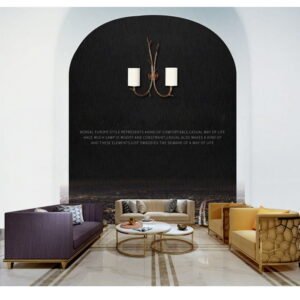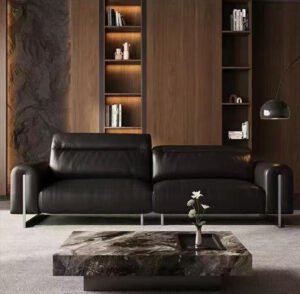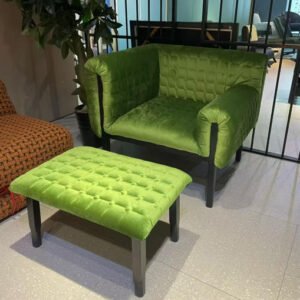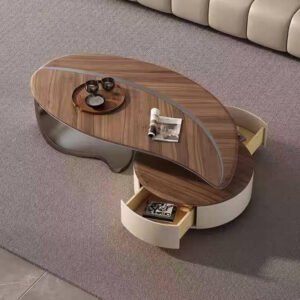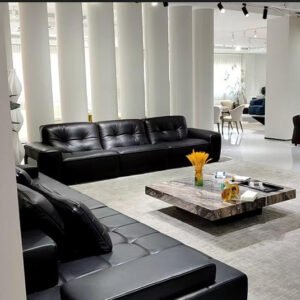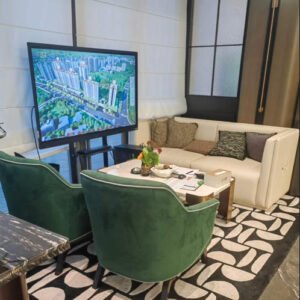
Custom coffee tables are no longer just functional pieces — they’re statement-making focal points your clients demand. Understanding the latest design trends, sustainable materials, and finishes will help you stock inventory that moves faster, command premium margins, and position your distribution business as the trusted authority your buyers return to.

The modern premium brief: restraint, material quality, and purposeful proportion. This is the standard your interior designer clients are pitching to their clients right now.
Why Custom Coffee Tables Matter to Your Distribution Business
The Growing Demand for Bespoke Coffee Table Solutions
Here’s what the data shows and what your sales figures are probably already telling you: the custom furniture market was valued at $62.8 billion in 2025 and is projected to grow at a CAGR of 8.12% through 2034 (Dataintelo). At the same time, the modern coffee table market alone hit $8.2 billion in 2025, growing at 5.3% CAGR. The segment pulling both of those numbers upward is not the mass-produced tier — it’s the customised, trend-aware, premium tier.
Your clients — interior designers, hotel fit-out specialists, and showroom owners — are being asked by their own clients for pieces that don’t look like they came off a shared catalogue. The interior designer who walks into a high-net-worth client’s penthouse and specifies the same travertine table that every other designer in the city is using doesn’t get called back for the next project. They call you because they need someone who understands what’s actually selling at the premium tier and can source to brief.
Mass-produced options are not the answer to that call. Custom, trend-aware manufacturing is.
Why you can’t rely on standard lines anymore:
- Interior designers and hotel procurement managers are specifying from design briefs, not catalogues
- Your retail partners’ end clients are more visually literate than ever — they’ve seen every mass-produced piece on Pinterest before they step into a showroom
- The distributors capturing premium projects in your market are the ones with curated, on-trend, customisable inventories
The profit potential is real. A sustainable furniture wholesale operation aims for gross margins of 40–55% on standard lines. On well-positioned custom pieces, margins routinely reach 55–70% because there is no direct price comparison. You are pricing a solution, not a commodity.
What This Guide Will Help You Solve
This guide is built for one type of reader: a furniture distributor, showroom owner, interior designer, or hotel fit-out specialist who needs to make smart sourcing decisions — not someone browsing for decoration inspiration.
By the end, you’ll be able to distinguish trends that will anchor your portfolio for the next three years from ones that will be in the clearance pile in eighteen months. You’ll know which materials your designer clients will ask for by name, which finishes are driving commercial specifications right now, and how to price a trend-forward custom piece without racing your competitors to the bottom.
Modern Minimalism Meets Functional Design
The Shift Away from Ornate, Decorative Pieces
The years 2022–2023 were the peak of maximalism in many residential markets: sculptural legs, bold veneers, layered textures, decorative hardware. Some of that still sells — and we’ll discuss where — but the dominant brief hitting interior designers in 2025 is cleaner, quieter, and more deliberate.
Your clients are moving toward clean lines and purposeful design because their end clients are living through a correction. After several years of highly expressive interiors, a significant portion of the luxury residential market has pivoted to restraint. Not minimalism for its own sake, but minimalism as a quality signal: “This piece doesn’t need ornamentation to justify its price.”
In showroom terms, this means minimalist pieces are moving faster than transitional styles. The piece that sold in three weeks two years ago is now sitting in your showroom for six, because “transitional” is no longer a reassuring term — it just means nothing in particular.
Real-world showroom evidence: Interior designers at the premium residential tier consistently report that clean-lined, well-proportioned pieces in quality materials — a solid oak table with a hand-rubbed oil finish, a powder-coated steel base with a honed stone top — sell more quickly than elaborate alternatives at the same price point. The client can immediately see what they’re paying for.
What Minimalism Means for Your Sourcing Strategy
Minimalism is unforgiving. A simple design with poor craftsmanship — a joint that isn’t flush, a finish that isn’t consistent, proportions that are slightly off — is far more exposed than an ornate piece where decorative detail can mask manufacturing variation.
This means your sourcing strategy for minimalist inventory requires a different quality bar. You need manufacturers who excel at precision and repeatability: tight tolerances on dimension, consistent finish application across batches, and the kind of joinery quality that holds up when the design has nowhere to hide.
Móveis Jade Ant specialises in exactly this kind of production — factory-direct custom manufacturing with the quality control infrastructure to support B2B distribution partners who need consistency across batches, not just impressive samples.
Pricing note: Minimalist pieces command higher margins precisely because clients understand they are paying for quality, not decoration. A clean-lined solid walnut table at $1,400 is harder to price-resist than a $900 ornate piece where the client’s inner voice says “I could find something like this cheaper.” Lean into that.
Common Distributor Mistake: Over-Stocking Transitional Styles
The industry term “transitional” — meaning design that sits between traditional and contemporary — has become a liability in premium showroom contexts. These pieces were designed to appeal to everyone and, in a market where buyers are either gravitating toward bold statement pieces or clean minimalism, they appeal to no one decisively.
Transitional pieces sit on showroom floors for extended periods because they don’t prompt an emotional “that’s it” response from either end of the design preference spectrum. If your showroom partners are reporting slow movers, check the transitional inventory first.
The conversation to have with your retail partners: “We’re seeing the fastest turnover on pieces that commit to a clear design direction — either bold and architectural, or clean and minimal. The middle ground is where stock is sitting. Let’s rebalance.”

Solid wood paired with blackened steel: the combination that reads “quality” at first glance in a showroom environment — and that justifies $900–$1,400 price points to design-literate clients.
Sustainable and Eco-Conscious Materials Leading the Market
The Non-Negotiable Demand for Responsible Sourcing
This is no longer a “nice to have” for progressive distributors. It is a commercial requirement in the hotel and hospitality sector, a significant differentiator in the high-end residential market, and increasingly relevant in commercial fit-out projects targeting LEED (Leadership in Energy and Environmental Design — the internationally recognised green building rating system) certification.
Hotel chains with sustainability commitments — and there are now dozens of international brands with published net-zero targets — are asking procurement partners to demonstrate material provenance. Interior designers working on premium residential projects are using eco-materials as a client-facing selling point: “The walnut in this table is FSC-certified, which means it came from a responsibly managed forest.” That sentence earns trust with a sophisticated client. It also justifies the price.
Your B2B clients are not asking about sustainability because it’s fashionable. They’re asking because their clients are asking them.
Materials That Are Winning With Distributors Right Now
Reclaimed and upcycled wood carries the strongest aesthetic story of any eco-material. Each piece is genuinely unique — the grain, the colour variations, the marks of the wood’s previous life are all part of the product. The sourcing challenge is consistency: reclaimed wood by definition cannot be perfectly standardised, which requires a manufacturing partner with the skill to work with natural variation while maintaining dimensional precision. Margins on reclaimed-wood tables are strong because the material story supports premium pricing.
FSC-certified timber (FSC = Forest Stewardship Council) is the practical baseline for any distributor supplying hospitality or commercial projects. FSC certification means the wood was harvested from a forest managed to standards that protect biodiversity, worker rights, and long-term forest health. The FSC website for furniture manufacturers explains the certification process in detail. When a hotel procurement team asks for FSC documentation, you need to be able to provide it — if your manufacturing partner can’t, you lose the project.
Recycled metals and glass are gaining traction for mixed-material designs. Recycled steel and aluminium have essentially the same structural properties as virgin material and carry strong sustainability credentials that can be documented and shared with clients.
Bamboo and cork are growing fastest in the affordable-premium tier: products positioned around $600–$900 where the sustainability story drives perceived value above the material cost.
Certifications Your Clients Will Ask About
Understanding what each certification means — and being able to explain it in one sentence — is a basic competency for any distributor’s sales team in 2025.
| Certificação | O que está coberto | Mais relevante para |
|---|---|---|
| FSC (Forest Stewardship Council) | Responsibly managed forest sourcing for wood products | All wood furniture; mandatory for many hotel specs |
| GREENGUARD | Low chemical emission standards; indoor air quality | Commercial, hospitality, and healthcare projects |
| PEFC (Programme for Endorsement of Forest Certification) | Alternative to FSC; same scope, different governance | European market hotel and commercial specs |
| Cradle to Cradle | Full lifecycle sustainability, recyclability, and material health | Highest-tier commercial and hospitality specs |
Note: Verify the current certification status of any specific manufacturer directly with the certifying body. Certifications require annual renewal.
Bold Colour and Finish Trends Reshaping Client Preferences
Moving Beyond Natural Wood Tones
Natural wood tones dominated furniture finishes from approximately 2019 through 2023 — light oak, blonde ash, whitewashed pine. They’re not going away, but they are no longer differentiating. Every mid-market furniture retailer stocks light wood coffee tables. The premium market has moved.
What’s entering the brief from interior designers and hotel fit-out specialists in 2025:
Jewel tones and earthy, saturated hues are appearing on painted and lacquered bases — deep forest greens, terracotta, warm muted burgundies. These are not fashion colours that will date in eighteen months; they reference natural pigments and geological tones that have a longer design half-life.
Contrast is the principle. A deep green lacquered base with a honed limestone top. A warm black frame with a bleached oak surface. The piece reads as intentional and composed, not as an assembly of available finishes.
In hospitality, colour is being used more boldly because hotel designers understand that a distinctive piece creates a social media moment — guests photograph interesting furniture. That is now a measurable specification criterion for luxury boutique hotels.
Finishes Driving Sales in 2025
Matte and soft-touch finishes have largely replaced high-gloss as the premium signal in the coffee table category. High-gloss reads as mid-market or dated in design-literate showroom contexts. Matte finishes read as confident and sophisticated, and they perform better in high-traffic commercial environments because they show fewer surface marks.
Textured surfaces — hand-rubbed wax on solid wood, brushed finishes on steel and brass, leather-wrapped elements — add a tactile dimension that photographs cannot fully communicate. This is a genuine showroom advantage: clients who touch a hand-rubbed walnut surface understand immediately why it costs more than a smooth MDF equivalent.
Two-tone and mixed-finish compositions are gaining momentum because they allow a single piece to read differently from different angles and in different lighting conditions — an important consideration for luxury hotel lobbies and residential living rooms where natural light changes throughout the day.
Powder-coated metals in deep, unexpected colours — forest green, charcoal, warm black with a slight bronze undertone — are among the fastest-moving finish specifications in commercial fit-out right now.
The Durability Question Your Clients Will Ask
Hotel fit-out designers and commercial specifiers always ask about durability, and the answer needs to be specific, not general.
For high-traffic commercial settings:
- Hard wax oil finishes on wood: restorable without full refinishing, highly durable, good for hotel suites and residential
- Powder-coated steel: extremely durable for bases; standard commercial warranty is 5+ years against chipping and fading
- Matte lacquer: durable in moderate-traffic settings; less appropriate for surfaces that receive direct abrasion
- Stone tops (honed marble, travertine): highly durable structurally; require sealing against liquid penetration; communicate this clearly to hotel clients
 Deep lacquer bases with natural stone tops: the finish language of premium hospitality and luxury residential in 2025. This is the type of specification Móveis Jade Ant executes for B2B partners.
Multifunctional Designs That Solve Space Constraints
Why Distributors Are Prioritising Versatile Coffee Tables
The average new urban apartment in major global cities has shrunk. Interior designers working in dense metropolitan markets are regularly specifying furniture for living spaces under 50 square metres. In these environments, a coffee table that does only one thing is a poor use of floor space — and your clients know it.
Multifunctional pieces are not a niche category. The lift-top coffee table market was valued at $2.3 billion in 2024 and is projected to reach $4.1 billion by 2033, growing at a robust CAGR (Market Intelo). The driver is not just residential — commercial hospitality is a major factor, as hotel suites and serviced apartments in urban markets are explicitly specifying furniture that serves multiple functions in limited footprints.
The critical point for your B2B sales positioning: Interior designers and showroom buyers are not just interested in multifunctional pieces for budget reasons. They are interested because they solve a real design problem — how do you furnish a well-designed space that doesn’t feel cramped? A piece that functions as a coffee table, occasional dining surface, and concealed storage is a more elegant solution than three separate pieces.
Top Multifunctional Features Gaining Traction
Integrated storage — shelving within the base, drawers, or lift-up compartments — is the most consistently requested functional feature. Hotel fit-out specialists specify storage-integrated tables for minibar concealment and cable management. Residential designers specify them for living rooms where visible clutter is the client’s primary concern.
Lift-top mechanisms transform a coffee table into a working surface at seated height — particularly relevant in the urban residential market where home working is now a permanent reality, not a temporary adaptation. When a designer can show a client that a single piece serves as a coffee table, occasional dining table, and work surface, the price justification writes itself.
Nesting tables and modular configurations appeal to both residential and hospitality markets because they allow the footprint to expand for entertaining and contract for daily use. Hotel lobbies and lounge areas specify modular tables because they can be reconfigured for different event formats without replacing furniture.
Cable management and integrated power are standard specifications for commercial hospitality and premium residential with home automation systems. A coffee table with concealed USB charging and cable routing is a practical luxury, not a gimmick.
Positioning Multifunctional Tables to Your Retail Partners
The mistake most distributor sales teams make is leading with features: “This table has a lift-top mechanism and two storage drawers and integrated USB charging…” The correct approach is leading with the design problem the piece solves: “Your client’s brief is a home office living room in a 45-square-metre apartment. This table functions as their coffee table, working surface, and media storage in a single footprint.”
A simple comparison chart your showroom partners can use with end clients:
| Recurso | Standard Table | Multifunctional Table |
|---|---|---|
| Coffee table use | ✅ | ✅ |
| Home working surface | ❌ | ✅ |
| Concealed storage | ❌ | ✅ |
| Cable/device management | ❌ | ✅ (premium models) |
| Floorspace required | Standard | Same |
| Price premium | — | Typically 40–70% above equivalent standard piece |
| Margin opportunity | 35–45% | 50–65% |
Luxury Materials and High-End Finishes for Premium Market Segments
Elevating Your Offering With Premium Options
The luxury furniture market was valued at $33.7 billion in 2026 and is growing steadily, driven by hotel expansions, HNWI (High-Net-Worth Individual) residential developments, and premium hospitality concepts in emerging markets (Grand View Research). That market is your opportunity — but you need to be present in it with the right inventory.
Distributors who stock only the accessible tier miss the projects where the real margin lives. A boutique hotel group specifying 15 coffee tables for their suites at $2,500 each is a $37,500 order at 60% margin. The same hotel ordering 30 standard tables at $500 each is a $15,000 order at 35% margin. The premium order is more profitable on fewer units with fewer logistics complications.
The prerequisite is having premium inventory — and the knowledge to position it correctly.
Materials Commanding Premium Pricing
Marble, travertine, and natural stone tops remain the highest-demand luxury specification for coffee tables in 2025. Travertine in particular has moved from architectural material (floors, walls) into furniture top applications, driven by its warm, organic appearance and its association with high-end Mediterranean hospitality design. Every piece has unique natural patterning — which supports the “one-of-a-kind” positioning that premium clients pay for.
Stone tops paired with solid brass or blackened steel bases represent the most consistently specified luxury combination in premium hospitality and high-end residential. Brass has maintained its premium status through multiple trend cycles because it warms naturally with age — unlike chrome or bright gold, which date.
High-quality veneers and exotic wood species — quarter-sawn oak with pronounced medullary rays, smoked eucalyptus, burl walnut — allow furniture at a lower price point than solid stone to access the luxury conversation when combined with quality manufacturing. The key qualifier is “high-quality”: cheap veneer with visible seams or substrate show-through communicates the opposite of luxury.
Glass and crystal elements are regaining favour in premium residential contexts after a period of being associated with mid-market furniture. The revival is in refined applications: thick, edge-polished glass tops on sculptural bases, or smoked glass used as a design accent rather than a structural primary surface.
Catering to Luxury-Focused Interior Designers and Showrooms
Luxury designers and their procurement teams have very specific expectations, and understanding them determines whether you get the project or not.
Customisation at point of specification is non-negotiable. Premium residential designers routinely adjust dimensions by 5–10% to fit exact room proportions. Hotel fit-out specialists require furniture that matches a specific finish board — they cannot order from catalogue pages. You need manufacturing capability (and a partner like Móveis Jade Ant) that can accommodate these customisations without prohibitive setup costs.
Quality control documentation matters. A luxury designer ordering 12 custom stone-top tables for a hotel project expects pre-delivery inspection photos and material specifications. Your supply chain needs to support that transparency.
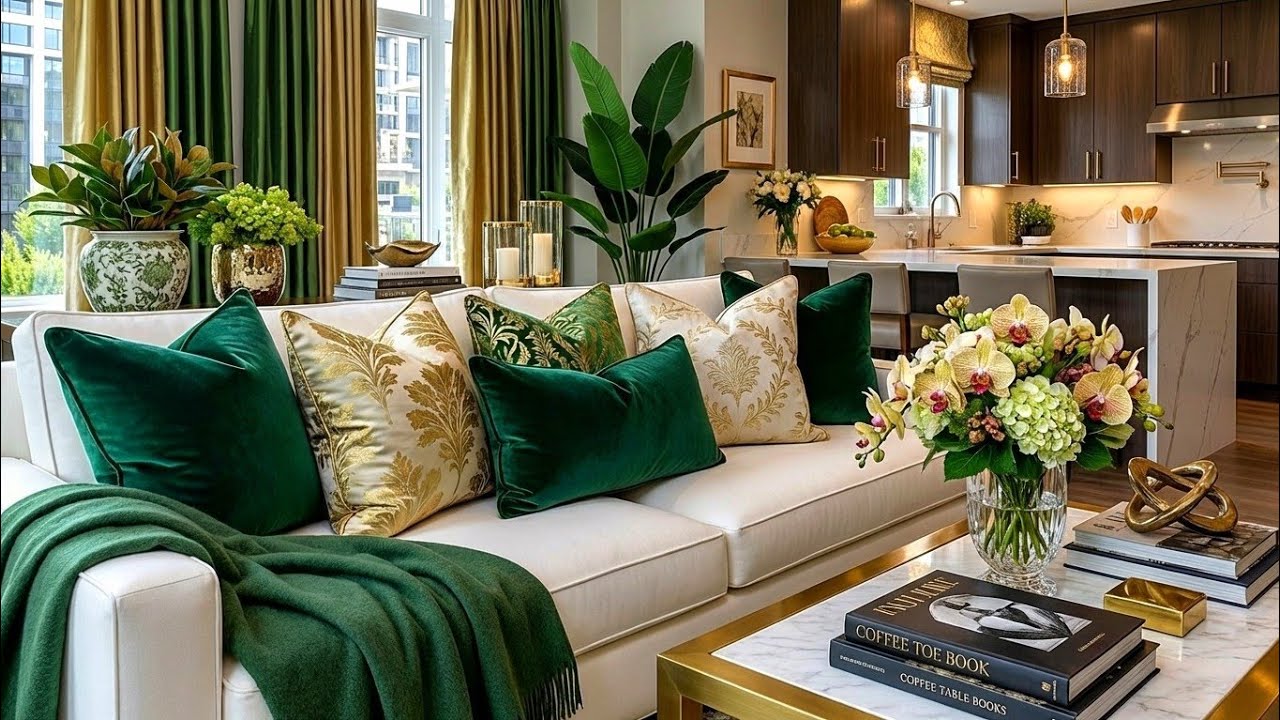
▶ Watch on YouTube: Top 6 Luxury Coffee Table Materials & Shapes for 2026 — a concise reference for sharing with your showroom clients and designer partners on current material trends.
Mixed Materials and Industrial Aesthetics
The Continued Appeal of Blended Design Elements
Mixed-material coffee tables have been a consistent seller for several years, and they show no sign of declining because they solve a genuine design problem: creating a visually interesting piece that works in multiple interior contexts. A wood-top table with a steel base reads as contemporary in a minimal loft apartment, warm and grounded in a transitional home, and industrial-cool in a converted commercial hospitality space.
The trend has evolved. Early mixed-material designs were often crude in the junction between materials — visible fasteners, abrupt material transitions, mismatched scales. The 2025 versions are more sophisticated: the steel-to-wood junction is clean and intentional, the proportions balance the visual weight of each material, and the finish on each component is treated as part of a unified composition, not as two separate elements that happen to be attached.
This sophistication is what justifies premium pricing. And it requires manufacturing partners with multi-material expertise.
Popular Material Combinations Distributors Should Stock
The table below reflects actual showroom performance data from distributor conversations and industry trend reports:
| Material Combination | Faixa de preço típica | Primary Market | Margin Profile |
|---|---|---|---|
| Solid wood top + powder-coated steel base | $600–$1,200 | Premium residential, hospitality | 50–60% |
| Honed stone top + brushed brass base | $1,200–$2,500 | Luxury residential, boutique hotel | 55–65% |
| Concrete base + solid wood or glass top | $800–$1,500 | Commercial, urban residential | 48–58% |
| Smoked glass top + sculptural steel/brass base | $900–$1,800 | Luxury residential, flagship commercial | 55–65% |
| Reclaimed wood + raw iron frame | $700–$1,300 | Hospitality, urban residential | 50–60% |
Ranges are representative B2B wholesale prices at the distribution level. Actual margins vary by market and manufacturer terms.
Sourcing Challenges With Mixed-Material Designs
The practical challenge with mixed-material pieces is quality control at the assembly stage. A wood top that has slightly more moisture than the specification allows will move seasonally — creating stress at the metal junction. A stone top that is marginally thicker than specified changes the visual proportion of the entire piece.
What this means for your sourcing strategy: you need a manufacturing partner with dedicated quality checkpoints at each material stage, not just a final inspection. Jade Ant Furniture’s production process includes stage inspections specifically designed for mixed-material production — because the cost of a remake at delivery is significantly higher than the cost of catching a material variance at fabrication.
Lead times for mixed-material custom pieces are typically 8–14 weeks — longer than single-material designs because of multi-stage assembly and finishing. Build this into your project timelines and communicate it clearly upfront.

The mixed-material composition at its most resolved: material contrast, finish intentionality, and proportional balance. This is the specification standard in boutique hotel and luxury residential interiors.
Size and Scale Trends for Different Market Segments
The Shift Toward Larger Statement Pieces
Oversized coffee tables — those running 55 inches or longer — are trending upward in luxury and commercial markets for a specific reason: they anchor a room. A large sofa with a standard-sized coffee table reads as incomplete. A large sofa with an appropriately scaled, substantial coffee table reads as a considered, finished composition.
This matters commercially because hotel designers and luxury residential interior designers are specifying larger pieces precisely to avoid the “unfinished” impression that clients notice even when they can’t articulate why.
The logistics challenge is real: pieces over 50 inches require careful packaging, specific crating for international shipping, and delivery teams with white-glove capability. If your logistics infrastructure doesn’t currently handle oversized pieces, this is worth investment — because it’s a market segment that many distributors have quietly vacated, leaving the premium orders to the few who solved the logistics problem.
Segment-Specific Size Preferences
Different client types have different size priorities, and your inventory should reflect all three tiers:
Luxury residential designers are trending toward 50–65-inch lengths for sectional configurations in large living rooms. These pieces are designed to be seen — the size is part of the statement.
Hotel and hospitality specifiers typically work with 36–50-inch pieces for suites and public areas. The dimension needs to be practical — not so large that it impedes movement around the furniture arrangement — but substantial enough to read as premium in a well-designed room.
Office and commercial spaces — corporate lobbies, private members’ clubs, premium co-working environments — favour compact, modular configurations in the 30–40-inch range that can be reconfigured for meetings and social use without dominating the space.
Advising Your Retail Partners on Size Selection
The most useful guidance you can give showroom partners is a simple framework: the coffee table should be approximately two-thirds the length of the sofa it faces, at a height within 2 inches of the sofa seat cushion. This is a practical design rule that most retail clients don’t know, and it makes you instantly more useful than a competitor who just shows them product.
Floor samples are non-negotiable for selling larger pieces. A 60-inch coffee table that exists only as a catalogue image will not be ordered by a cautious showroom buyer. The same piece on a showroom floor, properly styled with a sofa and rug at the right scale, demonstrates why the investment is justified.
Technology Integration and Modern Conveniences
Smart Coffee Tables: Separating Real Demand From Hype
Tech-integrated furniture gets significant press coverage that doesn’t always reflect actual market demand. Before you invest in inventory with electronic components, it’s worth applying a simple test: does the feature solve a problem that the client actually has in their space?
By that test, some features pass and some don’t.
Features that are actually selling:
- USB charging ports and integrated power solutions — genuinely useful in both residential and commercial contexts; guests and residents consistently leave positive reviews of hotel rooms with well-placed charging solutions
- Built-in wireless charging (Qi standard) — growing fastest in the urban premium residential segment where clients have invested in smart home systems; less relevant in transitional or traditional residential contexts
- LED accent lighting integrated into bases or shelves — appealing in hospitality for ambience control; requires discussion about power routing during installation planning
- Temperature-controlled surfaces — a genuine luxury specification at the $3,000+ price point for premium residential; limited commercial application but a strong conversation piece in ultra-luxury showroom contexts
Features that are currently more hype than demand:
- Integrated screens or touch interfaces — high maintenance cost, limited practical use, dates quickly
- Voice-activated functions — clients who want voice control have it through existing smart home systems; they don’t need it duplicated in a coffee table
Market caveat: Tech features appeal most strongly to urban demographics under 45, high-density residential markets (apartments in major cities), and commercial hospitality venues targeting business travellers. If your distribution territory is primarily suburban residential or traditional design contexts, this is a secondary inventory tier rather than a primary focus.
Regional and Cultural Design Influences
Global Design Aesthetics Entering Mainstream Markets
Japandi — a portmanteau of Japanese and Scandinavian design principles — has moved from design magazine trend story to genuine mainstream market demand in the premium residential segment. It is the design language of restraint and material honesty: natural materials treated with minimal intervention, functional forms without decorative excess, warm neutral palettes punctuated by occasional dark contrast elements.
For coffee tables specifically, the Japandi brief translates to: low profiles, solid wood with minimal processing, clean geometric forms, and a finish that shows the grain rather than concealing it. The sales velocity of Japandi-adjacent pieces in premium residential showrooms has been consistently strong since 2023, and the design intelligence suggests staying power — it’s not a surface trend, it’s a philosophical shift toward quality over decoration.
Mid-century modern with contemporary twists continues its revival. Original mid-century language — tapered walnut legs, oval and organic forms, warm material tones — is being reinterpreted with 2025 finishes (matte vs. the original high-gloss lacquers) and contemporary material combinations. This is a strong segment for distributors because it has broad demographic appeal across residential and commercial markets.
Mediterranean and coastal influences are particularly strong in specific geographic markets: warm-climate regions, coastal residential developments, and the hospitality sector serving leisure tourism. Travertine, warm linen tones, handmade-looking ceramics integrated as table elements, and bleached wood species all read as “Mediterranean” to a design-literate client. This is a consistent seller in the right markets and irrelevant in others — knowing your geographic territory matters here.
Understanding Your Geographic Markets
Urban and suburban markets have meaningfully different demand profiles, and any sourcing strategy that ignores this will result in inventory mismatches.
Urban premium residential markets (dense city centres, loft conversions, new-build luxury apartments): strong demand for Japandi, minimalism, mixed materials, tech integration, multifunctional designs. Clients are design-literate and space-constrained.
Suburban luxury residential markets: stronger demand for transitional and mid-century revival designs; natural materials with less industrial aesthetic; size preferences trend toward larger pieces in larger living rooms.
Coastal and resort hospitality markets: Mediterranean influences, natural materials, warm tones, pieces that photograph well in natural light. Durability in humid environments is a specification requirement (avoid expansion-prone materials without proper treatment).

Showroom presentation done right: a complete vignette tells a design story that a catalogue page cannot. This is how you help your retail partners justify premium prices to end clients.
Pricing Strategy and Margin Management in a Trend-Driven Market
Balancing Trend-Forward Inventory With Profitability
Trends move at different speeds in different market segments. A design trend that appears in an international architecture publication in January typically appears in a high-end design showroom by Q3 of the same year, reaches premium distributor catalogues six to twelve months later, and hits the mass market eighteen to thirty-six months after that. By the time a trend is everywhere, the premium-tier distributors who moved early have already extracted their margin advantage and moved to the next brief.
This matters practically: don’t over-invest in emerging trends until you’ve validated demand with your specific retail partner base. Take smaller positions on new trend directions, gather feedback from showroom buyers and designer clients, and scale up only when you have confirmed demand signals.
The rule of thumb from experienced distribution operators: 70% of your inventory should be in proven, steady sellers; 20% in established premium trends; 10% in emerging or experimental designs. Adjust the split as emerging designs graduate to established status based on your actual sales data.
Pricing Models That Work for B2B Relationships
Tiered pricing by volume is the standard model for B2B furniture distribution and it works well when structured correctly. The pricing schedule should be transparent and based on genuine cost economics, not arbitrary discount steps.
| Order Volume (per SKU per quarter) | Recommended Discount vs. Standard Price |
|---|---|
| 1–4 units | Standard price (0% discount) |
| 5–9 units | 5–8% discount |
| 10–19 units | 10–15% discount |
| 20+ units | 15–22% discount |
| Exclusive design agreement | Negotiated; minimum 25% below standard, with volume commitment |
Premium pricing for exclusive or limited-run designs is a legitimate and effective model for working with interior designers and boutique showrooms. An exclusive design that only your distribution clients can offer commands a price premium from the end client and from you. The designer who has access to an exclusive piece has a competitive advantage in their pitches — that’s worth paying for.
Transparent cost-plus pricing builds trust with showroom partners who are sophisticated enough to understand furniture economics. Rather than presenting arbitrary price lists, distributors who can explain their pricing logic (“this piece carries a 55% margin because of the stone sourcing complexity and the 10-week lead time”) build more durable relationships than those who just present numbers.
Protecting Your Margins While Staying Competitive
The most dangerous pricing move a distributor can make is matching a competitor’s price on a custom or trend-forward piece. The client who is choosing between two custom coffee tables on price alone is not the premium client. Chase quality-sensitive clients, not price-sensitive ones.
Understanding production costs across materials:
- Solid stone tops: material cost is the primary driver; complex cuts and edge profiles add significant cost; negotiate per-category pricing with your manufacturer rather than per-piece
- Brass and copper accents: commodity metal prices fluctuate; build a 10% contingency into any order that uses significant brass or copper
- Mixed-material assembly: labour cost is a larger component than in single-material pieces; ensure your manufacturer’s quoted prices include assembly and finishing, not just fabrication of individual components
Jade Ant Furniture’s B2B partners benefit from factory-direct pricing that removes the intermediary margin layer, which is the primary structural cost advantage of working directly with a manufacturer rather than through an import agent.
Building a Trend-Forward Distribution Strategy
Taking Action: Your Next Steps
The audit is the right starting point. Before you source anything new, spend an hour mapping your current coffee table inventory against the ten trend areas in this guide. Which of your current pieces would an interior designer pitch to a premium residential client today — and which would they skip? Be honest. The pieces that make you hesitate are the ones to replace first.
Your retail partner conversations need to change too. If you’re currently presenting new lines as product catalogues, shift to presenting them as solutions to specific design briefs: “This is the piece for the Japandi-brief urban apartment.” “This is the specification for a boutique hotel suite that needs concealed storage.” Give your showroom partners language they can use with their own clients, and you become their most useful business partner, not just another supplier.
Your 12–18 month sourcing roadmap:
- Months 1–3: Audit current inventory; identify slow-movers in the transitional category; replace with clean-line minimalist and mixed-material alternatives
- Months 3–6: Build sustainable material credentials — source FSC-certified and eco-certified options; document your supply chain for client enquiries
- Months 6–12: Expand luxury tier inventory — stone tops, brass accents, mixed-finish compositions; develop relationships with premium designer and hospitality clients
- Months 12–18: Review multifunctional and tech-integrated inventory performance; scale what’s working; establish exclusive design agreements with your top manufacturing partners
Staying Ahead Without Chasing Every Trend
The most valuable skill in trend-aware distribution is not spotting every new development — it’s knowing which ones are worth acting on and which ones will reverse before you’ve cleared the inventory.
Your filtering system for evaluating emerging trends: Does this design direction have a functional reason to exist, or is it purely aesthetic? (Functional trends last longer.) Is it appearing in commercial hospitality specifications or only residential? (Commercial adoption signals durability.) Is it being specified by your most sophisticated designer clients, or only discussed in publications? (Client adoption is the only signal that pays invoices.)
Build feedback loops with your showroom and designer partners. The best market intelligence in furniture distribution is not an industry report — it’s the designer who tells you what brief they couldn’t fulfil last month because nothing in your catalogue was right. Those conversations are worth more than any trend publication.
Ready to Transform Your Coffee Table Offering?
Your clients are asking for things your current catalogue may not answer. Whether it’s a stone-top piece for a boutique hotel brief, an FSC-certified minimalist table for a sustainable residential project, or a multifunctional design for an urban apartment, the right manufacturing partner makes the difference between winning the project and watching it go to a competitor.
Explore Jade Ant Furniture’s custom coffee table capabilities — factory-direct custom manufacturing built specifically for B2B distribution partners, interior designers, and hospitality fit-out specialists.
Browse the full living room collection | Read our custom furniture sourcing guide | Contact the B2B team
Glossário de termos-chave
FSC (Conselho de Manejo Florestal): An international non-profit organisation that certifies forests managed to standards protecting biodiversity, worker rights, and forest regeneration. FSC-certified wood products carry documented chain-of-custody evidence. Example: A coffee table bearing FSC certification means the timber was tracked from a responsibly managed forest to the finished product.
GREENGUARD Certification: A third-party certification verifying that a product meets standards for low chemical emissions, protecting indoor air quality. Particularly relevant for commercial, hospitality, and healthcare specifications. Example: A hotel chain specifying GREENGUARD-certified furniture can claim indoor air quality benefits as part of their sustainability narrative.
LEED (Leadership in Energy and Environmental Design): An internationally recognised green building rating system. Furniture with certified sustainable material sourcing can contribute to a project’s LEED certification points. Example: An office fit-out specifying FSC-certified and GREENGUARD-certified furniture earns LEED material credits.
Japandi: A design aesthetic combining Japanese minimalism (wabi-sabi — finding beauty in imperfection) with Scandinavian functionalism and warmth. Key characteristics: natural materials with minimal processing, restrained colour palettes, and functional forms. Example: A low-profile coffee table in oiled solid ash with a simple box frame reads as Japandi.
MOQ (Quantidade Mínima de Pedido): The smallest number of units a manufacturer will produce in a single order. For custom coffee tables, MOQs typically range from 1 unit (flexible B2B-focused manufacturers) to 10–20 units (volume-focused factories).
Hard wax oil finish: A penetrating wood finish that soaks into the grain rather than forming a surface film, providing natural appearance, easy repair (spot refinishing without full resanding), and good durability in residential and moderate-commercial use.
Travertine: A naturally occurring sedimentary limestone characterised by pits and voids formed by gas bubbles and organic matter during formation. Available in filled (smooth surface) and unfilled versions. The warm, creamy tones and natural variation make it a premium coffee table top specification.
Wabi-sabi: Japanese aesthetic philosophy finding beauty in imperfection, incompleteness, and natural aging. In furniture terms, it translates to appreciating handmade marks, natural grain variations, and the way materials develop patina over time.
FAQs for Furniture Distributors
1. What coffee table trends will have the longest shelf life, and which should I avoid over-investing in?
Minimalist designs with high-quality craftsmanship, FSC-certified and sustainable materials, and genuinely functional multifunctional features have a documented track record of multi-year staying power. Japandi aesthetics and mixed-material compositions are in the same durable category. Avoid over-investing in hyper-specific colour trends or novelty technology features that don’t solve a real functional problem — these tend to date within 18–24 months, which is roughly the time between when you order inventory and when you’ve cleared it.
2. How do I convince my showroom partners that premium-priced custom coffee tables are worth stocking when mass-produced options are cheaper?
The conversation changes when you frame it in their terms: a standard coffee table at $500 with 33% margin earns $165 in gross profit. A premium custom piece at $1,400 with 55% margin earns $770. Your showroom partner doesn’t need to sell more; they need to sell better. Floor samples are non-negotiable for making this argument — a retail buyer who has touched a hand-finished marble-top table and compared it to a mass-produced equivalent doesn’t need much further convincing.
3. What’s the minimum order quantity I should negotiate with manufacturers for custom designs?
Target manufacturing partners who can accommodate 5–10 units for custom designs as a starting position. This gives you the flexibility to test a new design with a modest investment before scaling. For ongoing proven designs, negotiate volume discounts that kick in at 15–20 units. Avoid manufacturers whose MOQs for custom work start at 50+ units — those are factories structured for mass production, not for the B2B distribution model where design flexibility and moderate volumes are the requirement.
4. How do I manage inventory risk when trends shift quickly?
The 70/20/10 rule works in practice: 70% of your inventory in proven, consistent sellers (timeless minimalism, quality mixed-materials, established natural stones); 20% in established trends that have commercial validation (current Japandi and multifunctional categories); 10% in early-stage or experimental designs you’re testing with your best retail partners. Start new trend directions with one or two floor sample units, gather 60–90 days of showroom feedback, and scale only on confirmed demand signals.
5. Which sustainable material certifications matter most to my B2B clients?
Certificação FSC is the non-negotiable baseline for any client specifying wood furniture — particularly in hotel, commercial, or institutional projects. GREENGUARD matters for hospitality and commercial clients with indoor air quality requirements, including hotel brands with wellness certifications. In the European market, PEFC certification is FSC-equivalent and sometimes preferred by European hotel chains. Know your specific client segments: residential designers rarely ask for GREENGUARD; hospitality procurement teams almost always do for commercial projects.
6. How should I price custom coffee tables to remain competitive while protecting margins?
Base your custom pricing on four factors: material and production cost (your floor), specification complexity (your risk premium), lead time (your opportunity cost), and exclusivity (the premium the client is paying for not finding it elsewhere). A practical framework: price at 2.5–3× material and manufacturing cost. On a piece costing $450 to produce, your selling price to showroom partners should be $1,125–$1,350, maintaining 55–65% gross margin. Never reduce margin to win a custom order — reduce specification complexity instead if budget is genuinely the constraint.
7. What’s the typical lead time for custom coffee tables, and how does this impact my distribution strategy?
Custom coffee tables typically take 6–12 weeks from design sign-off to delivery, depending on specification complexity, material sourcing requirements, and manufacturer capacity. Mixed-material or stone-top pieces tend toward the 10–14 week range. The practical implication: plan your sourcing 4–5 months ahead of when you need delivery, maintain safety stock of your three to five best-selling standard pieces for immediate-need orders, and communicate realistic timelines to retail partners upfront — setting correct expectations is better for the relationship than optimistic timelines followed by delays.
8. How do I help interior designers and showroom staff understand the value of multifunctional designs?
The most effective tool is a cost-per-function comparison. A lift-top storage coffee table that functions as a coffee table, workspace, and concealed storage replaces three separate purchases. If each of those purchases would have cost $400–$600, the $1,100 multifunctional piece is a space-efficient, economically rational choice. Create a simple one-page comparison sheet that showroom staff can use in client conversations. Demonstration videos of the mechanism in use — particularly for lift-top and modular configurations — are more persuasive than verbal descriptions.
9. Are tech-integrated coffee tables a smart investment, or are they a passing fad?
Practical tech integration — specifically USB charging, Qi wireless charging surfaces, and cable management — is not a fad. It addresses a real problem (power access and cable clutter in living spaces) that isn’t going away. These features are worth carrying in your inventory, particularly for urban premium residential and commercial hospitality contexts. Avoid more elaborate tech integrations (integrated screens, temperature-controlled surfaces below the $2,500 price point, proprietary app-connected features) where the maintenance and warranty complexity outweighs the sales benefit for most of your retail partner base.
10. How do I identify which regional markets prefer which design aesthetics?
Your most reliable source of regional preference data is your existing retail partner network — specifically the conversations where showroom buyers tell you what their customers have been asking for and not finding. Supplement this with attendance at regional design trade events and a review of local interior design publications, which reflect the aesthetic preferences of the design community in your territory 6–12 months before they appear as retail demand. Trade publications like Dezeen e Architectural Digest track design direction at the premium end. What’s appearing there in editorial context is what your premium residential clients will be briefing for within twelve months.
11. What’s the best way to train my retail partners’ showroom staff to sell premium custom coffee tables?
Written guides help, but experiential training converts. The most effective approach is a combination of material samples, floor samples, and sales scripting. Floor samples let customers experience quality firsthand — the weight of a stone top, the texture of a hand-rubbed finish, the smooth operation of a lift-top mechanism. Sales scripting for showroom staff should lead with the client’s brief or problem, not with product features. “What’s the challenge with this space?” is more effective than “This table has integrated storage.” Train staff to ask that question first.
12. How do I balance offering customisation without creating unsustainable production complexity?
Set a defined customisation menu rather than open-ended options. Limit colour choices to 8–10 carefully curated options your manufacturer can produce consistently; offer 2–3 standard sizes per design (with custom sizing at a premium); restrict material combinations to proven pairings your manufacturer has already produced successfully. This structure gives clients meaningful choice — which they value highly — while maintaining the production efficiency that protects your lead times and quality consistency. A curated approach to customisation is always more profitable than unlimited options.
13. What metrics should I track to evaluate whether a coffee table design is worth keeping in your lineup?
Track three numbers for every SKU: inventory turnover rate (how many times the average inventory unit was sold in a year — aim for 4–6× for premium pieces, 6–8× for accessible tier); gross margin percentage (flag anything below 40% for review); and repeat order rate from retail partners (designs that generate repeat orders from the same buyer are the ones with genuine market fit). Discontinue designs that have turned over fewer than 3 times annually after 9 months in your portfolio and generated no repeat orders. Sentiment from retail partners matters too, but sales data tells you what they actually sell, not what they feel good about stocking.
14. How do I position myself as a trend expert to my retail partners without seeming like I’m just chasing fads?
The distinction between a trend curator and a trend chaser is whether you can explain por que a design direction matters, not just what it looks like. “Japandi is trending” is chasing. “Interior designers with HNWI clients are getting consistent briefs for restraint and material authenticity because their clients are correcting for years of maximalist interiors — and these are the three pieces from our range that answer that brief” is curating. Share your trend analysis with retail partners in the form of curated collections with context, not just new product announcements. Jade Ant Furniture’s B2B resources provide exactly this kind of market context that you can share with your own clients.
15. What’s the most cost-effective way to offer sustainable coffee tables without sacrificing margins?
Work with manufacturers who have already invested in sustainable practices and certified material supply chains — they’ve absorbed the compliance cost, and their eco-material pricing often reflects economies of scale rather than premium surcharges. Position sustainability as a premium feature that justifies higher prices to your clients’ end consumers rather than treating it as a cost to absorb. A hotel client who can include “all furniture FSC-certified” in their sustainability communication is paying for a marketing benefit, not just a material specification. That context allows you to price the sustainability credential into the product at full margin. Source certified suppliers through the FSC’s certified supplier database to verify credentials directly.
For more B2B distribution strategy, sourcing insights, and custom furniture manufacturing resources, visit the Jade Ant Furniture blog — written specifically for furniture distributors, showroom managers, interior designers, and hospitality fit-out professionals.