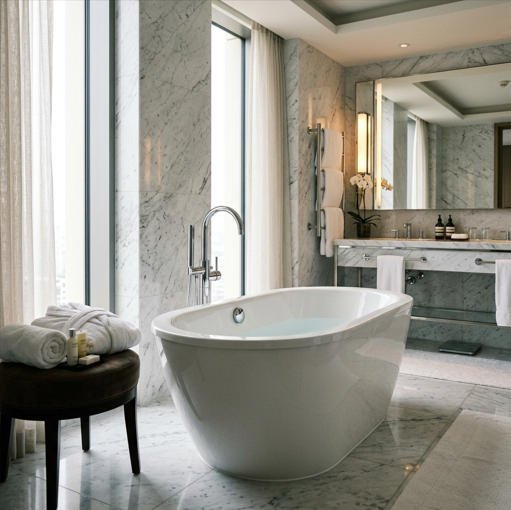

When a Dubai resort operator specified 320 alcove porcelain bathtubs for a tower refurbishment in 2024, their procurement lead made the decision based almost entirely on unit price. Nine months later, forty-two tubs had developed glaze micro-cracks along the drain rim — a failure mode traceable to a sub-standard enamel firing temperature that a proper pre-production specification would have caught. The rework cost, including re-installation labor, exceeded the original price difference between that factory and a certified alternative by a factor of three.
That scenario plays out quietly across hospitality, residential development, and contract interior projects every year. China supplies 46% of the world’s bathtub exports (Asian Sourcing Group, 2025), and the manufacturing ecosystem is genuinely world-class at its best — and dangerously variable at its worst. For B2B buyers specifying porcelain bathtubs at volume, the margin between a profitable project and a costly rework often lives not in the product choice itself, but in the specification depth, the supplier due-diligence process, and an understanding of what differentiates a freestanding from an alcove tub beyond the obvious aesthetics.
This guide gives procurement managers, contract designers, and hospitality developers the technical grounding, market data, and practical sourcing framework to make that specification with confidence. Where relevant, we reference the work of Móveis Jade Ant, a China-based manufacturer and sourcing partner whose team operates directly inside the Foshan–Guangdong supply chain and whose buyer-focused resource library covers much of the broader China sourcing landscape.
Market Overview and Positioning of Chinese Porcelain Bathtubs
Market Share by Type — Globally and in China
The global bathtub market was valued at USD 11.91 billion in 2025 e deve atingir USD 20.41 billion by 2034, growing at a CAGR of approximately 4.1% (Fortune Business Insights). Within that market, type segmentation reveals a clear split: alcove tubs hold the largest current market share at 37.5%, driven by their dominance in mid-market residential construction and budget-conscious renovations. However, freestanding bathtubs are the fastest-growing sub-category, with an independent market forecast showing the global freestanding segment growing from USD 4.05 billion in 2026 to USD 6.53 billion by 2035 at a CAGR of 5.4%.
Porcelain specifically — including both porcelain-enamel-on-steel and porcelain-enamel-on-cast-iron — is the segment where Chinese manufacturers hold the most credible cost-quality advantage. The porcelain sub-segment is forecast at a CAGR of 5.2% through 2030, above the market average, supported by renewed commercial interest in porcelain’s unique combination of chemical inertness, heat retention, and long service life — properties that matter considerably more in a 200-room hotel than in a residential build.
Key Influence of Chinese Manufacturers on Price and Lead Times
China’s bathtub manufacturing footprint is concentrated in three primary hubs: Foshan (Guangdong), which hosts leading brands including ARROW, T&W, SSWW, HEGII, FAENZA, and ANNWA; Fujian Province, home to JOMOO and several large OEM-focused factories; and Hebei Province, where HUIDA and its ceramic-centric production lines are based. Each hub has a distinct competitive profile in terms of material specialization, export market focus, and typical price tier.
For B2B buyers, the practical pricing advantage of Chinese porcelain bathtubs is substantial but not uniform. A commercial-grade porcelain-enamel steel alcove tub from a verified Foshan manufacturer with ISO 9001 and CE certification retails FOB (Free On Board — the seller’s price up to loading on the vessel at Guangzhou port) in the range of USD 180–320 per unit for standard 1,500 mm configurations. A comparable specification from a European manufacturer runs two to four times that figure. However, once tariffs, freight, and compliance costs are added for US-bound orders — particularly the current 25% Section 301 tariff on China-origin goods — the cost advantage compresses significantly and must be modeled carefully.
Growth Drivers and Current Trends
Three converging trends are reshaping B2B demand for Chinese porcelain bathtubs in 2025–2026. The first is the hospitality renovation pipeline: Europe’s hotel stock is mid-cycle on its post-pandemic refurbishment wave, and Asia-Pacific commercial construction — forecast to account for nearly half of all new global construction by 2040 (UNEP) — creates consistent large-format bathtub specification demand. The second trend is the premiumization of residential bathrooms: according to Houzz, 62% of homeowners prioritize bathroom upgrades in renovation projects, with a clear shift toward larger, more architectural bathtub formats. The third driver is smart and wellness integration: Chinese manufacturers like JOMOO and HEGII are actively commercializing chromotherapy, integrated heating, and health-monitoring features in bathtubs — segments growing at 28% annually according to Asian Sourcing Group industry data.

Freestanding vs Alcove: Design, Dimensions, and Space Considerations
Typical Dimensions and Spatial Requirements
The design difference between freestanding and alcove bathtubs begins with spatial footprint — and for B2B buyers fitting out multiple bathrooms, this difference has direct implications for construction, plumbing, and total room square-footage efficiency.
A standard alcove bathtub is designed to fit between three finished walls with a single exposed apron face. Standard length is 1,500 mm (60 inches), with width typically 750–800 mm and basin depth 350–400 mm. The three-wall installation means plumbing supply lines can be routed through adjacent stud walls, minimizing exposure. For hotel bathrooms where space efficiency matters — a typical four-star hotel room bathroom runs 5–8 m² — alcove tubs maximize usable floor area and often double as shower trays with a curtain rod or screen.
A freestanding bathtub requires 300–600 mm of clearance on all accessible sides to allow cleaning, plumbing access, and visual breathing room. Standard freestanding lengths run 1,500–1,800 mm; widths 700–900 mm; heights 500–700 mm from floor to rim. The freeform placement means supply lines must either come through the floor (a floor-mounted faucet configuration) or via a free-standing faucet column — both of which add USD 200–800 per unit to the installation cost above a wall-mounted alcove fitting. For luxury hotel suites, resort villas, and high-end residential bathrooms where the bathtub is a design statement rather than simply a utility fixture, this trade-off is well understood. For standard volume hotel rooms, it is rarely justified.
Specifications at a Glance: Freestanding vs Alcove
| Especificação | Freestanding Porcelain | Alcove Porcelain | B2B Planning Note |
|---|---|---|---|
| Standard Length | 1,500–1,800 mm (60–72 in) | 1,500 mm (60 in) — most common | Freestanding allows custom lengths; alcove tied to wall rough-in |
| Standard Width | 700–900 mm (28–36 in) | 750–800 mm (30–32 in) | Alcove width constrained by three-wall niche |
| Rim Height | 500–700 mm (20–28 in) | 350–450 mm (14–18 in) | Higher rim on freestanding — ADA compliance requires review for commercial |
| Floor Clearance Required | 300–600 mm on accessible sides | None (three walls) | Freestanding adds 0.6–1.2 m² effective footprint per unit |
| Weight (porcelain-enamel steel) | 90–160 kg | 55–90 kg | Structural floor load check required for freestanding in upper-floor suites |
| Weight (cast iron porcelain) | 150–300 kg | 100–200 kg | Cast iron rarely specified above ground floor without structural engineer sign-off |
| Faucet Configuration | Floor-mounted or freestanding column (add USD 200–800) | Wall-mounted or deck-mount on rim (USD 80–300) | Plumbing rough-in location critical for freestanding — specify before slab pour |
| Water Volume Capacity | 200–400 litres | 150–200 litres | Higher volume = longer fill time + higher water heating cost per use |
| Typical FOB Price (Chinese manufacturer) | USD 280–850 (porcelain-enamel steel) | USD 180–320 (porcelain-enamel steel) | Cast iron adds 40–70% to FOB price; custom shapes add 20–35% |
| Installation Complexity | High — floor drain, supply lines, structural clearance | Low–Medium — fits existing rough-in in most retrofits | Freestanding installation labor typically USD 300–600 more per unit |
Sources: Empava Freestanding Tub Size Guide; The Spruce Standard Bathtub Sizes; TOTO Neorest Specification Sheet; industry procurement data.
Aesthetics, Finishes, and Installation Aesthetics
From a commercial specification perspective, the aesthetic gap between freestanding and alcove porcelain has narrowed considerably as Chinese manufacturers have refined their porcelain enamel application to the point where a well-specified Foshan-made freestanding tub is visually indistinguishable from European equivalents at the same price tier. What differentiates the two types aesthetically is less about raw finish quality and more about what each format communicates architecturally.
A freestanding bathtub functions as a room’s focal object — visible from multiple sightlines, requiring coordinated floor, wall, and plumbing finishes that read coherently from every angle. This dramatically increases the specification scope: the floor material must be specified to continue underneath the tub, the drain cover must be finished to match, and the faucet column or floor-mount must be selected in a coordinated metal finish. For hospitality projects, this translates directly to a higher per-bathroom specification budget — typically an additional USD 600–2,000 in finish coordination costs above the tub itself.
An alcove bathtub, conversely, sits within a defined architectural pocket. The three-wall surround, typically tiled, frames the tub and contains the visual composition. This makes it significantly easier and more cost-effective to specify at scale while maintaining a polished, intentional look. For hotel rooms targeting the mid-luxury segment — where the bathroom needs to feel premium without becoming the project’s dominant cost driver — a well-specified alcove porcelain tub with a quality wall-mount faucet and continuous tile surround often delivers a better return on specification investment than a freestanding installation.
Installation Complexity and Renovation Implications
For retrofit and renovation projects — which represent a significant proportion of B2B bathtub volume — the alcove format’s compatibility with existing plumbing rough-in is a major practical advantage. A standard 1,500 mm alcove tub can typically be swapped within an existing bathroom footprint without altering drain locations, supply line positions, or structural elements. A like-for-like freestanding installation in the same space generally requires repositioning the drain (typically USD 400–900 in plumbing labor), reinforcing the floor if the existing structure cannot carry 250–300 kg, and reconfiguring or capping the existing wall-mount faucet rough-in. Across a 200-room hotel refurbishment, these incremental costs per room compound into a six-figure budget variance that is frequently underestimated at the specification stage.
Material Quality, Porcelain Enamel Technology, and Durability
Core Materials and Enamel Layering Explained
A porcelain bathtub is not a ceramic object in the conventional sense. The structural body is either pressed steel (gauge typically 2.5–3.5 mm for commercial grade) or cast iron (wall thickness 5–8 mm), over which a porcelain enamel — essentially a glass-based coating fused at high temperature — is applied in multiple layers. The term vitreous enamel describes the same process: ground glass powder (frit) is mixed with water, applied by spray or dip-coating, and fired in a kiln at 820–900°C.
A quality commercial bathtub enamel system involves at minimum two layers: a ground coat that bonds chemically to the metal substrate and a cover coat that forms the visible, functional surface. Premium manufacturers applying to hospitality specifications add a third, thicker cover coat that increases total enamel thickness to 0.5–1.0 mm. This additional layer improves impact resistance, colour depth, and the tub’s resistance to chemical cleaners used in hotel housekeeping routines — a practical detail that matters enormously when a bathtub will be cleaned daily with commercial-grade acidic or alkaline cleaners over a 15–20 year service life.
Porcelain Thickness, Hardness, and Impact Resistance
Porcelain enamel achieves a Mohs hardness of 5–6 — harder than most bathroom cleaning implements but softer than quartz or diamond. This means it resists everyday abrasion well but is vulnerable to chipping from sharp, high-force impacts (a dropped tool, a sharp-cornered fitting dropped during installation). For hotel procurement, the key specification distinction is between standard residential-grade enamel, which passes basic EN 14516 tests for domestic use, and hospitality-grade enamel that passes EN 14516 supplemented with additional chip resistance tests specified in the purchase contract.
Cast iron porcelain bathtubs offer inherently superior impact resistance because the substrate’s mass and rigidity dampens the shock energy of an impact before it reaches the enamel surface. This is why cast iron porcelain tubs remain the preference for high-footfall hospitality applications despite their installation weight. Steel porcelain tubs, while lighter and lower cost, are more susceptible to resonant vibration — the characteristic “drum sound” that engineers use to distinguish them from cast iron — which concentrates stress at the enamel surface during an impact.
Maintenance, Staining Resistance, and Care Tips for Commercial Use
Properly applied porcelain enamel is non-porous — it does not absorb water, soap residue, or cleaning chemicals into its structure. This gives it a fundamental maintenance advantage over acrylic, which is inherently porous and degrades under aggressive chemical cleaners. A porcelain-enamel bathtub in commercial use should be cleaned with pH-neutral or mildly alkaline cleaners; never with abrasive powder cleaners, steel wool, or bleach-based products, which scratch the enamel surface and accelerate iron staining from water contact at exposed points.
For B2B buyers specifying bathtubs for hotel or resort applications, building a simple care protocol into the FF&E handover documentation prevents the majority of premature enamel deterioration. The commercial-service lifespan of a well-specified and properly maintained porcelain-enamel bathtub is 20 a 30 anos (CSsupply.ca, Empava), compared to 10–15 years for acrylic and 5–10 years for fiberglass — a lifecycle advantage that significantly alters the total cost of ownership calculation when amortized across a hotel’s capex cycle.

Major Chinese Manufacturers: Profiles and What They Offer B2B Buyers
China’s bathtub manufacturing landscape includes hundreds of factories, but a concentrated group of larger, better-resourced brands dominates the export and commercial project segment. Understanding what differentiates them at a specification level — not just at a brochure level — is what enables B2B buyers to match the right supplier to the right project.
Manufacturer A — JOMOO: Product Range and Smart Integration
JOMOO Kitchen & Bath Co., Ltd. (founded 1990, Fujian Province) is among China’s most invested R&D players in the bathroom category, holding over 20,000 patents and operating 16 global R&D centers. JOMOO’s bathtub range spans standard porcelain-enamel steel alcove formats through to premium soaking tubs, whirlpool systems, and smart-enabled integrated bathroom units. For B2B buyers in the mid-to-premium hospitality segment, JOMOO is a credible partner for large-format projects where smart bathroom integration — voice activation, water temperature memory, chromotherapy — is on the specification agenda.
From a procurement standpoint, JOMOO’s scale means consistent lead times (typically 6 a 10 semanas for standard catalogue items in volume) and strong compliance documentation. Their export products carry CE, ISO 9001, and WRAS certifications. MOQ (Minimum Order Quantity) for standard formats starts at 50 units; custom configurations require a minimum of 100–150 units with a tooling deposit. Warranty terms on commercial products are typically 3 years on enamelled surfaces and 5 years on structural components.
Manufacturer B — T&W: Customization and OEM Capability
T&W Sanitary Ware (founded 2003, Foshan, Guangdong) operates a 32,000 m² facility and has built its B2B reputation specifically around customization capability. Where JOMOO leads on product breadth and smart features, T&W leads on OEM and ODM services — the ability to produce bathtubs to a buyer’s proprietary shape, faucet deck configuration, glaze color specification, or branded embossing.
T&W’s certifications include ISO 9001:2015, CE, and cUPC (the North American standard for plumbing fixture sanitation compliance). Their eco-friendly option line — reduced-firing-temperature enamel, water-saving drain configurations — is particularly relevant for buyers with ESG procurement mandates. T&W’s warranty terms for commercial projects typically run 5 years structural, 2 years enamel surface for standard configurations. Lead time for custom OEM orders is 10–14 weeks after pre-production sample approval.
Manufacturer C — ARROW: Supply Chain Scale and After-Sales
ARROW Group (founded 1994, Foshan) is one of the largest vertically integrated sanitary ware manufacturers in China, with production bases spanning over 6,000 mu (approximately 4,000 acres). ARROW’s commercial strength for B2B buyers lies less in premium design positioning and more in supply chain reliability at scale: the ability to fulfil 1,000+ unit orders with consistent quality across bathtubs, basins, toilets, and faucets from a single vendor, reducing the coordination complexity of multi-supplier hotel FF&E procurement.
ARROW holds ISO 9001, CE, and BSCI certifications. Their after-sales infrastructure — including regional service centers across China and a growing international service agent network — is particularly relevant for long-term hospitality operator relationships where ongoing replacement parts and surface repair services have commercial value. Commercial project pricing for ARROW porcelain-enamel steel alcove tubs in standard configurations runs approximately FOB USD 190–280 for 1,500 mm formats at 100+ unit MOQ.
Assessment based on publicly available certification records, export data (Volza, Asian Sourcing Group), product range analysis, and industry reports. Scores are relative comparisons within this group, not absolute industry ratings.
Standards, Certifications, and Compliance: What Protects Your Specification
International Certifications Commonly Pursued
The certification landscape for Chinese bathtub manufacturers has matured significantly over the past decade, but it remains an area where buyers must exercise independent verification rather than accept supplier documentation at face value. The table below maps the certifications that carry genuine weight for B2B procurement decisions, with notes on what each covers and how to verify it.
| Certificação | O que está coberto | Market Relevance | How to Independently Verify |
|---|---|---|---|
| ISO 9001:2015 | Quality Management System — confirms consistent manufacturing processes and documentation | All markets — baseline requirement | Check issuing certification body (SGS, Bureau Veritas, TÜV) and certificate number via the body’s online registry |
| CE Marking EU Required | Confirms product meets EU health, safety, and environmental protection requirements | Mandatory for EU market entry | Request Declaration of Conformity document; verify relevant EU directive references (e.g., Construction Products Regulation) |
| cUPC NA Required | North American sanitation standard — plumbing fixture safety and performance compliance | Mandatory for Canadian and many US commercial projects | Verify certificate number via NSF International certified products database |
| WRAS UK Required | Water Regulations Advisory Scheme — confirms fitting does not contaminate potable water | Required for UK commercial and hospitality projects | Search product listing at wras.co.uk |
| EN 14516 | European standard for domestic baths — dimensional, load, and chemical resistance testing | EU specification benchmark; referenced in contract documents | Request test report from accredited lab (Intertek, SGS, Eurofins) referencing EN 14516 clauses |
| BSCI / amfori | Social compliance audit — labor rights, wages, working hours, child labor across the supply chain | Required by EU retail chains; increasingly required by hotel procurement programs | Search factory at amfori.org |
| WaterMark | Australian standards certification for plumbing products used in regulated installations | Required for Australian commercial projects | Search product at watermark.gov.au |
| SGS / Bureau Veritas Test Reports | Independent material and performance testing — enamel adhesion, hardness, chemical resistance, load testing | All markets — provides project-specific technical evidence beyond factory certification | Reports are issued by accredited labs; verify lab accreditation number against ILAC MRA network |
Sources: Luxury Home Faucet Bathtub Sourcing Guide 2025; Asian Sourcing Group Manufacturer Profiles; bmscasa.com China Furniture Quality Standards; CIFFFURNITUREFAIR certification overview.
Chinese National Standards and Testing Practices
China’s domestic bathtub manufacturing standard is GB/T 23123 (steel enamel bathtubs) and GB/T 13922 (acrylic bathtubs), both administered by the Standardization Administration of China. GB/T 23123 specifies enamel layer thickness, chemical resistance, impact resistance (no cracking after a 200g steel ball dropped from 300 mm), and dimensional tolerance requirements. Reputable export-oriented manufacturers test against both the relevant GB/T standard and the destination market’s standard (EN 14516 for Europe, ANSI/ASME A112.19 for North America) simultaneously.
A practical B2B sourcing tip: ask any prospective Chinese bathtub supplier to provide both their GB/T test report e the relevant export market test report for the specific product you are specifying. If a supplier can only provide one or provides a test report dated more than three years ago, that is a signal worth investigating before committing to a volume purchase order.
Cost, Value, and Lifecycle Considerations
Upfront Purchase Price vs Long-Term Maintenance
B2B procurement decisions for bathtubs should always be framed as a lifecycle cost analysis, not a unit price comparison. The upfront cost difference between a basic acrylic alcove tub and a commercial-grade porcelain-enamel steel equivalent from a certified Chinese manufacturer can be as small as USD 60–100 per unit at FOB. Across the 20–30 year service life of a porcelain unit versus the 10–12 year replacement cycle for acrylic in commercial use, that initial premium typically pays back within the first replacement cycle — often before year 12.
| Elemento de custo | Acrylic Alcove (Standard) | Porcelain-Enamel Steel Alcove (Commercial Grade) | Porcelain-Enamel Cast Iron Alcove (Premium) | Porcelain Freestanding (Cast Iron, Premium) |
|---|---|---|---|---|
| FOB Unit Price (China, 100+ units) | USD 90–160 | USD 180–320 | USD 380–680 | USD 550–1,200 |
| Installation Labor (US, standard) | USD 200–400 | USD 250–500 | USD 350–700 (weight handling) | USD 600–1,200 (floor drain, faucet column) |
| Expected Service Life (commercial) | 10–12 years | 20–25 years | 30–50 years | 30–50 years |
| Annual Maintenance Cost (per unit) | USD 15–30 (resurfacing at year 8–10) | USD 5–15 | USD 3–10 | USD 5–12 |
| Replacement Cycle Cost (30-year horizon) | ~2.5x purchase + install | ~1.2x purchase + install | None expected (with normal care) | None expected (with normal care) |
| Estimated 30-Year Total Cost (per unit, US buyer) | USD 1,100–1,800 | USD 820–1,200 | USD 950–1,600 | USD 1,500–3,200 |
30-year total cost includes estimated freight, duties, installation, and maintenance. US buyer assumptions: Section 301 tariff 25%, ocean freight ~$25/unit, MFN duty 3.5%. Sources: Empava Bathtub Lifespan Guide; CSsupply.ca Bathtub Life Expectancy Guide; industry procurement benchmarks.
Warranty Terms and Service Expectations
Warranty language is one of the most under-scrutinized elements in B2B bathtub procurement from China. Most manufacturers offer warranties in two tiers: a structural warranty covering the tub body, legs, and support frame; and a surface warranty covering enamel chipping, crazing, or discolouration under normal use conditions. For commercial buyers, the distinction matters: structural warranties from established Chinese manufacturers typically run 5 a 10 anos, while surface warranties often cover only 1–3 years — a significant gap when a porcelain surface is expected to serve for 20+ years.
Negotiating an extended enamel surface warranty — particularly for hospitality specifications where the expectation of daily commercial-cleaning compatibility is built into the project brief — is both reasonable and standard practice with manufacturers of the scale of JOMOO, T&W, or ARROW. Frame this as a specification requirement in the RFQ (Request for Quotation) stage, not an afterthought at purchase order signing. Suppliers unwilling to extend enamel warranty terms beyond two years for commercial applications are typically signalling that their enamel specification does not meet hospitality-grade durability thresholds.
Customization, Design Flexibility, and Color/Finish Options
Custom Shapes, Interfaces, and Faucet Compatibility
The OEM and ODM customization capability of China’s major bathtub manufacturers is one of the most commercially significant but least-utilized advantages in B2B procurement. Most buyers specify from a manufacturer’s standard catalogue — which is entirely appropriate for standard-format alcove tubs in volume hotel fit-outs. However, for boutique hotel projects, resort villas, branded residential developments, or any project where bathroom design is a competitive differentiator, the customization pathways available from established Foshan manufacturers are broader and more accessible than most buyers expect.
Custom shape fabrication — a non-standard length, an asymmetric plan form, a double-ended soaker configuration — typically requires a minimum order of 100–200 units to justify mold tooling investment, which runs approximately USD 2,000–8,000 per mold depending on complexity. For projects above that threshold, custom shapes from Chinese manufacturers can be delivered at FOB prices that are typically 20–35% above the equivalent catalogue item, while European custom-fabrication equivalents typically run 150–300% above standard. Custom faucet deck configurations — the number, position, and diameter of pre-drilled faucet holes — add minimal tooling cost and are routinely accommodated in commercial OEM orders from factories like T&W.
Color Choices, Glaze Options, and Texture Alternatives
Standard porcelain enamel bathtubs are produced in a limited palette — white (the most common, specified in hospitality by approximately 78% of projects), bisque/ivory, and black. Custom glaze colors require a color-matched frit formulation, an additional firing test cycle, and typically a minimum order of 50–100 units per color. The cost premium for a custom glaze color from an established Foshan manufacturer is typically USD 30–80 per unit above the standard white equivalent — a modest premium when the design brief genuinely calls for a non-standard palette.
Texture alternatives — matte enamel finishes, anti-slip textured basin floors, stone-effect glaze surfaces — are increasingly available from China’s technically advanced manufacturers. ANNWA’s high-temperature self-clean glaze technology is one example: a surface treatment that reduces mineral deposit adhesion and increases the interval between deep-clean cycles in commercial use. For procurement teams managing large-scale hospitality assets where housekeeping labor cost is a real operational consideration, surface treatments that genuinely extend cleaning intervals have a calculable ROI beyond aesthetics.


Durability Under Daily Use: Heat Retention, Impact, and Warranty Coverage
Heat Retention and Insulation Considerations
Heat retention is one of the most measurable physical advantages of porcelain enamel over acrylic — and it is particularly relevant for the luxury hospitality segment where a slow-cooling soaking bath is part of the guest experience proposition. Cast iron porcelain bathtubs retain heat longer than any other common bathtub material due to cast iron’s high thermal mass (density ~7.2 g/cm³, specific heat capacity ~0.46 J/g·K). A cast iron porcelain bathtub filled with 40°C water will retain bathing-comfortable temperature for approximately 45–70 minutes depending on bathroom ambient temperature — roughly twice the heat retention duration of a steel enamel tub and three times that of acrylic.
For B2B specifiers, this thermal performance has a direct guest satisfaction implication: a guest who fills a cast iron porcelain freestanding tub and finds it still comfortably warm 50 minutes later has a measurably different experience than one bathing in an acrylic alcove tub that has dropped 8–10°C by the 30-minute mark. Whether that experience justifies the weight, cost, and installation complexity of cast iron is a project-specific decision — but it should be a deliberate one, not a default.
Impact Resistance and Edge Protection
The most common enamel failure mode in commercial use is chipping at the rim and drain edges — the two zones that receive the most impact from fitting installation, housekeeping tools, and guest use. Specifying a factory that applies a heavier third-layer enamel coat at rim and drain zones — a standard practice at hospitality-grade manufacturers — reduces this failure rate significantly. Some factories offer a factory-applied protective edge guard coating for shipping and installation that is removed on-site after installation; this is worth specifying for any large hotel project where the tubs will pass through multiple handling stages before final installation.
Warranty Coverage for Cracking and Glaze Wear
Crazing — the fine network of surface cracks in the enamel that appears when the underlying steel substrate flexes — is the most common long-term quality failure in steel-substrate porcelain bathtubs. It is distinct from chipping (impact damage) and typically manifests between years 8–15 in lower-specification steel enamel tubs under commercial use. The root cause is insufficient steel gauge: commercial-grade steel porcelain tubs should specify a steel body gauge of at minimum 3.0 mm (some premium specifications run 3.5 mm). Anything below 2.5 mm will show crazing well within a typical hotel refurbishment cycle.
Request that your purchase order explicitly specifies steel body thickness in millimetres, not just a vague reference to “commercial grade.” This is a contractual specification that can be verified in a pre-production inspection and is the single most effective way to prevent crazing-related warranty claims later in the product’s life. For further guidance on how to structure such specifications, the Jade Ant quality identification buyer’s guide covers analogous specification discipline principles applicable across categories.
Sustainability, Environmental Impact, and Recycling Considerations
Source: Grand View Research, Global Bathtub Market Report, 2024. Segment shares approximate based on 2023 base year data.
Manufacturing Efficiencies and Material Sourcing
Porcelain enamel bathtubs carry a more favourable end-of-life environmental profile than acrylic or fiberglass alternatives. Steel-substrate porcelain tubs are fully recyclable at end of life: the steel substrate can be recycled through standard ferrous scrap streams after the glass-enamel coating is removed (or in some processes, alongside it in electric arc furnace steelmaking where the silica from the enamel becomes part of the slag). Acrylic and fiberglass bathtubs, by contrast, are composite polymer materials that are essentially non-recyclable in most municipal waste streams.
China’s leading bathtub manufacturers are making measurable progress on production sustainability. Energy consumption in enamel firing — historically the most energy-intensive manufacturing step — has been reduced by approximately 18–22% in factories that have transitioned to gas-fired tunnel kilns with heat recovery systems (Asian Sourcing Group, 2025 industry data). FAENZA has won recognition for water-efficient production process design; HEGII operates a CNAS-accredited water efficiency laboratory that validates the water-saving performance of drainage components at product development stage.
Water Usage, Glaze Life, and End-of-Life Recyclability
A standard bathtub fill uses 150–300 litres of water depending on tub volume and fill depth. This is two to five times the water consumption of a comparable shower, a comparison that is increasingly surfacing in sustainability-focused hospitality procurement discussions (Hansgrohe, 2024). For hotel operators, the practical response is not to eliminate bathtubs from luxury room specifications — the premium attached to rooms with freestanding tubs in the luxury segment is well-documented — but to specify tubs with lower effective water volume (ergonomically efficient interior basin shapes that achieve comfortable fill depth with less total water) and to pair them with water-saving drain-fill systems. Chinese manufacturers including T&W and JOMOO offer hospitality-grade drain systems with programmable water volume limiters that can reduce fill volume by 15–20% without affecting perceived bath experience quality.

Buying Guide: Evaluating Suppliers, QC, and Risk Mitigation
Due Diligence Checklist for Chinese Manufacturers
🔎 12-Point Supplier Due Diligence Checklist
- Business License Verification: Confirm legal entity name, registration number, and status via China’s national enterprise database at gsxt.gov.cn. Ensure the name on the licence matches the name on all contract documents.
- ISO 9001 Certificate: Obtain the certificate number and verify independently via the issuing body’s registry (SGS, TÜV, Bureau Veritas). Confirm it is not expired and that the scope covers bathtub manufacturing.
- Market-Specific Certification: For EU buyers, verify CE Marking declaration; for North America, confirm cUPC certificate number via NSF International; for UK, verify WRAS listing.
- BSCI/Social Audit Report: Request the most recent BSCI audit report (valid for 2 years). For hotels with ESG supplier requirements, this is increasingly a procurement prerequisite.
- Steel Gauge Specification: Confirm steel body thickness in millimetres (minimum 3.0 mm for commercial) is written into the product specification, not just referenced as “commercial grade.”
- Enamel Layer Specification: Confirm the number of enamel coats, total cured thickness (target 0.5–1.0 mm for hospitality grade), and firing temperature range.
- Sample Order Protocol: Order a physical sample before the purchase order is signed. Evaluate enamel surface under raking light, check rim finish, test impact resistance with a 200g steel ball drop (300 mm height — the EN 14516 standard).
- Pre-Production Sample (PPS): After placing the PO, require a signed PPS to be agreed before bulk production begins. The PPS becomes the contractual quality standard.
- Third-Party Inspection: Book an independent pre-shipment inspection through QIMA or Bureau Veritas before releasing the balance payment. Specify AQL 1.5 for major defects (chips, crazing) and AQL 0 for critical defects (structural instability).
- Packaging Specification: Specify EPE (polyethylene foam) corner and rim protection, individual carton boxing with PE wrap, and ISPM-15 treated pallets. Inadequate packaging accounts for a disproportionate share of in-transit damage claims on heavy porcelain fixtures.
- Warranty Clause: Negotiate a minimum 5-year structural warranty and 3-year enamel surface warranty for commercial use into the supply contract, not as a post-purchase service document.
- Payment Terms: Use a 30% deposit before production / 70% balance against pre-shipment inspection pass as standard. Avoid 100% payment before goods are inspected.
Request for Information (RFI) and Sample Evaluation
A well-structured RFI is the difference between a meaningful supplier shortlist and a time-consuming process of elimination after samples arrive. For porcelain bathtub procurement at commercial scale, an effective RFI document should cover the following information requests from each candidate supplier: factory registration number and manufacturing location; full product specification for the items under consideration (materials, dimensions, weight, enamel specification, drainage configuration); list of current certifications with certificate numbers and expiry dates; reference list of comparable B2B projects completed in the past 24 months with direct contact details; minimum order quantities, standard and custom lead times; warranty terms for commercial projects; and packaging specification for export.
When evaluating physical samples, apply the same structured criteria: examine the enamel surface under strong raking light for micro-bubbles, pinholes, or uneven coverage; check rim geometry with a straight edge; confirm the manufacturer’s claimed steel gauge using a magnetic digital thickness gauge (available for under USD 100 — a worthwhile investment for any team placing regular bathtub orders); and verify drain-hole centering and fitting tolerances against your specified faucet and waste fitting.
Negotiation Tips, Lead Times, and Aftersales
Effective price negotiation with Chinese bathtub manufacturers follows a pattern that differs from Western purchasing conventions. Chinese factories respond well to volume commitment signals — even provisional — as these allow them to plan production capacity. Opening a negotiation with a specific volume scenario (e.g., “we are evaluating bathtubs for a 180-room hotel refurbishment to commence production in Q3”) will consistently yield more engaged pricing responses than a generic “best price” enquiry.
Typical commercial-project lead times from a confirmed purchase order to FOB-ready goods run 6–10 weeks for standard catalogue configurations e 10–16 weeks for custom OEM specifications. These are factory production timelines; add 4–6 weeks for ocean freight to European ports and 3–5 weeks to US West Coast ports. Plan Chinese New Year and the Golden Week holiday (first week of October) into any production timeline — factories typically close for 2–3 weeks and operate at reduced capacity for 2–3 weeks either side.
Aftersales support — the ability to source a matched replacement tub or an enamel repair kit three years after initial delivery — is a practical consideration that receives insufficient attention at specification stage. Request, in writing, the manufacturer’s guarantee of continued production of the specified product for a minimum of 5 years from delivery with a confirmed process for ordering replacement units or spare parts. Manufacturers of the scale and stability of JOMOO and ARROW typically have no difficulty making this commitment; smaller trading-company intermediaries typically cannot.
Watch: Freestanding vs Alcove Bathtubs — Expert Comparison for B2B Buyers
Three bathtub industry experts discuss freestanding vs alcove considerations for remodeling and commercial projects — a useful technical reference for B2B specifiers.
Need a Trusted Partner for Bathtub & Bathroom Sourcing from China?
A equipe da Móveis Jade Ant works directly inside China’s manufacturing supply chain — connecting B2B buyers with verified manufacturers, coordinating quality inspections, and managing logistics from factory to project site. Whether you’re sourcing bathtubs for a 200-room hotel refurbishment or a boutique villa development, their team can match your specification to the right supplier with the right certifications.
Get a Sourcing Consultation →Glossário de termos-chave
A glass-based coating fused to a steel or cast-iron substrate at 820–900°C. Creates a non-porous, chemically inert, scratch-resistant surface. The terms “porcelain enamel” and “vitreous enamel” are interchangeable in the bathtub industry.
A bathtub designed to fit between three finished walls with one exposed apron face. Standard length 1,500 mm. The most common format in residential and mid-market hotel bathroom construction.
A bathtub with finished surfaces on all sides, designed to sit independently on the floor with clearance on all accessible sides. Requires floor-mounted or freestanding-column faucet configuration.
OEM (Original Equipment Manufacturer): the factory produces products to the buyer’s design. ODM (Original Design Manufacturer): the factory produces its own designs for the buyer to brand. Most leading Chinese bathtub factories offer both.
The seller’s price includes goods plus loading on the vessel at the origin port. The buyer pays ocean freight, insurance, import duties, and local delivery from that point. The most common Incoterm in Chinese bathtub exports.
North American sanitation standard for plumbing fixtures — required for commercial projects in Canada and many US jurisdictions. Certificate numbers can be verified via NSF International’s online database.
European standard for domestic baths. Covers dimensional compliance, static load testing, chemical resistance, and surface quality. The reference standard for commercial bathtub specification in EU markets.
A scale (1–10) measuring a material’s resistance to surface scratching. Porcelain enamel rates 5–6 — harder than most cleaning implements, but chippable under sharp high-force impact.
A network of fine surface cracks in the enamel layer caused by differential thermal expansion between the enamel and underlying steel. Prevented by specifying adequate steel gauge (≥3.0 mm for commercial) and compliant enamel application.
Statistical sampling standard for quality inspections. AQL 1.5 for major defects means the lot is accepted if fewer than 1.5% of sampled units contain major defects (chips, crazing, dimensional non-compliance).
Business Social Compliance Initiative — a social compliance audit covering labor rights, wages, working hours, and child labor. Required by many EU retail chains and hotel procurement programs. Search factory audit status at amfori.org.
US punitive tariff applied to China-origin goods. Currently 25% on most bathroom fixtures, in addition to the standard MFN duty. Rising to 30% from January 2027. The largest landed-cost variable for US buyers sourcing from China.
Perguntas frequentes
Beyond installation, the differences are thermal, functional, and commercial. Freestanding bathtubs — particularly cast iron porcelain — retain heat significantly longer (45–70 minutes vs 25–35 minutes for steel enamel alcove tubs), hold more water volume (200–400 litres vs 150–200 litres), and function as architectural focal points that command room-rate premiums in luxury hospitality. Alcove tubs are more space-efficient, easier and less costly to specify at volume, and more compatible with existing plumbing rough-ins in renovation projects. They also offer greater flexibility for shower-over-bath configurations, which remain the standard in mid-market hotel rooms. The choice should be driven by the project’s guest experience positioning, not simply aesthetics.
For EU buyers: CE Marking (Declaration of Conformity), ISO 9001, EN 14516 test report, and BSCI social compliance audit are the core requirements. For North American buyers: cUPC (verifiable via NSF International), ISO 9001, and BSCI or equivalent social audit. For Australian projects: WaterMark certification is mandatory. For UK: WRAS listing is the water safety standard. Beyond market-access certifications, requesting an independent SGS or Bureau Veritas test report for the specific product specification — covering enamel adhesion, impact resistance, and load testing — provides project-specific assurance that a factory-level ISO certificate cannot. Always verify certification numbers independently; certificate fraud is documented in Chinese manufacturing and a PDF alone is not sufficient verification.
Total cost of ownership (TCO) over a 30-year commercial service life must include: unit FOB price, freight and import duties (including US Section 301 tariff if applicable), installation labor, annual maintenance cost, and expected replacement cycle cost. On this basis, a commercial-grade porcelain-enamel steel alcove tub typically has a lower 30-year TCO than either acrylic or a freestanding porcelain format because its upfront cost premium over acrylic is recovered in avoided replacement cycles (20–25 year life vs 10–12 years for acrylic), while its installation simplicity avoids the USD 300–1,200 per-unit cost premium associated with freestanding installations. Freestanding cast iron formats have the highest upfront cost but the lowest per-year TCO over a 30+ year life — the calculus that justifies them in luxury hotel suites where the fixture is expected to outlast multiple room renovation cycles.
Negotiate warranty terms as a specification requirement before signing the purchase order, not as a post-purchase service document. For commercial projects, require a minimum 5-year structural warranty and 3-year enamel surface warranty in writing. Specify that enamel warranty covers crazing (fine surface cracking) resulting from normal commercial use, in addition to chipping from manufacturing defects. Request a written commitment from the manufacturer to maintain production of the specified product for at least 5 years post-delivery to allow replacement sourcing. Confirm the existence of an international service or warranty agent in your market who can process claims without requiring the full fixture to be returned to China. Manufacturers of the scale and stability of JOMOO or ARROW can typically provide all of these commitments; factories that cannot are signalling limited commercial project experience.
Standard catalogue porcelain-enamel bathtubs can typically be ordered in quantities as low as 20–50 units from established Foshan manufacturers. For commercial project configurations with standard dimensions and finishes but project-specific faucet deck configurations or custom packaging, MOQs typically run 50–100 units. Custom OEM shapes — non-standard lengths, proprietary plan forms, or exclusive glaze colors — generally require a minimum of 100–200 units to justify mold tooling investment (USD 2,000–8,000 per mold). Buyers with projects below custom MOQ thresholds can often access near-custom specifications by selecting from a manufacturer’s extended catalogue — T&W, for example, maintains a broader-than-average range of non-standard configurations in their commercial catalogue precisely to serve smaller projects that cannot justify full OEM tooling.
In a hotel environment, porcelain enamel outperforms acrylic on every metric that matters for commercial operations. Porcelain enamel is non-porous (acrylic is porous and harbours bacteria and soap residue), tolerates commercial-strength cleaning chemicals (acrylic degrades under acid-based descalers and bleach), retains heat longer (relevant for guest experience), and has an expected commercial service life of 20–25 years versus 10–12 years for acrylic. The one practical advantage of acrylic is weight: an acrylic alcove tub weighs 15–25 kg versus 55–90 kg for a steel enamel equivalent, which simplifies upper-floor installation. For any hospitality project specifying a 10+ year asset life, commercial-grade porcelain enamel is the technically correct specification; acrylic is justified only in budget-constrained projects with a shorter planned refurbishment cycle.
Standard catalogue porcelain bathtubs in confirmed specifications: 6–10 weeks from purchase order to FOB-ready. Custom OEM configurations with pre-production sample approval: 10–16 weeks. Add 4–6 weeks ocean transit to European ports and 3–5 weeks to US West Coast. Chinese New Year (late January–mid February) and Golden Week (first week of October) each effectively add 2–3 weeks to lead times for orders placed in the preceding 4–6 weeks. For large hotel projects with a fixed on-site programme, work backwards from the required on-site delivery date and place the purchase order with at minimum a 20-week buffer from order placement to on-site installation readiness.
Verification has three independent tracks. First, business registration: confirm the factory’s legal entity name, registration number, and active status via China’s National Enterprise Credit Information Publicity System at gsxt.gov.cn. Second, certification verification: independently check the certificate number for ISO 9001 via the issuing body (SGS, TÜV, Bureau Veritas) and for cUPC via NSF International. Do not rely on a PDF provided by the supplier. Third, commercial reference: request direct contact details for two clients who placed comparable-scale orders in the past 18 months and contact them independently. For orders above USD 50,000, commission a factory audit through QIMA, SGS, or Bureau Veritas before placing the purchase order — the audit cost (typically USD 400–600) is insignificant against the exposure of a non-performing supplier at that order value.
Yes — at the top tier of Chinese manufacturers (JOMOO, T&W, ARROW, HEGII, ANNWA), porcelain enamel bathtub quality is directly comparable to European production at equivalent price points. These factories run the same enamel firing temperature ranges, use glass frit compounds sourced from the same global suppliers (including Pemco, a leading enamel frit manufacturer), and test against EN 14516 as a matter of standard export practice. The quality variable in Chinese manufacturing is not inherent capability — it is the wide range of factories operating at very different specification and quality levels under the same Chinese-made label. Specification discipline, independent certification verification, and a structured pre-shipment inspection protocol are what separate consistent quality outcomes from the variable experience reported by buyers who treat Chinese manufacturing as a commodity.
For procurement teams with formal ESG or sustainability reporting requirements, the relevant certifications from Chinese bathtub manufacturers are: BSCI (or amfori) social compliance audit — verifies labor standards throughout the supply chain; ISO 14001 Environmental Management System — confirms the factory has a structured approach to environmental impact management; Water efficiency declarations — for products where water-saving drain systems are specified, request performance test data confirming volume reduction claims; and for manufacturers using recycled steel content in the bathtub substrate, request documentation of recycled content percentage. China’s leading manufacturers including JOMOO and HEGII are increasingly capable of supporting comprehensive ESG supplier documentation packages; request this requirement in your RFI to separate serious commercial-scale manufacturers from smaller factories that lack the documentation infrastructure.
Making the Right Call for Your Project
The freestanding versus alcove decision is ultimately a project-positioning decision framed in technical and commercial constraints. For high-footfall standard hotel rooms where per-unit cost efficiency, installation speed, and maintenance simplicity govern specification — alcove porcelain is the commercially correct choice at almost every price tier. For luxury suites, resort villas, and premium residential bathrooms where the bathtub is a primary design element and a measurable driver of occupancy premium — freestanding, specified in the right porcelain material and from the right manufacturer, delivers an ROI that justifies its higher specification cost.
What neither format should be is under-specified. The example from the Dubai refurbishment at the opening of this guide — 42 tubs with crazing failure traceable to a 0.5 mm shortfall in steel body gauge — illustrates the commercial consequence of treating “commercial grade” as a sufficient specification. It is not. Steel gauge in millimetres, enamel coat count, firing temperature range, and the certification verification steps described in this guide are what commercial-grade actually means in practice. Manufacturers at the top of China’s bathtub industry — T&W, JOMOO, ARROW, HEGII — can and routinely do deliver to those specifications. The buyer’s job is to write them down, verify them in production, and inspect them before shipment.
For B2B buyers navigating this process for the first time, or for procurement teams scaling up from occasional to regular China sourcing, the sourcing intelligence resources at Jade Ant Furniture’s buyer resource library provide a useful operational foundation — including their practical guidance on vetting Chinese suppliers step by step and their detailed breakdown of factory-to-delivered price structures that apply across categories. The same sourcing discipline that governs furniture procurement applies directly to bathtub and bathroom fixture specification — the materials and certification frameworks differ, but the underlying supplier qualification logic is identical.