A Strategic Guide for Furniture Distributors, Interior Designers, Showroom Managers, and Fit-Out Specialists
 Image: A premium open-plan corporate environment — the intersection of contract furniture flexibility and fit-out integration.
Understanding the strategic difference between contract furniture solutions و full commercial fit-outs is not just useful — it’s foundational to how you win projects, advise clients, and build lasting margin. Your customers — interior designers, showroom buyers, hospitality procurement managers, and fit-out project leads — walk into these conversations every week. The ones who can speak fluently to both solutions close more deals, command more trust, and retain clients for longer.
This guide is written for you: the distributor, the agent, the showroom operator, the designer who specifies at volume. Not for the end-user reading a lifestyle blog. This is a commercial framework, grounded in real market data, real cost structures, and real decision logic.
By 2026, the global contract furniture market is projected to reach approximately $73.7 billion (GM Insights, 2026), while the commercial interior fit-out market is expected to grow from $39.59 billion in 2025 to over $66 billion by 2031 at a 9% CAGR (TechSci Research). Both markets are expanding — and your customers need to know where each one fits in their service model.
Understanding Your Client’s Core Problem: Speed vs. Customization
Why Your Clients Are Caught Between Two Solutions
Every interior designer, showroom manager, and fit-out specialist you work with is caught in the same commercial tension: their end-clients want everything. They want bespoke design quality. They want rapid deployment. They want budget control. And they want a guarantee that it all looks cohesive on day one.
What makes your role so valuable — and so difficult — is that no single solution delivers all four simultaneously. Contract furniture gets you speed and flexibility. Full commercial fit-out gets you cohesion and customization. The most commercially successful professionals in your customer base are those who diagnose the priority hierarchy of each end-client before they recommend a direction.
The Speed Dilemma
Here is how to frame the speed conversation with your clients. A university campus in Texas needed 400 workstations across three new satellite buildings — opening date fixed, budget approved, no margin for delay. Contract furniture delivered. From confirmed order to fully installed and operational: 6 weeks. The same project through a traditional fit-out process? Estimated at 22–28 weeks minimum, including architectural coordination, contractor scheduling, and regulatory sign-off.
Speed in contract furniture is a function of how the supply chain works. Standardized components are pre-engineered, pre-tested, and stocked or manufactured at scale. Your customer does not have to wait for bespoke factory runs, material sourcing, or custom fabrication. The trade-off your clients must communicate honestly: the speed advantage narrows the range of customization. If an end-client wants a color not in the existing palette, a dimension that breaks the module, or a finish specific to their brand standards, they are moving into fit-out territory — and the clock changes.
The Customization Challenge
Full commercial fit-outs offer a completely different value proposition, and it is important your customers understand how to frame it. A fit-out is not furniture. It is the transformation of an entire environment — from the floor slab to the ceiling plane — to serve a specific organizational identity. That level of integration takes time and investment.
According to JLL’s 2026 U.S. and Canada Office Fit-Out Cost Guide, a medium-quality corporate fit-out now averages $295 per square foot, with full market ranges running from $170 to $425 per square foot depending on typology and specification quality. These are not furniture costs. These are environment-creation costs, and your customers need to position them accordingly — not as an expensive alternative to furniture, but as a different category of investment entirely.
The Financial Reality Your Customers Need to Know
Budget drives the majority of workplace decisions — not design aspiration. When you understand the full cost architecture on both sides, you can help your customers give better advice, avoid surprises, and build more credible proposals.
Hidden Costs in Contract Furniture Solutions
Contract furniture is often sold on a per-unit or per-workstation basis, which can create a misleading budget picture. Help your customers build proposals that account for the full cost of deployment. The furniture price is the starting point, not the total. Delivery and logistics for large-scale orders — especially multi-floor or multi-campus — can add 8–12% to the base furniture cost. Installation labor, particularly for complex modular systems with cable management, acoustic panels, and power integration, typically runs 15–25% of the furniture value. Site preparation — flooring, lighting adjustments, data port locations — is often not included in furniture scopes but is required before installation begins. And future reconfiguration, which is the central selling point of modularity, also carries a cost: moving components, reconnecting power, and sometimes replacing worn elements.
When your customers build this full picture into their proposals from day one, they protect their margins and prevent the awkward conversation about “extras” that damages client relationships.
Understanding Full Fit-Out Investment Models
Fit-out projects are priced as integrated project budgets, not line items, and this is where many of your clients struggle to communicate ROI to their end-clients. The most effective framing is lifecycle cost, not upfront cost. A $350/sqft fit-out investment in a 10,000 sqft corporate space ($3.5M total) amortized over a 10-year lease cycle equals $350,000 per year — or approximately $29,000 per month. For a 200-person company, that is $145 per person per month for the complete physical environment of their business. When you help your customers reframe the conversation that way, resistance drops significantly.
Contract Furniture Solutions: When Modularity Becomes Your Competitive Advantage
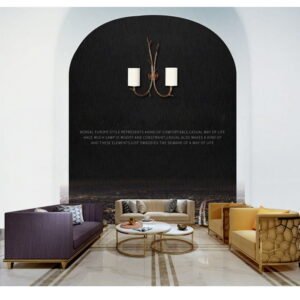
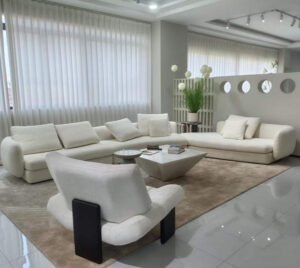
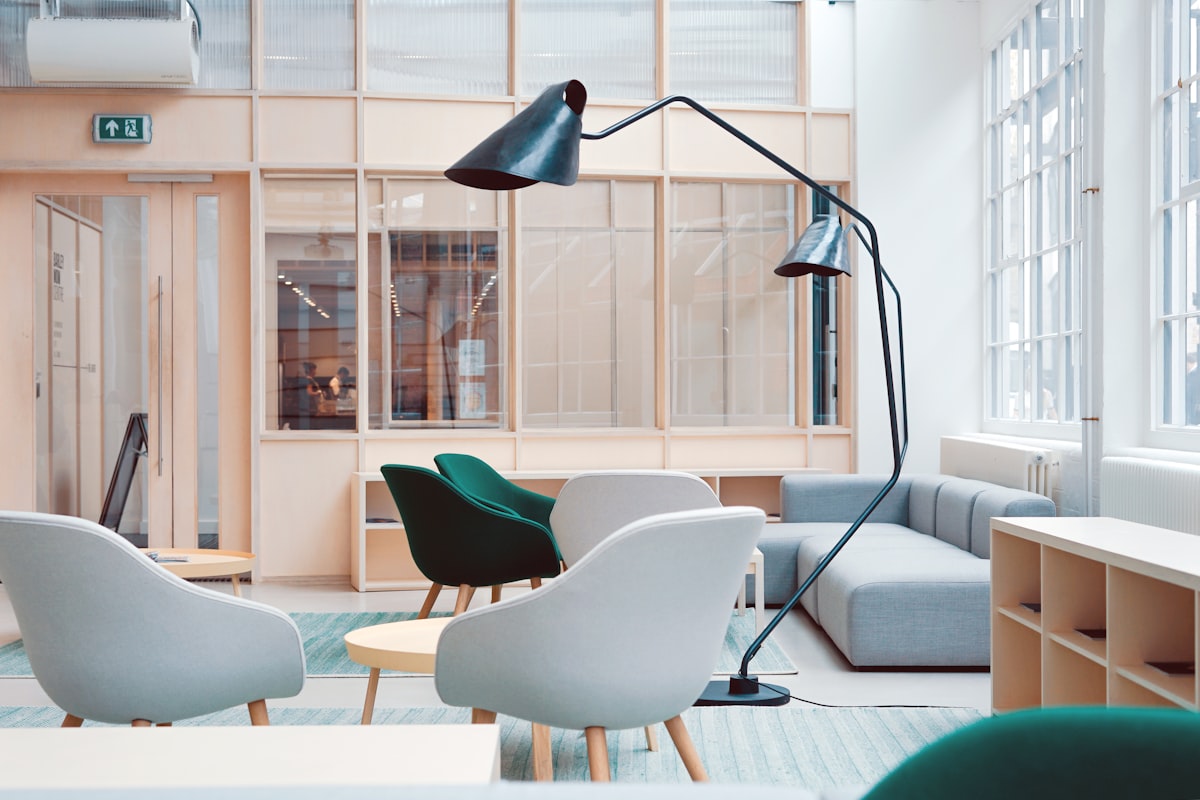 Image: Premium modular contract furniture configured for a contemporary corporate lounge — adaptable without compromising on luxury.
What Contract Furniture Actually Means (And What It Doesn’t)
Contract furniture — also called commercial-grade or specification furniture — refers to products designed and manufactured for high-use, non-residential environments. The term “contract” comes from the procurement method: items are specified, contracted, and delivered as part of a formal commercial agreement, rather than purchased retail.
What it does not mean is cheap, generic, or impermanent. This misconception costs your clients projects. High-end contract furniture from specification-grade manufacturers is engineered to withstand 8–10 hours of daily use over 10-year product lifespans, with structural testing, upholstery durability ratings (measured in rub counts — 100,000+ Martindale for commercial applications), and fire and safety certifications that residential furniture simply does not carry.
The Core Components of Contract Furniture Systems
Contract furniture systems are built around four principles: standardization, reconfigurability, scalability, and certification. Desking systems use modular frames that accept variable top sizes, cable management, screen-mounting, and power integration. Seating is tested to BIFMA (Business and Institutional Furniture Manufacturers Association) standards — the industry benchmark for load, durability, and safety. Storage units are designed to stack, link, and integrate with desk systems. Lounge and collaborative seating comes in component families that can be rearranged without specialist labor.
The range of customization available within these parameters is broader than most of your clients realize: typically 15–40 fabric or upholstery options per product line, multiple finish options for frames and surfaces, variable configuration depths, and in many cases, custom color matching for brand-compliant environments.
Common Misconceptions You’ll Encounter in Client Conversations
The three most common objections your clients face — and how to answer them.
First: “Contract furniture looks temporary.” Counter with high-specification examples. The hospitality sector — five-star hotels, airport executive lounges, luxury member clubs — is almost entirely furnished with contract-grade products. The finish quality of premium contract lines is indistinguishable from bespoke at the point of experience.
Second: “It won’t match our brand guidelines.” Most contract furniture systems offer enough color and finish latitude to meet corporate brand standards. Where truly unique or proprietary elements are required, a hybrid approach (contract for most areas, bespoke for brand-critical zones) is the answer.
Third: “We can get it cheaper off the shelf.” This conflates residential and commercial products. The durability, warranty, and compliance certifications of commercial-grade furniture are not available in consumer channels. The cost comparison only works if you compare equivalent performance expectations.
Why Your Distributor and Showroom Clients Love Contract Furniture
Margin Opportunities and Repeat Business Potential
Contract furniture creates ongoing revenue in ways that one-time fit-outs cannot. Phase-two orders as organizations grow. Replacement cycles — typically 7–10 years for primary pieces, 3–5 years for seating. Reconfiguration projects triggered by team restructuring or space reallocation. New product introductions that your clients can present as refresh opportunities. Interior designers who specify contract furniture for one project become recurring specifiers — as long as the product performs and you remain their preferred source.
From a margin perspective, contract furniture on volume orders typically carries 25–40% gross margin for distributors, depending on brand exclusivity, specification complexity, and order size. That is before any additional revenue from installation, delivery, or design services layered on top.
Inventory Management and Stock Advantages
For showroom managers and distributors, holding stock of high-velocity contract furniture lines shortens delivery lead times, creates “show-and-tell” sales opportunities, and positions your customer as a responsive supplier in markets where 8–16 week lead times from overseas manufacturers are the norm. Showrooms that can deliver within 2–4 weeks on popular lines win the projects where client timelines have compressed — which, increasingly, is most of them.
Real-World Application: Education Sector Case Study
The Client’s Challenge
A mid-sized state university in the Midwest was executing a three-campus expansion plan covering 22 new teaching facilities, administrative offices, and student collaborative spaces — all required to be operational within a single academic year. The design brief called for consistent visual standards across all campuses, a budget ceiling of $85 per square foot for furnishing, and the flexibility to reconfigure rooms between lecture, seminar, and group study formats.
A traditional fit-out process was never viable at this timeline or budget. The university’s procurement team — working with a furniture dealership that understood specification strategy — evaluated contract furniture systems against the brief.
The Solution and Results
The project team selected a modular contract furniture system with a unified upholstery palette, stackable seating for lecture rooms, and reconfigurable collaborative tables with integrated power. The total order across all three campuses was delivered and installed in four separate phases over 18 weeks — ahead of the academic opening schedule.
The furniture dealership managing this account — structurally similar to the customers مفروشات النمل اليشم serves across hospitality and commercial sectors — maintained design control through a centralized specification document, ensured pricing consistency across all three sites, and generated a follow-on maintenance and replacement contract covering 5 years. Total project value: approximately $2.3M in furniture, with an additional 12% revenue from installation coordination. Not a single room was customized beyond the contract system’s built-in configuration options — and the end-client achieved complete visual consistency across all three campuses.
Commercial Fit-Out Services: When Integration Becomes Non-Negotiable
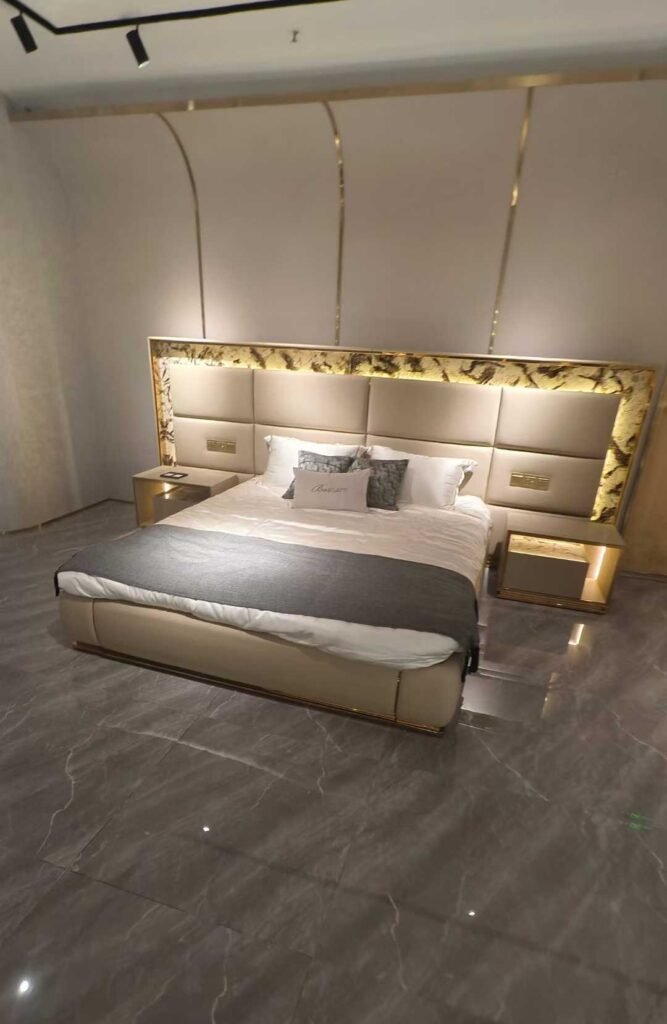
 Image: A high-specification executive environment where architectural integration, lighting, and furniture cohesion are non-negotiable — the domain of full commercial fit-out.
Defining Full Commercial Fit-Out in Today’s Market
A commercial fit-out is the complete transformation of an interior space from base build (bare concrete slab, structural shell) to a fully operational working environment. It includes architectural partitioning, raised flooring, suspended ceilings, mechanical and electrical services, HVAC distribution, lighting, data and communications infrastructure, finishes (floor coverings, wall treatments, joinery), and finally — furniture.
Furniture in a fit-out is often 15–25% of total project value. The rest is the built environment that surrounds it.
This distinction is critical for how your customers position themselves. If they are furniture specialists trying to advise on fit-out, they are most valuable as the furniture specification lead within a larger project team — not as the project manager. Understanding this boundary prevents scope overreach and protects their professional credibility.
The Integrated Approach: Beyond Furniture
What separates a true fit-out from furniture placement is coordination: MEP (Mechanical, Electrical, and Plumbing) systems must align with furniture layouts. Lighting design must complement finishes and surfaces. Acoustic treatment must be engineered, not added as afterthought. Partitioning must accommodate ventilation distribution. None of these elements can be specified independently without creating conflicts at installation.
According to JLL’s 2026 data, technology infrastructure (AV, IT, smart building systems) now represents 10–12% of total fit-out cost — a share that is growing as clients demand integrated workplace technology from day one. This is not a detail your customers can overlook when advising on scope.
Why Fit-Out Requires Different Expertise and Partnerships
Your customers who want to play a meaningful role in fit-out projects need to build partnerships with general contractors, MEP consultants, and interior architects. The furniture dealer who can walk into a fit-out project team as the trusted specification authority — with knowledge of how furniture integrates with services, acoustics, and lighting — commands a very different commercial position than one who simply delivers product to a completed space.
The Strategic Advantages Your Clients Should Emphasize
Design Cohesion and Brand Alignment
For corporate clients in particular, the most compelling argument for fit-out is brand experience. Walk into the London headquarters of a leading global law firm, or the regional hub of an international financial institution, and every surface — from the reception desk joinery to the carpet specification to the glazed partitioning system — is communicating the same brand message. That level of cohesion is not achievable with contract furniture alone. It requires a coordinated design process where furniture, finishes, and architecture are specified as a single system.
Maximizing Space Efficiency and Functionality
Fit-outs also deliver measurable space planning advantage. A well-executed fit-out in a 10,000 sqft office can often accommodate 20–30% more usable workpoints than the same space configured with standard contract furniture placement, simply because the partitioning, storage, and support infrastructure is designed around the specific workflow of the organization. For clients being quoted on a per-sqft rental basis in major cities, this efficiency gain has direct financial value.
Real-World Application: Healthcare Facility Case Study
The Client’s Challenge
A regional hospital network in the Pacific Northwest was undertaking a $28M renovation of three clinical floors, encompassing patient rooms, nursing stations, administrative support areas, and outpatient consultation suites. The project carried strict requirements: infection control standards mandating specific surface materials and seam-free construction; ADA compliance for all furniture and fixtures; integration with the hospital’s existing nurse-call and patient-monitoring systems; and HCAHPS (Hospital Consumer Assessment of Healthcare Providers and Systems) score improvement as a stated business outcome — meaning patient experience was a measured deliverable, not a soft aspiration.
Contract furniture could not solve this. Individual product selection — however high specification — cannot meet infection control requirements that apply to built surfaces, floor-wall junctions, and integrated lighting systems simultaneously.
The Solution and Results
A full coordinated fit-out was executed over 11 months in rolling phases to maintain hospital operational continuity. The clinical furniture supplier — working in coordination with the general contractor, MEP engineer, and infection control specialist — specified seamless vinyl flooring with integral coved skirting, antimicrobial upholstery on all patient-contact seating (tested to ISO 22196 antimicrobial standard), wall-mounted nurse stations with flush-to-wall cable management to eliminate horizontal surfaces where pathogens accumulate, and dimmable, color-temperature-adjustable lighting in patient rooms.
The furniture dealers who were part of this project team — in exactly the consultative role that مفروشات النمل اليشم helps its distribution partners develop — earned not only the project margin but three additional phases of work as the hospital network expanded.
The Corporate Sector Speaks: When Flexibility Meets Brand Standards
Why Corporate Clients Are Shifting Their Approach
The corporate workplace has undergone more structural change in the past five years than in the preceding two decades. Hybrid work, activity-based working (ABW — an approach where employees use different workspace settings throughout the day rather than assigned desks), and the collapse of fixed-desk ratios from 1:1 to 1:1.5 or 1:2 have fundamentally changed what corporate clients are buying.
According to Innovative OS’s 2025 Workplace Trends report, over 70% of organizations are now reconfiguring their physical footprint rather than expanding it — meaning the demand is for smarter use of existing space, not more space. This creates an enormous opportunity for furniture professionals who can speak to reconfiguration and adaptability.
The Rise of Agile Workspaces and Modular Thinking
Even corporate clients commissioning full fit-outs are now insisting on contract furniture principles within the fit-out scope. Fixed workstations are being replaced by bench systems that can be redeployed. Enclosed offices are being designed as removable glazed pods rather than permanent partitions. Lounge and collaboration zones use modular seating systems that can be reconfigured for different event or working formats.
The smartest positioning for your customers: they are not selling contract furniture or fit-out. They are selling workplace adaptability — and both solutions are tools in that service.
Sustainability and Lifecycle Cost Considerations
Corporate sustainability commitments are now procurement requirements, not brand statements. Companies with ESG (Environmental, Social, and Governance) reporting obligations — which includes most publicly listed organizations and their supply chains — must document the environmental performance of their physical assets, including furniture.
Contract furniture carries a sustainability advantage through longevity and reconfigurability: components can be repurposed, reupholstered, and redeployed rather than landfilled during renovation cycles. Many specification-grade contract furniture lines carry certifications including GREENGUARD Gold (low chemical emission), FSC (Forest Stewardship Council for timber components), and Cradle to Cradle material recyclability designations.
Fit-out projects increasingly specify materials with Environmental Product Declarations (EPDs) and target LEED (Leadership in Energy and Environmental Design) or WELL Building Standard certifications — both of which carry implications for furniture and finishes specifications that your customers need to understand and communicate.
Real-World Application: Corporate Headquarters Transformation Case Study
The Client’s Challenge
A multinational technology company with 1,800 employees was relocating its North American headquarters from a 120,000 sqft campus to a new 85,000 sqft urban tower floor plate. The reduction in footprint was intentional — post-pandemic headcount analysis showed average daily occupancy rarely exceeded 60%. The company needed to support 1,800 individuals in 85,000 sqft without creating a crowded or compromised experience.
The brief called for: a flagship reception environment that projected brand ambition to clients and candidates; a variety of working settings covering focus work, collaborative team zones, and informal social spaces; technology integration throughout; and the flexibility to restructure team zones as organizational structures evolved.
No single solution answered all of this.
The Solution and Results
The project used a deliberate hybrid model. The reception, client meeting suites, executive boardroom, and all client-facing spaces were delivered as a full coordinated fit-out — custom joinery, architectural lighting, branded materials, fully integrated AV. These spaces were designed to be permanent, because they represent the company’s brand to the outside world.
The employee workspace — covering approximately 65,000 sqft of the floor plate — was delivered using a premium contract furniture system. Bench desking, modular storage, reconfigurable collaborative tables, and lounge systems. All specified in the company’s brand palette. Total flexibility for team restructuring without construction works.
The furniture dealer who coordinated this specification for the project — building exactly the kind of trusted advisory capability that distributors in the مفروشات النمل اليشم network are developing — earned advisory fees for the space strategy, specification management fees for the contract furniture scope, and a role in the fit-out selection process for the branded zones. Three distinct revenue streams from a single client relationship.
📺 Watch: Understanding Commercial Fit-Out vs. Furniture Specification
For a practical visual breakdown of how commercial fit-out projects are structured from base build to occupancy — and where furniture specification fits within the overall scope — this overview is worth sharing with your client teams:
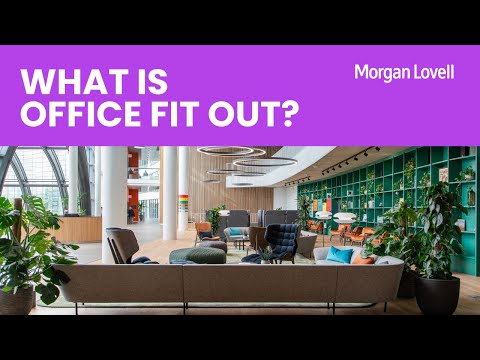
Office Fit Out Explained in 60 Seconds — YouTube
The Direct Comparison: Building Your Sales Framework
Timeline and Deployment Speed: What Your Clients Should Promise
Managing timeline expectations is one of the highest-stakes conversations your customers have with end-clients. Getting it wrong — promising speed that the supply chain cannot deliver, or underestimating fit-out program complexity — damages reputations that took years to build.
Here is the data your customers should be working from:
| Solution Type | Typical Timeline | Key Variables |
|---|---|---|
| Contract Furniture (in-stock) | 2–4 أسابيع | Delivery distance, installation crew availability |
| Contract Furniture (manufactured) | من 6 إلى 12 أسبوعاً | Fabric/finish lead time, order volume |
| Shell & Core Fit-Out (simple) | 12–20 weeks | Contractor availability, permit speed |
| Full Fit-Out (medium complexity) | 20–36 weeks | MEP integration, custom joinery, regulatory sign-off |
| Full Fit-Out (high complexity) | 36–52+ weeks | Healthcare/compliance environments, multi-floor projects |
Source: JLL Research 2026, K2 Space, industry benchmarking.
Contract Furniture Timelines
The 6–12 week manufacture-to-installation window for contract furniture assumes a confirmed order with selected specifications, a site ready for installation (power, flooring, and data infrastructure in place), and an installation crew scheduled in advance. The variables that extend this timeline: late specification changes (especially fabric or finish), site access restrictions, and delivery logistics for large orders across multiple sites. Build these buffer weeks into your customers’ client commitments.
Fit-Out Project Timelines
Fit-out delays are almost never caused by a single factor — they are cumulative. Design changes add two weeks. Permit revisions add four. A subcontractor scheduling conflict adds six. The projects that run to timeline are almost always the ones where the scope was locked before construction started and stakeholder sign-off was structured and documented at each phase gate.
Your customers’ most valuable contribution to fit-out projects where they play an advisory role is insisting on scope lock — helping clients understand that every design change after construction commencement costs more than time.
Customization Capabilities: Where Each Solution Excels
Contract Furniture Flexibility Within Standards
The range of customization available within a well-chosen contract furniture system is broader than most end-clients realize — and most furniture dealers undersell. A specification-grade contract system typically offers configuration flexibility (layout, module combinations, height options), material choice (15–40 upholstery options, multiple frame finishes), accessory integration (power modules, screen arms, acoustic panels, lighting), and product family breadth (coordinated desking, storage, and lounge elements from a single aesthetic language).
What it does not offer: truly unique dimensions, proprietary material specifications, or custom-fabricated forms. If an end-client’s brand identity is so specific that standard configurations cannot express it, a hybrid model or full fit-out is necessary.
Fit-Out Customization: True Unlimited Potential
Fit-out customization is genuinely unlimited — constrained only by budget, time, and physics. Custom joinery can be fabricated to any dimension or material. Lighting can be architecturally integrated. Flooring can be specified in any combination of materials. Partitioning can be glazed, solid, curved, or a combination. The cost of this freedom is real: custom fabrication runs 40–120% more than equivalent modular solutions, and the timeline premium is typically 8–16 additional weeks for complex elements.
Cost Structure Transparency: The Conversation Your Customers Must Have
The most trust-building thing your customers can do in a new client relationship is present cost structures with complete transparency — including the numbers that make the proposal look more expensive than the competition. Clients who understand what they are paying for rarely cancel. Clients who are surprised by costs reliably do.
| عنصر التكلفة | أثاث العقود | Full Fit-Out |
|---|---|---|
| Furniture / Finishes | $40–$120/sqft | $50–$150/sqft |
| Installation | $8–$20/sqft | Included in GC scope |
| MEP (Mechanical, Electrical, Plumbing) | غير متوفر | $60–$120/sqft |
| Architectural Works | غير متوفر | $40–$100/sqft |
| Technology / AV / IT | Additional | $30–$55/sqft |
| Project Management | 3–8% of furniture value | 8–15% of total project value |
| Total Range | ~$50–$150/sqft | ~$170–$425/sqft |
Sources: JLL 2026 Fit-Out Guide, Cushman & Wakefield 2026 Americas Fit-Out Report, industry benchmarking.
Contract Furniture Pricing Models
Contract furniture is priced on a per-unit or per-system basis, with volume discounts typically structured at order thresholds: 10–25% discount at 50+ workstations, 25–35% at 200+ workstations, with custom pricing available for 500+ unit orders through direct negotiation with manufacturers. The economics favor consolidation — ordering all of a client’s furniture through a single system and a single supplier invariably outperforms mixing manufacturers on price, lead time, and design coherence.
Fit-Out Investment Structure
Fit-out projects are priced as lump-sum or guaranteed maximum price (GMP) contracts, with contingency reserves of typically 10–15% built in for scope uncertainty. Value engineering — the process of identifying specification changes that reduce cost without compromising function — is a standard part of fit-out project management. Your customers who understand value engineering can add real advisory value in fit-out projects: substituting equivalent-performance materials for over-specified ones, or identifying areas where contract furniture can replace custom joinery without visual compromise.
Scalability and Future Adaptability
Contract Furniture for Growing Organizations
For any organization that expects growth, change, or uncertainty — which is most organizations — contract furniture’s scalability is a concrete financial benefit. Adding 20 workstations to a contract furniture installation is a procurement event, not a construction project. Reconfiguring a floor from bench desking to collaborative zones requires movers, not builders. This adaptability has measurable value in lease flexibility, reduced CapEx at change points, and organizational agility.
Fit-Out Adaptability and Renovation Cycles
Fit-outs are not static, but they do have change costs. Partition moves require construction permits. Joinery modifications require fabrication. Systems changes (HVAC redistribution, lighting zone reconfiguration) require specialist contractors. Fit-out projects are typically designed with a 7–12 year renovation cycle in mind — which means the design brief should anticipate organizational change at that horizon. Projects that are designed for agility — removable partitions, adaptable ceiling systems, modular power distribution — age better and cost less to refresh.
Hybrid Solutions: The Strategic Approach Your Customers Are Missing
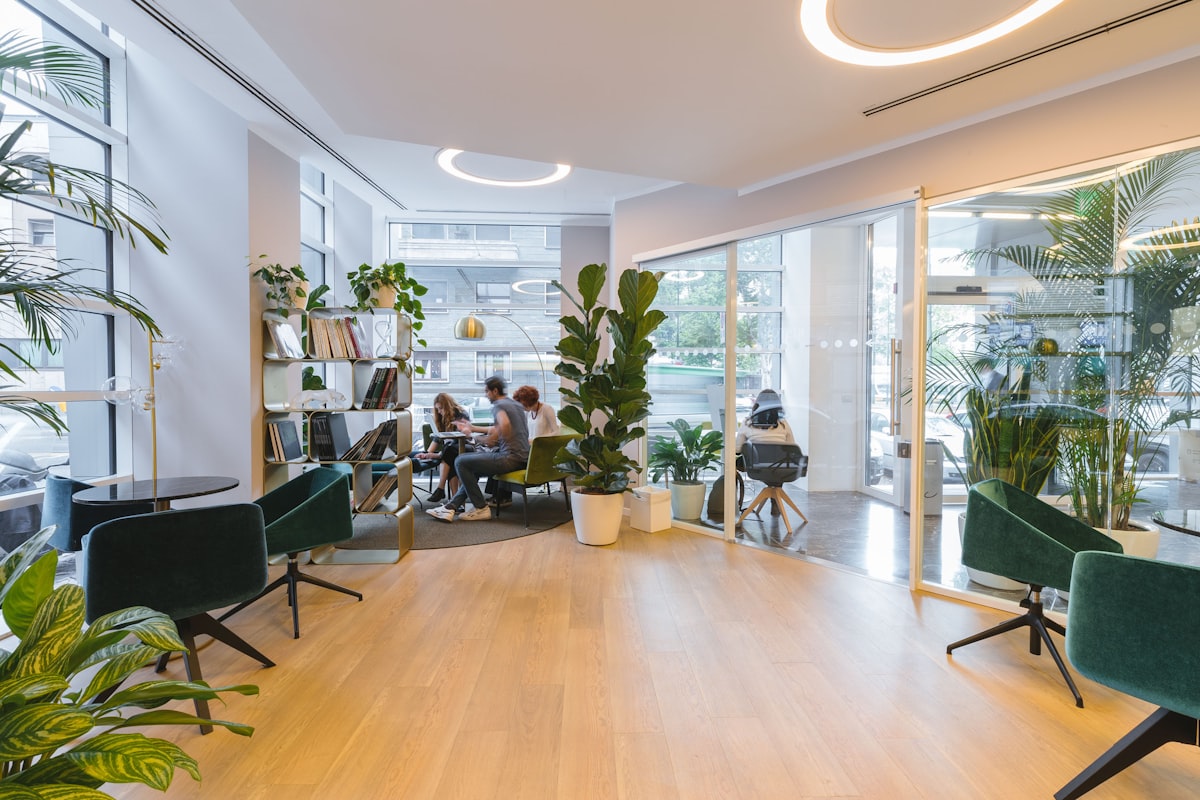 Image: A hybrid approach in practice — custom-fitted reception branding paired with modular open-plan workstations, combining fit-out permanence with contract flexibility.
Why the Best Answer Isn’t Always Either/Or
The most commercially sophisticated workplace projects being delivered in 2025–2026 are hybrid models — deliberately combining full fit-out integration in select zones with contract furniture flexibility in the majority of the floor plate. This is not a compromise. It is a strategic allocation of investment to where design permanence creates the most value.
Identifying Where Contract Furniture Adds Value
The zones where contract furniture delivers the best return on investment: open-plan workstation areas (high reconfiguration frequency, large area, cost-sensitive), collaborative and informal zones (modular seating can be rearranged for different uses), training rooms and multi-purpose spaces (stackable and reconfigurable seating), breakout and social spaces (lounge systems that refresh every 3–5 years without major investment), and back-of-house and support areas (functional, durable, budget-conscious).
Identifying Where Fit-Out Integration Is Essential
The zones where fit-out investment pays back: reception and client-facing entrance areas (brand impression, first contact, cannot be compromised), executive boardroom and leadership spaces (high-value, high-visibility, custom specification justified), specialized function rooms (video conferencing suites, trading floors, command centers with specific technology integration), and any space subject to regulatory compliance requirements (healthcare, legal, financial services).
Building Your Customer’s Hybrid Service Offering
Creating Partnerships with Fit-Out Contractors
For furniture dealers and showrooms looking to expand into hybrid project coordination, the critical first step is building trusted relationships with two or three general contractors who specialize in commercial interiors. These partnerships are not about subcontracting furniture supply to the GC — they are about positioning your customer as the furniture authority within the GC’s project team. The GC handles construction; your customer handles specification, procurement, and installation of the furniture scope. Both parties win more work together than separately.
Training Your Customers to Sell Hybrid Solutions
The conversation shift your customers need to make: from “we supply contract furniture” to “we optimize workplace environments.” This means having the vocabulary, the case studies, and the confidence to recommend a hybrid approach proactively — even when the client initially came in asking only for furniture quotes. The dealer who walks in with a framework for thinking about the whole project earns more trust, a larger scope of work, and better protection of their margin than the dealer who responds only to the explicit brief.
Sector-Specific Recommendations: The Decision Framework
Education: Standardization Meets Flexibility
Universities, schools, and training institutions represent one of the highest-volume markets for contract furniture globally. The drivers are consistent: large areas requiring standardized specification, strict budget constraints (often publicly accountable), and a strong need for reconfigurability to support diverse learning formats — lecture, seminar, group project, individual study.
According to the U.S. General Services Administration, contract procurement frameworks are the standard purchasing mechanism for educational institutions, which means your customers who hold approved vendor status with educational procurement bodies have a significant structural advantage.
The specification criteria that drive education buying decisions: BIFMA-certified durability (student use is aggressive), easy cleaning surfaces (high-frequency cleaning protocols), stackability for storage efficiency, and palette flexibility for multi-campus visual consistency. Fit-out becomes relevant in education for flagship facilities — a new library, a business school building, or a performing arts center — where architectural investment justifies the integration cost.
Healthcare: Compliance Drives the Decision
Healthcare furniture procurement is arguably the most complex specification process in the commercial furniture sector. Every surface choice, seating configuration, and storage solution must be evaluated against infection control protocols, ADA accessibility requirements, and in acute care settings, the specific workflow patterns of clinical teams.
The practical reality: contract furniture is appropriate and cost-effective in healthcare for administrative areas, waiting rooms, staff rest areas, and non-clinical offices. Clinical environments — patient rooms, nursing stations, procedure rooms — require integrated design where furniture, surfaces, and built infrastructure are specified as a coordinated system. Contract furniture lines with antimicrobial certification and healthcare-specific upholstery (such as those available through manufacturers like Knoll Healthcare و Steelcase Health) can serve semi-clinical environments, but the project must still be managed within a fit-out framework.
Corporate and Commercial: The Sophistication Factor
Large corporate clients — typically organizations with 200+ employees and multi-year lease commitments — represent the most nuanced buying decisions in the market. They have the budget for fit-out, the need for brand expression that justifies it, and the organizational complexity that makes contract furniture’s flexibility simultaneously appealing.
The most effective positioning: offer corporate clients a phased strategy. Fit-out investment for the spaces that are permanent, visible, and brand-critical. Contract furniture for the spaces that will change as the organization grows, restructures, or experiments with new working models. This is exactly the kind of advice that positions your customers as strategic consultants rather than product vendors.
The Profitability Play: How Your Customers Win Either Way
Understanding Margin Structures in Contract Furniture
Contract furniture profitability is built on three foundations: specification margin (the difference between cost and sell price on the furniture itself), service revenue (installation, delivery, project management), and repeat business (replacement, expansion, refresh cycles).
Specification margin on branded contract furniture typically runs 25–40% for authorized distributors, with higher margins on proprietary or exclusive product lines. Service revenue adds 12–20% on top of product value for full-service dealers. And repeat business — the most valuable of the three — follows almost automatically when the product performs and the client relationship is maintained.
Direct Sales Margins
Volume is the lever. A single 50-workstation order at $2,500 average value per workstation ($125,000 in furniture) at 30% margin generates $37,500 gross profit. The same dealer securing a 500-workstation order — entirely realistic for a corporate relocation project — generates $375,000 gross profit on furniture alone before service revenue. The economics reward scale, repeat relationships, and specification authority.
Specification and Design Fee Opportunities
The dealers and showrooms that generate the strongest long-term margins are those that charge for their intellectual input — not just their product. Space planning fees ($2–$5 per square foot on larger projects), specification management fees (3–5% of total furniture value), and procurement management fees (2–3% of total project value) are all commercially defensible charges when your customer is providing genuine expertise. هيرمان ميلر‘s dealer network, for reference, routinely earns specification and design fees on top of product margin in large corporate projects.
Understanding Profit Models in Fit-Out Coordination
Coordination and Project Management Fees
For furniture dealers who take a coordination role in hybrid or full fit-out projects, the fee structure shifts from margin-dominant to service-fee-dominant. Project management fees of 8–12% of total project value are standard in the industry when the coordinator is providing genuine oversight: chairing project meetings, managing the information flow between design, contractor, and client, and taking responsibility for the integrated delivery of the furniture scope within the overall fit-out program.
Markup Opportunities on Integrated Services
In hybrid projects, furniture dealers who coordinate ancillary services — acoustic treatment, specialist lighting, branded signage, loose-lay flooring — can apply consistent markups (typically 15–25%) on these services as part of an integrated supply package. The commercial logic: the client wants a single point of accountability for the non-construction elements of their project. A dealer who can provide that simplifies the client’s procurement, and simplification commands a price premium.
Long-Term Relationship Value
Repeat Orders and Expansion Projects
Contract furniture clients who are well-served typically return within 18–36 months. Organizations grow and need additional workstations. Teams reorganize and need furniture reconfigured. New spaces are leased and the design brief naturally references the established palette. For a dealer with 200 active corporate clients, even a 30% annual repeat purchase rate generates a meaningful base of revenue before any new business is won.
Trusted Advisor Status
The dealers and showrooms who have built the most durable businesses in commercial furniture are invariably those who have moved from product vendor to trusted advisor. They are called before the brief is written. They attend pre-design meetings. They are consulted on budget development before any RFP goes out. This position is not achieved by having the best product — it is achieved by consistently providing better commercial insight than the competition. That is what this guide equips your customers to do.
Implementation Strategy: How Your Customers Should Approach Client Conversations
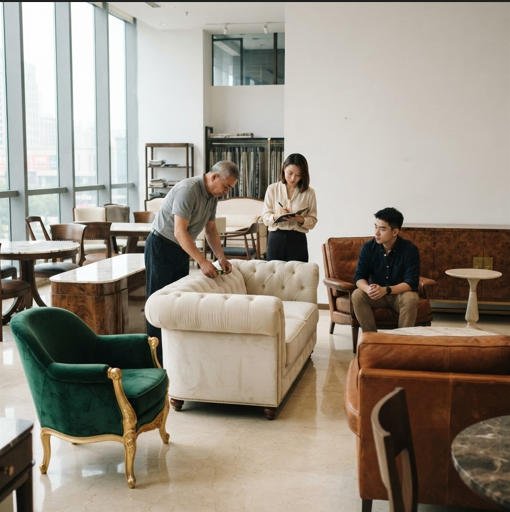
 Image: The discovery conversation — where the right questions unlock the project scope, budget reality, and solution fit.
The Discovery Process: Asking the Right Questions
The single most common mistake furniture dealers make in client conversations is recommending a solution before completing a diagnosis. A doctor who prescribes before examining loses the patient’s trust. A furniture professional who pitches before listening loses the client’s confidence — and the contract.
Questions That Reveal Budget Reality
The most effective budget questions are indirect. “What is the total CapEx allocated for this project?” is more revealing than “what’s your furniture budget?” because it captures the total investment context, not just the furniture line item. “Are you working to a cost-per-workstation ceiling?” identifies the benchmark the client is internally using. “How was the budget established — through a benchmarking exercise, or is it a finance-driven ceiling?” tells you whether there is flexibility or whether you are working against a fixed constraint.
Questions That Expose Timeline Pressures
“What is driving the occupancy date — lease expiry, board commitment, or operational requirement?” This single question identifies whether the timeline is truly fixed or potentially flexible. A lease expiry is fixed. A board commitment may be negotiable. An operational requirement (a hospital ward that must open, a campus that must be ready for semester start) is fixed and non-negotiable. The answer shapes the entire solution recommendation.
The Recommendation Framework
Presenting Contract Furniture as the Smart Choice
Lead with the client’s stated priorities. If they have emphasized speed, flexibility, and the ability to change as their organization evolves, contract furniture is the correct recommendation — regardless of what they thought they were shopping for. Frame it in their language: “Given that you need to be operational in 10 weeks and you are expecting a 35% headcount increase within 18 months, the right solution is a modular system that gets you there on time and grows with you without requiring a new construction program.”
Positioning Fit-Out as Strategic Investment
When integration, brand alignment, and compliance drive the brief, fit-out deserves to be positioned as exactly what it is — a strategic investment in the physical expression of the organization’s identity and operational capability. Frame it as: “This is not a furniture project. This is an environment that will represent your organization to every client, candidate, and partner who walks through the door for the next decade. The investment is proportionate to that responsibility.”
Managing Objections and Building Confidence
“Contract Furniture Looks Too Temporary”
This objection almost always comes from a client who has experienced poor-quality contract furniture — typically bought on price rather than specification. The response is to show, not tell. High-quality contract furniture in premium commercial environments — executive hotels, airport lounges, corporate headquarters of brand-conscious multinationals — is impossible to distinguish from bespoke at the experience level. Ask your clients to visit relevant reference installations. Bring fabric and finish samples that match the client’s brand palette. Let the product answer the objection.
“Full Fit-Out Takes Too Long and Costs Too Much”
This objection contains a valid concern (fit-out does take longer and cost more) and an invalid conclusion (therefore it’s not worth considering). The reframe: “You’re right that fit-out requires a longer program and a larger initial investment. Let’s look at what that investment delivers over a 10-year tenure — and then compare it to the cost of a refurbishment program in year five when a contract furniture scheme needs updating.” The lifetime cost comparison very often narrows the gap considerably. And for spaces where brand expression is non-negotiable, fit-out is not a cost alternative — it is the only answer.
Future-Proofing Your Customer’s Business Model
Market Trends Shaping the Contract Furniture and Fit-Out Landscape
Sustainability and Circular Economy Principles
The circular economy — a model in which materials are kept in use for as long as possible, recovered and regenerated at end of life rather than disposed of — is rapidly becoming a procurement requirement rather than a preference. In Europe, public sector procurement now mandates environmental criteria in furniture tenders. In North America, corporate sustainability commitments are driving equivalent requirements through supply chains.
For contract furniture specifically, the circular economy argument is compelling: a well-specified modular system can be reupholstered, reconfigured, and redeployed across multiple tenancies. A 10-year-old bench desking system refurbished with new tops and new upholstery has approximately one-fifth the carbon footprint of a new equivalent system. Distributors and dealers who can quantify and communicate this lifecycle advantage — through Environmental Product Declarations, carbon footprint calculations, and refurbishment programs — are positioning themselves for procurement requirements that will be universal within five years.
The Post-Pandemic Workplace Evolution
The data from 2025 is definitive: organizations are not returning to pre-2020 working patterns. Average office occupancy in major global markets sits at 55–65% of pre-pandemic levels (JLL, 2026). The office is being redesigned around the activities that benefit most from co-presence: collaboration, mentoring, socialization, and concentrated project work. Assigned desks are giving way to activity-based working environments with a ratio of approximately 0.7–0.8 workpoints per person rather than 1:1.
This structural change is a commercial opportunity for furniture professionals who understand it: the demand for high-quality collaborative furniture, reconfigurable meeting zones, and adaptable social spaces has grown dramatically, even as demand for traditional workstations has softened. The clients who bought 500 desks in 2019 are now buying 300 desks and 200 collaborative settings instead.
Technology Integration: The New Differentiator
Smart Furniture and IoT in Contract Solutions
IoT (Internet of Things — a network of physical objects embedded with sensors and connectivity to collect and exchange data) integration is changing what contract furniture can deliver. Occupancy sensors embedded in workstations identify real-time utilization patterns, enabling organizations to measure how their space is actually used versus how it was planned to be used. Integrated power modules with USB-C and wireless charging have moved from premium feature to baseline expectation in corporate specification. Height-adjustable desks with memory presets are now specified as standard in most progressive corporate briefs — and are available across the contract furniture range.
For your customers, technology integration is a revenue opportunity: sensors, cable management, power solutions, and acoustic treatments are all specifiable alongside furniture. Each category adds margin and adds complexity that reinforces the value of a professional advisor.
Building Systems Integration in Fit-Out Projects
In full fit-out projects, technology coordination is now one of the most complex and highest-value elements of the project program. AV and IT integration (10–12% of total fit-out cost per JLL 2026), building management systems, smart lighting with occupancy and daylight sensing, and integrated access control systems must all be specified, coordinated, and commissioned as part of the furniture and fitout program. Dealers who develop relationships with certified AV integrators and smart building consultants can expand their scope of supply and their advisory value in ways that purely furniture-focused competitors cannot match.
Building Your Customer’s Competitive Advantage
Becoming the Trusted Advisor on Workplace Strategy
The transition from product vendor to trusted advisor does not happen through a single great project — it is built through consistent demonstration of commercial insight, proactive communication, and a service model that extends beyond the transaction. It means sending your clients trend reports before they ask for them. It means flagging upcoming product discontinuations before they affect live specifications. It means checking in on installed projects 6 months after delivery to document what is working, what needs adjustment, and what the next project opportunity might be.
مفروشات النمل اليشم has built its distribution and export model around exactly this kind of partnership logic — working with dealers and showrooms who are committed to the advisory model, not just the transactional one. The conversations we have with our distribution partners are not about price lists. They are about positioning, about market trends, and about how to help our customers win more of the right projects.
Creating Proprietary Methodologies and Frameworks
The dealers and showrooms who command the strongest market positions have typically developed proprietary tools that competitors do not have: a space optimization calculator, a lifecycle cost comparison model, a workplace strategy diagnostic questionnaire, or a sector-specific specification guide. These tools codify expertise in a format that can be shared, repeated, and scaled. They also create intellectual property that is genuinely difficult for competitors to replicate — because the tool is an expression of accumulated project experience, not just publicly available information.
Empowering Your Customers to Make the Right Call
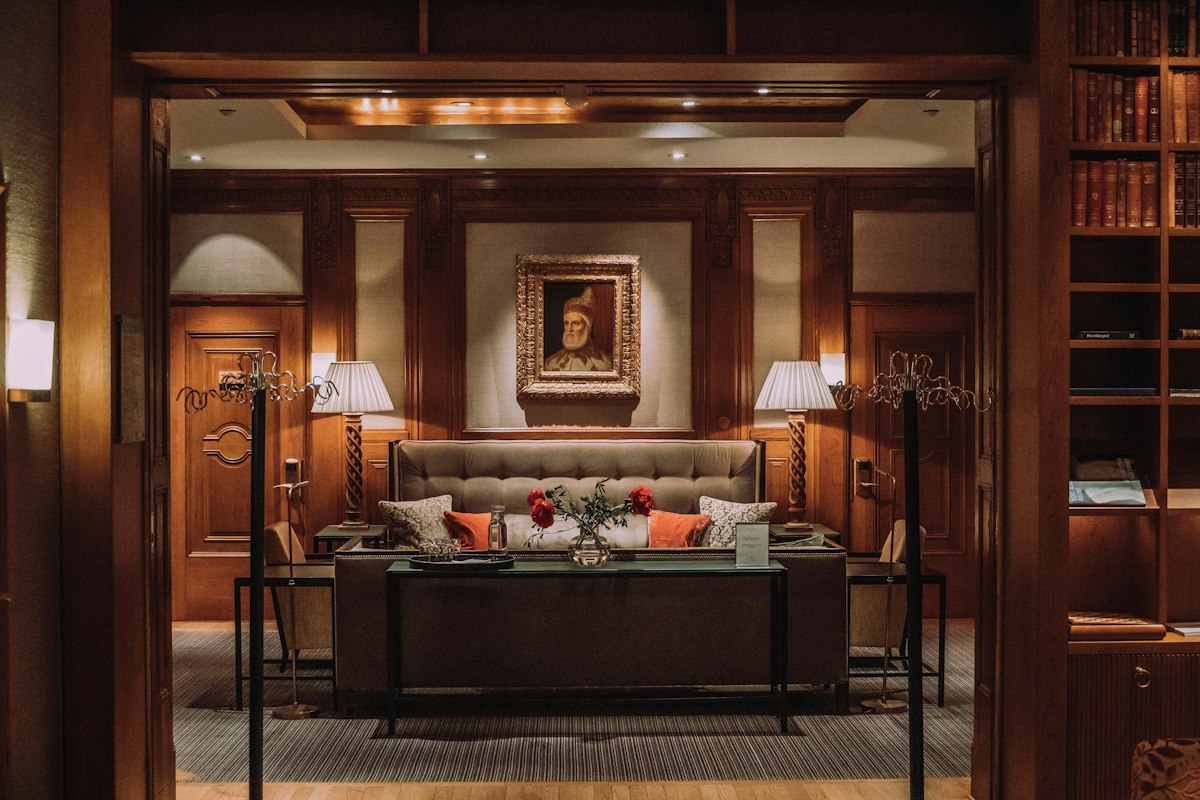 Image: The benchmark for luxury contract furniture specification — hospitality environments where durability, design cohesion, and brand expression must coexist.
Your role is critical. By understanding the nuances between contract furniture solutions and commercial fit-out, you empower the professionals you sell to — your distributors, showroom managers, interior designers, hospitality procurement leads, and fit-out specialists — to make recommendations that serve their end-clients’ real needs rather than their perceived ones.
The choice between contract furniture and fit-out is not about which solution is objectively better. It is about matching the right solution to the right problem, at the right investment level, for the right organization. The most successful professionals in your customer base will be those who can diagnose that match with confidence — and this guide gives you the framework to help them do exactly that.
When your clients walk out of a discovery conversation having received genuine strategic insight rather than a product pitch, they will remember who gave it to them. And they will come back.
That is the business model that مفروشات النمل اليشم is built to support.
FAQs: Addressing Your Customers’ Real Questions
1. How do we explain the difference between contract furniture and fit-out to clients who use the terms interchangeably?
Start with a simple, visual framework. Contract furniture refers to the furnishings themselves — the desks, seating, storage, and collaborative pieces — engineered for commercial-grade use, standardized for scalability, and designed to be reconfigured as needs change. Fit-out refers to the complete transformation of a built environment — including walls, ceilings, flooring, mechanical and electrical services, and finishes — with furniture as one element within a larger integrated scope. A useful analogy: contract furniture is what fills a room. Fit-out is what creates the room. Use reference images from your portfolio to make the distinction immediate and visual.
2. When should we recommend contract furniture over a full fit-out?
Recommend contract furniture when the client’s priority hierarchy places speed, flexibility, and budget control above design uniqueness and brand integration. It is the correct recommendation for organizations with high growth trajectories (furniture that can scale), frequent space reconfiguration needs (modular systems that adapt without construction), multi-site deployments requiring consistency (standardized specification across locations), and budget constraints that make per-sqft fit-out investment unrealistic.
3. What are the hidden costs in contract furniture that we should warn clients about?
The purchase price of the furniture is typically 65–75% of the total delivered cost. The remaining 25–35% covers delivery and logistics (particularly for large or multi-site orders), professional installation labor, site preparation costs (data ports, power positioning, flooring adjustments), cable management and acoustic treatment (often specified after the fact and adding 8–15% to the furniture value), and future reconfiguration costs that are rarely budgeted for in the initial project. Building a total cost of ownership model — including a 5-year reconfiguration allowance — into your client proposals from the outset prevents budget conflicts that damage the relationship.
4. How do we position ourselves as valuable advisors rather than just furniture vendors?
The shift is from answering “what furniture do you want?” to asking “what business problems are you trying to solve?” A vendor responds to a product enquiry. An advisor diagnoses a business need. In practice, this means offering space planning as part of your standard proposal process, providing lifecycle cost comparisons not just unit prices, sharing sector-specific insights and case studies proactively, and following up on installed projects with performance data rather than waiting for the next order cycle.
5. Can contract furniture systems be customized enough to meet brand standards for corporate clients?
Yes, within defined parameters. Most commercial contract furniture systems offer 15–40 upholstery options per line, multiple frame and surface finishes, and modular configuration flexibility that accommodates most corporate brand guidelines. The boundaries of that flexibility become relevant when a brand requires a truly proprietary color, a non-standard dimension, or a fabricated form that no modular system can replicate. In those cases, a hybrid approach — contract furniture for the majority of the space, custom or fit-out elements for brand-critical zones — is the most commercially intelligent recommendation.
6. What’s the typical timeline difference between contract furniture and fit-out projects?
Contract furniture typically deploys in 4–12 weeks from confirmed order to completed installation, depending on whether products are held in stock or manufactured to order. Full commercial fit-outs require 12–52+ weeks depending on complexity, regulatory requirements, and the scale of architectural and services work. The critical communication skill: never give clients a timeline range without explaining what the lower and upper bounds depend on. “4 weeks if we confirm specifications this week and the site is ready for installation” is a more useful commitment than “4 to 12 weeks.”
7. How do we handle clients who want fit-out quality at contract furniture prices?
This expectation gap is best addressed through education, not negotiation. Walk the client through the cost architecture of a fit-out: architectural partitioning, MEP services, finishes, project management, and then furniture at the end. The cost difference between contract furniture and fit-out is not a margin issue — it is a scope issue. Then offer a genuine alternative: a premium contract furniture specification that delivers the visual quality the client aspires to, combined with targeted fit-out investment in the one or two spaces where integration is truly non-negotiable. This hybrid approach typically delivers 80% of the design impact at 50–60% of the full fit-out cost.
8. What’s our margin opportunity in recommending contract furniture versus fit-out?
Contract furniture generates higher percentage gross margins (typically 25–40% on product) but on a lower total project value. Fit-out coordination generates lower furniture margins but higher total project revenue through design fees, project management charges, and markup on integrated services. The most profitable position is not either/or: it is a service model that captures product margin on contract furniture, service fees on project management, and a coordination role in fit-out projects that generates advisory revenue above the furniture scope.
9. How do we stay credible when recommending contract furniture to clients who expected a full fit-out?
Lead with their stated priorities, not their initial assumption. If budget, timeline, and adaptability are the real drivers — which discovery conversations usually confirm — then contract furniture is the right answer regardless of what the client thought they were buying. Credibility comes from demonstrating that you arrived at the recommendation through a rigorous diagnosis, not a product preference. Support the recommendation with two or three case studies in comparable sectors and comparable project types, where contract furniture delivered outcomes that exceeded expectations.
10. Can contract furniture be used as a foundation for later fit-out elements?
Yes, and this phased approach is one of the most strategically elegant options available to clients with budget constraints today but growth plans for tomorrow. The key to making it work: the initial contract furniture specification must anticipate the eventual fit-out scope. If you know a reception area will eventually be fitted out, specify the surrounding office areas in materials and a palette that will coordinate with the future reception design. Plan cable management, power distribution, and data infrastructure in the contract furniture zones so that future fit-out works do not require significant disruption to established areas.
11. How do we advise clients on sustainability when comparing these solutions?
Contract furniture carries a lifecycle sustainability advantage: modular components can be reused, reupholstered, and redeployed across project cycles, significantly reducing landfill volume compared to single-use fit-out elements. Fit-out sustainability depends heavily on material specification — projects targeting LEED or WELL certification will specify low-VOC materials, sustainably sourced timber, and energy-efficient systems integration from the outset. Frame sustainability advice in terms of the client’s specific reporting obligations and time horizon: a company with a net-zero commitment for 2030 needs a very different conversation than a company doing its first fit-out with no formal ESG targets.
12. What role does technology play in choosing between contract furniture and fit-out?
Technology integration is significantly more straightforward in a full fit-out, where building systems, power distribution, smart controls, and AV infrastructure can be co-designed from the start. In contract furniture environments, technology must be accommodated through furniture-integrated cable management, modular power solutions, and standalone smart devices rather than building-integrated systems. The practical question to ask clients early: what is your technology baseline — power, data, display, and access control — and how integrated do those systems need to be? The answer frequently clarifies the solution boundary more quickly than any other single factor.
13. How do we handle clients who’ve had bad experiences with contract furniture?
Address the quality perception directly. Bad contract furniture experiences are almost always the result of procurement decisions made on price rather than specification — consumer-grade or low-specification products purchased through non-commercial channels and used in demanding commercial environments. The solution is to show, not argue. Bring the client to a reference installation where premium contract furniture has been specified correctly. Share durability test data, warranty terms, and BIFMA certification documentation. High-specification contract furniture from reputable manufacturers — the kind available through Jade Ant Furniture’s portfolio — performs at a level that is functionally and aesthetically comparable to bespoke specification.
14. What questions should we ask to diagnose whether a client needs contract furniture or fit-out?
The most diagnostic questions are: What is your total project budget (not just furniture budget)? What is the fixed, non-negotiable occupancy date? How frequently do you expect to reconfigure your space in the next three years? Are there regulatory, compliance, or certification requirements that apply to your environment? Do you expect significant organizational growth or restructuring within the next two years? What is the brand experience you are trying to create in client-facing spaces versus employee working areas? The answers to these six questions will identify the right solution with a high degree of reliability in the majority of project situations.
15. How do we build long-term relationships with clients who choose contract furniture?
Position yourself as their ongoing workplace advisor from day one. Document the specification thoroughly so you can reference it for future phases. Schedule a 6-month post-installation review to capture feedback and identify emerging needs. Stay close to the client’s organizational news — headcount growth, new locations, leadership changes — because each of these events creates a potential project. Introduce new products from your range that are compatible with their existing specification. And when they eventually need to refresh or expand, you are not a new vendor starting from scratch — you are the trusted partner who knows their space.
You now have the framework. The next step is implementation.
Share this guide with your key customers — your interior designers, showroom teams, fit-out project managers, hotel procurement leads, and distributor partners. Help them understand that the conversation has moved beyond product selection into genuine workplace strategy.
Then connect your team with مفروشات النمل اليشم to explore how our hospitality and commercial furniture range can anchor the contract furniture component of your clients’ hybrid and full-fit-out projects. Whether you are outfitting a 50-room boutique hotel, a multi-campus university expansion, or a 10,000 sqft corporate relocation, the right product specification — backed by a supplier who understands how commercial projects work — is the foundation everything else is built on.
Your clients’ success depends on the quality of your advice. Make sure the advice is built on the right foundation.
Related Resources: