Um guia estratégico para distribuidores de móveis, designers de interiores, gerentes de showrooms e especialistas em acabamento de ambientes
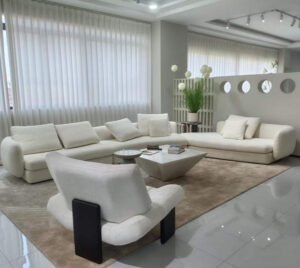
 Imagem: Um ambiente corporativo de plano aberto de alto padrão — a combinação entre a flexibilidade do mobiliário corporativo e a integração do projeto de acabamento.
Compreender a diferença estratégica entre soluções em mobiliário para projetos e projetos completos de adaptação de espaços comerciais não é apenas útil — é fundamental para conquistar projetos, assessorar clientes e gerar margem de lucro duradoura. Seus clientes — designers de interiores, compradores de showrooms, gerentes de compras do setor de hospitalidade e líderes de projetos de acabamento — participam dessas conversas todas as semanas. Aqueles que conseguem falar com fluência sobre ambas as soluções fecham mais negócios, inspiram mais confiança e mantêm os clientes por mais tempo.
Este guia foi elaborado para você: o distribuidor, o agente, o responsável por um showroom, o designer que faz especificações em grande escala. Não se destina ao usuário final que lê um blog sobre estilo de vida. Trata-se de uma estrutura comercial, baseada em dados reais de mercado, estruturas de custos reais e lógica de decisão real.
Até 2026, estima-se que o mercado global de móveis para contratos alcance aproximadamente $73,7 bilhões (GM Insights, 2026), enquanto se espera que o mercado de acabamento de interiores comerciais cresça de $39,59 bilhões em 2025 para mais de $66 bilhões até 2031, a uma taxa de crescimento anual composta (CAGR) de 9% (TechSci Research). Ambos os mercados estão em expansão — e seus clientes precisam saber onde cada um deles se encaixa em seu modelo de serviços.
Entendendo o principal problema do seu cliente: velocidade x personalização
Por que seus clientes estão divididos entre duas soluções
Todos os designers de interiores, gerentes de showroom e especialistas em acabamento com quem você trabalha enfrentam a mesma tensão comercial: seus clientes finais querem tudo. Eles querem um design personalizado de alta qualidade. Querem uma implantação rápida. Querem controle do orçamento. E querem a garantia de que tudo terá uma aparência coesa desde o primeiro dia.
O que torna sua função tão valiosa — e tão difícil — é que nenhuma solução isolada oferece os quatro aspectos simultaneamente. O mobiliário por contrato proporciona rapidez e flexibilidade. O projeto completo de adaptação comercial proporciona coesão e personalização. Os profissionais de maior sucesso comercial entre sua base de clientes são aqueles que identificam a hierarquia de prioridades de cada cliente final antes de recomendar um caminho a seguir.
O dilema da velocidade
Veja a seguir como abordar o tema da rapidez com seus clientes. Um campus universitário no Texas precisava de 400 estações de trabalho distribuídas por três novos edifícios satélites — data de inauguração definida, orçamento aprovado, sem margem para atrasos. O mobiliário encomendado foi entregue. Da confirmação do pedido até a instalação completa e o início das operações: 6 semanas. O mesmo projeto por meio de um processo tradicional de adaptação de instalações? Estimado em no mínimo 22 a 28 semanas, incluindo coordenação arquitetônica, programação da empreiteira e aprovação regulatória.
A rapidez no setor de móveis para contratos depende de como a cadeia de suprimentos funciona. Os componentes padronizados são pré-projetados, pré-testados e mantidos em estoque ou fabricados em grande escala. Seu cliente não precisa esperar por lotes de produção sob medida, aquisição de materiais ou fabricação personalizada. A contrapartida que seus clientes devem comunicar com honestidade: a vantagem da rapidez reduz as possibilidades de personalização. Se um cliente final quiser uma cor que não esteja na paleta existente, uma dimensão que rompa com o padrão do módulo ou um acabamento específico para os padrões de sua marca, ele estará entrando no território da adaptação sob medida — e o prazo muda.
O Desafio da Personalização
Projetos completos de adaptação de espaços comerciais oferecem uma proposta de valor totalmente diferente, e é importante que seus clientes entendam como apresentá-la. Um projeto de adaptação não se resume a móveis. Trata-se da transformação de todo um ambiente — desde a laje do piso até o teto — para atender a uma identidade organizacional específica. Esse nível de integração exige tempo e investimento.
De acordo com o Guia de Custos de Acabamento de Escritórios nos EUA e no Canadá 2026 da JLL, um acabamento corporativo de qualidade média custa, atualmente, em média $295 por pé quadrado, com linhas completas de produtos que vão de $170 a $425 por pé quadrado dependendo da tipologia e da qualidade das especificações. Esses não são custos com móveis. São custos relacionados à criação de ambientes, e seus clientes precisam enquadrá-los adequadamente — não como uma alternativa cara aos móveis, mas como uma categoria de investimento totalmente diferente.
A realidade financeira que seus clientes precisam conhecer
O orçamento é o fator determinante na maioria das decisões relacionadas ao ambiente de trabalho — e não as aspirações de design. Ao compreender toda a estrutura de custos de ambos os lados, você pode ajudar seus clientes a oferecer orientações mais precisas, evitar surpresas e elaborar propostas mais confiáveis.
Custos ocultos nas soluções de mobiliário por contrato
Móveis para contratos costumam ser vendidos por unidade ou por estação de trabalho, o que pode criar uma visão enganosa do orçamento. Ajude seus clientes a elaborar propostas que levem em conta o custo total da implantação. O preço dos móveis é o ponto de partida, não o valor total. A entrega e a logística para pedidos em grande escala — especialmente em prédios com vários andares ou em complexos com várias unidades — podem acrescentar de 8 a 12% ao custo base do mobiliário. A mão de obra de instalação, particularmente para sistemas modulares complexos com gerenciamento de cabos, painéis acústicos e integração de energia, normalmente representa de 15 a 25% do valor do mobiliário. A preparação do local — piso, ajustes de iluminação, posicionamento das portas de dados — muitas vezes não está incluída no escopo do mobiliário, mas é necessária antes do início da instalação. E a reconfiguração futura, que é o principal argumento de venda da modularidade, também acarreta um custo: movimentação de componentes, reconexão de energia e, às vezes, substituição de elementos desgastados.
Quando seus clientes incluem esse panorama completo em suas propostas desde o primeiro dia, eles protegem suas margens e evitam aquela conversa incômoda sobre “extras” que prejudica o relacionamento com o cliente.
Compreendendo os modelos de investimento em acabamento completo
Os projetos de adaptação de espaços são orçados como projetos integrados, e não como itens individuais, e é nesse ponto que muitos de seus clientes enfrentam dificuldades para comunicar o ROI aos seus clientes finais. A abordagem mais eficaz é o custo ao longo do ciclo de vida, e não o custo inicial. Um investimento de $350 por pé quadrado em um espaço corporativo de 10.000 pés quadrados (total de $3,5M) amortizado ao longo de um ciclo de locação de 10 anos equivale a $350.000 por ano — ou aproximadamente $29.000 por mês. Para uma empresa com 200 funcionários, isso representa $145 por pessoa por mês para todo o ambiente físico de seus negócios. Quando você ajuda seus clientes a reformular a conversa dessa maneira, a resistência diminui significativamente.
Soluções de mobiliário sob contrato: quando a modularidade se torna sua vantagem competitiva
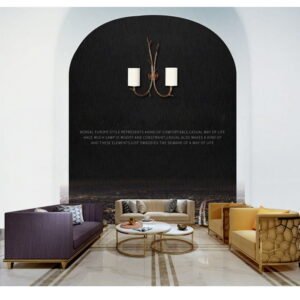
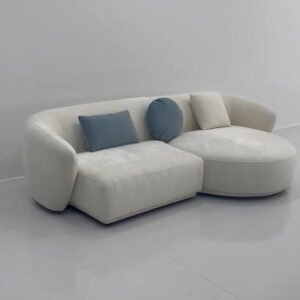
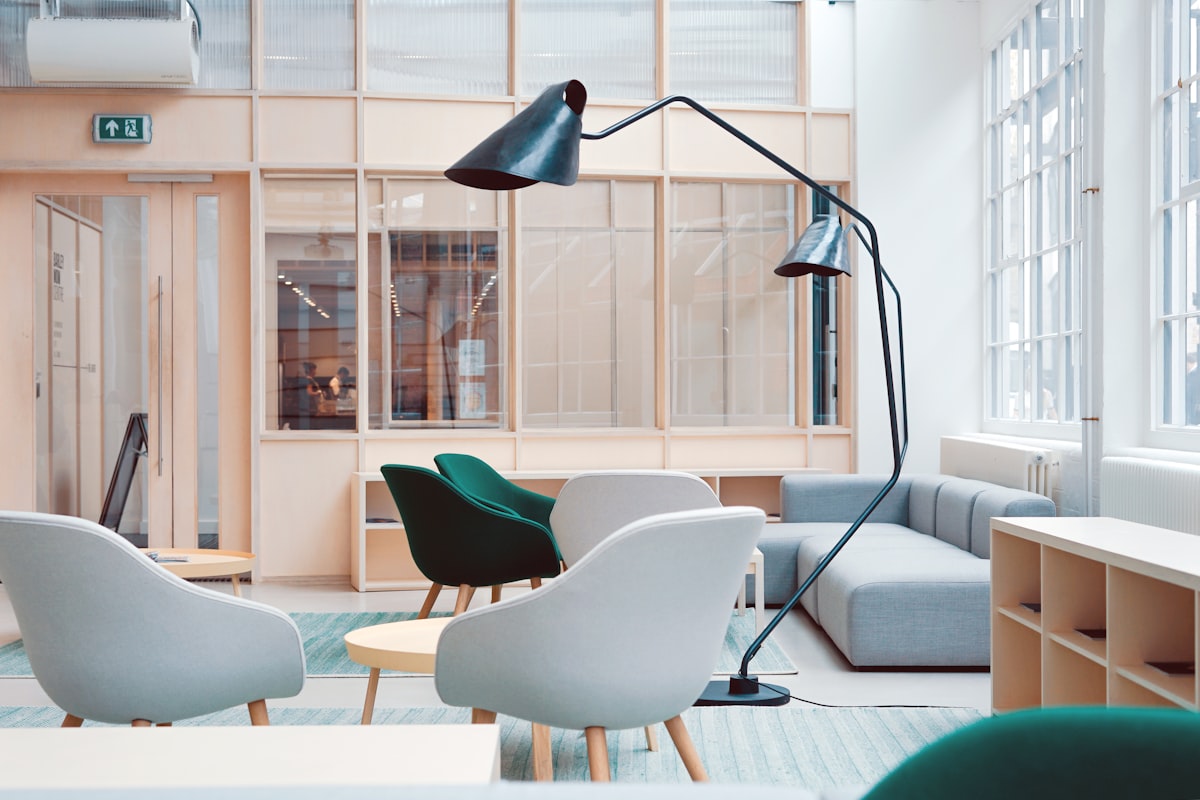 Imagem: Móveis modulares premium para espaços comerciais, configurados para uma área de convivência corporativa contemporânea — adaptáveis sem abrir mão do luxo.
O que realmente significa “móveis para contratos” (e o que não significa)
Móveis para contratos — também chamados de móveis de nível comercial ou móveis sob especificação — referem-se a produtos projetados e fabricados para ambientes não residenciais de uso intensivo. O termo “contrato” deriva do método de aquisição: os itens são especificados, contratados e entregues como parte de um acordo comercial formal, em vez de serem adquiridos no varejo.
O que isso não significa é que seja barato, genérico ou de baixa durabilidade. Esse equívoco custa projetos aos seus clientes. Móveis de alto padrão para projetos, produzidos por fabricantes especializados em especificações técnicas, são projetados para suportar de 8 a 10 horas de uso diário ao longo de uma vida útil de 10 anos, com testes estruturais, índices de durabilidade do estofamento (medidos em contagens de atrito — mais de 100.000 Martindale para aplicações comerciais), e certificações de segurança e resistência ao fogo que o mobiliário residencial simplesmente não possui.
Os principais componentes dos sistemas de mobiliário modular
Os sistemas de mobiliário corporativo são desenvolvidos com base em quatro princípios: padronização, reconfigurabilidade, escalabilidade e certificação. Os sistemas de mesas utilizam estruturas modulares que acomodam tamanhos variáveis de tampo, gerenciamento de cabos, suporte para monitores e integração de energia. Os assentos são testados de acordo com as normas da BIFMA (Associação de Fabricantes de Móveis para Empresas e Instituições) — referência do setor em termos de carga, durabilidade e segurança. As unidades de armazenamento são projetadas para serem empilhadas, acopladas e integradas aos sistemas de mesas. Os assentos para áreas de descanso e colaboração são oferecidos em famílias de componentes que podem ser reorganizadas sem a necessidade de mão de obra especializada.
A variedade de opções de personalização disponíveis dentro desses parâmetros é maior do que a maioria dos seus clientes imagina: normalmente, de 15 a 40 opções de tecidos ou estofados por linha de produtos, diversas opções de acabamento para estruturas e superfícies, profundidades de configuração variáveis e, em muitos casos, combinação personalizada de cores para ambientes em conformidade com a identidade visual da marca.
Equívocos comuns que você encontrará nas conversas com os clientes
As três objeções mais comuns que seus clientes enfrentam — e como respondê-las.
Primeiro: “Móveis para projetos comerciais parecem provisórios.” Contrarie essa ideia com exemplos de alta qualidade. O setor de hospitalidade — hotéis cinco estrelas, salas VIP de aeroportos, clubes de luxo exclusivos para sócios — é quase inteiramente mobiliado com produtos de nível comercial. A qualidade do acabamento das linhas premium para projetos comerciais é indistinguível da de móveis feitos sob medida na experiência do usuário.
Segundo: “Isso não vai estar de acordo com nossas diretrizes de marca.” A maioria dos sistemas de mobiliário para projetos oferece flexibilidade suficiente em termos de cores e acabamentos para atender aos padrões da marca corporativa. Quando são necessários elementos verdadeiramente exclusivos ou próprios, a solução é uma abordagem híbrida (mobiliário padrão para a maioria das áreas e sob medida para zonas críticas para a marca).
Terceiro: “Podemos comprar mais barato em lojas de varejo.” Essa afirmação confunde produtos residenciais com comerciais. A durabilidade, a garantia e as certificações de conformidade dos móveis de nível comercial não estão disponíveis nos canais de consumo. A comparação de custos só faz sentido se forem comparadas expectativas de desempenho equivalentes.
Por que seus clientes distribuidores e de showrooms adoram móveis para contratos
Oportunidades de margem e potencial de negócios recorrentes
O mobiliário para contratos gera receita contínua de maneiras que as instalações pontuais não conseguem. Pedidos da segunda fase à medida que as organizações crescem. Ciclos de substituição — normalmente de 7 a 10 anos para peças principais e de 3 a 5 anos para assentos. Projetos de reconfiguração motivados por reestruturações de equipes ou realocação de espaços. Lançamentos de novos produtos que seus clientes podem apresentar como oportunidades de renovação. Designers de interiores que especificam móveis para contratos em um projeto tornam-se especificadores recorrentes — desde que o produto tenha bom desempenho e você continue sendo sua fonte preferida.
Do ponto de vista das margens, os móveis sob encomenda em pedidos de grande volume geralmente geram uma margem bruta de 25–40% para os distribuidores, dependendo da exclusividade da marca, da complexidade das especificações e do tamanho do pedido. Isso sem contar qualquer receita adicional proveniente de serviços de instalação, entrega ou design que venham a ser adicionados.
Gestão de estoque e vantagens do estoque
Para gerentes de showrooms e distribuidores, manter estoque de linhas de móveis para contratos de alta rotatividade reduz os prazos de entrega, cria oportunidades de vendas do tipo “mostrar e explicar” e posiciona seu cliente como um fornecedor ágil em mercados onde prazos de entrega de 8 a 16 semanas por parte de fabricantes no exterior são a norma. Showrooms capazes de entregar em 2 a 4 semanas as linhas mais procuradas conquistam os projetos em que os prazos dos clientes estão mais apertados — o que, cada vez mais, é o caso da maioria deles.
Aplicação na prática: Estudo de caso do setor educacional
O desafio do cliente
Uma universidade estadual de médio porte na região Centro-Oeste dos Estados Unidos estava executando um plano de expansão em três campi, abrangendo 22 novas instalações de ensino, escritórios administrativos e espaços colaborativos para estudantes — todos com a exigência de estarem operacionais dentro de um único ano letivo. O briefing de projeto exigia padrões visuais consistentes em todos os campi, um teto orçamentário de $85 por pé quadrado para mobiliário e flexibilidade para reconfigurar as salas entre os formatos de aula, seminário e estudo em grupo.
Um processo tradicional de montagem de interiores nunca seria viável dentro desse prazo ou orçamento. A equipe de compras da universidade — em colaboração com uma revendedora de móveis que compreendia a estratégia de especificações — avaliou os sistemas de móveis sob contrato com base no briefing.
A solução e os resultados
A equipe do projeto selecionou um sistema modular de mobiliário para contratos com uma paleta unificada de estofados, assentos empilháveis para salas de aula e mesas colaborativas reconfiguráveis com tomadas integradas. O pedido total para os três campi foi entregue e instalado em quatro fases distintas ao longo de 18 semanas — antes do cronograma de início do ano letivo.
A loja de móveis responsável por essa conta — com estrutura semelhante à dos clientes Móveis Jade Ant atua nos setores de hospitalidade e comercial — manteve o controle do projeto por meio de um documento de especificações centralizado, garantiu a consistência de preços nas três unidades e gerou um contrato subsequente de manutenção e substituição com duração de 5 anos. Valor total do projeto: aproximadamente $2,3M em móveis, com uma receita adicional de 12% proveniente da coordenação da instalação. Nenhum cômodo foi personalizado além das opções de configuração integradas ao sistema contratual — e o cliente final alcançou total consistência visual em todos os três campi.
Serviços de adaptação de espaços comerciais: quando a integração se torna imprescindível
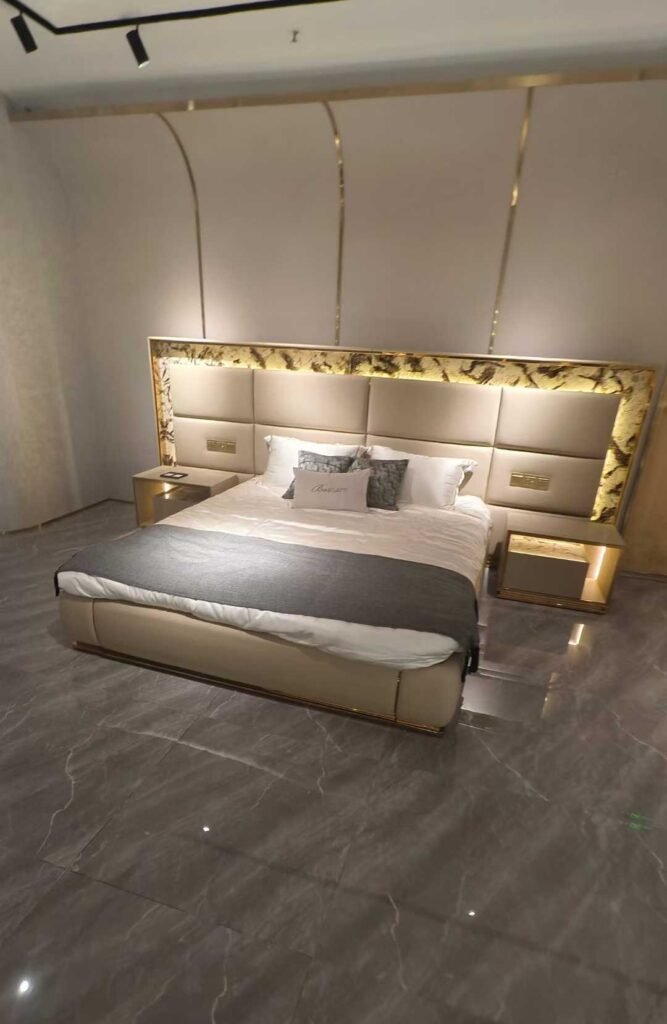
 Imagem: Um ambiente executivo de alto padrão, onde a integração arquitetônica, a iluminação e a coesão do mobiliário são requisitos imprescindíveis — o domínio do acabamento comercial completo.
O que significa “reforma comercial completa” no mercado atual
A adaptação comercial consiste na transformação completa de um espaço interno, desde a estrutura básica (laje de concreto bruta, esqueleto estrutural) até um ambiente de trabalho totalmente operacional. Isso inclui divisórias arquitetônicas, piso elevado, forros suspensos, instalações mecânicas e elétricas, distribuição de climatização, iluminação, infraestrutura de dados e comunicações, acabamentos (revestimentos de piso, acabamentos de parede, marcenaria) e, por fim, mobiliário.
O mobiliário em um projeto de adaptação de instalações costuma representar entre 15 e 25% do valor total do projeto. O restante é o ambiente construído que o circunda.
Essa distinção é fundamental para a forma como seus clientes se posicionam. Se forem especialistas em móveis que buscam prestar consultoria sobre mobiliário, eles têm maior valor atuando como líderes na definição das especificações de móveis dentro de uma equipe de projeto mais ampla — e não como gerentes de projeto. Compreender esse limite evita que o escopo do projeto se estenda além do necessário e protege a credibilidade profissional deles.
A Abordagem Integrada: Além do Mobiliário
O que diferencia um verdadeiro projeto de acabamento da simples disposição de móveis é a coordenação: os sistemas MEP (mecânicos, elétricos e hidráulicos) devem estar alinhados com a disposição dos móveis. O projeto de iluminação deve complementar os acabamentos e as superfícies. O tratamento acústico deve ser projetado, e não acrescentado como uma consideração de última hora. As divisórias devem permitir a distribuição da ventilação. Nenhum desses elementos pode ser especificado de forma independente sem gerar conflitos na instalação.
De acordo com os dados da JLL para 2026, a infraestrutura tecnológica (AV, TI, sistemas de edifícios inteligentes) representa atualmente 10–12% do custo total de adaptação do espaço — uma parcela que vem crescendo à medida que os clientes exigem tecnologia integrada no ambiente de trabalho desde o primeiro dia. Esse não é um detalhe que seus clientes possam ignorar ao definir o escopo do projeto.
Por que o acabamento de interiores exige conhecimentos especializados e parcerias específicas
Seus clientes que desejam desempenhar um papel significativo em projetos de acabamento precisam estabelecer parcerias com empreiteiras gerais, consultores de MEP e arquitetos de interiores. O revendedor de móveis que consegue integrar-se à equipe de um projeto de acabamento como autoridade confiável em especificações — com conhecimento de como os móveis se integram aos serviços, à acústica e à iluminação — ocupa uma posição comercial muito diferente daquela de quem simplesmente entrega o produto a um espaço já concluído.
As vantagens estratégicas que seus clientes devem destacar
Coesão do design e alinhamento com a marca
Para clientes corporativos, em particular, o argumento mais convincente a favor do projeto de acabamento é a experiência da marca. Basta entrar na sede londrina de um escritório de advocacia líder global ou no centro regional de uma instituição financeira internacional para perceber que todas as superfícies — desde a marcenaria do balcão de recepção até as especificações do carpete e o sistema de divisórias envidraçadas — transmitem a mesma mensagem da marca. Esse nível de coesão não é alcançável apenas com móveis de contrato. É necessário um processo de design coordenado, no qual móveis, acabamentos e arquitetura sejam definidos como um único sistema.
Maximizando a eficiência e a funcionalidade do espaço
O acabamento interno também oferece vantagens mensuráveis no planejamento do espaço. Uma adaptação bem executada em um escritório de 10.000 sqft pode, muitas vezes, acomodar de 20 a 30% mais postos de trabalho utilizáveis do que o mesmo espaço configurado com a disposição padrão de móveis contratados, simplesmente porque a divisão, o armazenamento e a infraestrutura de suporte são projetados em torno do fluxo de trabalho específico da organização. Para clientes que recebem cotações com base no aluguel por pé quadrado nas principais cidades, esse ganho de eficiência tem valor financeiro direto.
Aplicação na prática: Estudo de caso de uma unidade de saúde
O desafio do cliente
Uma rede regional de hospitais no Noroeste do Pacífico estava realizando uma reforma $28M em três andares clínicos, abrangendo quartos de pacientes, postos de enfermagem, áreas de apoio administrativo e consultórios ambulatoriais. O projeto apresentava requisitos rigorosos: normas de controle de infecções que exigiam materiais específicos para superfícies e construção sem juntas; conformidade com a ADA para todo o mobiliário e acessórios; integração com os sistemas existentes de chamada de enfermeiros e monitoramento de pacientes do hospital; e melhoria na pontuação do HCAHPS (Avaliação do Consumidor Hospitalar sobre Prestadores e Sistemas de Saúde) como um resultado comercial declarado — o que significa que a experiência do paciente era um resultado mensurável, e não apenas uma aspiração vaga.
O mobiliário sob encomenda não conseguiu resolver essa questão. A seleção de produtos individuais — por mais sofisticados que sejam — não consegue atender simultaneamente aos requisitos de controle de infecções aplicáveis a superfícies embutidas, junções entre piso e parede e sistemas de iluminação integrados.
A solução e os resultados
Um projeto completo e coordenado de acabamento foi executado ao longo de 11 meses em fases sucessivas, a fim de manter a continuidade operacional do hospital. O fornecedor de mobiliário clínico — trabalhando em coordenação com a empreiteira geral, o engenheiro de MEP e o especialista em controle de infecções — especificou piso de vinil sem emendas com rodapé curvo integrado, estofamento antimicrobiano em todos os assentos que entram em contato com os pacientes (testado de acordo com a norma antimicrobiana ISO 22196), postos de enfermagem montados na parede com organização de cabos embutida para eliminar superfícies horizontais onde os patógenos se acumulam, e iluminação com intensidade regulável e temperatura de cor ajustável nos quartos dos pacientes.
Os revendedores de móveis que fizeram parte dessa equipe de projeto — exatamente na função consultiva que Móveis Jade Ant ajuda seus parceiros de distribuição a se desenvolverem — o que rendeu não apenas a margem do projeto, mas também três fases adicionais de trabalho à medida que a rede de hospitais se expandia.
O setor corporativo se manifesta: quando a flexibilidade se alinha aos padrões da marca
Por que os clientes corporativos estão mudando sua abordagem
O ambiente de trabalho corporativo passou por mais mudanças estruturais nos últimos cinco anos do que nas duas décadas anteriores. O trabalho híbrido, o trabalho baseado em atividades (ABW — uma abordagem em que os funcionários utilizam diferentes ambientes de trabalho ao longo do dia, em vez de mesas designadas) e a redução da proporção de mesas fixas de 1:1 para 1:1,5 ou 1:2 mudaram fundamentalmente o que os clientes corporativos estão adquirindo.
De acordo com o relatório “Tendências do Local de Trabalho para 2025”, da Innovative OS, mais de 70% das organizações estão atualmente reconfigurando sua área física, em vez de expandi-la — o que significa que a demanda é por um uso mais inteligente do espaço existente, e não por mais espaço. Isso cria uma enorme oportunidade para os profissionais do setor de móveis que possam abordar temas como reconfiguração e adaptabilidade.
A Ascensão dos Espaços de Trabalho Ágeis e do Pensamento Modular
Até mesmo clientes corporativos que contratam projetos completos de adaptação de escritórios estão agora exigindo a aplicação dos princípios do mobiliário modular dentro do escopo do projeto. As estações de trabalho fixas estão sendo substituídas por sistemas de mesas compartilhadas que podem ser reorganizadas. Os escritórios fechados estão sendo projetados como módulos envidraçados removíveis, em vez de divisórias permanentes. As áreas de convivência e colaboração utilizam sistemas modulares de assentos que podem ser reconfigurados para diferentes formatos de eventos ou de trabalho.
O posicionamento mais inteligente para seus clientes: eles não estão vendendo móveis sob encomenda nem projetos de adaptação de ambientes. Eles estão vendendo adaptabilidade no local de trabalho — e ambas as soluções são ferramentas nesse serviço.
Considerações sobre sustentabilidade e custo do ciclo de vida
Os compromissos corporativos com a sustentabilidade são agora requisitos de compras, e não apenas declarações de marca. As empresas com obrigações de prestação de contas em matéria de ESG (Ambiental, Social e de Governança) — o que inclui a maioria das organizações de capital aberto e suas cadeias de suprimentos — devem documentar o desempenho ambiental de seus ativos físicos, incluindo móveis.
O mobiliário para contratos oferece uma vantagem em termos de sustentabilidade por meio de sua longevidade e capacidade de reconfiguração: os componentes podem ser reaproveitados, reestofados e reutilizados, em vez de serem descartados em aterros sanitários durante os ciclos de renovação. Muitas linhas de mobiliário para projetos com especificações técnicas possuem certificações, incluindo GREENGUARD Gold (baixa emissão de substâncias químicas), FSC (Forest Stewardship Council para componentes de madeira) e certificações de reciclabilidade de materiais “Cradle to Cradle”.
Os projetos de acabamento de interiores cada vez mais especificam materiais com Declarações Ambientais de Produto (EPDs) e visam obter as certificações LEED (Liderança em Energia e Design Ambiental) ou WELL Building Standard — ambas com implicações nas especificações de móveis e acabamentos que seus clientes precisam compreender e comunicar.
Aplicação na prática: Estudo de caso sobre a transformação da sede corporativa
O desafio do cliente
Uma empresa multinacional de tecnologia com 1.800 funcionários estava transferindo sua sede norte-americana de um campus de 120.000 sqft para um novo andar em uma torre urbana de 85.000 sqft. A redução da área ocupada foi intencional — uma análise do quadro de funcionários pós-pandemia mostrou que a ocupação média diária raramente ultrapassava 60%. A empresa precisava acomodar 1.800 pessoas em 85.000 sqft sem criar uma experiência de superlotação ou comprometimento do conforto.
O briefing previa: um ambiente de recepção emblemático que transmitisse a ambição da marca aos clientes e candidatos; uma variedade de ambientes de trabalho, abrangendo áreas para trabalho concentrado, zonas colaborativas para equipes e espaços sociais informais; integração tecnológica em todo o espaço; e flexibilidade para reestruturar as zonas de equipe à medida que as estruturas organizacionais evoluíssem.
No single solution answered all of this.
A solução e os resultados
The project used a deliberate hybrid model. The reception, client meeting suites, executive boardroom, and all client-facing spaces were delivered as a full coordinated fit-out — custom joinery, architectural lighting, branded materials, fully integrated AV. These spaces were designed to be permanent, because they represent the company’s brand to the outside world.
The employee workspace — covering approximately 65,000 sqft of the floor plate — was delivered using a premium contract furniture system. Bench desking, modular storage, reconfigurable collaborative tables, and lounge systems. All specified in the company’s brand palette. Total flexibility for team restructuring without construction works.
The furniture dealer who coordinated this specification for the project — building exactly the kind of trusted advisory capability that distributors in the Móveis Jade Ant network are developing — earned advisory fees for the space strategy, specification management fees for the contract furniture scope, and a role in the fit-out selection process for the branded zones. Three distinct revenue streams from a single client relationship.
📺 Watch: Understanding Commercial Fit-Out vs. Furniture Specification
For a practical visual breakdown of how commercial fit-out projects are structured from base build to occupancy — and where furniture specification fits within the overall scope — this overview is worth sharing with your client teams:
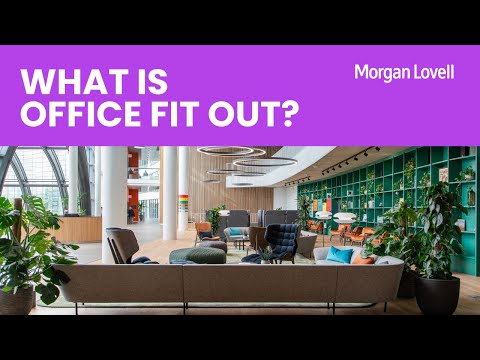
Office Fit Out Explained in 60 Seconds — YouTube
The Direct Comparison: Building Your Sales Framework
Timeline and Deployment Speed: What Your Clients Should Promise
Managing timeline expectations is one of the highest-stakes conversations your customers have with end-clients. Getting it wrong — promising speed that the supply chain cannot deliver, or underestimating fit-out program complexity — damages reputations that took years to build.
Here is the data your customers should be working from:
| Solution Type | Typical Timeline | Key Variables |
|---|---|---|
| Contract Furniture (in-stock) | 2–4 weeks | Delivery distance, installation crew availability |
| Contract Furniture (manufactured) | 6–12 weeks | Fabric/finish lead time, order volume |
| Shell & Core Fit-Out (simple) | 12–20 weeks | Contractor availability, permit speed |
| Full Fit-Out (medium complexity) | 20–36 weeks | MEP integration, custom joinery, regulatory sign-off |
| Full Fit-Out (high complexity) | 36–52+ weeks | Healthcare/compliance environments, multi-floor projects |
Source: JLL Research 2026, K2 Space, industry benchmarking.
Contract Furniture Timelines
The 6–12 week manufacture-to-installation window for contract furniture assumes a confirmed order with selected specifications, a site ready for installation (power, flooring, and data infrastructure in place), and an installation crew scheduled in advance. The variables that extend this timeline: late specification changes (especially fabric or finish), site access restrictions, and delivery logistics for large orders across multiple sites. Build these buffer weeks into your customers’ client commitments.
Fit-Out Project Timelines
Fit-out delays are almost never caused by a single factor — they are cumulative. Design changes add two weeks. Permit revisions add four. A subcontractor scheduling conflict adds six. The projects that run to timeline are almost always the ones where the scope was locked before construction started and stakeholder sign-off was structured and documented at each phase gate.
Your customers’ most valuable contribution to fit-out projects where they play an advisory role is insisting on scope lock — helping clients understand that every design change after construction commencement costs more than time.
Customization Capabilities: Where Each Solution Excels
Contract Furniture Flexibility Within Standards
The range of customization available within a well-chosen contract furniture system is broader than most end-clients realize — and most furniture dealers undersell. A specification-grade contract system typically offers configuration flexibility (layout, module combinations, height options), material choice (15–40 upholstery options, multiple frame finishes), accessory integration (power modules, screen arms, acoustic panels, lighting), and product family breadth (coordinated desking, storage, and lounge elements from a single aesthetic language).
What it does not offer: truly unique dimensions, proprietary material specifications, or custom-fabricated forms. If an end-client’s brand identity is so specific that standard configurations cannot express it, a hybrid model or full fit-out is necessary.
Fit-Out Customization: True Unlimited Potential
Fit-out customization is genuinely unlimited — constrained only by budget, time, and physics. Custom joinery can be fabricated to any dimension or material. Lighting can be architecturally integrated. Flooring can be specified in any combination of materials. Partitioning can be glazed, solid, curved, or a combination. The cost of this freedom is real: custom fabrication runs 40–120% more than equivalent modular solutions, and the timeline premium is typically 8–16 additional weeks for complex elements.
Cost Structure Transparency: The Conversation Your Customers Must Have
The most trust-building thing your customers can do in a new client relationship is present cost structures with complete transparency — including the numbers that make the proposal look more expensive than the competition. Clients who understand what they are paying for rarely cancel. Clients who are surprised by costs reliably do.
| Elemento de custo | Móveis para contratos | Full Fit-Out |
|---|---|---|
| Furniture / Finishes | $40–$120/sqft | $50–$150/sqft |
| Installation | $8–$20/sqft | Included in GC scope |
| MEP (Mechanical, Electrical, Plumbing) | N/A | $60–$120/sqft |
| Architectural Works | N/A | $40–$100/sqft |
| Technology / AV / IT | Additional | $30–$55/sqft |
| Project Management | 3–8% of furniture value | 8–15% of total project value |
| Total Range | ~$50–$150/sqft | ~$170–$425/sqft |
Sources: JLL 2026 Fit-Out Guide, Cushman & Wakefield 2026 Americas Fit-Out Report, industry benchmarking.
Contract Furniture Pricing Models
Contract furniture is priced on a per-unit or per-system basis, with volume discounts typically structured at order thresholds: 10–25% discount at 50+ workstations, 25–35% at 200+ workstations, with custom pricing available for 500+ unit orders through direct negotiation with manufacturers. The economics favor consolidation — ordering all of a client’s furniture through a single system and a single supplier invariably outperforms mixing manufacturers on price, lead time, and design coherence.
Fit-Out Investment Structure
Fit-out projects are priced as lump-sum or guaranteed maximum price (GMP) contracts, with contingency reserves of typically 10–15% built in for scope uncertainty. Value engineering — the process of identifying specification changes that reduce cost without compromising function — is a standard part of fit-out project management. Your customers who understand value engineering can add real advisory value in fit-out projects: substituting equivalent-performance materials for over-specified ones, or identifying areas where contract furniture can replace custom joinery without visual compromise.
Scalability and Future Adaptability
Contract Furniture for Growing Organizations
For any organization that expects growth, change, or uncertainty — which is most organizations — contract furniture’s scalability is a concrete financial benefit. Adding 20 workstations to a contract furniture installation is a procurement event, not a construction project. Reconfiguring a floor from bench desking to collaborative zones requires movers, not builders. This adaptability has measurable value in lease flexibility, reduced CapEx at change points, and organizational agility.
Fit-Out Adaptability and Renovation Cycles
Fit-outs are not static, but they do have change costs. Partition moves require construction permits. Joinery modifications require fabrication. Systems changes (HVAC redistribution, lighting zone reconfiguration) require specialist contractors. Fit-out projects are typically designed with a 7–12 year renovation cycle in mind — which means the design brief should anticipate organizational change at that horizon. Projects that are designed for agility — removable partitions, adaptable ceiling systems, modular power distribution — age better and cost less to refresh.
Hybrid Solutions: The Strategic Approach Your Customers Are Missing
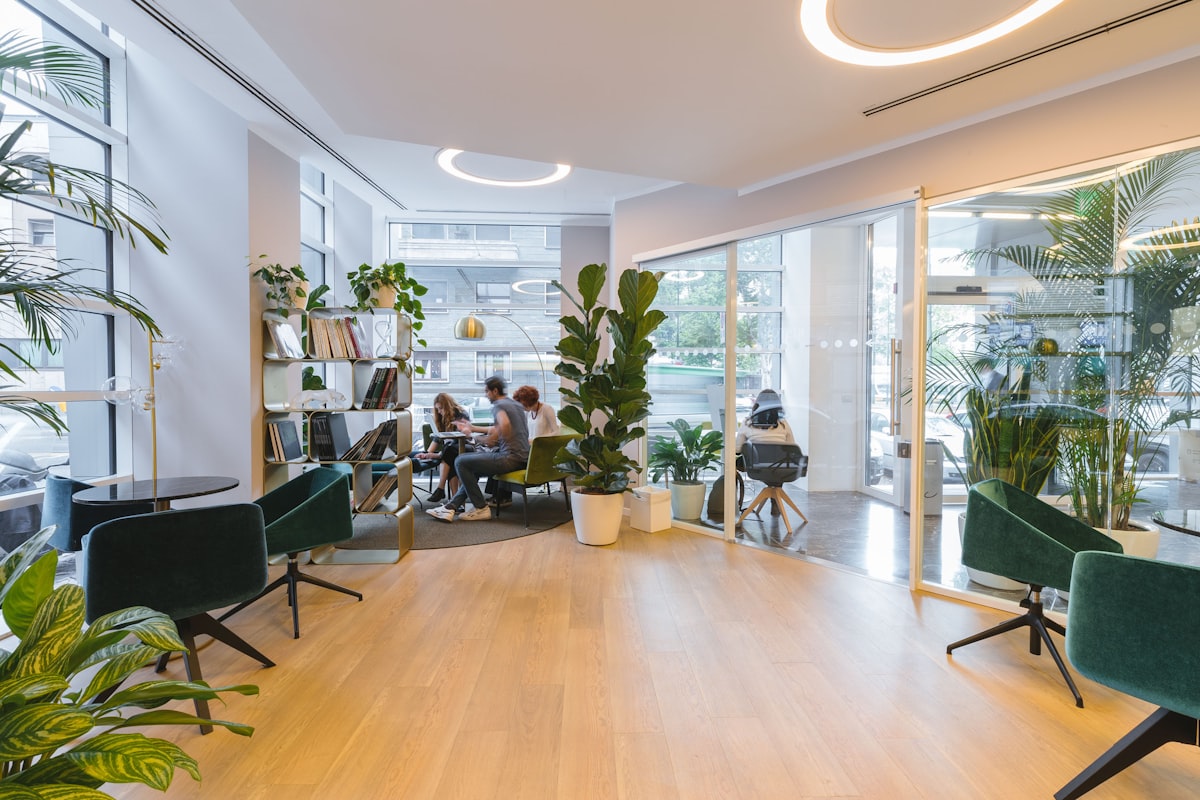 Image: A hybrid approach in practice — custom-fitted reception branding paired with modular open-plan workstations, combining fit-out permanence with contract flexibility.
Why the Best Answer Isn’t Always Either/Or
The most commercially sophisticated workplace projects being delivered in 2025–2026 are hybrid models — deliberately combining full fit-out integration in select zones with contract furniture flexibility in the majority of the floor plate. This is not a compromise. It is a strategic allocation of investment to where design permanence creates the most value.
Identifying Where Contract Furniture Adds Value
The zones where contract furniture delivers the best return on investment: open-plan workstation areas (high reconfiguration frequency, large area, cost-sensitive), collaborative and informal zones (modular seating can be rearranged for different uses), training rooms and multi-purpose spaces (stackable and reconfigurable seating), breakout and social spaces (lounge systems that refresh every 3–5 years without major investment), and back-of-house and support areas (functional, durable, budget-conscious).
Identifying Where Fit-Out Integration Is Essential
The zones where fit-out investment pays back: reception and client-facing entrance areas (brand impression, first contact, cannot be compromised), executive boardroom and leadership spaces (high-value, high-visibility, custom specification justified), specialized function rooms (video conferencing suites, trading floors, command centers with specific technology integration), and any space subject to regulatory compliance requirements (healthcare, legal, financial services).
Building Your Customer’s Hybrid Service Offering
Creating Partnerships with Fit-Out Contractors
For furniture dealers and showrooms looking to expand into hybrid project coordination, the critical first step is building trusted relationships with two or three general contractors who specialize in commercial interiors. These partnerships are not about subcontracting furniture supply to the GC — they are about positioning your customer as the furniture authority within the GC’s project team. The GC handles construction; your customer handles specification, procurement, and installation of the furniture scope. Both parties win more work together than separately.
Training Your Customers to Sell Hybrid Solutions
The conversation shift your customers need to make: from “we supply contract furniture” to “we optimize workplace environments.” This means having the vocabulary, the case studies, and the confidence to recommend a hybrid approach proactively — even when the client initially came in asking only for furniture quotes. The dealer who walks in with a framework for thinking about the whole project earns more trust, a larger scope of work, and better protection of their margin than the dealer who responds only to the explicit brief.
Sector-Specific Recommendations: The Decision Framework
Education: Standardization Meets Flexibility
Universities, schools, and training institutions represent one of the highest-volume markets for contract furniture globally. The drivers are consistent: large areas requiring standardized specification, strict budget constraints (often publicly accountable), and a strong need for reconfigurability to support diverse learning formats — lecture, seminar, group project, individual study.
According to the U.S. General Services Administration, contract procurement frameworks are the standard purchasing mechanism for educational institutions, which means your customers who hold approved vendor status with educational procurement bodies have a significant structural advantage.
The specification criteria that drive education buying decisions: BIFMA-certified durability (student use is aggressive), easy cleaning surfaces (high-frequency cleaning protocols), stackability for storage efficiency, and palette flexibility for multi-campus visual consistency. Fit-out becomes relevant in education for flagship facilities — a new library, a business school building, or a performing arts center — where architectural investment justifies the integration cost.
Healthcare: Compliance Drives the Decision
Healthcare furniture procurement is arguably the most complex specification process in the commercial furniture sector. Every surface choice, seating configuration, and storage solution must be evaluated against infection control protocols, ADA accessibility requirements, and in acute care settings, the specific workflow patterns of clinical teams.
The practical reality: contract furniture is appropriate and cost-effective in healthcare for administrative areas, waiting rooms, staff rest areas, and non-clinical offices. Clinical environments — patient rooms, nursing stations, procedure rooms — require integrated design where furniture, surfaces, and built infrastructure are specified as a coordinated system. Contract furniture lines with antimicrobial certification and healthcare-specific upholstery (such as those available through manufacturers like Knoll Healthcare e Steelcase Health) can serve semi-clinical environments, but the project must still be managed within a fit-out framework.
Corporate and Commercial: The Sophistication Factor
Large corporate clients — typically organizations with 200+ employees and multi-year lease commitments — represent the most nuanced buying decisions in the market. They have the budget for fit-out, the need for brand expression that justifies it, and the organizational complexity that makes contract furniture’s flexibility simultaneously appealing.
The most effective positioning: offer corporate clients a phased strategy. Fit-out investment for the spaces that are permanent, visible, and brand-critical. Contract furniture for the spaces that will change as the organization grows, restructures, or experiments with new working models. This is exactly the kind of advice that positions your customers as strategic consultants rather than product vendors.
The Profitability Play: How Your Customers Win Either Way
Understanding Margin Structures in Contract Furniture
Contract furniture profitability is built on three foundations: specification margin (the difference between cost and sell price on the furniture itself), service revenue (installation, delivery, project management), and repeat business (replacement, expansion, refresh cycles).
Specification margin on branded contract furniture typically runs 25–40% for authorized distributors, with higher margins on proprietary or exclusive product lines. Service revenue adds 12–20% on top of product value for full-service dealers. And repeat business — the most valuable of the three — follows almost automatically when the product performs and the client relationship is maintained.
Direct Sales Margins
Volume is the lever. A single 50-workstation order at $2,500 average value per workstation ($125,000 in furniture) at 30% margin generates $37,500 gross profit. The same dealer securing a 500-workstation order — entirely realistic for a corporate relocation project — generates $375,000 gross profit on furniture alone before service revenue. The economics reward scale, repeat relationships, and specification authority.
Specification and Design Fee Opportunities
The dealers and showrooms that generate the strongest long-term margins are those that charge for their intellectual input — not just their product. Space planning fees ($2–$5 per square foot on larger projects), specification management fees (3–5% of total furniture value), and procurement management fees (2–3% of total project value) are all commercially defensible charges when your customer is providing genuine expertise. Herman Miller‘s dealer network, for reference, routinely earns specification and design fees on top of product margin in large corporate projects.
Understanding Profit Models in Fit-Out Coordination
Coordination and Project Management Fees
For furniture dealers who take a coordination role in hybrid or full fit-out projects, the fee structure shifts from margin-dominant to service-fee-dominant. Project management fees of 8–12% of total project value are standard in the industry when the coordinator is providing genuine oversight: chairing project meetings, managing the information flow between design, contractor, and client, and taking responsibility for the integrated delivery of the furniture scope within the overall fit-out program.
Markup Opportunities on Integrated Services
In hybrid projects, furniture dealers who coordinate ancillary services — acoustic treatment, specialist lighting, branded signage, loose-lay flooring — can apply consistent markups (typically 15–25%) on these services as part of an integrated supply package. The commercial logic: the client wants a single point of accountability for the non-construction elements of their project. A dealer who can provide that simplifies the client’s procurement, and simplification commands a price premium.
Long-Term Relationship Value
Repeat Orders and Expansion Projects
Contract furniture clients who are well-served typically return within 18–36 months. Organizations grow and need additional workstations. Teams reorganize and need furniture reconfigured. New spaces are leased and the design brief naturally references the established palette. For a dealer with 200 active corporate clients, even a 30% annual repeat purchase rate generates a meaningful base of revenue before any new business is won.
Trusted Advisor Status
The dealers and showrooms who have built the most durable businesses in commercial furniture are invariably those who have moved from product vendor to trusted advisor. They are called before the brief is written. They attend pre-design meetings. They are consulted on budget development before any RFP goes out. This position is not achieved by having the best product — it is achieved by consistently providing better commercial insight than the competition. That is what this guide equips your customers to do.
Implementation Strategy: How Your Customers Should Approach Client Conversations
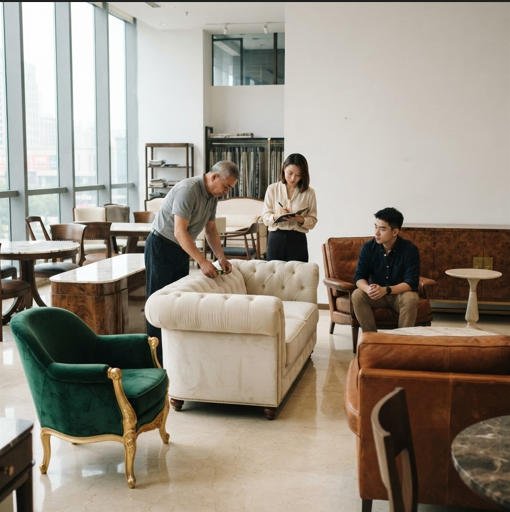
 Image: The discovery conversation — where the right questions unlock the project scope, budget reality, and solution fit.
The Discovery Process: Asking the Right Questions
The single most common mistake furniture dealers make in client conversations is recommending a solution before completing a diagnosis. A doctor who prescribes before examining loses the patient’s trust. A furniture professional who pitches before listening loses the client’s confidence — and the contract.
Questions That Reveal Budget Reality
The most effective budget questions are indirect. “What is the total CapEx allocated for this project?” is more revealing than “what’s your furniture budget?” because it captures the total investment context, not just the furniture line item. “Are you working to a cost-per-workstation ceiling?” identifies the benchmark the client is internally using. “How was the budget established — through a benchmarking exercise, or is it a finance-driven ceiling?” tells you whether there is flexibility or whether you are working against a fixed constraint.
Questions That Expose Timeline Pressures
“What is driving the occupancy date — lease expiry, board commitment, or operational requirement?” This single question identifies whether the timeline is truly fixed or potentially flexible. A lease expiry is fixed. A board commitment may be negotiable. An operational requirement (a hospital ward that must open, a campus that must be ready for semester start) is fixed and non-negotiable. The answer shapes the entire solution recommendation.
The Recommendation Framework
Presenting Contract Furniture as the Smart Choice
Lead with the client’s stated priorities. If they have emphasized speed, flexibility, and the ability to change as their organization evolves, contract furniture is the correct recommendation — regardless of what they thought they were shopping for. Frame it in their language: “Given that you need to be operational in 10 weeks and you are expecting a 35% headcount increase within 18 months, the right solution is a modular system that gets you there on time and grows with you without requiring a new construction program.”
Positioning Fit-Out as Strategic Investment
When integration, brand alignment, and compliance drive the brief, fit-out deserves to be positioned as exactly what it is — a strategic investment in the physical expression of the organization’s identity and operational capability. Frame it as: “This is not a furniture project. This is an environment that will represent your organization to every client, candidate, and partner who walks through the door for the next decade. The investment is proportionate to that responsibility.”
Managing Objections and Building Confidence
“Contract Furniture Looks Too Temporary”
This objection almost always comes from a client who has experienced poor-quality contract furniture — typically bought on price rather than specification. The response is to show, not tell. High-quality contract furniture in premium commercial environments — executive hotels, airport lounges, corporate headquarters of brand-conscious multinationals — is impossible to distinguish from bespoke at the experience level. Ask your clients to visit relevant reference installations. Bring fabric and finish samples that match the client’s brand palette. Let the product answer the objection.
“Full Fit-Out Takes Too Long and Costs Too Much”
This objection contains a valid concern (fit-out does take longer and cost more) and an invalid conclusion (therefore it’s not worth considering). The reframe: “You’re right that fit-out requires a longer program and a larger initial investment. Let’s look at what that investment delivers over a 10-year tenure — and then compare it to the cost of a refurbishment program in year five when a contract furniture scheme needs updating.” The lifetime cost comparison very often narrows the gap considerably. And for spaces where brand expression is non-negotiable, fit-out is not a cost alternative — it is the only answer.
Future-Proofing Your Customer’s Business Model
Market Trends Shaping the Contract Furniture and Fit-Out Landscape
Sustainability and Circular Economy Principles
The circular economy — a model in which materials are kept in use for as long as possible, recovered and regenerated at end of life rather than disposed of — is rapidly becoming a procurement requirement rather than a preference. In Europe, public sector procurement now mandates environmental criteria in furniture tenders. In North America, corporate sustainability commitments are driving equivalent requirements through supply chains.
For contract furniture specifically, the circular economy argument is compelling: a well-specified modular system can be reupholstered, reconfigured, and redeployed across multiple tenancies. A 10-year-old bench desking system refurbished with new tops and new upholstery has approximately one-fifth the carbon footprint of a new equivalent system. Distributors and dealers who can quantify and communicate this lifecycle advantage — through Environmental Product Declarations, carbon footprint calculations, and refurbishment programs — are positioning themselves for procurement requirements that will be universal within five years.
The Post-Pandemic Workplace Evolution
The data from 2025 is definitive: organizations are not returning to pre-2020 working patterns. Average office occupancy in major global markets sits at 55–65% of pre-pandemic levels (JLL, 2026). The office is being redesigned around the activities that benefit most from co-presence: collaboration, mentoring, socialization, and concentrated project work. Assigned desks are giving way to activity-based working environments with a ratio of approximately 0.7–0.8 workpoints per person rather than 1:1.
This structural change is a commercial opportunity for furniture professionals who understand it: the demand for high-quality collaborative furniture, reconfigurable meeting zones, and adaptable social spaces has grown dramatically, even as demand for traditional workstations has softened. The clients who bought 500 desks in 2019 are now buying 300 desks and 200 collaborative settings instead.
Technology Integration: The New Differentiator
Smart Furniture and IoT in Contract Solutions
IoT (Internet of Things — a network of physical objects embedded with sensors and connectivity to collect and exchange data) integration is changing what contract furniture can deliver. Occupancy sensors embedded in workstations identify real-time utilization patterns, enabling organizations to measure how their space is actually used versus how it was planned to be used. Integrated power modules with USB-C and wireless charging have moved from premium feature to baseline expectation in corporate specification. Height-adjustable desks with memory presets are now specified as standard in most progressive corporate briefs — and are available across the contract furniture range.
For your customers, technology integration is a revenue opportunity: sensors, cable management, power solutions, and acoustic treatments are all specifiable alongside furniture. Each category adds margin and adds complexity that reinforces the value of a professional advisor.
Building Systems Integration in Fit-Out Projects
In full fit-out projects, technology coordination is now one of the most complex and highest-value elements of the project program. AV and IT integration (10–12% of total fit-out cost per JLL 2026), building management systems, smart lighting with occupancy and daylight sensing, and integrated access control systems must all be specified, coordinated, and commissioned as part of the furniture and fitout program. Dealers who develop relationships with certified AV integrators and smart building consultants can expand their scope of supply and their advisory value in ways that purely furniture-focused competitors cannot match.
Building Your Customer’s Competitive Advantage
Becoming the Trusted Advisor on Workplace Strategy
The transition from product vendor to trusted advisor does not happen through a single great project — it is built through consistent demonstration of commercial insight, proactive communication, and a service model that extends beyond the transaction. It means sending your clients trend reports before they ask for them. It means flagging upcoming product discontinuations before they affect live specifications. It means checking in on installed projects 6 months after delivery to document what is working, what needs adjustment, and what the next project opportunity might be.
Móveis Jade Ant has built its distribution and export model around exactly this kind of partnership logic — working with dealers and showrooms who are committed to the advisory model, not just the transactional one. The conversations we have with our distribution partners are not about price lists. They are about positioning, about market trends, and about how to help our customers win more of the right projects.
Creating Proprietary Methodologies and Frameworks
The dealers and showrooms who command the strongest market positions have typically developed proprietary tools that competitors do not have: a space optimization calculator, a lifecycle cost comparison model, a workplace strategy diagnostic questionnaire, or a sector-specific specification guide. These tools codify expertise in a format that can be shared, repeated, and scaled. They also create intellectual property that is genuinely difficult for competitors to replicate — because the tool is an expression of accumulated project experience, not just publicly available information.
Empowering Your Customers to Make the Right Call
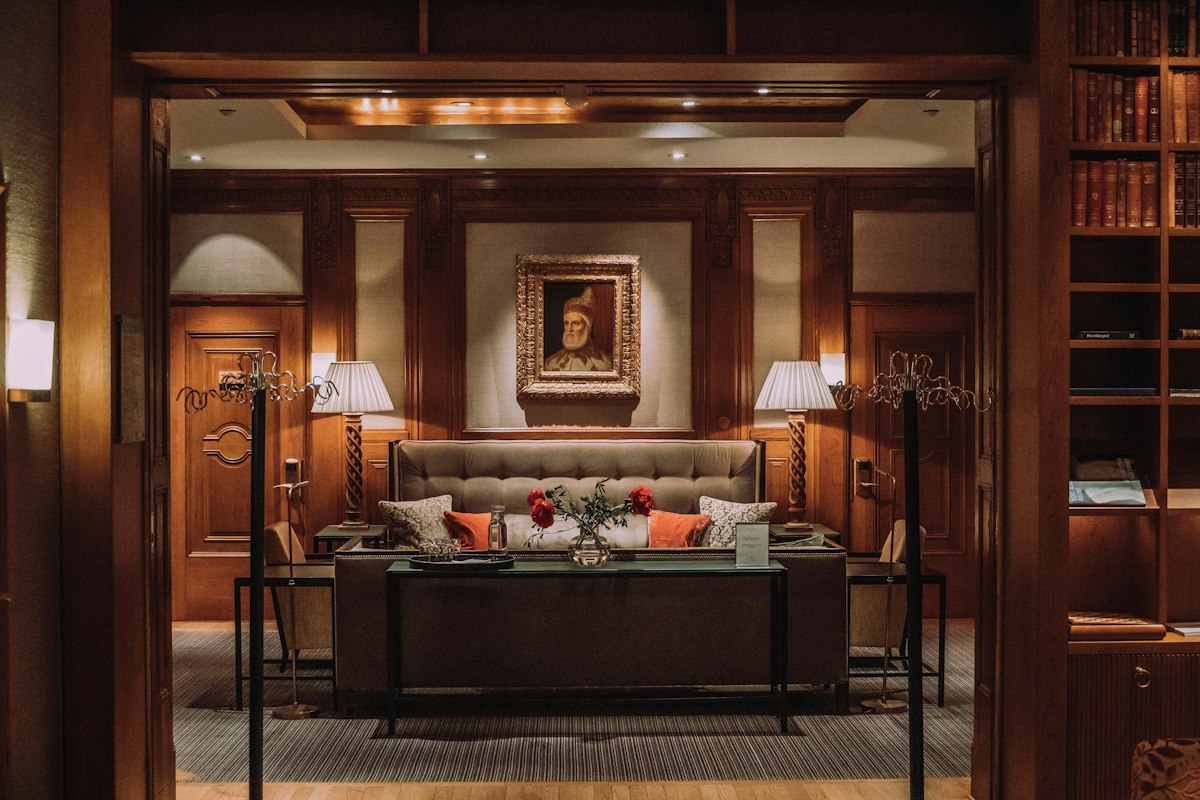 Image: The benchmark for luxury contract furniture specification — hospitality environments where durability, design cohesion, and brand expression must coexist.
Your role is critical. By understanding the nuances between contract furniture solutions and commercial fit-out, you empower the professionals you sell to — your distributors, showroom managers, interior designers, hospitality procurement leads, and fit-out specialists — to make recommendations that serve their end-clients’ real needs rather than their perceived ones.
The choice between contract furniture and fit-out is not about which solution is objectively better. It is about matching the right solution to the right problem, at the right investment level, for the right organization. The most successful professionals in your customer base will be those who can diagnose that match with confidence — and this guide gives you the framework to help them do exactly that.
When your clients walk out of a discovery conversation having received genuine strategic insight rather than a product pitch, they will remember who gave it to them. And they will come back.
That is the business model that Móveis Jade Ant is built to support.
FAQs: Addressing Your Customers’ Real Questions
1. How do we explain the difference between contract furniture and fit-out to clients who use the terms interchangeably?
Start with a simple, visual framework. Contract furniture refers to the furnishings themselves — the desks, seating, storage, and collaborative pieces — engineered for commercial-grade use, standardized for scalability, and designed to be reconfigured as needs change. Fit-out refers to the complete transformation of a built environment — including walls, ceilings, flooring, mechanical and electrical services, and finishes — with furniture as one element within a larger integrated scope. A useful analogy: contract furniture is what fills a room. Fit-out is what creates the room. Use reference images from your portfolio to make the distinction immediate and visual.
2. When should we recommend contract furniture over a full fit-out?
Recommend contract furniture when the client’s priority hierarchy places speed, flexibility, and budget control above design uniqueness and brand integration. It is the correct recommendation for organizations with high growth trajectories (furniture that can scale), frequent space reconfiguration needs (modular systems that adapt without construction), multi-site deployments requiring consistency (standardized specification across locations), and budget constraints that make per-sqft fit-out investment unrealistic.
3. What are the hidden costs in contract furniture that we should warn clients about?
The purchase price of the furniture is typically 65–75% of the total delivered cost. The remaining 25–35% covers delivery and logistics (particularly for large or multi-site orders), professional installation labor, site preparation costs (data ports, power positioning, flooring adjustments), cable management and acoustic treatment (often specified after the fact and adding 8–15% to the furniture value), and future reconfiguration costs that are rarely budgeted for in the initial project. Building a total cost of ownership model — including a 5-year reconfiguration allowance — into your client proposals from the outset prevents budget conflicts that damage the relationship.
4. How do we position ourselves as valuable advisors rather than just furniture vendors?
The shift is from answering “what furniture do you want?” to asking “what business problems are you trying to solve?” A vendor responds to a product enquiry. An advisor diagnoses a business need. In practice, this means offering space planning as part of your standard proposal process, providing lifecycle cost comparisons not just unit prices, sharing sector-specific insights and case studies proactively, and following up on installed projects with performance data rather than waiting for the next order cycle.
5. Can contract furniture systems be customized enough to meet brand standards for corporate clients?
Yes, within defined parameters. Most commercial contract furniture systems offer 15–40 upholstery options per line, multiple frame and surface finishes, and modular configuration flexibility that accommodates most corporate brand guidelines. The boundaries of that flexibility become relevant when a brand requires a truly proprietary color, a non-standard dimension, or a fabricated form that no modular system can replicate. In those cases, a hybrid approach — contract furniture for the majority of the space, custom or fit-out elements for brand-critical zones — is the most commercially intelligent recommendation.
6. What’s the typical timeline difference between contract furniture and fit-out projects?
Contract furniture typically deploys in 4–12 weeks from confirmed order to completed installation, depending on whether products are held in stock or manufactured to order. Full commercial fit-outs require 12–52+ weeks depending on complexity, regulatory requirements, and the scale of architectural and services work. The critical communication skill: never give clients a timeline range without explaining what the lower and upper bounds depend on. “4 weeks if we confirm specifications this week and the site is ready for installation” is a more useful commitment than “4 to 12 weeks.”
7. How do we handle clients who want fit-out quality at contract furniture prices?
This expectation gap is best addressed through education, not negotiation. Walk the client through the cost architecture of a fit-out: architectural partitioning, MEP services, finishes, project management, and then furniture at the end. The cost difference between contract furniture and fit-out is not a margin issue — it is a scope issue. Then offer a genuine alternative: a premium contract furniture specification that delivers the visual quality the client aspires to, combined with targeted fit-out investment in the one or two spaces where integration is truly non-negotiable. This hybrid approach typically delivers 80% of the design impact at 50–60% of the full fit-out cost.
8. What’s our margin opportunity in recommending contract furniture versus fit-out?
Contract furniture generates higher percentage gross margins (typically 25–40% on product) but on a lower total project value. Fit-out coordination generates lower furniture margins but higher total project revenue through design fees, project management charges, and markup on integrated services. The most profitable position is not either/or: it is a service model that captures product margin on contract furniture, service fees on project management, and a coordination role in fit-out projects that generates advisory revenue above the furniture scope.
9. How do we stay credible when recommending contract furniture to clients who expected a full fit-out?
Lead with their stated priorities, not their initial assumption. If budget, timeline, and adaptability are the real drivers — which discovery conversations usually confirm — then contract furniture is the right answer regardless of what the client thought they were buying. Credibility comes from demonstrating that you arrived at the recommendation through a rigorous diagnosis, not a product preference. Support the recommendation with two or three case studies in comparable sectors and comparable project types, where contract furniture delivered outcomes that exceeded expectations.
10. Can contract furniture be used as a foundation for later fit-out elements?
Yes, and this phased approach is one of the most strategically elegant options available to clients with budget constraints today but growth plans for tomorrow. The key to making it work: the initial contract furniture specification must anticipate the eventual fit-out scope. If you know a reception area will eventually be fitted out, specify the surrounding office areas in materials and a palette that will coordinate with the future reception design. Plan cable management, power distribution, and data infrastructure in the contract furniture zones so that future fit-out works do not require significant disruption to established areas.
11. How do we advise clients on sustainability when comparing these solutions?
Contract furniture carries a lifecycle sustainability advantage: modular components can be reused, reupholstered, and redeployed across project cycles, significantly reducing landfill volume compared to single-use fit-out elements. Fit-out sustainability depends heavily on material specification — projects targeting LEED or WELL certification will specify low-VOC materials, sustainably sourced timber, and energy-efficient systems integration from the outset. Frame sustainability advice in terms of the client’s specific reporting obligations and time horizon: a company with a net-zero commitment for 2030 needs a very different conversation than a company doing its first fit-out with no formal ESG targets.
12. What role does technology play in choosing between contract furniture and fit-out?
Technology integration is significantly more straightforward in a full fit-out, where building systems, power distribution, smart controls, and AV infrastructure can be co-designed from the start. In contract furniture environments, technology must be accommodated through furniture-integrated cable management, modular power solutions, and standalone smart devices rather than building-integrated systems. The practical question to ask clients early: what is your technology baseline — power, data, display, and access control — and how integrated do those systems need to be? The answer frequently clarifies the solution boundary more quickly than any other single factor.
13. How do we handle clients who’ve had bad experiences with contract furniture?
Address the quality perception directly. Bad contract furniture experiences are almost always the result of procurement decisions made on price rather than specification — consumer-grade or low-specification products purchased through non-commercial channels and used in demanding commercial environments. The solution is to show, not argue. Bring the client to a reference installation where premium contract furniture has been specified correctly. Share durability test data, warranty terms, and BIFMA certification documentation. High-specification contract furniture from reputable manufacturers — the kind available through Jade Ant Furniture’s portfolio — performs at a level that is functionally and aesthetically comparable to bespoke specification.
14. What questions should we ask to diagnose whether a client needs contract furniture or fit-out?
The most diagnostic questions are: What is your total project budget (not just furniture budget)? What is the fixed, non-negotiable occupancy date? How frequently do you expect to reconfigure your space in the next three years? Are there regulatory, compliance, or certification requirements that apply to your environment? Do you expect significant organizational growth or restructuring within the next two years? What is the brand experience you are trying to create in client-facing spaces versus employee working areas? The answers to these six questions will identify the right solution with a high degree of reliability in the majority of project situations.
15. How do we build long-term relationships with clients who choose contract furniture?
Position yourself as their ongoing workplace advisor from day one. Document the specification thoroughly so you can reference it for future phases. Schedule a 6-month post-installation review to capture feedback and identify emerging needs. Stay close to the client’s organizational news — headcount growth, new locations, leadership changes — because each of these events creates a potential project. Introduce new products from your range that are compatible with their existing specification. And when they eventually need to refresh or expand, you are not a new vendor starting from scratch — you are the trusted partner who knows their space.
You now have the framework. The next step is implementation.
Share this guide with your key customers — your interior designers, showroom teams, fit-out project managers, hotel procurement leads, and distributor partners. Help them understand that the conversation has moved beyond product selection into genuine workplace strategy.
Then connect your team with Móveis Jade Ant to explore how our hospitality and commercial furniture range can anchor the contract furniture component of your clients’ hybrid and full-fit-out projects. Whether you are outfitting a 50-room boutique hotel, a multi-campus university expansion, or a 10,000 sqft corporate relocation, the right product specification — backed by a supplier who understands how commercial projects work — is the foundation everything else is built on.
Your clients’ success depends on the quality of your advice. Make sure the advice is built on the right foundation.
Related Resources: