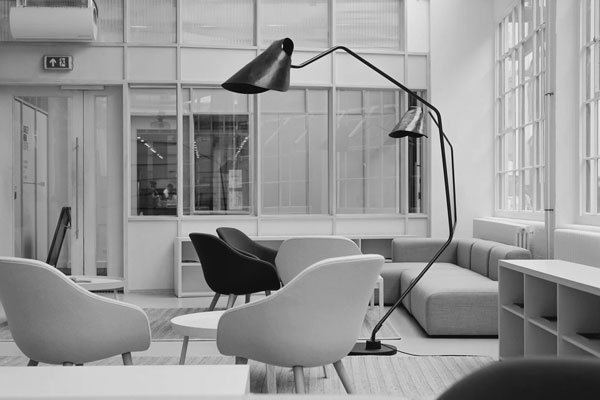
Below is a visual breakdown of how typical industry professionals allocate their primary objectives at major exhibitions:
Walking into a furniture exhibition like صالون ديل موبيل in Milan or هاي بوينت ماركت in North Carolina can feel like stepping into a small city. The 2024 edition of Salone del Mobile alone hosted 1,950 exhibitors from 35 countries and drew 370,824 attendees. CIFF Guangzhou — the world’s largest furniture fair — spans 850,000 square metres across 90 halls with over 5,100 exhibitors. Even seasoned designers admit to leaving these events feeling they missed half of what mattered.
This guide isn’t about vague advice. It’s a field-tested system of actionable strategies for planning your visit in advance, maximizing on-site efficiency, و executing disciplined post-visit follow-up — the three phases that separate visitors who leave with clear purchase decisions from those who leave with nothing but sore feet and a bag of brochures.
Whether you’re an مصمم داخلي sourcing for a client project, a procurement buyer evaluating new supplier relationships, or a homeowner researching options for a living room overhaul, the framework below will apply to your situation. At مفروشات النمل اليشم, our team attends 6–8 international exhibitions annually, and the methods outlined here reflect what we’ve refined through years of real expo experience.

Plan in Advance and Set Clear Goals
The most productive expo visitors don’t start working when they walk through the entrance. They start 4–6 weeks before the event opens. According to a CEIR (Center for Exhibition Industry Research) study, attendees who pre-plan their trade show visits report 67% higher satisfaction with outcomes compared to walk-in visitors.
Research Exhibitor Lists and Create a Prioritized Shortlist
Every major furniture exhibition publishes its exhibitor directory weeks before opening day — usually on the event’s official website or app. Download it. Then, instead of bookmarking 200 booths, create a tiered shortlist:
| Priority Tier | الوصف | Suggested Count | Time Per Booth |
|---|---|---|---|
| Tier 1 — Must Visit | Key suppliers, brands aligned with current projects, known product launches | 8–12 booths | 20–30 min |
| Tier 2 — Should Visit | Interesting new brands, recommended by peers, potential future suppliers | 15–20 booths | 10–15 min |
| Tier 3 — If Time Allows | Exploratory, trend scouting, ancillary product categories | 10–15 booths | 5–10 min |
This approach means you’re giving focused attention to the 8–12 exhibitors that can directly impact your business or project right now, while still leaving room for discovery. When we at مفروشات النمل اليشم prepare for events like CIFF, our product team cross-references the exhibitor list with our upcoming collection calendar — so every booth visit has a clear purpose tied to a real product need.
Define Objectives (New Collections, Pricing, Sustainability)
Before you pack your comfortable shoes, write down exactly what you need to accomplish. Not “see what’s new” — that’s a wish, not a goal. Concrete objectives sound like this:
- “Evaluate at least 3 new solid wood dining table suppliers with FSC-certified materials under $800 wholesale.”
- “Collect pricing on Italian leather sectionals in the 280–320 cm range for the Henderson project.”
- “Identify 2 upholstery manufacturers offering sustainable fabric options with OEKO-TEX certification.”
Schedule Time Blocks to Allocate Segments of the Show
Large exhibitions often run 3–5 days and segment by product category (living room, bedroom, outdoor, office). Don’t try to cover everything in one day. Assign each day or half-day to a specific category zone, and protect your Tier 1 time blocks from being eroded by impulse detours.
Master the Venue Layout and Exhibitor Map

Learn the Venue Entrance Points and Major Concourses
Exhibition venues like the China Import and Export Fair Complex (Canton Fair) or Fiera Milano have multiple entrance gates, each feeding into different hall clusters. Arriving at the wrong gate can cost you 20–30 minutes of walking just to reach your target zone. Check the official venue map in advance and identify which entrance is closest to your Tier 1 exhibitors.
Use a Digital Map and Printouts for Offline Access
Wi-Fi at large expos is notoriously unreliable — 800,000 square metres of concrete and steel don’t help signal strength. Download the event’s mobile app ahead of time and screenshot your shortlisted booth locations. Print a paper backup. During the 2025 Canton Fair, vendors reported that the event app crashed intermittently under the load of 200,000+ concurrent users. A paper map doesn’t crash.
Identify Anchor Halls and Must-Visit Pavilions
Most exhibitions organize around “anchor halls” — the largest exhibitors or themed pavilions that serve as orientation landmarks. At High Point Market, these include the IHFC (International Home Furnishings Center) and Market Square. Locating 3–4 anchor points on the map gives you a mental grid to navigate by, even if you lose your digital map.
Timing Your Visit for Peak Efficiency

Arrive Early for New Launches and Premium Access
The first 90 minutes of any exhibition day are the most productive. Booths are freshly arranged, sales reps are alert and not yet fatigued from repeating the same pitch, and demo products haven’t been handled by 500 people yet. At events like Salone del Mobile, some exhibitors debut new collections with morning-only preview access — miss that window and you’ll see a “by appointment only” sign for the rest of the day.
Avoid Peak Lunch Hours to Minimize Crowding
Between 11:30 AM and 1:30 PM, aisles congest and booth staff multitask between conversations. Eat early (or late), and use the lunch window to visit your Tier 1 booths when everyone else is in line for overpriced expo sandwiches. This single timing adjustment can give you 30–45 minutes of uninterrupted face time with key exhibitors.
Strategize a Loop That Minimizes Backtracking
Plot your booth visits in geographic sequence — not by priority. Walking from Hall A to Hall F and back to Hall B wastes an hour of shoe leather. Instead, cluster your Tier 1, 2, and 3 visits by physical proximity and walk a continuous loop through each section before moving to the next.
How to Evaluate Products Quickly and Effectively
The chart below illustrates average booth foot traffic by hour, highlighting the importance of strategic timing:
Establish Quick Criteria (Quality, Material, Ergonomics)
Don’t try to evaluate everything about every product. Before the show, define 4–5 non-negotiable criteria specific to your needs. For a buyer sourcing مقاعد غرفة المعيشة, this might look like:
| Evaluation Criterion | ما يجب التحقق منه | Red Flag |
|---|---|---|
| Frame Construction | Kiln-dried hardwood, corner-blocked joints, no particle board | Stapled-only joints, lightweight frame, flex under pressure |
| Upholstery Quality | Double-stitched seams, pattern alignment, fabric pilling test | Loose threads, misaligned patterns, thin single-layer fabric |
| Cushion Resilience | HR foam density (≥ 30 kg/m³), bounce-back test | Immediate indentation, no rebound within 3 seconds |
| Finish & Coating | Even lacquer, no drip marks, smooth edge treatment | Uneven sheen, rough edges, visible brush strokes |
| Ergonomics | Seat height 40–45 cm, lumbar support, armrest height | Uncomfortably low/high seat, no back contour |
Use a 60-Second Product Snapshot Method
For every product that passes your initial screen, spend exactly 60 seconds capturing:
- 0–15 seconds: Visual scan — overall proportions, finish quality, first impression.
- 15–35 seconds: Physical test — sit in it, open drawers, press on joints, flip cushions.
- 35–50 seconds: Photo documentation — 3 shots: front view, detail of joinery, product label/spec sheet.
- 50–60 seconds: Quick voice note or written note — “YES/MAYBE/NO” with one reason.
This method, used by procurement teams at firms like مفروشات النمل اليشم, allows you to evaluate 40–50 products in a focused 3-hour block — compared to the 10–15 most visitors cover when they browse without a system.
Capture Measurements and Compatibility Notes on the Fly
Bring a retractable tape measure. Record exterior dimensions, seat depth, and table heights directly into your phone’s notes app alongside the product photo. One designer we spoke with at the 2025 High Point Market described returning to her studio to find that 3 of her 7 shortlisted dining tables wouldn’t fit through her client’s dining room doorframe — a $0 measurement at the show would have saved hours of follow-up.
Negotiation, Pricing, and Budgeting Basics
When to Ask for On-Site Discounts or Promotions
Exhibitors invest $15,000–$80,000+ in a single trade show booth (including stand rental, shipping, staffing, and marketing materials). They are motivated to close deals during the event. Most B2B furniture exhibitors offer expo-only pricing that’s 5–15% below their standard wholesale rates — but they rarely volunteer it. You need to ask.
The best timing: after you’ve had a genuine conversation about product fit, not as an opening line. A question like “Are there any show-special terms for orders placed this week?” signals buying intent without commoditizing the relationship.
Track Quotes with a Simple Comparison Sheet
Use a spreadsheet on your tablet or a printed sheet to capture quotes in real-time. Here’s a template used by our procurement team:
| Exhibitor | Product / SKU | Unit Price | موك | Lead Time | Expo Discount | ملاحظات |
|---|---|---|---|---|---|---|
| Supplier A | Walnut Dining Table D-320 | $485 | 20 pcs | 45 يومًا | 8% | FSC certified, custom size OK |
| Supplier B | Marble Top Console C-150 | $620 | 10 pcs | 60 days | 12% | Requires crating fee |
| Supplier C | Velvet Sectional VS-280 | $1,140 | 5 pcs | 35 days | 10% | Stain-resistant treatment included |
Consider Lead Times, Customization, and Delivery
Price alone isn’t the deciding factor. A sofa that’s $200 cheaper but takes 90 days to deliver versus 35 days can cost you a delayed project handover, penalty clauses, or a frustrated client. Always ask about:
- Customization flexibility — Can fabric, dimensions, or finish be modified? At what cost?
- Shipping terms — Is the quote FOB, CIF, or DDP? Who handles customs clearance?
- Warranty and after-sales support — What happens if a piece arrives damaged?
Space Planning and Room Setups Demonstrations
Observe Scale, Proportion, and Layout Possibilities
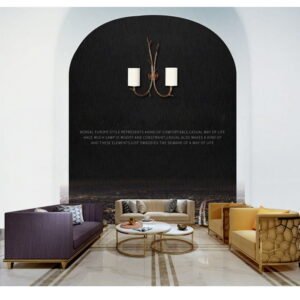
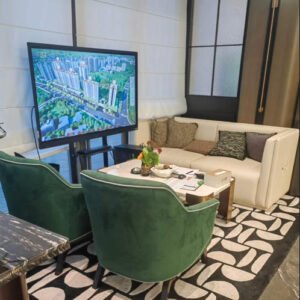
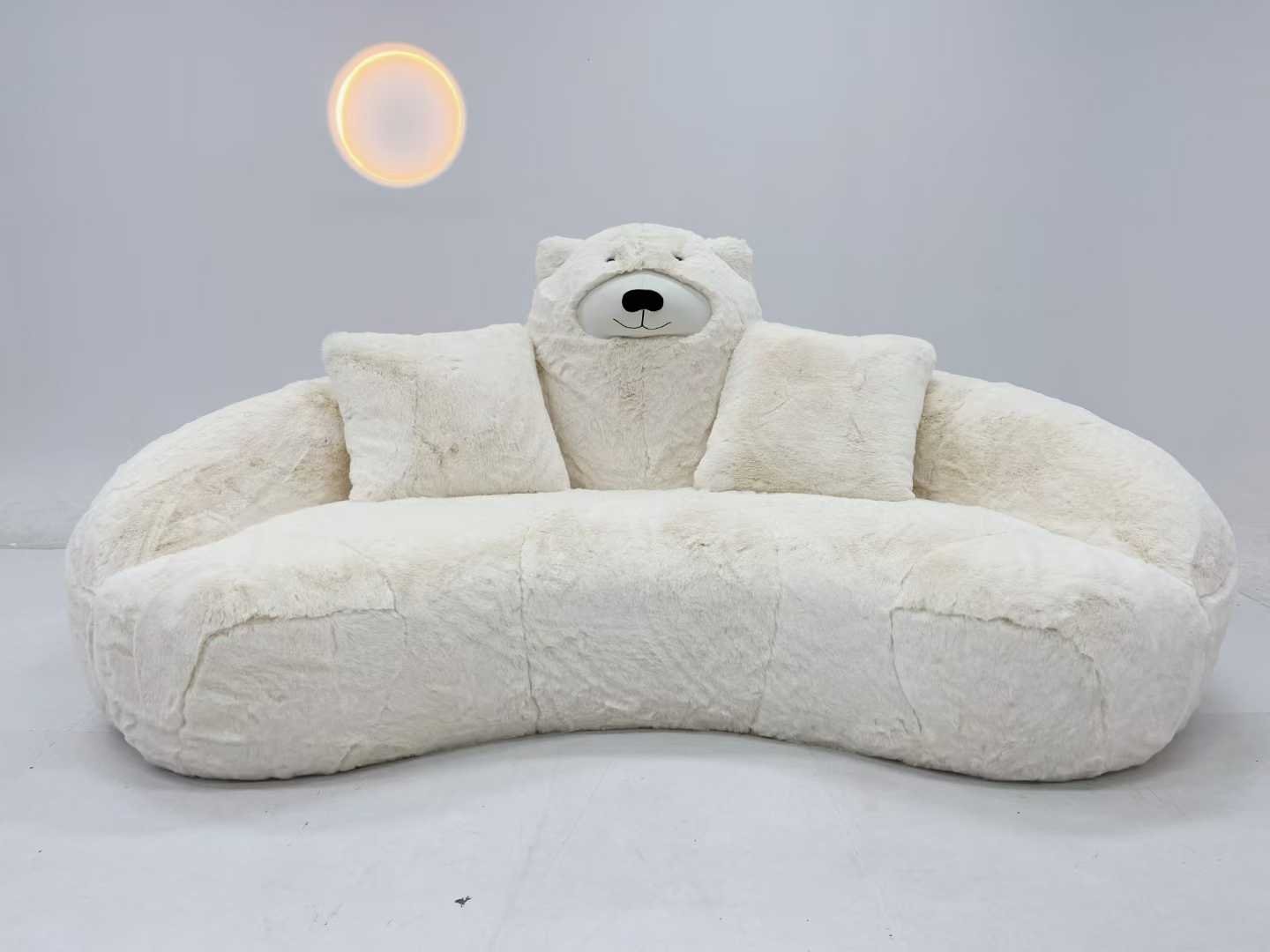
This is why exhibitions still matter in the age of online catalogs. Seeing a 240 cm dining table in person, surrounded by 6 chairs, under a pendant light, gives you spatial intelligence that no product page can replicate. Pay attention to how exhibitors stage their room sets — the distances between furniture pieces, the ratio of table size to room area, how traffic flow is maintained around a seating arrangement.
Note Color, Texture, and Finish Compatibility
Screens lie about color. A “warm walnut” on your monitor might be a cold brown in person. Exhibitions give you the chance to see how different finishes interact under controlled lighting. Bring fabric swatches or paint chips from your active projects and hold them against the furniture surfaces. This 5-second test has saved designers from costly mismatches that photos wouldn’t catch.
Gather Swatches and Take Clear Photos for Later Reference
Most exhibitors offer finish samples, fabric cuts, or material cards — take them. Label each sample with the booth number, product name, and date using a permanent marker. These physical samples are worth more than 50 photos when you’re making final material selections back at the studio.
Taking Notes, Photos, and Inspiration Management
Use a Structured Note System or App
Apps like Notion, Evernote, or even a simple Google Sheet work — as long as you use a consistent structure for every entry. A random camera roll of 400 unlabeled photos becomes useless 48 hours after the show.
Label Photos with Exhibit Hall, Booth, Product, and Date
Before photographing a product, snap the exhibitor’s name sign first. This creates a visual bookmark in your camera roll. Better yet, use your phone’s voice memo feature to narrate a 10-second note after each photo: “Hall 3, Booth 3B-107, Jade Ant Furniture oak console table, price $380, lead time 40 days.”
Create a Mood Board Checklist for Decisions
Collect visual references throughout the day and organize them into a mood board that evening. Tools like Pinterest boards or Houzz ideabooks let you group products by project, room, or style theme — making it dramatically easier to present curated options to clients or stakeholders when you’re back in the office.
Accessibility, Comfort, and Safety on the Expo Floor
Plan for Seating, Hydration, and Rest Breaks
Walking 8–12 km in a single exhibition day is normal. A 2023 CEIR attendee wellness study found that visitors who took a 15-minute seated break every 2 hours reported 34% higher afternoon productivity compared to those who pushed through. Locate rest areas on your venue map before you go. Carry a refillable water bottle — dehydration at indoor expos is more common than people admit.
Check Aisle Width and Mobility Access
If you or a team member uses a wheelchair or mobility device, verify the exhibition’s accessibility provisions in advance. Most major shows like imm cologne publish accessibility maps and offer dedicated support services — but you need to request them before arrival.
Be Mindful of Crowd Flow and Evacuation Routes
Large expos with 100,000+ visitors can have congestion points at hall transitions and main concourses. Note the emergency exits when you enter each hall. It takes 5 seconds and could matter in an unlikely but possible emergency.
Networking and Exhibitor Interactions Like a Pro
Prepare a Succinct Intro and Objective for Conversations
Exhibitors at a busy show have roughly 3–5 minutes per visitor before the next person approaches. Lead with who you are and what you need: “I’m a residential designer based in Austin, working on a 4,000 sq ft modern farmhouse project. I’m specifically looking for custom-length dining benches in reclaimed wood — does your line include that?” This kind of opening gets you to a useful answer in 30 seconds.
Balance Questions with Listening to Supplier Needs
The best trade show relationships are two-way. Ask what their minimum order requirements are, what their production capacity looks like, and whether they’re looking to expand into your market. Exhibitors remember the visitors who asked thoughtful questions — not the ones who just grabbed a catalog and left.
Collect Business Cards and Set Follow-Up Reminders
Take the card. Write the date and one keyword on the back immediately. Set a follow-up reminder in your phone for 48 hours post-show. According to EXHIBITOR Magazine, 80% of trade show leads are never followed up — the visitors who do follow up within 48 hours capture a disproportionate share of expo-exclusive deals.
Family, Group, or Multi-Person Visit Strategies
Assign Roles (Note-Taker, Photographer, Navigator)
When visiting with a team, overlapping efforts waste everyone’s time. Assign clear roles before entering the venue:
- Navigator: Manages the route, keeps the group on schedule, handles the map.
- Photographer: Captures product images using the labeling system described earlier.
- Note-Taker: Records pricing, specs, and subjective observations in the shared document.
Create a Shared Digital Checklist to Stay Aligned
Use a shared Google Sheet or Trello board that every team member can update in real-time. This prevents the classic problem of two team members visiting the same booth independently while missing a key exhibitor entirely.
Schedule Breaks and Kid-Friendly Zones If Needed
Some exhibitions offer family-friendly areas or childcare zones — check the event guide. If bringing children, plan shorter 2–3 hour visit blocks with breaks between them, rather than attempting a full-day marathon.
Watch: Inside a Major Furniture Exhibition
To get a feel for what navigating a world-class furniture exhibition actually looks like, watch this walkthrough of the 2025 Salone del Mobile in Milan — the industry’s most prestigious annual event:
Video: A 4K walk-around of the 2025 Salone del Mobile in Milan, showcasing exhibitor booths, room setups, and the scale of the world’s leading furniture design expo.
Follow-Up, Decision-Making, and Post-Visit Actions
Compile a Consolidated Shortlist Within 48 Hours
Within 48 hours of leaving the exhibition, sit down with your notes, photos, and samples and create a single consolidated document. Rank each product or supplier against your pre-defined criteria. If you visited with a team, schedule a 30-minute debrief to merge everyone’s observations. The details you remember clearly on day 2 will be foggy by day 7.
Reach Out for Samples, Quotes, or Showroom Visits
Send personalized follow-up emails referencing the specific product and conversation you had. “Hi David, great meeting you at Booth 5C-204 at CIFF. I’d like to request a fabric swatch kit for the VS-280 sectional and a formal quote for 10 units, delivered CIF Los Angeles.” This kind of specific follow-up positions you as a serious buyer, not a catalog collector.
في مفروشات النمل اليشم, we’ve observed that buyers who follow up within the first 48 hours after meeting us at exhibitions are 3x more likely to complete a purchase within 60 days — compared to those who reach out a month later, by which time expo pricing and sample availability have often expired.
Plan Integration into Ongoing Interior Projects or Renovations
Map your shortlisted products directly to active projects. Create a simple matrix matching each product to the project it serves, the room it’s intended for, and the budget line it falls under. This prevents the common problem of “I loved it at the show but have no idea where to put it.”
Recap of Key Strategies for a Pro-Level Expo Experience
Navigating a large furniture exhibition comes down to three disciplines: التحضير (research, shortlists, objectives), on-site efficiency (timing, evaluation systems, structured note-taking), and post-visit follow-up (consolidated shortlists, timely outreach, project integration).
The visitors who leave exhibitions with clear next steps and actionable data aren’t luckier or more experienced — they simply follow a system. The framework in this guide is designed to be adapted to your specific role: a designer might weight the space planning and material evaluation sections more heavily, while a buyer might focus on negotiation and logistics. A homeowner planning a renovation might skip the MOQ tracking but invest heavily in the measurement and mood board sections.
Whatever your goal, the principle is the same: don’t let a $200 flight and 3 days of your time result in a pile of brochures. Treat the exhibition like the high-value business event it is, and you’ll walk out with exactly what you came for.
For ongoing resources on furniture selection, trade show preparation, and interior design sourcing, explore the Jade Ant Furniture resource center — where we regularly publish guides informed by our global exhibition experience.
الأسئلة الشائعة (FAQs)
1. How early should I arrive for a furniture exhibition?
Arrive at least 30 minutes before the official opening time. At events like CIFF Guangzhou, security and registration lines can take 15–20 minutes during peak hours. Early arrival also gives you first access to exhibitors before crowds build — sales representatives report that their most productive conversations happen in the first 90 minutes of each show day.
2. What’s the best way to compare products across booths quickly?
Use the 60-second product snapshot method described above: 15 seconds for visual scan, 20 seconds for physical testing, 15 seconds for photo documentation, and 10 seconds for a verdict note. Pair this with a pre-built comparison spreadsheet on your tablet that tracks price, material, dimensions, and lead time side by side.
3. How can I ensure accurate measurements and compatibility for space planning?
Carry a retractable tape measure and measure every shortlisted piece on-site. Record dimensions in your phone alongside the product photo. Before the show, have your room floor plans (with doorframe and hallway widths) saved on your phone for instant comparison. A $2 tape measure prevents $2,000 mistakes.
4. Are there discounts available only at furniture exhibitions?
Yes. Most B2B exhibitors offer show-exclusive pricing ranging from 5–15% below standard wholesale rates. Some also waive MOQ (minimum order quantity) requirements for orders placed during the exhibition. Always ask — these promotions are rarely advertised on booth signage.
5. How do I manage information overload at a large furniture expo?
Stick to your tiered exhibitor shortlist and resist the urge to visit every booth. Use the structured note-taking system (photo of booth sign → product photos → voice memo) so that information is captured consistently. At the end of each day, spend 20 minutes reviewing and organizing your notes while details are still fresh.
6. What should I wear to a furniture exhibition?
Wear comfortable, supportive walking shoes — you’ll cover 8–12 km per day on concrete floors. Dress in business casual, which is the standard at most trade shows. Layer clothing, as exhibition halls can vary between air-conditioned cool and crowded warm. Carry a lightweight bag with water, charger, tape measure, and business cards.
7. Can I negotiate directly with manufacturers at furniture expos?
At B2B exhibitions like CIFF and High Point Market, direct manufacturer negotiations are expected and encouraged. At B2C or mixed events, it depends on the exhibitor. Approach negotiations after establishing product fit — not as a first question. Referencing specific project requirements and volume increases your leverage significantly.
8. How do I follow up with exhibitors after the show?
Send a personalized email within 48 hours referencing the specific product, your conversation, and a clear next step (sample request, formal quote, or showroom visit). Include your business card information and project timeline. The CEIR estimates that 80% of trade show leads go unfollowed — being in the proactive 20% gives you a significant competitive advantage.
9. What are the most important furniture exhibitions to attend globally?
The top-tier events include صالون ديل موبيل (Milan, April), هاي بوينت ماركت (North Carolina, April/October), CIFF Guangzhou (March/September), imm cologne (January), and Maison&Objet (Paris, January/September). Your choice should align with your product category focus and geographic sourcing needs.
10. Is it worth attending a furniture exhibition as a homeowner, not a trade buyer?
Absolutely — with some caveats. Many large exhibitions have dedicated B2C days or public access periods. As a homeowner, you’ll benefit most from the room setup demonstrations (seeing furniture in styled environments), direct material comparison (touching fabrics and finishes in person), and connecting with manufacturers who may offer direct-to-consumer programs. Events like the imm cologne and regional furniture shows often have strong homeowner-focused programming.