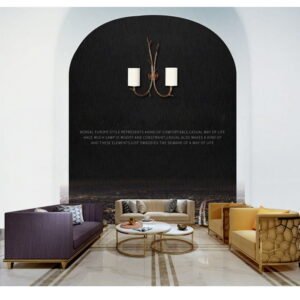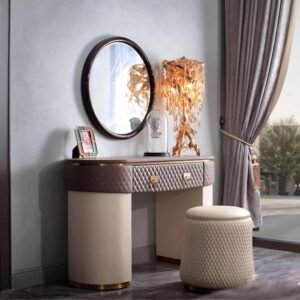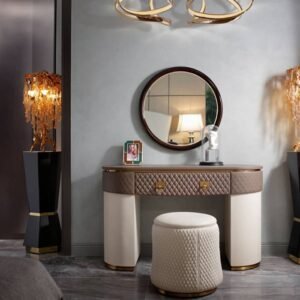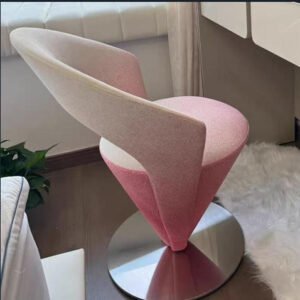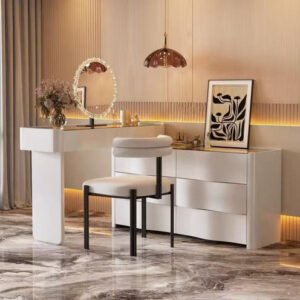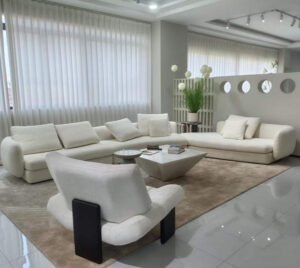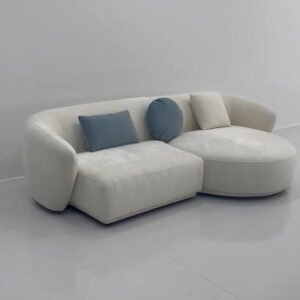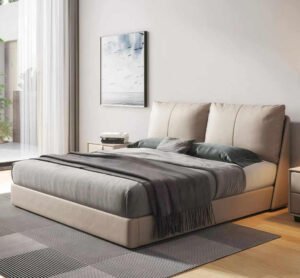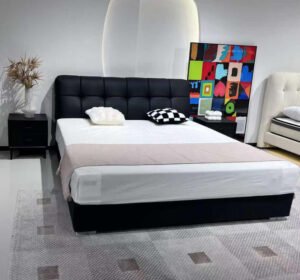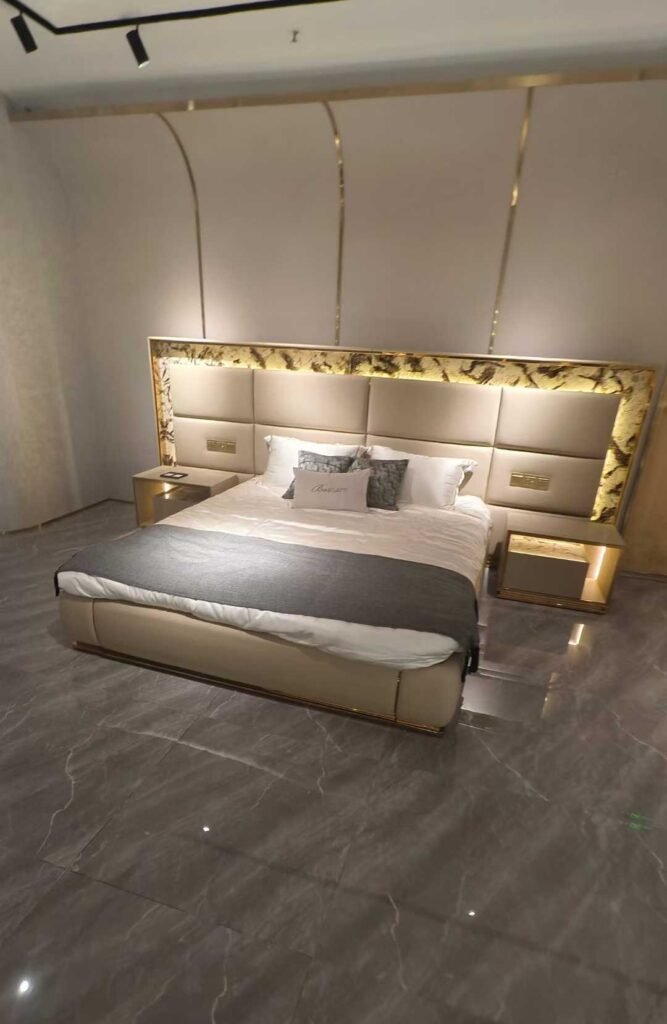
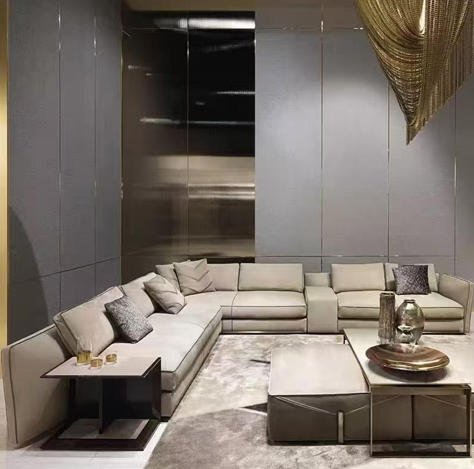
A hotel suite is installed. The design intent was contemporary Japanese minimalism — clean grain, muted stone, restrained brass. What arrived was close. The grain pattern on the walnut panels varied across the 40 rooms. The stone top had a different veining density than the approved sample. The brass was fractionally warmer than specified.
The client noticed on the first walkthrough.
That outcome is not a manufacturing failure in isolation. It is a selection failure — choosing a manufacturer whose capability did not match the precision the project required. The furniture was technically acceptable. It was stylistically wrong.
This guide gives you the framework to prevent that. Every section addresses a specific evaluation stage: how to define your own design language before engaging anyone, how to read a manufacturer’s portfolio for genuine style alignment, how to verify material and craftsmanship standards under real scrutiny, and how to structure a manufacturing partnership that protects your project and your professional reputation.
This is written for high-end furniture importers and distributors, interior designers, luxury villa owners, private label brands, FF&E and hotel buyers, architecture and engineering firms, and hotel developers and operators. Not for general audiences.

1. Aligning Luxury Manufacturing with Your Design Vision
The selection of a furniture manufacturer is a design decision. It shapes what the finished space actually looks like — not in theory, but in physical execution across 40 rooms, or 12 villas, or a branded showroom where your professional identity is on display.
Most buyers evaluate manufacturers on three criteria: price, lead time, and whether the catalogue contains something approximately right. This produces approximately right results — which in high-end design is indistinguishable from failure.
The correct evaluation criteria are different: Does this manufacturer have a demonstrated track record of producing furniture that reflects the same design sensibility my project requires? Can they execute at the material and craftsmanship standard this brief demands? Do their communication, collaboration, and quality processes protect my project timeline?
When those three questions are answered correctly, price becomes a negotiation, not a decision driver.
The pain points this guide directly addresses:
- Receiving furniture that matches the specification technically but not aesthetically
- Inconsistent quality across large batch orders where room-to-room variation is visible
- Manufacturers who promise customisation but deliver catalogue pieces with minor modifications
- Supply chain failures that cost project timelines when a manufacturer’s logistics and QC systems are not built for international delivery
Getting the manufacturer selection right is your most effective risk mitigation strategy for every project outcome that follows.
2. Define Your Design Aesthetic with Precision
Why Clarity About Your Own Style Comes First
You cannot evaluate a manufacturer’s style alignment until you have defined your own with enough precision that misalignment is recognisable. “Contemporary luxury” is not a brief. “Contemporary luxury with a warm material palette — fumed oak, aged brass, stone in neutral veining, upholstery in textured natural linen” is a brief that can be assessed against a manufacturer’s portfolio.
Before engaging any manufacturer, complete a style definition exercise that produces a document you can share, not a visual impression you hold internally.
Tools for Defining Your Design Language
Mood boards with material specifications: A mood board that includes not only imagery but annotated material references — veneer species, brass finish type (brushed, burnished, antiqued), stone category (travertine, marble, limestone), fabric composition — gives a manufacturer something to assess their capability against rather than something to interpret.
Style audit of completed projects: Review your last three to five completed projects and identify the consistent design elements that define your aesthetic signature. If your spaces consistently feature low-profile seating, natural material palettes, and restrained ornamentation, those are not coincidences — they are your design language, and your manufacturer must be capable of operating within it.
Reference library by design category: Organise your style references by furniture category — seating profiles, case piece proportions, bed frame construction, lighting integration. This becomes your briefing toolkit for new manufacturer engagements, replacing the vague reference image with a structured design specification.
Style Alignment for Different Project Types
Different project types require different manufacturing orientations, and this should shape which manufacturers you evaluate.
| Project Type | Design Priority | Manufacturing Requirement |
|---|---|---|
| Luxury villa (bespoke) | Originality; design-as-identity | Custom engineering, small batch precision, prototyping capability |
| Boutique hotel | Cohesive narrative across all spaces | Batch consistency, finish matching, full FF&E category coverage |
| Hotel chain rollout | Brand consistency across multiple properties | Scale without quality loss, replicable production, technical record retention |
| Private label brand | Unique product identity, exclusivity | IP protection, custom packaging, design that does not appear in public catalogues |
| High-end residential import | Aesthetic range, style flexibility | Broad product range, finish variety, responsiveness to specification |
The manufacturer who excels at a 300-room brand rollout may not be the right partner for a one-of-a-kind penthouse commission. Define which profile your project requires before building your shortlist.
3. Evaluate the Manufacturer’s Portfolio for Style Compatibility
What You Are Actually Looking For
A manufacturer’s portfolio is not evidence that they can produce what you need — it is evidence of what they have actually produced. The distinction matters.
When reviewing a portfolio for style alignment, you are assessing whether the furniture they have made for other clients demonstrates the same design sensibility, material precision, and aesthetic originality your project demands. You are not asking whether they are capable of producing something different.
Green flags — indicators of genuine high-end capability:
- Signature design elements that appear consistently across different projects: a distinctive approach to hardware, joinery detail, or proportion that reveals a manufacturing aesthetic rather than a generic catalogue
- Clean, precise photography of installed projects — not just product renders — showing furniture in real hotel rooms, villas, and residences
- Evidence of long-term client relationships: a manufacturer who has supplied multiple projects for the same designer or developer is one whose performance survives repeat evaluation
- Demonstrated range within a consistent quality standard — versatility across design styles executed at the same level of material and finish precision
Red flags — indicators that disqualify a manufacturer for luxury projects:
- Generic designs with no distinguishing detail — furniture that could have come from any of ten suppliers
- Lifestyle photography that does not correspond to verifiable completed projects
- Inconsistent finishes within the same portfolio piece: visible colour variation in multi-panel pieces, hardware misalignment, uneven surface texture
- No hospitality or luxury residential project references — only residential mid-market or commercial commodity interiors
How to Read a Portfolio Critically
Ask for completed project photographs with the hotel or client name confirmed. Then request the delivery date. If the project was installed two years ago, ask whether a site visit is possible — furniture installed in a high-traffic hotel environment for two years tells you more about durability and finish longevity than any specification sheet.
Ask for the back of pieces as well as the front. The back panel of a cabinet, the underside of a table, the interior of a drawer — these are where a manufacturer’s craftsmanship commitment is genuinely visible. Pieces that are impeccably finished on visible faces and rough on concealed surfaces reveal a production approach driven by appearance rather than construction integrity.

4. Scrutinize Material Sourcing and Craftsmanship Standards
The Material Standard That Separates Luxury from Appearance of Luxury
The difference between furniture that looks luxurious in a photograph and furniture that feels luxurious to a hotel guest who sits in it every day is almost entirely determined by materials and construction — not by styling.
Premium materials define the sensory experience of luxury: the weight of a solid walnut drawer closing, the cool density of a natural stone table surface, the consistent tension of a top-grain leather upholstered panel. These sensory qualities cannot be replicated by veneer over MDF (Medium-Density Fibreboard — a composite wood product made from wood fibres and resin, commonly used in budget furniture as a substitute for solid timber), by bonded leather, or by lacquer applied to softwood framing.
Material categories and what to verify for each:
| Material Category | Luxury Standard | What to Verify |
|---|---|---|
| Timber (case goods, frames) | Solid hardwood (walnut, oak, ash, teak) or premium veneer over solid hardwood substrate | Ask for species specification and substrate material — not just “solid wood” |
| Upholstery fabric | Top-grain leather; natural fibre fabrics (linen, wool, velvet); high-density foam (28–32 kg/m³+) | Request fabric composition by percentage, foam density specification in writing |
| Stone (table tops, inlays) | Natural marble, travertine, limestone, onyx — not cultured stone or quartz composite unless specified | Ask for country of quarry origin and slab number traceability |
| Metal hardware and frames | Solid brass (not brass-plated zinc), stainless steel, powder-coated steel to specified thickness | Request material data sheet — specified wall thickness for tubular steel, composition for cast hardware |
| Surface finish (lacquer, paint) | Catalytic lacquer, hand-rubbed oil and wax, UV-cured hardeners — multiple application stages | Ask for the number of lacquer coats applied and the drying/curing process between coats |
Craftsmanship: The Details That Define Longevity
Joinery techniques (the methods used to connect timber components — determining how much structural load a joint can bear and how long it will hold under repeated commercial use) are the most reliable indicator of furniture longevity in high-traffic hotel and villa environments.
Le Critelli Fine Furniture joinery reference identifies mortise-and-tenon, dovetail, and finger joints as the construction methods associated with heirloom-quality furniture — able to withstand decades of seasonal wood movement and daily use. Furniture assembled primarily with pocket screws, dowels, and adhesive is structurally adequate in residential settings but typically fails within three to five years in commercial hotel use where frames are subjected to constant load and movement.
Ask manufacturers directly: “What joinery technique is used at the seat rail connection on your upholstered chairs?” A manufacturer who can answer this specifically — mortise-and-tenon with corner block reinforcement, for example — has production engineering that is thought through. A manufacturer who cannot answer it is working from a design template, not a construction specification.
Finish application stages matter because each additional lacquer or oil coat adds depth, durability, and tactile quality. Budget furniture typically receives two coats. Luxury furniture receives four to six, with sanding between each stage. The difference is visible in how light moves across the surface and tactile in how resistant the finish is to the daily cleaning cycles that commercial hospitality environments require.
Questions Every Buyer Should Ask About Materials
- Where specifically are your timber, stone, and leather materials sourced? Can you provide the supplier names?
- Are your wood materials FSC-certified? Can I see the certificate?
- What is the foam density specification used in your contract-grade upholstered seating?
- How many lacquer coats does your standard luxury finish involve, and what is the curing process between stages?
- Do you maintain material traceability records so replacement pieces can be matched precisely 3–5 years after original production?
If a manufacturer hesitates at any of these questions, the hesitation is your answer.
5. Assess Customization and Flexibility Capabilities
Why Off-the-Rack Does Not Work in High-End Design
An interior designer specifying furniture for a penthouse suite knows that the ceiling height is 3.4 metres, which means the headboard proportion needs to be custom. The client has selected a specific fabric — a Japanese woven textile with a tight geometric pattern — that the manufacturer does not carry. The bed base needs a concealed storage mechanism that requires engineering adaptation of the standard frame.
This is not an exceptional brief. This is the normal reality of high-end bespoke design. A manufacturer who cannot accommodate it is not a luxury manufacturer — they are a mid-market manufacturer with a luxury price.
The customisation capabilities that separate genuine luxury manufacturers from catalogue suppliers:
- Dimension adaptation: ability to adjust length, width, height, and proportion from standard specifications without re-engineering the structural basis
- Material substitution: ability to work with COM (Customer’s Own Material — fabric, leather, or surface material supplied by the buyer rather than from the manufacturer’s standard range) across all upholstered categories
- Finish matching: ability to match a specified colour precisely — including to a paint chip, a fabric reference, or an existing installed piece — rather than offering a fixed palette
- Design engineering: ability to take a concept drawing and develop it into a manufacturable shop drawing, including resolution of structural and production challenges
- Private label production: ability to produce furniture under your brand identity — custom packaging, custom labeling, custom documentation — without your designs appearing in the manufacturer’s public catalogue
Case Example: Customising for a Penthouse Suite
A developer commissioning furniture for a branded penthouse suite required a custom king bed with an upholstered curved headboard at 220cm height, integrated ambient LED lighting within the headboard frame, a specific performance velvet in a bespoke colourway, and concealed under-bed storage with a hydraulic mechanism. The nightstands required a custom dimension — 65cm wide to align with the architectural pilasters flanking the bed wall.
None of these specifications existed in any manufacturer’s standard catalogue. The difference between a manufacturer who delivered this project successfully and one who would have failed it was not the quality of their standard products — it was the depth of their engineering team, the flexibility of their production process, and the quality of their design collaboration protocol.
For private label brands and hotel chains, customisation extends beyond the piece itself. Packaging — custom branded boxes, individual tissue wrapping, branded documentation — becomes part of the product when the furniture carries your name to a client. Verify that the manufacturer can execute branded packaging at the quality level your brand requires.
Meuble Fourmi de Jade operates this type of production model — custom orders including material adjustments, colour matching, and dimension adaptation, with low MOQ flexibility that supports single-piece production per furniture type for sampling and prototype approval phases. For hotel and villa clients, this means design intent can be tested in a physical prototype before full production commitment, reducing the risk of costly revisions after a full run is manufactured.
6. Review Production Capacity and Lead Time Reliability
The Lead Time Reality That Most Buyers Discover Too Late
Custom upholstered furniture from a China-based manufacturer takes 12–20 weeks to reach a European or North American site — including production, ocean freight, customs clearance, and last-mile delivery. European artisan manufacturers add a production queue to that timeline: Italian manufacturers are currently running 8–16 weeks production plus 4–8 weeks freight. Hand-knotted rugs or bespoke millwork can extend to 20–28 weeks.
According to Procurist’s 2025–2026 furniture lead time analysis, these lead times have not returned to pre-2020 levels. The current ranges represent a new baseline, not a temporary disruption. Hospitality projects need procurement to begin 12–18 months before the opening date.
Most buyers begin 6 months too late and then spend the remaining project time managing the consequences.
Lead time benchmarks for planning purposes (2025–2026 market conditions):
| Product Category | Production Lead Time | Shipping to Europe/North America | Total Site-to-Site |
|---|---|---|---|
| Custom upholstered seating (COM fabric) | 10–14 weeks | 4–6 weeks sea freight | 14–20 weeks |
| Custom case goods (walnut, oak) | 10–16 weeks | 4–6 weeks | 14–22 weeks |
| Bespoke beds and headboards | 10–14 weeks | 4–6 weeks | 14–20 weeks |
| Complex millwork / bespoke pieces | 14–20 weeks | 4–6 weeks | 18–26 weeks |
| Hotel FF&E full package (50+ rooms) | 16–22 weeks | 4–6 weeks | 20–28 weeks |
The critical path of any project is defined by the longest-lead item. Identify it at the design development stage. Order it first. Build 4–6 weeks of buffer into every timeline because quoted lead times are optimistic and approval processes always take longer than planned.
Balancing Exclusivity with Scalability
The manufacturer who produces 10 exceptional bespoke pieces is not automatically capable of producing 300 pieces at the same standard for a hotel rollout. Production scale requires a different infrastructure: dedicated production lines for large batch runs, documented quality control at each production stage rather than final inspection only, experienced workforce in sufficient numbers, and raw material supply chains that can accommodate large simultaneous orders without substitution.
Before committing a manufacturer to a large project, ask for references from a project of comparable room count. Then ask the reference contact specifically about quality consistency across the full batch — not just on the pieces they reviewed at sample approval.
How to Protect Your Timeline
- Place purchase orders against approved shop drawings and confirmed samples — not against design development drawings that may still change
- Build contingency orders for your highest-risk items (longest lead time, most complex specification, or sourced from a new supplier)
- Require weekly production progress updates — not periodic updates “when there’s something to report”
- Confirm logistics arrangements before production completes — freight forwarding, customs brokerage, and inland delivery should be confirmed in writing before goods leave the factory

7. Verify Certifications, Compliance, and Sustainability Practices
Why Certifications Are a Procurement Requirement, Not a Marketing Feature
For international importers, luxury developers, and FF&E buyers, certifications are not optional credentials that improve a manufacturer’s marketing position. They are procurement requirements that determine whether your goods can legally enter your destination market, whether your project qualifies for its targeted green building rating, and whether your client’s legal compliance obligations are met.
The certifications that matter for high-end furniture procurement:
| Certification | Ce que cela vérifie | Why It Matters to Your Project |
|---|---|---|
| FSC (Forest Stewardship Council) | Timber from responsibly managed forests | Required for LEED, BREEAM, and WELL credits; increasingly mandatory in hotel chain and corporate procurement policies |
| ISO 9001 | Quality management system — documented processes, corrective action, consistent production | Required by many hotel brand standards; signals a manufacturer whose quality outcomes are systematic, not incidental |
| GREENGUARD Gold | Low VOC emissions from furniture materials and finishes | Required for WELL certification; applicable to healthcare, education, and premium hospitality specifications |
| REACH | Chemical safety compliance for European Union import | Mandatory for EU imports — non-compliant furniture can be seized at EU customs; chemical substances in furniture must be registered if above threshold quantities |
| CE Marking | Conformity with European safety, health, and environmental protection standards | Required for certain furniture categories in EU markets; signals compliance with applicable EU directives |
REACH (Registration, Evaluation, Authorisation, and Restriction of Chemicals — the EU regulatory framework governing chemical substances in products imported or manufactured within the European Economic Area) is the certification most frequently overlooked by non-EU buyers sourcing internationally. According to QIMA’s REACH compliance guide, EU customs authorities actively inspect imports for REACH compliance. Non-compliant goods — furniture containing restricted substances above permitted concentrations in lacquers, adhesives, leather treatments, or foam — can be detained, rejected, or subject to mandatory recall. Verify REACH compliance documentation for every EU-destined shipment.
Sustainability as a Brand Differentiator in High-End Design
The eco-friendly furniture market reached $55.1 billion globally in 2025 (Dataintelo). Within hospitality, sustainable procurement is transitioning from a preference to a specification requirement: LEED-certified hotel developments, WELL-compliant workplaces, and BREEAM-rated commercial projects all require verified sustainable material sourcing from their FF&E supply chain.
For luxury brands and villa developers, sustainability credentials serve a second function: they support the narrative of conscious luxury — design choices that reflect quality without environmental cost. This positioning commands a premium with clients who are increasingly sophisticated about where their furniture comes from and how it was made.
Ask any shortlisted manufacturer for their FSC certificate directly — not a reference to it. The certificate number should be verifiable through the FSC public database. Any manufacturer who cannot provide this in 24 hours of a request does not hold the certification they claim.
8. Examine Collaboration and Communication Protocols
Why Communication Quality Determines Project Outcome
In high-end furniture procurement, misunderstandings are expensive. A finish that is approved verbally but not specified in writing becomes a dispute at delivery. A dimension confirmed in a meeting but not reflected in the shop drawing becomes a piece that does not fit the architectural space. A fabric substitution made during production without buyer notification becomes a client conversation that nobody wants.
The manufacturer’s communication protocol — how they document, confirm, escalate, and update — is directly predictive of whether your project will be delivered as designed.
What a professional collaboration protocol looks like:
Stage 1 — Design development: Manufacturer produces concept drawings and material recommendations from your brief. You review and annotate. They revise. All changes are tracked in writing.
Stage 2 — Shop drawing approval: Dimensioned technical drawings are submitted for your formal sign-off. These drawings become the production specification — any deviation is a quality failure, not a design interpretation. No production begins without a signed copy.
Stage 3 — Sample and material approval: Physical material samples (veneer, fabric, metal finish, stone) are submitted for sign-off against your specification. Colour matching is documented against a reference standard (RAL, Pantone, NCS, or physical reference sample).
Stage 4 — Production milestone updates: Weekly updates showing production stage, percentage complete, photographs of items in progress, and any deviation from the agreed specification flagged immediately.
Stage 5 — Pre-shipment inspection: QC documentation and photographic evidence of completed pieces submitted for review before goods are packed. Issues identified here are corrected before shipment — not after arrival.
Digital Integration for Architects and FF&E Teams
Architectural and engineering firms managing complex projects within BIM (Building Information Modelling — a digital process for creating and managing information about a built asset, where all project data exists within a shared 3D model environment) platforms require manufacturers who can supply furniture information in formats compatible with their workflow.
Le SpecSources BIM integration guide notes that when FF&E specifications are integrated directly into BIM models, project teams gain real-time control over finishes, dimensions, and spatial relationships — eliminating the coordination errors that occur when furniture data exists in a separate spreadsheet from the architectural model.
Ask your shortlisted manufacturer: Can you supply furniture models in Revit or AutoCAD format? Can you provide technical drawings to BIM-compatible specification standards? Manufacturers who cannot support this integration require additional manual data entry on your side, which is both time-inefficient and a source of specification error.
🎬 Watch: How High-End Custom Furniture Manufacturing Works

A detailed look inside a high-end furniture manufacturing facility — production process, material standards, finishing techniques, and quality control — directly relevant to how you evaluate a manufacturer’s capability against your brief.
9. Analyze After-Sales Support and Warranty Policies
Why After-Sales Is a Procurement Decision, Not a Post-Delivery Consideration
A boutique hotel opens with 60 custom rooms. Eighteen months later, four chair frames have developed a hairline crack at the seat rail connection — a structural failure that is a joinery issue, not an upholstery one. The owner contacts the manufacturer. What happens next reveals everything about whether this is a genuine long-term partnership or a completed transaction.
A professional manufacturer’s after-sales response to this scenario: acknowledgement within 48 hours, assessment of whether the failure is within the warranty scope, replacement pieces dispatched from confirmed in-production stock within the agreed replacement timeline, and a written root-cause investigation that confirms whether the same issue is latent in the remaining 56 chairs.
A non-professional manufacturer’s response: extended communication delays, questions about whether the failure is due to use rather than manufacture, a quote for replacement pieces rather than a warranty replacement, and no visibility into whether the remaining chairs carry the same risk.
Warranty benchmarks for high-end furniture:
| Component | Warranty Standard | What to Verify |
|---|---|---|
| Frame structure (timber) | 5–10 years against manufacturing defects | Confirm coverage extends to joinery failure, not just material splitting |
| Upholstery fabric | 1–3 years against seam failure and pilling | Confirm whether COM fabric is covered by manufacturer warranty or only their specified fabrics |
| Mechanisms (drawers, hinges, soft-close) | 2–5 years against mechanical failure | Confirm spare parts availability throughout warranty period |
| Surface finish (lacquer, oil, paint) | 1–2 years against manufacturing defects | Confirm coverage excludes wear but includes adhesion failure and finish peeling |
According to Artone’s hotel furniture warranty guide, a professional hotel furniture warranty should explicitly cover defects, damaged parts, repair, replacement, and on-site or factory service — with a defined timeline for each category.
The Most Valuable After-Sales Commitment: Technical Record Retention
The most commercially important after-sales capability for hotel operators and villa owners managing long-term properties is the manufacturer’s ability to reproduce an exact match for replacement pieces 3–5 years after original installation.
This requires the manufacturer to retain: your approved shop drawings, your approved material samples and finish references, your approved hardware specifications, and the production batch records for your original order.
Without these records, a replacement piece from the same manufacturer may not match the installed furniture — finish drift, material sourcing changes, or hardware specification changes over time mean that a “same specification” replacement may be visibly different from the surrounding pieces.
Confirm in writing that your project’s technical records will be retained and that replacement production can be initiated from those records for a minimum of five years post-delivery. This commitment separates a genuine long-term partner from a transactional supplier.

10. Final Decision Framework: Matching Manufacturer to Client Goals
The Decision Matrix: Score Before You Choose
Use this scorecard to evaluate each shortlisted manufacturer systematically. Score every criterion 1–5 (1 = does not meet standard; 3 = meets minimum standard; 5 = exceeds expectations). Multiply by the weight to produce a weighted score. Total score out of 100.
| Evaluation Criterion | Weight | Score (1–5) | Weighted Score |
|---|---|---|---|
| Style and portfolio alignment — verified, installed examples matching your design aesthetic | 20% | — | — |
| Material standard — documented use of premium materials with sourcing transparency | 15% | — | — |
| Craftsmanship quality — joinery techniques, finish application stages, structural integrity | 15% | — | — |
| Customisation depth — dimension adaptation, COM capability, design engineering, private label | 12% | — | — |
| Lead time reliability — track record confirmed by reference contacts, not self-reported | 10% | — | — |
| Certifications — FSC, ISO 9001, GREENGUARD, REACH, CE as applicable to your destination | 10% | — | — |
| Communication and collaboration — documented process, shop drawing approval, milestone updates | 8% | — | — |
| After-sales and warranty — warranty scope, replacement timeline, technical record retention | 7% | — | — |
| Scalability — confirmed ability to maintain quality at the volume your project requires | 3% | — | — |
| Total | 100% |
Score interpretation:
- 85–100: Proceed to contract negotiation
- 70–84: Conditional — resolve specific gaps before committing
- 55–69: Significant risk — do not proceed without substantial additional verification
- Below 55: Disqualify from shortlist
The Actionable Checklist for Importers, Designers, and Developers
Before signing any manufacturing agreement, confirm the following are in place:
- Signed NDA before design files are shared
- Shop drawings reviewed and signed off before production release
- Material and finish samples physically approved and retained on file
- Written confirmation of lead time from approved drawings to port of origin
- Logistics coordination confirmed — freight forwarder named, Incoterms specified
- Warranty terms in writing — scope, duration, replacement timeline
- Technical record retention commitment confirmed in writing
- QC protocol confirmed — inspection stages during production, not only at shipping
The Final Recommendation: Partnership Over Transaction
A manufacturer who has supplied two or three of your projects understands your specification standards without re-briefing. They know your tolerance for colour variance. They know which quality issues require immediate escalation. They have your approved finish references on file and can reproduce them precisely.
That operational knowledge compounds in value over every subsequent project. A new manufacturer, regardless of their individual capability, starts every engagement from zero — and the learning curve is paid for by your project.
Meuble Fourmi de Jade was founded by a team with over a decade of architecture and interior design experience — a background that means design intent is understood at the brief stage, not interpreted during production. With 15+ years of furniture manufacturing experience, customisation capability across all residential and hospitality categories, and a process built around predictable quality and delivery, the team operates as a production partner for importers, designers, and hotel developers who need more than a catalogue.
Explore the complete luxury furniture product range — bedroom, living room, dining, and hotel categories available with full custom specification support.
Ready to Find the Right Manufacturing Partner for Your Project?
Contact the Jade Ant team with your project brief — style references, room types, quantities, target delivery date, and destination. Receive a structured response that addresses your specification requirements directly, not a generic catalogue quote.
Read more industry procurement insights on the Jade Ant blog — guides on sourcing, customisation, logistics, and B2B furniture strategy published for design and procurement professionals.
Frequently Asked Questions
1. How do I verify if a high-end furniture manufacturer truly aligns with my design style?
Request their portfolio of completed and installed projects — not renders, not showroom photographs — with verifiable client names and project dates. Then contact those clients directly and ask whether the delivered furniture matched the approved samples and design intent. Request photographs of the back panels and interior drawers of pieces in their portfolio. Construction quality in concealed areas reveals the manufacturer’s actual craftsmanship standard more reliably than any visible surface. If they offer a factory visit or a virtual walk-through of an installed project, accept it — a manufacturer confident in their long-term quality will always support this request.
2. What materials should I expect from a premium furniture manufacturer?
For case goods (wardrobes, dressers, nightstands): solid hardwood — walnut, oak, ash, or teak — or premium veneer applied to a solid hardwood substrate, not MDF. For upholstered pieces: top-grain leather (not bonded or split leather), natural fibre fabrics (linen, wool, velvet), and high-density foam at 28–32 kg/m³ minimum for contract-grade seating. For table surfaces: natural stone (marble, travertine, limestone, onyx), not cultured stone composites unless explicitly specified. For hardware: solid brass, not brass-plated zinc. For finishes: catalytic lacquer applied in a minimum of four coats with sanding between stages. Request every material specification in writing, with the supplier name for each material category.
3. Can I customise dimensions, finishes, and fabrics with most luxury manufacturers?
Genuine luxury manufacturers offer full customisation across dimensions, finishes, fabrics, and construction details. The critical question is not whether they offer customisation but how they manage it: Do they produce a shop drawing for your approval before production? Do they accept COM materials? Can they match a specific colour reference (RAL, Pantone, NCS) rather than offering a fixed palette? Do they charge for dimension adaptation separately, or is it included in the bespoke pricing? Confirm their MOQ for customised orders — some manufacturers require minimum batch sizes for non-standard specifications. Meuble Fourmi de Jade supports single-piece production per furniture type for sampling and mock-up phases, which is a significant advantage for project-based buyers testing custom specifications before full production commitment.
4. How long should I expect lead times to be for high-end custom furniture?
For China-based manufacturers, custom furniture typically requires 10–16 weeks production plus 4–6 weeks ocean freight, totalling 14–22 weeks to a European or North American site. For complex pieces or large hotel FF&E packages, extend the production estimate by 4–6 weeks. For European artisan manufacturers, add the production timeline to 4–8 weeks road or sea freight — Italian manufacturers are currently running 8–16 weeks production plus freight, totalling 12–24 weeks. According to Procurist’s 2025–2026 lead time analysis, these timelines represent a stable new baseline. Plan your procurement calendar backwards from your required on-site date, and build 4–6 weeks buffer into every estimate — manufacturers quote optimistically, and approval processes always take longer than planned.
5. Are sustainable practices common among luxury furniture manufacturers?
Leading luxury manufacturers now integrate sustainability as a production standard rather than a marketing claim. FSC certification for timber sourcing, low-VOC lacquers and adhesives, elimination of REACH-restricted chemicals, and documented environmental management systems (ISO 14001) are all available among reputable manufacturers. The practical question is verification: request the FSC certificate number and confirm it against the FSC public database. Request GREENGUARD Gold certification if your project targets WELL compliance. Request the REACH compliance declaration for all EU-destined orders. A manufacturer who can provide these documents within 24–48 hours of request has live certifications. One who cannot should be treated as uncertified until proven otherwise.
6. What certifications should a high-end furniture manufacturer have?
The essential certification set depends on your destination market and project type. For all markets: ISO 9001 (quality management system). For EU-destined goods: REACH compliance documentation is mandatory, CE marking for applicable categories. For sustainability-committed projects: FSC for timber, GREENGUARD Gold for low VOC emissions. For US contract environments: CAL TB 117-2013 for upholstered seating in most states, CAL TB 133 for public occupancy. For UK contract environments: BS 5852 for upholstered furniture. For green building certification projects: FSC and GREENGUARD Gold contribute to LEED, WELL, and BREEAM credits. Request each certificate with its certification number, certifying body, scope, and expiry date. Verify currency independently — certifications lapse and are not always renewed.
7. How do I ensure design consistency across multiple properties or rooms?
Design consistency at scale requires three structural commitments from your manufacturer: first, retained technical records — every approved shop drawing, material sample, and finish reference stored and accessible for the full project lifecycle; second, batch-matching protocols for upholstery and wood finish — production sequences that ensure colour, texture, and grain character remain within a defined tolerance range across all units in a large order; third, a dedicated project manager who maintains specification continuity across multiple production phases and can coordinate phased deliveries to multiple sites using the same production documentation. Ask specifically whether your project records will be retained for future replacement supply — five years minimum is the standard for professional hotel and villa manufacturers.
8. Can I private label furniture from a high-end manufacturer?
Yes, and many luxury manufacturers support private label production as a standard service — particularly for hotel brands, distributors building their own product identity, and developers creating a signature FF&E specification. The process covers custom packaging (branded boxes, tissue, documentation), production without your designs appearing in the manufacturer’s public catalogue or being offered to competing buyers, and branding applied to pieces themselves where appropriate. Before sharing any design files, execute a signed NDA. Register your designs in the country of manufacture before production begins — in China, industrial design registration with CNIPA protects your designs under Chinese IP law and is available at relatively low cost and moderate timeline. Confirm in writing that the manufacturer’s engineering team’s contributions to your designs remain your intellectual property.
9. What should I do if a furniture piece arrives damaged or doesn’t match the sample?
The most effective protection against this scenario is a pre-shipment inspection by a qualified third-party agency — SGS ou Intertek — conducted before goods are packed, while the manufacturer can still remediate issues without the cost of an international return shipment. If a piece arrives with damage or specification discrepancy despite inspection, contact the manufacturer immediately with photographic documentation showing the specific non-conformity against the approved sample reference. A professional manufacturer’s warranty process requires acknowledgement within 48 hours, a clear determination of whether the failure is a manufacturing defect or transit damage, and either repair, replacement, or agreed compensation within a defined timeline. Ensure your shipping insurance covers the full replacement value of custom pieces — transit damage claims need documented replacement costs to be settled correctly.
10. How do luxury manufacturers handle large-scale projects like hotels or villas?
Projects at hotel scale — 50 rooms or above — require production infrastructure that not all luxury manufacturers possess: sufficient factory floor capacity to run large batch production without compromising quality consistency, raw material supply chains that can accommodate large simultaneous orders, documented QC protocols at multiple production stages (not only final inspection), and logistics experience with large container shipments including phased deliveries to match construction sequencing. Before committing a manufacturer to a large project, request references from at least one completed project of comparable room count, and ask those references specifically about quality consistency across the full batch at installation. Project management support — a dedicated account manager coordinating production scheduling, QC reporting, and logistics against your construction timeline — is a standard expectation from professional hotel furniture manufacturers.
11. Is it possible to visit the manufacturer’s production facility?
Yes, and any reputable manufacturer will welcome a site visit — it is among the most effective due diligence actions available to a buyer before a significant project commitment. During a factory visit, assess the production floor organisation, the quality and maintenance condition of equipment, the skill level visible in the workforce at their stations, the cleanliness and organisation of finishing and spray facilities, and the quality of pieces currently in production. Ask to see pieces at the back-of-house stage — interior drawer construction, hidden frame joints, underside of table tops — where production quality is most honestly visible. If travel is not possible, engage a third-party inspection firm to conduct a formal factory audit on your behalf. Budget approximately $300–$600 for an independent audit conducted by SGS or Intertek.
12. What sets a true luxury manufacturer apart from a mid-range one?
The distinction is visible in five areas. First, material integrity — genuine luxury specification uses solid hardwood, top-grain leather, and natural stone where the design calls for them, not premium-appearance substitutes. Second, construction method — mortise-and-tenon joinery, corner block reinforcement, multi-stage lacquer application, and hand-finished surfaces that reveal craft rather than process efficiency. Third, design originality — a portfolio with a recognisable design sensibility and genuine bespoke solutions, not a catalogue with minor variations. Fourth, production documentation — shop drawings, sample approval protocols, and QC inspection at each production stage that create an accountability trail from brief to delivery. Fifth, long-term durability — furniture installed in a 5-star hotel two years ago that still performs as it did on installation day is the most reliable quality evidence available.
13. How can I integrate the manufacturer into my FF&E procurement process?
Engage the manufacturer during design development — not after all specifications are finalised. A manufacturer who participates in the design development phase can advise on material feasibility, construction practicality, and lead-time implications of specific specifications before they are locked into the FF&E schedule. Include them in budgeting conversations with accurate cost modelling for custom specifications. Provide them with your FF&E schedule timeline — not just the production window but the full project calendar including installation, owner review, and opening dates — so they understand what your timeline constraint means at every stage. Establish a regular communication cadence (weekly or bi-weekly production updates) from order placement through delivery so issues surface early when they are still manageable.
14. Do high-end manufacturers offer 3D renderings or prototypes before production?
Yes — the standard pre-production process for luxury and hospitality furniture includes digital visualisation and physical prototyping. 3D photorealistic renders allow you to evaluate proportions, material combinations, and spatial relationships in a simulated room environment before any physical production begins. Physical sample approval — actual material swatches, veneer samples, lacquer chips, leather cuts — confirms colour accuracy, texture, and material grade against the specification. For hotel projects, a full mock-up room — one complete guest room furnished and finished for client and brand approval — is standard practice before the production order is released for the full batch. Confirm that each of these stages is included in the manufacturer’s standard process and that approval at each stage is formally documented before the next stage begins.
15. What kind of warranty should I expect on luxury furniture?
For structural elements — timber frames, cabinet carcasses, table bases — expect 5–10 years against manufacturing defects including joinery failure. For upholstery fabric and filling — 1–3 years against seam failure, delamination, and abnormal pilling under commercial use conditions. For mechanisms — drawer slides, hinges, soft-close systems, and hydraulic storage mechanisms — 2–5 years against mechanical failure. Surface finishes — lacquer, paint, and oil — typically carry 1–2 years against adhesion failure, peeling, and manufacturing defects, excluding normal wear from use and cleaning. Confirm that the warranty covers replacement rather than repair-only, that replacement pieces will match the original specification, and that the claims process has a defined response timeline. A manufacturer who cannot commit to these terms in writing is not offering a professional warranty — they are offering a goodwill gesture, which is a materially different proposition.
Glossary of Key Terms
FF&E (Furniture, Fixtures & Equipment) — The procurement category covering all moveable furnishings, light fittings, and equipment in a hospitality or commercial project. Not structurally attached to the building; one of the largest investment categories in any hotel development.
COM (Customer’s Own Material) — Fabric, leather, or surface material supplied by the buyer rather than from the manufacturer’s standard range. Allows buyers to specify materials that are not in the manufacturer’s catalogue, including exclusive textiles sourced directly from weavers or leather suppliers.
MDF (Medium-Density Fibreboard) — A composite wood product made from wood fibres and synthetic resin. Cost-efficient but structurally weaker than solid timber and not appropriate as a primary structural substrate in luxury furniture.
BIM (Building Information Modelling) — A digital process for creating and managing information about a built asset, where all project data exists within a shared 3D model environment. Used by architects, engineers, and FF&E procurement teams to coordinate complex projects.
Mortise-and-Tenon Joinery — A timber joining technique where a projecting element (tenon) from one piece fits precisely into a cavity (mortise) in another. One of the oldest and strongest wood joinery methods; standard in high-quality furniture construction.
REACH — Registration, Evaluation, Authorisation, and Restriction of Chemicals. The EU regulatory framework governing chemical substances in products imported or manufactured within the European Economic Area. Non-compliant furniture can be blocked at EU customs.
FSC (Forest Stewardship Council) — International certification verifying that timber products are sourced from responsibly managed forests. Contributes to LEED, WELL, and BREEAM green building credits; increasingly required by hotel brands and corporate developers.
GREENGUARD Gold — Certification verifying that furniture meets strict low-VOC emission standards, protecting indoor air quality. Required for WELL certification and applicable to healthcare, education, and premium hospitality projects.
ISO 9001 — International standard for quality management systems — documented processes, consistent production methods, and corrective action protocols. Signals a manufacturer whose quality outcomes are systematic rather than dependent on individual skill.
Shop Drawing — A dimensioned technical drawing produced by the manufacturer from your design concept, showing construction method, joinery details, material grades, hardware placement, and dimensions. The shop drawing is the production specification — signed approval of the shop drawing is the contractual basis for quality control.
VOC (Volatile Organic Compound) — Chemical emissions from furniture materials including lacquers, adhesives, and foam. Elevated VOC levels affect indoor air quality; GREENGUARD Gold certification verifies compliance with strict VOC limits.