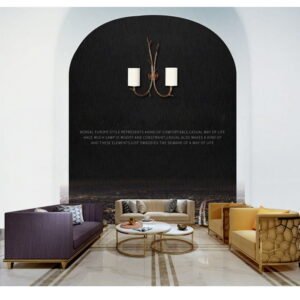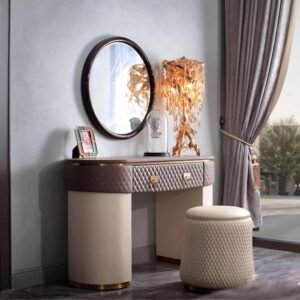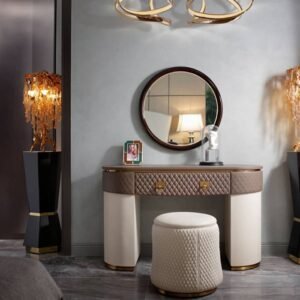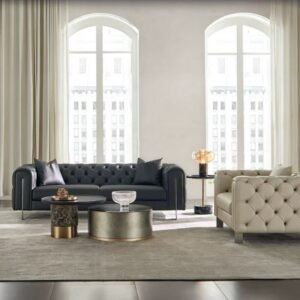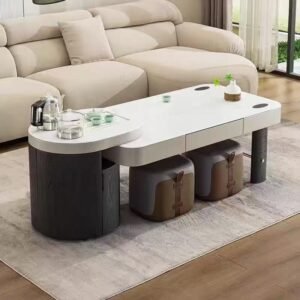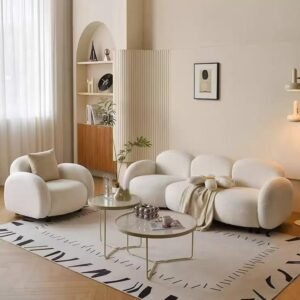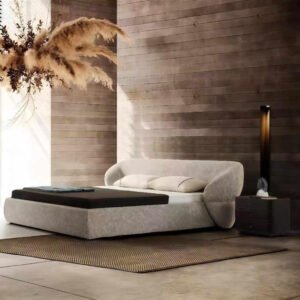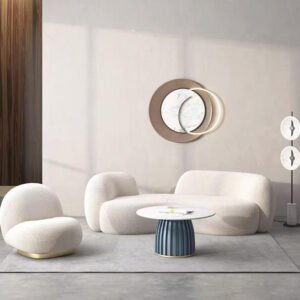
Transform Your Villa with the Latest Trends in Modern Luxury Furniture: Inspiration for Stylish Interiors
A private villa in Bali was recently listed for sale at USD 4.2 million. Within 11 days it had three competing offers. The developer attributed the speed and premium to one decision made 18 months earlier: commissioning a cohesive luxury furniture program instead of sourcing from a catalogue.
That outcome is not luck. It is the result of treating furniture as a strategic design and investment tool — not a purchasing line item.
Luxury villa design is evolving faster than at any point in the past decade. The clients who commission these properties — high-net-worth individuals, boutique hotel developers, ultra-luxury resort operators, and design-led developers — are no longer satisfied with “quality furniture.” They want design intelligence, material provenance, smart integration, and furniture that tells a story the property can own permanently.
This guide covers the 10 most important furniture trends reshaping modern villa interiors right now — with the detail, context, and strategic framing that serious professionals need to act on them.
Who This Guide Is Written For
This is written for the professionals who make the decisions that define whether a luxury villa reaches its potential:
- Villa owners specifying a primary or secondary residence for long-term ownership
- Interior designers managing high-net-worth client briefs at the villa and boutique hotel scale
- FF&E buyers and hotel developers specifying across multiple luxury residential units
- Private label furniture brand owners seeking design intelligence to inform collection direction
- Importers and distributors curating collections for the luxury residential market
- Architecture and engineering firms collaborating with design teams on full-scope villa projects
Every section addresses a real decision. Every data point is sourced. Nothing here is decorating advice — this is strategic intelligence for professionals working at the highest level of the market.
The Market Context — Why Villa Furniture Investment Is Accelerating
| Market Metric | Data Point | Source |
|---|---|---|
| Global Luxury Furniture Market (2025) | USD 25.28 billion | Fortune Business Insights |
| Projected Market Size (2034) | USD 42.02 billion | Fortune Business Insights |
| Market CAGR (2026–2034) | 5.85% | Fortune Business Insights |
| Europe’s Market Share (2025) | 37.31% | Fortune Business Insights |
| Smart Furniture Market (2026) | USD 0.37 billion | Business Research Insights |
| Smart Furniture Market (2035) | USD 1.51 billion | Business Research Insights |
| Smart Furniture CAGR | 17.4% | Business Research Insights |
| Luxury staged homes: price uplift vs. unstaged | Up to 10% higher sale price | National Association of Realtors |
| Time-on-market: staged luxury vs. unstaged | Up to 88% faster | Linden Creek Research |
The global luxury furniture market is projected to grow by over USD 16 billion between 2025 and 2034. The categories growing fastest are residential luxury, boutique hospitality, and the emerging smart furniture segment. For villa developers and private owners, the practical implication is straightforward: the clients buying and renting luxury residential properties are spending more time in them, demanding more from them, and evaluating them against a higher benchmark than ever before. Furniture is where those expectations are felt most directly.
1. The Rise of Bespoke Statement Furniture

The most consistently visible marker of a top-tier villa interior is the presence of at least one piece that could not exist anywhere else. Not the most expensive piece — the most intentional one. A dining table carved from a single slab of bookmatched Calacatta marble. A console fabricated in hand-shaped bronze with irregular surface texture. A reading chair in a fabric woven specifically for this project, in a colourway that will never appear in another manufacturer’s catalogue.
This is bespoke furniture in its proper sense — not “custom dimensions” or “your choice of three fabric options,” but a piece designed and made for a specific space and a specific client, from materials and by craftspeople chosen with the same precision as the architecture itself.
The demand for true bespoke is growing precisely because the alternative has become too visible. Catalogue furniture — even from premium brands — is now identifiable to any design-literate client from across a room. When a villa in Dubai and a penthouse in Singapore and a boutique hotel in London all contain the same iconic sofa from the same Italian brand, the individuality that luxury demands has been compromised. Bespoke is the structural solution.
What Bespoke Actually Requires from a Manufacturer
For a piece to be genuinely bespoke rather than a slightly modified catalogue item, the manufacturer must be capable of working from a design brief — not a product code. This means:
- Accepting AutoCAD or hand-drawn design sketches and converting them to workshop-ready technical drawings
- Sourcing materials outside their standard portfolio — a specific marble slab, a particular tannery’s leather, a fabric from a trade-only supplier not in their usual supply chain
- Producing single units or very small runs economically — a true bespoke capability does not require MOQ of 10 or 20 pieces per design
- Managing a structured sample approval process — producing a prototype before full commitment, with documented sign-off at each stage
The materials that define current bespoke statement furniture include: rare marbles (Calacatta Viola, Paonazzo, and Verde Alpi are the current specification preferences among luxury designers), hand-carved hardwoods with visible tool marks that declare artisan involvement rather than machine production, lost-wax bronze castings for hardware and structural details, and hand-applied Venetian plaster or gesso finishes on case goods that create a surface impossible to replicate mechanically.
Collaborating with a manufacturing partner like Meuble Fourmi de Jade — which manages the full co-development workflow from design brief to production approval — gives villa owners and designers access to true bespoke execution without the project management complexity of coordinating multiple specialist ateliers.
2. Seamless Indoor-Outdoor Integration Through Furniture Design
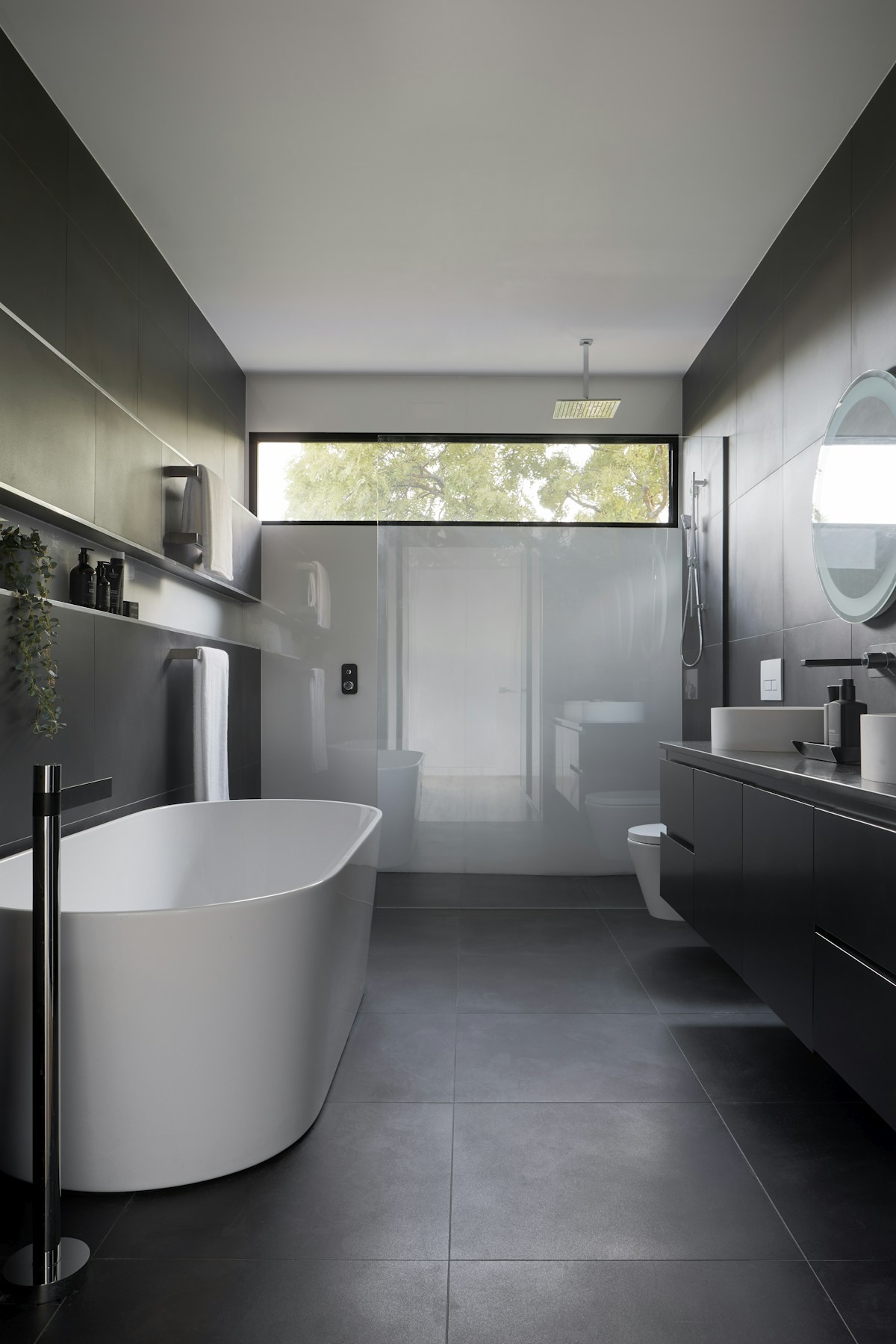
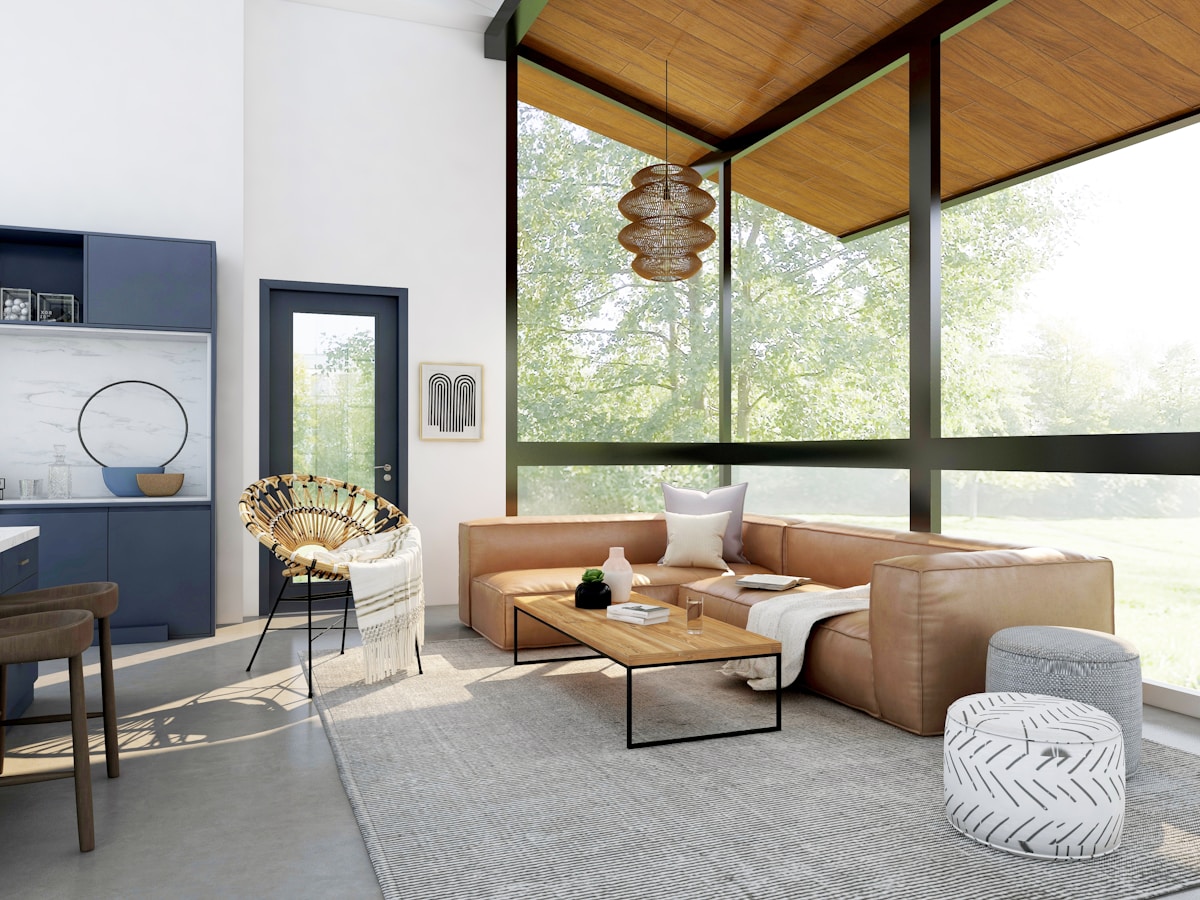
In the highest tier of villa design, the distinction between “indoor furniture” and “outdoor furniture” is a specification category, not a design category. A guest walking from a villa’s great room onto its terrace should feel they have moved through a single, continuous interior — not crossed into a different space with different rules.
This is the indoor-outdoor integration imperative, and it is one of the most technically demanding aspects of luxury villa specification. The design language must be continuous. The material quality must be equivalent. Only the performance specifications change — materials selected for UV resistance, moisture tolerance, and structural stability in the specific climate conditions of the property.
Material Specifications for Outdoor Luxury Furniture
| Matériau | Best Climate | Key Performance Standard | Service Life |
|---|---|---|---|
| Grade-A Teak | Coastal, tropical, humid | Natural oil content; rot and salt-air resistant | 15–25 years with annual maintenance |
| Marine Powder-Coated Aluminium | All climates, especially coastal | 1,000+ hrs salt-spray resistance (ASTM B117) | 15–20 years |
| Stainless Steel 316L | Marine / coastal | Chloride corrosion resistance | 20+ years |
| Solution-Dyed Acrylic (Sunbrella-grade) | High UV / coastal | 50,000+ Martindale; 5+ year UV colour stability | 5–8 years of UV exposure |
| Sintered Stone (outdoor-rated) | Universal | Zero porosity; frost-resistant | Indefinite structural life |
| High-Density Polyethylene (HDPE) | Tropical / pool surrounds | Chlorine and salt water resistant | 10–15 years |
Solution-Dyed Acrylic — a fabric manufacturing method where colour pigment is integrated into the synthetic fibre during production rather than applied to the surface. This makes the colour resistant to UV fading, bleach cleaning, and moisture penetration — the industry standard for outdoor upholstery in high-UV villa environments.
Layout Strategy for Indoor-Outdoor Continuity
The most effective layouts maintain continuity in three ways simultaneously:
Flooring continuity: Using the same stone or large-format tile inside and out — crossing the threshold at the same level, in the same material, without a visible joint — is the architectural gesture that makes furniture continuity feel inevitable rather than designed.
Tonal palette alignment: Outdoor furniture in warm teak grain and sand-coloured cushions mirrors an interior built on warm hardwood and natural textiles. Outdoor furniture in matte black powder-coated aluminium and charcoal fabrics mirrors an interior built on dark metal accents and graphite-toned stone. The colour decisions are the same; only the materials delivering them change.
Scale matching: Outdoor seating groups should be proportioned to the same spatial logic as indoor seating — enough negative space between pieces for natural circulation, primary seating groups scaled to occupy 60–70% of the terrace’s principal axis. The outdoor dining table should bear the same visual weight relationship to its chairs as the indoor dining configuration does to its room.
3. Smart Furniture: Where Technology Meets Elegance
The global smart furniture market is valued at USD 0.37 billion in 2026 and projected to reach USD 1.51 billion by 2035 — growing at a CAGR of 17.4%, according to Business Research Insights. In luxury residential applications, 37% of premium residential developments now incorporate smart furniture compatible with home automation ecosystems.
For villa developers and hotel operators, the practical question is not whether to integrate smart functionality — it is how to integrate it without compromising the aesthetic register that justifies the property’s price point.
The Technologies Transforming Luxury Villa Furniture
Wireless and embedded charging: 51% of new smart furniture product launches now integrate wireless charging. For villa living rooms, bedroom nightstands, and home office desks, Qi-compatible charging surfaces embedded flush into tabletops — with no visible port or cable — represent the highest-demand technology integration in luxury residential specification. The aesthetic impact is zero. The functional impact is significant for a HNWI client who expects their living environment to be as seamlessly capable as their private jet.
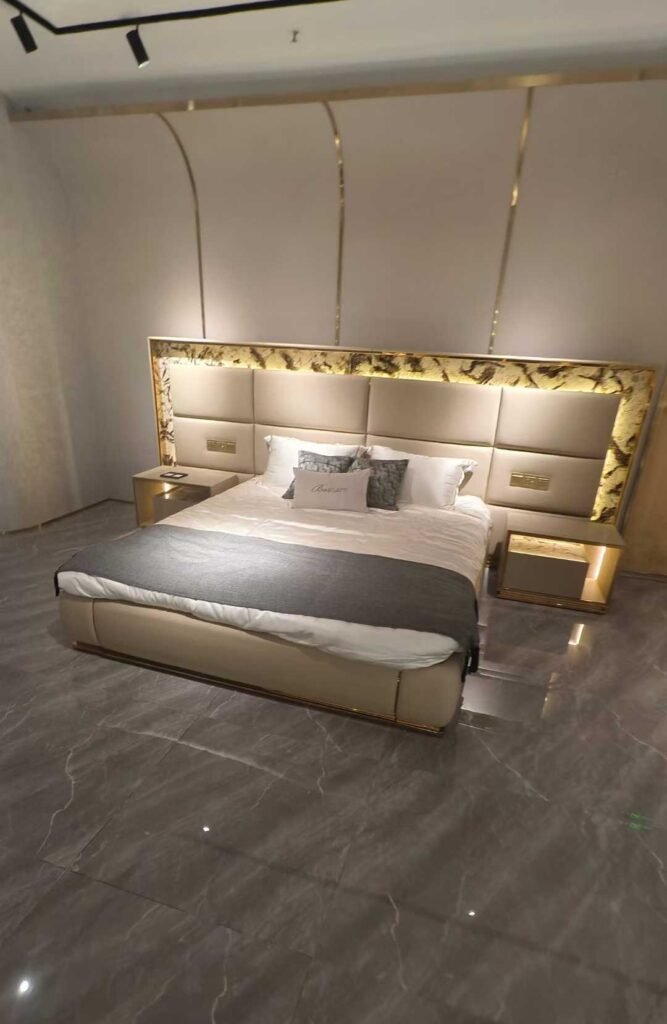
Motorized and automated adjustments: Smart sofas with motorized reclining mechanisms controlled via smartphone represent 17% of the smart furniture market and are growing in luxury residential and executive hospitality applications. Height-adjustable dining tables (for clients who use the same space for dining, work, and entertainment) and motorized headboard adjustment in master suites are now specified at the ultra-luxury tier as standard rather than optional.
Circadian and integrated lighting: Smart beds and bedside furniture with integrated circadian lighting — systems that shift colour temperature from warm amber in the morning through to cool white at midday and return to warm by evening — are prescribed by wellness architects in a growing number of UHNWI (Ultra-High Net Worth Individual) primary residence projects.
UHNWI (Ultra-High Net Worth Individual) — an individual with investable assets exceeding USD 30 million. At the UHNWI residential tier, wellness-driven technology integration — circadian lighting, air quality monitoring, sleep environment optimization — is increasingly a specification requirement, not a premium option.
Integrating Tech Without Visual Compromise
The design discipline for smart furniture in luxury villa interiors is concealment and continuity. Every charging port, speaker grille, control panel, and cable routing path should be invisible in normal use and accessible only when needed. The principles that achieve this:
- Charging surfaces match the finish of the surrounding tabletop with no visible boundary or LED indicator on the surface plane
- Speaker systems are integrated into structural elements of the furniture frame, with acoustic fabric panels that read as upholstery detail rather than technology
- Control interfaces use existing surfaces — touch-sensitive areas within marble tops, capacitive regions within lacquered panels — rather than added button panels that break the furniture’s design language
- All cabling runs through dedicated internal channels within the furniture structure, connecting to the building’s infrastructure through floor or wall apertures specified during the construction phase
For developers future-proofing luxury villa properties: specify smart-ready furniture — pieces with the infrastructure for technology integration built in but not populated — rather than deferring the question entirely. A nightstand with a Qi charging receiver pocket, a conduit channel to the floor, and a USB-C port in the interior storage drawer costs marginally more than a standard unit and can be activated or upgraded without replacing the furniture.
4. Sustainable Luxury: Eco-Conscious Materials and Ethical Sourcing

The shift toward sustainable luxury is not a marketing narrative. It is a compliance reality and a client expectation that is now embedded in the specification processes of every major luxury hotel group, green building certification body, and high-end residential developer operating at international scale.
FSC Chain-of-Custody certification — which proves that wood used in furniture production was sourced from responsibly managed forests, with documentation at every step of the supply chain — is now required by LEED and WELL certification programmes and increasingly by individual developer RFPs. Verifying a manufacturer’s FSC certificate takes 30 seconds at info.fsc.org. Any supplier who cannot provide a verifiable certificate number is not operating to this standard regardless of what their marketing materials state.
Low-VOC finishes are the parallel requirement for indoor air quality. VOC (Volatile Organic Compound) emissions from furniture lacquers and adhesives are the primary furniture-derived contribution to poor indoor air quality in enclosed spaces. GREENGUARD Gold certification (verified at ul.com/services/ul-greenguard-certification) is the standard for any furniture specified in LEED, WELL, or BREEAM certified projects, and is increasingly required in luxury residential projects where the client has a wellness brief.
The Material Hierarchy for Sustainable Luxury
Sustainable Luxury Material Preference Hierarchy
Tier 1 — Highest Sustainability Credential: ■■■■■■■■■■■■■■■■■■■■ Certified Reclaimed Timber (FSC + Chain of Custody) ■■■■■■■■■■■■■■■■■■ Plantation Teak (SVLK / FSC Certified) ■■■■■■■■■■■■■■■■ Solid Hardwood — FSC Certified with Documented Origin
Tier 2 — Strong Performance with Certification: ■■■■■■■■■■■■■■ Bio-Based Leather (Mycelium, Cactus, Apple) ■■■■■■■■■■■■ Recycled Aluminium Frames (95% energy saving vs. primary) ■■■■■■■■■■ GOTS-Certified Organic Cotton / Linen Upholstery
Tier 3 — Standard with Compliance Documentation: ■■■■■■■■ GREENGUARD Gold Lacquers (Low-VOC) ■■■■■■ Oeko-Tex 100 Certified Synthetic Textiles ■■■■ CARB Phase 2 Composite Wood Components
How Importers and Brands Can Use Sustainability Commercially
The sustainability documentation package — FSC certificates, GREENGUARD declarations, Oeko-Tex compliance sheets, recycled content declarations — is not just a compliance file. It is a sales tool. For luxury hotel groups pursuing LEED or WELL certification, specifying a furniture supplier who can provide the complete documentation package saves the project’s sustainability consultant weeks of research and positions your brand as the specification path of least resistance.
For private label brands targeting the growing segment of HNWI buyers who actively ask about material provenance — a demographic research consistently shows is expanding fastest in the under-50 age range — the ability to provide a material passport (a document detailing where each primary material came from, how it was processed, and how it was verified) is a differentiation point that no generic luxury claim can match.
5. Minimalist Opulence: Less Is More in Modern Villa Design
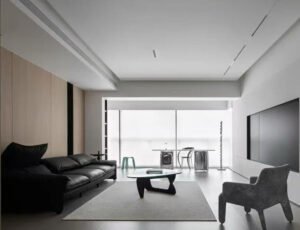
The most misunderstood principle in luxury interior design is minimalism. A minimalist luxury villa is not a sparse villa. It is not a cold villa. And it is certainly not a cheap villa in a plain box that happens to have a marble floor.
Minimalist opulence is the design discipline of maximum impact through maximum restraint — where every surface, every form, and every material is chosen so precisely that nothing can be added without diminishing the whole. The result, when executed correctly, is a space that feels effortless but took more decisions per square metre than any ornament-heavy alternative.
Defining Minimalist Luxury — What It Looks Like in Practice
A 180-square-metre villa living room in the minimalist luxury register might contain: a single custom upholstered sectional in a hand-loomed bouclé textile, a coffee table in a single slab of travertine, one oversized artwork, floor-to-ceiling linen drapery in a tone matching the wall, recessed architectural lighting only, and a single sculptural floor lamp. Nothing else. Every proportional relationship is precise. Every material has textural depth. The room is visually quiet and physically rich.
The critical distinction between minimalist luxury and sterile minimalism is tactile density. A room with minimal visual complexity can still be physically overwhelming in sensation if every surface offers a different tactile experience — the rough texture of a stone floor, the softness of a deep-pile rug, the smoothness of a lacquered side table, the give of premium upholstery. The visual restraint makes the tactile richness more perceptible, not less.
Practical Guidance: Achieving the Balance
| Minimalist Luxury Principle | How to Apply It | What to Avoid |
|---|---|---|
| Neutral base palette | Warm white, warm grey, stone beige for walls, floor, ceiling | Cool grey — reads clinical, not warm |
| One dominant material per room | Stone OR wood as the dominant horizontal surface — not both | Mixed material floors that create visual noise |
| Texture as the accent | Bouclé, ribbed fabric, fluted stone, brushed metal as the decorative register | Pattern — in minimalist luxury, texture replaces pattern entirely |
| Scale-appropriate furniture | Fewer, larger pieces rather than many smaller ones | Filling every corner — negative space is a design element |
| Hardware discipline | One metal finish throughout an entire room | Mixing brass, chrome, and matte black in the same space |
| Lighting as architecture | Recessed, structural, and accent lighting only | Decorative table and floor lamps unless they are sculptural objects in their own right |
Bouclé — a looped or curled yarn fabric that creates a visually textured, tactile-rich surface. Currently the dominant upholstery material in minimalist luxury villa interiors worldwide. Its textural complexity delivers visual warmth without pattern or colour contrast, making it the ideal upholstery for a neutral-dominant interior scheme.
6. Multifunctional and Space-Optimized Luxury Furniture
There is a persistent misconception that villa interiors — by virtue of their scale — do not need to think about space efficiency. A 1,200-square-metre villa, the reasoning goes, has enough room that every piece can serve a single purpose.
That reasoning misunderstands what space optimization means in luxury residential design. It is not about fitting more into less. It is about ensuring that every square metre of a large, expensive property contributes functionally and aesthetically at all times — not just when a specific use is active.
A dining table that seats eight for formal dinner but occupies 32 square metres of prime villa space as a static object for the other 20 days of the month is not serving the property well. A convertible dining table — expanding from a four-seat configuration to a twelve-seat formation through an engineered extension mechanism — uses the same footprint for both functions and returns that prime space to flow and proportion when it is not in use.
Multifunctional Furniture Categories for Luxury Villas
Modular seating systems: High-end modular sofas — where individual upholstered units connect magnetically or through precision-machined aluminium connectors — allow a living room to reconfigure from a formal reception layout to a casual conversation pit to a screening room arrangement without moving structural furniture. At the luxury level, modular does not mean visible modularity. The connectors are invisible, the upholstery is continuous across module joints, and the resulting configuration reads as a single bespoke piece.
Expandable dining tables: The most technically sophisticated are the self-storing extension systems — where additional leaf sections are housed within the table structure itself and extend through a single motion, guided and counterbalanced mechanically. The premium specification is a solid stone or hardwood top with no visible joint line at full extension. Several Italian manufacturers now produce these at a price point and quality level appropriate for the ultra-luxury residential market.
Hidden storage within statement pieces: A hall console with a concealed document drawer accessed through a push-to-open mechanism. A bed frame with hydraulic lift storage beneath the sleeping platform, accessed via a floor-level reveal that reads as a shadow gap in normal configuration. A sideboard where the centre panel folds down to reveal a fully appointed drinks station — illuminated, temperature-controlled, and styled as a reveal rather than a storage solution. These are not compromises on design. They are design solutions.
Transformable home office integration: In an era where villa owners routinely work from their residential properties, the home office brief has become a standard specification requirement at the luxury tier. The most successful solutions integrate a full working environment within a master suite’s joinery — desk surface, filing, tech infrastructure, and video call backdrop — that closes behind beautifully finished doors and becomes part of the bedroom’s cabinetry composition when the working day ends.
7. Global Influences with Local Sensibility
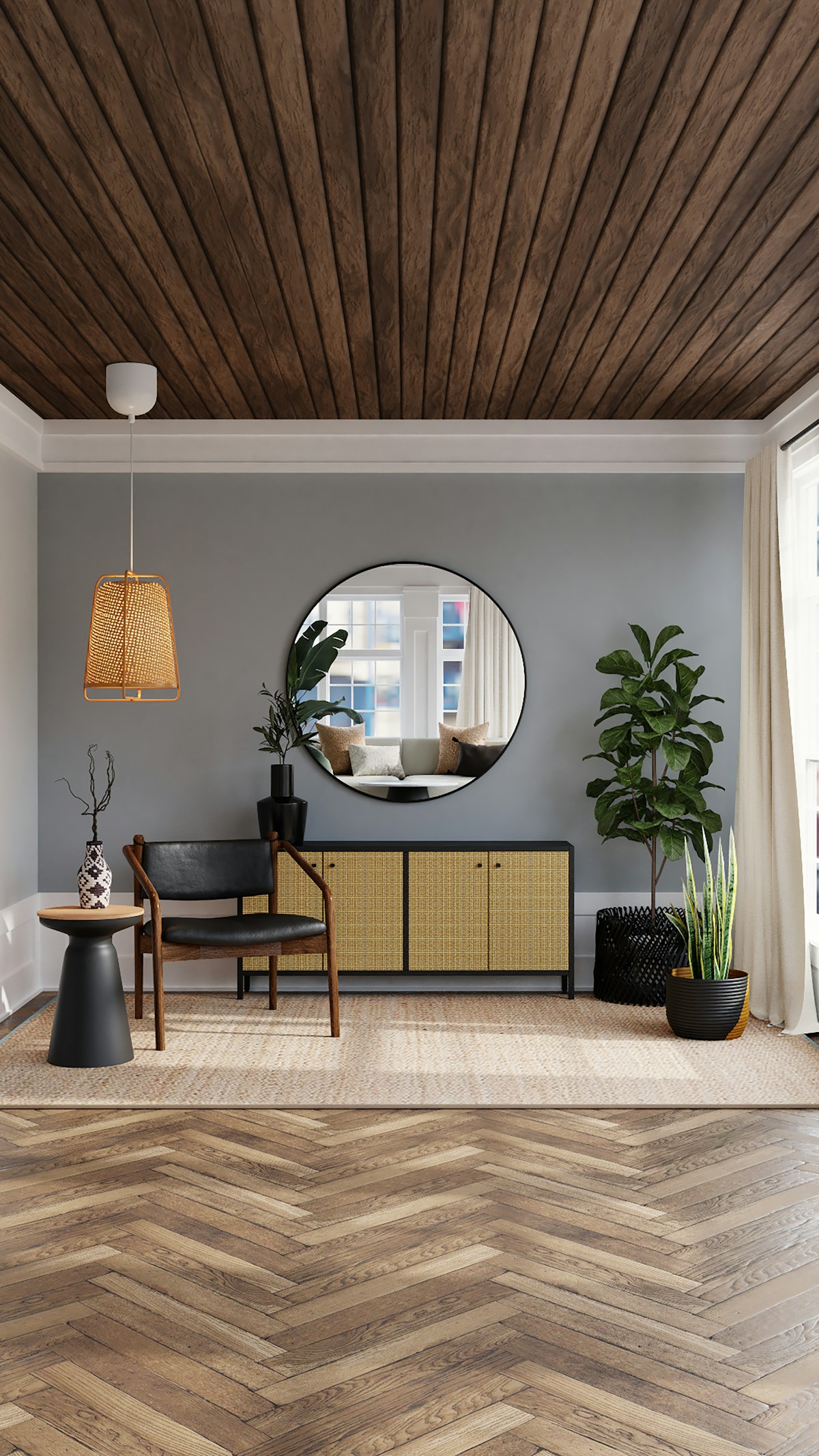
The most design-literate luxury villa clients in 2025–2026 are not asking for “Italian style” or “Scandinavian design.” They are asking for a design language that reflects their own cultural sophistication — which typically means an integration of multiple international design vocabularies, filtered through the specific architectural context and geographic sensibility of the property itself.
Japandi — the hybrid of Japanese and Scandinavian design principles — has moved from trend designation to established luxury vocabulary. Its combination of Japanese wabi-sabi philosophy (finding beauty in imperfection and natural variation) with Scandinavian material honesty (solid wood, natural textiles, functional form) produces an aesthetic that is simultaneously restrained and warm, sophisticated and liveable. In a villa context, Japandi translates as: solid white oak or ash furniture with visible grain and hand-oiled finish, undyed linen and wool upholstery, wabi-sabi ceramic decorative objects, and a complete absence of applied ornament or decorative pattern.
Italian minimalism — characterized by precision engineering, flawless surface finish, architectural proportions, and a material palette built on stone, leather, and lacquered metal — provides the structural counterpoint. Where Japandi introduces warmth through natural variation, Italian minimalism achieves luxury through precision and control. The two vocabularies can coexist within a single villa if a clear hierarchy is established: one as the structural language (typically Italian in the primary living spaces), the other as the textural layer (typically Japandi in the private and rest spaces).
Sourcing Strategies for Globally Inspired Collections
For importers and distributors building collections that reflect this global-local fusion, the practical sourcing strategy is:
Source the structural pieces from the design culture they represent most authentically. A precisely proportioned, flawlessly lacquered dining table from an Italian manufacturer carries an authenticity that no reproduction from another country can match. A solid white oak chair with hand-oiled finish and visible joinery carries equivalent authenticity from a Scandinavian or Japanese-influenced manufacturer.
Source the material accents locally. The cushion textiles woven from regional fibres, the decorative ceramics from a local artisan, the decorative objects that reference the local landscape — these are the elements that give a globally referenced interior its specific geographic identity. They cost relatively little but contribute disproportionately to the sense that this villa belongs here and not somewhere else.
Specify material provenance in your procurement documentation. Sourcing a Japandi-influenced collection where the oak comes from certified European forests, the linen from a Baltic weaver, and the ceramic objects from a Japanese or Korean artisan gives you a story to tell — and a story that luxury clients at the villa tier actively want to hear.
8. Strategic Furniture Layouts for Impact and Flow
Great furniture in the wrong layout produces a worse result than adequate furniture in the right one. This is the principle that separates interior designers who understand spatial planning from those who understand product selection. For villa projects — which typically involve large rooms with complex ceiling geometries, multiple functions within single open-plan spaces, and sightlines designed to capture views — the layout decision is the most consequential single design choice.
Core Principles of Luxury Villa Spatial Planning
The 60/30/10 space allocation rule: In any primary living zone, 60% of the floor area should be occupied by primary seating and circulation (the conversation group, the pathways between it and the rest of the room), 30% by accent furniture (side tables, occasional seating, case goods), and 10% left as deliberately empty negative space. The negative space is not an omission — it is the breath that prevents the room from feeling furnished rather than designed.
Traffic flow clearance: Professional space planners use a minimum clearance of 46–61 cm (18–24 inches) for secondary circulation paths and 91+ cm (36+ inches) for primary traffic paths — the routes between a room’s entrance and its main seating group. These numbers are the minimum for rooms to function without physical awkwardness. In a luxury villa context, 91–122 cm for primary paths is the appropriate standard.
Focal point hierarchy: Every room needs one primary focal point — the element that the principal seating orientation addresses. In a villa with significant exterior views, the window or glazed wall is typically the focal point, which means all primary seating should orient toward it. In a room without a dominant view, create the focal point through architecture (a fireplace, a feature wall, an art installation) and orient the furniture toward it. The error is rooms where no focal point has been established and the seating arrangement floats without direction.
Zoning in open-plan spaces: Open-plan villa living areas — increasingly the dominant ground-floor configuration — require furniture to perform the work that walls do in conventional plans. The tools for furniture-based zoning are:
- Area rugs define the footprint of each zone. The rug under the conversation group should extend 45–60 cm beyond the front legs of the sofa on each side; this visually completes the zone and anchors the furniture within it.
- Lighting fixture positioning confirms zone boundaries from above — a pendant or chandelier centred over the dining table declares the dining zone; recessed downlights in a grid over the conversation area declare the living zone.
- Back-of-sofa orientation is the most powerful spatial divider. A sofa whose back addresses a parallel circulation path between two zones creates a soft architectural boundary that guides movement without obstructing it.
Scale Reference Table for Villa Living Room Furniture
| Furniture Element | Villa Room Width (8–10m) | Villa Room Width (10–14m) | Key Proportion Rule |
|---|---|---|---|
| Primary sofa length | 2.8–3.2m | 3.2–4.0m | 35–40% of principal wall width |
| Coffee table length | 60–70% of sofa length | 60–70% of sofa length | Height within 3–5cm of seat cushion surface |
| Dining table length | 2.4–3.0m | 3.0–3.8m | 60cm clearance per seat minimum |
| Area rug minimum | 3.0 x 4.0m | 4.0 x 5.5m | Extends 45–60cm beyond sofa front legs |
| Ceiling pendant drop | 2.1–2.4m above floor | 2.1–2.4m above floor | Creates human-scale visual ceiling in double-height spaces |
9. Building a Cohesive Luxury Brand Through Furniture Curation
For private label furniture brand owners, hotel developers managing multiple properties, and FF&E buyers specifying across a portfolio, individual furniture decisions accumulate into something more significant than a collection of pieces: they build a brand identity that clients, guests, and buyers experience as a consistent, recognizable statement.
This is the furniture curation principle — the deliberate management of materiality, proportion, finish direction, and design language across every touchpoint of a property or portfolio, so that the whole is more powerful than the sum of its parts.
The Three Brand Consistency Levers
Material story: The materials that appear most frequently across a portfolio define the brand’s physical identity. A hotel group that consistently specifies solid walnut case goods, hand-loomed linen upholstery, and hand-blown glass lighting across all its properties has a material identity that guests recognize within seconds of entering a new property — and associate with the quality experience they have had before. This recognition effect directly influences booking decisions and repeat visits.
Color story: A consistent color palette — not identical colours in every property, but a palette governed by the same tonal logic across all properties — creates the visual recognition that is the commercial foundation of brand identity in luxury hospitality. Warm earthy neutrals in one property, deep jewel tones in another, can both be “on brand” if they share the same level of saturation, the same approach to contrast, and the same material expression.
Design language: The proportion vocabulary — seat heights, arm widths, leg profiles, hardware scales — creates a recognizable silhouette across a collection. A brand whose furniture is consistently low-profile, wide-armed, and horizontal in emphasis has a visual identity that is instantly legible across multiple properties without any piece being identical.
ROI of Brand-Coherent Furniture Curation
The financial case for furniture curation at the portfolio level is built on two mechanisms. First, procurement efficiency: a developer who specifies from a consistent furniture programme across multiple properties can negotiate volume pricing, maintain a single supplier relationship for after-sales service, and standardize the specification and QC process across projects. Second, brand premium: a hotel group with a recognized, consistent interior identity commands a higher ADR (Average Daily Rate) than a group whose properties read as individually decorated. The ability to command that premium is worth more than the cost of any individual furniture investment.
ADR (Average Daily Rate) — a hospitality KPI measuring average room revenue per occupied room per night. Research from Cornell University confirms that a one-point improvement in guest satisfaction scores correlates with a 0.89% increase in ADR — and interior quality is among the most cited factors in luxury accommodation guest reviews.
For developers exploring how to build and protect a proprietary furniture identity across multiple villa units, the Jade Ant furniture product range covers bedroom, living room, dining, and custom collections suited to both single-property specification and multi-unit portfolio programs.
10. The ROI of Luxury Furniture: A Professional Investor’s View
The question every villa developer and hotel operator eventually asks is: how much of the project budget should go into furniture, and what does that investment actually return?
The answer requires moving the conversation from “cost per piece” to “impact per dollar invested in the highest-value spaces.”
Luxury Villa Furniture ROI Framework
Property valued at USD 5,000,000
Scenario A — Standard furniture program (1.5% of value = $75,000) Sale premium vs. no staging: +2–3% = $100,000–$150,000 Net return on furniture investment: $25,000–$75,000 Time-on-market advantage: Standard
Scenario B — Curated luxury program (4% of value = $200,000) Sale premium vs. no staging: +7–10% = $350,000–$500,000 Net return on furniture investment: $150,000–$300,000 Time-on-market reduction: Up to 88% faster Net ROI advantage vs. Scenario A: $125,000–$225,000 incremental
Hotel/Resort Application (40-key boutique resort, $450 ADR) +1 point review score improvement: +0.89% ADR = +$48,000 annual revenue +2 points over 24 months (documented): +$96,000/year ongoing Furniture investment amortized over 10yr: Typically $12,000–$20,000/year Net annual ROI advantage: $76,000–$84,000/year
Source: National Association of Realtors; Cornell Hotel Research; Business Research Insights
The practical allocation guidance for villa professionals:
Invest the highest proportion of furniture budget in the three primary spaces: the main living room, the master suite, and the primary outdoor terrace. These are the spaces that appear in every marketing image, that prospective buyers or guests experience first, and that carry the most influence on perceived value. These three spaces typically represent 40–50% of the total furniture investment and deliver 70–80% of the measurable value impact.
Secondary spaces — guest suites, secondary bathrooms, utility areas — should be furnished to a consistent but proportionally lower budget, maintaining the material language of the primary spaces without matching their specification depth.
🎬 Watch: Luxury Villa Interior Design Inspiration 2025–2026
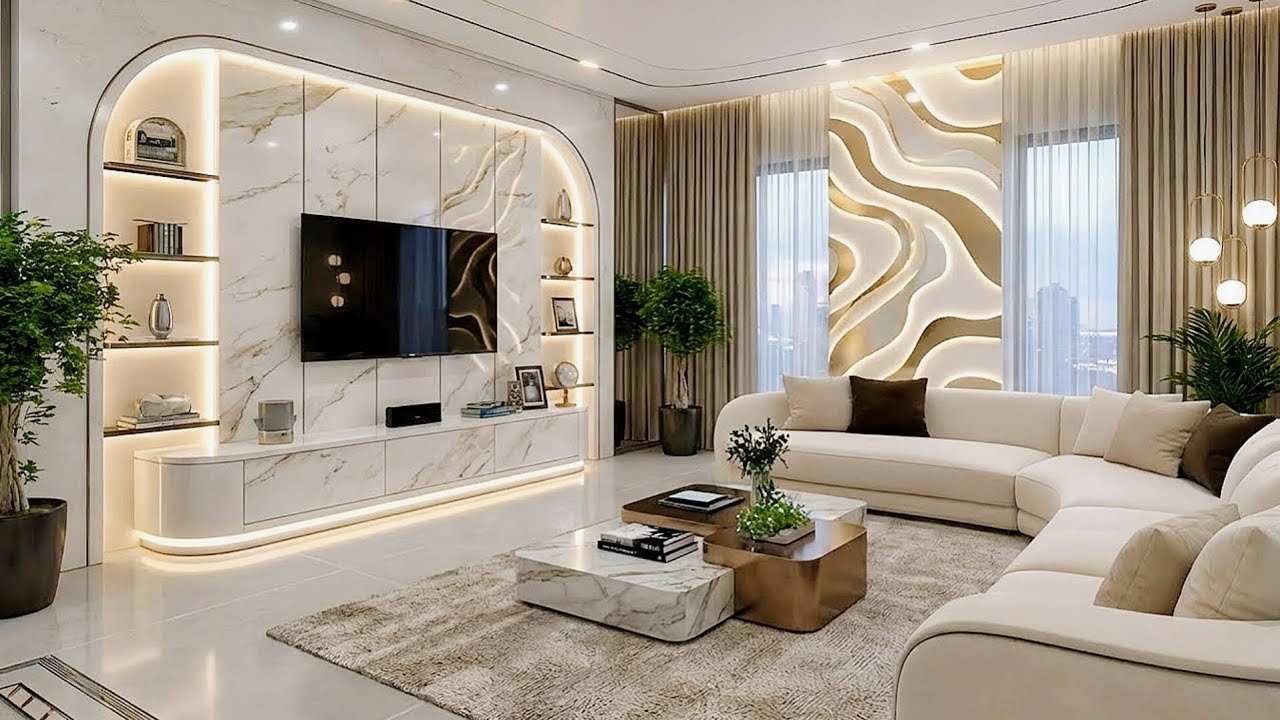
▶ Click to watch: A comprehensive visual walkthrough of the top luxury interior design trends defining 2025 — including villa-scale furniture design, material palettes, lighting strategies, and the shift toward warm minimalism and biophilic integration. Essential reference for interior designers, developers, and villa owners building a design brief.
Glossary of Key Terms
| Term | Definition |
|---|---|
| Bespoke Furniture | Furniture designed and manufactured uniquely for a specific space and client, from materials chosen outside the manufacturer’s standard catalogue |
| Grade-A Teak | Premium teak classification from mature plantation trees with consistent grain and high natural oil content — the benchmark for luxury outdoor furniture |
| Solution-Dyed Acrylic | Outdoor fabric where colour pigment is integrated into the fibre during production, giving 5+ years of UV colour stability — standard for high-UV villa terraces |
| Bouclé | A looped textile yarn creating a richly textured, tactile upholstery surface — currently the dominant minimalist luxury upholstery material |
| Martindale Test | European fabric abrasion durability standard in cycles — 30,000+ for residential luxury; 100,000+ for high-traffic hospitality |
| FSC | Forest Stewardship Council — chain-of-custody certification for responsibly sourced timber, verifiable at info.fsc.org |
| GREENGUARD Gold | UL certification for low-VOC furniture finishes — required for LEED, WELL, and BREEAM certified projects |
| VOC | Volatile Organic Compound — chemical emission from furniture lacquers and adhesives that affects indoor air quality |
| Japandi | A hybrid design philosophy merging Japanese wabi-sabi principles with Scandinavian material honesty — warm minimalism with natural material depth |
| Wabi-Sabi | Japanese aesthetic concept that finds beauty in imperfection, natural variation, and the passage of time — expressed in furniture through hand-finished surfaces and natural material variation |
| ADR | Average Daily Rate — hospitality KPI measuring average room revenue per occupied room per night |
| HNWI / UHNWI | High Net Worth Individual (>USD 1M investable assets) / Ultra-High Net Worth Individual (>USD 30M) — the primary residential buyer personas for luxury villa furniture |
| LEED / WELL | Green building certification programmes (LEED: energy and environmental; WELL: human health and wellness) that specify furniture compliance requirements including FSC certification and GREENGUARD Gold finishes |
| Negative Space | Deliberately unfurnished floor area in a room design — not an omission but a designed element that gives furniture room to breathe and prevents spaces from feeling overcrowded |
| COM | Customer’s Own Material — the practice where the designer supplies fabric or leather to the manufacturer for upholstering a furniture piece to order |
| FF&E | Furniture, Fixtures, and Equipment — the movable interior elements in a hospitality or residential project that are not structurally part of the building |
Frequently Asked Questions
1. What defines modern luxury furniture in 2025–2026?
Modern luxury furniture in 2025–2026 is defined by four converging standards: innovative materials with documented provenance (FSC-certified timber, bio-based leather alternatives, natural stone with quarry traceability); artisan craftsmanship that is visible in the finished piece through hand-applied finishes, visible joinery, and material variation; smart functionality integrated without aesthetic compromise (wireless charging, motorized mechanisms, circadian lighting); and sustainable ethics verifiable through certification documentation rather than brand claims. The overall direction is warm minimalism — restraint in visual complexity combined with extraordinary richness in material and tactile quality.
2. How can villa owners ensure their furniture investment remains timeless?
The most durable luxury furniture investment strategy builds on four principles. First, choose classic silhouettes in the primary seating and case goods — forms whose proportions and construction logic have not changed significantly in 30–50 years are likely to remain relevant for the next 30–50. Second, invest in exceptional material quality at the primary pieces; a beautifully constructed solid walnut dining table will not date in the way a furniture-trend piece will. Third, use bold accent pieces — artwork, decorative objects, cushion textiles — to introduce seasonally current elements that can be updated inexpensively without replacing the structural furniture. Fourth, work with a manufacturer who can reupholster or refinish key pieces in 10 years rather than replace them — structural durability is the foundation of timeless value.
3. What are the most sought-after materials in luxury furniture today?
The current specification preferences among luxury interior designers and villa developers: Calacatta Viola and Paonazzo marble for statement tabletops and consoles; smoked and brushed white oak for case goods and dining tables; brushed antique brass and unlacquered bronze for hardware (both develop a natural patina rather than requiring regular polishing); bouclé in warm neutrals (undyed ecru, warm grey, soft camel) for primary upholstery; full-grain leather in natural vegetable-tanned finishes from named Italian tanneries for accent seating; and bio-based or mycelium-derived leather alternatives for clients with a sustainability brief who will not accept synthetic substitutes. The common thread across all current preference materials is natural variation — materials that look slightly different at different angles and under different light conditions rather than perfectly uniform.
4. How do I integrate smart furniture without compromising aesthetics?
The discipline is concealment and continuity. Wireless charging surfaces should be flush with and finished identically to the surrounding tabletop surface — no raised panel, no visible LED ring in normal configuration. Speaker systems should be integrated into structural frame elements with acoustic fabric panels that read as upholstery details. Control interfaces should use existing surfaces — capacitive-sensitive areas within marble or lacquered panel surfaces — rather than added control panels. All cable routing should be resolved within the furniture structure itself, connecting to the building’s infrastructure through floor or wall apertures planned during the construction phase. The test: if you can identify any piece of technology in a photograph of the room taken under normal lighting conditions, the integration has not been executed correctly at the luxury standard.
5. What should high-end furniture importers look for in luxury manufacturers?
Seven non-negotiable verification criteria: (1) independently verifiable certifications — FSC, GREENGUARD Gold, CARB Phase 2, ISO 9001 — with certificate numbers that can be checked against the issuing body’s public database; (2) production samples from actual manufacturing rather than showroom prototypes; (3) factory audit reports from accredited third-party bodies such as SGS or Bureau Veritas; (4) BIM-compatible technical documentation for architecture and design professional clients; (5) a structured NDA and IP protection framework before drawings are shared; (6) references from completed projects at comparable scale and quality tier with direct contact information; (7) confirmed lead time commitments in writing with milestone reporting — not estimated timeframes.
6. How can interior designers justify higher furniture costs to villa clients?
The most persuasive arguments for premium furniture investment address three client concerns in sequence. Longevity: a kiln-dried solid hardwood dining table with a 50-year structural lifespan, reupholsterable seating, and refinishable surfaces has a lower 20-year cost than three cycles of mass-market replacement at the same footprint. Exclusivity: furniture designed and manufactured for this specific villa cannot be owned by any other client — an argument that directly addresses the HNWI desire for irreplaceable possessions. Residual value: a property with coherently curated, materially excellent furniture photographs better, markets more effectively, and commands measurably higher sale and rental prices than an equivalent property furnished from a mass-market catalogue. The NAR staging data showing up to 10% sale price premium for professionally staged luxury properties gives this argument a quantifiable foundation.
7. Are sustainable luxury furniture options as durable as traditional ones?
At the certified level, yes — and in several material categories, more so. FSC-certified plantation teak outperforms non-certified equivalents in structural consistency because it is harvested from trees of known age and density rather than variable-quality natural forest timber. Recycled aluminium frames are mechanically identical to primary aluminium in structural performance. Bio-based leather alternatives from innovators like Bolt Threads (mycelium leather) are engineered for 20+ year durability and outperform bonded leather — often marketed as “premium” — which begins to delaminate within 3–5 years of use. The caveat: sustainability claims require documentation. “Eco-friendly” without a verifiable certification (FSC, GOTS, Oeko-Tex, GREENGUARD) is a marketing phrase, not a performance standard.
8. What role does furniture play in villa staging for resale or rental?
Furniture is the primary driver of the emotional response that converts a property visit into a purchase or rental commitment decision. A villa buyer in the USD 3–10 million range makes their final decision in the first 60 seconds of entering the primary living space — before they have examined the structural specifications, the location data, or the financial analysis. That 60-second impression is formed entirely by spatial quality, light quality, and the material and proportional quality of the furniture they see. National Association of Realtors research documents up to 10% higher sale prices for professionally staged luxury properties. Properties staged with luxury-tier furniture also rent 88% faster than unstaged equivalents — a direct impact on yield for developer-operators in the luxury short-term rental market.
9. How can developers standardize luxury furniture across multiple villa units while maintaining uniqueness?
Use a core collection architecture with a customization layer. The core collection establishes the material story, design language, and quality standard — the same across all units. The customization layer — accent colours, decorative objects, artwork, and one or two signature bespoke pieces per unit — creates individual identity within the consistent framework. This approach allows volume procurement pricing on the core collection (which represents 70–80% of the furniture budget per unit) while maintaining the differentiation that prevents the portfolio from feeling institutionally uniform. For developers working across multiple climate zones or geographic markets, the core collection adapts material specifications (indoor vs. climate-performance outdoor, humidity-tolerant vs. dry-climate finishes) while maintaining visual consistency.
10. What are the latest color trends in luxury villa interiors?
The dominant color directions in 2025–2026 luxury villa specification: warm earthy neutrals — warm white, undyed linen, soft terracotta, warm stone beige — as the structural palette in minimalist luxury projects; deep jewel tones — emerald green, sapphire blue, deep amber — as primary accent colours in richer, more layered schemes; and monochromatic layering — multiple tones within a single color family creating depth through variation rather than contrast. The shift away from the grey-and-white minimalism of the 2015–2020 period is complete — the market has moved firmly toward warmth, natural material tone, and organic variation. Cool palettes (grey, blue-grey, stark white) are appearing predominantly in contemporary urban penthouses; villa interiors across coastal and tropical markets are uniformly shifting toward warm earth and botanical references.
11. How do I select outdoor furniture that matches indoor luxury standards?
Budget outdoor furniture at 80–100% of the equivalent indoor piece cost — not the 40–50% most initial FF&E estimates allocate. The material cost of marine-grade powder coating, Grade-A teak, and solution-dyed acrylic fabrics is higher than standard indoor equivalents; the manufacturing complexity of weather-sealed joins, drainage-optimized cushion construction, and UV-stable hardware is greater. The design logic is identical to indoor specification: the same tonal register, the same silhouette vocabulary, the same hardware finish direction. The performance specifications are different: marine coating for aluminium, Grade-A teak for timber, solution-dyed acrylic for fabric. A villa terrace furnished at this standard produces lifestyle photography indistinguishable from the interior — which is the commercial standard that luxury properties require.
12. Can modular furniture work in ultra-luxury villa settings?
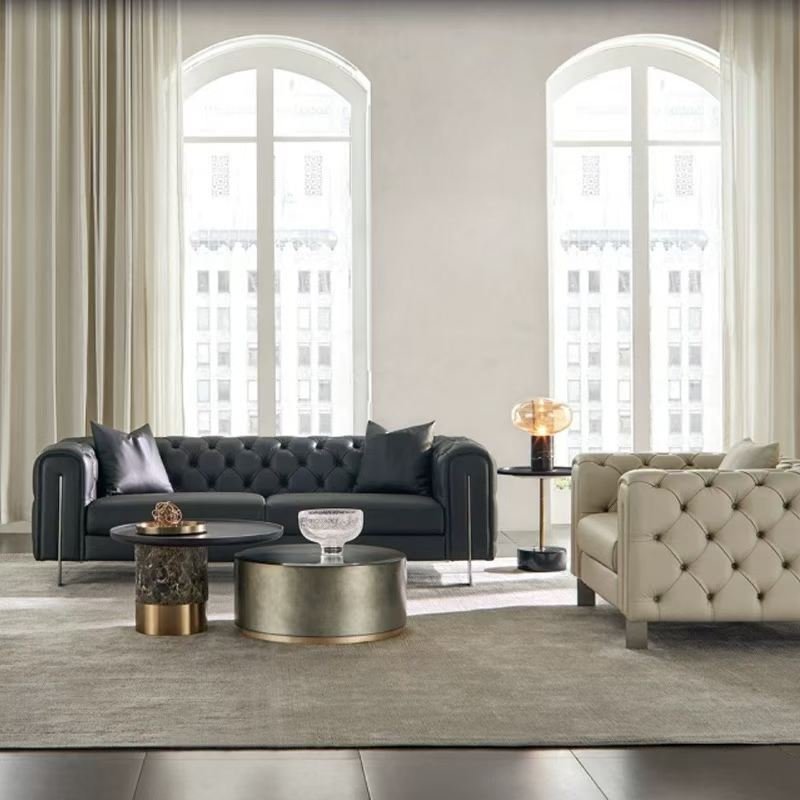
Yes — but only at the specification tier where modularity is invisible. At the luxury level, modular seating systems use precision-machined aluminium or solid wood connectors hidden within the furniture structure, continuous upholstery across module joints with no visible seam, and configurations that read as single bespoke pieces in every arrangement. Brands including B&B Italia (Maxalto), Minotti, and Molteni&C produce modular systems that meet this standard. The advantage in villa application is significant: a modular living room configuration can be reconfigured from reception layout to screening layout to intimate conversation arrangement by the client or their household staff, without moving heavy furniture or engaging specialist removal teams.
13. What certifications should luxury furniture brands have for international distribution?
The minimum certification stack for credible international distribution at the luxury tier: FSC Chain-of-Custody for all wood components (verify at info.fsc.org); CARB Phase 2 compliance for any composite wood products entering US-market projects; GREENGUARD Gold for finish VOC compliance in LEED, WELL, and BREEAM certified projects; ISO 9001:2015 for quality management system credibility in B2B procurement processes; BIFMA performance certification for any upholstered seating in commercial hospitality applications; and CAL 117-2013 (US) or BS 5852 (UK) flammability compliance for upholstered pieces in commercial projects. For EU market distribution, REACH chemical compliance documentation is required for all products containing regulated substances.
14. How can private label furniture brands stand out in a saturated market?
Through design IP protection, material exclusivity, and distribution control exercised simultaneously. Design IP: register proprietary silhouettes and finish systems through WIPO’s Hague International Design System before sharing any drawings with manufacturers. Material exclusivity: negotiate supply agreements with specific tanneries, timber mills, or hardware manufacturers that restrict those materials from being supplied to direct competitors. Distribution control: limit authorized dealers geographically and by client type — a brand available in every online marketplace and every trade showroom has no exclusivity regardless of its design quality. The combination of protected designs, exclusive materials, and controlled distribution creates a defensible market position that a new entrant cannot replicate by simply choosing a better manufacturer.
15. What is the average ROI on luxury furniture for high-end villas or boutique properties?
The measurable ROI range for luxury furniture investment in residential villa and boutique hospitality applications: 20–35% increase in perceived property value for properties with professionally curated luxury furniture programs versus comparable unstaged or poorly furnished properties, based on staging research from the National Association of Realtors and luxury market-specific studies. For boutique hotel applications, the ADR correlation with interior quality produces annual revenue increases of USD 40,000–80,000 per property at a 40-key scale for each one-point improvement in guest satisfaction scores attributable to interior quality. Against a furniture investment typically amortized over 10–12 years, the per-year furniture cost is consistently lower than the annual ADR uplift it generates — making luxury furniture investment one of the few capital expenditures in hospitality development that is both aesthetically necessary and financially self-funding.
Strategic design decisions made at the furniture specification stage have measurable, compounding effects on a villa’s commercial performance across its entire ownership lifecycle. Whether you are specifying a primary residence, a development portfolio, or a boutique hospitality property — the standard you set in the furniture program is the standard the property will be held to by every buyer, guest, and design professional who encounters it.
Meuble Fourmi de Jade designs and manufactures luxury custom furniture for villas, hotels, and private residences — delivering bespoke and private-label programs from bedroom to living room to dining across Asia-Pacific, the Middle East, and Europe. Explore the full product portfolio ou contact the team to discuss your villa specification brief.