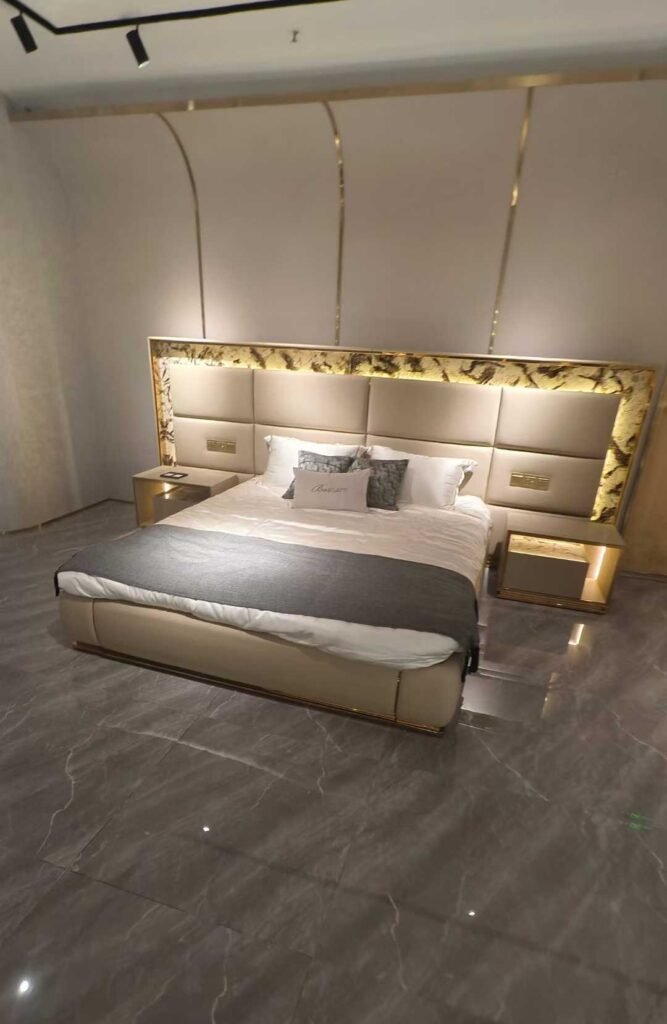

Este guia ajuda os consumidores, designers, compradores de hotéis e equipes de fornecimento a navegar pelos tamanhos de cama chineses, dimensões de colchão, compatibilidade de estrutura e armazenamento embaixo da cama com verificações práticas antes de fazer o pedido.

Na China, a compra de camas geralmente começa com uma medida em centímetros, não apenas com um nome como “Queen” ou “King”. A etiqueta de um produto pode dizer cama de 1,5 m, cama de 1,8 m, cama de casal, cama estilo queen ou cama king de hotel. Esses rótulos podem ser úteis, mas não são suficientes.
O método de compra mais seguro é simples: confirme a largura e o comprimento do colchão em centímetros, verifique o tamanho da estrutura interna, meça o quarto e pergunte quanto espaço de armazenamento a cama realmente oferece.
Para compradores que comparam fornecedores, Móveis Jade Ant é naturalmente parte da conversa, pois muitos projetos de quarto de origem chinesa precisam de dimensões personalizadas, acabamentos coordenados e detalhes de embalagem prontos para embarque - não apenas uma foto de cama bonita.
Padrões de tamanho de cama na China
Medidas típicas (cm)
A maioria dos tamanhos de camas e colchões chineses é descrita em centímetros. Os tamanhos mais comuns para adultos são 90×200 cm, 120×200 cm, 150×200 cm e 180×200 cm. Ainda existem camas com 190 cm de comprimento, especialmente em apartamentos mais antigos, dormitórios e produtos econômicos, mas 200 cm agora é comum para uso residencial e hospitalar moderno.
Tabela pronta para o Excel: copie e cole essa tabela no Excel ou no Google Sheets para planejamento de salas, comparação de fontes e verificações de cotações de fornecedores.
| Rótulo chinês | Tamanho típico do colchão | Área útil aproximada do colchão | Melhor caso de uso | Verificação do comprador |
|---|---|---|---|---|
| Cama de solteiro / 0,9 m | 90×190 cm ou 90×200 cm | 1.71-1.80 m² | Quartos para crianças, dormitórios para funcionários, quartos de hóspedes compactos | Confirme o comprimento antes de comprar a roupa de cama. |
| Cama grande de solteiro / 1,2 m | 120×200 cm | 2.40 m² | Quartos para adolescentes, adultos sozinhos, apartamentos estreitos | Verifique se a largura da estrutura externa excede 130 cm. |
| Cama de casal / 1,5 m | 150×200 cm | 3.00 m² | Casais em quartos menores, apartamentos com serviços | Deixe espaço suficiente para caminhar em ambos os lados se for usado por duas pessoas. |
| Cama de casal grande / 1,8 m | 180×200 cm | 3.60 m² | Quartos principais, hotéis, residências premium | Meça o acesso ao elevador, às escadas e à cabeceira da cama. |
| Tamanho do hotel personalizado | Geralmente, formatos de colchão de 200×200 cm ou divididos | 4,00 m² e acima | Suítes de luxo e projetos de resort | Solicite desenhos de produção antes da confirmação do pedido. |
Como as camas são rotuladas e categorizadas nos mercados chineses
No varejo chinês, o número geralmente se refere à largura do colchão. Uma “cama de 1,5 m” geralmente significa que o colchão tem 150 cm de largura. Uma “cama de 1,8 m” geralmente significa 180 cm de largura. A estrutura real pode ser mais larga por causa do estofamento, dos trilhos laterais, dos cantos curvos ou de uma cabeceira grande demais.
Isso é importante em apartamentos em arranha-céus. Um colchão de 180 cm pode caber no quarto, mas uma cabeceira grossa e com abas pode não virar no corredor. Para molduras grandes, solicite dimensões embaladas e desenhos de montagem. As Especificações da estrutura da cama da China é uma referência útil para pensar além do tamanho do colchão.
Variantes comuns de tamanho de cama na China
Camas de solteiro/uma pessoa e dimensões padrão
As camas para uma pessoa na China geralmente começam com 90×190 cm ou 90×200 cm. Dormitórios de estudantes, quartos de crianças e acomodações de funcionários geralmente usam esses tamanhos compactos porque os quartos precisam de espaço para uma escrivaninha, guarda-roupa ou bagagem.
Uma cama de 120×200 cm é a melhor opção para um adulto solitário. Ela oferece mais espaço para os ombros, mas ainda funciona em quartos estreitos. Para apartamentos de aluguel, esse tamanho geralmente é mais fácil de entregar e substituir do que uma estrutura estofada maior.

Duplo/completo, equivalentes a Queen e nomes regionais
Uma cama de 150×200 cm é geralmente tratada como uma cama de casal compacta na China. Alguns vendedores podem chamá-la de cama de casal, completa ou queen, dependendo da plataforma e da região.
Uma cama de 180×200 cm é comumente escolhida para quartos principais e hotéis. Em muitas listagens on-line, ela pode ser comercializada como tamanho king, embora nem sempre corresponda a uma king dos EUA ou do Reino Unido. A regra mais segura é ignorar o nome de marketing e confirmar o tamanho em centímetros.
Dimensões e compatibilidade do colchão
Tamanhos padrão de colchões na China versus normas internacionais
A China usa o sistema métrico, portanto, é fácil comparar as dimensões quando os centímetros estão visíveis. O desafio é que palavras internacionais como “Rainha” e “Rei” variam de acordo com o país. Para uma comparação mais ampla, consulte um Referência internacional de tamanho de cama e comparar por centímetros, não por nome.
A listagem padrão chinesa para GB/T 3328-2016 principais tamanhos de camas para móveis também é útil para entender que as dimensões das camas são tratadas como uma categoria definida de móveis, não apenas como uma preferência do varejo.
Considerações sobre a compatibilidade da estrutura e da fundação
O colchão deve se acomodar dentro da estrutura sem uma grande folga. Se a abertura estiver muito frouxa, o colchão se deslocará. Se a estrutura estiver muito apertada, a borda do colchão se comprime e pode se desgastar mais rapidamente.
Peça ao fornecedor três números:
- Tamanho do colchão, como 150×200 cm.
- Abertura interna da estrutura, como 152×202 cm.
- Tamanho da estrutura externa, como 168×218 cm, incluindo os trilhos laterais e a cabeceira.
Para estruturas de ripas, espaçamento das ripas devem apoiar o colchão de maneira uniforme. Para um colchão de espuma, geralmente é melhor usar ripas mais estreitas, pois a espuma pode se acomodar em espaços amplos.
Padrões internacionais versus padrões chineses
Onde as medidas chinesas se alinham ou diferem dos tamanhos internacionais
Os tamanhos chineses de 150×200 cm e 180×200 cm são próximos de alguns tamanhos de colchões europeus, mas não são idênticos a muitos nomes dos EUA e do Reino Unido. Por exemplo, uma cama queen nos EUA geralmente tem 60×80 polegadas, ou seja, cerca de 152×203 cm. Isso está próximo de 150×200 cm, mas um lençol ajustado ou uma estrutura rígida ainda podem parecer um pouco fora do padrão.
Se estiver comprando acessórios, compare as dimensões reais em centímetros. Um edredom macio pode ser flexível. Um protetor de colchão, lençol ajustado ou estrado é menos flexível.
Dicas para converter entre sistemas ao fazer compras no exterior
Use esta conversão simples: 1 polegada equivale a 2,54 cm. Ao fazer a conversão, arredonde com cuidado e leve em conta a tolerância de fabricação. Uma tolerância prática é geralmente de alguns milímetros para peças de móveis rígidos e um pouco mais para produtos macios.
Variações regionais e terminologia local
Termos usados na China continental, Hong Kong e Taiwan
A China continental geralmente se baseia em tamanhos métricos em centímetros ou metros. Hong Kong pode mostrar mais influência da nomenclatura no estilo britânico e das dimensões compactas dos apartamentos. Taiwan também usa descrições métricas, mas os nomes dos produtos podem usar termos internacionais nas listagens on-line.
Nas compras internacionais, a mesma etiqueta em inglês pode indicar um tamanho de produto diferente. Sempre solicite uma folha de especificações do produto.
Como os fornecedores rotulam os produtos e as possíveis variações por região
Os fornecedores podem rotular as camas de acordo com a largura do colchão, o estilo da estrutura, a categoria do hotel ou o mercado de exportação. Uma “cama de couro de 1,8 m” pode significar uma cama para um colchão de 180×200 cm, mas a estrutura pode ter 210 cm de largura após a adição de abas laterais acolchoadas.
No setor de móveis, os maiores erros de dimensionamento geralmente acontecem quando um comprador aprova uma foto, mas não um desenho. Para pedidos personalizados, confirme um desenho técnico, o tamanho da caixa de papelão embalada e o método de montagem antes da produção.
Tipos de colchão e firmeza
Opções de espuma, mola interna, híbrida e látex
O tipo de colchão afeta o conforto, a escolha da estrutura e o transporte. Os colchões de espuma geralmente são comprimidos para facilitar a entrega. Os colchões de molas internas usam bobinas de metal e podem parecer mais responsivos. Os colchões híbridos combinam camadas de conforto de espuma com suporte de molas. Os colchões de látex usam látex natural ou sintético e geralmente são elásticos e duráveis.
Para a pesquisa de produtos, os principais varejistas, como Opções de colchões IKEA China mostram como os tamanhos métricos, as opções de firmeza e os tipos de materiais são apresentados aos consumidores locais.
Classificações de firmeza e o que escolher para diferentes pessoas que dormem
Firmeza significa a sensação de dureza ou maciez do colchão na parte superior. Suporte significa quão bem o colchão mantém a coluna vertebral alinhada. Um colchão pode ser macio e ainda assim oferecer suporte se as camadas inferiores forem estáveis.
- As pessoas que dormem de lado geralmente preferem superfícies médias ou meio macias para reduzir a pressão nos ombros.
- As pessoas que dormem nas costas geralmente se dão bem com um suporte de firmeza média.
- As pessoas que dormem no estômago geralmente precisam de um apoio mais firme para evitar que os quadris afundem demais.
- Os hotéis geralmente escolhem colchões de média firmeza porque eles atendem a muitos tipos de corpos.
Opções de estrutura e materiais
Considerações sobre durabilidade e estruturas de madeira versus metal
As estruturas de madeira proporcionam aconchego e uma sensação mais residencial. A madeira de engenharia e a madeira compensada são comuns em camas estofadas porque mantêm a forma quando reforçadas adequadamente. As armações de metal podem ser finas, fortes e eficientes para aluguel ou uso em dormitórios, mas podem parecer menos luxuosas em um quarto principal.
Para quartos de alto padrão, os compradores geralmente escolhem estruturas estofadas com base em madeira porque a cabeceira, os trilhos laterais e o tecido podem combinar com guarda-roupas, mesas de cabeceira e painéis de parede. Se você precisar de um caminho de fornecimento coordenado, a coleções de móveis para dormitórios da Jade Ant pode ajudar a comparar camas com peças relacionadas, em vez de selecionar apenas a cama.

Suporte de borda, sistemas de ripas e dicas de montagem
O suporte de borda significa a estabilidade do colchão próximo à lateral. Um suporte de borda fraco torna mais difícil sentar-se na lateral da cama e pode reduzir o espaço útil para dormir.
Para a montagem, verifique se a estrutura usa suportes de canto, pernas de suporte central e uma viga intermediária. Uma cama de 180×200 cm não deve depender apenas dos trilhos laterais. Se a cama tiver gavetas de armazenamento, certifique-se de que o piso esteja nivelado; caso contrário, as gavetas podem raspar ou se deslocar.
Soluções de armazenamento: Opções de armazenamento embaixo da cama e embutido
Medidas de espaço livre embaixo da cama e capacidade prática
O espaço livre embaixo da cama é a altura entre o piso e a parte mais baixa da estrutura. Esse espaço pode ser usado para roupas de cama sazonais, malas, caixas de sapatos ou sacos de armazenamento a vácuo.
Para um armazenamento prático, meça a altura livre, a profundidade da gaveta e a direção de extração. Em um quarto pequeno, uma gaveta que precisa de 60 cm de espaço livre lateral pode ser menos útil do que uma cama de armazenamento elevável.
- Roupa de cama sazonal: 40%
- Bagagem e itens de viagem: 25%
- Roupas de cama e toalhas: 20%
- Sapatos e caixas pequenas: 15%
Mecanismos de armazenamento da cama e designs que economizam espaço
As camas com armazenamento geralmente usam gavetas, plataformas de elevação a gás ou prateleiras abertas. As camas com gavetas são simples e fáceis de organizar, mas precisam de espaço lateral. As camas com plataforma elevatória a gás abrem para cima, por isso funcionam bem quando o cômodo é estreito.
O melhor mecanismo depende do cômodo. Em um apartamento com espaço lateral apertado, uma cama elevável pode armazenar mais itens com menos frustração diária. Em um quarto maior, as gavetas podem ser mais fáceis porque não é necessário levantar o colchão.

Manutenção, cuidados e longevidade
Dicas de limpeza, controle de umidade e fluxo de ar
Muitas cidades chinesas têm estações úmidas. O controle da umidade é importante, especialmente para camas estofadas, estruturas de madeira e colchões de espuma. Mantenha o fluxo de ar ao redor da cama, evite pressionar a estrutura contra paredes úmidas e limpe o chão sob a cama regularmente.
No caso de camas para armazenamento, não embale a base de forma tão apertada que o ar não possa se mover. Use sacos de tecido respirável para a roupa de cama e evite guardar sapatos molhados, toalhas úmidas ou líquidos não fechados embaixo da cama.
Cronogramas de rotação e indicadores de desgaste para colchões e armações
Faça o rodízio do colchão de acordo com a etiqueta de cuidados do fabricante. Muitos colchões se beneficiam da rotação a cada três ou seis meses, especialmente durante o primeiro ano.
Observe se há flacidez, rangidos, parafusos soltos, desalinhamento da gaveta ou um colchão que desliza durante o sono. Esses sinais geralmente aparecem antes de uma falha total, portanto, o ajuste antecipado pode prolongar a vida útil da cama.

Guia de compras: Onde comprar, garantias e pós-venda na China
Canais de varejo: tijolo e argamassa versus plataformas on-line
Os showrooms off-line permitem que você teste a firmeza, o suporte das bordas, a sensação do tecido e a altura da cabeceira. As plataformas on-line tornam a comparação de preços mais rápida e geralmente mostram mais estilos. Para projetos personalizados, os showrooms e os fornecedores diretos da fábrica podem fornecer desenhos, amostras de acabamento e detalhes de embalagem.
Se estiver procurando por projetos de apartamentos, hotéis ou casas de campo, analise as linha de camas de alta qualidade e comparar materiais, dimensões e detalhes de ajuste ao projeto, em vez de escolher apenas pela imagem do estilo.
Garantias, termos de serviço e políticas de devolução na China
Os termos da garantia variam muito. Verifique o que é coberto: estrutura do quadro, ferragens, molas do colchão, defeitos no tecido ou mecanismos de armazenamento. Verifique também o que está excluído, como manchas, montagem incorreta, danos causados pela água ou armazenamento inadequado.
Para pedidos on-line, preste muita atenção às regras de envio de devoluções. A devolução de um colchão ou de uma estrutura de cama grande pode ser cara, especialmente se a embalagem tiver sido descartada.
Considerações on-line ou off-line: entrega, montagem e suporte pós-venda
O acesso para entrega é um problema real do setor no mercado de apartamentos da China. Meça a porta do elevador, a profundidade do elevador, a largura do corredor e os pontos de giro das escadas. Uma cabeceira grande pode ser mais difícil de entregar do que o próprio colchão.
Para quartos maiores, compare opções de estruturas de cama king size maiores. Para quartos de casal compactos, exemplos de estrutura estofada queen-size pode ajudá-lo a ver como uma moldura de categoria 150 cm ou 160 cm altera o equilíbrio da sala.
A escolha da cama certa na China é, em primeiro lugar, uma decisão de medida e, em segundo lugar, uma decisão de estilo. Comece com o tamanho do cômodo, depois confirme as dimensões do colchão, a abertura interna da estrutura, o tamanho externo da estrutura, o espaço livre embaixo da cama e o acesso para entrega.
Uma cama de 150×200 cm geralmente é a escolha prática para quartos de casal compactos. Uma cama de 180×200 cm parece mais generosa, mas precisa de mais espaço de circulação e planejamento cuidadoso da entrega. As camas com espaço para armazenamento podem resolver problemas de apartamentos pequenos, mas o mecanismo deve corresponder ao layout do cômodo.
O melhor resultado de compra vem da combinação da precisão em nível de centímetro com hábitos de vida reais: quem dorme lá, o que deve ser armazenado, como a cama será entregue e por quanto tempo se espera que o móvel funcione.
Perguntas frequentes
Como faço para converter tamanhos internacionais de cama em medidas chinesas?
Converta polegadas em centímetros multiplicando por 2,54. Em seguida, compare o resultado com o tamanho real do colchão chinês, como 150×200 cm ou 180×200 cm. Não se baseie apenas em nomes como Queen ou King.
Quais opções de armazenamento maximizam os quartos pequenos nos layouts de apartamentos chineses?
As camas de armazenamento com elevação geralmente funcionam melhor em cômodos estreitos porque não precisam de espaço lateral. As camas com gavetas são melhores quando há espaço suficiente para a passagem ao lado da cama.
Existem diferenças regionais no tamanho das camas que eu deva saber quando estiver viajando na China?
Sim. A China continental, Hong Kong e Taiwan podem usar medidas métricas semelhantes, mas nomes de varejo diferentes. Sempre verifique o tamanho em centímetros antes de comprar lençóis, protetores ou colchões.
150×200 cm é o mesmo que uma cama Queen?
É próximo a alguns tamanhos internacionais de queen, mas nem sempre idêntico. Uma cama queen nos EUA tem cerca de 152×203 cm, portanto, roupas de cama ajustadas e armações rígidas podem não corresponder perfeitamente.
Qual é o tamanho mais comum da cama do quarto principal na China?
Muitos quartos principais modernos usam camas de 180×200 cm. Em apartamentos menores, 150×200 cm costuma ser mais prático, pois deixa mais espaço para guarda-roupas e espaço para caminhar.
Quanto espaço devo deixar ao redor da cama?
Tente deixar pelo menos 60 cm no lado principal de caminhada. Para camas com gaveta, deixe espaço suficiente para que a gaveta se abra totalmente. Para camas elevatórias, verifique a altura do teto e o peso do colchão.
O colchão e a estrutura da cama devem ser comprados do mesmo fornecedor?
Isso não é obrigatório, mas reduz o risco. Se estiver comprando separadamente, confirme o tamanho do colchão, a abertura interna da estrutura, o espaçamento das ripas e a espessura máxima do colchão antes da compra.
O que os compradores de hotéis devem verificar antes de comprar camas da China?
Os compradores de hotéis devem solicitar desenhos técnicos, dimensões da embalagem, instruções de montagem, amostras de tecido ou acabamento, especificações de ripas ou bases e termos de peças de reposição antes da produção em massa.
Referências úteis usadas para o contexto do comprador: GB/T 3328-2016 principais tamanhos de camas para móveis, comparação de tamanho de cama internacional, Colchões IKEA China, e Tamanhos de colchões da Sleep Foundation.