Discover why Boca do Lobo’s artistic approach to furniture design remains a profitable, sustainable choice for B2B partners — and how it outperforms fast-furniture trends across decades.
Understanding the Market Divide — Timeless Design as a Business Advantage
The global luxury furniture market reached $33.2 billion in 2025 and is projected to grow to $51.8 billion by 2035 — a trajectory driven not by mass-market volume, but by a deepening shift in how sophisticated buyers assess value. For furniture distributors, showroom operators, interior designers, and hospitality partners, that shift has a very practical implication: the business model built on chasing seasonal trends is becoming structurally unprofitable, while the business model built on curating enduring design is gaining ground.
This guide examines that divide through a specific lens — Boca do Lobo’s twenty-year design philosophy — and provides B2B professionals with the data, frameworks, and strategic arguments needed to make the case for timeless luxury internally, with clients, and across their supply chain.
If you’ve been asking whether investing in design that outlasts trends is the smarter commercial play, the evidence presented here answers that question with numbers, not just aesthetics.
The Fast-Furniture Problem — Why Seasonal Trends Hurt Your Bottom Line
 Handcrafted precision versus mass production: the operational difference behind every pricing and margin conversation.
The Hidden Costs of Chasing Trends
Here is what chasing seasonal trends actually costs a furniture distributor or showroom — not in theory, but in documented operational reality.
According to the U.S. Environmental Protection Agency, over 12 million tons of furniture are discarded in America alone every year, with 80% going directly to landfill. That waste is not consumer irresponsibility — it is the predictable endpoint of a fast-furniture supply chain engineered for replacement cycles of 18 to 36 months. The business that stocks those products is not selling furniture. It is selling temporary visual satisfaction with a built-in expiry date.
The commercial consequences are direct: inventory turnover pressure forces constant promotional activity to clear seasonal lines before they become visually dated. Each clearance cycle compresses margins. The distributor who stocked 120 units of a trendy sideboard in January may be sitting on 40 unsold units by August — units that have already appeared in three competitors’ clearance catalogues and can no longer support original pricing.
The hidden costs compound further when you map the full operational picture:
- Storage and carrying costs for slow-moving seasonal inventory accumulate at an average of 20-30% of inventory value annually
- Markdown depth to clear trend-driven stock typically reaches 35-50% below original wholesale cost
- Client callbacks and complaints when pieces look dated within 18-24 months damage the professional reputation that B2B relationships depend on
- Staff training cycles must reset with each new seasonal range, creating inefficiency and inconsistency in client-facing presentations
How Fast-Furniture Affects Distributor Relationships
The distributor who relies heavily on trend-driven collections is, structurally, in a dependent position. Supplier decisions — a new creative director, a pivoting aesthetic direction, a factory capacity issue — can strand your existing inventory without warning. You inherit someone else’s business risk.
The relationship with the supplier also inverts: instead of being a valued long-term partner, you become a volume-dependent account whose loyalty is tested every season by the next promotional offer. Margins erode through the constant pressure to discount inventory before it becomes obsolete. Cash flow becomes lumpy and unpredictable — strong at launch, stressed at clearance.
The most financially damaging consequence, however, is the reputational one. Interior designers and hospitality buyers who specify furniture on behalf of clients are professionally exposed when those pieces look dated within two or three years. The designer who recommended the piece, and the distributor who supplied it, both carry that reputational cost. In a B2B market where referrals drive the majority of new business, one disappointed client telling three colleagues is a measurable revenue event.
The Sustainability and Ethical Concerns
The regulatory and client-expectation landscape around sustainable sourcing is shifting decisively. ESG (Environmental, Social, and Governance) compliance requirements are now embedded in procurement policies at major hotel groups, corporate real estate firms, and publicly listed companies. These clients — precisely the high-value accounts that premium distributors target — are beginning to require supply chain transparency and sustainability credentials as a baseline procurement condition, not a bonus.
Fast furniture’s short lifecycle is, by any measurable standard, the opposite of sustainable. A piece designed to be replaced every two years generates roughly five times the material waste and carbon footprint of a piece designed to last a decade. For B2B businesses positioning themselves at the premium end of the market, carrying fast-furniture lines creates an increasingly uncomfortable contradiction with the sustainability messaging their clients expect.
What Defines “Timeless” in Luxury Furniture Design
The Core Principles of Enduring Design
“Timeless” is not a synonym for “safe” or “conservative.” In luxury furniture, timelessness is an active design achievement — the result of grounding aesthetic decisions in principles that transcend the current trend cycle rather than responding to it.
The core principles of enduring design can be understood across four dimensions. The first is artistic integrity: the decision to let the creative vision lead rather than following market research backward from what is currently selling. The second is craftsmanship legibility — pieces where the quality of construction is visible and tactile, not hidden by marketing or packaging. The third is material permanence: the selection of materials — natural stone, solid hardwood, hand-applied precious metals — that develop character with age rather than deteriorating visually. The fourth is a design language broad enough to integrate into multiple aesthetic contexts across time, from classical interiors to contemporary spaces.
Pieces that achieve these four dimensions do not become “dated” — they become “collected.” The distinction is commercially significant.
Boca do Lobo’s Design Philosophy
Boca do Lobo was founded in Porto, Portugal in 2005 with an explicit mandate: to reinterpret ancient techniques of fine craftsmanship through the lens of contemporary design, creating pieces that live at the intersection of functional art and cultural heritage. That mandate has been consistently executed across two decades and more than 200 international exhibitions.
Every Boca do Lobo piece passes through multiple pairs of skilled hands in their Portuguese atelier — cabinet-makers, jewellers, gilding painters, lacquer painters, and master artisans who combine centuries-old techniques (marquetry, azulejaria tile-painting, metalwork filigree) with precision engineering. The Pixel II Heritage Cabinet, for instance, features 1,088 individually placed triangular panels in combinations of gold, silver, and translucent lacquer — a production process that cannot be industrialized without destroying the result’s entire value proposition.
This commitment to limited-edition production — a scarcity model rather than a volume model — means that pieces maintain their perceived and actual value over time. When a luxury hotel that specified a Boca do Lobo Heritage Sideboard in 2015 still has that piece functioning as its lobby’s visual anchor in 2025, it is not making do with an old purchase. It is benefiting from a design investment that has appreciated in cultural significance.
Maison et Objet recognized Boca do Lobo with its “Most Innovative Brand Award” in 2009. Since then, the brand has been featured across every major design publication globally — Architectural Digest, Wallpaper*, ELLE Décor, Designboom — and has furnished Fairmont Hotels, The New York Palace Hotel, and luxury projects across Europe, the Middle East, and Asia. These are not brand endorsements; they are documented market signals about where discerning specifiers place their trust.
How Timeless Design Supports Your Client Base
For interior designers, a Boca do Lobo specification comes with a professional warranty that a trend-driven piece cannot offer: the certainty that the piece will not look dated before the client’s next renovation cycle. In practice, this means designers can specify with confidence on high-value projects — exactly the projects where both the designer’s reputation and the piece’s margin potential are greatest.
For showroom operators, timeless inventory behaves fundamentally differently on the floor. Pieces do not need to be “refreshed” with seasonal display rotations. They do not require markdown signage. They generate genuine curiosity from visitors who have not seen them before — because they were not on every competitor’s social media feed four months ago.
For hospitality clients, the operational argument is straightforward: every replacement cycle for lobby or public-area furniture involves not just procurement cost but operational downtime, staff overtime, and guest disruption. Boca do Lobo pieces specified in luxury hotel environments routinely serve 15+ years with maintenance rather than replacement — a lifecycle that transforms the upfront investment calculation entirely.
Boca do Lobo’s Artistic Approach — The Competitive Edge
 Boca do Lobo’s Heritage Sideboard: hand-painted azulejo tile panels that reference five centuries of Portuguese craft tradition — a cultural document as much as a furniture piece.
Artistry as a Business Strategy
The luxury furniture sector operates on a specific psychological principle: the buyer’s primary purchase motivator is not comfort, storage capacity, or even durability — it is the emotional response the piece generates in both the owner and those who encounter it. This is why design-led brands command price premiums that bear no relationship to material cost differentials.
Boca do Lobo’s pieces are engineered to provoke that response through design complexity that takes genuine skill to achieve. Consider what it means to hand-apply gold leaf to the 216 individually carved panels of an Apotheosis Sideboard, or to hand-paint the traditional azulejo scenes across the surface of a Heritage Dining Table. These are not manufacturing processes — they are craft performances with outcomes that vary slightly with each piece, ensuring genuine uniqueness.
For B2B partners, “artistry as a business strategy” translates into a commercial reality: premium pricing that holds. Unlike trend-driven pieces whose perceived value collapses the moment a newer trend emerges, Boca do Lobo’s pieces occupy a reference category in the client’s mind — they know what they’re looking at because they’ve seen it in publications, hotel lobbies, and the homes of people whose taste they respect. That recognition drives purchase confidence rather than price comparison.
The Role of Limited Editions and Exclusivity
Limited-edition production is not simply a marketing tactic — it is a supply discipline that structurally protects distributor margins. When a piece is produced in a numbered edition of 50, the distributor holding stock of that piece is not competing with 50 other distributors who received the same pallet. The scarcity is real, the exclusivity is documentable, and the pricing conversation with clients shifts entirely: instead of “how much can I save?” the question becomes “can I still get one?”
This dynamic creates pre-order and waitlist opportunities that are simply not available with mass-produced trend furniture. Clients who know a collection is limited will commit budget in advance — a cash flow pattern that is dramatically healthier for the distributor than the clearance-or-carry dilemma of seasonal inventory.
The psychological dimension also matters: clients who own a Boca do Lobo limited edition own something that cannot be replicated or replaced. That sense of ownership is one of the primary drivers of referral behavior — satisfied clients share the story of their acquisition because the rarity of the piece is itself a conversation point.
Investment in Master Craftsmen and Innovation
Boca do Lobo’s Portuguese atelier employs craftspeople across a range of disciplines that have been refined over generations: cabinet-making traditions dating to the Discoveries era, metalwork filigree techniques developed in Porto’s goldsmithing guilds, and lacquer painting methods drawn from the decorative arts of the Portuguese colonial period. These skills take years to develop and cannot be replicated through industrial processes.
This investment in human skill rather than production efficiency creates several competitive moats for B2B partners. First, quality consistency at the individual piece level is maintained by skilled judgment rather than machinery — the artisan who spots an inconsistency in a lacquer panel corrects it before the piece leaves the workshop. Second, proprietary techniques — the specific formulations, layering sequences, and finishing methods used in Boca do Lobo’s atelier — are not patentable trade secrets but practical knowledge held within a team that cannot be hired away en masse by a competitor. Third, the resulting pieces have a genuine warranty cost advantage: structural failures and finish defects are rare when the construction is executed by craftspeople who take personal professional pride in the result.
Decade-by-Decade Relevance — Case Studies in Design Longevity
How Boca do Lobo Collections Maintain Market Relevance
The clearest evidence of Boca do Lobo’s timeless positioning is the one that cannot be faked: pieces specified in the brand’s early years continue to be specified today. The Soho collection — Boca do Lobo’s inaugural range, launched in London in the mid-2000s — established design principles that still read as contemporary in 2025. The Heritage Collection, which draws on Portugal’s 16th-century azulejo tradition, has been continuously specified across residential, hospitality, and commercial projects for over a decade without requiring a redesign to maintain market relevance.
The reason is structural: these pieces do not derive their appeal from alignment with any particular aesthetic trend cycle. They derive it from cultural depth (centuries of craft heritage that predates and will outlast any seasonal trend), material permanence (natural stone, precious metals, solid wood), and visual complexity that reveals itself differently over time and across lighting conditions. A client who has lived with a Heritage Sideboard for five years notices things they did not notice on day one. That deepening relationship is the opposite of what happens with trend-driven furniture.
Real-World Applications Across Hospitality and Residential Sectors
Across the hospitality sector, the operational data on luxury furniture longevity is unambiguous. The hotel furniture TCO model provides a clear illustration: a luxury hotel specifying contract-grade seating at $120 per unit achieves a 10-year total cost of approximately $61,600 for 400 pieces — versus $82,400 for budget residential seating at $45 per unit that requires replacement every three years. That is a 25% cost saving over the decade despite a 167% higher purchase price — achieved purely through lifecycle extension.
For statement pieces like Boca do Lobo’s collections, the lifecycle economics are even more favorable, because the piece itself gains cultural and social capital over time. A Heritage Sideboard in a luxury hotel lobby does not depreciate — it accumulates the brand association of every guest who has photographed it, reviewed the hotel in terms that mention the design, or recommended the property to a colleague.
In the residential sector, interior designers who specify Boca do Lobo pieces report two consistent outcomes: clients who own these pieces develop emotional attachments that produce multi-generational retention (pieces passed between generations rather than replaced during renovations), and designers themselves develop portfolio reputations that attract higher-value projects specifically because of their association with the brand.
Comparative Analysis: Boca do Lobo vs. Fast-Furniture Alternatives
| Metric | Fast-Furniture Model | Boca do Lobo Timeless Model |
|---|---|---|
| Average piece lifecycle | 2–3 years | 15–25 years |
| Inventory turnover (annual) | 4–6 times | 1–2 times |
| Gross margin range | 25–35% | 45–60%+ |
| Markdown frequency | Seasonal (3–4x/year) | Rare (managed clearance only) |
| Client complaint rate (design dating) | High (12–24 months) | Negligible |
| Property value impact | Neutral to negative | Positive (10–15% documented) |
| Sustainability positioning | Contradictory | Strong differentiator |
| Referral generation rate | Faible | Élevé |
| Brand equity contribution | Nil | Significant |
Metrics compiled from ASID research, hotel furniture TCO analysis, and luxury retail margin benchmarks, 2024–2025
Sustainability as a B2B Selling Point
The Business Case for Sustainable Luxury
Sustainability in the furniture context is frequently discussed in terms of materials and production. That is important, but it misses the most commercially significant sustainability argument available to premium furniture distributors: product longevity is the ultimate sustainability metric.
A Boca do Lobo piece that serves 20 years in a hotel lobby represents, in material and carbon terms, a fraction of the environmental cost of five equivalent fast-furniture replacements over the same period. The EPA’s documented figure of 12 million tons of annual furniture waste in the US is the aggregate outcome of a system that treats furniture as disposable — and the B2B businesses that stock and sell that furniture are participants in that system’s environmental cost.
For procurement officers and sustainability directors at hotel groups, real estate developers, and corporate clients — the buyers that premium distributors most want — this argument is not peripheral. ESG compliance is becoming a contractual requirement across large-scale procurement. Distributors who can document the environmental credentials of their inventory will increasingly have access to procurement channels that require it; those who cannot will find themselves excluded.
The eco-friendly furniture market reached $55.1 billion globally in 2025 and is projected to reach $103.7 billion by 2034 — a growth trajectory driven precisely by this shift in institutional procurement values.
Boca do Lobo’s Sustainable Manufacturing Practices
In Boca do Lobo’s Portuguese atelier, sustainable practice is not a certification exercise — it is the natural consequence of artisanal production methodology. Precision handwork generates minimal waste because every material cut, application, and finish is deliberate. There is no industrial offcut waste, no rejected batch production run, no overrun inventory that must be liquidated.
The brand maintains commitments to ethical material sourcing across its core inputs: certified wood species in solid wood components, ethically sourced leather and textiles in upholstered pieces, and responsible procurement of precious metals and natural stone. Production volumes are intentionally constrained by the limited-edition model — which means the production footprint remains proportionate to actual client demand rather than being inflated by speculative volume manufacturing.
For B2B partners, this translates into a clean and defensible sustainability narrative. You are not making claims about production processes you cannot verify; you are describing a documented methodology that is visibly expressed in the pieces themselves.
How Sustainability Strengthens Your Client Relationships
Interior designers who can specify Boca do Lobo pieces and simultaneously brief their clients on the sustainability credentials — long lifecycle, artisanal production, ethical sourcing, minimal production waste — are providing a complete value narrative that resonates across the full spectrum of modern luxury client values. The piece is beautiful, it is exceptional in craftsmanship, and it is environmentally responsible. All three arguments reinforce each other rather than creating trade-offs.
For hospitality clients specifically, the durability dimension is both a sustainability and an operational argument. A general manager who can demonstrate to ownership that the lobby furniture specified a decade ago still requires only maintenance (not replacement) is documenting a capital allocation success — and the sustainability credential is implicit in that operational track record.
Premium Positioning and Margin Protection
How Timeless Design Supports Healthy Profit Margins
The margin economics of luxury timeless furniture versus trend-driven furniture deserve direct examination, because the conventional assumption — that higher-priced inventory is riskier — is precisely backward when the pricing is supported by genuine design value.
Luxury furniture retail margins typically range from 45 to 60% on premium positioning versus 25 to 35% for mid-market trend-driven inventory. That differential exists because premium pricing holds over the product’s lifecycle: there is no seasonal clearance requirement, no competitive price-matching pressure (because the piece is not widely replicated), and no client expectation of promotional discounting. The distributor who stocks a Boca do Lobo Heritage Sideboard today can expect to sell it at full margin whether the transaction happens in week three or month eighteen — because the piece’s value proposition does not degrade with time.
The contrast with fast-furniture inventory economics is stark. A distributor holding trend-driven stock beyond its six-to-nine-month relevance window faces compounding margin erosion: the retail price must be reduced to clear inventory, carrying costs accumulate on the remaining stock, and the clearance pricing establishes a reference point that undermines future full-price positioning with the same client.
Pricing Strategy for B2B Partners
For distributors building a Boca do Lobo portfolio, the pricing discipline required is the mirror image of fast-furniture practice: protect the recommended retail price, do not initiate discounting cycles, and invest in the client education that makes the price a non-obstacle rather than a barrier.
This education takes a specific form. When a showroom client or interior designer hesitates at the price of a Heritage Dining Table, the effective response is not a discount — it is a TCO (Total Cost of Ownership) conversation. TCO analysis, used extensively in commercial furniture procurement, applies directly here: the 15-year cost of owning a Boca do Lobo piece (purchase plus maintenance) versus the 15-year cost of three or four trend-furniture replacements (purchase multiplied by replacement cycles, plus disposal and operational disruption costs) consistently favors the premium piece by a margin of 30 to 40%.
Clients who internalize the TCO argument do not haggle on price. They ask about lead times and customization options — which are entirely different conversations, and far more productive ones.
Inventory Management and Cash Flow Optimization
Timeless furniture inventory generates a distinctly different cash flow pattern from seasonal inventory. Rather than peaks (launch) followed by valleys (clearance), timeless inventory generates steady, predictable demand that allows for more accurate forward ordering, lower safety stock requirements, and elimination of the markdown write-offs that distort fast-furniture P&L.
For showroom operators, the productivity metric shifts from turns-per-year (the fast-furniture benchmark) to revenue-per-square-foot of display space. A single Boca do Lobo Heritage Collection display that occupies 40 square meters of premium showroom space and turns 1.5 times per year at full margin can generate more showroom-floor profitability than 40 square meters of fast-furniture inventory turning 5 times per year with seasonal discounting. The calculation depends on your specific numbers, but the structural principle is consistent: lower volume at maintained margin outperforms higher volume with eroded margin.
Building Client Confidence Through Design Authority
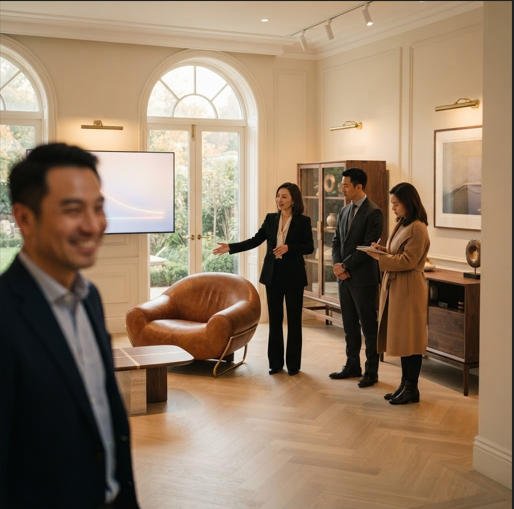
 The design authority conversation: when clients see the evidence of a piece’s lasting relevance, the price becomes secondary to the provenance.
Positioning Your Business as a Design Thought Leader
The B2B furniture businesses that consistently win premium accounts share a characteristic that has nothing to do with their product range: they are recognized as knowledgeable advisors, not order-takers. The distinction is commercial. An order-taker competes on price and availability. A knowledgeable advisor commands respect and margin.
Building design authority requires three sustained activities. The first is educational content: case studies, workshops, and client presentations that explain the principles of timeless design, the TCO advantage of premium investment, and the sustainability narrative that resonates with sophisticated buyers. The second is demonstrated expertise: the ability to speak confidently about Boca do Lobo’s craft techniques, material sourcing, and design philosophy — not from a brochure, but from direct knowledge developed through product training and atelier visits where available. The third is documented evidence: before-and-after projects, client testimonials, and metric-supported case studies that convert abstract quality claims into concrete outcomes.
Distributors and showroom partners who invest in these three activities consistently achieve higher average transaction values, lower price sensitivity in client conversations, and stronger referral rates from existing accounts.
Supporting Your Interior Designer Partners
Interior designers are the most valuable channel partners in the luxury furniture ecosystem — they drive specifier decisions on residential, hospitality, and commercial projects, and they influence the purchasing of clients who would never independently arrive at a premium piece like a Boca do Lobo collection. But they are also among the most demanding partners: they expect product knowledge, project support, and a relationship that makes their professional life easier rather than more complicated.
For distributors seeking to build strong designer relationships, the practical investments are: maintaining a curated trade pricing structure that rewards loyalty rather than one-time volume, providing specification support tools (digital renders, material samples, spatial planning guidance), and developing a reputation for reliable lead time communication — the single most common complaint designers report about premium furniture suppliers.
Meubles Jade Ant has built its trade partnership model around precisely these designer requirements, providing B2B clients with access to Boca do Lobo collections alongside the project support infrastructure that converts initial interest into long-term specification partnerships.
Strengthening Relationships with Hotel and Hospitality Clients
Hospitality clients evaluate furniture investments differently from residential buyers — their primary metric is operational ROI, not aesthetic preference. The hotel GM who signs off on a $180,000 lobby furniture specification is not thinking about personal taste; they are thinking about useful life, maintenance complexity, and the guest review impact of the design investment.
This means the sales conversation with hospitality clients should lead with the operational evidence: documented lifecycle performance in comparable hotel environments, maintenance cost data, guest review correlation with design quality, and the TCO model that makes the premium investment defensible to ownership. Aesthetic quality is the supporting argument — operational and financial performance is the lead.
For hospitality clients with multi-property portfolios, the customization and bespoke service capabilities that Boca do Lobo offers through its contract division become an additional differentiator: the ability to develop property-specific or brand-specific design elements within the collection framework creates an exclusivity that generic suppliers simply cannot match.
🎬 Watch: Boca do Lobo — A Design and Craftsmanship Documentary

An inside view of the Porto atelier where every Boca do Lobo piece is born — essential viewing for any B2B professional seeking to articulate the brand’s value to clients and specifiers. Watch on YouTube →
The Financial Impact — ROI for B2B Partners
Quantifying the Business Benefits of Timeless Design
The financial case for building a business around timeless luxury design rather than trend-driven volume has become increasingly quantifiable as market data matures. The headline metrics that matter for B2B partner financial modeling are: average selling price (ASP), gross margin percentage, inventory carrying cost, markdown frequency, and customer lifetime value (CLV).
On every dimension, timeless luxury furniture generates structurally superior financial outcomes when managed appropriately. ASP is higher by definition, but the more important metric is margin per transaction: a $45,000 Heritage Sideboard at 50% gross margin generates $22,500 in gross profit; achieving the same gross profit through trend-driven furniture at 30% margin requires $75,000 in revenue — a volume requirement that carries proportionally higher carrying costs, markdown risk, and operational complexity.
CLV is where the long-term financial advantage becomes most significant. A designer who specifies Boca do Lobo across multiple projects over five years — drawn from a showroom that supported them through their first specification with knowledge, service, and reliable logistics — represents a revenue stream measured in hundreds of thousands of dollars. The acquisition cost of that relationship (the investment in product knowledge, designer events, and specification support) is typically recovered within the first or second transaction.
Comparative Financial Analysis
The following model compares a five-year profitability scenario for a showroom with 400 square meters of prime display floor space, operating under two strategic orientations:
| Financial Metric (5-Year) | Fast-Furniture Strategy | Boca do Lobo Timeless Strategy |
|---|---|---|
| Avg. selling price per transaction | $4,200 | $28,500 |
| Gross margin % | 28% | 52% |
| Annual transactions | 340 | 78 |
| Annual gross revenue | $1,428,000 | $2,223,000 |
| Annual gross profit | $400,000 | $1,156,000 |
| Markdown/clearance cost p.a. | $84,000 | $12,000 |
| Net profit contribution p.a. | $316,000 | $1,144,000 |
| 5-Year net profit | $1,580,000 | $5,720,000 |
| Showroom productivity ($/sqft/yr) | $790 | $2,860 |
These are illustrative benchmarks based on luxury retail margin data, industry ASP research, and HFA showroom productivity norms. Actual results vary by market, location, and execution quality.
The model is simplified — it does not capture all cost variables — but the directional conclusion is robust: a showroom business built around premium timeless inventory generates significantly higher profitability per square meter of display space, even at substantially lower transaction volumes.
Investment Strategy for Growing Your Boca do Lobo Partnership
For distributors and showroom operators at different stages of their Boca do Lobo relationship, the investment priorities differ. New partners should focus initial inventory investment on the collections with the broadest design compatibility — Heritage, Apotheosis, and Empire Desk series — pieces that integrate across the widest range of client design vocabularies and therefore generate the most versatile specification opportunities.
Established partners should layer in limited-edition pieces strategically, using them as flagship display anchors and pre-order vehicles rather than regular stock. The limited-edition disciplines of managed scarcity and full-price discipline, once established with your client base, become a self-reinforcing cycle: clients who know your showroom holds exclusive pieces visit before they are gone, rather than after they need to be discounted.
Advanced partners should develop the service infrastructure — specification support, designer education programs, bespoke consultation services — that creates the deepest competitive moat. These services are not replicable by online retail and are the primary reason that clients choose physical showroom partners over direct purchasing channels.
Overcoming Market Misconceptions and Sales Objections
Addressing the “Timeless Means Boring” Objection
This objection most commonly surfaces in client conversations with buyers who associate “timeless” with the aesthetic minimalism of mid-century revival pieces or the restrained classicism of traditional European furniture. Boca do Lobo is the most effective rebuttal to this misconception that exists in the market.
The Pixel II Heritage Cabinet — with 1,088 individually placed triangular panels in combinations of gold, silver, and translucent lacquer — is not boring. The Apotheosis Sideboard, with its three-dimensional brass landscape surface that seems to grow organically from the piece’s core, is not conservative. The Lapiaz Center Table, whose surface simulates the geological drama of a limestone karst formation, does not evoke safety or predictability.
What Boca do Lobo demonstrates is that timeless design and aesthetic boldness are not opposing forces — they are complementary qualities when the boldness is grounded in material permanence, craft excellence, and cultural depth rather than trend responsiveness. The piece that looks visually surprising in 2025 but is rooted in a 16th-century craft tradition will not look dated in 2035. The piece that looks visually surprising in 2025 because it reflects 2025’s trending aesthetic probably will.
For showrooms and distributors, the most powerful tool against the “timeless means boring” objection is simply showing the work. Comprehensive display environments that allow clients to experience the visual complexity and tactile quality of Boca do Lobo’s pieces convert skeptics faster than any verbal argument.
Handling Price Sensitivity and Budget Constraints
Price sensitivity in luxury furniture is almost always a symptom of inadequate value communication rather than genuine budget limitation. The client who says “it’s too expensive” is typically saying “I haven’t yet understood why it costs this much.”
The TCO conversation is the most effective response. Walk the client through a direct comparison: the price of this piece over 20 years of ownership versus the cumulative cost of replacing a cheaper alternative every three to five years. Include the hidden costs that are genuinely relevant to their context — for a hotel client, that means operational disruption during replacement cycles; for a residential client, that means the procurement time, decision fatigue, and disposal costs of repeated replacement; for an interior designer, that means the reputational exposure of specifying pieces that date within the project’s useful life.
For clients with genuine budget constraints in a specific project, the appropriate response is a tiered specification conversation: identify which elements of the project benefit most from the timeless premium investment (statement pieces, focal points, client-facing furniture) and which can sustain a more modest specification. Concentrating the premium investment where it generates maximum perceived value — and being explicit with the client about this strategy — demonstrates exactly the kind of design expertise that builds long-term trust.
Building Confidence in Market Demand
 A showroom environment designed around timeless investment pieces signals to visitors that this is a destination for discerning buyers, not a clearance rotation.
Clients who are new to the luxury furniture B2B proposition sometimes need market evidence before committing at a premium price point. The evidence available is substantial: the luxury furniture market’s documented growth trajectory (from $33.2 billion in 2025 to a projected $51.8 billion in 2035 at consistent CAGR), the documented performance of luxury hospitality properties that invest in premium design (see the ADR and RevPAR data from section 4), and the award recognition and publication presence that Boca do Lobo has maintained consistently across two decades.
Design award documentation is particularly useful with hospitality clients, who respond to evidence that the industry’s most respected practitioners — the editors of Architectural Digest, the juries of the Maison et Objet awards, the design teams of Fairmont and The New York Palace Hotel — have validated this brand. That validation reduces the perceived risk of a significant investment in an unfamiliar category.
Future-Proofing Your Business — The Long-Term Partnership Advantage
Positioning for Evolving Market Dynamics
The structural trends shaping the furniture industry over the next decade all favor premium, timeless design over fast-furniture volume models. Consumer and institutional buyers are becoming more sustainability-conscious and more sophisticated about value. Regulatory pressure on supply chain transparency is intensifying. The fast-furniture segment is under increasing ESG scrutiny. And the luxury segment is growing at a rate significantly above the overall furniture market.
For distributors and showroom operators who are currently positioned across multiple market tiers, this is the moment to assess the strategic composition of their portfolio. Businesses that reduce their exposure to fast-furniture inventory and build a deeper, better-supported premium offering will be structurally better positioned in five years than those who maintain the status quo.
The Boca do Lobo partnership is not the only possible route to this repositioning — but it is one of the most clearly differentiated. The brand’s combination of genuine craft heritage, limited-edition discipline, international recognition, and growing hospitality and commercial track record provides partners with a premium anchor that is difficult to replicate.
Innovation Within the Timeless Framework
A common concern among distributors evaluating a deeper investment in timeless design is whether the brand will continue to evolve — whether new collections will provide the “news” needed to sustain client engagement and return showroom visits.
Boca do Lobo’s approach to this challenge is to innovate within the timeless framework rather than pivoting toward trend responsiveness. New collections are developed from new cultural or material explorations — not from trend forecasting. The 2024-2025 new arrivals — including the Outburst Chandelier, the Empire II Console, and the Pietra Modular Dining Table — demonstrate design evolution that is distinctive and bold without being trend-dependent.
For B2B partners, emerging technology tools — virtual showroom platforms, AR visualization applications that allow clients to see pieces in their actual space, and digital specification tools — create new engagement opportunities without requiring physical inventory expansion. These tools allow showroom operators to present the full Boca do Lobo catalogue to clients whose project requirements exceed the displayed inventory, extending the effective commercial range of any showroom investment significantly.
Creating Sustainable Growth Models
The most durable business model in premium furniture distribution is one where revenue is not primarily transactional but is built on layered service relationships: specification consulting, project management support, bespoke customization coordination, and ongoing client maintenance programs. These services generate recurring revenue, deepen client dependency, and create switching costs that protect the relationship against competitive approaches.
For distributors and showrooms developing this service layer, the Boca do Lobo partnership provides an ideal content platform. The brand’s craft heritage, bespoke capabilities, and international design authority generate constant material for client education events, designer workshops, press coverage, and social media content — all of which support the thought-leadership positioning that attracts the premium clients this model depends on.
Meubles Jade Ant‘s B2B partnership programs are designed to support this service-layered model, providing trade partners with access to specification support, customization consultation, and the brand knowledge resources that make client-facing design authority achievable regardless of the partner’s internal team size.
Making the Strategic Choice — Why Timeless Design Is the Smart Business Decision for B2B Partners
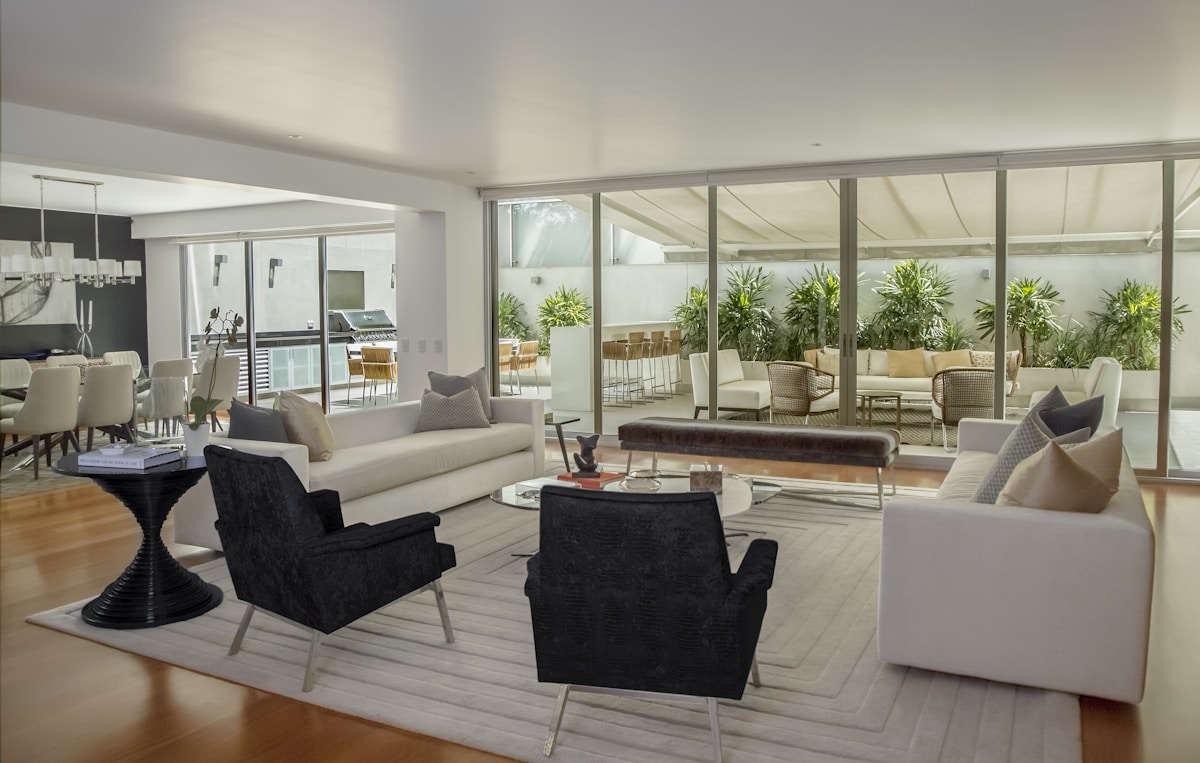 Every business decision to invest in timeless design ultimately rests on this: the human skill and craft commitment that no industrial process can replicate.
In an industry increasingly defined by volatility and short-term thinking, timeless design represents a strategic advantage that compounds over time rather than eroding. The evidence across every dimension of this analysis points in the same direction: the business built on premium, timeless inventory generates higher margins, stronger client relationships, lower operational complexity, and better positioning for the sustainability-driven market shifts that will shape the next decade.
By partnering with Boca do Lobo — whether through a direct distribution relationship or through established trade partners like Meubles Jade Ant — you are not simply adding a product line. You are building a reputation for design excellence, sustainability credibility, and client satisfaction that differentiates your business in ways that neither price competition nor promotional volume can replicate.
The choice between chasing trends and investing in timeless design is ultimately a choice between short-term sales and long-term business success. For those building businesses they want to be proud of in a decade, the strategic direction is clear.
Ready to Transform Your Business Through Timeless Design?
Discover how becoming a Boca do Lobo partner can elevate your showroom, strengthen your designer relationships, and build a more profitable, sustainable business.
Connect with the Jade Ant Furniture B2B trade team to analyze your market opportunity, develop a customized inventory strategy, and access wholesale pricing for Boca do Lobo’s curated collections. For further reading on luxury furniture positioning strategy, visit Architectural Digest’s trade resources, the American Society of Interior Designers, et Hospitality Design magazine.
Contact Our B2B Partnership Team | Explore Boca do Lobo Collections | Request Wholesale Pricing | Download the Distributor’s Guide
📖 Glossary of Key Terms
TCO (Total Cost of Ownership) — A procurement analysis methodology that evaluates the complete cost of an asset across its full useful life, including purchase price, installation, maintenance, replacement cycles, and disposal costs. In furniture procurement, TCO consistently favors premium, long-lifecycle pieces over budget alternatives with high replacement frequency.
ASP (Average Selling Price) — The average revenue generated per transaction. A key indicator of a business’s market positioning and margin sustainability.
CLV (Customer Lifetime Value) — The total projected revenue a business can expect from a single client relationship across the entire duration of that relationship. Premium B2B furniture businesses typically generate 5–10x higher CLV from designer and hospitality clients than transactional retail.
ESG (Environmental, Social, and Governance) — A framework used by institutional investors and large corporate clients to evaluate the sustainability and ethical credentials of their business partners and supply chains. Increasingly embedded in formal procurement requirements.
Limited Edition — A production model in which pieces are manufactured in strictly controlled quantities, documented by numbered certificates. This creates genuine scarcity that supports full-price discipline and collector-level perceived value.
Azulejaria — The traditional Portuguese craft of hand-painting glazed ceramic tiles (azulejos) in decorative narrative patterns. Practiced since the 15th century, this technique is a central element of Boca do Lobo’s Heritage Collection and represents one of Portugal’s most significant cultural craft contributions.
RevPAR (Revenue Per Available Room) — The hospitality industry’s primary performance metric, calculated by multiplying average daily rate (ADR) by occupancy rate. A key indicator of how design investment translates into commercial outcomes for hotel properties.
Inventory Turnover — The number of times a business sells and restocks its inventory within a given period. High turnover in fast-furniture models often masks poor margin performance; lower turnover in premium models is typically accompanied by significantly higher per-transaction profitability.
Frequently Asked Questions
Q1: How does Boca do Lobo’s pricing compare to fast-furniture alternatives for B2B buyers?
The initial purchase price is substantially higher — Boca do Lobo pieces operate at a premium tier that reflects handcrafted production, limited-edition scarcity, and material quality that cannot be replicated at industrial pricing. However, the relevant comparison for B2B decision-making is TCO (Total Cost of Ownership). Over a 15-year horizon, a Boca do Lobo piece that requires maintenance but no replacement compares against two to five fast-furniture replacement cycles — each carrying its own purchase, installation, disposal, and operational disruption costs. Properly modeled TCO analysis typically shows 30 to 40% lower lifetime cost for the premium piece, even before accounting for the margin differential that the distributor or showroom captures on each transaction.
Q2: What is the typical inventory turnover rate for Boca do Lobo collections, and how does this affect distributor cash flow?
Timeless luxury pieces typically turn 1 to 2 times annually, compared to 4 to 6 turns for trend-driven furniture. This slower turn is not a cash flow liability when managed appropriately — because it is accompanied by significantly higher per-transaction margins and elimination of the markdown write-offs that erode fast-furniture profitability. The distributing business that sells 60 Boca do Lobo pieces per year at 52% gross margin generates materially more gross profit than one selling 300 trend pieces per year at 28% margin — with lower storage costs, fewer operational cycles, and a better client relationship profile.
Q3: Can Boca do Lobo pieces be customized for specific client projects?
Yes — customization is a meaningful capability within the Boca do Lobo offering. Finish variations (including custom lacquer color matching to specific project palettes), alternative material selections within the natural stone ranges, and dimensional adjustments within structural constraints are available through the brand’s bespoke program. Lead times for custom configurations typically range from 8 to 16 weeks depending on complexity. All customization requests should be channeled through your authorized trade partner — such as Meubles Jade Ant — who can confirm feasibility and manage the production liaison on your behalf.
Q4: How should B2B professionals handle price sensitivity from clients unfamiliar with luxury furniture investment?
The most effective approach is redirecting the conversation from purchase price to total value. Introduce the TCO framework — the full lifecycle cost comparison against replacement alternatives. For hospitality clients, add the operational disruption costs of replacement cycles (downtime, staff overhead, guest experience interruption). For residential and design clients, add the reputational cost of specifying pieces that date within the project’s useful life. Clients who engage with the full value narrative typically shift from price objection to purchase commitment — they are not abandoning their cost consciousness, they are applying it to a more complete dataset.
Q5: What marketing and training support does Boca do Lobo provide to authorized showroom and distribution partners?
The trade partner support infrastructure includes marketing collateral (photography, video, specification documentation), designer education materials, virtual showroom assets, access to design consultation training, and quarterly collection updates and trend context briefings. For partners with significant annual specification volumes, dedicated account management and priority access to limited-edition pre-order programs are available. Partners working through authorized distributors like Meubles Jade Ant can access this support infrastructure as part of their partnership onboarding.
Q6: How does Boca do Lobo handle inventory planning and ordering for distributors?
The ordering framework includes both standard-collection ordering (pieces in active production with documented lead times of 4 to 8 weeks) and limited-edition pre-order programs (allowing partners to secure allocation before production completion). Demand forecasting support, real-time inventory availability, and flexible ordering structures are available through the trade partner relationship. The limited-edition pre-order system, in particular, is a significant competitive advantage for partners — securing confirmed allocation before pieces sell through eliminates the risk of being unable to fulfill client specifications.
Q7: Are Boca do Lobo pieces appropriate for high-traffic commercial and hospitality environments?
Yes — and this suitability is not incidental but engineered. Pieces specified for commercial and hospitality environments are available in contract-grade configurations: protective lacquer treatments rated to FIRA Grade 5 abrasion resistance, living-finish brass specifications that develop patina with use rather than requiring maintenance to preserve an artificial pristine state, and natural stone surfaces specified with commercial-grade sealing treatments. The brand’s contract division has furnished major hotel groups including Fairmont Hotels, The New York Palace Hotel, and luxury properties across Europe, the Middle East, and Asia. Extended warranty provisions for commercial applications are available through the contract specification program.
Q8: What sustainability certifications and supply chain transparency does Boca do Lobo provide?
Boca do Lobo’s sustainability position is grounded primarily in its production methodology: artisanal, precision-focused production generates minimal material waste by design. The brand maintains responsible sourcing commitments across its primary material categories — certified wood species in structural components, ethically sourced leather and textiles, and conflict-free precious metals. Supply chain transparency documentation is available for procurement processes that require it. For B2B partners whose clients require formal ESG documentation, these materials can be provided through the trade partner relationship; consult your account contact at Meubles Jade Ant for current certification documentation.
Q9: How can showroom operators differentiate their space using Boca do Lobo collections?
The most effective showroom differentiation strategy is the “gallery circuit” model: organize display space around three to five destination zones, each anchored by a Boca do Lobo statement piece in a fully styled vignette environment. This approach — supported by research on customer dwell time and conversion rates — dramatically outperforms the conventional grid-display format. Showrooms that have implemented this model report 200%+ increases in average dwell time and 100 to 150% increases in qualified conversion rates. Additionally, developing exclusive collections (pieces or configurations not carried by other showrooms in your market) through the brand’s bespoke program creates a destination draw that generic inventory cannot replicate.
Q10: What warranty and after-sales support structure covers Boca do Lobo pieces?
Standard structural warranty covers a five-year period across all collections, encompassing frame integrity and craftsmanship execution. Extended warranty provisions — covering up to ten years — are available for commercial and hospitality applications through the contract specification program. After-sales support includes access to matched repair materials for finish touch-ups, craftsman referral for major restoration work, and replacement component availability for pieces within the warranty period. Partners who identify a warranty issue on behalf of a client should raise it through their trade account contact; the resolution process is managed through the distributor relationship rather than requiring client-direct contact with the manufacturer.
Q11: How should sales teams be trained to present timeless design arguments persuasively?
Effective training for luxury furniture sales is not primarily product knowledge — it is value communication methodology. Sales teams need to be fluent in three distinct conversation modes: the TCO conversation (total lifecycle cost versus alternatives), the design authority conversation (why this piece maintains relevance while trend pieces date), and the sustainability conversation (lifecycle extension as the ultimate environmental credential). Boca do Lobo’s trade partner program includes access to structured sales training covering all three modes, supplemented by quarterly webinars on new collections and market positioning updates. Internally, the most effective training tool is systematic documentation of successful client conversion stories — real cases where the value narrative converted a price-sensitive inquiry into a full-price commitment.
Q12: Are flexible terms available for established distributor partners?
Term flexibility is available for partners with established performance track records, and the specific structures vary by market, volume commitment, and partnership tenure. Arrangements including extended payment terms, consignment display stock for flagship showroom environments, and co-investment in marketing programs are all within the scope of established partner discussions. The appropriate starting point is a direct conversation with your trade account manager — for partners accessing Boca do Lobo through Meubles Jade Ant, this conversation can be initiated through the partnership contact channel.
Q13: What are the lead times for standard versus custom orders, and how should project timelines be planned?
Standard in-production pieces carry lead times of 4 to 8 weeks from confirmed order to readiness for dispatch. Custom-configured pieces — including finish variations, material alternatives, and dimensional modifications — require 8 to 16 weeks depending on specification complexity. For time-sensitive projects (hotel openings, residential handovers with fixed completion dates), lead time confirmation should occur at project briefing stage, not at specification sign-off. Partners consistently report that early lead time engagement is the single most important planning discipline for avoiding project delivery complications.
Q14: How does Boca do Lobo support interior designers who specify pieces across multiple projects?
The designer support framework includes a structured trade pricing tier that provides consistent margin on all specifications, priority access to limited-edition pre-order allocation (ensuring designers can secure pieces for upcoming projects before they sell through), co-branded specification documentation that designers can present directly to clients, and access to the brand’s design consultation resources for complex project briefs. For designers who develop consistent specification volume, dedicated relationship management through their trade distributor creates a single point of contact that streamlines the entire process from enquiry through delivery.
Q15: What performance metrics should B2B partners track to evaluate the health of their Boca do Lobo relationship?
The primary metrics to track are: gross margin percentage per Boca do Lobo transaction (target: maintain above 45%, monitor for discount creep), average selling price (monitor for trend toward lower-priced pieces that may indicate client educational gaps), customer lifetime value for design professional accounts (target: consistent growth as designer specifications multiply across projects), markdown frequency and depth (any markdown on Boca do Lobo stock is an indicator of display strategy or client communication issues, not a pricing inevitability), and new client acquisition through referral (the clearest indicator that your Boca do Lobo offering is generating the word-of-mouth that premium design partnerships should produce). Quarterly business reviews with your trade account contact at Meubles Jade Ant provide the framework for reviewing these metrics and adjusting strategy accordingly.
This article was produced with the support of Meubles Jade Ant, a dedicated B2B trade partner for design professionals, distributors, showroom operators, and hospitality specialists seeking access to Boca do Lobo and other luxury furniture collections. For further resources on luxury furniture strategy, visit Hospitality Design, Interior Design Magazine, the American Society of Interior Designers, et Designboom.