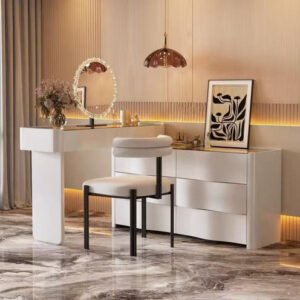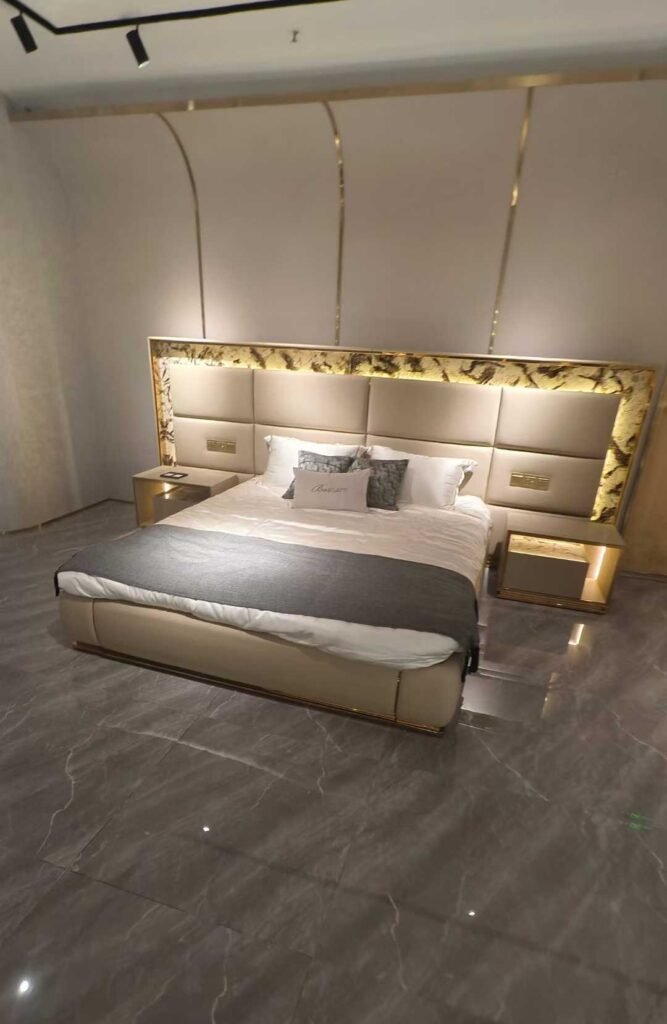
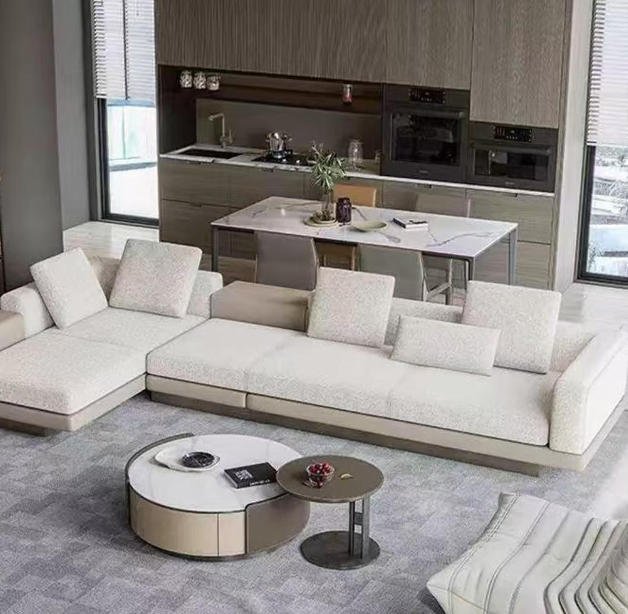
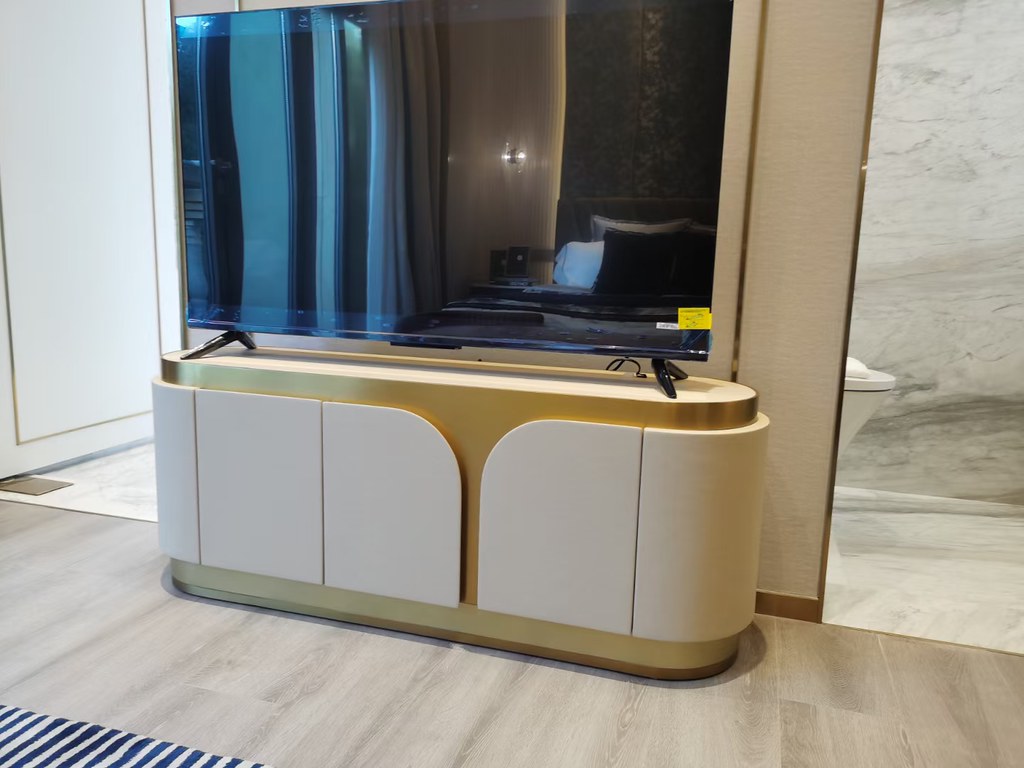
A data-driven decision framework for FF&E buyers, interior designers, luxury developers, hotel operators, and private-label brands.
1. Executive Summary: The Decision That Shapes Your Property’s Future
Every luxury hotel project arrives at the same crossroads: custom furniture or stock?
It sounds like a design question. In reality, it is a financial strategy decision — one that ripples through your guest satisfaction scores, brand positioning, operational budgets, and long-term asset value for the next 10 to 15 years.
Here is the challenge: both sides of this debate have vocal advocates and selective evidence. Custom furniture champions cite brand differentiation and premium guest experience. Stock furniture proponents point to speed, predictability, and capital efficiency. Both are right — in the right context.
The hotel FF&E (Furniture, Fixtures, and Equipment — the movable, non-structural components of a hotel interior) market was valued at approximately $63.1 billion in 2025 and is projected to reach $107.9 billion by 2033 (Grand View Research). At that scale, procurement decisions made without a clear analytical framework are among the most expensive mistakes in hospitality development.
This guide cuts through the noise. Two real-world case studies, a 10-point comparison framework, a full TCO (Total Cost of Ownership — the complete financial cost of a decision including acquisition, maintenance, and replacement over its useful life) analysis model, and role-specific strategic guidance — all designed to help you make the right call for your specific project, budget, and brand ambition.
The bottom line before you read further: the right answer is almost never purely one or the other. The professionals winning in luxury hospitality right now are those who know when to go custom, when stock serves the brief, and how to blend both for maximum return.
2. Case Study 1: Five-Star Resort in Bali — Custom Furniture Triumph
The project that built its ROI into the design specification.
The brief: A celebrity-owned boutique resort in Seminyak, Bali — 38 villas, 180-room equivalent. The design concept was built around a contemporary reinterpretation of traditional Balinese craft: hand-carved teak panels, hand-woven rattan lounge pieces, bespoke stone-top dining tables, and layered upholstered bedroom suites that referenced the island’s textile traditions.
The challenge: The developer needed furniture that communicated genuine cultural specificity — not the generic “tropical luxury” aesthetic that populates hundreds of regional competitors — while meeting international contract-grade durability standards for continuous commercial use. Every piece had to survive the humidity of a tropical maritime climate, heavy occupancy cycles, and the scrutiny of guests paying $1,200 to $3,500 per night.
Off-the-shelf catalog furniture, however premium, could not meet this brief. The design intent required pieces that did not exist in any supplier’s stock program.
The solution: A collaboration between a Bali-based artisan workshop and a European-Asian joint manufacturer with ISO 9001 quality management certification. Custom production of 14 furniture typologies across the full property program, with a design-to-delivery timeline of six months. Third-party pre-shipment inspection at the factory stage. Physical sample approval for every piece before bulk production commenced.
The outcomes after 36 months of operation:
- +38% improvement in design-related guest satisfaction scores compared to the developer’s previous property (which had used premium stock furniture)
- 12-year projected lifespan for primary case goods — against the industry average of 7 years for contract-grade stock furniture
- ROI achieved in 4.2 years — driven by an ADR (Average Daily Rate) premium of 23% over regional competitive set properties, which the developer directly attributed to design distinctiveness in guest review analytics
- Repeat booking rate of 34% — double the regional hospitality average — with repeat guests consistently citing the “unlike anything else” physical environment in feedback surveys
The investment reality: Custom furniture added approximately 32% to the FF&E budget versus a comparable stock program. That premium was recovered through ADR uplift within the first four years — and every year beyond that point is pure margin advantage over the stock alternative.
FF&E Buyer Takeaway: When design differentiation is a documented revenue driver — measurable through ADR, repeat booking rate, and review sentiment — custom furniture’s cost premium is not a budget risk. It is a revenue investment with a calculable payback period.
3. Case Study 2: Boutique Hotel in Lisbon — The Stock Furniture Experiment
Speed won the opening. But Year 2 told a different story.
The brief: A 62-room boutique hotel conversion in Lisbon’s Baixa-Chiado district — a historic building with a tight renovation window and a developer committed to a specific opening date tied to a marketing campaign and pre-sold bookings.
The challenge: The renovation timeline allowed only 90 days from construction handover to guest-ready opening. Custom furniture’s minimum 16–20 week total lead time (production plus ocean freight) was incompatible with this constraint. The design brief was flexible enough to work with premium stock options — a contemporary European aesthetic that several Italian catalog suppliers served well.
The solution: The FF&E buyer sourced a premium stock program from an Italian distributor — a coordinated bedroom, lounge, and dining collection at 18% below initial project budget estimates. Delivery in six weeks. Installation completed eight days before soft opening.
The outcomes through 36 months of operation:
- 30% under original furniture budget — the capital efficiency freed funds for a superior F&B fit-out that generated strong early revenue
- Delivered in 6 weeks from order to installation — the opening date was met without compromise
- Early wear visible in public area lounge seating by Year 2 — the lobby chairs, specified at 30,000 Martindale rub cycles (a standard measure of fabric abrasion resistance), showed visible pilling and seat compression under the volume of foot traffic the property’s prime location generated
- Guest review sentiment analysis from 847 verified reviews over 30 months showed a recurring theme: “stylish but familiar” et “looked like other boutique hotels we’ve stayed in” — design language that did not generate the differentiated loyalty the developer had hoped for
- ROI achieved in 5.1 years — compared to 4.2 years for the Bali custom program — with maintenance costs for lounge reupholstery adding $28,000 to the Year 3 operating budget
The honest assessment: The stock decision was correct for this project’s constraints. The opening deadline was non-negotiable. The capital saved on furniture was productively redeployed. But the Year 2 and Year 3 costs — both financial (reupholstery) and competitive (undifferentiated guest perception) — were not factored into the original procurement analysis.
Developer Takeaway: Stock furniture wins on speed and capital efficiency. The cost of that win shows up in operating budgets and competitive positioning in years two through five — costs that are real but often invisible in the initial procurement decision.
4. Comparative Breakdown: 10 Key Decision Structures
A reference framework for FF&E planners, developers, interior designers, and hospitality operators.
| # | Decision Dimension | Meubles sur mesure | Stock Furniture |
|---|---|---|---|
| 1 | Design Flexibility | Full creative control; brand-aligned, site-specific aesthetics | Limited to existing catalogs; minor finish and fabric options only |
| 2 | Lead Time | 4–8 months total (design, prototyping, production, freight) | 4–12 weeks (in-stock or short-run programs) |
| 3 | Initial Cost | 20–40% higher upfront per unit (Hotel Furniture Cost Guide) | Lower initial outlay; predictable per-unit pricing |
| 4 | Durability & Lifespan | Engineered for commercial traffic; 10–15 years for quality programs | 5–8 years for premium stock; faster degradation in public zones |
| 5 | ROI Timeline | 3.5–5 years (brand premium, ADR uplift, guest retention) | 4.5–6 years (cost efficiency-led, lower revenue ceiling) |
| 6 | Scalability | Challenging for multi-property chains without framework agreements | High — consistent specification across unlimited locations |
| 7 | Maintenance & Repairs | Bespoke components; longer lead for replacement parts | Standardized parts; easier and faster replacement sourcing |
| 8 | Brand Differentiation | High — creates a unique, unreplicable guest environment | Moderate — risk of “seen-it-before” feedback from frequent travelers |
| 9 | Sustainability | Can specify FSC-certified, low-VOC, traceable materials throughout | Variable — mass production often involves mixed and opaque sourcing |
| 10 | Architectural Integration | Seamless — dimensioned and designed for the specific space | Requires design compromise to fit standard catalog dimensions |
5. When to Choose Custom: Strategic Scenarios
Custom furniture is the right procurement model when the design itself is a commercial asset. Here are the scenarios where custom consistently delivers superior returns:
Luxury flagship properties where design is a revenue driver. When ADR, repeat bookings, and press coverage are all influenced by how memorable and specific the physical environment feels, custom furniture is not a cost line — it is a revenue strategy. Properties charging above $500 per night are competing on experience differentiation, and generic catalog furniture undermines that positioning at the most tactile, guest-facing level.
Heritage and context-sensitive locations requiring cultural authenticity. A boutique hotel in a restored Ottoman han, a resort on a UNESCO-listed island, a branded residence in a historic European city — these locations carry a design obligation to the place. Catalog furniture, however beautifully made, cannot fulfill that obligation. Custom pieces, developed with regional craft knowledge, can.
Private-label furniture brands building long-term exclusivity. For importers and brand owners developing proprietary collections, custom manufacturing is the only route to genuine exclusivity. A private-label bedroom collection — custom dimensions, proprietary finish, exclusive hardware — cannot be found in any competitor’s showroom or sourced through any other channel. That exclusivity compounds into brand equity with every project it appears in.
Developers targeting ultra-high-net-worth buyers in branded residences. Buyers paying $3 million or more for a branded residence are purchasing an environment as much as a property. They recognize catalog furniture. Custom pieces — ones they have seen in design publications, in the developer’s other projects, or nowhere else — signal the level of investment and intention that justifies premium pricing.
Projects with phased timelines that accommodate extended lead times. When the construction schedule allows for procurement to begin 6–8 months before installation, the lead time disadvantage of custom furniture disappears entirely. Smart FF&E buyers lock custom orders at design approval, not at construction completion.

Custom furniture in a luxury property does not just look different — it performs differently. The guest experience that generates ADR premiums and repeat bookings is built into the specification, not the marketing budget.
6. When to Choose Stock: Pragmatic Procurement Wins
Stock furniture is not a compromise. In the right circumstances, it is the strategically superior choice — and experienced procurement professionals know how to deploy it effectively.
Renovations with aggressive timelines. When an opening date, a lease commencement, or a brand franchise agreement creates a hard delivery deadline that custom lead times cannot meet, stock furniture is not a fallback — it is the correct answer. The 6-week delivery case study from Lisbon demonstrates that a well-sourced stock program can deliver a genuinely premium result under time pressure.
Satellite properties in a chain needing brand consistency. A hotel group operating 15 properties with a shared brand identity needs furniture that looks identical across locations — the same dining chair in Denver as in Dubai. Custom furniture at that scale and with that consistency requirement becomes a logistics and design management challenge that stock programs handle inherently.
Budget-constrained projects where capital efficiency is the brief. When a developer needs to maximize rooms delivered per dollar invested — a value-add acquisition, a midscale brand conversion, an extended-stay property — premium stock furniture at competitive pricing delivers design quality without the custom premium. The capital saved funds amenities, technology, or F&B programming that also drive guest satisfaction.
FF&E stop-gaps during supply chain disruptions. When a custom order is delayed by port congestion, raw material shortages, or production schedule compression, in-stock alternatives for non-critical pieces can protect an opening date while custom hero pieces catch up. This selective deployment of stock as a contingency tool is a legitimate professional tactic.
Interior designers managing multiple concurrent mid-tier projects. When a design studio is running five simultaneous projects across different hospitality clients, the project management overhead of custom furniture programs for every piece is operationally unsustainable. Stock programs with reliable delivery and consistent quality allow designers to concentrate their custom specification energy on the pieces where it generates the most design return.
7. Hidden Costs & Risks: What Most Suppliers Won’t Tell You
Both procurement models carry costs that don’t appear on any quote. Understanding them before you commit is what separates experienced FF&E buyers from those who discover them mid-project.
Hidden Costs in Stock Furniture
Import tariffs that shift mid-project. En tant que Architectural Digest reported in their import tariff analysis, US tariff adjustments on furniture imports have added unexpected cost to projects that were budgeted in good faith under previous tariff schedules. For a $500,000 furniture program, a 15% tariff increase mid-procurement is a $75,000 unbudgeted cost.
MOQ penalties on modified stock. When a client requests a finish change, a COM (Customer’s Own Material — where the client supplies fabric for the manufacturer to apply) upholstery specification, or a minor dimensional adjustment on a stock piece, manufacturers frequently require MOQ (Minimum Order Quantity — the smallest number of units they will process for a non-standard modification) compliance that makes the modification commercially impractical. A single finish-changed dining chair may require a minimum of 50 units to trigger production — effectively making it a custom order at stock speed but custom cost.
Limited warranty coverage in commercial use. Most stock furniture warranties are written for residential use cycles. Commercial hospitality use — multiple occupants per day, commercial cleaning products, continuous structural stress — often constitutes grounds for warranty exclusion under the fine print. Review warranty terms specifically for commercial use validity before specifying stock furniture in high-traffic hospitality areas.
Early replacement cycle costs. The TCO model from the Lisbon case study reveals the true cost of early degradation: the $28,000 lounge reupholstery cost in Year 3 was not in the original procurement budget. When multiplied across all public area seating, early wear in stock furniture programs routinely adds 8–15% to the total 5-year furniture cost versus initial estimates.
Hidden Costs in Custom Furniture
Design iteration costs. Each revision cycle in a custom furniture development program — adjusting proportions, changing finish specifications, modifying upholstery selection — carries a cost: prototype labor, material waste, and project management time. A program with five revision cycles before final approval can add 10–15% to the design and sampling phase cost. Controlling this requires a thorough specification sign-off process before sampling begins, not after.
Currency fluctuation exposure on international production. A custom furniture order priced in USD equivalent at the time of deposit can face meaningful cost changes by delivery if the exchange rate between the procurement and payment currencies shifts materially. Projects with 6–8 month production timelines should hedge currency exposure or denominate contracts in a single currency.
Port delays and their project schedule impact. Ocean freight for custom furniture programs from Asian production facilities carries an inherent delay risk — port congestion, weather events, inspection holds — that can add 2–4 weeks to the expected arrival window. Building this buffer into project schedules is standard practice for experienced FF&E buyers; failing to do so is the single most common source of pre-opening schedule slippage.
Mitigation Strategies for Both Models
Contractual clarity — specify in writing the exact materials, finishes, dimensions, and delivery conditions, with documentary evidence (approved samples, photographs, specification sheets) attached to the purchase order as binding reference.
Phased payment structures — 30% at order placement, 30% at production completion with pre-shipment inspection report, 40% at delivery acceptance — align financial exposure with deliverable milestones.
Third-party QC audits — pre-shipment inspections by firms such as SGS, Bureau Veritas, or QIMA provide independent verification of quality and specification compliance before goods leave the factory. For custom programs, this step is non-negotiable.
📊 TCO Model: 100-Room Hotel, Public Area Chairs (400 units)
Illustrative model based on industry data from Atlanta BG Furniture TCO Analysis. Insert your own figures for project-specific decisions.
| Élément de coût | Stock (Budget) | Stock (Premium) | Custom (Contract-Grade) |
|---|---|---|---|
| Unit purchase price | $45 | $120 | $280 |
| Total purchase (400 units) | $18,000 | $48,000 | $112,000 |
| Installation (10–12%) | $2,160 | $4,800 | $11,200 |
| Expected lifespan | 3 years | 7 years | 12 à 15 ans |
| Replacement cycles (10 yr) | 3.3× | 1.4× | 0–1× (reupholstery only) |
| Reupholstery cost (cycle 7) | N/A | N/A | ~$16,000 |
| Operational downtime cost | $13,200 | $5,600 | $0 |
| Disposal cost (10 yr) | $2,640 | $1,120 | $800 |
| Total 10-year TCO | ~$82,400 | ~$68,000 | ~$61,600 |
| Break-even vs. custom | Year 2 | Year 5 | — |
Custom contract-grade furniture is the lowest total-cost option at the 10-year horizon, despite the highest purchase price. The break-even versus premium stock occurs at year 5.
8. Maximizing ROI: A Procurement Playbook by Stakeholder Type
For Importers and Distributors
Position custom furniture programs as a premium service tier — not just a product upgrade. The margin differential is meaningful: custom programs typically generate 40–60% gross margin versus 25–35% for stock programs (Jade Ant furniture custom cost analysis). But the margin is realized only when you bundle design support, production management, and logistics coordination as part of the service — not when you compete on unit price alone.
Bundle design consultation, factory coordination, pre-shipment inspection, and post-delivery support into a single fee structure for custom programs. This converts you from a product vendor into a project partner — a position that commands premium pricing and generates long-term client relationships.
For stock programs, negotiate framework agreements with key suppliers that guarantee allocation and pricing across a 12-month horizon. Clients with urgent timelines will pay a reliability premium over uncertain sourcing alternatives.
For Interior Design Firms
Deploy custom pieces as hero elements that define the design narrative — the bed headboard, the bespoke lounge chair, the signature dining table. Specify premium stock for secondary and functional zones where the design brief is flexible and timeline efficiency matters.
This selective customization strategy concentrates design energy and budget where it generates the most guest-facing impact. A living room where the sofa is a custom statement piece and the side tables are premium stock reads as coherent and intentional — not as a compromise.
Use 3D rendering approval — the process of generating photorealistic digital models of proposed custom pieces for client sign-off before any physical prototype is made — to eliminate revision cycles and accelerate approvals. As CAD Crowd’s furniture design research confirms, firms that require 3D approval before sampling reduce physical prototype revision cycles by 60–70% — a direct reduction in project cost and timeline.
For Developers
Calculate TCO, not CAPEX (Capital Expenditure — the upfront cost of acquiring or improving long-term assets). A procurement decision that saves $200,000 in upfront furniture cost but generates $150,000 in replacement and maintenance cost by Year 5 has destroyed value, not created it.
Build a simple TCO model for every significant furniture category: purchase cost + installation + expected maintenance + replacement frequency + operational downtime during refurbishment. Present this model to investors alongside the CAPEX figure. The 10-year view changes almost every furniture procurement conversation.
For multi-property pipelines, negotiate framework agreements — contracts that pre-agree pricing, quality standards, and production capacity for future orders without committing to specific volumes. This converts a supplier into a strategic partner and ensures the seventh property in your pipeline receives the same quality and pricing as the first.
For Private-Label Furniture Brands
Custom tooling — the production jigs, molds, and templates created specifically for your design — is a long-term margin control asset. Once amortized across your first production run, tooling gives you consistent, identical production at the same quality level for every subsequent order, without re-incurring design and setup costs.
Protect your tooling investment with explicit IP (Intellectual Property) agreements. IP specialists advise registering designs in the country of manufacture before sharing technical drawings, limiting tooling access to contracted parties, and using NDAs (Non-Disclosure Agreements) as a baseline protection before any design file is transferred.
Jade Ant furniture’s private-label program is structured specifically for this use case: NDA-first engagement, design registration support, and tooling ownership that remains with the client — not the factory.
For Hotel Operators
Align furniture lifecycle with your property’s repositioning cycle — the planned interval between significant brand updates or renovations. If your brand standard calls for a full FF&E refresh every 10 years, specify contract-grade custom or premium stock that is engineered to hold aesthetic and structural integrity for that full cycle. Specifying furniture that peaks in Year 3 and degrades visibly by Year 6 means an unplanned partial refresh at Year 5 — an unbudgeted capital event that disrupts operations and erodes investor confidence.
Use guest review analytics to monitor furniture-related feedback continuously. Sentiment around seating comfort, room aesthetics, and wear visible to guests is the early warning system for furniture replacement decisions — and it arrives years before any physical inspection identifies the same issues.
🎬 Watch: Custom vs. Stock Hotel Furniture — The Real Cost Comparison

A practical walkthrough of how experienced hospitality buyers evaluate the full cost of custom versus stock furniture — including the lifecycle data, hidden costs, and decision frameworks that most procurement conversations miss.
9. Visual Perspective: What the Data Looks Like Over Time
Understanding the financial story behind these two procurement models is easier with a timeline view. Here is how the cost and value curves diverge over a 10-year property cycle:
Year 0–1: Stock delivers faster deployment and lower initial outlay. Custom requires higher upfront investment and longer installation lead time.
Year 1–3: Both models perform comparably in guest experience. Stock public-area pieces begin showing early wear in Year 2 under high-traffic conditions.
Year 3–5: Stock maintenance costs accumulate (reupholstery, hardware replacement, early piece retirement in lobby and F&B zones). Custom pieces are still at peak performance. The TCO break-even typically occurs somewhere in this window.
Year 5–7: Stock programs approach or require partial replacement cycles. Custom programs are approaching mid-life with simple maintenance. The brand differentiation gap between custom-designed environments and stock-furnished properties becomes visible in review platform sentiment analysis and ADR comparison data.
Year 7–10: Quality custom programs are completing their designed lifespan with refinishing and reupholstery as the only maintenance requirement. Stock programs are often in their second replacement cycle, having re-incurred procurement, installation, and operational disruption costs. The lifecycle cost differential in favor of quality custom is fully realized.
The voiceover for any presentation of this data: “Your furniture is not décor — it is a capital asset with a measurable performance curve. The procurement model you choose determines where on that curve your investment pays and where it costs.”

Public-area furniture in luxury hotels faces the most intensive use of any piece in the property. The difference between contract-grade custom and premium stock is visible in high-traffic zones — and in guest reviews — within 18 to 24 months of opening.
10. Strategic Takeaways for Your Business
After two case studies, a 10-point comparison framework, a TCO model, and role-specific strategy, the conclusions are specific:
Custom furniture builds long-term brand equity and guest loyalty — but only when the design program is coherent, the manufacturer is genuinely capable, the quality control process is rigorous, and the timeline accommodates the lead time properly. When these conditions are met, custom furniture is a revenue investment that pays back through ADR premium, repeat booking rate, and competitive positioning that catalog furniture cannot replicate.
Stock furniture delivers speed, predictability, and capital efficiency — and in the right circumstances, those three qualities are exactly what a project needs. A well-sourced premium stock program, installed on time and on budget, generates real ROI. The risk is underestimating where stock’s limitations show: in Year 2 wear patterns, in guest feedback that registers “pleasant but familiar,” and in maintenance budgets that run above initial projections.
The hybrid model is the emerging standard for sophisticated operators. The most strategically astute hospitality furniture programs — across branded luxury hotels, high-end boutique properties, and premium villa developments — are running a deliberate 70% stock, 30% custom structure. Stock for functional zones and secondary spaces where quality is required but differentiation is not the primary goal. Custom hero pieces — the bed, the signature lounge chair, the statement dining table — for the moments that guests photograph, describe in reviews, and remember when choosing where to book next.
This is not a compromise between the two models. It is a deliberate architecture that extracts the commercial advantages of both: capital efficiency from stock, brand differentiation from custom, and a total investment that a TCO model can defend to any investor or hotel asset manager.
The future belongs to buyers and designers who can read a project brief, identify where custom generates irreplaceable return, deploy stock with precision where it does not, and build a procurement program that holds up under 10-year financial scrutiny — not just on opening night.

The most enduring luxury hotel furniture programs combine custom hero pieces with efficiently sourced supporting elements — creating environments that feel coherent, exclusive, and financially defensible over a full property lifecycle.
Frequently Asked Questions
1. Is custom furniture worth the investment for a single luxury property?
Yes — if brand differentiation and guest experience are central to your revenue model. The Bali case study demonstrates a 4.2-year ROI driven by ADR premium and repeat booking lift. For a property where premium pricing depends on the guest perceiving the environment as genuinely distinctive, custom furniture is not an optional upgrade — it is a revenue mechanism. The question to ask is not “can we afford custom?” but “what does our ADR and occupancy model look like without it?”
2. How do I justify the longer lead time of custom furniture to developers?
Present the timeline in two frames. First, TCO: show the 10-year cost comparison between custom and stock, with the break-even clearly marked. The longer lead time is the price of a lower 10-year total cost. Second, align the custom furniture procurement schedule with pre-opening marketing: a 6-month production window that coincides with the pre-opening brand launch converts a lead time liability into a content opportunity — the “making of” the property’s furniture program is a legitimate marketing narrative for luxury positioning.
3. Can stock furniture be branded as exclusive?
Only superficially — through clever styling, limited distribution agreements with the supplier, or exclusivity within a narrow geographic market. These arrangements are fragile: supplier distribution policies change, and a competitor can source identical pieces through a different channel. For genuine, durable exclusivity, custom remains superior. A piece that exists nowhere else in the world is exclusive by definition. A piece available through 30 distributors is not — regardless of how it is presented.
4. What is the average gross margin on custom hotel furniture versus stock?
Custom furniture programs typically generate gross margins of 45–65% at the distributor level, reflecting the specification expertise, production management, and service component bundled into the offering. Stock furniture programs generate 25–35% at equivalent volume, with the margin primarily driven by purchasing efficiency and turn rate rather than specification value-add. The custom margin premium is real — but it is earned through genuine expertise in specification, manufacturer qualification, and project management, not through product differentiation alone.
5. How do I ensure quality control with overseas custom manufacturers?
Build a three-stage QC protocol into every custom order: material certification review before production begins (requesting documentation for wood species, foam density, fabric rub count, and finish chemistry); in-production inspection at approximately the 60% production stage (checking dimensions, joinery quality, and finish application before assembly is complete); and pre-shipment inspection at the factory after full assembly and before packaging (verifying the complete piece against the approved specification and sample). Third-party inspection firms such as SGS, Bureau Veritas, or QIMA charge $200–500 per inspection session — a cost that prevents claims routinely running $2,000–8,000 per piece when defects arrive at an installation site.
6. Are there sustainable advantages to custom furniture?
Yes — significant ones. Custom programs allow you to specify FSC-certified timber with full chain-of-custody documentation, low-VOC (Volatile Organic Compound — chemicals that off-gas from finishes and adhesives) lacquers and adhesives, OEKO-TEX certified textiles, and GREENGUARD Gold certified finishes for indoor air quality. The longer lifespan of quality custom furniture also reduces replacement frequency — meaning lower manufacturing carbon, lower logistics carbon, and lower disposal impact over a property’s lifecycle. For projects pursuing LEED or WELL Building Standard certification, custom specification with verified material traceability is frequently a prerequisite, not an option.
7. Can I mix custom and stock furniture in the same property?
Absolutely — and for most projects, it is the optimal strategy. The 70/30 framework (70% stock for functional zones, 30% custom for hero elements) is emerging as the professional standard for sophisticated hospitality operators. Custom the bed headboard, the signature lounge chair, the statement coffee table. Stock the nightstands, the desk chair, the secondary occasional seating. The design reads as intentional and cohesive; the budget reflects the focused custom investment rather than a blanket premium across every piece.
8. What is the biggest risk in choosing stock furniture for a luxury project?
Brand dilution — the risk that frequent luxury travelers recognize the furniture from other properties they have stayed in, and that recognition undermines the property’s claim to uniqueness. High-net-worth guests who travel 40+ nights per year internationally have seen the same Italian contract sofas in dozens of lobbies. When they encounter them again, the subliminal message is not “premium” — it is “familiar.” For properties whose positioning depends on genuine distinctiveness, this perception risk is a direct threat to ADR sustainability.
9. How do importers add value when selling custom versus stock programs?
Custom programs reward expertise, and expertise is the value. Importers who add genuine value in custom programs typically offer: design consultation that translates client brief into factory-executable specification; manufacturer qualification and ongoing relationship management that removes procurement risk; production milestone tracking and proactive communication when timelines shift; pre-shipment inspection coordination; customs documentation and logistics management; and after-sales support for warranty claims and replacement components. This service bundle — not the furniture itself — is what justifies the margin premium in custom programs and creates the long-term client relationships that compound into predictable revenue.
10. Do hotel operators and developers prefer one model over the other?
They tend to have different primary concerns that drive different preferences. Hotel operators — managing ongoing property performance, staff, and guest experience — generally favor stock furniture for operational predictability: standardized parts, shorter replacement lead times, and consistent quality across their brand’s portfolio. Developers and owners — focused on asset value, brand positioning, and long-term returns — more often favor custom, because the asset appreciation and ADR premium of a distinctively designed property is reflected in their investment returns. The most effective procurement conversations align both parties’ interests through TCO modelling: the investment that serves the owner’s asset ambition while meeting the operator’s maintenance and consistency requirements.
11. How does furniture choice impact design awards or sustainability certifications?
Meaningfully. Interior design awards — from the Sleeper Design Awards to the AHEAD Awards for hospitality design — consistently recognize properties that commission custom, craft-forward furniture programs as significant contributors to award-worthy design. Custom pieces developed with artisan techniques, regional materials, or innovative production processes are publishable and quotable in award submissions in ways that catalog furniture simply is not. For sustainability certifications, LEED’s Materials and Resources credits and the WELL Building Standard’s Material Concept requirements both reward documented material traceability, FSC certification, and low-emission finishes — all far more easily achieved through specified custom programs than through standard stock procurement.
12. Can private-label brands use stock designs as a base for their collections?
Technically yes — but with significant IP risk. If a stock design is protected by registered design rights (which many leading catalog furniture manufacturers do file), modifying it without license creates infringement exposure. The safer and commercially stronger path is to co-develop a genuinely original design with a capable custom manufacturer under an NDA and design registration from the outset. The result is a collection that is unambiguously yours, that can be registered in your name, and that no competitor can access — a meaningful and durable commercial asset rather than a modified version of someone else’s design.
13. What is the role of 3D rendering in custom furniture approval?
It is now the professional standard — and for good commercial reason. A photorealistic 3D render of a proposed custom piece, shown in the context of the room it will inhabit, allows every stakeholder to align on the design intent before any physical material is committed. The alternative — approving based on technical drawings and fabric swatches — routinely produces prototype surprises that require costly revision cycles. For a complex custom program with 14 furniture typologies, eliminating even two physical prototype revision cycles through upstream 3D approval can save $25,000–$50,000 in sampling cost and 4–6 weeks in project schedule.
14. How do I future-proof furniture decisions in a volatile market?
Two complementary strategies. For custom programs: specify modular designs where components can be replaced or updated independently — a headboard panel that can be reupholstered without replacing the frame, a table base that accepts multiple top specifications, storage units that reconfigure for different room layouts. For stock programs: confirm long-term availability commitments from suppliers before specifying — a discontinuation of your specified chair pattern 3 years into a 10-year property lifecycle creates an asymmetric inventory problem. Framework agreements with guaranteed pricing and availability windows of 5–7 years are the standard protection for multi-property stock programs.
15. Are there hidden costs in modifying stock furniture?
Yes — several. Upholstery changes on stock furniture often require meeting a MOQ that makes the modification commercially equivalent to a custom order but without the manufacturing quality control of a dedicated custom program. Resizing or dimensional modification frequently voids the manufacturer’s structural warranty, removing one of the primary reasons to choose an established brand. Finish swaps on lacquered or veneered pieces may require factory-level refinishing that the manufacturer’s standard program does not support — meaning the modification is executed by a third party whose quality and warranty coverage is independent of the original manufacturer. Identify all potential modifications before ordering, and get written confirmation from the manufacturer of how each modification affects pricing, MOQ, lead time, and warranty coverage.
Glossary of Key Terms
| Term | Definition |
|---|---|
| FF&E | Furniture, Fixtures, and Equipment — the movable assets of a hospitality property not permanently attached to the building structure |
| TCO | Total Cost of Ownership — the complete financial cost of a procurement decision including purchase, installation, maintenance, replacement, and disposal over a defined time horizon |
| ADR | Average Daily Rate — revenue earned per occupied room per night; a primary KPI for hotel financial performance |
| MOQ | Minimum Order Quantity — the smallest number of units a manufacturer will produce per specification or modification type |
| COM | Customer’s Own Material — a specification where the client supplies their chosen fabric for the manufacturer to apply to a furniture frame |
| CAPEX | Capital Expenditure — upfront investment in long-term physical assets, as distinguished from operating expenditure (OPEX) |
| Martindale cycles | A standardized rub test measuring fabric abrasion resistance; contract-grade upholstery typically requires 30,000–100,000 cycles depending on use zone |
| NDA | Non-Disclosure Agreement — a legally binding contract preventing parties from sharing confidential design, commercial, or technical information |
| FSC | Forest Stewardship Council — certifies that wood products originate from responsibly managed forests with verified chain of custody |
| VOC | Volatile Organic Compound — chemicals that off-gas from paints, lacquers, and adhesives; low-VOC specification protects indoor air quality |
| Pre-shipment inspection | An independent quality audit conducted at the factory before goods are shipped, verifying compliance with purchase order specifications |
| Framework agreement | A contract that pre-agrees pricing, quality standards, and production terms for future orders without committing to specific volumes upfront |
| IP (Intellectual Property) | Legal rights protecting original designs, allowing their creator to control reproduction and commercial use |
| 3D rendering | A photorealistic digital visualization of a proposed furniture piece or interior space, used for design approval before physical production begins |
For more strategic intelligence on custom furniture sourcing, FF&E procurement, and hospitality fit-out decisions, visit the Jade Ant furniture blog — built for the professionals making these decisions at scale.
A final note to our clients:
This is not about custom versus stock. It is about strategic alignment. Your furniture procurement model should reflect your brand’s lifecycle stage, your financial structure, and the promise you are making to your guests. We provide the data and the manufacturing capability to support either decision — or both simultaneously.
📩 Talk to the Jade Ant team — share your project brief and receive a response within 24 hours from a team that has executed both models across luxury hotel, villa, and branded residence projects worldwide.