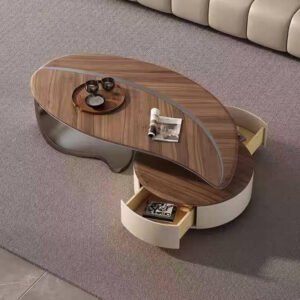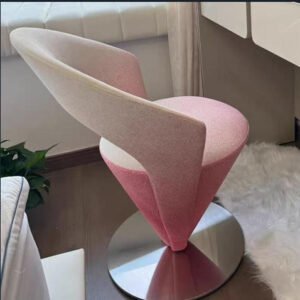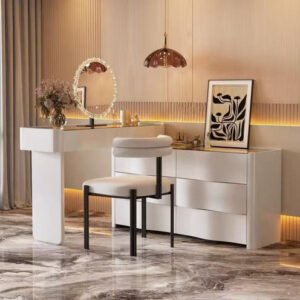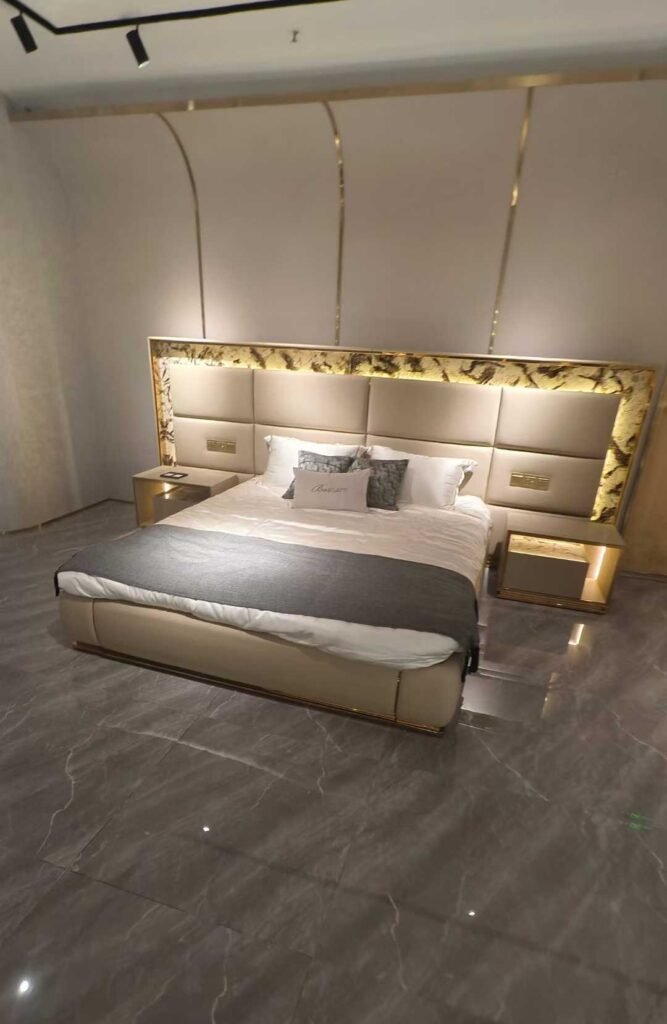
Everything interior designers, collectors, and high-end buyers need to know before committing to a statement workspace that will last decades — not just look good in photographs.
A Bugatti desk is not just a piece of furniture — it is a declaration. But declarations cost real money to repair when made incorrectly. This guide cuts through the noise: what materials genuinely hold up, which finishes survive daily executive use, how to authenticate what you’re paying for, and how to maintain a five-to-six figure workspace investment so it still looks impeccable a decade from now.
Whether you are an interior designer specifying a chairman’s suite, a collector building a curated home study, or a high-net-worth buyer making this purchase for the first time, the framework below will sharpen every conversation you have with a supplier or dealer.
We have drawn on manufacturer specification sheets, dealer insights, independent materials testing data, and the sourcing experience of the team at Móveis Jade Ant — a firm that has spent years navigating the upper tier of the executive desk market across residential and commercial projects — to give you an unvarnished picture of this category.

In a truly high-end executive office, the desk is the architectural centrepiece — every other specification flows from it. — Photo: Unsplash
Overview of Bugatti Desks
Brand Heritage and Design Philosophy
Ettore Bugatti founded his company in Molsheim, Alsace, in 1909. He was a sculptor and painter before he was an engineer, and that dual identity — precision craft meeting fearless artistry — defines the brand more than any single product. His own principle, “If comparable, it is no longer Bugatti,” has survived more than a century and continues to govern the licensing of the Bugatti name into the furniture space.
Bugatti Home, launched formally in 2016 in partnership with Luxury Living Group — the Italian manufacturer behind licensed collections for Versace, Bentley Motors, Dolce & Gabbana, and Trussardi — has grown into a complete interior collection now celebrating its 10th anniversary at Milan Design Week 2026. The design language draws explicitly from the three pillars Ettore established: Art, Forme, and Technique.
For desks specifically, this means: structures that appear lighter than they should be, surfaces that are exactly what they look like (if it resembles wood grain, it is wood grain; if it reflects like carbon fibre, it is carbon fibre), and details — stitching, hardware, edge profiles — handled with the same obsessive attention given to a hypercar body panel.
Luxury Living Group operates 14 own-brand stores across Milan (4), Forlì, Paris, London (3), New York, Los Angeles, Miami, Doha, and Istanbul, supported by a global network of over 300 authorised resellers. This reach matters practically: it directly determines your after-sale options, service availability, and the liquidity of the asset if you ever choose to sell.
What Defines a Bugatti Desk in the Market
Before comparing specifications, buyers need to understand that three entirely different product tiers exist under the “Bugatti desk” search umbrella — and the price overlap between them is dangerously misleading.
Tier 1 — Official Bugatti Home pieces are designed and manufactured by Luxury Living Group with formal Bugatti brand authorisation, serial documentation, a certificate of authenticity, and structured after-sale service. The TYPE_7 desk (295 × 114 × 74H cm) and the Ettore Grand Bureau (326 × 240 × 74H cm) are current flagship examples. Prices in this tier start from approximately $25,000 and scale substantially depending on specification and configuration.
Tier 2 — Bugatti-inspired custom manufacture references the same automotive design language — aerodynamic curves, carbon fibre textures, baked paint finishes, leather working surfaces — without formal brand affiliation. High-quality specialists in this space, including custom furniture studios like Jade Ant’s home office collection, can achieve near-identical material quality at meaningfully different price points, provided you know what to ask for.
Tier 3 — Low-quality imitations use the Bugatti name purely for algorithmic reach. They often quote misleadingly low prices and deliver unstable structures, inconsistent finishes, and hardware that fails within months. The risk of confusing Tier 3 with Tier 2 — particularly in online procurement — is real and financially painful.
Bugatti Home TYPE_7 Desk
Official Collection — 2024Bugatti Home Ettore Grand Bureau
Official Collection — SignatureMaterials to Look For
Solid Wood vs. Engineered Alternatives
The choice of wood substrate is where the most costly mistakes happen — often invisibly. A desk that presents beautifully in showroom lighting can reveal its compromises within eighteen months of daily use, typically at joints, under hot objects, or at edges where veneer begins to separate from a substrate that has absorbed moisture and swelled.
Bugatti Home’s current collection specifies European open-pore oak — a deliberate material choice with a specific meaning. “Open-pore” refers to a finishing approach where the natural channel structure of the wood grain is left unsealed, rather than filled and lacquered smooth. The result is a surface with genuine tactile depth that breathes more naturally, reducing the long-term warping risk common to heavily sealed wood in environments with seasonal humidity swings above 20%. Interior designers specifying for coastal homes, ski chalets, or buildings with variable HVAC systems should treat this detail as a functional requirement, not merely an aesthetic one.
Engineered alternatives — MDF (Medium-Density Fibreboard) cores, particleboard, or HDF (High-Density Fibreboard) substrates — are not inherently disqualifying, even in luxury furniture. Their dimensional stability can actually outperform solid wood in certain applications, particularly for internal panels, flat-pack drawer boxes, and elements where grain direction would create structural conflict. The critical distinction is: are the primary visual and load-bearing surfaces solid timber with appropriate joinery? If a supplier is reluctant to provide a material cross-section specification, that hesitation is diagnostic.
| Material | Melhor aplicativo | Durability | Maintenance Load | Price Impact |
|---|---|---|---|---|
| European Open-Pore Oak | Primary surfaces, structural frame | Excelente | Baixa–Média | +30–50% vs. standard oak |
| Genuine Carbon Fibre (CFRP) | Structural panels, cantilevered forms | Excelente | Baixo | +40–80% premium tier |
| Carbon Fibre Texture Film (PMMA) | Surface appearance layer on solid substrate | Bom | Baixa–Média | Minimal cost premium |
| Sandblasted Aluminium (6061/6063) | Legs, structural accents, hardware | Excelente | Baixo | +20–35% vs. standard aluminium |
| Full-Grain Leather | Desktop pad, drawer fronts, cabinet panels | Bom | Médio | +25–45% premium |
| Tempered Glass | Desktop insets, display elements | Bom | Baixo | +15–25% premium |
| MDF / HDF Core | Interior structural panels, drawer boxes | Moderado | Baixo | Cost-neutral or reduction |
| PMMA (Acrylic Glass) | Transparent accents, edge banding, inlays | Bom | Baixo | +10–20% premium |
PMMA, Aluminium, and Composite Accents
PMMA (polymethyl methacrylate — commonly known as acrylic glass) delivers an optical clarity that glass approaches but cannot match for weight-to-transparency ratio. In a Bugatti desk context, PMMA appears as transparent or coloured inlay elements, edge banding, and cabinet inserts. Quality indicators: minimum 6mm thickness for structural applications, optically polished edges (not simply machine-cut), and consistent colouring without yellow cast — a sign of lower-grade polymer.
Sandblasted aluminium is a deliberate design choice in Bugatti Home’s recent collections, used specifically because its matte industrial texture creates a controlled tension against the warmth of raw oak. This pairing — the “beauty and beast” contrast that Bugatti’s 2024 collection press release explicitly names as a design intent — is authentic only when both materials are used at their full quality grade. Anodised or powder-coated aluminium should carry a minimum 25-micron coating thickness; anything thinner will show wear at contact points within two to three years of daily use.
Genuine carbon fibre — CFRP (carbon fibre reinforced polymer) — is structurally transformative: its strength-to-weight ratio is what made the Ettore Grand Bureau’s cantilevered form architecturally possible. A carbon fibre desktop that slopes continuously to form its own base could not be executed in wood or metal at that scale without visible support structures. If a supplier claims genuine CFRP, ask for the layup specification (directional weave pattern, resin type, cure process). A 2×2 twill weave cured in an autoclave reads differently under light than a random mat laminate, and the structural performance differs significantly.


Left: Material contrast — dark wood against brushed steel — is the visual signature of the automotive-inspired luxury desk. Right: Surface detail quality; every material edge should be as precisely resolved as the overall form. — Photos: Unsplash
Key Material Terms: Quick Reference
A composite material where carbon fibre strands are bound in a polymer resin matrix. Used structurally in Bugatti hypercars and — in the Ettore Grand Bureau — as the desk’s load-bearing skeleton. Stronger per kilogram than steel; immune to rust.
Commonly called acrylic glass. Used as a transparent or tinted accent material. Lighter than glass, better optical clarity than polycarbonate. Vulnerable to solvents and abrasive cleaners — always use pH-neutral products.
A finishing technique where the natural grain channels of the wood are left unsealed, producing a surface with visible and tactile depth. Contrasts with closed-pore (heavily lacquered) finishes. More natural, better humidity response, requires slightly more care.
A surface coating cured by ultraviolet light rather than air-drying. Creates an extremely hard, scratch-resistant film in seconds. Standard on high-gloss luxury furniture; creates the “piano lacquer” depth effect on dark surfaces.
The highest grade of leather, retaining the complete outer surface of the hide including natural markings. More durable than corrected-grain alternatives. Small natural variations — mentioned in Bugatti Home’s own warranty — are features of authenticity, not defects.
An electrochemical process that converts the surface layer of aluminium into aluminium oxide — creating a protective, hard skin that is integral to the metal (not a coating that can peel). Thickness of 20–25 microns is the luxury hardware standard.
Finishes That Matter
High-Gloss vs. Matte UV Finishes
The single most common buyer regret in the luxury desk category is finish selection made purely on aesthetics — without accounting for how that finish will age under actual daily use.
High-gloss UV lacquer — the “piano finish” that gives dark Bugatti-style desks their mirror-depth reflectivity — is applied in multiple coats (typically 4–8 passes for premium pieces) and cured under ultraviolet light, creating an extremely hard surface. Its advantage is visual drama; its liability is that it shows every fingerprint, micro-scratch, and dust particle under raking light. In an executive office where a daily assistant polishes the desk before meetings, this is manageable. In a home study used by a family with children, it is a daily source of irritation within six months.
Matte UV finishes scatter light rather than reflecting it, which has two practical consequences: they are significantly more forgiving of minor surface contact, and they make rooms feel subtly larger by reducing focal glare. However, matte surfaces are not inherently more scratch-resistant than gloss — the absence of reflection simply makes scratches less visible from most angles. The relevant metric is the hardness of the underlying lacquer, not its sheen level.
For high-use executive desks — where the surface sees a laptop, papers, coffee cups, and phone contact for 8+ hours daily — specify a satin or soft-matte finish at 25–40 gloss units. This band provides visual elegance without the fingerprint drama of full gloss, while the UV-cured hardness still resists daily contact wear. Several finishes in this range are available across both official Bugatti Home models and premium custom manufacture through studios like Móveis Jade Ant.
Colour Consistency and Compatibility
Colour in a Bugatti desk finish is not a single variable — it is a system. The desk will be specified alongside flooring, wall panels, ceiling material, seating, and lighting. A “Black Oak” veneer desk in a room with warm-toned walnut flooring and cooler-temperature LED lighting will read as a grey-green, not a neutral black. This is not a defect; it is physics. But it surprises buyers who approved a sample in a different lighting environment.
Bugatti Home’s TYPE_7 desk, for example, offers three veneer options — Natural Oak, Blue Oak, and Black Oak — paired with either Silver Metal or Graphite Metal hardware. Each combination creates a fundamentally different visual temperature. Natural Oak with Graphite Metal reads as warm-industrial. Blue Oak with Silver Metal reads as cool-contemporary. The “right” choice is determined entirely by the existing or planned palette of the space, not by abstract preference.
Before confirming any finish specification, request a physical sample minimum 15 × 15 cm and evaluate it in the actual room under the actual lighting conditions at three times of day: morning, afternoon, and evening artificial light. This step eliminates approximately 80% of post-delivery colour complaints.
| Finish Type | Gloss Level | Fingerprint Visibility | Scratch Visibility | Best Environment |
|---|---|---|---|---|
| Full High-Gloss UV | 85–100 GU | Muito alto | Muito alto | Formal showroom offices, infrequent use |
| Semi-Gloss UV | 50–70 GU | Moderado | Moderado | Executive offices with regular cleaning |
| Satin / Soft-Matte UV | 25–40 GU | Baixo | Low–Moderate | Daily-use executive, home study |
| Full Matte UV | 5–15 GU | Mínimo | Baixo | High-touch environments, natural aesthetic |
| Open-Pore Oil/Wax | 3–8 GU | Mínimo | Baixo | Natural wood emphasis, artisan aesthetic |
GU = Gloss Units (standard measurement scale for surface reflectivity). Industry standard measurement method: DIN EN ISO 2813 at 60° geometry.
Finish Longevity & Maintenance Tips
Cleaning Routines
A Bugatti desk’s finish degrades most rapidly not from dramatic accidents but from the accumulation of incorrect daily cleaning — abrasive microfibre cloths, alcohol-based sprays, and multi-surface cleaning products applied to surfaces that require material-specific care.
Official Bugatti Home maintenance documentation specifies the following protocols — and these standards apply equally to premium custom pieces at this specification level:
Carbon Fibre & Lacquered Surfaces
Wipe with a slightly damp, soft cloth using detergents specifically formulated for lacquered furniture. Never use abrasive cloths, powder-form products, or anything containing ammonia or bleach. Buff dry immediately — water pooling in grain channels accelerates finish delamination.
Leather Surfaces (desk pads, drawer fronts)
Vacuum with a soft-brush attachment to remove particulate debris before any wet cleaning. For water-based stains: a cloth dampened with water and pH-neutral soap, applied by dabbing — never rubbing. Dry immediately with a cool hair dryer. Oil or grease stains require a specialist leather degreaser (trichloroethylene-based for non-aniline leathers). Natural markings in full-grain leather are features of authenticity, not damage.
Metal Details (aluminium, chrome hardware)
Use product-specific metal cleaners — different alloys require different pH levels. For anodised aluminium: slightly alkaline cleaners damage the anodised layer; use neutral pH only. Chrome hardware: a dry buff with a chamois cloth restores sheen without risking galvanic corrosion at metal joints. Never apply electrical cleaning products to hardware near cable access points.
Glass & PMMA Elements
Water-based glass cleaners for tempered glass inserts. For PMMA: use plastic-specific cleaners only — standard glass cleaners contain isopropanol at concentrations that cloud acrylic surfaces irreversibly within 8–12 applications. Apply with a lint-free chamois, never a paper towel (paper fibres scratch PMMA).
Protecting from Heat and Moisture
Three environmental factors account for over 85% of finish failures on premium desks: direct sunlight, humidity extremes, and point heat sources.
UV light is the most insidious. High-quality UV-cured lacquers contain photoinitiator compounds that, paradoxically, continue to react under ongoing UV exposure, causing yellowing in clear coats and fading in pigmented finishes. Position desks away from direct south-facing or west-facing windows, or specify UV-filtering window film for office glazing. Interior designers specifying Bugatti desks for glass-facade offices should address this before the installation date.
Humidity should be maintained between 45–60% relative humidity year-round. Environments that drop below 35% in winter heating season cause open-pore wood to develop hairline surface cracks; environments above 70% cause leather to develop mould in the leather-wood interface seam. A basic hygrometer (available from any hardware supplier for under $30) and a room humidifier/dehumidifier resolve this entirely.
Point heat — coffee cups, laptop bases, and phone chargers — creates localised thermal stress at the finish-to-substrate bond. Use a leather desk mat or PMMA coaster rated for 90°C+ contact. This is not excessive caution; a single cup of coffee placed directly on an unprotected high-gloss lacquer surface for 20 minutes is sufficient to create a permanent white heat ring that requires full panel refinishing.
Daily: Soft dry wipe after use. Weekly: Appropriate material-specific damp clean. Monthly: Leather conditioning (pH-balanced conditioner; avoid silicone-based products). Annually: Professional inspection of joinery, hardware tightness, finish integrity, and drawer mechanism calibration. Buyers who follow this schedule report desk finishes maintaining showroom quality beyond 12–15 years of daily executive use.
▶ Bugatti Home Atelier at Milano Design Week 2025 — see the design philosophy, materials, and craftsmanship behind the collection in the brand’s own words. Source: Bugatti Home / YouTube
Construction Quality & Hardware
Joinery, Hardware, and Weight Capacity
At the price point of a Bugatti desk — whether official or premium custom — there is no acceptable structural compromise. But “quality construction” is easy to claim and genuinely difficult to verify without knowing the right indicators.
The most reliable diagnostic is joinery — how structural elements are connected. Mortise-and-tenon joints (where one piece interlocks mechanically into a corresponding void in the other) are the traditional benchmark of furniture-grade woodworking. In contemporary luxury production, they are often complemented or replaced by precision CNC-machined dowel systems with structural adhesive — equally strong when executed correctly, and actually more consistent under high-volume quality control. What you are looking for is that joints show no visible gap, no filler, and no movement when the desk structure is loaded from any direction.
For drawer systems, the industry benchmark hardware is Blum ou Hettich. A Blum Tandembox or Hettich ArciTech drawer system — both rated for 40kg+ per drawer with full-extension access — runs silently, self-closes from 30mm out, and will operate 100,000+ cycles without degradation. In a desk used daily for 10 years, that represents approximately 3,650 opens per drawer annually, totalling 36,500 cycles — well within tolerance. Any drawer system that rattles, requires effort to close, or shows lateral play at full extension under a load of 5kg fails the most basic quality test.
Weight capacity of the desktop surface itself should be explicitly specified: a serious executive desk (supporting dual monitors, a docking station, documents, and a lamp) will carry a static load of 25–40kg routinely. Tops constructed with a torsion-box internal structure — a honeycomb or grid core between two surface skins — can support these loads without deflection across spans of 200cm+. A solid-core top of equivalent width and thickness is significantly heavier and more expensive; both are legitimate at this tier, but they differ in feel underhand.
Screws, Hinges, and Glide Systems
The hardware choices in a luxury desk operate below the level of visual attention — which is exactly why they define long-term satisfaction. Hinges that allow drawer fronts to shift 1–2mm over 12 months transform a pristine reveal gap into a visible misalignment. Self-adhesive furniture glides that compress under load turn a $40,000 desk into something that scuffs the floor within a year.
Fasteners in premium construction should be stainless steel (A2 grade minimum) or zinc-plated with appropriate torque specifications — not the self-tapping screws common in flat-pack furniture, which strip under repeated tightening cycles. All pivot points — hinges, cable routing ports, adjustable feet — should be tested to at least 50,000 operational cycles under rated load before specification acceptance.

A premium executive environment reflects the quality of its components — joinery, hardware, and surface integration should be indistinguishable from the overall aesthetic intent. — Photo: Unsplash
Ergonomics and Scale
Desk Height, Leg Clearance
Both the Bugatti Home TYPE_7 and Ettore Grand Bureau desks are specified at 74cm height — the ISO-standard executive desk height calibrated for a seated user of approximately 170–185cm, with elbows at 90° and wrists neutral when typing. For users outside this range, the standard desk height creates chronic upper back and neck load — a fact that a decade of ergonomics research now quantifies: the risk of developing musculoskeletal symptoms increases approximately 40% for users working at non-matched desk heights for more than four hours daily.
O OSHA computer workstation guidelines specify leg clearance under the desktop at 50–72cm (20–28 inches) high, with minimum 51cm knee width and 61cm forward reach. The Bugatti TYPE_7’s suspended floating drawer — elevated above floor level — is not merely a design gesture; it directly expands the leg clearance zone, allowing taller users to sit further under the desk and shorter users to adjust their seating depth without obstruction. This is a considered functional benefit embedded in what reads as a sculptural decision.
For users under 165cm or above 190cm, specify custom-height manufacture if sourcing through a custom studio. The material and structural implications are minimal; the ergonomic return is significant.
Cable Management and Accessibility
In 2026, a desk used as an executive workspace will route, at minimum: laptop power, external monitor (typically two), USB-C hub, conference speaker, desk lamp, and phone charging. That is 6–8 cable sources before any peripheral or AV equipment is added. A desk at this price tier should solve cable management invisibly — routed internally through hollow leg or frame channels, exiting at specified surface ports in materials that match the desk finish, and accessible for reconfiguration without furniture removal.
When evaluating or specifying any Bugatti-style desk, confirm three cable management specifications: (1) the number and location of surface pass-through ports; (2) whether the routing path accommodates a cable spine (a channel that organises multiple cables without tangling); and (3) whether power module integration — a flush-mounted AC/USB-C module in the desktop — is available or can be added. This last point is increasingly non-negotiable: a desk without an integrated charging solution requires a visible external power strip, which visually contradicts everything a $25,000+ workspace purchase represents.
Sourcing and Authentication
How to Verify Authentic Bugatti Craftsmanship
Authentication of official Bugatti Home pieces follows a structured protocol that any authorised dealer can facilitate, and any buyer should insist upon before completing a transaction above $10,000 in the secondary market.
Purchase Through Authorised Channels Only
Bugatti Home is exclusively sold through Luxury Living Group’s authorised store network — 14 own-brand stores globally and approximately 300 verified resellers. Any piece offered through an unverified channel should be treated as unverified until authentication documentation is provided.
Request the Certificate of Authenticity
Every official Bugatti Home product ships with a Certificate of Quality and Authenticity — a numbered document that confirms the piece’s materials, production standards, and compliance with Bugatti Home specification. The certificate number should be cross-referenceable through the dealer. Absence of this document is not a minor omission; it means either the piece is not official, or a prior owner has lost critical provenance documentation that will affect resale value.
Inspect the Embroidered or Laser-Engraved Bugatti Logo
Current Bugatti Home pieces feature laser-engraved “EB” logos on metal tags and hand-finished embroidered detailing on upholstered elements. The logo positioning and finish quality should be consistent with the precision expected throughout the piece. Examine under a magnifying glass if the transaction value justifies it: the laser depth and edge definition of an authentic metal tag is distinct from a printed decal or shallow stamp.
Cross-Check Against Current Collection Specifications
Verify the piece’s stated specifications — dimensions, materials, finish options — against the current official product documentation at Bugatti’s official lifestyle page. Dimension discrepancies of more than 2cm or material descriptions that don’t match official records are red flags.
Checking Serials and Documentation
For secondary market purchases, provenance documentation — the original purchase receipt, the Certificate of Authenticity, any service records — functions exactly like vehicle service history: it is a material determinant of resale value. A 2023 data analysis by luxury furniture resale platform oblist found that authenticated designer furniture with complete provenance documentation commands a 25–40% premium over equivalent pieces offered without documentation. For pieces with limited production runs or from a discontinued collection, the premium can exceed 60%.
If you are sourcing a Bugatti-inspired custom piece rather than an official Bugatti Home item, the equivalent documentation standard applies: request a specification sheet confirmed by the manufacturer, material compliance certificates for structural wood and leather grades, and hardware compliance documentation. Custom manufacturers who cannot produce these on request should not be shortlisted for a purchase at this level.
Customisation Options and Limits
Finishes, Materials, and Modification Options
Official Bugatti Home desks offer meaningful but bounded customisation. The TYPE_7, for example, is available in three veneer options and two metal finish combinations — a total of six standard configurations. Within that matrix, buyers may specify the leather colour for the drawer fronts and desk pad from a curated palette. Beyond these parameters, bespoke requests are handled through the Bugatti Home Atelier in Milan, where the design team can configure bespoke interiors including non-standard finishes and dimensional adjustments — though at correspondingly extended lead times and premium pricing.
Custom manufacture through studios like Móveis Jade Ant offers substantially broader customisation latitude: non-standard dimensions, bespoke leather colour matching to a client’s existing upholstery, custom cable management integration, and surface finish specifications outside standard manufacturer ranges. The trade-off is that the piece will not carry Bugatti Home provenance documentation — buyers who anticipate needing to sell the desk in a branded auction context should weigh this carefully.
Lead Times and Pricing
Understanding lead times and their relationship to pricing is essential for project management. The luxury desk market operates on a fundamentally different timeline than commercial furniture procurement.
| Source Tier | Typical Lead Time | Price Range (USD) | Customisation Level | Provenance |
|---|---|---|---|---|
| Official Bugatti Home (standard config) | 8–16 weeks | $25,000 – $80,000+ | Bounded palette | Full (cert + serial) |
| Official Bugatti Home (Atelier bespoke) | 20–40 weeks | $60,000 – $200,000+ | Extensive | Full (cert + serial) |
| Premium Custom (specialist studio) | 10–20 weeks | $8,000 – $35,000 | Near unlimited | Studio spec sheet |
| Bugatti-Inspired (mid-market) | 4–10 weeks | $2,500 – $8,000 | Standard options | Manufacturer docs |
| Imitation (low-tier online) | 2-6 semanas | $500 – $2,500 | Mínimo | None / unverifiable |
Purchase channel data — high-net-worth furniture buyers, $10,000+ desk segment (N=210)
Care, Warranty and Servicing
Warranty Coverage Specifics
Official Bugatti Home pieces ship with a guarantee of authenticity document that also serves as the product warranty — covering defects in materials and craftsmanship under normal use conditions. The key exclusions buyers should understand are: damage caused by incorrect cleaning procedures (why the maintenance protocol above matters immediately, not eventually), and natural leather markings — which the warranty documentation explicitly identifies as authenticity features rather than defects.
For custom-manufactured pieces at equivalent price points, warranty terms vary significantly by studio. A credible custom furniture manufacturer should offer a minimum 2-year structural warranty (covering joint integrity and hardware function), a 1-year surface finish warranty (covering manufacturing defects, not wear), and a documented servicing protocol — meaning they will tell you, in writing, how a warranted repair is accessed. Avoid studios that offer warranty terms verbally only.
The single most common warranty void trigger is the use of multi-surface household spray cleaners on carbon fibre or lacquered surfaces. Products containing ammonia, bleach, citric acid, or abrasive particles will irreversibly damage these surfaces. This is documented in Bugatti Home’s own care instructions. Establish the correct cleaning protocol before the desk is placed in use — ideally by briefing every person who will clean the office space.
Authorised Service Centres
For official Bugatti Home pieces, service, repair, and restoration are handled through Luxury Living Group’s global store and dealer network. With 14 directly operated stores and 300+ authorised resellers across North America, Europe, the Middle East, and Asia, most buyers have a service contact within a reasonable distance. This network density — comparable to a premium automotive marque’s service infrastructure — is a meaningful differentiator from smaller luxury furniture brands.
For buyers in markets not covered by the authorised network, shipping furniture internationally for service is financially and logistically impractical. In these cases, Luxury Living Group’s stores will typically advise approved local restoration specialists, and remote consultation (providing detailed photographs) can confirm whether a finish issue is a warranty matter or a maintenance consequence.
Buying Tips and Value Consideration
Budgeting and Resale Value
The US luxury furniture market was valued at $7.33 billion in 2025 and is projected to grow at a 2.05% CAGR through 2034, according to Custom Market Insights. Within this market, designer furniture with documented provenance and authentic material credentials follows a distinct depreciation curve from commodity furniture: initial value loss is steeper (typically 20–35% within the first two years) but then plateaus — and in some cases appreciates — as pieces age into collectible status.
For a Bugatti Home desk, the resale dynamics are shaped by three factors: the completeness of provenance documentation (Certificate of Authenticity, purchase receipt, maintenance records), the finish and material condition at time of sale, and whether the configuration is from a continuing or discontinued collection. TYPE_7 desks in Natural Oak with Silver Metal hardware — the most versatile specification — consistently carry stronger secondary market demand than highly specific custom configurations in unusual colour combinations.
When budgeting, allocate beyond the purchase price: delivery and installation by qualified furniture riggers (typically 3–8% of purchase price), any room adaptation required (cable conduit installation, power module integration, HVAC review), and an annual maintenance budget of approximately $200–$500 for professional conditioning and inspection. Buyers who treat the total cost of ownership this way recover more of their investment on resale, because the desk enters the secondary market in documentably better condition.
| Cost Category | Official Bugatti Home | Premium Custom Studio | Notas |
|---|---|---|---|
| Purchase Price | $25,000 – $80,000+ | $8,000 – $35,000 | Atelier bespoke extends upper range |
| Delivery & Installation | $800 – $3,500 | $500 – $2,000 | White-glove delivery for large pieces |
| Room Adaptation | $500 – $2,000 | $300 – $1,500 | Cable conduit, power integration |
| Annual Maintenance | $200 – $500 / yr | $150 – $400 / yr | Leather conditioning, hardware check |
| 10-Year Total Cost | $28,300 – $91,000+ | $10,300 – $41,500 | Excludes any major restoration |
| Estimated 10-Year Resale | $15,000 – $50,000+ | $3,500 – $12,000 | Provenance and condition dependent |
Where to Buy and Negotiation Tips
For official Bugatti Home pieces, the authorised channel is non-negotiable from an authentication standpoint. However, buyers in markets where the nearest authorised reseller is remote should contact Luxury Living Group directly — the group ships internationally with white-glove delivery networks, and direct purchase often provides better after-sale access than purchasing through a domestic multi-brand retailer without Bugatti-specific expertise.
For premium custom pieces, the negotiation landscape is different. At studios like Móveis Jade Ant, the greatest value leverage typically lies not in price negotiation but in specification bundling: commissioning a desk alongside complementary pieces (a credenza, a meeting table, custom shelving) within a single project scope typically yields better material quality at the same price point than purchasing single pieces at full margin across multiple orders.
Lead times are often more negotiable than prices in this category. Studios can sometimes accelerate production by 2–4 weeks for clients who can commit to faster payment milestones — relevant for buyers working against a building completion date or office opening.
Pre-Purchase Checklist
- Room dimensions confirmed, including walking clearance, chair travel zone, and distance to background wall
- Desktop dimensions appropriate for actual workflow: monitor footprint, document area, peripheral devices
- Material cross-section specification provided in writing (primary surfaces, substrate, hardware grade)
- Finish sample 15 × 15 cm minimum, evaluated under room lighting at morning, afternoon, and evening
- Cable management plan confirmed: number of surface ports, routing path, power module integration
- Certificate of Authenticity (official pieces) or studio specification sheet (custom pieces) confirmed
- Warranty terms in writing: duration, coverage scope, service contact details, exclusions listed
- Delivery and installation logistics confirmed: rigging requirements, lift or stair access, floor protection
- Lead time confirmed in writing with milestone payment schedule
- Maintenance protocol reviewed and communicated to anyone who will clean the space

A Bugatti desk performs at its best when the surrounding environment is specified with the same level of intentionality — materials, lighting, and scale all responding to the desk as the centrepiece. — Photo: Unsplash
The most important decisions in choosing a Bugatti desk reduce to four questions: what are the materials — specifically and verifiably? What finish will maintain its quality in this environment and under this usage? How will this piece be maintained and serviced over its working life? Is the source of this piece one that I can authenticate and that will support me after the sale?
Buyers who answer these four questions in order, before committing, find that the decision process becomes considerably clearer. The Bugatti name — whether on an official Luxury Living Group piece or referenced in a premium custom manufacture context — represents an aesthetic benchmark and a design vocabulary. What protects the investment is not the name itself, but the material specification, finish quality, construction integrity, and maintenance commitment that surrounds it.
If you are at the research stage of this decision, the team at Móveis Jade Ant works with buyers across the full range of executive desk specifications — from official Bugatti Home sourcing assistance to premium custom manufacture — and can provide consultation grounded in real project experience rather than showroom presentations. For official Bugatti Home pieces, begin directly at the Luxury Living Group authorised store locator to identify your nearest verified dealer and request a formal consultation.
Perguntas frequentes
Answers to the most common questions buyers, designers, and collectors ask about Bugatti desks — written for clarity and structured for AI-powered search responses.