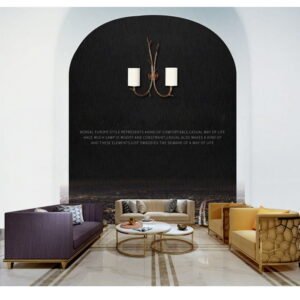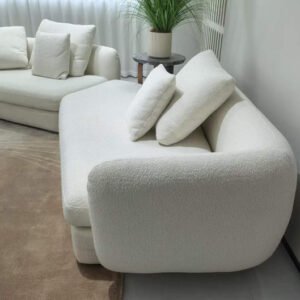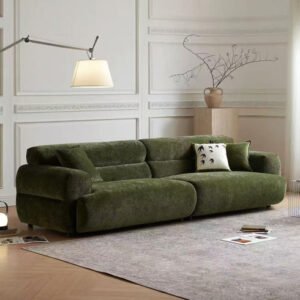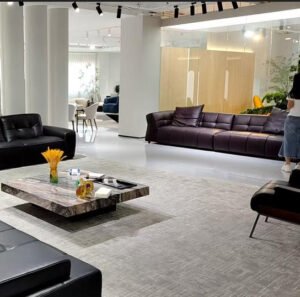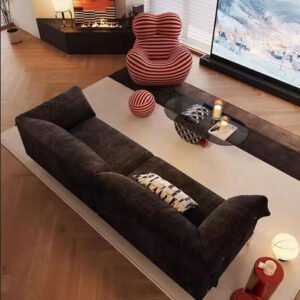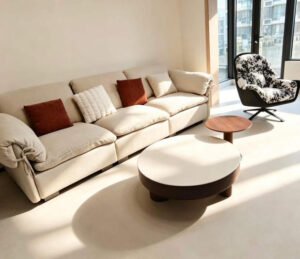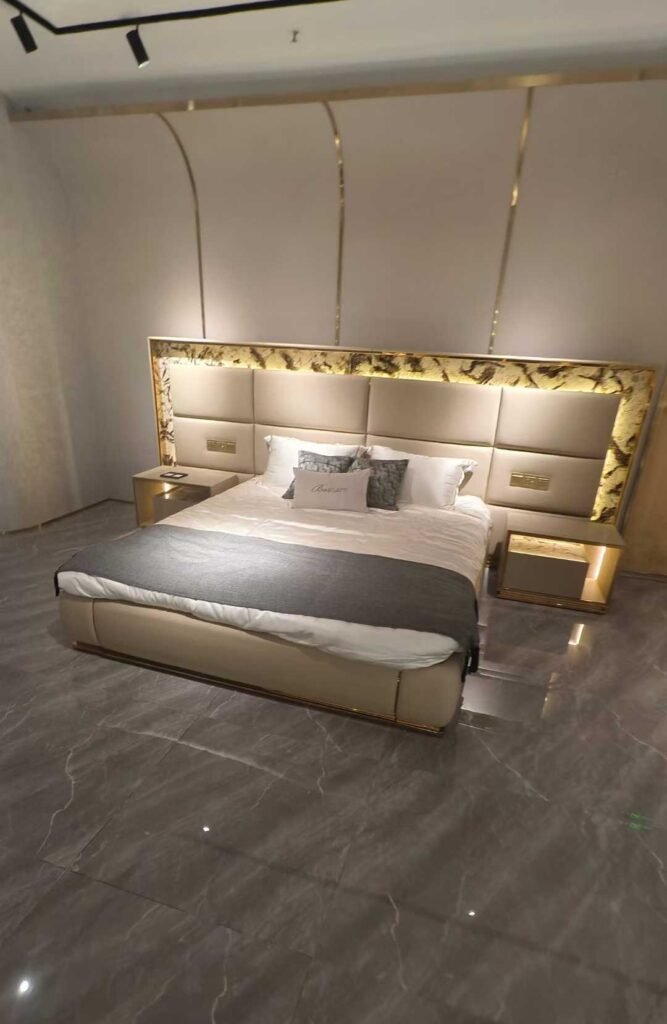
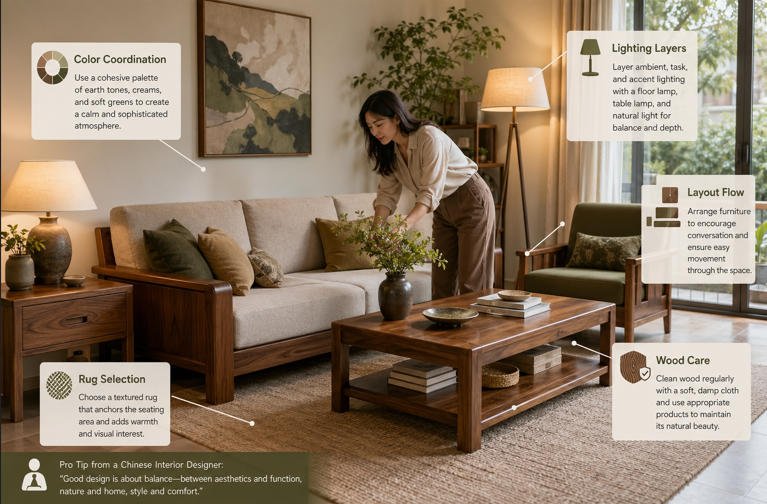
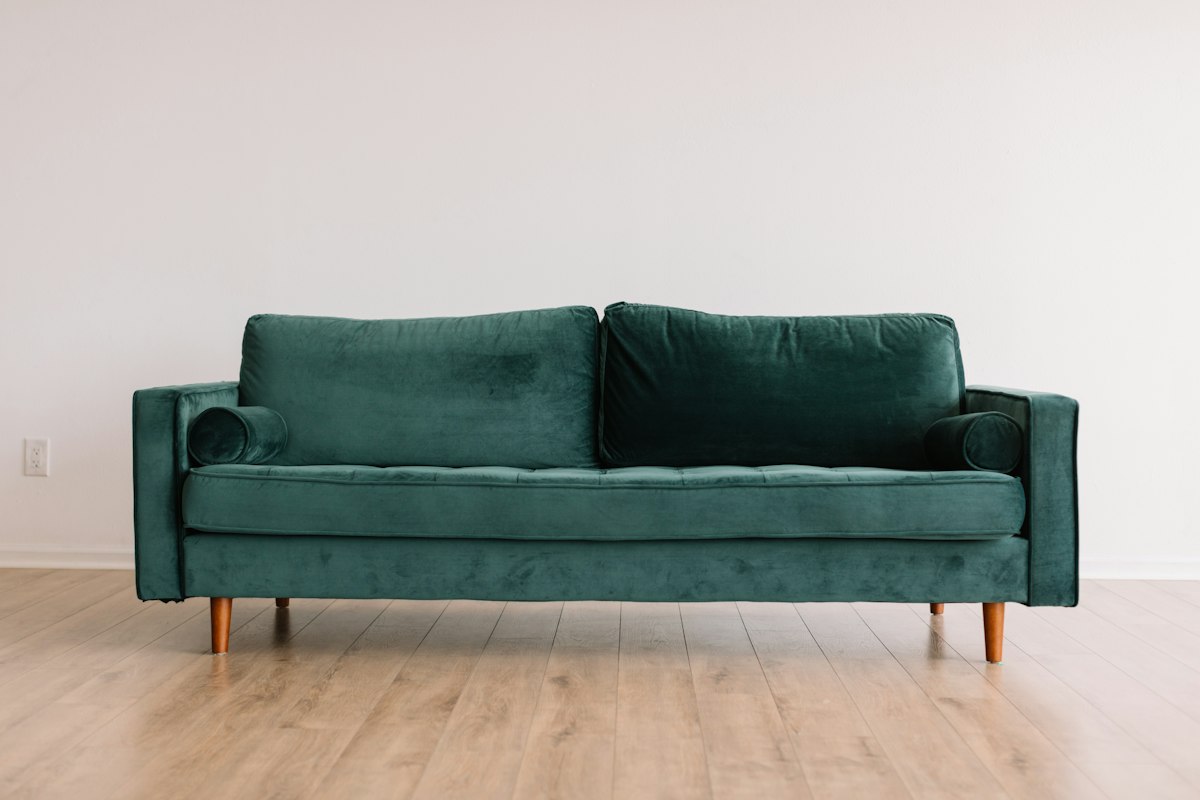
There is a moment in every well-designed living room where the furniture stops being background noise and starts telling a story. A couch with wooden arms is one of those rare pieces that does exactly that from the moment it lands in a space. The exposed wood frame doesn’t just support your upholstery — it draws the eye, anchors the room’s tonal language, and sets every subsequent styling decision in motion, from the rug underfoot to the lamp shade glowing above.
Interior design data consistently reflects what experienced decorators already know: according to a 2024 survey by Houzz, 67% of homeowners who renovated their living rooms chose a sofa with a visible wood or metal frame over fully upholstered options, citing both visual interest and longevity as primary drivers. That shift is not accidental — it reflects a broader move toward furniture that feels deliberate, material-honest, and built to last.
This guide walks through every layer of that decision-making process: how to choose the right couch as your room’s anchor, how to coordinate wood tones and finishes with the rest of the space, which textures and rugs do the heavy lifting, and how to keep your wooden arms looking as refined in year five as they did on day one. Whether you’re starting from scratch or refreshing an existing room, consider this your practical, opinionated field guide — one that treats the wooden-arm couch not as a constraint but as a creative launch point.
Choosing the Couch as the Room’s Anchor
The single most common styling mistake in living rooms is treating the sofa as just another piece of furniture rather than the room’s gravitational center. When the sofa features wooden arms, this is especially true: the exposed frame signals intentionality, and every other piece in the room needs to respond to it with equal deliberateness.
Understanding Scale and Proportion
Scale is the conversation between your sofa and the room it lives in. A deep, oversize sofa with thick walnut arms commands a high-ceilinged loft, but will make a standard 12×14 ft living room feel like a furniture showroom floor — crowded, airless, oddly transactional. The professional rule of thumb used by designers at studios like Studio McGee is that your sofa should occupy roughly two-thirds of the primary visual wall, leaving breathing room on either side.
Wooden arms have a practical advantage here: their clean, defined edges make it much easier to eyeball proportion before you commit. Unlike upholstered roll arms that visually “bleed” into the surrounding space, a flat or tapered wooden arm gives the sofa a precise visual footprint. If you’re measuring, aim for 18–24 inches of clearance between the sofa arm and adjacent walls or furniture, and at least 36 inches for any major traffic path behind or beside the piece.
Em Jade Ant Furniture’s sofa collection, frame dimensions are provided in exact centimeter specifications — a detail that matters enormously when you’re trying to dial in scale rather than guessing from a showroom floor photo.
Finding Complementary Furniture
The wooden arms of your sofa act as a material reference point for everything else in the room. Accent chairs, side tables, and console pieces should either echo the wood tone (through matching or closely related species), contrast it deliberately (through metal, glass, or lacquer), or defer to it by stepping back in visual weight. What they should never do is fight it with a competing wood in a different family — two mismatched browns at similar saturation levels will always look like an oversight rather than a design choice.
A practical approach: use the wooden arms of the sofa as your “lowest note” in the room’s tonal scale. Build accent pieces upward — a lighter rattan side table, a warm brass floor lamp, a linen-upholstered armchair — so the sofa remains the richest and most grounded element in the space.
Color and Finish Coordination for Wooden Arms
Wood finish is arguably the single most powerful design variable on a sofa with exposed arms, more so than upholstery color, because wood carries undertones that interact with paint, lighting, and flooring in ways that fabric simply does not. Getting this coordination right is what separates a room that feels “designed” from one that merely looks “furnished.”
Matching Wood Tones
The conventional wisdom about matching wood tones has evolved significantly over the last decade. The rigid “everything must match” school of thought has given way to a more nuanced practice: match the undertone family, not the exact color. Light ash arms with golden undertones, for instance, pair naturally with honey-toned oak flooring and warm linen upholstery — even if the shades differ by several steps. What breaks the harmony is not variety; it’s undertone conflict. Pairing a cool-gray driftwood finish with a warm chestnut floor creates a visual tension that no amount of styling accessories can fully resolve.
Below is a reference guide for matching sofa wood arm finishes to common flooring and wall color families:
| Wood Arm Finish | Subtom | Best Floor Pairings | Best Wall Colors | Evitar |
|---|---|---|---|---|
| Light Ash / Whitewash | Cool / Neutral | Light oak, concrete, pale limestone | Soft white, sage green, clay gray | Deep mahogany floors, orange-red tones |
| Natural Oak / Honey | Warm / Golden | Medium oak, warm bamboo, sand tile | Warm white, terracotta, dusty rose | Cool gray floors, stark white walls |
| Walnut / Dark Brown | Warm / Rich | Dark hardwood, slate, warm marble | Deep navy, forest green, cream | Black floors, cool-toned beige |
| Ebonized / Black | Neutral / Dramatic | Light oak, white tile, pale concrete | Any — very versatile | Very dark floors (insufficient contrast) |
| Teak / Reddish Brown | Warm / Red | Terracotta tile, warm pine | Olive, mustard, warm beige | Cool blues, gray-dominant rooms |
Contrast and Harmony
Contrast done deliberately reads as sophistication; contrast done accidentally reads as clutter. A deep walnut arm against an ivory linen cushion is high contrast that works precisely because the two elements occupy different positions in the value scale — one is the anchor, the other the lift. Introduce a third tone (say, a bronze side table) and you’re building a full tonal chord rather than just a single interval.
One practical technique that interior stylists use frequently: photograph your room in black and white before finalizing any finish choices. Strip away hue and you’ll see the value distribution immediately — whether the room is balanced across light, mid, and dark tones, or tipping heavily in one direction. A room that looks harmonious in black and white almost always looks harmonious in color.
Upholstery and Texture Play Around Wooden Arms
The interplay between an exposed wood frame and the material covering the seat cushions is one of the most compelling aspects of a wooden-arm sofa — and one of the most underexploited. Most buyers default to a single fabric choice without considering what the wood itself is “asking for” from a tactile standpoint.
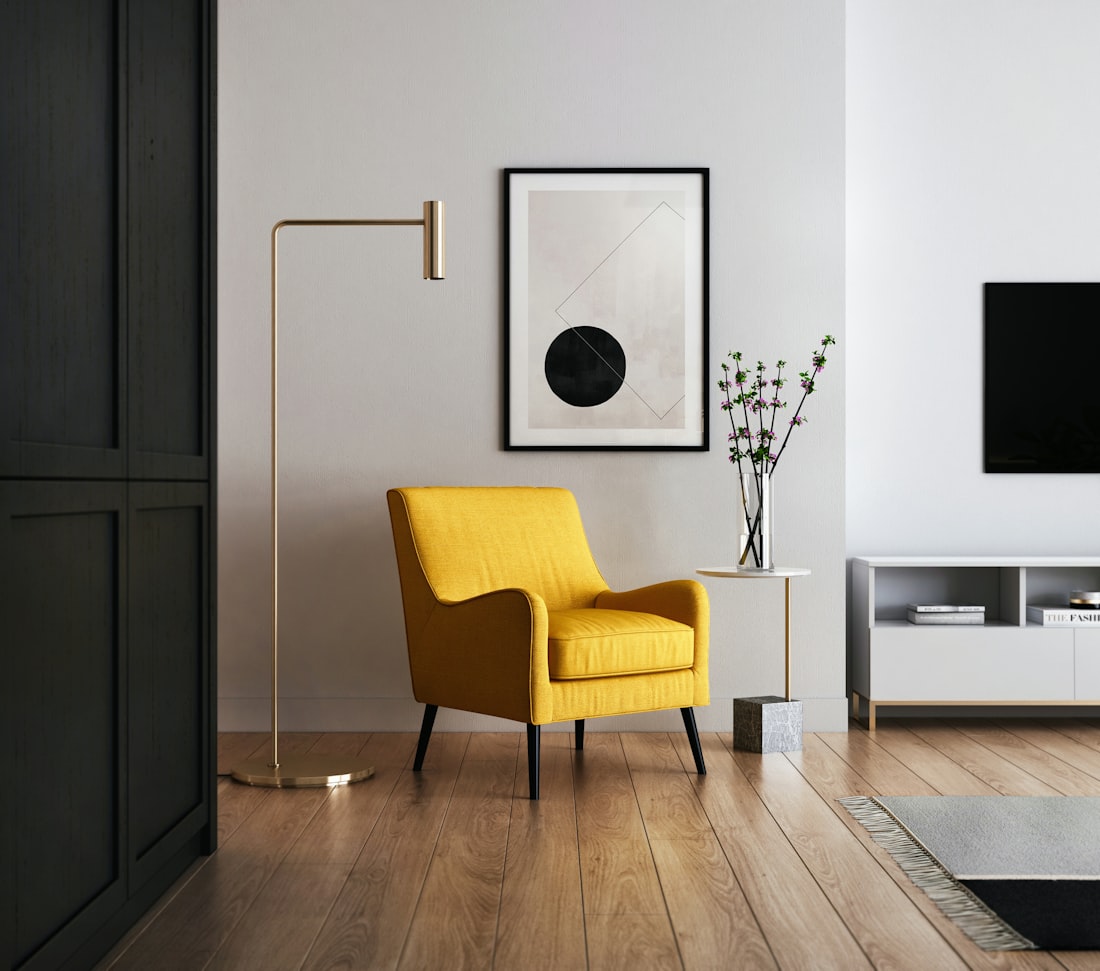
Fabric vs. Leather
Both fabric and leather coexist well with wooden arms, but they create entirely different room personalities. Leather — particularly top-grain or full-grain — amplifies the materiality of wood, doubling down on the “natural, premium, tactile” message. A butterscotch or cognac leather cushion against a walnut frame sends an unmistakable signal of considered luxury. The risk with leather and wood together is over-richness: the room can start to feel like a gentlemen’s club if not balanced with lighter, airier elements like a linen throw or a pale wool rug.
Performance fabrics — particularly textured wovens like bouclé, chenille, or slub linen — work exceptionally well with lighter wood finishes because they share the same “honest material” aesthetic philosophy. A cream bouclé cushion against a natural ash frame doesn’t just look elegant; it tells a coherent story about warmth, texture, and restraint. According to a 2023 House Beautiful industry trend report, bouclé upholstery saw a 340% increase in search volume between 2020 and 2023, making it the decade’s defining fabric choice — and it is one that pairs particularly well with wooden-arm silhouettes precisely because of the textural contrast.
Layering Textures
The most photographed living rooms on platforms like Pinterest and Architectural Digest share one consistent trait: they layer at least three distinct textures within the sofa-and-seating zone. Think of it as a texture stack — the structured wood arms as your base, the fabric cushions as your mid-layer, and throws, pillows, and adjacent soft furnishings as your top layer. The rule is: no two adjacent textures should be the same. A sleek leather cushion reads more luxurious next to a nubby linen throw than next to another smooth material. The contrast does the work.
Rug Strategies to Ground the Space
A rug is not decorative wallpaper for the floor — it is architectural. It defines the seating zone, determines perceived room size, and in a room anchored by a wooden-arm sofa, it completes the bottom of the visual “frame” that makes the whole arrangement feel intentional. Getting the rug wrong is one of the most common (and most correctable) decorating errors in living room design.
Size and Placement
The professional standard, consistently recommended by designers at firms from Studio McGee to Emily Henderson’s studio, is that all front legs of the sofa and seating should sit on the rug — never just the sofa alone, and certainly never floating entirely off the rug. For a standard three-seat sofa with wooden arms, this means you need a minimum of an 8’×10′ (approximately 240×300 cm) rug, and a 9’×12′ is almost always the better choice. An undersized rug is the visual equivalent of wearing a shirt that’s too short: technically functional, but impossible to ignore.
Placement matters as much as size. The rug should extend at least 8 inches (20 cm) beyond each arm of the sofa — a measurement that respects the sofa’s visual footprint without being overwhelmed by it. In rooms where the sofa is centered against a wall, center the rug on the sofa, not on the room, for cohesion.
Based on designer guidelines from King Living, Emily Henderson Studio & Studio McGee
Patterns That Work With Wood
Wooden arms carry their own inherent pattern — grain, knot, texture — and this has to be factored into rug pattern choices. High-grain wood arms (like teak or heavily figured walnut) work best with rugs that are tonally complex but geometrically calm: solid-color, tone-on-tone, or low-contrast stripe. Light ash or whitewashed arms have less visual noise in the wood itself, which means they can accommodate a bolder rug pattern — a Moroccan diamond, a graphic abstract, or a vintage-inspired medallion — without the room becoming visually chaotic.
Natural fiber rugs (jute, sisal, seagrass) are almost universally safe alongside wooden-arm sofas because they speak the same material language. They add texture without competing on pattern, and their warm, earthy tones anchor even the lightest or darkest wood finishes with ease.
Lighting to Highlight the Couch
Lighting in a living room is not an afterthought — it is the medium through which all of your other design decisions are perceived. A walnut arm glows differently under a warm Edison bulb than it does under cool daylight, and the difference is the gap between “inviting” and “sterile.” Understanding how to layer light around a wooden-arm sofa is one of the most high-leverage skills in residential design.
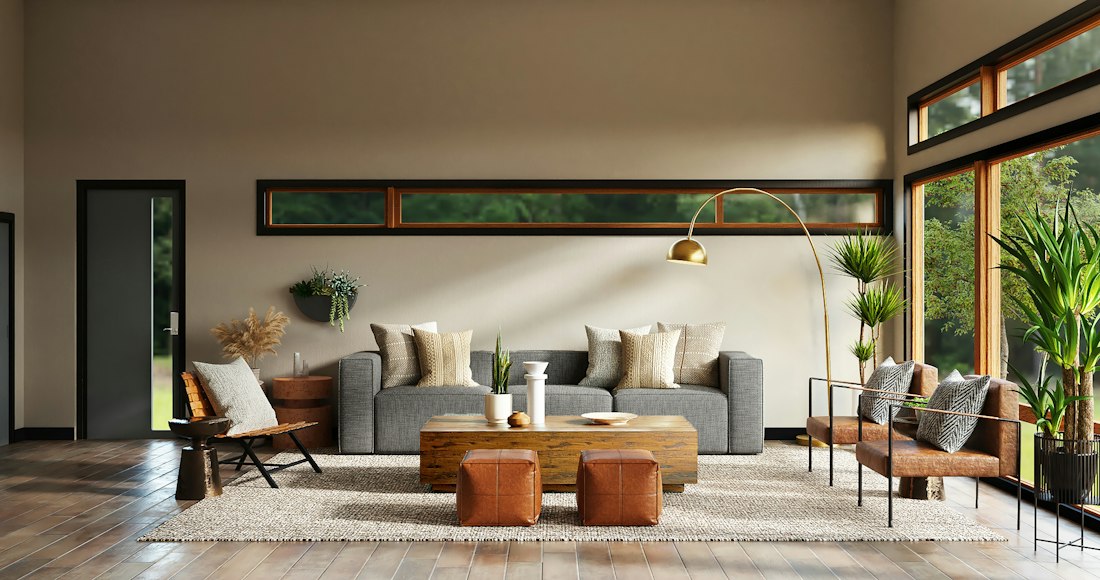
Ambient vs. Task Lighting
Ambient lighting — the general wash of illumination in a room — should be warm (2700–3000K color temperature) in any living space anchored by wood furniture. Cool white light (4000K+) flattens grain, strips warmth from honey-toned wood, and makes even the finest walnut look like a laminate approximation. If your existing overhead lights are cool-toned, the quickest fix is replacing bulbs with warm equivalents before investing in any new fixture.
Task lighting — reading lamps, accent lights — serves a different but equally critical function. Positioned at sofa-arm height (typically 58–64 inches from the floor to the center of the shade), a table or floor lamp does three things simultaneously: it provides practical light for reading, it creates a pool of warm illumination that makes the sofa feel like a destination, and its vertical form provides visual relief from the horizontal lines of the sofa itself.
Wall and Floor Lamps
Sconces positioned 6–8 inches above and 12 inches to the side of the sofa’s end arms create a “framing” effect that essentially puts the sofa in a softbox — a technique borrowed from photography. This works particularly well in living rooms where the sofa is positioned against a wall, because the light source and the wall surface together create depth and shadow that make the wood grain three-dimensional rather than flat. Floor lamps with an arc or angled arm that reaches over the sofa allow light to fall from above — the most flattering direction for both people and furniture.
Palette Planning: Color Stories Around Wood
The 2026 interior design consensus, as tracked by publications from Homes & Gardens para Woodgrain, points decisively toward warm, nature-referencing color palettes — terracotta, olive, dusty rose, deep navy — and away from the cool grays and stark whites that dominated the 2015–2020 era. Wood-arm sofas are perfectly positioned to anchor either direction, but they require a thoughtful approach to palette-building rather than a single hero color.
Cor
Palette
- Neutral / Warm Beige — 32%
- Earthy Terracotta — 22%
- Deep Navy / Teal — 18%
- Forest Green / Sage — 16%
- Other / Mixed — 12%
Source: Homes & Gardens / TheCoolist 2026 Living Room Trend Survey (n=2,400 homeowners)
Neutral Palettes
A neutral palette around a wooden-arm sofa does not mean boring — it means using tone, texture, and material variation to create a room that feels complete without relying on color as a crutch. The most sophisticated neutral living rooms typically operate within a five-tone range: a warm white or cream for walls, a mid-warm beige or greige for upholstery, a natural fiber rug in sand or oat, the wood arm as the deep warm anchor, and a single dark accent — a lacquered side table, a dark-framed artwork, a near-black throw pillow — to give the room contrast and visual tension. Remove any one of those five tones and the room starts to feel under-designed.
Bold Accents
A wooden arm sofa is an exceptionally forgiving canvas for bold color accents precisely because the wood itself is a neutral — it grounds the room and absorbs adventurous color choices without letting the space become overwhelming. Forest green velvet cushions against a walnut arm, a terracotta-toned abstract painting above a light oak frame, or cobalt blue glassware on a side table beside an ebonized wooden arm — all of these read as considered rather than chaotic because the wood provides a stable reference point. The principle is: let the wood carry the room’s weight; let the accent colors carry its personality.
Accessories and Art That Complement Wood Arms

Scale and Placement
The number one mistake with accessories in a sofa-anchored room is scale: objects that are too small visually disappear, and their cumulative effect reads as clutter rather than curation. The rule used by professional stylists is to group odd numbers (three or five objects) at varying heights, with at least one object that reaches above the sofa back line (typically 33–36 inches) and one that sits at or below seat height. Artwork above a wooden-arm sofa should be sized to approximately two-thirds the width of the sofa — wide enough to feel anchored to the furniture below, not so wide as to overwhelm it.
Metallics and Natural Textures
Warm metallics — brushed brass, antique gold, unlacquered bronze — are perhaps the single most effective accessory choice around wooden-arm sofas because they echo the warmth of wood grain while adding reflectivity and a different surface quality. A brass floor lamp beside a walnut arm, a gold-framed mirror above a light ash sofa, a bronze candle holder on the side table — each of these pairings works because the metal and the wood occupy different parts of the same warm family without competing for the same spotlight.
Natural textures — woven baskets, ceramic vessels, rattan objects, linen-bound books — reinforce the material narrative that the wooden arms have already established. They say: this room respects natural materials, chooses things that improve with age, and values authenticity over trend. It is a coherent and compelling design story, and wooden-arm sofas like those in the Jade Ant Furniture living room collection are built to anchor it.
Furniture Layout and Traffic Flow
Furniture placement is where design meets physics. A beautifully styled room that forces inhabitants to squeeze past the sofa arm to reach the kitchen, or where sightlines to the television are blocked by a coffee table that’s two inches too tall, is a room that fails in practice regardless of how polished it looks in a photograph. Layout decisions have to balance aesthetics with genuine livability.
Viewing Distances
The Society of Motion Picture and Television Engineers (SMPTE) recommends a viewing angle of 30 degrees as the threshold for comfortable TV viewing. In practical living room terms, this translates to a sofa placed 1.5 to 2.5 times the diagonal screen size away from the television. A 65-inch TV, for instance, ideally positions the sofa between 8 and 13.5 feet away. The wooden arms of the sofa should face the screen squarely — a 15-degree off-axis placement is acceptable, but anything greater begins to introduce neck strain in long viewing sessions, regardless of how good the view looks from the hallway.
Symmetry vs. Asymmetry
Symmetrical layouts — sofa centered on a wall, flanked by matching chairs and identical side tables — are the safest choice for traditional and transitional interiors, and they work especially well when the wooden arms of the sofa are highly decorative (carved, turned, or detailed). The symmetry amplifies the formality of the woodwork, creating a room that feels composed and resolved.
Asymmetrical layouts — sofa offset, chairs at varying angles, mismatched side tables — read as more contemporary and relaxed. They work well with planer, more minimal wood arm profiles, where the wood is a quiet structural element rather than a decorative focal point. Asymmetry requires more confidence and a stronger grasp of visual balance, but the result — when executed well — is a room that feels genuinely lived-in rather than staged.
Seasonal Styling and Updates
One of the underappreciated advantages of a wooden-arm sofa is that it is a near-permanent investment piece precisely because it is não fully upholstered. The frame — the wood — stays constant while the soft elements around it become the seasonal refresh vectors. This is both more economical and more satisfying than replacing furniture wholesale every few years.
Swap Cushions and Throws
A systematic seasonal cushion and throw rotation can make the same sofa feel like four different pieces across the calendar year. A practical rotation framework used by interior stylists:
Spring/Summer: Lightweight linen cushion covers in warm white, sage, or pale yellow; a loosely woven cotton throw in natural or sea-salt blue. The wood arms read lighter and more relaxed in warm seasons.
Autumn/Winter: Heavier velvet or wool cushion covers in forest green, burnt sienna, or deep teal; a chunky knit or sherpa throw in oat or caramel. The wood arms read richer and more substantial against deeper tones in cooler months.
The Jade Ant Furniture team notes in their product specifications that their sofa and loveseat collections are available with removable and replaceable cushion covers precisely to support this kind of seasonal refreshing — a manufacturing decision that reflects an understanding of how real households actually use furniture over time.
Maintenance Tips for Wood
Seasonal refreshing is also the ideal time to perform a quick wood arm assessment. During the warmer months, wood tends to expand slightly; during winter, particularly in heated interiors with low humidity, it contracts. Running a humidifier during winter months (targeting 40–60% relative humidity) prevents the micro-cracking that accelerates finish degradation. A seasonal wipe-down with a barely damp cloth followed by a quality furniture polish or paste wax keeps the surface clean and slightly protected between deeper maintenance sessions.
Care, Longevity, and Sustainability of Wooden Arms
A well-maintained wooden arm on a quality sofa will outlast multiple generations of upholstery. This is one of the most compelling sustainability arguments for choosing a wooden-arm sofa over a fully upholstered option: when the fabric eventually wears (typically after 5–10 years of daily use), you reupholster the cushions — a fraction of the cost and material impact of replacing the entire piece. The wood frame, if properly cared for, can last 20–40 years in a residential setting.
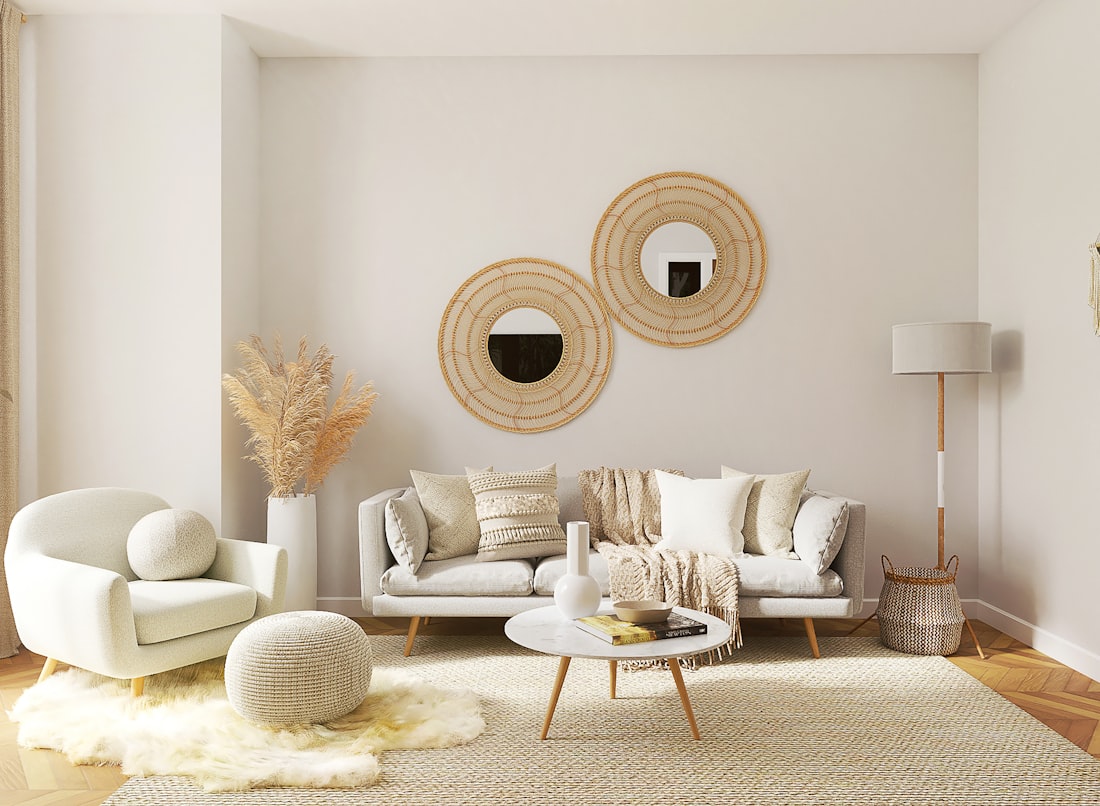
Cleaning Routines
The most effective wood arm cleaning routine is also the most straightforward: weekly dry dusting with a soft cloth or microfiber to prevent particulate buildup (which acts as a mild abrasive over time), followed by a monthly wipe-down with a cloth barely dampened with plain water and immediately dried. Martha Stewart’s wood furniture care guide emphasizes that the key word is “barely” — excess moisture is the primary enemy of most wood finishes, causing swelling, white rings, and eventual finish failure.
For oiled or waxed finishes (common on natural-look hardwood arms), a light re-application of the same product twice per year maintains the protective layer without buildup. For lacquered or varnished finishes, a quality furniture polish applied once per quarter provides a protective buffer without the re-application overhead.
Protecting Wood Finishes
The three most common threats to wooden sofa arm finishes are direct sunlight, heat sources (radiators, vents, fireplaces), and impact. UV exposure causes photodegradation — the bleaching and graying of wood surfaces — and can be mitigated by positioning the sofa away from direct sun or using UV-filtering window film. Heat causes differential expansion that cracks finishes over time; maintain at least 24 inches between any heat source and the wood. For impact protection, particularly on the top face of the arm (where remote controls, glasses, and keys inevitably land), a thin leather or felt arm pad provides near-invisible protection without changing the aesthetic.
| Finish Type | Durability | Maintenance Frequency | Melhor para | Repair Ease |
|---|---|---|---|---|
| Lacquer | ⭐⭐⭐⭐⭐ | Low (quarterly polish) | Contemporary / high-use rooms | Moderate (professional spot repair) |
| Polyurethane / Varnish | ⭐⭐⭐⭐ | Low (bi-annual check) | Traditional / family rooms | Easy (sand-and-refinish) |
| Oil Finish | ⭐⭐⭐ | High (2–3x per year) | Artisanal / Scandinavian styles | Very Easy (spot re-oil) |
| Wax Finish | ⭐⭐ | Very High (seasonal) | Antique / rustic styles | Very Easy (buff and re-wax) |
| Shellac | ⭐⭐⭐ | Moderate (annual) | Period furniture, decorative pieces | Easy (dissolves and re-bonds) |
A couch with wooden arms is not a design constraint — it is a design commitment. It commits you to a room that takes materials seriously, that thinks in tonal chords rather than single notes, and that prioritizes longevity over trend-chasing. When you approach it with the coordination logic, spatial intelligence, and care routines outlined in this guide, the wooden-arm sofa doesn’t just anchor your living room — it becomes the reason the room works.
The most important thing to take away is that there is no single “right” answer in any of these decisions. A light ash sofa in a terracotta-walled room is as valid as a walnut frame in a navy and cream setting — provided the logic is consistent, the proportions are respected, and the materials are treated with the care they deserve. Experiment with finishes, try three rugs before settling on one, and change your throw cushions with the seasons. The permanence of a quality wooden frame is precisely what gives you the freedom to be adventurous with everything around it.
If you are currently in the process of selecting a wooden-arm sofa, the range at Móveis Jade Ant spans from clean-lined contemporary frames to richly detailed traditional silhouettes, with custom dimensions and upholstery specifications available — which means your starting point doesn’t have to be a compromise.
✅ Quick Implementation Checklist
- Confirm sofa scale: 2/3 of primary visual wall, 18–24 inches clearance on each side
- Identify wood undertone (warm vs. cool) and align flooring, wall color, and accent pieces accordingly
- Select upholstery that contrasts the wood in texture, not just color
- Choose a rug that fits all front sofa legs, minimum 8 inches wider than the sofa on each side
- Switch all ambient lighting to 2700–3000K warm white bulbs
- Position one floor or table lamp at sofa-arm height (58–64 inches from floor)
- Build a seasonal cushion/throw rotation: two sets minimum
- Establish a monthly cleaning routine: dry dust weekly, damp wipe monthly
- Apply appropriate finish protection product 2–4 times per year
- Keep the sofa minimum 24 inches from heat sources and out of direct UV sunlight
Perguntas frequentes
Q1: How do I choose the right rug size when my sofa has wooden arms?
The gold-standard rule is that all front legs of your seating group — including the wooden-arm sofa and any accent chairs — should sit on the rug. At minimum, your rug should extend 8 inches beyond each sofa arm. For most three-seat wooden-arm sofas, a 9’×12′ rug is the most versatile choice. In smaller rooms, an 8’×10′ is acceptable, but go no smaller without risking the “floating island” effect that makes a room look ungrounded. Always test with painter’s tape on the floor before purchasing — a two-minute step that prevents expensive returns.
Q2: What upholstery and accent finishes pair best with light wood arms versus dark wood arms?
Light wood arms (ash, whitewash, natural oak) are highly versatile and tolerant of both warm and cool-toned upholstery — cream, sage, pale blue, or even blush all work well. They particularly shine with textured fabrics like bouclé or slub linen. Dark wood arms (walnut, ebonized, dark mahogany) are more directional: they work best with mid-tone or saturated upholstery colors — ivory, deep teal, forest green, or camel leather — and pair naturally with warm metallics like brushed brass and antique bronze. Avoid pairing very dark wood arms with very dark upholstery, as the contrast disappears and the sofa loses its definition.
Q3: How can I refresh my living room seasonally without replacing major furniture?
The four highest-impact seasonal refresh levers — in order of cost-effectiveness — are: cushion cover swaps (same inserts, different covers: linen in summer, velvet or wool in winter), throw blankets (a single quality throw draped over one arm changes the entire mood), rug rotation (a lighter natural fiber rug in warm months, a warmer wool or low-pile in winter), and plant styling (larger leafy plants in summer, dried botanicals and sculptural branches in autumn/winter). None of these require moving or replacing major furniture, and together they can make the same wooden-arm sofa look like it belongs to a different season entirely.
Q4: What maintenance steps extend the life of wooden armrests on a sofa?
The five non-negotiable habits for wooden arm longevity are: (1) weekly dry dusting with a soft microfiber cloth to prevent abrasive particle buildup; (2) monthly damp-wipe with a barely moistened cloth, dried immediately; (3) twice-yearly application of the appropriate protective finish (oil, wax, or polish) matched to the arm’s factory finish; (4) maintaining indoor humidity between 40–60% to prevent wood movement and cracking — especially critical in winter; and (5) keeping the sofa away from direct sunlight and within 24 inches of any radiator or heat vent. Arm pads on the top surface of the wooden arm provide near-invisible impact protection for the highest-contact area.
Q5: Is it better to match or contrast the wood arm finish with my flooring?
Match the undertone family, not the exact shade. A sofa with warm honey-oak arms on a warm medium-oak floor creates a cohesive tonal story even if the shades differ. What designers actually avoid is same-shade matching (where the arm and floor become visually indistinct) and undertone conflict (warm wood arms on a cool-gray floor). The safest and most sophisticated approach is to have the sofa arm approximately two shades darker or lighter than the floor, within the same warm or cool undertone family. This creates enough contrast to define the furniture while maintaining tonal harmony.
Q6: What lighting color temperature works best with wooden-arm sofas?
Warm white, between 2700K and 3000K, is the professional standard for any living space that incorporates wood furniture. Lighting at this color temperature enhances grain visibility, amplifies the warmth of honey and walnut tones, and makes the overall room feel inviting rather than clinical. LED bulbs at 2700K are now widely available at the same price point as cool-white alternatives — there is no cost reason to compromise. For accent lighting specifically highlighting the wooden arms, a directional halogen or warm LED at 2700K positioned to skim the surface at a 30–45 degree angle will reveal grain detail that ambient lighting alone misses entirely.
Q7: Can a wooden-arm sofa work in a small living room?
Wooden-arm sofas can actually be a better choice for small rooms than fully upholstered alternatives, for two reasons: the wood frame gives the sofa a clearly defined visual footprint that prevents it from “spreading” visually across the room, and the exposed frame creates visual lightness beneath and around the piece. The key for small rooms is choosing a sofa with slimmer arm profiles (3–4 inches wide rather than 5–7 inches) and legs that raise the piece off the floor to allow sight lines to pass beneath. This detailed guide by Jade Ant Furniture on wooden-arm sofas for small spaces covers proportioning and placement strategies specific to compact floor plans.
Q8: What rug patterns work best with a heavily grained wood arm sofa?
Heavily grained wood (teak, figured walnut, reclaimed oak) already carries significant visual pattern in the grain itself, which means the rug beneath should be tonally rich but geometrically calm — solid, tone-on-tone, or a quiet low-contrast stripe. Introducing a bold geometric or medallion rug pattern against a heavily grained arm creates a visual competition between two strong pattern sources that the room cannot resolve. Natural fiber rugs in jute, sisal, or seagrass are the safest and most effective choice for high-grain wood arms, as they add textural interest without contributing graphic pattern to an already complex material landscape.
Q9: How do I know if my sofa’s wooden arm finish is oil, wax, or lacquer, and why does it matter?
The quickest test: press your fingertip firmly on the arm for 10 seconds and release. If you see a fingerprint that disappears within 30 seconds, the finish is likely an oil or wax (porous, skin-reactive). If there is no mark at all, the finish is almost certainly a film-forming finish like lacquer, varnish, or polyurethane. This matters enormously for maintenance: oil and wax finishes need periodic re-application of the same product (and incompatible products will cause adhesion failure and whitening), while lacquered finishes just need a good paste wax polish and will not accept penetrating oils. When in doubt, contact the manufacturer — reputable furniture makers like Móveis Jade Ant provide finish specifications with their product documentation.
Q10: Are there sustainable wood options for sofa arms that still look high-end?
Yes, and the options have expanded significantly in the last five years. FSC-certified solid hardwoods (teak, ash, beech, rubberwood) offer the same aesthetic quality as non-certified alternatives while guaranteeing responsible forest management. Reclaimed wood arms — salvaged from demolished structures and remilled into sofa frames — offer a material that is both sustainable and inherently unique, as no two reclaimed pieces carry the same grain history. Bamboo, while technically a grass, is processed into a material that performs and looks like hardwood and regenerates at a fraction of the timeline of traditional timber. When evaluating sustainability claims, look for specific certifications (FSC, PEFC) rather than vague “eco-friendly” marketing language.
This article is produced by the Móveis Jade Ant editorial team. Jade Ant is a custom luxury furniture manufacturer specializing in living room, bedroom, and dining room furniture. For product inquiries, visit our living room collection.