
Luxury Furniture Manufacturer vs Distributor: Guide

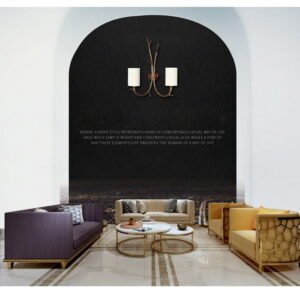
Design reference: a luxury living room rendering by POOJAN THANEKAR on Unsplash. Illustrative imagery, not a Jade Ant installation.
I. The High-Stakes Sourcing Dilemma
A villa’s curved seating must follow the room’s architecture. A hotel’s guest-room furniture must arrive before opening. A private label collection must look like your brand—not a supplier’s public catalog.
These goals can call for different sourcing routes.
A luxury furniture manufacturer produces the furniture. A distributor sells furniture sourced from one or more manufacturers, often adding selection, inventory, logistics, and local service. Some businesses perform both roles, so verify who actually makes, stocks, and warrants each item.
For high-net-worth villa owners and professional procurement teams, the choice is not a simple quality ranking. It is a strategic decision balancing design exclusivity, lead-time risk, and capital efficiency—how effectively your available cash supports the project.
Bespoke Exclusivity vs. Curated Efficiency
Direct manufacturing can give you more control over dimensions, materials, and original designs. Distribution can simplify selection and provide faster access to verified stock.
Neither advantage is automatic. A factory may restrict customization. A distributor may sell mostly made-to-order products.
Why Sourcing Errors Become Expensive
In FF&E—Furniture, Fixtures & Equipment, the movable furnishings and equipment in a property—a wrong decision can affect more than the furniture budget.
A table that cannot enter the service elevator needs redesign or specialist lifting. Mismatched finishes may require replacement across a suite. Late beds can leave otherwise completed hotel rooms unavailable.
The framework below helps you compare both routes against three outcomes:
- The space looks and functions as specified.
- Furniture is installed and accepted when needed.
- Purchase savings survive the full cost of delivery, inspection, and support.
II. Anatomy of the Luxury Manufacturer: The Path to Absolute Customization
Direct manufacturing offers the greatest potential control over a piece’s technical and aesthetic design. That control depends on the factory’s engineering skills and the clarity of your brief.
A. Bespoke Engineering for Non-Standard Spaces
Bespoke engineering means developing construction and dimensions for a specific requirement, rather than selecting an existing size.
Consider a villa dining table that must seat 14 people without blocking circulation. Simply extending a standard tabletop may create problems with leg placement, support, and access.
A capable manufacturer should provide shop drawings—dimensioned construction drawings used to make the piece—showing:
- Overall size and seating positions.
- Base placement and structural support.
- Material thickness and edge details.
- Assembly method and packed dimensions.
- Connections that allow the piece to enter the building.
Approve these details before production, not when the delivery team reaches the doorway.
B. Material Transparency and Quality Control at the Source
Direct sourcing lets you specify what goes beneath the visible finish.
For upholstered seating, request the frame construction, cushion specification, fabric reference, and replacement-cover options. For cabinetry, define the wood species, panel core, hardware, and finish.
QC—quality control—is the process of checking goods against agreed requirements. It should happen while problems can still be corrected economically.
A photograph can show appearance. It cannot confirm every hidden material or prove that a chair meets the required strength standard.
Use documented specifications, physical samples, and appropriate testing together. Jade Ant’s manufacturer selection framework provides a starting point for structuring that evaluation.
C. Private Label Opportunities
Private label furniture is produced for sale under your own brand.
For importers, distributors developing house collections, and brand owners, direct manufacturing can support signature proportions, custom hardware, branded packaging, and repeat production.
However, putting your logo on a catalog design does not create exclusive ownership. Define separately:
- Who owns the original design and later revisions.
- Whether the supplier can sell the same design elsewhere.
- Who owns tooling and technical files.
- Which territories or channels are exclusive.
- How approved specifications will be retained for reorders.
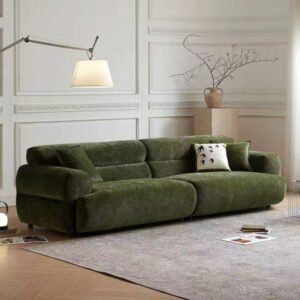
Design reference: seating photographed by Jean-Philippe Delberghe on Unsplash. An original silhouette requires more than a fabric change.
Craftsmanship Video: What to Observe
Poltrona Frau’s “Making Masterpieces” offers a relevant view of luxury furniture craftsmanship. Watch for the production steps behind the finished appearance, then ask shortlisted suppliers how comparable work is controlled across your order.
https://www.youtube.com/watch?v=QlX0TH32bWk
This is an independent brand reference, not a Jade Ant production video.
III. Anatomy of the Luxury Distributor: The Path to Curated Speed
Distributors can act as strategic filters, reducing procurement work through selected portfolios, inventory, and service coordination.
The value lies in what they actually take responsibility for—not simply the number of brands in their showroom.
A. Multiple Brands Through One Contact
A distributor may combine seating, dining furniture, bedroom pieces, and accessories from different makers.
For an interior designer managing several projects, that can reduce separate quotation requests, account setup, and delivery coordination.
Ask whether the distributor provides one consolidated delivery and claim process. One invoice does not necessarily mean one shipment or one warranty procedure.
Also verify authorized-dealer status where relevant, particularly when brand provenance matters to the client.
B. Ready-to-Ship Inventory
“Available” can mean:
- Physically stocked in a local warehouse.
- Stocked overseas.
- Allocated to an incoming shipment.
- Available to order from a factory.
These are different commitments.
For a deadline-sensitive project, request the exact item code, finish, quantity, warehouse location, condition, and reservation period in writing.
Industry insight: Quick-ship is an inventory arrangement, not an exclusive distributor advantage. Manufacturers can also offer stocked products. B&B Italia’s official ready-to-ship collection illustrates this overlap.
Choose based on verified availability, not the supplier’s business label.
C. Local After-Sales Support
A local distributor may arrange technicians, spare parts, or replacements without requiring you to coordinate directly with an overseas factory.
Before paying a premium for that service, confirm:
- Whether commercial hotel use is covered.
- Who pays inspection, collection, and installation costs.
- Which parts are locally stocked.
- How claims are escalated.
- Whether repair labor is included.
Local presence can make accountability easier to enforce. It does not expand a warranty unless the contract says so.
Hospitality reference photographed by Frames For Your Heart on Unsplash. Coordinating several furniture categories is part of the distributor’s potential value.
IV. Comparative Pricing Models: CAPEX vs. OPEX Considerations
The cost difference extends beyond the unit price to design management, inspection, logistics, and cash tied up before use.
CAPEX, or capital expenditure, is spending on long-term assets. OPEX, or operating expenditure, covers ongoing business costs.
For a hotel, furniture purchases may be capitalized while maintenance and some service costs may be expensed. Your accountant should confirm the treatment. Buying from a distributor does not, by itself, turn furniture CAPEX into OPEX.
A. Manufacturer Pricing: Savings With Added Management
Factory-direct pricing may reduce purchase cost, particularly across repeat units.
But your team may need to manage drawings, approvals, inspection bookings, freight, customs, and claims. Include those resources in the comparison—even when existing staff perform the work.
B. Distributor Pricing: A Premium for Defined Services
A distributor’s margin may cover stockholding, selection, import handling, local delivery, and after-sales support.
Compare quotes at the same endpoint: installed, inspected, and accepted at the project site.
Otherwise, you may compare a factory shipment price with a distributor’s delivered package and mistake different scopes for different margins.
Illustrative Cost Model for a 50-Room Project
Hypothetical USD figures—not supplier quotations or market benchmarks. Both routes assume comparable specifications. Import-related costs appear within the distributor’s purchase price where applicable.
| Cost component | Direct manufacturer | Distributor |
|---|---|---|
| Furniture purchase | 240,000 | 282,000 |
| Design and approval management | 18,000 | 7,000 |
| Independent inspection | 4,000 | 1,000 |
| Freight, insurance, import costs, and handling outside purchase price | 32,000 | 18,000 |
| Final delivery and installation | 12,000 | 10,000 |
| Financing and storage allowance | 6,000 | 2,000 |
| Planned project cost | 312,000 | 320,000 |
The purchase-price gap is $42,000. The planned project-cost gap is $8,000.
This does not prove that distribution is better. It shows why the first quote is not the final comparison.
Keep delay risk separate from planned spending. Estimate the probability and financial impact of each credible delay scenario without counting the same loss twice.
C. Volume Scaling and MOQs
MOQ—minimum order quantity—is the smallest order a supplier accepts, often per design, finish, or material.
For a hotel ordering 100 matching nightstands, setup costs can be spread across repeat units. A villa owner ordering two may face a higher unit price or a bespoke charge.
Ask whether the MOQ applies per item, upholstery color, hardware finish, or production batch. A low furniture MOQ can still sit alongside a large fabric minimum.
For importers, also compare deposit timing, stock turnover, and payment collection. A better margin is less useful if slow-moving inventory absorbs the cash needed for your next order.
V. Risk Mitigation: Lead Times and Supply Chain Volatility
The central delivery risk is the gap between a promised date and the date the furniture is usable on site.
A production completion date is not a delivery date. A port arrival date is not an installation date.
A. Manufacturer Risks
Custom production can be delayed by material shortages, overloaded finishing lines, sample revisions, or subcontracted components.
Require a schedule that names the events needed to start production: approved drawings, approved samples, available materials, deposit receipt, and a confirmed production slot.
Independent SGS product inspection services include initial, during-production, final, and loading checks. These stages serve different purposes; a final inspection cannot recover weeks lost to an early material error.
B. Distributor Buffer Stocks
Buffer stock means inventory held to absorb demand or supply disruption.
It protects your project only if the required quantities and finishes are reserved. A distributor’s stock advantage disappears when half the order requires replenishment from the same delayed factory.
Request a split schedule showing stocked, incoming, and made-to-order items. Identify any shared factory, port, or transport dependency.
C. Last-Mile and White-Glove Delivery
Last-mile delivery is the final movement to the property. White-glove delivery usually adds unpacking, assembly, placement, and packaging removal, but service scope varies.
Before release, check:
- Doorways, lift dimensions, turning spaces, and load limits.
- Crate sizes—not just assembled furniture sizes.
- Truck access, permits, and delivery windows.
- Specialist lifting requirements for stone or oversized pieces.
- Floor and wall protection.
- Room readiness and temporary storage.
- Damage recording and responsibility at handover.
Jade Ant’s FF&E coordination guide explains how to connect these checks with production and site milestones.
Industry insight: An early delivery can still be a procurement failure. Furniture stored in an unfinished hotel may create storage charges, extra handling, and damage exposure before installation begins.
VI. Strategic Fit: When to Choose the Manufacturer
Direct sourcing is strongest when original design and brand identity justify the development work.
A. Private Label Owners Building Signature Collections
Choose manufacturing when you need proprietary designs, repeatable specifications, and control over branding.
Start with a limited collection that can be sampled and inspected properly. An approved prototype establishes design intent; it does not, by itself, prove batch consistency.
For a structured starting point, review Jade Ant’s private label furniture development guide.
B. Architects Creating Site-Specific Installations
Direct collaboration is valuable when furniture must follow unusual geometry or coordinate with building services.
Examples include a curved banquette, a sectional sized around a column, or a headboard aligned with lighting controls.
Confirm who owns the final site measurement. Also define where the furniture supplier’s scope ends and the contractor’s installation scope begins.
C. Hotel Owners Seeking a Distinct Guest Experience
Original lobby seating, suite desks, or dining pieces can support a property’s identity.
But “custom” does not mean “non-replicable.” Protect important designs through clear rights, controlled file sharing, and enforceable agreements.
For villa owners, bespoke work can improve spatial fit and everyday use. Do not assume it increases property resale value. That depends on buyer preference, transferability, documentation, and local market conditions.
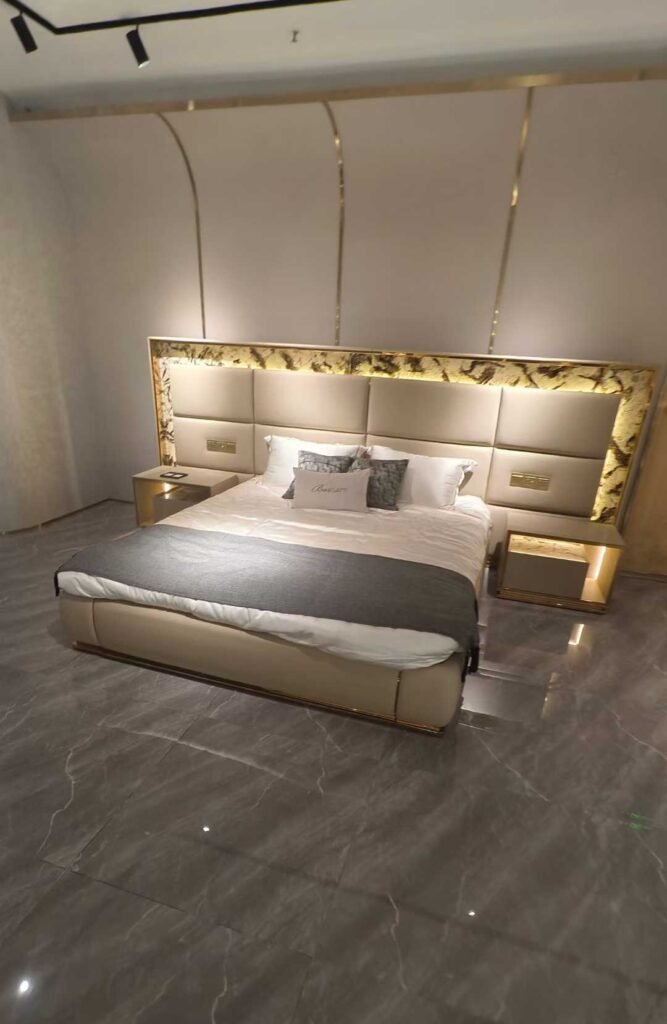
Residential reference by Spacejoy on Unsplash. Bedroom furniture should be evaluated as a coordinated system, not as unrelated purchases.
VII. Strategic Fit: When to Choose the Distributor
Distribution is strongest when speed, reliability, and variety are the main KPIs—key performance indicators used to measure success.
A. Interior Designers With Overlapping Projects
A distributor can reduce selection and coordination work when several projects need different styles on similar timelines.
Ask for technical drawings, sample access, stock reservations, and approved alternatives. A showroom visit saves little time if specifications remain incomplete afterward.
B. Developers Furnishing Model Units or Showrooms
Verified stock is valuable when furniture supports a scheduled sales launch.
Prioritize pieces that can arrive as a complete, coordinated package. A stocked sofa offers limited protection if the dining table and chairs remain uncertain.
C. Buyers Without Factory-Audit Infrastructure
Distribution can suit buyers who lack overseas QC staff or import experience.
However, require evidence of the distributor’s own supplier checks. Ask who conducts inspections and whether they evaluate commercial-use requirements.
For multi-city developments, local distributors may simplify installation and service. Use one shared specification register so city-by-city substitutions do not weaken the intended design standard.
VIII. The Hybrid Approach: Diversifying the Sourcing Mix
A hybrid strategy blends original manufacturing with selected stock to balance distinction and delivery risk.
A. Manufacture Statement Pieces; Distribute Supporting Furniture
Statement pieces are the items that define a room’s identity. Supporting furniture completes its function.
A practical split might be:
| Furniture package | Suggested route | Main reason |
|---|---|---|
| Site-specific villa dining table | Manufacturer | Dimensions and structural design |
| Hotel’s signature lobby seating | Manufacturer | Original silhouette and finish control |
| Standard guest-room accent chairs | Stocked distributor | Verified quantities and replacement access |
| Model-unit occasional tables | Stocked distributor | Short launch deadline |
| Private label collection | Manufacturer | Branding and design ownership |
These are starting points, not fixed rules. A stocked piece may be the room’s centerpiece; a supporting piece may still need customization.
B. Use Distribution for Phase One
For a staged opening, stocked furniture can meet immediate needs while bespoke items move through development.
Calculate the replacement cost before adopting this plan. Temporary furniture adds handling and storage, and may affect the client’s first impression.
It works best when phase-one pieces can later move into another planned space.
C. Maintain a Qualified Second Source
A backup supplier is useful only after its product has been evaluated.
Approve alternatives for repeat or deadline-sensitive items before they are needed. Do not send proprietary drawings to a second factory without checking your design rights and existing agreements.
Also check whether both suppliers depend on the same production site or shipping route. Two vendor names do not always mean two independent supply chains.
Interior reference by Prydumano Design on Unsplash. Hybrid sourcing still needs one design owner to control proportions, colors, and finishes.
IX. The Executive Decision Checklist: The Framework
Choose the route by testing project constraints before comparing supplier promises.
A. Timeline Analysis
Work backward from the installed-and-accepted date.
Allow time for design approvals, samples, production, inspection, correction, transport, clearance, and installation. For stocked goods, confirm reservation and delivery capacity.
Le critical path is the sequence of tasks that determines the earliest completion date. Find the furniture items on it before placing orders.
B. Customization Depth
Separate requirements into three levels:
- Standard luxury: Existing product, size, and finish.
- Modified product: Existing design with approved changes.
- Bespoke engineering: New dimensions, construction, or original design.
If the project genuinely needs level three, compare engineering capability—not just catalog appearance.
C. Resource Capacity
Decide who can manage drawings, samples, QC, imports, and claims.
Direct sourcing becomes less attractive when every supplier question must interrupt the lead designer. Distribution becomes less attractive when its promised coordination still falls back on your team.
Excel-Ready Decision Matrix
| Decision factor | Manufacturer favored when… | Distributor favored when… | Evidence to request |
|---|---|---|---|
| Timeline | Development time is available | Verified stock meets the deadline | Milestone schedule or stock reservation |
| Customization | Original engineering is required | Existing products fit the brief | Drawings, samples, and modification scope |
| Quantity | Repeat units support setup costs | Small mixed orders suit available stock | MOQ and quantity-based quotations |
| Internal resources | You can manage production and QC | You need a defined service package | Responsibility schedule |
| Brand strategy | You need owned or exclusive designs | Established brands support the project | Design rights or dealer authorization |
| Cash exposure | Deposits fit your working-capital plan | Stock or negotiated terms reduce exposure | Payment schedule |
| After-sales | Factory support meets your needs | Local repairs and parts are verified | Warranty and service procedure |
Do not use a high overall score to overlook a failed essential requirement. Missing safety evidence, unworkable delivery access, or an impossible deadline should stop the order.
Compact Procurement Glossary
| Term | Plain-English meaning | Example |
|---|---|---|
| Landed cost | Cost of bringing goods to a named destination | Purchase, freight, insurance, duties, and handling |
| Total cost of ownership | Cost of buying, using, maintaining, and replacing an item | A lower-priced chair needs more frequent repair |
| Gold sample | Final approved physical sample used as the production reference | A signed finish panel retained by both parties |
| Retention | Part of payment held until agreed obligations are met | A negotiated balance released after defect closure |
| Incoterms | Standard rules allocating delivery costs, tasks, and transport risk | A contract names the rule and delivery location |
X. Aligning Sourcing With Project Vision
Manufacturer and distributor are not two quality grades. They are two ways to organize design control, workload, delivery risk, and cash.
Pour private label owners, direct manufacturing usually offers the clearest route to a signature collection—provided ownership and exclusivity are defined.
Pour architects and villa owners, it is valuable when standard products cannot meet the space or design brief.
Pour developers with fixed launch dates, verified stock and coordinated local delivery can outweigh a lower factory quote.
Pour hotel owners and operators, a hybrid package can preserve identity while protecting repeat room types and replacement needs.
When discussing a project with Meuble Fourmi de Jade, bring more than reference images. Include the item schedule, quantities, required customization, destination, delivery access, and installed-and-accepted date.
Discuss your furniture sourcing brief with the Jade Ant team and request a scope that separates production, inspection, shipping, installation, and after-sales responsibilities.
Prioritize long-term asset value over short-term procurement ease. The right furniture must fit the space, support the intended use, arrive on a workable schedule, and remain serviceable after handover.
Frequently Asked Questions for High-End Buyers
1. How do MOQs differ between luxury manufacturers and distributors for hotel projects?
Manufacturers may set minimums per design, finish, fabric, or production batch. Distributors can often sell individual stocked pieces, but project quantities may require replenishment orders. Ask for separate minimums for the prototype, initial order, and later replacements.
2. Which route better protects private label designs from copying?
Neither route guarantees protection. Direct manufacturing can make ownership easier to define because you contract with the producer, but it also requires sharing production files.
Use clear ownership and production restrictions, controlled access, and legal advice on registration. The World Intellectual Property Organization’s industrial design guidance explains that registration is required for protection under industrial design law in most countries, with jurisdiction-specific exceptions.
3. Who is accountable if furniture arrives with a quality defect?
Start with the seller named in your contract. Responsibility for a manufacturing defect may differ from responsibility for transit damage.
Define inspection rights, acceptance criteria, claim deadlines, repair costs, replacement timing, and installation labor before ordering. A nearby distributor may simplify resolution, but only the written agreement establishes its obligations.
4. How do shipping and customs differ when buying directly from a manufacturer?
Direct buying may leave you responsible for freight, insurance, clearance, duties, and inland transport, depending on the agreed terms. A local distributor may already have imported the goods, but international distributor orders can still involve buyer-managed imports.
Use a named place with the agreed ICC Incoterms 2020 rule. These rules allocate delivery tasks, costs, and risk; they do not replace payment, ownership, or warranty clauses.
5. Can a distributor provide the same customization as a manufacturer?
Sometimes. An authorized distributor may arrange custom work with the underlying manufacturer.
Ask whether the request is a standard option, a dimensional modification, or new engineering. Confirm who approves feasibility, produces drawings, controls samples, and accepts responsibility for errors.
6. What lead-time variance should we expect for a 50-room luxury hotel fit-out?
There is no reliable universal range based on room count alone. Repeat designs, material availability, production capacity, destination, and approval speed all affect timing.
Request separate dates for approvals, production, inspection, shipment, site arrival, and installation. Ask comparable past clients whether delays came from manufacturing, logistics, or late buyer decisions. Keep quoted dates and risk allowances separate.
7. How should we manage QC with an overseas manufacturer?
Approve a detailed specification and physical reference samples first. Then use material checks, during-production inspections, and pre-shipment inspection where appropriate.
Define the sampling plan and defect categories with your inspector. Sampling does not guarantee that every unit is defect-free. Jade Ant’s furniture import inspection checklist can help organize the inspection brief; confirm project-specific tests and acceptance rules independently.
8. Do distributors offer better financing or payment terms than factories?
Not necessarily. Terms depend on credit history, order size, product customization, and the supplier relationship.
Compare deposit amounts, payment dates, financing charges, currency exposure, cancellation terms, and any agreed retention. A later payment date can help working capital, but only if the purchase price and obligations remain acceptable.
9. Which sourcing route is more sustainable?
Neither is inherently more sustainable. Compare the actual materials, manufacturing practices, transport route, packaging, durability, and repair options.
Le FSC chain-of-custody framework tracks certified forest-based materials through production and distribution. It is useful evidence for sourcing claims, but it does not establish the furniture’s complete carbon footprint. Avoid treating one certificate as proof of every environmental claim.
10. How can we verify a manufacturer’s luxury credentials without visiting?
Request live production walkthroughs, a documented third-party audit, physical samples, relevant test reports, and references from comparable completed projects.
Check that reports apply to the offered product and that certification scope matches the claim. For timber certification, use the FSC public certificate search.
Evaluate concealed construction and moving parts as carefully as visible finishes. A polished showroom photograph is a starting point—not proof of production capability.