A showroom can sell one perfect sofa. Only an audit can tell you whether three hundred will arrive the same way.
That gap is where projects lose money. A sample is made by the best team in the building, on a good day, with the buyer watching. Bulk production is made by a shift, on a deadline, after the buyer has gone home.
This checklist is written for the people who carry that risk: importers, designers, developers, hotel buyers, and private label owners. It gives you eight gates to check before you sign, and a scoring sheet you can use on the next tender.

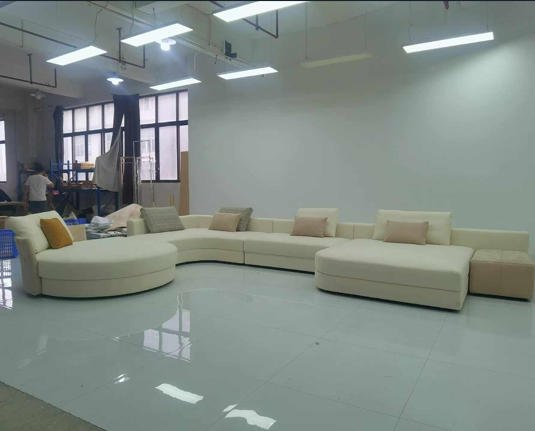
A calm room like this depends on three things that never show in a render: the frame, the foam, and the finish.
Why Vetting Beats Selecting
Vendor vetting is the work of proving a claim before you pay for it. Selection is choosing a look. Vetting is checking whether the supplier can repeat that look at scale, on time, and to a written spec.
Most buyers do the first and skip the second. Then they meet the same four problems.
| Problem | What it looks like on site | What vetting would have caught |
|---|---|---|
| Lead time drift | The container lands two weeks after the opening date | A schedule quoted from deposit, not from drawing approval |
| Quality variance | Ten chairs are tight, ninety are loose | No in-process check between frame and upholstery |
| Communication gaps | A finish change approved by email, never drawn | No named project manager, no written change record |
| Transit damage | Crushed corners and scuffed legs | A packing spec that was never written down |
Each problem costs money. One is worse. A late container can push a hotel opening, and a pushed opening can cost more in a week than the entire furniture order.
So the goal is not to find the cheapest quote. The goal is to find the supplier whose failure rate you can predict. A predictable 2% defect rate is easier to plan around than an unpredictable 0.5% that arrives in one bad batch.
Trade press, including Business of Home, returns to this point again and again. Projects rarely fail on taste. They fail on a date, a document, or a detail that nobody checked.
The framework below scores eight areas. Each area gets 1 to 5 points. The weights add up to 100. A supplier needs 70 points to pass, and no single area may fall below 3.
That last rule matters more than the total. A factory with beautiful finishing and no quality system can score 72 and still fail you on a 400-piece order.
For the wider argument on where luxury starts and marketing stops, this breakdown of what separates luxury from a premium price is a useful starting point.
Production Capacity: Scaling Without Losing Quality
A supplier can scale only if quality holds when the volume doubles. Capacity is not a number on a website. It is a set of limits: machines, drying rooms, sewing lines, and skilled hands.
Start with the machine list. Ask which operations are done in house and which are subcontracted. Cutting, edge banding, and frame assembly should be inside the building. If the frames come from a neighbour, your lead time depends on someone else’s queue.
Then look at the balance between machine work and handwork. A CNC router gives you repeatability. A hand-sanded edge gives you the feel that separates a luxury piece from a good copy. A serious factory uses both, and can tell you where the line sits.

Machine rooms tell the truth. Look at the dust extraction, the blade condition, and whether anyone is measuring the panel as it comes off.
The people question
Ask how long the average upholsterer has worked there. Ask how many people can build a frame from a drawing without help. Ask what happens when the head of finishing takes a holiday.
A factory with three master upholsterers and a hundred and twenty staff is fragile. One resignation can change your finish for a season. A factory with fifteen trained finishers and a written standard is resilient.
Surge capacity
Every project has a phase where volume jumps. Ask one question: “If my order doubles next month, which line absorbs it?”
Then ask for the name of the last project where that happened. A supplier who has done it once will describe the constraint. A supplier who has not will describe the ambition.
Lead time, counted honestly
Most quotes start the clock at deposit. Real production starts at approved drawings. Between the two sit sample rounds, colour approval, and sometimes a site measurement.
Plan for the difference. A semi-custom order runs about 10 weeks from approved drawing to FOB. Full bespoke runs 16 to 19 weeks. Chinese New Year removes three to four weeks from the calendar between January and March.

Our model from project schedules. The two largest causes are process problems, not shipping problems.
The chart above is the argument for vetting early. Late drawing approval and production overrun cause half of all delays. Both are process problems, and both are visible in an audit.
At Jade Ant furniture, a project schedule is built backwards from the install date and names the bottleneck for each month. Buyers who ask for that document learn more in ten minutes than they do from a catalogue.
| What to request | Why it matters | A weak answer looks like |
|---|---|---|
| Machine list, owned vs subcontracted | Shows real control of the process | “We work with many good partners” |
| Staff count by department | Reveals the true bottleneck | A total number with no breakdown |
| Average tenure in finishing | Predicts finish consistency | “Our workers are very experienced” |
| Output per week at your spec | Tests the schedule against reality | Output quoted at a simpler spec |
| Last project at 2x your volume | Proves surge capacity | A logo wall with no detail |
Quality Control Frameworks That Hold Under Pressure
In luxury work, “acceptable” is a word for the second-best supplier. You want a system that catches a fault before the carton closes, not a promise to fix it later.
Quality control runs in three gates. Each gate needs a form, a photo, and a signature. Ask to see the blank forms before you see the samples.
| Gate | When it happens | What is checked | Record you should receive |
|---|---|---|---|
| Incoming material | Before material enters the line | Veneer thickness, foam density, fabric shade, hardware | Material log with batch numbers |
| In-process | After assembly, before covering | Frame square, joint glue, foam fit, spring tension | Photos of each frame stage |
| Final | Before packing | Dimensions, finish, function, labels, carton marks | Inspection report with AQL result |
AQL means acceptable quality limit. It is the sampling rule used to accept or reject a batch. For furniture, a common starting point is AQL 2.5 for major defects, 4.0 for minor defects, and zero tolerance for critical defects such as sharp edges or structural cracks.
Write those numbers into the purchase order. An inspection with no agreed limit becomes a negotiation, and negotiations favour the side holding the goods.
Certification, verified not collected
A certificate is only useful if it belongs to your order. Generic PDFs from three years ago prove nothing.
Ask four things for every certificate: the standard number, the testing laboratory, the expiry date, and a reference to your material batch. Then check one certificate at random with the issuing body.
For timber, ask for chain of custody papers that match the shipment. PEFC certification is one accepted route, and the paperwork should name the mill, not just the country.
For textiles, ask how the fabric was tested for harmful substances. bluesign approved fabrics carry a chemical management record that a buyer can actually check.
Stress testing
A luxury piece still has to survive a lobby. Ask for test data on three points: static load on the seat, cyclic load on the mechanism, and impact on the frame.
For contract seating, the European reference is EN 16139. It covers strength, durability, and stability for non-domestic use. A supplier who has tested to it will have a report with photos of the rig.
For finishes, ask about chemical resistance. A lacquer that fades under a quaternary disinfectant will look tired within one season in a hotel.
Our own pre-shipment inspection checklist sets out the photo set we ask for at each gate. It is short on purpose, because a form nobody fills in is worse than no form.
Customization and Technical Integration
Bespoke ability is measured by how a factory handles a change, not by how many options it lists.
The pipeline is always the same: design file, shop drawing, prototype, approval, production. What differs is the speed and the discipline.
From file to drawing
A shop drawing is the factory’s technical drawing, made from your design. It shows sizes, joints, materials, and hardware. It is the document that decides what gets built.
Ask for these timings before you send a deposit:
- Shop drawing: 5 to 7 working days
- Physical sample: 15 to 25 working days
- Finish strike-off on your substrate: 7 to 10 working days
- Revision round: 3 to 5 working days
Then ask how many rounds are free. Two is fair. After that, a charge is reasonable, and you should expect it.

Hand work leaves evidence. A plane that takes a full shaving without tear-out is a plane in a trained hand.
Material flexibility
Ask what happens when your specified fabric is discontinued mid-project. A good factory keeps a list of approved alternates with similar rub count, weight, and stretch. A weak one waits for you to solve it.
The same applies to hardware. If the handle comes from a single Italian maker with a twelve-week lead time, your schedule depends on that maker. Ask for an approved substitute before you need one.
Change control
Every project changes. The question is what a change costs after the timber is cut.
| Change window | Typical cost impact | What is still possible |
|---|---|---|
| Before shop drawing | Low, often free | Any dimension, material, or finish |
| After drawing, before cutting | 2% to 5% of unit price | Dimension and finish changes |
| After cutting, before upholstery | 8% to 15% | Finish and fabric changes only |
| After upholstery starts | 25% or more, plus scrap | Almost nothing without a rebuild |

Once a panel reaches the saw, the design is fixed. Every change after this point is paid for twice, in material and in time.
Put this table in the contract. It turns a difficult conversation into a known rule, and it stops the “we can change that” promise that quietly adds three weeks.
COM means customer’s own material, the fabric or leather you supply. The trap is yield. A plain fabric needs about 1.4 times the finished surface area. A large repeat can need 2.2 times, because the pattern must match across seams and cushions.
Send the fabric specification, not just the name. A supplier who quotes COM without asking about the repeat will send a shortfall invoice later.
The full custom production process shows where each approval sits, and this guide to sourcing pieces that fit the room covers the site checks that stop a beautiful piece from entering the wrong door.
Logistics, Packaging, and Global Distribution
A perfect piece that arrives cracked is a failed piece. The luxury experience ends at the curb if the crate fails.
Packaging is a specification, not a habit. Ask for it in writing, layer by layer, with the material and the thickness named.
| Layer | What it does | Common failure when it is missing |
|---|---|---|
| Stretch wrap and foam corners | Stops rub and impact at edges | Scuffed legs and crushed corners |
| EPE or moulded foam shell | Absorbs shock in handling | Cracked frames after port handling |
| Moisture barrier and desiccant | Blocks humidity in sea transit | Swollen veneer and mould on fabric |
| Double-wall or plywood crate | Carries stacking load | Collapsed cartons at the bottom of a stack |
| Carton marking | Tells the receiver where it goes | A suite delivered to the wrong floor |
Then ask about container loading. A 40HQ holds about 68 cubic metres. Sofas are mostly air, so a factory that designs legs to detach and frames to stack can fit 30% more units in the same box.
That is not a small detail. On a 200-unit order, one container is often the largest single saving available to an importer.
Freight, 3PL, and the last mile
Ask whether the supplier ships FCL or LCL. FCL means full container load, one shipper, one seal. LCL means less than container load, where your crates share space with other cargo.
LCL is cheaper for small orders and riskier for high-value goods, because your pallet is handled more often. If you ship LCL, ask for a pallet spec and a photo of the loaded pallet before it leaves.
3PL means third-party logistics, an outside warehouse that stores, picks, and delivers. For a phased hotel project, a 3PL near the site can hold furniture and release it by floor. That protects the schedule and keeps the site clear.
White glove delivery is the final step. A trained two-person team carries the piece in, places it, assembles it, and removes the packaging. Ask whether the supplier has done it before, or only shipped to a dock.
Damage and claims
Agree the claim process before the first shipment. Three lines are enough:
- Photos within 48 hours of delivery, with the carton label visible
- Replacement or repair decision within 5 working days
- Replacement shipped with the next container where possible
A supplier who hesitates on those three lines will hesitate on the invoice too.
For the paperwork side, this shipping and customs walkthrough covers the documents that stop a container at the port. The US Commercial Service trade guidance is a plain-language reference for import rules by market.
Communication and Project Management
Most production errors start as a message that nobody confirmed. Communication is not a soft skill in this trade. It is a cost control.
Who owns your order
Ask one question early: “Who is my contact, and what else do they manage?”
A dedicated project manager handles two or three accounts. A sales agent handles forty and passes messages to the factory. The difference shows up in week six, when a small question takes four days to answer.
Ask for the escalation path too. If the project manager is silent for two days, who do you call? A supplier with a named second contact is a supplier with a process.
At Jade Ant furniture, each project order gets one manager, one named backup, and a shared photo folder that both sides can open. It removes the weekly “any update?” email and replaces it with a record.
Response time and honesty
Set a service level in the contract: replies within 24 hours on working days, and a written answer to any technical question.
Then test it before you order. Send three questions of different difficulty and time the replies. A fast answer to an easy question and silence on a hard one tells you what week six will feel like.
Honesty matters more than speed. A factory that says “we are three days behind on finishing” gives you a chance to plan. A factory that says “everything is fine” until the ship date does not.
Ask for a weekly report with photos: what was cut, what was assembled, what is in finishing, and what is at risk. Ten minutes of reading saves a month of guessing.
Document accuracy
Small errors in documents become large costs at the border. Check every document against the order, not against the last order.
| Document | What to verify | Cost of an error |
|---|---|---|
| Proforma invoice | Unit price, Incoterm, payment terms, HS code | Duty reassessment, delayed payment |
| Liste des affaires à emporter | Carton count, dimensions, weights, room codes | Storage fees, wrong delivery |
| Technical spec sheet | Materials, finishes, hardware, tolerances | Rebuild or claim dispute |
| Certificate set | Standard, lab, expiry, order reference | Customs hold, failed inspection |
| Loading plan | Container number, seal, unit count | Shortage with no proof |
The day-to-day habits that keep a project on track are covered in this guide to working with overseas suppliers. If you are new to the process, these questions to ask a factory are a good first call script.
Sample Evaluation and Prototype Validation
The sample is the only benchmark that survives an argument. A photo cannot show sheen. A render cannot show how a seam pulls.
So treat the sample as a legal object. Sign it, date it, photograph it under fixed light, and keep a sealed duplicate on both sides.
The golden sample protocol
- Approve the drawing before the sample starts
- Receive the sample and check it against the drawing, not against your memory
- Sign and date two labels, one for you, one for the factory
- Photograph it under D65 light, which is the standard daylight reference
- Seal the buyer’s copy and store it away from sunlight
- Book the factory copy as the golden sample, the reference unit for the whole run
Then ask where the golden sample lives. If the answer is “in the showroom”, it will be handled, moved, and faded. It belongs in the QC room, in a bag, with a label.

Swatches are the cheapest test in the project. Order them before the drawing, not after.
Colour and material accuracy
Colour drift is the most common visible failure in a new hotel. Two sofas from two batches can sit in the same lobby and look like different products.
Ask how the factory controls colour. A serious supplier keeps a physical standard and checks each mix against it with a spectrophotometer. The result is a Delta E value, which measures how far two colours sit apart. A Delta E under 1.5 is hard to see with the eye. Above 3, most people notice.
For fabric, ask for the physical swatch, not a screen image. Screens add blue, showrooms add warmth, and neither matches a lobby at 8am.
For natural stone and veneer, agree a deviation range in writing. No two slabs are identical. A written range turns “that is not what I expected” into a shared standard.
Iteration
Ask how many prototype rounds the factory expects. A good supplier plans for two and prices them in. A weak one treats every round as a favour.
Then watch what changes between rounds. A supplier who fixes the frame and the seam is listening. A supplier who only changes the fabric is managing you.
The signals that separate a real factory from a good sales office are set out in this guide to assessing build quality.
Here is how a serious maker runs the same sequence. The film follows prototyping, hand-cut foam, sewing, assembly, and packing inside a family-owned Italian plant.
https://www.youtube.com/watch?v=HDeGCjnfOTU
Watch the prototype room first. That is where a design becomes buildable, and where most cost and risk are decided.
After-Sales Service and Warranty
The invoice is the middle of the relationship, not the end. What happens after delivery decides whether you have a supplier or a transaction.
Warranty by component
A single “five-year warranty” line is a marketing sentence. Ask for a table.
| Component | Fair cover for contract use | What to insist on |
|---|---|---|
| Frame and structure | 5 years | Written definition of misuse |
| Foam and suspension | 3 years | Density guarantee and compression limit |
| Upholstery and finish | 2 years | Pilling and colour fastness standard |
| Hardware and mechanisms | 2 years | Named brand and load rating |
| Stone and glass | 1 year | Exclusions for chips after install |
Then ask how a claim is processed. Who inspects? Who decides? How fast does a replacement ship? A warranty with no process is a promise with no owner.
Spare parts
Ask for a spare parts list with the order. Foam inserts, glides, hinges, and a metre of the upholstery fabric cost little at production time and a lot later.
A hotel that can re-cover one seat in a suite without re-buying the chair protects both its budget and its look. A hotel that cannot ends up with a mismatched chair in a photographed room.
Resolution speed
Agree a target: first response in 48 hours, a repair plan in 5 working days, a replacement on the next container.
Then check the record. Ask for two recent claims and what happened. Suppliers who handle claims well will tell you about them, because it is a selling point.

The wear points are always the same: arm caps, seat front, and the finish on the legs where feet and cleaners meet.
Repeat business is the real test of after-sales service. This look at repeat order planning shows how a second order exposes every gap the first one hid. Buyers who want more from an existing partner will find the practical levers in this guide to getting more from a hospitality supplier.
Financial Stability and Ethical Compliance
A supplier in cash trouble becomes your problem before it becomes theirs. Factories pay for material, labour, and freight months before they get paid.
When cash is tight, the first things to slip are material grade and staff retention. Both land in your order.
Reading the balance sheet without seeing it
You will not get audited accounts from a private factory. You can still read the signals:
- Years at the same address, and whether the plant is owned or leased
- Export volume by market, and how concentrated it is in one client
- Staff count this year against last year
- Whether they buy material on credit terms or pay cash on delivery
- Whether the same owner appears on the business licence and the export licence
A factory that pays cash for material is either very conservative or very short of credit. Ask which.
Payment structure
| Structure | When it fits | Risk to manage |
|---|---|---|
| 30% deposit, 70% before shipment | Standard stock and semi-custom | Inspect before releasing the balance |
| 30 / 40 / 30 with inspection trigger | Larger project orders | Write the trigger into the contract |
| Letter of credit at sight | First order with a new partner | Document accuracy and bank fees |
| Open account, 30 to 60 days | Repeat partners with a clean record | Only after two good shipments |
Never release the balance before the inspection report. That report is your only leverage, and leverage is cheaper than a lawyer.
Ethics and brand risk
Your name goes on the label, so your buyer holds you responsible for how the piece was made. Two audits cover most of the exposure.
A social compliance audit checks hours, wages, safety, and child labour. amfori BSCI social audits are widely used in Asia and produce a report you can request by factory.
An environmental audit checks timber sourcing, chemical handling, and waste. Ask for chain of custody on wood and a chemical list on finishes.
A factory that refuses both is telling you something. A factory that has them and shows the corrective actions is telling you more.
The due diligence sequence we recommend is set out in this factory due diligence checklist. For a shorter screen before a full audit, this guide to quality and compliance checks covers the first five questions.
The Decision Matrix
Eight areas, one score. The point is not the number. The point is that three suppliers get the same questions, on the same day, with the same weights.
Our weighting for project furniture. Materials and quality systems carry 38 points between them, because those are the failures you cannot fix on site.
| Gate | Weight | What a 5 looks like | Score |
|---|---|---|---|
| Materials and build | 20 | Written spec, tested samples, moisture records | |
| Quality systems | 18 | Three gates, AQL agreed, third party welcome | |
| Production capacity | 14 | Named bottleneck, realistic schedule, surge proof | |
| Customization | 12 | Fast drawings, clear change pricing, COM advice | |
| Compliance | 10 | Current certificates tied to the order | |
| Logistics and packing | 10 | Written packing spec, loading plan, white glove | |
| Communication | 8 | Named manager, 24-hour replies, weekly photos | |
| Financial terms | 8 | Transparent quote, fair warranty, clear claims |
Two rules keep the sheet honest. Any score below 3 on materials or quality systems fails the supplier, whatever the total says. And one person scores, a second person reviews.
The red flags
Some answers should end the conversation, not lower a score.
| Red flag | What it usually means |
|---|---|
| “Our quality is the best” with no spec sheet | No system, only confidence |
| No moisture meter in the plant | Frame problems after delivery |
| Refuses a third-party inspection | They know what an inspector will find |
| Quotes a lead time before seeing drawings | The date is a guess |
| Cannot name the foam density | Foam bought on price, not spec |
| A sample made by a different team than bulk | The sample was a demonstration |
| No written warranty by component | Claims will be argued case by case |
| Price drops 30% with no spec change | Something in the build changed |
A low price is not a red flag. A low price with no explanation is.
Score twice, then decide
Score every supplier from documents first. Then score again after a visit or a live video walkthrough.
The gap between the two scores is the most useful number on the sheet. A supplier who scores 4.2 on paper and 2.8 in person is selling a brochure. A supplier who scores 3.8 both times is telling you the truth.
Set a decision date before you start. Three suppliers, two weeks, one sheet. Procurement that drifts for three months loses the price it negotiated in week one.
Then run a trial order. One to three SKUs is enough. Include one custom piece, because that is where the process shows itself.
At Jade Ant furniture, first orders follow this sequence: drawing, sample, trial batch, then volume. It is slower by two weeks and cheaper by a season.
If you are screening suppliers for an upcoming project, send your project brief and the team will return a spec sheet, a schedule, and a cost breakdown in the same format. You can also browse current collections to see how the frames, foams, and finishes are built.
Planning a full FF&E package changes the audit slightly, because more of the risk sits in coordination than in any single item. This guide to ordering strategy for FF&E covers the sequencing, and these contract furniture case studies show how the checks play out on real projects.
Glossary
| Terme | Plain meaning |
|---|---|
| Vetting | Proving a supplier’s claims before you pay |
| Golden sample | The signed reference unit that the whole run is measured against |
| AQL | Acceptable quality limit, the sampling rule for accepting a batch |
| D65 | A standard daylight light source used for colour checks |
| COM | Customer’s own material, supplied by the buyer |
| FF&E | Furniture, fixtures, and equipment bought for a project |
| Shop drawing | The factory’s technical drawing made from your design |
| Delta E | A number that measures how far two colours sit apart |
| FCL / LCL | Full container load / less than container load |
| 3PL | Third-party logistics, an outside warehouse and delivery partner |
FAQ
How do I check whether “hand-finished” is real or just marketing?
Ask to see the finishing room and count the people in it. Then ask how many coats go on, and whether the surface is sanded between coats. A hand-finished piece has a person, a schedule, and a reject pile. Ask for a photo of the reject pile. A factory with no rejects is not finishing by hand.
What colour and grain variation is normal for natural materials?
For colour, a Delta E under 1.5 is hard to see, and 1.5 to 3 is acceptable in most contract work. For stone and veneer, variation is normal and should be agreed as a range before production. Ask for photos of three slabs from the batch, not one perfect sample.
How do I keep bulk production close to the prototype?
Freeze the sample, sign it, and keep one copy in the QC room. Then write the tolerance into the order: seat height within 5 mm, pattern centred within 3 mm. Check the first ten units against the golden sample before the line continues.
Which certifications matter most for wood sourcing?
Look for chain of custody that names the mill and the shipment, not just the country. PEFC and FSC are both accepted in most markets. Then ask for the invoice trail from the mill to the factory. Paperwork that stops at the border is paperwork you cannot defend.
A supplier misses a critical hotel opening date. What now?
Call a meeting within 24 hours and ask for a written recovery plan with dates. Then split the order: air-freight the public-area pieces, ship the rest by sea. Tell the operator early, because a re-planned opening is survivable and a surprise is not.
What are the red flags in a virtual factory tour?
Watch the hands, not the machines. Are people measuring parts? Is there a QC station with forms? Does the camera pass a stack of cartons with labels? Ask to open a random carton on camera. A tour that never shows packing is a tour that has something to hide.
How should payment terms be structured to protect both sides?
Use 30% deposit, 30% on approved inspection, and 40% before shipment or on arrival. Tie the middle payment to a third-party report, not to a date. If the supplier needs cash earlier, offer a smaller deposit on a smaller first order instead of loosening the inspection trigger.
How do I protect private label designs with an overseas factory?
Put three things in writing: an exclusivity clause for your market, ownership of the tools and moulds, and a penalty for selling your design to another buyer. Then keep one detail out of the drawing pack until the order is confirmed. The detail is cheap to add and expensive to copy.
How do I work out the true landed cost of a piece?
Start with the FOB price, then add freight, insurance, duty, port fees, inland delivery, inspection, and the cost of replacement units. Divide by the number of units that will actually pass inspection. Most buyers forget the last two lines, and those are the ones that change the comparison.
How often should I audit a factory after approval?
Do a full audit before the first order, a focused audit every 12 months, and a pre-shipment inspection on every order. If the factory changes ownership, moves site, or replaces its finishing manager, treat it as a new supplier and start again.