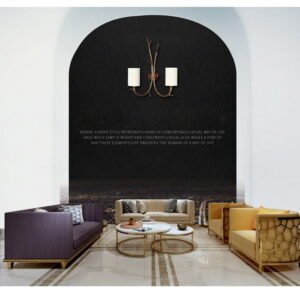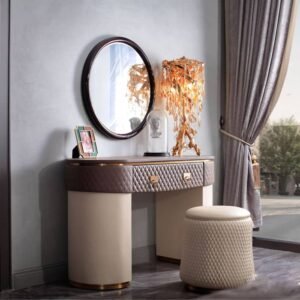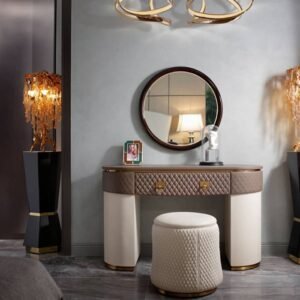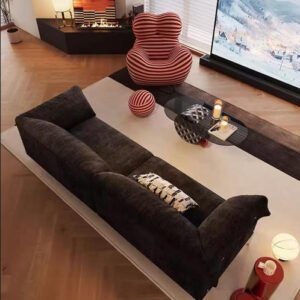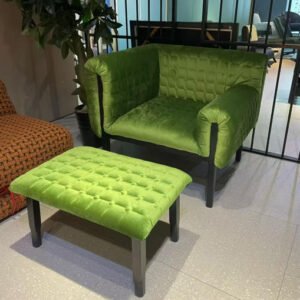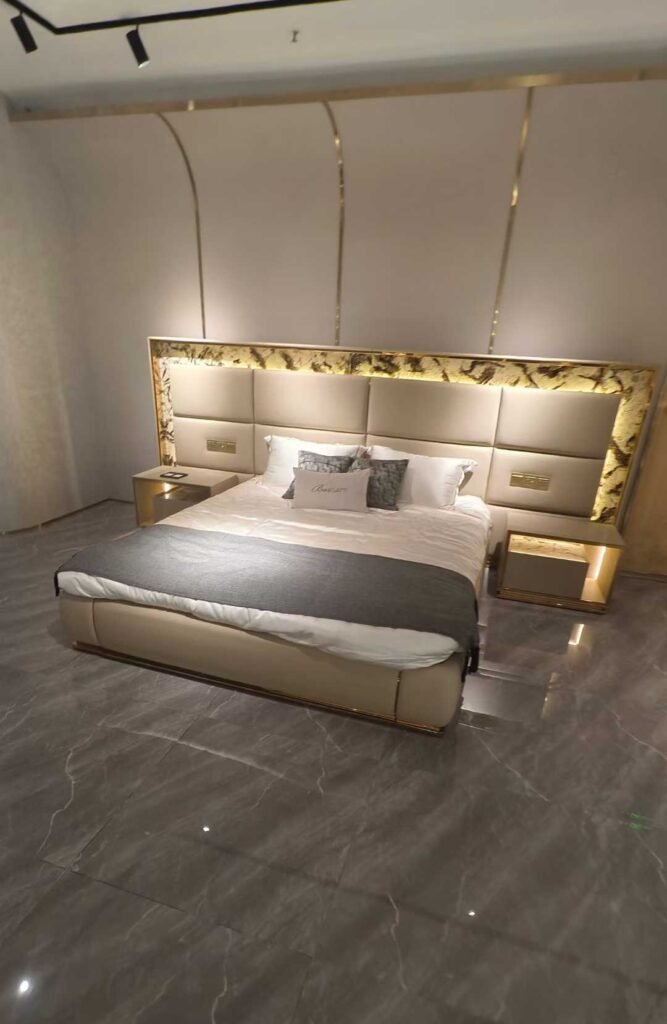
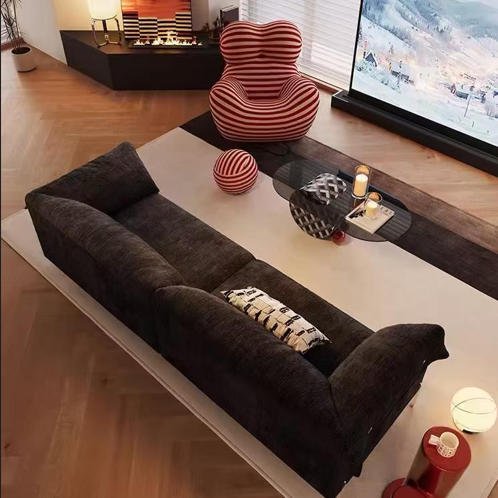
Custom vs Off-the-Shelf Luxury Furniture: A Hotel ROI Guide for Developers, Designers and FF&E Buyers

For developers, hotel operators and owners, interior designers, FF&E and hotel buyers, villa owners, importers and distributors, private label brand owners, and architecture and engineering teams.
The short answer: Premium ready-made furniture wins on speed and upfront cost. Custom-engineered furniture usually wins on total cost over time, room efficiency and brand identity. The best projects use both: custom where guests look and linger, ready-made where volume and speed matter. The sections below show how to decide, with numbers.
I. Introduction
Picture two quotes on your desk. You are fitting out a 120-room hotel. The premium ready-made package costs $14,000 per room. The custom package costs $19,000. That is a $600,000 gap before a single guest checks in.
Your lender wants a tight CAPEX number. CAPEX (capital expenditure) is the money spent to buy or upgrade long-term assets like furniture. Capital expenditure sits on the balance sheet and gets depreciated over time. Your operator, on the other hand, cares about OPEX, the day-to-day running costs such as repairs, cleaning and replacement.
This is the procurement dilemma. The cheapest option today can be the most expensive option in year six.
Let’s define the two options clearly.
- Premium Ready-Made (PRM): Finished luxury furniture sold from a catalog or stock. You pick from set sizes, fabrics and finishes. Delivery is fast.
- Bespoke or custom-engineered: Furniture built to your drawings, room sizes, materials and brand details. A factory makes it for your project only.
Here is what each stakeholder worries about.
| Stakeholder | Biggest pain point | What to watch in this guide |
|---|---|---|
| Developer or owner | Debt service, opening date, resale value | Sections IV, VI and VII |
| Interior designer | Render vs. reality, room fit, design control | Sections III and VIII |
| FF&E or hotel buyer | Lead times, budget overruns, replacement reserves | Sections IV, VII and VIII |
| Importer or distributor | Margin, exclusivity, repeat orders | Section IX |
| Villa owner | One-of-a-kind look, long-term value | Sections II, III and X |
The central argument. Ready-made furniture gives you immediate availability and a lower initial cost. Custom-engineered hospitality furniture usually gives a better long-term return, through better use of space, a stronger brand identity and fewer replacements. But “usually” is not “always.” This guide shows where the line sits.
What you will get: a data-driven comparison of cost, durability and brand value, two case studies, a decision matrix and a risk plan.
II. The Financial Architecture of Off-the-Shelf Luxury
Premium ready-made furniture is a low-friction way to start, but some of its costs stay hidden until later. It is not a bad choice. It is a choice with a particular cost shape: low at the start, higher later.
Initial CAPEX Advantages
Let’s give ready-made furniture its due. It has real strengths:
- Short lead times. Many pieces ship from stock or from a short production run.
- Predictable prices. The catalog price is the price. No development fees.
- Easy to see. You can sit on the sofa before you buy it.
- Low design risk. The product already exists and has been tested in the market.
For a project with a tight budget and a fixed opening date, these points matter a lot.
The “Standardization Gap”
A standardization gap is the cost of changing your room to fit the furniture, instead of making the furniture fit the room.
Here is a simple example. A guest room wall is 3.4 meters wide. A standard king headboard is 1.9 meters wide. Add two 0.5-meter nightstands and you have 2.9 meters. The remaining 50 centimeters gets split into two awkward gaps. Guests see dead space, and the designer adds filler panels or a wider rug to hide it.
A custom headboard panel with built-in shelves, reading lights and charging points can run wall to wall. It looks planned, because it was.
Other common standardization gaps include:
- Desks that are too deep for narrow rooms
- Lounge chairs that block a door swing by 5 cm
- Sofas that are too long for the alcove they were drawn for
- Finishes that nearly match but never quite do
Depreciation Risks
Luxury ready-made furniture often looks the part but is built for home use. In a hotel, it can wear out faster than the pricing suggests. Mass-produced pieces also lose value quickly once they are used and rarely sell well on the second-hand market.
Looks can hide weak points inside the frame. Our luxury furniture investment checklist lists the construction checks that separate durable pieces from showroom pieces.
| What ready-made gives you | What it can cost later |
|---|---|
| Fast delivery | Fewer choices on size and finish |
| Fixed upfront price | Possible early replacement in heavy-use areas |
| Visible, testable product | The same look as every competitor who buys it |
| Low design risk | Room layouts bent around standard sizes |
III. The Value Engineering of Custom Furniture
Custom furniture is an investment in how a space works and how long it lasts. The extra cost buys three things: a better fit, better materials for the job, and a look nobody else has.
Quick definition: Value engineering. A method for getting the same function and appearance at a smarter cost, without cutting what guests see or feel. The Whole Building Design Guide describes how scope, quality and budget should stay balanced across a project. Value engineering is not “making it cheaper.” It is making it right.
Precision Fit: More Revenue From Every Square Meter
Two metrics matter here. ADR (Average Daily Rate) is the average price a hotel gets for each occupied room per night. RevPAR (Revenue Per Available Room) combines price and occupancy. This RevPAR and ADR explainer walks through both.
A custom layout can fit a proper desk, a lounge chair and a luggage bench into a room where ready-made pieces only allow two of the three. Guests notice. A room that works better supports a higher rate.
Here is an illustrative example for a 120-room hotel at 70% occupancy and a $300 ADR:
If a stronger room design helps lift ADR by 4%, that adds about $368,000 per year. This is a hypothetical. ADR depends on many things, and furniture is only one of them. Use it to see the scale, not to promise a result.
Material Specification: Built for the Way the Space Is Used
A lobby chair and a villa guest chair live different lives. Custom projects let you specify each one for its job.
Fabric wear is measured with the Martindale test. A machine rubs the fabric until it wears, and the number of cycles is the score. This guide to rub counts explains Martindale and its US cousin, Wyzenbeek. Our hospitality furniture trends guide gives these working ranges:
| Space | Minimum cycles | Better for luxury |
|---|---|---|
| Private villa guest room | 25,000 | 40,000+ |
| Boutique hotel room | 40,000 | 60,000+ |
| Restaurant seating | 60,000 | 80,000+ |
| Hotel lobby lounge | 80,000 | 100,000+ |
| High-traffic public seating | 100,000 | 150,000+ |
Custom work also lets you choose frame wood, foam density, joinery and hardware to match the job. A standard catalog piece makes those choices for you.
Brand Alignment: A Signature Look That Supports a Higher Rate
Guests photograph what looks unique. A custom banquette in a private dining room, a carved headboard or a sculptural lobby chair becomes part of how your hotel is remembered. A catalog piece can be bought by the hotel across the street.
For a deeper take on this point, see this comparison of custom vs standard hotel furniture, which frames the choice around lifecycle cost, brand positioning and operations.
Industry insight: The strongest case for custom is not “it looks nicer.” It is that custom furniture is the one part of a project where design, durability and operations can be tuned together.
IV. Comparative ROI Analysis: Initial Cost vs. Lifecycle Cost
A true ROI comparison looks past the purchase order to the total cost of ownership. Total cost of ownership (TCO) is everything you spend on an asset across its life, not just the price tag.
To see where custom cost comes from, this short video breaks down real custom commissions:
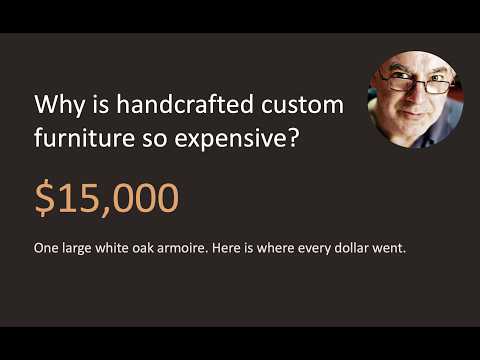
Watch: why handmade furniture costs what it does, using real client examples.
Durability and Maintenance: A 10-Year Model
Industry benchmarks give a rough picture. According to one hotel FF&E lifecycle reference, guestroom casegoods typically last 7 to 10 years and mattresses 5 to 7 years. Another hospitality FF&E procurement guide notes that luxury hotels often run shorter cycles, about 6 to 8 years for casegoods and 4 to 5 years for soft seating, because guest expectations are higher.
Here is a model for one guest room’s seating, headboard, nightstands, desk and wardrobe. These are illustrative numbers. Swap in your own.
| Assumption (per room) | Premium ready-made | Custom-engineered |
|---|---|---|
| Prix d'achat | $14,000 | $19,000 |
| Maintenance and repair per year | $600 | $350 |
| Service life before replacement | 5 years | 10 years |
| Replacement cost | $14,000 | Not needed within 10 years |
| Result over 10 years | Premium ready-made | Custom-engineered |
|---|---|---|
| Total cost of ownership per room | $34,000 | $22,500 |
| Annual cost per room | $3,400 | $2,250 |
| Savings per room | $11,500 (34%) | |
| Savings across 120 rooms | $1,380,000 |
The lines cross between year 4 and year 5. Before that, ready-made is cheaper. After the first replacement, custom pulls ahead.
Be honest with the numbers. If the ready-made set survives the full 10 years without replacement, it wins: $20,000 against $22,500. Custom pays off when the cheaper option fails earlier in heavy hotel use. Always test your own life-span assumptions.
The model also leaves out room downtime during replacement, which makes it conservative. For a broader view of this trade-off, see our cost vs. quality analysis of custom furniture.
Logistics and Installation: One Kit or Many Vendors
Buying luxury pieces from several ready-made brands means several order portals, several lead times and several delivery dates. A custom program from one factory can arrive kitted, meaning each room’s furniture is packed together and labeled by room.
| Facteur | Many ready-made vendors | One custom-kitted program |
|---|---|---|
| Purchase orders | Many | One |
| Delivery dates | Staggered, hard to align | Planned and synchronized |
| Finish matching across pieces | Close but rarely identical | Same finish batch |
| Installation | Crews wait for missing pieces | Room-by-room, complete |
| Who you call when something is wrong | Several suppliers | One project manager |
The “Repairability” Factor
Think about year 7. A drawer front cracks. If you bought a custom piece, the factory has your drawings, your finish code and your fabric lot. A matching part can be made.
With a ready-made line, the model may be discontinued. Then you replace the whole set or live with a mismatch. Planned maintenance helps too. Our care and maintenance framework shows how to extend the life of both types.
V. Case Study A: The Boutique Hotel (The Power of Bespoke)
A note on case studies. The two case studies in this guide are illustrative composites built from common project patterns. They are not named properties. The numbers show how the math can work. For more real-world project patterns, see our hospitality furniture case studies.
Custom furniture can directly affect guest satisfaction and room rates when the architecture and the brand are both unusual.
The Challenge
A developer converts a heritage building into a 48-key boutique hotel. The ceilings are 2.6 meters. Walls are angled. No two rooms have the same shape. The brand promise is “a home with a story,” so catalog furniture would look generic.
The Solution
The design team used two custom elements:
- Integrated millwork. A single unit combined desk, wardrobe and minibar to fit each room’s angled wall. Nothing floated in the middle of the floor.
- Ergonomic seating. Lounge chairs were built to a lower seat height and a firmer foam for better support, then tested in a full-size sample room before production.
The Outcome
| Système métrique | Sister hotel with ready-made furniture | Boutique hotel with custom furniture |
|---|---|---|
| ADR in first 18 months | $245 | $268 (+9.4%) |
| Furniture replacement spend, years 1 to 5 | $182,000 | $109,000 (-40%) |
| Guest review mentions of “design” or “comfort” | Occasional | Frequent |
At 48 keys and 68% occupancy, that ADR gain is worth roughly $274,000 per year. Not all of it comes from furniture, because lighting, art and service also matter. But in this scenario the furniture is the part guests photograph.
Key lesson: Custom wins most clearly when the building is unusual, the brand is strong, and guests pay for the experience.
VI. Case Study B: The Rapid-Scale Development (The Utility of Off-the-Shelf)
Ready-made furniture is the strategically correct choice when speed and repetition matter more than uniqueness. Pretending otherwise would be bad advice.
The Challenge
A developer plans four identical 80-key lifestyle hotels, all opening within nine months. The room layout is the same in every building. The loan is $25 million per property at 7.5% interest. Every week of delay costs real money.
The Solution
The team chose curated luxury collections from one supplier with written lead-time guarantees. They kept one custom element: the lobby feature seating.
The Outcome
| Item | Custom plan | Curated ready-made plan |
|---|---|---|
| Time from order to delivery | 14 weeks | 9 weeks |
| Time saved | 5 weeks (35 days) | |
| Interest on a $25M loan at 7.5% | About $5,137 per day | About $180,000 avoided per hotel |
| Room standardization | Needs sample-room approval | Same SKU across all four hotels |
Interest alone saved about $180,000 per hotel, before counting room revenue from opening earlier. Because the rooms were identical, the standardization gap barely mattered.
Key lesson: When every room is the same and the schedule is tight, ready-made is a tactical win. Spend the saved time and money on the one or two spaces guests remember.
VII. Strategic Decision Matrix for Stakeholders
You do not have to pick one side for the whole project. The smartest FF&E teams decide area by area.
The “Volume vs. Uniqueness” Scale
Ask two questions for each space: How many identical units do I need? How much does this space shape the guest’s memory?
| Space | Volume | Uniqueness needed | Suggested approach |
|---|---|---|---|
| Lobby and reception | Faible | Very high | Custom |
| Signature suites and villas | Faible | Élevé | Custom |
| Restaurant banquettes and bar | Moyen | Élevé | Custom or semi-custom |
| Standard guest rooms | Élevé | Moyen | Ready-made or semi-custom |
| Corridors and meeting rooms | Moyen | Faible | Ready-made |
| Back-of-house | Moyen | Very low | Ready-made |
Mixing works if you keep finish codes, seat heights and metal tones consistent across both types. Ask the custom factory to match its finishes to a ready-made sample.
Budget Allocation: Build an Asset, Not a Brand Tag
Shift the question from “Whose name is on this?” to “What does each dollar buy?” A well-known brand may mean showroom costs and distribution markups. A specified piece means frame wood, foam density, joinery and finish.
The pie chart shows one example split. Use it as a starting point, not a rule.
For benchmarks on what to include in each budget line, read our hotel FF&E budget breakdown.
Timeline Analysis: The Cost of Delay vs. the Cost of Custom
This is the calculation many teams skip. First, estimate the cost of each day of delay:
For our 120-room hotel at 70% and $300:
Now compare it with the custom premium of $600,000:
If choosing custom adds more than about 24 days to your opening, the premium is gone, even before you count lifecycle savings. If you plan early, custom adds no delay at all. That is why timing is a procurement decision, not just a logistics one.
These ranges are planning figures. Add ocean freight, customs and site delays on top. Our furniture sourcing workflow guide shows how to build a schedule that works backward from your opening date.
VIII. Mitigating Risks in Custom Procurement
Developers fear two things about custom work: long lead times and quality problems. Both are manageable with a plan.
The Importance of Prototyping: Use a Mock-Up Room
A mock-up room is one full-scale guest room built and furnished before the main order. It tests finishes, sizes, accessibility and installation with real objects. This guide to mock-up rooms explains why they catch errors cheaply.
What to check in the mock-up:
- Sizes against the real room, doors and clearances
- Finish color under the room’s actual lighting
- Seat comfort after 20 minutes
- How easily housekeeping can clean around each piece
- How the piece installs and what packaging it needs
Photograph and sign off every detail. The approved room becomes the standard all bulk production must match.
Vetting Manufacturing Partners
Ask for evidence, not adjectives. Our guide on choosing a hospitality contract furniture manufacturer offers a full scorecard. The short version:
| Check | What to ask for | Warning sign |
|---|---|---|
| Capacity | Current factory load and monthly output | A quote with no mention of schedule |
| Certifications | Fire, emissions and strength test reports | “We can get that later” |
| Quality system | Written checkpoints at each stage | “Our team checks everything” |
| Strength standards | Test reports against BIFMA standards for commercial use | No test data |
| Reference projects | Direct contacts for similar hotels | Only written testimonials |
Independent inspectors, such as QIMA, can verify production before the container ships. A good factory welcomes this. Jade Ant furniture, for example, builds photo checkpoints into frame assembly, upholstery and final finishing, so a problem is found while it is still cheap to fix.
To see what a production line looks like, watch this walkthrough:
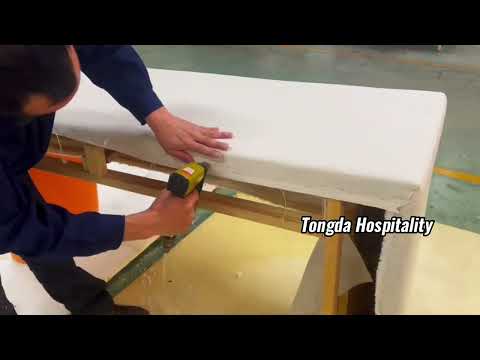
Watch: how hospitality furniture is made, from materials to quality control.
Contractual Safeguards
Put the safeguards in writing before production begins.
| Safeguard | How it works |
|---|---|
| Milestone-based payments | Pay in stages tied to proof: deposit, mock-up approval, pre-shipment inspection, delivery |
| Delivery penalties | A set percentage per week of delay, capped, with a clear start date |
| Spec as part of the contract | The signed mock-up and drawing set is the standard for acceptance |
| Defect remedies | Replacement or repair timelines, in days, not “as soon as possible” |
| Performance bond | A bank or insurer guarantees the work is completed if the supplier fails |
| Design ownership | You own the drawings, so another factory can continue if needed |
Penalties work best when matched with fair incentives. A factory that is punished for delays but never rewarded for early delivery has little reason to go the extra mile.
IX. The Role of Private Labeling for Distributors and Brand Owners
Importers can bridge the gap with “semi-custom” lines. A semi-custom line gives buyers the feeling of custom with something close to the speed of ready-made.
Build a Library of Custom-Base Designs
Develop 10 to 20 core designs with your factory. Each one has a proven frame, tested construction and a stable price. These are your base designs. Because the frames are already engineered, repeat orders move faster. Our private label furniture guide explains how to develop a range, protect your designs and price from landed cost.
Offer Bespoke Finishing Options
Keep the frame fixed, and let buyers customize the parts they see and touch:
| Choice | Example options | Effect on lead time |
|---|---|---|
| Fabric or leather | 20 to 40 approved fabrics, or client-supplied | Small |
| Wood or metal finish | 6 to 10 coded finishes | Small |
| Hardware | 3 to 5 pull or leg styles | Very small |
| Dimensions | Width or depth adjusted within set limits | Modéré |
The buyer feels custom. The factory runs a nearly standard process. Jade Ant furniture’s contract furniture strategy guide shows how this works for hospitality-grade and residential projects.
Increase Margin Through Design Ownership
If you own the design, no competitor can quote the same piece. Here is a simple, illustrative comparison per unit:
| Item | Catalog product | Private label semi-custom |
|---|---|---|
| Your cost | $1,000 | $1,150 |
| Your selling price | $1,600 | $2,100 |
| Gross profit | $600 | $950 |
| Gross margin | 37.5% | 45.2% |
Your cost is higher, but so is your margin, because the piece is exclusive and cannot be price-compared. For more about the factory side, read about how Jade Ant furniture works with importers, designers and brand owners.
X. Conclusion
The ROI equation has three parts: CAPEX, OPEX and brand equity.
Ready-made furniture wins the first part of that equation on day one. Custom furniture tends to win the rest over time, but only where the space, the brand and the use justify it.
Final verdict: Custom is a strategic asset. Off-the-shelf is a tactical convenience. Use each for what it does best.
What to do next:
- List every space in your project and rate it on volume and uniqueness.
- Run the 10-year cost model with your own prices and life-span assumptions.
- Calculate your daily cost of delay and compare it with the custom premium.
- Start procurement early enough to build a mock-up room.
- Bring value engineering into planning, not into the final budget cut.
If you want a manufacturing partner to help test these numbers, talk to the team at Meuble Fourmi de Jade. Send your drawings or brief through the contact page, or browse more buyer guides on the Jade Ant blog.
Glossary of Key Terms
Quick definitions for terms used in this guide.
| Term | Plain-English meaning | Example |
|---|---|---|
| FF&E | Furniture, Fixtures and Equipment: the movable items in a project | Beds, chairs, lamps |
| CAPEX | One-time spending on long-term assets | Buying all furniture before opening |
| OPEX | Day-to-day running costs | Repairs, cleaning, small replacements |
| PRM | Premium Ready-Made furniture from a catalog or stock | A luxury sofa that ships from a warehouse |
| Bespoke / custom | Furniture built to your drawings and room | A banquette cut to fit an angled wall |
| Standardization gap | Cost of bending the room to fit standard furniture | Filler panels beside a headboard |
| ADR | Average Daily Rate: average price per occupied room | $300 per night |
| RevPAR | Revenue per available room: ADR times occupancy | $300 x 70% = $210 |
| TCO | Total cost of ownership over the asset’s life | Price plus repairs plus replacement |
| Value engineering | Same look and function at smarter cost | Veneer on a stable core instead of solid slab |
| Martindale cycles | A fabric wear test score; higher is tougher | 100,000 for a busy lobby |
| Mock-up room | A full-size sample room built before the bulk order | One furnished guest room approved on site |
| Milestone payments | Payments tied to proof of progress | 40% after pre-shipment inspection |
| Performance bond | A guarantee from a bank or insurer that work will be completed | Cover if a supplier fails |
| Semi-custom | Fixed frame, customizable finishes | A sofa in your fabric and leg finish |
| Private label | A product made by a factory and sold under your brand | Your name on a collection |
Frequently Asked Questions
1. How much more does custom furniture typically cost compared to premium ready-made?
A common range is 35% to 50% more than a catalog equivalent for custom guestroom pieces. Our illustrative model uses about 36%. The premium shrinks as quantities grow, because design and sampling costs are spread across more units. It can also shrink if you buy factory-direct, since you avoid some distributor markups. Always compare total cost over the life of the furniture, not just the purchase price.
2. What is the average lead time difference between bespoke and off-the-shelf luxury?
As a planning range, premium ready-made takes about 4 to 10 weeks from order to dispatch, semi-custom 8 to 14 weeks, and fully custom 12 to 20 weeks. Add 4 to 6 weeks of ocean freight and customs for imports. The gap shrinks if you approve samples early and place orders in good time.
3. Can we mix custom and ready-made furniture without compromising the design aesthetic?
Yes. Keep a shared material palette, the same finish codes and similar seat heights across both types. Ask the custom factory to match its finish to a physical ready-made sample, then compare them side by side in the real lighting. Use custom for the pieces guests notice first, and ready-made for supporting items.
4. How do I verify if a manufacturer can actually handle a large-scale hotel contract?
Ask for current factory load, monthly output, direct references from similar hotel projects, and test reports for fire, strength and emissions. Visit the factory or send an independent inspector. Request a written production schedule with milestones. A factory that cannot show these things is not ready for a large contract.
5. What are the most common “hidden costs” associated with off-the-shelf luxury furniture?
The big ones are early replacement in heavy-use areas, filler panels and layout compromises from sizes that do not fit, mismatched finishes when you reorder from a changed line, extra freight from multiple vendors and no way to buy matching parts once a model is discontinued. Add room downtime during replacement, which is often the largest hidden cost.
6. How does custom furniture affect the overall valuation of a hotel property?
Hotels are usually valued on net operating income, so the effect comes through earnings. A distinctive design can support a higher ADR, and durable furniture can reduce repair and replacement spending. A buyer will also look at the physical condition of the property and any refurbishment they would have to fund. Well-documented, well-kept furniture helps in that review. There is no guaranteed uplift, so treat it as one supporting factor.
7. What is the best way to handle warranty and after-sales service for bespoke pieces?
Put the warranty in the contract before production. A common benchmark for hotel furniture is about five years, as described in this guide to hotel furniture warranties. Define what is covered (structure, finish, hardware, upholstery), how to claim, and the response time in days. Keep the drawings, finish codes and fabric lot numbers so matching parts can be made later.
8. Which areas of a hotel should always be custom, and which can be off-the-shelf?
Lobby feature seating, reception, signature suites, restaurant banquettes and headboards built around room geometry are strong custom candidates. Standard guest room secondary seating, corridor furniture, meeting chairs and back-of-house are good ready-made candidates. Where a space is repeated many times and guests spend little time in it, ready-made is usually fine.
9. How do I ensure that custom designs meet international fire and safety regulations (e.g., CAL 117)?
Confirm the fire standard for your market before design starts. In California, upholstered furniture generally needs to meet TB 117-2013, and public-occupancy seating may fall under additional rules such as TB 133. UK and EU projects often require BS 5852 or EN 1021. Ask your fire consultant or local authority for the exact list, then get test reports for the exact material combination, not a similar one. Build the tests into your sample approval.
10. What is the ROI on “signature” furniture in terms of social media visibility and guest marketing?
There is no reliable universal number, so be wary of anyone who gives you one. Measure it for your own property. Track guest photos and tags that show the signature piece, mentions in reviews, and direct bookings from social channels. Compare results before and after the piece is installed, and set a baseline before opening.
11. How do I manage the risk of a custom manufacturer going bankrupt mid-project?
Pay by milestone, not in full upfront. Tie payments to proof, such as an approved mock-up and a passed inspection. Own the drawings and finish specifications, so another factory can continue. Consider a performance bond or payment through a secure trade arrangement for large orders. Check the supplier’s financial health and ask who they would use as a backup for key materials.
12. For villa owners, does custom furniture increase the resale value of the property?
It depends on what is custom. Built-in pieces, such as wardrobes, shelving and fitted seating, stay with the house and can strengthen its appeal. Loose furniture is often negotiated separately or sold apart from the property, so its effect on the sale price is less direct. Custom is a better bet for your own enjoyment and for documented quality than for a guaranteed resale gain.
Planning a project where the custom vs. ready-made choice is still open? Share your room count, timeline and target spaces with the team at Jade Ant furniture, and test the numbers against your own brief.