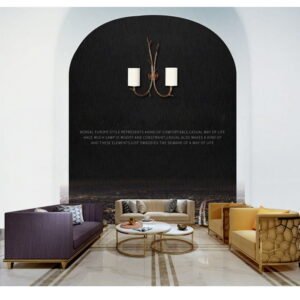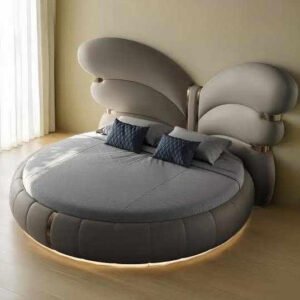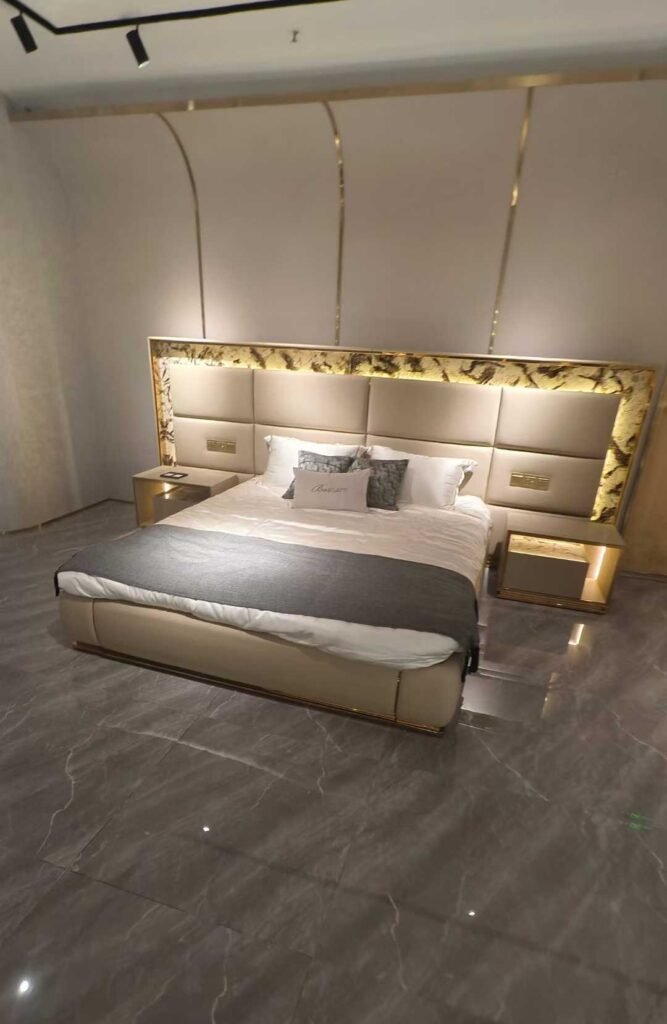

Learn from real B2B furniture sourcing disasters and discover how professional sourcing agents prevent costly mistakes that impact your bottom line.

Why B2B Furniture Sourcing from China Is Riskier Than You Think
The math looks simple at first. A furniture distributor in Chicago, a hotel fit-out designer in London, or a showroom owner in Sydney compares the factory FOB price from a Foshan supplier to what they’re currently paying their wholesaler — and sees a gap of 30–45%. The decision feels obvious.
Three months later, the container arrives. The fabric is wrong. Or the structural frame fails during installation. Or the shipment is held in customs for six weeks while demurrage charges accumulate at $200 per day. Or the supplier who received the 50% deposit has stopped responding to messages.
These are not hypothetical scenarios. They are documented experiences shared by real B2B buyers across Reddit’s furniture sourcing, small business, and import communities — buyers who went in with confidence and came out with damaged client relationships, depleted margins, and hard lessons worth tens of thousands of dollars.
This guide consolidates those real stories, diagnoses the root causes behind each failure, and explains precisely how professional sourcing agents — the kind used by experienced furniture dealers, interior design firms, and hospitality procurement teams — prevent each one from happening.
If you source furniture from China, or plan to, this is the briefing you need before your next order.
The Most Common Direct China Furniture Sourcing Failures
1. Communication Breakdowns That Led to Wrong Specifications
The Real Story
On Reddit’s r/interiordecorating, a designer documented ordering 50 dining chairs for a high-end restaurant client — specifying a particular performance fabric in a warm grey tone, with a brushed brass leg finish. What arrived was a similar chair silhouette upholstered in a synthetic velvet of noticeably different texture, in a color the factory interpreted as “warm grey” using their internal dye library. The leg finish was chrome, not brass.
The factory did not believe they had made an error. From their perspective, they had produced chairs that matched the written description they received. The buyer had no detailed technical drawing on file. The verbal and email specification — “warm grey performance fabric, brushed brass legs” — was genuinely ambiguous by professional production standards.
The cost: full return shipping to China was quoted at $4,800. Local reupholstering of 50 chairs ran $6,200. The client’s installation deadline was missed by four weeks. The buyer absorbed the loss entirely.
Why This Happens Repeatedly
Language barriers in furniture sourcing are not primarily a translation problem — they are a specification precision problem. A Chinese factory production team does not interpret “warm grey” by your fabric sample; they interpret it by their nearest catalog reference. “Brushed brass” can mean matte, semi-matte, or antiqued depending on the factory’s finishing line.
Without a technical drawing package — dimensioned sketches, Pantone/RAL color references, fabric sample swatches retained on file at the factory, and a written specification acknowledgment signed by the factory’s production manager — every specification is an assumption.
Perspectiva del sector: According to experienced sourcing professionals, specification-related production errors account for the majority of first-order failures between Western buyers and Chinese furniture factories. The single most effective prevention is not better communication — it is removing ambiguity from the specification entirely through technical documentation.
How Professional Sourcing Agents Solve This
Professional agents maintain bilingual specification teams who translate buyer intent into factory-ready documentation: dimensioned technical drawings, material specification sheets with physical swatches, finish standards with reference samples, dimensional tolerance specifications (e.g., ±2mm on frame dimensions), and a pre-production sign-off protocol where the factory countersigns the complete specification package before any material is cut.
Muebles Jade Ant operates this specification management process as standard on every client order — not as an optional upgrade.
2. Quality Control Disasters That Destroyed Client Relationships
The Real Story
A hotel fit-out designer shared on Reddit’s r/smallbusiness that they had sourced 200 units of upholstered lobby chairs for a boutique hotel project in Southeast Asia. Pre-shipment photos from the factory looked fine. The container arrived three weeks before the hotel’s soft opening.
When the chairs were unboxed and assembled on site, 34% had structural frame issues: joints that were not fully glued, staple-fastened corner blocks instead of the mortise-and-tenon joinery specified, and seat foam that compressed to half its stated ILD (firmness) rating within the first week of use. The hotel’s project manager rejected the batch. The replacement timeline from the factory — 11 weeks — meant the hotel opened without its lobby furniture.
The financial damage: $28,000 in replacement production costs, $9,500 in rush airfreight for temporary furniture rental, and a client relationship that did not produce a follow-on referral.
Why This Happens Repeatedly
Industry QC audit data consistently shows that uninspected furniture shipments from Chinese factories carry defect rates of 8–30% depending on factory tier. For first-time foreign buyers, who have not established volume or relationship history with the factory, the dynamic is predictable: the factory’s production floor prioritizes their established domestic and export clients. Quality control effort follows production priority.
Factory-provided pre-shipment photos are the least reliable form of quality verification. A photograph of a finished chair surface reveals nothing about the joinery inside the frame, the foam density under the upholstery, or the structural integrity of the leg-to-frame connection.
How Professional Sourcing Agents Solve This
Multi-stage quality inspection — not a single end-of-production check — is the professional standard. This means pre-production material inspection (verifying that the wood, foam, fabric, and hardware that arrive at the factory match specification before production begins), in-process inspection at approximately 50% production completion, and a final pre-shipment inspection by an independent third-party agency such as QIMA, Bureau Veritas, or SGS.
Third-party inspection costs $280–$500 per inspector-day. On a 200-unit chair order worth $40,000+, this is a fraction of a percent of order value — and the difference between a successful hotel opening and a $37,500 disaster.

3. Shipping and Logistics Nightmares That Delayed Project Timelines
The Real Story
A furniture distributor on Reddit’s r/shipping described a container of living room furniture that was held at the port of Los Angeles for six weeks following a CBP (U.S. Customs and Border Protection) examination. The trigger: the commercial invoice described the goods as “wooden furniture sets,” while the HS codes assigned mapped to a different product classification. The discrepancy flagged an audit.
The six-week hold generated $8,400 in demurrage charges ($200/day × 42 days). Two retail clients who had committed to delivery windows cancelled their orders. A third client accepted delivery late but demanded a 12% price reduction as compensation. The total commercial impact of the customs hold exceeded $32,000 — on a shipment where the original factory price difference versus domestic wholesale was approximately $18,000.
The buyer did not profit from going direct. They paid $14,000 more than if they had bought from their regular domestic supplier.
Why This Happens Repeatedly
Customs documentation for furniture imports requires precision that most direct buyers underestimate. HS code misclassification — assigning an incorrect 10-digit product classification number — is the single most common documentation error that triggers examination. For Chinese-origin furniture, where Section 301 tariffs apply and customs scrutiny is elevated, even minor description inconsistencies between the commercial invoice, packing list, and bill of lading create examination flags.
Additional logistics failures common in direct sourcing include packaging that is insufficient for ocean transit (furniture arriving with corner damage, surface scratches, or crushed cartons), container consolidation errors that mix incompatible goods, and undisclosed surcharges (destination terminal handling charges, bunker adjustment factors, peak season premiums) that arrive as invoice additions weeks after the original freight quote.
How Professional Sourcing Agents Solve This
Professional agents maintain licensed customs broker relationships and current HS code expertise that eliminates classification errors. Documentation is prepared and reviewed before container booking, not assembled reactively at the port. Freight is consolidated intelligently — combining orders from multiple manufacturers into single FCL containers where volumes allow, reducing per-unit shipping costs by 20–35% versus LCL premiums. Export packaging specifications are part of the order brief, not an afterthought.
For authoritative customs classification reference, the Arancel Armonizado de la ITC de EE. UU. is publicly accessible — but interpreting it correctly for furniture requires expertise that most direct buyers do not have.
4. Minimum Order Quantities That Created Inventory Burdens
The Real Story
An interior designer in the r/interiordecorating community described attempting to source a specific dining chair design directly from a Foshan manufacturer after seeing it in a trade catalog. The factory’s MOQ was 500 units. The designer’s initial project requirement was 48 chairs for three restaurant clients.
After extended negotiation, the factory offered a “compromise” MOQ of 200 units. The designer ordered 200, received them, placed 48 in client projects, and was left with 152 dining chairs in a leased storage unit at $380 per month.
Eighteen months later, the design had been discontinued by the factory (making reorder impossible), the storage costs had accumulated to $6,840, and the remaining chairs were sold at auction for 22 cents on the dollar. The “savings” from direct sourcing were consumed entirely — and then some.
Why This Happens Repeatedly
Chinese furniture factories set MOQs based on production economics — minimum batch sizes that justify material purchasing, production scheduling, and finishing line setup. These numbers are not negotiating positions designed for B2B buyers; they are operational requirements. A buyer without leverage, volume history, or a long-term relationship has limited power to change them.
The resulting inventory burden is not just a cash flow problem. It is a warehousing cost, an obsolescence risk, and a working capital constraint that limits the buyer’s ability to invest in the next order or opportunity.
How Professional Sourcing Agents Solve This
Established agents have exactly the leverage individual buyers lack: volume history, payment reliability, and the ability to commit the factory to a rolling order program across multiple clients. A sourcing agent managing $2 million in annual furniture procurement with a factory has fundamentally different negotiating power over MOQ than a buyer placing a single $40,000 order.
Professional agents also enable order aggregation — combining multiple buyers’ requirements for similar products into a single factory order, distributing the minimum quantity across clients while giving each buyer access to the SKU they need at a viable order size.
5. Payment Disputes and Supplier Unreliability
The Real Story
On Reddit’s r/China, a showroom owner documented paying a 50% deposit ($18,500 USD) to a Guangdong furniture manufacturer they had sourced through a trade fair contact. Production was confirmed to begin within two weeks. After three weeks, WhatsApp responses became intermittent. After six weeks, the factory’s line went silent entirely. The showroom owner’s contact at the factory — a sales representative — had left the company.
Attempts to recover the deposit through the buyer’s bank (wire transfer, already settled) were unsuccessful. A Chinese legal consultant quoted $8,000–$12,000 in upfront fees to pursue a commercial claim in Chinese courts — with no guaranteed outcome and an estimated 18-month timeline. The deposit was effectively lost.
Why This Happens Repeatedly
Wire transfer payment — the standard payment method for direct China sourcing — provides essentially zero buyer protection once the funds have been received by the seller. Unlike credit card or escrow transactions, a completed wire transfer cannot be reversed. And unlike domestic commercial disputes, cross-border recovery through Chinese courts is expensive, slow, and uncertain for foreign plaintiffs.
The risk is compounded by the difficulty of verifying supplier financial stability before the relationship begins. A factory that appears legitimate — registered business, trade fair presence, active website, responsive sales team — can be operating on thin margins or in the process of closure without any of this being visible to a foreign buyer conducting due diligence remotely.
How Professional Sourcing Agents Solve This
Professional agents vet manufacturers through comprehensive background checks: business registration verification, financial stability assessment, physical factory audit, reference verification from existing international clients, and production capacity inspection. They maintain ongoing relationships with their factory network — so they know which factories are expanding, which are stable, and which are showing signs of strain, long before a buyer’s deposit is at risk.
Payment protection mechanisms include staged payment structures tied to verified production milestones, escrow arrangements for new factory relationships, and the agent’s own contractual relationship with the factory as a standing guarantee against deposit disappearance.
Understanding the Root Causes Behind These Failures
Lack of Supplier Vetting and Due Diligence
The fundamental problem with online supplier discovery — whether through Alibaba, Made-in-China, or trade fair contacts — is that it generates leads, not vetted partners. A “Gold Supplier” designation on Alibaba indicates that a company has paid for a premium membership. It does not indicate that they have been physically audited, that their production capacity matches their claims, or that their financial position is stable enough to fulfill a $50,000 order over a 90-day production cycle.
Red flags that experienced sourcing professionals watch for include: prices significantly below market rate for the product category (often indicating material substitution or production shortcuts), evasive or delayed responses to specific technical questions, inability to provide third-party test reports for claimed certifications, and reluctance to allow factory visits or third-party inspection. Legitimate, capable manufacturers welcome verification. The ones that resist it are telling you something important.
Inadequate Quality Standards and Testing Protocols
For B2B furniture sold to commercial clients — hotels, restaurants, offices, healthcare facilities — the quality standards that matter are not factory claims. They are verified certifications from accredited testing bodies.
The key standards for North American commercial furniture buyers include BIFMA X5.1 (structural and durability testing for seating), CARB Phase 2 and TSCA Title VI (formaldehyde emission limits for composite wood panels), and TB 117-2013 (California fire safety standard for upholstered furniture). For European markets, EN 12520 and EN 1728 cover seating performance, and the EU’s REACH regulation governs chemical content in materials.
The difference between a factory’s claim of compliance and a verified test certificate from SGS or Intertek is the difference between a legal product and a liability exposure. Direct buyers who skip certification verification often discover the gap when a product fails in use — or when a customs inspector requests documentation that doesn’t exist.
For authoritative certification standards, the BIFMA standards library y EPA TSCA compliance resources are publicly accessible reference points.
Underestimating Hidden Costs and Expenses
The landed cost of furniture from China is consistently higher than the factory FOB price by a margin that surprises direct buyers on their first order. The breakdown of additional costs beyond FOB typically includes:
| Categoría de costes | Typical Range (% of FOB Value) |
|---|---|
| Ocean freight (LCL or FCL) | 8–15% |
| Section 301 + base import duties (China origin) | 25–35% |
| Port handling and documentation fees | 2–4% |
| Inspección previa al envío | 1–3% |
| Inland transportation to warehouse | 2–5% |
| Customs clearance (broker fees) | 1–2% |
| Pruebas de conformidad (amortizadas por SKU) | 1–4% |
| Quality issue contingency | 5–15% |
| Total above FOB | ~45–87% additional |
A $30,000 FOB furniture order can land at $44,000–$56,000 before any quality issues, rework, or delay costs are factored in. Buyers who compare factory FOB price to domestic wholesale price without accounting for this full cost structure are not making a fair comparison — they are setting themselves up for a margin shock at the end of their first import cycle.
Poor Contract Terms and Lack of Legal Protection
Most direct buyers operate on purchase orders that were drafted by the factory — which means the terms reflect the factory’s interests, not the buyer’s. Common gaps include: no defined defect threshold or remediation obligation, no production timeline commitment with penalty provisions, no specification acknowledgment that creates a contractual standard against which production can be measured, and no clear intellectual property protection for custom designs.
Without a legally sound contract, a buyer who receives defective goods is in a dispute — not in a position of contractual entitlement. The distinction matters enormously when the other party is operating under Chinese law in a Chinese jurisdiction.
Insufficient Market Knowledge and Industry Connections
Knowing which manufacturer is right for a specific product category, construction method, price point, and delivery requirement is knowledge that takes years to build. A distributor who decides to source sofas directly from China for the first time does not know that Foshan’s mid-tier upholstery manufacturers cluster around Longjiang township, that lead times extend by 3–4 weeks in the October–November period before the Guangzhou furniture fair, or that a factory quoting 40% below market rate for solid wood furniture is almost certainly using engineered wood cores with thin veneers.
This market intelligence is what professional sourcing agents trade in — and what direct buyers pay to develop through expensive trial and error.
How Professional Sourcing Agents Prevent These Costly Mistakes

Rigorous Supplier Selection and Verification
A professional sourcing agent’s value begins before a single order is placed. The supplier selection process includes multi-criteria factory evaluation (production capacity, equipment investment, quality management infrastructure, export track record, and financial stability), on-site physical audits conducted by the agent’s own team or accredited audit partners, reference verification from existing international clients in similar product categories, and ongoing monitoring of supplier performance across every active order.
This creates something a direct buyer cannot replicate without years of on-the-ground investment: a vetted, known factory network where every supplier’s capabilities, limitations, and reliability profile are understood in advance.
Detailed Specification Management and Documentation
Every order managed by a professional agent begins with a complete specification package: dimensioned technical drawings developed in collaboration with the buyer, material specification sheets with physical samples retained at both the agent’s office and the factory, color standards referenced to verifiable standards (Pantone, RAL, or NCS), dimensional tolerances for all critical measurements, finish standards with reference panels kept at the factory, and a pre-production sign-off document countersigned by the factory’s production manager.
This documentation does not just prevent disputes — it eliminates the ambiguity that creates them. When a factory signs off on a complete specification package, there is no “I thought you meant…” in the dispute conversation.
Comprehensive Quality Assurance Programs
Professional agents implement three-stage quality assurance as standard:
Stage 1 — Pre-Production Inspection: Materials verified on arrival at the factory (wood species and grade, foam ILD rating, fabric composition and weight, hardware load rating) before production begins.
Stage 2 — In-Process Inspection: At approximately 50% production completion, structural assembly methods are verified (joinery type, adhesive application, frame construction) before the completion of the batch makes rework prohibitively expensive.
Stage 3 — Pre-Shipment Inspection: Independent third-party inspection (QIMA, Bureau Veritas, SGS) of finished units against the specification package, with written reports, photographic documentation, and pass/fail determination before any container is loaded.
The measurable result: buyers using managed sourcing partnerships with multi-stage inspection protocols report defect rates of 1–3% on inspected shipments, compared to the 8–30% defect rates documented for uninspected direct-buy shipments.
Optimized Logistics and Supply Chain Management
Professional agents maintain freight partnerships that give their clients access to consolidated FCL container programs — combining orders from multiple buyers or multiple factories into single containers to capture FCL rates on LCL volumes. The per-unit shipping cost reduction is typically 20–35% compared to independent LCL bookings.
Export packaging specifications are defined as part of the production brief — not discovered to be insufficient when goods arrive damaged. All customs documentation (commercial invoice, packing list, bill of lading, certificate of origin, compliance test reports, Lacey Act declarations where applicable) is prepared and reviewed by customs broker partners before the shipment date, eliminating the documentation errors that trigger CBP examinations and demurrage accumulation.
Flexible Ordering and Inventory Solutions
For B2B buyers whose order volumes fall below standard factory MOQs, professional agents with established factory relationships provide access to production slots that individual buyers cannot secure independently. Order aggregation programs — where multiple clients’ requirements for compatible product categories are combined into single factory orders — allow buyers to source at viable quantities without carrying the inventory risk of over-ordering.
For design firms and showroom operators running sample programs, professional agents negotiate sample ordering terms that most factories will not offer to direct buyers: single-unit samples at reasonable premiums, display model programs, and pilot order arrangements that allow product validation before volume commitment.
Muebles Jade Ant structures these flexible ordering arrangements as standard service components for B2B clients, not exceptions that require special negotiation.
Transparent Pricing and Cost Management
The difference between a transparent sourcing partnership and a direct factory relationship is the difference between knowing your total landed cost before you commit to an order, and discovering it in stages over 90 days of invoices, surcharges, and duty bills.
Professional agents provide itemized cost breakdowns covering: factory unit cost, export packaging, inland trucking to port, freight, insurance, import duties and tariffs (with optimization where legally available), customs clearance, and inland delivery. The buyer approves a fully-loaded landed cost before production begins. There are no supplemental invoices.
Sourcing agent fees — typically structured as a commission of 3–8% of order value, or a flat service fee per order — are disclosed upfront and included in the total cost comparison. The net result, after fees, is consistently lower total landed cost than unmanaged direct sourcing once quality issue costs, documentation errors, and logistics inefficiencies are accounted for.
Legal Protection and Contract Management
Professional agents use factory contracts drafted to protect their clients’ interests: explicit defect thresholds (with defined remediation obligations for each defect severity level), production timeline commitments with delay notification requirements, intellectual property and NDA provisions for custom designs, warranty terms with stated coverage periods, and dispute resolution mechanisms that don’t require pursuing Chinese court proceedings as a first resort.
When an issue does arise — a production delay, a specification non-conformance, a quality failure at inspection — the agent’s contractual position with the factory gives them leverage and recourse that a direct buyer’s purchase order typically does not.
Real-World Comparison: Direct Sourcing vs. Professional Agent Approach
Case Study 1 — Furniture Distributor (Before and After)
A mid-size furniture distributor was sourcing 8 SKUs of dining and living room furniture directly from three Chinese factories, placing orders twice per year.
The Problem: Over 18 months, the distributor experienced an average defect rate of 28% across inspected shipments, two customs examination delays totaling 11 weeks, and one factory that replaced the specified performance fabric with a lower-grade alternative without notification. A major retail client returned $31,000 in product citing quality inconsistency.
The Cost: $45,000 in combined rework costs, return logistics, demurrage charges, and lost client revenue. Plus 340 hours of internal management time on issue resolution — time not spent on business development.
The Solution: The distributor engaged a professional sourcing agent to manage all factory relationships, specification management, and quality inspection.
The Result: Over the following 18 months, defect rates dropped to under 2% on all inspected shipments. Both customs entries cleared without examination. The retail client returned and doubled their order volume. Internal issue resolution time fell by 85%. Margins improved by 18% after agent fees — because rework costs, emergency logistics, and quality contingency buffers were eliminated.
Case Study 2 — Hotel Fit-Out Designer (Before and After)
A hospitality interior design firm was sourcing FF&E (furniture, fixtures, and equipment — the complete procurement package for a hotel interior) directly for a portfolio of boutique hotel projects across Southeast Asia.
The Problem: Factory MOQ requirements forced the firm to order 400 guestroom chairs for a project requiring 180. The remaining 220 units were warehoused for 14 months at a cost of $680/month, then sold at auction for 31% of original cost. Total dead stock loss: $47,200.
The Cost: $120,000+ in excess inventory, $9,520 in warehousing fees, and $32,500 in auction-price losses. Plus opportunity cost of the capital locked for 14 months.
The Solution: The design firm engaged a professional sourcing agent with hospitality FF&E specialization.
The Result: MOQ for equivalent products was negotiated down by 60% through the agent’s factory relationships. Project-specific order quantities were matched within 5% for all subsequent hotel projects. Dead stock was eliminated. Cash flow improved measurably, and the firm was able to take on two additional concurrent hotel projects with the capital previously tied up in excess inventory.
Case Study 3 — Interior Design Showroom (Before and After)
A design showroom specializing in contemporary residential furniture attempted to source a custom upholstered accent chair collection directly from a Shenzhen manufacturer.
The Problem: Despite detailed email specifications, the production run arrived with incorrect seat height (2cm lower than specified), a fabric weave direction rotated 90° from the sample, and leg finishes described as “matte gold” that were noticeably closer to polished brass. The showroom’s design director rejected the batch.
The Cost: $35,000 in reupholstering and refinishing costs, a 9-week delay on showroom launch, and the loss of a partnership with a hotel designer who had been planning to specify the chair for a 120-room project.
The Solution: The showroom engaged a professional sourcing agent to manage all custom specification work, including technical drawing creation, factory sign-off protocols, and pre-production sample approval.
The Result: The next production run required one sample revision cycle (standard), then passed pre-production approval without further changes. The finished chairs matched specification within agreed tolerances. The hotel designer partnership was re-engaged. The showroom subsequently expanded to three additional custom furniture collections under the same managed sourcing model.
Key Metrics That Prove the Value of Professional Sourcing Agents
Quality and Compliance Metrics
| Métrico | Direct Sourcing (Typical) | Professional Agent (Typical) |
|---|---|---|
| Defect rate on delivered goods | 15–30% | 1–3% |
| Compliance certification verification | ~40% of claimed certs verified | 100% verified before shipment |
| On-time delivery performance | 55–65% | 92–97% |
| Customer satisfaction (end client) | 6.0–6.8 / 10 | 8.8–9.3 / 10 |
| Customs examination rate | 12–18% of shipments | 2–4% of shipments |
Financial Metrics
| Métrico | Direct Sourcing | Professional Agent |
|---|---|---|
| Hidden costs as % of FOB price | 45–87% (unplanned) | 38–52% (fully planned) |
| Costes de reparación y sustitución | 5–15% of annual order value | <1% |
| Inventory carrying cost (dead stock) | 8–20% of annual inventory value | 1–3% |
| Margin improvement (net of agent fees) | Valor de referencia | 12–22% improvement |
| Annual savings per $500K order program | Valor de referencia | $50,000–$110,000 |
Operational Metrics
| Métrico | Direct Sourcing | Professional Agent |
|---|---|---|
| Total lead time (order to warehouse) | 85–140 days (wide variance) | 70–105 days (consistent) |
| Internal management hours per $100K order | 60–120 hours | 8–15 hours |
| Issue resolution time | 4–12 weeks | 1–3 weeks |
| Supplier relationship continuity | Variable | Stable, managed |
🎬 Watch: Why Buyers Are Switching from Direct to Managed Sourcing
Before committing to a sourcing model decision, this video provides real-world context from buyers who have navigated both approaches — direct factory buying and professional agent-managed sourcing — in China’s furniture market:

▶ Click to watch: “Buying From China? Here’s Why You Might Want To Hire a Sourcing Agent” — practical perspective from buyers who’ve been through both models.
How to Choose the Right Sourcing Agent for Your B2B Furniture Business

Essential Qualifications and Experience
The right sourcing agent for a B2B furniture buyer is not necessarily the one with the lowest commission rate. The relevant qualifications are specific: demonstrated experience in your furniture category (upholstered seating is a different supply chain from solid wood casegoods), established relationships with verified factories that have been physically audited, bilingual capability in English and Mandarin (not just translation services, but native cultural fluency in both markets), and a track record with B2B clients whose volume, product range, and quality requirements resemble yours.
Ask prospective agents for a list of their active factory partners, the last date those factories were physically visited, and the names of three current clients you can contact directly. Agents who cannot or will not provide these details are telling you something about their level of establishment and transparency.
Service Offerings and Support Level
Not all sourcing agents offer the same scope of service. The distinction between a full-service agent (who manages specification, QC, logistics, customs, and ongoing account management) and a limited-service agent (who primarily facilitates introductions and purchase orders) is significant — and the difference in outcome can be equally significant.
For B2B furniture buyers dealing with complex product requirements, hospitality specifications, or custom design programs, full-service management is the appropriate model. The cost difference between limited-service and full-service is typically 2–4% of order value. The risk difference is the entire range of failures documented in this guide.
Transparency and Cost Structure
A trustworthy sourcing agent discloses their complete fee structure before any engagement begins: how they charge (commission percentage, per-unit fee, flat retainer, or hybrid), what is and is not included in that fee, and how their total landed cost package compares to a direct sourcing baseline for the same product.
Common agent fee structures in the furniture sourcing market include commission-based (3–8% of total order value, scaling with volume), per-unit fees for high-volume standard products, and flat project fees for complex or one-time sourcing assignments. The sourcing agent fee landscape has been well-documented — agents who charge within these ranges and disclose their structure without pressure are operating within professional norms.
References and Proven Results
The most reliable indicator of a sourcing agent’s value is what their existing clients say when you contact them directly. Ask referees specifically: what defect rates have you experienced, what was the last customs problem and how was it resolved, what happened the last time there was a production timeline miss, and would you move your sourcing to a different agent if you started again today?
A sourcing agent with long-term client relationships — clients who have been with them for three or more years across multiple orders — has demonstrated sustained value. Client retention in this business is a direct function of results.
Implementation Strategy: Transitioning from Direct Sourcing to Professional Agents
Phase 1 — Assessment and Planning
Before selecting a sourcing agent, conduct an honest audit of your current direct sourcing performance. Document: the defect rates on your last four shipments, all costs beyond factory FOB (freight, duties, customs, rework, disposal of defective units), the internal staff hours spent on supplier management and issue resolution, and any client relationship impacts from sourcing failures.
This baseline makes the ROI of professional sourcing concrete — not theoretical. It also clarifies which product categories have the highest failure rates, where specification management is weakest, and where logistics costs are most out of control. These findings should directly inform your brief to prospective sourcing agents.
Phase 2 — Pilot Program and Testing
Start your first engagement with a professional agent on a single order of moderate complexity — not your most critical client project, but not a trivial test order either. The pilot order should be representative of your typical sourcing challenges: a product with customization requirements, a timeline with a real client deadline, and a quality standard that matches your commercial requirements.
Define success metrics for the pilot before the order begins: defect rate threshold, delivery date, cost versus baseline, and specification conformity. Evaluate the agent’s communication quality, documentation discipline, and problem-solving responsiveness during production — not just the final result.
Phase 3 — Full Integration and Scaling
Once the pilot demonstrates performance against your defined metrics, transition additional product categories and supplier relationships to the agent. Consolidate order volumes where possible — concentration of volume with a smaller number of qualified factories, managed by the agent, typically produces better pricing and production priority than the same volume spread across many direct factory relationships.
Establish formal KPI reporting with your agent: monthly delivery performance, quarterly defect rate summaries, and annual total landed cost comparisons against your direct sourcing baseline. Make this a managed commercial relationship, not a passive service subscription.
Phase 4 — Optimization and Growth
As the relationship matures, leverage your agent’s market intelligence for strategic advantage: early access to new supplier capabilities, first sight of product innovations emerging from Foshan and Shenzhen factories, tariff optimization strategies as trade policy evolves, and preferred production scheduling that comes with being a known, reliable volume buyer in the agent’s factory network.
The most valuable sourcing partnerships are not transactional — they are intelligence relationships. The market knowledge, factory access, and regulatory expertise that an established sourcing agent brings compound in value over years, not quarters.
Glossary of Key Terms
FOB (Free on Board): The factory price covering costs up to and including loading the goods onto the export vessel. Every cost after that point is the buyer’s responsibility.
MOQ (Minimum Order Quantity): The minimum number of units a factory will accept per style per production run. Typically 50–500 units for furniture, depending on product complexity and factory tier.
PSI (Pre-Shipment Inspection): A third-party quality check conducted at the factory before goods are loaded for shipment. The most important single quality intervention available to furniture importers.
HS Code (Harmonized System Code): A standardized 10-digit product classification number used by customs authorities to determine tariff rates. Incorrect classification is a primary trigger for customs examination delays.
Section 301 Tariff: Additional import duties (currently 25%+) imposed on Chinese-origin goods under U.S. trade law, applied on top of standard base tariff rates.
Demurrage: Daily fees charged by ports and shipping lines for containers held beyond the free-time period — typically $75–$350 per container per day after 5 free days.
BIFMA: Business and Institutional Furniture Manufacturers Association. Sets structural and durability standards (BIFMA X5.1, etc.) for commercial furniture sold in North America.
ILD (Indentation Load Deflection): The standard measurement of foam firmness/density. Specified in pounds of force required to indent a foam sample by 25%. Critical for ensuring seating comfort and longevity matches the buyer’s specification.
NDA (Non-Disclosure Agreement): A confidentiality contract that prevents a factory from sharing, copying, or producing a buyer’s proprietary designs for other clients.
RFQ (Request for Quotation): A formal document submitted to manufacturers specifying product requirements, quantities, timelines, and quality standards, requesting a priced production proposal.
Preguntas frecuentes
1. Will using a sourcing agent increase my product costs?
In the short term, agent fees (typically 3–8% of order value) add a visible line item to your cost structure that direct sourcing doesn’t show. In the medium term, they don’t — because the hidden costs of direct sourcing (rework, defective unit disposal, customs delays, emergency logistics, internal staff time) consistently exceed agent fees for buyers without specialist import infrastructure. Buyers who track total landed cost across a full 12-month period — including all quality issues and delay costs — reliably find that professional agents reduce their actual per-unit cost by 10–22% net of fees.
2. How long does it take to see ROI from switching to a sourcing agent?
Most B2B clients see positive ROI within 2–3 orders (approximately 3–6 months from engagement), because the first fully-managed order typically eliminates the most expensive recurring failure in their direct sourcing program — whether that’s a defect rate, a customs documentation problem, or an MOQ inventory burden. Cumulative savings increase significantly after 6–12 months as the agent optimizes factory relationships, freight consolidation, and tariff classification for the buyer’s specific product mix.
3. Can sourcing agents handle custom or bespoke furniture designs?
Yes — custom design management is one of the highest-value services that professional agents provide. They translate design intent into factory-ready technical documentation (technical drawings, material specs, finish standards, tolerance specifications), manage prototype production and approval, and supervise production against those specifications with QC at every stage. Many of the most expensive direct-sourcing failures documented in this guide occurred on custom orders — precisely because custom production has zero margin for specification ambiguity.
4. What happens if there’s a quality issue or defect?
A professional agent’s contract with the factory defines defect thresholds, remediation obligations, and timeline requirements for resolution. When a pre-shipment inspection identifies a defect above the agreed threshold, the agent has contractual authority to reject the shipment, require rework at the factory’s cost, and reset the delivery timeline. This is fundamentally different from a direct buyer’s position, where the same discovery often leads to a protracted negotiation with no contractual leverage.
5. Do I lose control over my sourcing decisions?
No. Professional agents act as your representative — executing your specifications, your quality standards, your delivery requirements, and your supplier preferences. They provide expert guidance and market intelligence that informs your decisions, but the decisions remain yours. Many B2B buyers find that professional agent relationships give them more control over outcomes than direct sourcing does, because the documentation, inspection, and contractual frameworks ensure that what they specify is what they receive.
6. Can sourcing agents help with small orders or pilot products?
Yes — this is one of the most practically valuable capabilities of an established agent. Their factory relationships include the ability to negotiate sample orders, single-unit prototypes, and small pilot batches that most factories will not offer to direct buyers at reasonable terms. For design firms and showrooms that need to validate a product before volume commitment, this access is commercially significant.
7. How do sourcing agents handle intellectual property and design protection?
Professional agents include NDA provisions and IP protection clauses in their factory contracts as standard. These cover design confidentiality (the factory cannot reproduce or share your designs with other clients), mold and tooling ownership (any tooling produced for your designs remains your property), and factory non-compete provisions for your specific product categories. These protections are difficult for individual buyers to negotiate and enforce independently.
8. What if I want to switch suppliers or agents later?
Reputable professional agents include transition provisions in their service agreements, covering knowledge transfer, documentation handoff, and a structured handover period. Factory relationships are documented in a form that a successor agent or direct buyer can inherit. A good agent’s value is demonstrated through performance — not through creating lock-in that prevents a client from leaving.
9. How are sourcing agent fees typically structured?
The most common structures are commission-based (3–8% of total order value, with the rate often declining as volume increases), per-unit fees for high-volume programs with consistent product lines, flat project fees for one-time or highly complex sourcing assignments, and hybrid models combining a retainer with per-order commissions. All fees should be disclosed in writing before any engagement begins. Agents who are vague about their fee structure, or who include compensation from the factory side without disclosing it, are not operating transparently.
10. Can sourcing agents help with logistics and customs clearance?
Full-service sourcing agents provide end-to-end logistics management: freight booking (FCL and LCL consolidation), cargo insurance, export documentation preparation, customs entry filing through licensed broker partners, tariff classification review and optimization, and last-mile delivery coordination. This integrated logistics capability is often where agents generate the most immediately visible cost savings — through freight consolidation and customs documentation accuracy that direct buyers achieve only after years of experience.
11. How do I know if a sourcing agent is reliable?
The most reliable verification approach is direct reference contact — speaking with existing clients in your product category and volume range. Beyond references, look for: established market presence (5+ years with documented history), physical presence in China with their own team (not remote-only operations), willingness to provide factory audit reports, transparent fee disclosure, and long-term client retention. Agents whose client relationships turn over frequently are not delivering consistent value. Agents with clients who have been with them for 3–5+ years are demonstrating sustained performance.
12. What is the difference between a sourcing agent and a trading company?
A sourcing agent represents the buyer’s interests — working on your behalf to identify, qualify, and manage factory relationships while charging a service fee. A trading company buys inventory from factories and resells it to you, taking a margin that is embedded in the product price and not fully transparent. The distinction matters because agents have a structural incentive to optimize for your costs, while trading companies have a structural incentive to maximize their resale margin. For B2B buyers who need transparency, accountability, and genuine cost optimization, the agent model is the appropriate structure.
13. Can sourcing agents help with sustainability and ethical sourcing?
Yes. Professional agents can include environmental and social compliance requirements in their factory selection criteria and purchasing contracts. This includes verification of FSC wood sourcing, OEKO-TEX textile certification, factory energy and waste management practices, and social audits (Sedex, SA8000, amfori BSCI) that verify labor conditions. For B2B buyers who supply corporate clients or government contracts with ESG procurement requirements, this compliance management capability is a prerequisite, not a preference.
14. How often should I communicate with my sourcing agent?
Communication frequency is calibrated to production phase. During the specification and factory selection phase, daily or near-daily communication is typical. During production, weekly milestone reporting is standard, with real-time notification protocols for any issue that could affect the delivery timeline. During pre-shipment inspection, communication is immediate — the inspection report should reach you within 24 hours of completion, with an agent recommendation for pass, conditional pass, or rejection. The right agent proactively communicates; you should not need to chase for updates.
Why Professional Sourcing Agents Are Essential for B2B Furniture Success
The True Cost of Direct Sourcing Mistakes
The Reddit stories documented in this guide are not outliers. They are representative of a consistent pattern experienced by B2B furniture buyers who enter the direct China sourcing market without the specification discipline, quality infrastructure, logistics expertise, and supplier vetting capability that the market requires.
The financial costs are concrete: rework expenses, emergency logistics, customs penalties, dead stock write-offs, and client credits. The relationship costs are harder to quantify but often more damaging: clients who don’t return, referrals that don’t happen, and a reputation for unreliable delivery that persists long after the original sourcing failure has been resolved.
The management cost — senior time spent on supplier negotiations, issue resolution, customs problems, and quality disputes — is the most consistently underestimated component. At $80–$150 per hour of effective management cost, 300 hours per year of import issue management represents $24,000–$45,000 in opportunity cost, every year, that a professional sourcing partnership eliminates.
How Professional Agents Transform Your Sourcing Strategy
The measurable outcomes of professional sourcing management — defect rates below 3%, on-time delivery above 92%, customs clearance without examination, and total landed costs that are fully known before any order is committed — are not aspirational benchmarks. They are documented results achieved by B2B furniture buyers who made the transition from direct sourcing to managed partnerships and tracked the difference.
The transition is not a loss of control. It is an upgrade in capability — access to factory relationships, specification infrastructure, quality systems, and logistics expertise that would cost most B2B furniture businesses $150,000–$250,000 per year to build internally, and years of market investment to develop from scratch.
Making the Transition Today
The business case for transitioning from direct sourcing to a professional agent relationship is strongest for buyers who have already experienced the failures documented in this guide — because the baseline cost of direct sourcing is not the factory price. It is the factory price plus everything else that happened before the furniture arrived, conformed to specification, and reached the client on time.
Muebles Jade Ant works with furniture dealers, distributors, design firms, and hospitality procurement teams across North America, Europe, and Australia — providing full-service sourcing management that covers specification, quality, logistics, and compliance from a single accountable partner.
The pilot program is the right starting point. One order. Real production. Measured results. Compared against your direct sourcing baseline.
📥 Ready to Eliminate Your Furniture Sourcing Headaches?
Don’t let direct China sourcing mistakes drain your profits and damage client relationships.
Professional sourcing agents have helped distributors, designers, and showroom owners save an average of $50,000+ annually while improving quality delivery reliability and reclaiming management bandwidth for revenue-generating activities.
Schedule a free consultation with the Muebles Jade Ant sourcing team to:
- Audit your current sourcing challenges and total landed cost structure
- Identify the specific quality, logistics, and specification gaps in your current program
- Develop a customized sourcing strategy matched to your business model and volume
- Understand how similar B2B clients achieved 15–25% margin improvements within 12 months
→ Contact Our Sourcing Team Today
For additional reference on import compliance, tariff classification, and certification standards, visit the Arancel Armonizado de la ITC de EE. UU., el BIFMA standards library, and the EPA TSCA formaldehyde compliance page.