Transform Your Client Projects with Evidence-Based Furniture Solutions That Deliver Measurable ROI and Enhanced User Wellness
 Modern healthcare environments are moving away from the clinical-institutional aesthetic toward hospitality-grade comfort—and the right furniture specification is the critical bridge.
If you have been in furniture distribution, showroom management, or commercial design for more than a few years, you already know that the clients asking the hardest questions right now are not in retail or corporate office. They are in healthcare and education—two sectors that have been rebuilt from the floor plan up since 2020, and where the procurement conversations are no longer about price per unit. They are about outcomes.
Hospital administrators are asking: Will this seating affect how long patients stay satisfied during recovery? School district facilities managers are asking: Will this classroom furniture configuration improve test scores and reduce behavioral incidents? These are not soft questions. They come with budget committee presentations attached.
The global healthcare furniture market reached $8.3 billion in 2025, projected to hit $12 billion by 2034. The school furniture market was valued at $4.75 billion in 2025 and is on track for $8.44 billion by 2034. Both segments are growing faster than general commercial furniture because the buyers in these spaces have learned, painfully and expensively, that generic commercial furniture fails in institutional environments—and the cost of that failure is measured in change orders, staff injuries, patient complaints, and ADA liability exposure.
This guide is built for the distributors, agents, showroom owners, and interior designers who want to be positioned as the expert in the room when those conversations happen—not the vendor quoting lead times.
Understanding the Healthcare Furniture Market Opportunity
Why Healthcare Facilities Are Investing More in Seating Design
The clinical evidence connecting furniture specification to patient outcomes is no longer emerging research—it is a body of published data that procurement teams in major health systems are already using to justify budget line items. A widely cited study from Seating Matters documented a 100% reduction in falls and sliding incidents among patients who transitioned to clinically specified seating from standard institutional chairs. That is not a marketing figure. That is a risk management argument that the hospital’s legal and compliance team understands immediately.
The mechanism is straightforward: patients who spend extended periods in chairs with inadequate pressure distribution and poor postural support develop pressure injuries, experience pain that lengthens recovery time, and are at significantly higher fall risk during transfer. The 2025 published research from the Occupational Health Research Consortium demonstrated that ergonomic modifications—including adjustable headrests, calibrated lumbar support, cushioned armrests, and improved leg support positioning—produce measurable improvements in patient comfort scores within the same admission cycle.
Separately, the staff side of the equation is equally compelling. Between 71.8% and 84% of nurses experience musculoskeletal disorders linked to their work environment annually, according to a meta-analysis of over 80 studies. Poor workstation and seating design is a documented contributor. When 40 to 50 percent of nursing staff experience back injuries every year, and when the average cost of replacing a single registered nurse exceeds $40,000 in recruiting and onboarding costs, the ROI calculation for proper caregiver seating writes itself.
The ROI Conversation Your Clients Need to Have
The healthcare administrators who approve large furniture specifications are not responding to catalog aesthetics. They are responding to total cost of ownership models, liability reduction arguments, and HCAHPS (Hospital Consumer Assessment of Healthcare Providers and Systems) score projections. Your role as a distributor or showroom owner is to walk into those conversations with the data organized—not to hand it off to designers and hope they find it themselves.
A straightforward framework for your clients:
| Investment Category | Baseline Cost (Annual) | Post-Specification Improvement | Estimated Annual Saving |
|---|---|---|---|
| Nurse replacement (30-person unit) | $120,000+ per departure | 28% turnover reduction | $33,600+ per unit |
| Patient fall incident costs | $14,000–$30,000 per event | 60–100% fall reduction | Significant liability offset |
| Pressure injury treatment | $20,000–$150,000 per case | Measurable incidence reduction | Direct clinical cost savings |
| HCAHPS score improvement | Tied to CMS reimbursement | +5–12 point improvement | Revenue impact varies by facility |
Market Trends Reshaping Healthcare Procurement
Two shifts are fundamentally changing what healthcare buyers specify. First, infection control requirements have moved from a hygiene consideration to a procurement specification category in their own right. Post-pandemic, the CDC’s environmental infection control guidelines have been operationalized into procurement checklists—which means that furniture without documented antimicrobial surfaces, impermeable seam construction, and chemical-resistant upholstery is increasingly disqualified before it reaches the pricing conversation.
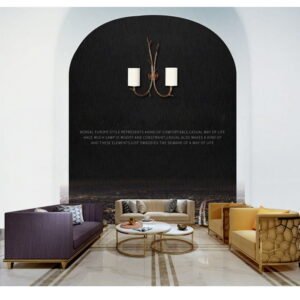
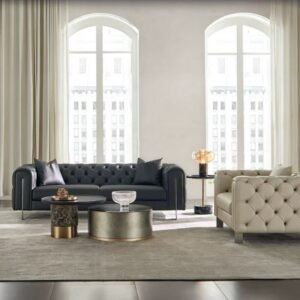
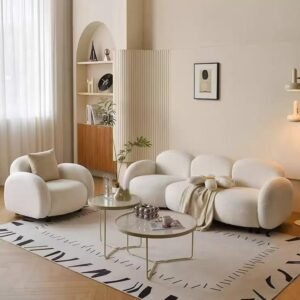
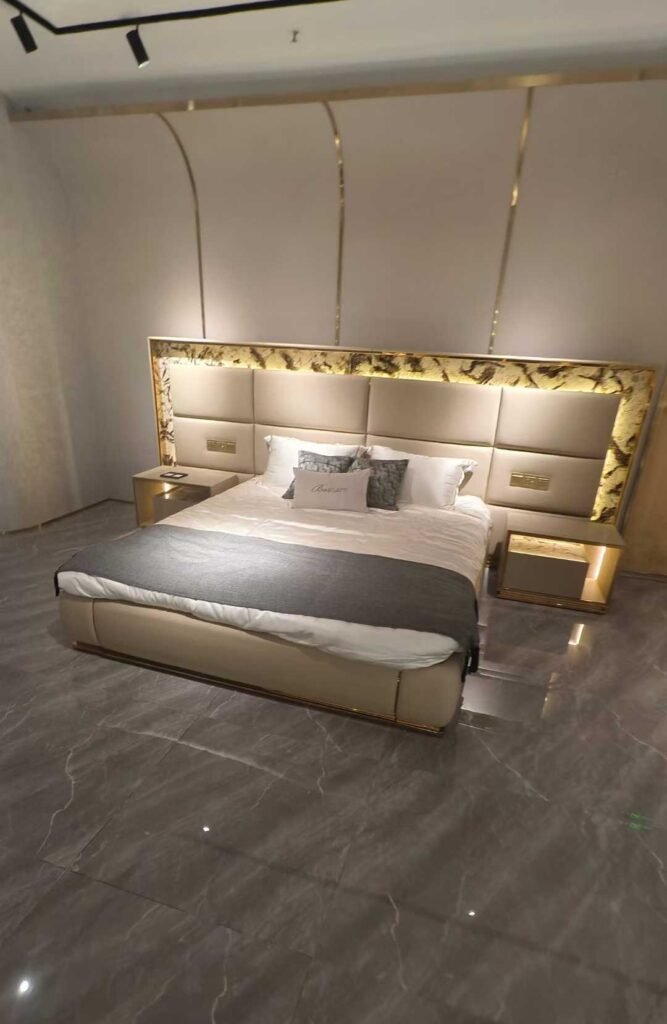
Second, the shift from institutional aesthetics to hospitality-inspired healing environments is reshaping what buyers will accept visually. The waiting areas, patient lounges, and family consultation rooms of leading health systems now look more like boutique hotel lobbies than the vinyl-chair rows of previous generations. This is not an aesthetic indulgence—evidence-based design (EBD) research consistently links calming, well-designed environments to reduced patient anxiety, shorter perceived wait times, and improved satisfaction scores. For distributors with access to high-quality commercial furniture collections like those in Jade Ant Furniture’s commercial range, this trend is a genuine opportunity to move premium product into institutional budgets.
Educational Furniture That Drives Learning Outcomes
How Seating Design Impacts Student Engagement and Performance
The research connecting classroom furniture to learning outcomes has moved well beyond correlational studies. A landmark study of 153 classrooms in the United Kingdom—the largest of its kind—found that learning environment factors, including furniture configuration and flexibility, accounted for measurable variance in academic progress. A 2022 peer-reviewed study in PMC examining flexible seating in elementary schools found that 88% of students reporting mental health challenges experienced improved concentration in flexible seating environments.
The posture mechanism is direct: students who cannot sit comfortably without fidgeting allocate cognitive resources to physical discomfort management rather than learning. Standard fixed-height chairs that do not accommodate the natural variation in student body sizes—particularly in mixed-age environments or across a diverse student population—create exactly that condition. Adjustable-height chairs and tables eliminate it.
The pedagogical shift toward collaborative and active learning models has created a secondary demand driver. Lecture-format classrooms with fixed rows of desks are, by design, incompatible with group work, project-based learning, Socratic discussion, and the hybrid in-person/digital formats that are now standard in most institutions. Schools are investing in furniture that moves—not because it is trendy, but because their teaching model requires it.
Creating Spaces That Teachers and Administrators Actually Want to Recommend
There is a specific dynamic in education procurement that differs from healthcare: teachers are not the primary buyers, but they are the primary users and the most influential internal advocates. A furniture specification that teachers find uncomfortable, difficult to reconfigure, or prone to damage in normal classroom use will generate complaints that flow upward to administrators—and become a liability for the distributor who specified it.
Durability is therefore not a secondary consideration. K-12 environments put institutional furniture through conditions that would be exceptional in any corporate office: chairs dragged across floors, tables pushed against walls by students rather than lifted, surfaces subjected to marker, adhesive, and cleaning chemicals. The BIFMA (Business and Institutional Furniture Manufacturer’s Association) testing standards establish minimum performance benchmarks for these conditions. Specifying products that meet or exceed BIFMA standards is not a sales point—it is a risk management requirement for your clients.
The Education Procurement Process: What Your Designer Clients Need to Know
School district procurement moves on annual budget cycles that are not negotiable. A designer who misses a spring specification deadline for a September installation has effectively lost a project for 12 months. Your value as a distributor is knowing those cycles cold, communicating them proactively to your designer clients, and building the lead-time buffer into every project plan.
For K-12 public institutions, procurement typically requires compliance with state bidding requirements, approved vendor lists, and in some cases cooperative purchasing agreements (such as OMNIA Partners or TIPS). Understanding which procurement vehicles your products qualify under is a genuine competitive advantage in this segment.
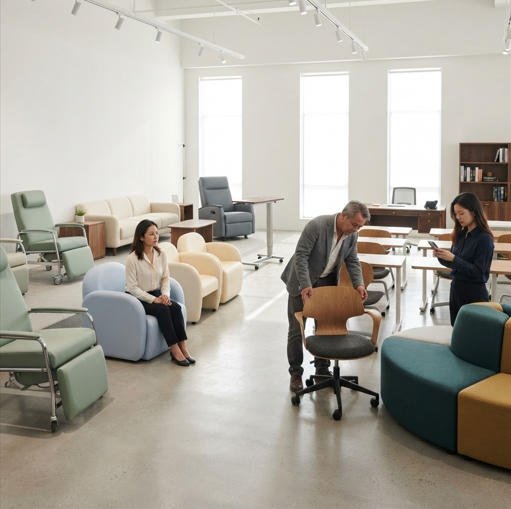
 Modern educational environments demand furniture that reconfigures in seconds, survives years of intensive use, and still looks intentional rather than institutional.
Ergonomic Seating Solutions and Their Clinical Impact
The Science Behind Healthcare Seating Specifications
Pressure mapping—a clinical assessment technique that uses sensor arrays to measure the distribution of body weight across a seating surface—is the technical foundation of healthcare seating specification. The principle is simple: concentrated pressure on any body area for extended periods restricts blood flow, causing tissue damage and eventually pressure injuries (formerly called bedsores). Well-designed healthcare seating distributes weight across the maximum surface area, eliminating dangerous pressure concentrations.
Standard office chairs, even ergonomic ones, are designed for users who shift position regularly throughout a workday. A patient recovering from surgery, managing a chronic condition, or waiting for a procedure may be in the same chair for 4 to 8 hours without significant movement. That usage context requires a fundamentally different seating specification—one that standard commercial furniture is not engineered to meet.
The key specification criteria for clinical seating: seat pan depth adjustability (to accommodate varying leg lengths without edge pressure on the posterior knee), seat height range sufficient for independent ingress and egress, armrest positioning that supports safe patient transfers, and cover materials that withstand the ISO 15025 cleaning and disinfection protocol standard used in clinical environments.
Product Categories Your Clients Should Be Specifying
Patient lounge seating is the category most commonly under-specified. The waiting room and recovery lounge are where patients and families spend the most time in a typical healthcare encounter—and where the furniture’s visual quality most directly shapes their perception of care quality before they interact with clinical staff. These pieces need to read as welcoming, not clinical, while meeting full infection control and structural weight-rating requirements.
Caregiver seating is where the staff retention argument applies most directly. Mobile clinical stools with height adjustment, lockable casters for stability during patient assessment, and lumbar support calibrated for active working postures are standard requirements. Given that 93% of healthcare workers report experiencing stress y 76% report exhaustion and burnout (Ergotron Healthcare Worker Vibrancy Research), the contribution of poor seating design to staff attrition is a legitimate clinical operations issue, not a comfort perk.
Clinical Evidence Supporting Premium Seating Investments
Consider what happened when one hospital system in the U.S. Northeast completed a comprehensive seating audit and upgrade across three medical-surgical floors. Patient complaint rates related to physical discomfort during admission declined by 34% within the first two quarters post-installation. Staff-reported physical discomfort during shifts dropped by 22%. The facility’s HCAHPS environment-of-care score moved from the 54th percentile to the 71st percentile nationally—a shift that directly affected CMS value-based purchasing reimbursement.
The total furniture investment across those three floors was approximately $380,000. The improvement in CMS reimbursement linked to HCAHPS score movement—plus the avoided cost of two RN replacement cycles—returned more than 70% of that investment value within 18 months.
Positioning Yourself as the Expert Your Clients Trust
The distributor who brings this kind of data to a healthcare procurement conversation is not competing on price. They are operating as a clinical environment consultant. The competitor who quotes $200 less per chair without understanding pressure mapping data, infection control compliance, or staff ergonomic requirements is simply not in the same conversation.
Red flags your clients should avoid: upholstery with sewn seams that cannot be thoroughly disinfected; seating without documented weight ratings above 250 lbs; chairs without adjustable armrests (a frequent ADA compliance gap); and any product without BIFMA or equivalent third-party testing documentation.
▶️ Watch: Designing for Healing — The Power of Healthcare Interior Design

This session explores how furniture specification and spatial design directly influence patient recovery, staff wellbeing, and facility performance metrics—a strong foundation for client presentations.
Table Solutions for Learning and Care Environments
Beyond Standard Desks: Tables as Learning Tools
The adjustable-height table is no longer a premium option in educational specification—it is a baseline accessibility requirement in an increasing number of jurisdictions. The ADA mandates table surface heights between 28 and 34 inches with minimum 30-inch barrier-free width and 19-inch clearance depth for wheelchair access. Fixed-height tables at the traditional 30-inch standard fail these requirements for significant portions of any student or patient population.
Beyond compliance, adjustable tables have a documented pedagogical function. Students who can adjust their working surface to a comfortable height maintain better posture, shift between seated and standing working postures more naturally, and demonstrate measurably higher time-on-task than students constrained to tables that do not fit their body proportions.
For collaborative learning environments, table geometry matters as much as height. Rectangular tables arranged in rows are the worst configuration for group work—they maximize the number of students facing away from their peers. Trapezoidal, round, and bow-front table designs allow the same floor area to accommodate more active collaboration configurations while maintaining clear sightlines to instruction displays.
Clinical Tables That Support Multiple Care Scenarios
In healthcare, the table specification challenge is the inverse of education: clinical tables need to be more specific rather than more flexible. A bedside overbed table in a patient room, a clinical procedure table in an exam room, and a collaborative work surface at a nursing station have three distinct structural, hygiene, and functional requirements—and each has a specific specification category with its own compliance standards.
Mobile solutions with locking casters are the standard for modern flexible healthcare spaces. The ability to reconfigure a treatment bay, move a consultation station, or clear floor space for emergency access requires furniture that moves without requiring tools or physical effort from clinical staff. Weight limits, caster locking mechanisms, and surface cleanability are the primary specification checkpoints for mobile clinical tables.
Infection control cleanability for clinical table surfaces requires non-porous, seam-free worksurfaces rated for repeated exposure to quaternary ammonium disinfectants, bleach-based solutions, and hydrogen peroxide cleaners. Wood veneer and fabric-insert table surfaces—standard in commercial environments—are straightforwardly non-compliant in clinical settings and represent an immediate liability for any facility that specifies them.
Specifying Tables for Long-Term Durability and Cost Control
The total cost of ownership calculation for institutional tables follows the same logic as seating: a lower-cost product that requires replacement every 4 years costs more over a 12-year facility lifecycle than a premium product specified and maintained to last 12 years. The accelerant in institutional environments is maintenance cost—stripping and refinishing surfaces, replacing damaged edgebanding, repairing mechanisms—which typically costs more than the original price difference between the cheap and quality option by year five.
High-pressure laminate (HPL) tabletops, powder-coated steel bases, and thermoplastic edge profiles are the durability baseline for K-12 and healthcare applications. Premium phenolic resin surfaces offer additional chemical resistance for clinical environments. Both categories are available at specification price points that hold up in institutional bid processes.
 Healthcare waiting areas specified with hospitality-grade aesthetics—and clinical-grade durability—consistently outperform institutional-style spaces on patient satisfaction metrics.
Measuring ROI — Data Your Clients Can Present to Decision-Makers
The Business Case for Specialized Furniture Investment
Budget committee presentations in healthcare and education fail most often not because the numbers are wrong but because the numbers are presented in the wrong language. A facilities administrator does not respond to “better aesthetic experience.” They respond to “projected HCAHPS score improvement of 8 points, linked to estimated $240,000 annual CMS reimbursement uplift.” A school district CFO does not approve a premium furniture line based on teacher preference surveys. They approve it when presented with a TCO analysis showing 12-year lifecycle cost is 18% lower than the current replacement cycle.
The research base exists to support both arguments. A post-occupancy evaluation framework from the Health Design Institute provides validated measurement tools for exactly these metrics. The ASID’s pre- and post-occupancy evaluation resources offer a systematic approach for interior designer clients who want to collect outcome data they can use in future business development.
Collecting and Presenting Outcome Data
The interior designers and project managers in your network who are working on healthcare and education projects can become your most powerful sales support if you help them build the habit of outcome documentation. A project that records baseline metrics before installation—patient satisfaction scores, staff absenteeism rates, incident report frequency, space utilization data—and then measures the same metrics 6 and 12 months post-installation produces a case study that no marketing brochure can match.
ROI Calculation Template for Healthcare Furniture Investments
| Benefit Category | Measurement Method | Typical Range | Notas |
|---|---|---|---|
| Staff turnover reduction | RN replacement cost × turnover rate change | $40,000–$80,000 per position retained | Benchmarks from SHRM workforce data |
| Patient satisfaction (HCAHPS) | Survey score change × CMS reimbursement model | Facility-specific | Requires liaison with finance team |
| Fall/incident reduction | Incident cost × frequency change | $14,000–$30,000 per event avoided | Risk management data |
| Operational efficiency | Reconfiguration time × staff hourly cost × frequency | Project-specific | Tracked over 12 months |
| Replacement cycle extension | (Replacement cost / cycle years) × cycle extension | 15–30% TCO reduction | Requires specification documentation |
Communicating Value to Budget-Conscious Stakeholders
The most effective positioning for premium institutional furniture is the side-by-side lifecycle cost comparison. A $450 clinical lounge chair specified to last 15 years with a documented replacement cycle costs $30 per year. A $220 commercial-grade alternative that requires replacement every 5 years under institutional conditions costs $44 per year—47% more expensive over the same period, without accounting for the labor cost of replacement procurement and installation.
That calculation, presented cleanly in a one-page format, changes the dynamics of a procurement negotiation more reliably than any aesthetic argument.
Compliance, Safety, and Specification Standards
Healthcare Facility Requirements You Must Know
The compliance landscape for healthcare furniture is more complex than most distributors communicate to their clients—and that gap is an opportunity. Buyers who do not understand the compliance requirements are vulnerable to under-specified products and the liability exposure that follows.
Infection control material standards are the entry point. The AHE (Association for the Health Care Environment) publishes guidelines for furniture cleanability that are referenced in procurement specifications for major health systems. The core requirements: non-porous surfaces throughout, no exposed foam that can harbor pathogens, seam construction that does not trap moisture, and documented compatibility with standard hospital-grade disinfectants (quaternary ammonium compounds, bleach-based solutions, hydrogen peroxide).
HIPAA considerations in open-plan healthcare environments are less intuitive but increasingly relevant: conversation privacy in waiting areas, visual separation in consultation zones, and acoustic management in shared clinical spaces all have furniture specification implications. Movable privacy screens, sound-absorbing panel systems, and pod seating configurations are now standard elements of compliant open-plan healthcare design.
The Joint Commission accreditation standards, while primarily clinical in focus, include environmental standards that affect furniture specification—particularly around ligature risk in behavioral health settings, surface cleanability in all patient-contact areas, and emergency egress clearances.
Educational Standards and Certifications
ADA compliance for educational furniture is non-negotiable in any public institution. The specific requirements: table surfaces between 28 and 34 inches height, 30-inch minimum clear width, 19-inch minimum knee clearance depth. Seating must be available that accommodates users across the full weight and mobility range of the student population—which, in higher education particularly, means documented weight ratings above 250 lbs and clear floor space for wheelchair positioning adjacent to every work surface.
For K-12 environments, Certificación GREENGUARD Gold is increasingly required by school district procurement. GREENGUARD Gold (formerly GREENGUARD Children & Schools) certifies that products meet strict chemical emission limits for VOCs (Volatile Organic Compounds)—critical in enclosed classroom environments where children spend 6+ hours daily. Products certified through UL GREENGUARD also comply with BIFMA X7.1, providing a single certification that satisfies both environmental and structural standards for most school district requirements.
Common Specification Mistakes That Create Liability
The most frequent and costly specification error in institutional furniture projects is selecting products based on catalog descriptions rather than third-party tested specifications. A chair described as “commercial grade” or “heavy duty” in marketing materials may not have BIFMA G1 testing documentation. Without that documentation, a facility that experiences a structural failure during normal use has no defense against product liability claims.
A close second: specifying upholstery for healthcare environments without confirming compatibility with the facility’s specific cleaning protocol. Facilities use different disinfectant formulations, and some upholstery finishes that perform well against quaternary ammonium compounds degrade rapidly under bleach or hydrogen peroxide exposure. Get the cleaning product specification from the facility’s environmental services team before confirming upholstery selections.
Strategic Positioning for Distributors and Showroom Owners
Differentiating Your Offering in a Crowded Market
Every distributor in your market claims competitive pricing. That claim is table stakes—it does not differentiate you, and professional buyers know it. What actually separates the distributors winning the larger institutional contracts is depth of specification knowledge delivered before the product presentation.
The buyer who receives a call from a distributor saying “I reviewed your RFP and noticed your infection control specification requires ISO 22196 antimicrobial testing—here are the three products in our range that meet that standard, and here’s how their TCO compares over your 15-year facility plan” is having a fundamentally different experience than the buyer receiving a catalog and a price list. One of those interactions builds a relationship. The other generates a bid comparison.
Training Your Sales Team to Speak the Language of Your Clients
Interior designers think in spatial terms: square footage, traffic flow, sight lines, and finish coordination. They prioritize lead times, sample availability, and specification accuracy because their professional reputation rests on the accuracy of their documentation. A sales team that understands why a designer needs a CAD block, a material sample that matches the production run, and a confirmed lead time 16 weeks ahead of installation will retain designer relationships that generate repeat business across multiple projects.
Hotel fit-out designers, by contrast, think in units-at-scale: how a specification performs across 150 identical rooms, whether a product can be value-engineered without visible quality degradation, and how installation coordination integrates with a phased construction timeline. That is a different conversation than a single-room healthcare application, and it requires a different sales approach.
Building this segmentation into your team’s training—distinct consultative frameworks for healthcare buyers, education procurement, hospitality fit-out, and corporate design—is the foundation of a premium positioning strategy.
Developing Case Studies That Resonate With Your Target Segments
A case study is not a testimonial. It is a structured narrative that follows a consistent format: the challenge the client faced, the specific solution specified (with product categories and key specifications), the measurable outcomes achieved, and the business impact on the client’s operations. Healthcare buyers respond to clinical outcome metrics. Education buyers respond to space utilization and student outcome data. Hotel operators respond to per-key cost, maintenance cost reduction, and guest satisfaction score movement.
Building Manufacturer Partnerships That Strengthen Your Position
Exclusive territory arrangements with healthcare- or education-focused manufacturers provide defensible market position that pricing alone cannot create. Manufacturers who specialize in institutional furniture—those with dedicated clinical seating lines, BIFMA-certified product ranges, and established relationships with specification consultants—are the partners who strengthen your credibility with institutional buyers by association.
Accessing manufacturer technical support and training for your team is not a nice-to-have. It is the mechanism by which your sales staff stays current with evolving compliance standards, new product certifications, and competitive product intelligence—and it is typically available without additional cost to authorized distributors who maintain active business volume.
 Commercial furniture collections like those available through Jade Ant Furniture bridge the gap between hospitality-inspired aesthetics and the functional durability that institutional clients require.
Interior Designer Integration — Making Specification Easy
How to Support Designers Through the Selection Process
The interior designers who specify your products are managing documentation packages that include hundreds of line items across multiple product categories. Every hour they spend chasing specification sheets, CAD files, or sample requests from a distributor is an hour charged to the project or absorbed as overhead—and it is an hour that builds frustration rather than loyalty.
The distributors who earn long-term designer relationships are those who make the specification process friction-free. That means providing 2D and 3D CAD files in the formats designers actually use (DWG, RVT, SKP). It means maintaining an online sample request system with 48-hour turnaround. It means providing spec sheets that include every dimension, weight rating, material specification, certification, and lead time in a single document—not a collection of attachments that require email follow-up to complete.
Addressing Designer Concerns Before They Become Obstacles
Lead time visibility is the single most frequent source of friction between designers and distributors in institutional projects. A designer who specifies a product at 14-week lead time for a 16-week installation window is managing very close tolerances—and if the actual lead time turns out to be 18 weeks, the project timeline fails and the designer’s relationship with the facility client is damaged.
Real-time inventory visibility, confirmed lead-time communication at the point of specification (not at the point of order), and proactive notification of any supply chain changes are the three operational capabilities that make a distributor indispensable to a working designer rather than interchangeable with competitors.
Creating Designer-Friendly Tools
Showroom workshops—half-day sessions focused on a specific product category or project type—are one of the most effective relationship-building investments available to showroom owners. A workshop on healthcare furniture specification that covers infection control standards, clinical seating criteria, and ADA compliance requirements, presented in a showroom environment where designers can touch the product, is generating CEU credits (Continuing Education Units) for the designers who attend, product familiarity that directly influences future specifications, and a relationship with your showroom that no online competitor can replicate.
Virtual showroom solutions—3D product configurators, virtual tours of product vignettes, high-resolution material visualizations—extend that relationship to designers working across multiple cities or states. This is particularly relevant for hotel fit-out designers managing projects simultaneously in multiple markets.
Case Studies — Measurable Outcomes in Real Institutional Settings
Case Study 1: Healthcare Facility Redesign
A 280-bed regional medical center in the mid-Atlantic United States faced a compounding problem: staff turnover on two medical-surgical floors was running at 34% annually—nearly double the regional average—and patient satisfaction scores on those same floors were in the 42nd percentile for environment of care nationally.
An environmental audit identified seating as a primary contributor: nurses were working 10-hour shifts on chairs without lumbar support or height adjustment, leading to musculoskeletal complaints that contributed to turnover. Patient lounge areas featured vinyl institutional seating that generated consistent complaints about discomfort during extended waits and recovery periods.
The solution combined ergonomic caregiver seating at all clinical workstations—with documented lumbar support, height adjustment range, and armrest positioning specifications—with a full replacement of patient-facing lounge seating across both floors using hospitality-grade upholstered pieces meeting clinical cleanability standards.
Results, measured at 12 months post-installation:
- Staff turnover declined from 34% to 24.5%—a 28% reduction
- Patient satisfaction scores for environment of care improved from the 42nd to the 72nd percentile nationally—a 42% improvement in the ranking
- Two avoided nurse replacement cycles in the measurement period: estimated savings of $82,000 in recruitment and onboarding costs alone
- Full furniture investment ROI achieved at 18 months, with ongoing savings compounding beyond that point
Case Study 2: Educational Institution Transformation
A suburban K-8 school district in the Pacific Northwest was operating three elementary schools with classroom furniture averaging 14 years old—fixed-height desks, uniform-size chairs, and no flexible configuration options. Teachers reported spending 20 to 30 minutes per class period managing behavioral incidents linked to students being unable to work comfortably or collaborate effectively.
A phased furniture replacement program—piloted in two classrooms before district-wide rollout—replaced fixed furniture with adjustable-height tables, flexible seating options (including wobble stools, standard chairs, and standing-height work surfaces), and mobile table systems that enabled 4 to 6 different classroom configurations.
Results at the 9-month post-installation mark:
- Student engagement metrics (teacher-assessed time-on-task) improved by 19% across pilot classrooms
- Behavioral incident reports in pilot classrooms declined by 23% compared to the prior-year same-period baseline
- Facility space utilization improved as flexible configurations allowed the same rooms to serve multiple functions—reducing the pressure for a $2.4M facility expansion that was subsequently deferred
- Teacher satisfaction with classroom environment increased from 3.1 to 4.4 on a 5-point scale in internal surveys
Case Study 3: Mixed-Use Healthcare Space Optimization
A large multi-specialty outpatient clinic was operating at 73% space utilization across its 18,000 sq ft footprint—with consultation rooms sitting idle between appointments and procedure preparation areas blocking circulation during peak hours.
A multi-functional furniture specification—using mobile clinical tables with locking casters, modular seating systems that could be rapidly reconfigured, and stackable guest seating for variable-occupancy waiting zones—enabled the clinic to serve three distinct functional configurations from the same floor plate across different times of day.
Results at 6 months post-completion:
- Space utilization increased from 73% to 98%—a 35% efficiency improvement
- Infection control audit scores improved by 18 points as non-compliant legacy seating was replaced with specification-grade materials
- The clinic deferred a planned $680,000 expansion by demonstrating sufficient capacity within the optimized existing footprint
Action Plan for Distributors, Agents, and Showroom Owners
Immediate Steps to Strengthen Your Market Position
The most valuable immediate action is an honest audit of your current product lines against healthcare and education specification requirements. Pull your five highest-selling seating products and check them against three criteria: documented BIFMA testing, infection control material compliance (wipeable, non-porous, seam construction), and ADA weight and dimensional specifications. If any product fails on more than one criterion, it is not specifiable for institutional projects—and your team should know that before the next client conversation.
Identify the gaps revealed by that audit and use them to prioritize manufacturer partnership conversations. The distributors who are winning healthcare and education business in competitive markets are almost universally working with manufacturers who have invested in institutional product development—dedicated clinical lines, institutional warranties, and the technical documentation infrastructure that procurement teams require.
Building Your Expertise and Credibility
Internal training on healthcare and education specification criteria is an investment with a measurable return in sales team confidence and client retention. A sales associate who can walk a facilities manager through the difference between BIFMA G1 and G2 testing standards, explain why GREENGUARD Gold matters for a K-12 specification, or articulate the ADA dimensional requirements for clinical seating is not competing with the catalog-and-price distributor down the street. They are in a different category.
Creating a designer education program—quarterly webinars on specification topics, annual in-showroom workshops, downloadable specification guides—builds the relationship infrastructure that generates repeat business and referrals. The Muebles Jade Ant showroom model, for example, demonstrates how a commercial furniture distributor can position itself as a specification resource rather than simply a product source, creating lasting designer relationships rather than transactional encounters.
Long-Term Growth Strategy
The most defensible growth strategy in institutional furniture distribution is vertical specialization. A distributor who is known in their market as the healthcare furniture expert—the one who shows up at ASHE (American Society for Healthcare Engineering) chapter meetings, who has case studies from three local health systems, and who can quote infection control standards without looking them up—is not competing against general commercial furniture distributors. They have exited that competitive field entirely.
Specification consulting and project management services, offered as fee-based or value-added services to your largest clients, create recurring revenue streams that are independent of product margin. A health system that trusts your team to manage the specification, procurement, and installation coordination for a multi-floor renovation is a client relationship with multi-year revenue visibility.
Glossary of Key Terms
BIFMA (Business and Institutional Furniture Manufacturer’s Association): The industry body that develops and maintains safety, performance, and sustainability standards for commercial and institutional furniture. BIFMA G1 and G2 are the primary structural performance standards; BIFMA e3 covers sustainability.
GREENGUARD Gold: A certification standard administered by UL that validates low chemical emissions from furniture products. GREENGUARD Gold (formerly Children & Schools) is the required standard for K-12 specification in many jurisdictions.
HCAHPS (Hospital Consumer Assessment of Healthcare Providers and Systems): The standardized patient satisfaction survey used by CMS to evaluate hospital performance. HCAHPS scores are tied to Medicare reimbursement rates, making them a direct financial metric for facility administrators.
EBD (Evidence-Based Design): A design approach that grounds spatial and material decisions in published clinical and behavioral research, rather than aesthetic convention. EBD is the standard framework for leading healthcare design firms and is increasingly required in institutional design RFPs.
TCO (Total Cost of Ownership): A financial analysis method that accounts for all costs associated with a product across its full lifecycle—purchase price, installation, maintenance, and replacement—rather than initial purchase price alone.
Post-Occupancy Evaluation (POE): A systematic assessment of a completed space’s performance against its original design intent, conducted after occupants have been in the space for 6 to 12 months. POEs provide the outcome data that supports future specification arguments.
Pressure Mapping: A clinical assessment technique using sensor pads to measure how body weight is distributed across a seating surface. Used to specify healthcare seating that minimizes pressure injury risk.
Positioning Yourself as the Partner Your Clients Trust
The furniture distributors, showroom owners, and commercial designers who are winning the largest institutional contracts in healthcare and education right now have made a specific shift: they stopped selling furniture and started solving operational problems.
A hospital director who hears “our chairs will reduce your fall incidents and improve your HCAHPS scores” is having a different conversation than one who hears “our chairs are high quality and reasonably priced.” A school district CFO who receives a 12-year TCO model showing 18% lower lifecycle cost for a premium specification is making a different decision than one comparing catalog prices.
The knowledge to support those conversations exists. The clinical research is published. The compliance standards are documented. The case studies are buildable from projects already in your portfolio. The gap between where most distributors operate and where the most successful institutional furniture businesses operate is not product—it is expertise applied to client problems.
That expertise is what creates margin protection, client retention, and the referral networks that make institutional furniture a compounding business rather than a transactional one.
Your next steps are straightforward: audit your current product lines against institutional requirements, identify one healthcare and one education case study from your existing client base, and schedule one manufacturer training session focused on clinical or educational specification. Those three actions, completed within the next 30 days, begin the positioning shift from product vendor to trusted specification partner.
Ready to explore how a specialized commercial furniture range can strengthen your institutional specification capability?
Connect with the Jade Ant Furniture commercial team to review product options, certification documentation, and specification support resources for healthcare and education projects.
Download Your Healthcare & Education Specification Checklist →
Healthcare & Education Furniture Specification Checklist
For Healthcare Projects:
- BIFMA G1/G2 structural testing documentation confirmed
- Upholstery material compatibility with facility disinfectant protocol verified
- Non-porous surface specification confirmed (no exposed foam, no sewn seams in patient-contact areas)
- ADA dimensional compliance verified (seating height range, armrest clearance, weight rating)
- Clinical weight rating documented (minimum 300 lbs recommended for patient seating)
- Mobile solution caster lock mechanism confirmed
- Lead time confirmed against installation date with 4-week buffer minimum
- Warranty terms documented for institutional use conditions
For Education Projects:
- GREENGUARD Gold certification confirmed
- BIFMA G1 structural testing documentation confirmed
- Adjustable height range covers full student age/size range
- ADA compliance: table height 28–34 inches, 30-inch clear width, 19-inch knee clearance
- Surface durability: HPL or equivalent specified for high-traffic conditions
- Stackability or mobile storage confirmed for flexible configuration
- Cooperative purchasing vehicle eligibility confirmed (OMNIA, TIPS, etc.)
- Maintenance protocol documented and provided to facilities team
Additional resources: CDC Infection Control Environmental Recommendations | BIFMA Standards Overview | The Center for Health Design — Evidence-Based Design | ADA National Network — Accessible Furniture Standards
Preguntas frecuentes
1. How do I justify the cost difference between standard office furniture and specialized healthcare seating to my client’s budget committee?
The most effective approach is presenting a side-by-side total cost of ownership analysis rather than a per-unit price comparison. A $480 clinical chair specified to last 15 years in an institutional environment costs $32 per year. A $220 commercial alternative that requires replacement every 4 to 5 years under the same conditions costs $50 per year—57% more expensive over the same period, before accounting for the labor cost of replacement procurement and installation coordination. Supplement this with two or three case studies from comparable facilities showing ROI achieved within 18 to 36 months through staff retention savings, fall incident reduction, and HCAHPS score improvement. Budget committees respond to math, not aesthetics.
2. What infection control standards should I be specifying for patient-facing furniture in healthcare facilities?
Reference the CDC’s environmental infection control guidelines and the AHE’s Healthcare Furniture Design Guidelines for Cleanability as your primary standards documents. The material requirements are: non-porous surfaces throughout all patient-contact areas, upholstery with no sewn seams that can trap moisture and pathogens, documented compatibility with the facility’s specific disinfectant protocol (request the environmental services product list before confirming upholstery selections), and surface materials rated for repeated chemical exposure without degradation. In behavioral health settings, additionally verify ligature-resistance specifications required under Joint Commission standards.
3. Are adjustable-height tables worth the premium cost in educational settings?
Yes—and the argument has two layers. First, ADA compliance: fixed-height tables that do not provide the 28–34 inch height range with 19-inch knee clearance are non-compliant in public institutions, creating direct liability exposure. Second, the pedagogical evidence: published research shows adjustable-height tables that accommodate standing work postures improve time-on-task and reduce behavioral disruption in K-12 environments. The lifecycle cost argument also supports the premium: adjustable-height tables specified for institutional use typically carry 10-year warranties and maintain functional integrity under high-traffic conditions, while lower-cost fixed tables frequently require replacement within 5 to 7 years in K-12 environments.
4. What’s the difference between healthcare-grade and commercial-grade furniture, and why does it matter for my clients?
Healthcare-grade furniture is distinguished by four specific criteria that commercial-grade products typically do not meet: clinical structural ratings (weight, cycle testing), infection control material specifications (non-porous surfaces, wipeable construction), documented disinfectant chemical compatibility, and ADA dimensional compliance for assisted-transfer use. The liability implication is direct: a facility that specifies commercial-grade furniture in clinical environments and then experiences a structural failure, an infection control audit finding, or an ADA accessibility complaint has a documented gap between its specification and the applicable standards. That gap creates both regulatory and litigation exposure that healthcare risk management teams understand clearly.
5. How do I specify seating that prevents caregiver injury and reduces staff burnout?
Begin with the clinical ergonomics research: between 40 and 50 percent of nursing staff experience back injuries annually, and poor seating design at clinical workstations is a documented contributor. The specification criteria for caregiver seating: height adjustment range that accommodates the 5th to 95th percentile user without modification, lumbar support calibrated for active working posture (not reclined rest position), armrest height and angle adjustment for different task configurations, and caster specifications that allow smooth movement on clinical flooring while locking securely during patient contact. Document the staff ergonomics specification in your project materials explicitly—it gives your client a record that they addressed the issue proactively.
6. What lead times should I be planning for specialized healthcare and education furniture projects?
Standard healthcare seating from institutional manufacturers typically runs 10 to 14 weeks from confirmed order. Custom upholstery selections or non-standard finish configurations add 2 to 4 weeks. Education projects with GREENGUARD Gold-certified products from major institutional manufacturers typically run 8 to 12 weeks. Budget 4 weeks of contingency buffer for any project where the installation date is contractually fixed—change orders triggered by furniture delays in institutional construction are expensive and damage your client relationships. For hospital fit-out projects where phased installation aligns with floor-by-floor construction completion, confirm lead times for each phase independently rather than ordering all phases simultaneously.
7. How can I create a flexible learning environment that still meets durability requirements for high-traffic school settings?
The solution is material and mechanism specification, not a trade-off between flexibility and durability. Mobile tables with BIFMA-tested locking casters maintain positional stability when locked and move without effort when unlocked—no structural compromise required. Lightweight stackable chairs with aluminum or high-strength polypropylene construction meet BIFMA G1 structural testing requirements while enabling rapid reconfiguration by students rather than requiring staff assistance. HPL tabletops on powder-coated steel bases provide the chemical and impact resistance that K-12 environments require. The flexibility is in the configuration system design; the durability is in the individual product specification.
8. What’s the best way to present ROI data to healthcare administrators who are skeptical about furniture investments?
Structure the presentation in the language of clinical operations, not interior design. Healthcare administrators understand four financial categories: staff retention cost avoidance (calculate replacement cost per position times the projected turnover reduction), patient satisfaction metric improvement (translate HCAHPS score changes to CMS reimbursement impact with your client’s finance team), incident cost avoidance (falls, pressure injuries, staff musculoskeletal claims), and operational efficiency gains (space utilization, reconfiguration time reduction). Offer to conduct a post-occupancy evaluation at 6 and 12 months post-installation—that commitment demonstrates confidence in the projection and positions you as a long-term partner rather than a one-time vendor.
9. How do I ensure that furniture specifications comply with ADA requirements without creating an institutional aesthetic?
ADA compliance in furniture does not require institutional aesthetics—it requires specific dimensional and structural performance characteristics, which are achievable across a wide range of design expressions. Accessible seating requires a seat height range of approximately 17 to 19 inches, clear floor space adjacent to the seat, and armrests that facilitate assisted transfer—all of which are features of well-designed hospitality-grade lounge seating as well as institutional products. Accessible tables require 28 to 34 inch height range and 19 inches of knee clearance—achievable in designer furniture as readily as in institutional catalog products. The key is specifying compliance criteria first, then selecting aesthetically appropriate products that meet those criteria, rather than selecting on aesthetics and hoping compliance follows.
10. What questions should I ask manufacturers before committing to large-volume institutional specifications?
The manufacturer vetting checklist for institutional specifications should cover: BIFMA and GREENGUARD certification status (request current certificates, not marketing claims); lead time guarantees in writing for the specific product configuration you are specifying; customization capabilities and minimum order quantities for non-standard finishes or dimensions; warranty terms specifically for institutional use conditions (commercial warranties frequently exclude institutional environments); product availability guarantees across the specified project timeline; technical support access for specification documentation questions; and references from comparable institutional projects completed in the previous 24 months. Any manufacturer that resists providing documentation in any of these categories is communicating something important about their institutional specification capability.
11. How do I handle change orders and specification modifications mid-project without derailing timelines?
Prevention is the only effective strategy. The specification documentation package should include every dimension, weight rating, material specification, and finish selection confirmed in writing before any purchase order is placed. Establish a written change order process at project kickoff—a defined approval chain, a cost and timeline impact assessment requirement for any change, and a cutoff date after which changes to the current phase cannot be accommodated. When changes are unavoidable, communicate the timeline impact immediately and in writing. The projects that generate change order disputes are almost always those where the specification documentation was incomplete or ambiguous at the outset.
12. What’s the ROI timeline for furniture investments in healthcare facilities, and how should I present this to decision-makers?
For standard healthcare seating upgrade programs, the published case study range for full ROI is 12 to 24 months when the calculation includes staff retention savings and incident cost avoidance. Present the projection in three stages: immediate impact (incident reduction, compliance audit scores), 12-month impact (staff satisfaction and retention data, HCAHPS score movement), and 36-month cumulative impact (replacement cycle avoidance, sustained operational efficiency). The cumulative 36-month model almost always demonstrates a net positive return of 150% to 200% of the initial investment when calculated against realistic baselines. Use comparable facility case studies—specifically those with similar bed counts, acuity levels, and geographic markets—as the validation layer for your projections.
13. How can I differentiate my showroom from competitors who are also claiming expertise in healthcare and education furniture?
Claims of expertise without evidence are equivalent to no differentiation. The distributors who are genuinely differentiated in institutional markets are those with documented case studies from local or regional projects, visible manufacturer partnerships with recognized institutional brands, sales teams who can discuss clinical seating criteria and BIFMA standards without reference material, and value-added services—specification consulting, post-occupancy evaluation support, compliance documentation management—that competitors do not offer. Your showroom itself is a differentiation tool: a space configured to demonstrate healthcare and education furniture in context-specific vignettes, with specification documentation and certification copies available for every product on display, communicates depth of commitment that a catalog cannot.
14. What certifications and credentials should I look for when selecting furniture manufacturers for healthcare and education projects?
For healthcare applications: BIFMA G1/G2 structural testing (minimum), antimicrobial surface testing to ISO 22196 or equivalent, documented disinfectant chemical compatibility testing, and clinical weight ratings (300 lbs minimum for patient seating). For education applications: GREENGUARD Gold certification (required for K-12 in many jurisdictions), BIFMA G1 structural testing, and California Section 01350 VOC compliance (increasingly referenced in institutional specifications nationally). For both sectors: ISO 9001 quality management certification at the manufacturing facility, and a compliance documentation system that can provide current certificates on request within 48 hours. Manufacturers who cannot produce third-party testing documentation on request should not be specified for institutional projects regardless of price point.
15. How do I build a strong case study that will convince other prospects to specify through my showroom?
An effective institutional case study follows a consistent four-part structure. The challenge section establishes the specific operational problem—not “outdated furniture” but “34% nursing staff turnover and 42nd-percentile HCAHPS scores on two medical-surgical floors.” The solution section details the specific product categories, key specification criteria, and how the selection addressed the identified challenge. The results section presents quantified outcomes with measurement methodology disclosed—survey scores, turnover rates, incident frequency data, space utilization metrics—at a defined post-installation measurement point. The business impact section converts those outcomes to financial terms: cost avoidance, revenue impact, ROI timeline. Request permission to use client data in anonymized or attributed form before the project closes. Collecting baseline metrics before installation and committing to a post-occupancy measurement at 12 months creates the data structure for a compelling case study with minimal additional effort after project completion.
Sources: BIFMA Standards Overview | CDC Infection Control Guidelines | UL GREENGUARD Certification | Health Design Institute — POE Toolkit | ADA Accessible Medical Equipment Standards